Home Blog Page 1657

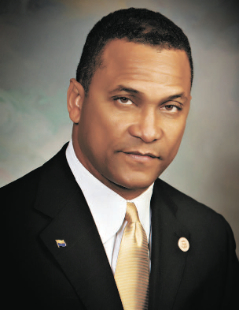
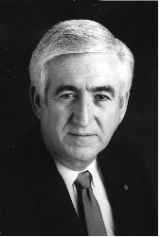
Birmingham City Council President Maxine Parker Passes

0

BIRMINGHAM, Ala. – The Birmingham City Council yesterday, along with Mayor William A. Bell, announced the passing of City Council President Maxine Herring Parker, in a joint press conference.
Councilwoman Parker served on the council for over eight years and was recently elected Council President by her colleagues a few weeks ago, after being elected by voters to her third term of office. She is a former neighborhood leader and long-time assistant to the president at Talladega College. She retired after more than 40 years of service.
“We come together collectively to support her family during this time of bereavement and we ask that you lift the family up in prayer at this time,” said Council Pro-tem Jay Roberson. “The Council will govern ourselves accordingly as we move forward.”
Mayor Bell referred to Councilor Parker as a “gentlewoman, who was stern in her convictions.”
“She was very tough,” Bell said. “I guess that comes from her experience of working with 12 college presidents”
The Mayor has ordered that the city flags be flown at half-staff in her honor.
Bell encouraged continued support of her legacy of protecting the environment and building stronger neighborhoods throughout North Birmingham.
Councilor Steven Hoyt stressed the importance of faith during times of grief. “Councilor Parker loved God and she led a Christian life,” Hoyt said. “We must keep our trust in God.”
Birmingham Councilor Sheila Tyson stated :”We are filled with sadness and grief over the loss of Councilor Maxine Parker.”
“I’ve known Mrs. Parker for over 20 years, and she always personified class, grace, and a quiet strength. She didn’t have to speak loudly, because her actions did the talking for her.”
“Many people know that Councilor Parker was a passionate advocate for environmental justice in her community. She went to the mat to protect the citizens in her district, and we pledge to continue bringing a voice to the issues that were important to her.”
“As Council President, Mrs. Parker emphasized that as our sole responsibility as city councilors is to represent the needs of our constituents, and that we have a duty to cooperate with one another for the good of Birmingham. When she spoke, we listened.”
“Councilor Parker just brought a genuine and sincere leadership to the Council.”
“We all lost a mentor and a friend today. I just ask the members of the Birmingham community to join us in lifting up Councilor Parker’s family through prayer during this difficult time.”
No arrangements have been announced at this time. The president pro-tem will preside over council meetings until a new council president is elected.
The council will appoint a replacement to fill her district 4 seat at the appropriate time.
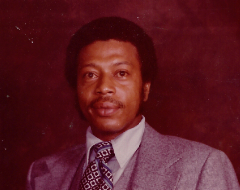

OBIT-Godfrey Dudley

0

OBIT DudleyAttorney Godrey David Dudley, Sr. formerly of Bessemer, Ala.
passed on Thursday, November 7, 2013 – Funeral is Friday, November 15, in Washington, D.C.

Godfrey David Dudley peacefully departed this earthly life on November 7, 2013 with his family by his side. He was the oldest of seven children born to Walter Lee Dudley and Ethel Collins’ Dudley in Bessemer, Alabama on March 14, 1944. Godfrey graduated from George Washington Carver High School in 1962 and matriculated with a Bachelor’s degree from Tuskegee Institute (University) in 1967. While a student at Tuskegee Institute, Godfrey pledged Omega Psi Phi fraternity. He was also selected as an exchange student with the University of Michigan. Upon graduation from Tuskegee Institute, he was selected to continue his studies for the summer at Emory University in Atlanta, Georgia. Godfrey attended Howard University Law School obtaining a Juris Doctorate in 1970.
In 1971, he was wed to Philippine “Penni” Thomas of Washington, D.C., whom he adored and loved as his wife and friend. He was a loving father who provided for the three children he was blessed with from this union. Of importance to Godfrey was providing for his family and encouraging his children to set goals, follow dreams, and become the best they could be. He was a wonderful role model for his children and to others. He taught the value of togetherness by extending family ties beyond our households to others. He taught the importance of accepting people as they are and was an advocate for the less fortunate. Most importantly, he taught to live each day as if it were the last. Godfrey was and still is an inspiration for all of us to follow.
After graduating law school, Godfrey briefly worked for the Equal Employment Opportunity Commission in its Birmingham, Alabama district office. In late 1970, he transferred to the National Labor Relations Board’s (NLRB) division of Enforcement Litigation, Office of Appeals in Washington, D.C. In this office, Godfrey was successfully promoted to the Senior Attorney position and from 1976 through 1979, he served as a Supervisory Attorney. In September 1979, Godfrey was promoted to the position of Deputy Assistant General Counsel in the Office of the General Counsel, Division of Operations-Management, where he was responsible for coordinating the administration and management of field offices in the Eastern, Northwestern, and Southern regions of the U.S. While employed at the National Labor Relations Board, Godfrey was the recipient of numerous awards for outstanding performance.
Godfrey was as competitive and successful in sports as he had been in his professional life.  Godfrey played softball on NLRB’s softball team, participated in fishing adventures, and played golf with his buddies. After retiring, he was able to spend more time on things he loved to do and found himself spending more time on the golf course. He spent so much of his time at the golf course that he was asked to become one of the staff members. Having a part-time job at the golf course, allowed him to stay involved in the golf community and allowed him to develop new and endearing friendships.
He enjoyed taking his grandchildren to the golf course so that he could teach and pass down his knowledge of the game. Just as he was with his own children, he was so proud of each and every one of his grandchildren.
Godfrey was preceded in death by his father, sister-Louise, and brother–Walter. He leaves his devoted wife Penni; sons, Godfrey, Jr., Kenneth (Dana) and daughter Stephanie. A devoted mother Ethel C. Dudley, brother George (Maple); sisters Mureldene Jackson (Jimmy), Barbara Anne Snead (Anthony), Sharetta Dudley, LaFrences O’Neal (Gary). Grandchildren, Olivia, Jair, Rashawn, Kamryn, Alex, Kenneth Jr., Marco, Bryce, Madison, Daniel, and Julia. Sister-in-law Dorothy Waters (Tommy); brother-in-law Phillip Thomas (Adrienne), brother-in-law Keith Thomas; sister-in-law Bridgette Biscoe (Michael).
The burden for each of us now is to accept the torch he has passed to us. He has run his race and it is now up to us. The greatest tribute each of us can make on his behalf is to love and be loved, stay close as a family and never do less than your best. That is the torch we must carry from here.

ACKNOWLEGEMENT
We are not quite prepared to face life’s darkest hours alone. At such a time the thoughtful expressions of family and friends in so many ways make the burden seem lighter. Your love, deeds, kind words, calls, cards prayers and other acts of kindness have been received with profound gratitude. We thank each and every one of you and may God bless you!
A very special thanks to the Community Hospices of Washington.
The Family

New Trial Sought for 14-Year-Old Execution Victim George Stinney

0

george stinney(AP) – Supporters of a 14-year-old Black boy executed in 1944 for killing two white girls are asking a South Carolina judge to take the unheard-of move of granting him a new trial in hopes he will be cleared of the charges.
George Stinney was convicted on a shaky confession in a segregated society that wanted revenge for the beating deaths of two girls, ages 11 and 7, according to the lawsuit filed last month on Stinney’s behalf in Clarendon County.
The request for a new trial has an uphill climb. The judge may refuse to hear it at all, since the punishment was already carried out. Also, South Carolina has strict rules for introducing new evidence after a trial is complete, requiring the information to have been impossible to discover before the trial and likely to change the results, said Kenneth Gaines, a professor at the University of South Carolina’s law school.
“I think it’s a longshot, but I admire the lawyer for trying it,” Gaines said, adding that he’s not aware of any other executed inmates in the state being granted a new trial posthumously.
The request for a new trial is largely symbolic, but Stinney’s supporters say they would prefer exoneration to a pardon.
Stinney’s case intersects some long-running disputes in the American legal system — the death penalty and race. At 14, he’s the youngest person executed in the United States in past 100 years. He was electrocuted just 84 days after the girls were killed in March 1944.
The request for a new trial includes sworn statements from two of Stinney’s siblings who say he was with them the entire day the girls were killed. Notes from Stinney’s confession and most other information deputies and prosecutors used to convict Stinney in a one-day trial have disappeared along with any transcript of the proceedings. Only a few pages of cryptic, hand-written notes remain, according to the motion.
“Why was George Stinney electrocuted? The state can’t produce any paperwork to justify why he was,” said George Frierson, a local school board member who grew up in Stinney’s hometown hearing stories about the case and decided six years ago to start studying it and pushing for exoneration.
The South Carolina Attorney General’s Office will likely argue the other side of the case before the Clarendon County judge. A spokesman said their lawyers had not seen the motion and do not comment on pending cases. A date for a hearing on the matter has not been set.
The girls were last seen looking for wildflowers in the tiny, racially-divided mill town of Alcolu about 50 miles southeast of Columbia. Stinney’s sister, who was 7 at the time, said in her new affidavit that she and her brother were letting their cow graze when the girls asked them where they could find flowers called maypops. The sister, Amie Ruffner, said her brother told them he didn’t know and the girls left.
“It was strange to see them in our area, because white people stayed on their side of Alcolu and we knew our place,” Ruffner wrote.
The girls never came home and hundreds of people searched for them through the night. They were found the next morning in a water-filled ditch, their heads beaten with a hard object, likely a railroad spike.
Deputies got a tip the girls had been seen talking to Stinney. They came to Stinney’s home and took him away. His family wouldn’t see the boy again until after his trial. Newspaper accounts suggested a lynch mob was nearly formed to attack the teen in jail.
Stinney’s dad worked for the major mill in town and lived in a company house. He was ordered to leave after his son was arrested, said Stinney’s brother Charles Stinney, who was 12 when his older brother was arrested. Charles Stinney’s statement explains why the family didn’t speak to authorities at the time.
“George’s conviction and execution was something my family believed could happen to any of us in the family. Therefore, we made a decision for the safety of the family to leave it be,” Charles Stinney wrote in his sworn statement.
Charles Stinney said he remembered the events vividly because “for my family, Friday, March 24, 1944, and the events that followed were our personal 9/11.”
Both statements were made in 2009. Lawyer Steve McKenzie said he planned to file the request for a new trial then, but heard from a man in Tennessee who claimed his grandfather was with George Stinney the day of the killings. McKenzie thought the information from someone not related to Stinney would be especially powerful, but the person suddenly stopped cooperating after stringing the lawyers along for years.
The request for a new trial points out that at 95 pounds, Stinney likely couldn’t have killed the girls and dragged them to the ditch.
The motion also hints at community rumors of a deathbed confession from a white man several years ago and the possibility Stinney either confessed because his family was threatened or he was given ice cream. But the court papers provide little information and the lawyers also wouldn’t elaborate.
At 14, Stinney was the youngest person executed in this country in the past 100 years, according to statistics gathered by the Death Penalty Information Center.
Newspaper stories from his execution had witnesses saying the straps to keep him in the electric chair didn’t fit around his small frame and an electrode was too big for his leg.
Executing teens wasn’t uncommon at that time. Florida put a 16-year-old boy to death for rape in 1944 and Mississippi, Nevada, Ohio and Texas executed 17-year-olds that year.
Lawyers also filed a request to pardon Stinney before the state Department of Probation, Parole and Pardon Services in case the new trial is not granted.
There is precedent for that. In 2009, two great-uncles of syndicated radio host Tom Joyner were pardoned by the board nearly 100 years after they were sent to the electric chair in the death of a Confederate Army veteran. Joyner’s lawyers showed evidence the men were framed by a small-time criminal who took a plea deal that saved his life and testified against them.
But Frierson said a pardon would be little comfort to him in the Stinney case. “The first step in a pardon is to admit you are wrong and ask for forgiveness. This boy did nothing wrong,” Frierson said.

Black woman shot dead seeking help in white neighborhood

0
Renisha McBride

‘I Thought She Was An Intruder!’

DEARBORN HEIGHTS, Mich. (AP)  A Black woman whose fatal shooting by a US homeowner has prompted claims of racial profiling was shot in the face, a post-mortem examination found.
Renisha McBride, 19, received fatal injuries on the front porch of a home in Detroit, Michigan, on November 2.
Her family says she was disoriented and looking for help after having just been involved in a car crash nearby.
The homeowner said he had feared a burglary, but civil rights leaders are demanding justice.
Prosecutors say they are reviewing whether to charge the unidentified 54-year-old, who told police he fired his shotgun accidentally.
Stand your ground law
A lawyer for the man said he was “torn up” by McBride’s death, but that he had feared for his life at the time.
Michigan is one of several U.S. states with a so-called stand your ground law, which allows the use of deadly force if a person feels their life is in danger, though it is unclear whether that will be argued in this case.
A post-mortem examination report released on Monday confirmed that McBride had been shot in the face, but not at close range.
Demonstrators rallied last week outside a local police station to protest over McBride’s killing. The Wayne County medical examiner’s office report has ruled her death a homicide.
She was shot as she stood on the porch in the predominantly white Dearborn Heights area shortly before 4.
The Detroit Free Press reported that a car registered to McBride’s family had been involved in a collision with a parked vehicle just over two hours before the shooting, a few streets away.
It is unclear what happened in the intervening time. McBride’s relatives have called for a thorough investigation into the shooting.
“It’s hard to… believe it’s an accident when a gun is in her face and the trigger is pulled,” family lawyer Gerald Thurswell told the Detroit News on Friday.
The case has attracted the attention of civil rights leader the Reverend Al Sharpton, the National Association for the Advancement of Colored People (NAACP) and Michigan congressman John Conyers.
On Saturday, about 200 people showed up at a rally organized by Mr. Sharpton’s National Action Network.

NNPA Chairman Blasts NFL for ‘Almost a Slave Mentality’

0

NNPABy Hazel Trice Edney
(TriceEdneyWire.com)

The chairman of the National Newspaper Publishers Association, a federation of more than 200 Black-owned newspapers, says the Washington Redskins’ team – under fire from a Richmond, Va. publisher – is in sync with the entire National Football League in its apparent oppressive treatment of Black businesses and consumers.
“It’s almost a slave mentality. They put us on the field and we entertain the master but we’re not reaping any benefits from the business side of it,” Campbell says. “It’s not just the Redskins. If you look around the country, the NFL as a whole pretty much neglects Black businesses and the Black community,” said Campbell, publisher of the Arizona Informant Newspaper.
He continued, “Here in Arizona, our Arizona Cardinals does zero with the Black community. Every now and then they might show up for a token Black event. But, I don’t see our African-American newspaper here in Phoenix or in Arizona being supported by the Arizona Cardinals. I believe if you called other newspapers that have [teams] in their markets, I don’t believe they’re doing much for them either. I believe the NFL as a whole takes the Black community for granted although we are their major product on the field.”
Campbell was responding to questions pertaining to a conflict between NNPA member Ray Boone, editor/publisher of the award-winning Richmond Free Press, and the Richmond-based Washington Redskins Training Camp, which is partially owned by Bon Secours Health System.
In a letter to NAACP Chairman Roslyn Brock and CC’d to Campbell, Boone states that the team contracted no business with Black-owned or locally owned businesses at its first Richmond training camp between July 25 and August 16. That includes the failure to advertise in the Black-owned Richmond Free Press while advertising with the white-owned conservative daily, the Richmond Times Dispatch which has a history of pro-segregation leadership. The conflict is steeped in an age-old battle constantly waged by Black newspapers, which are historic targets for advertising discrimination.
While Bon Secours placed paid advertisements for the training camp in the Times Dispatch, the Free Press was sent press releases, Boone said in an interview.
Brock, who has served as NAACP chair since 2010, is vice president for advocacy and government relations for the Bon Secours Health System, Inc., in Marriottsville, Md. Boone believes her corporate position has caused her to compromise her stance for economic justice in the Richmond case.
“Bon Secours, along with Mayor Dwight C. Jones and the Washington team, blatantly denied, contrary to the Mayor’s pledge, Black businesses and other local businesses the opportunity to receive vendor contracts inside the training camp,” Boone wrote in a Sept. 27 letter to Brock. “Characteristic of Richmond government and big businesses, this Bon Secours decision disgracefully enhanced Richmond’s shameful reputation as ‘The Capital of Poverty,’ with 25 percent of Richmond’s population suffering in poverty.”
When Brock had not responded to his letter for more than a month, Boone followed up with a Nov. 1 email pointing out, “This raises the unavoidable question of whether Bon Secours is restricting you from living up to your responsibility to honor the NAACP mission?”
He continued, “In the interest of fairness and the image of the NAACP, I respectfully suggest that you break your silence.”
Brock responded to Boone by email that same day, stating, “The matter you reference in your letter is local in nature and should be handled directly by the Richmond Branch NAACP and Salim Khalfani at the Virginia State Conference NAACP. I have forwarded your correspondence to them and shared the information with the leadership of Bon Secours Health System in Richmond.”
In an email, responding to a question from the Trice Edney News Wire this week, Brock said that she had not publically commented on Boone’s complaint because it is a local issue.
Brock’s email said she had “also discussed the matter in detail with” Campbell, who is serving his second term as NNPA chairman. At a Sept. 17 reception in D.C., Campbell, Boone and other NNPA publishers praised Brock for her leadership and gave her an award for social justice.
While Campbell verbally blistered the NFL, including the Redskins, he balanced his response by saying he agrees with Brock that the issue in Boone’s case is local since the economic decisions appear to have been made by the mayor and Bon Secours’ Richmond entities.
“At the end of the day, I think [the criticism of her] is unfair just because she works for Bon Secours. That’s her day job. We all volunteer at some time with the NAACP,” Campbell says, referring to Brock’s volunteer chairmanship. “While we want to see Mr. Boone and his publication get what it deserves and more so; that is definitely a local issue.”
Boone, who recently announced he has stopped using the term “Redskins” in the Richmond Free Press because it is “racist”, argues that the Redskins’ and Bon Secours’ exclusion of Black businesses underscores and illustrates the team’s mentality under the controversial name, which is receiving growing national pressure for change.
In her email to the Trice Edney News Wire, Brock also clarified that the NAACP has long stood against the Redskins name because of its roots in racism. “The NAACP passed a resolution more than 10 years ago against racial slurs being used as mascots. In the last few months the NAACP signed on letters with the Oneida Tribe, based in Washington and the National Coalition on American Tribes especially in support of their efforts to change the Redskins name,” she wrote.
Neither Mayor Dwight C. Jones; nor Virginia NAACP President King Salim Khalfani could be reached for comment by deadline. Bon Secours representatives did not return repeated phone calls.
Meanwhile, Boone, a recipient of the State NAACP’s Oliver W. Hill Freedom Fighter Award, remains focused on his quest for economic justice, promising Brock “fairness and balance” in upcoming coverage of her leadership positions with the NAACP and Bon Secours.
Such economic battles have been hard fought in Richmond and in Black and grassroots communities across the nation. Former Richmond City Councilman Chuck Richardson, known for his historic advocacy for Black businesses and contractors, recalls researching Washington Redskins’ racism as far back as 1961. That’s when he wrote a research paper in junior high school about the team and how the Redskins was “the last professional football team to allow Blacks to play for them,” he said in an interview. “This harkens back to that painful time. It hurt then and I would have thought that a greater degree of change might have occurred, but the mentality still exists. It seems so much has changed and yet so much remains the same.”

Birmingham’s Eatmon Selected as One of Just 12 ‘Afterschool Ambassadors’ From Across Nation

0

EatmonEatmon will work in Alabama and nationally to expand Afterschool

WASHINGTON, D.C. – The Afterschool Alliance has announced that Erika Eatmon, Education Coordinator for the Birmingham Regional Empowerment and Development (BREAD) Center, has been selected to serve as a 2013-2014 Afterschool Ambassador. She is one of just 12 local leaders from across the country to be chosen for the honor this year. Each Afterschool Ambassador will continue directing or supporting a local afterschool program while also serving the one-year Afterschool Ambassador term organizing public events, communicating with policy makers, and building support for afterschool programs. Eatmon’s Ambassadorship is sponsored by Bright House Networks, as part of the company’s ongoing commitment to afterschool initiatives and to education in science, technology, engineering and math (STEM) topics.
“In Birmingham and all across the country, quality afterschool programs are doing a terrific job meeting the needs of students, families and communities,” said Afterschool Alliance Executive Director Jodi Grant. “Afterschool programs keep kids safe during the out of school time hours, help working families, and inspire students to learn by offering enriching activities like Tae Kwon Do, robotics and cooking clubs, as well as homework help, physical fitness, connections to mentors, and much more. As an Afterschool Ambassador, Erika will bring great energy to the work to build even stronger support for afterschool programs among parents, business and community leaders, lawmakers and others. We are profoundly grateful to Bright House Networks for supporting her ambassadorship and for its ongoing, generous support for the afterschool initiative. I look forward to working with Erika this year.”
Afterschool programs are under intense pressure.  The Afterschool Alliance’s 2012 Uncertain Times survey found that more than three in five afterschool programs (62 percent) reported that their funding is down “a little or a lot” from three years earlier. Even in communities where local economies and program funding are faring better, program leaders express significant concern about their financial outlook and their inability to reach all children who need afterschool programs.
“I am delighted to have this chance to help increase support for afterschool programs, which give students opportunities to explore their interests and give parents the security that comes with knowing that their children are safe and supervised, with engaging, educational activities after the school day ends,” Eatmon said. “Afterschool programs are critical to students’ success in school, to their safety, to working families, and to the nation’s workforce and its economy. We need to increase resources to afterschool programs and work toward the day when there is a program for every child who needs one.”
The BREAD Center provides afterschool and summer camp programs, adult education, and summer food service programs to more than 150 students and families in the Birmingham metro area. The afterschool program has operated as a 21st Century Community Learning Center site since 2003. BREAD offers homework help, STEM projects, gardening, recreation, nutrition, character education, and the arts. Erika Eatmon has been with BREAD since 2009.
Each Ambassador organized a major event for Lights On Afterschool, the Afterschool Alliance’s 14th annual national rally for afterschool, held on October 17 this year. Last year, 1 million people participated in some 9,000 Lights On Afterschool events across the United States and at U.S. military bases worldwide. Bright House Networks is sponsoring the Lights On Afterschool photo contest again this year, in which the public will vote for the winner on the Bright House Networks Facebook page and one program will win $2,000.
“We congratulate Erika and all of this year’s Afterschool Ambassadors,” said Reinaldo Llano, Bright House Corporate Director, Community Relations, and board member of the Afterschool Alliance. “We look forward to continuing to support the afterschool community and to helping students, teachers and families with resources that lead the way in engaged learning opportunities, specifically with the STEM education initiative.”

The other 2013-2014 Afterschool Ambassadors are:
·         Alaska, Juneau:  Terri Campbell;
·         Arkansas, Jonesboro: Rennell Woods, Executive Director, At-Risk American Male Education Network (AAMEN);
·         Colorado, Fort Collins: María Ortiz, 21st CCLC Grant Director, Poudre School District;
·         Kansas, Overland Park: Pamela Watkins, Vice President Youth Development Services, YMCA of Greater Kansas City;
·         Louisiana, New Orleans: Cyndi Nguyen, Director, Vietnamese Initiatives in Economic Training (VIET);
·         Maryland, Rockville: Elizabeth McGlynn, Executive Director, Girls on the Run of Montgomery County;
·         Nebraska, Omaha: Gwynette Williams, Program Director, Collective for Youth;
·         New York, Brooklyn: Omari McCleary, Program Director, Good Shepherd Services,
·         Texas, Fort Worth: Miguel Garcia, Director, Fort Worth After School; and
·         Washington, Cheney: Tammie Shaw.

One additional Afterschool Ambassador will be chosen and announced shortly.
Many more students across the country need access to afterschool programs. More than 15 million school-age children – more than one in four kids in the United States – are unsupervised after the school day ends. The parents of 18 million children say they would enroll their kids in afterschool programs – if programs were available.

Miles College President Dr. George T. French elected Chair of SIAC Presidents Council

1

Dr. George FrenchATLANTA – The Southern Intercollegiate Athletic Conference (SIAC) has announced that Miles College President, Dr. George T. French has been elected as chair of the SIAC President’s Council. Effective immediately, Dr. French’s two-year post as chair will commence after the SIAC Council of Presidents voted unanimously during its annual fall meeting. “It is an honor and a privilege to serve the SIAC in this capacity,” said Dr. French. “I, along with my esteemed colleagues on the council, will work together to the utmost of our abilities to serve on the foundation of knowledge and integrity for one of the preeminent athletic organizations in the Collegiate Athletic Community.” “As president of Miles College, President French has earned a reputation for effecting positive transformational change in organizations with a thoughtful and innovative leadership style,” added SIAC Commissioner Gregory Moore. “The SIAC will certainly be well served by President French’s new expanded leadership role.” Under Dr. French’s leadership, the school recently completed the $30 million “Miles Ahead” Campaign, with gifts and pledges exceeding $42.4 million, as well as the acquisition of the former Lloyd Noland Hospital Campus. Recently, Dr. French championed the construction of three state of the art buildings: the Dr. George T. French, Jr. Student Activities Center, Welcome and Admissions Center and the 204-bed Bishop Teresa E. Snorton Residence Hall.  Furthermore, Dr. French has pioneered a monumental shift in the areas of enrollment, growth, and fundraising since becoming Miles College’s president in 2006. Dr. French earned a Bachelor of Arts in Political Science with an emphasis in Policy Analysis from the University of Louisville. He earned a Juris Doctorate from Miles School of Law and is currently ABD at Jackson State University for the PhD. where he is completing his dissertation on the topic of 21st century challenges in higher education and the use of transformational and transactional leadership styles as solutions. Dr. French is a 2013 recipient of the NAACP Man of the Year award and was one of six finalists for the 2013 HBCU President of the Year.

VETERANS DAY – CROSSING OUT WAR

0
Dr. Wilkerson
Dr. Wilkerson
Dr. Wilkerson

Dr. Wilkerson

Armistice Day, which was first celebrated on November 11, 1918, was changed to Veterans Day when our government passed a bill to that effect on June 2, 1954. Originally, it was a celebration of the ending of World War I, but today it commemorates the services of those who fought in all wars. Wouldn’t it be wonderful if we could cross out war?
“A quarter of a million crosses. That’s the price in human lives that America paid for victory in World War II. Russia and England paid an even higher price.” (Since World War II, America has lost 33,746 lives in the Korean War; 47,355 in the Viet Nam War; around 6,000 in the Iraq War, and we don’t know how many more will be killed in Afghanistan and other areas).
The crosses reach far beyond the horizon of our vision. Those crosses are there because the men beneath them died to cross out war. They endeavored to cross it out with their blood. They crossed out their hopes, ambitions, and dreams. They crossed out their personal futures to save the future of the world.
There is much crossing out that the living must do if we are to avoid new wars and new fields of crosses in new generations. We, the living, must cross out of our hearts hatred, intolerance, selfishness, and prejudice. We must cross out military force as a means of settling disputes. We must cross out narrow viewpoints and replace them with world-wide viewpoints. We must cross out fear and replace it with faith.
Each white cross marking the grave of one fallen is a vote marked on the ballot sheet of earth for lasting peace. That peace for which they died can only be achieved if we live for it now with mighty hearts.” – Dodge Transmissioner

Dr. Robert Wilkerson is a minister, writer, and founder of People for the Christian Way, an organization whose mission is to encourage all people to practice Christian principles in business, politics, and every area of life. drbobwilkerson@bellsouth.net, www.peopleforthechristianway.com.

Chruch Announcements

0

images.2jpgGalilee Missionary Baptist Church, 1231 24th Street North Birmingham, AL 35234, Cordially invites you to attend the Ninety-Fifth Annual Celebration of the Galilee Missionary Baptist Church, Reverend Dr. James V. Tyus, Jr. Pastor, Sunday, November 17th, 3 p.m. Guest Speaker, Reverend Darryl L. Warren, New St. James Baptist Church. Sister Gale Layton, Chairperson; Sister Minnie Mathews, Publicity Chair.


Saint John African Episcopal Methodist Church

As we commemorate the Fiftieth Anniversary of the Civil Rights Movement in Birmingham, Saint John African Episcopal Methodist Church, one of the pivotal churches during the movement, invites you to participate in the celebration of its One Hundred Fortieth Anniversary observance. Activities for this momentous occasion will begin on Friday, November 15,  at 6:30 p.m. with a Praise Festival.  Parker High, Wenonah High and Talladega College choirs will be featured, along with special talent from Saint John’s members.
Saturday, November 16, will be a time for giving back to the community. From 9 a.m. – 4 p.m. a variety of community projects will take place. These include: clean-up in the Fountain Heights area, yard care for the elderly, visitation of the sick and shut-in, and a food and clothing drive for the homeless.
Sunday, November 17,  at 9:30 a.m. our celebration will culminate with worship service featuring the Saint John African Episcopal Methodist Church reunion choir and reunion praise dancers along with the message shared by the dynamic speaker Rev. Joshua Johnson (Metropolitan AME Zion Church).
Please join us for three days of spirit filled and joy inspired fellowship.
Saint John African Methodist Episcopal Church is located at 708 15th Street North, Birmingham, Alabama.  The Rev. Mashod Evans is the Pastor.  For more information you may call 205-251-3764 or email us at sjamec@bellsouth.net.

Submitted by
Brenda Kindred

Jazz Vespers with Vince Perry and Friends on Saturday, November 16, at 3:30 p.m. First Congregational United Church of Christ, 1024 Center Street North Birmingham, AL 35204. Telephone 205-322-1331.


It Could Be Worse

0

It Could Be WorseMy God will cast them away, Because they did not obey Him; And they shall be wanderers among the nations. Hosea 9:17

Yesterday I had an awesome time with God in His Word and learned some very important information. While reading the minor prophets, I discovered they were assigned to deliver bad news to God’s people that had not been doing as God would have them to do. The minor prophets delivered messages of destruction and doom, punishment and penalty that meant death and/or famine to the receivers. I began to think about some of the assignments God has come to me with that I didn’t want to do and suddenly was relieved. Also I thought about the people that received the messages and the punishment or wrath of God. They didn’t get the second, third or fourth chances most of us have been given and there was no one pleading their case before God like Jesus does for us today.

Go therefore and make disciples of all the nations, baptizing them in the name of the Father and of the Son and of the Holy Spirit, teaching them to observe all things that I have commanded you; and lo, I am with you always, even to the end of the age.” Matthew 28:19-20

God’s assignment for us today is simply to take the Good News of the Gospel out to a dying world. We have the opportunity to tell people how good God is to us and how through the dying of Jesus our (and theirs) sins are erased. You have a testimony to prove the grace and mercy of God and the people you reach won’t be killed by your message but saved instead. Just think about all the things that could be happening or things you could be doing that you would HATE to be doing and realize you don’t  have it as bad as you thought. IT COULD BE WORSE!

Thank God anyhow,
Minister Deidra Bibb