Home Blog Page 1724

Cash For Crooks

0

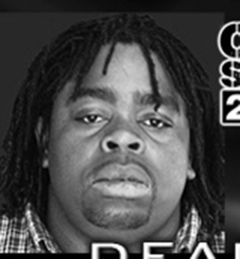
Cash For Crooks Div. of Refuge In Trouble Times Community Development, Inc. salutes Travis Holmes, Jr., age 26, who on July 12, Cashcrookstravisholmes[1]2003 was shot at the Shell Service Station on Lomb Avenue and Tuscaloosa Avenue.  Witness saw a white Chevy Impala pull up along side and asked Travis to pull over. When they did, the shooter walked over, shot Holmes in the head and left. There is still an outstanding reward for this homicide listed here.
Will you help by making the call – Crimestoppers – 205-254-7777.  NO NICK NAMES PLEASE.
RITT’S founder, Misnister Brenda Paige Ward and other community heads are working with law-enforcers worldwide to help find or solve these and other cases. If you know of a homicide or missing person that you wish seen here call Minister Ward at 205-240-9910 or e-mail at odussasplace@yahoo.com.
Remember  don’t let this happen to you before you get involved; Reality is “WHEN IT HAPPENS TO YOU.”  Thank you so much.

Doing What’s Best for Our Children’s Education

0

by Craig Ford

Education should not be a partisan issue. We should always do what is in our children’s best interests.
I believe strongly in working with the business community to develop curriculums that prepare our children not just for a college education, but also for entering the workforce.
Last week’s announcement of the new Business Education Alliance (BEA) brings this idea to the center of the debate on how best to support and improve Alabama’s public schools.
I agree that schools and businesses need to work together. But it is troubling to see that the new BEA is supported and being run by those who have not always been fully committed to public education.
Former Rep. Jay Love, a Republican from Montgomery, resigned mid-way through his term in the legislature to take a position as the BEA’s new Chairman of Finance.
It bothers me that Rep. Love and so many other Republican legislators are resigning before the end of their terms of office. The voters elected Rep. Love to serve a full term, and his decision to quit three-fourths of the way through means the taxpayers will have to pay for a costly special election to fill his seat for the final year of his term.
But the reason Rep. Love gave for quitting is also hard to understand. Rep. Love said he quit the legislature so that he could “continue working to reform education from the private sector.” But as chairman of the education budget committee, Rep. Love was in a much better position to influence education policies and the quality of our schools than he can ever be as a fundraiser for a private organization.
But let’s consider what the BEA will be advocating for.
I agree with the BEA in that the state should do more to support our pre-k program, as well as the Alabama Math, Science and Technology Initiative, the Alabama Reading Initiative, the ACCESS Distance Learning program and Advanced Placement.
But I strongly disagree with the BEA’s hardened support of the Alabama Accountability Act and of charter schools.
The Accountability Act abandons our public schools under the false premise of giving children in struggling schools a choice in where they go to school. In reality, only eight schools in Alabama have agreed to accept these students – eight out of nearly 1,500 schools in our state. Furthermore, the Accountability Act is redirecting $50 million away from our public schools this year alone! And there is nothing in the Accountability Act that helps the children in struggling schools that are not able to transfer to a different public or private school, which Rep. Love estimated would be almost 90 percent of the children in the so-called “failing schools.”
I also disagree with the BEA’s support of charter schools. In other states, charter schools have consistently proven unsuccessful. For every charter school that performs better on testing than a traditional public school, there are two more charter schools that fail. Charter schools have also led to the loss of thousands of teachers in public schools, which only leads to more overcrowding of classrooms and a further decline in performance among struggling schools.
Every child in Alabama deserves a quality public education. That is something that Democrats and Republicans agree on. But we should be focused on our children’s needs and doing what is right for them, not gambling on bad education policies that have proven to be failures in other states.
Education reform should not be a partisan issue. It should be done by getting input from the business community AND from the teachers in the classroom. The only way forward is if Democrats and Republicans work together to create policies that give our children the best chance for a brighter future.

Representative Craig Ford is a Democrat from Gadsden. He has served in the Alabama House of Representatives since 2000. In 2010, Representative Ford was elected House Minority Leader by the House Democratic Caucus. He was re-elected Minority Leader in 2012.

Don’t Be Afraid To Decide

0

And if it seems evil to you to serve the LORD, choose for yourselves this day whom you will serve, whether the gods which your fathers served that were on the other side of the River, or the gods of the Amorites, in whose land you dwell. But as for me and my house, we will serve the LORD.” Joshua 24:15

In a world full of choices and options, you may find yourself, at times, confused about which choice to make or which option to take. You wonder and you contemplate whether you’ll make the right choice more often than you would like. Sure you want to make a decision and be ok with the decision you made; however, when the day is over, oftentimes you find yourself questioning your decision. Why? Most of the time the other options begin to appear a better choice, many times others don’t agree with your decision and sometimes you feel uncomfortable with the decision you have made. That’s normal. I don’t believe many people, if any, don’t question their decisions from time to time. I believe that the most successful people in this world question their choices more than we know. There is no shame in wondering if you have made the right decision, the shame is failing to decide.

“Go and tell David, ‘Thus says the LORD: “I offer you three things; choose one of them for yourself, that I may do it to you.” 2 Samuel 24:12

When you are faced with options and opportunities to make choices, try to imagine that God is waiting on you to make a decision so He can bless you. Don’t make that decision based on what others think you should do and don’t worry about what the outcome will be. No one knows what the future holds but God and all you have to work with is the knowledge you have today. What will help you sleep at night? What will help you achieve your goals? What is necessary for you to get to the next level? These are some of the questions you want to ask yourself before you make a decision and don’t forget WHAT WILL MAKE YOU HAPPY? Don’t wait too long because someone else is making a decision too and you don’t want to miss out on something you really want because you procrastinated with making a decision. Besides, you only live once and if at first you don’t succeed, you can try again. Most decisions we need to make are not life threatening so DON’T BE AFRAID TO DECIDE!

What are you going to do?
Minister Deidra Brown

HIV/AIDS study, program coming to local Black churches

0

Black CHurches BIRMINGHAM, Ala. – The Black church can be a powerful tool in HIV/AIDS education and prevention, according to Magdalena Szaflarski, Ph.D., an assistant professor in the University of Alabama at Birmingham (UAB) Department of Sociology, who plans to replicate in Birmingham an innovative program that found success under her leadership in Ohio.
Szaflarski led a survey in the Cincinnati area of religious organizations to investigate their involvement in talking to congregations about HIV/AIDS prevention. The data from her study, “Faith-Based HIV Prevention and Counseling Programs: Findings from the Cincinnati Census of Religious Congregations,” was recently published in AIDS and Behavior.
With a growing number of HIV educational initiatives in African-American communities, Szaflarski suggests there are opportunities for Black congregations to make a difference.
“Black faith leaders are often unaware of the extent of HIV epidemic in their community,” she said. “Research shows that once they acquire this information, they feel urged and empowered to take action.”
With funding from the National Institutes of Health, Szaflarski collected data in the Cincinnati-area and into Kentucky from 447 religious congregations, including information about Black churches’ levels of HIV/AIDS programming. Specifically, she asked the churches if they offered any HIV prevention programs, education, testing or counseling in the last two years. She also polled them on their theology and structure and examined relationships between these factors and HIV programming in a way no other published study has done.
More than a third of Black Protestant congregations in the study offered HIV/AIDS prevention programs, education, testing or counseling at the time of the study.
“On the down side, a large proportion of churches, more than 60 percent, did not engage in HIV-related activities – although their communities were likely affected by HIV and could benefit from faith-based HIV programs,” Szaflarski said.
Factors that influenced churches’ engagement in HIV programming that explained most of the variation included location, membership and broader community involvement. Identifying these factors was key to understanding the gaps and opportunities for intervention on the ground, she said.
Armed with the knowledge, Szaflarski then worked with a team of community stakeholders, including a faith-based HIV/STD testing agency and a university-based AIDS education center, to help the churches come up with programs to educate their communities about the disease within the comfort of their theological realms.
“We started off talking to them about the HIV epidemic among African-Americans, as well as related social and cultural challenges,” Szaflarski said. “We asked them, ‘Are you ready to be an educational center, develop prevention programming and perhaps allow HIV testing in your congregation?’”
With funding from the Center for Clinical and Translational Science and Training at the University of Cincinnati, Szaflarski and her group worked with the churches for a year. They engaged community stakeholders to brainstorm faith-based strategies to address HIV. The data was analyzed and disseminated back to the churches, along with mini-grants, to help them enhance their HIV programming. A manuscript from this work is under review for publication.
“The community program is taking a life of its own, becoming a ripple effect,” Szaflarski said. “We are excited to see this.”
Szaflarski hopes to replicate her research efforts in Birmingham in collaboration with UAB’s Center for AIDS Research, which has a long history of engaging the faith community in HIV-related issues.
“Our pilot project has made an impact,” Szaflarski said. “It feels good to know that we have helped to mobilize the faith community to take a stand on HIV. We do feel like catalysts for change.”

President Barack Obama Recognized Integrated Military Force During Keynote Remarks at 60th Anniversary Korean War Event in Washington

0
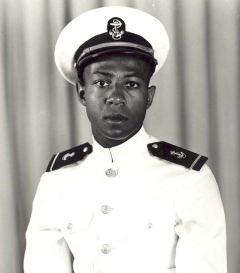
Among the African American heroes recognized during the 60th Anniversary of the Korean War Armistice on July 27 in Washington, D.C. was U.S. Navy Ensign Jesse L. Brown, the first African American naval aviator to die in combat. Ensign Brown was shot down while providing close-air support for units of the 7th Marines during the Chosin Reservoir battle in December 1950. Of the 600,000 African Americans who served in the Armed Forces during the Korean War, it's estimated that more than 5,000 died in combat.       Brown was posthumously awarded the Distinguished Flying Cross for performing dangerous combat actions that resulted in his fatal crash. In March 1972, Brown's widow christened a Knox-class ocean escort ship the USS Jesse Brown.   CNN recently ran several stories about the quest of one Korean War veteran, retired Navy Captain Thomas Hudner, who had recently returned to North Korean in an effort to retrieve the remains of his fallen comrade, Jesse Brown. Capt. Hudner was flying his plane to support Ensign Brown's mission on December 4, 1950 when Brown was shot down. Hudner crashed his own plane in an unsuccessful attempt to save Brown. Capt. Hudner was later awarded the Congressional Medal of Honor for his valiant efforts. 
Among the African American heroes recognized during the 60th Anniversary of the Korean War Armistice on July 27 in Washington, D.C. was U.S. Navy Ensign Jesse L. Brown, the first African American naval aviator to die in combat. Ensign Brown was shot down while providing close-air support for units of the 7th Marines during the Chosin Reservoir battle in December 1950. Of the 600,000 African Americans who served in the Armed Forces during the Korean War, it’s estimated that more than 5,000 died in combat.    
 
Brown was posthumously awarded the Distinguished Flying Cross for performing dangerous combat actions that resulted in his fatal crash. In March 1972, Brown’s widow christened a Knox-class ocean escort ship the USS Jesse Brown.
 
CNN recently ran several stories about the quest of one Korean War veteran, retired Navy Captain Thomas Hudner, who had recently returned to North Korean in an effort to retrieve the remains of his fallen comrade, Jesse Brown. Capt. Hudner was flying his plane to support Ensign Brown’s mission on December 4, 1950 when Brown was shot down. Hudner crashed his own plane in an unsuccessful attempt to save Brown. Capt. Hudner was later awarded the Congressional Medal of Honor for his valiant efforts.

Korean War Veterans from Across the Nation attended observance

ARLINGTON, Va. – President Barack Obama has participated in a special program along with Secretary of Defense Chuck Hagel, Rep. Charles Rangel (D-NY) and other senior government officials that honored Korean War Veterans and commemorated the 60th Anniversary of the Signing of the Armistice that ended three years
of fighting on the Korean Peninsula following North Korea’s invasion of the Republic of Korea in June 1950.  President Obama provided keynote remarks at the event, held at the Korean War Veterans Memorial in  Washington, D.C.
“The Republic of Korea today has one of the world’s strongest economies and is a staunch U.S. ally due to those service members who made the ultimate sacrifice and the service and sacrifice made by our Korean War Veterans,” said Colonel David J. Clark, Director of the Department of Defense (DoD) 60th Anniversary of the Korean War Commemoration Committee. “What people need to understand is that the Korean War was a ‘Forgotten Victory’ and marked the end of Communist aggression in Northeast Asia.”
Of particular significance to the African American community is the fact that the Korean War was the first war in which America fought with a military force that was officially integrated, as authorized by the President of the United States. President Harry Truman signed an Executive Order that ended segregation in the U.S. Armed Forces in 1948; it took effect in 1950 while the Korean War was raging. That meant African American and white soldiers fought Communist forces, side-by-side, in horrible conditions and on challenging terrain.
Of the 600,000 African Americans who served in the Armed Forces during the Korean War, it’s estimated that more than 5,000 died in combat. During his remarks on July 27, President Obama made special note of these facts. He also alluded to the fact that the first government entity to be officially integrated was the U.S. Military and that the results of that action benefited the nation tremendously, once the Korean War had concluded.
The program on July 27th paid tribute to all Korean War Veterans and commemorated the signing of the Armistice. In addition, United Nations Allies that provided combat troops, medical teams, and other support were also recognized.
Also in attendance were veterans and survivors from the first victorious battle during that war, won in July 1950 by the 24th Infantry Regiment, the nation’s oldest African American combat unit. In addition, members of the 231st Transportation Truck Battalion, another African American unit, attended the ceremonies. The 231st was the only Maryland National Guard unit ordered to active duty to support the Korean War.
The Department of Defense 60th Anniversary of the Korean War Commemoration Committee, authorized in the 2011 Defense Authorization Bill, is dedicated to thanking and honoring all the Veterans of the Korean War, their families and especially those who lost loved ones in that war. Through 2013, the Committee will honor the service and sacrifice of Korean War Veterans, commemorate the key events of the war, and educate Americans of all ages about the historical significance of the Korean War.

For more information, visit our website at www.koreanwar60.com Keep connected with the Department of Defense 60th Anniversary of the Korean War Commemoration Committee via Facebook and Twitter, through videos at YouTube or with photos on Flickr.

A Birthday Dinner for Mrs. Shellie L. Tarver of Hooper City

0
Mrs. Shellie L.Tarver
Mrs. Shellie L.Tarver 100th Birthday move from Tuskegee to Birmingham on the 3rd Sunday in November 1940 V

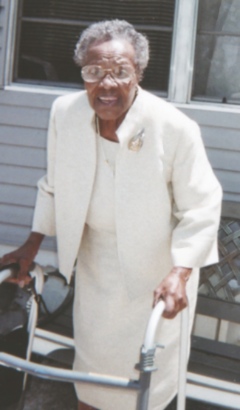
A Birthday Dinner for Mrs. Shellie L. Tarver of Hooper City, celebrating her 100th Birthday, will be held Friday, September 13, given by her children at the Hooper City Recreational Center ( 3901-4th St. West, Hooper City). Her children, Grands,
Great Grands, Siblings, Nieces, Great Nieces, Nephews, Great Nephews, Friends and Neighbors will come and give honor to this blessed woman who has lived in Birmingham since the Third Sunday in November 1940. She is the mother of nine Children (2 deceased); 27 Grandchildren; 19 Great Grand Children; 2 Great, Great Grand Children. She is widow of Mr. Clarence L. Tarver and a member of Hopewell Baptist Church.

Men’s Health Network and Kappa Alpha Psi Fraternity Release the “Kappa Health Challenge” App

0

KappasWASHINGTON, D.C. – Men’s Health Network (MHN) in partnership with the Health & Wellness Committee of Kappa Alpha Psi Fraternity are pleased to announce the launch of “Kappa Health Challenge” smart phone app.  The free app can be downloaded by i-Phone, iPad, iTouch and iPod users now through the AppStore. The app is mainly directed towards fraternity members, but it can benefit all men in learning more about their health.
“In an effort to expand the impact of the ‘Healthy Kappas – Healthy Communities’ program, we approached the Men’s Health Network to combine our efforts to improve the health of our Fraternity. We came up with a tool that everyone could use – the idea of a Smartphone App was formed,” said Edward R. Scott, II D.M.D. Chairman Health & Wellness Committee, Kappa Alpha Psi Fraternity, Inc. “Good health should be a national priority that applies to every person and community. My hope is that all who have smart phones will download and take advantage of the technology – Good luck and good health!”
To use the Kappa Health Challenge app the user would need to create a personal health profile, including information, such as weight, height, birth date, and numbers for Cholesterol, Blood Pressure, and Diabetes. Next, the user can start a game by choosing to play a Facebook friend, play by username, or play Elder Diggs (one of the late revered Founders, Elder Watson Diggs, who contributed in great ways at building the Fraternity from its inception).
In collaboration with MHN it was established that the game categories will contain conditions that are pertinent to men’s health and health prevention, which are: Blood Pressure, Cholesterol, Diabetes, Mental Health, Oral Health, Cancers and STIs/HIV, and the Fraternity also included a Kappa History category.
“With the launch of the ‘Kappa Health Challenge’ app, we now have an opportunity to reach and educate more men, young and the not-so-young ones alike,” said Janet Matope, MHN Community Outreach Director. “Through taking on the health challenge, the app users will become more aware of their own health and will be provided with information on general health risks. We hope the newly gained knowledge will result in taking better care of themselves and improving their health. ”

Men’s Health Network (MHN) is a national nonprofit organization whose mission is to reach men, boys, and their families where they live, work, play, and pray with health prevention messages and tools, screening programs, educational materials, advocacy opportunities, and patient navigation. Learn more about MHN at www.menshealthnetwork.org and follow them on Twitter @MensHlthNetwork and facebook.com/menshealthnetwork

Kappa Alpha Psi is a college Fraternity, now comprised of functioning Undergraduate and Alumni Chapters on major campuses and in cities throughout the country. The Constitution of KAPPA ALPHA PSI is predicated upon, and dedicated to, the principles of achievement through a truly democratic Fraternity, it has never contained any clause, which either excluded or suggested the exclusion of a man from membership merely because of his color, creed, or national origin. KAPPA ALPHA PSI Fraternity moves steadily toward a tomorrow of promise, productivity and influence.

Tips from the front lines: Coping with ADHD in the classroom

0

ADHDBIRMINGHAM, Ala. – As a new school year approaches, an estimated 55 million children will return to classrooms, and some of them bring a diagnosis of attention-deficit/hyperactivity disorder (ADHD) with them. For teachers and parents of a child with ADHD, the beginning of school leads to new challenges and opportunities for learning.
“ADHD is a common neurobehavioral disorder that affects 6 percent of school-age children,” said Laura Montgomery-Barefield, M.D., associate professor of child and adolescent psychiatry at the University of Alabama at Birmingham (UAB). “As children and teens return to class, it is important to reassess the need for new strategies at home and school.”
ADHD is usually first diagnosed in childhood and often lasts into adulthood, according to the Centers for Disease Control and Prevention (CDC). Children with ADHD may have trouble paying attention or controlling impulsive behaviors without regard to consequences, or they may be overly active. The CDC says the reported rate of ADHD in Alabama is among the highest in the nation, and that the rate of diagnosis nationwide increased by 22 percent between 2003 and 2007.
Montgomery-Barefield suggests that parents and teachers should work together to create an ADHD-friendly study environment at both home and school. This can include introducing good study skills and time management techniques.
She says medication management is an effective treatment for ADHD. As students get older, medication regimens may need to be adjusted to include coverage for homework.
“As with any chronic condition, it is important to partner with a child psychiatrist or pediatrician to ensure that your child receives the best treatment,” she said. “And get feedback from teachers.”
Angela Walker, an elementary school principal in Shelby County and a doctoral candidate in early childhood education at the UAB School of Education, has studied coping strategies for students with ADHD.
“During my research, I really came to feel that ADHD is not so much a disorder as it is a different way of learning,” Walker said. “Students with ADHD need hands-on learning, as well as physical and intellectual engagement. We know that all kids benefit from student engagement, but it is essential for kids with ADHD. They require this kind of approach in order to learn.”
Walker reports that her survey of 109 elementary teachers in a suburban Alabama school district identified nine strategies that teachers said were the most effective tools to manage a child with ADHD.
The most effective was to  call the student by name, touch the student, use a private signal word or simply move closer to the student. Eighty-three percent of teachers thought this strategy was effective at least 75 percent of the time.
The other most effective techniques were praising any effort in waiting for turns (78 percent effective); giving verbal compliments for improved work or behavior (77 percent); teaching activities that encouraged active response such as talking, moving, organizing or working at the board (74 percent); and allowing the student to sit closer to the teacher (72 percent).
“The most effective strategies seem to have a theme of praising and engaging students,” said Walker. “That appears to be a really effective combination.”
Other successful strategies Walker reported were asking a student to explain back to the teacher their understanding of directions (66 percent); allow directed movement in the classroom or change in seating that is not disruptive (62 percent); allow standing during seatwork – especially at the end of a task (60 percent); and giving the child an activity reward such as running an errand, cleaning the room or organizing the teacher’s desk (60 percent).
Walker suggests that parents and caregivers can reinforce these strategies at home to create a unified environment.
“It is important to note that with appropriate medical treatment and in an appropriate learning environment, ADHD students usually excel and rise to their academic potential,” said Montgomery-Barefield.  “ADHD is only a disability when treatment is inadequate.”

SOUTHWESTERN ATHLETIC CONFERENCE ANNOUNCES 2013 PRESEASON SOCCER TEAM

0

BIRMINGHAM, Ala. – The Southwestern Athletic Conference released its 2013 SWAC Preseason Soccer teams and predicted order of finish as voted on by the league coaches and sport information contacts.

Points were compiled on a 5-4-3-2-1 basis for the predicted order of finish. Head coaches and sport information contacts were not allowed to vote for his or her team.

Mississippi Valley State and Alabama State registered the most preseason all-conference selections with four. Prairie View A&M and Southern each posted three players.

Alabama State forward Alexandria Cannon was named SWAC Preseason Player of the Year.  Cannon started in all 18 contests for the Lady Hornets in 2012. She recorded 11 goals on the season to lead all scorers in the SWAC. Her five assists ranked third in the conference and second on the team. She tallied a team and conference best, 27 points, while taking 60 shots which ranked second in the league.

Deborah Arguelles (Prairie View A&M) and Alyssa Cobbs (Arkansas-Pine Bluff) were tabbed SWAC Preseason Co-Defensive Player of the Year.

Arguelles played in 19 games as a defender with the Lady Panthers.  She finished the season with a .667 shot-on-goal percentage and was a two-time SWAC Defender of the Week in 2012. Last year, she also earned an All-SWAC Second Team selection.

Cobbs led UAPB and the conference with a .805 save percentage as a result from a league leading 153 saves. As a goalkeeper, she also finished first on the team and second in the SWAC in saves per game (8.50) while recording five shut outs.

For the predicted order of finish, last season’s tournament champion Mississippi Valley State received 81 points with 11 first-place votes to top the Eastern Division in the preseason.  Jackson State received 69 votes followed by Alabama State (52), Alabama A&M (40), and Alcorn State (37).

Prairie View A&M received a total of 90 points to become the favorites of the Western Division with 14 first-place votes. Arkansas-Pine Bluff totaled 55 points for second with Texas Southern (46), Southern (45) and Grambling State (42) closing out the division.

2013 All SWAC Preseason Teams
Offensive Player of the Year
Alexandria Cannon – Alabama State

Co-Defensive Player of the Year
Deborah Arguelles – Prairie View A&M
Alyssa Cobbs – Arkansas- Pine Bluff

First Team
Forwards
Alexandria Cannon – Alabama State
India Pleasant – Alabama State
Shanesse Spratt – Mississippi Valley State

Midfielders
Anastasia McCleary – Alabama State
Ana Huertas – Alabama A&M
Katherine Sheppard – Prairie View A&M
Nykosi Simmons – Mississippi Valley State

Defenders
Debbie Arguelles – Prairie View A&M
Bianca Vigliante – Mississippi Valley State
Molly Stone – Arkansas-Pine Bluff

Goalkeeper
Alyssa Cobbs – Arkansas-Pine Bluff

Second Team
Forwards
Arianna Rountree – Prairie View
Shatiuanna Banks – Jackson State
Jessica Smith– Texas Southern

Midfielders
Raquel Araujo – Jackson State
Hailey Beekman – Mississippi Valley State
Marlyn Campa – Texas Southern
Fabiola Parra – Southern

Defenders
Stephanie Howard – Alabama State
Amber Irvin – Alabama A&M
Breanna Powell – Prairie View A&M

Goalkeeper
Sarah Forde – Southern

2013 Predicted Order of Finish
Eastern Division
Mississippi Valley State   81 (11)
Jackson State                   69 (4)
Alabama State                 52 (2)
Alabama A&M                 40 (1)
Alcorn State                     37

Western Division
Prairie View A&M           90 (14)
Arkansas-Pine Bluff         55 (2)
Texas Southern                46
Southern                          45 (1)
Grambling State              42 (1)

Medicare Part D Continues to Improve Access to Drugs

0

By Douglas E. Schoen

Congress just departed for their annual August recess, and to no one’s surprise, Democrats and Republicans could not agree on the 2014 budget. Now, Congress will return this fall for what will undoubtedly be major battles over significant fiscal issues: the approval of a 2014 budget, raising the U.S. debt ceiling, and allowing sequestration to continue for another year.
First, Congress must pass a 2014 budget that will fund the government beyond September 30, the last day of fiscal year 2013, to avoid the shutdown of the federal government. Congress must then negotiate an agreement to raise the U.S. debt ceiling by November, or else the U.S. faces defaulting on its debts. And finally, Congress must determine how to implement the $91 billion in sequestration cuts, or cuts in federal spending, allotted for 2014.
As Democrats and Republicans are struggling to agree on where federal spending can and should be cut, it is critical to differentiate the spending programs that work from the ones that do not.
One program that has been successfully working for 10 years is Medicare Part D. Part D is a widely popular, bipartisan program that has been saving Americans money since its inception in 2003, when it was created as part of the Medicare Modernization Act to cover the drug coverage gap that that existed in Medicare’s plan. Under Part D, which is run on a free enterprise model, seniors choose from a wide variety of privately run drug plans that negotiate individually with drug makers.
Part D is the most cost-effective and successful entitlement program the federal government runs. The Part D prescription drug benefit has subsidized costs of prescriptions drugs for millions of seniors and Americans with disabilities. In fact, it was recently announced that more than 6.6 million people with Medicare have saved more than $7 billion on prescription drugs as a result of Part D – or about $1,000 per Medicare recipient.
This news marks just the latest indication of the program’s ongoing success, and was followed by a USA Today article, which revealed that Medicare Part D premiums will remain stable, and the deductible will fall from $325 to $310 in the upcoming year.
And not only is Medicare Part D saving Americans money, the program has consistently come in under budget. Costs are now 45 percent below the program’s initial 10-year projection – the program will cost $340 billion less than original estimates. Even more impressive, Medicare Part D is helping to save costs in other ways: the Congressional Budget Office found every 1 percent increase in prescriptions filled has led to a .20 percent decrease in Medicare spending.
The program’s success is reflected in the ratings beneficiaries have given it. Ninety-four percent of Medicare recipients say they are satisfied with their drug coverage, and 95 percent are confident that their level of coverage meets their needs.
Thus, it is clear that Democrats and Republicans should make sure this program stays out of the fray of upcoming budget negotiations, and enable this cost effective and continuously thriving bipartisan program to successfully continue.
Yet the Obama administration wants to change Medicare Part D by imposing mandatory government rebates on drug companies that participate in the program. Framed as a cost saver, these new rebates could have significantly damaging effects on the program.
The proposed rebates could ultimately contribute to higher premiums and copays and increased drug prices for private sector consumers, thus resulting in reduced access to critical medications. Because rebates would mean less funding for biopharmaceutical research, this policy could delay potential scientific and medical developments that could realistically change and save lives by making drugs more effective and safer to use. Mandatory government rebates to Medicare Part D would also translate into fewer jobs in the biopharmaceutical sector.
Recently, 45 House Democrats signed a letter urging legislators to reject any proposals from the administration that would impose new government rebates on Part D, citing each of the aforementioned potentially negative impacts as cause. This is a good step.
At a time when Congress is struggling to balance the budget, it is imperative for Democrats and Republicans to preserve a cost effective, well-liked program that saves Americans money like Medicare Part D. Rather than implementing destructive changes, Democrats and Republicans must preserve what works, and increase support for an already established and flourishing program.
Put simply, both Democrats and Republicans have an opportunity to drive bipartisan cooperation and reduce health care spending through a proven government program.

Douglas Schoen is a political strategist and author of Hopelessly Divided: The New Crisis in American Politics and What it Means for 2012 and Beyond, published by Rowman & Littlefield Publishers.