Nikola Corporation (NASDAQ:NKLA) said on Thursday it had amassed more than 200 sales orders for its Class 8 hydrogen fuel cell electric vehicles, as announced via its HYLA brand.
Nikola said its hydrogen-powered heavy-duty trucks, with a range of up to 500 miles and a refueling time of just 20 minutes, have generated notable interest across various industries.
The company’s Coolidge, Arizona manufacturing facility is now in full gear, according to a tweet by the company. Deliveries are slated to commence later this year, following the completion of a demonstration program.
Michael Lohscheller, Nikola’s President and CEO, hailed the achievement as a reflection of the industry’s growing appetite for sustainable solutions. “This remarkable demand for our hydrogen fuel cell electric truck confirms the industry’s trend toward sustainable transportation solutions,” he stated.
Juicy Incentives: Nikola’s hydrogen truck success is driven by key factors: incentives and partnerships. The California Air Resources Board’s HVIP program speeds up sales with incentives of $240,000 to $288,000 per truck. Canada’s iMHZEV Program expands influence with up to C$200,000 incentives for hydrogen trucks and C$150,000 for battery-electric. NJ-ZIP offers more rebates for qualifying entities.
Hiccups?Nikola’s accomplishment, however, is not without challenges. The global push towards hydrogen fuel cell technology has garnered skepticism from industry figures like Tesla’s Elon Musk, who favors batteries as a more efficient energy storage solution.
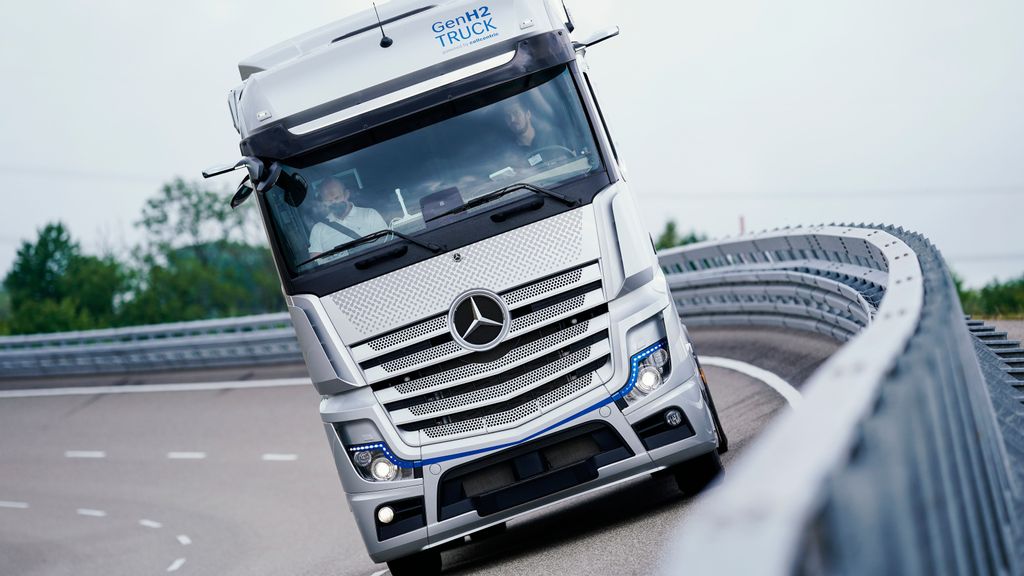
27 June 2022, Rhineland-Palatinate, Wörth am Rhein: A hydrogen test vehicle of the type “GenH2 Truck Prototype 2” drives along a test track at the Wörth plant of truck manufacturer Daimler Truck. The hydrogen test vehicle “GenH2 Truck Prototype 2” is presented there. Nikola Corporation (NASDAQ:NKLA) said on Thursday it had amassed more than 200 sales orders for its Class 8 hydrogen fuel cell electric vehicles, as announced via its HYLA brand. PHOTO BY UWE ANSPACH/GETTY IMAGES
Despite these debates, Nikola’s strides indicate a clear appetite for innovative transport solutions, setting the stage for a future powered by sustainable alternatives.“This remarkable demand for our hydrogen fuel cell electric truck confirms the industry’s trend toward sustainable transportation solutions.
Price Action: Shares in Nikola closed 3.21% down at $3.02 on Wednesday and were 1.66% lower in premarket trading on Thursday, according to data from Zenger News Pro.
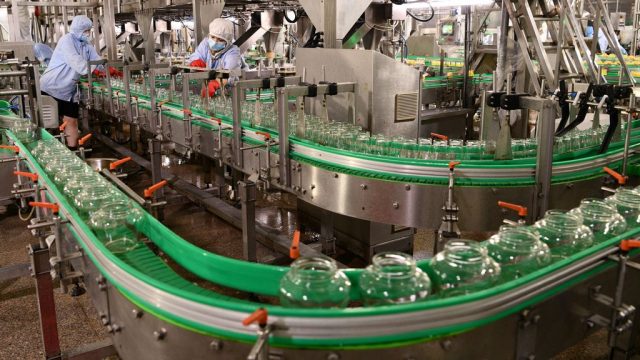
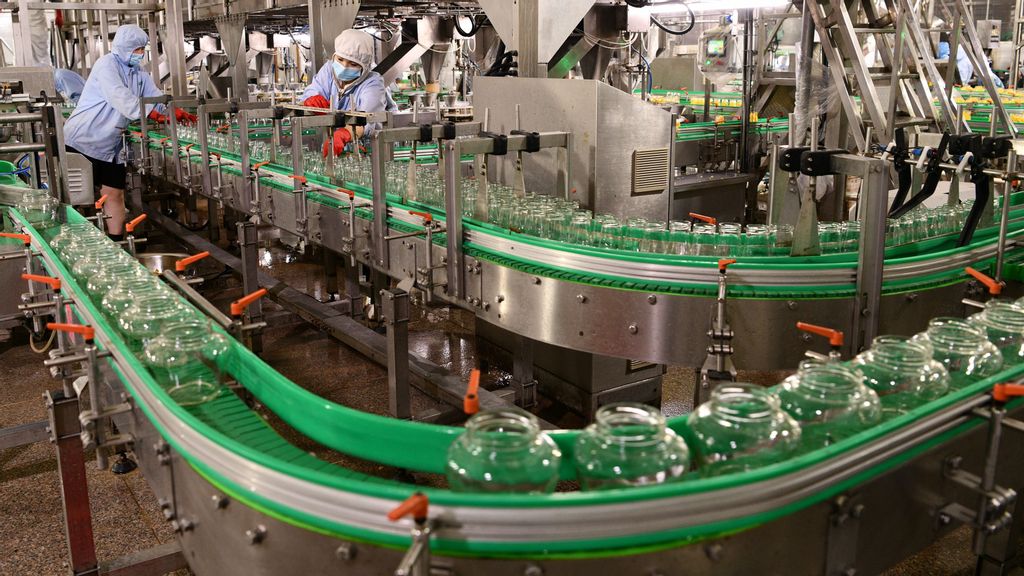
SHIJIAZHUANG, CHINA – AUGUST 02: Employees work on the production line of bottled fruit at Hebei Huaquan Foodstuffs Co., Ltd. on August 2, 2023 in Shijazhuang, Hebei Province of China. (Photo by Li Mingfa/VCG via Getty Images)
Tuna cans and automotive filters aren’t the kind of products we give much thought to. As useful as such traditional items may be, they’re rather dull and uninspiring.
But Tal Leizer, formerly VP-marketing for an Israeli cooking oil producer, saw a lot of potential in the low-tech staples of daily life.
“A strong economy stands on traditional industries, not high-tech,” Leizer tells ISRAEL21c.
“These industries have a hard time finding their next generation of products, to find growth engines and profitable products. The margins are very low and they are struggling,” she says.
“I thought if we put time and effort into bringing a culture of innovation to traditional industry, we could see big breakthroughs.”
For the past 14 years, Practical Innovation has worked with a wide variety of traditional manufacturers in Israel and abroad, developing products and services that present new possibilities to previously ho-hum sectors.
Tal Leizer, founder and CEO of Practical Innovation. Photo courtesy of Practical Innovation
“So far, we have launched over 80 products for customers from industries including agriculture, cosmetics, printing, paint, metal, automobiles, plastics, food, health services, textiles, retail and more,” says Leizer.
“The Israel Innovation Authority, which started with high-tech, has opened a channel for traditional industry and approved us as an innovation consultant.”
The 12-employee company works with hundreds of academic and industrial specialists from Israeli and worldwide who have the expertise clients need.
Practical Innovation has an active satellite office in Brazil – where one of its clients is paper company Suzano — and just opened a branch in Dubai.
Leizer emphasizes that the intellectual property for every invention, once patented, is owned fully by the client. Practical Innovation does not sell products, only conceptualizes and creates them.
Many industries produce waste that is difficult and expensive to get rid of, says Leizer.
“Our approach is to turn this waste into a new product that is more profitable than the core product of the company,” she says. This approach is dubbed “Golden Waste.”
Practical Innovation helped olive oil producer Shemen-Shan find a unique revenue stream for dealing with its nearly 5,000 tons of skins, pits and leaves left over every year after pressing.
A pile of waste olive leaves and branches from the production of olive oil. Photo by Agsaz via Shutterstock.com
“These waste products are filled with antioxidants but they are 1,000 times stronger than the human body can handle, so it’s actually toxic,” says Leizer.
“We have turned that olive waste into the world’s healthiest flour. It’s gluten-free, high in fiber, and the antioxidants are in exactly the amount the human body needs.”
The olive flour is already being used to bake breads and crackers commercially. The flour itself is sold in the olive oil company’s own stores.
“We are now talking with investors to enlarge the line, and are in discussions with large European olive oil makers about this innovative product,” says Leizer.
Practical Innovation solved a different problem for Lord Sandwich, an Israeli company seeking to go global.
The problem: With a growing number of consumers wanting to eat fewer carbs and more proteins, the sandwich category is stagnating. Furthermore, traditional sandwiches have a five-day shelf life, making export unfeasible.
The solution: Full Wrap, a flexible and sturdy gluten-free tortilla wrap made of vegetable protein. It can be integrated into any sandwich production line, says Leizer.
Lord Sandwich has received prizes for Full Wrap, including first place in the Future Food-Tech innovation challenge with Kraft Heinz in 2021 that sought innovative ways to use beans or pulses.
Israel’s A.L. Group specializes in filtration solutions for the automotive industry.
With gas and oil filters going obsolete due to the rise of electric vehicles, A.L. was seeking a way to make air filters more intrinsic to the driving experience.
“Drivers don’t think about the air filter in their car because it doesn’t affect the performance of the vehicle. We wanted to create something you cannot drive without,” says Leizer.
Welcome to A.L.’s unique Auto Wellbeing System.
This filter holds scent capsules that release an app-controlled choice of aromatherapy oils with names like Happy, Focus, Calm, Boost and Bliss. The capsules are restocked when the filter gets its annual change at the car mechanic.
Steelbird International of India has signed a strategic partnership with A.L. Group to market the aromatic Israeli filters to its established OEM clientele throughout India and South Asia.
Practical Innovation began working on a “green” outdoor air conditioner for a military contractor but then a group of investors established a startup dedicated to this product.
Kensho by Green Konoko addresses the fact that al fresco events are challenging in the age of climate change. Existing fan or water-mist solutions can be noisy and uncomfortable and need a power source.
This elegantly designed unit lowers the temperature by 10 degrees using only liquid nitrogen. It’s quiet and includes insect-repellant and disinfection capsules.
Some other inventions Practical Innovation has dreamed up:
iPaint, a reusable backpack kit outfitted with a bag of paint, roller, flexible hose and electronic pump. The paint is poured from the bag through the hose to the roller, ready to apply to the wall.
A gluten-free, sugar-free, single-calorie meringue kiss that dissolves in seconds to sweeten hot beverages, made with probiotic fibers and vegetable protein.
A spurt-free, air-release tuna can with an award-winning pump that facilitates draining the oil or water without danger of cutting fingers. It can be integrated on any tuna canning line and is made from recyclable materials.
On-trend seasoning products from Israel’s largest salt company, Salt of the Earth. CEO Ofer Rokni said, “Most of us were surprised to realize that salt can be a source of innovation.”
Low-angle view of the facade of Tesla Motors dealership with logo and sign in Pleasanton, California, July 23, 2018. (Photo by Smith Collection/Gado/Getty Images)
Electric vehicle leader Tesla Inc (NASDAQ: TSLA) reported second-quarter delivery and production figures on July 2, 2023.
With the latest report, here is a look at how many vehicles Tesla delivered and produced in each quarter dating back to 2019.
Tesla Q2 Deliveries: In the second quarter, Tesla delivered 466,140 units, which was up 83.0% year-over-year. The total deliveries beat the estimate of 446,823 from analysts.
The Model 3 and Model Y represented 446,915 deliveries in the quarter, making up around 86% of all deliveries by the company. The company reported 19,225 Model S and Model X deliveries in the second quarter.
Tesla produced 479,700 units in the second quarter, which was up 85.5% year-over-year.
The electric vehicle leader will report second quarter financial results on July 19 after market close.
The company said it remains on track to hit an internal goal of 1.8 million vehicles delivered for the full fiscal year.
Tesla Production Numbers By Quarter: Here’s a look at how Tesla has fared in producing vehicles each quarter dating back to 2019:
Q1 2019: 77,138
Q2 2019: 87,048
Q3 2019: 96,155
Q4 2019: 104,891
Q1 2020: 102.672
Q2 2020: 82,272
Q3 2020: 145,063
Q4 2020: 179,757
Q1 2021: 180,338
Q2 2021: 206,421
Q3 2021: 237,823
Q4 2021: 237,823
Q1 2022: 305,407
Q2 2022: 258,580
Q3 2022: 365,923
Q4 2022: 439,701
Q1 2023: 440,808
Q2 2023: 479,700
Tesla Vehicle Deliveries By Quarter: Here’s a look at how Tesla has fared in deliveries of vehicles in each quarter dating back to 2019:
Q1 2019: 63,019
Q2 2019: 95,356
Q3 2019: 971,86
Q4 2019: 112,095
Q1 2020: 88,496
Q2 2020: 90,891
Q3 2020: 139,593
Q4 2020: 180,667
Q1 2021: 184,877
Q2 2021: 201,304
Q3 2021: 241,391
Q4 2021: 308,650
Q1 2022: 310,048
Q2 2022: 254,695
Q3 2022: 343,830
Q4 2022: 405,278
Q1 2023: 422,875
Q2 2023: 466,140
Key Takeaways: A quick look at the figures shows production has increased in each sequential quarter with the exception of two quarters in 2020 during the COVID-19 pandemic with lockdowns and factory restrictions, as well as the first and second quarters of 2022, which were also affected by COVID-19 lockdowns in China.
During its first-quarter financial results, Tesla said it remained on course to meet its goal of production increasing an average of 50% annually.
“We are planning to grow production as quickly as possible in alignment with the 50% CAGR target we began guiding to in early 2021. In some years we may grow faster and some we may grow slower, depending on a number of factors. For 2023, we expect to remain ahead of the long-term 50% CAGR with around 1.8 million cars for the year,” the company said.
MACAU, CHINA – JULY 26, 2023 – Customers shop at the Londoner Apple Store in Macau, China, July 27, 2023. (CFOTO/Future Publishing via Getty Images)
Apple, Inc.‘s (NASDAQ:AAPL) foray into financial services has apparently proved fruitful, adding to the momentum the overall Services business is seeing.
Apple disclosed Wednesday, the high-yielding savings account it is offering to Apple Card customers has received over $10 billion in deposits. The service offered in collaboration with Goldman Sachs Group, Inc. (NYSE:GS) was launched in April.
Just after the launch, reports suggested the account drew in over $1 billion in deposits within four days.
The savings account promises a yield of 4.15% even when financial services giants pay literally no interest for the deposits their clients park with them. It also provides Apple Card users an opportunity to grow their daily cash rewards.
“With each of the financial products we’ve introduced, we’ve sought to reinvent the category with our users’ financial health in mind…it remained our guiding principle with the launch of Savings,” said Jennifer Bailey, Apple’s vice president of Apple Pay and Apple Wallet.
Apple said since the launch of the savings account, 97% of savings customers have chosen to have their daily cash automatically deposited into their account. Savings account hZenger News can also deposit additional funds into the account through a linked bank account from their Apple cash balance, it added.
The announcement comes even as reports suggested in July that Goldman is in talks to offload the Apple Card and savings account portfolio as the latter strives to scale down its consumer lending business.
Goldman also collaborates with Apple for its ‘Buy Now, Pay Later’ service the tech giant launched in March.
A Wall Street Journal report said in early June that Apple savings account hZenger News are scrambling to close down their accounts due to difficulty in the withdrawal of funds.
Apple’s financial services business is part of its Services business. Wedbush analyst Daniel Ives said in a note released on Wednesday that he sees a reacceleration of the Services business to a double-digit growth pace, thanks to expanding iPhone user base, improving attach rates on Services, and price increases.
“We believe overall the Services business is worth $1.3 trillion to $1.4 trillion for Apple’s sum of the parts valuation and remains an underappreciated asset by the Street,” he said.
Apple is scheduled to report its fiscal year third quarter results Thursday after the market close, with analysts modeling in-line to higher results and upbeat September quarter guidance.
Apple closed Wednesday’s session down 1.55% at $192.58, according to Zenger News Pro data.
People are unable to detect over one in four “deepfake” speech samples that can be employed by criminals, according to new research.
The British study is the first to assess human ability to detect artificially generated speech in a language other than English. Deepfakes are synthetic media intended to resemble a real person’s voice or appearance. They have been used by criminal gangs to con people out of large sums of cash.
Deepfakes fall under the category of generative artificial intelligence (AI), a type of machine learning (ML) that trains an algorithm to learn the patterns and characteristics of a dataset, such as video or audio of a real person, so that it can reproduce original sound or imagery.
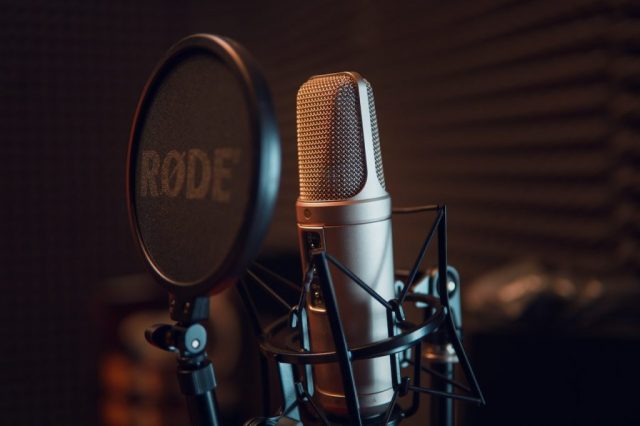
Rode audio recording equipment. While early deepfake speech algorithms may have required thousands of samples of a person’s voice to be able to generate original audio, the latest pre-trained algorithms can recreate a person’s voice using just a three-second clip of them speaking. DMITRY DEMIDOV VIA PIXELS.
While early deepfake speech algorithms may have required thousands of samples of a person’s voice to be able to generate original audio, the latest pre-trained algorithms can recreate a person’s voice using just a three-second clip of them speaking.
Tech giant Apple recently announced software for iPhone and iPad that allows a user to create a copy of their voice using 15 minutes of recordings.
Researchers at University College London (UCL) used a text-to-speech (TTS) algorithm trained on two publicly available datasets, one in English and one in Mandarin, to generate 50 deepfake speech samples in each language.
The samples were different from the ones used to train the algorithm to avoid the possibility of it reproducing the original input.
The artificially generated samples and genuine samples were played for 529 participants to see whether they could detect the real thing from fake speech.
Participants were only able to identify fake speech 73 percent of the time, according to the findings published in the journal PLOS ONE.
The research team said that the figure improved only slightly after they received training to recognize aspects of deepfake speech.
English and Mandarin speakers showed similar detection rates, although when asked to describe the speech features they used for detection, English speakers more often referenced breathing, while Mandarin speakers more often referenced cadence, pacing between words, and fluency.
“Our findings confirm that humans are unable to reliably detect deepfake speech, whether they have received training to help them spot artificial content,” said the Study first author Kimberly Mai.
“It’s also worth noting that the samples that we used in this study were created with algorithms that are relatively old, which raises whether humans would be less able to detect deepfake speech created using the most sophisticated technology available now and in the future.” said Ms. Mai, a machine learning PhD Student at UCL.
Rode audio recording equipment. While early deepfake speech algorithms may have required thousands of samples of a person’s voice to be able to generate original audio, the latest pre-trained algorithms can recreate a person’s voice using just a three-second clip of them speaking. DMITRY DEMIDOV VIA PIXELS.
The research team now plans to develop better-automated speech detectors.
Though there are benefits from generative AI audio technology, such as greater accessibility for those whose speech may be limited or who may lose their voice due to illness, there are growing fears that such technology could be used by criminals and nation-states to cause significant harm to individuals and societies.
Documented cases of deepfake speech being used by criminals include one 2019 incident where the CEO of a British energy company was convinced to transfer hundreds of thousands of pounds to a false supplier by a deepfake recording of his boss’s voice.
“With generative artificial intelligence technology getting more sophisticated and many of these tools openly available, we’re on the verge of seeing numerous benefits as well as risks. It would be prudent for governments and organizations to develop strategies to deal with abuse of these tools, certainly, but we should also recognize the positive possibilities that are on the horizon.” said the study senior author Professor Lewis Griffin, of UCL.
Last month, Nikola’s 2023 annual meeting of sharehZenger News was adjourned to Aug. 3 after the company did not receive enough votes to approve its proposal to increase the number of authorized shares of its common stock.
A proposed amendment to Section 242 of the Delaware General Corporation Law is expected to be effective when the meeting reconvenes. The amendment will change the required votes from a majority of the outstanding common stock to a majority of the shares actually voting on the proposal.
“If this were the case last month, the company would have had enough votes to approve the proposal,” said Benzinga. Before the market opens Friday, Nikola will report its second-quarter financial results. The company is expected to report a loss of 22 cents per share on revenue of $15.43 million.
Nikola Corporation logo is seen in the background of a silhouetted woman holding a mobile phone. The amendment will change the required votes from a majority of the outstanding common stock to a majority of the shares actually voting on the proposal. RAFAEL HENRIQUE/SOPA IMAGES/LIGHTROCKET VIA GETTY IMAGES.
According to Zenger News Pro, Nikola has met or exceeded EPS estimates in 11 straight quarters. Although the company has reported widening losses, the losses have been better than feared. Revenue numbers have been more hit-and-miss. The company underwhelmed analysts in each of the last two quarters, but beat expectations in the prior three quarters.
Last quarter, Nikola announced a strategic refocus of its core business. The company announced plans to focus on the North American market, hydrogen fuel cell trucks, HYLA hydrogen ecosystem and autonomous technologies.
Nikola also said it produced 63 Tre battery electric vehicles in the quarter and delivered 31 of them to dealers, noting that it was beginning to see an uptick in retail sales. Nikola has already reported second-quarter production and delivery numbers. Last month, the company said it produced 33 vehicles. It delivered 45 vehicles via wholesale and 66 via its retail channel.
“It is not easy being a pioneer in the zero-emission Class 8 truck space, but we are witnessing a remarkable surge in momentum,” said Michael Lohscheller, CEO of Nikola.
Nikola Corporation logo is seen in the background of a silhouetted woman holding a mobile phone. The amendment will change the required votes from a majority of the outstanding common stock to a majority of the shares actually voting on the proposal. RAFAEL HENRIQUE/SOPA IMAGES/LIGHTROCKET VIA GETTY IMAGES.
Nikola’s shares are up nearly 100% over the last month, but the rally didn’t get started until the company announced an agreement with BayoTech to advance reliable hydrogen supply for commercial fuel cell electric vehicle fleets in mid-July. At the end of the month, shares caught another boost after the company said JB Hunt Transport plans to purchase 13 Nikola zero-emission Class 8 trucks.
“Nikola has also commenced production of its hydrogen fuel cell electric truck with an estimated range of 500 miles,” said the company on a tweet.
Investors will want to watch for demand updates and production timelines when the company reports at the end of the week. NKLA Price Action: Nikola shares were down 5.29% at $2.96 at the time of publication, according to Zenger News Pro.
In response to stricter regulations on generative AI in China, Apple has removed over a hundred ChatGPT-like apps from its China store, according to Zenger News reports. This action is aimed at mitigating potential legal risks, such as copyright infringement lawsuits and government investigations. The move underscores Apple’s commitment to adhering to local regulations and safeguarding its business interests in China.
Customers walk past the Apple Store in Causeway Bay in Hong Kong, China. Apple has removed over a hundred ChatGPT-like apps from its China store, Air Canada (OTC: ACDVF) has announced plans to offer Apple TV+ programming on its flights, Apple is set to release its Q3 results, a critical moment for investors. CFOTO/FUTURE PUBLISHING VIA GETTY IMAGES.
Supply Chain News: Air Canada to Offer Apple TV+ Programming
Air Canada (OTC: ACDVF) has announced plans to offer Apple TV+ programming on its flights, enhancing the in-flight experience for passengers. This partnership with Apple is part of Air Canada’s ongoing efforts to provide innovative and high-quality services to its customers. The move will allow passengers to enjoy a wide range of entertainment options during their journey, further solidifying Air Canada’s commitment to customer satisfaction, according to Zenger News.
According to the BNN Bloomberg, the airline says the deal, which comes into effect immediately, puts its entertainment offerings on track to grow by 95 per cent since last year. “We continually evaluate opportunities to expand our entertainment and introduce exclusive, current content that our customers will love,” said John Moody, managing director of Product Design at Air Canada, in a news release.
“We look forward to welcoming customers onboard to catch up on their favorite Apple TV+ shows or discover new hits during their flight.” said the Managing Director.
The move follows Air Canada’s recent deal with Mattel to bring family content to its in-flight entertainment and its expansion into live television in English and French.
Customers walk past the Apple Store in Causeway Bay in Hong Kong, China. Apple has removed over a hundred ChatGPT-like apps from its China store, Air Canada (OTC: ACDVF) has announced plans to offer Apple TV+ programming on its flights, Apple is set to release its Q3 results, a critical moment for investors. CFOTO/FUTURE PUBLISHING VIA GETTY IMAGES.
Competition News: Apple’s Q3 Results Awaited Amid High Expectations
According to the Proactive Investors Reports, Apple Inc. cheerleaders will see its quarterly results on Thursday (August 3) as an opportunity to underscore the resilience of the business. However, there is a growing groundswell of opinion, based on recent downward earnings revisions, that wonders whether the fundamentals fully underpin the tech Goliath’s heady $3 trillion valuation.
Apple is set to release its Q3 results, a critical moment as investors question the fundamentals behind the company’s $3 trillion valuation. Analysts expect Apple to post strong iPhone revenues for the quarter, driven by demand for the iPhone 14 and growth in the Chinese market. Additionally, Apple’s Services business is expected to see a reacceleration, with estimates placing its overall worth between $1.3 trillion and $1.4 trillion.
Despite some concerns and contrasting opinions, Apple’s performance in China, strong iPhone demand, and the potential growth of its Services business suggest a positive outlook for the company, according to the Proactive Investors reports.
Semiconductor and technology company Qualcomm Inc (NASDAQ: QCOM) reported third-quarter financial results after the market close Wednesday. Here are the key highlights.
Qualcomm reported third-quarter revenue of $8.44 billion, which was down 23% year-over-year. The revenue total missed a Street estimate of $8.51 billion.
The company reported earnings per share of $1.87, which beat a Street estimate of $1.81.
Qualcomm QCT segment revenue was $7.17 billion, down 24% year-over-year. QTL segment revenue was $1.23 billion, down 19% year-over-year.
A Qualcomm logo. Qualcomm has reported third-quarter revenue of $8.44 billion, down 23% YoY. (JOSEP LAGO/AFP via Getty Images)
The company saw its QCT Automotive segment revenue increase 13% year-over-year, marking 11 straight quarters of year-over-year double-digit percentage growth.
“We are pleased with our technology leadership, product roadmap and design-win execution, which position us well for growth and diversification in the long term,” Qualcomm CEO Cristiano Amon said.
Qualcomm sees fourth -quarter revenue coming in a range of $8.1 billion to $8.9 billion. The company sees earnings per share for the third quarter hitting a range of $1.80 to $2.
Analysts were guiding for fourth quarter revenue of $8.7 billion and earnings per share of $1.91, according to Zenger News Pro.
“As AI use cases proliferate to the edge, on-device AI has the potential to drive an inflection point across all our products. Qualcomm remains best positioned to lead this transition given the unmatched accelerated computing performance with the power efficiency of our platforms,” Amon said.
Qualcomm shares are down 3.2% to $125.12 in after-hours trading Wednesday versus a 52-week trading range of $101.47 to $152.90.
A Qualcomm logo. Qualcomm has reported third-quarter revenue of $8.44 billion, down 23% YoY. (JOSEP LAGO/AFP via Getty Images)
Qualcomm Incorporated is a global semiconductor and telecommunications equipment company based in San Diego, California. Founded in 1985 by Irwin Jacobs, Andrew Viterbi, and six others, the company has grown to become a prominent player in the technology industry, particularly in the development of mobile communications technologies.
Qualcomm is best known for its contributions to the development of digital communication technologies and its role in advancing mobile computing and telecommunications. The company designs and manufactures semiconductors and system-on-chip (SoC) solutions used in a wide range of electronic devices, with a significant focus on smartphones and other mobile devices.
One of Qualcomm’s flagship products is its Snapdragon series of mobile processors. These processors power many Android smartphones and are highly regarded for their performance, power efficiency, and support for cutting-edge features such as 5G connectivity and advanced artificial intelligence capabilities.
Dorothy Tucker, far right, president of the NABJ with board members during opening ceremony of the 2023 convention. (Amarr Croskey, For The Birmingham Times)