
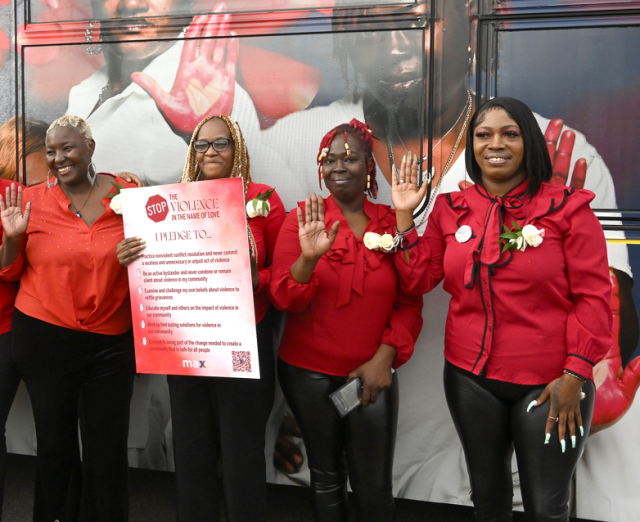
MAX Transit, Birmingham Moms Unveil Black History Month Bus Wrap

By Tehreem Khan
uab.edu
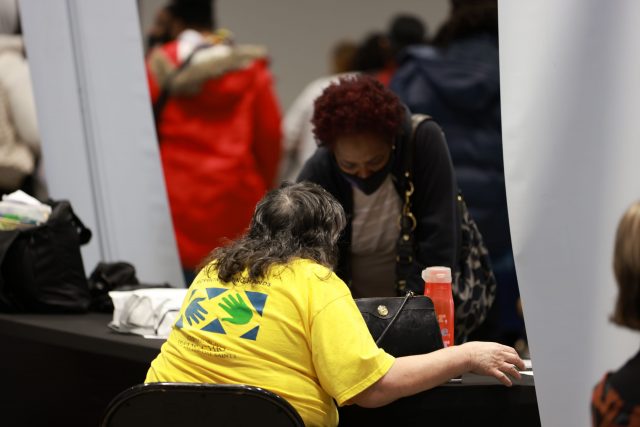
BIRMINGHAM, AL – For the first time since 2019, the Housing Authority of the Birmingham District (HABD) will open its Housing Choice Voucher Waiting List for the Mainstream Voucher Program. The Mainstream Voucher Program is designed to assist non-elderly, disabled individuals or families that have a qualifying, disabled household member.
Currently, disabled renters face significant challenges in obtaining affordable housing. Across the U.S., 18 million disabled people are eligible for housing assistance but don’t receive it due to the lack of funding or readily-available affordable housing. In Birmingham, 18% of residents are considered disabled and at HABD, 16% of households have a member with a disability. By opening the waiting list, HABD is working to make housing more affordable and accessible for disabled Birmingham residents.
HABD’s Mainstream Voucher Program waiting list will open on Tuesday, February 7, 2023 at 10AM and close on Monday, February 13, 2023 at 3PM. Interested applicants should visit www.habdportals.org to apply online. Applications will only be accepted online, with the exception of those requiring reasonable accommodations. When applying, applicants must select the “Mainstream” preference to be added to the waiting list. Applicants seeking reasonable accommodations should contact the Department of Rental Assistance Programs at (205) 521-6373.
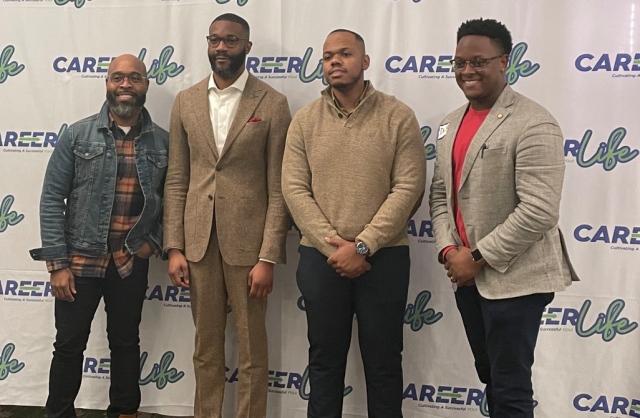

A new report shows the University of Alabama at Birmingham’s annual economic impact in Alabama grew from $4.6 billion in 2008 and $7.15 billion in 2016 to $12.1 billion in 2022 — a 41 percent increase since 2016 and a 163 percent increase since 2008.
In 2022, UAB generated more than $371 million in state and local taxes and supported or sustained 107,600 jobs in Alabama, up from 64,000 six years ago. In Birmingham alone, UAB generated $8.3 billion in economic impact, supported or sustained 73,595 jobs, and generated more than $256 million in local taxes.
According to the report, “UAB is the most significant single contributor to the Alabama economy and the leading generator of jobs.”
UAB President Ray L. Watts announced the results of the new economic impact study conducted by Tripp Umbach during his presentation at the University of Alabama System Board of Trustees meeting at UAB Hill Student Center on Feb. 3.
“We are proud that our positive impact in Alabama and on Alabamians continues to grow with the active partnership and support of the University of Alabama System Office and UA System Board of Trustees,” Watts said. “We exist to improve lives, and this report is evidence of our growing impact.”
UAB is Alabama’s largest single employer and now directly employs nearly 28,000 people. One in every 20 jobs within the state of Alabama either is held directly by a UAB employee or is supported as a result of UAB’s presence.
“The rapid growth of UAB’s economic impact has far exceeded our expectations,” said UAB Senior Vice President for Finance and Administration Brian Burnett. “This report is proof that Forging the Future, UAB’s strategic plan led by President Watts and supported by our talented students, faculty, staff, alumni and supporters, continues to guide our institution’s purposeful growth to unprecedented results.”
UA System Chancellor Finis St. John says the report demonstrates a tremendous positive return on investment for public officials, business leaders and individuals looking to fund initiatives that make a difference.
“The University of Alabama System campuses continue to serve our state well, and UAB’s new economic impact study is further proof that dollars invested in our institutions deliver a tremendous positive return on investment for our state,” St. John said. “According to the report, UAB generates $39.35 in economic impact returned to the state for every $1 in state funding the institution receives. That return is up from $25 in 2016.”
UAB’s academic enterprise generated $5.5 billion in statewide economic impact, while the UAB Health System generated $6.4 billion. UAB’s charitable giving and volunteerism were estimated to deliver $115.4 million in statewide impact, up from $80.5 million in 2016. UAB affiliate Southern Research generated $221.8 million in statewide economic impact, supported and sustained 1,514 jobs, and generated $206.2 million in state and local taxes.
“Our economic impact continues to grow across all areas of our mission thanks to our talented students, faculty, staff, alumni and supporters,” Watts said. “While important, economic impact is only one way we contribute to our city, state and beyond. As much as we focus on that impact, we will continue to focus on the positive impact we can have on people across our education, research, patient care and community service missions.”
Tripp Umbach is an experienced provider of conducting economic impact studies, community needs assessments, feasibility studies and strategic planning for various clients, including colleges/universities, hospitals, medical schools, academic medical centers, industry associations, and economic development organizations. Tripp Umbach has completed consulting assignments for more than 1,000 clients worldwide. Tripp Umbach’s clients include academic medical centers, such as Cleveland Clinic, University of Michigan, University of Iowa, University of Pittsburgh Medical Center, Penn Medicine, Johns Hopkins University, University of Nebraska Medical Center, Ohio State University Wexner Medical Center, University of Washington, University of Minnesota, UF Health Shands Hospital and University of California San Francisco Medical Center.

By Stacy M. Brown
NNPA Newswire Senior National Correspondent
@StacyBrownMedia
The pressure on the government to do something about rising housing costs has resulted in the Biden administration announcing major new initiatives to safeguard tenants and make renting more affordable.
Now, several federal agencies announced they would collaborate to compile data on discriminatory housing practices.
A non-binding “Blueprint for a Renters Bill of Rights” is also included to provide clear instructions for tenants to continue living in moderately priced rentals.
In addition, the White House is issuing a rallying cry called the “Resident-Centered Housing Challenge,” with the goal of encouraging housing providers and state and local governments to bolster policy in their respective markets.
“Since taking office, the president has taken substantial steps to promote fairness in the rental market and ease the burden of rental costs for millions of American renters,” administration officials wrote in a Fact Sheet.
Officials said the administration kept the national eviction moratorium in place until August 2021, which helped to prevent over 1.5 million eviction filings nationwide.
Further, the administration has delivered over 8 million rental or utility assistance payments to reduce renters’ risk of eviction or housing instability.
The White House said more than $769 million has been provided for housing stability services by the Administration.
In 2022, the administration released a Housing Supply Action Plan, which set the goal of closing America’s housing supply shortfall in five years.
The administration has been making progress advancing a long-term goal of providing housing vouchers to all eligible households: through the 2022 and 2023 president’s Budgets, the administration has secured rental assistance to more than 100,000 households through the 2022 and 2033 appropriations bills and the American Rescue Plan.
And, recently, HUD published a Notice of Proposed Rulemaking on its efforts to Affirmatively Further Fair Housing.
As the housing market remains a major issue for renters, administration officials pointed out that inflation has reduced, but rental prices have continued to rise.
The actions are the latest by the Biden administration to curtail evictions and to help make housing more affordable.
Reportedly, tenant unions, community organizations, and legal advocacy groups have called for an all-out strategy, preparing an executive order for the Biden administration, advocating for a housing emergency declaration, and investigating rent control options.
Those plans, which involved several departments, were made to encourage federal authorities to look into alternative methods of lowering rental prices, the Washington Post reported.
Many ideas were dismissed as unrealistic by White House advisors and administration officials, and some questioned the legitimacy of such drastic measure, the newspaper stated.
The “Blueprint for a Renters Bill of Rights” emphasizes the importance of eviction prevention and diversion, the right to organize, and clear and fair contracts.
Over a third of the American population – 44 million households – rent their homes.
Before the pandemic, well over 2 million eviction fillings and roughly 900,000 evictions occurred annually – disproportionately affecting Black women and their children, administration officials stated.
Since then, rental housing has become less affordable with some landlords taking advantage of market conditions to pursue egregious rent increases.
“These announcements recognize there are responsible housing providers – large and small, national and local – willing to treat renters fairly, but it also holds accountable those who exploit market realities at the cost of renters’ housing access and stability,” officials stated.
By CHRIS MEGERIAN, FARNOUSH AMIRI and SEUNG MIN KIM Associated Press
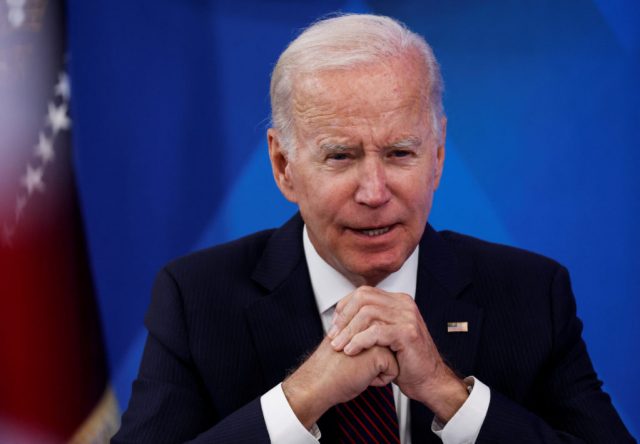
WASHINGTON (AP) _ President Joe Biden and Vice President Kamala Harris, facing renewed pressure to overhaul policing practices after the killing of Tyre Nichols, met with members of the Congressional Black Caucus on Thursday to explore the possibility of getting such a bill back on track.
“My hope is this dark memory spurs some action that we’ve all been fighting for,” Biden said before the start of the Oval Office meeting.
At the White House were Sens. Raphael Warnock of Georgia and Cory Booker of New Jersey _ two of the three Black senators _ and Reps. Steven Horsford of Nevada, Sheila Jackson Lee of Texas, Jim Clyburn of South Carolina and Joe Neguse of Colorado.
Horsford, the caucus chairman, said it was long past time to have a “genuine” conversation about policing in America. “I am working to make sure that we have a clear plan.“
At Nichols’ funeral Wednesday in Memphis, Tennessee, Harris said the White House would settle for nothing less than ambitious legislation to address police brutality.
“We should not delay. And we will not be denied,“ Harris said. “It is nonnegotiable.”
Bipartisan efforts in Congress to reach an agreement on policing legislation stalled more than a year ago, and Biden ended up signing an executive order named for George Floyd, whose murder at the hands of Minneapolis police set off nationwide protests nearly three years ago.
Even some political allies of Biden are frustrated with what they view as his excess caution on the issue.
“I think the president is missing the opportunity to be a historic president when it comes to the social issues that continue to plague our country,“ said Rep. Jamaal Bowman, D-N.Y. “That’s what we need.”
Bowman described Biden as “a champion of the status quo in many ways” and said Biden needs to be “a champion of a new vision for America.”
The solution, Bowman said, is not “thoughts and prayers, come to the State of the Union after your kid gets killed,“ a reference to Nichols’ mother and stepfather being invited to attend next week’s speech.
Jim Pasco, executive director of the Fraternal Order of Police, said he was in touch with the White House last Friday, when video of Nichols’ beating became public, about whether the situation could be a catalyst to “get things moving again.”
His organization, the nation’s largest police union, had participated in previous attempts to reach a bipartisan deal, and Pasco said “we welcome any constructive effort to help us do our jobs better.” The union’s president, Patrick Yoes, has condemned Nichols’ killing and said that “our entire country needs to see justice done _ swiftly and surely.“
Pasco said “we’re kind of in a wait-and-see mode right now,“ with Republicans recently regaining control of the House, making legislative progress much harder. “You’ve got to look at the political realities here,” he said.
House Speaker Kevin McCarthy, R-Calif., on Thursday signaled an openness to discussing the issue.
South Carolina Sen. Tim Scott, the sole Black Republican senator, said resurrecting the previous Democratic bill is a “nonstarter.” He has implored Democrats to put aside “tribalism” in order to strike a deal.
“I’ve been working toward common ground solutions that actually have a shot at passing,“ Scott said. “Solutions to increase funding and training to make sure only the best wear the badge.”
Biden has embraced calls for overhauling how police do their jobs while also emphasizing his longtime support for law enforcement and rejecting proposals to cut money. He was elected with strong support from Black voters, and he is now preparing a reelection campaign for 2024.
Harris, a former prosecutor and the first person of color to serve as vice president, has faced particular scrutiny for her approach to police issues.
Marc Morial, president of the National Urban League, said he was encouraged that Harris attended the funeral. “This is what people expect, that you’ll be there for them at a time of need,“ he said.
Now, Morial said, “we need a substantive response, not a political response where they say, `Let’s just pass something.”’
Biden’s executive order was the product of negotiations among civil rights leaders and law enforcement organizations. It mostly focuses on federal agencies by requiring them to review and revise policies on the use of force. The administration is also encouraging local departments to participate in a database to track police misconduct.
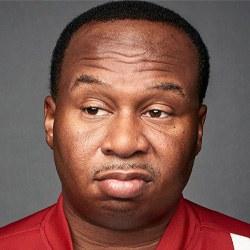
By MIA MCCARTHY Politico
Roy Wood Jr., the stand-up comedian known for his work on Comedy Central’s “The Daily Show,” will be the featured entertainer at the 2023 annual White House Correspondents’ dinner, the Correspondents’ Association announced on Thursday.
“It will be a great night that will go down in the history books, or not, depending on which state you live in,” Wood said in the announcement.
The dinner, set for April 29, is typically attended by numerous Washington VIPs, including the president and first lady. The annual event, attended for decades by presidents from both parties, became a political flash point during the Trump administration when then-President Donald Trump refused to attend the event amid his frequent tirades against the Washington press corps. The dinner was canceled amid the Covid pandemic in 2020 and 2021 but returned last year with President Joe Biden in attendance.
Wood, who studied journalism at Florida A&M University in 1998 before shifting to stand-up comedy, is the son of a pioneer radio and television journalist. Roy Wood Sr. covered topics like the Civil Rights movement and the South African Soweto race riots — work that helped him earn a lifetime achievement award from the National Association of Black Journalists.
“It’s an honor to be a part of a long-running tradition of celebrating those members of the media, who work so hard to uncover the truth, and hold our government accountable,” Wood said in a press release.

By Stacy M. Brown
NNPA Newswire Senior National Correspondent
@StacyBrownMedia
As 2022 closed, Black Americans saw gains with historic candidates and timely legislation.
President Joe Biden signed the Emmett Till Antilynching Act and later, the Respect for Marriage Act, which protected interracial marriages.
A slim majority in Congress prevented other significant bills from reaching the president’s desk.
As Black History Month begins, there remains key issues that African Americans want to see happen.
A December poll of Black voters revealed that African Americans want the government to do more to fight white supremacy.
That FBI helped underscore that need when it issued a report noting that hate crimes disproportionately target African Americans.
With mass shootings continuing at a record pace, gun control remains a hot-button issue for Black America.
Further, many Black voters have suggested strong desires for a comprehensive voting rights package, whether that’s in the form of the Freedom to Vote Act, or the John Lewis Voting Rights Advancement Act.
The former would expand mail-in, early voting, and automatic voter registration, while the latter would restore the Voting Rights Act of 1965.
And, following the brutal murder of Tyre Nichols at the hands of five Tennessee police officers, African Americans have continued to voice outrage over the failure of lawmakers to pass the George Floyd Justice in Police Act. While the bill has twice passed the House, the measure has stalled in the Senate despite a Democrat majority there.
The legislation would end qualified immunity, which many believe would greatly curtail the type of police behavior that led to the deaths of Nichols, Floyd, and so many other African Americans.

