The Birmingham Museum of Art announced that Graham C. Boettcher, Ph.D., The R. Hugh Daniel Director and CEO, will step down from his role. (BMA)
Special to The Times
The Birmingham Museum of Art (BMA) announces that Graham C. Boettcher, Ph.D., The R. Hugh Daniel Director and CEO, will step down from his role effective July 31, 2026, following 20 years of distinguished service to the institution. Boettcher, who began his tenure at the BMA in 2006 as a curatorial fellow and became the museum’s first Curator of American Art before being appointed Director and CEO in 2017, has been named Director and CEO of the Norman Rockwell Museum in Stockbridge, Massachusetts.
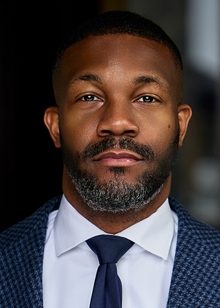
Graham C. Boettcher, Ph.D.
Boettcher’s tenure at the BMA has been marked by sustained institutional growth, scholarly excellence and a deep commitment to community engagement.
“Graham’s passion for art and dedication to community engagement has served the people of Birmingham well,” Mayor Randall L. Woodfin commented. “The Birmingham Museum of Art is a treasured resource, not just for Birmingham but the Southeast. Through Graham’s leadership, the BMA has truly lived up to its mission of connecting the people of our city to the experience and joy of art.”
As Director, Boettcher strengthened the Museum’s financial position, increasing the endowment by more than $11.6 million, securing major acquisitions and advancing ambitious exhibitions and programs that elevated the BMA’s national profile. His leadership guided the museum through the challenges of the COVID-19 pandemic while maintaining financial stability and reinforcing the museum’s role as a vital civic resource.
Equally significant has been Boettcher’s emphasis on accessibility, transparency and inclusivity. Under his direction, the BMA advanced as a national model for community-centered programming. He fostered a collaborative institutional culture and expanded partnerships across the city and region, ensuring the museum remains both a cultural leader and an essential gathering place for diverse audiences.
Tricia Wallwork, Chair of the Museum Board, reflected on Boettcher’s impact and next chapter: “Graham has been an inspiring leader whose passion for art and people has transformed the Birmingham Museum of Art. His dedication to ensuring the collection and visitorship at the Museum reflects the community we serve has brought new audiences and art experiences to our state. While we will miss his leadership, we are immensely proud to see him take on this important role at the Norman Rockwell Museum.”
The BMA’s Board has appointed Chantal Drake, the James Milton and Sallie R. Johnson Deputy Director, to serve as Interim Director and CEO beginning August 1, 2026. Drake joined the BMA in January 2023, and has provided substantive oversight across all areas of the museum’s operations.
She brings institutional knowledge and extensive leadership experience, and will continue to work collaboratively with departments to advance the work of the BMA. Before serving in her current role, she oversaw fundraising, membership, corporate partnerships, and institutional communications as Director of Development and Communications at the Dixon Gallery and Gardens, in Memphis, Tennessee. Her background, along with her participation in the Getty Leadership Institute and Leadership Birmingham, positions her to ensure a seamless transition and the continuation of fulfilling the BMA’s mission.
The Board has initiated plans for a national search for the museum’s next Director and CEO. Boettcher will continue in his role through July 31, working closely with board leadership and staff to support a smooth and thoughtful transition.
Boettcher shared, “It has been the honor of a lifetime to serve the Birmingham Museum of Art and to work alongside such an extraordinary team of colleagues, supporters and community partners. Together, we have expanded the museum’s reach and deepened its impact, ensuring that art remains accessible, relevant and meaningful to all. While I am excited for this next chapter, Birmingham and the BMA will always hold a special place in my heart.”
To learn more about the Birmingham Museum of Art, visit www.artsbma.org.
Ida B. Wells was an investigative journalist, suffragist, and civil rights activist. A prominent Chicago attorney, activist, and publisher of The Conservator, the first African American newspaper in Chicago, Ferdinand Lee Barnett was already well known for championing Black civil rights. (Public Domain)
The Birmingham Times
Long before the modern civil rights movement, Ida B. Wells and Ferdinand Lee Barnett built a partnership based in activism, journalism and a mutual determination to fight racial injustice. Their marriage was not simply a love story; it was a bond of two people committed to using their voices, pens and public influence to challenge oppression in America at the turn of the 20th century.
Wells, born into slavery in Holly Springs, Mississippi, in 1862, became an internationally known journalist, women’s suffragist, and anti-lynching activist. After the lynching of three Black men in Memphis in 1892, including her close friend Thomas Moss, Wells began investigating the true causes behind lynching in the South. Her reporting exposed how accusations against Black men were often fabricated to justify racial terror and economic control. Her outspoken editorials enraged white mobs, leading to the destruction of her newspaper office in Memphis and threats against her life. Forced to leave the city, she continued her anti-lynching work from the North, writing articles, publishing pamphlets and lecturing across the United States and abroad.
How Ida and Ferdinand Met
It was this anti-lynching work that ultimately led Wells to Barnett. In 1892, Barnett was involved in meetings responding to the Memphis lynchings that had so deeply affected Wells. A prominent Chicago attorney, activist, and publisher of The Conservator, the first African American newspaper in Chicago, Barnett was already well known for championing Black civil rights. When Wells attempted to sue a newspaper that attacked her outspoken position on lynching, she sought legal representation and was introduced to Barnett after being unable to meet with another noted attorney. Though the challenging case was eventually dropped, the connection between the two grew into a partnership that would influence both of their lives.
Ida B. Wells had finally met her intellectual and political equal. Barnett admired her courage and brilliance, while Wells respected his legal expertise, journalism background, and devotion to social justice. Because of these values, their relationship was both romantic and revolutionary. Still, Wells refused to abandon her work for marriage. According to the University of Chicago Library, she postponed their wedding three times in order to maintain her rigorous anti-lynching lecture schedule.
The Wedding Day
When the couple finally married on June 27, 1895, at Bethel African Methodist Episcopal Church in Chicago, the event made front-page news. Newspapers serving both Black and white readers covered the wedding, a reflection of the prominence both Wells and Barnett had achieved.
In her autobiography, Wells wrote, “The interest of the public in the affair seemed to be so great that not only was the church filled to overflowing, but the streets surrounding the church were so packed with humanity that it was almost impossible for the carriage bearing the wedding bridal party to reach the church door.”
According to an article in the New York Times, the bridesmaids wore lemon crepe dresses set off with white ribbons, slippers and bows. Wells strolled down the aisle in a white satin-trained gown trimmed with orange blossoms.
Balancing Activism and Family Life
After the marriage, Wells hyphenated her name to become Ida B. Wells-Barnett, a move uncommon at the time.
Marriage did not slow Wells-Barnett’s activism. Instead, the couple continued their work together. Wells-Barnett became editor and later sole owner of The Conservator after purchasing her husband’s shares in the newspaper. She also continued publishing anti-lynching investigations, including “A Red Record” in 1895, one of the earliest statistical studies of lynching in America. Meanwhile, Barnett remained active as an attorney, civil rights advocate, and journalist who supported the advancement of Black political power in Chicago.
Together, they balanced activism with family life. The couple had four children: Charles Aked Barnett, Herman Kohlsaat Barnett, Ida B. Wells Barnett Jr. and Alfreda Marguerita Barnett Duster. The Barnetts also raised two sons from Ferdinand’s first marriage to Molly Graham, who died when their children were very young.
Motherhood did not end Wells-Barnett’s public work. After the birth of her first child, she continued traveling to lecture and organize, often bringing her nursing baby along with her. Supported by Barnett and the Women’s State Central Committee, which employed a nurse to assist during her speaking tours, Wells-Barnett remained deeply engaged in political organizing and investigative journalism.
The Work Continues
The couple’s partnership reached beyond anti-lynching activism. Wells-Barnett became a leading voice in the women’s suffrage movement. She helped found several suffrage organizations for Black women, including the League of Colored Women, the National Association of Colored Women and the Alpha Suffrage Club, which uplifted the concerns of working-class women regarding race, gender and class.
Barnett likewise used his legal and journalistic influence to fight for civil rights and equal opportunity for African Americans in Chicago and beyond. Another collaborative effort between the couple was the Negro Fellowship League that Ida founded to help African Americans who came to Chicago during the Great Migration find housing, jobs and social connection. Barnett served as the lawyer for the League.
Their marriage represented something rare for the era: a relationship in which both partners viewed each other as equals in intellect, ambition, and purpose. Rather than demanding Wells-Barnett retreat into domestic life, Ferdinand Barnett supported her continued activism and public leadership. Together, they demonstrated that a marriage could become a powerful force for change.
Sources: The University of Chicago, Encyclopedia Britannica, BlackMetropolis.org, WomensHistory.org, Wikipedia.org, The New York Times
Built to Last: Share Your Love Story
What does lasting love look like? Maybe it’s handwritten notes tucked into lunch bags, dancing in the kitchen after a long day, praying together through hard seasons, or simply choosing each other again and again over the years. Whatever your story looks like, we want to hear it.
For years, the Birmingham Times has celebrated local couples and the love that binds them through our popular “You Had Me at Hello” column. Now, we’re looking for more inspiring stories of commitment, partnership, laughter, resilience, and romance.
Have you been married seven years or longer? Tell us the secret to your enduring love. No relationship is ordinary, and every couple has a story worth sharing. Your journey could encourage newlyweds, inspire singles, or remind readers that lasting love still exists.
Whether your love story began with a blind date, a high school romance, a chance encounter, or friendship that grew into forever, we’d love to feature it.
To be considered for a future “You Had Me at Hello” column or to nominate a couple you admire, email editor@birminghamtimes.com with the couple’s names, contact information, and the number of years they’ve been married.
Cecil Stodghill is the principal at the Altamont School in Birmingham, where he has led since 2022. (Provided)
By Sym Posey | The Birmingham Times
At The Altamont School, Principal Cecil Stodghill’s story begins long before he ever stepped onto the Birmingham campus, rooted instead in a classroom miles away, where a teacher saw something in him that would ultimately shape not only his future, but the futures of hundreds of students he now leads.
“I grew up in a very urban area in Chattanooga,” Stodghill said, reflecting on his early years. Raised in a single-parent household, he describes his upbringing candidly and without pretense. “If I may, I grew up in a hood,” he said. “But I realized that education was what would get me — and everybody else — out.”
That realization did not come on its own. It was sparked by Linda Clark, his fifth-grade teacher at Orchard Knob Elementary School, who recognized a potential in him that he himself had not yet fully understood. “To this day, I still don’t know what it was,” he said. “But she felt that I had a little more horsepower than was afforded to me.”
Clark introduced Stodghill to the McCallie School, an all-boys boarding school that would alter the trajectory of his life. Enrolling there in the seventh grade, he encountered new expectations, new environments, and new opportunities that broadened his understanding of what education could offer.
“That was my transformation,” he said. “My understanding of what education can do — not only for an individual, but for a family, for a generation.”
It’s a philosophy that continues to guide him today.
After graduating, Stodghill enrolled at the University of Miami, drawn not only by academics but also by the opportunity to experience a wider world. Initially pursuing international finance, he ultimately earned a degree in marketing, a decision shaped by his desire to engage more directly with people and ideas beyond the classroom.
“I wanted to be in a place that was big, that was new, that gave me more exposure than just academic exposure,” he said. “And it did. It was amazing.”
Firmly Rooted
His early professional years were spent in higher education, where he worked for about five years before receiving a call that would redirect his career path. His alma mater, the McCallie School, invited him back to help launch a new initiative as director of multicultural affairs. It was an opportunity he accepted — and one that firmly rooted him in K–12 education.
“I’ve been in it ever since,” he said.
Over the years, Stodghill built a career that spanned multiple cities and school communities, including roles in Tampa, Charlotte, and Albany. In Albany, he served as head of school before moving to Birmingham in 2022 to lead Altamont.
Though new to the city at the time, Stodghill was no stranger to the school’s reputation.
“I’ve been familiar with Altamont for a number of years,” he said, noting its standing as one of Alabama’s most rigorous academic institutions. “Some would say we are the academic institution in the state.”
Expanding Opportunities
Now, several years into his tenure, Stodghill describes his time at Altamont as both productive and deeply fulfilling. Under his leadership, the school has continued to build on its academic strengths while expanding opportunities for students in meaningful ways.
Among the accomplishments he points to are the growing number of students gaining admission to top-tier colleges and universities — not only within Alabama but across the country and internationally. Students from Altamont have gone on to institutions such as the University of Alabama, Auburn University, and Alabama A&M, as well as Ivy League schools and universities abroad.
“What I’m most proud of,” he said, “is that we’ve continued to hold our academic standard and, I feel, raised that in some regard — but really have exposed students and parents to a world that’s much larger than Birmingham.”
That exposure is not limited to college placement. Within the school itself, students are encouraged to explore a wide range of interests, from athletics and fine arts to debate, robotics, and beyond. Altamont students have earned multiple state and regional championships in these areas, reinforcing the school’s commitment to well-rounded excellence.
“Altamont is that school that allows you to dip your toes into a lot of different waters,” Stodghill said. “You may not be able to do that at much bigger schools. Here, it’s encouraged.”
That encouragement extends into the daily structure of student life.
Giving Students Agency
Serving grades five through 12, Altamont maintains a relatively small student body — approximately 360 students — paired with a faculty and staff of around 80. The result is an environment where individualized attention and community connection are central.
“We’re intentionally and unapologetically college prep,” Stodghill said. “But college prep is much more than academics. It’s about giving students agency. It’s about giving them independence and a say in how their education is shaped.”
Students typically take six to seven classes per day, but the learning experience extends far beyond the classroom. With more than 40 clubs and student-led organizations, as well as affinity groups that reflect a wide range of identities and interests, students are encouraged to find their place — and their voice.
“We’ve got student-led groups for our Muslim students, for our gay and straight students, for our Black Student Union, for our Christian Collective,” he said. “We want to make sure we find all those pockets and safe spaces for students, and then make sure they come together and work together.”
In the fall, Principal Cecil Stodghill and The Altamont School welcomed Mayor Randall Woodfin to the school to speak with the students. (Provided)
Individuality and Community
This balance of individuality and community is central to Stodghill’s vision. Equally important is ensuring that Altamont remains connected to the broader Birmingham community, rather than isolated from it.
“It’s very important to me that Altamont is a part of Birmingham and not just the elite school that sits on the hill,” he said.
To that end, the school has developed partnerships with organizations and businesses across the city, creating opportunities for students to engage with the community in meaningful ways. For Stodghill, these connections are essential, not only for student development but for the health of the city itself.
“We’re not just up here hiding from the city,” he said. “We’re a part of the city and really helping it grow.”
That same philosophy informs the school’s academic approach. While Altamont offers 22 Advanced Placement courses, it has also made deliberate decisions about curriculum to ensure relevance — particularly in a city as historically significant as Birmingham.
One notable example is the decision to eliminate Advanced Placement U.S. History in favor of a course that more deeply explores local Civil Rights history.
“I don’t want a kid graduating from Altamont going to Princeton, and a kid from Oklahoma knows more about the Civil Rights movement than the kid from Birmingham,” Stodghill said.
Such decisions reflect the advantages of being an independent school — free from many of the constraints that govern public or religiously affiliated institutions. Founded in 1975 through the merger of the Brooke Hill School (an all-girls school) and the Birmingham University School (an all-boys school), Altamont was established with a commitment to academic rigor and educational independence.
“This is our 50th year,” Stodghill noted, highlighting a milestone that the school has celebrated throughout the academic year with a series of events, including alumni gatherings, art exhibitions, academic panels, and a Golden Gala.
Importantly, he emphasized that Altamont’s founding differs from some narratives surrounding independent schools of that era.
“The thing about Altamont — it was birthed out of a truly organic educational culture,” he said. “And it has grown to be one of the more rigorous, yet racially diverse, religiously diverse, neurologically diverse schools in our area, if not in the state.”
Family of families
For Stodghill, diversity is not a buzzword but a lived value, one reflected in both the student body and the curriculum. It is also evident in the school’s culture, which he describes as a “family of families.”
“We don’t just enroll a student, we enroll an entire family,” he said. “Our parents, our families — that’s our heartbeat.”
That sense of inclusion extends to the school’s most significant milestones. One of Stodghill’s early decisions as head of school was to move graduation ceremonies from the school’s 500-seat theater to the historic Alabama Theatre in downtown Birmingham.
The change was practical and symbolic.
“I don’t want a student who has two siblings, two parents, and four grandparents having to decide who gets the three tickets,” he said. “We need to make this a celebration for all of the families.”
Today, graduation draws between 1,500 and 2,000 attendees, transforming what was once a limited event into a citywide celebration of achievement.
The Altamont School principal Cecil Stodghill welcomes students to school. (Provided)
‘Let kids be kids’
Even as he leads an academically rigorous institution, Stodghill remains committed to preserving something often lost in high-pressure environments: the simple experience of growing up.
“It is very important to me that our 12-year-olds, our 16-year-olds, and our seniors get to be 12, 16, and seniors,” he said. “We still let kids be kids.”
That perspective — shaped by his own journey, guided by mentors like Linda Clark, and informed by years of experience across the country — continues to define his leadership at Altamont.
And while his path into education may have begun with a single teacher’s belief, its impact now extends far beyond a single classroom.
For Stodghill, the mission remains clear: to ensure that every student who walks through Altamont’s doors is given the opportunity to discover not only what they can achieve—but who they can become.
Governor Kay Ivey Governor Ivey signed a proclamation calling for a second primary in Alabama before midterm elections. (Governor’s Office, Hal Yeager)
Compiled From Online Reports
MONTGOMERY – Governor Kay Ivey on Tuesday celebrated the United States Supreme Court’s decision to vacate the court-ordered congressional map, allowing for the use of the 2023 Alabama-drawn congressional map.
“I will continue to say: Alabama knows our state, our people and our districts best. The United States Supreme Court’s decision is plain common sense and enables our values to be best represented in Congress,” said Gov. Ivey. “For years, we have fought for this outcome, and I am proud to celebrate this win for Alabamians.”
Alabama voters are still scheduled to go to the polls in a week to decide which candidates at the federal, state and local levels will move on to the general election in November. But now, voters in four districts that would be affected by a new congressional map will vote for House primary candidates on Aug. 11.
Following last week’s successful special session and this victory at the U.S. Supreme Court, Governor Ivey is now taking the next step by calling a Special Primary Election for the affected congressional districts, the 1st, 2nd, 6th and 7th.
Rep. Terri Sewell
On Monday, U.S. Rep. Terri Sewell of the 7th District released the following statement regarding the ruling by the U.S. Supreme Court allowing the State of Alabama to proceed with suppressing Black representation:
“Today’s decision by the Supreme Court to allow Alabama to move forward with its discriminatory congressional map is a stunning departure from legal precedent and another direct attack on Black voters in Alabama.
“Let’s be clear. Alabama lawmakers intentionally discriminated against Black voters in drawing the 2023 map. A federal district court said so. The Supreme Court said so. Yet now, in this stunning reversal, the Court’s right-wing majority has completely ignored its previous rulings in order to give state officials the green light to suppress Black representation in Alabama. Moreover, the Court has injected needless chaos and confusion into an election that has already begun while rewarding state officials who openly defied court orders in bad faith,” Sewell said.
Governor Ivey set the special primary election for Tuesday, August 11, 2026. There will be no runoff election. The general election will occur as planned with all other races on Tuesday, November 3, 2026.
Qualifying with major political parties will begin Wednesday, May 20. The deadline for qualifying with major political parties will be Friday, May 22, at 5 p.m. The deadline for qualifying with all independent and minor political parties will be Tuesday, August 11, at 5 p.m.
Rep. Terri Sewell’s full statement can be found on her website.
A general election will be held in Alabama in November 2026. Primary elections will take place on May 19 throughout the state. (Adobe Stock)
Primaries: Part 3 of 4
By Javacia Harris Bowser | The Birmingham Times
Democratic Candidates for Alabama State House of Representatives
District 52
Kelvin Datcher
Datcher currently represents Alabama House District 52 and is seeking re-election. As a representative he’s served on the Constitution, Campaigns and Elections Committee, House County and Municipal Government Committee and Insurance Committee. Before serving in the Legislature, Datcher held leadership roles with the City of Birmingham, Southern Poverty Law Center, REV Birmingham, the Jefferson County Department of Health, and Alabama State University. Additionally, he served as Chief of Staff for Birmingham City Council District 6 and worked extensively in community and economic development. Datcher was also the Alabama state director for the 2016 presidential campaign of Bernie Sanders. His platform and priorities focus on public education, affordable homeownership, economic development, healthcare access, and neighborhood revitalization.
Hayes is an attorney, educator, and lifelong resident of Jefferson County. In addition to serving as a licensed attorney in the State of Alabama, she’s also a professor at Miles Law School. A wife and mother, Hayes calls herself an advocate for families and justice. Hayes is affiliated with several organizations including the Alabama State Bar Association, National Bar Association, Alabama Criminal Defense Lawyers Association and Black Women Lawyers of Alabama Association. She’s also a member of Rock City Church and Delta Sigma Theta Sorority, Incorporated. Her priorities include, public safety, affordable healthcare and affordable housing, economic opportunity and strong public schools.
A lifelong resident of Birmingham’s Titusville neighborhood, Millhouse was the first Black president of the Alabama Democratic Women. In 2004, Millhouse founded the Alpha Omega Group, a nonprofit that aims to promote workforce development, higher education access, nonprofit advancement, and small business growth. Under the Alpha Omega Group, Millhouse has established other organizations, including Power in Heels, a leadership development program for women, and Ties and Tires, a program dedicated to teaching male youth how to dress themselves professionally and change a flat tire. Her platform priorities include affordable healthcare, economic revitalization, affordable housing, criminal justice reform, education and voting rights.
A minister and community developer, Holt has built over 50 homes across Birmingham through his company H+H Construction. After attending Woodlawn High School, Holt earned his GED from Jefferson State Community College. He went on to study at Lawson State Community College where he earned his certification in heating, ventilation and air conditioning before becoming a licensed home builder. In 2024, Holt launched the Holt Foundation for Change, a nonprofit that trains local youth in carpentry, plumbing and electrical work.
For District 54, Holt’s priorities include prison reform (including expanding rehabilitation and reentry programs), community development (including infrastructure improvement, support for small businesses and workforce development programs), and more opportunity for children (by strengthening schools and early childhood education, increasing mentorship programs and providing more mental health resources).
U.S. Marine Corps veteran Neil Rafferty has served as the State Representative for Alabama’s House District 54 since 2018. In the State House, he serves on the Health and Health Professions Committee.
A professed “fierce advocate for working families, marginalized communities, and common-sense solutions,” Rafferty’s priorities include improving healthcare by expanding Medicaid, lowering prescription drug costs, and saving local hospitals; boosting economic growth with living wages, strong unions, and 21st-century infrastructure; and expanding opportunities for all – regardless of zip code.
Craig currently serves as President of the New Fairfield District 3 Neighborhood Association. As a certified electrician and a flight attendant, Craig believes her careers have given her firsthand insight into the challenges facing working families and the importance of dependable infrastructure, skilled trades, and economic opportunity. Craig is also an entrepreneur and through her campaign initiative, Jenny’s Local Love, she highlights small businesses across District 55.
Her platform includes strengthening neighborhoods, supporting small businesses, expanding workforce development opportunities, preserving historic landmarks, and improving infrastructure and resources for underserved communities.
In October 2023, Hendrix was elected to represent District 55. A police officer with Birmingham Police Department, Hendrix has served as a school resource officer and on a public housing task force, which he believes demonstrates his commitment to public safety. Born and raised in Ensley, Hendrix attended Ensley High School and then completed a GED program, attended Miles College, earned a bachelor’s degree and continued his education with a master’s degree from Oakland City University. Hendrix is a member of Kappa Alpha Psi Fraternity, Inc.
Major previously represented District 55 in the State House of Representatives from 1998 to 2006. He’s also served on the Fairfield Board of Education and has a law degree from the Birmingham School of Law; bachelor’s in political science from UAB and an associate’s degree from Jefferson State Community College.
Major’s platform includes Medicaid expansion, preventing utility rate increases, legalizing recreational marijuana, and increasing state funding for the University of Alabama at Birmingham (UAB).
Currently serving as a sergeant in Corrections, Atkins has frontline experience in public safety and navigating the justice system. Additionally she holds a bachelor’s degree in criminal justice from Faulkner University and is pursuing a law degree at Birmingham School of Law. She believes legal expertise will equip her to advocate for fair, effective policy for the people she serves. In addition to public service, Shamyia is a school administrator for the Atkins Real Estate School, helping families and individuals find a path to homeownership. Her platform priorities include education, women’s rights, and public safety.
Blackmon is a lifelong Jefferson County resident, nurse, and business owner. She attended Midfield High School before earning her nursing degree from Lawson State Community College. She later continued her education studying political science at Miles College, which she has stated strengthened her understanding of public service and policy.
Blackmon is the owner of several small businesses in Jefferson County, including Bistro on 19th, Everyday Sunshine Childcare Center, and Giggles and Wiggles Academy. Because of her work as an entrepreneur, she knows firsthand the challenges small businesses face. In 2015, she founded the Latch & Live Foundation to help families experiencing homelessness and economic hardship. Other priorities of Blackmon include education, youth development, and senior engagement.
Sellers has represented District 57 since 2022. He has served on several committees including the commerce and small business committee; insurance committee; constitution, campaigns and elections committee and legislation committees. Sellers’ career experience includes working as the pastor of Mount Zion Missionary Baptist Church and Cathedral of Faith Baptist Church and as an orthopedic first assistant. He served as the chief of staff to the president of the Alabama State Missionary Baptist Convention and the chairman of the Birmingham-Jefferson County Transit Authority. Sellers earned a bachelor’s degree in theology from Birmingham-Easonian Baptist Bible College in 2006, a master’s degree in ministry from Andersonville Theological Seminary in 2007, a doctorate in ministry from Andersonville Theological Seminary in 2008, and a bachelor’s degree in religion from American Military University in 2021. His priorities include public safety, community development, and support for schools.
Representative Givan was elected to the Alabama House of Representatives on November 2, 2010, and is currently in her 4th term serving District 60.
A Birmingham native, attorney, and business owner, she earned degrees from Miles College and Miles Law School before working in city government and founding her firm, Givan & Associates, which includes government relations and program management consulting services. She is also a mentor and public speaker.
In the legislature, Givan has focused on issues such as public health, criminal justice reform, and local governance. As a State Representative she has served on several committees including the Constitution, Campaigns, and Elections Committee; the Fiscal Responsibility Committee; and the Jefferson County Legislation Committee. In 2010, Givan was named professional woman of the year by the NAACP.
A lifelong Birmingham resident, Lumpkin believes her 17 years of experience working for the City of Birmingham have prepared her to address many of the issues currently facing residents of District 60. She also holds a Bachelor of Science in Marketing and Logistics from the University of Tennessee and a Juris Doctor from the Birmingham School of Law, which she believes equips her with the legal and strategic skills needed to advocate for the people she serves. Her platform priorities include expanding economic opportunity, improving healthcare access, building safer communities, and supporting veterans. Lumpkin is a member of Israel Community Missionary Church and Delta Sigma Theta Sorority Incorporated. Lumpkin, the niece of former Sen. Sundra Escott-Russell, D-Birmingham, the first Black woman elected to the Alabama Senate, has been endorsed by several organizations and local leaders, including the Business Council of Alabama, Jefferson County District 2 Commissioner Sheila Tyson and Birmingham Mayor Randall Woodfin.
A captain for Birmingham Fire and Rescue, Taylor has served in emergency response and public safety for over 22 years. Public safety and emergency readiness are two top priorities of her campaign. The Ensley High School graduate has advanced EMT training and degrees in occupational safety and health and fire science. An educator and mentor, Taylor’s platform also includes a focus on education and creating more opportunities for youth. She has also stated a focus on health, mental health and quality of life; jobs, trades and small business; infrastructure and community investment and accountability and trust in leadership.
Political Experience: First-time federal candidate
Professional Experience: Pet care business owner
Civic Experience: Small business/community involvement and LGBTQ+ advocacy
Key Issues: affordable healthcare, reestablishing the Department of Education, community-based policing, investing in infrastructure and small business, unions and equal employment opportunity
Political Experience: Former national security adviser to U.S. Sen. Tommy Tuberville, press secretary to the U.S. Secretary of Defense in the first Trump administration
Professional Experience: U.S. Navy captain, author
Civic Experience: Federal policy involvement
Key Issues: Conservative platform; pro-Trump alignment; strong national defense, America-first foreign policy, immigration overhaul and strict border control; opposing DEI initiatives
Professional Experience: owner of several businesses including general contracting firm, commercial real estate leasing company, and a wholesale fuel supply company
Key Issues: infrastructure improvements, food supply protection, tax cuts on groceries and prescription drugs, supporting small businesses, Congressional term limits, support for veterans and seniors
A photograph of the Watts sisters is part of “The Ensley Childhood Project.” (Provided)
Special to The Times
A new multimedia exhibition celebrating the history, memories and everyday lives of residents in Birmingham’s historic Ensley neighborhood will open Friday, May 15, at the First Floor Gallery inside the Birmingham Public Library’s Central Location.
“The Ensley Childhood Project” will remain on display through July 25 and features homemade family photographs, archived videos and written narratives documenting generations of life in Ensley. Through personal photographs and community memories, the exhibition highlights how everyday moments and lived experiences can become powerful works of art and historical preservation.
An opening reception will take place Friday, May 15, from 3:30 to 5:30 p.m. in the Fourth Floor Gallery. The event will honor residents featured in the exhibition along with curator Timothy Quarshie.
“The Ensley Childhood Project” serves as a non-linear timeline of Ensley’s history while celebrating the importance of preserving stories from underrepresented communities. The exhibition marks Quarshie’s first curated project.
First imagined in 2023, the project grew through support from Jahman Hill, The Flourish and Renew Birmingham. Over more than a year, Quarshie researched the Ensley community, interviewed residents and community leaders, and collected photographs and archival materials featured in the exhibition. Previous versions of “The Ensley Childhood Project” were showcased on the 600 block of 19th Street Ensley as part of the growing Ensley Black Arts District. The exhibition is made possible in part by funding from the Alabama State Council on the Arts.
For more information, visit BPL’s website at www.cobpl.org.
What: “The Ensley Childhood Project” multimedia exhibition and opening reception
When: Exhibition runs May 15 – July 25, 2026 on the First Floor Gallery During Library Hours
Reception: Friday, May 15, 3:30 – 5:30 p.m., Fourth Floor Gallery
Where: Birmingham Public Library, 2100 Park Place, Birmingham, AL 35203
Admission: Free and open to the public
“The Ensley Childhood Project” is a part of BPL’s Art For Everyone Series, funded in part by a grant from the Alabama State Council to the Arts given to Friends Foundation of Birmingham Public Library
WASHINGTON — The U.S. Supreme Court on Monday set the stage for Alabama to get rid of one of two largely Black congressional districts before this year’s midterm elections, creating an opening for Republicans to gain an additional U.S. House seat in a partisan battle for control of the closely divided chamber.
The decision follows a Supreme Court ruling in April that struck down a majority-Black U.S. House district in Louisiana as an unconstitutional racial gerrymander, significantly weakening a provision of the federal Voting Rights Act.
Alabama officials had pointed to the Louisiana case as reason for the Supreme Court to end a judicial order to use a court-imposed House map until after the 2030 census. The high court overturned that order and directed a lower court to reconsider the case in light of the Louisiana decision. That could free the state to instead use a map approved in 2023 by the Republican-led legislature that includes only one district where Black residents comprise a majority.
Front row, left to right: Associate Justices Sonia Sotomayor, Clarence Thomas, Chief Justice John G. Roberts, Jr., Associate Justices Samuel A. Alito, Jr. and Elena Kagan. Back row: Associate Justices Amy Coney Barrett, Neil M. Gorsuch, Brett M. Kavanaugh and Ketanji Brown Jackson. (Supreme Court Historical Society)
Anticipating a court reversal, Alabama officials recently enacted a law allowing it to void the results of a May 19 primary for some congressional districts and instead hold a new primary under the revised district boundaries. Alabama had asked for a expedited decision ahead of the primary.
Alabama Republicans praised the decision.
“Today, the Supreme Court vindicated the state’s long held position. Now, the power to draw Alabama’s maps goes back to the people’s elected representatives. That’s our Legislature,” Alabama Attorney General Steve Marshall said in a video statement. Marshall said his job was “to put the legislature in the best possible legal position to draw a congressional map that favors Republicans seven-to-zero.” He concluded with “stay tuned.”
In a dissent to Monday’s brief ruling, Justice Sonia Sotomayor said the Louisiana case had reversed only one of the grounds upon which the Alabama case had been decided. Although the Voting Rights Act violation is gone, Sotomayor said a lower court could still find that Alabama had intentionally discriminated against Black voters in violation of the 14th Amendment.
The decision was a setback for Black residents and groups that had waged a legal fight for several years to get a second Alabama congressional district where Black voters had an opportunity to elect a candidate of their choice.
“We are witnessing a return to Jim Crow. And anybody who is alarmed by these developments — as everybody should be — better be making a plan to vote in November to put an end to this madness while we still can,” NAACP National President Derrick Johnson said in a statement.
Evan Milligan
Evan Milligan, the lead plaintiff in the Alabama congressional case, said Monday that he is disappointed in the decision but added that it could be a “call to action” for voters.
“We are not defeated by this,” Milligan said.
The decision comes a week ahead of the May 19 primaries. Alabama lawmakers last week approved legislation to allow special primaries in four impacted congressional districts if the state is able to switch maps. The special elections would be set by the governor.
Alabama Secretary of State Wes Allen called the decision a “historic win for Alabama voters.” Allen said the May 19 primaries will proceed as scheduled and his office will remain in close contact with the governor’s office “as this situation continues developing.”
Alabama is one of several states trying to change their congressional district boundaries before the November elections as part of a nationwide redistricting battle being won, so far, by Republicans.
Voting districts typically are redrawn once a decade, immediately after a census, to account for population changes. But President Donald Trump urged Texas Republicans last year to redraw congressional districts to their advantage in a bid to hold onto a narrow House majority in the midterm elections.
Democrats in California countered with their own redistricting. And numerous Republican-led states have followed. The high court’s Louisiana ruling provided fuel for Republicans to intensify their redistricting efforts.
So far, Republicans think they could win as many as 14 additional seats in the November elections from new districts enacted in Texas, Missouri, North Carolina, Ohio, Florida and Tennessee. Democrats think they could win up to six additional seats from new districts in California and Utah. But Democrats suffered a major setback when the Virginia Supreme Cour t overturned a voter-approved redistricting amendment that could have yielded four more seats for the party.
Lieb reported from Jefferson City, Missouri, and Chandler from Montgomery, Alabama.
Birmingham Mayor Randall Woodfin delivers his inaugural address after being sworn in for a third term on Tues. Nov. 25. 2025. Over the weekend, Woodfin said he would not sign an amended nightclub ordinance. (File)
Birmingham Mayor Randall Woodfin said he will not sign an amended ordinance that would have required enhanced safety plans from bars and clubs open late at night.
“That’s why this ordinance exists. So when the Council moves to strengthen it, I get the instinct,” Woodfin posted on social media Saturday.
The ordinance addresses businesses open between 10 p.m. and 5 a.m. that had a “serious incident” in 12 months.
A “serious incident” is defined under the ordinance as “shots fired inside the establishment or within the immediate vicinity, physical altercation involving 3 or more people (affray), person shot, bodily harm, injury, or death inside the establishment or withing the immediate vicinity.”
The ordinance required late night spots to provide the chief of police with detailed safety plans, evacuation plans, and site plans. They also were required to provide details of the training received by security members.
It would also require security cameras with footage retained for 30 days.
Each location with a capacity of up to 150 people would have to employee two state certified police officers — and those beyond 150 people would need three officers — from 10 p.m. until 30 minutes after closing.
Dave’s Pub, in a now deleted post, threatened to move to Homewood if the changes were enacted. The Southside bar later posted Woodfin’s statement and thanked him.
“Public safety at our bars and clubs matters. It has to,” Woodfin said Saturday.
“But over the last few days I’ve been hearing from a lot of folks. Bar owners. Small operators. People running clean spots who showed up and said this is going to impact them in a big way.
“I listened. Those concerns are fair. So I’m not signing it. We’re pulling it back to the table to sit down with business owners, public safety leaders, and the Council and get this one right,” he said.
“Safe venues. Accountability for bad actors. But not at the expense of the good operators doing things the right way.”
Woodfin said plans for making night spots safer will be revisited.
“More soon. In the meantime, tip your bartenders.”
Earvin "Magic" Johnson, NBA legend, philanthropist and global business leader delivered a keynote address to Stillman College graduates. (Tarlisha Gaines, Stillman College)
Special to the Times
NBA legend, philanthropist and global business leader Earvin “Magic” Johnson delivered a keynote address to Stillman College graduates this weekend that was both uplifting and practical.
Johnson was also awarded an honorary Doctor of Business Administration during the ceremony, which was held Saturday, May 9, and marked a significant milestone for the institution as Stillman celebrates 150 years.
“You have this big opportunity in front of you, and what’s important is what you do — with no excuses,” Johnson told the graduates. “You can become anything you want to become as long as you prepare and believe in yourself. I want you to map out where you will be in three years. I do everything in threes, and all my dreams are three years out.”
Johnson, who won a national championship at Michigan State before building an empire that includes co-ownership of the Los Angeles Dodgers, the WNBA’s Los Angeles Sparks and the Washington Spirit, also holds honorary degrees from Michigan State University, Xavier University of Louisiana, and Rust College. Through the Magic Johnson Foundation, Johnson has supported scholarships, expanded access to technology, and invested in community-based initiatives that advance educational opportunity in underserved communities nationwide.
Magic Johnson was awarded an honorary Doctor of Business Administration during the ceremony. (Tarlisha Gaines, Stillman College)
Saturday’s ceremony, held on Stillman’s Sheppard Lawn, honored 114 graduates. The Class of 2026’s highest honors recipients, Precious Faith Onah, offered an opening salutation, and Olusola Ajumobi presented a farewell valediction. Both the valedictorian and salutatorian are from Lagos, Nigeria.
“We’re proud of our graduates and excited to see what they make of the future,” said Dr. Yolanda W. Page, the eighth president of Stillman College. “We’re also thankful to our commencement speaker, and newly honorary Doctor of Business Administration, Earvin “Magic” Johnson, for his commitment to education and Black generational excellence. He is a true representative of the type of merit Stillman has continued to instill in our communities for the last 150 years.”
Magic Johnson talks to Stillman College graduates during his address. (Tarlisha Gaines, Stillman College)
Friday, a federal court in Alabama denied Secretary of State Wes Allen’s emergency request for a stay in a congressional redistricting case, saying they lack the authority to intervene while the case is appealed to the nation’s highest court.
Allen had argued that the Supreme Court’s decision in Louisiana v. Callais, changed the legal standards governing Section 2 of the Voting Rights Act. Adding that the Callais ruling justified revisiting Alabama’s long-running redistricting litigation.
U.W. Clemon, a lawyer in one of the Civil Rights cases that gave Alabama its current congressional map, says he believes the court will reject Alabama again.
For now, Alabama’s May 19th Primary Election will move forward, under the current congressional map, unless the Supreme Court intervenes.
“I encourage everybody, particularly those who have been denied the vote in the past. I encourage all of you to go out on May the 19th and exercise your God-given and constitutionally given right to vote,” said Clemon.
Attorneys for plaintiffs who sued to create the current maps have until 5 p.m. Monday to submit responses to associate justice Clarence Thomas. There is no indication of when Thomas or the full court might rule.