

VIDEO: Silly Parker: American Woman Shares Terrifying Experience Driving On UK Roads
By Lee Bullen
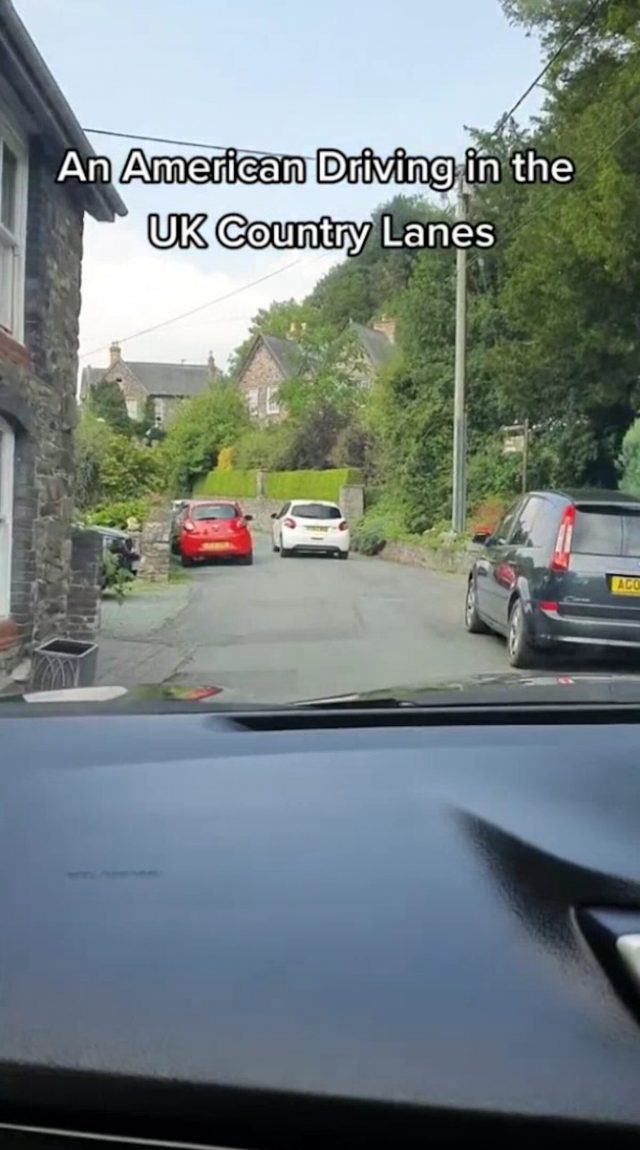
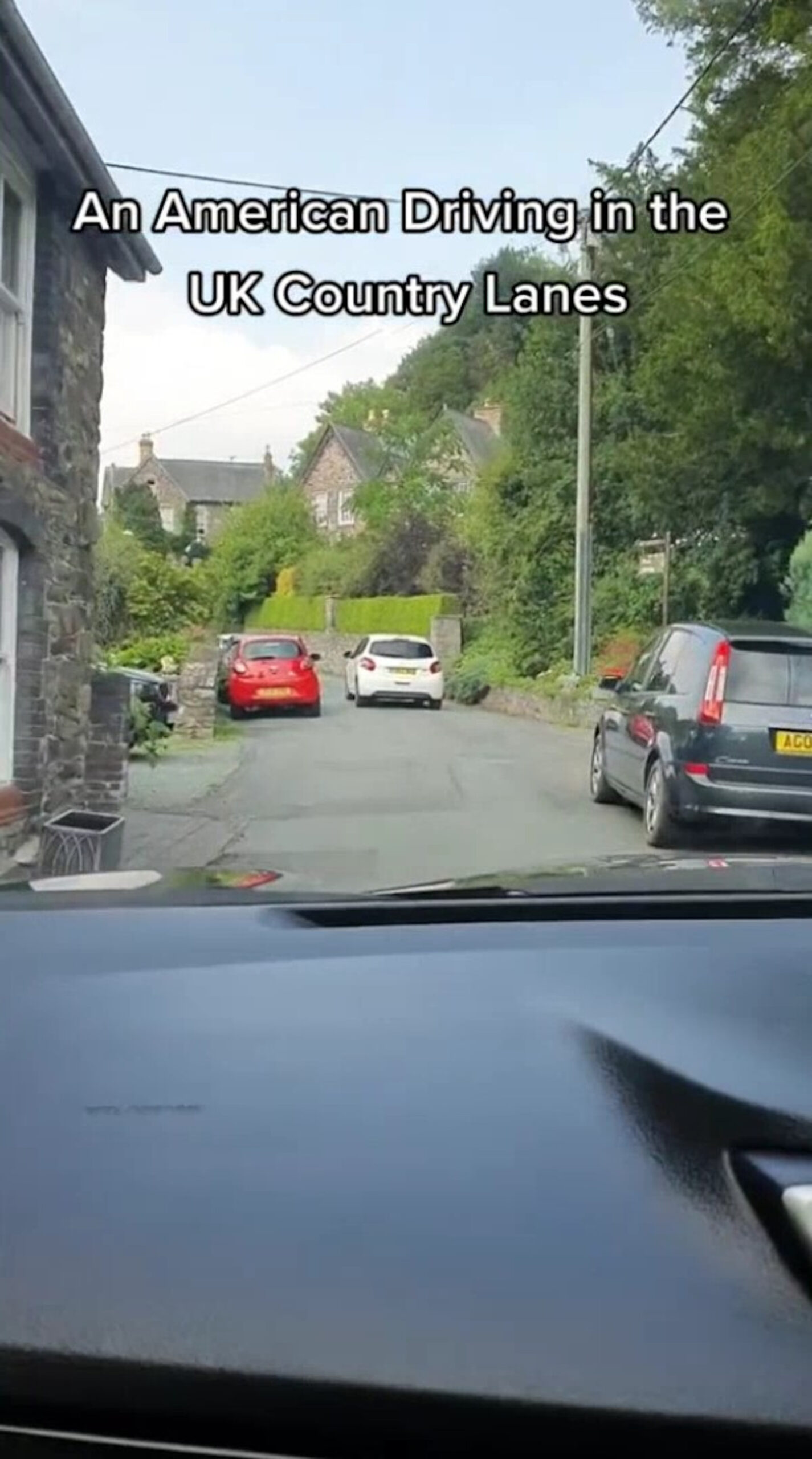
This is the viral moment an American woman describes her “terrifying” experience of driving along a quaint British country road with “only enough room for one car”.
Netizen ‘Fabandquirky’, who calls herself an American artist in the UK, shared the video on TikTok for her 15,000 followers where it has been viewed a whopping 670,000 times.
Many motorists struggle to adapt to driving on the other side of the road when visiting other countries with different systems, and often grow anxious when sitting behind the wheel on the ‘wrong’ side of the vehicle.
In her video, the American ex-pat says: “This is what it’s like driving in the UK, there’s only enough room for one car on the road and it’s absolutely terrifying.”
In the US, the average road width is around 38 feet whereas it is significantly narrower in the UK at 18 feet.
The difference is reflected in the cars bought by American and British consumers, with Auto Express stating the UK’s current bestseller is the Vauxhall Corsa with a width of about 5.7 feet whereas the most popular car in the US in 2022 is the Honda Accord at just over six feet.
On some British streets, as discovered by the “terrified” American artist, there is only enough space for one car at a time.
Many TikTok users agreed with the American woman’s assessment, with comments including “terrifying, I agree, I hate country roads”, “country roads give me anxiety”, and “in the UK, everything is small”.

Around 35% of the world population drive their cars on the left like the UK, including Japan, some of the Caribbean islands and Ireland. That is in contrast to when the horse and carriage was the most popular form of transport, where “vehicles” were most horses or wagons that were driven on the left. Most people are right-handed and it paid to keep the sword hand free and between the rider and a potential enemy.
In 1773 the British government introduced what was known as the General Highways Act which started the ball rolling on making driving on the left the law.

But in France under Napoleon, they moved for a system of driving on the right and imposed their rules on the areas that they conquered. So British colonies like Australia and New Zealand and India ended up driving on the left, and French colonies like Algeria Ivory Coast, and Senegal drive on the right.
But instead of the British system dominating, the first mass-produced car the model T Ford which came out in 1908 had the driver seat on the left which meant driving on the right-hand side so passengers could get out onto the curb. That apparently influenced many countries including the US but also Canada, Italy, and Spain to move to right-hand driving.
Recommended from our partners
The post VIDEO: Silly Parker: American Woman Shares Terrifying Experience Driving On UK Roads appeared first on Zenger News.
World Record: From Land’s End To John O’Groats On Scooter In Just 11 Days


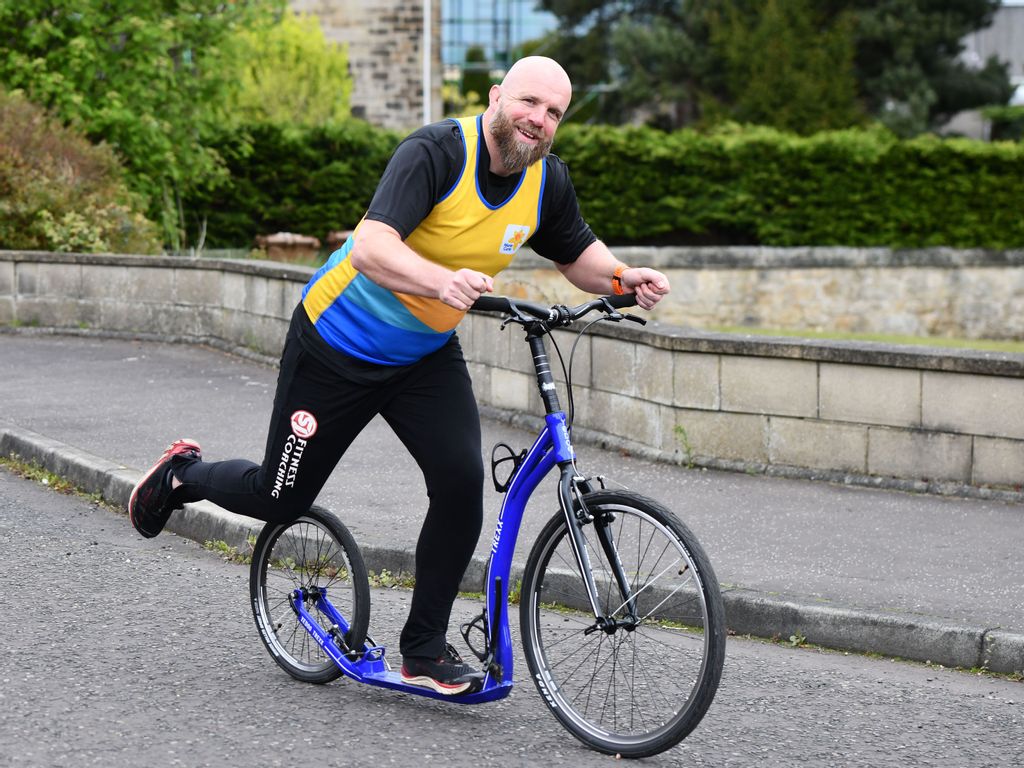
A dad has traveled from Land’s End to John O’Groats on a scooter in just 11 days – beating the previous world record.
Stuart Jamieson, 45, started his 900-mile Guinness World Record-breaking attempt on Saturday, April 30, and crossed the finish line yesterday (Tue).
The previous world record for scooting from Land’s End to John O’Groats was 21 days but Stuart won’t know if he has officially broken the record until his attempt is verified.
He completed the incredible feat on a scooter nicknamed Big Blue Magoo by his daughter Beth, aged 13.
Dad-of-two Stuart, from Bo’ness, Falkirk, raised nearly $11,000 for Marie Curie along the way in memory of his late wife Eva who died in 2018.
During the journey, Stuart received support from friends and family who cheered him on his way, including Beth and her brother Oscar.
In his final video post on social media, Stuart said: “It’s done and dusted – 11 days, Land’s End to John O’Groats.
“Been feeling pretty good today. We totally flew along.
“We had Oscar come along for 60 miles on his bike and Beth for 40 miles, and Jim from Marie Curie come along for 20 miles or so in the middle.
“We got to John O’Groats a lot quicker than we thought we would.
“A big thank you goes out to Katy for being the crew for the whole trip, making sure all my needs were met and just looking after me really well.
“Also for Beth and Oscar coming along and giving me some support.
“Big thanks to Jim from Marie Curie for coming up here these last few days and just being there to help us if we needed it.
“Thanks to everyone who came out on their bikes and joined me and everyone who came out as I passed through South Queensferry and West Lothian that’s been awesome.
“And thanks especially to everyone who’s donated.
“A big shout goes to Simon for his sponsorship again it wouldn’t have happened if he wasn’t there with that sponsorship so a big shout out to Evolve IT Recruitment.”
Among his supporters was radio DJ Sara Cox, who tweeted: “There are some lovely people doing mad things for brilliant causes .
“If you have a spare couple of quid I’ve just sponsored Stuart Jamieson, who’s fundraising for Marie Curie on JustGiving. Donate now”

Before setting off Stuart who owns SJ Fitness Coaching based in Linlithgow, West Lothian, had hoped to complete the journey in just ten days.
He previously said: “The current record is 21 days so I’m going to try and beat that and get into the Guinness Book of Records.
“I’m hoping to do it in ten days.
“When I heard about the guy who did it before me I thought it sounded like fun.
“I’ve always wanted to do Land’s End to John O’Groats and I’ve wanted to get into the Guinness Book of Records.
“I’m not going to be able to run or cycle it faster than the current records so I thought I’d try it on the scooter.”
To donate visit – https://www.justgiving.com/fundraising/scoot-lejog
Recommended from our partners
The post World Record: From Land’s End To John O’Groats On Scooter In Just 11 Days appeared first on Zenger News.



Island Connections: Spotify Enters The Metaverse Via Gaming Platform


Spotify is developing an official virtual presence on the game platform Roblox. The launch marks the company’s entry into the metaverse industry.
The name of Spotify’s presence on Roblox is “Spotify Island.” Through this interactive universe, the corporation intends to “create a place where fans can connect and create new songs together, hang out in digital areas and receive access to special virtual merchandise.”
Spotify claims Spotify Island can secure a “simple way for artists to engage with fans and collaborate with Spotify to create in-game virtual items.”
The initial themed experience fans can expect on Spotify Island is K-Park, a tribute to all things K-Pop. Later this spring, K-Park will give fans the chance to interact with artists Stray Kids and SUNMI.
“Spotify’s percentage of those revenues will be returned directly to the artists,” the company said. “In the next months, we will collaborate with artists to provide further possibilities like this one.”

Spotify is the first music-streaming brand to have a presence on Roblox, The introduction of Spotify on Roblox coincides with an internal recruiting push for Web3 specialists.
In the third quarter of 2021, Roblox announced its fastest-growing age group was 17 to 24 years old. In the fourth quarter of 2021, Roblox stated that 51.7 percent of its users were at least 13 years old.
Roblox users who visit Spotify Island will be able to “interact with artists, perform interactive mission, and unlock special content,” according to Spotify.
These users will also be able to compose music and explore sounds at Soundtrap-powered virtual beat-maker stations. Roblox users may also collect a heart-shaped “Like” symbol that can be swapped for merchandise, according to the streaming service.
These in-platform games, reports Spotify, will let users connect with its brand in a “whole new manner.”

Spotify also states that Roblox players will be able to “portal out” from the main Spotify Island to themed islands that “will come to life throughout the year.”
These themed virtual locales will offer distinct material, artist interactions, and themed “mini-quests” created for “superfans and inquisitive explorers.”
Separately, Spotify Stations, offering access to curated playlists, is shutting down May 16, the company just announced.
TechCrunch reports that Spotify decided to end the internet radio app, which launched three years ago. Users can still listen to their stations in the primary application.
In April, Spotify said it would integrate live audio capabilities from its companion app, Spotify Greenroom, within the main Spotify streaming app. Greenroom will also rebrand as Spotify Live.
Produced in association with MetaNews.
Recommended from our partners
The post Island Connections: Spotify Enters The Metaverse Via Gaming Platform appeared first on Zenger News.
Stormy Weather: ‘Twister’ Used TOTO, A 1970s Technology, To Probe The Power Of Tornadoes
The blockbuster movie “Twister” influenced a generation of professional storm chasers and sparked curiosity about meteorology when it was released May 10, 1996.
“Twister” is set in rural Oklahoma and focuses on a TV meteorologist who gets roped into chasing storms. Co-stars Helen Hunt and Bill Paxton play a married couple on the verge of divorce. They put themselves in the path of violent severe weather in the name of science. Their performance not only entertained audiences and made hearts pound, but also inspired future scientists.
One of the movie’s characters was inspired by a technology meteorologists used in the 1970s. It never really took off — but storm chasers today say the tech was ahead of its time.
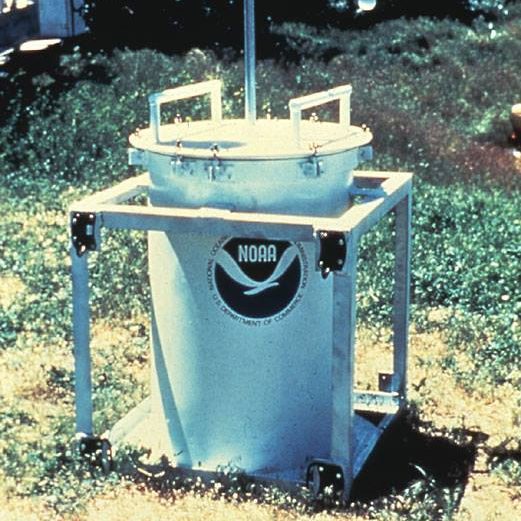
In the film, the meteorologists deployed Dorothy, a ground probe based on a real-life attempt to research tornadoes, in order to gain a better understanding of nature’s tempests. Researchers tried to place equipment in a tornado’s path to measure wind speed and other meteorological variables at ground level.
“TOTO, a 55-gallon drum that researchers attempted to place in the path of a tornado, inspired screenwriters Michael Crichton and Ann Marie Martin to develop the story that would become “Twister.”
Released 26 years ago, “Twister” remains an important part of NSSL history,” the National Oceanic and Atmospheric Administration (NOAA) National Severe Storms Laboratory (NSSL) said in a post on Facebook on the day of the film’s 25th anniversary. (TOTO stands for TOtable Tornado Observatory. Aptly named after Dorothy’s dog from the 1939 film “The Wizard of Oz,” begins with a tornado striking Kansas.)
Reed Timmer, a professional storm chaser for more than two decades, reminisced on the hit film’s 25th anniversary in 2021. He explained to AccuWeather how the film influenced both the storm-chasing industry at large and his career personally.
Timmer, who has worked for AccuWeather in various roles over the years, told Lincoln Riddle, a video producer for AccuWeather, he vividly remembers watching “Twister,” his all-time favorite movie, in theaters.
“I was in high school at the time. I had just turned 16.” Timmer had his driver’s license, and he already had a couple of storm chases under his belt, including chasing lake-effect snow and spring thunderstorms in Michigan.

Timmer said when he was a child he “was deeply afraid of thunder and lightning,” but that fear ended abruptly. “Then I woke up one morning — and it was like a light switch went off.”
And Timmer became obsessed with storms.
“Before watching “Twister,” I already knew this is what I wanted to do for the rest of my life and [the movie] only gave me that much more excitement and passion to follow my goal.
When “Twister” was released in theaters, Timmer was already passionate about storm chasing, but the hit film took his dream to another level.
“I was on a trajectory to become a storm chaser, and it only solidified that track,” he said. “Ever since I saw that movie, I was even more dedicated to devoting my entire life to chasing down storms,” Timmer said. “Here I am, 25 years later, still chasing down tornadoes.”
Timmer set out to chase down all manner of extreme weather. He even coined a phrase to end many storm updates: “Never stop chasing.”
In fact, he said the movie inspired an entire generation of meteorologists and storm chasers.
“When I got down to the University of Oklahoma my freshman year, there were dozens and dozens of students there. I think we had over 200 people in the freshmen class in meteorology, and many were inspired by the movie “Twister.” Many of the meteorologists and storm chasers going strong today were inspired by that movie,” Timmer said.
Researchers first attempted to gather data from tornadoes in the 1970s, with the aim of trying to improve the understanding of tornadoes to better warn the public, according to the NSSL.
Dr. Al Bedard and Carl Ramzy were the scientists from the NOAA Environmental Research Library, the predecessor to NSSL, who created TOTO. The device was designed to measure and record the data gathered by anemometers, instruments used to measure wind speed and direction, pressure sensors and humidity sensors.
Led by Howard Bluestein from the University of Oklahoma and NSSL, groups attempted to deploy TOTO squarely in tornadoes’ tracks. A direct hit never happened. Its closest encounter was in 1984, when it was knocked over by the edge of a weak tornado. The device was retired in 1987.
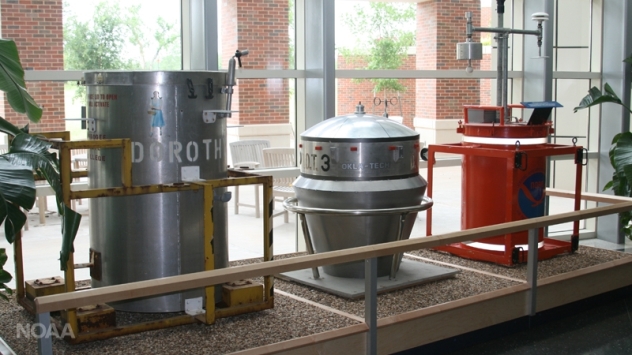
“Twister” adapted that concept with the idea of Dorothy, a large barrel that sent hundreds of live-streaming sensors into the tornado, lofted by the tornadic winds. The device in the movie was deployed in the path of a tornado and launched sensors that live-streamed data and provided a 3-D X-ray of the tornado inside.
A version of Dorothy and its competitor, D.O.T.3 are on display at the NWS office in Norman, Oklahoma.
The 1996 film was “definitely ahead of its time in terms of the actual science that we could do around tornadoes,” Timmer said. Now, more than two decades later, meteorologists and storm chasers are launching rockets and live-streaming sensors in tornadoes.
The movie actually helped inspire tornado science, Timmer said. He explained that in recent years, researchers have been able to design live-streaming sensors. Meteorologists are able to view data as the probes are launched inside a tornado.
These feats were performed similarly to the hit movie that debuted more than two decades ago.
“[In 2019] we launched sensors into a tornado by model rocket, and they were able to stream that live data back to the Dominator 3, our armored vehicle, as we intercepted that tornado,” Timmer said.
One of those sensors was lofted over 30 miles away from Timmer’s location at speeds of up to 190 miles per hour. That interception in May 2019 gave him and fellow researchers the first look, in real-time, at just how strong a violent tornado was as it charged across northeastern Kansas, heading toward Kansas City.
In 2022, Timmer’s drone video of the Andover tornado was analyzed to detect debris spinning around the tornado, reminiscent of the scene in the movie where the sensors in Dorothy go airborne.
Each one of these tracks is a piece of Debris from the original high-res version of @ReedTimmerAccu‘s video of the Andover, KS Tornado. “Dashed” tracks indicate a flat object rotating (gaps in the track are where it’s edge on to the drone) pic.twitter.com/wuJEae1mRu
— ChasinSpin (@ChasinSpin) May 7, 2022
“Our science mission with the Dominators was inspired, in part, by the movie “Twister” and the Dorothy probe that was deployed in the path of that tornado,” he said.
Timmer’s Dominator is an armored storm-chasing vehicle that’s designed to get inside, if not up close, to tornadoes. The purpose of the Dominator is to collect data inside of supercell storms that cannot safely be collected from a regular vehicle.
Since Timmer has chased down hundreds of tornadoes — and has even had his share of up-close encounters with twisters in real life, including a massive wedge tornado in Wray, Colorado, that generated viral video footage five years ago — he can weigh in on whether the film’s portrayal of being inside a tornado was accurate.
“It definitely is different inside of a real tornado than [what] was depicted inside of the movie ‘Twister,’” Timmer said. One reason the tornadoes in the movie were not the best representation of a real tornado could be that the filmmakers used a Boeing 707 plane engine to generate wind in some scenes, he said.
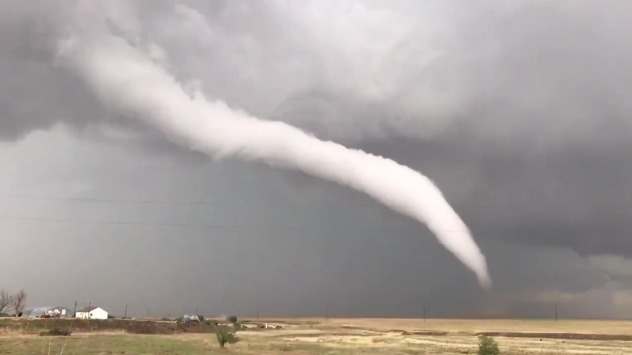
Timmer said intercepting a tornado in real life is more terrifying even than the movie depicted.
“It’s a lot less beautiful in there. The tornado doesn’t really have a well-defined eye in the middle of it. It’s turbulent. You have subvortices that are rotating around in those multiple vortex tornadoes,” Timmer said.
Timmer said that inside a tornado he saw dust and spray flying around everywhere, as well as condensation. Plus, it can be a bit painful, he said.
“Being inside a tornado is almost like a massive rotating fog bank, and you have massive pressure falls inside a tornado. So your eardrums are blowing out, your ears are popping, and it definitely is absolutely terrifying,” Timmer said, adding the film didn’t quite capture that.
“Even with the protection of the Dominators with the armored vehicles and the spikes that are able to bury into the ground to keep the Dominator anchored to the ground.”
The movie’s popularity shows no signs of waning, even a quarter-century after its release. In 2019, AccuWeather ran an informal poll aimed at identifying the greatest weather movie ever. Twister won in the final round as 75 percent of AccuWeather readers who took part chose it over “The Perfect Storm.”
Produced in association with AccuWeather.com.
Stay tuned to the AccuWeather Network on DirecTV, Frontier, Spectrum, FuboTV, Philo, and Verizon Fios.
Edited by Fern Siegel and Matthew B. Hall
Recommended from our partners
The post Stormy Weather: ‘Twister’ Used TOTO, A 1970s Technology, To Probe The Power Of Tornadoes appeared first on Zenger News.
Cannes Film Festival Enters The Metaverse


Brut., Cannes’ new official media partner, is bringing the world’s largest film festival to the metaverse.
The French festival’s famous backdrop will be recreated digitally in Epic Games’ hit videogame Fortnite. It lets gamers experience the Cannes Film Festival through the eyes of three different characters: a journalist who conducts interviews; an actor who auditions for a major director, participates in a photo call, and walks the red carpet; and a director who has to find the pages for a misplaced script, send them to a producer, and walk the red carpet.
Other quests will be offered, covering more involved topics, such as climate change and diversity in the film business.
The virtual experience is one of Brut.’s many tech-driven efforts aimed at making the Cannes Film Festival more accessible to a broader audience, especially younger demographics.
“It was critical for us to be able to steer the Cannes Film Festival into a format that future generations would recognize. The world’s largest film festival should be accessible to everyone, and videogame platforms are the ideal way to engage with this generation,” said Guillaume Lacroix, co-founder-CEO of Brut., a value-driven app that counts James Murdoch, the heir who left the Fox-News Corp. empire, and François-Henri Pinault, the CEO of Kering, among its supporters.
“Brut. has been honing its expertise in these new formats for months. It’s a logical extension of our dedication to new technology for us. Brut is creating an exciting metaverse in which we will play a key role,” Lacroix said.

With the cooperation of the city of Cannes, Vysena Studio, a renowned French virtual mapmaker, has recreated an exact model of several parts of the environment, including the Croisette, the Palais des Festivals and its famed steps.
The maps will boast the ultra-realistic, Brut.-style visual and audio universe.
Brut. will also host a House of Artists during the Cannes Film Festival, bringing 100 global creators to the Croisette to meet high-profile directors, actors and agents in small groups.
In case you’re unfamiliar with the Metaverse, here’s a definition: It’s a “digital reality that combines aspects of social media, online gaming, augmented reality (AR), virtual reality (VR), and cryptocurrencies to allow users to interact virtually,” according to Investopedia.com.
“Augmented reality overlays visual elements, sound and other sensory input onto real-world settings to enhance the user experience. In contrast, virtual reality is entirely virtual and enhances fictional realities.”
This year’s Cannes Film Festival runs May 17-28. It previews all genres of movies, from documentaries to blockbusters, submitted by filmmakers worldwide.
Produced in association with MetaNews.
Recommended from our partners
The post Cannes Film Festival Enters The Metaverse appeared first on Zenger News.
Job Gone: High-Flying City Worker Quits Job To Live In Van With Chihuahua


A high-flying city worker has quit her $120k-a-year job to live in a seven-metre-long van and travel the world with her pet chihuahua.
Dominique Niemandt, 29, was a director at a London accounting firm before taking the plunge this year.
She forked out over $30,000 to buy a converted VW Crafter and is now traveling around Europe with her one-year-old pet dog Kevin.
Dominique said: “I feel so much freer and so much more like me.
“Before I felt like I was in a hamster wheel for so long. I just thought there must be more to life.
“I used to work 60 or 70 hour weeks. On holiday I would be the loser working in the corner. I sort of felt like I didn’t have a choice.”
Dominique spent eight years at a Big Four firm before taking a director role at an accounting company in London.
She was living in the capital and earning more than $120,000 a year before resigning.
Now, she’s living off savings and considering taking up a consulting role for a few months of the year to fund her way of life.

Dominique said: “This lifestyle is so much cheaper. I’ve got enough money for nine months.
“I might work two or three months of a year and then fund the rest of the year.
“I spend about £250 ($310) a month on insurance and petrol for the van, and then it’s food and activities, so in total I spend no more than £600 ($740) to £1,000 ($1200) a month.”
Dominique is currently in France and hopes to travel to Spain and Portugal in the coming months.
She said her lifestyle change was inspired by a desire to break out of the day-to-day routine.
Dominique said: “I saw a news article in October about vans being converted into homes and a month later I’d bought one.
“I had a three-month notice period at work and then I left in January.
“A lot of people my age feel pressure to live a normal life but it doesn’t make them happy.
“I want to see people doing what makes them happy.
“It’s not easy but it just feels like you’re living – even though that sounds cheesy.
“Sometimes I still feel like a failure for giving my job up, which is kind of weird.
“Telling my family was the hardest part – I think they would have preferred I was working and focusing on my career instead.”
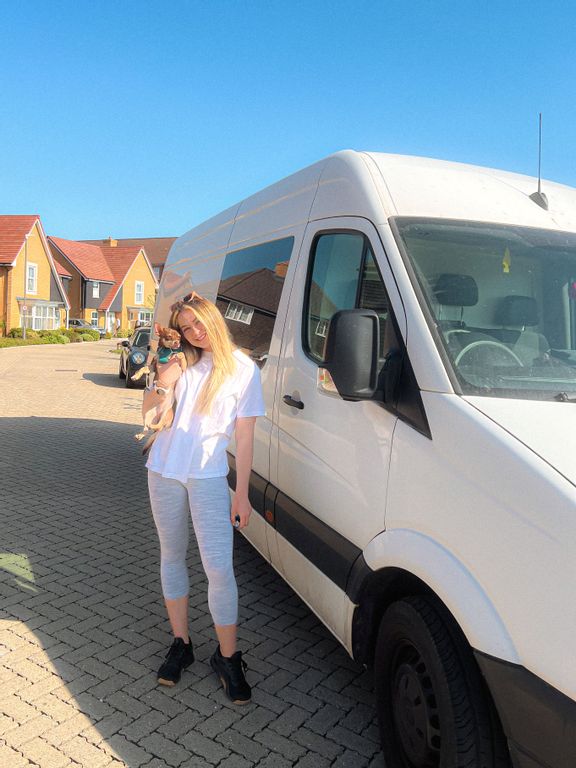
Dominique said living on her own can be lonely but she has met new people along the way and connected with nature.
She said: “There are little things that get you through it like speaking to someone in a bakery.
“If I like somewhere then I’ll stay and explore. If not I will try to find the next place to stay.
“I do a lot of walks and active stuff.
“Everything is slower in a van. It can take an hour to do the dishes and washing.”
Recommended from our partners
The post Job Gone: High-Flying City Worker Quits Job To Live In Van With Chihuahua appeared first on Zenger News.
