Home Blog Page 457

VIDEO: Millions Of Men Say They Are Not Feeling Okay


0

Millions of men said they are not okay – feeling down an average of three times a week. (Ellis Wylam/Zenger)


By Anamarija Brnjarchevska

Millions of men say they are not okay and in fact are feeling down an average of three times a week.


A poll of 2,000 males revealed they rate their mental health as an average 6 out of 10.

But those as young as 18 feel just a five out of 10.

Dealing with a physical health condition (26 percent), poor eating habits (20 percent) and pressures at work (20 percent) are among the reasons men have struggled with their mental well-being in the last 12 months.

Others claim not being in a relationship, life changes – such as the breakdown of a marriage – and scrolling through social media can affect their general wellbeing.

But 44 percent have never opened up to someone about how they are feeling, with 32 percent often feeling lonely.

While 35 percent actively avoid conversations with others about their mental wellbeing.

The research was commissioned by NIVEA MEN as part of its ’Strength In Numbers’ [www.NIVEA.co.uk/StrenghtInNumbers] campaign, which, together with Talk Club, aims to give men the tools to start the conversation and check in with their feelings by asking themselves, and others “How are you? Out of 10?”.

Ben Akers, co-CEO and co-founder of Talk Club, said: “Most men find it difficult to open up about their feelings. But simply answering “How are you? Out of 10?” gives them a way to start.

“We seem to look after our cars better than our minds.

A man makes his way home at Preston bus station on January 23, 2005, Preston, England. Scientists from Cardiff University have worked out a formula to calculate that January 23 is the most depressing day of the year. (Photo by Christopher Furlong/Getty Images)

“But talking about our worries regularly releases the pressure, allowing us to become mentally fitter and in turn mentally stronger.

“Giving something regular service, makes it less likely to breakdown.

“Remember that it’s ok for our numbers to change – that’s to be expected – but understanding why and being able to talk about it is what can improve them.”

The study also found social events leave two-thirds of men feeling anxious, with two in 10 feeling stressed in the workplace.

However, more than seven in 10 feel more relaxed when at home on the weekend and 63 percent feel calm when hanging out with friends.

Mindfulness and regular exercise, as well as breathwork and meditation were among the more common ways the men maintain their good mental health.

While four in 10 of those aged 35 to 40 have visited the GP to discuss their mental wellbeing.

Although nearly four in 10 have felt able to open up to a close friend or family member about their feelings.

A man makes his way home from work on a bus as darkness falls on October 10, 2005 in Glasgow, Scotland. Seasonal affective disorder (SAD), or winter depression, is a mood disorder related to the change in the seasons and the resulting reduction of exposure to daylight. (Photo by Christopher Furlong/Getty Images)

But while many are keen to talk with others, nearly half (47 percent) feel less comfortable asking other men about their struggles – with fertility issues being the number one topic that’s off-limits.

Other subjects men are nervous about discussing include addictions, eating habits, and hair loss.

When asked why they avoid such conversations, one in five said they don’t want people close to them to see their vulnerable side or to be judged by their actions, while 18 percent believe they can handle their struggles on their own.

The research, carried out via OnePoll, revealed 57 percent of men would like to see more support available for those struggling with their mental health.

Many consider regular conversations with friends and family (30 percent), talking about your feelings with others (27 percent) and cutting back on alcohol (22 percent) as ways they can maintain their mental fitness.

Emily Marcham, from NIVEA MEN, said: “It saddens us to hear so many men are struggling with their mental health and are uncomfortable with the thought of opening up.

“Hoping to reduce the rates of loneliness by helping more men and boys to start a conversation, NIVEA MEN has come together with Talk Club to provide useful tools to help open up the conversation.

“It all starts with answering one question; ‘How are you? Out of 10?’. So, why not try it now?

“Check in with yourself, and check-in with others around you, because the truth is that regularly checking in and opening up makes us stronger.”

THINGS THAT HAVE AFFECTED MENTAL HEALTH FOR MEN IN THE LAST 12 MONTHS
1. Health condition
2. Poor eating habits
3. Work deadlines/ pressures
4. Relationship status
5. Life goals e.g. career, marriage, mortgage
6. Life changes e.g. having kids, job promotion
7. Social media
8. Addictions
9. Fitness plans
10. Hair loss

Recommended from our partners


The post VIDEO: Millions Of Men Say They Are Not Feeling Okay appeared first on Zenger News.
Amazon Invests In Israeli Robotics Firm BionicHIVE

0

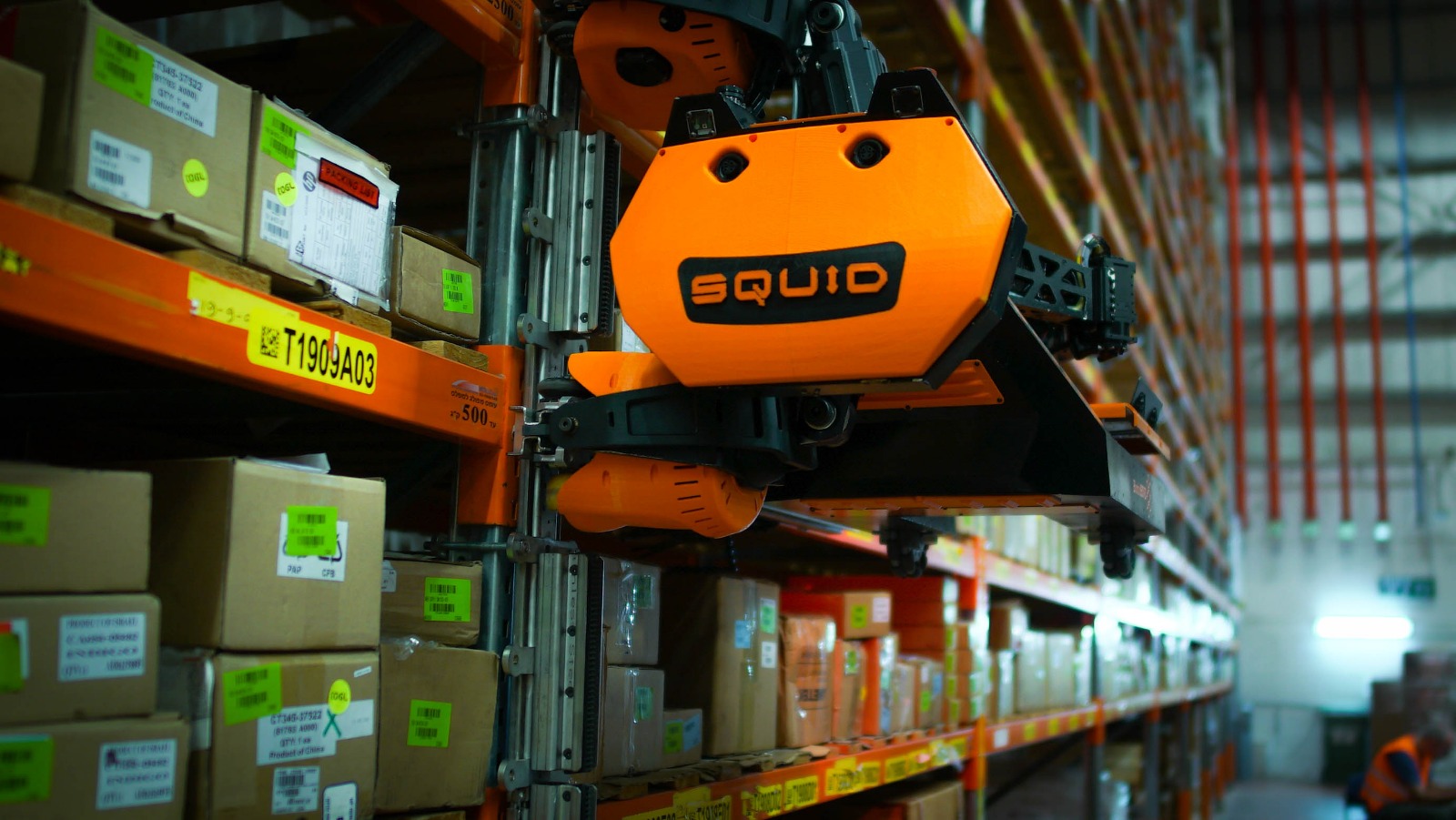
BionicHIVE’s robot works autonomously to pick, sort and replenish stock in warehouses. (Photo courtesy of BionicHIVE)


By Sarah Levi

The Amazon Industrial Innovation Fund has chosen BionicHIVE, an Israeli hi-tech robotics company, as one of five companies and the only firm from outside the United States that will be part of its investments in emerging supply-chain management technologies.


BionicHIVE’s SqUID robot can self-navigate and pick up, replenish or sort any item from floor-to-ceiling shelves of a warehouse while being powered by an AI-based algorithmic engine.

The Amazon fund says it plans to invest $1 billion in companies that develop technologies in supply-chain management and workplace safety. In addition to BionicHive, the other companies to get funding are:

  • Modjoul: Founded in 2016 and based in Greenville, South Carolina, Modjoul is developing wearable safety technology that enables real-time, personalized alerts and recommendations aimed at reducing injuries, most notably musculoskeletal issues.
  • Vimaan: Founded in 2017 and based in Santa Clara, California, Vimaan is developing computer vision and artificial intelligence solutions engineered to improve inventory management.
  • Agility Robotics: Founded in 2015 and based in Corvallis, Oregon, Agility Robotics is developing a bipedal walking robot, Digit, that addresses the mobility limitations of traditional robots so that machines can assist people wherever they are.
  • Mantis Robotics: Founded in 2020 and based in San Francisco, Mantis Robotics is developing a tactile robotic arm that uses sensor technology to cohesively work alongside people.

“The purpose of the Amazon Industrial Innovation Fund is to support emerging technologies through direct investments, designed to spur invention and solve the world’s toughest challenges across customer fulfillment operations, logistics and supply-chain solutions,” said Katherine Chen, head of the Amazon Industrial Innovation Fund.

“Amazon has recognized BionicHIVE for its differentiated solution capable of optimizing safety around repeated tasks, at any height, in the supply-chain workplace, and this is the kind of technology that’s pulling innovation forward,” Chen added.

“With Amazon’s funding and support, BionicHIVE is growing its team and operations, establishing a U.S. footprint to expand its customer base…,” Ilan Reingold, the CEO of BionicHIVE, seen here, says. (Photo courtesy of BionicHIVE)

BionicHIVE is based in Sha’ar HaNegev in Israel’s southwest.

The company was founded in 2014 by Liran Raizer and Tomer Amit. The Israeli crowdfunding platform OurCrowd invested in the company’s seed round.

“SqUID consists of a synchronized autonomous robotic fleet that has 3-dimensional movement capabilities, allowing a fully flexible operation. A high-end embedded control system and smart real-time data analysis allows BionicHIVE’s algorithmic engine to dynamically learn problems created in one warehouse and apply resolutions to all warehouses in the network,” BionicHIVE says on its website.

“With Amazon’s funding and support, BionicHIVE is growing its team and operations, establishing a U.S. footprint to expand its customer base and scale go-to-market, as well as increasing R&D,” said Ilan Reingold, the CEO of BionicHIVE.

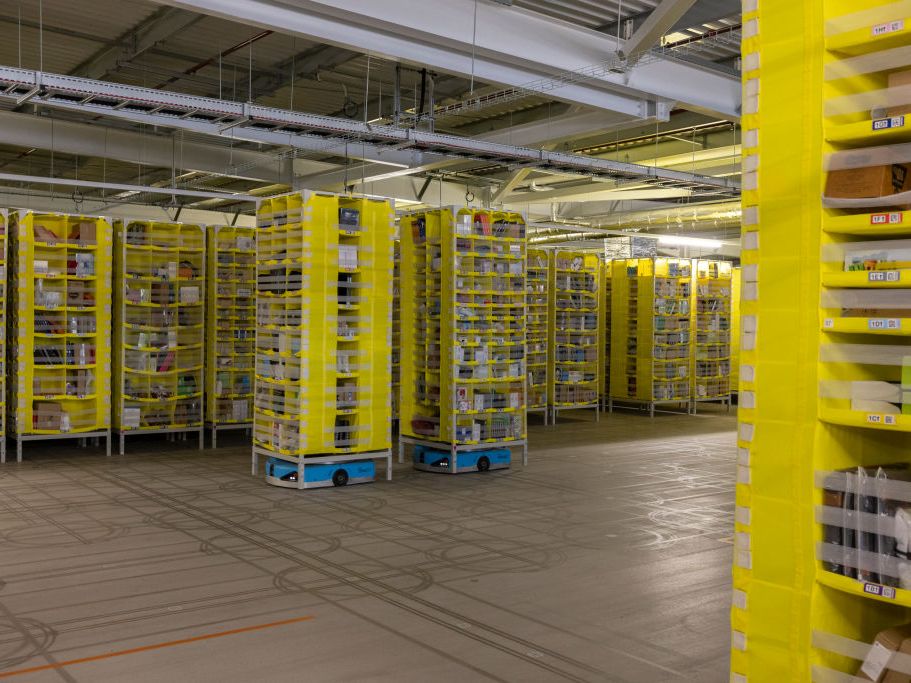
 A robotic automated warehouse picking section moves goods at the Amazon fulfillment center on Dec. 13, 2021, in London, England. The Amazon Industrial Innovation Fund plans to invest $1 billion in companies that develop technologies in supply-chain management and workplace safety. (Dan Kitwood/Getty Images)

“We couldn’t have asked for a better company whose investment is a validation of the unique approach and capabilities of our platform and whose guidance is invaluable,” Reingold added.

COVID-19 has accelerated the digital and robotics transformation in many fields. As many as 85 million jobs may be displaced by a shift in the division of labor between humans and machines, the World Economic Forum’s 2020 Future of Jobs report said.

Amazon employs more than 1.3 million people worldwide and has at least 96 warehouses.

SqUID will certainly not be working alone.

Produced in association with ISRAEL21c.

Recommended from our partners


The post Amazon Invests In Israeli Robotics Firm BionicHIVE appeared first on Zenger News.

Zachary A. Edison: Drawings, Sculptures That Validate

0
Zachary Edison grew up with a father in the United States Air Force and moved around a lot coming to Alabama in 2008 and grew up the rest of the way in Hoover, where he still resides. (PROVIDED PHOTO)

By Ryan Michaels

For The Birmingham Times

Larry Silver’s Art of Communication and Conversation

0
Portraits of Black people make up a large share of Larry Silver’s work, portraits of men, women and children. (PROVIDED PHOTOS)

By Ryan Michaels

The Birmingham Times

Spot Check: Teachers Punished Boy For Wearing Socks With Spots

0

A furious mum has demanded an explanation after teachers at her son’s school punished him for wearing socks with spots following an inspection. (JP Sheffield Star/Zenger)


By Anamarija Brnjarchevska

A furious mum has demanded an explanation after teachers at her son’s school punished him for wearing socks with spots following an inspection.


Lorna Egerton-Fearn said she was angry after staff at Astrea Academy, in Sheffield, South Yorks., reprimanded Sacha, 11, and called on them to cut pupils “some slack”.

She explained that Sacha had been wearing the same style of sock, which have red dots, since September as part of his standard uniform at the local school.

But on Wednesday (27), he fell foul of the academy’s rules following the unexpected clothes inspection, where he was told all students have to wear black socks.

The poor lad was then given three minus points – effectively a football-style yellow card – because the garment didn’t match the expected criteria.

And the following day, after staying at his dad’s home, he incurred the same penalty again as he only had a fresh pair of spotted socks to wear.

He was then asked by his teacher to put a black pair of socks over his spotty ones.

But that plan was abandoned when it became clear the socks that he was offered, which were for kids, were far too small for his size 10 feet.

A furious mum has demanded an explanation after teachers at her son’s school punished him for wearing socks with spots following an inspection. (JP Sheffield Star/Zenger)

Lorna said: “My son started year seven with some lovely dress socks that we thought were perfectly suitable – they’re the sort of things people wear with suits.

“They’re saying you can only wear black socks, but this was not really enforced until this week. He’s been wearing this pair since September.

She added: “I’ve managed to root through to find some plain black ones.

“But if I had not been able to, would I have been expected to go and buy some before school, or send him in without socks?

“I just think they need to cut the pupils some slack after all they’ve been through with the pandemic and lockdowns. It’s as though coronavirus didn’t happen.”

Lorna said she now wants one of the directors of the Astrea Schools trust to explain the rule.

Astrea Academy Sheffield said in a statement: “Astrea Academy Sheffield is committed to the highest standards of teaching and learning. Our uniform policy has been regularly communicated to parents and carers and is also available to view online.

A furious mum has demanded an explanation after teachers at her son’s school punished him for wearing socks with spots following an inspection. (JP Sheffield Star/Zenger)

“Our staff also communicate the policy to scholars daily, this includes the procedures if uniform standards are not met

“This week we have run a series of behavior and expectations reset sessions, where through extended assemblies and specific time with form tutors, we have reminded scholars about their personal responsibilities around uniform.

“If parents have any concerns, we encourage them to raise these with us directly. We are committed to supporting families of our scholars where needed.”

Recommended from our partners


The post Spot Check: Teachers Punished Boy For Wearing Socks With Spots appeared first on Zenger News.

VIDEO: Hum And Get It: Wildlife Fans Tips On Feeding Hummingbirds

0

James Manzolillo, 34, also known as HumDaddy, who lives in Oakland, USA, feeds a hummingbird in an unusual way. (@hum.daddy/Zenger)


By Arian Movileanu

A park ranger has become a TikTok wildlife star after revealing how interacting with hummingbirds can boost people’s moods.


James Manzolillo, 34 – known as HumDaddy to fans – has more than 720,000 TikTok followers thanks to his tips on how to feed and care for the tiny nectar-eating birds.

James – from Oakland, California, USA – began to notice the birds when he suffered from depression after the deaths of his grandmother and his aunt left him “in a really low place”.

But a hummingbird flew up to him while he was sitting on his balcony one day and reminded him “that I could still feel happiness, that I was still alive”.

Now James creates elaborate costumes and props to interact with the tiny hummingbirds in his neighbourhood

He told Zenger News: “I have always loved animals since I was a small child. I would cut out pictures of wild animals from nature magazines and play with them for hours.

“I have also worked as an animal rehabilitation technician, helping injured or orphaned animals get their second chance at life.

James Manzolillo, 34, also known as HumDaddy, who lives in Oakland, USA, feeds a hummingbird in an unusual way. (@hum.daddy/Zenger)

“I am now a Park Ranger where I get to be an advocate for nature every day.

“What I like most about hummingbirds is how bold and brave they can be despite their very small size.

“They give me the inspiration to be bold in life, and to not be afraid.

“To be yourself despite any setbacks you might face, like being a really small hummingbird but still having a larger than life personality.”

He added: “Hummingbirds eat flower nectar which can be mimicked by mixing four cups of water with one cup of white granulated sugar. It has to be white granulated sugar only!

“They eat double their body weight in nectar every day. They can also eat over 1,000 insects a day.”

James Manzolillo, 34, also known as HumDaddy, who lives in Oakland, USA, feeds a hummingbird in an unusual way. (@hum.daddy/Zenger)

James told Zenger News: “Hummingbirds are seen all year round in the area where I live so I am able to feed them every day.

“Other parts of North American only get hummingbirds in the spring and summer months.”

Following a string of viral videos on TikTok, James said: “It all came as a surprise and a great honour.

“The fact that I owe it all to the hummingbirds is not lost on me. They’re the real stars of the show.

“I’m just so glad and blessed that they have given me an outlet to be myself and lean into a craft that I find so much joy in doing.

James Manzolillo, 34, also known as HumDaddy, who lives in Oakland, USA, feeds hummingbirds in an unusual way. (@hum.daddy/Zenger)

“Coming up with new, innovative ways to feed birds is a blast and has been such a thrill.

“I’d like people to know that nature can be so incredibly healing. If you’re ever looking for free therapy, go to nature. We must protect it at all costs.”

James told Zenger News: “Oftentimes, people criticise me for ‘having too much time on my hands’. I’d like to normalise using our free time to do something productive for our own mental health and betterment.

“Instead of playing video games for hours, or going out to bars on the weekend, I choose to use my free time crafting up new fun ways to interact with nature.

James Manzolillo, 34, also known as HumDaddy, who lives in Oakland, USA, feeds hummingbirds in an unusual way. (@hum.daddy/Zenger)

“I’d like people to know that it’s okay to be different and to use your time however you see fit.

“I’ve turned this hobby into a side hustle selling hummingbird feeders and making some extra income doing something that I love. And in the process, I have found myself.”

Recommended from our partners


The post VIDEO: Hum And Get It: Wildlife Fans Tips On Feeding Hummingbirds appeared first on Zenger News.

VIDEO: Viral Video Showing Real People And Their Wages Sparks Debate

0

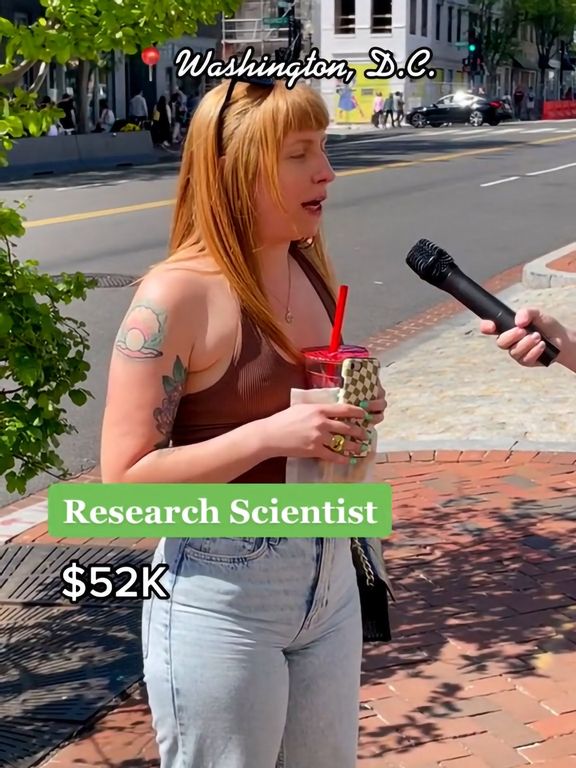
People revealing their salaries in Georgetown, Washington.  (@salarytransparentstreet/Zenger).


By Darko Manevski

A young woman who met real people on the streets to ask them what they did and how much they were paid has sparked a heated debate online.


Hannah Williams, who is asking the questions, runs the @salarytransparentstreet on TikTok and starts the video by saying: “This is salary transparent street. We’re in Georgetown, Washington D.C. and today we’re going to ask people what they do and how much they make.”

She is then filmed stopping random people to ask what they did, and how much they were paid.

She starts off with a person in IT that says that they make USD 70,000 a year, and then she moves on to a lifeguard that gets USD 15 an hour.

The next person works for the government and claims to make USD 76,000, and after that, there was a contractor making USD 96,000 and a Smithsonian Environment Research Centre scientist making USD 52,000.

The video quickly notched up millions of views and thousands of comments as part of the salary transparency concept where people are expected to share their job titles and what they are paid to help others decide where to work and how much to ask for.

People revealing their salaries in Georgetown, Washington.  (@salarytransparentstreet/Zenger).

Salary transparency is regarded as one of the key factors for employee satisfaction. A survey by global company monitor GlassDoor where users can leave comments on previous employers found that 72 per cent think salary transparency would be good for business and 70 per cent say it makes staff happier.

People revealing their salaries in Georgetown, Washington. (@salarytransparentstreet/Zenger).

Asked an additional question about whether she thought money or enthusiasm for the job are most important to the researcher, she replied: “I think passion matters more, but money is also very important and people need to be able to make a living wage no matter what they do.”

People revealing their salaries in Georgetown, Washington. (@salarytransparentstreet/Zenger).

Williams later responded to comments on her personal blog by defending the salary transparency that she advocates, saying that it is completely illegal to ban staff from talking about what they earn, and that staff that do not share such information are hurting themselves.

New York City has made it compulsory for companies to put the salary range on job adverts with the law coming into force in the middle of next month. (May 15)

Recommended from our partners


The post VIDEO: Viral Video Showing Real People And Their Wages Sparks Debate appeared first on Zenger News.

Brit Hospital Trials Brain Implant To Treat Parkinson’s Disease

0

A British hospital is the first in the world to implant a brain device to reverse the symptoms of Parkinson's - and its test patient says it is 'amazing'. (Matthew Newby/Zenger)


By Anamarija Brnjarchevska

A British hospital is the first in the world to implant a brain device to reverse the symptoms of Parkinson’s – and its test patient says it is ‘amazing’.


Surgeons at Southmead Hospital in Bristol are implementing a tiny deep brain stimulation (DBS) device into the skull.

It overrides the abnormal brain-cell firing patterns caused by Parkinson’s.

Twenty-five patients have been selected for the trial at North Bristol NHS Trust which will finish next year.

If the trial is successful, it will be possible to treat more Parkinson’s patients more easily.

The trial’s first patient Tony Howells, who was diagnosed with Parkinson’s nine years ago, said the impact was “amazing”.

Mr. Howells, who received his device in November 2020, said: “Before the operation, I went for a walk on Boxing Day with my wife and I got 200 yards (182m) from the actual car.

“I had to turn around and go back because I just couldn’t walk.

“Then after the operation, which was 12 months later, I went on Boxing Day again and we went for 2.5 miles (4km) and we could’ve gone further.

A British hospital is the first in the world to implant a brain device to reverse the symptoms of Parkinson’s – and its test patient says it is ‘amazing’. (Matthew Newby/Zenger)

“It was amazing.”

Parkinson’s disease leads to parts of the brain become progressively damaged over years and currently has no cure.

Symptoms include involuntary tremoring, slow movement, loss of automatic movement, and stiff and inflexible muscles.

Most people develop symptoms when they are over 50 but around 5% of sufferers first experience symptoms when they are under 40.

Traditional operations for Parkinson’s involve implanting a fairly large battery into the chest with wires that run under the skin through to the top of the head.

The new DBS system, the smallest that has ever been created, involves a tiny battery system for the device that is implanted into the skull.

The device delivers electrical impulses directly to targeted areas deep within the brain.

To do this, electric probes are put through the skull into the subthalamic nuclei (an area deep in the center of the brain that is critical in regulating movement).

Actor Michael J. Fox who suffers from Parkinson’s and Tracy Pollan arrive at the 52nd Annual Primetime Emmy Awards September 10, 2000 in Los Angeles, CA. (Photo by Steve W. Grayson/Liaison)

It takes just three hours to carry out the new operation, about half the time it used to with the larger battery.

Dr. Alan Whone, a Consultant Neurologist at North Bristol NHS Trust who is leading the trial, said: “We are delighted with how this first case went in the operating theatre and with how the patient’s symptoms have been improved over the last year.

“We are hopeful that if these findings hold up, we will have a significant technical advance by which to improve Parkinson’s care across the world”.

Mr. Howells said: “You can’t understand how frustrating [Parkinson’s] is until it happens to you.

“The most difficult thing to accept is the decline in daily activities like tying-up shoelaces, taking three or four minutes instead of seconds. It affects your everyday life no end”.

Tony, much to his delight, is now able to play golf again and says DBS is “a great way to give somebody their life back.”

Recommended from our partners


The post Brit Hospital Trials Brain Implant To Treat Parkinson’s Disease appeared first on Zenger News.

10 Top Technologies To Help Cool Cities

0

Tel Aviv, Israel, is pioneering eco-efficient ways to cool cities, including solar energy. (Eli Goren/Flickr)


By Naama Barak

Cities worldwide are stiflingly hot: lack of shade, ACs spewing hot air on the sidewalks and no breeze make walking outside come August somewhat of a nightmare.


And with urbanization, heat islands and global warming, things are likely to get worse.

This is where technology can help.

From buildings that generate their own energy and green walls to smart shade solutions and solar energy storage, cities can be made more bearable in hot weather.

“The Empire Building Playbook: An Owner’s Guide to Low Carbon Retrofits” was just announced by New York State Gov. Kathy Hochul. The goal is to advance carbon neutrality in high-rise buildings, especially in New York City, the largest city in the U.S. (Barbara Brundage/Flickr)

“With the growing urgency around climate change, there is a growing need to reduce the environmental impact of cities and make them more resilient and sustainable. There are many aspects to this challenge, from transportation to construction, urban planning, waste management, food systems and more,” said Yael Weisz, head of the climate-tech sector at Start-Up Nation Central.

“According to Start-Up Nation Finder, Israel has at least 65 startups and innovative companies with solutions that can directly contribute to cooling down cities, via improving the energy efficiency of buildings, deploying greener construction methods and materials, increasing shade accessibility, and all the way to vertical farming. The Israeli innovation ecosystem can leverage its technology to making cities both smarter and more environmentally sustainable,” says Weisz.

Here are 10 Israeli companies leading the way in this sector:

1. Vertical Field 

When installed inside, Vertical Field’s sensor-controlled smart planters purify the air from carbon dioxide, and when they’re mounted on the exteriors of buildings they help insulate them from the sun and keep them cool, cutting down electricity costs and CO2 emissions. And wherever they’re placed, they look beautiful.

The company also specializes in vertical urban farming, cutting down on environmentally harmful transportation and pesticide use. Vertical Field LTD demostrates this on Instagram— (@vertical.field)

Biofilters (also known as active living walls) use sensors to detect pollutants in the air. When pollutants are above healthy standards, the living wall increase the plant’s ability to photosynthesize, thereby absorbing more pollutants and carbon dioxide. (Vertical Field)

2. LumiWeave

Shade and lighting are two problems that often plague large, open spaces, such as beaches or parks in many cities.

These issues can simultaneously be solved by an innovative fabric called LumiWeave, which provides shade during the day and harvests the sun’s energy at night. It uses solar energy to illuminate itself and its surroundings. Not only does the result look magical, but it offers practical, flexible and energy-efficient shading and lighting. Commercial installations have recently begun.

3. TurboGen 

More frequent heatwaves mean more electrical grid breakdowns, as everyone simultaneously turns on their AC at the hottest hours of summer. Not only is this hugely inconvenient, but also uses vast amounts of power. One cool solution is to have buildings generate their own power, independent of the grid.

TurboGen is working on that goal, having created microturbines that generate electricity, heat and cooling from natural gas. In the future, it looks to  sustainable sources, such as solar energy and biogas.

4. Nostromo Energy 

Using solar energy to cut down on electricity is good, but what happens when the sun sets? All that energy goes to waste, and regular electricity is once again required to power our cooling systems.

Unless, of course, that energy is stored, and in Nostromo Energy’s case, stored in ice. Its IceBrick ice capsules store energy and direct it to cooling systems in a clean, efficient way (since water can be frozen repeatedly), taking a substantial load off the grid come nightfall and doing away with less sustainable lithium-ion alternatives.

5. ThermoTerra

We’ve all heard of harvesting energy from the sun or wind, but what about humidity? Startup ThermoTerra has found a way to harvest power from the energy created during natural fluctuations in humidity, as well as storing and releasing that energy off-grid. Applications for the technology, the company says, include cooling buildings, cars and homes.

Tel Aviv, Israel, is harnessing solar energy to keep its residents cool year-round. (Flickr)

6. Gauzy

Smart glass technologies, which can turn glass from clear to opaque and vice versa, have multiple uses: providing privacy to meeting rooms and operating rooms, shading automobile windows and, of course, shading and cooling whole building fronts.

Gauzy has developed two technologies that can be installed or laminated onto glass, helping buildings worldwide control their shading and energy control with the click of a button.

7. Phoebus Energy

As clean-tech company Phoebus Energy demonstrates, existing infrastructure can also be utilized to create smart energy by converting the difference in temperature of the water flowing in and out of these devices into energy that can further power the heating and cooling of water. Phoebus’ smart solution is already used in more than 100 facilities across the world, including hotels, cutting down on electricity bills, waste, and CO2 emissions.

8. SolCold  

SolCold reverses the universally accepted truth that hot surfaces make things hotter. Instead, its nanotech coating uses the sun’s power and the radiation absorbed in surfaces to produce the exact opposite: cold. This means the hotter the solar radiation, the more the coating cools down. That means cooling the object that it’s covering, lowering electricity consumption in the form of air conditioning, and reducing greenhouse gas emissions.

9. TreeTube 

With all due respect to fancy shading solutions, nothing beats the joy of sitting under the shade of a tree. The problem is many cities are wary of trees because of the knobbly roots that pop out of the pavements and disrupt urban life. TreeTube, a patented steel and plastic modular system, found a solution. It lets tree roots safely grow in a tunnel without disrupting their surroundings. The result: more trees, more shade and less of a heat island.

10. BioShade

Early-stage startup BioShade also addresses this issue from a hydroponic shading system angle. Its technology uses a solar-powered, water-efficient smart system to cultivate shading plants that offer respite from the glaring sun. The system is fully automated, low-maintenance and modular, meaning it can create shaded microenvironments across the city.

Produced in association with ISRAEL21c

Recommended from our partners


The post 10 Top Technologies To Help Cool Cities appeared first on Zenger News.