
VIDEO: Two-Thirds Of New Dads Admitted Feeling ‘Left Out’ In Early Days Of Parenting
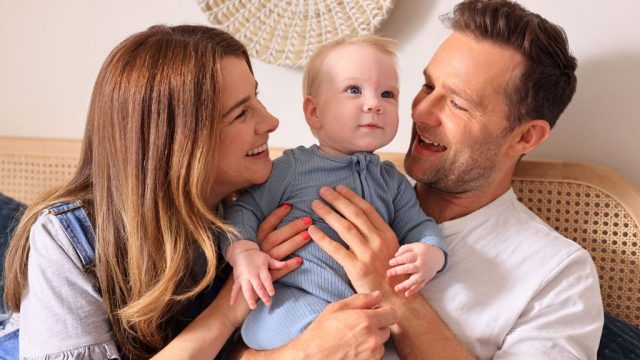
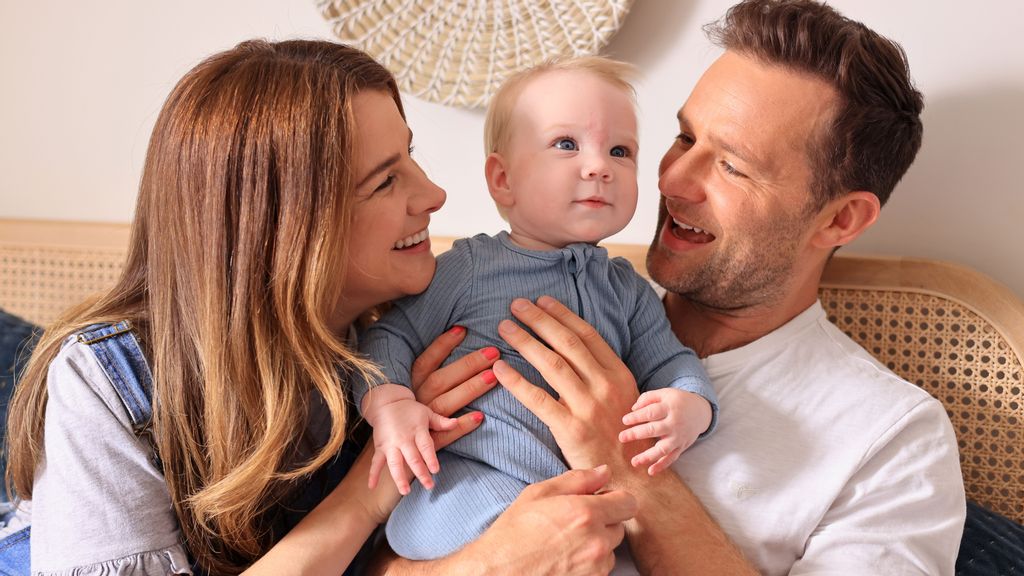
Two-thirds of new dads admit to feeling ‘left out’ in the early days of parenting.
The study of 1,015 UK parents of children aged six months to five years found 69 percent of fathers only felt they became a ‘true’ parent after sharing feeding responsibilities with mum.
In comparison, 22 percent of new mothers already felt that way the moment they saw their positive pregnancy test.
A further 66 percent of dads wanted to feel more involved and responsible in the early days.
While seven in 10 felt a real sense of relief when they were given the chance to help and support their partner in a more ‘hands-on’ way.
The study was commissioned by Aptamil Advanced Follow On Milk to mark the launch of its ‘Share the Moments that Matter’ campaign [https://www.aptaclub.co.uk/products/share-the-moments-that-matter.html], which features celebrity parents Izzy and Harry Judd.
Also featuring their recent addition, baby Lockie, the campaign film aims to highlight the importance of building a bond with baby and the special moments that bring joy to both parents, when the feeding journey is shared.
Izzy said: “We truly feel like we are partners in our parenting journey, and we love watching Lockie develop and grow.
“Seeing Harry feed Lockie and watching their bond develop is so special, it’s like they’re having their very own silent conversation when they feed.”
Harry added: “Izzy was so amazing at bringing baby Lockie into the world, I couldn’t wait to help out more and be hands on throughout the day and night.

“When the time came to share feeds, I began to share those really precious moments during feeding time and now absolutely love the close, intimate one-on-one bond I’ve developed with Lockie.”
The study also found 76 per cent of dads get excited at the prospect of venturing out with their baby solo, with 70 percent looking forward to their alone time.
A further 83 percent of fathers said feeding their baby was their favorite part of the day, with 76 percent admitting it gives them a sense of accomplishment.
While 62 percent of mums are grateful for being able to share the night feeds.
Six in 10 of all parents sharing feeding responsibilities claim it helped improve their relationship, while 44 percent felt closer to each other as a result.
The research, conducted via OnePoll, revealed eight in 10 fathers had a newfound appreciation for their partner when they began sharing in feeding responsibilities.
And 88 percent of mums enjoyed watching the relationship between their baby and dad develop during a feed.
The majority (85 percent) of parents felt being present and experiencing these small, daily feeding moments together is what matters most when developing a bond with their baby.
Skin to skin (50 percent), eye contact (66 percent), talking (52 percent), and initial forms of communication such as smiling, mirroring movements, or cooing and other vocalizations (48 percent) are among the experiences that build the strongest connection when feeding.

Psychologist Emma Kenny said: “Bonding is a process and is often the by-product of everyday caregiving, so dads are on a different timetable to mums in this respect.
“Many studies have shown that as soon as dad is able to share in the feeding moment – literally responding in a tangible way to baby’s needs – the bond between them is able to deepen. ”
Julia Lowbridge, from Aptamil Follow On Milk, added: “Based on our consumer research, we’ve seen that the bonding developed through shared feeding can be a moment of personal joy for parents.
“Aptamil Advanced Follow On Milk celebrates these special moments that take place while feeding and the connection it helps to encourage for baby and parents alike.”
Recommended from our partners
The post VIDEO: Two-Thirds Of New Dads Admitted Feeling ‘Left Out’ In Early Days Of Parenting appeared first on Zenger News.
Picture Perfect: NASA’s Perseverance Rover Captures Martian Solar Eclipse

Space is the final frontier — for photography.
While the next solar eclipse in the United States won’t be for another two years, the Perseverance Mars rover, which landed on the surface of the Red Planet in early 2021, recently captured spectacular footage of Phobos, Mars’ largest moon, crossing the face of the sun.
This dramatic footage was shot with Perseverance’s next-generation Mastcam-Z camera on April 2, the 397th Martian day of the mission. The oblong-shaped Martian moon whizzed past the sun in a mere 40 seconds, which is much faster than a solar eclipse involving Earth’s moon. That’s because Phobos is about 157 times smaller than Earth’s moon. Deimos, Mars’ smaller moon, is even more minuscule, just 280 times smaller than Earth’s moon.
The new imagery will help scientists better understand the moon’s orbit and how gravity pulls on the Martian surface.
Rachel Howson, one of the Mastcam-Z operators for Perseverance at Malin Space Science Systems in San Diego, said the Perseverance rover first sends lower-resolution thumbnails that offer a glimpse of the images to come. Still, she was genuinely stunned by the full-resolution versions.
“I knew it was going to be good, but I didn’t expect it to be this amazing,” Howson said in a NASA release. “It feels like a birthday or holiday when they arrive. You know what’s coming, but there is still an element of surprise when you get to see the final product.”

These images are now the latest chapter in a long history of NASA spacecraft exploration, which dates back almost 20 years.
In 2004, the twin NASA rovers, Spirit and Opportunity, took the first time-lapse photos of Phobos during a solar eclipse. Then in 2019, Curiosity captured a video of the potato-shaped moon crossing in front of the sun with its Mastcam camera system.
Now, thanks to Perseverance’s next-generation Mastcam-Z camera, which has an upgraded zoom capability compared to Curiosity’s Mastcam, NASA has the most zoomed-in video of a Phobos solar eclipse.
Mark Lemmon, a planetary astronomer with the Space Science Institute in Boulder, Colorado, noted how the color in this version of a Phobo solar eclipse sets it apart.
“You can see details in the shape of Phobos’ shadow, like ridges and bumps on the moon’s landscape,” Lemmon said. “You can also see sunspots. And it’s cool that you can see this eclipse exactly as the rover saw it from Mars.”
This new imagery, along with eclipse observations from the surface of Mars over the last two decades, will help scientists refine their understanding of Phobos’ slow death.

As Phobos orbits nearly 3,700 miles above the surface of Mars, which is closer to its planet than any other moon in the solar system, the gravity of the Red Planet is pulling Phobos in closer at a rate of 6.6 feet every hundred years.
Scientists expect the moon to crash into the surface of Mars within the next 50 million years or so.
For the latest weather news, check back on AccuWeather.com. Watch the AccuWeather Network on DIRECTV, Frontier, Spectrum, fuboTV, Philo, and Verizon Fios. AccuWeather Now is available on your preferred streaming platform.
Produced in association with AccuWeather.com.
Recommended from our partners
The post Picture Perfect: NASA’s Perseverance Rover Captures Martian Solar Eclipse appeared first on Zenger News.
RedC Biotech Seeks To Make Blood Donations A Thing Of The Past
By Brian Blum
Future blood infusions may not rely on donors.
Consider: A horrendous mass casualty event results in dozens of people injured. Many need blood transfusions. The local blood banks can’t cope with the sudden demand. Even worse, some victims have rare blood types that are not well stocked in the blood bank’s inventory.
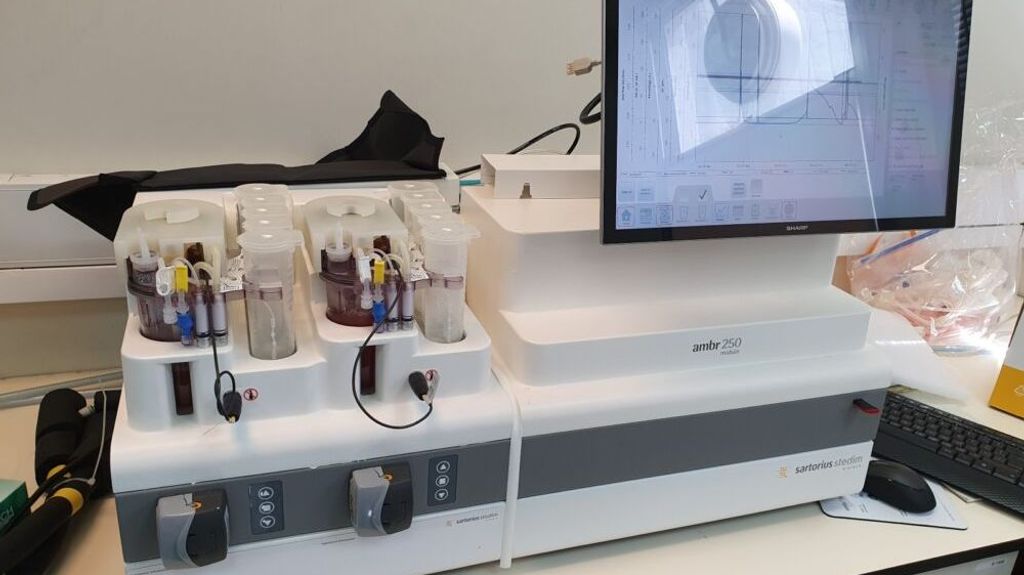
Israeli startup RedC Biotech has a radical solution: generating an unlimited supply of universal red blood cells from a single donation of human stem cells.
RedC Biotech’s goal, says RedC Biotech CEO Ari Gargir, “is to allow the blood donation agencies to be independent of the need for donors.”

Though bringing the product to market isn’t likely to take place until the end of this decade, Gargir’s ambitious plans call for such blood to be produced and sold like any other pharmaceutical product.
The need is clear.
While around 120 million blood donations are given every year worldwide, the World Health Organization (WHO) estimates there is a shortage of up to 100 million units, mostly in low-income countries and regions.
COVID-19 exacerbated that shortfall, as individuals have been fearful of giving blood during the pandemic. One reason hospitals have been canceling elective surgeries is because they must reserve their limited blood supply for childbirth, accidents and chronic illnesses.
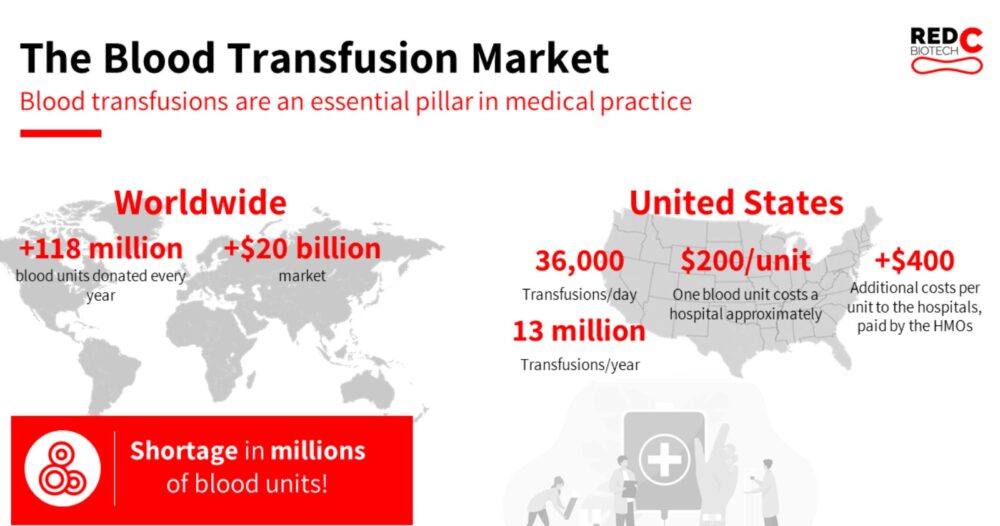
Donated blood is also expensive. The average U.S. hospital pays about $200 per blood transfusion, and that does not include staffing and infrastructure expenses involved in transfusions.
“If you have a hip replacement, you may need two to five blood transfusions for up to $4,000 worth of blood [$1,000 for the blood units themselves and $3,000 for testing and equipment]. Cancer treatments require up to five blood units,” Gargir said.
Liver transplants require up to 100 blood transfusions. Some people require red blood cell transfusions on a regular basis, such as those with sickle cell disease or thalassemia.
In the United States, 36,000 blood transfusions are performed every day, adding up to some 13 million a year.
Moreover, WHO data reveals that up to 2 million people die every year as a result of blood loss from violence or injury. Some 200,000 women die in childbirth from blood loss, while 300,000 babies are born every year with blood disorders requiring transfusions, Gargir said.
Creating blood in a lab
The need for red blood cells is not theoretical for Gargir.
In 1990, he was paragliding in the Golan Heights when his vehicle crashed. “I woke up in the helicopter getting a blood transfusion,” he recalls. “This was when AIDS was still new, and I was quite scared the blood wasn’t tested.”
Gargir is a 20-year veteran of the biotech industry. With a Ph.D. in microbiology and immunology, he has held leadership positions at Israeli firms Neuroderm, Nucleix, Life Technologies and Glycominds.
RedC Biotech aims to produce “universal blood, very high quality and very clean, that can compete with the costs of the blood donation agencies,” Gargir says.
Similar to the technology used by cultured meat startups to turn single animal cells into steak and chicken, RedC’s process would start with a stem cell donation from a single “universal donor” with a special variant of the blood type O negative, which is suitable for most people.
Since stem cells can multiply continuously and differentiate into any kind of cell, they can be reprogrammed to create a master cell bank.
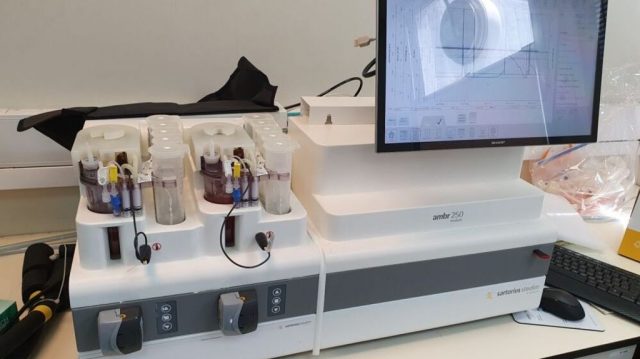
Samples from the master cell bank are used to grow batches of universal red blood cells in a bioreactor for about a month. The harvested and cleaned mature cells would be shipped to hospitals, the company’s target clients.

Creating blood cells in a lab means uniform quality without pathogens, viruses and other undesirable elements. And the blood can be produced according to demand and forecast.
“If you have the holidays coming up, a prediction of bad weather or even a pandemic, you can plan the amount of blood you’ll need without being dependent on donors,” Gargir says.
Several years down the road
Will blood banks go for such a big change? To find out, Gargir said he talked with more than 25 managers of blood agencies, from the American Red Cross to those in Africa and Israel.
“They have two main concerns,” he said. “First, the safety and quality of the blood and, second, the cost. If we meet the quality and the cost is competitive, they’ll be happy to do it, because it’s a pain in the neck to run after donors all day long. Most of their budget and logistics goes into finding donors, signing them up, testing each blood unit for pathogens, and then determining the blood type.”
However, RedC Biotech’s blood-as-a-pharmaceutical won’t be ready for mass marketing until the second half of the 2020s, Gargir said.
Clinical trials, starting only in the next three years or so, will last a year or two. Then the regulatory approval process can take time.
For now, the company has a proof-of-concept and is scaling up production to work with different sized bioreactors. The aim is to expand to 10 liter (2.6 gallon) reactors by the end of 2022.
Getting to commercialization will require a lot of money.
Gargir has raised about $1.4 million to date and has embarked on a new fundraising round. Much of that will go into building production facilities close to its markets. “We want to shorten the supply chain, so we’ll need to produce blood in several dozens of factories around the world.”
Logistics between the different manufacturing sites will ensure that, if there is a surplus in one area and a catastrophe in another, “we can easily move production from one place to another,” Gargir says. “Today, blood is not able to be transferred between countries, but that will change when it becomes a pharma product.”
Who will build and own the factories? It might be RedC Biotech or a partner. “It’s too early to determine the exact business model,” Gargir said. “At this point, there are no facilities capable of doing this.”
Scaling up
RedC Biotech has one main competitor, Paris-based EryPharm, which Gargir describes as “slightly more advanced than us.”
Many attempts to create synthetic blood failed in the past, probably because until recently, the technology to mass produce stem cells didn’t exist.
RedC Biotech licensed the technology to mass produce stem cells exclusively for red blood cells from Accellta, another Israeli startup. That company is also working as a subcontractor for RedC Biotech to scale up the process ahead of clinical trials.
Today, it costs RedC Biotech about $5,000 to produce a unit of blood. Gargir believes that will drop to $50 a unit in 10 years. If RedC Biotech can sell those units for even today’s market price of $200 a unit, that’s ample profit.
Gargir believes RedC’s blood cells will be suitable for 99 percent of humanity. “There will always be some unique people that need a special blood donation,” he says.
Future possibilities include using lab-made red blood cells as a platform to deliver drugs, Gargir says. “You can load therapeutic agents into the red blood cell or coat the red blood cell. They can float in the bloodstream for over 100 days without being rejected by the body.”
“This is a very large, moonshot project,” Gargir says. “But it can be done. The market potential is very high.”
Produced in association with ISRAEL21c.
Recommended from our partners
The post RedC Biotech Seeks To Make Blood Donations A Thing Of The Past appeared first on Zenger News.
A Voice For The Voiceless: Nonprofit Helps Victims Of Injustice Reclaim Their Stories
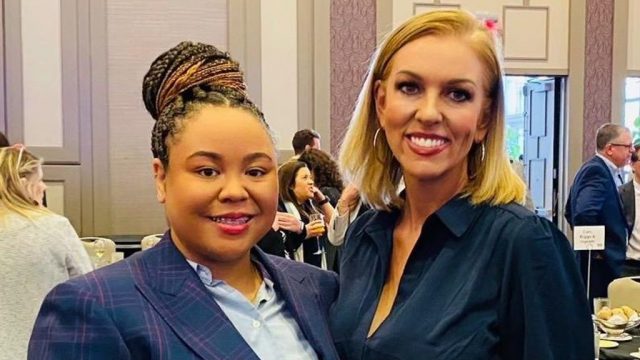
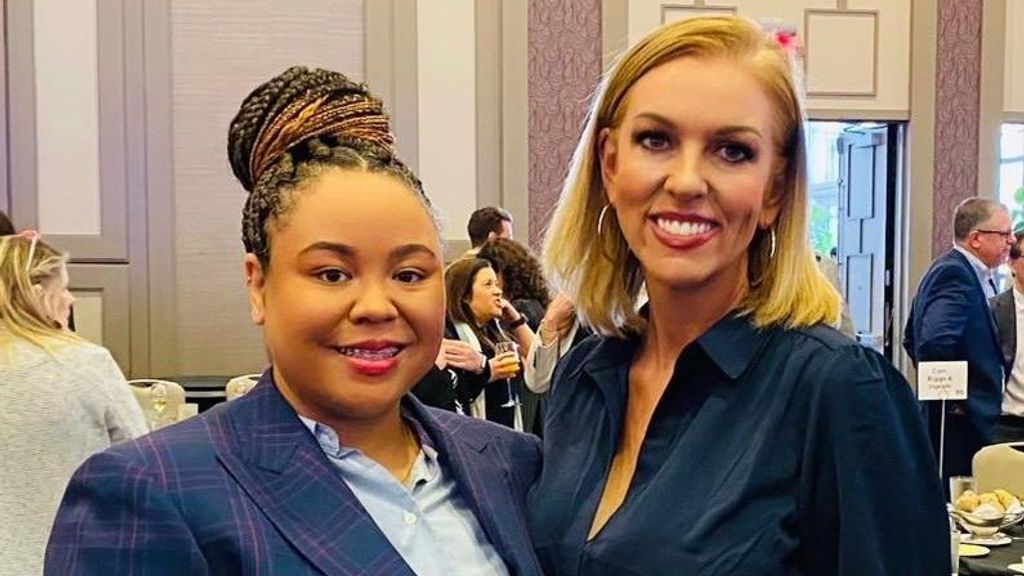
NEW ORLEANS — Injustice is not limited to a particular race, religion or gender. It comes in many forms and often goes unnoticed. Doing their part to shine a light on injustice in New Orleans and elsewhere, Angelique Phipps and Jolie Bernard have teamed up to provide a voice for those who have been directly affected by injustice and families who have felt the effects of isolated instances of injustice.
Not to be confused with famous actress Angelina Jolie, Angelique and Jolie are influential in their own right. Both have found success in the communications space, and through their newly formed company Conscious Communications Collective, or C3, they aim to extend the luxury of open dialogue to those in need. C3 is a nonprofit organization advocating for social change. It accepts donations through Donately.
The duo sat down with Zenger to discuss their plans at C3.
Zenger: How did you two amazing women connect on such an important mission: Conscious Communications Collective, also known as C3?
Bernard: Just a little bit of context on how Angelique and I connected in our space as professional women in the communications industry. Both of us sit on the board of directors of the Public Relations Society of America New Orleans Chapter Board, which is a group of professionals in a multitude of communications capacities. We just get together and support each other.
When I met her, I knew immediately that she was someone who was like-minded, who I could do this mission work with. Knowing her involvement in her husband’s space and what she does in the social justice space, it just made sense.
[I was] dealing with a situation with one of our clients, who is also a personal friend of mine. [It was] a wrongful death situation, where a friend of mine — a former NFL player — died in police custody in December. [Phipps was] listening to me talk about that: how you have to handle the sensitivities of that [situation], manage the legal side, the narrative side, with the family dynamics. She jumped right in. She wanted to help. I’m in a place in my life personally and professionally where we prop each other up. I don’t refuse help, so I said, “Absolutely!”
There is a gap in the communication space for families who lean on attorneys for the civil and possibly criminal side of a situation where they [have] lost a loved one, but what about the storytelling side of it? How can we help in the space where families don’t feel like they can tell their stories? They don’t know the option is there for them. That’s how we started, but it’s not how we’re going to finish, because I do look at her as a partner in purpose but, more important for me, as a like-minded woman who is becoming another sister.
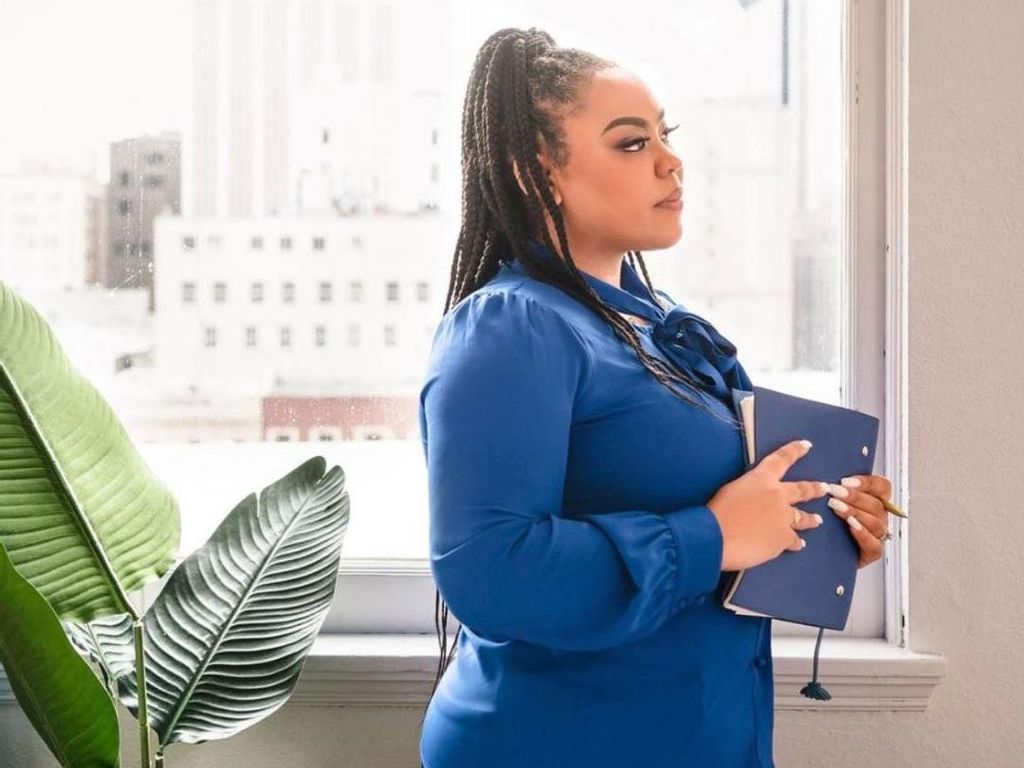
Phipps: In terms of our work, in these social justice cases, these situations tend to be very long-term. …Most people don’t know what to do. They are thrust into the spotlight in the worst possible situation of their life. Not only is that not feasible financially, but it’s taxing. If you have a team behind you, it turns out to be a little bit different. Otherwise, you have issues that fly under the radar because no one knows about it because they don’t know how to get it out there.
A part of our space in this is to replicate something like an ACLU [American Civil Liberties Union] or NAACP [National Association for the Advancement of Colored People] defense fund but in the communications space. We can assist those families and work in tandem with legal teams to [get] everybody…on the same page and also bring awareness to whatever that situation entails. It’s a circle of support, education and a way [in which] Jolie and I can effectively create change and positive impact.
Zenger: One of many benefits of C3 is repairing reputations. How important is that aspect of what your organization offers?
Bernard: Oftentimes, particularly with people of color, particularly black men, even if they are not convicted of whatever the accusation or egregious offense may be, they rarely ever get to tell their truth. So the [story] of what people think they did becomes how they define themselves as people and how the general [public] defines them. When you look at…reputation management and…actually [relay] the truth to the audience that generally tends to buy into what they are seeing — good, bad or indifferent — it’s incredibly important to give that individual their sense of self-worth back.
For this organization, what we intend to do is…give everyone a safe space to tell their truth, to amplify their story and understand that, regardless of this mindset of “cancel culture,” it’s important to hear those words. Words matter. Reputation, integrity and authenticity is all we ever have.
Phipps: In addition to that, not only is it important to that individual, but it’s also important to the public. I think within communities of color, when you have this constant barrage of convictions, it becomes a situation where individuals tend to absorb that thinking. One side starts to think they must have done it — implicit bias is reinforced. On the other side, if that…[person] looks like you, you’re internalizing that as “This is what I must be.” That’s my outlook.
Not only does that limit thinking sometimes, [but] it almost in a sense makes some people believe that that’s what they should be. They almost make these individuals heroes because they were convicted of whatever the crime may be. Instead of aspiring to be who that person truly is, they are now aspiring to be at that street-legend status. As important as it is to repair that reputation, it’s equally as important to create a different narrative and show the true person to the public, so that they can have a different role model and thought process.
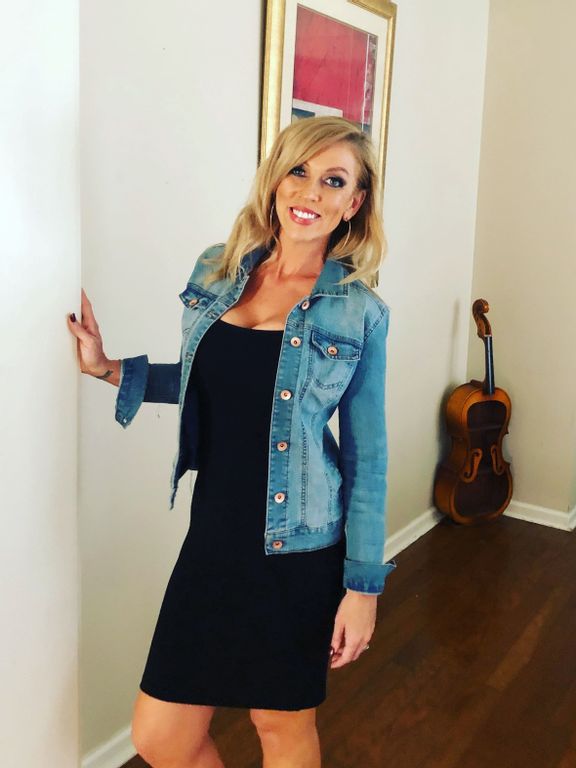
Zenger: Does your organization have an open-door policy for all injustice, or are you trying to target specific types of injustice?
Bernard: The idea of [how] we define social injustice leads us to actual justice [for] whatever the offense is. Right now, we’re living in a polarized world where everything is about the integrity of law enforcement, particularly with the racial reckoning of 2020, with Colin Kaepernick, Eric Reid and the NFL. Even recently, with Brian Flores. That is always the perception of what social injustice is. There are so many other social elements that we either don’t pay enough attention to or we’re not making those connections because lived experiences are different for everyone.
So when we talk about social justice communication, we’re not just talking about law enforcement and community issues. We’re talking about issues that are gender based, workplace based, when we have men making more than women in 2022 and they’re doing the same thing or the woman is doing it more [efficiently] with less time and [fewer] resources. We are going to do our very best to listen and help any and all people [who] feel like they need to anchor and amplify their voices.
Zenger: Ang, we’ve previously discussed your pursuit of making it illegal to use someone’s mugshot for articles and interviews once their time has been served or they have been vindicated. Is that something you’re still pursuing through C3?
Phipps: Yes! It falls along the lines of righting a wrong. For example, a young man could get arrested and his mugshot [would appear] in the paper and all over the news and internet. A year goes by, and he’s found not guilty, [but] that image is still [fixed] in the [minds] of potential employers. The majority of people don’t take the time to research and see he wasn’t found guilty; instead, it creates a barrier.
I had a situation that was brought to my attention about a young man who was involved in [a] band and other things. He was arrested for something he had nothing to do with. His mugshot was splashed all over the news, and even though he was found not guilty and the case was dismissed, it still caused a problem when he was trying to get into college and trying to get a job because people viewed him very differently.
I need to check my facts, but there is currently only one city in the country — that being San Francisco — where they have made this agreement [that] they won’t have mugshots released to the media. This disproportionately affects communities of color. You’re not seeing the same things go on in white communities. You’re not seeing these same mugshots.
Zenger: What made this the perfect time for you two to come together and make this happen?
Bernard: That’s a really good question. It’s multi-layered for me. The first part, for me, [is] being in [a] position to connect conversations, to connect people, to really spotlight some of the things we as women are guilty of [and] how we treat one another. It’s always important for me to [understand] what it looks like for women to be [either or both] personal and professional in relationships.
With me being a black woman and Angelique being a woman that doesn’t look like me, I felt as though it was more important to anchor a partnership because we’re friends but also [because we’re] in a professional space, so people can see and [use] independent thinking…to recognize that it’s not about color. It’s about capacity — to be able to create [an environment] where you are living and working [to] your highest and best [purpose], creating conditions where we can have the most impact together.
[As] you put like-minded people around you, you get a lot further faster. Not only am I trying to be an example of…a servant leader in particular, but women in [a] leadership capacity can also work with another woman as a partner and not view her as a threat. It’s a bonus for me to have this woman that doesn’t look like me [and] means the world to me, and [I] really connect [with the idea] that the fact that she doesn’t look like me shouldn’t matter in any decision, personally [or] professionally.
This gives both of us the chance to connect in overlapping spaces, where she doesn’t care that I’m black [and] I don’t care that she’s white. I care about the impact, the community and this person very personally. We just so happen to be doing business together. This is collaboration, not competition.
Phipps: Professionally and personally, I’m in a space where I don’t view people as competition. Jolie is a powerhouse in her own right. We are both fighting the good fight. To me, it makes sense to not only celebrate and empower her as an individual but to also join forces because now, we’re a force to contend with together. Jolie and I both lead by example. So we are setting an example by empowering each other [as] successful, intellectual women. Other people take notice.
Edited by Siân Speakman and Virginia Van Zandt
Recommended from our partners
The post A Voice For The Voiceless: Nonprofit Helps Victims Of Injustice Reclaim Their Stories appeared first on Zenger News.

Birmingham Urban League honors women leaders with Empower Her Awards

Warm, Gusty Winds To Worsen Wildfire Danger In Southwest
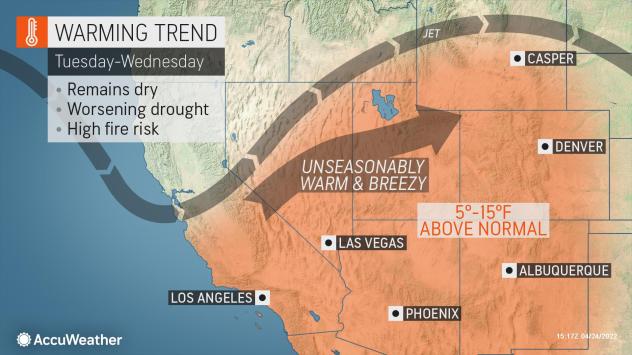
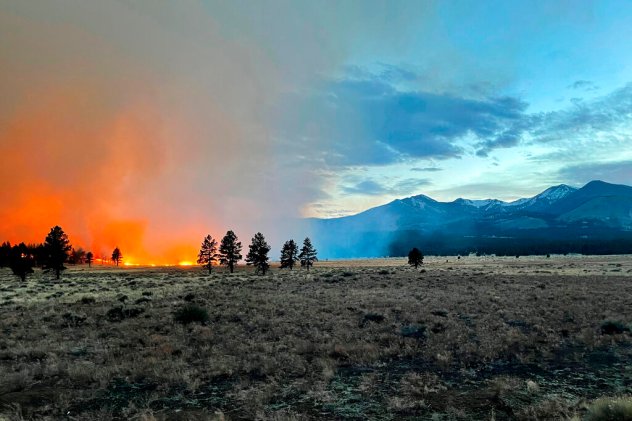
Wildfires are blazing throughout Arizona and New Mexico, and the immediate future holds little hope for any fire-dampening rains there.
Numerous fires broke out across both states and hundreds of residents were evacuated last week. And the threat remains high. Dry, warm and breezy weather is expected to build across the Southwest and Four Corners region this week.
“An area of high pressure is expected to develop as the week progresses, and temperatures are likely to build across the Southwest,” said Courney Travis, AccuWeather senior meteorologist. This will result in widespread warmth and little to no precipitation across the region.
“On Tuesday and Wednesday, temperatures are forecast to reach near 90 degrees in Las Vegas, while temperatures could near 100 degrees in Phoenix,” Travis said. Both temps are about 10 degrees above normal for late April.
Another location that could flirt with 100 degrees this week is Tucson, Arizona, where the temperature is expected to approach the daily record of 99 from 2020.
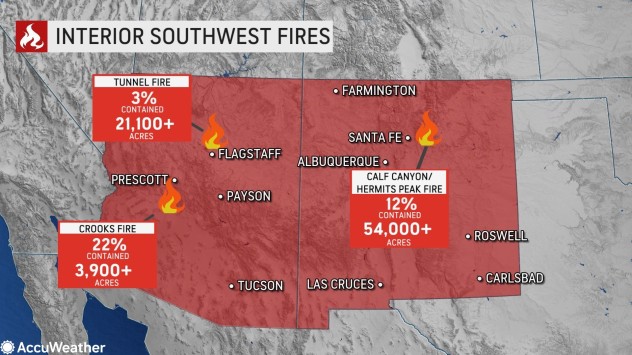
Flagstaff, Arizona, not far from the sizable Tunnel Fire, is expected to have afternoon temperatures in the upper 60s and dry weather both days, several degrees above its average high of 61 F for late April. The Tunnel Fire has exploded in size since igniting on April 17 as a small fire. As of Monday morning, the Tunnel Fire has burned over 21,000 acres and is 3 percent contained.
In Prescott, Arizona, where the Crooks Fire is burning, temperatures could rise to 80 F Tuesday, about 10 degrees above average for this time of year, with no rainfall in sight. The Crooks Fire broke out on April 18 and has grown to more than 3,000 acres after strong winds pushed it in all directions last week.
The Calf Canyon and Hermits Peak fires, burning to the east of Santa Fe, New Mexico, started earlier in April. They are currently 12 percent contained after burning over 54,000 acres. Santa Fe is also forecast to have bone-dry conditions as temperatures rise into the upper 70s Thursday, well above the normal temperatures in the upper 60s.
In terms of drought, New Mexico is one of the most hard-hit states of the West, with over 60% of the state experiencing extreme drought conditions and over 90% in severe drought according to the United States Drought Monitor. So far this month, Santa Fe has only reported 0.10 an inch of rain, putting it at 2% of the average precipitation for April.
As temperatures rise and exacerbate the already dismal drought conditions, another key ingredient in wildfire sparking and spreading is set to arrive for the region: wind.
A storm moving through the Northwest and into the Rockies will send stronger winds across the Southwest Wednesday and Thursday, according to Travis.
Not only can gusty winds sweep away any potential moisture in the air, but they can also fuel fire growth.
“The gusty winds could make any fire that starts across portions of Nevada, California, Arizona and New Mexico spread rather quickly, especially given the dry, warm conditions,” said Travis. This storm can trigger very isolated storms across northern New Mexico and Colorado, though the risk of lightning sparking new wildfires may outweigh the potential relief from rainfall in storms.
Aside from preparing for potential evacuations due to wildfires, residents should be ready for plummeting air quality as smoke permeates the atmosphere. Air quality alerts have already been issued for parts of northern New Mexico, due to smoke. Officials are warning those with respiratory conditions to avoid outdoor activities.
As the week continues, warmth will spread even farther eastward, allowing for record highs in Amarillo and Midland, Texas.
The threat of wildfire activity is anticipated to continue across the Southwest into next week, though with less of a breeze, it may not be as high as this week, forecasters say. Temperatures are expected to remain 5 to 10 degrees above average.
For the latest weather news, check back on AccuWeather.com. Watch the AccuWeather Network on DIRECTV, Frontier, Spectrum, fuboTV, Philo and Verizon Fios. AccuWeather Now is available on your preferred streaming platform.
Produced in association with AccuWeather.com.
Recommended from our partners
The post Warm, Gusty Winds To Worsen Wildfire Danger In Southwest appeared first on Zenger News.
VIDEO: Boy Aged Three That Has A Real Farm To Play With, And Even Drives A Real Tractor


Meet the tractor-obsessed fifth-generation farmer who is taking social media by storm at just three years old.
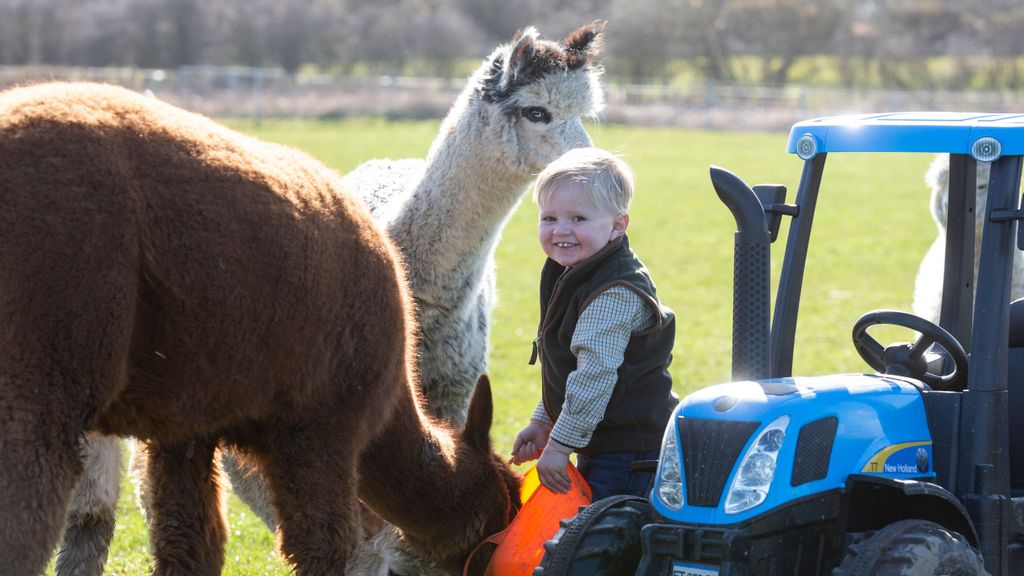
Tommy Summerbell has impressed his family with his caring nature when looking after their myriad of animals including dogs, sheep, goats, alpacas, chickens, cows and horses.
His proud mum, Kate Weightman, 29, says he is ‘seriously tractor obsessed’ after having his first ride on one at just two days old.
The toddler, who goes to nursery two days a week, now regularly drives a combine harvester – while sitting on his dad’s lap.
The cute tot, who lives on a 70-acre farm near Hartlepool in Crimdon, Co Durham, has amassed over 55k TikTok followers in less than two months.
His doting mum posts adorable videos of his outdoor antics, mostly riding around on tractors, ‘strutting’ around with his loyal dogs, and helping his dad with the daily workload.
Kate, who owns a beauty business, explained: ”He really is just farming mad.
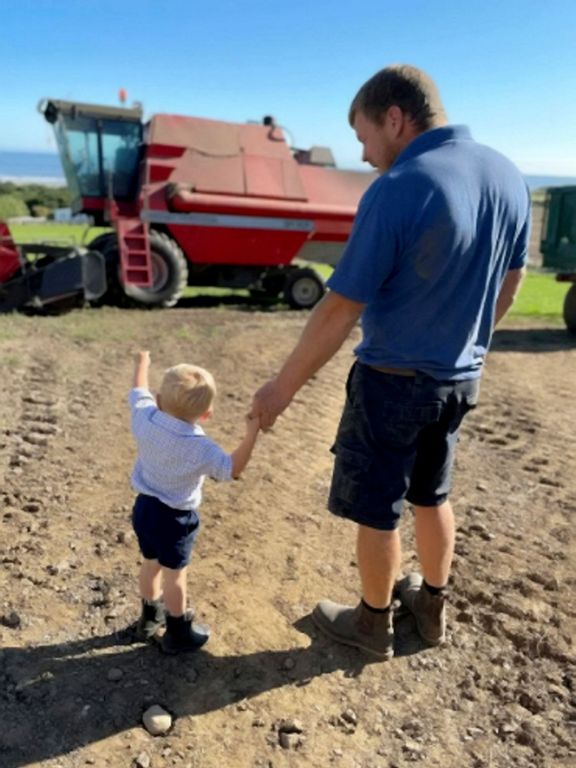
”All he wants to do is be out and about with his dad.
”He loves being outside with the tractors and the animals.
”He charges around having the time of his life.
”He really loves going to check on the cows and lets the chickens out every morning.
”His first few words were ‘tractor’ and ‘digger’ and then after that ‘mum’.
”Thankfully I wasn’t offended!
”He’s an incredibly caring little boy.
”We’d never push him into farming, as far as we’re concerned he can do whatever he wants later in life.
”But it does seem that he’ll be in line to take over the family business.
”He already tells all the teachers at nursery about ‘my farm’.”
Tommy’s dad, David Summerbell, 37, has lived and worked on the family farm all his life.
David and Kate even plan to get married there in May 2022 – with Tommy as ring bearer.
Alongside the farm animals, Tommy is usually accompanied by two loyal sheep dogs, border collies, Jess, 13, and Floss, four.
Kate said: ”The dogs adore him and will follow him everywhere he goes on the farm.
”They’re like his two little sidekicks.
”The first thing he does in the morning is to go and find the dogs to give them a stroke and say ‘good morning’.
”He loves them so much.
”He loves all the animals… seeing him feeding a baby goat or running around with the chickens, it’s so heartwarming.
”I think it’s why his social media has really captured people’s hearts.
”Some of his videos have over a million views, one of him with a baby goat has over six million, it’s mad!
”I like to include normal things he helps with during the day, like feeding hay to the cows, driving the combine harvester with David, and rounding up the sheep.
”We’ve not had one negative comment yet, everyone has been so kind.”
According to Tommy’s grandparents, Cath, 60, and Paul, 60 – who also live on the farm – he is the ‘spitting image’ of his dad, David, as a young boy.
”They say they’re two peas in a pod,” Kate said.
”Cath always says it’s literally like looking at David at that age.
”We’re a bit worried about when it comes to full-time school next year as we can’t see Tommy wanting to leave the farm five full days a week.
”He always asks me ‘Mum, is this my farm?’, he’s obsessed!”
Recommended from our partners
The post VIDEO: Boy Aged Three That Has A Real Farm To Play With, And Even Drives A Real Tractor appeared first on Zenger News.
