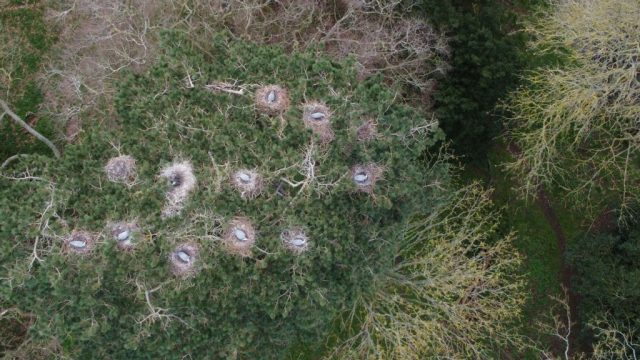
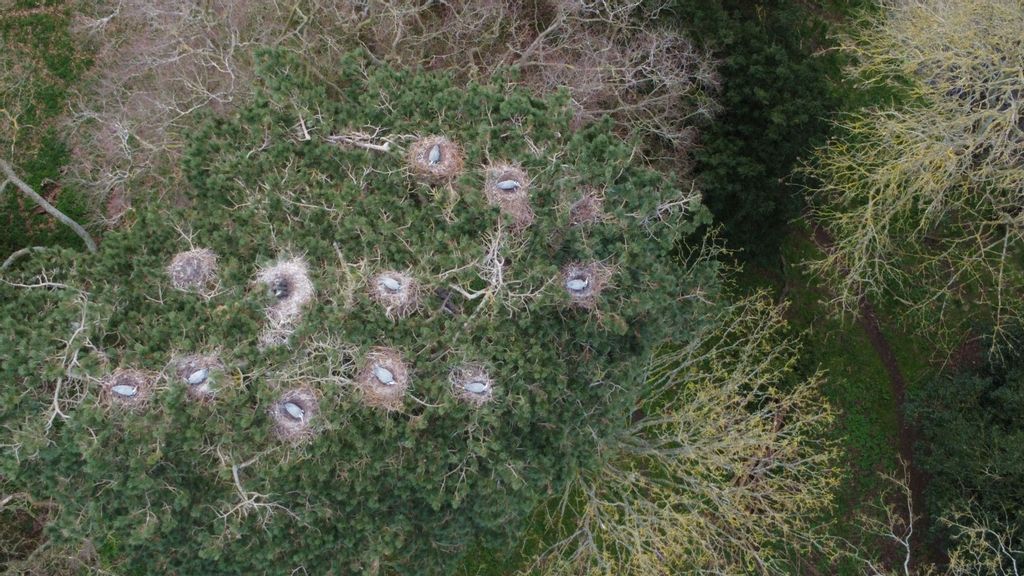
Breathtaking aerial images have revealed a cluster of 11 heron nests perched 100 feet in the treetops of a 17th-century stately home in England – boosting hopes of a surge in the numbers breeding in the UK.
The amazing pictures captured the scenes at the heronry at the National Trust run Belton House in the parish of Grantham, in the country of Lincolnshire, in the East Midlands, in the United Kingdom.
It is the first time a drone has been used for the British Trust for Ornithology’s (BTO) annual census.
The flying gizmo hovered 15 meters (50 feet) above the treetops and 30 meters (100 feet) above the ground to take detailed pictures of the heron nests.
A total of 11 active nests were discovered clustered together in the branches of a Scots pine (Pinus sylvestris) – nine more than experts expected to find.
Each nest contained three to four eggs produced from the 22 breeding birds.
Ecologist Andrew Chick, who conducted the survey, said: “This statuesque bird is often spotted alongside rivers across the country, where it waits patiently to capture its prey – mainly fish, amphibians, small mammals, insects, and eels.
Breathtaking aerial images have revealed a cluster of 11 heron nests perched 100ft in the treetops – boosting hopes of a surge in the numbers breeding in the UK. (Simon Galloway/Zenger)
“They can live up to 20 years, growing to around one meter high, with an impressive wingspan of 1.85 meters (6 feet) and can weigh up to 1.5 kilograms (3.3 lbs).
“They usually lay their first egg in mid-March, so quite early, and only have one brood per year.
“These herons have probably chosen to nest in this particular Scots Pine tree because of its easy access to Belton’s ornamental ponds and rivers, which the National Trust has been actively managing and improving.
“It’s likely the herons have been present at Belton for decades, but thanks to the view from above this year we’ve been able to get a much more accurate record of how many are nesting in the heronry.”
Grey heron numbers have been increasing in the UK in recent years, but have declined in Lincolnshire.
Carl Hawke, Nature Conservation Adviser at the National Trust, said: “It’s great news to discover our heronry at Belton is much larger than previously thought.
“We have been working in partnership with Environment Agency and others to restore the stretch of the River Witham that runs through the Belton estate.
“This has included restoring the natural features that were missing, for example increasing the speed of the flow of the river in some places, putting in gravel to create shallow areas and creating riffles – spawning areas, to attract species like white clawed crayfish and wild brown trout.
Breathtaking aerial images have revealed a cluster of 11 heron nests perched 100ft in the treetops – boosting hopes of a surge in the numbers breeding in the UK. (Simon Galloway/Zenger)
“Later this year we plan to recreate wetland habitat alongside the river that will benefit the herons further.”
“We’re not really sure why numbers had previously dropped here.
“It could be down to a number of factors such as competition for nesting sites with other birds, or possibly the effects of intensive farming on waterways, it’s difficult to know for sure.
“But it’s clear that the conservation work we have done here at Belton is having a positive effect on the breeding population which is fantastic.”
Annual counts take place every spring as part of the British Trust for Ornithology’s (BTO) Heronries Census, which started in 1928.
Last year’s census collected data from 796 sites and close to 9,500 grey heron nests were recorded.
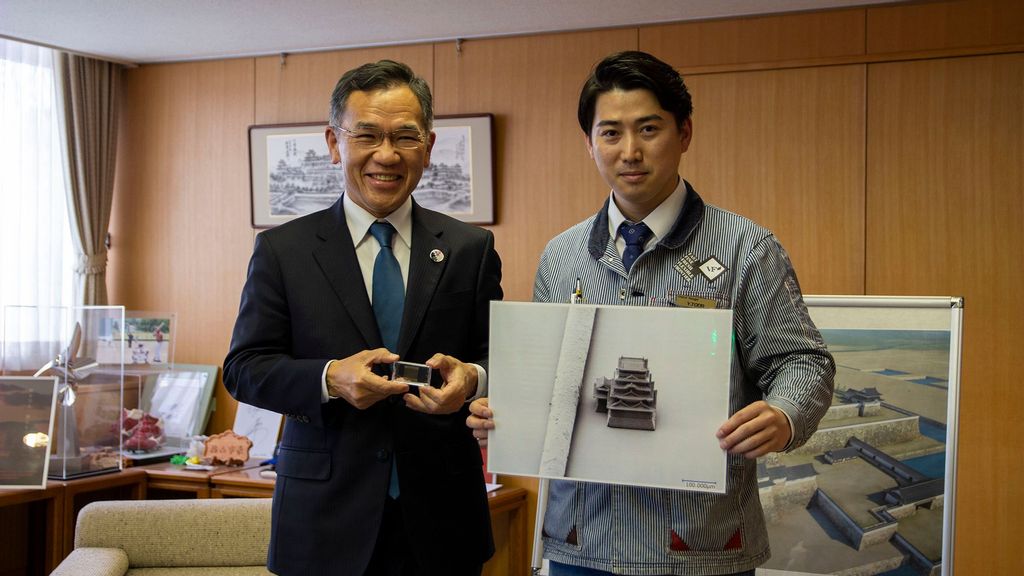
This incredible model of a Japanese castle is so small it is about the thickness of a human hair, as can be seen in this image.
The 0.217-millimeter model of Fukuyama Castle is so tiny, it is all but invisible to the naked eye and it was made by a precision metal parts manufacturer in the western Japanese city of the same name to celebrate the 400th anniversary of the castle being built.
Castem Co. in Fukuyama, in Hiroshima Prefecture, created the miniature model on a scale of 1/170,000 of the actual castle tower, which measures 33.5 meters in height, using a special 3D printer in cooperation with the Kyoto University of Advanced Science in the city of Kyoto.
Front of Fukuyama Castle. (Castem Co., Ltd./Zenger)
Yuki Toda, the 34-year-old general manager of the company’s new business division, explained: “We infused manufacturing’s playful side into the world’s smallest model of Fukuyama Castle.”
Castem boasts advanced metal casting and fine processing technology and has used 3D data to reproduce stainless steel models of paper cranes folded by the late Sadako Sasaki, who was exposed to the atomic bombing of Hiroshima. It also made a 1/250-scale Fukuyama Castle key chain.
For about the past two years, the company has been working together with the Kyoto University of Advanced Science to develop technology in the fields of 3D scanning and materials, and to produce medical supplies.
Mayor of Fukuyama City Naomi Edahiro, (left) Kastem Director Yuki Toda, (right) at the presentation ceremony of the world’s smallest Fukuyama Castle. (Castem Co., Ltd./Zenger)
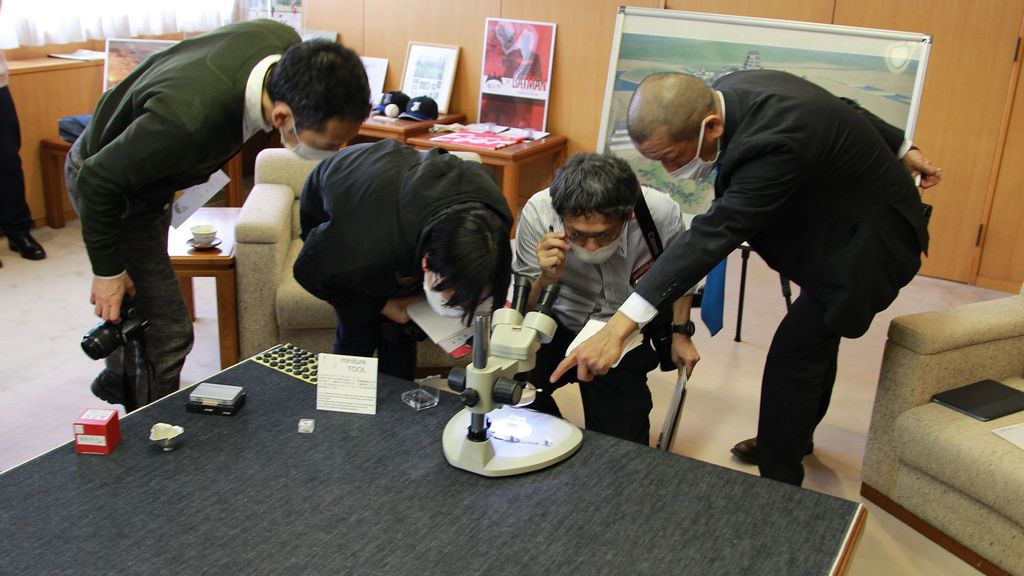
The miniature Fukuyama Castle model was made to be about the same size as the thickness of a strand of hair using the university’s 3D printer and a special resin, and its surface was coated with platinum. When looking at the model under a microscope, it is evident each of the tiles and the stone walls have been precisely crafted.
The presentation ceremony of the world’s smallest Fukuyama Castle, in March. (Castem Co., Ltd./Zenger)
If the material is processed further, it is apparently possible to reproduce Fukuyama Castle with a height of 0.2 micrometers, which is 1,000 times smaller than the current miniature model.
Fukuyama Mayor Naoki Edahiro was reportedly impressed after observing the model under a microscope and said: “It is encouraging to see the display of Fukuyama’s high-level technology. I want to exhibit it at Fukuyama Castle Museum, which will open following renovation 400 years after the castle was built.”
The castle, which was the capital of the Bingo-Fukuyama clan, was built on a hill on the Fukuyama plain, with construction started in 1619, during the Edo period.
Fushimi Turret of Fukuyama Castle. (Castem Co., Ltd./Zenger)
The castle, which is seven stories tall, was completed in 1622 on the orders of the Tokugawa shogun and was surrounded by double moats, which provided an inlet to the Seto Inland Sea.
The Mizuno clan maintained control over the castle from its construction until 1700.
It suffered extensive damage from Allied attacks in World War II when most of the buildings were destroyed and the dry stone was later removed before the main tower was later restored using concrete.
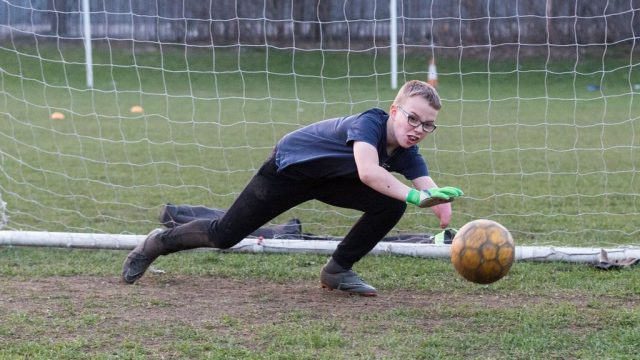
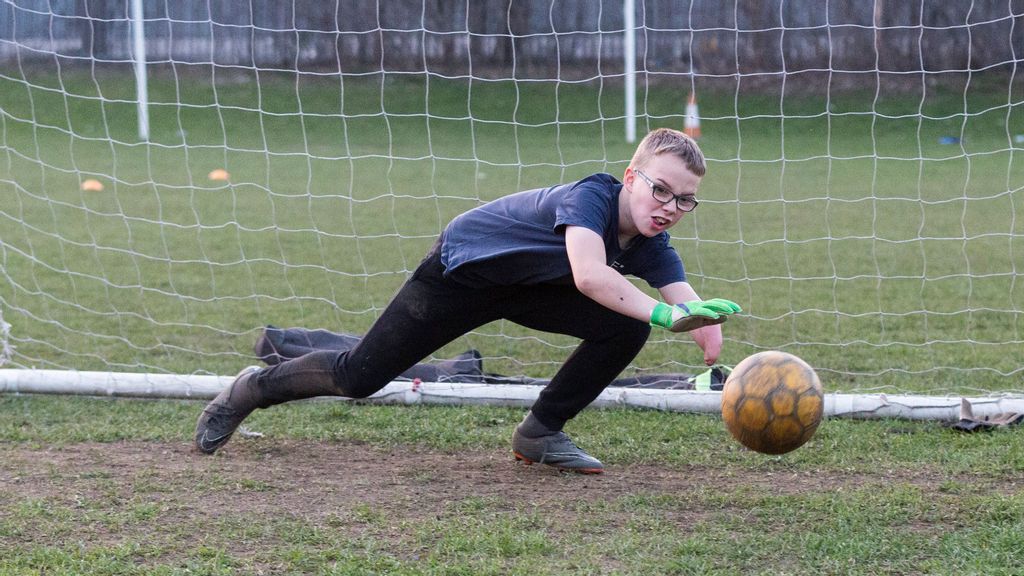
A football-mad youngster born with one arm is celebrating after his team helped him hit a fundraising target for a new bionic limb.
Wayde Drew, 12, was born without his left forearm after his mum, Kirsty Norman, 32, caught swine flu during her pregnancy.
But the determined youngster didn’t let that get in the way of his passion for football – and he has become the star between the sticks with his community team in Leeds.
Kirsty said the lad had previously struggled to get match time in his favored position as kids at his school thought he would be “rubbish”.
But Wayde showed that he can be as good as any other young footballer after he impressed coaches at Saxton FC in his favored position.
So when his teammates found out he was trying to raise thousands for a robotic “Hero Arm”, produced by Open Bionics, they helped him reach the target in just two months.
Writing on social media, Kirsty said: “Honestly can’t believe the generosity of people!
A football-mad youngster born with one arm is celebrating after his team helped him hit a fundraising target for a new bionic limb. (Lee Mclean/Zenger)
“Wayde has gotten very emotional now he knows his dream of having two arms has come true and we honestly can’t thank everyone who has helped to make this happen enough.”
Jonny Nixon, coach at Saxton FC, added that he was overwhelmed after hearing that Wayde would achieve his dream.
He said: “I was choked up myself. It was a really emotional day for everybody.
“We were really confident that we’d hit the target, because of how everyone was pulling together, but we didn’t think we’d hit it as quickly as we did.”
“I think it’s Wayde’s courage and his attitude that has connected with people. You’ve got to meet him to believe how he is with his disability, it doesn’t phase him.
In total, the team helped raise £7,500, with the Open Bionics Foundation, a charity that supports those in need of prosthetic limbs, paying the rest of the money.
The robotic arm lets wearers grip tiny objects, such as a needle and threat, with pinpoint precision.
Kirsty explained that Wayde had always been football mad but had struggled to find a team that would let him play in goal before coming to Saxton FC, in Leeds.
She said: “He’s always played football from being little, and he’s got an older brother who loves it.
“But at school when he plays football, the kids want to win, don’t they?
“So they automatically think because he’s only got one arm, he’s going to be a rubbish goalkeeper, so they don’t let him play in goal.”
Two years ago, Wayde turned up for his first practice, and they were more than happy to let him fulfill his dreams of playing in goal.
Kirsty said: “They’ve given him that chance, and he’s shown them that he is really good in goal, so that’s now his position at Saxon FC.”
Jonny said Wayde had excelled as a keeper as soon as he joined the club – and had become one of the most popular players.
A football-mad youngster born with one arm is celebrating after his team helped him hit a fundraising target for a new bionic limb. (Lee Mclean/Zenger)
He said: “He just turned up one day with his brother and said, ‘I play in goal’ – and we didn’t make a big deal about his arm, no questions asked – and he started making some saves.
“He was fantastic from day one, saving goals, and he’s always turned up since then and played as a keeper.
“He’s become a really popular kid, and he’s always got a smile on his face.
“He’ll turn up and help you set the nets up, and he’ll be the last to go as he’s helping you put them away.”
Kirsty said she had campaigned to get Wayde the new prosthetic after he had become more self-conscious about his arm since he started secondary school.
And she said the bionic ‘Hero Arm’ would give the lad a new lease of life.
She said: “Obviously, he just started high school, so he’s really embarrassed by it and he’s been trying to hide his arm.
“To us, Wayde is Wayde – he is normal. But he just wants to fit in and not have to worry about anything.
“When we showed him the arm, he said, ‘That will be better’ because rather than people saying ‘What’s wrong with your arm?’ They’ll say, ‘Oh wow, look at your arm!’.
“He just wants to be the same as everyone else, and now he’s at high school, he’s constantly getting questions and getting embarrassed by it.”
When asked what it would mean to him to get his new prosthetic limb, Wayde said: “It would change my life. It would mean the world to me if anyone could help.”
In a pair of firsts, 64-year-old Eytan Stibbe became the first Israeli to enter the International Space Station on the first-ever fully privately operated mission in outer space. The adventure is reportedly costing him $55 million.
Stibbe, a former fighter pilot and three others lifted off on a Spaces Falcon 9 rocket from NASA’s Kennedy Space Center in Florida at 11:17 a.m. EST on April 8.
About 21 hours later, the rocket carrying the four adventurers on Axiom Mission 1 docked at the International Space Station. Stibbe led the way on board as a former fighter pilot, followed by Canadian entrepreneur Mark Pathy, American businessman Larry Connor and retired Spanish-American NASA astronaut Mike López-Alegría, who is serving as the chaperon. López-Alegría is the only one of the four who didn’t put personal funds towards the mission, as he works for Axiom, the Houston-based company that coordinated the flight.
“What a historic launch! Thank you to the dedicated teams at NASA who have worked tirelessly to make this mission a reality,” NASA Administrator Bill Nelson said after the launch. “NASA’s partnership with industry through the commercial cargo and crew programs has led our nation to this new era in human spaceflight — one with limitless potential.”
In this handout photo provided by the National Aeronautics and Space Administration, NASA Administrator Bill Nelson watches the launch of a SpaceX Falcon 9 rocket carrying the company’s Crew Dragon spacecraft on Axiom Mission 1 (Ax-1) with Commander Michael López-Alegría of Spain and the United States, Pilot Larry Connor of the United States, and Mission Specialists Eytan Stibbe of Israel, and Mark Pathy of Canada aboard, Friday, April 8, 2022, from the press site at NASAs Kennedy Space Center in Florida. The Ax-1 mission is the first private astronaut mission to the International Space Station. López-Alegría, Connor, Pathy, Stibbe launched at 11:17 a.m. from Launch Complex 39A to begin their 10-day mission. (Photo by Joel Kowsky/NASA via Getty Images)
Axiom was founded in 2016 by Michael Suffredini, the program manager for the International Space Station from 2005-2015, and Kam Ghaffarian, whose business career has long been tied to work with the U.S. space agency.
“Ax-1 is the first of several proposed Axiom Space missions to the International Space Station,” the company said on its website on April 9 while mentioning there are now 11 people living and working at the International Space Station.
“The Ax-1 crew will live and work aboard the orbiting laboratory for eight days, conducting more than 25 research experiments across a breadth of biological and technological areas to inform future human spaceflight and improve life on Earth,” the statement added.
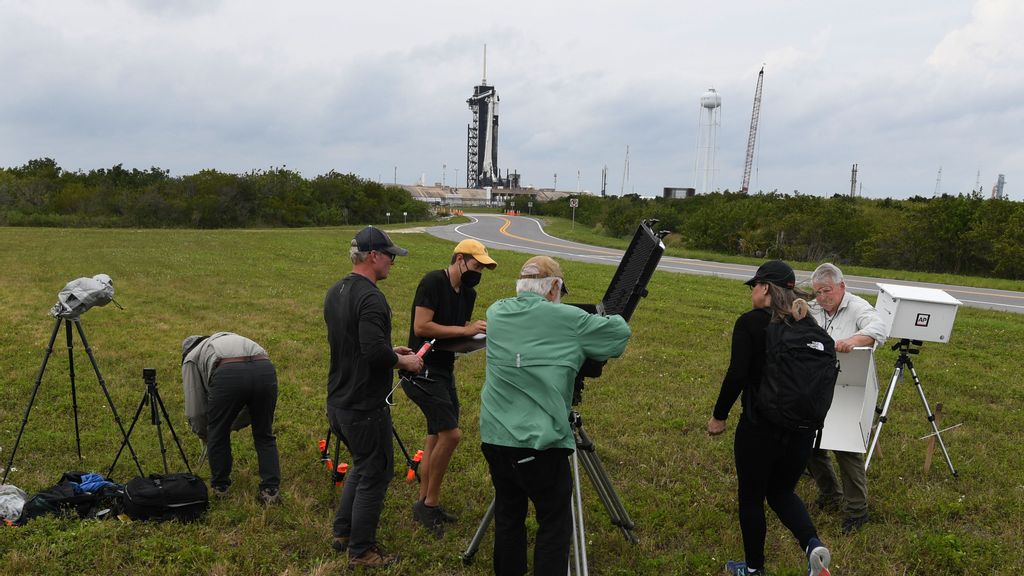
Photographers set up remote cameras as a SpaceX Dragon spacecraft sits atop a Falcon 9 rocket on launch Pad 39A ahead of the scheduled Axiom-1 launch on April 7, 2022 at Cape Canaveral, Florida. Axiom Space is managing the first fully private crew on an 10-day mission to the International Space Station. Commanded by former NASA astronaut Michael Lopez-Alegria, passengers will include Mission Pilot Larry Connor and Mission Specialists Mark Pathy of Canada and Eytan Stibbe of Israel. (Photo by Red Huber/Getty Images)
Stibbe was reportedly close to Israel’s first astronaut, Ilan Ramon, who was killed in the explosion of the Space Shuttle Columbia along with six others in February 2003.
Stibbe’s trip and the experiments he will carry out are part of what Israel calls the Rakia (Hebrew for “sky”) mission.
“Only 241 persons from 19 countries have spent time in [the International Space Station] in the past decades. It is intended to serve as a giant orbiting laboratory, enabling in-depth study of various phenomena under conditions of microgravity,” according to Rakia’s website.
Rakia is a project of the Ramon Foundation, an Israeli nongovernmental organization named in honor of the late astronaut and his family that is focused “on academic excellence, social leadership and groundbreaking courage,” and the Israel Space Agency. The mission’s stated purpose is “to inspire the younger generation while advancing and expanding the Israel space industry.”
Israeli President Isaac Herzog and his wife, Michal Herzog, spoke Sunday night via video link with Stibbe while he was on board the International Space Station.
“During these difficult times on the ground, this project, the exciting launch and experience that the whole house of Israel is watching is a point of light in the sky. These are moments that fill us with inspiration and excitement,” Herzog said.
Stibbe’s trip into space also marks the first time that Israeli youth will have access to what is happening on the International Space Station in Hebrew.
The filmmaker celebrated the debut release on March 14 of the documentary “On & Coppin,” which she co-directed with her father, renowned sports journalist Jerry Bembry.
She also attended the 94th Academy Awards on March 27, where she won an Oscar for her work as an associate producer on “Summer of Soul (Or, When The Revolution Could Not Be Televised),” directed by Ahmir “Questlove” Thompson.
“Before the Oscars, I thought ‘This should be cool,’” Bembry-Kaintuck said. “Being there makes me want to be in a position where I’ll be there again.”
Ashley Bembry-Kaintuck (right) with director Ahmir “Questlove” Thompson (left) at the 94th Academy Awards. Bembry-Kaintuck is an associate producer and Thompson is the director of the Oscar-winning documentary “Summer of Soul (Or, When The Revolution Could Not Be Televised).” (Jerry Bembry/Zenger)
Bembry-Kaintuck was “legit rubbing elbows” with famous actors, artists and celebrities at the Dolby Theater in Hollywood. She watched Questlove’s acceptance speech and met actors Will Smith, Tracee Ellis Ross, Bill Murray, Sam Jackson and John Leguizamo.
Leguizamo “congratulated me on the Oscar,” said Bembry-Kaintuck, who also spoke to musician Sheila E and civil-rights activists Al Sharpton and Jesse Jackson, among other celebrities, while discussing “Summer of Soul’s” depiction of the almost two-month-long 1969 Harlem Cultural Festival, which celebrated black history, culture, music and fashion.
Ashley Bembry-Kaintuck (right) is a big fan of actor John Leguizamo (left), whom she met at this year’s Academy Awards in Los Angeles. Leguizamo congratulated her on the Oscar for the documentary “Summer Of Soul (Or, When The Revolution Could Not Be Televised).” (Jerry Bembry/Zenger)
The “On & Coppin” experience was “probably the most exciting project I’ve worked on — even more so than ‘Summer of Soul’ — because it was a chance to work with my father on something that we’ve talked about for years,” said Bembry-Kaintuck. “For both of us, it was very personal. We know all the guys from those teams because I went to those games when my dad covered Coppin for The Baltimore Sun.”
Narrated by “The Wire’s” Felicia “Snoop” Pearson, “On & Coppin”chronicles the unlikely first-round upset of South Carolina by Coppin State University of Baltimore on March 14, 1997, when the Eagles became the first team from the historically black Mid-Eastern Athletic Conference to win an NCAA men’s basketball game.
Bembry-Kaintuck discussed her journey with Zenger.
Zenger: Where did you grow up? What is your educational background?
Ashley Bembry-Kaintuck: I graduated from North Penn High School in Lansdale, Pennsylvania, and later went to American University in Washington, D.C.
I ran track in high school and for two years in college. I ran sprints and did the long jump and triple jump. I majored in film, minored in African-American Studies and graduated in 2012.
Zenger: How does it feel to be called an Oscar winner?
ABK: That’s a hard one to answer. It feels weird because it was such a small project to start, so I didn’t think it was actually going to be a thing. It’s the first feature film I ever worked on, and I never thought when I started down this path I would be attending the Oscars or working on a film that won an Oscar.
Zenger: When did you feel like “Summer of Soul” might be in the running for an Oscar?
ABK: Probably the week before, when The New York Times ran a story that said we were the favorite to win. I had no expectations about it. When The New York Times predicts you’re going to win, it’s a good gauge.
Zenger: What was the atmosphere like at the Oscars?
ABK: Exciting. I didn’t know what to expect, and we had a lot of fun.
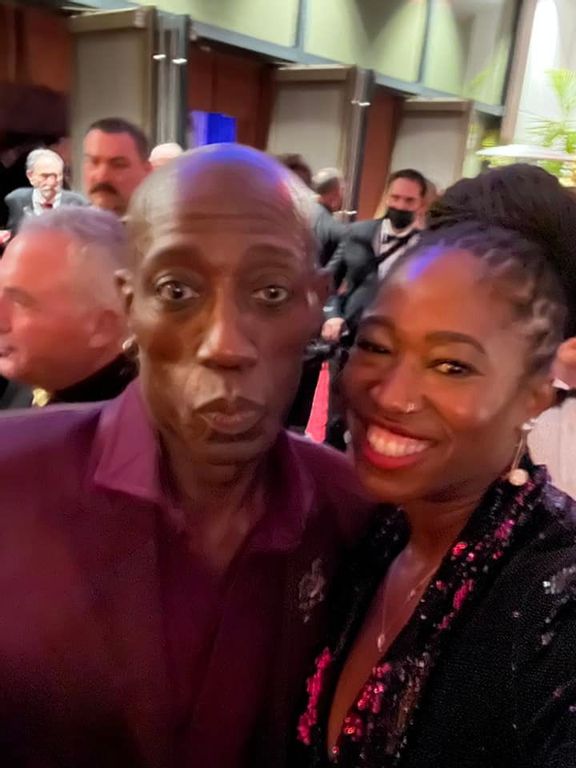
Ashley Bembry-Kaintuck (right) met actor Wesley Snipes (left) at this year’s Academy Awards in Los Angeles, where the documentary “Summer of Soul (Or, When The Revolution Could Not Be Televised)” won an Oscar. Bembry-Kaintuck was an associate producer on the film. (Jerry Bembry/Zenger)
Zenger: What was it like walking the red carpet?
ABK: It was cool to see all the different celebrities. That was exciting.
Zenger: Who were the most exciting people you were able to meet?
ABK: John Leguizamo and Wesley Snipes, the stars of “To Woo Fong, Thanks for Everything! Julie Newmar,” which is one of my favorite movies. I’ve been watching that since I was young. Seeing the two of them — they were both so nice and receptive. John Leguizamo congratulated me on the Oscar.
Zenger: What exactly was your role in “Summer of Soul”?
ABK: I was an associate producer. I pretty much found all the festival goers that appeared in the documentary and built up relationships with them. They felt comfortable when they were interviewed. I also helped out on the edit.
Zenger: Which of the musicians from the documentary did you meet?
ABK: Marilyn McCoo and Billy Davis Jr. from The 5th Dimension, the drummer from Sly and the Family Stone, one of the women from the Edwin Hawkins singers and the people we interviewed about the concert, such as Sheila E, Chris Rock, Al Sharpton and Jesse Jackson.
Zenger: Was it exciting to work on that project?
ABK: It was a part of history. Some people, of course, I didn’t know because that festival happened when my dad was a young boy. The real excitement for me was connecting with the festival goers, especially the Black Panther who was there just because my minor in college was African-American studies. So it was great to meet people who were a part of history.
Zenger: How important was “Summer of Soul” from a historical standpoint?
ABK: It was very important. It brought to light something that people have forgotten about, except for people who were in Harlem. There was no social media during that time, so the knowledge of what happened that summer stayed in Harlem.
While everyone equates music and 1969 with Woodstock, it was nice to work on a project where we were able to showcase another event that was just as important but not publicized.
Zenger: How rewarding was doing “On & Coppin” with your father?
ABK: It was probably the most exciting project I’ve worked on, even more so than “Summer of Soul.” It was a chance to work with my father on something that we’ve talked about for years.
For both of us, it was very personal. We know all the guys from those teams — I went to those games when my dad covered Coppin for The Baltimore Sun. They’re like family. It was a very big deal.
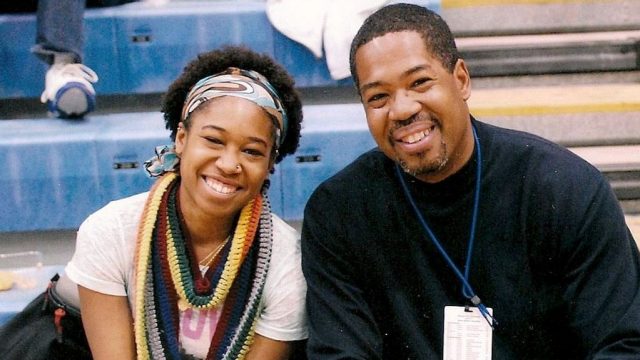
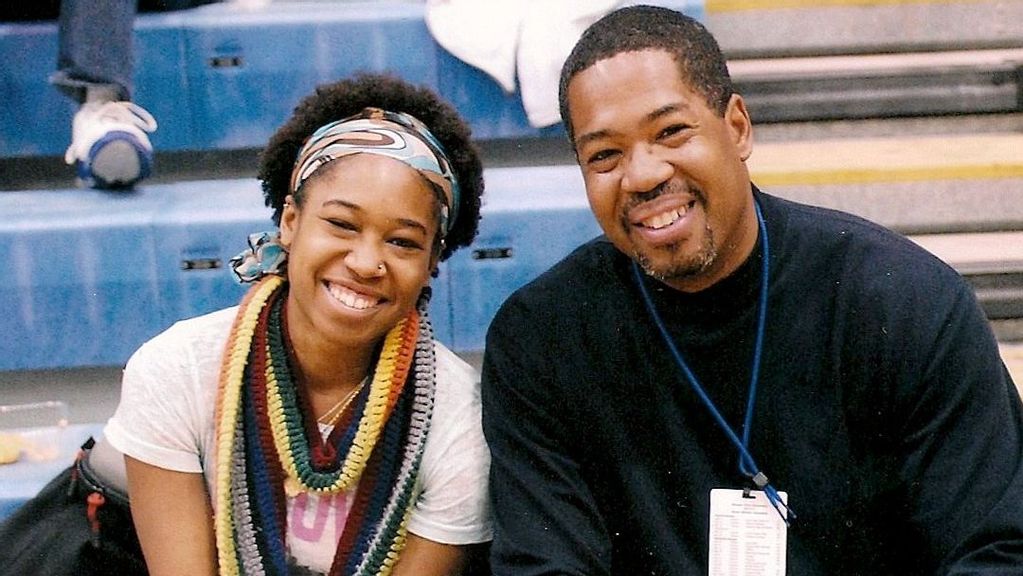
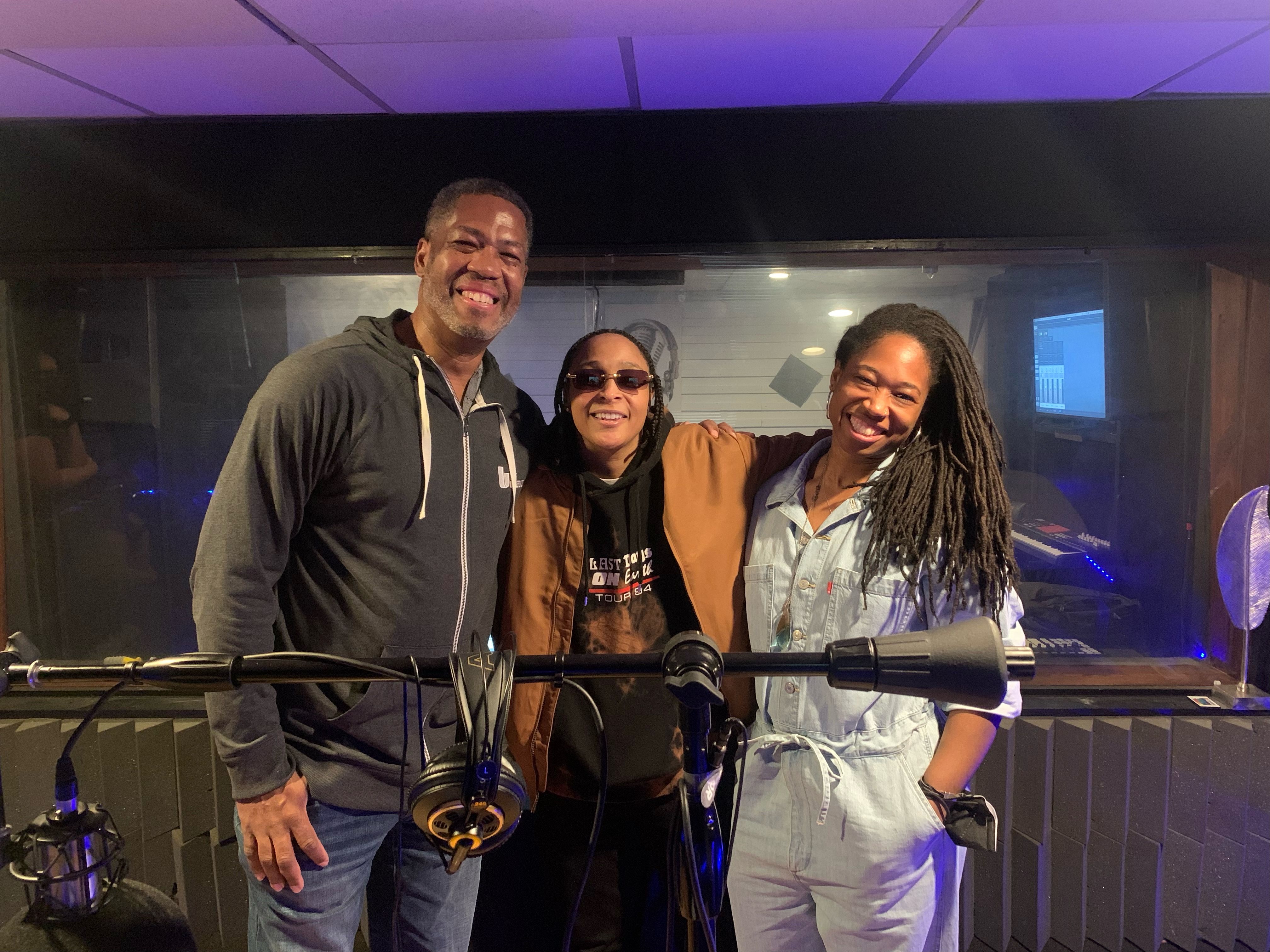
Sports reporter Jerry Bembry (left), actor Felicia “Snoop” Pearson (center) and Ashley Bembry-Kaintuck (right) were the co-director, narrator and co-director/producer, respectively, of the documentary “On & Coppin.” It’s the story of Coppin State University’s historic upset of South Carolina in a men’s basketball match on March 14, 1997. (Jerry Bembry/Zenger)
Zenger: What was the significance of Coppin, as a historically black college and university [HBCU], beating South Carolina?
ABK: No one knew who Coppin was, so for this tiny HBCU to go into the NCAA tournament and beat a powerhouse like South Carolina was big.
It’s something that people should know about because a lot of times, like “Summer of Soul,” those moments are lost in history.
That win in 1997 was big, and Fang Mitchell — the Coppin coach — made a difference in the lives of a lot of student athletes. To bring that story to life and to ESPN was very important.
Zenger: How did the work process on the Coppin documentary differ from what you’ve done on other projects?
ABK: It was different because I did everything. I handled the money, I worked on scripts, I organized shoots. I had my hands on a bit of everything. Doing that was rewarding because I got to experience sides of a production that I [otherwise] wouldn’t have. It gave me further appreciation of everyone’s role in a project.
Zenger: Describe your relationship with your father, his guidance and creative influence on you.
ABK: He had a big influence on the fact that I wanted to be a storyteller. I went to work with him so often and saw what he did. Originally, I was going to go to school for journalism, and he told me that it probably wasn’t the best route to pursue. So I studied film at American University, and I went into this field because of him.
Zenger: Do you want to work with your father again?
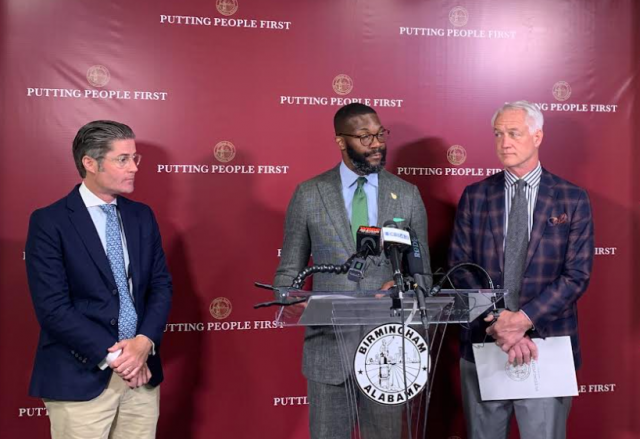
From left: Ed Hartman, executive VP of business operations for USFL; Birmingham Mayor Randall Woodfin; Daryl "Moose" Johnston, VP of operations for USFL. (Ryan Michaels, The Birmingham Times)
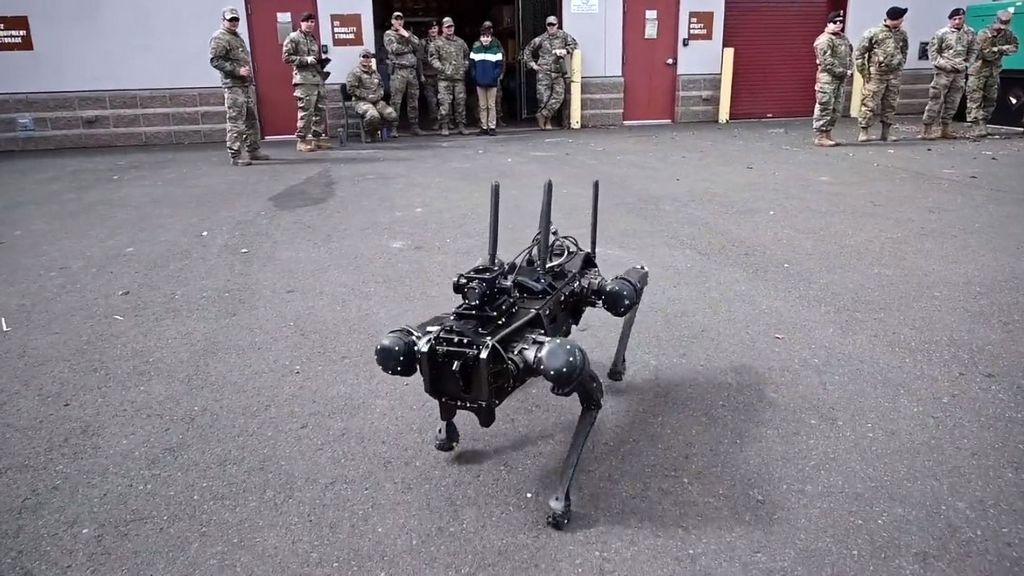
A chilling Terminator pooch is being put through its paces with the US National Guard to see if it is tough enough to patrol America’s bases.
Video footage from the trials shows a unit trying out a new robot dog to help guard its base.
Clips show the mechanical mutt moving around the base before a soldier tests its ability to keep its balance when it is attacked.
The robot is shaken around, but it still manages to recalibrate itself. That is until the soldier pushes it over with his foot, and it remains on its back before the footage cuts to it back on its feet again, with it unclear if it was able to right itself again on its own.
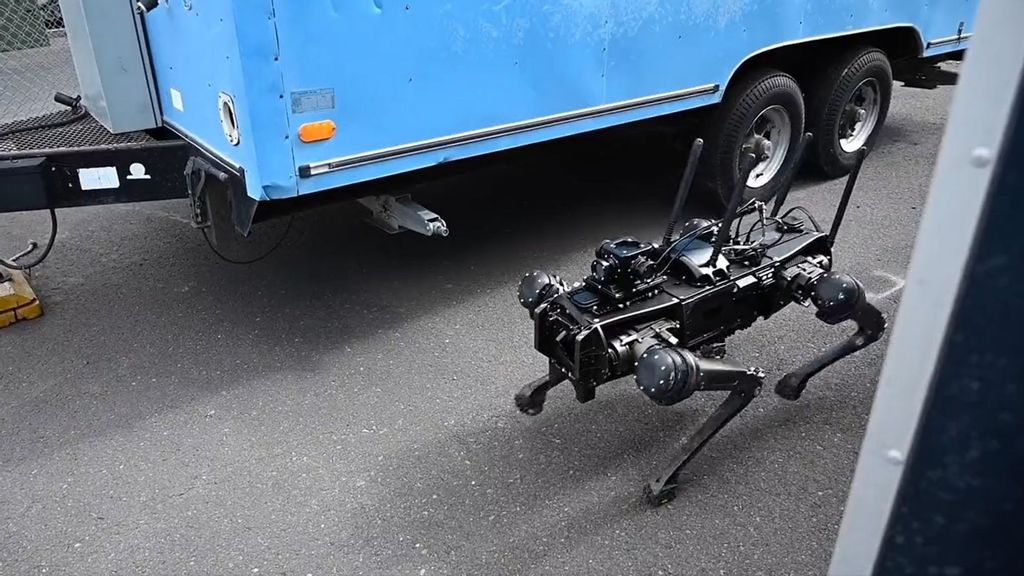
Portland Air National Guard Unit is first to test out Robot Dog for base security. (173rd Fighter Wing Public Affairs, Master Sgt. Jefferson Thompson/Zenger).
But unlike the mechanical monsters from the Terminator films, the robo-dog is not built with weapons.
The footage later shows the dog – complete with a camera on its back – patrolling the military base’s fences before the clip ends.
Zenger News obtained the images from the 173rd Fighter Wing, a unit of the Oregon Air National Guard stationed at Kingsley Field Air National Guard Base, in Klamath Falls, in the north-western US state of Oregon.
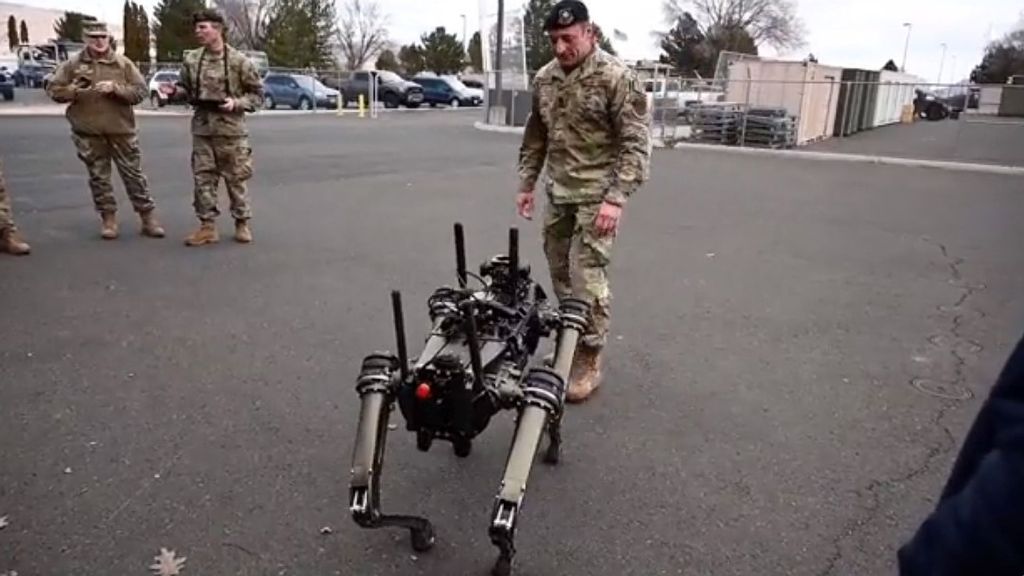
The 173rd Fighter Wing said: “One of the newest innovations in law enforcement wandered around the 173rd Fighter Wing, paying special attention to a group of curious onlookers as well as checking out the security forces compound during a demonstration by the 142nd Fighter Wing’s robot ‘dog’, March 8, 2022.
“The 142nd brought the ‘dog’ to the Southern Oregon unit to showcase what may become an integral part of base defense in the future.”
Portland Air National Guard Unit is first to test out Robot Dog for base security. (173rd Fighter Wing Public Affairs, Master Sgt. Jefferson Thompson/Zenger).
The US Department of Defense also said in a statement obtained by Zenger News: “One of the most advanced pieces of law enforcement technology nosed around Kingsley Field, checking out the sights and sounds, exploring every nook and cranny of the security forces compound and checking out a lot of curious onlookers March 8, 2022.
“The 142nd Fighter Wing Security Forces brought their robot ‘dog’ to the base to demonstrate a new capability the Air Force is using to enhance base defense for a crowd of people including local law enforcement.
“Many in the crowd thought the ‘dog’ shared mannerisms with its biological counterpart and at least one person thought it needed a tail to wag enthusiastically, would you agree?”
Portland Air National Guard Unit is first to test out Robot Dog for base security. (173rd Fighter Wing Public Affairs, Master Sgt. Jefferson Thompson/Zenger).
The ‘dog’ is called Q-UGV, which stands for ‘Quad-legged Unmanned Ground Vehicle’, and it was built by Ghost Robotics and Immersive Wisdom.
The mechanical pooch is part of a push to potentially make base security semi-autonomous.
The robot ‘dogs’ are reportedly being tested at US military bases to assist with security.
They are reportedly able to monitor perimeters and can be programmed to go on set patrol routes.
They are not unlike the ‘robot dog’ Spot, which was first developed by Boston Dynamics, whose stated mission is to “imagine and create exceptional robots that enrich people’s lives.”
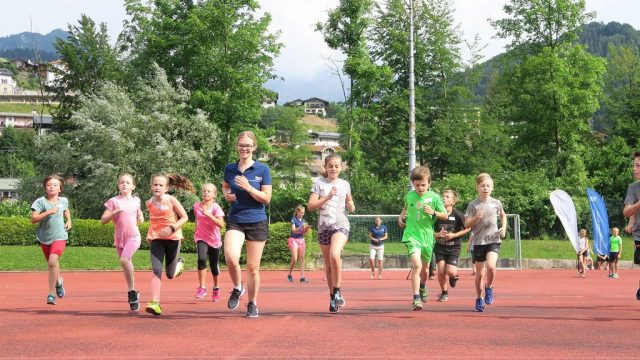
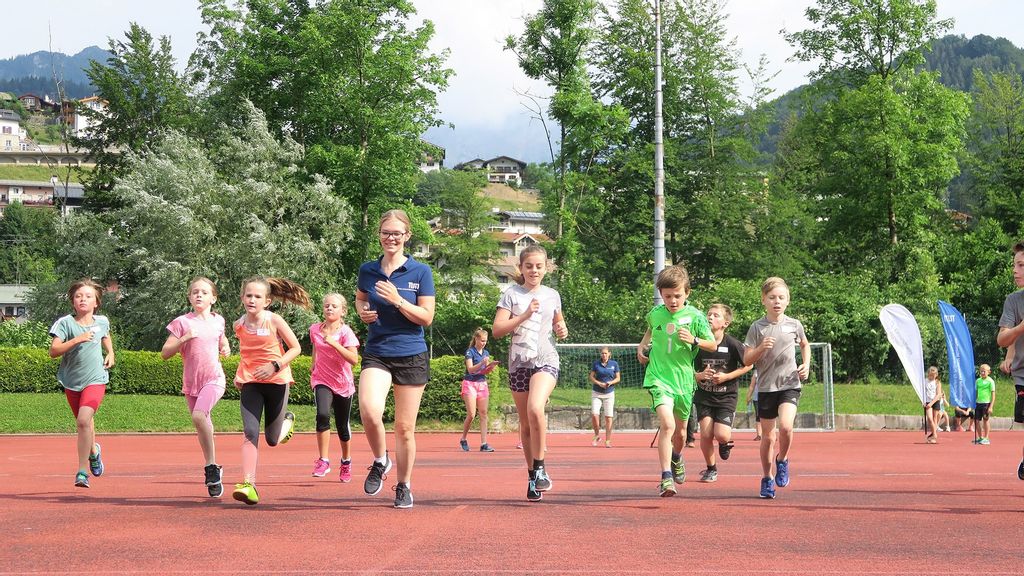
Physically fit primary school pupils feel better, can concentrate better, and are more likely to make it to higher-level secondary schools than children who do less sport.
This has been confirmed for the first time in a study by the Department of Sport and Health Sciences at the Technical University of Munich (TUM).
The study found that movement on a regular basis keeps kids healthy and fit for school.
An athlete makes their way up Gaustatoppen, at 1,850m above sea level towards the finish line during the Norseman Xtreme Triathlon on August 3, 2013 in Eodfjord, Norway.The race which was first held in 2003 runs point to point and is considered among many as the ultimate triathlon in the world. Owners and organisers Hardangervidda Triathlon Club limit the number of competitors to 250 they make their way through some of Norways most beautiful scenery during the course of the race. (Photo by Jeff J Mitchell/Getty Images)
And although the benefits of sports have been demonstrated in numerous studies, the research team at the TUM has taken this further with proof of the correlation between physical fitness, concentration and health-related quality of life for primary school pupils.
The study involved 3,285 girls and 3,248 boys from Bavaria’s Berchtesgadener Land district. The key criteria were physical strength and endurance, the ability to concentrate, and health-related quality of life, as determined by the scientists according to internationally standardized test procedures.
The results of the study show that the higher the level of children’s physical fitness, the better they can concentrate and the higher their health-related quality of life. While the boys did better on the fitness tests, the girls performed better in terms of concentration and quality-of-life values.
Participants in fancy dress run during the start of the 2017 City to Surf on August 13, 2017 in Sydney, Australia. (Photo by Mark Metcalfe/Getty Images)
At the same time, in all tests for physical fitness, overweight and obese children had significantly poorer results than underweight children and children with normal body weight. Obese children also had significantly poorer values for health-related quality of life, physical well-being and self-esteem, as well as well-being in friendships and at school.
Another important result of the study, according to Professor Renate Oberhoffer-Fritz, is that “primary school pupils with good physical fitness and a good ability to concentrate are more likely to make it to secondary grammar schools.” Prof. Oberhoffer-Fritz holds the TUM Chair of Preventive Paediatrics and is Dean of the TUM Department of Sport and Health Sciences.
Prof. Oberhoffer-Fritz added: “This means it’s all the more important to encourage motor development in children at an early stage, since this can also have a positive impact on the development of mental fitness.
Runners jog along the recently refurbished Kite Beach is pictured on September 14, 2015 in Dubai, United Arab Emirates. The Beach is very popular with Dubai locals, with a variety of water sports and refreshments on offer. (Photo by Warren Little/Getty Images)
“Collaboration among parents, schools, communities and athletic clubs is very important when it comes to creating a comprehensive and appropriate range of possibilities.”
Dr. Thorsten Schulz, head of the study team at TUM, said: “Based on the results of the study, since 2019 the Berchtesgadener Land District Administration Office has been giving all first-grade pupils in the region a voucher for a one-year membership in a sports club. This is a great example of how different stakehZenger News can work together and help motivate children to be more athletically active.”
In a further study, the research team also investigated older children and young adults at secondary schools. An additional scientific publication based on these data is planned for a later date.