

‘Quantum Charging’ Electric Cars Could Be As Fast As Pumping Gas


New technology may accelerate charging speeds for electric vehicles by 200 times, meaning that filling a battery may take less than 10 seconds.
Drivers of electric vehicles face slow battery-charging speeds and inconvenience, whether at home or at sparsely distributed electric-charging stations. Cars, for example, may take as long as 10 hours to fully charge at home, while even superchargers at charging stations take 30–40 minutes to provide a full charge.
Although electric cars were rare even 10 years ago and millions are now being sold, batteries still limit their range because they cannot store as much energy as fuel tanks do in gasoline- and diesel-powered vehicles. This remains true despite significant improvements in battery technology in recent years.
Scientists at Korea’s Institute for Basic Science (IBS) may have found a solution to this vexing problem in the realm of quantum physics, discovering new quantum technologies that can quickly charge batteries. They drew inspiration from a 2012 study, which proposed the quantum battery concept and theorized that quantum resources such as entanglement may charge batteries at a vastly faster rate by charging all cells in a battery simultaneously.

Collective charging is currently not possible in classical batteries, which are charged in parallel and independently of one another, thereby slowing the process.
Quantum batteries, however, may theoretically lead to superfast energy-absorption rates because the bigger they are, the faster they can be charged. The advantages of collectively charging quantum batteries are measured by a ratio dubbed “quantum-charging advantage.” There are two sources behind this advantage: global operation, or battery cells simultaneously “talking” to all others, and all-to-all coupling involving a single cell.
A team of scientists from the Center for Theoretical Physics of Complex Systems at IBS sought to find out whether there are any limits to charging speeds. In a paper published in the journal Physical Review Letters, they write that all-to-all coupling is irrelevant in charging quantum batteries, stressing that global operation is key to the quantum advantage. The journal chose the paper as an “Editor’s Suggestion” feature.
In addition, the research team was able to precisely quantify by how much the charging speed can be increased. They found that unlike classical batteries (e.g., lithium-ion batteries), where maximum charging speeds increase according to the number of cells, quantum batteries with global operation may achieve quadratic scaling in charging speed.
In other words, as quantum batteries increase in size, charging times become faster. For example, when going from 1 to 2, instead of increasing by a factor of 2, it increases by a factor of 4, and when going from 1 to 10, it increases by a factor of 100.

If a battery in a typical electric vehicle has 200 cells, quantum charging may lead to charging speeds 200 times faster than classical batteries, according to the researchers. This would mean charging a vehicle at home would drop from 10 hours to 3 minutes. And at high-speed stations, charging times would drop from half an hour to mere seconds.
The results of the research may have consequences ranging far beyond vehicles, the scientists believe.
Quantum charging may be used someday in consumer electronics as well as in fusion power plants, which need large bursts of energy for instant charging and discharging. However, the researchers caution that quantum technologies still need years of research before they can be introduced to revolutionize energy use and green technologies.
Edited by Siân Speakman and Kristen Butler
Recommended from our partners
The post ‘Quantum Charging’ Electric Cars Could Be As Fast As Pumping Gas appeared first on Zenger News.
NAACP Calls Judge Ketanji Jackson’s Hearing ‘One for the Ages’

UAB’s Nore Hodge Receives a Top Honor for Black Male Student
When It Comes To The Metaverse, The Future Is Already Here


By Hillel Fuld
The fintech space is yet another vertical in which Israel is a significant player. Among the big fintech companies in Israel, eToro leads the way.
If you look at the most successful tech companies, they all have one thing in common: democratization. Uber democratized transportation, Airbnb democratized hospitality and eToro democratized trading the markets.
I’ve followed the company and its CEO and cofounder, Yoni Assia, from day one. It has been truly incredible to see the company grow into a market leader and evolve with trends like the blockchain, for example.
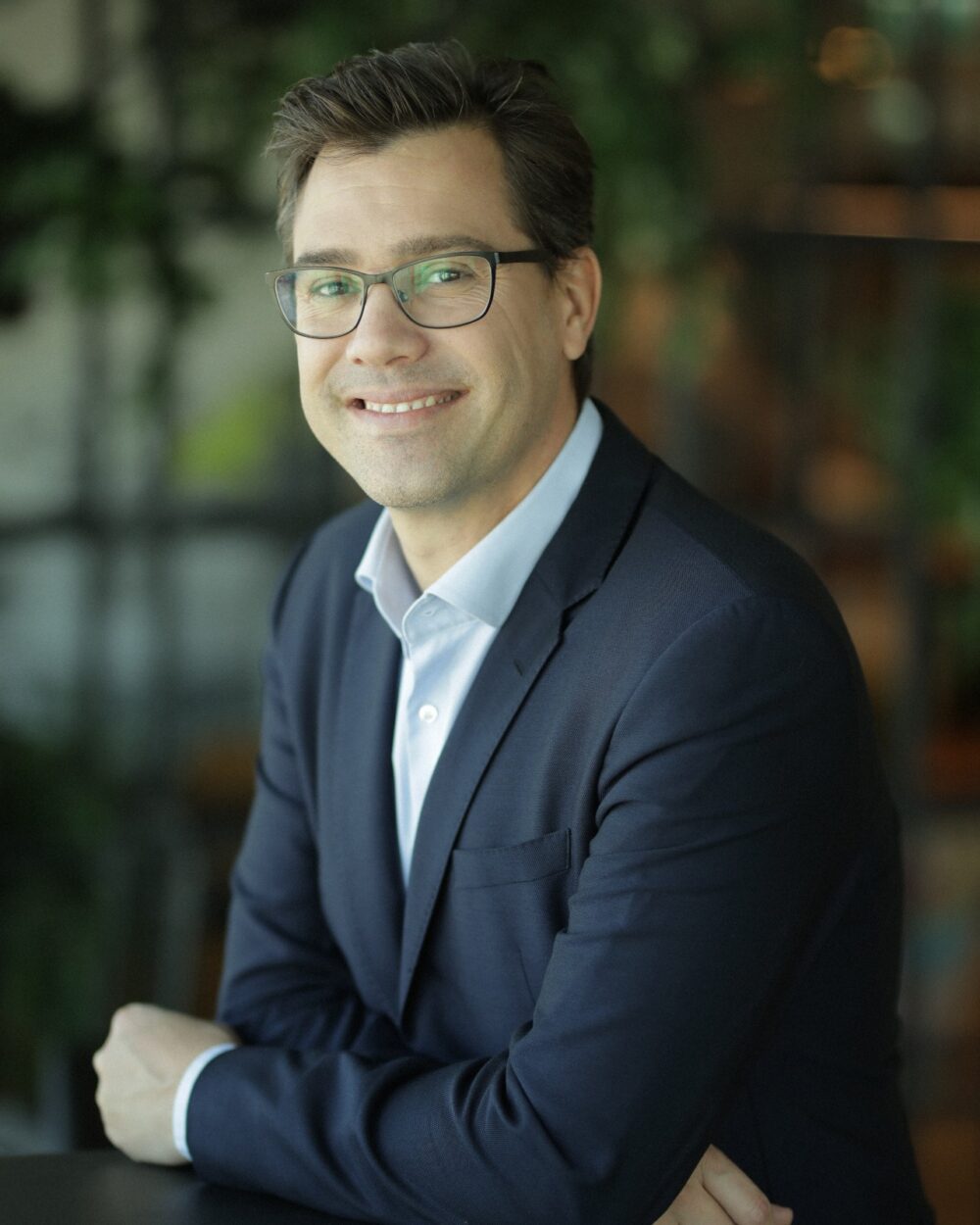
It’s been fascinating to watch Yoni reinvent the company and adapt to the new reality of a global pandemic. That’s what differentiates a good entrepreneur: resilience and the ability to be lean and flexible.
Yoni and his wife, Mor, are a serious power couple. Mor is cofounder of iAngels, a platform that democratizes investments.
I recently sat with Yoni for an in-depth discussion about the company and the market trends.
Hillel Fuld: Please describe yourself in less than five sentences.
Yoni Assia: Cofounder and CEO of eToro, father of five, proud husband of Mor, who is a fintech entrepreneur. My two biggest passions are finance and computer science, and I was able to merge them both along with the social revolution to develop eToro’s investment network. I am a great believer in global markets, a keen believer in blockchain technology and in crypto assets.
HF: When and how did eToro come to be? What contributed to its massive success?
YA: We started eToro in 2007 with the vision of opening the global markets for everyone to trade and invest in a simple and transparent way. I believe in every person’s right to engage, learn and invest responsibly in order to shape one’s future and make a difference in the world. We created a user-friendly platform to make investing accessible and capital markets easier to understand.
We expanded our global offering throughout the years, and in the past two years, we have grown even further. Covid-19 has accelerated an already existing high growth trend as a new generation of retail investors has begun to participate in the capital markets. We have added more than 15 million users in the past two years and today we are the world’s leading social investment network.
HF: Tell me about all the different components of your offering.
YA: We created an investment platform built around social collaboration and investor education and created a community where users can connect, share and learn. On eToro, users can view other investors’ portfolios and statistics, and interact with them to exchange ideas, discuss strategies and benefit from shared knowledge. Each user’s past performance is displayed, alongside their risk score and details of their investment approach. Investors who meet the criteria can become “Popular Investors.”
Our users can hold traditional assets such as equities, currencies or commodities alongside “new” assets such as bitcoin and ether. eToro also offers its users a choice of how to invest — users can trade directly themselves, invest in a portfolio, or replicate the investment strategy of other investors on eToro’s platform at no extra cost, all with the click of a button.
In addition, we offer eToro’s portfolios that group assets or investors together based on a predetermined theme or strategy, such as 5G, cloud computing and renewable energy. Some portfolios utilize advanced algorithms, machine learning and AI to build investment strategies and curate assets to form particular CopyPortfolios based on market conditions.
HF: What excites you so much about crypto, and are NFTs really here to stay?
YA: To me, crypto, Web 3 and the metaverse are as revolutionary and impactful to the world as the Internet revolution.
As an entrepreneur, I always look at the world with the future in mind. I tend to think that the future is actually much closer than it seems to be, and that it unfolds quickly before our eyes. It helps me tap into the future.
When it comes to the metaverse, the future is already here. More than anything, the metaverse is a cultural phenomenon. It signifies the transition from a limited, local culture to a global one. The metaverse is a projection, not just a buzzword.
“With NFTs, an artist can generate their art 10,000 times and create a global impact that otherwise would have taken a lifetime to achieve. NFTs, in this sense, create a redistribution of wealth.”
One of the interesting things about NFTs is that this technology is being embraced by a variety of people (rather than just us geeks). NFTs have reached an inflection point as some of the best-known people in the world are showing growing interest in them — artists, athletes, businesspeople and celebrities alike.
The world of art is going through significant changes, since the metaverse has opened up new possibilities for local artists whose initial market was relatively small. It would take years for such artists to build their reputation and circle of influence. They had to travel across their region, country and go abroad for years to reach their business potential.
With NFTs, an artist can generate their art 10,000 times and create a global impact that otherwise would have taken a lifetime to achieve. NFTs, in this sense, create a redistribution of wealth.
NFT activity allows you to be part of a community, whether it is “Bored Apes,” punks, doodles or any other kind of digital art. It allows you to communicate and share with other people who have the same interests and set of values.
HF: How many people work at eToro and in what locations?
YA: There are almost 1,800 eTorians today. More than 1,100 work in Israel, and the rest work in our global offices including the US, UK, Cyprus, Australia, Germany and various other locations. We keep growing and expanding globally.
HF: I know you can’t share a lot but what are some public numbers you’re proud of?
YA: 100-plus: The number of countries in which we operate
27 million registered users in our global community
2.4 million funded accounts
2,220 Popular Investors in our platform
15 years that eToro has been around
HF: What were your biggest misses?
YA: When we started working on the colored coins whitepaper back in 2012, we found a talented developer who helped write the original protocol to tokenize assets on top of the bitcoin network. We spent some time together in eToro’s office in Tel Aviv, but I did not realize just how talented he was.
Later on, he forked from the colored coins protocol because the other contributors were bitcoin maximalists. He offered to invest in the Ethereum ICO, but I missed out on that offer. His name was (is) Vitalik Buterin.
HF: So how do you do it? Husband, father, CEO, investor, and somehow you find time for friends. What’s your secret?
YA: I don’t get too much sleep! And I don’t have hobbies as I don’t need to — I do exactly what I love doing. I’m very lucky to be able to do this and I truly enjoy my time.
Produced in association with ISRAEL21c.
Recommended from our partners
The post When It Comes To The Metaverse, The Future Is Already Here appeared first on Zenger News.
Invasive Insects Expected To Kill 1.4 Million Urban Trees In The US Over Next 30 Years


Trees in urban settings around the world are being threatened not only by climate change and habitat loss but also by noxious invasive insects, scientists say.
“Many urban areas are dominated by a single tree species or genus, which means that a newly arrived insect for which those trees are a host can spread easily. On top of this, there are usually fewer natural predators and warmer temperatures [in these areas] compared to nearby natural forests, which can benefit invasive insect development,” said Frank Koch of the USDA.
Koch is one of several authors of a paper appearing in the British Ecological Society’s Journal of Applied Ecology. The international team reported that 1.4 million street trees face destruction by invasive insects within the next three decades. Their calculations indicate that the replacement cost may exceed $900 million.

Moreover, ash trees are essential to the life cycle of wood frogs (Lithobates sylvaticus), as tadpoles readily eat fallen ash tree leaves. This diet allows the larval frogs to grow faster and bigger than with other leaf litter.
Representing USDA, Canada’s McGill University and North Carolina State University, the team conducted the very first spatial forecast of the deaths of trees caused by invasive insects, using data from 30,000 urban areas across the United States to ensure a nationwide scope.
Only one species of beetle — the emerald ash borer (Agrilus planipennis) — is expected to make ash trees go extinct. Of the 1.4 million dead trees expected, 90 percent will be killed by the emerald ash borer.
First discovered in 2002 near Detroit, the adult beetles merely nibble on ash tree leaves, causing slight damage. It is in their larval stage that they do their deadly work by feeding on the inner bark of ash trees, interrupting the tree’s ability to draw water and nutrients.

The results of the die-off are plain to see in Michigan, for example, where whole forests of dead ash trees still stand as a witness to their destruction. The beetles probably arrived in North America in solid wood packing material coming from Asia. They are found in at least 35 U.S. states and in the Canadian provinces of New Brunswick, Nova Scotia, Manitoba, Ontario and Quebec.
Adults of the species measure about 0.33 inches (8.5 millimeters) long and 0.063 inches (1.6 millimeters) wide but have a short life span after mating. Once their eggs are deposited on the bark of host trees, larvae chew their way into the inner phloem, cambium and outer xylem layers of the tree to feed and develop. By feeding, they create their characteristic, long serpentine galleries.
“We can see a similar situation in Canada…and cities like Montréal are in the process of losing all of their ash trees. Colder cities like Winnipeg appear to be seeing delayed impacts of [the] emerald ash borer due to its need to complete a longer life cycle at low temperatures,” said lead author Emma Hudgins, who earned her PhD at McGill University.

The authors of the paper believe that the destruction will not be experienced evenly: less than one quarter of communities in the United States will see 95 percent of all street tree deaths resulting from the invasive insects.
The study focused specifically on street trees, which are only a small fraction of urban trees. It forecast the economic costs imposed on cities but did not examine the ecological impact imposed by invasive insects on natural forests.
“The ecological impacts of losing urban trees or an invasive species moving from urban to natural forests would both be considerable. However, these impacts were beyond the scope of our study,” Koch said.

Among the other places of concern are Chicago, Milwaukee and New York, which have large numbers of ash trees and are in the recent path or near-future areas of destruction by the beetles. Also, because of their high human population density, these cities are expected to increase the influx of the beetles.
Moreover, there are other Asian insects of concern. For example, the citrus longhorned beetle (Anoplophora chinensis) poses a distinct threat that may impose a cost of $4.9 billion over the next 30 years.
Because urban trees are at serious risk, the researchers believe urban planners should plant multiple species in cities rather than focusing on familiar species such as ash.
“These results can hopefully provide a cautionary tale against planting a single species of tree throughout entire cities, as has been done with ash trees in North America. Increasing urban tree diversity provides resilience against pest infestations. While we know this more intuitively for monocultures of crops, many cities continue to plant what are essentially monoculture urban forests,” said Hudgins.
Ash trees may be doomed to functional extinction because affected forests show little sign of regrowth, according to Purdue University researcher Songlin Fei.
In residential areas, emerald ash beetles can be warded off by insecticides. In addition, scientists say people should buy firewood locally and not move it from place to place, in order to prevent an expansion of the beetles’ range.
Edited by Siân Speakman and Kristen Butler
Recommended from our partners
The post Invasive Insects Expected To Kill 1.4 Million Urban Trees In The US Over Next 30 Years appeared first on Zenger News.
Comedian Roy Wood Jr. gives VR equipment to Ramsay High School

Alabama Newscenter
Commissioner Sheila Tyson, local groups partner to provide free mammograms

Personal Antibiotic Prescriptions Halve Resistance Risk


An Israeli research group says its artificially intelligent antibiotic-prescribing algorithm can cut the risk of antibiotic resistance by half.
Antibiotics are essential to curing bacterial infections, but their overuse promotes the appearance and proliferation of antibiotic-resistant bacteria.
“We wanted to understand how antibiotic resistance emerges during treatment and find ways to better tailor antibiotic treatment for each patient to not only correctly match the patient’s current infection susceptibility but also to minimize their risk of infection recurrence and … resistance to treatment,” said Roy Kishony from the Technion – Israel Institute of Technology.

The group focused on two common bacterial infections — urinary tract infections and wound infections — to show how each patient’s past infection history can be used to choose the best antibiotic to reduce the chance of antibiotic resistance emerging.
“As most infections are seeded from a patient’s own microbiota, these resistance-gaining recurrences can be predicted using the patient’s past infection history and minimized by machine learning [with] personalized antibiotic recommendations, offering a means to reduce the emergence and spread of resistant pathogens,” the researchers said.
They used genomic sequencing techniques and machine learning analysis of patient records to develop this approach, described in the journal Science.
“We found that the antibiotic susceptibility of the patient’s past infections could be used to predict their risk of returning with a resistant infection following antibiotic treatment,” said lead author Mathew Stracy.
“Using this data, together with the patient’s demographics like age and gender, allowed us to develop the algorithm.”
The study was a collaboration involving Kishony and physicians Varda Shalev, Gabriel Chodick and Jacob Kuint at Maccabi KSM Research and Innovation Center. Maccabi is one of Israel’s four national health maintenance organizations.
The hope is that this algorithm could be used at the point of care to improve treatment and minimize the spread of resistant bacteria.

The CDC describes antibiotic resistance as “one of the world’s most urgent public health problems,” noting that it “has the potential to affect people at any stage of life, as well as the healthcare, veterinary and agriculture industries.”
In its 2019 Antibiotic Resistance Threats Report, it said more than 2.8 million antibiotic-resistant infections occur each year in the United States, resulting in the deaths of more than 35,000 people.
When Clostridioides difficile — a bacterium associated with antibiotic use that is not typically resistant but can cause deadly bouts of diarrhea — is added to these figures, the reported U.S. toll exceeds 3 million infections and 48,000 deaths.
Produced in association with ISRAEL21c.
Edited by Siân Speakman and Kristen Butler
Recommended from our partners
The post Personal Antibiotic Prescriptions Halve Resistance Risk appeared first on Zenger News.
