A new study shows that a common natural plant extract may lead to greater metabolic health and longer lifespans.
Researchers at Louisiana State University fed the leaves of Artemisia scoparia — a species of wormwood common in Asia and Europe — to roundworms or Caenorhabditis elegans, microscopic whip-like nematode organisms that feed on rotting organic matter. Even though they do not resemble human beings, roundworms are often used as a model organism to study neural development in animals and metabolic diseases.
“The reason this study made so much sense to do in worms is because worms live for only about three weeks, so in a month or two, we had definite results,” said Bhaswati Ghosh, a Louisiana State University student and lead author of the study published in the Journals of Gerontology.
He and his co-authors believe the results of their experiments could be replicated in human beings, building on work done by LSU Professor Jacqueline Stephens on the metabolic health of mice.
Stephens and LSU colleague Adam Bohnert led research teams that fed a wormwood extract in various doses to roundworms. Those fed the largest and second-largest dosages showed nearly immediate improvement in their metabolic health, living up to 40 percent longer than the control group. The treated worms grew fatter and moved slower because of their greater body mass.
However, they were also more resilient, healthier overall and endured stress more easily. The Artemisia scoparia doses aided the worms in converting unhealthy fat into healthy fat stores.
A study conducted at Louisiana State University showed that roundworms, when dosed with extracts of wormwood (Artemisia scoparia, fattened and lived longer than untreated roundworms. (Bhaswati Ghosh, LSU)
“Usually people think of fat as ‘bad,’ but in these cases, it seems good and actually pro-longevity,” Bohnert said. “Artemisia scoparia could have some exciting potential as a dietary supplement.”
Worms that fed on Artemisia scoparia as they reached adulthood lived the longest, about 40 percent longer than untreated worms. But worms treated for the first time in middle age also showed improvement, living about 20 percent longer than untreated worms.
“Also, the simple fact that an organism is short, fat and slow-moving does not necessarily qualify it as in poor health,” Ghosh said. Of these observable traits, Ghosh said that they should be “considered in the full context of other parameters, including lifespan.”
The researchers found not only that Artemisia scoparia can transform aging and increase lifespan, its use also establishes a link between fat regulation, metabolic health and longevity. Artemsia scoparia may activate pathways in the body that facilitate longer lifespans by stimulating the genes involved.
“Until recently, it wasn’t really known how aging could be modified through diet or how core metabolic signaling pathways influence longevity,” Bohnert said. “What we’ve been able to show is that a natural extract can come in and influence these pathways in much the same way a genetic mutation would.”
Aging, according to the study, may become controllable. “We know age is the primary risk factor for many diseases, such as cancer and cardiovascular disease, but if you think of aging as a treatable disease, you can actually treat many diseases at once,” Ghosh said.
According to a study in the Journal of Ethnopharmacology, practitioners of Chinese traditional medicine use Artemisia scoparia in “a wide range of pharmaceutical activities, such as anticancer, anti-inflammatory, antibacterial, liver protection, antiatherogenic, antiviral as well as neuroprotective functions.”
However, the authors of the LSU study cautioned that there is not yet any recommendation for human use of Artemisia scoparia as a supplement or on what safe or effective dosages would be. They examined the effects of several related plant extracts and saw that only Artemsia scoparia produced positive effects on fat regulation and lifespan.
The authors added that Grand wormwood, Artemisia absinthium, which is used in the alcoholic beverage known as absinthe, was not included in the study. That form of wormwood is moderately poisonous.
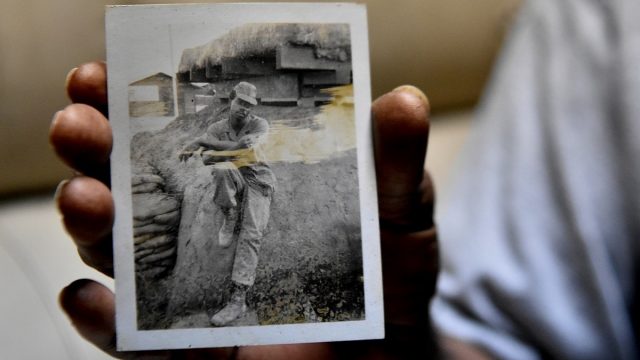
Charlie Woodruff of Childersburg holds a photo of Bill Terry Jr. in Vietnam. Woodruff served with Terry and was present when he was killed in a firefight with the Viet Cong on July 3, 1969. (Solomon Crenshaw Jr. / Alabama NewsCenter)
Physicians at the University of Louisville in Kentucky have recorded the first brain scan of a person as he died, giving a glimpse of what happens at the end of life.
An 87-year-old man suffering from head trauma and epilepsy died of a heart attack while his brain was being monitored by an electroencephalogram. The 30 seconds before and after his heart stopped showed an uptick in brainwave activity associated with dreams, memory and meditation or concentration, the team of experts involved said.
They say in a paper published in Frontiers in Aging Neuroscience that the scan may confirm that the patient had a “life recall” as he expired.
Co-author Dr. Ajmal Zemmar, a neurosurgeon at the University of Louisville, and colleagues found rhythmic brainwave patterns that may explain the organizational role of the brain around the time of death.
“We measured 900 seconds of brain activity around the time of death and set a specific focus to investigate what happened in the 30 seconds before and after the heart stopped beating,” said Zemmar, who also teaches neurological surgery.
“Just before and after the heart stopped working, we saw changes in a specific band of neural oscillations, so-called gamma oscillation, but also in others such as delta, theta, alpha and beta oscillations.”
Brain oscillations are more commonly known as brainwaves. This rhythmic brain activity is normally present in living human brains. The different types of brainwaves are associated with a variety of cognitive functions, including concentrating, dreaming, meditation, memory retrieval, information processing and conscious perception.
Reliving a lifetime of memories within seconds before death has been called “life recall” and has been the subject of conjecture “for centuries,” the study’s authors said. They say the scan may confirm that the patient had a “life recall” as he expired.
The brain scan suggests that the brain remains active and coordinated even after death and may “be programmed to orchestrate the whole ordeal,” the authors say.
The findings bring into question when life ends exactly, and raise important issues, including about the timing of organ donation, Zemmar said.
“Through generating oscillations involved in memory retrieval, the brain may be playing a last recall of important life events just before we die, similar to the ones reported in near-death experience,” he added.
This study is the first of its kind to measure brain activity during the death process of a human being, even though similar changes in gamma oscillations have been seen in lab rats, making it possible that the brain responds similarly across species.
Zemmar said he believes that his team’s results offer a reason for hope, while acknowledging that physicians find it “indescribably difficult to deliver the news of death” to grieving families.
“Something we may learn from this research is that although our loved ones have their eyes closed and are ready to leave us to rest, their brains may be replaying some of the nicest moments they experienced in their lives,” Zemmar said.
Despite spending 14 years in prison, Patrick Young refused to let that harsh experience be his defining moment. Not only did he find a way out, but he also found a way up. He plans to use his blueprint to help others enjoy economic success following their release from the judicial system.
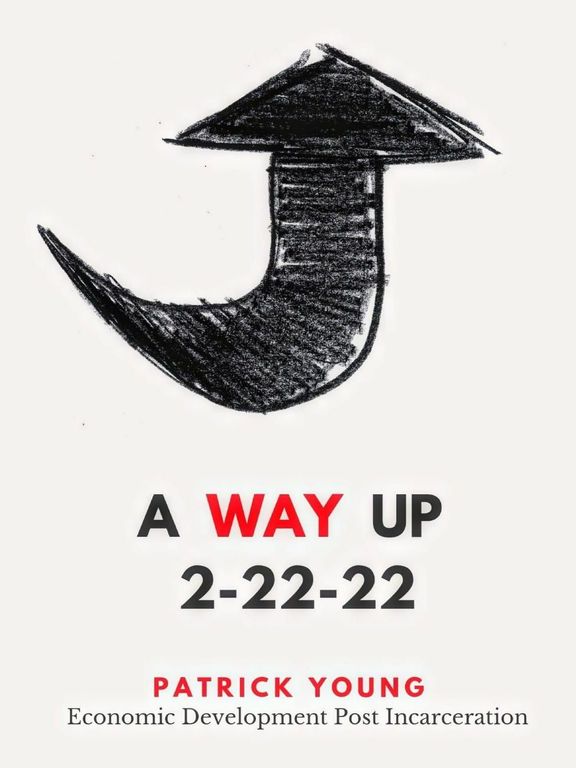
His book, “A Way Up: Economic Development Post Incarceration,” was released on 2-22-22, a date reflecting his time in jail, as the numbers add up to 10 with 2022 marking his tenth year post-release. Young holds many titles in New Orleans, from fighting gun violence to helping ex-military personnel and former inmates acquire suits for job interviews. He now adds the title author to his ledger and says this won’t be his last book.
Zenger touched base with Young to discuss his book as he opens up about the importance of ownership and much more.
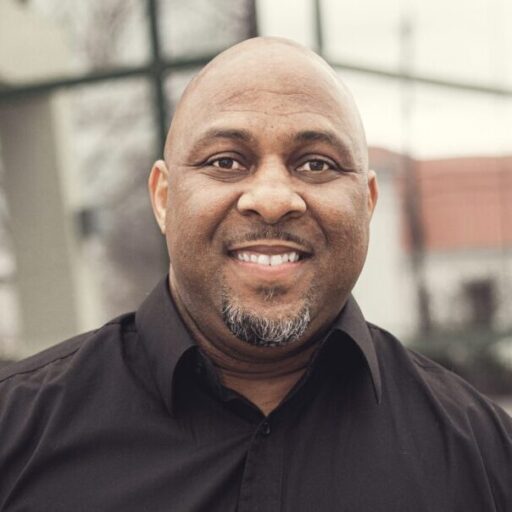
Percy Crawford interviewed Patrick Young for Zenger.
Zenger: Your year seems to be off to a great start. How is everything going?
Young: It’s good, man. The job is moving well, and now I’m just excited about launching this book.
Zenger: What made you decide to write a book?
Young: It’s all God’s time really. I’m launching a book on 2-22-22. If you add those numbers together, that’s 10. This year marks 10 years that I have been released from incarceration. Those numbers also mean alignment. Now is the time for everything to fall into alignment and into place, so I just looked at it as God’s timing.
Percy Crawford interviewed Patrick Young for Zenger. (Heidi Malone/Zenger)
Zenger: We have the reason you’re releasing this book. What is the meaning behind the title, “A Way Up: Economic Development Post Incarceration?”
Young: The book channels prison and poverty. There is this cycle of people who are in these poverty-stricken neighborhoods: They are constantly in this revolving door, in and out, in and out of prison. If you’re locked up, all you wanna do is get out. In order to be successful, it’s not just about getting out of prison, it’s about getting out of poverty. So, you gotta find a way up, not just a way out. We gotta move the economic threshold for people who are in these environments.
Zenger: Was this an easy process to compile your thoughts and turn it into a book?
Young: No man! Actually, it was a little difficult at first because there isn’t much information on economic development for people who were formally incarcerated, which again … was the push behind it.
The military has a version called “TED” [Transition Economic Development]. If you’re in the military, before you’re discharged, you have to take this course and learn economic development. But when you think of the number of people that are incarcerated and their release, where is that same intentionality around them learning how to build wealth after the situation? It’s almost systematically structured to keep people in a certain subset of society. We have to find a bridge. We gotta find a way to help people move into that higher level, that upper echelon of life.
We have to look at what has been done historically. It has been a mental condition of Carter G. Woodson, “The Miseducation Of A Negro.” He says if you teach that a black face is a curse, he’s going to hate himself, his brother, and if you can control his thinking, you don’t have to worry about his actions. For so long, we’ve looked in other areas for influence, and success was for other people, but it wasn’t for us. So, when we removed the lens and said no, we could have our own economic development and build our own areas because that’s what’s missing in our community.
We have more poverty because we have less ownership. We can’t get ownership if there are barriers. So, going to a bank and you can’t get a loan for a house, you can’t get a loan for your business, you can’t get a loan for a car, it’s going to force you to do desperate acts. But in the military, you have access to USAA [United Services Automobile Association] and Navy Federal. The education of the financial literacy is one point, but the second point is, we need to create access vehicles for people to access capital.
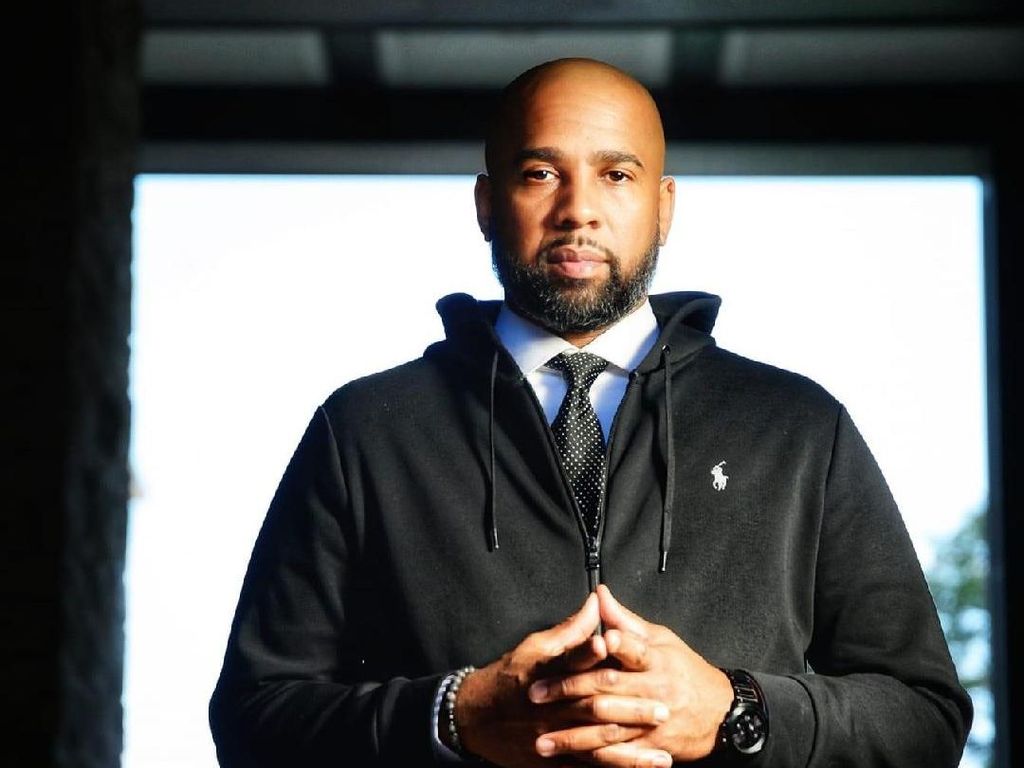
Patrick Young was determined not to be a statistic following his release from prison 10 years ago. (Ayeshia Toy)
Zenger: You described the release of this book as a “new beginning.” What does that mean?
Young: It has to be a reset in the mind. The book is a strategic plan: Let’s take away everything that you’ve been taught. Let’s remove that and get a real education on how to build wealth in this community for us. There is a saying “if you want to hide something from somebody, put it in a book.” Well, the same way you can hide something, you can liberate somebody by putting it in a book. And really give somebody a pathway to prosperity and not just more problems.
Zenger: There is a lesson to be learned from this book for anyone, but you specifically made this for people released from the prison system out into the free world, correct?
Young: I focus a lot on people who have barriers to employment and barriers because of their incarceration status. We have over 77 million people who have some type of conviction. Having a conviction puts you in a separate category when it’s time for you to access certain benefits and capital. This book really speaks to that population.
But we as a community endure hardships when dealing with poverty. How do we get out of that situation? As long as you’re staying in this poverty cycle, we see this revolving door to where three out of every four people who are released from incarceration return within the first three years. That’s a crazy number. And you think why? Again, if you don’t have that financial literacy to know what to do with money if you get a job and you can’t access capital to get your own housing and cars, it’s designed for you to not win. You need some type of strategic plan to help you get up and not just get out.
The cover of Patrick Young’s first book, “A Way Up: Economic Development Post-Incarceration,” dedicated to educating anyone with a criminal record to maximize opportunities. (Courtesy of Patrick Young)
Zenger: How were you able to do it after serving 14 years in prison?
Young: First thing that’s most important … the book is great, and I’m excited about the book, but the first thing that’s most important, even if you’re going to take the lesson is to be self-aware of who you are.
I think going to prison, I lost my identity. I went to prison right after my brother got murdered. I attached myself to him so much. I wanted to be like him, I didn’t have a father around. For me … it was a matter of discovering who I was. Once you get that self-identity, then it’s like, “What can I do?” I was able to bring to life my different skills and gifts because I accepted who I was. For somebody who wants to read the book, you have to be sure of who you are and your identity and just have faith. Move forward with your gifts and your creativity, and you can bring whatever you want to life.
Zenger: What did 2-22-22 mean to you?
Young: It’s such a fulfillment at the idea that my thoughts are valuable. That’s what’s really motivating a lot of it. What you think and how you believe doesn’t always have to be diminished or looked at as crazy or weird. You’ve been given a gift and given a vision, and that has value. So many times people will ask me to come speak or ask me to do something, all that is a value added. This book begins that legacy for my family, for my son to where if I am no longer here, my thoughts will continue on. It’s solidifying me in that way.
Zenger: You have many titles already, adding the title author … is this a one-off, or can we expect another book or multiple books?
Young: It’s crazy. I’m already working on the next book. I think the perspective in which I experienced life is important. People want to know what’s happening. It’s almost like a little series, but this one is “A Way Up: Economic Development Post Incarceration.” The one I’m working on now is “A Way Out: Social Emotional Learning To Stop Gun Violence.”
Zenger: I am wishing you continued success, I hope the book does well, and congratulations to keep it going. Is there anything else you would like to add?
Young: Always thank you for your time. It is a blessing. This is the conversation that we need to have. When we look at coming out of COVID and trying to restart this economy, we have to make sure that it benefits everyone, not just some. We have to make sure that it’s not just immigrants, but people who are coming out of incarceration.
We have to help people come out of hardships and give them access to opportunities. This is the logic, and this is the only way that we’re going to win. We have to move up. The book will be available everywhere books are being sold. Barnes & Noble, Amazon or you can go to my website, www.raiseyourbarllc.com.
Panelists from left, Carolyn McKinstry, Lisa McNair, former Senator Doug Jones and Charles Morgan Jr. discuss the recent re-publication of "A Time to Speak" a 1964 memoir by one of Birmingham's most famous lawyers. (Solomon Crenshaw Jr, For The Birmingham Times)
The year 2021 brought an increasing number of cyberattacks on cars, as hackers tap into advanced technologies, according to Upstream’s fourth annual Automotive Cybersecurity Report.
Upstream, a cybersecurity and data management platform for connected vehicles, based in Herzliya and Michigan, analyzed more than 900 publicly reported cyberattacks on cars in the last decade.
The highlights:
The frequency of cyberattacks on cars increased 225 percent from 2018 to 2021.
Nearly 85 percent of attacks in 2021 were carried out remotely, outnumbering physical attacks four to one.
40 percent of attacks targeted back-end servers.
2021 saw 54.1 percent of attacks carried out by “Black Hat” (malicious) actors, up from 49.3 percent in 2020.
The top attack categories were data/privacy breach (38 percent), car theft/break-ins (27 percent), and control systems (20 percent).
Keyless entry and key fob attacks account for 50 percent of all vehicle thefts. Thieves only need to be close to the key fob for a Black Hat hacker to pick up and reproduce its signal.
All told, Upstream estimates that the automotive industry is projected to lose $505 billion by 2024 to cyberattacks.
Upstream cofounder and CEO Yoav Levy, left, and cofounder and CTO Yonatan Appel. (David Grub)
“The rise in sophistication amongst vehicle hackers will continue to evolve as the industry continues to adopt advanced connectivity,” Upstream cofounder and CEO Yoav Levy tells ISRAEL21c.
That means the car has a connection to the Internet, whether to stream music, access Waze or Google Maps or remember your morning Starbucks’ preferences.
“V2X, the ability for a vehicle to not only detect but engage with the infrastructure, vehicles, and other assets around it, will create new vectors that will all be all too tempting for Black Hat actors,” Levy says.
In 2018, there were 330 million connected cars, Upstream reports. That’s due to jump to 775 million by 2023. A connected car produces some 25 GB of data an hour by 2025. For a fully autonomous vehicle, that number jumps to 500 GB an hour.
How hackers access vehicles
Hackers use eight key tricks to gain access to vehicles, Upstream reported.
Spoofing messages or data (that’s where the message appears to be from someone you know but is really from a hacker).
Manipulating the vehicle’s internal code and data.
Sending harmful messages through the car’s communication and entertainment system.
Taking advantage of vulnerabilities in sensitive information access in some vehicles.
Denial-of-service (DoS) attacks that cause the car to malfunction.
Coopting privileged access.
Embedding viruses in communication media.
Sending messages containing malicious content, which can be received by a car as well as a phone or home computer.
While a hack that disables, say, a car’s brakes while it’s in operation is potentially life-threatening, simple theft is a more immediate and pressing problem.
In September 2021, for example, thieves used sophisticated hacking hardware to steal 25 European-made luxury cars in London.
In Oakville, Canada, 124 vehicle thefts were reported in the first half of 2021 — this in a city with just 211,000 residents. Sixty-six percent of these thefts were via keyless entry tech, and some took place in broad daylight.
It’s not just cars. Two major Israeli public transportation companies were hit by ransomware attacks recently and had their data leaked to the Darknet. In addition to the stolen data, the attack brought the companies’ websites down.
How hackers target vehicles
During the COVID-19 pandemic and its accompanying chip shortage and supply chain issues, Black Hat scammers have been flooding the market with counterfeit parts and components, which can be a hazard to driver and vehicle safety.
Among the most audacious attacks reported by Upstream: In April 2021, the doors of a North American EV manufacturer’s vehicle were hacked using a drone carrying a Wi-Fi dongle.
Even electric charge spots can be hacked, allowing Black Hat actors to remotely switch the chargers on and off, remove an owner’s access, and lock or unlock the charging cable. Bad actors can steal a vehicle owner’s identity through the charge spot, stop owners from charging their vehicles, and charge their own vehicles free of charge.
“Ultimately, most smart EV charging points [we] researched were vulnerable to attacks,” Upstream reported.
The problem won’t be going away anytime soon.
“Today, there are more lines of code in the connected car than other highly sophisticated machines, including the U.S. Air Force’s F-35 Joint Strike Fighter, the Boeing 787 Dreamliner, or a NASA space shuttle,” the report’s authors warn.
“With today’s revolution in automotive connectivity and the exponential growth in the number of connected vehicles on the road, it is imperative for the automotive industry to understand, predict, and combat rising cybersecurity threats,” said Levy.
You can download a copy of the full 900-page cybersecurity report from Upstream here.
Yogi Dada, left, multifaceted artist, and Tanesha Sims-Summers, founder and CEO of Naughty But Nice Kettle Corn Co., both wearing handcrafted Dada earrings, met during an entrepreneurial event in 2017 and there was an immediate connection. (Amarr Croskey, For The Birmingham Times)