A 51-year-old woman has died by euthanasia after a legal battle to exercise the right to die in Colombia.
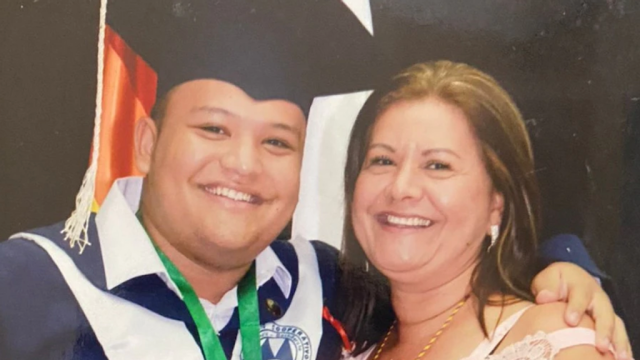
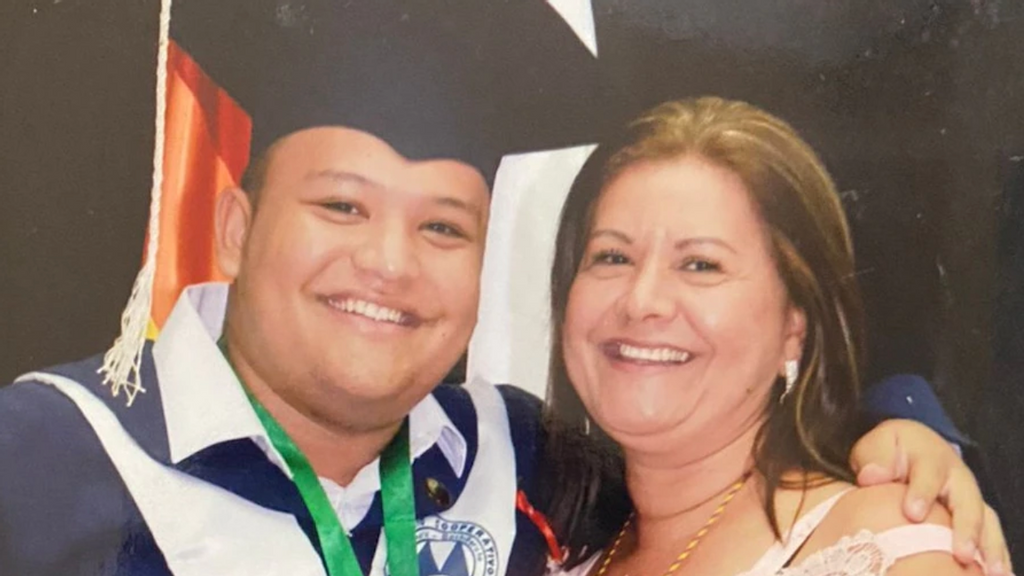
Martha Sepúlveda died on Jan. 8 by euthanasia at the Instituto Colombiano del Dolor in Medellín after suffering from amyotrophic lateral sclerosis (ALS) disease.
Her death was announced in a statement by the Committee on Economic, Social and Cultural Rights, which works on human rights causes.
“Martha Sepúlveda agreed to euthanasia and died in accordance with her idea of autonomy and dignity,” the organization said.
“Martha left with gratitude to all the people who accompanied and supported her, who prayed for her and exchanged words of love and empathy during these difficult months.”
Euthanasia was decriminalized in Colombia in 1997, but the right to die only became law in 2015.
In July 2021, the country’s Constitutional Court extended the right to a dignified death for those who suffer from “intense physical or mental suffering” due to an incurable injury or illness.
Sepúlveda’s case became the first in which euthanasia was authorized in a patient without a terminal illness.
She was supposed to be euthanized on Oct. 10, 2021. However, the private clinic that treated her announced the suspension of the procedure 36 hours prior to the date.
The Interdisciplinary Scientific Commission for the Right to Die with Dignity “unanimously decided to cancel the procedure” after determining that “the criteria of terminal illness was not fulfilled as considered by the first commission.”
The court revoked the suspension of the procedure at the end of October and instructed the clinic to comply “with what was established” in a ruling on Aug. 6 after an expert panel determined that the patient met “the requirements to exercise her right to die with dignity through euthanasia.”
The court said the clinic had violated the woman’s “fundamental right to die with dignity” and set a new date for euthanasia.
The case sparked debate in the country about the right to opt for assisted death.
In a September interview with Caracol TV, Sepúlveda said: “On the spiritual plane, I’m totally calm… I’ll be a coward, but I don’t want to suffer anymore. I’m tired. I’m fighting to rest.
“I’m Catholic and I consider myself a believer, but God doesn’t want to see me suffer. With my ALS in its current state, the best thing that can happen to me is for me to rest.”
Since being diagnosed with ALS, Sepúlveda’s son, Federico, said her life became unbearable, and the news that she could end it was a relief to her.
The day before Sepúlveda died, Victor Escobar, 60, benefiting from the path created by Sepúlveda, became the first patient to undergo the procedure without having a terminal illness in Latin America.
Escobar suffered from several incurable degenerative diseases including chronic obstructive pulmonary disease (COPD) and hypertension. He also had two strokes in 2007 and 2008.
In the last years of his life, he had crippling mobility problems and needed oxygen every day.
Derbyshire, England, police used a drone to find a confused elderly man lying in a ditch on a freezing night, six hours after he wandered out of the hospital.
The rescue took place in Calow in Derbyshire, at around 5:30 a.m. on Dec. 2.
Derbyshire Constabulary said in a statement on Jan. 8: “An elderly man who went missing from hospital in Chesterfield on a freezing December night was rescued by officers, after a last-minute decision to widen their search area using a police drone.
“The man, in his eighties, was being treated for an infection in Chesterfield Royal Hospital in Calow when he left the hospital in a confused state at around 11:10 p.m. on 1 December.
“That night the temperature had dropped to 2 degrees Celsius [35 degrees Fahrenheit] with a wind chill of -2 [28 F], and the man was not dressed for the conditions, wearing only a thin padded jacket, jumper, and trousers.
“Police were called by the hospital at 11:30 p.m. to say he had absconded, and they believed he had been gone around 20 minutes.”
During an extensive search, the man called a relative and said he was at a bus stop in Brimington, miles away from the hospital.
The police searched the area and used a drone to help locate the confused man, but were unable to find him.
Derbyshire Constabulary said: “After almost six hours and due to the large search area involved, a request was put into the National Police Air Service (NPAS) to support. The aim was for the NPAS helicopter to search the area north of the hospital, as all intelligence suggested the man was somewhere in this area.
“While this was being arranged, Sergeant Kev Harrell, acting on a hunch, made the decision to use the last remaining battery to fly the drone to the south of the hospital, just in case.”
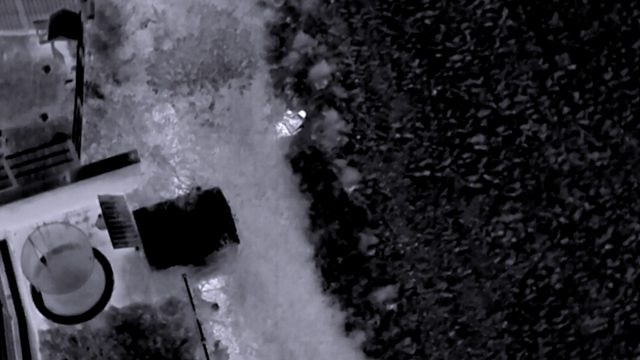
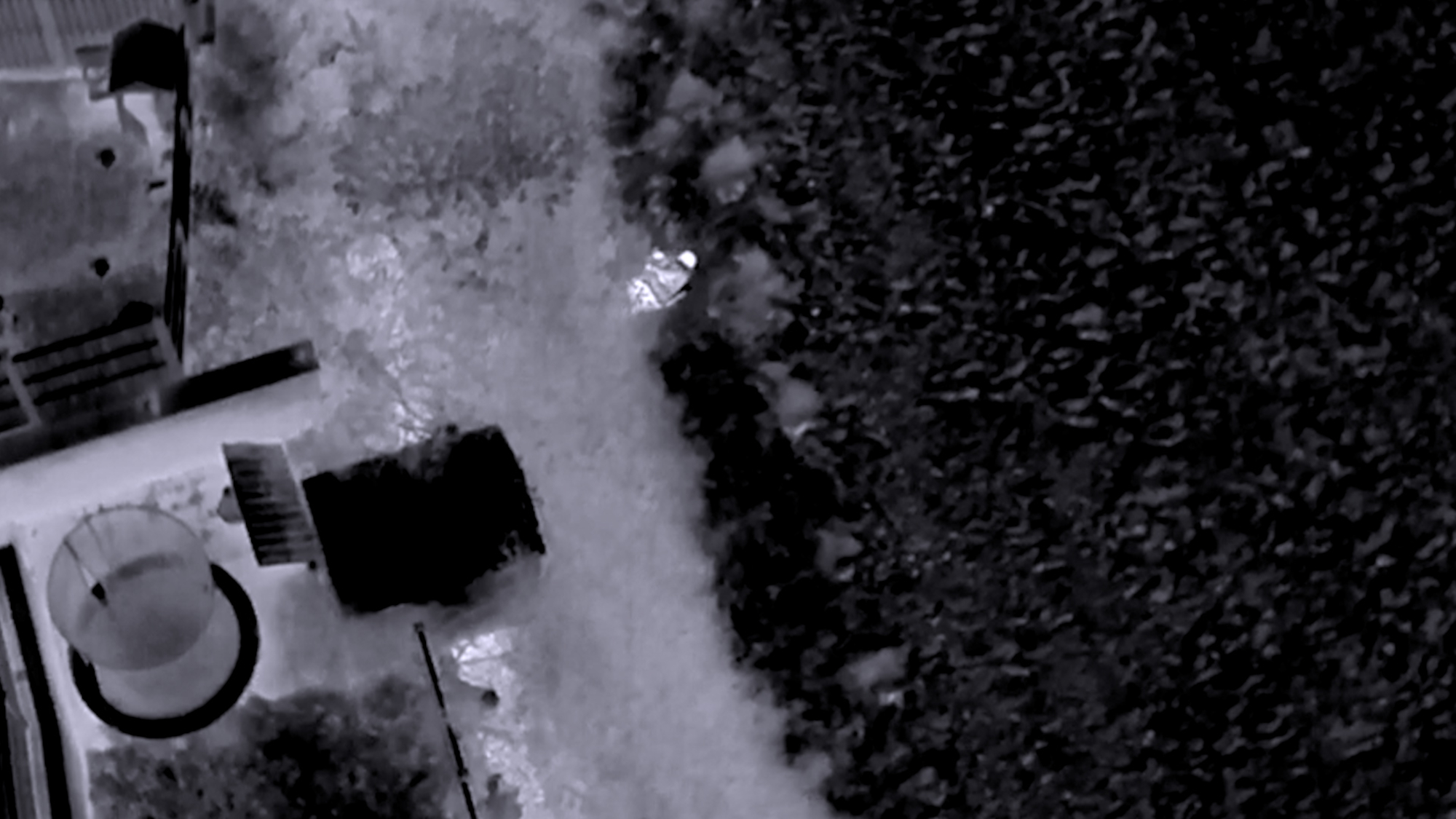
The drone picked up a heat source in a field on Dec. 2, 2021, which turned out to be the missing man who had wandered out of a hospital. Given the cold weather, the rescue saved his life. (Derbyshire Constabulary/Zenger)
Sergeant Harrell said: “My heart skipped a beat when I located a heat source in a field — a heat source of a person — in a ditch behind some houses. I guided local officers in with the aid of the floodlight on the drone, and it was great news.
“The heat source was the missing man we had been looking for. He was found, freezing cold and clearly unwell at 5:30 am on 2 December, approximately six hours after he had walked out of the hospital.
“Medical staff later confirmed if he had not been found at that time, he would have likely died from hypothermia. It was a great effort from all involved and just goes to show the importance of having a drone readily available for deployment, and the fact that it saves lives,” the police said.
The man’s daughter said in the police statement: “That night, officers did a brilliant job, working tirelessly to find my dad, and ensure that he was safe.
“People need to know about this, as without the police and their ability to access a drone the outcome could have been so different.”
The man has made a full recovery and is now back home.
A drone was also used Dec. 6 to locate an ill British man in Nottinghamshire, England, who was reported missing and found after wandering in a field.
From a virtual bartender who speaks with a Hebrew accent to a high-tech mosquito zapper, Israeli startups were buzzing at the Consumer Electronics Show in Las Vegas, January 3–7.
Here’s a round-up of some of the coolest tech from the startup nation that appeared there.
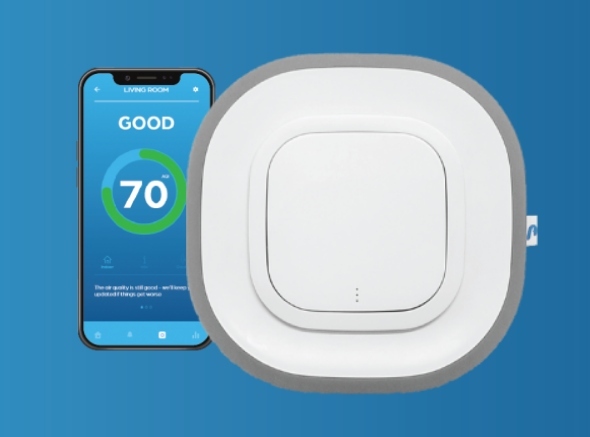
The Aura Air smoke detector and air purifier has an associated app. (Courtesy Aura Air)
Aura Air makes a combination indoor air-quality detector and air purifier. Brothers Eldar and Aviad Shnaiderman would spend summers helping at their father’s air conditioning company.
“We saw what was happening on the inside of the units,” Aviad tells ISRAEL21c, “and we thought, ‘Wow, it’s so dirty. This is what we’re breathing?’”
The Aura Air device is affixed to a wall in homes, schools, offices, hotels, trains and buses (it’s currently used in schools in Israel, US, Japan, Germany, UK, Australia and Finland). It checks for smoke and dangerous gases such as carbon monoxide, propane and butane, as well as volatile organic compounds such as formaldehyde and acetones.
Aura Air then purifies the air, filtering out tiny particles as small as bacteria, mold and fungi. In an independent clinical trial at Sheba Medical Center, Aura Air successfully managed to filter and remove 99.9 percent of airborne coronavirus.
One $389 device can cover 700 square feet. Alerts are sent to your mobile device. A portable “Aura Air Mini” can sit next to your computer to purify your immediate airspace, including in a public setting such as a coffee shop.
This Petah Tikva-based startup has developed an AI-powered disposable patch worn on the skin to track 14 vital signs including blood pressure, oxidation rate, pulse, skin temperature and sweat.
“Doctors don’t have to measure anything,” BioBeat chief medical officer Arik Eisenkraft tells ISRAEL21c. All the vitals are transmitted in real-time via Bluetooth and Wi-Fi to the patient’s EMR (electronic medical record) as well as the BioBeat cloud. Data is then sent to an app on the patient’s smartphone and to the medical team.
The company has received U.S. FDA clearance for its cuff-less noninvasive blood pressure monitoring and has developed a wristwatch device for monitoring vital signs at home. Tel Aviv Sourasky Medical Center is using BioBeat’s wireless stickers as part of its I-Medata center.
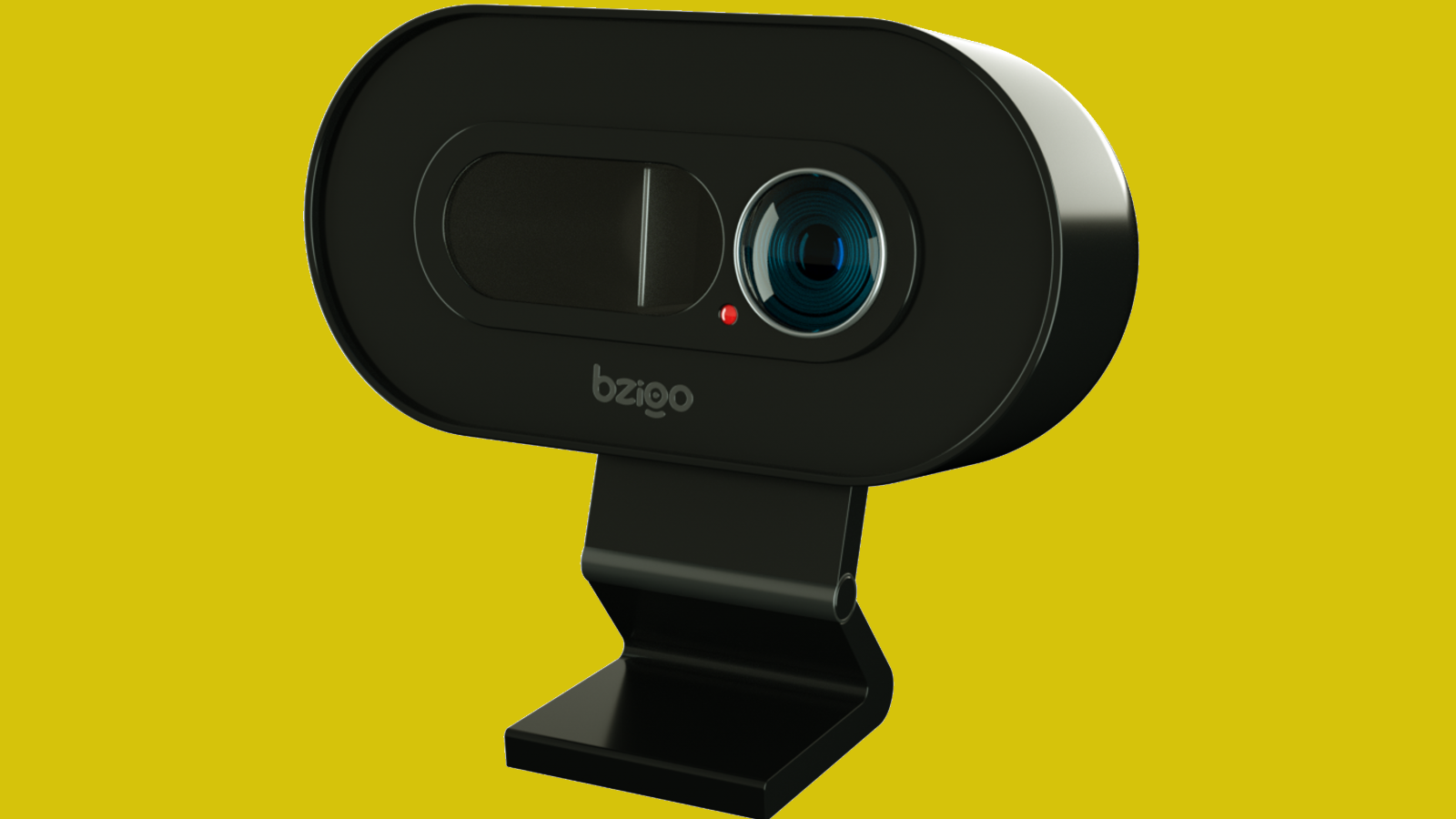
Prototype of Bzigo’s flying insect detection device. (Courtesy Bzigo)
No more buzzing. No more itching. Bzigo detects mosquitos in your room and sends a message to your smartphone with the exact location. What happens next is up to your kindness — Bzigo doesn’t zap the mosquitos, it just provides the data.
CEO Nadav Benedek suffered for years growing up in the rural community of Pardes Hanna where, during mosquito season, his father would scour his room every night before bed to track down and kill the flying critters.
“Killing a mosquito is actually the easy part,” Benedek tells ISRAEL21c. “Ninety percent of the problem is just knowing where they are.”
Bzigo’s smartphone-sized device aims a low-powered laser beam (less intense than a flashlight) at the bug’s location. The device will cost $199 once it’s released later in 2022.
Cecilia the robotic bartender at an airport. (Courtesy of GKI Group)
OK, so Cecilia, the Israeli robotic bartender, doesn’t really speak Hebrew-accented English. The eight-foot-tall virtual mixologist, created by the GKI Group, has a touchscreen, an interactive image of a mixologist serving up your drinks, and comes preloaded with alcoholic options.
Using a microphone and voice-recognition technology, visitors to the GKI booth at CES ordered and received their cocktails in just 30 seconds. You can tell Cecilia what you’re in the mood for or let her suggest a cocktail tailored for the specific event. She can pour up to 120 drinks an hour.
Cecilia is named after Mary Louise Cecilia Guinan, an actress who ran speakeasy bars in Texas in the early 1900s.
Lod-based Chakratec aims to make battery charging faster for electric vehicles by suspending floating flywheels in midair by magnetic levitation.
Chaktratec’s flywheels are intended for the charging station, not the car itself. Cofounder and CTO Ilan Ben-David compares Chakratec’s kinetic storage technology to a Hanukkah dreidel. (“Chakra” is Sanskrit for “rotating wheel.”)
“When you put electricity in, the flywheel starts to rotate. Since the flywheel is suspended by magnets in a vacuum chamber, there’s almost no friction. So the flywheel keeps spinning at the same speed.”
The flywheel stores electricity until it’s ready to be transferred to a vehicle, which could help keep the grid from overloading if too many cars plug in at once.
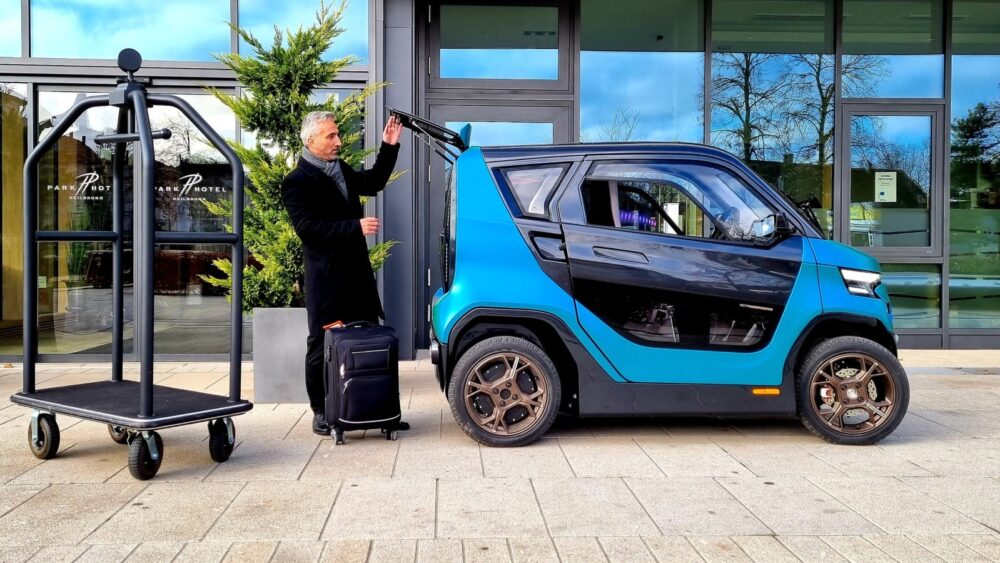
The CityTransformer foldable electric car that fits into just 25 percent of a regular car’s parking requirements. (Courtesy of CityTransformer)
You’ve been circling for 30 minutes, searching for parking when you finally spy an open spot. But it’s too tight for your family sedan. That’s about the time you might wish you had a CityTransformer, the Israeli-built foldable electric car that fits into just 25 percent of a regular car’s parking requirements.
The vehicle has a range of up to 112 miles (180 km) and a top speed of 56 mph (90 kph). United Hatzalah has signed on as an early client, reportedly purchasing 1,000 CityTransformers for emergency medical services in a deal worth $22 million — although passenger vehicles are still the ultimate goal with commercialization reportedly coming in 2025. The vehicles, displayed at CES 2022, can be pre-ordered for $14,500.
If you’re going to get into a car — autonomous or otherwise — you’ll want to make sure it’s immune from hackers. That’s one reason Korea’s LG Electronics acquired Israeli vehicle cybersecurity startup Cybellum for $140 million in September 2021.
Cybellum exposes vulnerabilities without needing access to a vehicle’s software code. Manufacturers can then proactively eliminate their cyber risk in the development and production phases before any harm is done on the roads. The company, which employs 50, has partnerships with Jaguar and Nissan. Cybellum also has cybersecurity solutions for medical devices and assembly lines.
Deeyook’s technology brings navigation via your mobile phone to the indoor spaces like the local mall, where GPS is notoriously poor.
Deeyook doesn’t rely on satellites; rather, the company’s software measures the angles of wireless transmission around you, which is what allows it to work indoors. Deeyook can tell you where you are within 10 centimeters.
Deeyook’s technology is not just for navigating the mall; it can help retailers more precisely target visitors’ phones, so they get the most appropriate ads. Deeyook claims to be “the only wireless tracking solution that [uses] everyone else’s existing infrastructure and transmitters,” explains CEO Gideon Rottem. Deeyook is short for bideeyook, Hebrew for “exactly.”
Autonomous vehicles are on their way, but sometimes you’ll need a human operator — for example, when the vehicle’s self-driving smarts are confused by something unexpected on the road or by poor weather conditions.
DriveU.auto taps into the cameras and sensors already on the vehicle to enable a remote technician to drive. It’s also for autonomous delivery robots that bring lunch and groceries to your home or office. When the robot encounters a blocked sidewalk, it just stops. A human operator can help. Ditto for forklifts and “yard equipment.”
DriveU.auto works with H.265 video encoding and transmission to minimize latency and maintain a continuous 4K video stream. DriveU’s technology comes from sister company LiveU, from which it was spun out.
Most autonomous vehicle software relies on generating maps to guide driverless cars around town. Haifa-based Imagry says we’d be better off ditching the maps and pushing the limits of AI, computer vision and deep learning so that autonomous vehicles can “see” the road and learn in real-time using cameras and sensors such as Lidar and Radar.
Imagry’s neural network mimics and imitates human performance and reactions, while the AI-powered cameras provide constant situational awareness – all without maps. Imagry’s software extrapolates generalizations by drawing on learned behavior to navigate new locations. It’s all hardware agnostic — Imagry can work with almost any self-driving car, shuttle, industrial vehicle or sidewalk delivery robot.
A carton is teetering on the edge of its warehouse shelf, high up enough that it could hurt a worker walking nearby if it fell. Enter Tando, a drone from Israeli startup Indoor Robotics, which monitors for dangerous changes (a screw out of place, a defective shelf) in warehouses and sends an alert to factory managers.
The drones have 360-degree cameras and can fly for 10 minutes before requiring a 30-minute charge. Tando is faster than a human worker — if the fire alarm blares in the middle of the night, Tando can get there in a jiffy.
Indoor Robotics is conducting trials now in the Israeli warehouse for Osem-Nestlé; the company hopes the pilot can be expanded to Nestlé operations worldwide.
You’re watching a movie and it starts to rain on screen. Wouldn’t it be great if you could smell the wet leaves? Or you’re shopping for perfume online — is there a way to get a whiff of the scent without visiting the perfume counter at the closest mall? iRomaScents smells your pain.
The Israeli startup makes a device loaded with up to 45 fragrances that can be released on demand. Each device can store over 5,000 “whiffs” — iRomaScents’ terminology for the odors it emits.
In the theater, if there’s an ad for a coffee chain, an iRomaScents device under the seat will release a whiff of freshly ground beans using a narrow “pencil beam” so the smells only reach a specific, individual viewer. Adding a scent to a video is done using the company’s drag-and-drop ScentTrack editor.
When Intel acquired this high-flying Jerusalem-based startup in 2017 for $15.3 billion, it was primarily for its self-driving car technology. That is due to come online in 2022 when Mobileye launches what may be the world’s first commercial robo-taxi service in Tel Aviv and Munich. The pilot will include eight six-seater compact electric SUVs from Chinese manufacturer NIO.
Mobileye announced two new initiatives at CES: the launch of Eye Q Ultra — an entire system-on-a-chip “purpose built for autonomous driving” — and strategic collaborations with Ford, Volkswagen and Chinese auto manufacturer Zeekr.
Volkswagen will use Mobileye’s mapping data to enhance its ADAS (advanced driver-assistance systems), while Ford will use Mobileye’s REM (road experience management) tech to enable hands-free operation of vehicles.
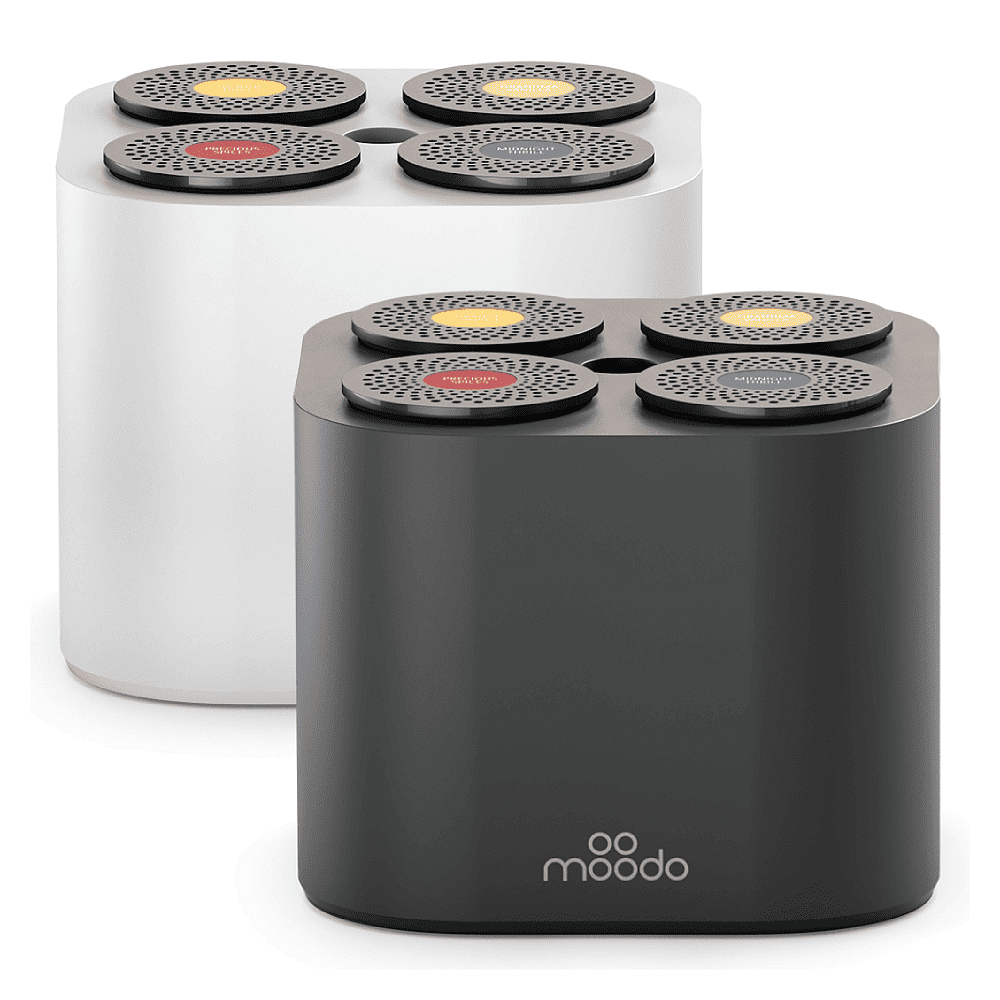
Moodo’s scent “pods” are controlled by a smartphone app or voice. (Courtesy of Moodo)
Moodo isn’t as customizable as iRomaScents but the idea is similar. Would you like to wake up to a citrus smell or fall asleep with soothing lavender? Moodo’s scent “pods” are controlled by a smartphone app or voice (Google Assistant, Alexa and Siri are supported). You can “schedule” the device to emit aromas that change during the day.
Each Moodo diffuser can hold up to four different scent capsules at once (there are 32 overall). Cost is around $30 for each pod, which delivers some 60 hours of aroma. The small, four-inch by five-inch Moodo device, which runs for $130, doubles as a three-layered HEPA air purifier. A travel version dubbed MoodoGo is also available.
Moodo’s scent pods were custom-made by perfumers in Grasse, France, and include such delectable fragrances as “Orange Sunrise,” “Wood Royal” and “Sea Breeze.”
You’re about to run a marathon. What’s the best combination of food to eat before you hit the road? Newt knows. The Israeli startup is a personalized AI-powered nutrition app for amateur athletes.
CEO Gil Krebs worked at Medtronic China on products addressing diabetes, stroke, heart disease, kidney disease and cancer, “all illnesses affected in one way or another by nutrition.”
The problem, Krebs explains, is that “You can’t Google ‘which nutrition is best?’ and get a reliable answer. Every person’s body has different purposes and different limitations.”
Without a product like Newt, he adds, “it’s like you taking medicine without consulting your doctor.” Newt provides users with a customized menu that varies according to their needs. Popular US nutritionist and NBC TV presenter Joy Bauer is advising the company.
With rumors that Apple is getting ready to launch its own augmented reality glasses, is there room for another near-to-eye display device? Israeli startup Oorym says yes.
The company is based on the research of Yaakov Amitai, who invented the “waveguide” technology used in most of today’s AR systems. Waveguides refer to a structure that guides electromagnetic or soundwaves with minimal loss of energy by restricting the transmission to one direction.
Oorym glues a bit of film on top of a simple waveguide; that makes it easy to turn ordinary prescription lenses into smart glasses. The company, which was founded in 2016, also includes Mori Amitai as CEO and Nadav Amitai as head of research.
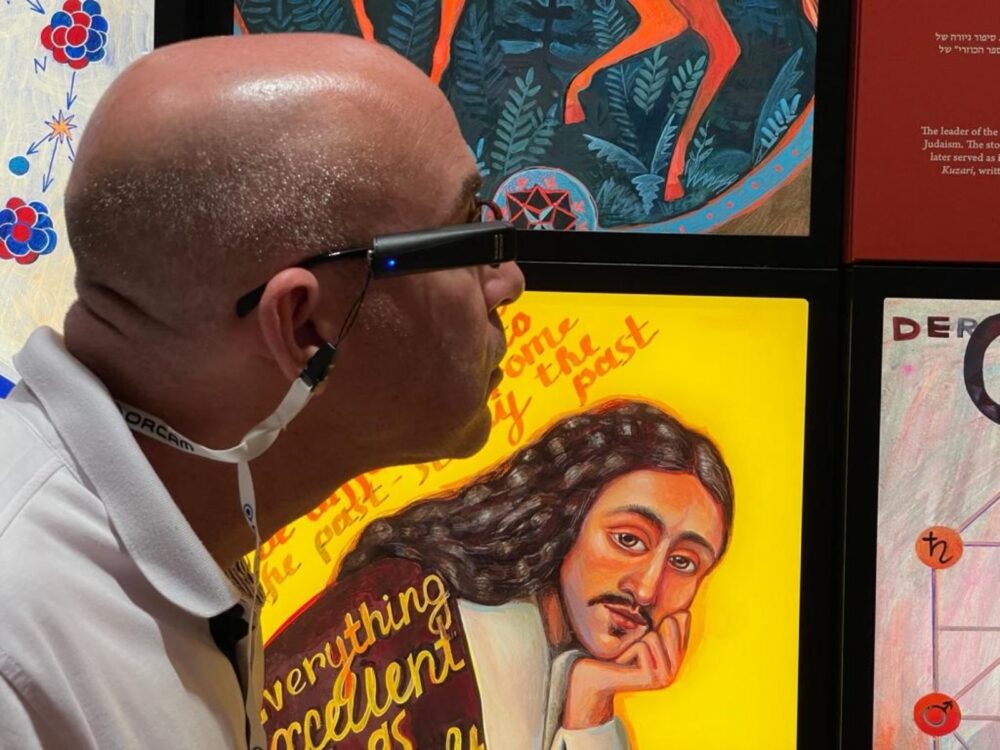
MyEye device in use at ANU Museum of the Jewish People, Tel Aviv. (Tami Israel)
The Jerusalem-based company, from the founders of Mobileye, is a perennial winner at CES, receiving an Innovation Award for the third consecutive year.
OrCam’s product line includes MyEye Pro, an AI-driven wearable device for people who are blind or visually impaired. The voice activated MyEye transforms text into speech, has a navigation feature that supports walking in public places, and can identify products, colors, people and money. MyEye Pro mounts on the user’s existing eyeglasses.
If MyEye Pro recognizes a face, it will whisper who that person is to the wearer. Operation is by looking, speaking or using hand gestures rather than buttons.
OrCam products were named to TIME’s Best Innovations lists in 2019 and 2021 and took home the “last gadget standing” award at CES in 2018.
When Facebook — er, Meta — CEO Mark Zuckerberg announced that the newly rebranded company would be focusing on building out the “metaverse,” he didn’t specify which tools would be required.
Israeli startup Resight could play a key role. The company is “building a visual index of the world, linking users, apps and augmented reality (AR) content to physical locations.”
Resight crowdsources data from its users to build a 3D map of the physical world onto which can be embedded AR images, text and video. All computation is done on the device; no raw data is shared, maximizing users’ privacy.
Resight believes the metaverse will “expand our perception and knowledge, essentially giving everyone superpowers.” Is the next Marvel hero hiding somewhere in Tel Aviv?
In the 1960s TV comedy “Get Smart,” bumbling spy Maxwell Smart would from time to time enter the “Cone of Silence” to conduct a private conversation.
Israeli startup Silentium is building the real thing. The company’s “Quiet Bubbles” use active noise cancelation software (“silence-on-a-chip”) to localize any audio so that only the person in the bubble hears it.
Imagine driving in your car and listening to a podcast from the front seat while the kids in the back are singing along to “Frozen” — with no need for headphones. The same software also makes for a quieter ride, canceling the sounds of loud engines and wind.
Silentium tech can be embedded “at the source” in a device – so grinding the coffee beans in the morning won’t wake up sleeping members of the household. Despite Silentium’s mandate, the company made quite a bit of noise at CES.
Children on their way to and from school often struggle to stand up straight while hoisting a heavy backpack. A study by the U.S. Consumer Product Safety Commission found that 75 percent of kids between eight and 12 years old complain of back pain. Experts say a child’s school bag should never be more than 10 percent to 15 percent of the wearer’s body weight.
TikBag’s interactive “smart bags” monitor and notify the wearer via an app if the backpack is too heavy in relation to body weight. TikBag can also check if the bag is unbalanced. In the future, TikBag will also monitor a backpack’s contents to ensure that nothing is forgotten. The word “tik” is Hebrew for “bag,” so this Israeli startup is really called “Bag.”
How do you watch TV these days? Do you have a smart television with built-in apps and streaming? An Amazon Fire TV Stick, AppleTV or Mi Box? Israeli startup VBox wants to be your next entertainment service.
The VBox TV Gateway connects to your home network and streams live local TV channels as well as online services. VBox also allows you to record live TV content to a USB, SD card or NAS drive. The box covers satellite, cable and terrestrial broadcasts up to 4K quality.
VBox can “recast” the signal from your TV or from any prerecorded shows to any connected devices across your home; you can even watch different live TV stations from different devices at the same time. Prices range from $130 to $180 per device.
Whether from a home camera or a professional application, images and video have always fared poorly in low light conditions.
Israeli startup Visionary.ai’s applies computer vision, artificial intelligence and sophisticated algorithm to improve the quality of images and videos taken from any camera. Think better night vision, superior recognition of faces and images free from blur.
Visionary has sold to consumer electronics and industrial manufacturers in Israel and the United States. The company’s software is installed on the camera itself and Visionary’s customers are the device makers. Target markets include transportation (cameras on buses and bus stops), drones and mobile devices. The company raised $4.5 million in 2021.
The concept of carbon credits was introduced in the 1992 Kyoto Protocol, an international treaty on reducing greenhouse gases.
A company that produces carbon dioxide emissions contributing to climate change can purchase a “credit” from an organization, group or individual working to reduce these dangerous gases. The credit serves as a financial incentive to those who can help clean up the atmosphere.
This is especially important for industries that have no current alternative to burning fuel, such as airlines.
Governments may limit how many tons of emissions certain sectors — oil, transportation, energy or waste management — can release. A company that goes over the limit must buy or use saved credits to comply with the emissions cap.
But this “cap-and-trade market” scheme has been stymied by inefficiencies.
“The mechanism doesn’t work well. It doesn’t scale,” Jacques Amselem, CEO of Albo Climate, tells ISRAEL21c. As a result, “the impact on climate doesn’t really exist.”
Tel Aviv-based Albo Climate intends to enable “anyone on earth who wants to change his practices to get on our platform” and begin collecting carbon credit cash.
Amselem, who comes to Albo from a 30-year career in high-tech in France and Israel, says he wants to enroll a billion people in order to really move the needle.
Carbons sinks
Because trees and plants require carbon dioxide to grow, agriculture and forestry provide the biggest opportunity for creating “carbon sinks” — nature’s way of absorbing, or “sequestering,” excess carbon before it gets trapped in the atmosphere.
According to the United Nations, soil carbon sequestration could offset some 20 percent of humanity’s annual carbon footprint.
Farmers who want to participate in a cap-and-trade market must prove they are practicing “regenerative agriculture.”
In the past, that required sending soil samples to an offsite lab. The process was time-consuming and cumbersome, disincentivizing many farmers from participating in a potentially lucrative program.
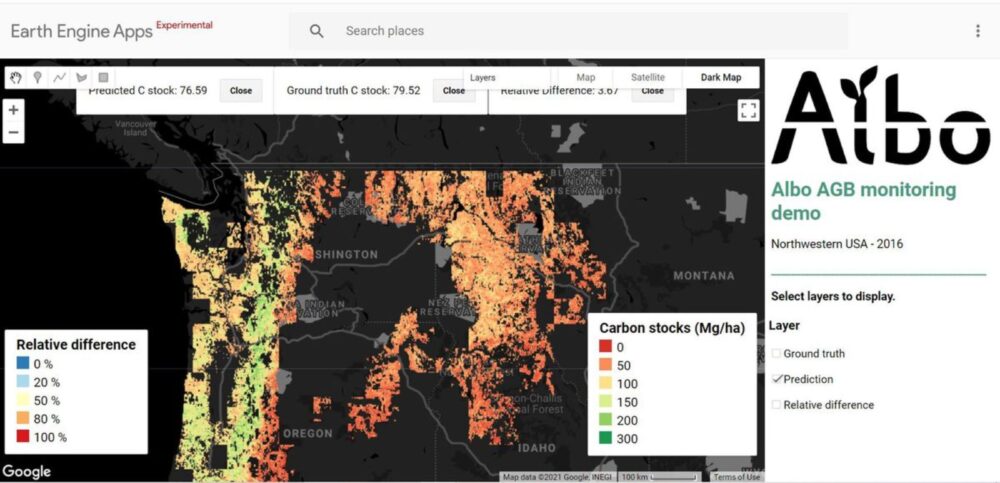
Albo Climate dispenses with the manual ground-level measurements and instead uses satellite imagery to determine if a farm or forest is functioning as a carbon sink.
Screenshot courtesy of Albo Climate
Until it’s able to launch its own satellites, the company uses data from existing satellites, some purchased and some from publicly accessible government databases. The images show everything from the type and height of trees and crops (which affect the amount of carbon absorption) to the pH and moisture level of the soil.
Weather and location are factored in, and artificial intelligence turns the raw data into actionable insights. Albo’s multidisciplinary team of 13 includes soil experts, algorithm programmers and people who understand space and satellites and sensors.
Armed with the satellite imagery data from Albo, farmers can apply to join a carbon credit program.
Working with American farmers
To be designated as a carbon sink, a farm must make certain changes.
One change is “no-till cultivation.” Tilling involves turning over the first six to ten inches of soil before planting new crops, resulting in ground devoid of plant matter and thus more vulnerable to wind and water erosion.
Other changes involve planned grazing, reducing the use of synthetic fertilizers and pesticides, using more cover crops and rotating crops, so there are always something growing on the land.
Fallow fields cannot capture carbon dioxide, explains Ariella Charny, Albo Climate’s chief marketing officer, who moved from Boston in 2014.
“Corn is grown as a monoculture and most of the year the field is bare,” she says.
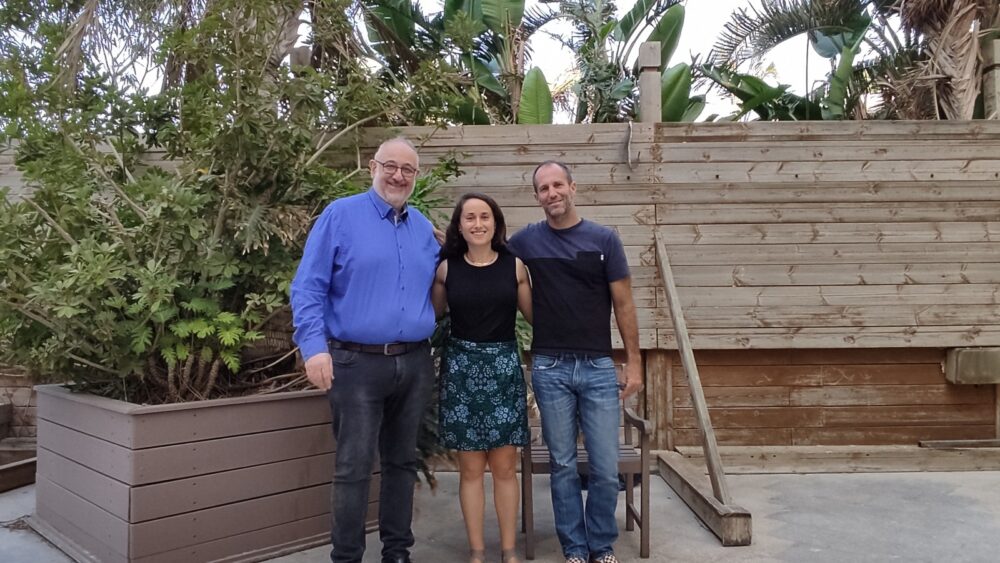
From left, Albo Climate CEO Jacques Amselem, CMO Ariella Charny and Prof. Andrei Sharf, AI adviser. (Courtesy of Albo Climate)
Last October, Albo Climate announced a partnership with Taranis, an Israeli startup that provides digital farming solutions to “agriculture retailers to develop a faster and more affordable process for carbon verification,” says Bar Veinstein, the company’s CEO.
Taranis monitors millions of acres for customers in the United States, Canada, Brazil, Russia, Ukraine and Australia, providing a dashboard for farmers to identify diseases before they spread through the fields.
Albo Climate will roll out its technology to Taranis clients in the U.S., focusing on corn and soy farms first.
If every U.S. farmer switched to regenerative agricultural practices, “we would more than offset all of the emissions that come from electricity generation in the U.S.,” Charney says.
In 2019, electricity production was responsible for 25 percent of greenhouse gas emissions in the United States.
Working with African farmers
Albo also has a partnership with Mauritius-based Tembo Power, which develops renewable hydropower projects in Sub-Saharan Africa.
In this project, Tembo Power subsidiary Tembo Climate will bring the Albo approach to countries including Cameroon and Uganda. Qualifying farmers can claim their carbon credits, and any income generated will support ranger services, surveillance systems and local communities.
The Taranis and Tembo deals are indicative of Albo’s B2B business model, which Amselem and Charny explained to potential partners at the U.N.’s recent COP26 climate conference in Glasgow.
Amselem hopes that in another two years, a direct-to-consumer carbon credit program will be available for individual farmers and even, at some point, consumers with a home garden who follow regenerative agriculture practices.
Albo Climate won’t handle the payments; for that the company will tap into the growing international carbon credit marketplace. According to a report from the World Bank last May, the largest ones operate in the European Union, China, Australia and Canada.
Albo Climate will take a cut of any carbon credit dollars paid into the marketplace.
A pivot from mosquitoes
Albo Climate started out with a different planetary scourge in mind: eradicating the malaria- and Zika-carrying mosquitoes known as Aedes albopictus. The “albo” part of the mosquito’s name was adopted by Amselem’s company
“We used satellite imagery to identify bodies of water, which is where mosquitoes start their lives,” Amselem tells ISRAEL21c. “I wanted to save the lives of the million people a year who get malaria.”
Albo was one of a handful of companies selected to join the TechStars accelerator. The TechStars team encouraged Amselem to pivot to the climate arena. After all, mosquitoes affect millions of people, but climate change affects billions.
A 49-year-old man and a 16-year-old high school student, in a passing car, were killed in a Birmingham shooting Saturday night, according to police.
The dead were identified as Yasmine Wright, 16, a 10th-grader at Wenonah High School and Ed Franklin Harris, 49, both of Birmingham.
Police say inhabitants of a vehicle fired at Harris, who had been riding his motorcycle in the area.
The Birmingham News reports that Wright had gotten off work at the Birmingham Zoo and was being driven home by her mother when shots hit the car. Police are looking for at least two suspects.
Police Sgt. Rod Mauldin said the preliminary investigation indicates Harris turned onto a Birmingham street and laid down the motorcycle. At that point, the suspect or suspects are believed to have gotten out of their vehicle and fired shots at Harris.
“We are deeply saddened by the tragic death of Yasmine Wright, a 10th-grade scholar at Wenonah High School who was wounded by stray gunfire as she returned home from work on Saturday,” Birmingham City Schools Superintendent Dr. Mark Sullivan said in a prepared statement. “Our thoughts and prayers are with Yasmine’s family, as well as the students, faculty and staff at Wenonah High. Grief counselors will be on hand at the school on Monday.”
Mayor Randall Woodfin posted a statement on Facebook Sunday afternoon that reads:
“Ms. Janice Wright should be spending this Sunday afternoon with her beloved 16-year-old niece Yasmine. That won’t happen. Yasmine had her life stolen from her last night – an innocent victim killed in a crossfire that also left another man dead.
“I’m heartbroken for Ms. Wright and her family. I’m also angry. I’m angry that yet another young person won’t be able to experience graduation, achieve adulthood, start a family and reach their potential due to the recklessness of others.
“Yasmine should still be with us right here, right now. She was an ambitious young lady in her junior year of high school, an employee of the Birmingham Zoo and a great saxophone player. She would have celebrated her 17th birthday next week.
“Instead, her family is spending their Sunday in mourning. It is not right. It is not fair. It is not normal.”
“I’m making this appeal to you today as a mayor, as a resident of this city and as a man who loves his own nieces very much: If you have any information about the shooting at 1600 Matt Leonard Drive SW, leave an anonymous tip at Crime Stoppers at 205-254-7777. Birmingham police are on the case but every bit of help is need.”
“Ms. Wright had to witness her own niece take her last breaths,’’ Woodfin said. “She and her family deserve justice for this horrible tragedy. Please, help us give it to her.”
The zoo, where Yasmine worked, also released a statement that says:
“The Birmingham Zoo family is deeply saddened to learn that one of its own, Yasmine Wright, was the victim of a random yet senseless act of violence. Yasmine and her family have been part of our team for several years, working as part of the SSA operations of the Zoo. Yasmine was a beloved member of our team, and we are sending our sincerest condolences to her family and friends. We wish them continued support during this difficult time.”
Anyone with information relating to the case, can contact the B.P.D. Homicide Unit at 205-254-1764 or Crime Stoppers at 205-254-7777.
Kirby Smart, left, has achieved much as head coach of the Georgia Bulldogs, but two things have eluded him so far: winning a national championship and defeating his former team, Nick Saban's Alabama Crimson Tide. (Kent Gidley / University of Alabama Athletics)Alabama Head Coach Nick Saban
Photo by Kent Gidley
Researchers in Chile have discovered fossils of frogs and toads from more than 70 million years ago that are almost identical to species of frogs and toads found in the wild today.
Both the frogs and toads survived the mass extinction event that wiped out the dinosaurs they shared the land with.
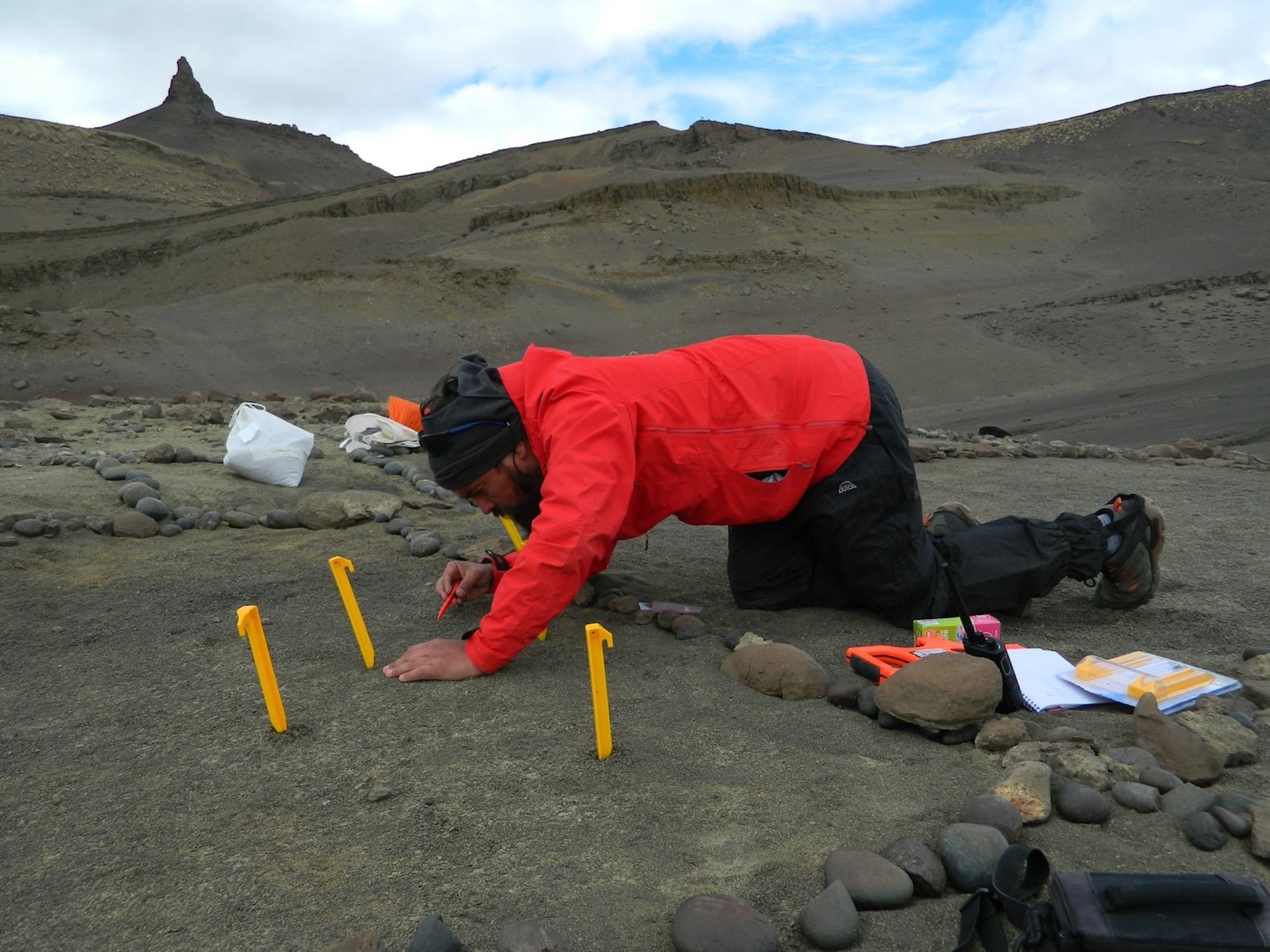
Felipe Suazo, a researcher at the University of Chile, identified specimens belonging to the Calyptocephalellidae family (toads) and the Kuruleufenia genus (frogs) in Chilean Patagonia.
These toads and frogs lived alongside sauropods, hadrosaurs and other dinosaurs.
Felipe Suazo, a researcher at the Paleontological Network of the University of Chile seen conducting fieldwork, was in charge of the study of fossils found in the Las Chinas River Valley in Chilean Patagonia. (University of Chile/Zenger)
The researchers’ study, published in the journal Cretaceous Research, confirms that both species survived the mass extinction event 66 million years ago widely considered to have wiped out the dinosaurs.
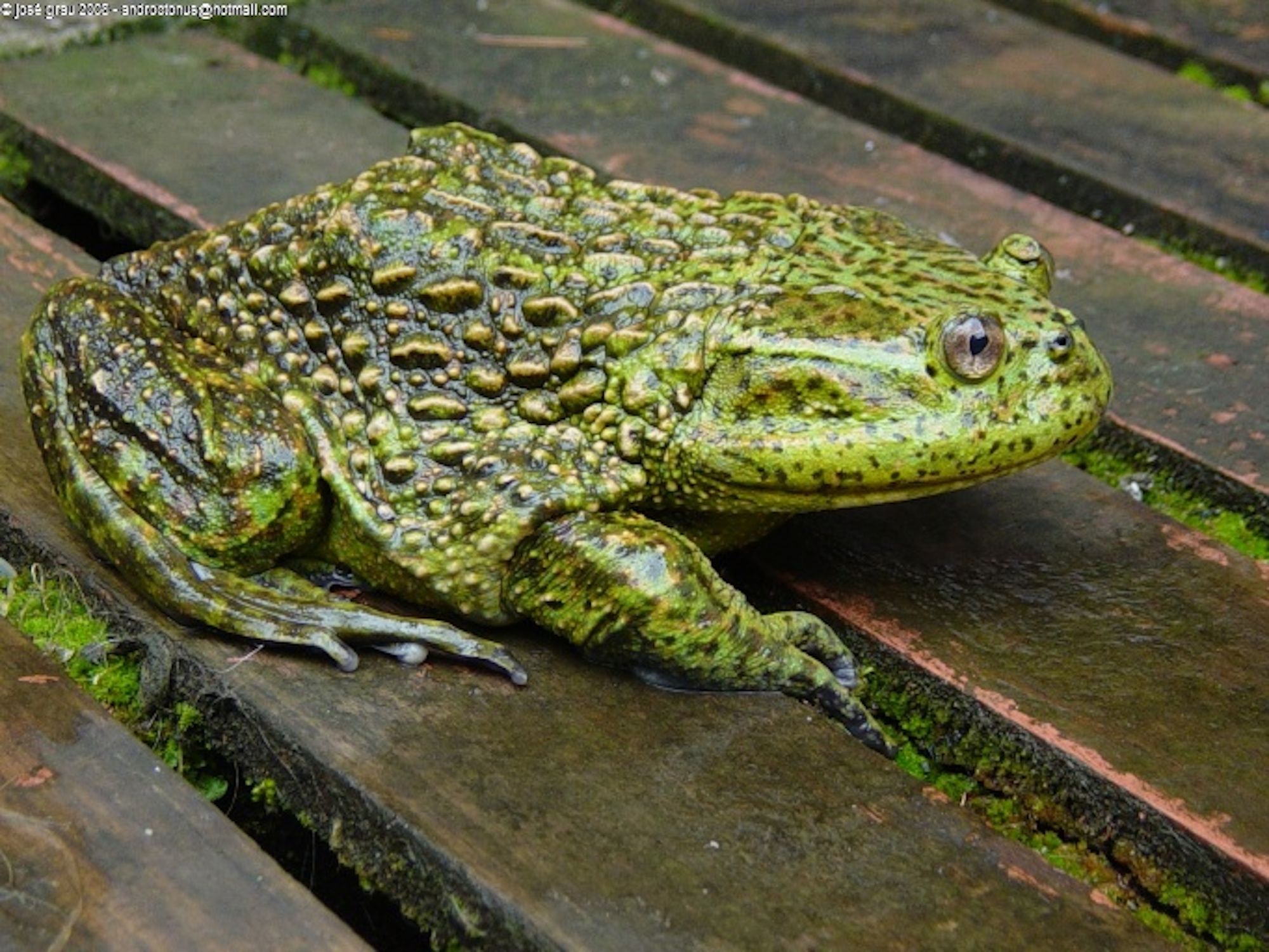
Their ancestors, which include the helmeted water toad, also known as the Chilean helmeted bull frog (Calyptocephalella gayi), are with us today.
“The reasons why they managed to survive and proliferate during the Cenozoic, the epoch that continues into the Mesozoic, are not clear,” Suazo said.
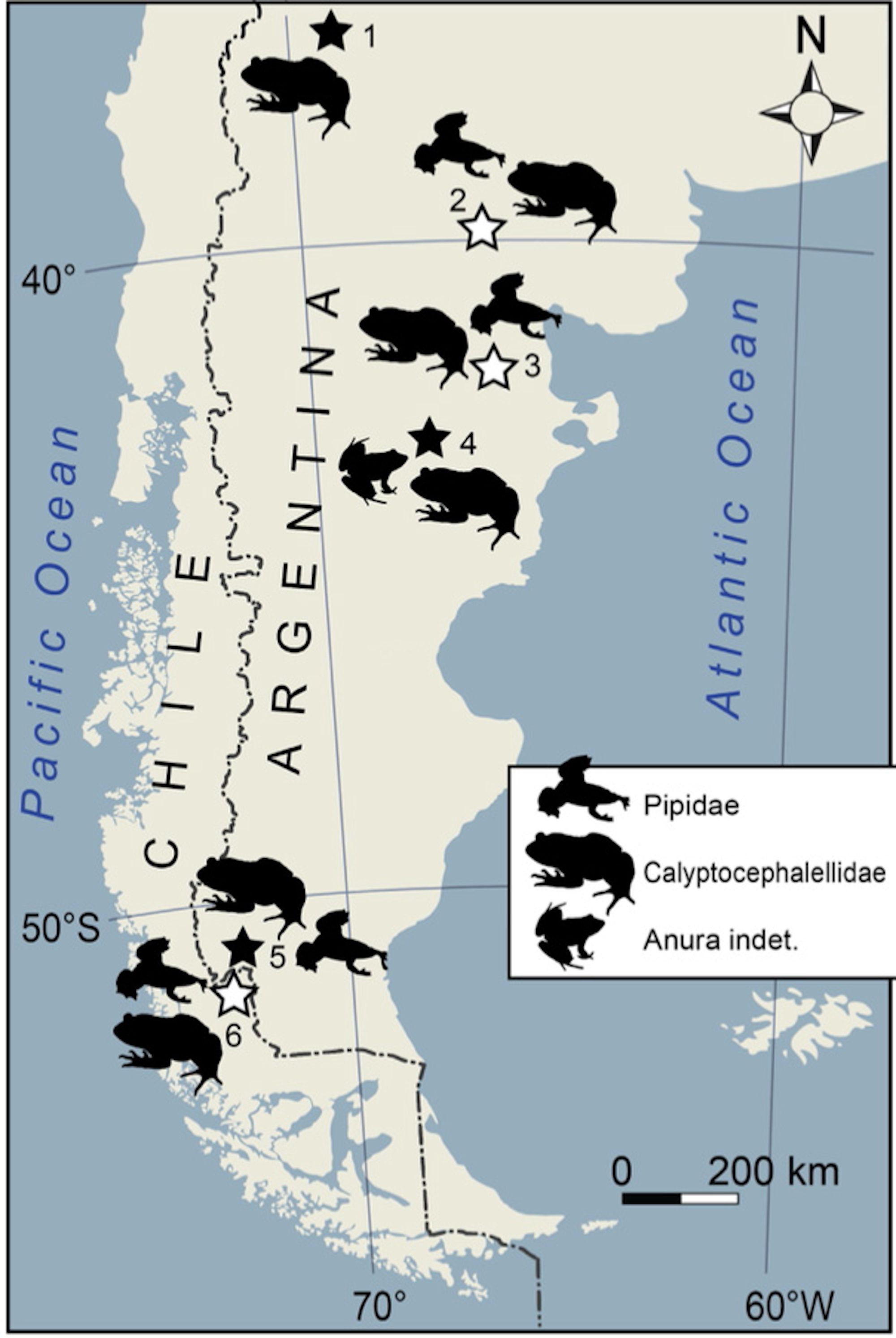
The fossils were discovered in the Rio de las Chinas Valley in the southern province of Ultima Esperanza during paleontological surveys carried out in 2017 and 2018, the results of which were recently revealed.
Calyptocephalella gayi, better known as the Chilean giant frog, is related to one of the frog species whose fossils were discovered in Patagonia. (University of Chile/Zenger)
The study was carried out in collaboration with Raul Gomez, a researcher at the University of Buenos Aires, who recorded similar fossils in Argentine Patagonia.
Suazo said the frogs lived in freshwater habitats and that Chilean Patagonia is the southernmost location in which the Kuruleufenia genus has been found.
The fossils date back to between 75 and 71 million years ago when the climate in the region was very rainy, and summer temperatures were mild.
The areas in Chile where fossils of toads and frogs dating back to between 75 and 71 million years ago were found. (University of Chile/Zenger)
“These fossils’ morphology is almost identical to that of the bones of the current Chilean helmeted bull frog (Calyptocephalella gayi), but it was decided for conservative reasons to assign these fossils only to a family level, pending new fossil remains that will allow us to corroborate whether or not they belong to the genus Calyptocephalella or to a new genus still unknown to science,” Suazo said.
The Kuruleufenia fossils are related to today’s common Surinam toad (Pipa pipa) and the African clawed frog (Xenopus laevis).
The helmeted water toad is listed as “vulnerable” on the International Union for Conservation of Nature (IUCN) Red List of Threatened Species because of human consumption, habitat loss, pollution, introduced species and the fungus disease chytridiomycosis.
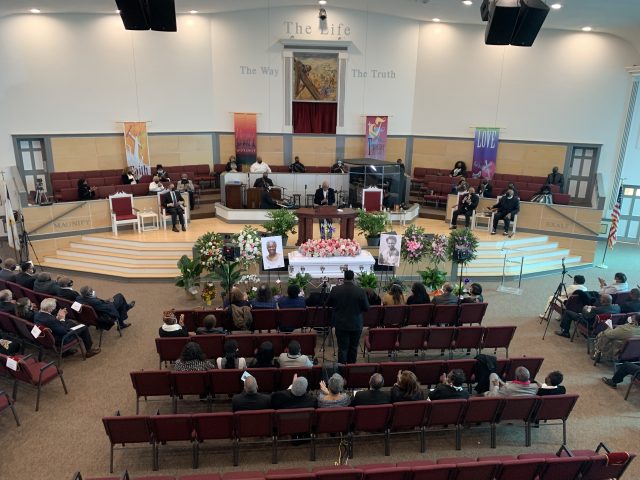
Rev. Gregory Clarke, head pastor at New Hope Baptist Church in Birmingham, eulogizes Maxine McNair, the last surviving parent of Denise McNair, one of the four girls killed in the 1963 Sixteenth Street Baptist Church bombing. (Ryan Michaels, The Birmingham Times)
In a startling discovery, scientists found that dogs respond differently to familiar and unfamiliar human languages, revealing that the capacity to learn about the regularities of a language is not uniquely human.
Laura V. Cuaya of Eötvös Loránd University in Hungary sought to determine whether a dog could distinguish between languages spoken by humans. “Before, I had only talked to [my pet dog] in Spanish. So I was wondering whether Kun-kun noticed that people in Budapest spoke a different language, Hungarian,” Cuaya said about the move to the Eastern European country.
“We know that people, even preverbal human infants, notice the difference. But maybe dogs do not bother. After all, we never draw our dogs’ attention to how a specific language sounds. We designed a brain imaging study to find this out,” Cuaya said.
“This study showed for the first time that a non-human brain can distinguish between two languages,” said study co-author Attila Andics, indicating to him that non-humans can also learn about the regularities of a language. “Still, we do not know whether this capacity is dogs’ specialty or general among non-human species. Indeed, it is possible that the brain changes from the tens of thousands years that dogs have been living with humans have made them better language listeners, but this is not necessarily the case,” he said.
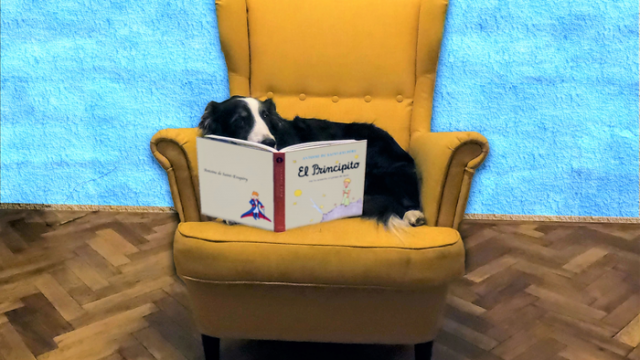
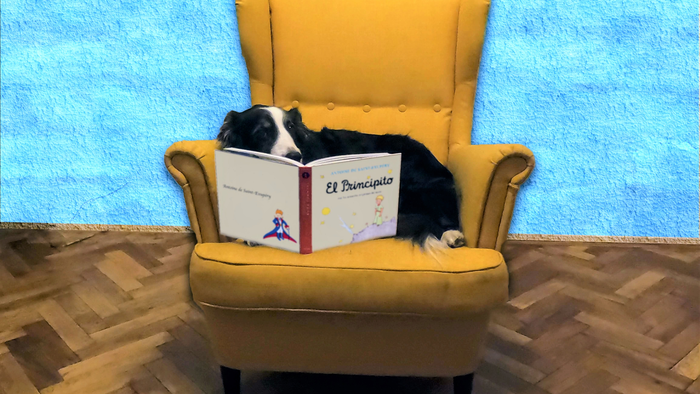
For the study, published in NeuroImage, Kun-kun joined 17 other canines in lying motionless in a brain scanner while researchers played excerpts of Antoine de Saint-Exupéry’s beloved novella “The Little Prince” in Hungarian and Spanish.
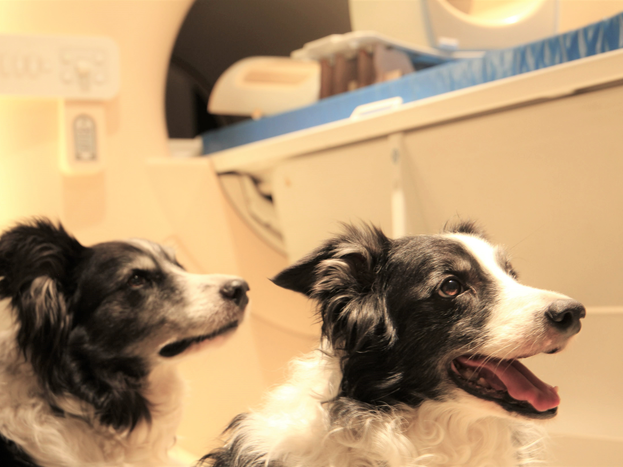
Two dogs await a brain scan during a study that found that dogs can distinguish between familiar and unfamiliar human languages. (Eniko Kubinyi)
The dogs had heard only one of the two languages from their owners before, allowing the researchers to compare their responses to a familiar and an unfamiliar language. Cuaya said the research team also played “scrambled versions of these excerpts, which sound completely unnatural, to test whether [the dogs] detect the difference between speech and non-speech at all.”
By observing how the dogs’ brains responded to speech and non-speech, the researchers discovered distinct patterns in the primary auditory cortex, which is a part of the temporal lobe that processes sound. These distinctions were present whether the dogs heard a familiar or an unfamiliar language. Also, the dogs’ brains showed no evidence for a neural preference for speech over non-speech.
“Dog brains, like human brains, can distinguish between speech and non-speech,” study co-author Raúl Hernández-Pérez said. “But the mechanism underlying this speech detection ability may be different from speech sensitivity in humans: whereas human brains are specially tuned to speech, dog brains may simply detect the naturalness of the sound.”
Dog brains can detect speech and show different activity patterns when exposed to a familiar and an unfamiliar language, according to a brain imaging study by researchers at Eötvös Loránd University in Hungary. This is the first study showing that a non-human brain can differentiate between two languages. (Eniko Kubinyi)
The dogs in the study could also distinguish between Hungarian and Spanish. Older dogs appeared to be more adept at distinguishing between a familiar and an unfamiliar language.
“Each language is characterized by a variety of auditory regularities. Our findings suggest that during their lives with humans, dogs pick up on the auditory regularities of the language they are exposed to,” Hernández-Pérez said.
As for Kun-kun, Cuaya said her dog “lives just as happily as he lived in Mexico City” and has seen snow for the first time and swam in the Danube River. “We hope that he and his friends will continue to help us uncover the evolution of speech perception,” Cuaya said.