
Funeral Service Held for Maxine McNair, Last Living Parent of Child Killed in 1963 Church Bombing



In a startling discovery, scientists found that dogs respond differently to familiar and unfamiliar human languages, revealing that the capacity to learn about the regularities of a language is not uniquely human.
Laura V. Cuaya of Eötvös Loránd University in Hungary sought to determine whether a dog could distinguish between languages spoken by humans. “Before, I had only talked to [my pet dog] in Spanish. So I was wondering whether Kun-kun noticed that people in Budapest spoke a different language, Hungarian,” Cuaya said about the move to the Eastern European country.
“We know that people, even preverbal human infants, notice the difference. But maybe dogs do not bother. After all, we never draw our dogs’ attention to how a specific language sounds. We designed a brain imaging study to find this out,” Cuaya said.
“This study showed for the first time that a non-human brain can distinguish between two languages,” said study co-author Attila Andics, indicating to him that non-humans can also learn about the regularities of a language. “Still, we do not know whether this capacity is dogs’ specialty or general among non-human species. Indeed, it is possible that the brain changes from the tens of thousands years that dogs have been living with humans have made them better language listeners, but this is not necessarily the case,” he said.
For the study, published in NeuroImage, Kun-kun joined 17 other canines in lying motionless in a brain scanner while researchers played excerpts of Antoine de Saint-Exupéry’s beloved novella “The Little Prince” in Hungarian and Spanish.

The dogs had heard only one of the two languages from their owners before, allowing the researchers to compare their responses to a familiar and an unfamiliar language. Cuaya said the research team also played “scrambled versions of these excerpts, which sound completely unnatural, to test whether [the dogs] detect the difference between speech and non-speech at all.”
By observing how the dogs’ brains responded to speech and non-speech, the researchers discovered distinct patterns in the primary auditory cortex, which is a part of the temporal lobe that processes sound. These distinctions were present whether the dogs heard a familiar or an unfamiliar language. Also, the dogs’ brains showed no evidence for a neural preference for speech over non-speech.
“Dog brains, like human brains, can distinguish between speech and non-speech,” study co-author Raúl Hernández-Pérez said. “But the mechanism underlying this speech detection ability may be different from speech sensitivity in humans: whereas human brains are specially tuned to speech, dog brains may simply detect the naturalness of the sound.”

The dogs in the study could also distinguish between Hungarian and Spanish. Older dogs appeared to be more adept at distinguishing between a familiar and an unfamiliar language.
“Each language is characterized by a variety of auditory regularities. Our findings suggest that during their lives with humans, dogs pick up on the auditory regularities of the language they are exposed to,” Hernández-Pérez said.
As for Kun-kun, Cuaya said her dog “lives just as happily as he lived in Mexico City” and has seen snow for the first time and swam in the Danube River. “We hope that he and his friends will continue to help us uncover the evolution of speech perception,” Cuaya said.
Edited by Richard Pretorius and Kristen Butler
The post Dogs Can Detect Human Speech And Distinguish Between Languages, Study Finds appeared first on Zenger News.

NEW YORK (AP) — Sidney Poitier, the groundbreaking actor and enduring inspiration who transformed how Black people were portrayed on screen and became the first Black actor to win an Academy Award for best lead performance and the first to be a top box-office draw, has died. He was 94.
Poitier, winner of the best actor Oscar in 1964 for “Lilies of the Field,” died Thursday in the Bahamas, according to Eugene Torchon-Newry, acting director general of the Ministry of Foreign Affairs in the Bahamas.
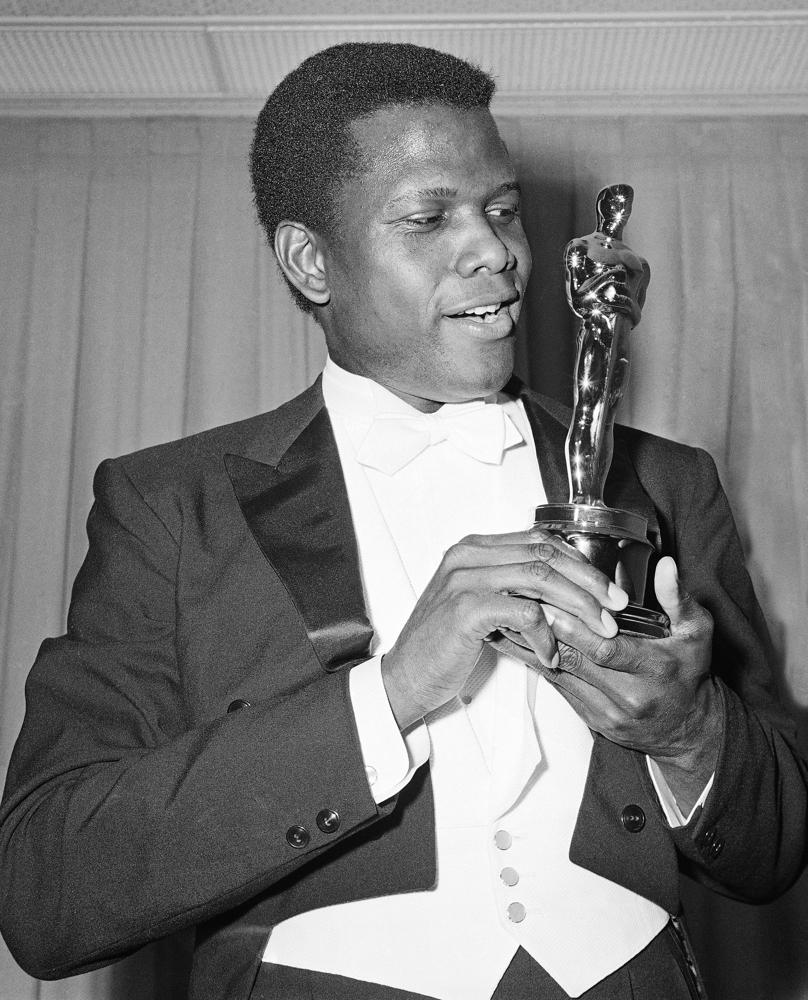
Few movie stars, Black or white, had such an influence both on and off the screen. Before Poitier, the son of Bahamian tomato farmers, no Black actor had a sustained career as a lead performer or could get a film produced based on his own star power. Before Poitier, few Black actors were permitted a break from the stereotypes of bug-eyed servants and grinning entertainers. Before Poitier, Hollywood filmmakers rarely even attempted to tell a Black person’s story.
Messages honoring and mourning Poitier flooded social media, with Whoopi Goldberg writing on Twitter: “He showed us how to reach for the stars.” Tyler Perry on Instagram wrote: “The grace and class that this man has shown throughout his entire life, the example he set for me, not only as a Black man but as a human being will never be forgotten.” And musician Lenny Kravitz wrote that Poitier “showed the world that with vision and grace, all is possible.”
Poitier’s rise mirrored profound changes in the country in the 1950s and 1960s. As racial attitudes evolved during the civil rights era and segregation laws were challenged and fell, Poitier was the performer to whom a cautious industry turned for stories of progress.
He was the escaped Black convict who befriends a racist white prisoner (Tony Curtis) in “The Defiant Ones.” He was the courtly office worker who falls in love with a blind white girl in “A Patch of Blue.” He was the handyman in “Lilies of the Field” who builds a church for a group of nuns. In one of the great roles of the stage and screen, he was the ambitious young father whose dreams clashed with those of other family members in Lorraine Hansberry’s “A Raisin in the Sun.”
Debates about diversity in Hollywood inevitably turn to the story of Poitier. With his handsome, flawless face; intense stare and disciplined style, he was for years not just the most popular Black movie star, but the only one.
“I made films when the only other Black on the lot was the shoeshine boy,” he recalled in a 1988 Newsweek interview. “I was kind of the lone guy in town.”
Poitier peaked in 1967 with three of the year’s most notable movies: “To Sir, With Love,” in which he starred as a school teacher who wins over his unruly students at a London secondary school; “In the Heat of the Night,” as the determined police detective Virgil Tibbs; and in “Guess Who’s Coming to Dinner,” as the prominent doctor who wishes to marry a young white woman he only recently met, her parents played by Spencer Tracy and Katharine Hepburn in their final film together.
Theater owners named Poitier the No. 1 star of 1967, the first time a Black actor topped the list. In 2009 President Barack Obama, whose own steady bearing was sometimes compared to Poitier’s, awarded him the Presidential Medal of Freedom, saying that the actor “not only entertained but enlightened … revealing the power of the silver screen to bring us closer together.”
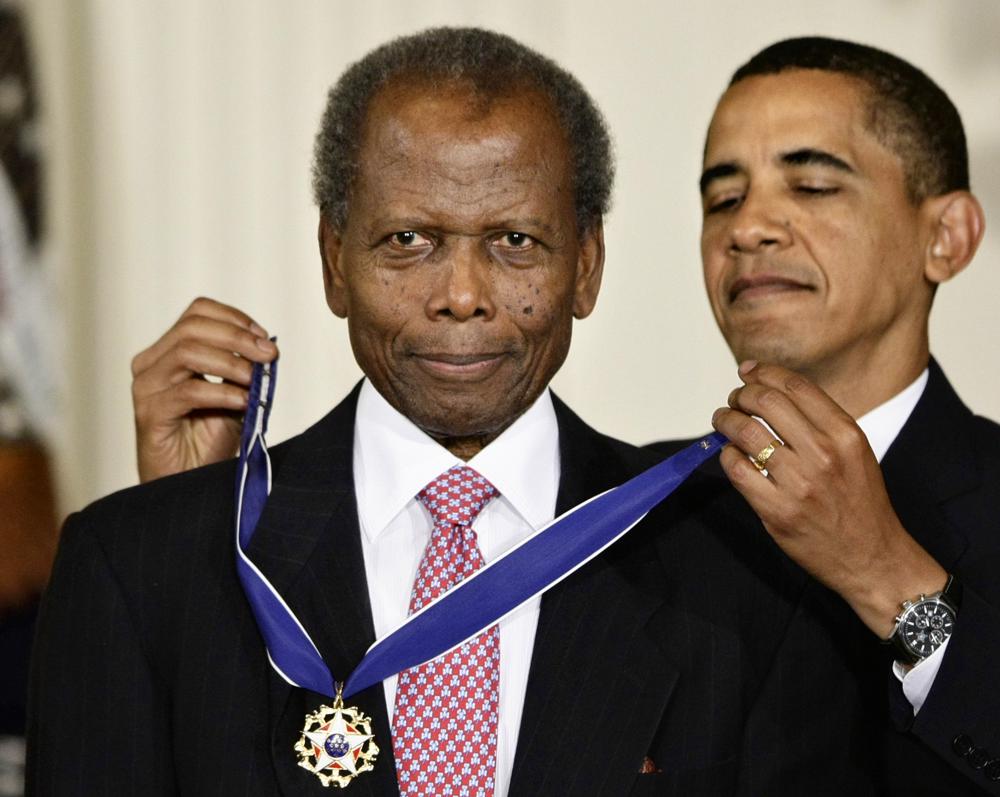
“All those who see unworthiness when they look at me and are given thereby to denying me value — to you I say, ‘I’m not talking about being as good as you. I hereby declare myself better than you,’” he wrote in his memoir, “The Measure of a Man,” published in 2000.
But even in his prime he was criticized for being out of touch. He was called an Uncle Tom and a “million-dollar shoeshine boy.” In 1967, The New York Times published Black playwright Clifford Mason’s essay, “Why Does White America Love Sidney Poitier So?” Mason dismissed Poitier’s films as “a schizophrenic flight from historical fact” and the actor as a pawn for the “white man’s sense of what’s wrong with the world.”
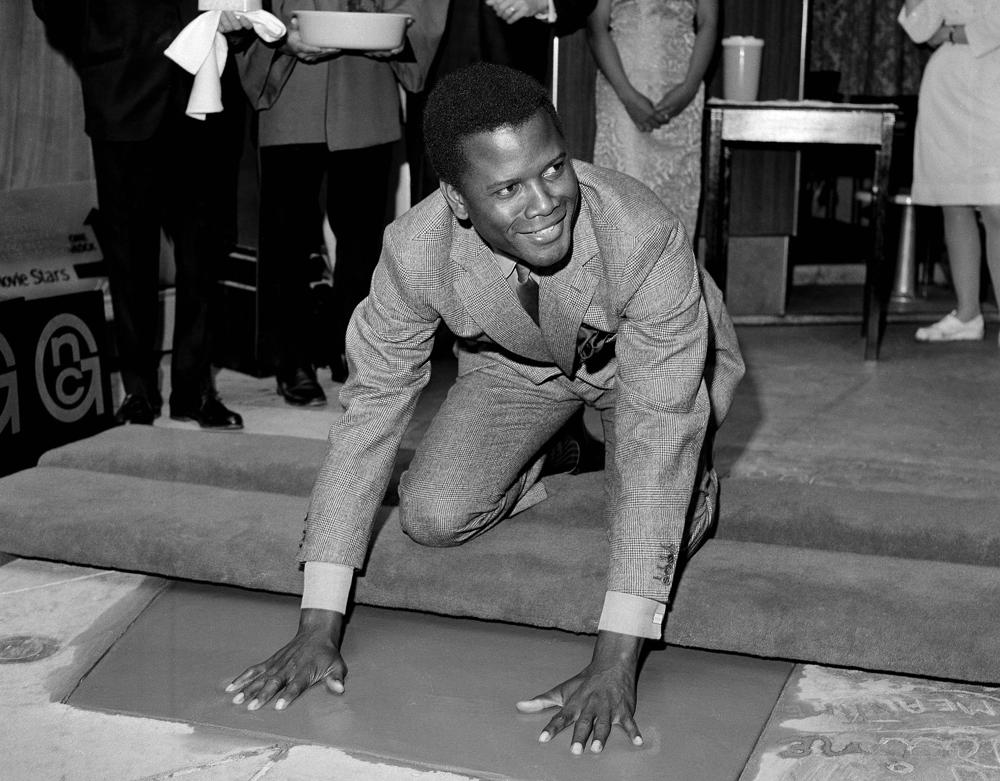
“I am an artist, man, American, contemporary,” he snapped during a 1967 press conference. “I am an awful lot of things, so I wish you would pay me the respect due.”
Poitier was not as engaged politically as his friend and contemporary Harry Belafonte, leading to occasional conflicts between them. But he participated in the 1963 March on Washington and other civil rights events, and as an actor defended himself and risked his career. He refused to sign loyalty oaths during the 1950s, when Hollywood was barring suspected Communists, and turned down roles he found offensive.
“Almost all the job opportunities were reflective of the stereotypical perception of Blacks that had infected the whole consciousness of the country,” he recalled. “I came with an inability to do those things. It just wasn’t in me. I had chosen to use my work as a reflection of my values.”

His screen career faded in the late 1960s as political movements, Black and white, became more radical and movies more explicit. He acted less often, gave fewer interviews and began directing, his credits including the Richard Pryor-Gene Wilder farce “Stir Crazy,” “Buck and the Preacher” (co-starring Poitier and Belafonte) and the Bill Cosby comedies “Uptown Saturday Night” and “Let’s Do It Again.”
In the 1980s and ’90s, he appeared in the feature films “Sneakers” and “The Jackal” and several television movies, receiving an Emmy and Golden Globe nomination as future Supreme Court Justice Thurgood Marshall in “Separate But Equal” and an Emmy nomination for his portrayal of Nelson Mandela in “Mandela and De Klerk.” Theatergoers were reminded of the actor through an acclaimed play that featured him in name only: John Guare’s “Six Degrees of Separation,” about a con artist claiming to be Poitier’s son.
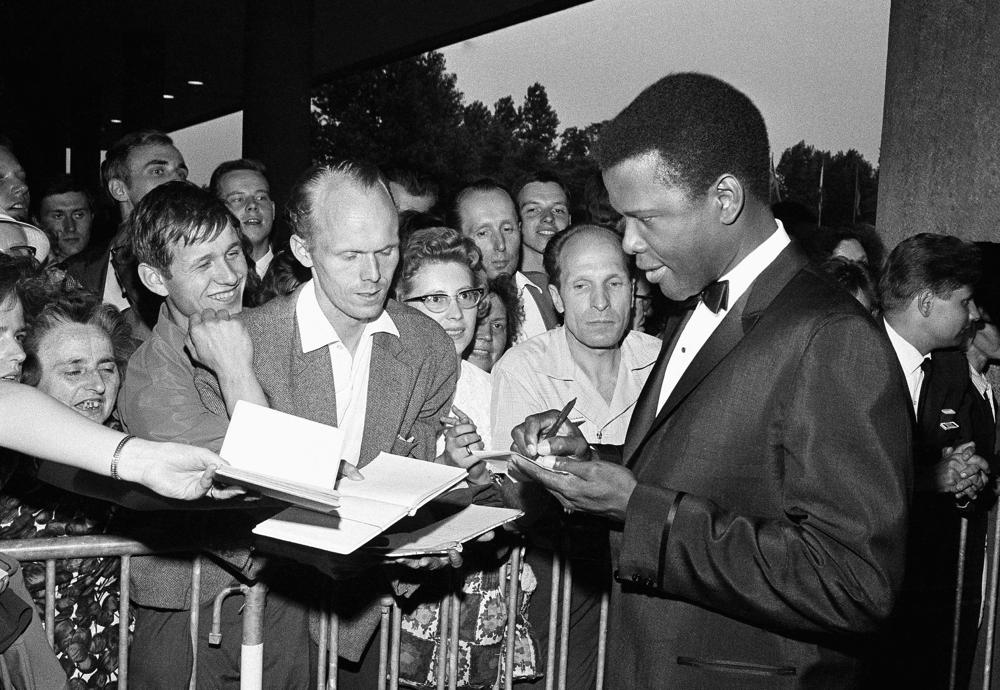
Poitier received numerous honorary prizes, including a lifetime achievement award from the American Film Institute and a special Academy Award in 2002, on the same night that Black performers won both best acting awards, Washington for “Training Day” and Halle Berry for “Monster’s Ball.”
“I’ll always be chasing you, Sidney,” Washington, who had earlier presented the honorary award to Poitier, said during his acceptance speech. “I’ll always be following in your footsteps. There’s nothing I would rather do, sir, nothing I would rather do.”
Poitier had four daughters with his first wife, Juanita Hardy, and two with his second wife, actress Joanna Shimkus, who starred with him in his 1969 film “The Lost Man.” Daughter Sydney Tamaii Poitier appeared on such television series as “Veronica Mars” and “Mr. Knight.”
His life ended in adulation, but it began in hardship. Poitier was born prematurely, weighing just 3 pounds, in Miami, where his parents had gone to deliver tomatoes from their farm on tiny Cat Island in the Bahamas. He spent his early years on the remote island, which had a population of 1,500 and no electricity, and he quit school at 12 1/2 to help support the family. Three years later, he was sent to live with a brother in Miami; his father was concerned that the street life of Nassau was a bad influence. With $3 in his pocket, Sidney traveled steerage on a mail-cargo ship.
“The smell in that portion of the boat was so horrendous that I spent a goodly part of the crossing heaving over the side,” he told The Associated Press in 1999, adding that Miami soon educated him about racism. “I learned quite quickly that there were places I couldn’t go, that I would be questioned if I wandered into various neighborhoods.”
Poitier moved to Harlem and was so overwhelmed by his first winter there he enlisted in the Army, cheating on his age and swearing he was 18 when he had yet to turn 17. Assigned to a mental hospital on Long Island, Poitier was appalled at how cruelly the doctors and nurses treated the soldier patients. In his 1980 autobiography, “This Life,” he related how he escaped the Army by feigning insanity.
Back in Harlem, he was looking in the Amsterdam News for a dishwasher job when he noticed an ad seeking actors at the American Negro Theater. He went there and was handed a script and told to go on the stage. Poitier had never seen a play in his life and could barely read. He stumbled through his lines in a thick Caribbean accent and the director marched him to the door.
“As I walked to the bus, what humiliated me was the suggestion that all he could see in me was a dishwasher. If I submitted to him, I would be aiding him in making that perception a prophetic one,” Poitier later told the AP.
“I got so pissed, I said, ‘I’m going to become an actor — whatever that is. I don’t want to be an actor, but I’ve got to become one to go back there and show him that I could be more than a dishwasher.’ That became my goal.”
The process took months as he sounded out words from the newspaper. Poitier returned to the American Negro Theater and was again rejected. Then he made a deal: He would act as janitor for the theater in return for acting lessons. When he was released again, his fellow students urged the teachers to let him be in the class play. Another Caribbean, Belafonte, was cast in the lead. When Belafonte couldn’t make a preview performance because it conflicted with his own janitorial duties, his understudy, Poitier, went on.

Key early films included “Blackboard Jungle,” featuring Poitier as a tough high school student (the actor was well into his 20s at the time) in a violent school; and “The Defiant Ones,” which brought Poitier his first best actor nomination, and the first one for any Black male. The theme of cultural differences turned lighthearted in “Lilies of the Field,” in which Poitier played a Baptist handyman who builds a chapel for a group of Roman Catholic nuns, refugees from Germany. In one memorable scene, he gives them an English lesson.
The only Black actor before Poitier to win a competitive Oscar was Hattie McDaniel, the 1939 best supporting actress for “Gone With the Wind.” No one, including Poitier, thought “Lilies of the Field” his best film, but the times were right (Congress would soon pass the Civil Rights Act of 1964, for which Poitier had lobbied) and the actor was favored even against such competitors as Paul Newman for “Hud” and Albert Finney for “Tom Jones.” Newman was among those rooting for Poitier.
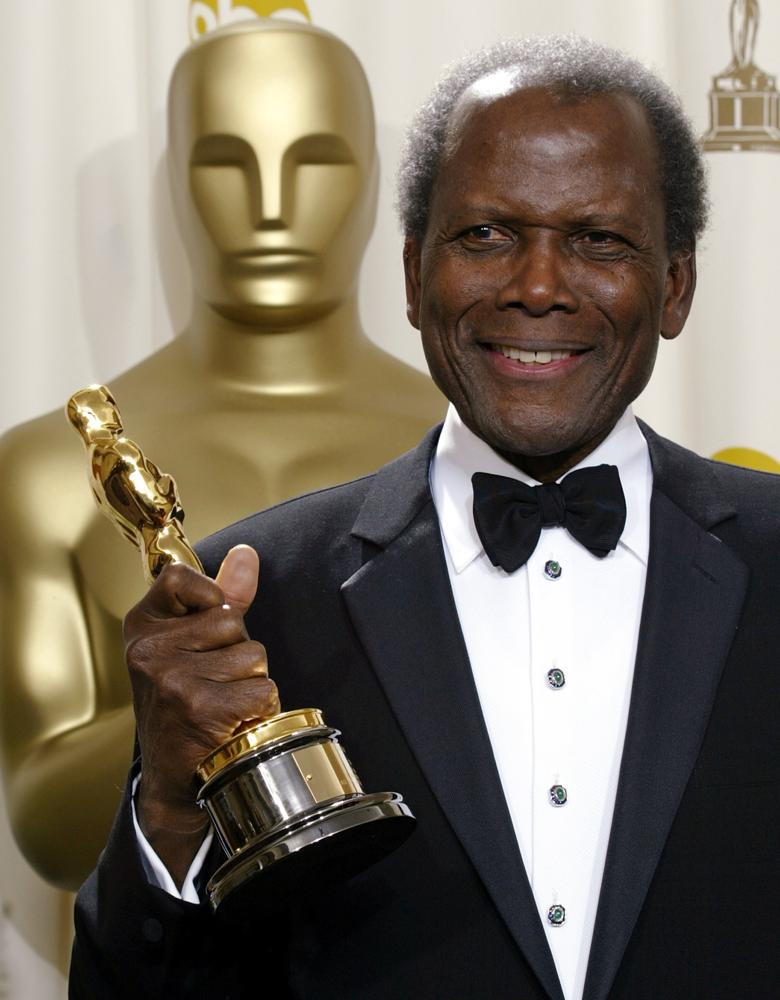
Poitier never pretended that his Oscar was “a magic wand” for Black performers, as he observed after his victory, and he shared his critics’ frustration with some of the roles he took on, confiding that his characters were sometimes so unsexual they became kind of “neuter.” But he also believed himself fortunate and encouraged those who followed him.
“To the young African American filmmakers who have arrived on the playing field, I am filled with pride you are here. I am sure, like me, you have discovered it was never impossible, it was just harder,” he said in 1992 as he received a lifetime achievement award from the American Film Institute. “
“Welcome, young Blacks. Those of us who go before you glance back with satisfaction and leave you with a simple trust: Be true to yourselves and be useful to the journey.”
___
AP Film Writer Jake Coyle and former Associated Press Writer Polly Anderson in New York contributed to this report.




Federal date from the U.S. Department of Energy suggested demand for crude oil and refined petroleum products dropped off substantially, though the market remains tight enough to drive oil prices higher.
The U.S. Energy Information Administration, part of the Energy Department, publishes weekly data on storage levels of crude oil and refined petroleum products such as gasoline and jet fuel. Increases are usually indicative of a slump in demand, while the opposite holds for declines in commercial storage.
This week’s report showed commercial storage levels of crude oil decreased by 2.1 million barrels from the week ending Dec. 31.
Meanwhile, total motor gasoline inventories increased by 10.1 million barrels, suggesting the drain on crude oil inventories was a result of an uptick in refinery activity. But across the board, the report showed total commercial petroleum inventories, including refined products and crude oil, increased 10.2 million barrels last week.
Al Salazar, the managing director at energy data firm Enverus, said that total build was accompanied by what looked like a decline in demand for road fuels, which would be somewhat consistent with seasonal trends. Inclement weather in early January and a decline in travel during the post-holiday period usually leads to lower demand.
“However, unexpected Libyan supply outages are offsetting promises from OPEC+ for more supply,” Salazar said. “This is keeping oil markets tighter than what we had anticipated.”

The Organization of the Petroleum Exporting Countries, of which Libya is a member, and their non-member state allies — a group known as OPEC+ — agreed earlier this week to put more barrels on the market starting in February. But political turmoil has kept Libya from reaching its full production potential since the country erupted in civil war in 2011. Political unrest that erupted as the nation tries again to hold election, coupled with field maintenance, has pushed Libyan crude oil production to lows not seen in more than a year.
Meanwhile, political violence in Kazakhstan helped add a geopolitical premium to the price of oil on Wednesday. Kazakhstan is home to the offshore Kashagan oil field, one of the largest discoveries in 30 years.
Elsewhere, however, pandemic concerns continue to ripple through the global economy. Despite emerging signs that highly contagious Omicron variant of the coronavirus is less harmful than earlier strains, economies of scale continue to enact tighter social restrictions. China, which has a zero-COVID policy, has so far refused to deploy Western-made vaccines that are more effective against Omicron than the homemade Sinovac jab.
In terms of the overall market reaction, Tamas Varga, an analyst at London oil broker PVM, said the federal report on inventories should have sent the market sharply lower given the apparent decline in demand.
“Not sure if it is a sign of things to come or just Omicron-related one-off,” he told Zenger. “Judging by the gut reaction of the market, it’s probably the latter.”

West Texas Intermediate, the U.S. benchmark for the price of oil, ended the trading day Wednesday at $77.85 per barrel, up some 1.1 percent on the day, and was marching toward $80 per barrel early in the Thursday session.
But with ongoing geopolitical concerns, the recent decision by OPEC to stand pat on supply levels and the media attention on the anniversary of last year’s storming of the U.S. Capitol building, traders had other things on their mind on Wednesday.
“This EIA report is a mixed bag and when you factor in the Omicron impact for the next few weeks, traders are just going to shrug this report off,” said Ed Moya, Senior Market Analyst at OANDA, referring to the Energy Information Administration. “This report probably keeps OPEC+ happy and that should support higher oil prices.“
Edited by Bryan Wilkes and Kristen Butler
The post US Petroleum Demand Slumps, But Outside Factors Are Bullish appeared first on Zenger News.


Last year, a rare 2,700-year-old bathroom was discovered by archeologists in the garden of a 7th century B.C. royal estate on what is now the Armon Hanatziv promenade in Jerusalem.
At that time, only the rich could afford such a luxury.
But a study of the contents of the septic tank underneath the fancy carved limestone toilet has revealed that the privileged people who used it were plagued with roundworm, tapeworm, whipworm and pinworm.

Tel Aviv University and Israel Antiquities Authority researchers report in the International Journal of Paleopathology that eggs from these intestinal parasites were extracted from soil in the cesspit.
Dafna Langgut, director of Tel Aviv University’s Laboratory of Archaeobotany and Ancient Environments, said the well-preserved eggs indicate that the residents of the mansion probably suffered from abdominal pain, nausea, diarrhea and itching.

Some of the parasites found, she noted, “are especially dangerous for children and can lead to malnutrition, developmental delays, nervous system damage, and, in extreme cases, even death.”
Langgut says the intestinal infestation might have been due to fecal contamination of food and drinking water, or poor bathroom hygiene.
Other possible sources of infection were the use of human feces to fertilize field crops and the consumption of improperly cooked meat.

In those days, there were no medical treatments for intestinal worms, so people likely suffered with them for years. Today, these parasites still exist but can be treated effectively.
According to Eli Escozido, director of the Israel Antiquities Authority, “The research conducted by the Israel Antiquities Authority and our partners manages to touch on the finest details of everyday life in antiquity. Thanks to advanced equipment and fruitful collaboration with complementary research institutions, it is now possible to extract fascinating information from materials that we previously didn’t have the tools to handle scientifically. Today, archeological research is leading to a better understanding of past lifestyles.”
Langgut is conducting additional analyses on the sediments collected from the cesspit in order to learn about the diet and medicinal herbs used in Jerusalem in the late Iron Age.
Produced in association with ISRAEL21c.
The post Toilet Dig Reveals The Dirty Secrets Of Jerusalem’s Wealthiest Ancients appeared first on Zenger News.