Researchers in Switzerland have discovered that a beautiful speckled white moth species survived being hundreds of miles from any similar moths since the last ice age, 12,000 years ago, by eating a plant too toxic for anything else to consume.
The moth eats the Alpine rose, from which it derives its name and whose toxicity drives other animals away.
The rare discovery was made by Peter Huemer, a butterfly researcher who has confirmed that the moths are of a previously unknown population.
The plants that the moth species once lived on died out in the area during the last ice age, and, instead, the new population appears to have learned to feed on the Alpine rose.
The Alpine rose leaf-miner survived as a species by eating a plant too toxic for other animals. (Peter Huemer/Zenger)
The caterpillars of the Alpine rose leaf-miner moth live by feeding on the leaves of the plant, which they burrow inside, according to a study published in the journal Alpine Entomology.
Huemer, who heads the Natural Sciences Department of the Tyrolean State Museum, said the discovery came about by chance. It was wellknown that the Alpine rose (Rhododendron ferrugineum) was toxic to animals and humans, and, therefore, it was never properly studied or even looked at by butterfly and moth researchers. The plant contains the moderately toxic substances arbutin, arecoline and rhodoxanthin.
While doing a survey of moths and butterflies in the village of Ardez, Switzerland, on July 29, Huemer made a brief stop and was amazed to find a caterpillar feasting inside one of the leaves of an Alpine rose. The fact that a moth population has developed to feed on it is all the more surprising given the harsh conditions more than 5,900 feet above sea level in the Swiss Alps, which are often covered in snow.
“The purely accidental sighting of the first caterpillar in an Alpine rose leaf was an absolute adrenaline rush, it was immediately clear that this must be an extraordinary species,” Huemer said in a statement issued by Tyrolean State Museum.
The Alpine rose leaf-miner moth adapted to eat the poisonous Alpine rose after its previous food source disappeared from the region during the last ice age. (Juerg Schmid/Zenger)
Following the discovery, Huemer and Swiss butterfly expert Juerg Schmid spent two weeks focusing on the region’s Alpine rose bushes and discovered what they described as a stable population of the moths that had completely escaped identification and classification.
Caterpillars and pupae were sought for documentation purposes in several excursions between the end of July and mid-August.
The moth lays an egg that, when it hatches, produces a larva that drills through the upper leaf skin into the leaf interior, which it then proceeds to eat. Because it lives inside the leaf, it escapes the harsh Alpine weather and predators and creates a tunnel in the thicker-than-average leaf, where it also leaves its feces.
The caterpillars of the Alpine rose leaf-miner moth burrow inside the leaves as they eat them. (Juerg Schmid/Zenger)
The moths the researchers found belong to a species widespread in Northern Europe, northern Asia and North America, known as the swamp porst leaf-miner moth (Lyonetia ledi).
The wild rosemary leaf-miner moth lives in Northern Europe exclusively on wild rosemary (Rhododendron tomentosum) and bog-myrtle (a flowering plant in the family Myricaceae). However, these two typical shrubs of bogs are missing in the Alps.
That said, wild rosemary and the Alpine rose shared the Swiss habitat in earlier cold phases in the past in the high Alps.
It is, therefore, speculated that after the last glacial period and the melting of the glaciers, a transition of the caterpillar from wild rosemary to the Alpine rose as a source of food took place at the Swiss site.
The separation of the areas of both plants, caused in subsequent heat phases, inevitably led to the separation of the moths.
“Gentefied’s” second season is now available on Netflix.
“Gentefied” tells the story of an undocumented grandfather and his three grandchildren, who will do everything they can to keep the family together. Boyle Heights, the Mexican-American neighborhood in the heart of California, serves as the setting for the series.
With a predominantly Hispanic cast, “Gentefied” explores issues central to the Latino experience in the United States, including immigration concerns, family values, and bilingualism.
The series also shows how new generations adapt to the contemporary world and how Latino communities fight against gentrification.
The show delves into the Hispanic cultural heritage and is not afraid to address such issues as racism and marginalization. But it does it with a Latino flavor and uses the family business — Mama Fina’s taco shop — as a backdrop.
In the second season, the love life of Chris Morales (Carlos Santos) takes a turn.
Lidia (Annie Gonzalez) always needs to appear strong. But it is evident that there is trouble in paradise. Lidia and her baby daddy, Erik Morales (Joseph Julian Soria), are going through a rough patch. Can their baby keep them together?
But whatever is going on in their personal lives, they are all focused on how to stop the deportation of “Pops” (Joaquín Cosío).
The second season features new characters, including Ernesto Morales (Manuel Uriza) and Elizabeth Campos (Marisilda García).
Created by Marvin Lemus and Linda Yvette Chávez, the series had a successful first season, with a Rotten Tomatoes score of 92 percent. It is available on Netflix, too.
In a promotional event, actress Julissa Calderón put into words the meaning the series has for the Latino community, “This is what it’s all about, places like this, shows like ‘Gentefied.’ … We are pushing the needle forward; we are pushing our people forward.”
WBC super bantamweight champion Brandon Figueroa is predicting a late-round knockout in Saturday’s 122-pound unification clash of unbeatens with WBO counterpart Stephen “Cool Boy Steph” Fulton, who specifically vows to KO “The Heartbreaker” in the ninth.
The switch-hitting Figueroa (22–0–1, 17 KOs) is seeking his third straight knockout and his 10th in 11 bouts. Meanwhile, Fulton (19–0, 8 KOs), pursues his ninth victory over an undefeated opponent at the Park Theater at Park MGM in Las Vegas on Showtime (10 p.m. ET/7 p.m. PT) in a Premier Boxing Champions event.
“I don’t think Stephen Fulton has faced anyone close to me. I hit hard, can deliver power as a left-hander or as a right-hander, and I’m always on top of you making sure you can’t catch your breath,” said Figueroa, who has advantages in height (5-foot-8 to 5-foot-6 and a half) and reach (72 inches to 70 and a half) over Fulton.
“I’ve fought fighters who are fast, slick and have power. I’ve always come out on top, and Stephen Fulton is no different. He will definitely feel my relentless pressure, body work and power. I feel like it will be a late-round stoppage against Fulton.”
Figueroa’s positive COVID-19 test earlier in the month postponed a previously scheduled bout with Fulton from Sept. 18.
“Everything is going well, and I’ve come back stronger than ever,” said Figueroa, 24, who is 9–0–1 (9 KOs) in his past 10 fights. “We are days away from this huge fight, and I feel like it’s going to be ‘Fight of the Year’. It’s going to steal the show. I’m coming with everything.”
Fulton, who is from Philadelphia, believes he’ll be able to exploit anything Figueroa offers.
Undefeated WBO 122-pound champion Stephen “Cool Boy Steph” Fulton will be seeking his ninth victory over an unbeaten fighter against WBC counterpart Brandon “The Heartbreaker” Figueroa on Saturday. (Amanda Westcott/Showtime)
“Figueroa is going to engage with me more than most of my past opponents have. Him fighting with the style he likes to use is going to bring out more of what I can do. Figueroa doesn’t use his range, he doesn’t use his height, so technically, I’ll be the bigger fighter, the taller fighter and the rangier fighter. He doesn’t know how to use those abilities that he has,” said Fulton, 27.
“He only has one way to fight. We’ll size each other up over the early rounds, and in the mid rounds, it will come down to who slows first. I see myself adjusting to his style and being victorious, and I feel like I can get the stoppage in around the ninth. I want to beat him convincingly, then follow this up with another unification fight toward being considered one of the best-ever super bantamweights.”
Figueroa’s last victory in May was a sensational seventh-round knockout of previously unbeaten Luis Nery of Mexico, a 26-year-old southpaw who entered at 31–0 (24 KOs) and whose WBC crown was added to Figueroa’s WBA version. In August, Figueroa was stripped after four defenses of the WBA crown he had earned via eighth-round knockout of Yonfrez Parejo in April 2019.
“Nery was spectacular in the 118-pound division and had the backing of Mexico. But I ended him in spectacular fashion after everyone doubted me,” said Figueroa, who finished Nery with a left uppercut to the solar plexus. “I broke Nery down and got him outta there. A lot of people underestimated me against [Luis] Nery, but my game plan was to go out there and dominate.”
Figueroa also owns stoppages in the third and 10th rounds over former titleholders Moises Flores (Jan. 2019) and Oscar Escandon (Sept. 2018), the former getting knocked out for the first time in his career.
Undefeated WBO 122-pound champion Stephen “Cool Boy Step” Fulton (right) went toe-to-toe to dethrone previously unbeaten Angelo Leo (left) by unanimous decision in January. Fulton meets undefeated WBC counterpart Brandon Figueroa on Saturday (Amanda Westcott/Showtime)
“Some people say that I have terrible defense, yet I’m still undefeated,” Figueroa said. “I’m still knocking out world champions and former world champions. This will be no different. It’s going to be the same story as always.”
Nicknamed “The Heartbreaker” for his matinée idol features, Figueroa is two fights removed from a ferocious, split-draw with former champion Julio Ceja (November 2019), who was 4.5 pounds over the 122-pound limit.
“I feel like Fulton has fought guys who have been undefeated, but not the caliber of my opponents,” said Figueroa, of Weslaco, Texas. “They’re former world champions who have been in tough fights, which gives me more of an edge. I feel like I’m at the peak of my career, bringing that old-school mentality back where champions fight champions.”
Fulton was 13–0 (6 KOs) when he traveled to Northern Ireland to serve as principal sparring partner for two-division champion Carl Frampton in advance of “The Jackal’s” unanimous decision over Nonito Donaire in April 2018 for the WBO’s 126-pound interim crown.
Frampton tweeted a photo of himself and Fulton with their arms around each other and credited “Cool Boy Steph” for his “great work, talent and slickness” in advance of scoring a body-shot knockdown in the eighth round of a ninth-round TKO of previously undefeated 2012 Australian Olympic team captain Luke Jackson (16–1, 7 KOs) in August 2018.
“Going over there changed me as a fighter as far as my overall style and skill set,” said Fulton, whose subsequent bout was a ninth-round TKO of Jesus Ahumada (June 2018). “My movement, footwork, speed, punch output, punching power and shot selection have all improved.”
WBC champion Brandon Figueroa used a powerful left to the solar plexus for a seventh-round knockout previously unbeaten former champion Luis Nery (above) in May, and pursues his 10th knockout in 11 fights against WBO counterpart Stephen “Cool Boy” Fulton on Saturday. (Sean Michael Ham/TGB Promotions)
Fulton last fought in January, his unanimous decision dethroning previously unbeaten WBO titleholder Angelo Leo, who entered at 21–0 (9 KOs). At times during his fight with Leo, Fulton engaged toe to toe, winning battles on the inside based on his speed, accuracy, elusiveness and respectable power.
“They say, ‘we’re gonna rough him up, we’re gonna bang him out.’ I get into that. Put my back against the wall and see what I do,” Fulton said. “I like the negative comments about me, that I have pillow fists, no power, and I’m gonna get knocked out. Put my back against the wall and watch what I do.”
Leo had won a clash of unbeatens and the crown by unanimous decision in August 2020 over southpaw Tramaine Williams, a replacement after Fulton tested positive for COVID.
“During the COVID period I felt alone, got a little depressed at one point. I wanted to beat Leo by winning the vacant belt, but at the same time, I got to dethrone him to win it, which was just as satisfying. Figueroa’s a brawler using that pressure, wear-you-down type of style,” Fulton said.
“I highly believe in my intelligence, abilities, speed and power. Yes he’s undefeated, but I enjoy fighting undefeated fighters. We’ve been on this path for a long time, so I know he’ll be mentally worn down before I am. I can’t wait to get into the ring. I want to be the first to beat him and get it over with.”
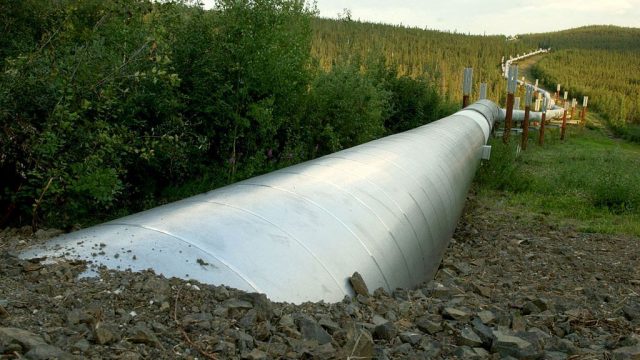
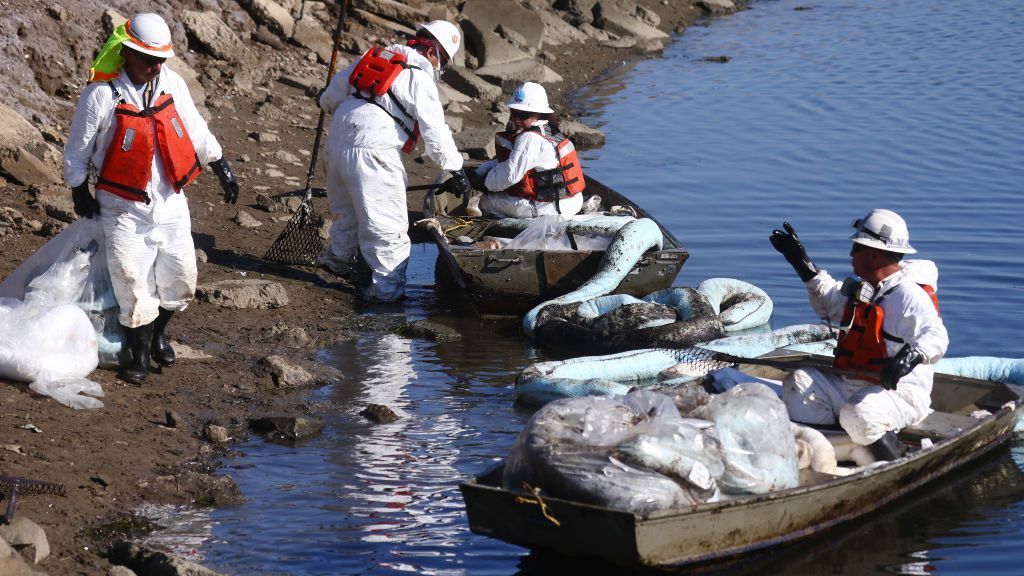
An October oil spill off the coast of Huntington Beach, California, drove home the ongoing potential for ecological disasters stemming from leaky, malfunctioning, corroded and sometimes even sabotaged oil and gas pipelines.
The answer to preventing leaks and spills is constant monitoring. But keeping your eyes on your pipelines is expensive, time-consuming and, frankly, beyond human capabilities.
“The future belongs to the robot in the sky,” asserts Didi Horn, CEO of SkyX, an Israeli startup whose drones monitor real-world “assets” — pipelines, to be sure, but also railways, forests andwild-animal reserves — for signs of impending problems.
Consulting firm PricewaterhouseCoopers (PWC) estimates the value of the global market for drone-powered business solutions like those from SkyX at $127 billion.
That enormous market potential has helped SkyX raise $25 million in two funding rounds, with more on the way, Horn told ISRAEL21c.
Current investors include Almond Tree Capital (Canada), DroneFund Japan and Tim Heely, CEO of drone manufacturer Vanilla Unmanned and chairman of the SkyX advisory board.
Leaks, bursts
Horn explains how monitoring worked in the pre-drone days and today.
“If you own a 1,000-kilometer pipeline, you’d send your guys out into the field or you’d fly a manned aircraft above it according to the calendar: ‘In June you go here, in July you go there.’ We allow pipeline flyovers on a weekly or even daily basis.”
Near real-time data provided by the drone enables operators to simply send a repair crew to the location most prone to be disrupted.
Disruption depends on what type of environment and what part of the world the pipeline is located in.
In developed regions, where pipelines mostly were built over the last century, leaks and bursts are the biggest issue.
In less developed countries such as those in Latin America, Africa and the Middle East, the biggest problem is oil theft.
“When I first heard about this problem, I imagined a guy with a bucket stealing the oil,” Horn said. “That’s not the case. They jack into the pipe, put in another pipe and lower the capacity so it doesn’t trigger the alarm.”
Undetected oil theft can go on for years.
SkyX to the rescue
Using advanced software algorithms and a variety of high-tech cameras, SkyX drones can identify problems before they turn nasty.
Is that a person or a car next to the pipeline? Is that a shadow or oil pooling on the ground?
SkyX’s SkyVision software labels what it sees so that the data sent to the customer is not just a raw image but something actionable.
Over time, the system gets smarter. Different regions have different sights to learn — flying over the Amazon produces a different data set than the desert, for example.
“After a couple of months with a customer, we can track 80 to 90 percent of the points of interest they care about,” Horn says.
SkyX has the advantage of being both a hardware and software company, Horn claims.
“Other companies might have great software or the best drones or the best cameras, but they don’t have the whole package designed and built in-house.”
SkyX’s drones have been granted three patents with another five patents pending. They are not necessarily the best on the market; rather, they are the best for the problems SkyX aims to address, Horn stresses.
For example, you wouldn’t use a SkyX drone to deliver packages from Amazon or to fire missiles from a military UAV.
Still, SkyX’s drone is impressive. It can fly up to 120 kph (74.5 miles) at 4,000 meters (13,123 feet), has a 100km (62-mile) range and will operate for 1.5 hours on its lithium-ion batteries. With strategically placed recharging stations, Horn says a SkyX drone could operate over a 1,000km (621-mile) distance.
Using advanced software algorithms and a variety of high-tech cameras drones like this one can identify problems. (Pier Marco Tacca/Getty Images)
What do you want to see?
SkyX doesn’t sell drones. It sells data as a service, Horn says.
“If a customer asks, ‘Can you bring a drone with thermal vision and an RGB camera?’ I will say, ‘Don’t tell me what to bring. Tell me what you want to see! People? Vehicles? Vegetation? Then I will fit you with the most advanced solution.’”
SkyX is currently operating in three countries. Although Horn isn’t at liberty to disclose clients, the company’s pilot customers include Denbury Onshore in Canada, E’Kabel in Latin America and apipeline operator in Mexico.
The Canadian trial monitored a 500km (311-mile) pipeline stretching between Ottawa and Toronto.
At one point, the drone discovered that a house under construction was straddling the underground pipeline. The owner was renovating his basement, Horn says, and didn’t realize that four feet underneath was a pipeline that delivered oil to Greater Toronto.
“That’s the sort of insight that could not be achieved by human inspection,” Horn says.
Providing intel
SkyX provides information and recommendations; taking action is up to the customer.
“If we see a leak expanding, we can say, ‘If you don’t take any action, this is what it will look like in two weeks.’ Now it’s up to the customer to decide what to do,” Horn explains.
Those recommendations are provided via SkyX’s customer interface, which displays annotated pictures over time, so the customer can see what’s changed.
That’s a far cry from what other asset monitoring companies provide — either the raw unannotated images or “a 600-page report,” Horn says.
“We wanted to provide a simple solution: Here’s where we see the problem, here’s where to find the historical imagery. We turn big data into smart data.”
Horn likens SkyX’s approach to wearable devices that tell you if your blood pressure is too high or your oxygen level is too low. The device doesn’t fix the problem or make you go to the doctor. But developers can build apps on top of that data to provide “actionable insights.”
And because the drone doesn’t fix the problem itself, the service enables operators to deploy staff wisely for better results. “It lets you know when to send the right people to the right places at the right time,” says Horn.
An October oil spill off the coast of Huntington Beach, California, drove home the ongoing potential for ecological disasters stemming from leaky, malfunctioning, corroded and sometimes even sabotaged oil and gas pipelines. (Mario Tama/Getty Images)
Surge of interest
COVID-19 caused asurge of interest in SkyX, Horn said. “Companies need to be more efficient and to reduce expenses.”
While many companies were already moving towards drones, “COVID pushed them to do the transformation faster than expected. There’s no reason to have a human-piloted airplane when you could have a robot in the sky,” Horn says.
SkyX has its R&D in Tel Aviv with offices in Canada and Texas. The company is active in Europe and North America but is looking to expand to Africa and the Middle East in 2022. SkyX employs 30 and is rapidly expanding. The company currently has a fleet of 37 drones. It takes about a month to build a new one.
SkyX drones can be controlled remotely. During the pilot period, a SkyX operator in Toronto flew a drone over a pipeline in Vancouver, some 3,500km (2,175 miles) away. The Mexico pilot was also controlled from Canada.
That’s not a possibility for the commercial rollout of the service — current regulations require line-of-sight visibility for drones — although Horn is hopeful that these regulations will change.
“They’re mainly concerned about a 14-year-old boy flying a hobby drone and getting too close the landing route of a 787,” Horn says. “They’re not yet thinking about companies flying autonomous drones on permanent routes that are far from other people.”
Horn is somewhat dismissive about delivery drones, even though Amazon, Walmart and most other big retailers are actively pursuing them. A trial in the Tel Aviv area in October saw drones deliver sushi and beer.
“What do I need that for?” he asks. “If I can already get food in 20 minutes or an Amazon delivery in New York in less than an hour, I don’t necessarily need a drone. But tackling real-world assets does not exist.To protect human beings on the planet, that’s not happening.”
Federal data on storage levels of crude oil and refined petroleum products indicate a healthy economy, some analysts said.
The U.S. Energy Information Administration, part of the Energy Department, publishes weekly data on commercial storage levels of fossil fuels, including gasoline. Gains usually indicate that demand turned lower, while the opposite holds for declines in inventory.
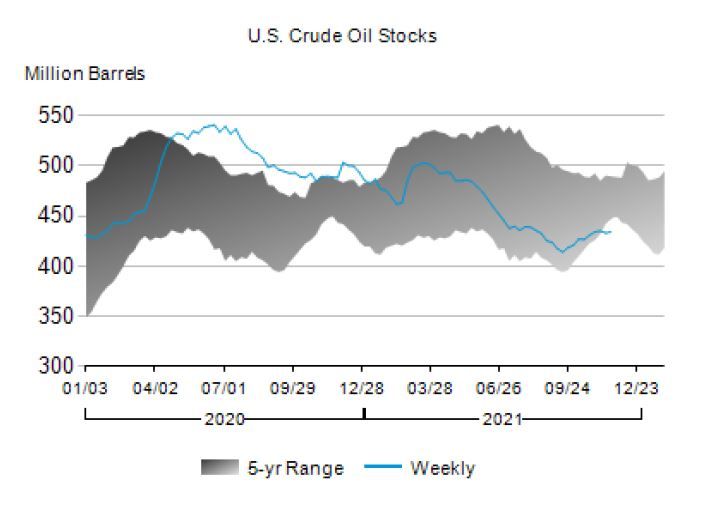
For the week ending Nov. 19, the Energy Information Administration reported that commercial crude oil inventories increased by 1 million barrels, though total motor gasoline inventories declined by 600,000 barrels and distillates, a category that includes diesel, declined by 2 million barrels.
Tamas Varga, an analyst at London oil broker PVM, said demand looked supportive despite the higher level of inflation and the uptick in commodity prices. Total products supplied to the market during the reporting period, used as a barometer for demand, is close to 21 million barrels per day, which at the very least is near levels from before the onset of the COVID-19 pandemic in early 2020.
“If the EIA is a barometer of the U.S. economy, then the U.S. economy is in good health, at least this is what the demand figures imply,” he said, referring to the Energy Information Administration.
That’s in contrast to the latest survey of consumer sentiment from the University of Michigan, which found that inflation “combined with the absence of federal policies” to do anything about it are taking a toll on confidence.
“Consumers expressed less optimism in the November 2021 survey than any other time in the past decade about prospects for their own finances as well as for the overall economy,” the report read.
President Joseph R. Biden Jr. on Tuesday tried his hand at market control by announcing the government would release oil from strategic reserves in coordination with Asian and the U.K. economies. Most analysts said that would only have a temporary impact on crude oil and gasoline prices, which have been moving off from recent highs over the last few weeks.
The amount of crude oil stored in U.S. commercial crude oil inventories remains below the five-year average. (U.S. Energy Information Administration)
However, the implied demand figure from total products supplied, as well as a report that showed consumer spending moved higher in October, paints another economic picture altogether.
That dichotomy was reflected in crude oil prices, which were hovering around even for most of the trading day on Wednesday. Tom Kloza, the president of the Oil Price Information Service, said that, at least for gasoline, trends may already be working in consumers’ favor.
“After this week, we really don’t see great demand until later in the first quarter 2022,” he said.
With COVID-19 vaccines readily available, U.S. travelers are expected to hit the road for the long Thanksgiving holiday. Many opted to stay home last year.
Elsewhere, Giovanni Staunovo, a commodities strategist for Swiss investment bank UBS, said there may be too many factors at play other than the Energy Information Administration report.
Will OPEC members react to a White House move to put more oil on the market? (Thomas Kronsteiner/Getty Images)
“Not sure the report matters so much, with market participants looking for new mobility restrictions in Europe and what OPEC+ does at their upcoming meeting,” he said.
Coping with an outbreak of new cases of COVID-19, many European nations have reimposed tight social restrictions as a preventative measure.
Some commentators have suggested OPEC+, the core members of the Organization of the Petroleum Exporting Countries and a handful of non-member states such as Russia, may decide to react to the coordinated decision to release oil from strategic reserves by standing firm with their conviction that the market doesn’t need more oil when they decide on output levels again next month.
Ashley Butler was scarcely out of diapers when she began using her imagination to inspire people to feel better about themselves.
Three decades later, Butler has a website, Higher Level Greetings, which designs obituaries, business logos, cards and brochures, custom greeting cards, graduation invitations, wedding invitation suites, workbooks, nonfiction chapter books, and, soon, property listing brochures for real estate agents.
“One of the projects that I’ve done and which I’m most proud of is the wedding invitation suite that I did for the wedding of Mr. Tetteh and Mrs. Tana Nettey. I’m proud of that one because I challenged myself in the materials that I used,” said Butler. The couple celebrated their second anniversary on Nov. 16.
Ashley Butler is “most proud of” the cream-and-gold wedding invitation suite for Tetteh and Tana Nettey, a couple who celebrated their second wedding anniversary on Nov. 16. (Courtesy of Ashley Butler)
“I combined a variety of materials that were not conventional. I used wire ribbon, took flowers apart and put them back together to close the invitation folder. It turned out to be a little heavy as far as the weight when it came to mailing it. That was also the first time that I did table setting cards as well as a guest welcome board. I was happy to carry that design all the way through.”
Butler discusses with Zenger how her life and personal experiences help her to channel peace, altruism and compassion into her products for her clients.
Zenger: What is the origin of your business, and how did you come up with its name?
Butler: To be honest, I just thought Higher Level Greetings sounded nice in 2014. My life experiences and spiritual foundation have influenced my decision to become an entrepreneur.
Celebrate life because life is truly a gift — that is my motto. The journey began when a family member encouraged me to start charging for what I had been doing as a hobby for free, then they requested graduation invitations and became my first paid customer.
The first items I offered were miniature passport and magazIne-style graduation invitations. The initial mission of my business was focused on celebrating inner city youth and sharing stories about their accomplishments through graduation invitations.
Vendor Ashley Butler at her first expo at a community church in Chicago in January 2019. Organizers of the combination prom and college fair “were there to help students apply for scholarships, and vendors were there to offer services for prom and graduation,” said Butler, who advocates for the presence of art in communities and the advancement of inner-city youth. (Courtesy of Ashley Butler)
This idea stems from the fact that youth in general, and our African American men in particular, are not typically shown in the most positive light in mainstream media. This is a way of combating negativity with positivity.
Zenger: Can you describe what you do for your clients?
Butler: Overall, my goal is to help people celebrate life, and share hope, knowledge and family history. As a graphic designer, I help people package their treasure in printed form.
The treasure may be celebrating a life milestone, memorializing a loved one, or sharing knowledge and inspiration through nonfiction books, workbooks, journals, pamphlets and greeting cards.
I’ve learned so much about my family’s history through the obituaries of deceased family members. So, old family stories are important to me, and that is a reason why I aim to share stories through invitations that loved ones can look back on years from now.
Zenger: Are there any particular projects you are involved in that are or have been near and dear to your heart?
An inspirational nonfiction chapter book and a journal notepad designed by Ashley Butler. (Courtesy of Ashley Butler)
Butler: I designed an inspirational nonfiction 13-chapter book for an editor and a group of authors. This gave 13 authors, ranging in ages from late 20s to late 80s the opportunity to publish their stories for the first time.
At a celebration many of the authors came up to me and mentioned how the project inspired them and gave them the courage to write their own books.
In my business, I strive to assist authors in their pursuit of inspiring people and sharing hope in a world that needs hope. I encourage people to celebrate and appreciate the gift of life.
Zenger: What philanthropic endeavors are you involved in, and who are the beneficiaries?
Butler: In the near future, I plan to be involved in philanthropic endeavors that advocate for the presence of art in communities and the advancement of inner-city youth. These endeavors would support visual, performing, culinary and other art forms and benefit youth through job creation, education and wellness.
Zenger: Can you discuss how post-high school education and life experiences influenced your decision to become an entrepreneur?
Butler: I started out in architecture, but I worked long hours behind a computer screen and each day was a struggle to be there. I didn’t feel like I was serving a greater good or helping people. I would go to Starbucks for coffee every day before work to get me through the morning and I had to have music or a podcast to get through the rest of the day.
Then I went back to school for urban planning and to learn about the nonprofit world. I graduated from the University of Illinois-Chicago with a master of urban planning and policy degree and a [bachelor’s degree] in architectural studies. During this time, I studied in London for a summer and traveled internationally for the first time.
I hope to provide support to nonprofits through consulting. Currently, I manage energy efficiency projects in a full-time role while working on design projects. I am rebranding my graphic design and greetings business. I do not plan on returning to school for a formal degree anytime soon, but we’ll see what the future holds.
Zenger: Can you discuss how your childhood influences and inspirations shaped you into the person you are?
Butler: When I think about all that my mother, Connie, went through to have me, it makes me want to live each day on purpose, celebrating it and helping make life easier in some way for people.
A village prayed for me while I was in my mother’s womb, and a village prays for me today. I’m grateful for the health and abilities that I once took for granted. Quality time is invaluable, and it’s not something that you can buy or get back. I see issues that people face and I try to make life, or even their day, at least a tad bit easier or brighter.
My mother is my best friend and confidant. She does whatever she can for me and even if she can’t do it, she sure does try. I do the same for her. When she’s not OK, I’m not OK. She excels in everything that she puts her mind to and doesn’t quit or let supposed ‘limitations’ stop her.
Ashley Butler (right) calls her mother, Connie, “my best friend and confidant,” and her father, Gilbert Allen, “really uplifting, inspiring and motivational.” (Courtesy of Ashley Butler)
She loves and cares for her family unconditionally and encourages everyone to come together. Since I’ve started on this journey my father, Gilbert Allen, will ask me from time to time, “how many millions did you make today?”
That’s really uplifting, inspiring and motivational for me. As a result, I’m determined to do what I need to do to overcome barriers and I take every opportunity possible to bring my family together.
Zenger: At what point in your early life did you begin to prosper creatively?
Butler: I grew up in a tight-knit family on the south side of Chicago and later in a southern suburb of Chicago. At age 3, I’d make my version of birthday and get-well-soon cards for loved ones, and it was my way of celebrating and showing love to them.
Imagination played a big part in my childhood. I’d play with shoes, line them up, give them names, and create characters out of them. I loved to draw and still do, and would create a story line about the people I drew. I drew clothes and shoes and created paper outfits for my toy dolls.
Growing up, I played basketball and volleyball for a school year in elementary school. Then I did more art-focused activities. I was a part of After School Matters, where I studied visual arts and was a part of youth art competitions.
But I’ve come to see that school does not really prepare you to be an entrepreneur as much as an employee — at least from my experience. As an employee, I can create, but it’s limited to standards set by a company. As an entrepreneur, I have more freedom to set the standard and create.
Zenger: Do you find that your business is therapeutic in any way?
Butler: My bout with social anxiety began when I was a child, and I’m still overcoming it. I was born with a visual impairment, where my right eye moves about involuntarily. My business is like therapy in the way that it helps me express myself, and it helps me to organize my thoughts.
This year has really been a tough year for me. Overall I was reminded about the importance of hope, gratitude, quality time and a praying village. I felt like things would be OK as long as I had hope and expected that the next day would be better than the one before.
When I had COVID earlier this year and was in quarantine, I’d have time for prayer, studying the Bible, sketching ideas, creating and socializing. God kept my mind, but sketching and these things helped me to control my thoughts. I feel that the ability to envision a finished product is a gift from God.
I don’t have any formal training on how to design books, invitations and graphics, but I use the computer programs that I learned in architecture school to help me carry out my visions. I know I was put on this earth for a reason, so I look to be a solution and pray that I am an answered prayer for someone.
NASA’s DART spacecraft launched from California this week to possibly “defend the world” against asteroids and comet threats.
The Double Asteroid Redirection Test (DART), which the space agency describes as “the world’s first full-scale mission to test technology for defending Earth against potential asteroid or comet hazards,” launched Nov. 24 on a SpaceX Falcon 9 rocket from the Vandenberg Space Force Base in California, NASA said in a statement.
The space agency said DART, built and managed by the Johns Hopkins Applied Physics Laboratory (APL) in Maryland, “will impact a known asteroid that is not a threat to Earth,” but the experimental technology could be used to one day defend Earth from external threats.
“DART’s one-way trip is to the Didymos asteroid system, which comprises a pair of asteroids,” NASA said. DART’s target is the moonlet Dimorphos, which is approximately 530 feet in diameter. The moonlet orbits Didymos, which is approximately 2,560 feet in diameter.
The “Armageddon”-style plan is to crash the spacecraft into Dimorphos and slightly change its path.
NASA said the impact should alter the asteroid’s movement so it can be measured by experts using telescopes on the ground.
“DART will show that a spacecraft can autonomously navigate to a target asteroid and intentionally collide with it, a method of deflection called kinetic impact. The test will provide important data to help better prepare for an asteroid that might pose an impact hazard to Earth, should one ever be discovered,” NASA said.
“LICIACube, a CubeSat riding with DART and provided by the Italian Space Agency (ASI), will be released prior to DART’s impact to capture images of the impact and the resulting cloud of ejected matter,” the U.S. space agency added.
About four years after DART’s impact, the European Space Agency’s Hera project will carry out a survey with “particular focus on the crater left by DART’s collision and a precise determination of Dimorphos’ mass.”
“DART is turning science fiction into science fact and is a testament to NASA’s proactivity and innovation for the benefit of all,” NASA Administrator Bill Nelson said.
“In addition to all the ways NASA studies our universe and our home planet, we’re also working to protect that home, and this test will help prove out one viable way to protect our planet from a hazardous asteroid should one ever be discovered that is headed toward Earth.”
The spacecraft is expected to intercept the Didymos system between Sept. 26 and Oct. 1, 2022, when it will intentionally crash into Dimorphos at roughly four miles per second.
DART team members do a final inspection of one of the spacecraft’s two roll-out solar arrays (ROSA) in August, 2021. These compact, lightweight “wings” will collect solar energy to help power the spacecraft on its nearly yearlong journey to the asteroid Dimorphos. (NASA/Johns Hopkins APL/Ed Whitman)
Experts estimate that the impact will shorten Dimorphos’ orbit around Didymos by several minutes.
“Researchers will precisely measure that change using telescopes on Earth. Their results will validate and improve scientific computer models critical to predicting the effectiveness of the kinetic impact as a reliable method for asteroid deflection,” NASA said.
“We have not yet found any significant asteroid impact threat to Earth, but we continue to search for that sizable population we know is still to be found,” Lindley Johnson, planetary defense officer at NASA Headquarters, said. “Our goal is to find any possible impact, years to decades in advance, so it can be deflected with a capability like DART that is possible with the technology we currently have.”
“It is an indescribable feeling to see something you’ve been involved with since the ‘words on paper’ stage become real and launched into space,” said Andy Cheng, a DART investigation lead at Johns Hopkins APL who came up with the DART concept.
“This is just the end of the first act, and the DART investigation and engineering teams have much work to do over the next year preparing for the main event, DART’s kinetic impact on Dimorphos,” Cheng said.
Diego Barranco, a baker from Ozumba, in the State of Mexico, has created cookies with designs inspired by the country’s pre-Hispanic art. He defines his work as “craftwork with bread dough.”
Pre-Hispanic cultures are a group of civilizations that settled in most of what today makes up Mexico, from 1500 B.C. to A.D. 1521, such as the Aztecs, Mexicas, Mayans, Olmecs, Toltecs, Teotihuacan cultures, Mixtecs and Zapotecs.
The 43-year-old baker says his fondness for these cultures led him to combine that period’s cultural heritage with his work.
For the last three years, Diego Barranco has been baking cookies with these figures. (Courtesy of Diego Barranco)
He is especially interested in the culture of Teotihuacan, which settled in the modern State of Mexico, from the year 300 to 900. When some artifacts depicting the figures were recently found there, he felt inspired to make copies of some of them with bread dough, and then on cookies.
“I saw the archeology pieces that the workers in the area had found, like the masks, some body shapes, that type of thing. I started to practice with the first masks. We learned as we went, developing more art on cookies, and now we’ve become much better at it,” Barranco told Zenger.
Besides baking traditional bread, Barranco has spent the last three years creating figurines with these pre-Columbian motifs. Some of his creations include cookies with masks from Teotihuacan, plumed men, jaguar knights (soldiers from the Mexica Empire), and Mexica deities such as Tlaloc (the rain god), Xochipilli (the flower god) and Coyolxauhqui (the moon goddess). He has also made replicas of the tree of life, a sculpture that is part of the Mexican culture and explains the creation of the world.
They come in different sizes and levels of complexity, from a simple cookie with a Mexica figure to a mega cookie with aspects of the Teotihuacan culture, like masks and Quetzalcóatl, the feathered serpent. (Courtesy of Diego Barranco)
Pre-Hispanic Art On A Cookie
Prices vary according to the level of difficulty. A small cookie with a simple figure takes about 10 minutes to make and sells for three to five dollars. An 11-pound “mega cookie” is more complicated. Barranco has spent up to three weeks on them, and they cost $350.
“We’ve made mega cookies the size of a bread pan, 15 by 45 inches. The first one was a tree of life. We put four deities on it: of fire, earth, water and wind. Then, we made another one based on the art of Teotihuacan. We based it on a temple and added some masks and cultural features. You won’t find work like that anywhere else,” he said.
People are very interested in the cookies, and Barranco says he has had to study more about the history of the figures he’s recreating, so he can tell his clients what they mean.
“We have to have some information, know what we’re doing, what it means. For example, you can make a jaguar warrior or a god, and if you don’t know what it is, you have to find out, so you can explain it to people who ask. That draws them in,” he said.
Before he creates the figures, Diego Barranco researches the history of the pieces, so he can explain it to his clients. (Courtesy of Diego Barranco)
Barranco’s work has been well-received by the customers at his “teotlaxcalli” (divine bread, in Aztec language Nahuatl) workshop in Ozumba, and by people who go there during the festivals and to visit the markets and fairs where he sells his goods.
He hopes the artistic representations from the pre-Hispanic period will live on today. They also link people with their past.
“I think Diego’s design concept is very interesting. Nobody around here had tried to do this type of thing before. I see his dedication to each of his pieces. The art he shares through them is unique, and his cookies and breads are delicious,” Yarmil Rivera, a 36-year-old customer, told Zenger.
Barranco hopes to transmit his technique to the younger generations. Today, he is training his children to take over the business someday and to continue with his recipes and creations.
“They saw how this craft got started. We’re going to pass the trade down to them because they’re going to learn it and not allow this to die,” Barranco said.
“I think it’s interesting [to learn this technique] because it’s like revisiting and preserving a part of ancient pre-Hispanic culture that is still alive through these edible pieces. There’s great responsibility in transmitting this to the younger generations, so our roots and culture will never be forgotten,” said Erick Martínez, Barrancos’ 17-year-old son.
Diego Barranco, who is the mastermind, has created two 11-pound mega cookies with pre-Hispanic motifs. (Courtesy of Diego Barranco)
Barranco says he is grateful for the response his products have seen among locals and foreigners. He asks everyone to preserve Mexico’s pre-Hispanic traditions.
“I want to move forward. Now, the market is receptive and people are interested. We’re fighting hard, from the bottom up … Every day we’re doing sketches. We’re constantly coming up with new ideas. I hope everyone enjoys our local craftspeople. There are a lot of them in many Mexican communities who are very talented,” he said.
Translated by Melanie Slone. Edited by Melanie Slone and Kristen Butler