Home Blog Page 549

FDA Approves Incisionless Ultrasound Brain Surgery For Parkinson’s Symptoms


0

University of Virginia Health neurosurgeon Jeff Elias, PhD, has been a pioneer in the development of focused ultrasound for the treatment of essential tremor, a common movement disorder, and Parkinson's disease. (UVA Health)


By Martin M Barillas

The U.S. Food and Drug Administration has approved an innovative incisionless surgery for debilitating Parkinson’s disease that offers an outpatient alternative to invasive deep-brain surgery.


Insightec’s Exablate Neuro ultrasound device was successfully tested at the University of Virginia health system, which is now one of only 37 U.S. medical centers able to offer the procedure.

According to the Parkinson’s Foundation, about 1 million people in the U.S. live with Parkinson’s, which causes difficulties with mobility, as well as rigidity and dyskinesias, which is involuntary movements or tremors. Current treatments involve deep-brain surgery and drugs that have not been effective in all patients.

“This FDA approval of focused ultrasound pallidotomy allows for more treatment options if medications become ineffective or cause disabling side effects,” said Dr. Jeff Elias, a neurosurgeon and pioneer in focused ultrasound. While it’s not a cure, Elias said the treatment offers a “less invasive option for patients suffering with medication-induced dyskinesia or severe motor deficits.”

An ordinary pallidotomy involves an electrical probe being inserted into the brain and heated to destroy a part of the subcortical globus pallidus structure. Side effects include depression, memory loss, blurred vision and slurred speech, as well as diminished cognitive ability in completing various tasks.

The new outpatient treatment doesn’t require incisions or opening the skull. By focusing ultrasound inside the brain, the method uses sound waves to interrupt misfiring brain circuits. During the procedure, physicians use magnetic-resonance imaging (MRI) to examine the brain before making permanent changes.

“It is still very early stage for a new procedure, so experience and technological advances will increase the safety and effectiveness,” Elias said.

Elias conducted his first clinical trial of the technology on a volunteer exhibiting a common movement disorder known as essential tremor. He has teamed up with Dr. Binit Shah in advancing focused ultrasound guided by MRI as an approved procedure. This led to FDA approval in 2018 of the technology to treat essential tremor. The FDA has now approved its use for other symptoms of Parkinson’s, including involuntary movements and rigidity.

Dr. Neal F. Kassell of the Focused Ultrasound Foundation said his organization has long believed the brain can be treated with ultrasound, saying the FDA’s approval is “a huge win for both providers and patients.”

The ultrasound technology also shows promise in treating conditions ranging from breast cancer to epilepsy. Another possible use for it is in penetrating the protective blood-brain barrier to enable new treatments for glioblastoma, a deadly form of brain cancer.

Though the new procedure is likely to be an attractive option for patients, health insurance plans likely won’t cover it right away.

Edited by Richard Pretorius and Kristen Butler


The post FDA Approves Incisionless Ultrasound Brain Surgery For Parkinson’s Symptoms appeared first on Zenger News.
Shrivel Me Timbers: Henry VIII’s Salvaged Flagship Being Eaten Up By Acid

0

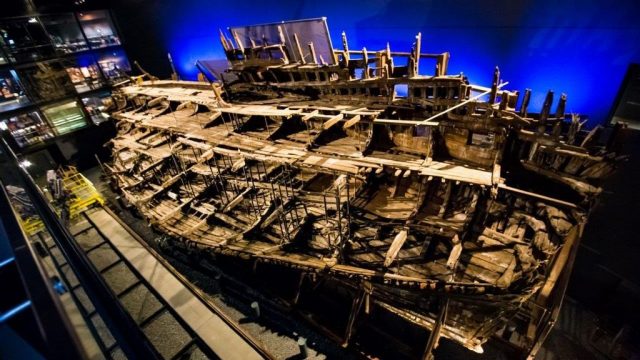
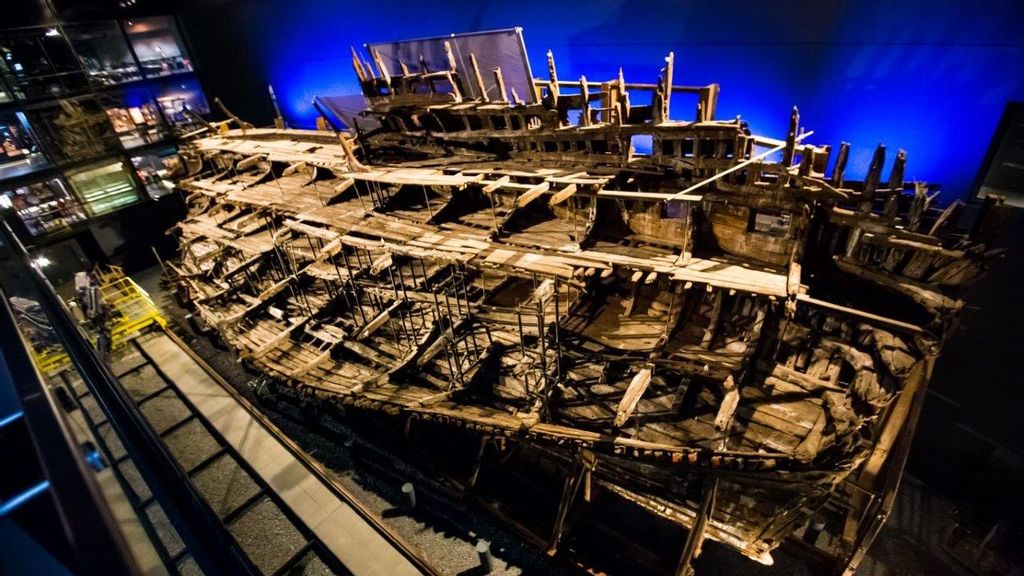
An advanced X-ray technique has allowed conservators to determine what substances are eating away at the wreck of the warship Mary Rose, which sank in 1545 and was salvaged in 1981. (Courtesy Mary Rose Museum)


By Martin M Barillas

The Mary Rose, a 16th century warship preserved in the United Kingdom, has been under attack from an invisible entity. Now, a team of researchers using a new X-ray scanning technique has identified the culprit.


The Mary Rose, a carrack-type vessel, was part of English monarch Henry VIII’s fleet, which battled Breton, French and Scottish warships. It sank in 1545 off the Isle of Wight in the English Channel. It was discovered in 1971 and brought to the surface 10 years later, having since become a national treasure as a time capsule of the Tudor period.

About one-third of the ship was still extant when it was raised to the surface. On the sea bottom, the anaerobic — meaning without oxygen — conditions slowed decomposition even while bacterial growth continued. But at the Mary Rose Museum in Portsmouth on the southern coast of England, bacteria, chemicals and time have ravaged the wreck, endangering the legacy.

An advanced X-ray technique has allowed conservators to determine what substances are eating away at the wreck of the warship Mary Rose, which sank in 1545 and was salvaged in 1981. (Courtesy Mary Rose Museum)

Kirsten Marie Ørnsbjerg Jensen of the University of Copenhagen in Denmark is leading conservation efforts with the help of an international team and their findings are published in the journal Matter.

Jensen, an expert on the internal nano-level structures of materials, used X-ray computed tomography with pair distribution function analysis, an advanced X-ray technology, to examine the wreck.

“We have analyzed timber from the Mary Rose by way of a new technique that is somewhat comparable to how a hospital’s CT [computer tomography] scanner works,” Jensen said. The technique combines CT scanning with X-ray scattering.

“It lets us analyze the structure of materials at an atomic level, which makes it possible to find and map substances within the ship’s wood,” she said. The technique provides insights into the wood’s decay and how to preserve it.

Launched in 1511, the Mary Rose was one of England’s largest warships, providing 33 years of service to Henry VIII during his sporadic wars. It featured heavy cannons made of bronze or iron, and its hull and rigging were fashioned from some 600 English oaks, enough to fill a 40-acre forest. All 500 crew members drowned when it sank in battle in 1545.

The Mary Rose was depicted in the Anthony Roll, which was a written record of Tudor-era ships. Its distinct carrack profile with high “castles” fore and aft can clearly be seen. Although the number of guns and gun ports is not entirely accurate, the picture is overall an accurate illustration of the ship. (Gerry Bye/Pepys Library 2991 and British Library. Public Domain)

Raising the Mary Rose in 1981 remains the most expensive marine salvage operation in history. It was televised globally to 60 million viewers. Along with the hull, 19,000 artifacts from the Tudor period were recovered from the sea bottom.

However, after centuries of exposure to seawater, the hull is degrading. Deposits left on the ship by metal parts and bacteria have triggered the production of acid, which is corroding the ship’s timbers, despite the polyethylene glycol used in the 1980s to preserve them.

The research team found 5-nanometer zinc sulfide nanoparticles in the wood, presumed to be bacterial deposits created in the anaerobic conditions on the seabed. “These are identified as precursors to acid attack on the wood upon removal to an aerobic environment,” according to the paper.

The new X-ray technique allowed researchers to identify the substances attacking the wood following its exposure to oxygen upon resurfacing. “To find a way to stop these decomposition processes, it is important to know what the sulfides are composed of and where they are. This technique allows us to do just that,” said Jensen.

“These insights inform not only next-generation conservation strategies but also the efficacy and unforeseen issues of previous treatments,” the researchers said in the paper.

Edited by Siân Speakman and Kristen Butler


The post Shrivel Me Timbers: Henry VIII’s Salvaged Flagship Being Eaten Up By Acid appeared first on Zenger News.

Olding On: 84-Year-Old Student Graduates In Engineering

0

At 84, Mr. Felipe Espinosa, a produce vendor, managed to graduate as an engineer from a Mexican university. (Courtesy of BUAP)


By Julio Guzmán

It is never too late to achieve one’s dreams. At 84, Mr. Felipe Espinosa Tecuapetla, a produce vendor in a market at Puebla, Mexico, graduated in Processes and Industrial Management Engineering from the Benemérita Universidad Autónoma de Puebla (BUAP).


Motivated by people around him and inspired by his eldest son — also an engineer — Mr. Felipe enrolled in the university in 2016, at 79. He is the oldest student the university has registered so far. His experience in an electrical and welding workshop and some knowledge in construction gave him the confidence to move ahead professionally.

“I thought there were older people at the university. But I was the only one,” Espinosa told Zenger.

“Many people told me, ‘You should study.’ When the university opened enrollment, I said, ‘I’ll go for it.’ It was easy for me: I wanted to study; I am a patient person, and I pay attention.”

Mr. Felipe had to travel 3 hours by bus every day, from his house to the campus and back, but the length of those trips did not hold him back. He would get up very early to go to the university and later sell his produce at the market.

Héctor Medina Cruz, the BUAP’s engineering department coordinator and a teacher at the San José Chiapa campus, says Mr. Felipe was the first student to arrive at the university and the last to leave. Medina Cruz remembers Mr. Felipe carrying a sack with his supplies and acknowledges he has a much better memory and is more skilled than many young students.

“He is very coherent and connects ideas very well. He was very enthusiastic, arrived on time, never missed a class, and always participated. While young people used tablets and computers to take notes, Mr. Felipe wrote in his notebook,” Medina Cruz told Zenger.

Mr. Felipe with his engineering professors. (Courtesy of Héctor Medina)

When Mr. Felipe began attending classes, his story went viral. He has a massive following on social media. The photo studio that worked on Mr. Felipe’s graduation pictures uploaded a couple of images of him with his degree on August 30. The post has over 42,000 likes and over 1,700 comments and has been shared more than 44,000 times.

Mr. Felipe finished high school eight years ago. He believes it is essential to continue preparing himself to face the challenges of the contemporary world.

“If you do not have studies, you will struggle more. Some young people have no desire to improve or work; they might not even know what I’m talking about. People must get caught up with 2021; we’re living through critical times. Devaluations, the economy, diseases: people must pay attention to current events,” he said.

Mr. Felipe hopes to find a job with more income. He does not rule out the possibility of becoming a professor or pursuing a graduate degree. The university is willing to support his choice.

“Let’s see if he decides to pursue a master’s degree. We’ll see if we can support him with a scholarship for graduate school. If he decides to work, we’ll try to help him through the career center and the different agreements the university has,” said Medina Cruz.

Mr. Felipe’s granddaughters have helped him get caught up with technology devices. (Courtesy of Erika Pozos)

Mr. Felipe is a widower. He has five children, 10 grandchildren, and two great-grandchildren, all of whom are very proud of him and follow every piece of advice he gives. His grandchildren help him get involved in new technologies and social media. They have learned from him that nothing in life is impossible.

“I am very fortunate to have such a living example. I don’t think anyone else has a grandpa who graduated from college at that age. He’s a source of inspiration … He has taught us to be steadfast when pursuing our goals,” Mr. Felipe’s granddaughter, Erika Pozos Espinosa, told Zenger.

“It seems incredible to me that at his age, he doesn’t want to waste a single moment of his life. He sets a living example that there are no limits to what you can achieve,” she said.

While another opportunity arises, Mr. Felipe holds on to his roots, continuing to work as a vendor, a job he defines as “a blessing.” Today, he says he is grateful for having concluded his undergraduate degree and hopes to inspire people to follow their dreams, regardless of their age or other people’s opinions.

“It’s never too late to learn. When people ask me how old I am, I answer, ‘It’s not my age [that matters], but the desire to move forward.’ What has been basic for me is to work as if I were going to live forever, and that’s what I do. You can achieve whatever you want if you truly want it. I usually tell young people: life is not easy, but you have to give it your all until the last minute,” he said.

Translated by Gabriela Alejandra Olmos; edited by Gabriela Alejandra Olmos and Melanie Slone


The post Olding On: 84-Year-Old Student Graduates In Engineering appeared first on Zenger News.

VIDEO: Is There Strife On Mars? NASA’s Red Planet Rovers Monitor Weather, ‘Marsquakes’

0

The daily weather reports by NASA's rovers provide important information not only for scientists to learn more about Mars but also for supporting the operations of other craft collecting samples and data on the Martian surface. (NASA Jet Propulsion Laboratory/Zenger)

By Peter Barker

In a new video, U.S. space agency NASA detailed how its experts are able to predict the weather on Mars, allowing the Curiosity Rover and Ingenuity Helicopter to carry out their exploration missions.


Seasons change on Mars, and this has a profound effect on how missions on the Red Planet’s surface are carried out, NASA said.

The Perseverance and Curiosity rovers provide scientists at NASA daily weather reports that provide data on humidity, wind speed and direction and temperature on the Martian surface. Their sensors can also identify the number and size of dust particles in the atmosphere, which allows scientists to track the planet’s dust cycle and evaluate its effects on the weather.

The size and power of storms are monitored by the Odyssey orbiter, the Mars Reconnaissance Orbiter (MRO) and the Mars Atmosphere and Volatile EvolutioN (MAVEN) orbiter.

The Mars Odyssey Orbiter was launched in 2001 and has since been monitoring radiation on Mars while looking for signs of water and shallow buried ice. It is the oldest spacecraft still in use at the Red Planet. Over the years, it has revealed that a significant amount of Mars’ water is under ice, measured the amount of permanent ground ice on the planet and evaluated how this ice changes with the seasons.

The daily weather reports by NASA’s Perseverance and Curiosity rovers measure conditions such as humidity, temperature and wind speed on Mars. (NASA Jet Propulsion Laboratory/Zenger)

MRO produces a daily global weather map and provides impressively detailed images of the planet’s surface.

MAVEN was launched in November 2013 and went into orbit around Mars in September 2014. It has since been monitoring Mars’ upper atmosphere and ionosphere.

Using the InSight lander, NASA is also able to measure seismic activity, and in September, the lander recorded one of the biggest and longest-lasting “marsquakes” the mission has ever detected. The quake, measuring 4.2 on the Richter scale, shook the lander for almost an hour and a half.

The Insight lander recorded one of the biggest and longest-lasting “marsquakes” the mission has ever detected, measuring 4.2 on the Richter scale and lasting almost an hour and a half. (NASA Jet Propulsion Laboratory/Zenger)

The constantly changing weather can be very challenging for some of the spacecraft currently operating on Mars.

The Ingenuity Mars helicopter is especially sensitive to weather, so the preflight weather reports provided by Perseverance are critical to its operation. For instance, as the Martian summer begins in the northern hemisphere, the atmosphere becomes thinner, causing the chopper to increase its rotor speed from 2,537 rpm to 2,700 rpm to give it sufficient lift to fly.

On April 19, Ingenuity carried out its maiden flight, becoming the first motorized craft to fly on another planet.

The spindly 4-pound, 19-inch-tall mini-chopper has carried out 15 missions during its search for signs of prior life on the Red Planet.

The chopper often supports the Mars rovers’ mission, which is focused on collecting samples from the planet that may help scientists find clues about ancient life on Mars. Moreover, NASA expects Odyssey’s findings of Mars’ geologic landforms and minerals — especially those formed in the presence of water — to help experts understand the role of water in the evolution of the Martian climate since the planet first formed some 4.5 billion years ago.

Edited by Siân Speakman and Kristen Butler


The post VIDEO: Is There Strife On Mars? NASA’s Red Planet Rovers Monitor Weather, ‘Marsquakes’ appeared first on Zenger News.

Carvana donates $20K; van to Birmingham-based transgender group

0
Carvana's Lauren Wilson (center left holding check) and TAKE's Daroneshia Duncan-Boyd (center right holding check) are joined by Carvana Pride committee members as well as the TAKE family during a check presentation. (Haley Wilson, The Birmingham Times).

By Haley Wilson

The Birmingham Times

Key to their marriage? ‘Pray over each other — and fix his plate sometimes’

0

BY JE’DON HOLLOWAY-TALLEY

Special to the Birmingham Times

Water Surprise: Ancient Aqueduct Unearthed At Edge Of Roman Empire

0

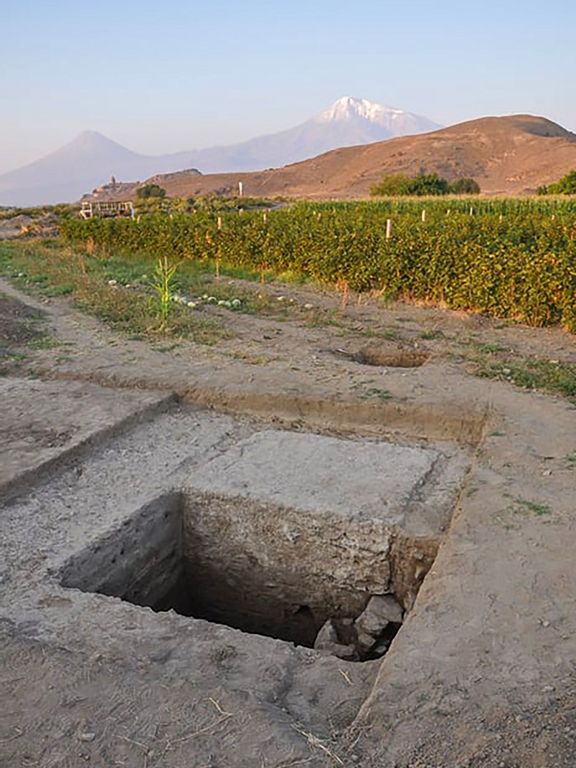
The excavation trench shows a pillar of the unfinished Roman aqueduct in Artaxata, Armenia. (Artaxata Project/Zenger)

By Peter Barker

Archeologists have unearthed what they say is the easternmost aqueduct built by the Roman Empire.


Researchers from the National Academy of Sciences of the Republic of Armenia and from the University of Münster in Germany said they discovered the remains of the arched aqueduct in the ancient Armenian city of Artaxata.

Excavation of the aqueduct began in 2019, and the University of Münster released a statement this month detailing the findings of a study published in the journal Archäologischer Anzeiger.

Professor Achim Lichtenberger of the University of Münster said Romans constructed the aqueduct between A.D. 114 and 117. Samples taken from the soil near the construction site were dated to between A.D. 60 and 460. This led the researchers to conclude that the aqueduct was most likely built during under the reign of Emperor Trajan, during which the Roman Empire reached its territorial peak.

Trajan was considered a successful military ruler who oversaw the second-greatest military expansion in the history of the Roman Empire, after Augustus.

Torben Schreiber, the paper’s co-author, said that the construction was never actually completed, as Trajan died in A.D. 117 and the next emperor, Hadrian, gave up the province of Armenia, leaving the aqueduct half-completed.

The excavation area in Artaxata, Armenia, where researchers found what they say is the easternmost aqueduct built by the Roman Empire, with Mount Ararat visible behind it just over the modern border in Turkey. (Artaxata Project/Zenger)

Hadrian ruled from A.D. 117 to 138 and abandoned many of his predecessor’s expansionist military campaigns including the one in Armenia, resulting in disapproval from much of the empire’s elite.

He is known in Britain for having built Hadrian’s Wall, which served as a marker for the northernmost point of Roman-controlled Britannia.

Aqueducts were a cornerstone of Roman cities and towns, used to bring water into the populated territories from the surrounding areas.

German and Armenian experts used a variety of methods drawn from the fields of geophysics, archeology, and geochemistry in the excavation work.

Geomagnetic examinations were carried out to locate areas of interest in Artaxata, then samples were taken using drills to pinpoint the aqueduct’s location. Mkrtich Zardaryan, a co-author of the study, said satellite and infrared imagery was then used to chart the path of the aqueduct’s pillars.

“We reconstructed the planned course of the aqueduct by means of a computer-assisted path analysis between the possible sources of the water and its destination,” he said.

The researchers concluded from the findings that the incomplete aqueduct in Armenia is evidence of the empire’s failure to expand into the region.

Edited by Richard Pretorius and Kristen Butler


The post Water Surprise: Ancient Aqueduct Unearthed At Edge Of Roman Empire appeared first on Zenger News.

Will Gasoline Prices Move Even Higher On Holiday-Driven Demand?

0

Gasoline prices above $5 per gallon are displayed at a gas station on Nov. 15, 2021, in Los Angeles. According to AAA, the average price statewide for one gallon of regular unleaded gas hit $4.68 Tuesday, an all-time record high. The price spike is being blamed on the increasing cost of crude oil, higher demand, and other factors. (Mario Tama/Getty Images)

By Daniel James Graeber

Supply-side issues are keeping retail gasoline prices elevated, though the upcoming Thanksgiving travel period could determine the level of consumer frustration, analysts said.


Motor club AAA listed a national average price of $3.41 for a gallon of regular unleaded for Tuesday, just a tiny fraction of a percent lower than this time last week. Across the board, commodity prices are hovering at multiyear highs and that’s spilling down to the consumer level. AAA also said the average price in California for a gallon of regular unleaded gas hit $4.68 on Tuesday, an all-time record high.

Andrew Gross, a spokesperson for AAA, said demand might be a bit light ahead of the holiday travel season, but that’s not having any big impact at prices at the pump.

“Unfortunately, the ongoing tight supply of crude oil will likely keep gas prices fluctuating, instead of dropping, for some time,” he said in a statement.

Motor club AAA shows retail gasoline prices stuck in a higher-for-longer pattern. (Courtesy of AAA)

The White House is calling for more oil on the market to help offset some of the pressure. Pleas to the Organization of the Petroleum Exporting Countries have so far been unanswered, leaving the federal government to consider tapping into the nation’s strategic reserves.

President Bill Clinton in 2000 ordered a release from the Strategic Petroleum Reserve to offset high oil prices. While there are several factors behind the price at the pump, gasoline prices dropped 7 percent from the time Clinton made his decision in September that year to December. However, analysts now said the relief might not last that long if a release is approved.

Some lawmakers, are calling for a pause on domestic crude oil exports to keep more product at home for regional refineries. But that might make matters worse, said Jim Burkhard, the head of crude oil markets for consultant group IHS Markit.

“Such a ban would disrupt global oil supply chains, run counter to decades of U.S. policy promoting the free flow of oil and gas, lead to inefficient and costly re-allocation of domestic crude oil production, disrupt supplies for allies and discourage domestic production — which would all put upward pressure on U.S. gasoline prices,” he said in a statement.

And if that’s not enough, S&P Global Platts sees a wide range of factors behind stubbornly high retail gasoline prices. In the Midwest market, there are signs that some of the additives that go into making gasoline are in short supply. The Colonial Pipeline, a key fuels artery for several areas east of the Mississippi River, isn’t working at full capacity either.

“Driving demand has remained strong for a while, at least around the levels of two years ago, but supply constraints keep hampering U.S. gasoline markets,” said Matthew Kohlman, an associate director for refined products pricing at S&P Global Platts.

Barack Obama was the U.S. president last time retail gasoline prices were this high. (U.S. Energy Information Administration)

There could be an uptick in demand next week too if U.S. families shrug off concerns about the increase in new cases of COVID-19. Many families stayed home last year, but with vaccinations available, the situation could return to a relative level of normalcy this year.

That could depend on the consumer reaction to elevated gasoline prices. It was seven years ago that prices at the pump were this high and, with consumer sentiment turning south, travel could be light.

“I’d lean more towards consumers simply saying they’re angry and staying home but not actually,” said Patrick DeHaan, the senior petroleum analyst at GasBuddy. “Will have to see, but for now, gasoline demand has remained strong into the fall.”

Edited by Bryan Wilkes and Kristen Butler


The post Will Gasoline Prices Move Even Higher On Holiday-Driven Demand? appeared first on Zenger News.

N-Ice-A We Have A Breakthrough: How Frozen CO2 Could Help Create Moon Colonies

0

A rendering of an envisioned lunar mining facility where miners harvest oxygen from the volcanic soil of Mare Serenitatis. A new study has confirmed the presence of large carbon dioxide cold traps at the moon's southern pole, which could host frozen CO2, another valuable resource for future missions. (NASA)

By Martin M Barillas

Frozen carbon dioxide on the moon may be essential to colonization, scientists say, after the existence of carbon dioxide cold traps on the lunar surface were confirmed.


At the moon’s poles, permanently shadowed regions can get colder than the coldest areas of Pluto, and it has long been theorized that carbon dioxide cold traps could exist there. Frozen carbon dioxide would have numerous beneficial applications in establishing a sustained presence on the moon.

“I think when I started this, the question was, ‘Can we confidently say there are carbon dioxide cold traps on the moon or not?’” said lead author Norbert Schörghofer of the Planetary Sciences Institute. He admitted his “surprise” that there are indeed “contiguous regions which are cold enough, beyond doubt.”

A view of the lunar south pole, where carbon dioxide cold traps were detected. Future missions on the moon might try to find out more about the potentially usable resources there. (NASA/GSFC/Arizona State University)

Though the cold traps have finally been confirmed and mapped, in a study published in Geophysical Research Letters, the authors caution that still doesn’t guarantee the presence of frozen CO2.

If solid carbon dioxide is found on the moon, future missions could possibly tap it to produce rocket fuel, biomaterials and even steel, the researchers say. In 2020, molecular water was found on the lunar surface, also bolstering confidence in the sustainability of robotic and human exploration and colonization.

Scientists analyzed more than a decade of temperature data from the Diviner Lunar Radiometer Experiment, which is aboard NASA’s Lunar Reconnaissance Orbiter. The cold traps researchers identified included several pockets at the moon’s southern pole covering an area of about 79 square miles. The largest expanse at 32 square miles was found in the Amundsen Crater. The temperature there is about minus 352 degrees Fahrenheit.

The likely carbon cold traps on the moon are marked in purple hues. In these regions, temperatures dip below even the coldest temperatures measured on Pluto. (AGU Geophysical Research Letters)

The cold traps can keep carbon dioxide in a solid state even during the rising temperatures of the lunar summer. The study of lunar carbon dioxide and other potential volatile organics, chemical elements and compounds that can be readily vaporized, may help researchers to probe the origin of water and other elements on the moon.

Now that the traps have been confirmed, international policy decisions will have to be made regarding lunar resource extraction, and continued study. Because of the potential uses, the presence of carbon dioxide cold traps has attracted both private companies and governments, researchers say.

“These should be high-priority sites to target for future landed missions,” said Paul Hayne of the University of Colorado, who was not involved in the study. “This sort of pinpoints where you might go on the lunar surface to answer some of these big questions about volatiles on the moon and their delivery from elsewhere in the solar system.”

Edited by Richard Pretorius and Kristen Butler


The post N-Ice-A We Have A Breakthrough: How Frozen CO2 Could Help Create Moon Colonies appeared first on Zenger News.

News Flush! How To Celebrate World Toilet Day

0

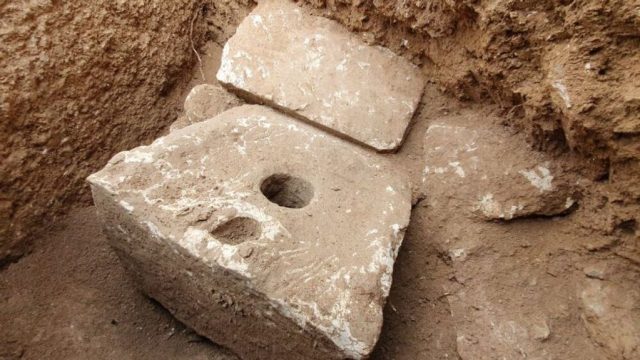
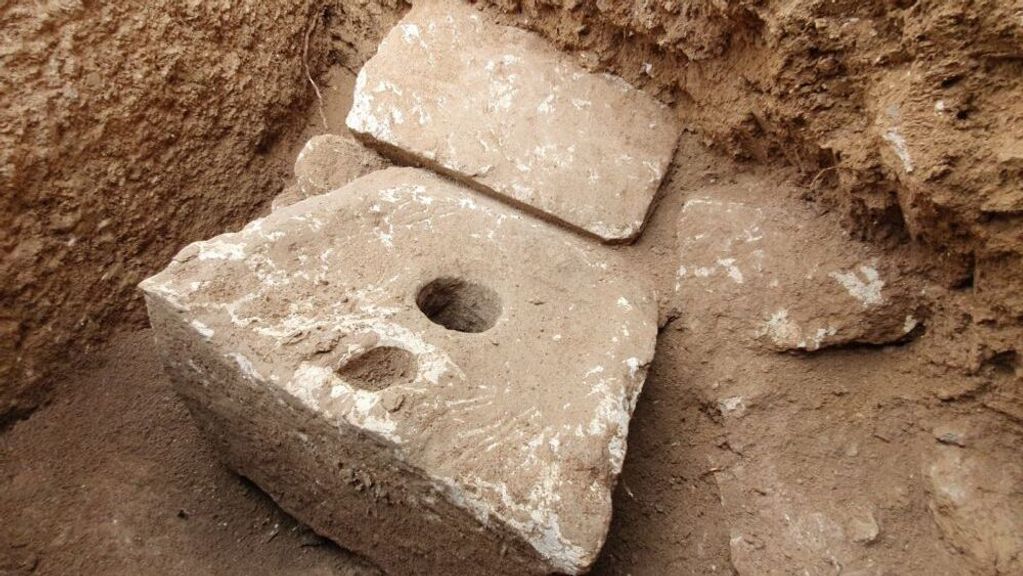
This rare stone toilet is 2,700 years old and was most likely used by one of the Jewish dignitaries of ancient Jerusalem. (Yoli Schwartz, Israel Antiquities Authority Authority)

By Naama Barak

On Friday, Nov. 19, we’ll be gathering in restrooms worldwide to celebrate World Toilet Day, established by the United Nations to raise awareness of sanitation challenges across the globe.


To mark the event, here is everything you could possibly want to know about the toilet situation in Israel, ranging from innovative green tech and medical breakthroughs to historical finds and particular habits.

A rare, private toilet was recently unearthed in Jerusalem

A rare private toilet that was part of an ancient royal estate in Jerusalem was recently revealed, giving us a sneak peek into how ancient forefathers used to go about their business. Dating back to the 7th century B.C., the carved toilet seat was made of limestone with a hole in its center and was situated in its own rectangular cubicle. Luxury at its finest.

Israel is full of ancient loos

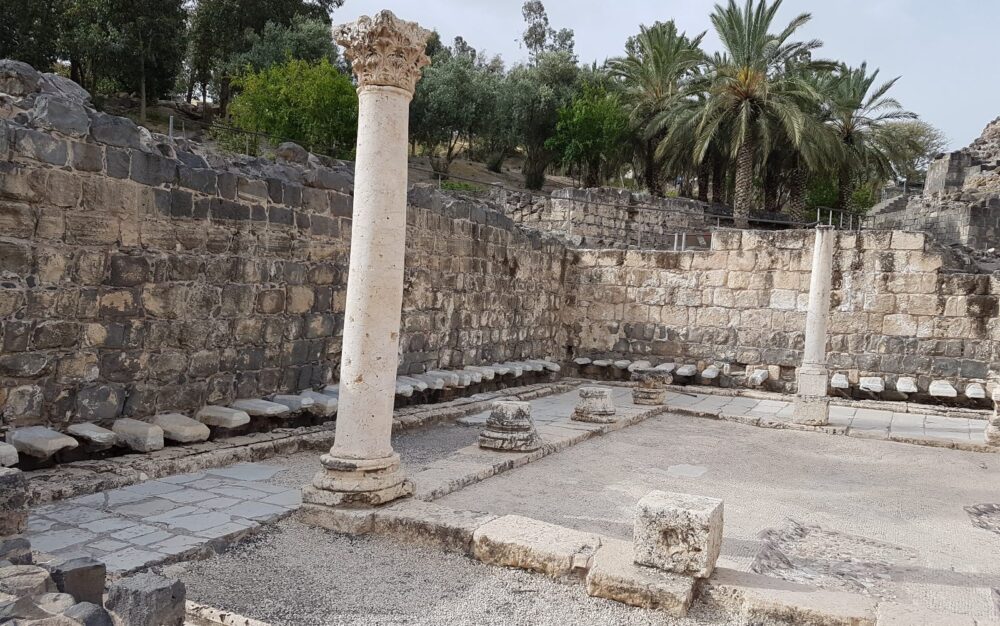
A huge public bathroom from the Roman period uncovered in Beit She’an. (Peter Gendelman/Israel Antiquities Authority)

While private potties were rare, many ancient public lavatories have been discovered in Israel. Some of the earliest examples date back to the Iron Age, while others were built and used in Roman and later Ottoman times.

The Romans, for example, left behind impressive public restrooms, the biggest of which was found in Beit She’an. Located right next to the public baths, the large chamber with dozens of toilet seats included a deep flushing channel to carry out waste and an upper canal full of freshwater with which people could clean their behinds.

Nowadays, some toilets boast two handles

Israeli toilets have two flushing options. (Naama Barak)

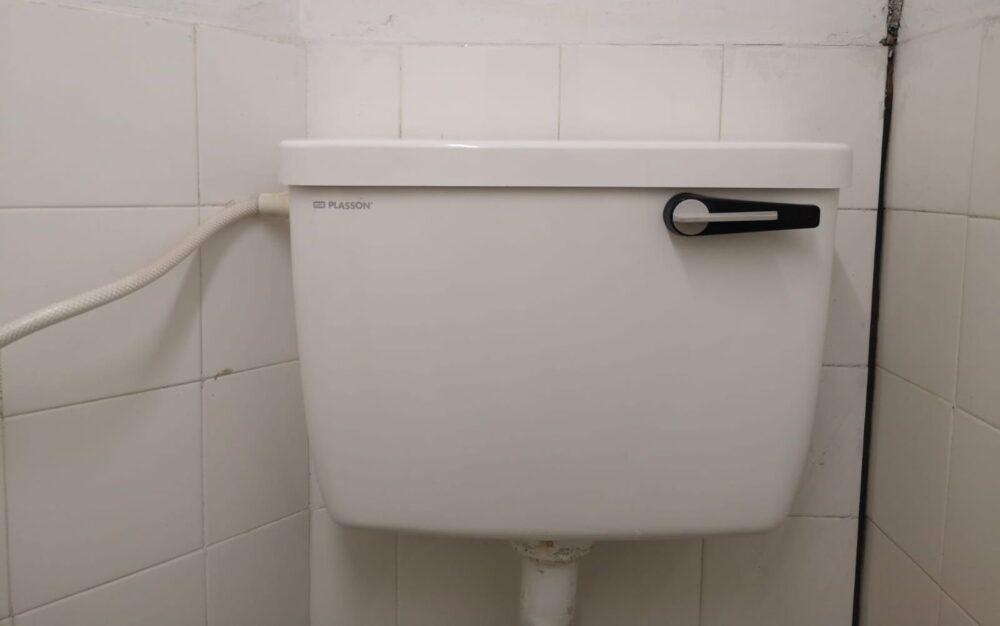
In what probably poses somewhat of a puzzler for visitors, toilets in Israel have two separate handles or pushbuttons. The reason is not rooted in design, but rather in an attempt to conserve water. The larger of the two handles or buttons emits a strong flush for clearing up after no. 2, and the smaller one emits a weaker flush sufficient to dispose of urine.

Toilets can be used to screen for cancer

Israeli company OutSense has developed IoT toilet sensor clips that serve as a screening device for colorectal cancer, a disease that kills nearly 700,000 people around the world every year. And since a big reason for these high numbers is the fact that early detection and treatment is often missed because people are reluctant to undergo colonoscopies or provide stool samples, this is particularly good news.

The OutSense sensors are automatic, noninvasive and require no user intervention, meaning that excretions are easily scanned and people are quickly alerted of any problem.

The OutSense system automatically checks excretions for traces of blood every time you use the toilet. (Courtesy of OutSense)

A health monitor in the bowl

Currently in the prototype stage, Israeli startup Olive Diagnostics’ passive IoT devices are mounted in the toilet, where they use advanced optics to pick up biometers from people’s urine.

Immediate plans for the little devices include screening urine for three conditions that often plague older people – urinary tract infections, kidney stones and bladder infections — as well as hydration, and in the future could also monitor alcohol levels, diet and general healthcare.

We dig environmental loos

It’s a sight becoming more and more common at festivals, events and even outdoor weddings in Israel: eco-friendly dry toilets that come with a side bin of sawdust. Instead of flushing with water, you take a jugful of sawdust and throw it down the bowl. The result: a green, water-free toilet that manages to stay fresh and clean throughout the day. You’ve got to try one to believe it.

You can have an eco-toilet installed at home

Love the idea of helping the world one pee at a time? Consider installing a HomeBiogas toilet in your house. The Israeli-developed solution turns toilet waste into cooking gas in a process that requires zero human intervention. Not only does the waste not go, well, to waste and harm the environment, but you use far less water and can even cut down on your gas or electricity bills while you’re at it.

Animal poo also gets the eco-friendly treatment

(Flash Dantz/Unsplash)

Straying slightly off the official topic, we must give a shoutout to Paulee CleanTec, the Israeli startup that converts cow dung into an odorless, sterile fertilizer powder. The technology has also been used to convert human waste into fertilizer and could potentially change the way sanitation is managed on airplanes, so it’s definitely worth an honorable mention.

The best potty-training book in the world originates in Israel

Once Upon a Potty is perhaps the most famous potty-training book, and it originates in Israel. First published by Alona Frankel in 1975, it tells the story of little Joshua learning how to go potty in the most charming way possible (in Hebrew, by the way, his name is Naftali). A later edition featured a girl called Prudence (in Hebrew, Ziona), and her ever-patient yet nameless mother. And if that’s not toilet claim-to-fame, we don’t know what is.

There’s no ‘powder room’ in Hebrew

Or little boy’s room, or little girl’s room, for that matter. Israelis, being Israelis, aren’t huge fans of euphemisms. Everyone uses sherutim (literally “services”) to describe bathrooms, while the toilet bowl is an aslah. There’s also the old-fashioned phrase beit shimush, akin to “water closet,” but it’s not really in use.

On the other hand, Israelis of all ages use the kiddie words pee-pee for urine, and ka-kee for feces. But we suppose there aren’t many English-speaking adults who regularly use the real words, either.

Produced in association with Israel21C.


The post News Flush! How To Celebrate World Toilet Day appeared first on Zenger News.