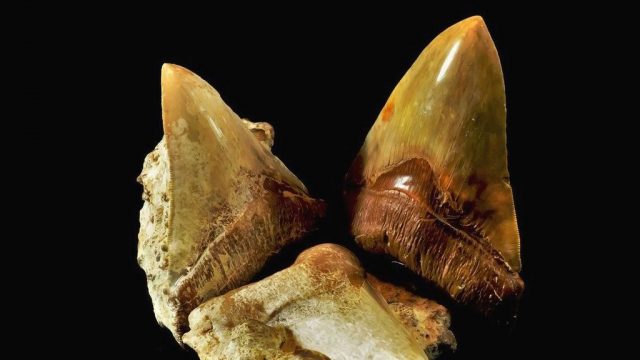
Several giant teeth from an extinct prehistoric megalodon shark have been found in Chile’s Atacama Desert, and a top expert has said that despite treasure hunters pillaging the area, the South American country still has “one of the largest scientific collections of megalodon teeth in the world.”
The discovery of the giant teeth belonging to the prehistoric shark that is believed to have lived between 23 million and 2 million years ago took place in the Bahia Inglesa Formation, located in the Atacama Desert near the Pacific coast of northern Chile.
The megalodon — whose name means big teeth — was “by far the largest shark of all time, a super predator whose length is estimated to be between 16 and 20 meters (52 and 66 feet) long,” said Pablo Quilodran, executive director of the Atacama Paleontology and Natural History Research and Advancement Corp. “In the Atacama region there are extraordinary fossil deposits, and in the case of the coast, there are remains of marine vertebrates from about 8 million years ago (the Neogene period).”
Extensive mining operations and looting by treasure hunters had led to possibly hundreds of teeth from megalodons and other prehistoric artifacts being sold on the black market, said Quilodran.
Researchers at work in the Atacama Desert in northern Chile, where remains of a giant shark were recently unearthed. (CIAHN-ATACAMA/Zenger)
“Although in Chile fossils are protected by law, for many years one of the most spectacular localities, the Bahia Inglesa Formation, was the victim of destruction by deregulated mining operations and from looting by illegal fossil hunters,” he said.
On a more positive note, he said some looted artifacts have been returned to Chile in recent years, allowing it to build the world’s most impressive collection.
“According to informal counts, we know that hundreds of megalodon teeth were found and sold on the international market. Some of them were returned to the Paleontological Museum of the city of Caldera and the Chilean National Museum of Natural History.
“With this, we undoubtedly have one of the largest scientific collections of megalodon teeth in the world.”
How is it teeth from a marine animal were found in the middle of a desert?
“Because the sea level has changed over millions of years (marine transgression and regression),” the expert said. “This is visible not only in the abundant marine fossils found in sediments today, but also in the geomorphology of this part of the desert, where we can see natural esplanades, which are ancient marine terraces that testify to these different sea levels.
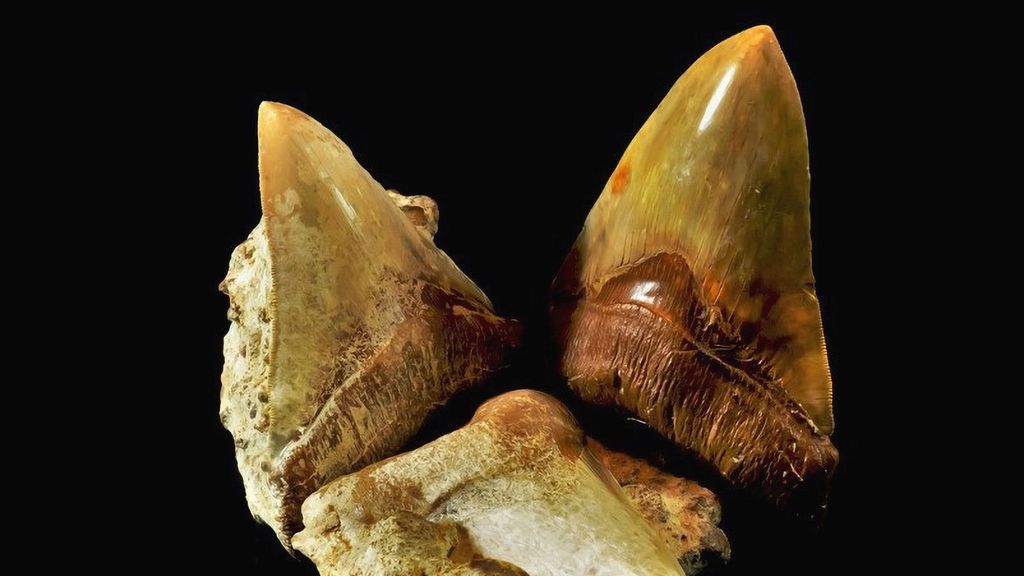
One of the teeth from an extinct megalodon shark recently found in northern Chile. (CIAHN-ATACAMA/Zenger)
“In short, the sea has receded, but the ground has also risen as a result of earthquakes and subduction of plates, phenomena that we Chileans know and experience so well.”
Such finds are nothing new; English naturalist and evolution theorist Charles Darwin reported having found some megalodon teeth during his trip to Chile in 1835, Quilodran said, while recent discoveries had put the total number of different shark species found in the area to 25.
“In the case of sharks, it is not only Megalodon; we recently found a new sawshark record for the area, which adds up to more than 25 different species of shark that have been found in the sector.”
A lot of these discoveries were apparently due to sheer luck. “Many of these findings are fortuitous and did not respond to systematic scientific activity,” Quilodran said.
But future discoveries will likely be subject to more rigorous planning, due to the recent creation of the Atacama Paleontology and Natural History Research and Advancement Corp.
The implications of the discoveries of megalodon teeth in the Atacama Desert are huge for science, with Quilodran saying: “The unusual abundance of megalodon remains in this part of the desert opens up expectations for new knowledge about many aspects of ancient life regarding this remarkable species of shark.
“For example, what and how did it eat? New estimates of body size, growth speed, whether it was solitary or gregarious, internal temperature and paleo-environmental data, are among many other topics that may be addressed.
“For its part, the Bahia Inglesa site also has an abundance of remains of bony fish, marine mammals, birds and even reptiles, and all the research potential to understand the evolution of a great diversity of different lineages of marine vertebrates is gigantic.”
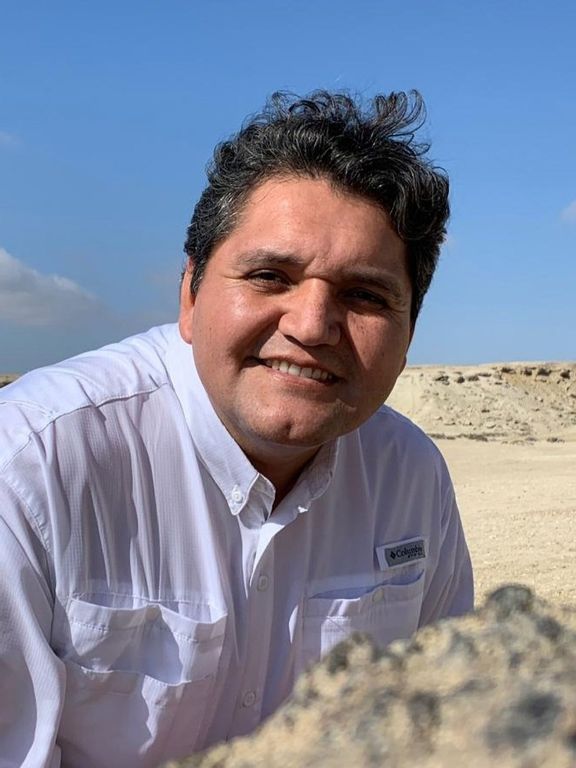
Pablo Quilodrán, executive director of the Atacama Paleontology and Natural History Research and Advancement Corp. (CIAHN-ATACAMA/Zenger)
The recently discovered megalodon teeth will eventually end up in a museum, where the public will be able to view them.
Might the megalodon still exist? No, Quilodran says: “The megalodon became extinct due to possible climatic changes around 2 million years ago.”
Still, it “is always possible to find new species and animals that have gone unnoticed by science, but at 16 meters [52 feet] long, it would be very difficult to have not detected it,” he said.
Despite megalodon being the largest shark of all time, it’s possible an even larger predator of another species preyed on it.
“Megalodon was a super-predator that was possibly at the top of the food chain … however, teeth from another marine vertebrate have been found, this time a super-predatory cetacean that could rival this shark,” Quilodran said. “This cetacean, a relative of sperm whales, is called Leviathan and its fossils have also been found on the Atacama coast.”
Storing solar energy between sunset and sunrise is a huge challenge.
Nostromo Energy decided to meet that challenge by using an unlikely substance: water.
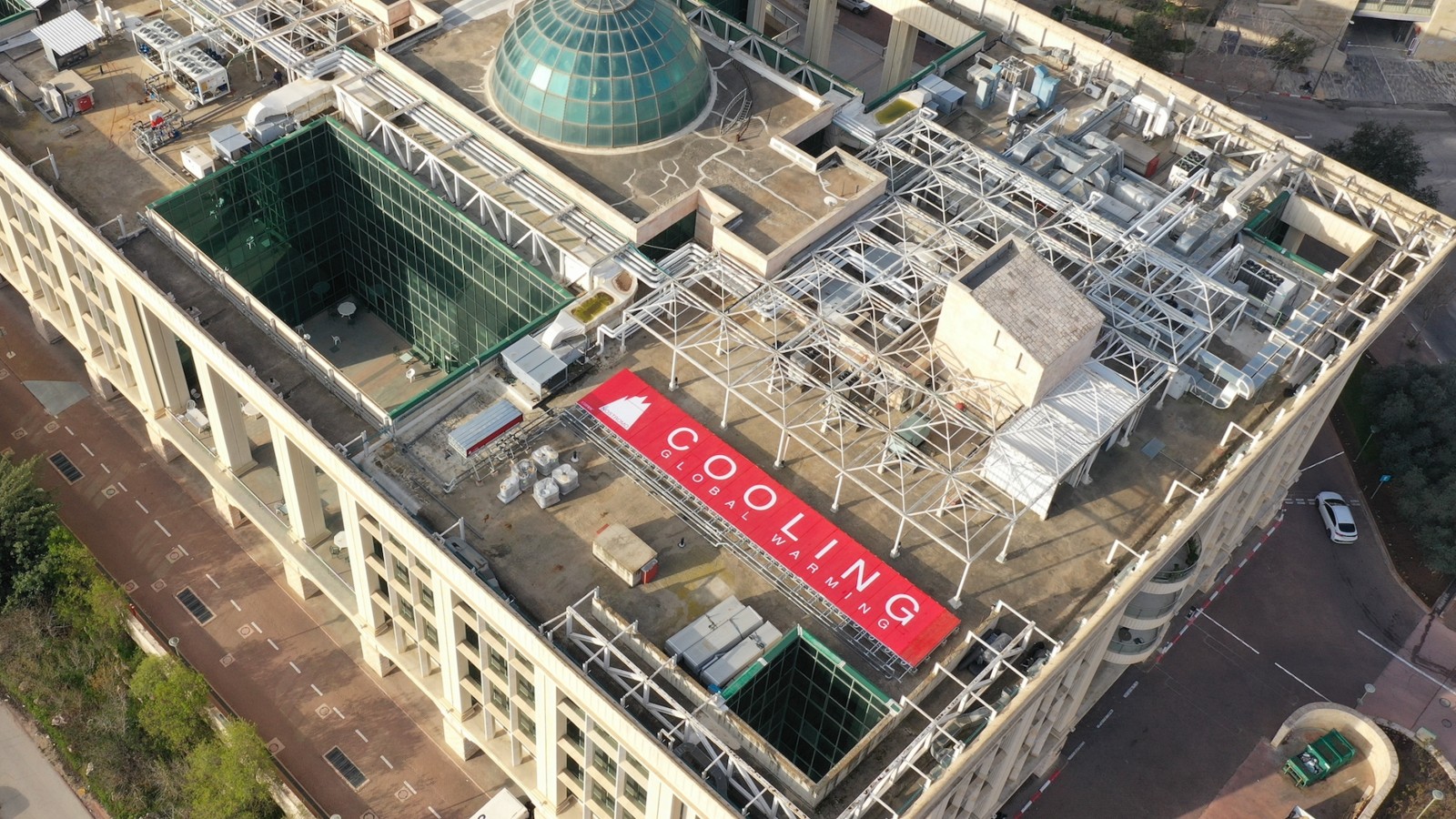
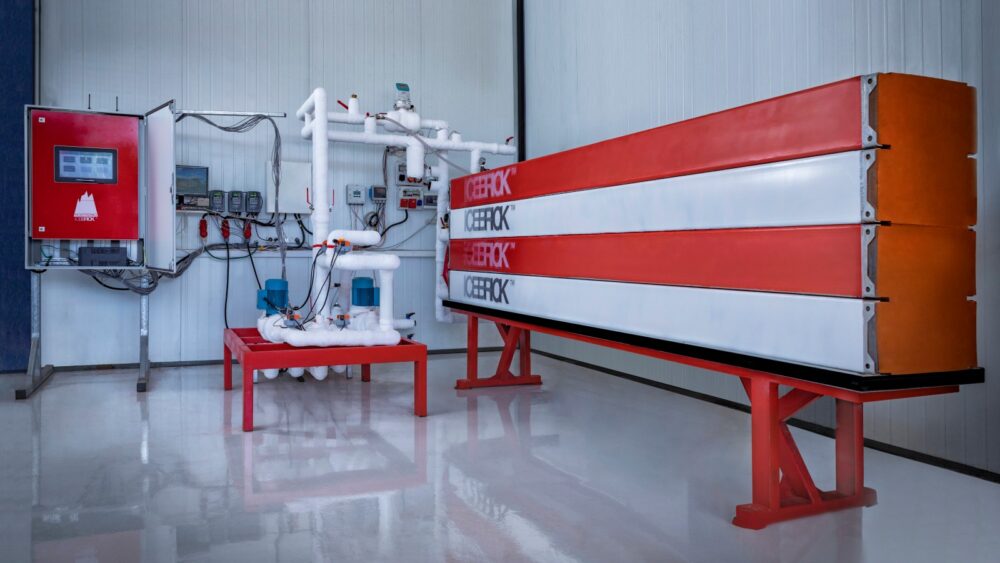
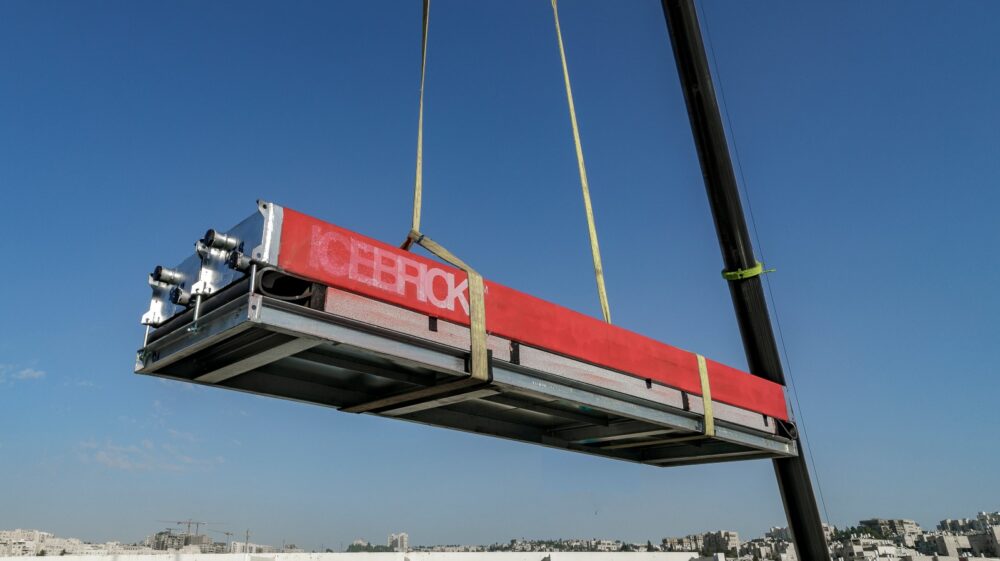
Installed on the roof, basement or walls of commercial and industrial buildings, Nostromo’s modular IceBrick stores energy in ice capsules and directs it to commercial space cooling, which accounts for up to 45 percent of global global power demand during peak hours.
Social activist Yaron Ben Nun, founder and chief technology officer of Nostromo Energy, said lithium-ion batteries are the prevailing technology for storing solar energy and assuring grid stability “because they work.”
“But lithium ion cannot be a lasting solution for the grid because we’ll have mountains of lithium waste that is not easy to mitigate. We must have clean, sustainable technology.”
Nostromo’s IceBrick (Courtesy of Nostromo)
Ben Nun, a self-described “air-conditioning addict,” is a trained electrician with experience in energy management and conservation.
His research revealed that ice is a safe, effective material to hold energy. And it is sustainable, as the same water can be frozen and melted over and over.
“The grid loses multiple megawatts at sunset every day, and that demands huge amounts of storage. Just by freezing water, we can take care of 45 percent of the load on the grid,” said Ben Nun.
“I’m not the first to think of this idea, but you don’t see these systems everywhere because of poor engineering and performance, too large a footprint and an unattractive appearance,” he said.
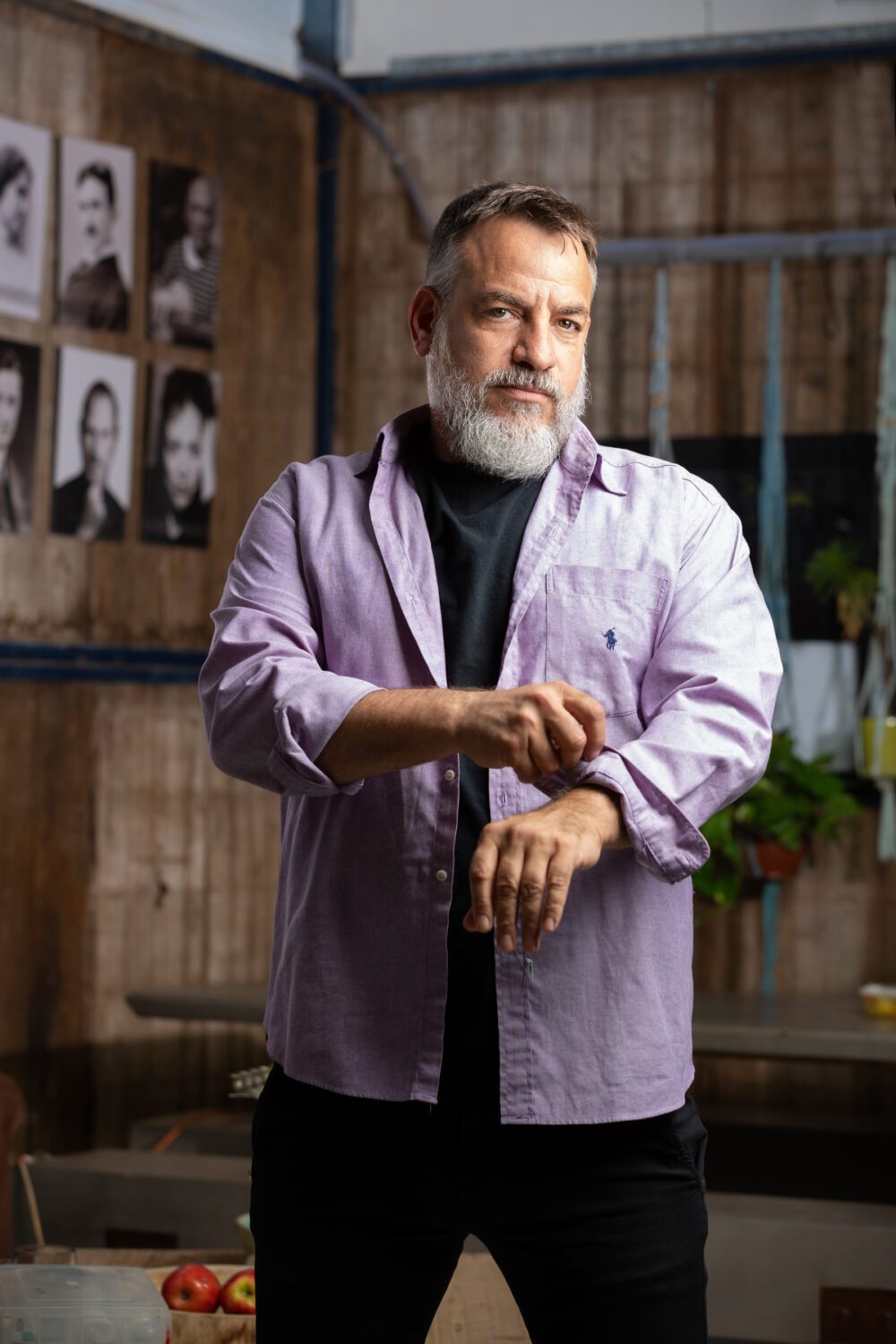
Nostromo’s founder and chief technology officer, Yaron Ben Nun (Mark Nomder)
In 2016, Ben Nun got investments from family and friends and began development of a new energy storage cell for the commercial market that could overcome these drawbacks.
“We designed a cell with high properties of efficiency, depth of discharge, and stability,” he said.
A designated chiller charges the IceBrick array by circulating antifreeze through it at minus 3 degrees Celsius (about 27 degrees Fahrenheit). The chiller uses cheap or surplus electricity from the grid at off-peak hours or from renewable resources, Ben Nun explains.
“We are in a very strange and magnificent time, and we believe our technology is an essential tool for decision-makers to mitigate the huge challenges coming toward us,” said Ben Nun.
Pilot projects in U.S. and Israel
Nostromo has research and development projects with Royal Dutch Shell and the Israel Electric Corp., and partnerships with several American engineering companies.
In February, Mayo A. Shattuck III, chairman of American energy giant Exelon, announced a $500,000 personal investment in the Israeli company.
In April, Nostromo announced a 20-year agreement with the Hilton Beverly Hills to install a 1.5 MWh system serving both the Hilton and the adjacent Waldorf Astoria.
Ilana Shoshan, general manager of Nostromo’s U.S. West Coast operations, said that in California, “utilities are sometimes forced to initiate rolling blackouts, impacting hundreds of thousands of homes and businesses during peak summer hours. Wide deployment of Nostromo systems in commercial and industrial buildings can help prevent the phenomenon.”
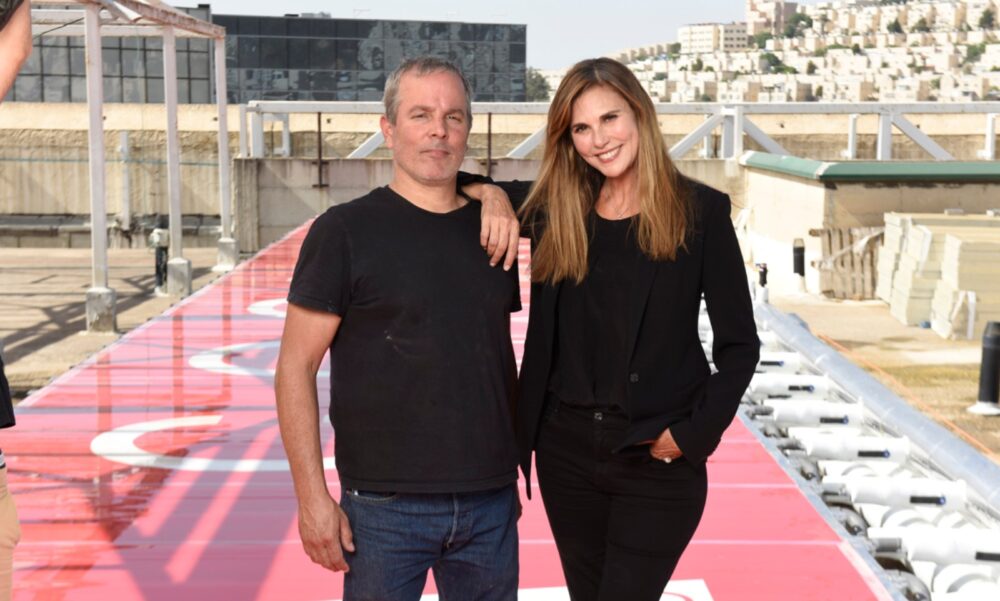
Nostromo’s vice president of engineering Ori Asscher and general manager of West Coast operations, Illana Shoshan (Ido Lavie)
Nostromo also signed an agreement with Sandstone Properties for the construction of a 900-kWh system in a Los Angeles office building; and a memorandum of understanding with Westfield, one of the biggest mall owners and operators in the U.S., to install systems at its sites.
In June, Nostromo completed a merger with the Tel Aviv Stock Exchange listed company Somoto, raising $13.6 million in the process.
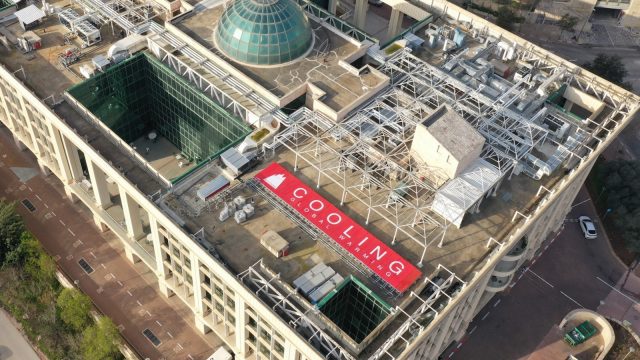
An IceBrick was installed the following month on the roof of Medinol, a Jerusalem-based cardiac stent developer and manufacturer. The 600-kWh system contains 48 cells of encapsulated ice connected to the charging chiller, providing critical backup to Medinol’s clean rooms cooling system.
Pilots in 20+ countries
Now, Nostromo will have the opportunity to pilot its solution in about 20 countries, thanks to its acceptance into the Anheuser-Busch InBev 100+ Accelerator. The company won one of 36 spots in the accelerator’s 2021 cohort, from a field of 1,300 applicants.
Geared to meet the beverage giant’s climate action goals, the 100+ Accelerator was launched in 2018 and was joined this year by Coca-Cola, Colgate Palmolive and Unilever to fund and pilot sustainable innovation in their supply chains.
The Nostromo IceBrick being installed on the Medinol building, Jerusalem. (Harel Ben Nun)
Nostromo will demonstrate how the IceBrick could accelerate renewable energy integration, reduce carbon emissions and enable electric vehicle charging at AB Inbev’s corporate facilities. Data on energy use and cooling demands will be collected and analyzed from different sites.
“Together, we are striving to supercharge adoption of sustainable solutions by funding and accelerating fantastic innovations that will change the world by making all of our businesses more sustainable at a global scale,” said Carolina Garcia, global sustainability and innovation director for AB InBev.
Hispanic businessman George Burciaga enjoys serving on the board of directors of Chicago United, an organization seeking to empower entrepreneurs from Chicago’s communities of color.
“As a member of the board of directors, I can make a change by supporting other Latinos, other African Americans, and other business leaders of color,” said Burciaga, who also serves as the organization’s treasurer.
“Chicago United allows me to assist them. It is my responsibility to help others.”
He knows that his role allows him to give back to the community some of what he received while growing up in a poor home in Chicago’s Pilsen neighborhood.
Chicago United promotes and encourages entrepreneurs of color to join its board of directors, said Burciaga. “I am a Latino who is not only a member of the board of directors but the treasurer. … They recognize the importance of empowering Latinos, African Americans, Asians, and other minorities.”
George Burciaga helps people of color achieve their dream of starting a business. (Negocios Now)
The 45-year-old businessman won a “Business Leaders of Color” award in 2017. Chicago United grants these awards annually. Receiving it was an honor that boosted his career, Burciaga said.
“Chicago United is taking an empowering position showcasing and highlighting business leaders of color. We are making sure that they … are recognized and more visible so that they have better chances to grow,” said Burciaga.
These entrepreneurs create jobs that help support their communities, he said.
The boost Burciaga received from the award led him to launch Ignite Cities, a consulting company designed to support mayors across the country with critical issues facing cities today. Burciaga is Ignite Cities’ CEO and managing partner.
“I’m working directly with the mayors of Los Angeles, Denver, Houston, Atlanta, Miami, among other great mayors. I provide them with new technology that gives all vulnerable communities of color the ability to compete. It also empowers them,” said Burciaga, who sold his software company, Elevate DIGITAL, to the CIVIQ corporation in 2016.
Burciaga hopes that with his input, the communities of color he serves can “receive funds to survive during the COVID-19 pandemic, or broadband to connect students.”
“From being poor in Pilsen and needing help, I grew up to a place where I can give back [some of] what I have received and help the city, the community, the mayors, and Chicago United,” Burciaga said.
Many abused women have difficulty getting asylum in the United States.
The U.S Refugee Act of 1980 allows people to apply for refugee status abroad, asylum status at the border or within the United States. They are eligible if they demonstrate what is known as “a well-founded fear,” meaning the persecution is due to their race, religion, nationality, political opinion or membership in a particular social group.
But most domestic-violence cases are rejected.
Marta Victoria Canossa, an immigration attorney for the Los Angeles-based firm Ortega, Canossa y Asociados, said it is important for those escaping domestic violence in their countries of origin to present their case within the first year they enter the United States.
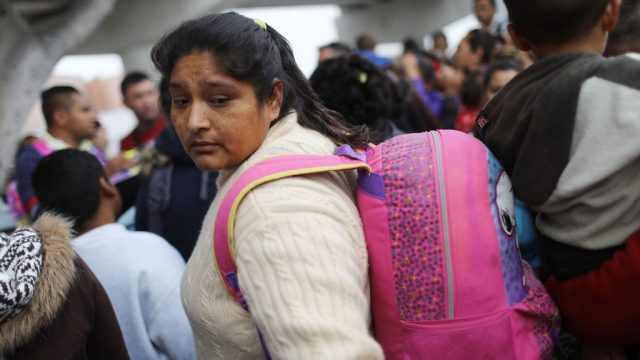
“It is very difficult for an abused woman to go to an American embassy and request asylum, even for those who have family already here in the United States or have an application pending,” she said. “This lack of resources at the embassy level forces women to present their claims at the Mexican border. If they don’t do it as soon as they cross, they have a year to do it.”
After escaping the abuse and persecution from an active Mara 18 gang member in her native El Salvador, Milagro won her asylum case in the United States in August, on domestic-violence grounds.
She crossed the Mexican border in 2015, escaping from her kidnapper, who raped her repeatedly and threatened to murder her family.
“My life was always in danger, I filed a complaint [in El Salvador], but my case was not solved, and they did not help me at all,” said Milagro.
The woman, who agreed that her story could be published without using her last name, was about to get married when the gang member became obsessed with her and began to harass her over the phone. He said he would have her “whether you like it or not.”
She was then raped repeatedly and threatened with weapons, blows to the entire body and burnings with an iron. Her rapist even fractured her hands.
“The last time he beat me for four hours. He wanted to kill me; he told me that he was going to cut me into pieces and leave half of my body at my grandmother’s, and half at my uncle’s.”
After Milagro escaped, the gang member kept looking for her, so she decided to leave the country.
“When I crossed [the border] I told them [immigration officials] that my life was in danger, that if I returned he would kill me, wherever I was he would look for me … Thanks to God and the lawyer I got it [the asylum], but it was a long struggle.”
Almost five years after presenting her case in December 2016, she received her status. With it, the path to legal residence in the country began. She is the mother of a little girl and is now pregnant with a boy. Although she is in a stable and healthy relationship, she said: “There is still that trauma that one cannot remove. It is like a big burn and a scar remains. Even if you want to erase it, you can’t.”
The U.S. government releases reports on the situation in Latin American countries that highlight the problems abused women face in getting help from their own governments. Bill Frelick, the director of Human Rights Watch’s Refugee and Migrant Rights Division, follows the cases carefully on Twitter accounts.
“The new attorney general will have to review & reissue a bewildering array of agency rules & administrative decisions by outgoing Attorney General William Barr & his predecessor, Jeff Sessions, that have dismantled carefully developed asylum standards… https://t.co/REKIva7CSZ
Women who suffer domestic violence within the United States have two options — they can present their case through the Violence Against Women Act (VAWA), in force since 1984, or apply for a U visa.
“VAWA is available to people married to legal permanent residents or citizens of the United States,” Canossa said. Under this law, which also protects men, applicants are not required to submit a police report. Their own declaration or one by a witness, along with proof such as images and text messages, is sufficient.
The VAWA application must be made while the person is still married to the abuser or within two years of their divorce.
“Approval is taking from 21 to 28 months, but they can also apply for work permits while they wait,” Canossa said.
Through a U Visa, relief is available to women who are victims of people without documents or were not married to U.S. citizens. But it requires a police report, which “is sometimes challenging when the person is in a jurisdiction where the police don’t want to cooperate,” Canossa said.
The other difficulty is the wait for the U visa exceeds five years — and the person does not receive a work permit for that time.
U.S. Attorney General Merrick Garland reversed Trump-era policies on domestic and gang violence and asylum, but obstacles remain. (Tasos Katopodis-Pool/Getty Images)
From Sessions to Garland
In the 1990s, guidelines were adopted on how women’s claims for domestic violence could fit into the Refugee Convention.
“A ground that’s often argued in domestic-violence cases is that a woman might be harmed because of her political or feminist views, such as not being subject to male domination,” said Blaine Bookey, legal director of the Center for Gender and Refugee Studies at the University of California Hastings College of Law.
“In 2014, the Justice Department’s Board of Immigration Appeals issued a decision that explicitly recognized domestic violence as a basis for asylum,” Bookey said. “But in 2018, Trump’s Attorney General, Jeff Sessions, issued a decision that undid that precedent, using the case of our client, Miss AB.”
AB is a Salvadoran woman who endured 15 years of brutal domestic violence. Her partner’s brother was a police officer, and he used that position to intimidate her, forcing her into exile and making her leave behind her three young children.
Although AB was eligible for asylum, Sessions rejected that decision. He tried to undermine the availability of asylum for all women fleeing domestic violence and any form of harm from a non-government actor.
“In many instances, gender violence is perpetrated by family members or other people in the community,” Bookey said. “So, this 2018 AB decision was incredibly detrimental … Grant rates for asylum seekers from Central America, particularly in Mexico, dropped significantly.”
After a long campaign by women’s advocacy groups, in June, Attorney General Merrick Garland reversed the Trump administration’s decision to close the door to asylum seekers on the grounds of domestic violence.
“It was an incredibly important victory. Cases where a woman had been denied asylum and had gone to the court of appeals have a new consideration before the Department of Justice.”
But obstacles remain. Some judges still deny more than 90 percent of domestic-violence cases, and the lack of access to an attorney leaves many asylum seekers without the possibility to apply for the protection.
“We need more clear action laws to expand the meaning of a particular social group,” Canossa said. “It has been a slow process, and we need more support at the court level and from the feminist groups.”
The devastation of Hurricane Katrina is still being felt in many areas of New Orleans 16 years after the massive storm made landfall. That’s especially true of New Orleans East. Viewed as a dangerous “do not enter” zone by many, rapper/entrepreneur 3D Na’ Tee hopes to change that narrative by providing a space for some of the most talented individuals in the city to hone their skills.
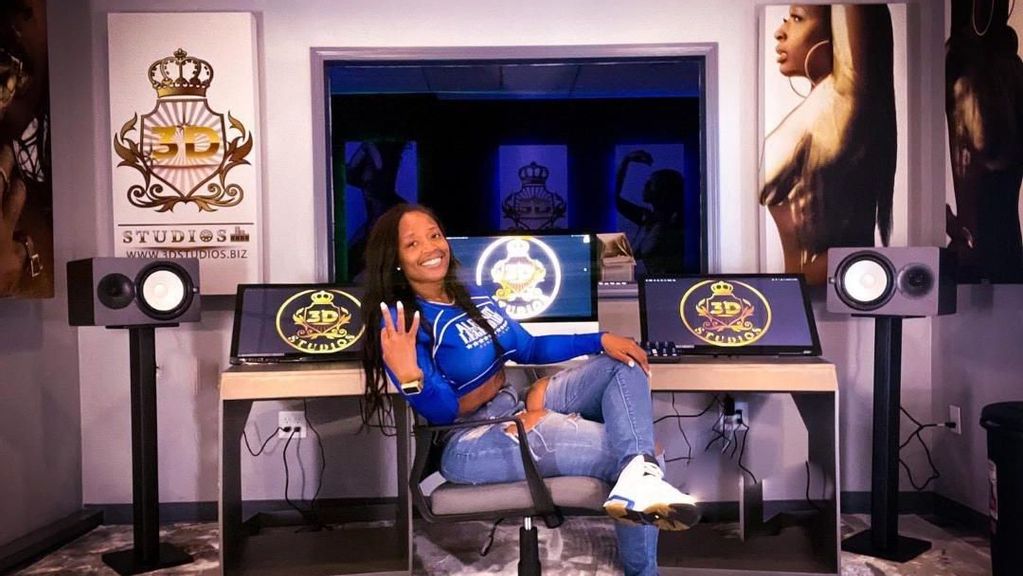
The 3rd Ward native partnered with businesswoman Roxanne Moray to create 3D Studios, an addition to Na’ Tee’s Already Legendary Media outfit. The grand opening of the studio in late October was a huge success and brought out some of New Orleans’ finest, including Mac and Curren$y among many others.
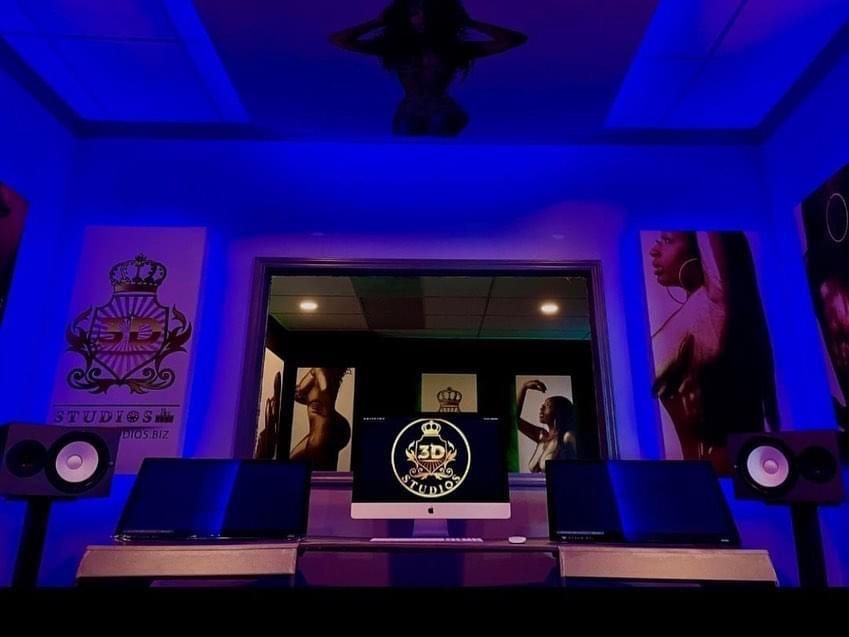
3D Studios literally has it all, including a green- screen stage, podcast studio, and recording and photography studios.
3D Na’ Tee tells Zenger new music is on the way, talks about being a positive influence in New Orleans and opens up about why she launched the new studio.
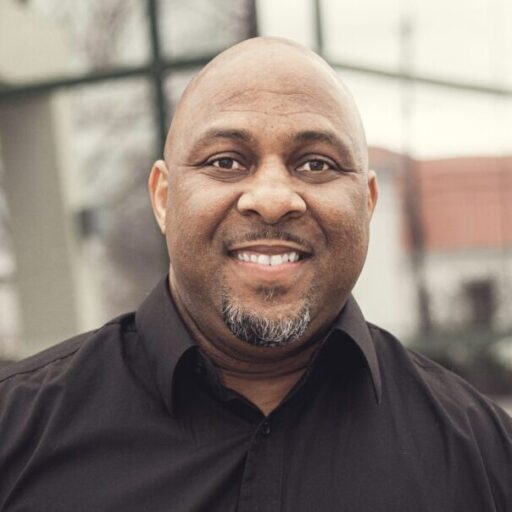
Percy Crawford interviewed 3D Na’ Tee for Zenger.
Zenger: As if making seemingly everyone’s top 3-5 list of female rappers right now wasn’t enough, now you’re showing off your entrepreneurial skills with 3D Studios. What was the process to opening this amazing all-purpose space?
Percy Crawford interviewed 3D Na’ Tee for Zenger. (Heidi Malone/Zenger)
3D Na’ Tee: Back in 2019 I met with a local business owner named Roxanne Moray. I have another company called Already Legendary Media, where I sent out local photographers, videographers for video shoots, commercial, and real estate property shoots. She had some commercial property out here that she needed some drone footage for. I didn’t have anybody on staff that was available that day, so I ended up having to do it myself. I wasn’t going to cancel. I met with her and did what I had to do.
I ended up leaving, and someone who actually recommended me to her told her who I was because she was happy with the work. They told her I was an artist, so she checked me out. Then she decided to tell me about this space that she had. A few months later, we met up and I understood there was a shared vision to pour back into the community.
Me being a hip-hop artist, and hearing so many artists talk about leaving New Orleans and going to Atlanta, going to New York, going to these other places, not because they don’t love New Orleans, but because they feel they can have better opportunities in those places. I wanted to be a resource, I wanted to create a space that could be a resource, and she shared that vision, and that’s why we created 3D Studios.
Zenger: Was this the vision, to create a one-stop-shop multimedia studio?
3D Na’ Tee: Yeah! I do a lot of things not just music and sometimes people don’t understand that. And I feel like a creator is a creator. Not just a rapper, not just a singer, we are creators. I may come in here one day and I want to record a song, and then bump into an artist and I hear them creating a song that I have a dope concept to shoot a video for, why should I be held back? I want this place to be a creative hub because I know that I am not limited by my ability to be able to create a rap song.
I’ve directed music videos for several artists, I’ve done certain things that if I didn’t have the resources myself or didn’t believe in myself enough, or have my own self-start motivation, then I would not have done that. I want this place to be somewhere where you may walk past and see a photographer taking some dope shots, and you may want to book a session. That’s what this space is for. Hell yeah, I want it to be a spot where creators come to create.
Zenger: There is so much talent in New Orleans that had to outsource their talent to other cities and at times states, whether studio time, photo sessions or a podcast studio. How important was it for you to keep it on the home front?
3D Na’ Tee: It was important. I was thinking about this after the grand opening. People ask me all the time, who am I inspired by? Who are my favorite artists? Seeing the way that people came out for the grand opening and seeing their excitement, I just felt proud. I was inspired by the people of New Orleans. Curren$y came out — this guy has done incredible things as far as being an artist and an independent entrepreneur, and he committed to a membership here at 3D Studios because we have memberships here. He didn’t have to. We had legendary Mac come through the studio. He invited Curren$y.
This is exactly what I wanted the studio to be. These people seeing the potential and not just them coming and being able to create something but putting your people on. Like, “Nah man, you gotta come and see this.” To have those monumental figures from New Orleans to believe in the studio in that way, it is an amazing feeling. So I know that we are off to a great start.
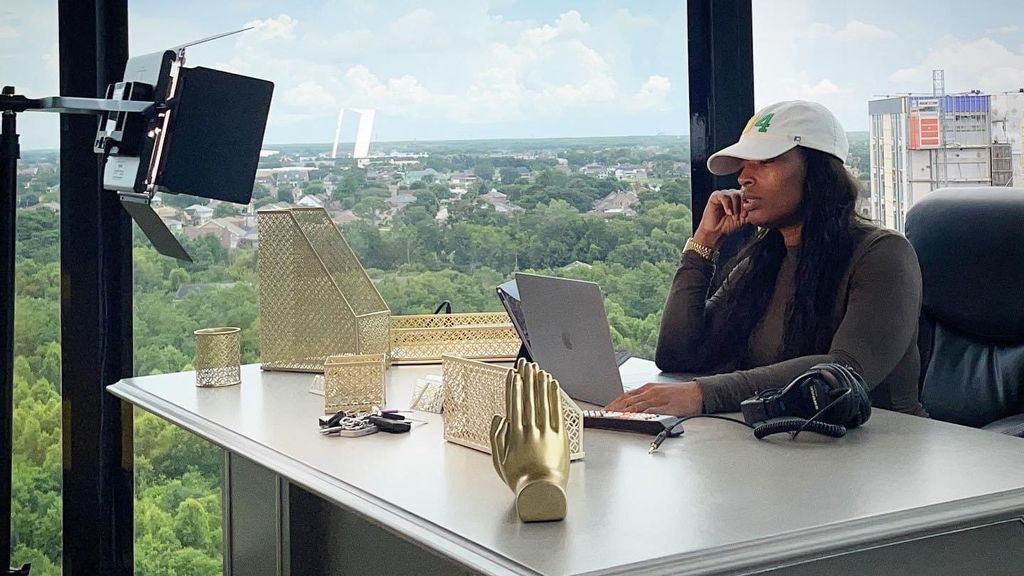
3D Na’ Tee conducting business from her 11th-floor studio in New Orleans East. (Courtesy of 3D Na’ Tee)
Zenger: How hands-on were you with the development aspect of it?
3D Na’ Tee: I’ll tell you this, I am great at DIY [Do It Yourself]. I am very hands-on. The staff we have here… my business partner, she is great at interior design. Everywhere you see gray, that’s me — it’s my favorite color. She was tired of me saying, “I think this should be gray.” I just think gray is such a beautiful color because everything isn’t black and white.
That was my concept, but that’s what I added when it came to the interior design. More so with me, I was hands-on when it came to the equipment, making sure everything sounded right. The acoustic paneling that we have here. When I first saw the building, there were wires hanging everywhere.
This building had not been touched on the 11th floor since Hurricane Katrina (2005). That was very important to me, just being able to pour back into New Orleans East. People have this stigma of how they feel about certain sections of New Orleans. I know because I grew up in the 3rd Ward. I know how people give up on certain areas, not because that is what they should do, but because they don’t understand it.
What I’m creating here at the studio… some people don’t follow their dreams because they don’t have anybody believing in them and pouring into it. Being a visionary and being able to walk through this space and seeing what it could be was important. I had to be hands-on with it because if I didn’t do it, who else was going to?
Zenger: I will play devil’s advocate and ask why New Orleans East? There is crime there. [Hurricane] Katrina destroyed that area. Why not open this studio elsewhere?
3D Na’ Tee: Why would I go elsewhere when this place needs it? Who else would do it if I don’t do it, and I’m not hearing people believe in the way that they should? You know the saying, “You gotta be the change that you want to see in the world.” Why would I go to Metairie? Why would I go to New York or Atlanta if this place needs it? As a businesswoman, I stand out here. I feel like everywhere I go in New Orleans, I get love, I get respect. If you saw the grand opening and the way people showed up, was excited walking through the studio, the professionalism. Why wouldn’t I? It needs it, so that was very important.
Inside 3D Na’ Tee’s 3D Studios, which opened in late October. (Courtesy of 3D Na’ Tee)
Zenger: You seem to continuously think out of the box as not just a rapper, but a businesswoman and entrepreneur. How accurate is that statement?
3D Na’ Tee: I don’t even know what a box is. When it comes to art, it is very subjective. Everybody is an artist, everybody is a creator, I happen to be someone that can write a song, I went to NOCCA [New Orleans Center for Creative Arts], I can draw really well. I can draw a picture of you and it would look just like you. I’m very good when it comes to just art in general. I never saw a limit.
I don’t believe in “no.” If you tell me no, that just means that you and I can’t do it together. I’m going to go and find my “yes” somewhere. That’s just your “no”. I don’t have to live with your “no.” I’m not taking that with me. I believe in my “yes.” When it comes to thinking outside of the box, I have to. That’s the only way that I was able to survive. That’s the only way I’m able to stay sane. I had to unlearn a lot of things. If I think inside of the box, how am I going to live the life that I know I deserve? Why would I stay in a box? I don’t want to live in a box.
Zenger: It’s easy to look at people like Dr. Dre, Jay-Z, and 50 Cent as rappers who became successful entrepreneurs. But on the female side of music, there is Beyonce and Rhianna, and I’m sure there are plenty of others, but you are beginning to fill that same space, and being from New Orleans, makes it that much more special, in my opinion.
3D Na’ Tee: The main reason it’s special for me is that I didn’t see that example. I don’t have kids, but I have a nephew now. I have a huge family. I have cousins who look up to me. I want to pour back into them and have them believing in themselves. I’m going to go back to my momma, a lot of these things that I’m teaching myself, how to believe in myself, and do certain things. My mother wasn’t taught that. You go to school, you find a job, you work and you die.
I find a lot of power by just being able to share the belief that I have in myself and my dreams, and these things that I’m creating, and share that with my momma. I bought my momma a journal the other day. I’m like, “Ma, your life is not over. You need to write out some things that you want to manifest and create. Everything is at your fingertips.” It starts with my family first.
Now being able to have people walk through these halls and believing in themselves is all I care about. If people believe in themselves, I think it would be a greater world. That’s where all the hatred and negativity comes from, when you don’t have anything to believe in. If people start by believing in themselves, they are going to be so occupied chasing their dreams, you don’t have time to hate. You don’t have time for violence. So that’s how I feel I am doing my part.
3D Na’ Tee hopes to eventually add a recreational and fitness space to 3D Studios. (Courtesy of 3D Na’ Tee)
Zenger: Where would you like 3D Studios to be in the next five years?
3D Na’ Tee: In five years, 3D Studio will not just be a studio, but I also want to have this building become a place where there is a recreational center on the seventh and eighth floors. My brother is in the mental health space; I want to create a center for that. Mental health is very important. My father committed suicide. I have friends who suffer from anxiety. I have friends who suffer from bipolar disorder.
I think in the black community we don’t talk about that much. It’s kind of taboo. I want 3D Studios to not only be a recording studio, a production space, but I want to create a community where people come to be uplifted. They come to create and better themselves. It’s starting with just being a space for art, but I want it to be a space for development. I’m still building that out. I can’t say exactly what it looks like now, but I want it to be a place where people come to better themselves.
Zenger: The studio looks amazing. I plan on keeping up with the progress of the studio and your music. Thanks for your time. Is there anything you want to add?
3D Na’ Tee: Having Mac at the grand opening — I grew up on Mac. Uptown 3rd Ward, we grew up around the corner from each other. To see how he was wowed and had an appreciation for the space, that was so dope. He didn’t have to do that. I was excited to see some of the New Orleans creatives there. We had some dignitaries, some politicians speaking. I know how that feels.
It’s like, OK, here is the program, but where is the studio? I saw people circle back and their whole vibe changed. They thought they were just coming to a recording studio, but when they walked through and went through all the spaces, each room has a vibe. It meant the world to me to have my momma and my brothers next to me cutting the ribbon.
I just finished a song with Black Thought and The Game, it’s a bunch of guys on it, and I’m the only female on it. I’m having a moment. I am so excited. I am working on my new album as well, so be on the lookout for that coming soon.
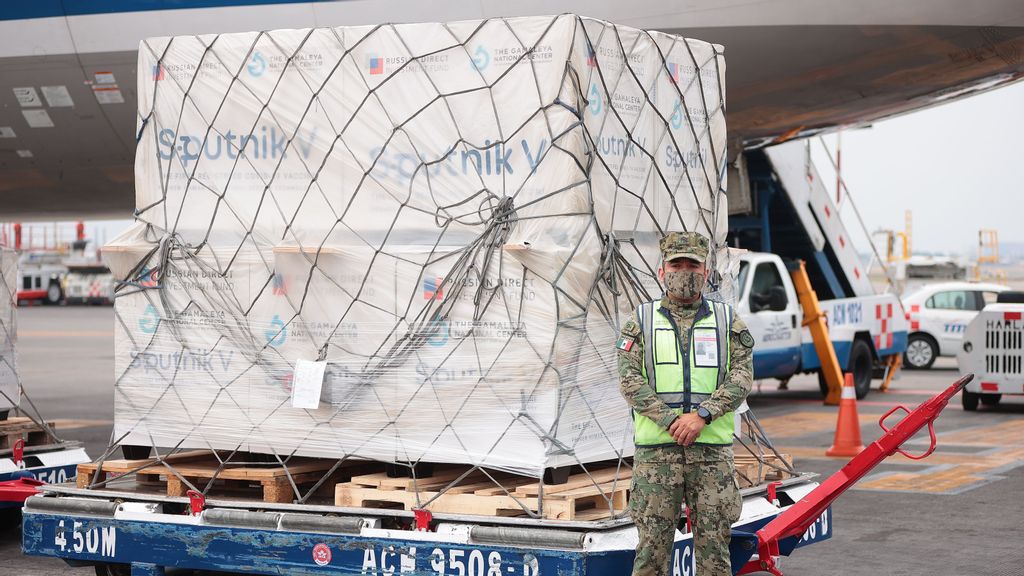
CARACAS, Venezuela — Russia was the first country to announce a COVID-19 vaccine in mid-August 2020. More than a year later, while Russia receives requests to export more than 600 million doses, the Sputnik V vaccine still awaits approval from global health agencies.
Russia has been one of the primary vaccine suppliers in Latin America, where many countries have difficult access to other vaccines.
Argentina, Bolivia, Mexico, Nicaragua, Paraguay and Venezuela are among the countries utilizing Sputnik V the most.
The European Medicines Agency announced it would not complete the Sputnik V testing before 2022, claiming the manufacturer has not sent the required data. The World Health Organization is still testing the Russian vaccine and may approve it soon.
After more than a year of closing its land ports of entry to foreign nationals, the United States reopened them on Nov. 8. But it announced that travelers who want to enter the country must comply with the new health protocols. The announcement set off alarms for thousands of Latin Americans.
The U.S. used to be one of the main destinations for vaccine tourism. But now, travelers will not be able to enter the country if they have not received one of the vaccines approved by the Food and Drug Administration or the World Health Organization: Pfizer-BioNtech, AstraZeneca, Janssen, Moderna, Sinopharm and Sinovac.
Yet, the Sputnik V is among the four most effective vaccines against COVID-19, according to official data. Its efficacy rate (91.6%) is higher than vaccines developed by Sinopharm, Oxford-AstraZeneca and Janssen.
“We feel discriminated against. We trusted the [Sputnik V] vaccine because we had no other choice, and we thought we were doing things right,” Federico López, an Argentine factory worker, told Zenger.
“Unfortunately, we had very few options because [the Buenos Aires Province] only offered the Russian vaccine. The process was hard because it seemed that my family’s turn would never come. … We were very careful and still caught COVID-19. We had a hard time, but managed to recover. Soon after, it was our turn to get the vaccine,” said López.
During the pandemic, López bought tickets to fly to Miami, Florida, on Dec. 3, hoping to reunite with his family, after not seeing them for two years.
“Now, there are more vaccine options, but we already have the two Sputnik V shots, and people don’t want or can’t give us a vaccine approved by the World Health Organization or the U.S. Food and Drug Administration,” said López.
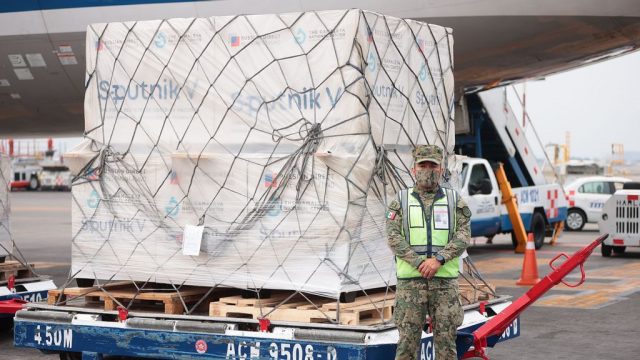
Argentina was the first country in Latin America to apply the Sputnik V vaccine. Government planes brought the first shipments from Moscow in December 2020. Millions of Argentines now are fully vaccinated, but cannot travel to certain countries.
The government brought to Buenos Aires “the Sputnik V with much controversy. Our regulatory body, the National Administration of Drugs, Food and Medical Technology, approved it for emergency use in Argentina. … I got vaccinated because we were told that the best vaccine is the one you can get. The World Health Organization said all vaccines were effective, and people should get vaccinated with what was available. I believed it. And now there’s this little issue: the [Sputnik V] vaccine is still not approved,” Agustina Wallbrecher, an Argentine translator, told Zenger.
“AstraZeneca and Sinopharm were available at the same time, but you couldn’t choose what vaccine to get. You got what was at hand and, if you did not want it, you just didn’t get vaccinated. I wanted to take care of myself and the people around me. That was what science [people] told you to do,” Wallbrecher said.
“We have a trip that we paid for in 2019. It is a family trip where grandmothers and children will be traveling. We have rescheduled it four times and finally set a date for early 2022. We believed things were improving. Having been vaccinated, [we thought] nothing could go wrong. Suddenly, there is this restriction,” she said.
“We are about to lose our life savings just because we were vaccinated, because we did things the right way, even though it seems crazy. We feel discriminated against; we are desperate. I can’t sleep thinking about it. I cry. I’ve lost my appetite, and my health is failing. I don’t know what is behind this, and it is not fair. … Ordinary people are the ones who will be affected,” Wallbrecher said.
The United States is not the only country closing its borders to people vaccinated with Sputnik V.
“I was stranded in Venezuela since March of last year because the Spanish government wouldn’t let me into the country with the Russian vaccine,” Ariana Hernández, a Venezuelan student, told Zenger.
“At first, it didn’t affect me much because I could connect to online classes, but as in-person education resumed, I started falling behind in my studies and jeopardizing my scholarship,” she said. “Mexicans and Argentines who have the Russian vaccine can enter Europe. Why can’t Venezuelans?”
Llegué al mismo tiempo que el
Dr. Tedros Adhanom Ghebreyesus, Director de la Organizacion Mundial de la Salud. Le felicité por su labor en la pandemia y le compartí porqué es tan relevante acelerar el reconocimiento de vacunas como Sputnik o Cansino. Fue muy receptivo y amable. pic.twitter.com/Y6ESokK0z5
The Mexican government is requesting the World Health Organization approve the Sputnik V and CanSino vaccines. The latter is the Chinese vaccine that many Mexicans received.
The World Health Organization delayed its approval when researchers found the Sputnik V vaccine did not comply with manufacturing standards. The Russian government recognized the flaws and corrected them, but the estimated approval date is still unknown.
While the Mexican government has pushed for approval, the Sputnik V manufacturers accused then-U.S. President Donald Trump’s administration on Twitter of pressuring Jair Bolsonaro’s government in Brazil to reject the Russian vaccine.
US Dep. of Health publicly confirmed that it pressured Brazil against Sputnik V.
We believe countries should work together to save lives. Efforts to undermine the vaccines are unethical and are costing lives. https://t.co/Ga5i4zvbCt P.48 pic.twitter.com/A6wyKOkc8t
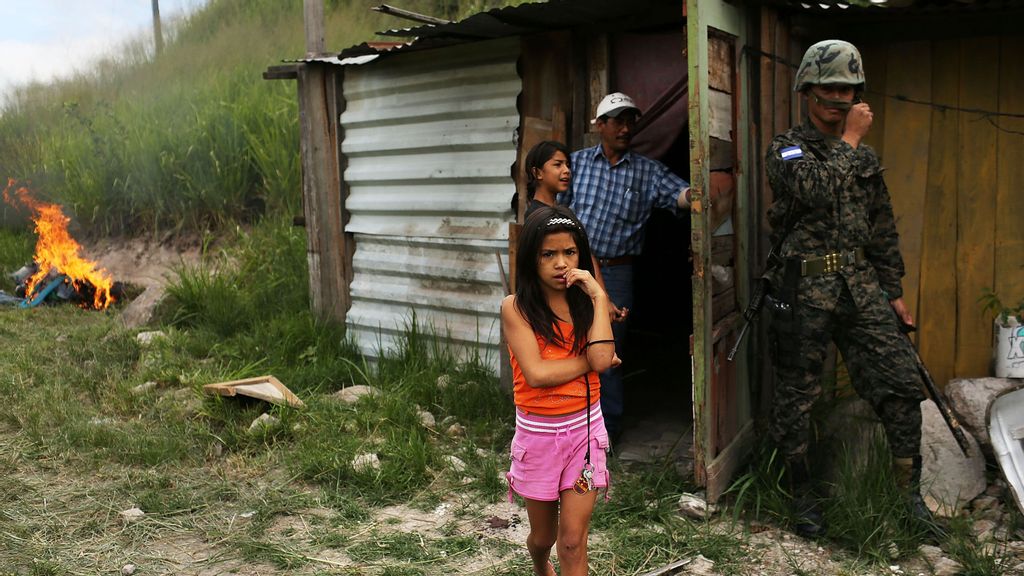
Hondurans will cast their vote for the Central American nation’s next president on Nov. 28. The election comes amid violence and socioeconomic conditions that rank as among the lowest in the Western Hemisphere, alongside Haiti.
For many, Honduras warrants the status of a failed state. Yet, there are those here who believe the coming elections offer the best — and perhaps last — chance for change.
“These elections are an opportunity to recover the democratic process and to confront the multiple crises impacting the country,” said Gustavo Irias, executive director of the Center for Democracy Studies (CESPAD), a nonprofit that advocates on behalf of Honduras’ marginalized communities. “This is a chance for Honduras to recover its sense as a nation.”
That sense of nationhood was shattered in 2009, when the Honduran military ousted former president Manuel Zelaya. Since then, Honduras has remained under the control of the National Party, currently led by President Juan Orlando Hernández, now finishing his second term under a cloud of suspicion, given his potential links to drug traffickers.
The candidates seeking to replace him include National Party favorite and current Tegucigalpa Mayor Nasry Asfura, or “Papi” as he is known, and the Libre Party’s Xiomara Castro, wife of ousted former president Zelaya. She has promised to curb the excesses of the free-market policies embraced by her opponent and is forging closer ties to China.
On Twitter, President Hernández said when his administration began, there was no social justice, and those most in need were not helped. He claims he created something comprehensive and sustainable and that Honduras is no longer neglected.
Cuando inicié mi Gobierno, NO existía la justicia social y NO se atendía a los que más necesitan, así que diseñamos algo integral y sostenible Vida Mejor.
Yet, violence, corruption and poverty are endemic here. As of 2019, 15 percent of Hondurans live on less than $2 per day, conditions likely worsened by COVID-19 and the impact of hurricanes Eta and Iota last year. Projections are more than half the country fell below the poverty line in 2020, according to the World Bank.
Such conditions are fueling an exodus of migrants from the country, with data from this year showing 168,546 separate reports of Hondurans detained by immigration officials in the United States and Mexico, according to a June report from the Migration Policy Institute. The report noted one-in-five Hondurans express a desire to leave the country, with reasons ranging from food insecurity to fear of assault and unemployment.
For some in the capital, the coming elections offer little hope for improvement.
“Nothing is going to change,” said Victor Manuel Mayorga, a public employee who says he has not been able to retire because the government stole the state’s pension funds. At 79, Mayorga is part of a tiny minority of senior citizens in a country where the median age is just 24. Many young people have died in the violence of the last four decades.
Sitting in the city’s central plaza talking soccer with friends, he notes the lack of education and health care, and accuses officials of all political stripes of abandoning the country. “I believe in democracy, but in Honduras it is broken. It’s been broken since the coup.”
The village of Bordo del Río flooded after the overflow of the Lancetilla river on Nov. 3, 2020 in Tela, Honduras. Hurricane Eta, like many other storms, left its mark. (Photo by Yoseph Amaya/Getty Images)
However, not everyone despairs.
César Nahún Aquino, 44, is an auto mechanic from the town of Yoritos, about 125 miles north of Tegucigalpa. The town made headlines two years ago when residents successfully banded together to eject a mining company that had attempted to set up operations in the region.
A member of the Tolupán indigenous community, he ran a transportation company in San Pedro Sula before the COVID-19 pandemic, which he says eviscerated his business. Now he is back in his hometown, a largely agricultural region known for coffee, avocados and cattle ranching.
“We’re asking for the basics, to get rid of corrupt elections, transparency and reactivate the local economy, so it benefits people in the community,” said Aquino, a supporter of local mayoral candidate Freddy Murio.
Murio is a formerly undocumented migrant who spent 12 years working construction in New York before returning to his hometown two years ago.
“We have to start with our municipality before we can begin to change the country,” Aquino said.
Back in the capital, officials acknowledge no single election will solve the challenges confronting Honduras. They say it is important to protect the integrity of the vote and secure the democratic process. Both are key to repairing the ongoing damage caused by the coup in 2009.
“The only opportunity for the country to build a democratic foundation is through the coming elections,” said Rixi Moncada, a lawyer and part of a three-person rotating chair with the newly created National Electoral Council, or CNE as it’s known by its Spanish acronym.
The CNE, responsible for delivering the final vote tally once the polls close, was created following widespread irregularities and violence that marked elections in 2017. Along with the National Registry of Persons and the Clean Politics Unit — tasked with monitoring campaign finance in a nation where drug money and politics are inextricably intertwined — these three institutions are responsible for ensuring election integrity.
Moncada, a former member of the Zelaya administration, admits it is no easy task.
“No one is prepared for the criminality,” she says, referring to the ongoing political violence she sees as an extension of the 2009 coup, including the recent murder of Nery Reyes, mayoral candidate and member of the opposition Libre Party, who was killed in October. No one has been arrested for the murder.
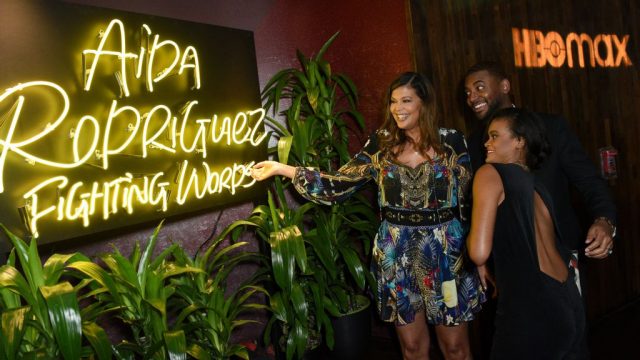
In her show, the Afro-Latina jokester of Dominican and Puerto Rican descent is tackling current issues that dominate the headlines and talking about getting back into dating, her upbringing and family life, and embracing her Caribbean heritage.
Her trademark comedy is turning her life’s pain into humorous material. Having been the subject of two kidnappings by family members during childhood, she learned that her personal tragedy is not off-limits.
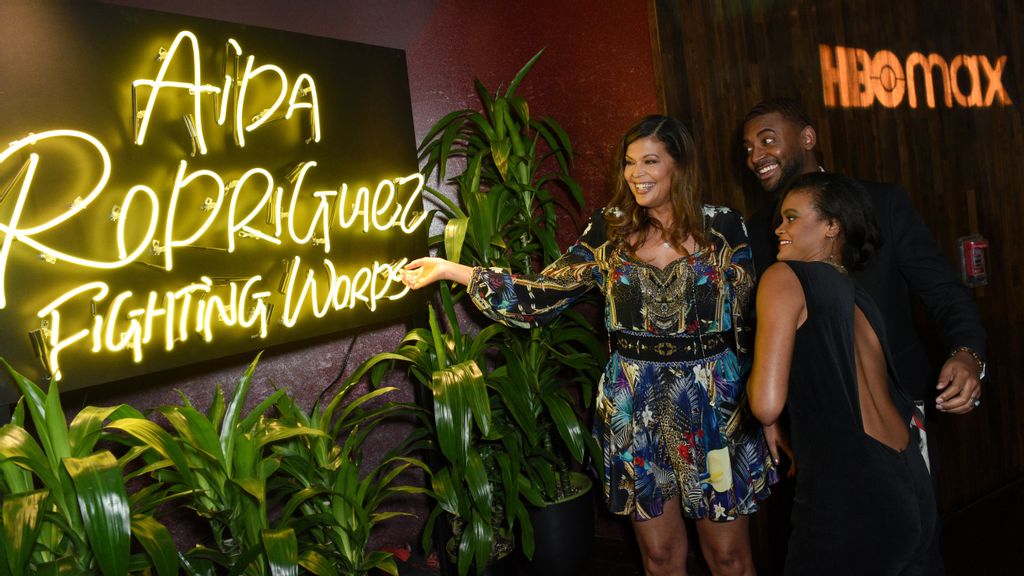
Rodriguez’s HBO Max show concludes with a documentary of the Boston-born comedienne traveling to Puerto Rico and the Dominican Republic to celebrate the two nations’ vibrant cultures. The TV special also gets serious with family matters and acknowledges new talent. Cameras capture her reunion with her estranged father and the jokester’s effort to support up-and-coming comedians.
Misogyny, racism, and other ills of contemporary society are targets of the comedienne, who also happens to be a regular commentator on the political YouTube show “The Young Turks.”
Kristian Mercado and Nadia Hallgren, two filmmakers who hail from distinctively different genres, directed “Aida Rodriguez: Fighting Words.” Mercado has helmed a handful of comedy TV specials like HBO Max’s “Phoebe Robinson: Sorry, Harriet Tubman,” while Hallgren directed “Becoming,” the Netflix documentary about former First Lady Michelle Obama. Rodriguez is the executive producer of her special, along with Michelle Caputo and Shannon Hartman for Art & Industry.
“Fighting Words” arrives two years after Rodriguez was featured on six episodes of“Tiffany Haddish Presents: They Ready.” Led by Primetime Emmy Award-winner Haddish, the Netflix series allowed Rodriguez to share the stage with the seasoned African-American comedic star and about a dozen up-and-coming standup talents.
Making a living out of making people laugh wasn’t in Rodriguez’s career plans. She pursued a degree in English and law at Florida State University but dropped out after becoming pregnant. She married a Florida State Seminoles player but divorced him before moving to Los Angeles in the early 2000s. Rodriguez then turned to filmmaking, acting in minor roles and standup comedy.
Her first film credit is as second unit director in the 2006 indie horror flick “VooDoo Curse: The Giddeh.” The following year, she got a small role in the “Black Woman’s Guide to Finding a Good Man” video, the first of her many comedy projects. At the same time, she started to delve into penning and producing humor and drama and traveling the comedy club circuit.
After several years of wearing multiple creative hats, Rodriguez joined the eighth season of NBC’s “Last Comic Standing,” placing seventh among ten finalists. Later, she was cast in Fusion’s TV movie “All Def Digital’s Roast of America,” which she co-wrote.
Now, in the middle of the COVID-19 pandemic, Rodriguez gets ready to do what she may do best, turning her wounds into jokes.
“[I] took this trip with some amazing people during a very complicated time. [I’m] looking forward to sharing it with you,” posted Rodriguez on social media, along with a poster promoting her Max Original show.










 Rodriguez (@funnyaida)
 (@FunnyAida)