Rare photos recently revealed by the National Library of Israel show country musician Johnny Cash during his visit to Israel in 1971, giving a black-and-white sneak peek at the glamorous reception he received.
Cash was in Israel with his wife, June Carter Cash, to film their movie “Gospel Road: A Story of Jesus.” The film was narrated by Cash and includes scenes of him singing from the top of Mount Arbel. Other Israeli landmarks in the film include the Sea of Galilee and the Jordan River, but despite their prominence, the film did not end up becoming a box-office hit.
Cash’s 1971 visit to Israel was the third one of five for the star. A devout Christian, he had previously visited the country in 1966 on a private religious pilgrimage, and then again with his wife in 1968. That trip inspired a Christian-themed concept album called “The Holy Land.”
Johnny Cash receives a gift from an unidentified person at a reception in Jerusalem. (IPPA staff from the Dan Hadani Archive, Pritzker Family National Photography Collection at the National Library of Israel, Jerusalem)
On the 1971 trip, the Cashes were treated to a lavish reception in Jerusalem, where the newly discovered photos were taken, revealing a bygone-era replete with fancy dinnerware, waiters in black tie, and floral wallpaper.
The photos were discovered by accident when the National Library’s social media manager sifted through images from the library’s Dan Hadani Archive in search of pictures of Israeli pop star Tzvika Pik.
Pik, it turns out, attended the reception held in Cash’s honor, and the episode was saved from obscurity.
American music star Johnny Cash at a reception in his honor in Jerusalem, 1971. (IPPA staff from the Dan Hadani Archive, Pritzker Family National Photography Collection at the National Library of Israel, Jerusalem)
Cash, widely regarded as one of the most respected musical artists, was born into a family of Arkansas sharecroppers in the middle of the Great Depression, according to his official website.
“That hardscrabble life instilled in him a reverence for family, the earth, God and truth that informed his incredible life and vision over a half-century career. After a stint in the United States Air Force, where he distinguished himself as a radio intercept operator, and less-successful efforts as an automobile factory worker and door-to-door home goods salesman, Johnny broke onto the music scene in 1955 on Memphis’ fabled Sun Records. It was here, at the ‘birthplace of rock and roll,’ where the world was introduced to his singular voice and compelling songwriting, through such eternal classics as ‘I Walk the Line, ’Big River’ and ‘Folsom Prison Blues.’”
He is also well known for performing concerts in prisons, including his famous first one at San Quentin Prison in California in 1958.
Peeing on a stick will soon be as obsolete as the “rabbit test” thanks to SaliStick, a revolutionary saliva-based rapid pregnancy test kit.
The product has successfully completed clinical trials and thousands of analytical trials in Israel and is expected to receive the European Union’s CE Mark soon. Approval by the FDA could come next year.
SaliStick was developed by Jerusalem-based Salignostics based on its proprietary saliva-based hormone detection technology used in the company’s SaliCov rapid antigen saliva test kit to detect COVID-19, used widely in Europe and Africa.
SaliStick detects the pregnancy hormone β-hCG as early as the first day of a missed period.
“Saliva is the key to rapid diagnostics for a variety of medical reasons. Quintessentially it is the only noninvasive, easy, and hygienic means to detect hormones, viruses and even diseases,” said Guy Krief, Salignostics’ co-founder, deputy CEO and director of business development.
“We are delivering a product that completely removes the need for blood and urine samples when testing for pregnancy,” he said. “With SaliStick, we hope to empower women by making the discovery of pregnancy more dignified and inclusive.”
The company will display the new product at the Medica 2021 exhibition in Düsseldorf, Germany, this week.
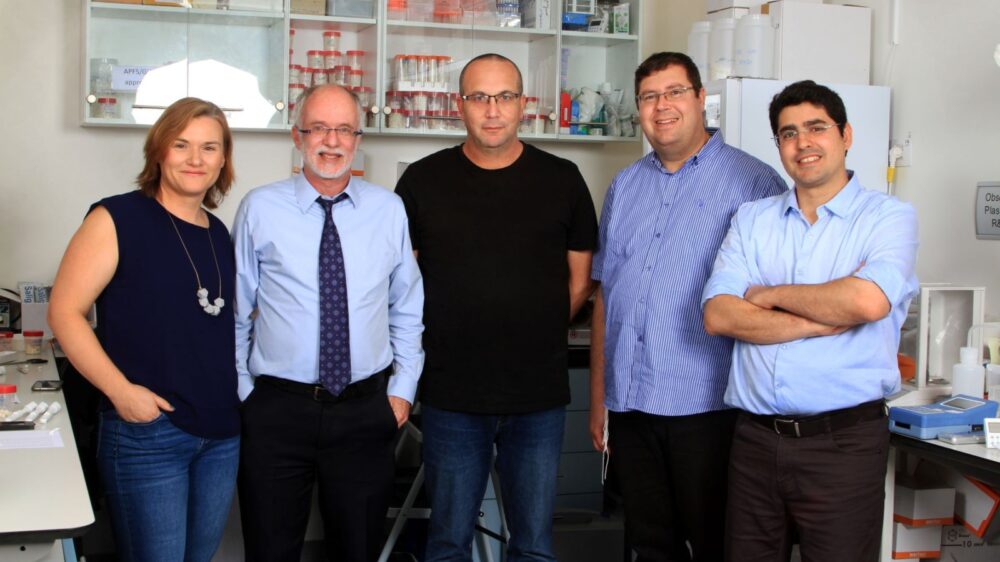
Salignostics was founded in 2016 by Krief and four other PhDs: professor Aaron Palmon, former dean of Hebrew University’s dental school; Omer Deutsch; Yoav Neumann; and Raluca Cohen.
“Our vision is to transform the next generation of in-vitro diagnostics by developing easy, clean, safe, low-cost, accessible and reliable saliva-based products,” the company’s website says.
“Salistick is the first rapid saliva-based pregnancy test for a new and improved user-experience, accompanied by high accuracy for early pregnancy detection.”
Currently, there are two main types of pregnancy tests — urine tests and blood tests.
“Often, you’ll take a urine test at home with a home pregnancy test kit,” the Cleveland Clinic website states. “This type of test can be purchased over-the-counter (you don’t need a prescription from your healthcare provider) and is available in a variety of price ranges. Blood tests to check for pregnancy are done in your healthcare provider’s office. No matter what the reason [for a pregnancy test], if you ever have any questions about your test results, the best thing to do is reach out to your healthcare provider.
“A pregnancy can also be confirmed through an ultrasound. Later in a pregnancy, an ultrasound is actually used to not only look at your baby, but make sure the timeline of development matches the dates of your conception and missed period.
“If you think you could be pregnant, it’s a good idea to take a test and make sure,” the Cleveland Clinic says.
David Benavidez was once the youngest 168-pound world champion in history, but the unbeaten, 6-foot-2 switch-hitting 24-year-old wants to be an undisputed one.
The two-time champion did his part on Saturday night to remain on track for an all-Mexican title bout against undisputed 168-pound king Canelo Alvarez, scoring a vicious, double-fisted, beat-down for his fifth straight knockout against Kyrone Davis, who was stopped for the first time in his career.
Another option for the power-punching Benavidez is WBC 160-pound champion Jermall Charlo (32–0, 22 KOs), who is considering a rise into the 168-pound division primarily to face Alvarez.
Benavidez (25–0, 22 KOs) called out both fighters after hammering Davis (16–3–1, 6 KOs), whose trainer threw in the towel 48 seconds into the seventh round before “El Bandera Roja’s” (The Red Flag’s) sold-out hometown crowd at the Footprint Center in Phoenix, Arizona, in a Premier Boxing Champions event on Showtime.
Benavidez’s seventh-round TKO came a week after Alvarez (57–1–2, 39 KOs) scored a two-knockdown, 11th-round KO of previously unbeaten Caleb Plant (21–1, 12 KOs) in a 168-pound unification bout, adding “Sweethands’” IBF crown to his WBA/WBC/WBO versions to become the first fully unified super middleweight champion and the first fighter of Mexican descent to accomplish the feat.
“Everybody wants to see me against Canelo, right?” Benavidez said of Alvarez, who plans to return against an opponent to be determined in May 2022 during the Cinco de Mayo Mexican holiday weekend. “Or does the big [Jermall] Charlo wanna get it, too? [Charlo] don’t wanna get into the ring with me because he’s a big p***y. That’s why. I’ll go through anybody or whoever they want me to go though.”
Benavidez’s promoter, Sampson Lewkowicz, told Zenger that he plans to travel to Mexico City for the WBC’s Nov. 14–19 annual convention, where he will try to appeal to WBC president Mauricio Sulaiman to make an Alvarez-Benavidez fight.
“Tomorrow at 9:45 a.m. I’m leaving for Mexico to go to the convention of the WBC to request that it’s time for Benavidez to have a shot at [the WBC title held by Alvarez,]” said Lewkowics by telephone exclusively to Zenger.
“I have a proposal, and I’m pretty sure that I will succeed in that proposal. Like always, I’ll have to have a talk [with Mauricio Sulaiman,] but you have to come with a proposal. I’m pretty sure that Canelo will take it. I have no doubt. I will try to make a proposal that can not be denied. After that, I will make a statement, worldwide.”
Having out-landed Davis by more than 3-to-1 in total punches (181–54) and power shots (137–39), and nearly 3-to-1 in jabs (44–15), Benavidez was asked by Showtime’s Jim Gray how he thought Alvarez would assess his performance.
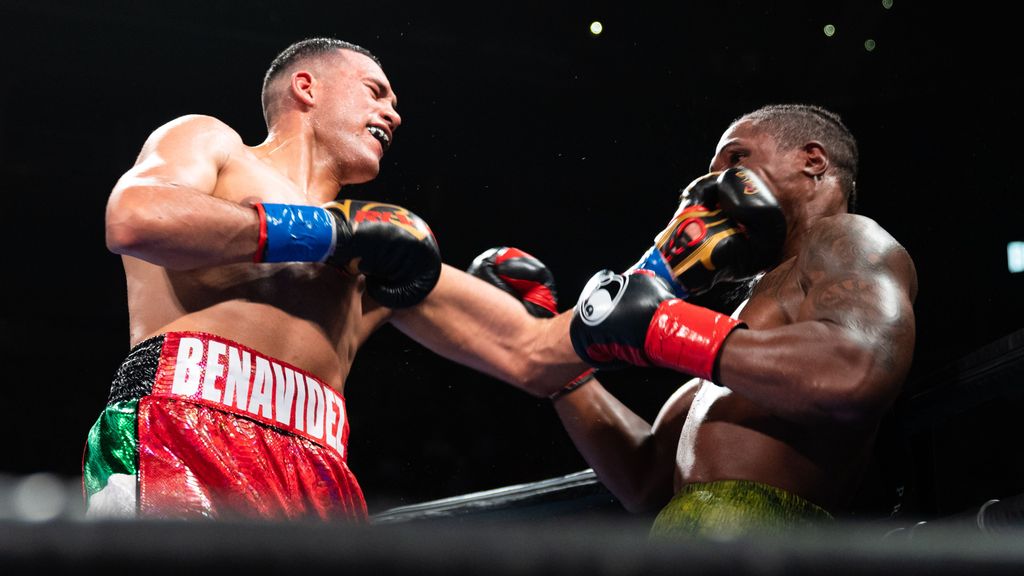
Two-time 168-pound champion David Benavidez (left) scored his fifth straight knockout against Kryone Davis (right), out-landing him by more than 3-to-1 in total punches and power shots and nearly in jabs (44-to-15) during Saturday’s seventh-round TKO victory. (Ryan Hafey/Premier Boxing Champions)
“I don’t really care what his assessment is. He just needs to give me the opportunity,” said Benavidez, who ripped “Shut It Down” Davis evenly to the head and body with jabs, hooks, upper cuts and 50 body shots. “That was a great performance on my end and a lot of courage by Kyrone. I respect him and his team a lot. Tough dude, and he came out here to give the fans a good fight.”
A late replacement for Jose Uzcategui (31–4, 26 KOs) after the former champion was forced to withdraw due to a failed pre-fight drug test, Davis has spent time in the separate training camps of past and current champions Terence Crawford, Gennadiy Golovkin, Adrien Broner, Julian Williams and southpaws Erislandy Lara and Demetrius Andrade as well as title challengers Erickson Lubin and Jesse Hart.
As Benavidez violently hammered the 5-foot-10 Davis both in the center of the ring and on the ropes, trainer Stephen “Breadman” Edwards began to see that his fighter was absorbing too much punishment.
Edwards told Davis after the fifth round, “I know you were playing possum, but if you don’t give me more, I’m going to stop the fight.” After the sixth, Edwards said, “Kryone, if you don’t hurt him in this next round, I’m going to stop the fight because I don’t want you to get hurt.”
But the pounding continued into the seventh as Davis was out-landed, 27-to-10, before Edwards threw in the towel at the 2:12 mark of the round, being acknowledged by referee Wes Melton.
“From day one, [Edwards] has been my guy. I’m upset, but not at him. If he wanted to stop the fight to protect me, I understand. This is like my second father as much as my father,” said Davis, 27, of Monmouth, N.J. “I feel okay. I’m a little disappointed. I don’t like losing. I wish I could have pulled out the victory. It was a hard fight. I came in on two weeks notice. I said f*** it. Let’s work.”
Davis was 3–0–1 (1 KO) in his previous four bouts, his past two fights being a draw with former champion Anthony Dirrell in February and a unanimous decision over Martez McGregor in September.
“They called me and told me, ‘let’s fight one of the top dudes in the division,’” Davis said. “I said, ‘how in the hell am I going to pass that off. I came in here and fought my ass off and did the best that I could.”
Two-time 168-pound champion David Benavidez (left) hammered Kryone Davis (right) with body shots, hooks and uppercuts on the way to Saturday’s seventh-round TKO and his fifth straight knockout. Davis’s trainer threw in the towel 48 seconds into the final round. (Ryan Hafey/Premier Boxing Champions)
Once the youngest 168-pound world champion in history, Benavidez had been stripped of his WBC crown in October 2018, declared “Champion in recess,” and suspended for six months following a positive drug test for Benzoylecgonine (the main metabolite of cocaine).
The WBC made the decision at its convention, also ordering Dirrell into a vacant title fight against Avni Yildirim, whom he defeated by technical decision in February 2019.
Benavidez ended his ring absence with a second-round knockout of J’Leon Love in March 2019 before regaining the WBC crown that September with a ninth-round knockout of Dirrell, who was stopped for the first time in his career.
An overweight Benavidez lost that title on the scales in advance of a 10th-round knockout of Roamer Alexis Angulo (August 2020) before scoring an 11th-round TKO over Ronald Ellis in his last fight in March.
At 20, Benavidez earned the WBC’s 168-pound title by split decision over Ronald Gavril in September 2017, overcoming an injured middle left knuckle and a final-round knockdown to become the youngest world champion in division history and the sport’s youngest titleholder at the time.
Darrin Van Horn had been the youngest boxer to win the 168-pound title when he accomplished the feat in 1991.
Benavidez ended Gavril’s seven-fight winning streak (five by KO) and won his return bout with Gavril in February 2018 by near shutout unanimous decision.
The split-decision victory over Gavril ended Benavidez’s knockout streak at 10 and at 17 in his previous 18 victories, including 13 inside of two rounds. The matches with Gavril followed Benavidez’s three-knockdown eighth-round TKO of former title challenger Rogelio Medina in May 2017.
“The thing about me is that I have so much conditioning that I’m gonna keep going until they eventually stop it. What usually happens is that they tend to give up. I may not have that one-punch knockout power, but I’m gonna be ready to get you every single round,” said Benavidez, who turns 25 on Dec. 17.
“I’m looking to improve in every area. I’m 24 years old, and next month is my birthday. I’m gonna continue working because I can get better. I’m going to keep working until I become the best.”
The undercard featured Benavidez’s 29-year-old brother Jose Jr. (27–1–1, 18 KOs) ending a 37-month ring absence with a disputed draw against Francisco Emanuel Torres (17–3–1, 5 KOs) in his 154-pound debut which many ringsiders and fans thought Torres deserved to win.
“I beat him every round. He was just running. I don’t know how he got a draw. We can run it back. He kept running the whole fight,” said Jose Jr., who lost his previous fight in August 2018 by 12th-round TKO to three-division and WBO 147-pound champion Terence Crawford (37–0, 28 KOs).
“He wasn’t really landing anything on me. What can I do? I beat him. He kept running. He wasn’t hitting me with anything hard. I can’t do anything. It’s the judges’ decision. I felt good. He just kept holding. He kept hitting me after they said stop. I’ll go back and train. Next time I’ll stop him if he doesn’t run.”
Torres had won nine straight fights, two by knockout.
“You can hear it from the crowd. They think I won the fight,” said Torres, disputing scores of 96–94 for Jose Jr. and 95–95 twice. “As a visitor I came here to his backyard and they still call it a draw. Imagine if this would have been in Buenos Aires or somewhere else. I definitely want the rematch.”
Benavidez Jr. was shot in his right leg just above the knee by a man on August 23 while he was walking his dog near his home in Phoenix. The injury appeared to be life-threatening due to the volume of blood loss.
Benavidez returned for consecutive knockout victories in 2018, ending a 19-month absence in February with an eighth-round TKO of Matthew Strode, followed by an impressive 84-second knockout in June of Frank Rojas before facing Crawford. Rojas entered at 22–0 (21 KOs).
“When Jose Jr. fought Terence Crawford, his leg was 60-to-70 percent,” said Jose. Sr., who trains both of his sons. “I was nervous in the Crawford fight because I didn’t know how the leg would react. He showed he has heart and did better than I thought.”
Enrique “Baby Bull” Gonzalez didn’t have the best record heading into Combate Global’s USA vs. Mexico eight-man MMA tournament Friday night in Miami. But he emerged with the biggest heart.
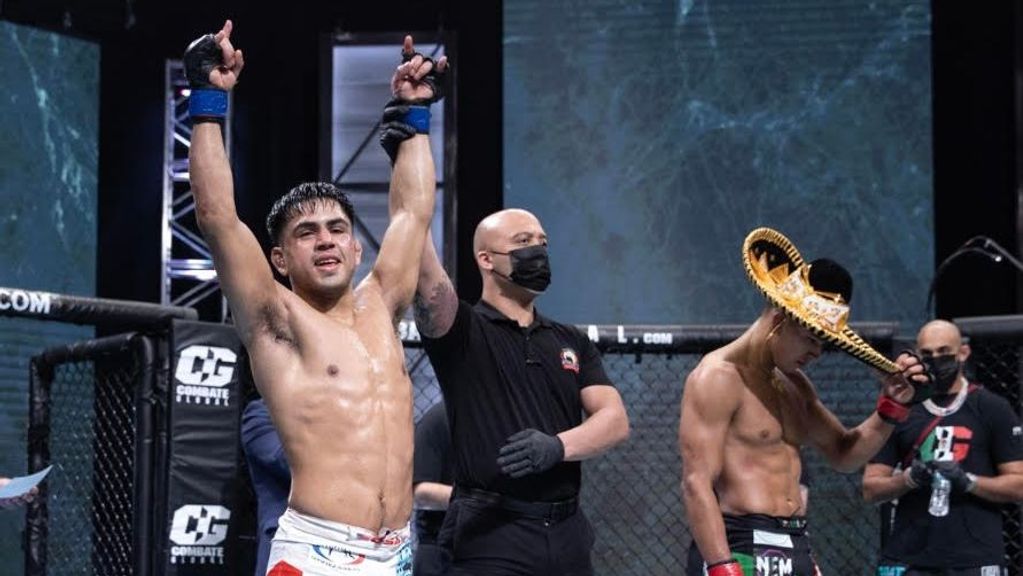
Gonzalez of Laredo, Texas, won three fights in one night, including a grueling three-round decision in the finale over previously unbeaten Cristian “Puas” Perez of Ensenada, Baja California, Mexico.
“It was crazy,” Gonzalez told Zenger after the bout. “It took me back to when I was a little kid at the karate tournaments, but this was a lot different. The competitors are much tougher. I loved it.”
The three wins improved Gonzalez’ record to 12–4. He opened with a one-round decision over Jim “The Beast” Alers of Pembroke Pines, Fla., (14–5) and advanced to face Samuel “Alley Cat” Alvarez (6–5) of Manteca, Calif., where Gonzalez captured another one-round decision.
That earned him the chance to represent the U.S. in the finale against the unbeaten Perez, who looked impressive with a TKO of Alfrego “Tarzan” Ruelas (2–2) of Mexico City in the first round and a tough one-round decision over Patrick “La Sanguijuela” Lehane of Ireland (4–1), who fought for the Mexican team.
Enrique “Baby Bull” Gonzalez (left) and Cristian “Puas” Perez exchange blows during their championship fight in the USA v. Mexico 8-man tournament by Combate Global Friday night in Miami. (Scott Hirano/Combate Global)
The finale was a back-and-forth match with Gonzalez dominating with his ground game early in the first round before being dropped by a hard left hand from Perez in the final minute of the five-minute round. Seconds later, Perez dropped Gonzalez again with a spinning elbow to the jaw. Gonzalez weathered the assault, but lost the round.
“He clipped me a couple of times, but I overcame it,” Gonzalez said. “I knew what I was up against and what I was fighting for. I really wanted the wins on my record.”
Gonzalez followed a similar pattern in the second and third rounds, taking Perez to the ground where he controlled him and applied enough pressure and punishment to capture both rounds on the judges’ scorecards and win the tournament title.
“It’s a tough format because you can’t pace yourself the first two fights,” said Gonzalez’s trainer Mike Valle, owner of Valle Flow Striking Academy outside of Chicago. “You have to go all out. It comes down to skills and stuff like that, but it also comes down to a lot of heart. That mental stage of going out and getting back at it again. It’s very difficult, especially when you have just one round. It’s very little time to go at it.”
Valle said Gonzalez’s ability to recover from the heavy blows he endured in the championship fight was a testament to his conditioning and training.
Cristian “Puas” Perez of Mexico (right) delivers a spinning elbow that momentarily drops Enrique “Baby Bull” Gonzalez in the first round of their championship fight for the USA v. Mexico 8-man tournament. (Scott Hirano/Combate Global)
“He’s a tough kid,” Valle said. “The only way you recover from a situation like that is from the amount of work they put in. We were able to show a little more experience, and we were able to capitalize on the wrestling part of it because that’s what we do a lot of in camp.”
Gonzalez said the key to surviving the tournament was staying calm throughout the night during and between fights.
“I just tried keeping calm even when I was in the ring,” he said. “Each time I went up there after each round, I tried to keep my cool. I didn’t want to get too intense and have my heart rate up and have my adrenaline come crashing down me, so I tried to stay calm the whole time.”
Winning the title should raise Gonzalez’s profile. He moved to Chicago in 2015 to train with Valle after graduating from high school in Laredo and is looking to make a career of MMA. “This puts me in a great spot,” he said. “I know a lot of eyes were watching this. I know it will be good for me.”
He isn’t the only fighter who should benefit from the exposure. The bouts were televised by Paramount Plus and Univision. Combate Global is an MMA promotion that targets a Hispanic audience by featuring young, hungry, and personable fighters. Gonzalez, Perez and Lehane proved they fit that mold.
“I think the last three fights were as good of fights as we ever put on,” Campbell McLaren, the CEO of Combate Global, told Zenger. “I’m terribly impressed with Baby Bull, Puas and Lehane. They went in there with a personality and they don’t back down. For my promotion and the sport and their individual careers those are three stars right there.”
The real star may have been the tournament. McLaren held this event on the same date that UFC 1 launched 28 years ago. McLaren was a co-founder of the UFC and the initial event was an eight-man tournament.
“Seeing guys go through multiple fights in one night is an exhibition of human courage and tenacity,” McLaren said. “The physical side is tough, but the mental aspect is just as difficult. Preparing for one opponent is very different from preparing for three.”
New research has revealed how water once flowed about 460 feet upward to form the “world’s largest ice cave” in Austria, estimated to be between 5 and 10 million years old.
Eisriesenwelt, which means “World of the Ice Giants” in German, is in the town of Werfen, about 25 miles south of the picturesque city of Salzburg, located in the Austrian Alps. A small part at the beginning of the cave system is now publicly accessible.
“You might think that water flows downhill,” said Lukas Plan, a research associate at the Natural History Museum Vienna. “However, research has now shown that the cave system, known for its ice formations, was completely filled with water when it was formed and that it flowed up 140 meters [459 feet] under pressure in the ascending part that is open to visitors.”
A research team from the Natural History Museum Vienna and the University of Innsbruck examined the origin and direction of the flow of water when the 26-mile cave system formed, the Natural History Museum in Vienna said in a statement. The “results show that millions of years ago, water flowed upwards” due to pressure, the statement said.
A small part of the Eisriesenwelt cave system is now open to the public in Werfen, Austria. The giant ice world was completely filled with water at the time of its creation, researchers learned. (Eisriesenwelt/Zenger)
Based on comparisons to other caves, researchers say the Eisriesenwelt is believed to be between 5 and 10 million years old.
The study, conducted by Plan, as well as Gabriella Koltai, Eva Kaminsky and Tanguy Racine, was published in the academic journal Die Höhle, which specializes in speleology, the study and exploration of cave systems.
The researchers learned that the giant ice world was completely filled with water at the time of its creation, and that the “so-called flow facets are of particular importance in deciphering the development conditions.”
At the ice cave Eisriesenwelt in Austria, depressions in the walls called flow facets were formed by water eddies, scientists say. (Eisriesenwelt/Zenger)
“These asymmetrical, shell-shaped depressions in the cave wall were formed by water eddies” (swirling currents of water) and these depressions “today provide information about the former direction and speed of flow,” the statement said.
The researchers mapped the flow of the water and their results “showed that millions of years ago about 100,000 liters [about 26,417 gallons] of water per second flowed north-east through the Tennengebirge [mountain range] — that is, 140 meters [459] from today’s cave entrance.”
It is “very likely” that the water came from the “central Alps south of the Tennengebirge, whose fragments of rock in the form of sand and gravel can often be found in the cave,” the statement said. “The Eisriesenwelt is thus the first cave system in the Northern Limestone Alps, for which a former supply by rivers from the Central Alps can be proven.”
British and American tourists in the Canary Islands are having sex so often in a protected dune reserve that endemic vegetation is being destroyed and the island’s beloved giant lizards are choking on condoms, according to a new study.
The Maspalomas Dunes Nature Reserve in Gran Canaria, which receives around 14 million visitors a year, in the Spanish Canary Islands, is well known for its dune system and stunning golden sands.
Legally protected since 1982, Maspalomas is one of Europe’s last remaining dune systems and provides a resting place for birds migrating between Europe and Africa.
However, a study published in the Journal of Environmental Management suggests the protected area is being destroyed by randy tourists. “Cruising activities” are having an environmental impact on the coastal dune system, the study said.
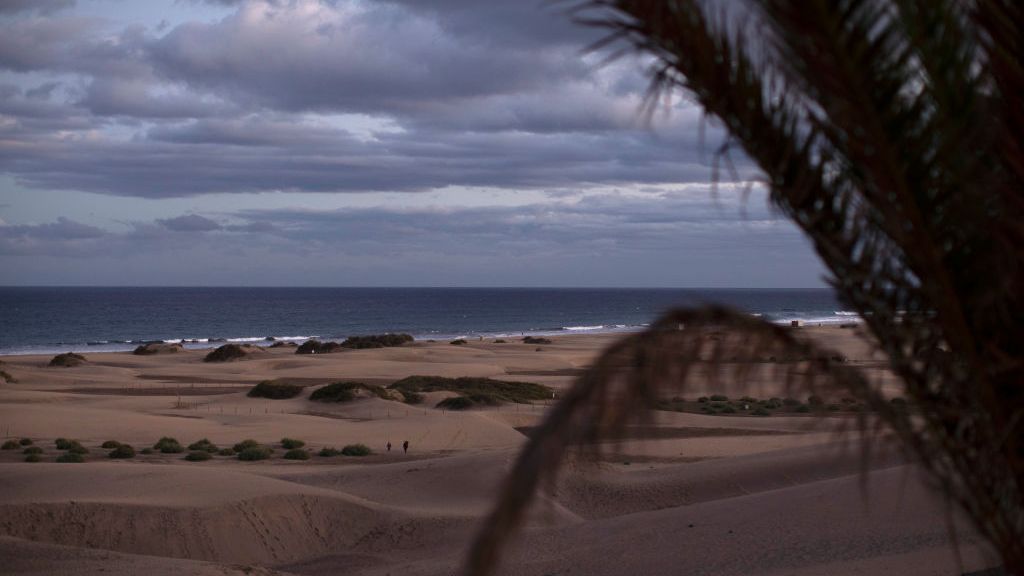
Vegetation grows in the sand dunes on Dec. 4, 2020, in Maspalomas, Spain. The area’s vegetation has suffered from people trampling on native plants and establishing “sex spots,” researchers say. (Dan Kitwood/Getty Images)
Researchers identified 298 “sex spots” in an area of two square miles, mostly between “thick and dense vegetation” and nebkhas, dunes that form around vegetation. A “no-go” area in the nature reserve, considered completely off-limits to the public, had 56 sex spots.
Researchers studied the area beginning in May 2018, and the study period included the local Gay Pride festival the following month, a popular event in Gran Canaria that many members of the LGBTQ community attend.
The report said that cruising for sex led to the “trampling” of native plant species, three of which are endemic to the area, as well as “directly impacting” the nebkhas.
“We have no intention to criticize the actions of some of the LGBTI community,” said first author Leví García-Romero, from the University of Las Palmas de Gran Canaria (ULPGC) Institute of Oceanography and Global Change.
Although the researchers noted that all kinds of people are capable of pleasure-seeking in the dunes, they said that cruising is practiced openly in Maspalomas.
The Maspalomas Gay Pride Parade on May 11, 2013, in Las Palmas de Gran Canaria, Spain. (Jorge Rey/Getty Images)
Tourists displace plants and sand and make their own “nests,” which sometimes include makeshift fences, the report said. They often also leave their rubbish behind, including cigarette butts, condoms, toilet paper, wet wipes and cans.
The protected dunes have also served as a “bathroom” with human urine and excrement found in the affected areas.
Researchers learned that the more remote the sex spot, the more it had been used and the more trash it had.
The researchers also said a number of the island’s beloved Gran Canaria giant lizards (Gallotia stehlini) had died after eating condoms left by tourists.
Although the local authorities leave trash bags in some areas, they are usually full according to the researchers.
Maspalomas is not the only dune space in the world where people have sex, said study co-author Professor Patrick Hesp from Flinders University. Hesp also studies arid-zone coastal and inland dunefields in Australia, where sex spots can also be found.
“No matter what the human activity, popular coastal tourist locations need to closely monitor ecology and erosion trends,” Hesp said.
Fish and other species are migrating to deeper waters in the Mediterranean Sea as climate change heats up surface water, threatening both conservation efforts and the fishing industry, according to a new study.
Experts at Tel Aviv University looked at the effect of warming waters on hundreds of species in the Mediterranean Sea. They analyzed data collected on 236 species in trawling surveys, in which a boat drags a net to collect species, and catch depth is recorded. They found that dozens of different fish, mollusks and crustaceans are migrating deeper as they flee warming temperatures.
“It should be remembered that the Mediterranean was hot in the first place, and now we are reaching the limit of many species’ capacity,” said Professor Jonathan Belmaker. “Moreover, the temperature range in the Mediterranean is extreme — cold in the northwest and very hot in the southeast. Both of these factors make the Mediterranean an ideal test case for species’ adaptation to global warming.”
The study, led by PhD student Shahar Chaikin under the supervision of Belmaker, revealed that species are deepening their minimum depth limits in parallel with warming water temperatures, from the west to the east Mediterranean.
Sea life across the Mediterranean migrated an average of 180 feet, a range of about 6 degrees Celsius (11 F), according to the study, published in the journal Global Ecology and Biogeography.
The change was not the same for all species, with cold-water species deepening more than warm-water ones.
Fish, mollusks and crustaceans in the Mediterranean Sea have migrated to deeper waters to escape rising temperatures, according to a new study. (Shahar Chaikin/Zenger)
“The minimum depths for species in the Mediterranean are getting deeper, while the maximum depths remain stable,” Chaikin said.”The deepening effect was found to be more significant among cold-water species. In contrast, there are species that function within a narrow temperature range and at a certain depth that deepen much less, probably because they cannot survive in deeper water.”
The researchers say the migration is likely to have a damaging effect on conservation efforts and on the fishing industry.
Temperature-driven migration has been documented before, in the Arctic where narwhals have been forced into the open ocean due to warming fjords. But researchers say the warming process is especially pronounced in the Mediterranean, where the average water temperature has been rising by one degree Celsius (1.8 F) every 30 years and is accelerating.
A fish peaks out from behind some rocks in the Mediterranean Sea. (Shahar Chaikin/Zenger)
According to the researchers, the study shows that by looking at the traits of species, their reaction to the increasing temperatures can be predicted. This could be valuable knowledge for future conservation programs.
Conservation plans will have to account for species living in deeper than usual waters and marine reserves will need to be defined to provide shelter for species that have migrated, he said.
The fishing industry will also need to adapt with more focus placed on deeper waters. This will force boats to sail further into the ocean and burn more fuel. Belmaker warned that despite the ability of species to adapt to warmer waters, there is a limit, and the limit is the seabed.
“We are already seeing deep-sea fish like cod whose numbers are declining, probably because they had nowhere deeper to go,” he said.
Researchers have developed a new therapy using “dancing molecules,” where a single injection can reverse paralysis caused by severe spinal cord injuries.
Scientists at Northwestern University have found that mice injected with the innovative treatment regained their ability to walk after only four weeks. Video showed how a once-paralyzed mouse could use its legs again after receiving the treatment.
Samuel Stupp, director of the Simpson Querrey Institute at Northwestern University, said the research group aimed to find a therapy that prevented paralysis after major trauma or disease. Their findings were published in the journal Science.
“For decades, this has remained a major challenge for scientists because our body’s central nervous system, which includes the brain and spinal cord, does not have any significant capacity to repair itself after injury or after the onset of a degenerative disease,” said Stupp.
The group intends to apply for federal Food and Drug Administration approval to test the therapy in human patients.
The breakthrough therapy sends bioactive signals that enable spinal cord cells to regenerate and repair. This was seen in five key areas: the severed extensions of neurons, called axons, regenerated; more motor neurons survived; scar tissue was significantly diminished; the insulating layer of axons, or myelin, which supports the efficient transmission of electrical signals, was renewed around cells; and blood vessels began delivering nutrients to cells at the place of injury.
Axons send signals between the brain and nervous system much like cables distribute electrical energy. When axons are cut or damaged, patients may suffer paralysis and/or loss of feeling. Renewing the connections improves body/brain transmissions.
Longitudinal spinal cord section treated with the most bioactive therapeutic scaffold, captured 12 weeks after injury. Blood vessels (red) regenerated within the lesion. Laminin is stained in green and cells are stained in blue. (Samuel I. Stupp Laboratory/Northwestern University)
Nearly 300,000 people in the United States live with a spinal cord injury, according to the National Spinal Cord Injury Statistical Center. Therapy options are limited, and their lives are difficult. Fewer than 3 percent of those with complete injury ever recover basic physical function, and 30 percent experience rehospitalization at least once during any given year.
Costs for care per patient can reach millions of dollars over a lifetime, while life expectancy is significantly lower than for people without spinal cord injuries. The situation has not improved since the 1980s.
Dancing molecules
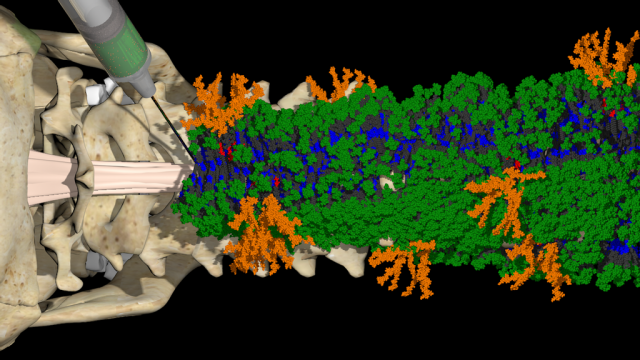
The secret to the therapy lies in tuning the motion of molecules, so they can find and engage with cellular receptors, which are constantly in motion. The liquid therapeutic becomes a gel once injected, transforming into a network of nanofibers mimicking the extracellular matrix of the spinal cord. The synthetics communicate with the receiving cells by matching the matrix structure, imitating the movement of biological molecules with “bioactive scaffolds,” and incorporating signals for receptors.
“Receptors in neurons and other cells constantly move around,” Stupp said, noting that the key innovation is the control of the “collective motion of more than 100,000 molecules within our nanofibers. By making the molecules move, ‘dance’ or even leap temporarily out of these structures, known as supramolecular polymers, they are able to connect more effectively with receptors.”
Once the therapeutic materials do their job, they biodegrade into cell nutrients within three months and completely disappear without noticeable side effects. This is the first time the collective motion of molecules has been controlled by changing a chemical structure to increase a therapy’s efficacy. The fine-tuning of the molecules’ motion within the nanofiber network made cells more responsive to the therapy in paralyzed mice. Formulations of this therapy during in vitro tests with human cells also showed better performance, increased bioactivity and cellular signaling.
Longitudinal spinal cord section treated with the most bioactive therapeutic scaffold. Regenerated axons (red) regrew within the lesion. (Samuel I. Stupp Laboratory/Northwestern University)
One injection is followed by two signals
Following the injection, the moving molecules connect with receptors and initiate two signals that rejuvenate the spinal cord. One of them triggers the axons. The other improves the neurons’ chances of survival by stimulating other cell types to proliferate.
Blood vessels, which feed neurons and other cells, grow back, while myelin rebuilds around axons and reduces the scarring of glial cells, which protect and provide oxygen to neurons.
Co-author Zaida Álvarez said the natural proteins mimicked by the signals are expensive to produce. She said the synthetic signals the team developed, however “are short, modified peptides that — when bonded together by the thousands — will survive for weeks to deliver bioactivity.”
“The end result is a therapy that is less expensive to produce and lasts much longer,” Álvarez said.
Hope for regeneration following major trauma
Noting the lack of adequate therapies, Stupp said he wanted to “make a difference [in] the outcomes of spinal cord injury.” He said the new approach could also address “neurodegenerative diseases and stroke,” including ALS, Parkinson’s and Alzheimer’s disease. The essential discovery of the study, according to Stupp, is that “controlling the motion of molecular assemblies to enhance cell signaling [can] be applied universally across biomedical targets.”