
Longtime CEO Frank E. Adams Jr. No Longer With A.G. Gaston Boys and Girls Club Inc.

The Birmingham Times
The Birmingham Times

birminghamal.gov



Mixed martial arts can turn the best of friends into the fiercest of enemies if they meet in a cage. That scenario could take place in the finals of Combate Global’s “USA vs. Mexico” eight-man lightweight tournament tonight.
Enrique “Baby Bull” Gonzalez (9–4) originally from Laredo, Texas, is part of the four-man U.S. contingent, while Hugo “The Hooligan” Flores (9–3) of Guadalajara, Mexico, will fight for Mexico. Both train at Valle Flow Striking Academy outside Chicago and both are coached by Mike Valle. They are training partners, roommates and good friends.
“Couldn’t have better company,” Gonzalez wrote on his Facebook page under a photo of him, Flores and MMA fighter Ignacio “La Jaula” Bahamondes departing Chicago’s O’Hare Airport on their way to tonight’s bouts in Miami, Florida.

The Combate Global tournament format conceived by UFC co-founder and Combate Global CEO Campbell McLaren has the four U.S. fighters paired against each other in two one-round, 5-minute fights. The winners face each other in another one-round, 5-minute semifinal to decide who represents the U.S. in the finals scheduled for three 5-minute rounds. Same for the Mexico side, presenting the possibility of Gonzalez and Flores meeting in the title match.
“It makes it very interesting for us,” Piera Valle, Mike Valle’s wife and Gonzalez’s manager told Zenger. “We were thinking, ‘How is this going to work?”
The first order of business was to get the fighters to accept the possibility. The potential of fighting a friend isn’t a foreign concept in combat sports, especially if they compete in the same weight division on the professional level. Business is business.
“They have trained together every single day,” Valle said. “So the best possible scenario is that they fight each other in the finale because that means they both win.”
The contingency plan is that if both of his fighters reach the finals, Mike Valle will go from coach to a very conflicted spectator. Instead of selecting one fighter over the other, Mike Valle will leave the two fighters on their own with only someone to give them water between rounds. Bahamondes, who has fought for Combate, will be one of two water boys.
“We’ve made it very clear that when they make it to the finale there’s no coaching whatsoever,” Piera Valle said. “It would be an unfair advantage for the person that would be coached by Mike. So it’s no coaching, just water.”
Gonzalez didn’t want to forecast the potential finale, saying he was focused mainly on his own game. “May the best man win,” he told Zenger.

Still, it poses an intriguing ending to what could be the biggest night of each fighter’s life. Their journey is typical of those of many young men and women who want to attempt a professional career in MMA.
Gonzalez left his hometown of Laredo after graduating from high school in 2015 and moved to Chicago to train at Valle’s gym. Mike Valle and Enrique’s father were friends, and the younger Gonzalez had shown promise, having studied karate, boxing, jiu-jitsu and other forms of martial arts.
Flores made his way there from Guadalajara and has been in Chicago for about a year. It’s a dedicated lifestyle where dreams are big and opportunities to get noticed can be few.
“We sponsor athletes from all over the world and give them the opportunity to train with us and stay rent-free to see if they have promise,” Piera Valle said. “People are starting to understand that these athletes train all day long, and live a clean lifestyle. The sport is more legitimate and competitive than it was even three or four years ago.”
Gonzalez has been at this for six years and still shows plenty of potential. “He is very athletic, and is able to pick things up very quickly,” Valle said. “He has the will. When he’s on point, he’s unbeatable. He has a very bright future in front of him.”
Flores arrived in Chicago last October after leaving his friends and family in Mexico. “I’m happy with the decision I made a year ago, and I don’t regret it for a second,” he wrote on the Valle Flow Striking Facebook page. “I’m excited. For so long I waited on having opportunities that are now coming and even more so to know that I’m in the right place to develop and overcome every challenge.”
Gonzalez sees this tournament as a chance to prove he can contend for a title and have a long and successful career in MMA. “I’m focused on this,” Gonzalez told Zenger. “I want to make the company proud and get a couple of bucks out of them.”
Gonzalez and Flores must get past the first two rounds to reach the finals. The concept of a one-round, 5-minute fight is far different from the normal three-round fight, those involved say.
“What’s interesting about this is that anything can happen in one round,” Valle said. “Over three rounds, the person with the highest skill set is normally going to wind up the winner. But when it’s one round, anything can happen. And having to fight three times is a mental challenge that not a lot of people can endure. The mental game matters more in this type of competition.”
Live coverage on Paramount Plus begins with a preshow at 9:30 p.m. ET with live action beginning at 10 p.m. ET. Univision’s broadcast begins at 11 p.m. ET. The show will also air in Mexico on TUDN MEX beginning at 10 p.m. local time.
Edited by Matthew B. Hall and Stan Chrapowicki
The post Friends Could Become Enemies In Combate Global’s 8-Man Tourney appeared first on Zenger News.


By Lisa Chau
New York — In 2018, CBD-infused products sales totaled $1.9 billion, according to research by Colorado-based BDS Analytics in partnership with Arcview Market Research. That number is forecasted to grow to a whopping $20 billion by 2024, spurred by greater accessibility and an ongoing introduction of new products.
Setting the stage for that explosive growth was the 2018 Farm Bill, which legalized industrial hemp cultivation for products manufactured with cannabis sativa plants containing less than 0.3 percent THC, the main psychoactive compound in cannabis. As a result, the active compound in hemp, CBD (cannabidiol) has infiltrated the beauty, health, and food markets. While THC and CBD are both natural compounds found in plants of the cannabis genus, the latter does not produce a “high” or euphoric sensation for users only seeking to alleviate pain or anxiety.

Evidence of the expected rapid growth in the CBD product category was on display at the White Label World Expo New York, an online retail sourcing show held earlier this fall at the Javits Convention Center.
There, Andre Addison explained that his Canaboxx invention is a CBD products vending machine, known as a “dispensary in a box.”
“The technology automates the way consumers purchase CBD products much the same way banks integrated ATMs as a system for convenience,” said Addison, the company’s owner and president. “Additionally, the Covid pandemic has created a greater need for no-contact sales and social distancing.” He imagines a world where such vending machines will be on every street corner once all 50 states have deregulated marijuana usage.

Meanwhile, Milkweed Cannabis Confections’ Will Fleming is focusing on the top end of the spectrum, with edibles for luxury clients.
“The vast majority of cannabis edibles in the market today are commodity products: mediocre quality, mediocre ingredients, lackluster flavors,” said Fleming, the company’s director of sales and operations. “Milkweed Cannabis Confections is the brain-child of former New York City pastry chef Andrew LeStourgeon, whose mission is to bring luxury cannabis edibles to the market… utilizing local and high-quality ingredients, creating unique and compelling flavor profiles, and executing all of this at a top-tier level.” His team imagines a world where their products are widely enjoyed at upscale weddings.
Carolindica CEO and Founder Chris Karazin launched his company in 2019 as a craft CBD manufacturer, specializing in tinctures and vape cartridges. Over time, he branched out into a variety of other product types, including gummies, capsules, topicals and candy.
“Like tectonic plates, being involved at this time in the hemp industry means we get to fill in the huge cracks that develop as the industry shifts, flowing like lava to adapt to the emerging niches,” Karazin said. “Currently, the market for pure CBD products is extremely saturated, so the industry is trending towards working with the more unique hemp compounds in order to expand the benefit offerings and stay ahead of the curve.”

Carolindica segments itself by working with just about anything they can extract from the hemp plant, including CBD, but also CBG, CBC, CBN and Delta 8 THC. Each of these compounds has different properties. For instance, CBN is the most sedative and provides the best benefits for sleeping, while Delta 8 offers the most recreational value to consumers.
By blending these cannabinoids together with terpenes, the company creates formulations that target specific issues like sleeping difficulties, pain and anxiety, while blending the lines between recreational enjoyment and pure medicinal value. There are well over 100 cannabinoids in the hemp plant, and the industry can only work with a tiny percentage of them currently. Karazin fully believes that the future of this industry will revolve unique compounds focused on both the medicinal and recreational values offered by the hemp plant.
Deborah and her son Stephon Morton entered the industry in 2019, by launching four major products: Mor-Hemp CBD coconut oil, “Ladi Mary” smokable CBD Flower, and TUSK Hemp-infused Vodka and Rum. As a new liquor brand, they’ve found it difficult to partner with distributors in major states because the company cannot provide a proven track record of consistent profits.
Moreover, their family-owned business Mor-Hemp has faced challenges getting grants for minority farmers to purchase farming equipment, supplies and facilities needed to effectively expand. For example, they applied for a grant for disadvantaged farmers in Halifax County, Virginia.
“We submitted all the proper paperwork and patiently awaited the outcome. After months of no pertinent feedback or information, we did our due diligence of communicating with the office. Only when we reached out were we informed that the agency was changing directors and our paperwork suddenly went missing, and we were not awarded the grant,” Deborah Morton said.

As explosive as the growth of the CBD has been in recent years, there are still many unknowns and hurdles to overcome. Trojan Horse Cannabis Founder and CEO Christopher Fontes currently serves on the Government Affairs Committee for the National Industrial Hemp Council. He says the next big trend for the industry is the realization that Delta-9 THC is a legal product, so long as it is hemp-derived from a Farm Bill-approved program and remains below the federal threshold of 0.3 percent Delta-9 THC by dry weight. If that happens, attempts to create THC alternatives like D8, D10 and THCp will start to slow down or disappear.
More and more manufacturers are realizing that FD&C [Federal Food, Drug, and Cosmetic Act] regulations will treat their products like dietary supplements regarding safety and truth-in-labeling, Fontes said. “The industry fully expects hemp-derived ingestibles to be regulated as a dietary supplement at some point by the Food and Drug Administration. Doing so creates a regulatory framework of consumer safety, and is welcomed by the good actors in the industry. This could also have significant impacts on the hemp supply chain.”
Recent laws legalizing commercial hemp farming have led to an explosive growth in the CBD industry. However, the marketplace is still is its infancy as many obstacles and unknowns remain.
Minority farmers need grants, and a stigma still remains— some studies have shown that CBD “users were frequently labeled as irresponsible and unreliable ‘potheads’ by a variety of people including employers, colleagues, and even healthcare providers”. Consumers are increasingly interested in the benefits of CBD, but quality control and safety need to be addressed and regulated quickly.
Edited by Matthew B. Hall and Bryan Wilkes
The post CBD From A Vending Machine? Manufacturers Face Opportunities And Challenges In Growing Industry appeared first on Zenger News.


A shoe that wearers with disabilities can slip on and off, hands-free, a water-saving device for home use, a specific-position football helmet — and the COVID-19 vaccines — are just a few of TIME magazine’s “Best Inventions of 2021.”
The list names 100 “inventions that are making the world better, smarter and a bit more fun.” The inventions fall into 26 categories, from Accessibility to Wellness, and has special mentions for dozens of others.
Among those listed are Nike GO FlyEase, which people with disabilities can easily slip on and off without using their ha; Adobe Super Resolution, part of its Lightroom and Photoshop software, which uses machine learning to boost an image’s resolution up to four times its original pixel count; MTA Live Subway Map app, New York City’s digital subway map; Google Maps Live View; LEGO’s PET Plastic Recycled bricks; the Volleback jacket, which kills viruses; L’Oreal’s Water Saver, a device that attaches to sinks and has three slots for normal shampoos, conditioners and treatment, which are distributed directly into the water stream; Purrble, an interactive emotional management toy for children; and Vicis’ 02 Trench football helmendst, designed to reduce weight without compromising performance and adopted by the NFL.
The list also includes the first Armenian artificial intelligence-based Robin the Robot.

Four Israeli firms made the list. ElectReon, Supplant, OrCam Read and Percepto AIM.
ElectReon invented an in-road wireless electric vehicle charging technology for commercial, public and passenger vehicles. The charging infrastructure wirelessly charges EVs on the road when they’re in motion or at rest.
SupPlant uses sensors to monitor crops’ temperature and moisture, providing highly accurate instructions for farmers in 14 countries to maximize yields.
OrCam Read is a first-of-its-kind handheld device with a smart camera that seamlessly reads text from any printed surface or digital screen. It’s intended for people with mild low vision, reading fatigue, reading difficulties including dyslexia, and for anyone who consumes large amounts of text.
Percepto Autonomous Inspection and Monitoring (AIM) software solution for industrial sites employs drones and robots to automate inspections, emergency response and security. From data capture to AI-powered insights and reports, Percepto AIM is used by Fortune 500 companies around the world. The 2022 AIM upgrade will be unveiled Nov. 17 and features AI-powered analytics for specific sectors such as solar, mining, energy, and oil and gas.
To assemble the 2021 list, TIME solicited nominations from its editors and correspondents around the world, as well as through an online application process. TIME then evaluated each contender on factors including originality, creativity, efficacy, ambition and impact.
“The result is a list of 100 groundbreaking inventions — including vaccines for COVID-19 and malaria, an emotional support robot for hospitalized children, an environmentally friendly dye for jeans and a brand new pasta shape — that are changing how we live, work, play and think about what’s possible,” TIME said.
Produced in association with Israel21C.
The post COVID Vaccines, Robots And LEGO Bricks Among TIME’s Best Inventions Of 2021 appeared first on Zenger News.


Astronomers believe that a near-Earth asteroid is a long-lost fragment that broke off the moon, according to a new study.
The asteroid known as Kamo`oalewa is a quasi-satellite: a subcategory of asteroids that orbit the sun but stay near our planet. Discovered in 2016 by the Pan-STARRS telescope in Hawaii, Kamo`oalewa is about 150 to 190 feet in diameter and most closely approaches the Earth at approximately 9 million miles. It bears a name taken from native Hawaiian creation myths and alludes to an offspring that travels alone.
In a paper published in the journal Nature, University of Arizona graduate student Ben Sharkey and his team determined that the asteroid’s spectrum, or pattern of reflected light, matches the rocks brought back to Earth by NASA’s Apollo missions to the moon.
From Earth, Kamo`oalewa can only be observed during April because of its orbit. Because it is small, only one of the largest telescopes on Earth can see it. A research team can spot it from the Large Binocular Telescope on Mount Graham in southern Arizona, which is managed by the University of Arizona.

Kamo`oalewa is about 4 million times fainter than the faintest star the human eye can see in a dark sky. The tremendous power of the twin telescopes of the Large Binocular Telescope to gather light made the observations possible.
While the reflected light suggests a lunar origin for Kamo`oalewa, the researchers are not certain how it broke away from the moon. There are no other asteroids known to have come from the moon.
“I looked through every near-Earth asteroid spectrum we had access to, and nothing matched,” said Sharkey. Astronomers have previously theorized that the asteroid may have formed from material thrown into orbit by a meteorite strike on the lunar surface.

University of Arizona Professor Vishnu Reddy and Sharkey searched for an explanation for Kamo`oalewa for years. “We doubted ourselves to death,” said study co-author Reddy. Having started the hunt in 2016 and after missing an opportunity to observe the asteroid in April 2020 due to a COVID-19 shutdown, the astronomers got a glimpse of the puzzle in April this year.
“This spring, we got much-needed follow-up observations and went, ‘Wow it is real,’” Sharkey said. “It’s easier to explain with the moon than other ideas.”
Kamo`oalewa’s orbit is similar to Earth’s, but has a little tilt. According to study co-author Renu Malhotra, its orbit is not typical of other near-Earth asteroids. “It is very unlikely that a garden-variety near-Earth asteroid would spontaneously move into a quasi-satellite orbit like Kamo`oalewa’s,” she said.
“It will not remain in this particular orbit for very long, only about 300 years in the future, and we estimate that it arrived in this orbit about 500 years ago,” said Malhotra, a professor of planetary science who led orbit analysis for the study. Her team is conducting further investigation of Kamo`oalewa’s mysterious origins.
Edited by Richard Pretorius and Kristen Butler
The post Near-Earth Asteroid Could Be Lost Piece Of The Moon, Say Experts appeared first on Zenger News.

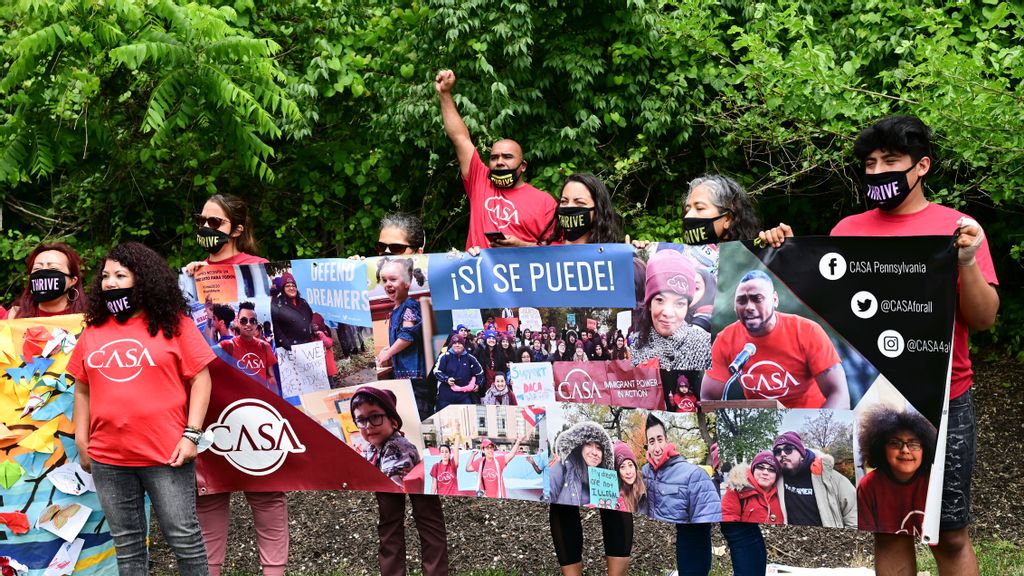
Latinos in the United States are performing economically far beyond expectations, contradicting long-held stereotypes.
That’s according to the 2021 State Latino GDP Report, which reveals their GDP in 2018 amounted to $2.6 trillion. If Latinos were an independent nation, they would rank eighth in the world, with a GDP higher than Italy, South Korea or Brazil.
Dr. David Hayes-Bautista, co-author of the study and director of the Center for the Study of Latino Health and Culture at UCLA, says the report debunks the idea that Latinos come to the United States to commit crimes or live on public assistance. “We are not lazy or criminal, we come to work, and these figures prove it,” he said.
The U.S. Latino GDP grew 21 percent faster than India and 30 percent faster than China. In California, the statistics are just as staggering. In 2018, the state’s Latino GDP was $706.6 billion, higher than Ohio’s total economic output.
View this post on Instagram
Latinos are an enormous source of economic vitality because of their hard work, family values and solid health profile, Dr. Hayes-Bautista says.
His new report offers estimates of the economic contribution of Latinos in Arizona, California, Florida, Illinois, New Jersey, New Mexico, New York and Texas, states where nearly three-quarters of the country’s Latino population live.
An essential component of the great economic performance of Latinos is consumption — $1.36 trillion in 2018 alone in those eight states.
From 2010 to 2018, real consumption in this group grew 135 percent faster than non-Latinos, primarily due to population growth and strong participation in the labor market.
Between 2010 and 2018, in California, the non-Latino population grew 3 percent, while Latinos increased 13 percent. Growth was driven by a high fertility rate, not migration, Dr. Hayes-Bautista says.
The report also highlights that from 2010 to 2018, the educational level of Latinos grew 2.5 times faster than that of non-Latinos in the state. In that same period, Latinos’ labor force participation averaged 4.6 percentage points higher than that of non-Latinos.
In addition, Latinos in California have a longer life expectancy than non-Latino whites, too — 83.6 years compared to 80.8. Dr. Hayes-Bautista says credits their health habits.
Still, the pandemic represented a special challenge.
“In the case of the pandemic, Latinos were very affected because they did not have the same access to COVID-19 vaccines as other groups, and they could not be confined to their homes because many are essential workers,” he said.
The story Latino GDP In Us Ranks 8th In The World is published in collaboration with Ethnic Media Services.
Edited by Melanie Slone and Fern Siegel
The post Buying Power: Latino GDP In U.S. Ranks 8th In The World appeared first on Zenger News.


Filmmaker Natasha Kline treasures her childhood memories with her many Mexican-American cousins and is turning those “recuerdos” into a new animated comedy series.
Disney Branded Television has ordered Klines’s “Primos,” a series exploring family relations and children’s empowerment.
“‘Primos’ is set in childhood summers spent with my cousins … and the comedy that is born from that wonderfully hectic setting,” said the Latina artist.
“As a kid, I didn’t see myself or my culture represented on screen, so I’m excited to share my family dynamic through these new Disney characters and stories.”
Disney’s greenlighting of the show is a significant accomplishment for Kline, who has worked on two other Disney Channel animated series. She directed, wrote, and storyboarded a few episodes of “Big City Greens” and worked briefly as a writer on “Star vs. the Forces of Evil.”
JUST ANNOUNCED: #DisneyBrandedTelevision orders “Primos,” an original animated comedy series created and executive produced by Natasha Kline. The story is based on her childhood experiences with her extended multicultural Mexican American family. #DisneyPrimos pic.twitter.com/isFKN0FMBl
— Disney Branded TV PR (@DisneyBrandTVPR) November 3, 2021
With “Primos,” Kline is now donning the hat of executive producer, her first major production credit. She is also credited as a writer.
The show introduces Tater, an eccentric 10-year-old girl with big dreams but unaware of her exceptional qualities. That changes when her 12 cousins, “primos” in Spanish, move in for the summer, helping her discover what is so special about her.
“It’s been especially gratifying to see Natasha directing more than 30 episodes of our number 1 series ‘Big City Greens,’ while also creating her own new show that bears her authentic comedic voice and her family’s culture and values,” said Meredith Roberts, Senior Vice President and General Manager of Television Animation with Disney Branded Television. “We’re looking forward to delivering it to kids and families worldwide.”
Produced by Disney Television Animation, each half-hour “Primos” episode will consist of two 11-minute stories. Tater’s aspirations and larger-than-life imagination permeate her super-secret diary entries, which turn her most profound thoughts into grandiose animation sequences.
Kline has more than a decade of experience in animation. She spent six and a half years as a storyboard artist and designer on Comedy Central’s multiple-Primetime Emmy-winning series “South Park.” Before coming to Disney, she freelanced for various animated projects like Nickelodeon’s “Hey Arnold!, The Jungle Movie” and “Pinky Malinky,” and DreamWorks Animation’s “Home: The Adventures of Tip and Oh,” “Too Loud!” and “Harvey Street Kids.” She also worked as a story artist in Warner Bros’ “LEGO Ninjago” movie and as a storyboard artist in Netflix’s “Bojack Horseman.”
The filmmaker is a graduate of Cal State Fullerton, where she earned a degree in illustration and studied animation at the California Institute of the Arts.
Disney Greenlights Series ‘Primos’ About Extended Multicultural Mexican-American Family is published in collaboration with LatinHeat Entertainment.
Edited by Gabriela Alejandra Olmos and Melanie Slone
The post Disney Greenlights ‘Primos’, A Series About Extended Multicultural Mexican-American Family appeared first on Zenger News.
It was the birth of mixed martial arts, though not exactly as we know it now. On Nov. 12, 1993, at McNichols Sports Arena in Denver, UFC 1 debuted as a made-for-TV spectacle. Twenty-eight years later, MMA is a billion-dollar industry with promotional companies worldwide and fighters — male and female — from around the globe.
Purchased in January 2001 for $2 million by Lorenzo Fertitta, his brother Frank Fertitta III and their childhood friend Dana White, the UFC was sold for $4 billion to Endeavor on July 11, 2016. And the sport has only gotten bigger since then.
Backed by a seven-year deal with ESPN, UFC remains the dominant MMA promotion, but others — from spectators to networks looking for live-streaming and pay-per-view content — are benefiting from the sport’s popularity.
The Professional Fighters League concluded its third season two weeks ago with six championship fights and $1 million going to each winner. ESPN televised the bouts, underscoring the attraction networks now have for MMA.
On Friday night, the 28th anniversary of UFC 1, two major promotional companies will stage MMA cards on television. Bellator 271 is being shown on Showtime with MMA veteran Cris Cyborg defending her featherweight title against Sinead Kavanagh in the main event at the Seminole Hard Rock Hotel & Casino in Hollywood, Fla.
A few miles away in Miami, Combate Global will stage a one-night eight-man tournament featuring 155-pound male fighters from the USA and Mexico. This might be the truest homage to UFC 1, as the tournament champion will need to win three fights in one night to capture the crown.

Live coverage on Paramount Plus begins with a preshow at 9:30 p.m. ET with live action beginning at 10 p.m. ET. Univision’s broadcast begins at 11 p.m. ET. The show will also air in Mexico on TUDN MEX beginning at 10 p.m. local time.
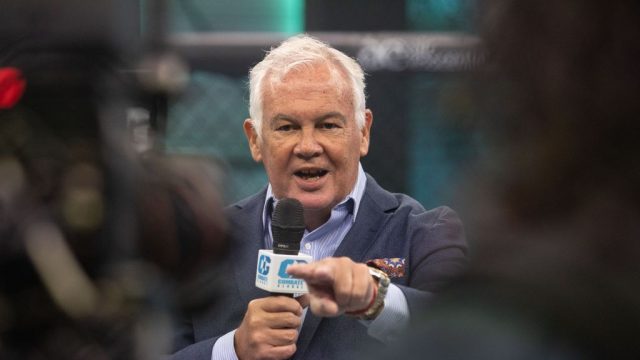
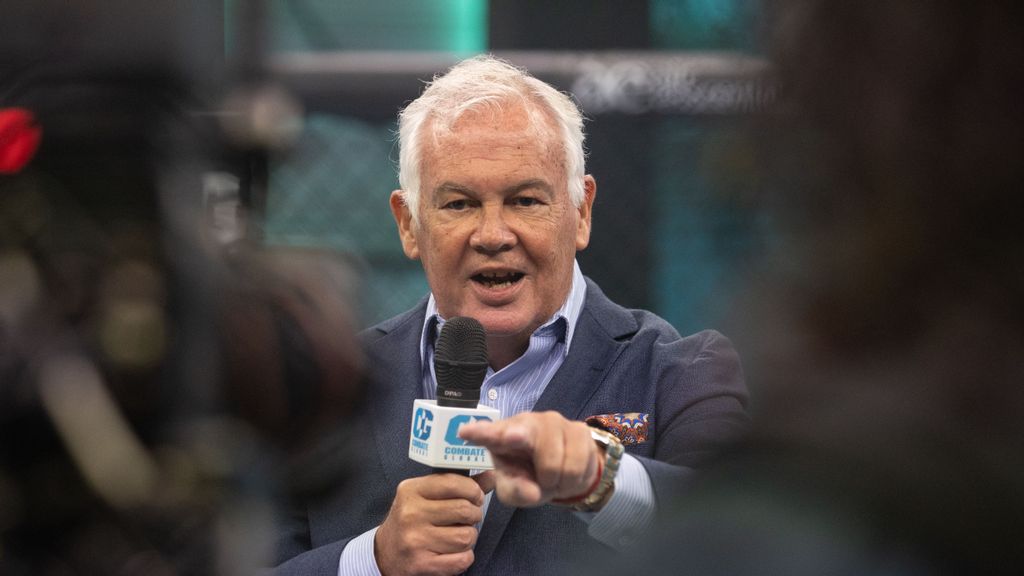
Campbell McLaren was among the original group that produced UFC 1 and nursed it through those early years when the UFC had few rules and was described as “human cockfighting” by the late Senator John McCain. Now McLaren is the founder of Combate Global, which features up-and-coming fighters who appeal to the Latin American market, which is where Univision steps in. The Spanish-language network has taken the unusual step of becoming an equity partner in Combate Global.
UFC 1 headlined with a one-night eight-man tournament, a concept McLaren brought with him when he founded Combate Americas as a Hispanic Mixed Martial Arts sports franchise in 2011 and rebranded it Combate Global in 2021. On Friday night, he has four fighters from the USA in one bracket and four fighters representing Mexico in the other, with the winner needing to defeat three opponents in one night.
Fights in the first round and semifinal consist of one five-minute round. The finals consist of three five-minute rounds. To preserve the fighters physically, no knees or elbows are allowed in the first two rounds.
“The USA-Mexico rivalry has provided some of the most exciting and memorable fights in Combate history,” McLaren said, “and this tournament, loaded with talent from both sides of the border, is sure to deliver much more action and pay tribute to the sport that I launched 28 years ago.”
Royce Gracie, a Brazilian jiu-jitsu artist, was the last man standing at UFC 1, but there were no weight divisions, no time limits, and no judges. Though the fight poster read: “There Are No Rules,” the only rules were no groin attacks, no eye-gouging and no biting. It proved a modest pay-per-view success, attracting 86,000 buys. The competitors were specialists in Sumo wrestling, kickboxing, karate, jiu-jitsu, taekwondo and boxing. Sumo wrestling is out, but everything else still applies in today’s MMA, with the top athletes skilled in various forms of mixed martial arts.
USA vs. Mexico is always an attraction in any combat sport. In Miami, Mexico’s bracket pits Cristian “Puas” Perez (6–0) of Ensenada, B.C., against Patrick “La Sanguijuela” Lehane (3–0), who was born in Ireland, but is applying for his Mexican citizenship. Hugo “The Hooligan” Flores (9–3) of Guadalajara battles Daniel “Scrappy” Soto (15–5) of Ciudad Jimenez in the other quarterfinal.
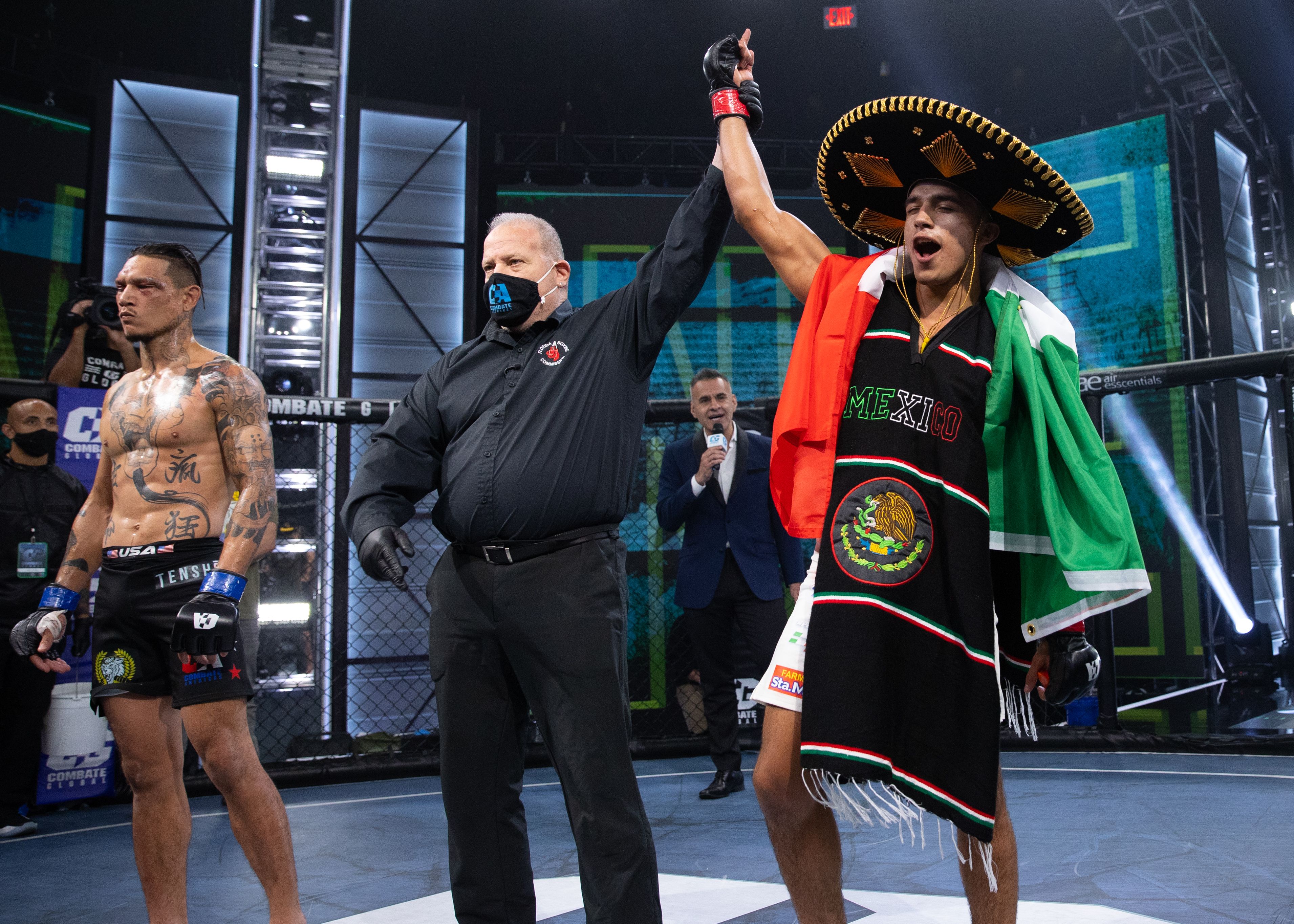
In the U.S. bracket, Jim “The Beast” Alers (14–4) of Pembroke Pines, Fla., challenges Enrique “Baby Bull” Gonzalez (9–4) of Laredo, Texas, and Samuel “The Alley Cat” Alvarez (5–4) of Manteca, Calif., takes on Jimmy “Sandstorm” Sandlin (4–3) of Carlisle, Ohio.
Gonzalez, who trains at Valle Flow Striking in Chicago, thinks his background in karate, competing against successive opponents in one day, will serve him well in this MMA tournament format. “When I was in karate growing up you fought somebody, and it was on to the next one, then fight again and on to the next one,” he said. “I’m familiar with it.”
The key to success in this format, according to Gonzalez, is not to focus on an opponent but polish your individual skills to react to anything. “I just keep working on myself,” Gonzalez said. “That’s the best thing you can do, just keep working on yourself.”
Gonzalez faces Alers, a jiu-jitsu specialist, who fought in the UFC from 2014 to 2016. “He’s probably going to want to take me down and hold me down,” Gonzalez said. “… But I’m going to be sticking and moving on him.”
Compared to UFC 1, MMA is rather tame these days, needing to abide by a variety of state regulations. The elimination of knees and elbows in the first two rounds on the Combate card should make it an interesting strategic battle. “They’re trying to take care of you so the person that makes it to the finale isn’t all banged up and cut up,” Gonzalez said. “It’s like amateur boxing. But I like to take people down, too, and with no legs involved, I can even go lower.”
Piera Valle, who manages Gonzalez, sees this as a prime opportunity for her fighter. “This brings him up another level to be a real contender and a possible champion for Combate at some point,” said the wife of Gonzalez’s trainer, Mike Valle. “I think the exposure is great, and the fact that it’s the anniversary of UFC 1 is a bonus.”
Edited by Stan Chrapowicki and Matthew B. Hall
The post Cross-Border Clash: US, Mexico Fighters Meet In MMA Tournament appeared first on Zenger News.
