The trailer for “Being the Ricardos,” the movie about Desi Arnaz and Lucille Ball, starring Academy Award winners Javier Bardem and Nicole Kidman, is here.
“Being the Ricardos” is a biographical film. The Amazon Studios movie centers on a short, critical period of the life of the famous couple who created the legendary family comedy show “I Love Lucy.”
“I Love Lucy” aired on CBS between 1951 and 1957. It ran for six seasons, becoming the most-watched show in the United States for four of them, per Nielsen ratings. In a poll conducted by ABC and “People” magazine in 2012, “I Love Lucy” was voted the “Best TV Show of All Time.”
The two children of Ball and Arnaz, Desi Arnaz Jr. and Lucie Arnaz, are the executive producers of “Being the Ricardos.”
“I get paid a fortune to do exactly what I love doing,” says Kidman’s Ball in voiceover on the movie trailer. “I work side by side with my husband, who is genuinely impressed by me. And all I have to do is kill it for 36 weeks in a row. And then, do it again next year.”
Bardem’s Arnaz is the businessman running the couple’s company, Desilu Productions. Every time the filming of an episode begins, he appears before a live studio audience and says in heavily accented English, “Ladies and gentlemen, enjoy the show!”
Oscar-winner Aaron Sorkin is the director and writer of “Being the Ricardos.”
Seals have the rare ability among mammals to change their vocal tone to imitate human speech, prompting a study that may offer clues about how humans learn to speak.
“By looking at one of the few other mammals who may be capable of learning sounds, we can better understand how we, humans, acquire speech and ultimately why we are such chatty animals,” said Andrea Ravignani, the lead researcher in a study published in the Philosophical Transactions of the Royal Society B Biological Sciences.
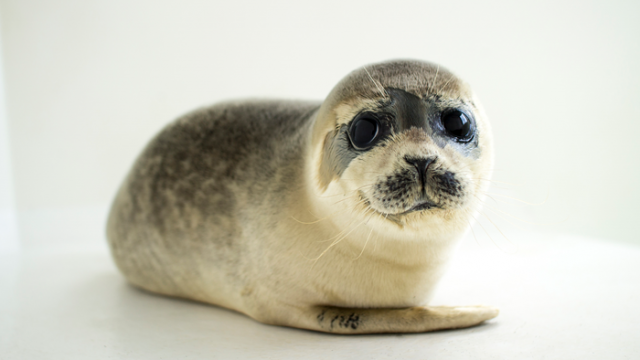
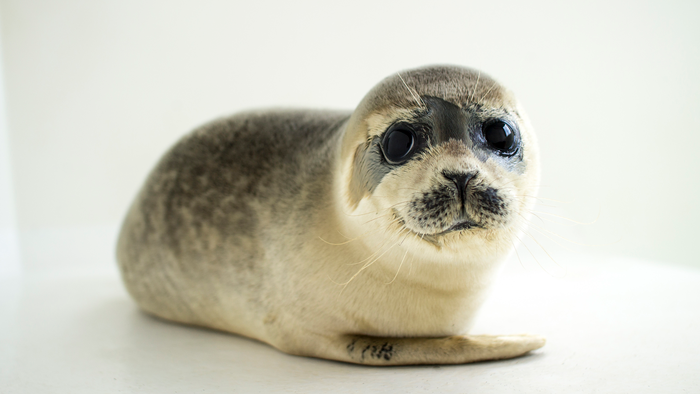
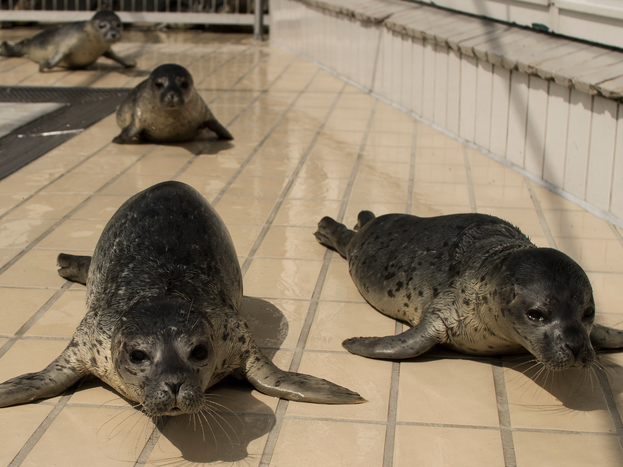
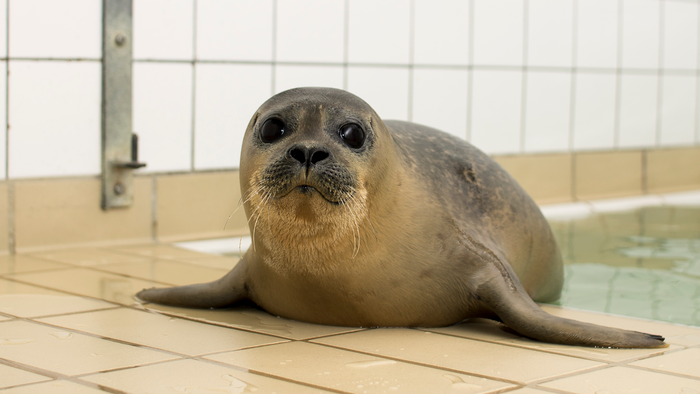
Young harbor seal pups, less than one month old, were studied at the Seal Research and Rehabilitation Center in Pieterburen, The Netherlands, before being released to the nearby sea. (John O’Connor)
By studying eight harbor seal pups, ages 1 to 3 weeks, at the Seal Rehabilitation and Research Centre in Pieterburen in The Netherlands, researchers wanted to learn when seals adapt their voices according to sounds in their environment.
Tested seal pups were housed in quarantine units, where all sound came from recordings. There was no water in the pool, to avoid the water noise.
In the experiment, the seals were exposed to recordings of the nearby Wadden Sea on the Dutch coast over several days, played at three degrees of volume ranging from zero to 65 decibels, but at a tone resembling the seal pups’ natural calls. The research team also recorded the pups’ spontaneous calls.
The team found that the baby seals lowered their tone of voice when they heard louder sea noises and kept a steadier pitch when exposed to the more intense levels of sound. One of the pups exhibited the so-called Lombard effect by making louder calls when the sea noise got louder. The pups did not produce more or longer calls when they heard different levels of sea noise.
Humans and many other animals raise their voices louder to be understood over a high-volume environment, but very few mammals can adjust their pitch.
Harbor seals are among the few mammals capable of mimicking human speech because they can change the tone of their vocalizations. (John O’Connor)
The team determined that baby seals adapt to their aural environment by lowering their tone, as do bats and human beings. In similar experiments, other animals merely raised their volume when confronted with louder noise.
“Seal pups have a more advanced control over their vocalizations than assumed up until now,” Ravignani said. Having this control at such an early age, he said, is “astonishing” given that so few animals are capable of this. Humans have been the only mammals known to have direct neural connections between the outer layer of the brain or cortex and the voice box or larynx, which produces sound.
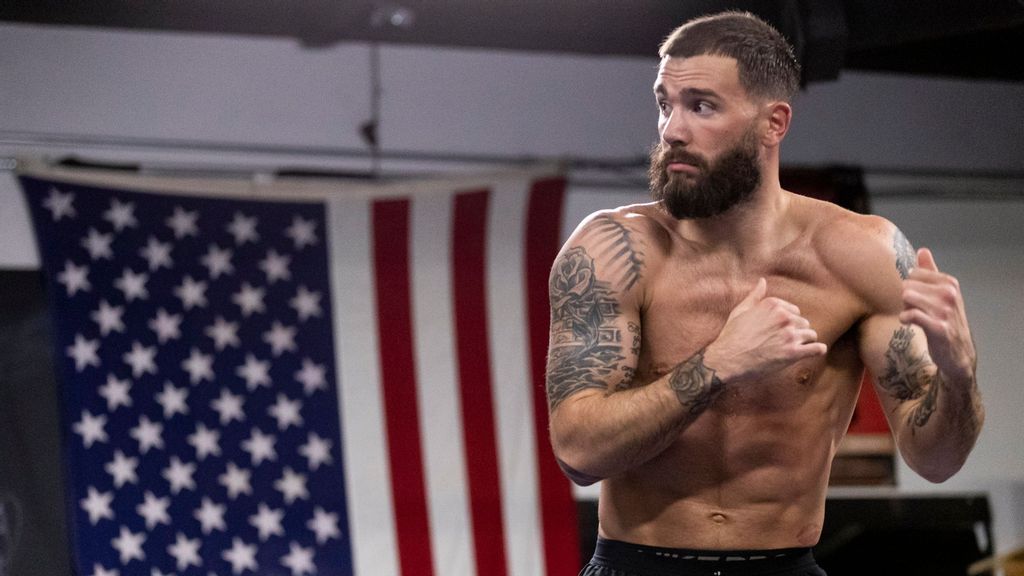
So last month’s contentious press conference for his upcoming 168-pound unification clash with Mexican icon Saul “El Canelo” Alvarez was nothing new for the 29-year-old IBF champion.
After Alvarez shoved him with two hands, Plant swung and missed with a punch.
Alvarez landed on Plant, and a brief scuffle ensued before the men were separated. Plant emerged with a cut under his right eye.
“There have been some guys who lost before the bell even rang against Canelo,” Plant said. “I think that’s why he’s so irritated with me.”
Plant (21–0, 12 KOs) will get a shot at redemption on Nov. 6 against Alvarez (56–1–2, 38 KOs), a 31-year-old who has predicted an eighth-round knockout victory during their unification bout at the MGM Grand in Las Vegas.
“This is personal for me, but every fight is personal for me. I’ve sacrificed a lot for this sport and dedicated myself completely,” Plant said. “So anybody who’s getting in the way of my goals makes it personal to me, no matter who it is.”
This will be the fourth fight in 11 months for Alvarez, who is seeking his third straight stoppage and looks to beat an undefeated rival for the eighth time.
In victory, the red-haired four-division title winner would become the first undisputed 168-pound champion from Mexico by adding Plant’s IBF crown to his WBA/WBC/WBO versions.
But Plant is sure he can ruin Alvarez’s plans.
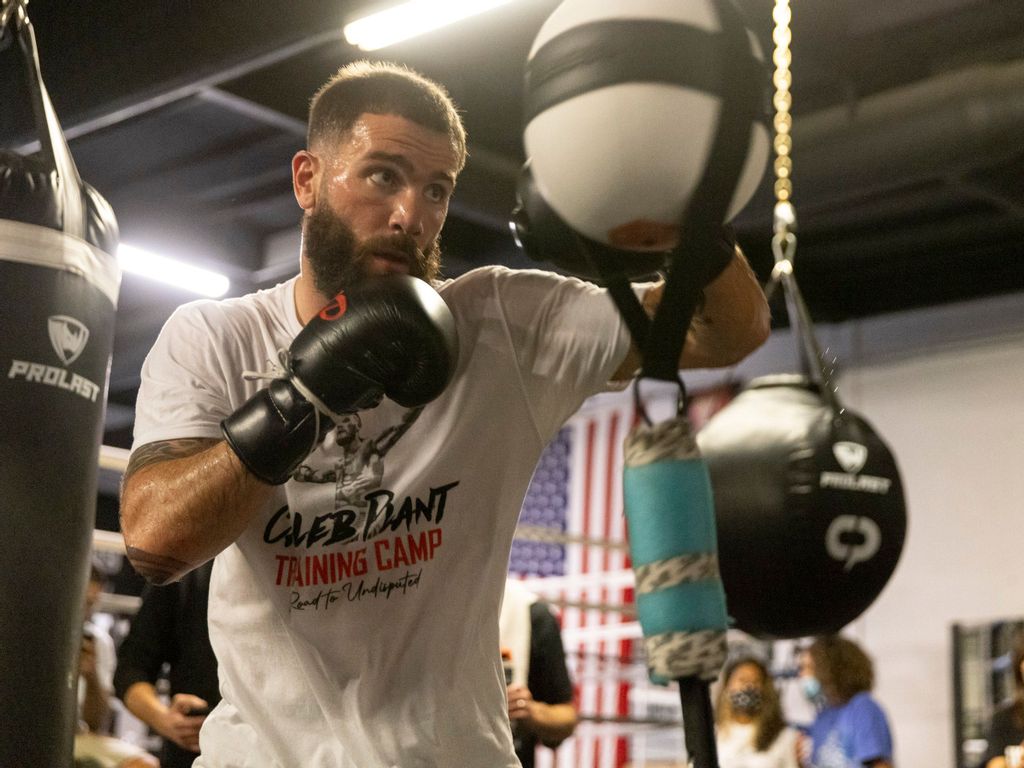
“This is personal for me,” IBF 168-pound titleholder Caleb Plant said of his Nov. 6 clash with WBA/WBC/WBO counterpart Canelo Alvarez for the mantle of undisputed champion. “There are a lot of things that I possess that are going to give him issues in the fight. I’m ready to rock.” (Esther Lin/Showtime)
“Some guys just come in and are there to hand over their belt, get their check and leave. Anyone who knows me, they know I’m only here for those belts. I have a big opportunity ahead of me. I haven’t taken any shortcuts in my training,” said Plant, whose father, Richie Plant, is an assistant to head trainer Justin Gamber.
“I’m prepared physically, mentally and spiritually. I’m just locked in,” Caleb Plant said. “There are a lot of things that I possess that are going to give him issues in the fight. Every fighter says this is their best camp, but I am honestly saying that. I’ve had no injuries, amazing sparring, and I’m ready to rock.”
In January 2019, “Sweethands” Plant scored two knockdowns to dethrone IBF champion Jose Uzcategui by an upset unanimous decision. Afterward, the then-26-year-old proposed to his fiancee, Jordan Hardy, and has since married her.
“Caleb has always stepped up when the time came. He was an underdog in the Jose Uzcategui fight. The lights and size of a fight have never been too big for him. It sounds like Canelo is hoping that’s going to affect him,” Gamber said.
“When you have two alpha dogs in the same room, it’s not going to be calm. There’s always going to be clashing. It doesn’t surprise me. It’s not personal on the teams’ ends, but these are two pit bulls, and they’re ready to go at each other.”
As a 9-year-old, Plant was living in impoverished Ashland City, Tennessee, when he “asked God, ‘Please send me something I can use to change my life and the world.’”
“God answered my prayers,” Plant said. “[He] sent me boxing and saved my life.”
Richie Plant, a former amateur kickboxer, introduced Caleb to the sport in a gym he struggled to fund. Since then, the Plants have found purpose in boxing as father and son, co-trainer and boxer.
“It was sacrifice with very little resources. You got tired every single day. But just like any dad who is involved with their kid – you’re in it with them. It’s just life,” Richie Plant said.
“I’ve always told [Caleb] to be a man of integrity, do what you say you’re gonna do. As soon as you roll out of bed in the morning, you know everything that you have to do that day so just go on and get it knocked out.”
Together, they have endured the passing of Caleb’s 19-month-old daughter, Alia, in January 2015 from a rare medical condition, and that of his mother, Beth, in March 2019 at age 51.
“It’s been a long journey for me and my dad,” said Plant, who has a tattoo of the date Alia passed. “Those tough moments made me the fighter that I am now.”
Plant’s first defense was a four-knockdown, third-round stoppage of previously unbeaten Mike Lee, who entered their bout in July 2019 at 21–0 (11 KOs).
In February 2020, Plant was able to return to Tennessee, thrilling his fans with a 10th-round TKO of Germany’s Vincent Feigenbutz, who entered at 31–2 (28 KOs).
“Representing Nashville means everything to us. We want to put Nashville on the boxing map. To have an undisputed champ from Nashville is so important to us,” Gamber said.
“The physical attributes Caleb has over Canelo will make a difference if we use them the right way. There have been a lot of guys against Canelo who haven’t been able to use their attributes. Luckily we have the skills to use our height and reach the right way, and I expect Caleb to do that on fight night,” Gamber added.
IBF 168-pound champion Caleb Plant donated shoes to 70 third grade students last week at East Cheatham Elementary School in his native Ashland, Tennessee. Plant fights WBA/WBC/WBO counterpart Canelo Alvarez of Mexico on Nov. 6. (Courtesy of Tyre Grannemann)
Plant returned to his elementary school, East Cheatham, in Ashland, Tennessee, last week, having teamed with retailer Shoe Palace to donate new shoes to 70 third graders.
“We are beyond happy to see Caleb’s growth into everything that he has said he was going to be,” said Shoe Palace CEO John Mersho.
“From day one till today, Caleb has always represented exactly what we stand for: hard work, loyalty, and most important, family. We’ve supported Caleb on his journey, and we will continue to do all we can to support everything he represents.”
Plant was on his game yet again in January, winning his third defense by shutout (120–108 on all three cards) unanimous decision over former champion Caleb Truax.
“I have a lot of respect for this sport,” Plant said. “I’ve dedicated myself to this sport and sacrificed every day. I want my name in those history books. Nov. 6 is a big step toward that goal.”
NEW ORLEANS — The voice is distinct, the lyrics are diverse, the status of Fiend, legendary.
No matter which alias you use — Fiend, Mr. Whomp Whomp, Sleepy Jones, or International Jones — the foundation that Richard Jones has set for himself puts him in a class all by himself.
Bursting onto the scene in the mid-’90s, Fiend appropriately titled his debut album, “Won’t Be Denied.” The multi-platinum selling artist also showed off his production skills on his 17th Ward bredren, Lil Wayne’s “Tha Carter III” album, which took home a Grammy in 2009.
After joining Master P’s No Limit Records in 1997, Fiend was featured on tracks with Snoop Dogg and the rest of the No Limit family. His verse on Master P’s “Make ‘Em Say Uhh,” is one of the many highlights of his career.
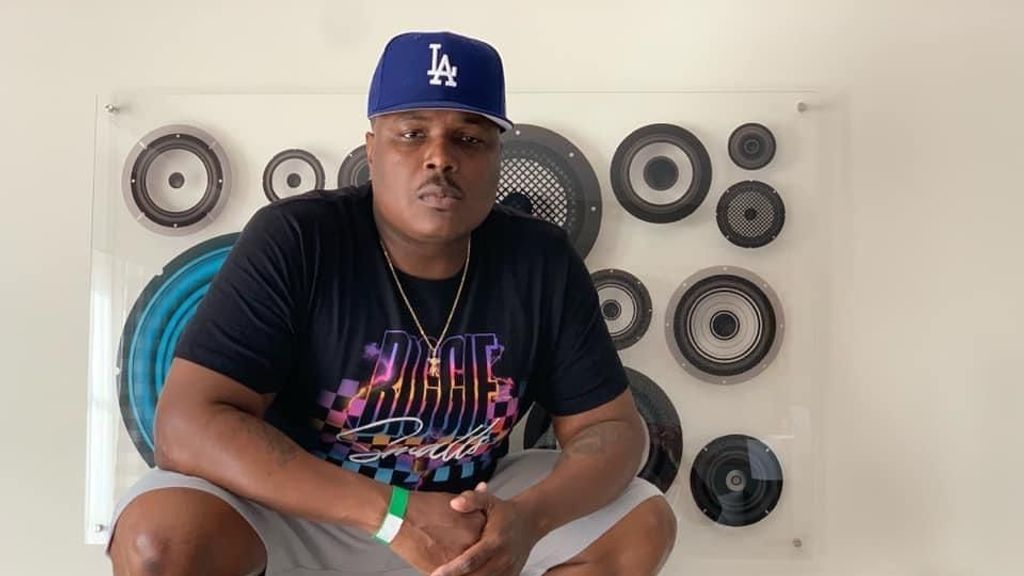
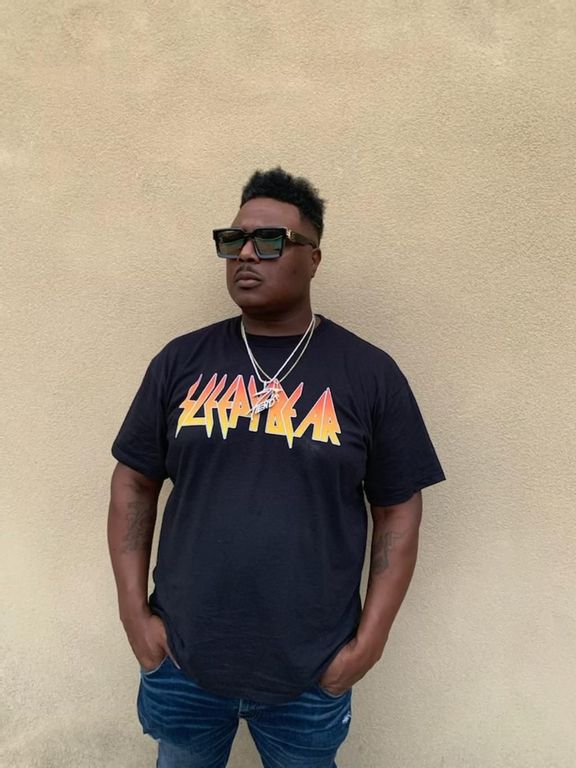
Recently praised by international recording artists including UGK’s Bun B, and DC’s Wale, Fiend continues to provide his fans with hard-hitting lyrics under the Jet Life Recordings umbrella. He has also started a Sleepy Bear clothing company, has a TV show titled “Who Got Dat Fire,” and recently released his newest project, “Thank God It’s Fiend.”
This interview is part of a Louisiana Legends series, featuring talks with individuals from the Pelican State who have carved out their legacy.
Percy Crawford interviewed Richard Jones for Zenger.
Zenger: What part of New Orleans are you from?
Fiend: Uptown… Hollygrove.
Zenger: What is Hollygrove best known for?
Fiend: Some of the dopest lyricists in the game, being Fiend and Lil Wayne.
Zenger: What do you feel has been your biggest contribution to the city of New Orleans and the state of Louisiana?
Percy Crawford interviewed Richard Jones for Zenger. (Heidi Malone/Zenger)
Fiend: So far, just off of what I can see, getting through life with the right soundtrack. That’s what I get from most people, I got them through their middle school years, I got them through high school, I got them through a joce [stay] in prison, I got them through a loss of a family member. So, I’m going to say, being a soundtrack to people’s down parts of their life, knowing that somebody out there went through the same thing or something similar, and it’s going to be alright.
Zenger: When you made the move from Big Boy Records, an independent label, to No Limit Records, a nationwide label, what was that signing like for you?
Fiend: The moment I did that transition, I honestly felt like now this will be whatever that next level is for an artist to be the biggest version of themselves. It’s like you have been saving up for something for years, and you finally get it, and you have been working so hard, you can only think about getting back in there and complete working. One thing I could tell you that I do remember that I enjoyed was that there was much more camaraderie and other artists to be with that was on one page.
The previous labels that I was on, everybody was trying to make it. Unless you do something a little different, a little unique, it makes things complicated. It was a great feeling, but then it took a minute to get there. I couldn’t just enjoy that moment like that. I couldn’t take a moment and feel like, “Yes, I made it.” It all happened so fast. It’s like getting a raise on a job, now it’s on you to get back to work because you’re still looking at the manager position.
Zenger: Do you recall the first time you heard yourself on the radio?
Fiend: That was probably during the Big Boy Records days and getting those projects out. I had promotions running on the local Box TV network. It was huge. I think we all shared that as artists. We wanted to hear ourselves on the radio. It gave us some type of accomplishment. Then again… my bad, my bad — first time I heard myself on the radio is when Wild Wayne (a popular New Orleans DJ) used to let us come up there and rap and freestyle over beats. I did an intro for Wild Wayne and Q93. The intro is what Big Boy Records heard from me that made them wanna sign me.
So, let’s say, Mr. Crawford, before your show comes on, there is a one-to-two-minute intro, you doing interviews, how cool you are, stuff like that. Well, Wild Wayne had one to introduce his show before he came on, and I ended up doing the intro for his show. They heard, and they were like, “Man, this kid is, whoa.”
Zenger: At what moment did you realize you had something special?
Fiend: I don’t know. I have always heard that I have a great voice. I have had people trippin’ out while I’m spittin’ and they tell me I’m dope. They will give you instant reaction. But I would have to say, running my raps for my brother when he was alive. He used to come in from doing his thing in the streets, and he would pay me to make him a bowl of cereal or fix him some scrambled eggs.
It’s 2 in the morning, and we’re sitting at my mom’s kitchen table in our shotgun house. I’m beating on the table, running lyrics out my brain, and I had to be 12 years old. Him saying, “I gotta link you up with some guys. You really like this rap stuff, huh?” I think that gave me all the confidence I needed. He was one of them type of people…
I got to see what it was like to have a big brother. I have had instances like on some TV or movie deal where my brother had to come outside and defend me from older guys. He would make them get their mind right on some man-to-man stuff, no guns. So, I have always had a different level of respect for my brother, and that’s why I wanted or needed that stamp of approval from him that I was doing my thing. I think it had to start with my brother, Kevin Bailey.
Fiend says his music serves as a soundtrack for people’s lives. (Courtesy of Fiend)
Zenger: Do you have any regrets or something you would do over or differently?
Fiend: I genuinely in my heart regret that my stablemates at No Limit, Mac [McKinley Phipps] and Corey Miller [C-Murder], went to jail. [Phipps was recently released; Miller is still behind bars]. I know that doesn’t do anything, but I just think that was something that could have been avoided. As far as regret with my own doings, I think it would be ungrateful for me to say that. I could have been a better businessman. But that’s the only thing I can say I regret.
Zenger: What makes Louisiana such a special place?
Fiend: It has the richest culture in the United States. You can’t run away from that. I think the culture and the upbringing is what separates us from the rest of the world. The food, the people — when there is camaraderie, there is real camaraderie. The brotherhood is real brotherhood. As rough as it was surviving the ‘80s and ’90s, I wouldn’t trade it for the world because it molded and made us the human beings we are today. Tough enough when we need to be tough, and lenient where we could be lenient.
Zenger: How does it feel to be called a legend?
Fiend: I’m still kind of in shock. I don’t know at one point people knew to label me that because in my mind, I wrote-wrote-wrote, been through a lot, but at what point did they decide, this guy is a legend? I knew my upbringing alone, just to survive and still be here, everyone should be considered that. If you’re still here, and you was born and raised around what I was born and raised around in New Orleans, if you still here, everybody should damn near get the purple heart. It wasn’t an easy task.
I can tell you that I did feel big getting on songs with Snoop Dogg, getting on songs with UGK. That made me feel big. To be able to get on songs with people who you got unbelievable respect for, and hold your own, and have them happy to be on a song with you. Snoop Dogg constantly reminds me that I’m a superhero in this game when I see him. Our fan base, Mr. Crawford, wants to see us be huge. That’s a hard pill to swallow, bro. They want you to be huge. They expect it.
When any of my fans read this, peep this, if I signed a nationwide deal after No Limit, just know, that was for y’all. I could have stayed right where the hell I was collecting at least a million dollars a year without nobody knowing I had a thing. I prefer my life like that, anyway. When I first started rapping, I was so naïve, I thought I could just put the music out and never had to perform it. I was young, I didn’t know no better.
Scarface told me a long time ago, once I tap into the emotions of what I’m good at, and give the people that, I would really be on to something. It was noble of him to give me that great advice. I do appreciate being considered a legend, and I’m happy to be in the books with a bunch of other dope-ass people that are legends in this thing, especially being from Louisiana.
Zenger: What is Fiend up to these days?
Fiend: More business, more life. I got a new project out called “Thank God It’s Fiend.” I have another vibe of music that is more jazz, hip-hop and trap under the brand, International Jones. You can tap into that when you can. I also have a clothing brand by the name of Sleepy Bear Apparel. Tap into that one, it is the illest streetwear in the streets. I got a new TV show by the name of “Who Got Dat Fire.” Tap into that, have some laughs, learn some things and travel the world with me continuously, and let’s make some new memories and some new money.
Shawn Melamed’s home office is filled with high-tech equipment — computers, microphones, cameras for Zoom. But the most visible keyboard is not connected to his laptop. It’s a full-sized one meant for making music.
Melamed, who co-founded and serves as CEO of Spiral, a startup combining digital banking with doing good, is equally at home in corporate boardrooms and dance clubs, where he creates electronic music as a DJ and producer. He performs under the funky name “Alchemist Spider.”
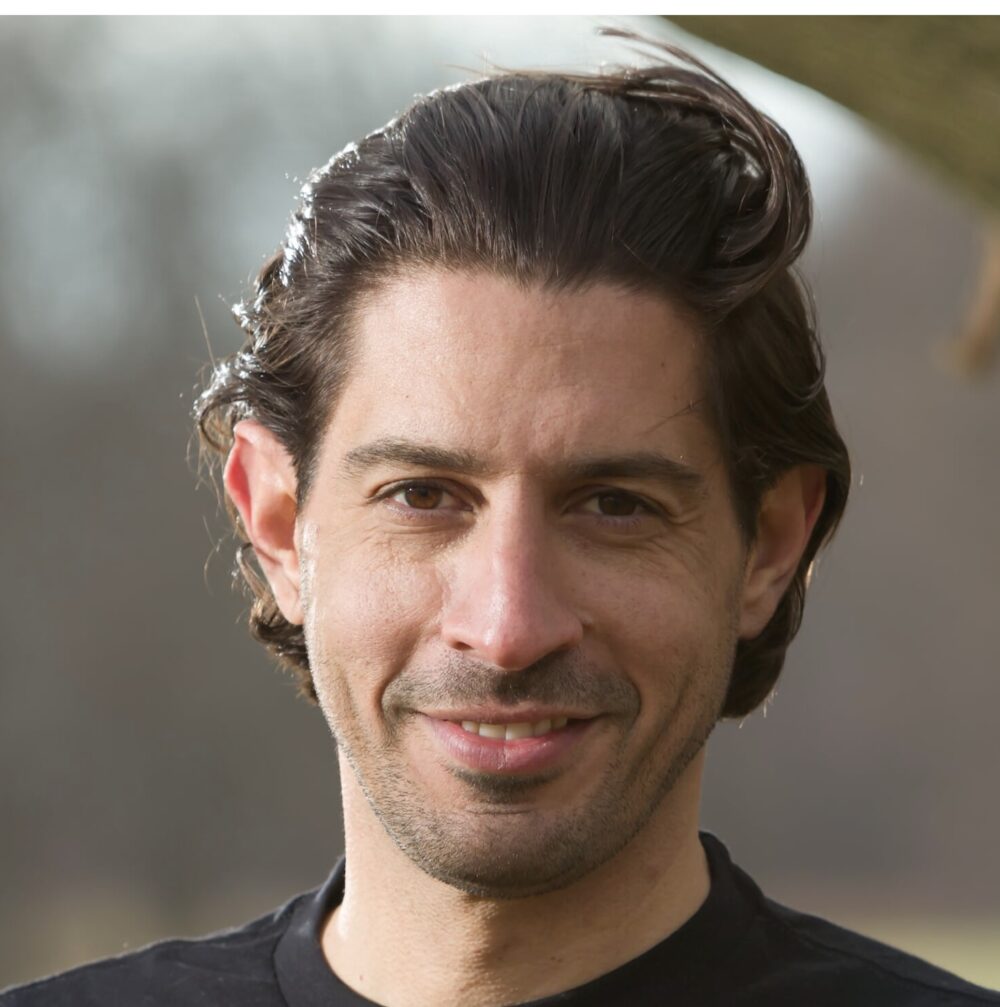
Shawn Melamed, CEO of Spiral. (Photo courtesy of Spiral)
“I like connecting people from all walks of life. You connect people through music. Spiral is also trying help people feel connected, to make the world a better place by being more socially responsible,” Melamed said.
“I love doing both music and tech. If I did just one all day, I’d get bored!”
Neobanking
Spiral is a “neobank,” an independent financial institution that piggybacks on a more established one.
If you bank with Spiral, you’ll see Spiral’s branding. But your deposits are held by the other completely regulated bank, with FDIC insurance protecting up to $250,000 of your savings.
Neobanks are online only. That’s fine with most customers, Melamed says, who are nowadays used to doing everything on their phones and would rather not spend any more time than they have to in a brick-and-mortar building.
There’s a second trend fueling the rise of the neobanks, Melamed said.
“Historically, you had a relationship with your bank’s branch manager. The bank might support the local 5K run. Then, small banks started consolidating to become these behemoth banks. They lost touch completely with their customers. These two trends created a very fertile ground for disruption.”
As of September 2021, there were 246 neobanks around the world. Among them: Chime, now with 15 million U.S. customers and a valuation of $25 billion; and Revolut, an all-European digital bank, valued at $33 billion. Israel has one too: First Digital, established by Mobileye founder Amnon Shashua.
Clearly, neobanks have become big business.
Seeking a way to differentiate Spiral, Melamed came up with the idea of combining banking with charitable giving.
Donating made easy
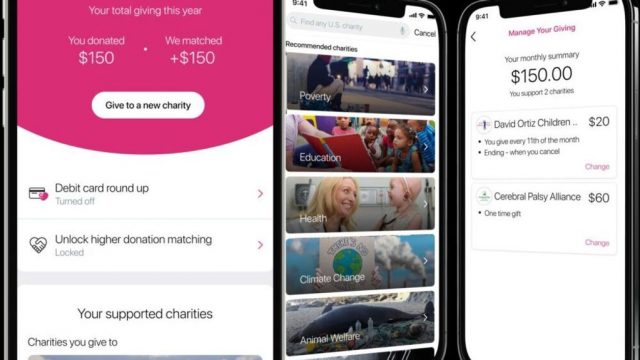
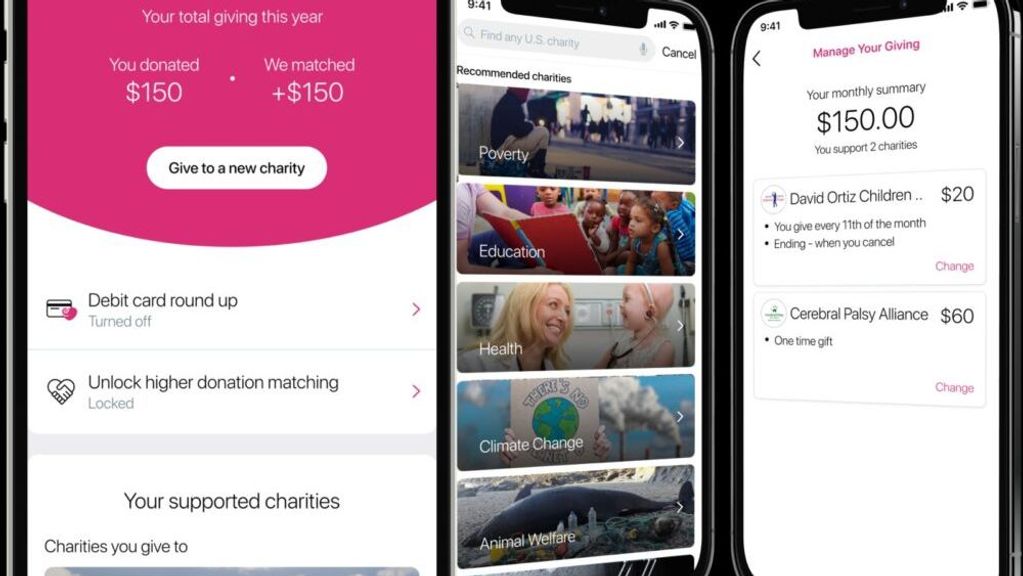
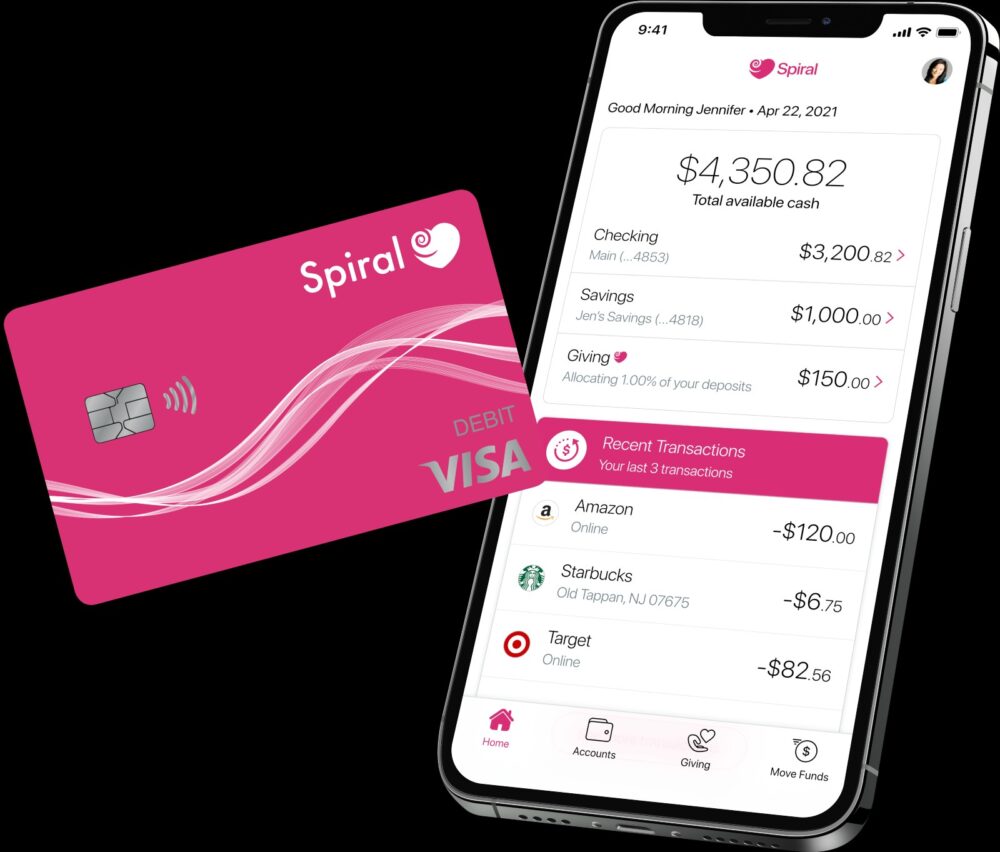
The Spiral mobile app looks like other online banking tools — there’s your daily balance and your most recent transactions.
But if you’d like to give to a charity or charities, the app enables you to allocate a certain percentage from what you earn, or send a one-off donation, to a specific organization.
Screenshot of Spiral app. (Courtesy of Spiral)
There are some 1.5 million nonprofit charities in the United States, all searchable from within the Spiral app.
“Who would you like to give to?” Melamed says. If the answer, or example, is the Pardes Institute of Jewish Studies in Jerusalem, he does a quick search and Pardes pops up right away. He picks an amount — $5 — taps send, and Pardes is now a few dollars richer.
Spiral will mail a check to Pardes, along with a colorful note indicating that if Pardes chooses to become an official partner charity, Spiral can make direct deposits into its bank account. Pardes will also be able to post videos and other content on the app so that Spiral customers can see how their money would be used.
Spiral has 100 partner charities, including United Way, American Friends of Hebrew University, Earthday, Rainforest Trust and the United Nations and Eden Reforestation. Any charity with a 501c3 designation in the U.S. is eligible.
Spiral issues a summary report whenever you like. It’s especially helpful at tax time, showing exactly where you donated in the last year and the total amount.
Spiral also has a one-to-one matching program up to $150, so that $5 Melamed just donated to Pardes became $10.
The most generous nation
How does Spiral afford all those goodies? That’s part of the magic of the banking business: Banks take your deposited money and reinvest it in other assets, generating revenue or doling it out as a loan with interest.
That allows Spiral to make and match donations. Charities don’t pay to be a part of the Spiral system.
Spiral was founded by two Israelis — Melamed and his chief marketing officer Dan Blumenfeld — but set up shop in New York to be closer to its main market.
“The U.S. is called ‘the most generous nation,’” Melamed said. “Six out of 10 households donate to charities. It comes out to about $470 billion a year.”
Spiral will focus on the U.S. for the next four to five years, Melamed says. Europe will come next. “In 10 years,” says Melamed, “people will look for a cohesive banking experience regardless of their location.”
In other words, you won’t necessarily pick a bank where you live but the best bank for your needs.
Digital nomads
Melamed is taking the same global approach to staffing Spiral. The company closed a funding round of $14 million just before the COVID-19 pandemic shut down much of the world.
“We had an office for only about two months,” Melamed says. He has no intention of opening a physical office again —just like his neobank.
“More people are becoming global digital nomads,” Melamed said. They can work anywhere. “We have Israelis who moved to the U.S., we have employees in Mexico, Portugal and Costa Rica.”
Melamed was raised in Mevaseret Zion, a suburb of Jerusalem. He started his first company, Correlix, in Israel before moving with it to the U.S. in 2008. Correlix was acquired by TS-Associates in 2012.
Melamed then joined 60,0000-employee Wall Street company Morgan Stanley, which was looking for an entrepreneur to run business development.
“I thought I’d do it for a year or two, but I really liked it. I had a senior role and was working closely with the COO, who is now on the board of Spiral.”
Melamed became the head of Morgan Stanley’s innovation office. “It was a great opportunity to learn how to innovate at scale,” he says.
After five years, the entrepreneurial spirit came calling again, and he decided to create “a bank with a heart – something to guide people to live a better life.”
Long-term journey
Spiral launched to the public just three months ago and is closing in on 5,000 customers. Melamed says customers can earn up to 15 times more on their savings than at the average bank.
Most users donate small amounts to charity, although a few give in the thousands of dollars.
“It’s a long-term journey,” he said. “We’re not building a startup to sell in three years. We’re trying to create a company that will last for 20 years with tens of millions of customers.”
What’s next for Spiral? Credit cards, personal loans and mortgages, Melamed says, all while continuing with matching donations and giving cash bonuses to customers of up to $126 a year.
Paradoxically, perhaps, the COVID-19 crisis didn’t dry up donations. In fact, donations in 2020 grew by 13 percent, Melamed says. “A lot of people and a lot of causes needed help, so people donated more.”
Spiral is not the only Israeli-founded financial services firm that gives back — high-flying insurance company Lemonade pledges that if there is any money left between the premiums you pay and claims that needed to be paid out, Lemonade will donate it to a worthy cause.
Now that “New York is waking up and going back to work,” Melamed says, there could be more money earned, more donations and even more opportunities to engage his other passion: making music while Spiral makes money for its neobank customers.
In North America, you can get a Spiral account here.
Researchers used night vision and artificial intelligence to discover how spiders build their often intricate webs to capture prey.
Johns Hopkins University scientists found that the eight-legged little creatures use their sense of touch to build elegant net-like structures of geometric precision that are delicate but strong. Spiders are among the few animals, along with weaver birds and puffer fish, capable of creating such architectural works.
“After seeing a spectacular web, I thought, ‘if you went to a zoo and saw a chimpanzee building this, you’d think that’s one amazing and impressive chimpanzee,’” said behavioral biologist Andrew Gordus. Noting that a spider’s brain is but a fraction of a human brain, he said it was frustrating that more is not known about them.
“Now we’ve defined the entire choreography for web building, which has never been done for any animal architecture at this fine of a resolution,” said Gordus, a co-author of a new study on the behavior available at Current Biology.
To understand how spider architects can build complex webs, Gordus and allied scientists documented and analyzed the various motor skills and behaviors involved. Because of the challenges in capturing and recording the behaviors, this had never been done before.
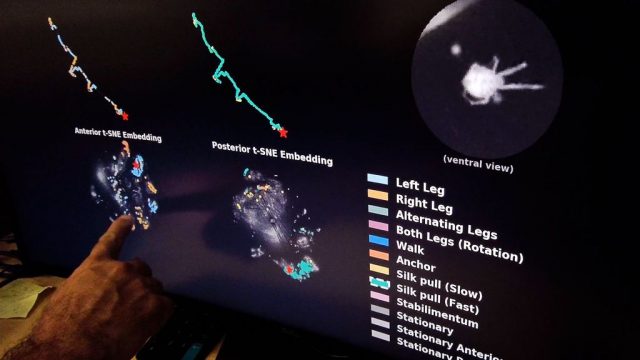
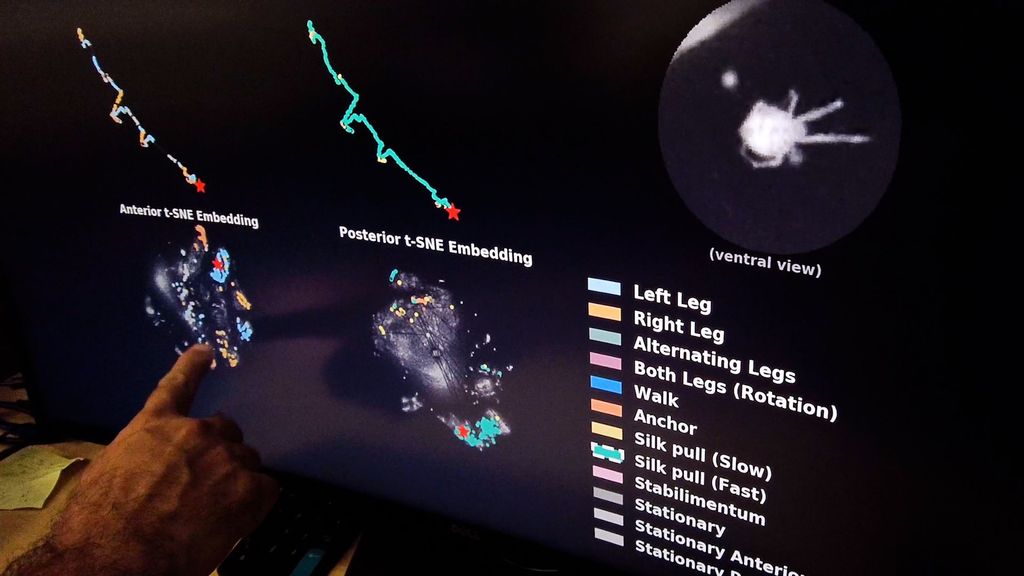
In the case of the hackled orb weaver, scientists designed a laboratory environment where infrared cameras and infrared light were used to monitor and record six spiders nightly. While the spiders worked on webs, the scientists tracked millions of their leg movements with machine vision software designed specifically to detect limb movement.
Johns Hopkins University researchers discovered that spiders behaved similarly while making webs, enabling them to predict which part of a web a spider was working on from seeing the position of a leg. (Johns Hopkins University)
“Even if you video record it, that’s a lot of legs to track, over a long time, across many individuals,” said study co-author Abel Corver. “It’s just too much to go through every frame and annotate the leg points by hand. So we trained machine vision software to detect the posture of the spider, frame by frame, so we could document everything the legs do to build an entire web.”
The researchers discovered that spiders behaved similarly while making webs, thus enabling them to predict which part of a web a spider was working on from seeing the position of a leg. “Even if the final structure is a little different, the rules they use to build the web are the same,” Gordus said.
Johns Hopkins University researchers have detailed the entire choreography for spider web building, something that had never been done so precisely for any animal architecture. (Johns Hopkins University)
This confirmed for him that spiders’ web-making rules are encoded in their tiny brains. “Now we want to know how those rules are encoded at the level of neurons,” he said.
The next step will involve researchers watching how mind-altering drugs may affect spiders building their webs. “The spider is fascinating,” Corver said, “because here you have an animal with a brain built on the same fundamental building blocks as our own, and this work could give us hints on how we can understand larger brain systems, including humans.”
Banana producers and exporters in Latin America warn the high costs of supplies and the low international price for the fruit are negatively impacting sustainability and competitiveness in the industry.
That has serious consequences, on various levels, for more than 800,000 families in the region.
The main banana associations in Ecuador, Colombia, Guatemala, Honduras, Dominican Republic and Costa Rica make up more than 60 percent of the global banana production. They warned about the impact of high costs on the value chain at the Fruit Attraction Fair, the largest fruit and vegetable fair in the world, held from October 5 to 7.
“It’s crazy how the supply costs have gone up, mainly for fertilizers. It’s terrible. A bag of potassium costs $42, and urea costs $37, and they’re going to keep going up with the cost of oil,” Claudia Argote, a production engineer with 27 years in the banana industry, told Zenger.
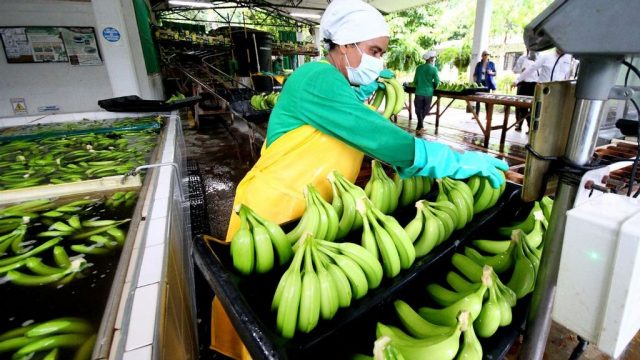
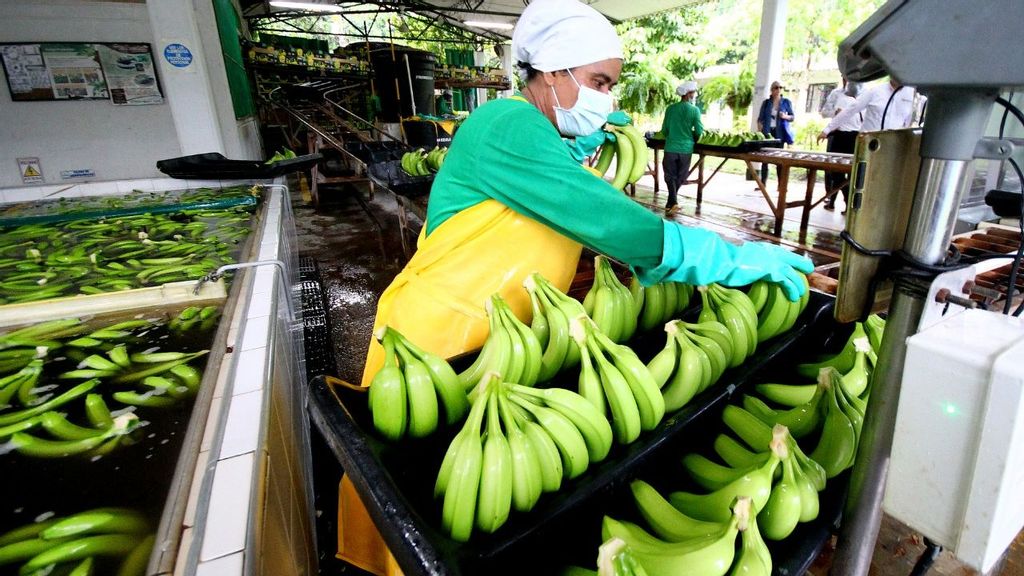
Banana producers and exporters say supply-chain costs are impacting 150,000 Colombian families and 808,000 Latin American families. (Courtesy of Banafrucoop)
Producers don’t know “how to write up a budget because we don’t know how high fertilizers will go. Remember that fertilizer makes up 20 to 25 percent of our costs, so if this situation continues, it’s going to make everything cost more, which will mean a higher cost [for bananas],” she said.
The international price for the fruit “has gone way down, despite the deficit in containers. I thought the balance would get a little better, but not at all. There are a lot of bananas in the world. India is producing a lot, and that’s bad for the volumes exported from all the Latin American countries,” Argote said.
The COVID-19 pandemic is another factor behind the price hikes, given the protocols introduced throughout the entire production line.
A bus that transports workers from their homes to the plantations used to carry 48 people, but due to security measures, it’s now one-third of that number. “That was a huge hit for me in terms of costs,” said Argote, who has her banana company in Urabá, in Northwestern Colombia.
She said the solution lies in “an increase in price for the consumer. Bananas are the cheapest fruit by volume in the world, and they provide high levels of daily vitamins for children and for everybody; they’re great. I think the market can handle a price hike, and that’s where we’re headed.”
The president of the Magdalena Banana Producers Cooperative (Banafrucoop), Leónidas Jiménez, told Zenger that for the smaller producers, the greatest impact has to do with the cost of fertilizers.
“We’re all small producer and right now, we have a stable price. We’re certified with Fair Trade. It means we’re guaranteed a price year-round. The problem is we’re working at 65 to 70 percent productivity,” he said.
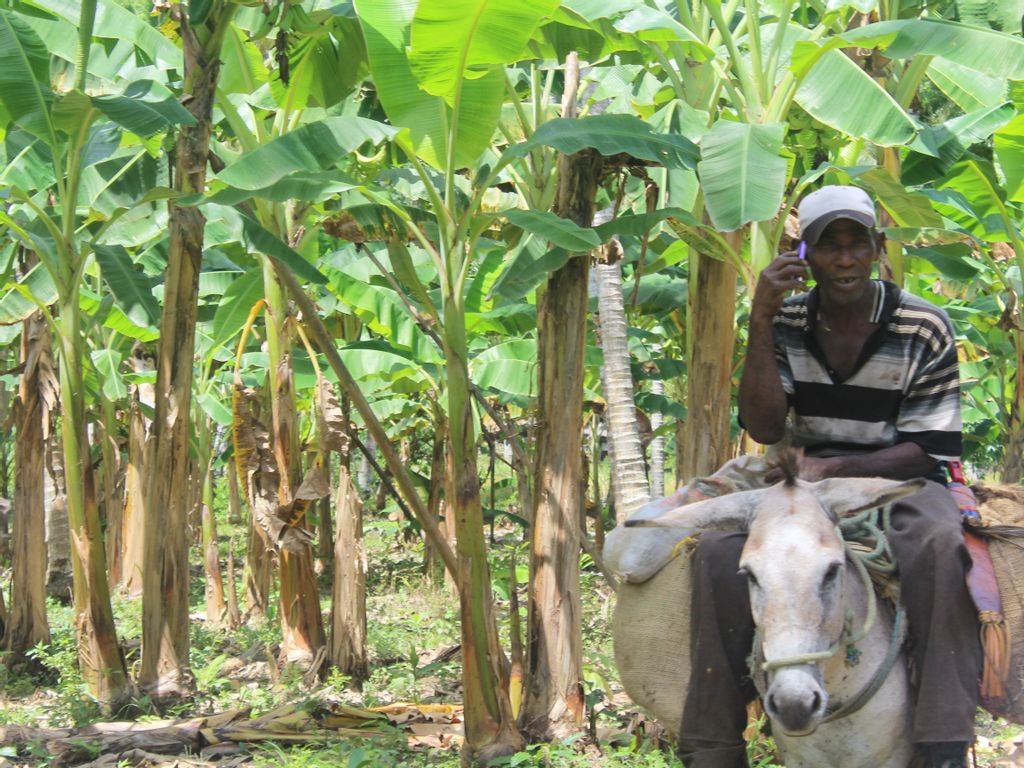
The biggest issue is the cost of fertilizers, said Leónidas Jiménez (Edelmiro Franco V./Zenger)
Jiménez said: “A 50-kilo (110 pound) bag of fertilizer costs about $21. What we use most is potassium, and that costs $32; it went up by 50 percent.”
“In this banana business we have to fertilize every month. When we stop, production really takes a hit,” said the president of Banafrucoop, a cooperative of small producers in the Magdalena region, on the Colombian Caribbean coast.
Jiménez said fumigation costs to fight endemic diseases, such as the black sigatoka mushroom on the plantations went up more than 50 percent.
The president of Banafrucoop believes the way to stabilize the cost of fertilizer is through government measures to control imports of the product, which is fundamental to banana production.
“Another issue is the certifications. There are new ones every day and that means high costs for small producers. The market is over-certified. We have to pay $6,615 a year for the certification,” Jimenez said.
Exporters and producers discussed these problems at the Fruit Attraction fair.
The industry leaders said there are higher costs to “implement security measures to keep containers from being contaminated with illegal substances. Because of the increase in maritime fleets, up to 62 percent, due to the global shortage of containers, the structure of operating alliances between shipping lines and the consolidation of that sector is impacted.”
They noted the price of bananas in 2021 suffered “the most catastrophic decrease in the last 10 years, falling to 10 euros ($11) for 18.5 kilos.”
The president of the Colombia Association of Banana Producers (Augura), Émerson Aguirre Medina, told Zenger: “Over the last two years, Colombia and Latin America’s agroindustry has faced a supply price increase in the value chain to such a degree that, even if the level of exports remains stable, the producers have not experienced this stability.”
The minister of Agriculture and Mining of the municipality of Apartado (a banana-producing area in Urabá), Wbeimar Ruiz, said the current exchange rate with the dollar might help balance things. (Edelmiro Franco V/Zenger)
The associations “are asking urgently for the international community and the supply-chain members to help, because it is necessary to implement all the measures to protect global food security and the employment that comes from Colombia’s banana exports — 150,000 families in the country, and 808,000 in Latin America,” said Aguirre Medina.
The director of Augura said: “Producing and exporting countries should not face these external factors on their own to protect the subsistence and future of the banana industry.”
The minister of Agriculture and Environment of the municipality of Apartado, Wbeimar Ruiz, said the current exchange rate with the dollar may help balance things.
“This is not the first time this has happened in Colombia. We once had an exchange rate at 1,500 pesos per dollar and the industry managed to survive. Now, with the rate above 3,700 pesos on average, it balances things in a way,” Ruiz told Zenger.
He says the “main business, which is banana production, is a stable business because of the supply contracts with habitual clients on the logistics chain in the international banana trade.”
Israeli companies raised a record $3 billion In October, a total that includes 10 six-figure investments. Among them are some new unicorns.
Topping the list is Orca Security, which raised $550 million in an extended Series C round led by Temasek, an investment company headquartered in Singapore. The round boosted its valuation 50 percent in just seven months to $1.8 billion.
Based in Tel Aviv and Los Angeles, Orca Security — a 2021 Gartner Cool Vendor — provides cloud security solutions.
Deel closed a $425 million Series D round, led by Coatue, bringing its valuation to $5.5 billion. Deel, based in San Francisco with research and development in Israel, provides a payroll solution for foreign employees, boasting 4,500 customers. Its own workforce spans 45 countries.
Tel Aviv cloud security startup Wiz reached a $6 billion valuation following a $250 million round in October — less than half a year after a $350 million round at a $1.8 billion valuation. The company was founded in January 2020.
Biotech company Immunai raised $215 million in a Series B round. The new capital will be used to expand Immunai’s AI platform for evaluating and developing novel immunotherapy drugs. Immunai has offices in Tel Aviv, New York City, Zurich, Prague and San Francisco; and more than 30 partnerships with pharmaceutical companies and academic institutions including Harvard, Stanford, Memorial Sloan Kettering and Baylor College of Medicine.
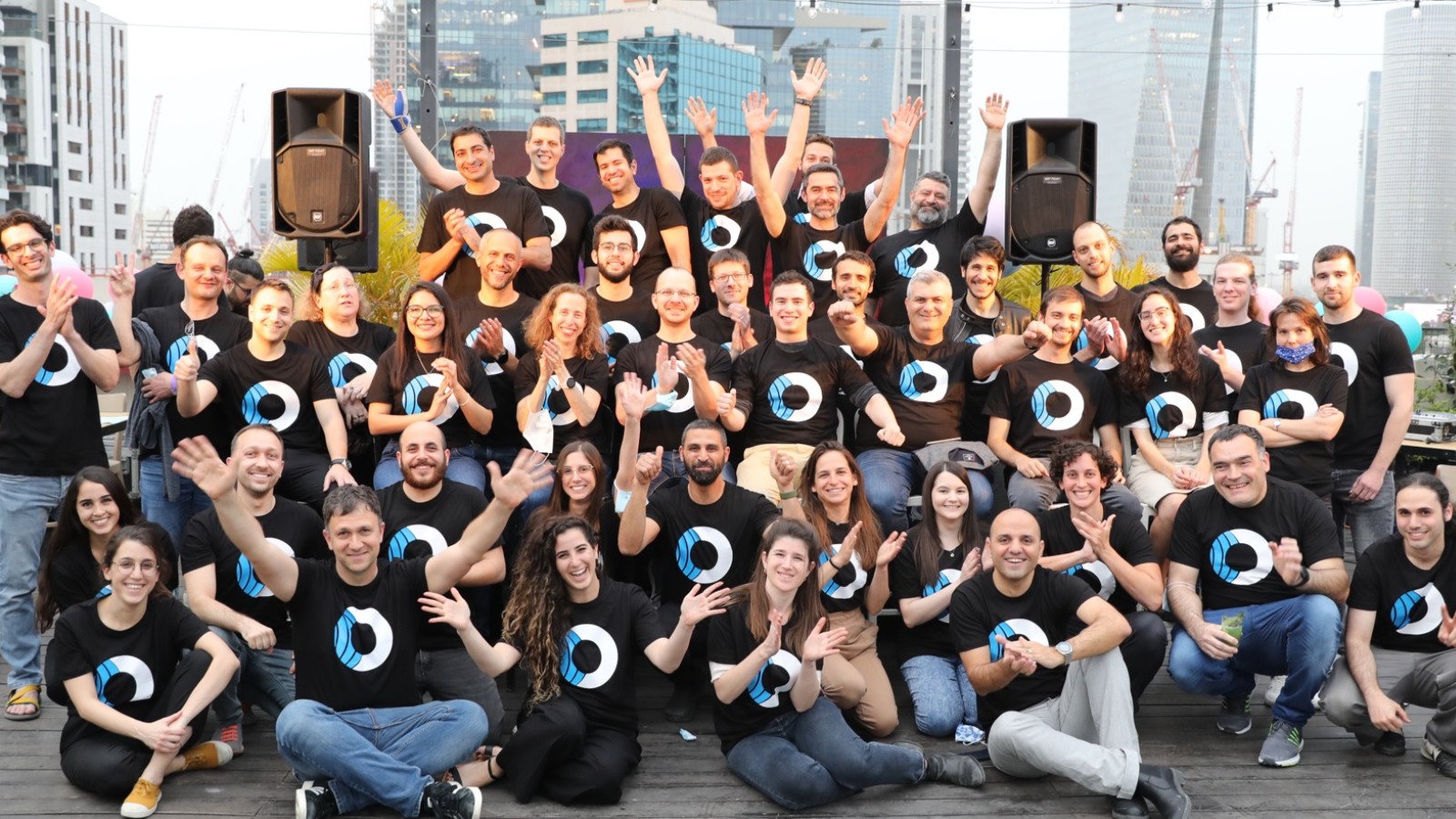
Immunai’s Tel Aviv team. (Immunai/Eliad Golan)
Cyber insurance unicorn At-Bay, based in the U.S. with R&D in Tel Aviv, got another $20 million in October as part of a recent Series D round that previously raised $185 million. That brings the total round to $205 million, giving the company a value of $1.35 billion.
Two companies each raised $200 million in October: secure networking architecture developer Cato Networks of Tel Aviv, now valued at $2.5 billion; and Fabric, which makes software and robotics for micro-fulfillment centers and has joined the unicorn club with a $1 billion valuation. Fabric is headquartered in New York with its R&D center in Tel Aviv.
A Series E round for Industry 4.0 startup Augury secured $180 million, taking its value into unicorn territory. “The new funding will enable us to expand globally, create offerings for new industries such as energy, and continue to innovate in our core manufacturing market to help customers improve the reliability, resiliency and efficiency of their machines and operation,” the company reported.
Hibob raised $150 million and reached a valuation of $1.65 billion. Founded in 2015 to modernize human resources tech at mid-sized and multinational businesses, Hibob employs 280 people across its offices in New York, London, Tel Aviv, Amsterdam and Australia.
Hailo raised $136 million in a Series C round. The Tel Aviv-based company makes a microprocessor uniquely designed to accelerate embedded AI applications on “edge” devices such as routers. The company’s products are used in fields including Industry 4.0, smart cities, autonomous vehicles, smart homes and retail environments.