


How A Search For Clean Air Turned Into The World’s Favorite Pollution App
If you ask Siri, “What’s my air quality today?” its go-to source for information on air quality is BreezoMeter. The World Health Organization, Apple, Yahoo and others use its services. The United Nations named the company one of six high-tech companies changing the world for the better.
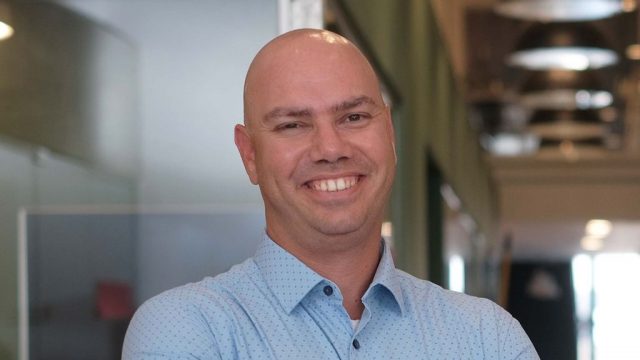
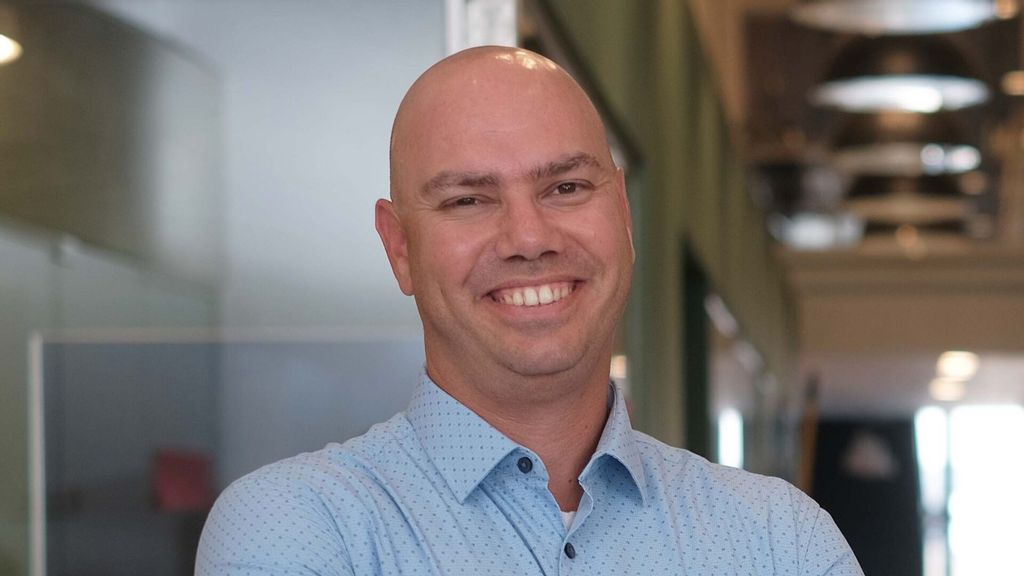
CEO Ran Korber is a cutting-edge entrepreneur who started the company that provides 400 million people around the world with the most comprehensive, real-time information about air pollution, wildfires and environmental hazards.
“I could speak forever about air pollution and environmental hazards,” Korber said, emphasizing that the environment is not something that is “out there — it’s very personal.”
Korber’s wife has asthma. In 2012, when she was pregnant with their first child, they wanted to find the healthiest place to live. Korber, an environmental engineer, was shocked to learn that local reports weren’t accurate, and pollution sensor units didn’t provide enough information.
Korber asked for help from his best friend, Emil Fisher, a software engineer who loved solving problems, and Ziv Lautman, who worked at the Environmental Protection Agency. The three men’s first assignment was developing an algorithm to calculate environmental factors in several locations.
Fast forward nine years, numerous awards, a visit to the White House and more than $15 million in funding from prominent investors.
Today, BreezoMeter’s advanced algorithms and machine learning can analyze data from satellites and thousands of sensors, incorporating information on dozens of different pollens and pollutants, wildfires, traffic jams and even Super Bowl games to provide real-time, accurate information on air quality around the world.
Air pollution, wildfires and COVID
Air pollution is increasing exponentially. Earth’s climate changes have caused an uptick in wildfires across the globe. Each year, the severity of these wildfires increases 10 times over the previous year. BreezoMeter’s recently launched live wildfire tracker provides vital information for individuals and businesses.
Studies show that people in areas with high levels of air pollution have higher blood pressure, more asthma, more obesity and exacerbated mental conditions. Where people live, their personal environment, has a huge impact on their wellbeing. Congress recently passed a bill to address the disproportionate adverse effects of environmental hazards on people in low-income communities.
At the start of the pandemic in March 2020, BreezoMeter’s researchers found higher levels of the disease in areas with more air pollution. People with preexisting health conditions are more susceptible to COVID, and as Korber says, “An area with severe air pollution is a preexisting condition.”
Each year, air pollution kills approximately seven million people. And wildfires intensify that air pollution with dangerous smoke traveling up to 3,000 miles away.
In BreezoMeter’s conference room, Korber opens a map of California where at least two wildfires are raging, spreading air pollution to surrounding states. Until now, he said, people had little idea in which direction a fire is going and when it would be contained.
He points to Alisal, a huge fire raging near Santa Barbara, California. The BreezoMeter app lets drivers know of the range of the fire so they can avoid certain danger.
Measuring air quality
Temperature is easy to measure. But until BreezoMeter invented its Air Quality Index, BAQI, there was no worldwide standard for measuring air quality.
In Hong Kong, for example, the air quality range goes from 1 to 10+, with 10 indicating hazardous air conditions. In the United States, the range goes from 1 (best) to 500 (worst). The BAQI shows zero being the worst and 100 being the best.
BreezoMeter’s index includes ground-level ozone, carbon monoxide and four other major pollutants. People can’t see air pollution, Korber said, which is why it’s so dangerous. Yet you can see the number on the index and easily understand it.
Companies like Bosch, Dyson and AstraZeneca now use BreezoMeter’s forecasts to alert people to worsening air quality.
Someone with chronic obstructive pulmonary disease, for instance, can start taking medication in advance because if it’s taken too late, it doesn’t work. Studies show that this forecasting has helped decrease the number of emergency hospital visits by 57 percent, which is good for everyone.
The company recently signed a deal with Volvo, known for its emphasis on auto safety, in which BreezoMeter’s information about air quality is included in all new cars’ standard features. If there is a sudden rise in air pollution, drivers can roll up their windows and turn on the air purifier system.
The most important mission
Korber said he has always been motivated to search for a way to contribute to the world.
Before attending the Technion-Israel Institute of Technology in 2004, he worked as a security guard at a chemical plant. Undecided about what to study, he asked the 500 people going in and out of the plant about their job. “Do you enjoy your job? Does it contribute to the world? Would you want your child to do the same kind of work?”
He found that 80 percent of the people were doing something they didn’t like. He even got up the nerve to pose the same question to the deputy CEO, who said that if Korber studied environmental engineering, the company would hire him. And that’s what happened.

To start BreezoMeter, Korber and Fisher (who also suffers from asthma) quit their day jobs because they realized that “we had the most important mission, and we had to invest all of ourselves.
“The likelihood of being successful with your startup is about as high as winning the lottery,” Korber said.
And yet they were successful. The company has raised $45 million to date and has 80 employees, including atmospheric, environmental and brain scientists. The plan is to provide even more information, such as earthquake forecasts and radiation levels, and to reach one billion users in 2022.
‘Our thoughts have power’

To celebrate its centennial next year, Technion is publishing a book highlighting 100 of its notable graduates — including Nobel Prize winners and Korber.
Korber not only gets to work with his best friend, Fisher, but also said that his office location is serendipitous. It’s in the building that houses a well-known restaurant where he proposed marriage to his wife.
Korber credits his success, in part, to the book, “The Secret”, about visualizing what you want manifested in your life.
“If you think about things, you will be directed to those things,” he said.
“It makes perfect sense according to quantum physics,” Korber said. “If e=mc2, if energy is connected to matter, then our thoughts have power.”
He also believes that developing positive habits can contribute to success. He said we need to “think about what we want to achieve, and not what we’re afraid of.”
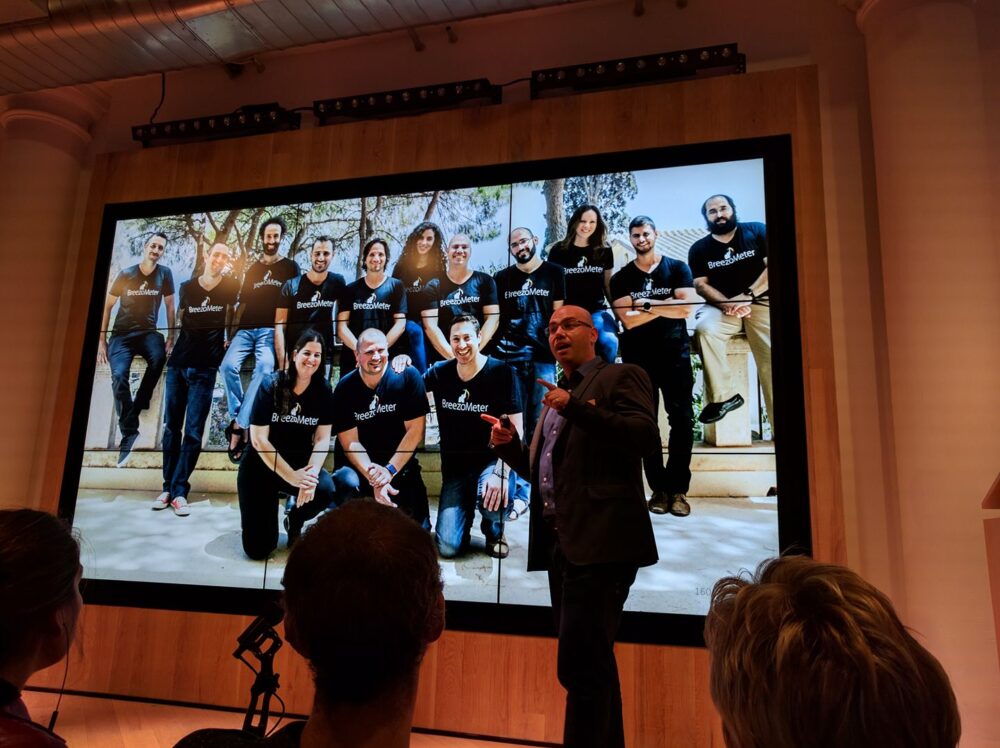
Built to last
For Korber, finding the right work/life balance has been challenging but since the pandemic started, the company allows people to work remotely, giving employees flexibility.
With all their investors, Korber and his partners could already make a fast exit, but “we’re not just a startup, we’re a scale-up, built to last.”
Produced in association with Israel21C.
The post How A Search For Clean Air Turned Into The World’s Favorite Pollution App appeared first on Zenger News.
Strong Ties Bind Silicon Valley To Silicon Wadi


A new report from the San Francisco-based Bay Area Council Economic Institute, “Silicon Valley to Silicon Wadi: California’s Economic Ties with Israel,” highlights the deep ties connecting the global innovation economies of California and Israel.
Based on extensive research and nearly 100 interviews, the report examines California’s economic footprint in Israel, Israel’s economic presence in California, key technologies where that activity is focused, and future opportunities for collaboration.
Built on shared values and aligned interests, the relationship between California’s Silicon Valley and Israel’s Silicon Wadi is reflected in growing venture investment, large-scale acquisitions of Israeli companies, successful Israeli-founded unicorns and public companies in Silicon Valley, and extensive corporate and binational research and development..
“Drawn by the search for engineering talent, Silicon Valley companies began their migration to Israel in the mid-1970s, a movement that has continued to the point where today California R&D centers are pervasive,” the report states. “Silicon Valley’s footprint can be seen most deeply in its concentrated investment in software and IT services.
More highlights of the report:
• From January 2003 to February 2021, California companies made 147 foreign direct investment projects in Israel. Software and IT services was the leading field followed by semiconductors, financial services and communications.
• 103 California companies invested a total of $22.4 billion in Israeli companies between 2003 and 2021.
• California-based companies are responsible for 20 percent of all acquisitions of Israeli companies globally and for 42 percent of all acquisitions by US-based companies.
• Out of 402 multinational companies with an innovation presence in Israel, 96 are California headquartered, and 80 of those are from the Bay Area.
• California hosts 140 Israeli-owned firms that support 6,248 jobs, amounting to $615 million in wages.
• California is home to 22 Israeli-founded technology unicorns, the most of any state.
• Three of the five largest Israeli acquisitions in history and seven of the top 15 acquisitions were made by California companies, including Mobileye and Moovit by Intel, Mellanox by NVIDIA and Waze by Google.
Silicon Valley-headquartered firms such as Applied Materials, KLA Corporation, IBM, Oracle, Cisco, Salesforce and Intel exemplify the role that Israel plays in the global R&D and business strategy of multinational companies.
“Intel, with 14,000 employees, is both Israel’s largest technology company and its largest private employer,” the report states.
Looking toward the future, the report pinpoints promising fields for future cooperation as biotech, data science and security, particularly advanced cryptographic systems such as postquantum cryptography.
“Embedding intelligence at the edges of computing — through intelligent vehicles and highway systems, for example — is creating new security vulnerabilities. With more intelligence in the grid, there is a growing question of how to secure it, and with the world at an inflection point between data-enabled connectivity and systemic vulnerability, a rich opportunity exists for collaboration with Israel in fields such as AI and cybersecurity,” the report states.
Produced in association with Israel21C.
The post Strong Ties Bind Silicon Valley To Silicon Wadi appeared first on Zenger News.
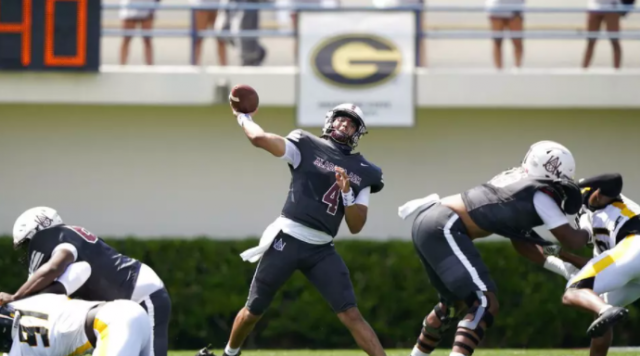
Aqeel Glass powers Alabama A&M to 42-28 win in 80th Annual Magic City Classic
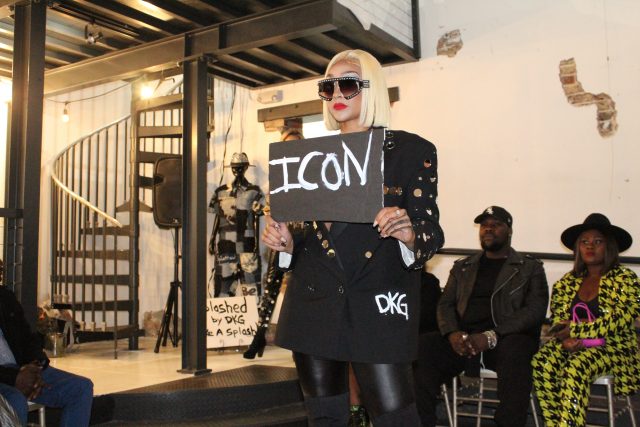
Magic City Fashion Week Showcases Best of Birmingham (Photos)
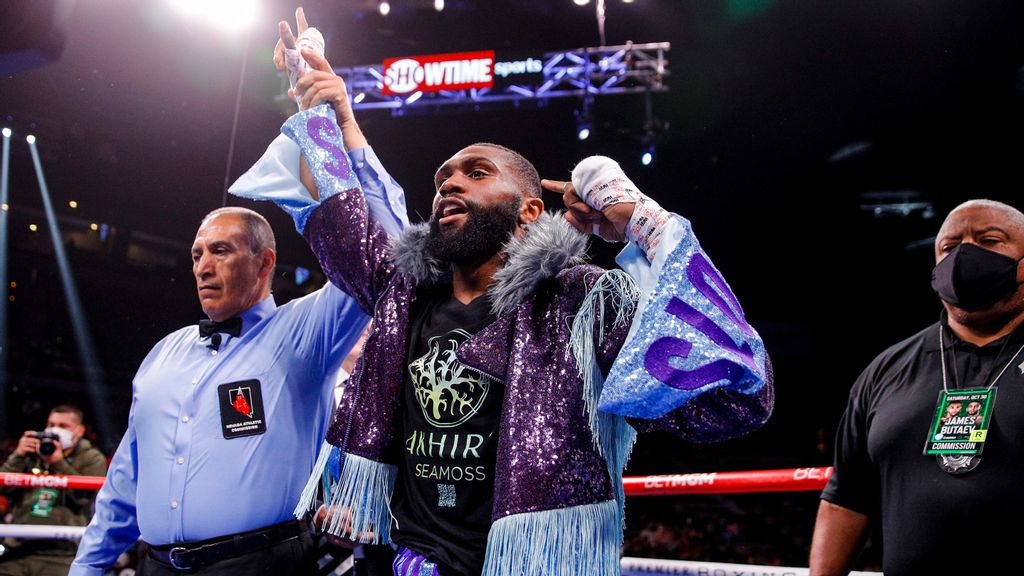
It’s A Happy Halloween For Jaron Ennis, Who Dropped Thomas Dulorme In First Round For 18th KO In Row

Joe Louis once said of Billy Conn, “He can run, but he can’t hide,” before stopping his rival in the eighth round of their June 1946 return bout of “The Brown Bomber’s” 13th-round KO five years earlier.
Jaron “Boots” Ennis is saying pretty much the same thing to the entire welterweight division. Ennis should change his nickname to “Boogeyman” at 147 pounds, for the 24-year-old continued to kick ass and take names on Halloween Eve.
The switch-hitting Ennis (28–0, 26 KOs) twice floored Puerto Rican title challenger Thomas Dulorme (25–6–1, 16 KOs) en route to scoring his 11th first-round knockout and 18th straight stoppage win at Mandalay Bay resort in Las Vegas on Saturday, a terrifying performance announcing him a lurking menace if not a favorite against any 147-pound fighter or champion.
Ennis’ show-stealing achievement preceded a main event featuring WBA “regular” welterweight champion Jamal James (27–2, 12 KOs) losing his initial defense via ninth-round TKO to Radzhab “The Python” Butaev (14–0, 11 KOs), a 27-year-old whose previous fight was December’s third-round knockout of previously unbeaten Terry Chatwood.
“I wanted to show my skills and ability, but I got a big knockout. We got it early, and that’s fine with me. We don’t get paid for overtime,” said Ennis, who has gone as far as six rounds four times with three knockouts.
“I thank Thomas Dulorme for the opportunity. It was a good knockout, but it’s on to the next. Let’s get those big names. They can’t run for too long. It’s either sign up to fight me or get out of the way. I’m ready to take the Ennis legacy to the next level and take over the division.”

Dulorme fell to his hands and knees a minute into the fight from Ennis’ equilibrium-stealing right hand behind his left ear but was able to rise at the count of seven from referee Mike Ortega. Dulorme failed to beat the count after the second knockdown, being floored as Ennis’ left-right-left combination — all to the head — dropped the Puerto Rican to his back.
“[Dulorme] leaned to the right side every time. We worked on that shot in the back room,” said Ennis, who hammered home 23 blistering jabs before the first knockdown, the first one coming only four seconds into the bout. “It was touch, touch and then chop, and that’s what I caught him with. I knew it was over at that point, but I just had to take my time and not rush anything.”
Ennis absorbed a pair of hard overhand rights between the knockdowns before finishing off Dulorme, describing the fight-ending sequence as “a straight left hand, right hook, straight left” combination.
“He caught me with a little shot, but I was just figuring him out,” Ennis said. “Everything I displayed tonight we worked on in the backroom. Catching his jab and throwing combinations. Every time he throws, throw right back, and that’s how I ended it.”
During an interview with Zenger last week, Ennis ranked himself the No. 1 welterweight ahead of undefeated left-handed IBF/WBC welterweight champion Errol “The Truth” Spence, his unbeaten switch-hitting, three-division WBO counterpart Terence “Bud” Crawford, two-time title winner “Showtime” Shawn Porter and WBA “super champion” Yordenis “54 Miracles” Ugas.
After that top five, Ennis said “you can throw [former champions] Keith Thurman and Danny Garcia in there,” also declaring, “I’m not ‘The Future’ of the welterweight division; I’m most definitely ‘The Now’ of the welterweight division.”

In August, Ugas won a unanimous decision over eight-division champion Manny Pacquiao, who retired afterward. An upcoming welterweight battle on Nov. 20 features a defense by Crawford (37–0, 28 KOs) against Porter (31–3–1, 17 KOs).
“Let’s line up the top five guys: Spence, Ugas, Porter, Crawford, Keith Thurman,” Ennis said on Saturday. “You know I’m coming to take over the welterweight division. Let’s get it. I’m ranked No. 3 in the IBF, so Errol Spence [should be next.]”
In April, Ennis scored a sixth-round KO of former champion Sergey Lipinets, who entered at 16–1–1 (12 KOs) but was knocked out for the first time. Lipinets was 3–0–1 (2 KOs) since being dethroned as IBF 140-pound champion in March 2018 by Mikey Garcia, who earned his fourth crown in as many divisions with a unanimous decision victory.
Lipinets won by 10th-round TKO in March 2019 over former champion Lamont Peterson, who retired after their fight, and was coming off a draw with unbeaten Custio Clayton in October 2020 before facing Ennis.
Dulorme was dominated more than at any previous time in his career, having lost decisions to Ugas, James and Eiamantas Stanionis, by sixth- and seventh-round TKOs to Crawford and Luis Carlos Abregu, respectively, and battled to a draw with two-division champion Jessie Vargas.
“[Ennis] was able to take those shots and demonstrate that he’s got a chin,” said ringside commentator and three-division champion Abner Mares, referring to blows described as Dulorme’s “Monster shots” by fellow analyst Al Bernstein. “Jaron Ennis started really well. Dulorme wanted a fight, and Jaron Ennis brought it. What a knockout, what a stoppage and what a way to do it.”

In the main event, Butaev alternated from orthodox to southpaw stance. The Russian outlanded James 175–121 in overall punches, according to CompuBox, including 36 body shots with a 46 to 36 edge in landed jabs.
“We worked hard on switching up and did it in sparring, and it worked, so we kept doing it,” said Butaev, who led James on two judges’ cards and trailed on the third. “Tonight [James] showed a lot of heart tonight, but I thought the fight was stopped at the right time. I felt it could have ended a lot worse.”
James had eyed a rematch against Ugas (27–4, 12 KOs), winner by 10-round unanimous decision in August 2016. Ugas has been declared “super champion” by the WBA, which has mandated a defense of his crown against Lithuania’s Stanionis (13–0, 9 KOs).
The Ugas-Stanionis winner has been mandated to face Butaev in March 2022.
“This was very important. This is a big step for me, but it’s only my first step. This is my dream, and I became a world champion,” said Butaev, who is currently fighting out of Indio, California, by way of Dagestan, Russia. “I believe that everything is ahead of me, and I’m looking for the biggest challenges. I’m looking to prove that I’m one of the best in the division.”
Edited by Stan Chrapowicki and Kristen Butler
The post It’s A Happy Halloween For Jaron Ennis, Who Dropped Thomas Dulorme In First Round For 18th KO In Row appeared first on Zenger News.
Mammoth Find: Huge Hippos And Mammoths Prowled Europe’s Ancient Rivers
By Peter Barker
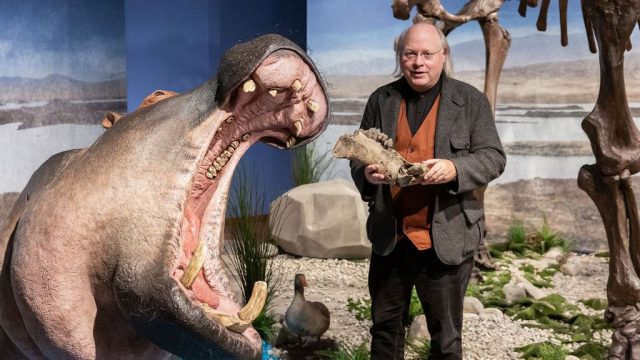
Germany’s Rhine River was home to hippos around 30,000 years ago, a study has found, contradicting previous beliefs that they died out in the region 116,000 years ago. This means the mammals that are now only native to Africa once roamed the European riverbank alongside woolly mammoths.
Experts from the Reiss Engelhorn Museum in Mannheim, the Curt Engelhorn Center for Archaeometry and the University of Potsdam examined hundreds of bones during a five-year investigation that has confirmed that hippos (Hippopotamus amphibious) inhabited Germany at the same time as the woolly mammoth.
“It’s amazing how well the bones are preserved. It was possible to take valuable samples from many skeletal remains,” said Ronny Friedrich, an age determination expert at the Curt Engelhorn Center for Archaeometry.
Friedrich and his colleagues examined a total of 30 hippo bones and confirmed that the animals lived in the Upper Rhine area at the same time as mammoths, woolly rhinos and cave lions.
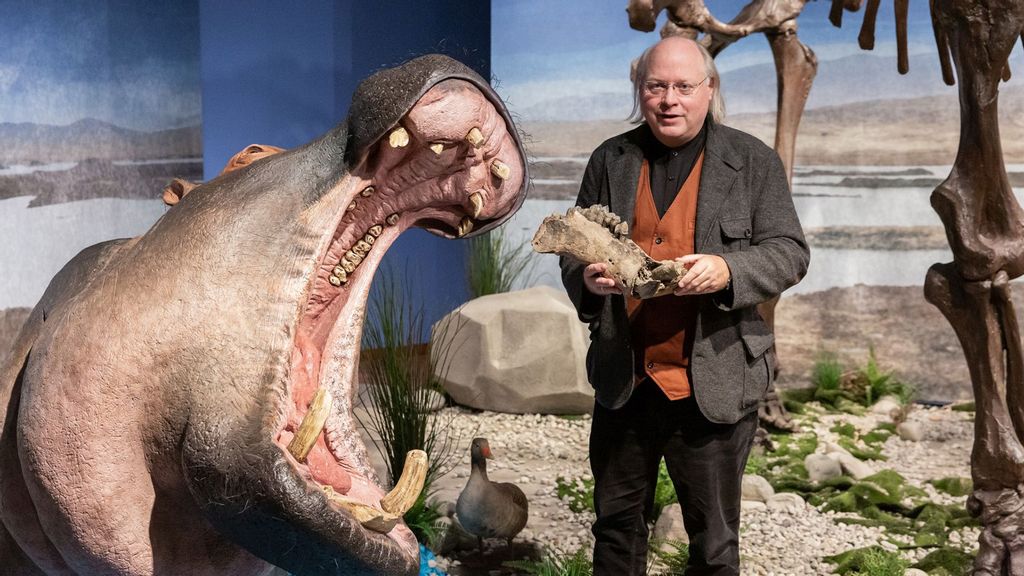
The Reiss Engelhorn Museum will host an exhibit on the project in its Ice Age Safari section, where visitors will be taken on a journey from 40,000 to 15,000 years ago, with models of hippos and giant woolly mammoths on display.

Museum researchers used radiocarbon dating to confirm that the hippopotamus lived in the Upper Rhine between 48,000 and 30,000 years ago. It was previously believed that all hippos had died out in Germany 116,000 years ago, at the end of the last warming period.
The flora and fauna of the Upper Rhine, which runs between Basel in Switzerland and Bingen in Germany, would have been vastly different from the present day during this period.
The river would have been home to hippos that can reach a weight of 3,310 lbs (1,500 kilograms) along with giant woolly mammoths and cave lions, among other now-extinct species, according to researchers.
“The hippopotamus is a real Ice Age inhabitant [of] the Rhine,” said Reiss Engelhorn Museum director-general Wilfried Rosendahl. He suggested this meant “the animals were able to adapt well” to the frigid conditions in the Upper Rhine Rift Valley.
Moreover, deeper investigation suggests the climate in the Upper Rhine Rift Valley was milder than previously assumed.

In addition to bones, scientists also analyzed wood samples and discovered that oak trees with a circumference of up to 41 inches (80 centimeters) grew around 40,000 years ago in the Upper Rhine region.
“In the last Ice Age, stately oaks still grew in our region — something that we [had] not previously thought possible,” said Rosendahl.
The hippopotamus is a large, herbivorous, semiaquatic mammal that is now native only to sub-Saharan Africa.
The International Union for Conservation of Nature categorizes the hippo as a “vulnerable species” on its Red List of Threatened Species, which means that the species will face extinction in the near future unless steps are taken to protect it.
Edited by Siân Speakman and Kristen Butler
The post Mammoth Find: Huge Hippos And Mammoths Prowled Europe’s Ancient Rivers appeared first on Zenger News.
Day Of The Dead Brings Pre-Columbian Culture In Mexico Back To Life
Day of the Dead is a celebration, a ritual and a tradition held on November 1 and 2 that brings together two cultures — the Mexica and the Spanish.
The tradition tends to be distorted outside of Mexico, says Héctor Darío Aguirre, a PhD in Anthropology.
Also, the idea of death in 21st-century Mexico has been influenced by violence and illness, he says.
“In Mexico, death is a friend. Still, with all the violence in the country today and with the global pandemic, we are seeing it differently, although we haven’t lost the idea of continuity,” he says.
“The interesting part is to see how each Mexican celebrates this day, not how foreign films depict it. Not everybody puts an archway on their altar, for example. It symbolizes the entrance to the underworld. The skulls remind us of the tzompantli [stacked skulls found among pre-Hispanic ruins], and the special Day of the Dead sweet bread is a combination of Spanish and Indigenous customs.”

The tradition comes from the Mexica culture, which dominated in Mexico’s central region, what is today Mexico City. When the Spaniards arrived in 1519, a blending of the two cultures ensued that has lasted until today. Some Mexica customs have held on more than others, like this celebration of death, which for that culture is a continuation of life.
“For the Mexicas, human sacrifice to the gods was normal and necessary. It was a privilege to die in that way. Death was not a terrible thing like it was for the Spaniards, but rather a continuation of life … The Spaniards came up with arguments against the idea of creation and continuity … The people learned to see death as something bad, unpleasant or harmful,” says Aguirre.
The original Mexica tradition is based on the belief that souls went to a place determined by how the person died. Most went to Mictlán, on a voyage that lasted four years. On the way, the soul was devoured by Tlaltecuhtli, the Earth goddess.
Then, it traversed 9 descending levels on a painful journey. Finally, when the soul reached Mictlán, a dark, dangerous, unknown place, it offered the gods of death and the underworld the objects with which it had been cremated — grains of corn and beans, other vegetables and precious stones.
“The Mexicas did not set up altars or offerings; they buried people with things. The conquistadors put an end to the human sacrifices and added a Catholic twist to the offering to the gods of death,” says Gabriela Rojas Cruz, whose undergraduate thesis is titled “The Day of the Dead Altar in the Federal District.”

Day of the Dead Altars
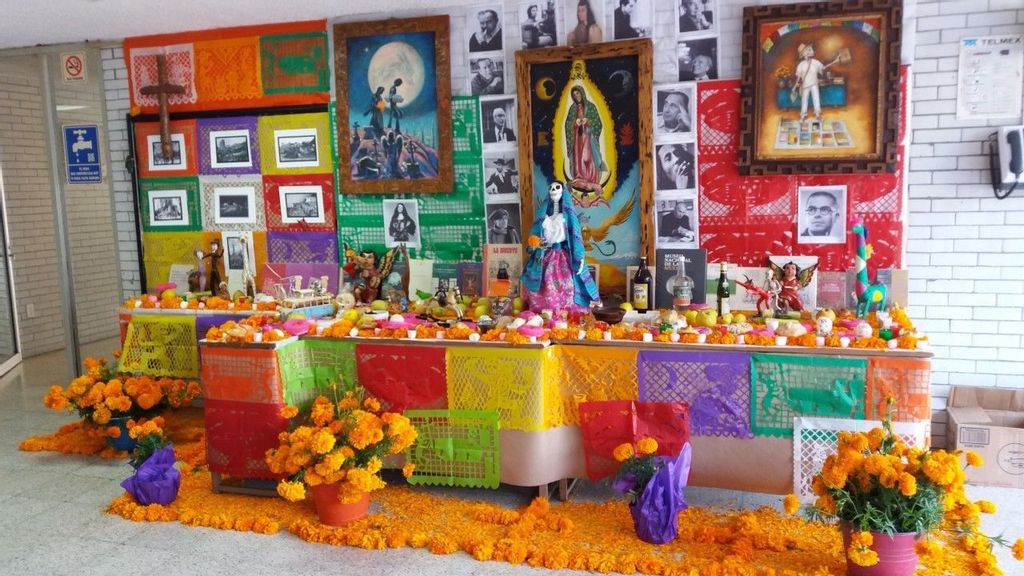
Today, Mexicans set up an altar on these days, a modern twist on the ancient custom of burying the dead with the offerings.
“The altar is a sacred place where an offering takes place. Day of the Dead has become a way to make these offerings. So, altar and offering are the same thing,” says Rojas Cruz.
“In many ancient religions it was believed that the spirits would be at peace depending on the offerings of the living. The men from each family worked on these tasks. The altar is usually large, depending on each family’s financial situation, space, and faith,” she says.
Rojas Cruz explains how to make an altar.
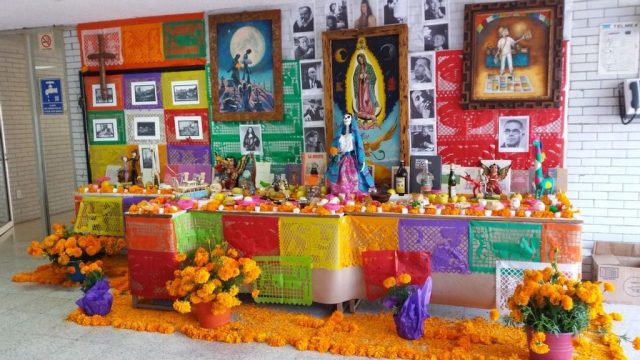
“The altar is covered with a white cloth. On the cloth, we place colored tissue paper with perforated designs, which represent death. We place flowers, like the cempasúchil (marigold); also, different types of candles used in religious ceremonies. We add pictures of the deceased who will receive the offerings, a small plate with salt and a glass of water; also, sugar, amaranth or chocolate candy skulls. As an offering, we use seasonal fruits, typical dishes, hot or alcoholic beverages, fruit drinks, and Mexican candies.
“The wax from the candles reminds us that every day that goes by we are being consumed. The flowers are the souls of the dead. They remind us of the beauty and briefness of life. The flame shows the souls the way home. The white cloth is the end of existence,” she said.

Each neighborhood celebrates in its own way.
Mixquic
“In Mixquic, in the southern part of Mexico City, funeral services are transcendental. They believe that a deceased person’s ‘destiny’ depends on the attention given the soul. When the body is placed in the coffin, they add a little water, salt, new huaraches [shoes] and coins, which will help the soul on its voyage through deserts, mountains and mud. The water will quench the soul’s thirst. The salt will keep the flesh from being destroyed. The huaraches are for the thorn-ridden path. The coins are for the dog who will guide the soul,” says Rojas Cruz.
“On November 1 and 2, people from the 4 neighborhoods in the region walk to the cemetery. They clean and fix up the graves. They take flowers, water, incense and liquor. Each person should make an offering to his or her deceased family members. The cemetery comes to life with the different colored flowers, the candlelight, the aroma of incense, the copal [tree resin incense] and tree sap and all the buzz.”

Jaltocán
Laura García, from the town of Jaltocán, in the state of Hidalgo, in the Huasteca region, explains the traditions there.
“For Xantolo [Day of the Dead], we make a hemp archway on a table in each home. We hang flowers, mandarin oranges and clay toys from it. We hang an embroidered cloth on the table, and on that we build the altar.
“At dawn on November 2, we grind the cacao in a metate to make the chocolate. We cook tamales, chicken, turkey or pork in mole sauce [a mixture of spices, chocolate and other ingredients, used on meats], and at dusk we put it on the altar; also, all types of beverages.
“For us, the sweet bread of the dead is a little sugar doll with the hands on its chest, fingers intertwined. We make water bread [a type of roll], mestizo bread, birote [sourdough] and chilindrinas [a sweet bread]. We put it in the center of the table,” she said.

“Each cup of chocolate represents a deceased family member. My sister places one for our mother, her son, my brother-in-law and my husband … The smoke from the incense rising calls the family members: ‘Mother, come for a meal; son, here is your hot chocolate.’ And it feels so good that you start to cry.”
The entire neighborhood takes part in the celebration, which is considered the most important of the year.
“During Xantolo, if someone comes to your home, you give him what is on the altar. It doesn’t matter whether the family knows that person. If you come by the house, you’re invited to eat. We eat at the altar,” García says.
“In the afternoon, the men get dressed up as souls of the deceased. They cover their faces with wooden masks and their heads with handkerchiefs, bandanas and hats. Some put different colored feathers on their heads and bells around their ankles. Others dress up as women. They dance huapangos and banda music. They go from home to home. Before they dance, they ask the homeowners if they will sponsor them. The homeowners give them something to eat and drink and a little money,” García said.


“When the deceased person leaves, we give him his favorite food in a big, new bag made of cord. We thank them and say, ‘Go rest. You have your lunch.’ The bags are white with colored flowers. The deceased leave us on November 3.
“The butterflies that come between September 29 and October 29 are the souls of the deceased. When we see them, we say, ‘Look, a butterfly! Leave it alone. It’s Grandpa, its Uncle … don’t touch it.’ For Jaltocán, butterflies are the souls of our loved ones,” said Laura García.
With these customs, many Mexicans hold on to their roots and consider the death of their loved ones as the other side of life, a continuation, a very different view than the European one. Much of the tradition has been maintained almost intact, despite the cultural blending with the arrival of the Europeans.
Translated by Melanie Slone; edited by Melanie Slone and Kristen Butler
The post Day Of The Dead Brings Pre-Columbian Culture In Mexico Back To Life appeared first on Zenger News.
