Home Blog Page 6

Black Women With Alabama Roots Turned Historic Firsts Into Opportunities For Future Generations

0
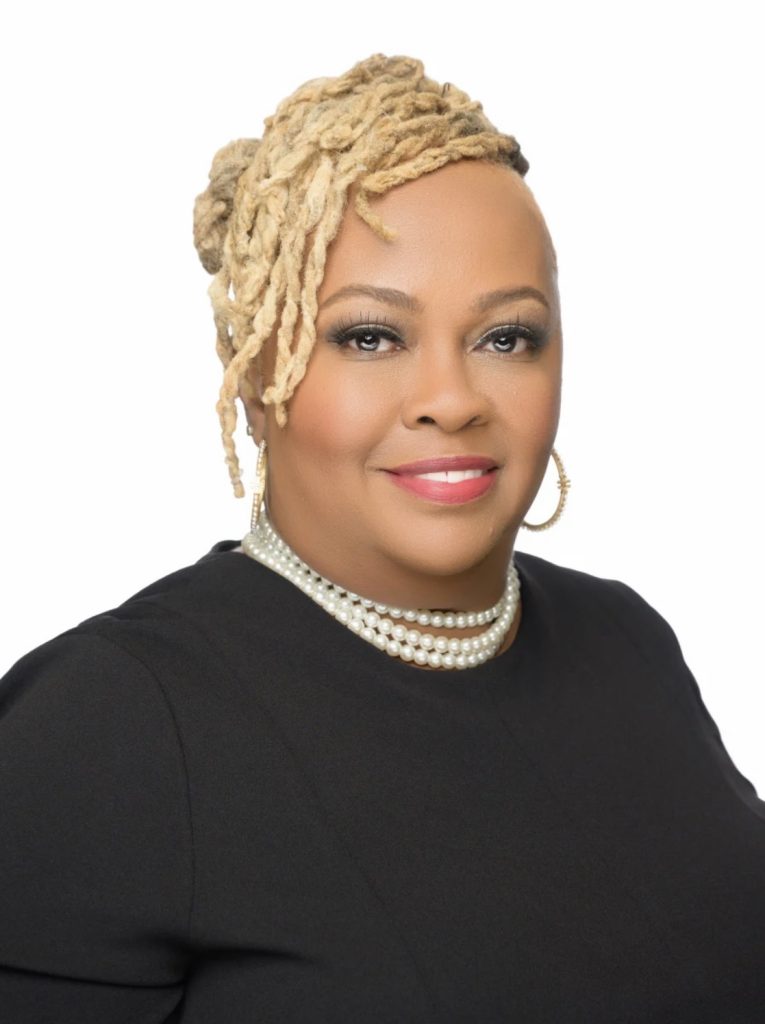
Carole Smitherman retired in 2025 after a distinguished career that included being the first Black woman hired as a deputy district attorney in Jefferson County. (Marika N. Johnson, File, The Birmingham Times)

Compiled by the Birmingham Times

Black women in Alabama and across the nation have long been trailblazers. From breaking records in sports to leading in politics, science, arts, education and media, the women featured here made history as the first, but they were determined not to be the last. Some have passed on, leaving legacies that extend far beyond their personal accomplishments. Others continue to lift as they climb, mentoring the next generation. Even in the face of systemic bias and inequities in opportunity, Black women are shaping their communities in ways that demand attention. The women in this list, some household names and others unsung heroes, all have ties to Alabama and show what determination, courage, and service can accomplish.


Politics, Law & Social Justice

Claudette Colvin

The courageous actions of Claudette Colvin (1939-2026), who died at 86, were often overlooked despite her pivotal role in the civil rights movement. In 1955, at age 15, she refused to give up her seat on a segregated bus in Montgomery, nine months before Rosa Parks. Colvin, who was born in Birmingham, Alabama, became one of the plaintiffs in the landmark case Browder v. Gayle that led to the end of bus segregation. Though Parks would become the face of the boycott, Colvin’s action made her one of the youngest people to publicly challenge Jim Crow laws.

Source: theguardian.com

Elisabeth French

In 2020, French became the first woman selected to serve as Presiding Judge in Jefferson County’s 200-year history. She oversees the 10th Judicial Circuit, the largest in Alabama’s Judicial System. French was first elected as a Jefferson County Circuit Court Judge in November of 2010. She was re-elected in 2016. During her tenure on the bench, French, who earned her juris doctorate from Samford University’s Cumberland School of Law in 1997, has disposed of thousands of cases.

Source: Alabar.org

The late Judge Helen Shores Lee. (Samford University Alumni Association)

Helen Shores Lee

Helen Shores Lee (1941-2018), daughter of prominent Civil Rights Attorney, Arthur Shores, was the first African American woman to serve in the Civil Division of the Circuit Court of Jefferson County, Alabama. Lee was appointed a circuit judge for the 10th Judicial Circuit of Alabama in January 2003 by former Gov. Don Siegelman. She retired in 2017.

Lee earned her Juris Doctorate from Samford University, Cumberland School of Law in Birmingham in 1987. After receiving her law degree, she began practicing law with her father. Lee committed her life to ensuring equal justice for all and to community service. She served on boards such as Blue Cross Blue Shield of Alabama, Campfire Inc., Chair of the Advisory Council of the University of Alabama at Birmingham Minority Health and Research Center, trustee for Leadership Birmingham, the Civil Rights Institute, Young Women’s Christian Association (YWCA) and many more.

Source: birminghamtimes.com

Condoleezza Rice

On January 26, 2005, Condoleezza Rice was sworn in as U.S. secretary of state, becoming the highest-ranking African American woman to serve in a presidential cabinet. A native of Birmingham, Alabama, Rice earned advanced degrees in political science and international relations and later served as provost of Stanford University. Known for her expertise in Soviet affairs, she worked with the Council on Foreign Relations and served as special assistant to the director of the Joint Chiefs of Staff. She later held roles on the National Security Council and became national security advisor under George W. Bush before her appointment as secretary of state.

Source: History.com

Terri A. Sewell

Congresswoman Sewell is serving her eighth term representing Alabama’s 7th Congressional District. She made history as one of the first women elected to Congress from Alabama and the first Black woman ever to serve in the state’s congressional delegation.

In the U.S. House, Sewell sits on the powerful Ways and Means Committee, where she serves as Ranking Member of the Subcommittee on Oversight. She also serves on the Committee on House Administration as Ranking Member of the Subcommittee on Elections. Over the years, she has held several leadership roles, including Freshman Class President in the 112th Congress. In the 119th Congress, Democratic leaders selected her to serve as a Chief Deputy Whip, and she also sits on the party’s Steering and Policy Committee. Sewell is an active member of the Congressional Black Caucus, where she chairs the Voting Rights Task Force, and she also helps lead several other caucuses.

Raised in Alabama’s rural Black Belt, Sewell was the first Black valedictorian of Selma High School. She later graduated from Princeton University, the University of Oxford, and Harvard Law School.

Source: sewell.house.gov

Carole Smitherman

Before retiring in 2025, Judge Carole Smitherman worked for nearly 49 years in politics and law in the Birmingham Metro area. Her storied career included several firsts.

In 1979, she began her legal career as a Deputy District Attorney, becoming the first Black woman to serve in this capacity in the history of Jefferson County, and she remained with the DA’s office until 1987. In 1991, Republican Governor Guy Hunt appointed Smitherman to the Criminal Division of the Tenth Judicial Circuit Court, where she served until 1992.

In 1997, she began teaching Constitutional Law at Miles Law School and continued for almost 30 years. In 2001, Smitherman was elected to the Birmingham City Council for District 6, where she served until 2013, and as President of the Birmingham City Council from November 2005 to November 2009. In 2009, Smitherman was sworn in as the 31st Mayor of the City of Birmingham, becoming the first woman to hold the position.

In 2012, Smitherman won successful election as a Circuit Judge to the Tenth Judicial Circuit Court. She was re-elected in 2018, and served continuously, with distinction, until her retirement from the bench in January 2025. Today she continues to give back, serving as dean at Miles Law School.

Source: biminghamtimes.com

Ciara Smith-Roston

On May 6, 2025, Ciara Smith-Roston made history as the City of Anniston’s first African American mayor, only the second woman to hold the office, and, at 26, its youngest ever. Smith became the youngest elected official in Anniston’s history in November 2020, when she was elected to the council and later named vice mayor – all by the age of 21. She served as vice mayor for nearly 5 years and assumed her current role after former mayor Jack Draper resigned after 8 years in office.

Smith began her career early, working at age 16 in the City of Anniston’s Financial Department. A 2017 graduate of Anniston High School and alumna of Spelman College and Jacksonville State University, Smith quickly became involved in politics and civic leadership. As a college freshman, she worked on Keisha Lance Bottoms’s campaign during the Atlanta mayoral race. As a student, she also interned with Hank Johnson in the U.S. House of Representatives and later participated in a training program with the Congressional Black Caucus Institute in Washington, D.C. In 2018, she was selected as a Forbes 30 Under 30 fellow. These experiences inspired her to return to Anniston and pursue community change.

Sources: annistonal.gov and jsu.edu


Arts, Entertainment, Literature, & Media

Laverne Cox

Born in Mobile, Alabama, Laverne Cox made history by becoming the first openly transgender person to be nominated for an Emmy. Cox attended high school at the Alabama School of Fine Arts in Birmingham before studying at Indiana University in Bloomington and Marymount Manhattan College, from which she graduated with a BFA in dance. Cox later worked in TV, including Law & Order episodes and the reality show TRANSform Me, before her breakout role on the Netflix series Orange Is the New Black. Cox has continued to be an advocate for trans and LGBT rights while appearing in additional screen projects such as The Mindy Project, Doubt and Grandma.

Source: Biography.com

Thai Floyd

A graduate of Florida A&M University’s School of Journalism & Graphic Communication, Thai Floyd made history in 2025 when she was named the lead play-by-play voice of Alabama A&M University football and host of “The Coaches Show.” She is the first woman to hold this role at Alabama A&M and the first woman to serve as the full-time voice of a historically Black college or university (HBCU) football team.

Source: news.famu.edu

Ashley M. Jones’ focus has always been on bringing poetry to the people. (File)

Ashley M. Jones

In 2021, poet, educator, and essayist Ashley M. Jones was named poet laureate for the state of Alabama, becoming the youngest person and first African American to hold the position. Jones is the author of four award-winning poetry collections, including Magic City Gospel, dark//thing, Reparations Now! and Lullaby for the Grieving. Formerly a creative writing instructor at the Alabama School of Fine Arts, Jones continues to work with young people as associate director of the University Honors Program at the University of Alabama at Birmingham.

Source: The Birmingham Times

Corietta Mitchell

Corietta Mitchell was the first Black artist to have an exhibition at the Birmingham Museum of Art. The museum was established in 1951 during the height of Jim Crow laws, which mandated segregation in public venues. Black patrons were only allowed to visit the museum one day a week. But in March 1963, four months before Birmingham officially repealed segregation laws, the museum’s founding director, Richard Howard, accorded a one-woman show to Mitchell, who was a leader of Birmingham’s Black Art Club. Also, an educator and classically trained pianist, Mitchell was a major figure in the Birmingham art scene at that time. Her exhibition drew more than 600 people and made headlines across Alabama.

Source: WVTM13


Science, Medicine, Innovation & Education

Dr. Regina Benjamin

Regina Benjamin, MD, was the 18th United States Surgeon General (2009-2013). As America’s Doctor, she provided the public with scientific information to improve the health of the nation. Dr. Benjamin also oversaw the operational command of 6,500 uniformed public health officers who serve in locations around the world to promote and protect the health of Amerricans. From her early days as the founder of a rural health clinic in Alabama to her leadership role in the worldwide advancement of preventive health, Dr. Benjamin has had a special interest in rural health care, health disparities among socio-economic groups, suicide, violence, and mental health.

Dr. Benjamin has served on several prestigious boards in her field and in 1995, she was the first physician under the age of 40 and the first African American woman to be elected to the American Medical Association Board of Trustees. She has received numerous awards for her work including the Nelson Mandela Award for Health and Human Rights in 1998.

Source: xula.edu

Mildred Hemmons Carter

In 1941, Mildred Hemmons Carter (1921-2011) became the first Black woman in Alabama to earn a pilot’s license through the Civilian Pilot Training Program. She was also the first Black female pilot in Alabama. Born in Benson, Alabama, she attended Tuskegee Institute (now Tuskegee University) and graduated with Tuskegee’s first class of CPTP trainees and on February 1, 1941. She also received her private pilot’s certificate which made her the first female pilot in Alabama.

Carter would later become the first Black woman in the Montgomery Civil Air Patrol Squadron. During World War II, Carter worked at Moton Field, then the only flight training facility for African American pilot candidates in the United States Army Air Corps. She became Chief Clerk of the Quartermaster Corps. She also rigged parachutes and operated a bulldozer to clear airstrips. After World War II ended, Carter traveled across the United States and Europe to mentor and encourage young Black women to become pilots. Many of these women became flight nurses and aerospace engineers.

Despite her initially being denied admission into the Tuskegee Airmen program, in February 2011, Carter was declared one of the original Tuskegee Airmen – just months before her death.

Source: BlackPast.org

Mae Jemison

Dr. Mae Jemison became the first Black woman to travel in outer space. (NASA/Public Domain)

On September 12, 1992, Mae Jemison became the first African American woman to go into space. Jemison, who grew up in Chicago but was born in Decatur, Alabama, was one of seven astronauts on the eight-day flight aboard the space shuttle Endeavor on mission STS-47, which made 127 orbits around Earth. During the spaceflight, Jemison was the science mission specialist, studying the effects of weightlessness and space travel on the human body. Jemison brought several personal mementos on the flight, including an Alpha Kappa Alpha sorority banner. In 1999, Jemison founded the BioSentient Corp., which uses medical technology to improve health and human performance. She continues to be a frequent public speaker and advocate for STEM participation by women and minorities.

Source: History.com


Education

Autherine Lucy Foster

Born in Shiloh, Alabama, Autherine Lucy Foster played a pivotal role in desegregating the University of Alabama. Admitted in 1952, her acceptance was rescinded when officials learned she was Black. With support from the NAACP and attorney Thurgood Marshall, she sued the university for racial discrimination and won a 1955 court order allowing her to enroll. In February 1956, Lucy became the first Black student to attend a previously all-white public university in Alabama, marking a major step toward desegregation. Though riots forced her withdrawal, her case helped open the university to students of all races.

In 1989, she again enrolled at the University joining her daughter, Grazia, who was also a student at the school. Foster earned a Master of Arts in elementary education in December of 1991 and participated in the graduation ceremonies the following May alongside her daughter.

The University named an endowed fellowship in her honor that year and unveiled a portrait of her in the student union. The University also dedicated the Autherine Lucy Clock Tower in 2010, honoring her as one of three individuals who pioneered desegregation at The University of Alabama.

Source: education.ua.edu

Vivian Malone Jones

Jones became the first Black student to graduate from the University of Alabama on May 30, 1965. Despite being an exceptional high school student and member of the National Honor Society, she was one of several Black students to have their applications rejected from UA because of “class size” and “enrollment” issues. Along with another Black student, James Hood, Malone Jones and the NAACP Legal Defense Fund filed suit against UA for denying entry to Black students. A district judge ruled in favor of the pair entering the university, but was blocked by then-governor George Wallace in the infamous “Stand in the Schoolhouse Door” event. Wallace made a political stand and kept his promise to uphold segregation in the state, using the now infamous slogan of “Segregation Now, Segregation Forever.” Only after federalized guard troops arrived, four and a half hours after Wallace’s initial refusal, were the students admitted. After graduating from Alabama, Jones worked for the United States Justice Department in its civil rights division. She also worked at the Environmental Protection Agency as director of civil rights and urban affairs and director of environmental justice.

Source: naacpldf.org

Miles College President Bobbie Knight. (Joe Songer, File, For The Birmingham Times)

Bobbie Knight

A native of Birmingham, Bobbie Knight made history in August 2019 when she was appointed interim president of Miles College, becoming the first woman to lead the institution since its founding in 1898. She was named the college’s 15th permanent president in March 2020. Knight quickly secured the largest single donation in the school’s history, and under her leadership, the college has received more than $101 million in external funding. She has also built partnerships with corporate, government, and philanthropic organizations to create internships, job opportunities, and hands-on learning experiences, while launching new initiatives including an e-gaming center, a Black Male Teacher Initiative and Apple-powered communications and music production labs.

Source: miles.edu

Sports

Alice Coachman

Alice Coachman made history as the first Black woman from any nation to win an Olympic gold medal. Born in Albany, Georgia, she drew national attention while competing for her high school track team and was later recruited by Tuskegee Institute. Enrolling in 1943 to study dressmaking, she also starred on the school’s track and basketball teams, winning four national titles in sprinting and the high jump. At the 1948 Summer Olympics in London, Coachman won gold in the high jump, setting an Olympic record by clearing 5 feet 6⅛ inches on her first attempt. George VI presented her medal. With this medal, Coachman became not only the first Black woman to win Olympic gold, but the only American woman to win a gold medal at the 1948 Olympic Games.

Source: womenshistory.org

Vonetta Flowers

In 2002, Vonetta Flowers became the first Black athlete to win a gold medal in the Winter Olympics. Previously a sprinter and long jumper at the University of Alabama at Birmingham, Flowers later turned to bobsledding and, at the 2002 Winter Olympics, she was the brakeman for Jill Bakken, as they won the gold medal in the first women’s Olympic bobsled event. In 2003, she returned to competition with new driver Jean Racine-Prahm. Flowers and Racine-Prahm competed in the 2006 Winter Olympics in Turin, finishing sixth, and together they also won a bronze medal at the 2004 World Championships. Vonetta Flowers retired from competition after the 2006 Winter Olympics.

Source: Olympics.com

Dee Foster

University of Alabama gymnastics standout Dee Foster was a 17-time All-American, four-time SEC champion and NCAA all-around champion and made history as the program’s first African American gymnast and the first-ever rookie to win SEC Female Athlete of the Year. Foster, who competed at Alabama from 1990-93, was also the first Alabama gymnast to score a perfect 10 before going on to set an NCAA record in 1993 with a perfect 10 in five consecutive meets. Two years ago, she was selected for the 2024 Southeastern Conference Women’s Legends class.

Source: Rolltide.com

“It’s important to make sure our generation is being highlighted for the amazing things we are doing to shape our communities.”

0

NICOLE SADE’ DANIEL, AUTHOR OF “LADIES, HOW DID WE GET HERE?” THE BIRMINGHAM TIMES, MARCH 19.

BJCC Delivers More Than $463.5M in Economic Impact for Metro Birmingham 

0
The Birmingham-Jefferson Convention Complex (BJCC) is Alabama’s premier sports, convention, and entertainment center. (BJCC)

bjcc.org

The Birmingham-Jefferson Convention Complex remained a key economic engine for Birmingham in 2025, generating more than $463.5 million in impact in the seven-county metro area.

Tad Snider, executive director and CEO of the Birmingham-Jefferson Convention Complex.

“The BJCC remains downtown Birmingham’s top draw for visitors, and our events and venues continue to be a major part of keeping the downtown area vibrant and strong,” said Tad Snider, CEO of the BJCC. “But the BJCC’s impact goes far beyond the city center to support economic vitality across Birmingham, Jefferson County and the whole metro region.”

The 2025 economic impact report includes spending and employment related to concerts, athletic events, shows and other activity at the BJCC’s venues, as well as its hotels, the Uptown entertainment district and the newly opened Coca Cola Amphitheater.

The report generated by MaynardNexsen reflects the BJCC’s overall success last year. Among other noteworthy achievements, Legacy Arena and the BJCC Concert Hall made Pollstar’s end-of-year rankings for high-performing venues based on attendance and ticket sales. The Coca-Cola Amphitheater, meanwhile, was nominated for Pollstar’s New Concert Venue of the Year award for 2025.

The economic report was presented to the BJCC Board today along with a favorable opinion on its audit report for 2025 conducted by Banks, Finley, White and Co. noting no material weaknesses or instances of non-compliance. The 2025 audit was the latest in many years of voluntary annual audits performed for the BJCC which have resulted in favorable opinions by auditors.

“These reports demonstrate that the BJCC continues to be an excellent steward and that recent investments in our complex are paying off for our entire community,” Snider said. “They also are a testament to the hard work of the entire BJCC team in continuing to attract top-tier shows and events that serve local residents and attract visitors to the metro area.”

Visit bjcc.org for more information.

Jefferson County Commission Highlights Breast Cancer Awareness at Women’s History Month Event

0
Brenda’s Brown Bosom Buddies (BBBB) recieved a donation from the Jefferson County Commission, and also made contributions to several organizations at the Women’s History Month event. (Javacia Harris Bowser | The Birmingham Times)

By Javacia Harris Bowser | The Birmingham Times

Breast cancer awareness took center stage at a Women’s History Month event hosted on Wednesday by the Jefferson County Commission.

Commissioner Sheila Tyson, with Commission President Jimmie Stephens and Commissioner Lashunda Scales, partnered with Brenda’s Brown Bosom Buddies to highlight cancer-related legislation, stress the importance of mammograms and present donations to several local organizations supporting breast cancer care. Other elected officials and local health care providers were also in attendance.

District Attorney Lynneice O. Washington shared a personal story illustrating the importance of mammograms.

“It was because of early detection and my faith that I am here today,” Washington, a breast cancer survivor, said.

She went on to remind the audience that 1 in 8 women in the United States will be diagnosed with breast cancer during her lifetime.

“That’s why organizations such as Brenda’s Brown Bosom Buddies are so important in this community,” Washington said. “It allows women of color who would otherwise not have the opportunity to have basic mammograms to check on themselves.”

Brenda’s Brown Bosom Buddies

Founded in 2010, Brenda’s Brown Bosom Buddies (BBBB) is a nonprofit organization dedicated to empowering breast cancer survivors—especially women of color—through education, support, and advocacy. Additionally, BBBB offers outreach, awareness, and early detection programs for underserved communities.

BBBB made contributions to several organizations at Wednesday’s event, including the following:

  • Birmingham Black Nurses Association ($500 – Scholarship Assistance Award)
  • Breast Cancer Research Foundation of Alabama ($1000)
  • Baptist Health Brookwood Hospital – Women’s Diagnostic Center ($1,250 for 10 Mammograms)
  • Forge Breast Cancer Survivor Center ($500)
  • Sister Survivors ($250)
  • Her Fight is Our Fight ($250)
  • UAB St. Vincent’s Foundation ($1,250 for 10 Mammograms)

Important Legislation

Al Holt from the office of Senator Linda Coleman-Madison highlighted Alabama Senate Bill 177 (SB177), which would require health benefit plans to cover supplemental breast imaging—such as MRIs, ultrasounds, and contrast-enhanced mammograms — for individuals with breast abnormalities. SB177, which was sponsored by Senator Coleman-Madison, passed the Senate in February.

Rep. Terri Sewell

Earlier this year, Congresswoman Terri Sewell, who represents Alabama’s 7th District, celebrated the passage of the Nancy Gardner Sewell Medicare Multi-Cancer Early Detection (MCED) Screening Coverage Act. Named for Congresswoman Sewell’s late mother, who died from pancreatic cancer in 2021, and co-led by Sewell and Congressman Jodey Arrington of Texas, this legislation allows for Medicare coverage and payment for multi-cancer early detection screening tests that are approved by the Food and Drug Administration.

To cap off Wednesday’s event, Commissioners Tyson, Stephens and Scales presented Brenda’s Brown Bosom Buddies with a $15,000 donation to support the work the organization does for breast cancer patients, survivors and their loved ones.

Individuals interested in getting involved with Brenda’s Brown Bosom Buddies are encouraged to attend a volunteer workshop set for Saturday, March 21, from 12 to 3 p.m. at the McAlpine Park Recreation Center, 1115 Avenue F, Birmingham, AL 35218.

‘I Knew That He Was the One For Me, and I Was the One For Him’

0

NICOLE & DEFELLUS DUMAS

By Mia Watkins | The Birmingham Times

Live: Gardendale

Married: June 19, 2003

Met: A chance encounter, a unique name and a dollar bill led to forever for Nicole and Defellus Dumas. The two met when they were in 10th and 11th grade, respectively, at one of the only two parties that Defellus’ mother allowed him to go to that year.

“My mama didn’t play that,” he laughed.

Nicole remembers the party being boring when Defellus and his friends arrived.

“We’re trying to tell them not to waste their money,” she recalled. “Him and his friends came in anyway. His name being Defellus, [I thought] oh that’s different.”

“When I first started dating him, I’d say Defellus and my friends that I was dating more than one person,” she joked.

The two met up again at the second party that Defellus was allowed to attend.

“Me and my friend were like, ‘Oh that’s Defellus,” she said. “A slow song came on, and since I was in the front, I got to slow dance with him. When it was time to go, he asked for my number, and he couldn’t find any paper. There were no cellphones back then, so he asked somebody to borrow a dollar and wrote my number on the dollar.”

Nicole kicked it with Defellus’ older brother before meeting him. Literally.

“I kicked him because I thought he said an insult to me,” she said. “He said we were young, but that’s not what I heard. I thought he said, ‘she gives it away.’ But, he said that I gave it away that we were younger. When [Defellus] brought me home, his brother said, ‘That’s that girl who kicked me!’”

It didn’t take long for the two to enter a relationship.

“We talked for a minute and then all of a sudden started being boyfriend and girlfriend,” he said. “We’ve been girlfriend and boyfriend ever since.”

First date: The two did a lot of “sofa sitting,” where Defellus’ parents met Nicole’s.

The couple’s first date was a momentous one in every high school student’s life: the prom.

The two went to his junior prom. She wore a black and white dress while he wore the customary tuxedo.

The turn: Nicole notes that Defellus was unique because he was marriage-minded at a very young age.

“One thing that he did was pray for a wife,” she said. “That’s what he did, and I’m here.”

It didn’t take long for them to get serious, but they also took their vow of virginity until marriage seriously, too.

“How we maintained virginity is there were times where I may have wanted to have sex or times that he wanted to have sex,” Nicole said. “But God kept us.”

Defellus soon graduated and went to the University of Alabama at Huntsville while Nicole completed her senior year.

“I probably didn’t visit him at UAH, but he came home to visit,” she said. “When I graduated, I actually went to Nashville for school, and he would visit me all the time. I would visit him sometimes.”

It took Defellus over a year to tell Nicole that he loved her. It took her a few months after that to say the same in response.

“He’d tell me he loved me and I’d say thank you for a long time until I meant it,” she said. “Then, I told him that I loved him back.”

Their bond was deep, even though they went to different schools. Nicole attended the Alabama School of Fine Arts and took dance lessons after school, while Defellus was an all-around athlete at Minor High School.

“I used to have to pick her up from school at 4:30 p.m. and take her to dance practice,” he remembered. “We were more mature than our children at that age. We were like old people in 11th grade.”

“We used to talk on the phone; that’s what we did most of high school because there were no cellphones,” she said. “He had football practice, and he would fall asleep on the phone all the time. I’d try to wake him up to hang up, but we’d still end up on the phone until morning.”

The proposal: The two were engaged during college, although family and friends referred to it as more of a promise to be together because of their young ages. By that time, they had already been dating for three years.

“We promised ourselves to each other,” Defellus confirms.

Defellus fooled Nicole into thinking that his grandmother was gifting her a dog for her birthday.

“I was doing a summer program, and I came home for the weekend,” she said. “He said, ‘Oh my grandmother got you a dog.’ And I’m getting excited about getting a dog. We go out to dinner at Macaroni Grill and there you write on the table. He wrote on the table, proposed and gave me the ring. It wasn’t the dog, but I got the ring. I didn’t even want a dog.”

“I don’t remember any of this,” Defellus joked.

Defellus said they only told family at first.

“They’d been seeing us this whole time,” Nicole said. “My brother was like his brother. His parents were like my parents. We were family already.”

They maintained their engagement through college visits and frequent phone calls.

“We did have cellphones then,” Nicole said. “The first minute was free, so we would talk for a minute and hang up, talk for another minute and hang up. We had it down. One time, my mama was in the room, and she was like, “Y’all are getting on my nerves with all this hanging up.”

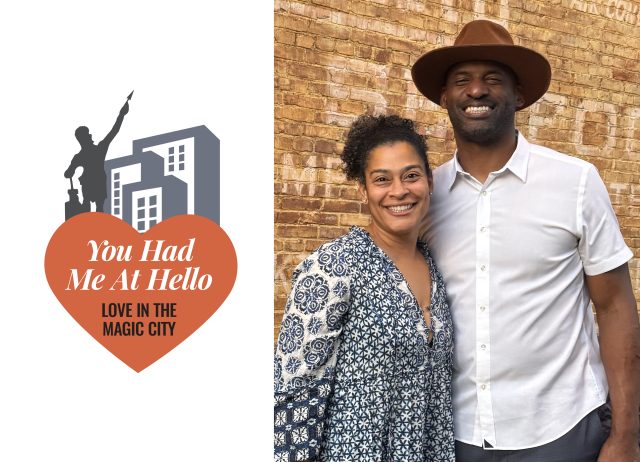
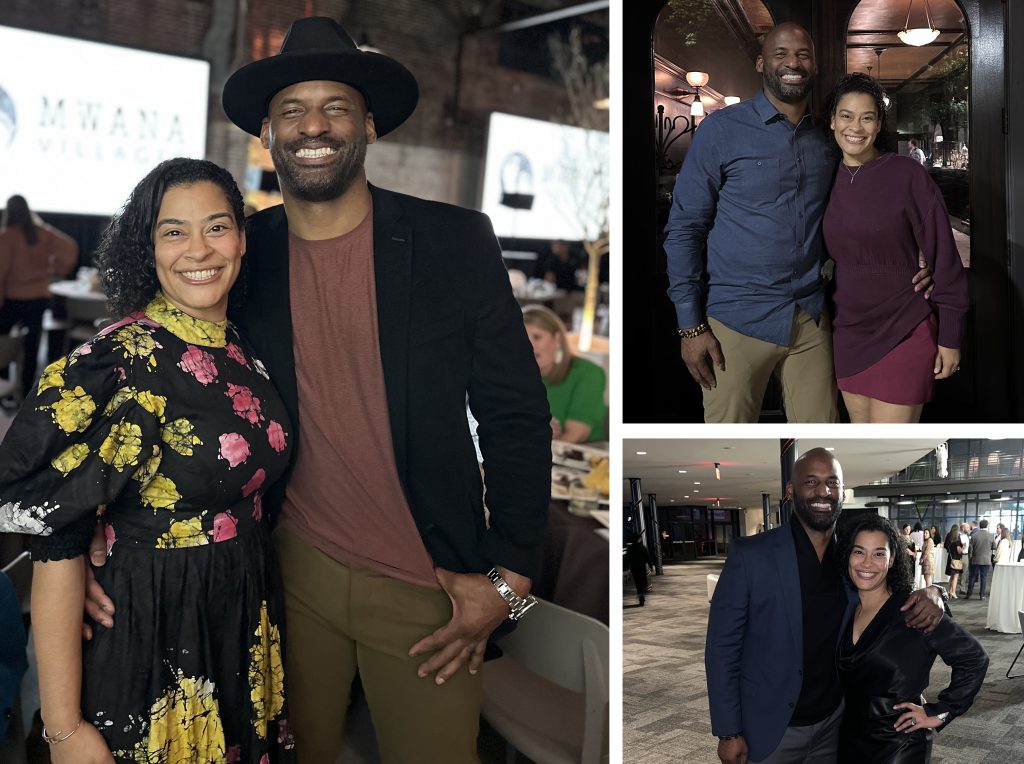
Nicole and Defellus Dumas met when they were in high school, her at Alabama School of Fine Arts, him at Minor High School. The couple married in 2003. (Provided)

The wedding: The two got married at St. John AME Church in Birmingham on a Thursday with Nicole’s aunt and uncle, Sheila and Roosevelt Williams III and Bobby Cox officiating. Their colors were lilac and cream. The couple was the first to host their wedding reception at the Harbert Center on a weekday.

“I had 14 bridesmaids,” Nicole said of the occasion. “He had 16 groomsmen. We had a junior bridesmaid and a junior groomsman, we had three or four flower girls, we had two candle lighters, a ringbearer and somebody that announced that the bride was coming.”

There were 500 guests.

“It rained that day and everybody showed up,” Defellus said.

Nicole remembers being at peace.

“Everybody was asking if I was nervous, and I was very calm,” she said. “I knew that he was the one for me, and I was the one for him. It didn’t bother me that it was raining, it didn’t bother me that anything was happening. I was definitely not a bridezilla.”

Defellus said his experience was less positive. He went to work the morning of the wedding and then had to contend with others’ thoughts about their decision to get married in their early 20s.

“Older women were asking why we were getting married so young, but that didn’t bother me,” he said. “As the kids say, haters are going to hate.”

But that changed as soon as Nicole was walking down the aisle.

“I said out loud, ‘Isn’t she so beautiful?” he said. “We were dating for seven years, and the number seven is complete. It came full circle.”

The honeymoon: The Dumas’ opted for a trip to Nashville instead of a honeymoon because they were buying a house.

“We bought a brand new house and had it built at the same time we were getting married,” Defellus said.

“That’s how we do,” Nicole agreed. “I graduated, we got married, he had a birthday and we got a house. I was working on a Ph.D. at the time, and I didn’t want to leave the lab.”

Words of wisdom: Nicole said dating is important in marriage. At one point, they were having lunch together every day.

“We have fun with just each other,” he said. “We don’t have to spend a lot of money for us to laugh and joke around.”

She also said that challenges are temporary in a relationship, citing a time where Defellus worked a lot and was away from home.

“I’ve matured as a person,” she said. “He’s doing that so we’d have money for the household. Be smart. What is the reason behind it?”

Defellus tells couples to watch what advice they give and receive.

“A lot of people will give advice but won’t take it themselves,” he said. “Your relationship is your relationship. It’s not the same as somebody else’s.”

“One thing that we said to each other is that we don’t want a marriage like anyone else’s,” Nicole added. “Don’t try to make your marriage fit into this thing because that’s not y’all. So why are you trying to make it fit that situation?”

Happily ever after: Nicole teaches AP Physics and Engineering at Ramsay High School. Defellus is the Senior Pastor at Mt. Hebron Baptist Church. He also works full-time at the Jefferson County Health Department, is a reserve deputy at the sheriff’s department and referees high school sports.

The couple has three children: 19-year-old Zoe, 17-year-old Ava and 11-year-old Defellus Jr.

Defellus said that when he was younger, his uncle told him that life really starts at marriage.

“He kept saying once you find your soulmate, then you can live life with them,” he said. “I’ve lived life with Nicole. We bought houses, cars. Every accomplishment, we were there.”

They continue to grow their bond, no matter how busy life gets.

“You Had Me at Hello’’ highlights married couples and the love that binds them. If you would like to be considered for a future “Hello’’ column, or know someone, please send nominations to editor@birminghamtimes.com. Include the couple’s name, contact number(s) and what makes their love story unique.

Birmingham City Schools Announces 2026-27 Teachers, Counselors, and Librarian of the Year

0
Birmingham City Schools Superintendent Dr. Mark Sullivan shares the news with Samantha Bookman of R.C. Hemphill Elementary School that she's been chosen Elementary Counselor of the Year. (BCS)

Birmingham City Schools

Superintendent Dr. Mark Sullivan and district leaders visited four Birmingham City Schools campuses today to share exciting news with five outstanding educators.

As part of an annual tradition, Dr. Sullivan announced the Elementary and Secondary Teachers of the Year, Elementary and Secondary Counselors of the Year, and Librarian of the Year for 2026-2027 during surprise presentations held at each school.

April Sibley of Ramsay I.B. High School, right, was named Secondary Teacher of the Year for Birmingham City Schools. (BCS)


This year’s winners:

  • Elementary Teacher of the Year: Madison Abney of C.W. Hayes K-8 School
  • Secondary Teacher of the Year: April Sibley of Ramsay I.B. High School
  • Elementary Counselor of the Year: Samantha Bookman of R.C. Hemphill Elementary School
  • Secondary Counselor of the Year: Sonya Thompson of Ramsay I.B. High School
  • Librarian of the Year: Tamra Ishman of Oxmoor Valley Elementary School

“In Birmingham City Schools, we say Success Starts Here, and it was especially important for us to take a moment to celebrate the people who play a major role in the success of our school district and who do so much for our students every single day,” said Dr. Sullivan. “These honorees represent the very best of BCS. They work hard, care deeply about our scholars, and make a real difference in our schools.”

Birmingham City Schools Superintendent Dr. Mark Sullivan congratulates Tamra Ishman of Oxmoor Valley Elementary School. (BCS)

The Teachers of the Year will be considered for Alabama Teacher of the Year, with finalists for the state award typically announced in April each year.

Last year, Aubrey Bennett of G.W. Carver High School was named Alternate Alabama Teacher of the Year, as well as the state’s Secondary Teacher of the Year. The 2022-2023 Alabama Teacher of the Year was Reggie White of Booker T. Washington K-8 School.

Madison Abney of C.W. Hayes K-8 School was chosen as the Birmingham City Schools Elementary Teacher of the Year. (BCS)
Birmingham City School’s Secondary Counselor of the Year is Sonya Thompson of Ramsay I.B. High School. (BCS)

Writer Tayari Jones Brings Her ‘Kin’ Book Tour to Birmingham, Talks About Her Return to the South

0
This past weekend, Tayari Jones brought her "Kin” book tour to the Birmingham Museum of Art. (Marika N. Johnson, For The Birmingham Times)

By Shauna Stuart | For The Birmingham Times

Tayari Jones thinks “Kin” is her most Southern book.

Jones’ “Kin” tour includes conversations about the novel with renowned female authors. The tour kicked off in February with a book launch helmed by her Spelman creative writing professor, Pearl Cleage.

Sunday, the day after a stop at the New Orleans Festival of Books with Birmingham native Imani Perry, Jones brought the tour to Birmingham for the third edition of ArtLit hosted by the Birmingham Museum of Art and Thank You Books. Seated in the packed-out museum auditorium during a conversation with journalist, and The Birmingham Times editor,  Javacia Harris Bowser, Jones talked about her decision to move back to the South.

Jones’ fifth novel, an Oprah’s Book Club pick released in February, tells the story of Vernice and Annie, two lifelong “cradle” friends from the fictional town of Honeysuckle, Louisiana. Set in the 1950s and 1960s in Louisiana, Georgia, and Memphis, the novel follows the lives of both girls, who are motherless – Vernice’s mother was killed by her father, and Annie’s mother abandoned her and left Honeysuckle for Memphis when she was a child.

After high school, the two girls take different paths. Vernice, raised by her aunt, leaves Honeysuckle to attend Spelman College in Atlanta, settling into a community of friends and mentors and a world of social mobility. Annie, raised by her grandmother, leaves Honeysuckle for Memphis to find her mother, embarking on a journey of both adventure and peril.

Fans of Tayari Jones celebrated her new book, “Kin” this weekend in Birmingham. (Marika N. Johnson, For The Birmingham Times)

Jones, an Atlanta native, was living in New York when she was writing her acclaimed 2018 novel “An American Marriage,” a New York Times Bestseller also chosen for Oprah’s Book Club and selected for Barack Obama’s 2018 Summer Reading List. One day, she was sitting in a popular Brooklyn coffee shop and looked around at other famous writers.

“And I thought, we’re all having the same breakfast. It’s only a matter of time before we start writing the same story,” said Jones.

Writers move to New York to be near publishers and immerse themselves in the city’s flourishing literary scene.

“But I wanted to come home so that I could be a Southern writer writing from the South,” said Jones. “[Up there] they think the South is just a place of African-American misery. They think that’s just what we do. Just get up in the morning and be miserable. When I lived in New York, people would act like I came to Brooklyn on the Underground Railroad,” Jones said as the auditorium erupted into laughter.

“[Kin] is super Southern, and I think it’s because I was home and I didn’t have anything to prove to anyone,” Jones continued. “I had no allegiance to any agenda other than the truth.”

Back home in Georgia, Jones felt grounded in Southern spaces as she worked on “Kin.”  She did research, looking through vintage Sears catalogues, and drew on her family’s legacy of attending Historically Black Colleges and Universities. Her father was expelled from Southern University for participating in sit-ins during the height of the Civil Rights Movement. Decades later, both of her parents became professors at Clark College. Jones attended Spelman College and studied creative writing under Pearl Cleage. The friendships Jones developed at Spelman would become some of the greatest resources of her life.

The result of those years of work was “Kin,” a novel about the fullness of Black womanhood in the South and the complexities of motherhood, friendship, and class. But above all, Jones says “Kin” is an examination of family.

“Your birth family, that’s the luck of the draw. But your chosen family –  your friends – those are relationships. We are constantly renewing our vows with our friends. There’s so much agency in it and so much choice,” said Jones. “You can tell so much about a person by whom they choose to be their next of kin.”

Tayari Jones held a conversation with journalist Javacia Harris Bowser during ArtLit, hosted by the Birmingham Museum of Art and Thank You Books. (Marika N. Johnson, For The Birmingham Times)

During the nearly 40-minute conversation, Jones and Bowser discussed the origin of “Kin” and writing in the South before opening the dialogue to the audience for questions.

Here are some highlights of the conversation, edited for clarity:

Javacia Harris Bowser: I understand that you originally wanted to write a different book, but it wasn’t really working out. So, tell us a little bit about that, and then how did the story of Annie and Niecy come to you?

Tayari Jones: It’s true. This wasn’t the book that I had agreed to write, and the other book, the book that I didn’t write, it was my idea. It’s not like somebody said to me, you should write a book about this. I thought I wanted to write a book about my hometown of Atlanta and all the ways that it’s changing. I moved back home to find it a really different city. And so, I wanted to write about what does that mean when your hometown has become, while not unrecognizable, different? And also, I wanted to turn the camera on myself and ask, is it possible to gentrify your own hometown?… So, I was trying to work on a novel to explore that, but for whatever reason, it didn’t catch fire. It felt like I was working with a hammer and nails, and I was making noise when I should have been making music.

I worked on it for a couple of years and it wasn’t happening. And finally, I just started trying to write with paper and the pencil… just writing the thoughts that came to me, and that’s when I found these two girls, Annie and Niecy, they’re both motherless. They’re living in the South in the fifties, and I thought, that’s strange. I don’t write the past. I’m very committed to writing the story of my own generation. But there they were, and I thought, well, maybe this is the backstory. Maybe my real story is about these women’s children. But after I was about 150 pages in, I had to accept that this was the story that I was writing. Usually when I try to write, I think of what is the story I’m trying to tell? But for this one, I had to say, what is this story trying to tell me?

Bowser: You’ve said before that you’re very committed to writing “the now.” You feel like that’s your responsibility, especially as a Black artist. So even though this book is set in the fifties and the sixties, what about “the now” do you feel that “Kin” is still depicting, particularly about motherhood, Black womanhood and friendship?

Jones: At the core of the story is friendship. Annie and Niecy have been best friends since they were little children. But as you get older, life takes us in different directions. One of the most difficult things in a friendship to overcome is when one person gets married because that other person is living an entirely different type of life now. [There’s a saying that goes] “When I was a child, I did childish things and now I’ve put aside my childish ways.” Your best friend from childhood can be seen as a childish thing to be put away and that’s something people still deal with. [Niecy] has to struggle with how to maintain her own life, her own identity, while she’s married. So that was something from “the now” and also I was thinking about we’re [currently] in the now, but the way things are going in this country, they’re trying to take us back to “the then.” And so looking at the ways people were struggling, dealing with segregation and just the lack of opportunities, in some ways felt like a cautionary tale from the past, like a bell that was ringing that we would be wise to hear.

Bowser: You talk about Aunt Irene, who is child-free, and when we see Niecy and Annie grow up, they have very different lives. And so one of the things I feel this book does, in addition to talking about motherhood and friendship, is examine all the different ways to be a woman. What did you feel like you wanted this book to say, or what questions did you want this book to ask about what it means to be a woman, particularly a Black woman in the South?

Jones:  In the 50s and late 60s, opportunities are opening up and people are in a situation where they’re more able to choose what kind of life they want instead of merely dealing with the hands they are dealt. We have lots of women. We have, of course, Niecy, who is able to go to college. She goes to Spelman College. She has never really heard of rich Black people in her small town. And so she’s learning about this whole different world from that experience. And then we have Annie, who goes on this wild goose chase and she meets a woman who runs a sharecropping whorehouse. That is a certain kind of independence, but it’s an independence at the expense of others. Niecy’s mother-in-law is a Black woman who is just committed to the idea of being a 1950s housewife because, for her, that represents a kind of freedom that she’s not a maid, she has her own home. But when Niecy comes to live with her, she kind of feels like, as a maid, you clean someone else’s home, but if you’re doing the same thing in your own home, are you a maid at home? So all of these questions that people are asking and just trying to figure out the way forward. But also, one thing in writing this, I realized how I was born in 1970, so all my life I have lived in a world where people have access to safe, reliable contraception.

When you write about the fifties, people constantly thought about getting pregnant. Everybody had it on their mind because before people had access to birth control, girl, people were out there just rolling the dice. In that, I realized how much that shaped the culture.

Bowser: What similarities do you see between “Kin” and “An  American Marriage?”

Jones: One of the things I like to do in all my writing is ask hard questions.  “An American Marriage” is a story about a woman whose husband has been wrongfully convicted. Everyone expects the story to be about a woman’s brave fight to free her man. And it’s not. That wasn’t interesting to me. That story has already been told. The sacrifice chronicles are not that interesting to me. I want to see what are the real consequences of women’s agency. And that is a question that I think is also asked in “Kin”– what happens to people who don’t follow the rules? I like to write about people who challenge the rules. However, I think in everything I’ve written, some of the rules are rules for good reason. So I can’t just say, if there’s a rule, you should break it because it exists. It’s about testing these boundaries and seeing which ones serve us and which ones don’t.

(Question from the audience) With the two characters Niecy and Annie, they both visit each other, but during their separation, they also gained an additional sister type. Can you expound upon how they helped out in a different way?

Jones: Just like in real life, when you separate from your bestie, you make new friends that serve your life in different ways. I’m really interested in documenting and modeling healthy friendships because if you look at TV these days, you would think that Black women cannot be friends. I mean, Bravo has made a multimillion-dollar industry pretending that women hate each other even. And it makes you feel like even in your own life, if you have good friends… you’re some kind of exception – even though you’re not  –  because that’s how media gets in your head. And so, hopefully, I think with this book I’m modeling, not in an idealized way of friendship, because people have their struggles, but you can have more than one friend. Your friends can be friends with each other, and it can also, at the same time, be very, very complicated.

Jimmie Hale Mission Warming Station Has Opened to Support Residents During Cold Snap

0
The City of Birmingham, along with Jimmie Hale Mission, has opened its nightly warming station. (File)

From Wire Reports

As temperatures are expected to fall below freezing, the City of Birmingham and Jimmie Hale Mission has opened a nightly warming station today and Tuesday, March 17.

The warming station will operate from 6 p.m. until temperatures rise the following morning. Men, women and children needing warm shelter can go to Jimmie Hale Mission at 3420 2nd Ave. North. Food will be provided.

To assist individuals without transportation or with mobility challenges, the Mission will offer free shuttle service from 6 to 7 p.m. tomorrow from the main entrance of Linn Park at Park Place and 20th Street North. The Mission is also accessible via the Metro Orange Line bus to the Sloss Furnace stop. Return transportation will be provided each morning.

The City of Birmingham is supporting the warming station both financially and through in-kind donations, including cots and a police officer presence.

A Birmingham police officer will be at the station.

The Jimmie Hale Mission is asking people to donate the following items to assist those in need:

  • Paper plates, napkins and plastic flatware
  • Twin-sized washable blankets
  • Toboggans, gloves and scarfs
  • Soft fresh fruit such as oranges and bananas
  • Individually wrapped soft breakfast bars or snacks

Donations may be dropped off at any time at the Mission’s location at 3420 2nd Avenue North, Birmingham 35222. People who would like more information can call the Jimmie Hale Mission at 205-323-5878, option 3.

Birmingham Mayor Randall Woodfin Announces 2026 Legislative Agenda Focused on Neighborhood Revitalization

0
Flanked by elected officials and local business leaders, Birmingham Mayor Randall Woodfin, center, outlined key legislative priorities for the city. (Javacia Harris Bowser | The Birmingham Times)

By Javacia Harris Bowser | The Birmingham Times

Mayor Randall L. Woodfin announced on Monday the City of Birmingham’s 2026 legislative agenda — a package of proposals designed to aid the city in preventing blight, revitalizing neighborhoods, and expanding affordable housing opportunities.

“Birmingham’s legislative agenda is about one thing: giving our city the tools it needs to hold negligent property owners accountable, revitalize neighborhoods, and keep housing affordable for the people who call Birmingham home,” Woodfin said. “Strong neighborhoods are the foundation of a strong city.”

City officials explained that these proposals aim to tackle the complete cycle of neighborhood decline. The measures would enable acquiring and repurposing abandoned properties, prevent blight before it takes hold, and ensure that residents benefit from the revitalization occurring throughout Birmingham.

Flanked by elected officials and local business leaders, Woodfin outlined four key legislative priorities:

  • Community Land Trust Enabling Legislation: This law would empower municipalities to create Community Land Trusts, a proven, nationally recognized model that supports long-term affordable homeownership by separating ownership of the land from the home itself.
  • Jefferson County Land Bank Act: This proposal would strengthen Birmingham’s existing Land Bank Authority by streamlining the process to acquire tax-delinquent and abandoned properties. It would also establish a Jefferson County Land Bank to enable municipal land banks to collaborate across city boundaries.
  • Blighted Property Registration Act: This proposal would authorize major cities like Birmingham to set up mandatory registries for vacant properties, charge registration fees, and enforce maintenance standards for long-neglected properties owned by absentee landlords.
  • Birmingham Housing Trust Fund: The proposed fund would provide a dedicated funding source for affordable housing development, preservation, and homeowner assistance within Birmingham, helping ensure working families are not displaced as neighborhoods experience new investment.

Woodfin called the package of four bills a major step in addressing blight across the county, including the 15,000 abandoned properties within Birmingham alone. The mayor has shared that over the past eight years, the city has spent $25 million to remove blight and care for overgrown lots not owned by the city. Oftentimes, abandoned properties are listed under a limited liability corporation (LLC), making absentee landlords hard to track down. The Blighted Property Registration Act would help hold property owners accountable.

“Too often, Birmingham taxpayers are forced to spend public dollars tearing down blighted buildings on private property,” Woodfin said. “We should be investing those resources into libraries, parks, and neighborhood amenities instead.”

Though the 2026 Alabama Legislative session is coming to an end, supporters of the legislation are optimistic.

“Cleaning up our neighborhoods, getting rid of blight, it is not a partisan issue,” said Alabama State Senator Merika Coleman. “So goes Birmingham, so goes the rest of the county. All of the surrounding municipalities come into Birmingham to work, to play, to use our amenities. These are issues collectively that we can go and sing Kumbaya together as both Democrats and Republicans and clean up Birmingham, give Birmingham municipal court the tools that it needs, especially with the blight registration, and be able to do some great things together for Jefferson County.”

Woodfin stressed that Birmingham is not asking for special treatment.

“We’re asking for the same tools cities across America already have,” he said, “tools that allow us to protect neighborhoods, prevent blight, and invest in the people who live here.”

H2O Foundation Celebrates 22 Years of Helping Birmingham Families Keep the Water Flowing

0
On Thursday, March 12, the Help to Others (H2O) Foundation, and Executive Director Dr. Aisha Castro-Ellington, celebrated 22 years of service to the Birmingham community. (Marcus Evans, Provided)

By Sym Posey | The Birmingham Times

A Birmingham nonprofit dedicated to helping residents maintain access to one of life’s most essential resources marked a milestone this week.

On Thursday, March 12, the Help to Others (H2O) Foundation celebrated 22 years of service to the Birmingham community with a gathering at House Eleven. The Woodlawn venue served as the backdrop for what organizers described as a “party with a purpose,” highlighting the organization’s impact while encouraging community support for its mission.

Founded more than two decades ago, the Birmingham-based nonprofit provides financial aid to residents struggling to pay water or sewer bills or who need urgent plumbing repairs. The organization focuses especially on helping seniors and people living with disabilities maintain reliable access to water in their homes.

We are an independent nonprofit. We were born 22 years ago, and our mission is to serve individuals 55 and older and those who are disabled financially with their water bill or small plumbing repairs,” Dr. Aisha Castro-Ellington, H2O executive director, said during the celebration.

The event recognized the organization’s past while highlighting its continued work across the city.

“This is a party with a purpose,” Ellington said. “We’re celebrating 22 years of being in this community, doing this work, and we’re still going. We’re still going strong.”

According to Ellington, the nonprofit has already assisted dozens of residents in the first months of 2026.

“Just as of today, we have serviced 83 individuals and almost $23,000 just from January 1 to today,” she said.

The foundation provides assistance of up to $500 toward a Central Alabama water bill and up to $1,000 for small plumbing repairs that prevent water waste and reduce future costs. Residents facing financial hardship — including seniors, individuals receiving disability benefits or families experiencing water emergencies — may qualify for help.

A Community Staple

Former executive director Jamekia Bies, who attended the anniversary celebration, reflected on the organization’s history and growth.

“H2O is founded from a great concept of making sure that seniors and those with disabilities in our community had access to water and sewer and were able to have running water in their homes,” said Bies, who was hired in 2021 to serve as the organization’s first executive director.

Bies said the nonprofit has long served as a critical resource for Birmingham residents.

“H2O has been a staple in this community, making sure that individuals have access to water and that they can ensure that their families are healthy,” she said. “We work with many partners in the community, like our hospitals to ensure that health for those individuals.”

Programs like H2O are relatively rare nationwide, she added.

“H2O is one of the staple organizations around the U.S. in terms of water assistance programs,” Bies said. “Not many organizations and not many states have that program. H2O saw that there was a need before we ever received federal funding for water assistance.”

The organization’s early recognition of the need for water access helped establish Birmingham as a leader in addressing the issue, she said.

“Just being in Birmingham, we are trendsetters,” Bies said. “We understand that there’s a need before we ever get to the need, and we’ve been able to continue providing that service for 22 years.”

During her tenure, Bies said the organization reached several milestones, including establishing a permanent headquarters.

“Our first location was located in Avondale, and our current location is located in Woodlawn,” she said. “Being able to move to Woodlawn, transition our services and provide in-house services helped ensure the welfare of individuals in our community.”

Bies stepped down from her role in October 2025 but said she continues to support the organization’s mission.

“I still participate with H2O. I still believe in the mission and the vision of H2O,” she said. “I’ll always be around to support that and especially to support Aisha. I’m so grateful for her to continue this excellent work in the community.”

The organization has operated as registered nonprofit since 2004 and continues to expand its reach.

“Continuing that service and being able to support more than 500 households per year, serving more than 1,400 individuals who need assistance — to me, that’s a staple in itself,” Bies said. “The impact doesn’t stop.”

Board members attended the celebration for the H2O Foundation this week. (Marcus Evans, Provided)

Increasing Awareness

Ellington said increasing public awareness of the program remains a key priority. She hopes more residents will seek help if they need it and that more community members will support the organization through donations and volunteer work.

“What I’m trying to do now is let people know that we are here and we are here to help,” Ellington said. “We’re here for people to come out and volunteer and help us help our neighbors.”

Residents in need can apply online through the foundation’s website, with a typical turnaround time of two weeks for assistance requests. The organization also partners with local initiatives, including Middle Alabama Area Agency on Aging and Birmingham Promise, to strengthen its community impact.

Looking ahead, the foundation is planning additional fundraising events, including a golf tournament scheduled for Sept. 3, 2026, at Brentwood Country Club.

For Ellington, the mission remains simple: ensuring no Birmingham resident has to choose between paying for water and meeting other essential needs.

“The call to action is simple,” she said. “We’re asking individuals to go on our website, check the box and donate. You can give one time or give a recurring donation, and we’re putting those dollars directly into the homes of the individuals that need it.”

Learn more about Help 2 Others (H20) Foundation at h2obham.org.