By Evan Milligan | Special to the Birmingham Times
Since 2021, a case bearing my family name has been winding through our federal court system.
Allen v. Milligan asked whether Section 2 of the Voting Rights Act could still be used to challenge racial bias in how voting districts get drawn. I joined this lawsuit expecting to lose. Yet, my co-plaintiffs and I are undefeated. Five times the courts have reviewed our case — a federal panel and the U.S. Supreme Court — and five times we have won.
Last week, the Supreme Court ruled in Louisiana v. Callais. Just a few summer months before our country’s 250th birthday, the Voting Rights Act lost, badly. Justice Kagan, in dissent, wrote that the ruling renders Section 2 “all but a dead letter.”
The 1965 Voting Rights Act was already a shadow of the bill President Johnson signed into law.
In 2013, the Supreme Court dismantled preclearance, the VRA’s most powerful tool for preventing racial discrimination before it happened. What was left was Section 2 — a way for ordinary Americans like us to challenge discriminatory voting systems after the fact. Callais has all but closed that window too. What remains is a path the size of a needle’s eye.
And then there is our peculiar case.
Each Milligan plaintiff took a different path into the litigation. Mine was grief and the appeal of storytelling on a grander stage. So many close loved ones and local leaders had died during the pandemic that litigation felt like a way to keep their stories in the historical record. A likely doomed attempt felt cathartic.
In February 2022, three federal judges — two appointed by President Trump, one by President Reagan — unanimously held that Alabama had violated federal law, ordering them to redraw our congressional map to feature two majority African American voting districts or something close to it.
The state refused to comply. It spent millions in tax dollars appealing all the way to the Supreme Court.
In June 2023, the Supreme Court agreed with us too. The state still refused to comply.
That summer, during a special session, the Alabama legislature passed a map that diluted Black voting strength even more than the one we’d originally challenged. The governor signed it. The state kept paying private attorneys to defend its right to ignore a direct order from the Supreme Court of the United States.
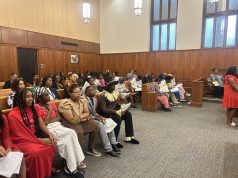
The hardest moment to describe came in August 2023, on the top floor of the Hugo Black Federal Judicial building. Three federal judges asked Solicitor General Edmond LaCour to account for the state’s defiance. LaCour told them his team was confident the Court would revise its reasoning if allowed to review the case again.
This was a Tyler Perry Studios-level moment.
The air inside the courtroom went still.
The Alabama Solicitor General was telling federal judges, in open court, that his state would simply keep appealing until the Court’s reasoning changed. Instead, the judges appointed a special map master who helped all parties negotiate a redesign of Alabama Congressional District 2, which was ultimately won by Representative Shomari Figures.
We are undefeated. We have brilliant attorneys who embody American idealism about little guys taking on would-be kings and winning. We have inspiring colleagues throughout our state and families willing to make sacrifices. We complied with every court order. With every odd against us, we have prevailed. My personal savings are in the red, my dog is dead, my high school has closed, my college has closed, but my neighbors cheer me on.
Our Attorney General defied court orders while defending the Alabama Department of Corrections’ right to kill people on Death Row, even when victims’ families begged for mercy.
Attorney General Steve Marshall is now running for the U.S. Senate. Former Solicitor General Edmond LaCour is now a federal judge, appointed by President Trump to a lifetime position on the very Northern District of Alabama Court where I watched him say that the state was above obeying.
Our beloved Voting Rights Act lies in ashes. So what is our reward?
Another special session. More litigation. More public money spent so that elected officials can dilute the votes of the people who pay their salaries. I am writing this while taking a break from a systems art piece that tells the story of an interstate occupation and a dragon bound under the Alabama capitol by our 1901 constitution.
Visions of Victory
I learned that the people we buried during the pandemic and the movement years many decades earlier — the neighbors, the elders, the leaders — deserve something more than my expectation of loss. They deserve something more durable than a court ruling.
Those ancestors deserve the very conviction that Alabama’s officials summon when refusing to obey laws they don’t like while simultaneously punishing the rest of us for disobeying their laws.
They deserve the non-negotiable conviction displayed by the characters in my story who refuse to leave their interstate village except by stretcher or body bag.
We can conjure that level of conviction. And as we do, we can invest it in local acts that we continue until we achieve something far closer to permanent protection of American voting rights. This conjuring first requires visioning. In our own words and sounds, what would it look like to pass state voting rights acts in former Confederate states?
We can gather in small circles with people we trust and dream until we can taste the society where federal agents and military service members have maximum incentives to avoid committing war crimes. We can write songs to inspire the movement building effort that will be required to secure passage of federal bills such as the Freedom to Vote Act and the John Lewis Voting Rights Advancement Act and the even longer-term movement needed to amend our federal constitution to recognize the right of American citizens of voting age to vote and have their vote counted. We can vote and volunteer consistently, even if our main reason for doing so is to help someone other than ourselves.
Test your assumptions. Trust what you learn. Focus less on the numbers. Take our experience as a cautionary tale. We are undefeated, and here we are, all the same. Focus instead on the loved ones you’ve lost because there was no one there to catch them when they fell. In this 250th year of the American Revolution, focus on the stories of little people who stood up to mad kings. Regardless of outcome, your willingness to stand is itself a victory.
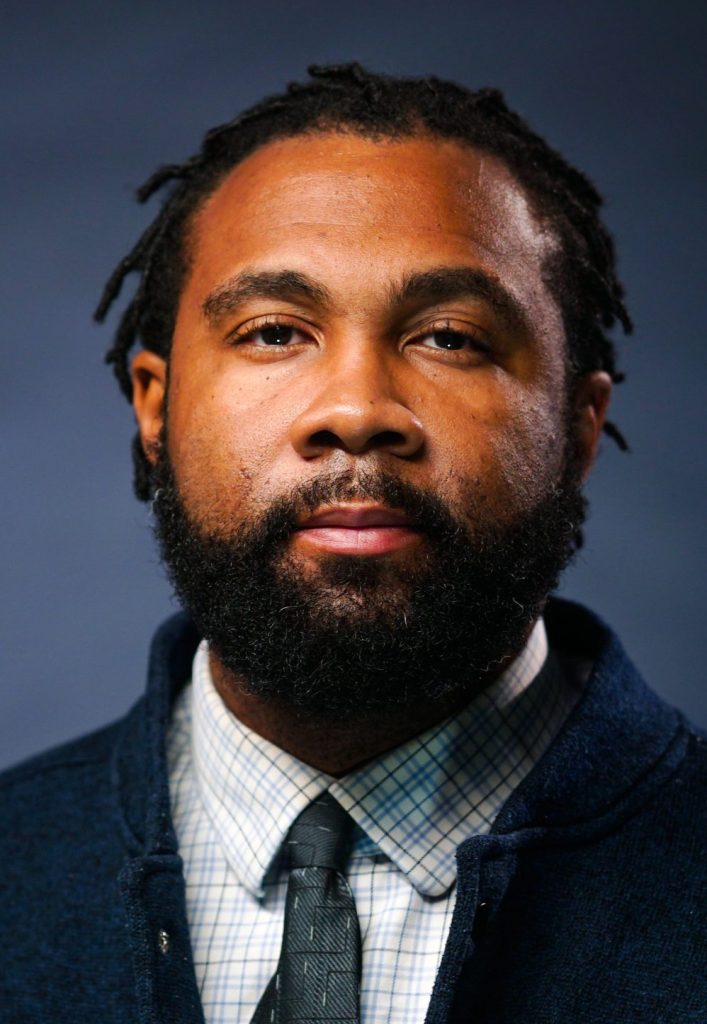
Evan Milligan is co-director of The Sanctuary at the Jubilee Community Center in Montgomery. He is the named plaintiff in the Allen v. Milligan (2023) U.S. Supreme Court case that forced Alabama to add a second majority-Black district to its congressional map. A past fellow at the Equal Justice Initiative, Milligan was founding Executive Director of the civic organization Alabama Forward.