Times Staff Report
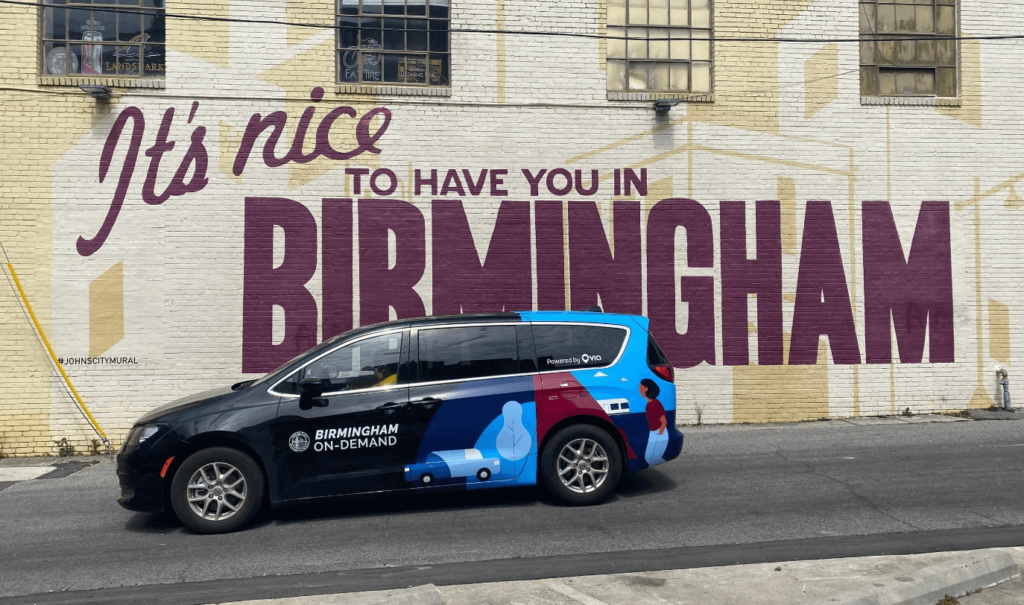
The Birmingham City Council has approved $2.5 million for the Birmingham-Jefferson County Transit Authority (BJCTA) to manage the city’s microtransit program, which provides on-demand rides to areas not covered by regular bus routes.
This move essentially transfers the contractual obligation from the City of Birmingham to BJCTA to oversee and manage. The funding will support microtransit (rideshare) services that have expanded to much of the city since first being launched in 2019.
City officials believe this will also lead to better coordination of services for riders between fixed routes and microtransit services. Roughly 13.5 percent of households in Birmingham do not own a car, so continued investments in alternative transportation is crucial for the city’s economic growth.
It is expected that the BJCTA will launch their own platform for riders to request pickup in January.
“Having a consolidated system for both fixed routes and microtransit is really going to help alleviate a problem for some of our riders,” Council President Darrell O’Quinn said. “Public transportation is a lifeline for a lot of people in Birmingham.”
O’Quinn said public surveys have consistently shown that public transportation is the number one thing people want to the city to invest in. “We’re committed to that, and we’re committed to building out a more inclusive system that works for everyone despite the challenges we face in the state of Alabama in terms of public funding from the state,” he said.
This funding is part of the city’s transportation budget and comes in addition to the $14 million allocated for the city’s transit system two weeks ago.
The microtransit program, operated in partnership with Via, a private company, charges $1.50 per ride.
BJCTA CEO and Executive Director Charlotte Shaw said the $2.5 million will go to Via to continue providing services while BJCTA oversees the program in alignment with the city’s 70/30 transit plan.
“We are now going to be managing the subcontract with the city of Birmingham to work congruent with our 70/30 plan, which is the whole plan that we’ve been rolling out for the past year,” Shaw said. “Continuing to roll out as part of that plan will help move things along a lot faster.”
As rides are tracked, the data will feed into the national transportation database, O’Quinn added.
“It will eventually take a couple of years for that money to start coming back from that activity, but we’ll eventually start getting some additional federal support for those services,” he said.
While riders will not see changes in their day-to-day trips, Shaw said BJCTA oversight will make microtransit more convenient and reliable for users.
WIAT-TV contributed to this post