By Javacia Harris Bowser | For the Birmingham Times
For Women’s History Month, The Birmingham Times highlights some of the most watched Black women anchors in our area. These women have dedicated their life’s work to sharing other people’s stories. Now, it’s time to share their stories.
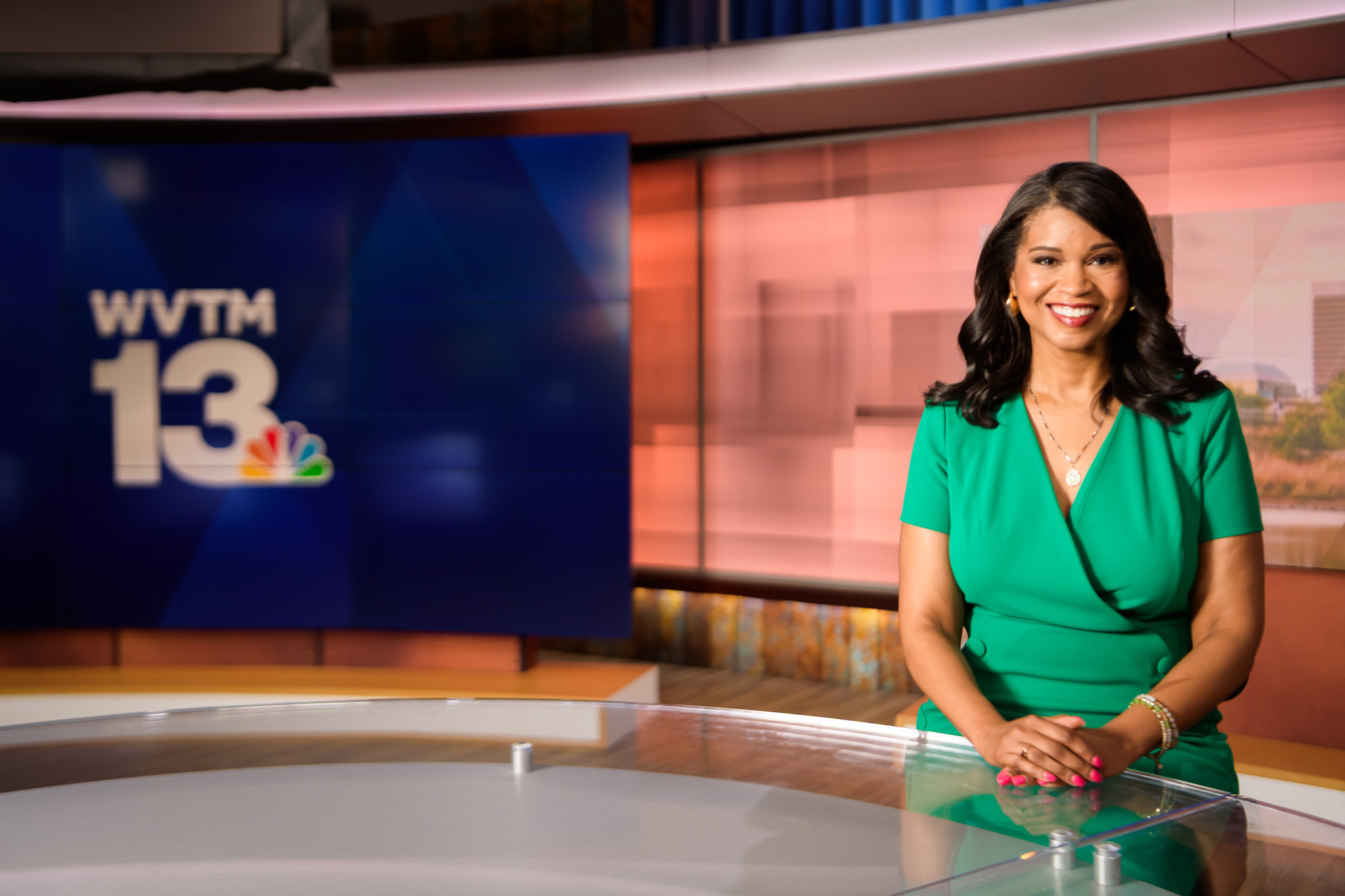
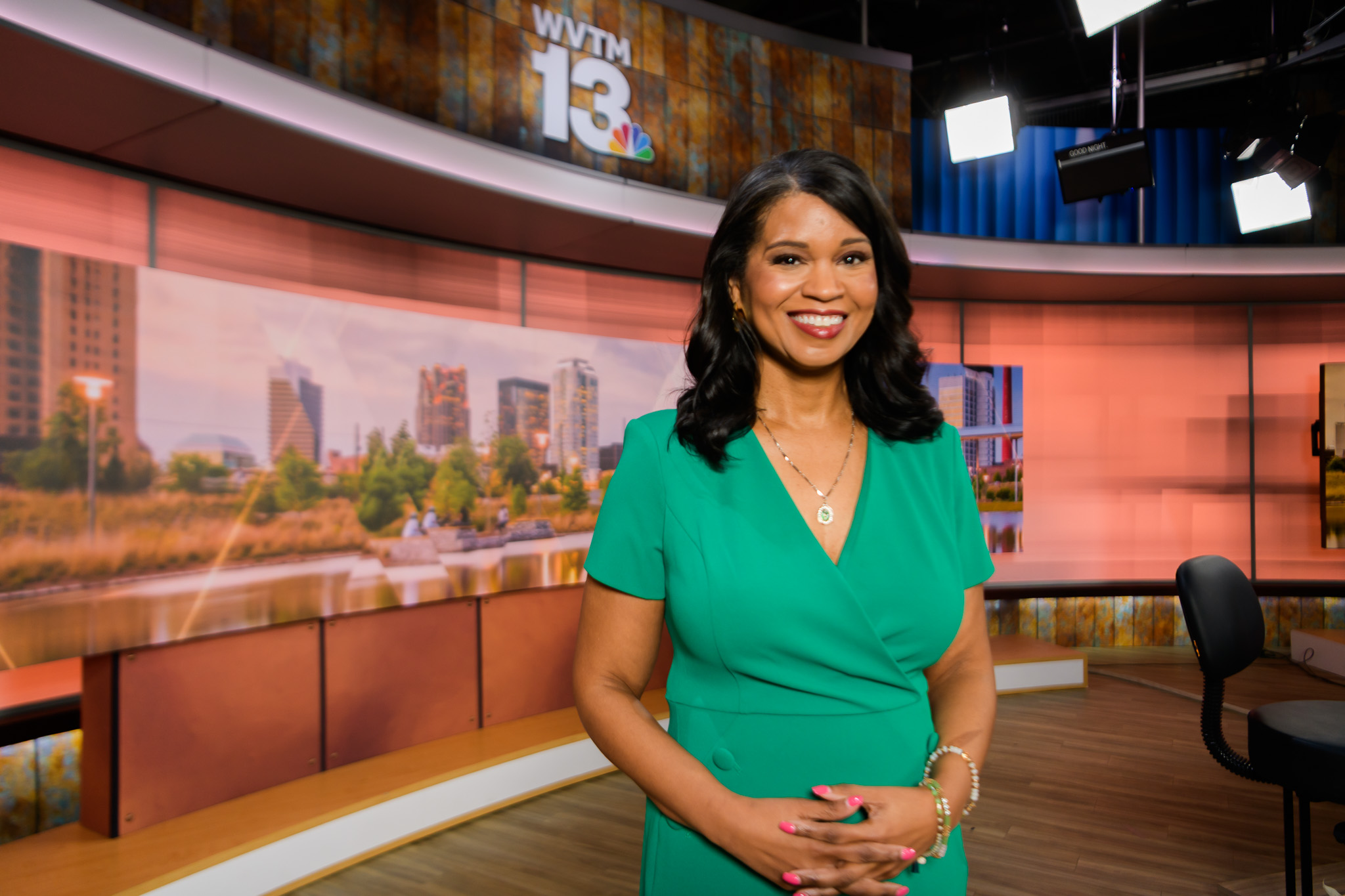
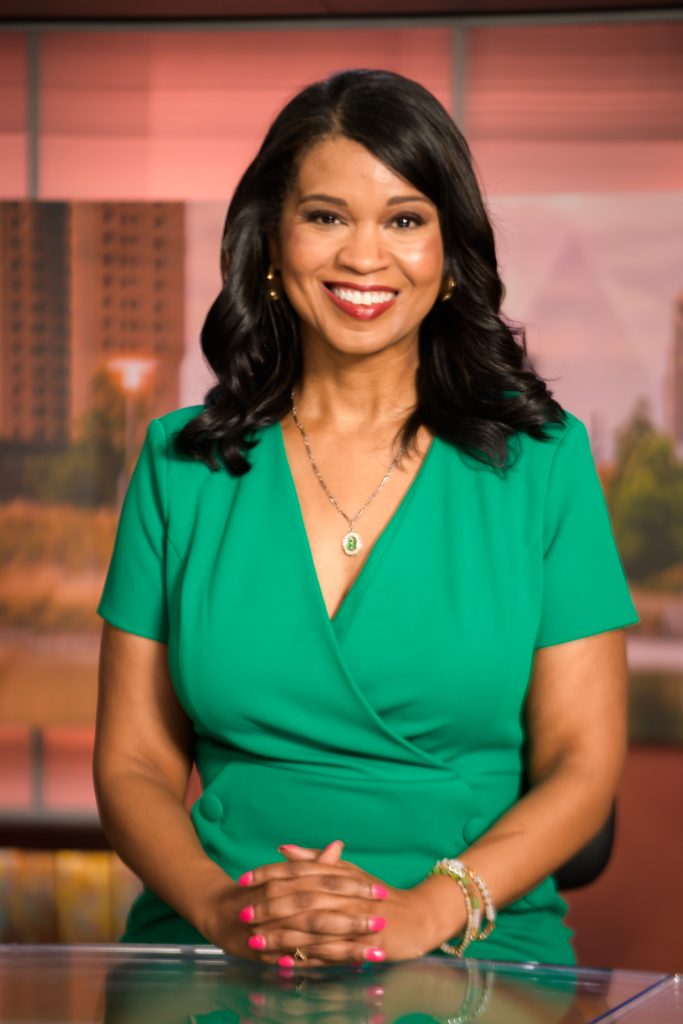
Carla Wade, an evening news anchor at WVTM NBC 13, also served as president of the Birmingham Association of Black Journalists (BABJ), the local chapter of the National Association of Black Journalists (NABJ). This means Wade is a leader inside and outside the newsroom. There was a time, however, when she thought about being a lawyer or educator — not a journalist.
“I loved to talk, and when I was little, I used to like to play teacher,” she recalled. “Also, several people in my family are educators.”
In high school in Little Rock, Arkansas, she joined the debate team. Her debate coach’s husband, who worked in radio, heard one of Wade’s presentations and thought she’d be a great broadcaster.
She considered the prospect but still decided to major in political science when she attended the University of Oklahoma.
“I really thought it was going to be more interesting than it actually was,” she said of her first field of study.
So, she signed up for a few communications classes and she was hooked.
“I finally just said, ‘I’m just going to go full speed ahead and switch to journalism,’” she remembered.
Career Path: In college, Wade worked for the school newspaper and a local radio station. She also worked part-time at a National Public Radio (NPR) affiliate station based on campus. With the NPR gig, she sharpened her writing and reporting skills and got comfortable covering politics and the courts.
“It gave me a leg up when I got my first job,” she said.
After an internship at a Fox station in Oklahoma City, Wade worked for a station in Lawton, Oklahoma, from 2000 to 2001, a time she called a “humbling experience.”
She often rode around in news vans with no air conditioning, and on the weekends, she both anchored and produced the evening shows.
“I wrote the entire show, and then anchored the show, and also ran a little foot pedal prompter,” she said, describing her operation of a hands-free controller used to manage the scrolling text of a teleprompter.
She answered the phones, too.
In 2001, she took a position as a reporter at a television station in Little Rock, Arkansas. She was later promoted to a morning anchor position.
“I think that position gave me my first experiences navigating newsroom politics,” she said. “When I was starting out as a reporter, you really had to fight for your place in a newsroom. If you wanted to anchor, you had to stand in line. You had to prove yourself.”
Most Challenging Parts of Her Career: Being in broadcast journalism also means navigating changes. When she worked for a station from 2004 to 2009 in Lexington, Kentucky, she dealt with constantly changing news director management, frequent station rebranding, occasional furloughs, and more. While her five years there taught her resilience and gave her the opportunity to work with a very talented team, she also wondered how much she could have grown in a more stable environment.
In a situation like that, she said, “You’re not spending time perfecting your craft, learning how to be a better reporter, working on your camera presence. You’re just every day in survival mode.”
And when she worked in Dallas, Texas, from 2013 to 2016, changes in the station’s ownership led to her being let go.
Career Highlights: The toughest stories Wade has ever covered are the ones that have reminded her about why she does the work of broadcast journalism. Whether covering the aftermath of a tornado outbreak or a shooting, “very often, we’re there in people’s worst moments,” she said.
During her time working in Las Vegas, Nevada, Wade helped with coverage of the 2017 shooting at a country music festival. A lone gunman opened fire, killing 59 people and injuring hundreds.
“Nobody ever expects to have to cover something that big,” she said. “When things of that magnitude happen, you’re definitely in a role of not just providing information to the public but also being that voice to say, ‘We’re going to get through this together.’”
While Wade sought to give viewers some means of comfort, for her, it was personal.
“It was a moment in my life when I felt like I was able to come full circle, because my dad was killed in the Oklahoma City bombing [of the Alfred P. Murrah Federal Building by Timothy McVeigh in 1995],” Wade said. “The media at that time in Oklahoma City performed that function [of providing information and comfort] for a lot of us in that community. In Vegas, I felt like [I was] in that position to give back some of what I got from seeing how the journalists handled that magnitude of a situation.”
“I felt I hit my groove as a journalist during my years in Las Vegas, [from 2016 to 2019],” she went on to say. “I was nominated for five regional Emmy Awards and won three of them. It gave me my confidence back after things not working out the way I wanted in Dallas.”
On Changes in the Media: “I like the idea of going toward this era of more transparency about how we’re telling the stories, how we’re getting the stories,” Wade said. “I also like the era of being more authentic.”
More stations are allowing their journalists to be themselves, she said: “I started my career at a time when you were trying to be all buttoned up, sound a certain way, and look a certain way. I was 20 years old, dressed like a 45-year-old woman with a bob. I am so glad those days are over. I am much happier that people are allowed to be more of their authentic selves in how they deliver and report the news.”
Wade is concerned, however, about some of the changes in the media landscape brought on by technology.
“I have concerns about how much the level of trust in media has dropped,” she said. “With so much technology and with [artificial intelligence (AI)], all of these different things make it so easy to distort information. Some people don’t really seem to be able to discern good information from bad information or know how to evaluate sources.”
Wade also worries about the financial barriers that keep some people of color from entering the field of journalism.
“I’m very concerned that it’s getting harder and harder for people who are younger to be able to pursue this career just because the pay hasn’t really kept up with the times, and then they’re being asked to do more and more, and they’re burning out so quickly,” Wade said. “My mom was paying some of my bills for almost five or six years of my career. If I didn’t have a mother who could do that, I don’t know if I would have been able to last as long.”
On Being a Black Woman in Broadcasting: Though Wade believes things have improved immensely, there was a time when being Black and being a woman in broadcasting was especially difficult because the business can be so subjective.
“News directors would tell you, point blank, ‘I like you, but I think you need to lose about 10 pounds,’” she said. “Somebody might get more opportunity just because they’re prettier than you, or somebody might get more opportunity just because they’re white.”
On Representation: While Wade believes that NABJ is an important organization because it helps Black journalists cultivate community and advocates for journalists of color, she says NABJ matters because representation matters. She still remembers attending her first NABJ convention in Las Vegas a few years into her career. She went to the career fair and saw standing before her a big room full of Black journalists.
“You can’t be what you can’t see, right?” she said. “And it wasn’t until this moment that I realized how many of us are in the trenches in these newsrooms every day. … Seeing everybody all dressed up and looking good, polished, and professional, it just makes you feel good.”
Carla Wade can be seen on WVTM NBC 13 anchoring the evening news shows on weekdays at 5 p.m., 6 p.m., and 10 p.m