By Sym Posey | The Birmingham Times
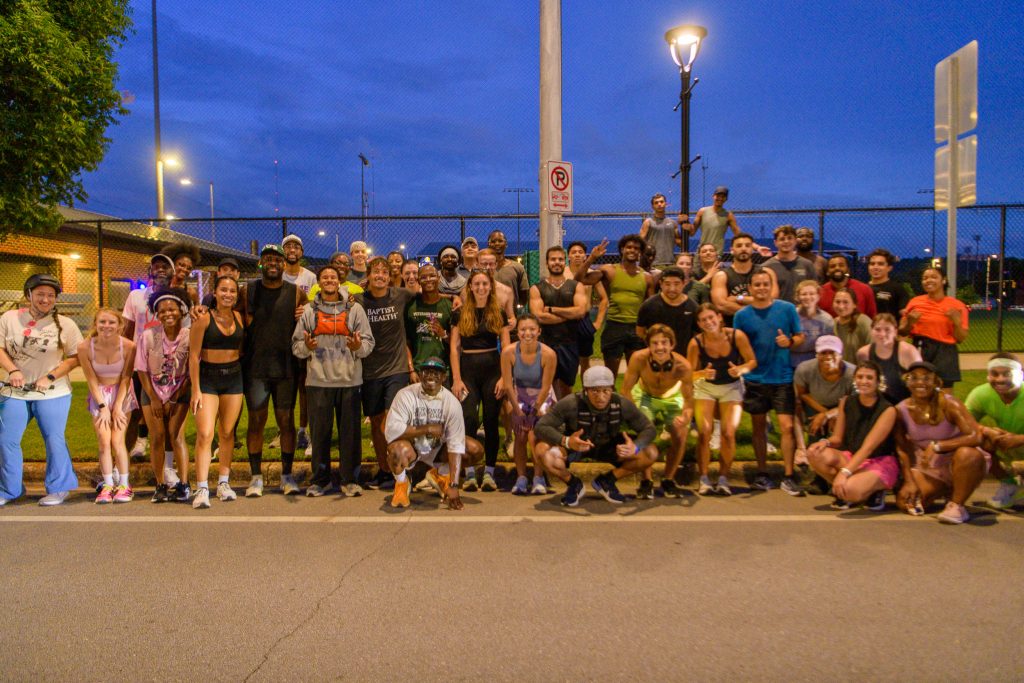
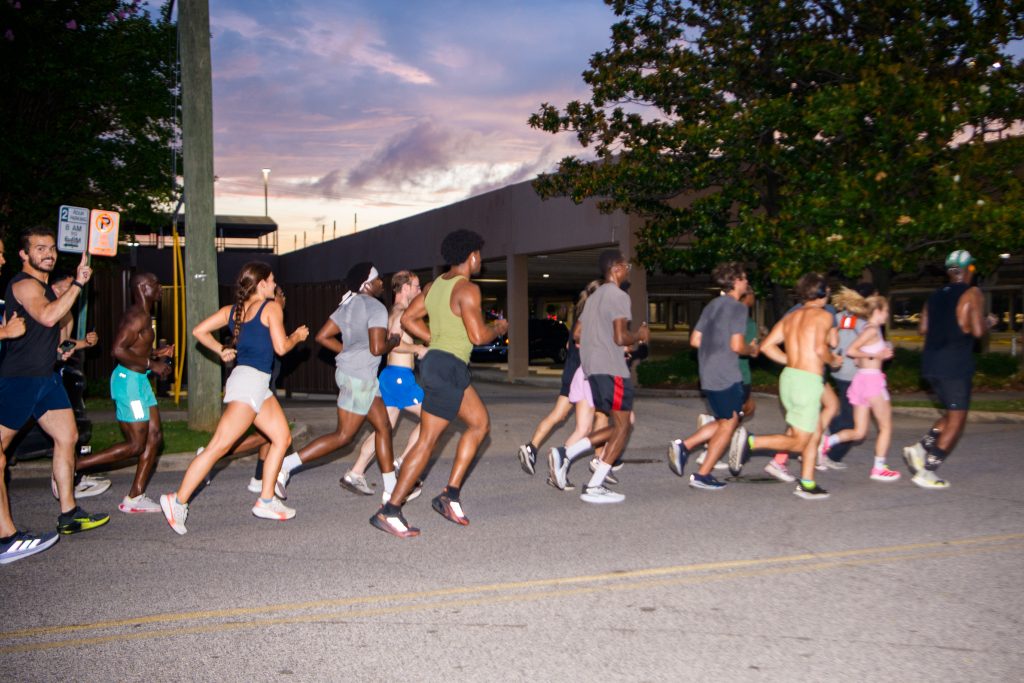
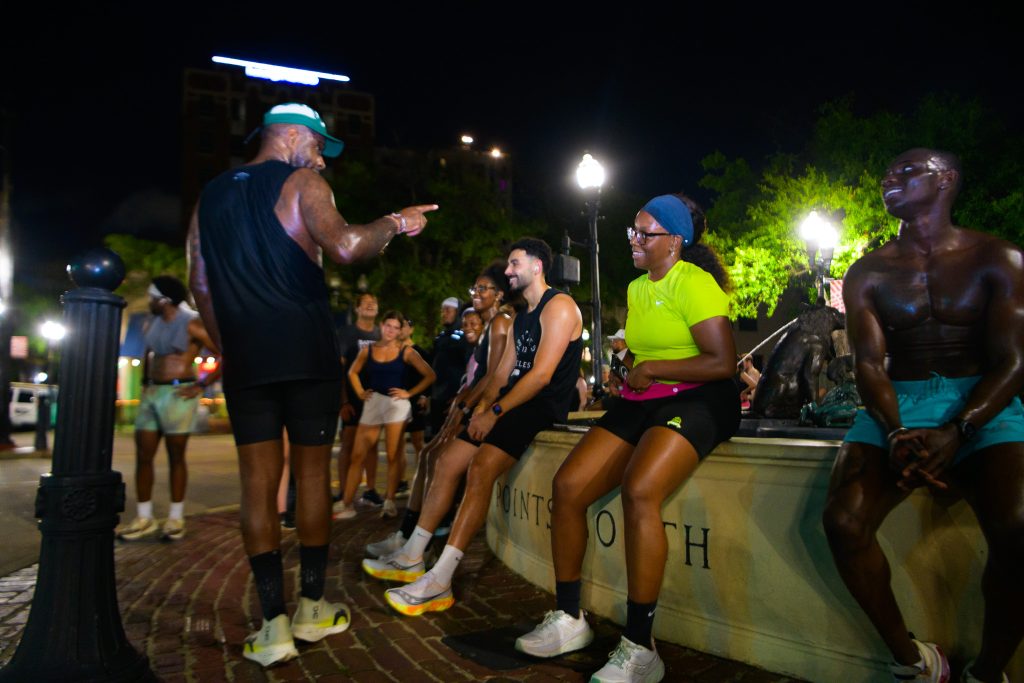
On any given Tuesday night in Birmingham’s Five Points South, the sidewalks begin to fill long before sunset.
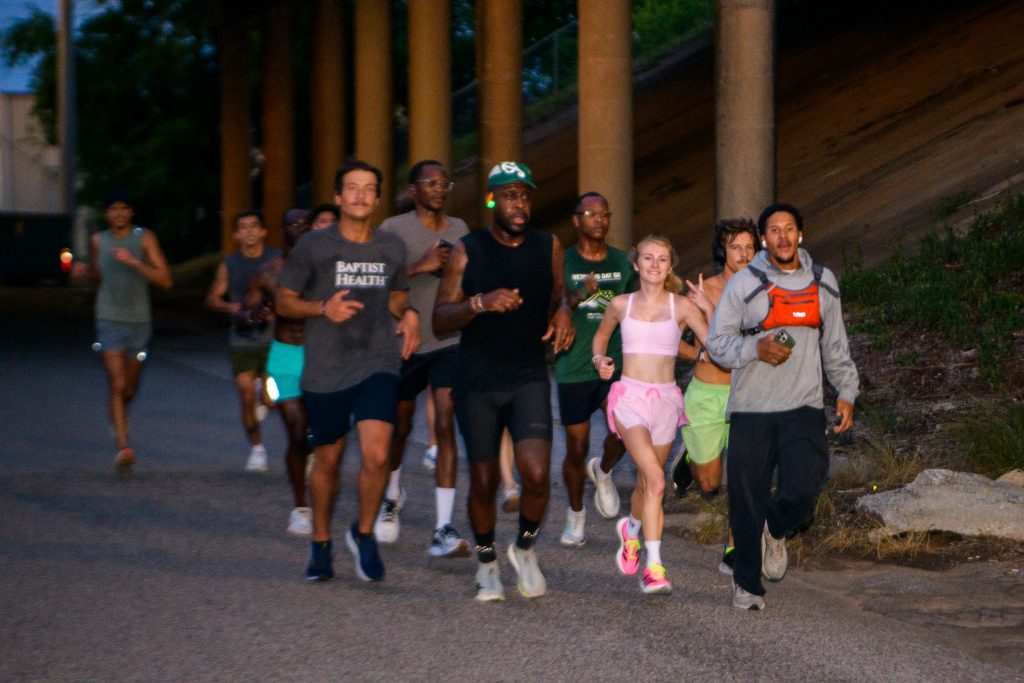
Some runners arrive in matching race gear and carbon-plated shoes. Others pull up in oversized T-shirts and leggings after long workdays. Some are seasoned marathoners. Others are attempting their very first mile.
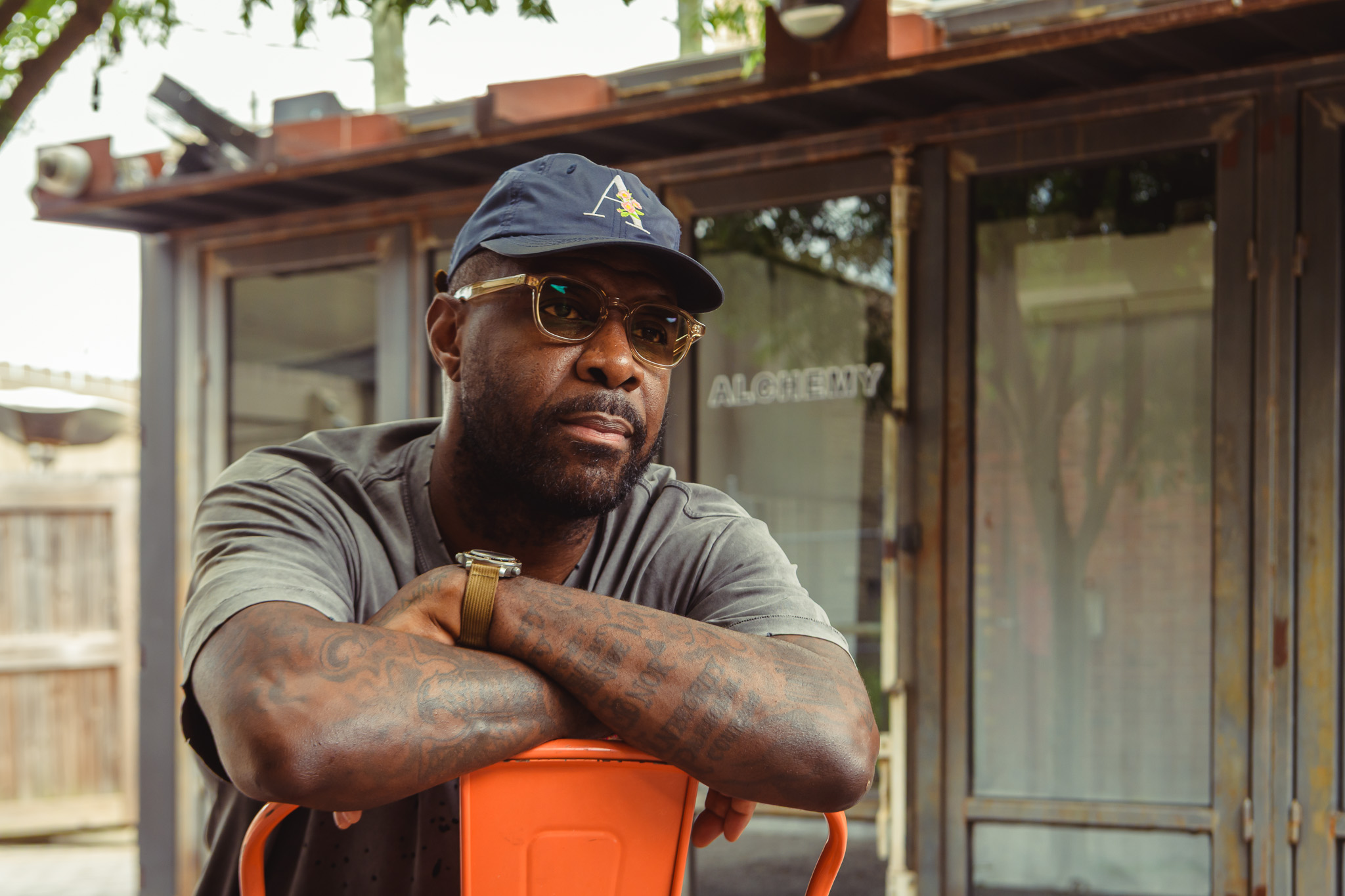
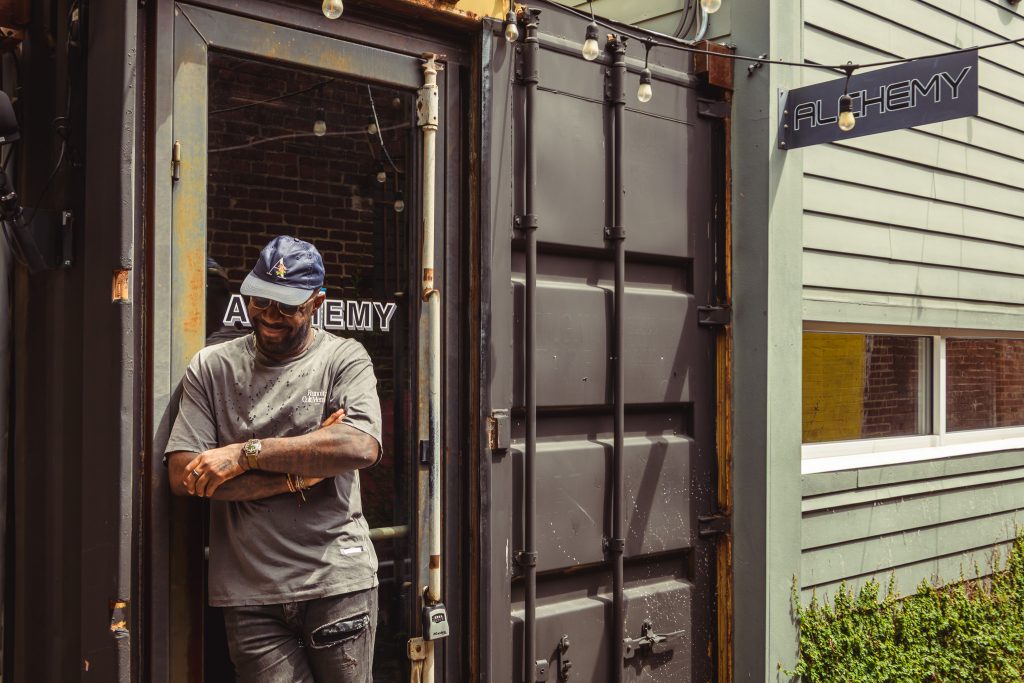
But by the time the group gathers outside Alchemy — the boutique streetwear and running shop founded by Ace Graham — those differences fade into the background.
Because at Alchemy Run Crew, nobody has to prove they belong before they show up.
“You just come and run,” Graham said simply.
What began in 2021 as one man’s personal running routine has evolved into one of Birmingham’s most visible and influential wellness communities — a movement centered as much on healing, culture and connection as fitness itself.
Today, Alchemy Run Crew hosts multiple weekly runs, community yoga, long-distance training sessions and large-scale events that stretch far beyond city limits. The group has organized civil rights-inspired endurance projects across Alabama, partnered with national brands, distributed hundreds of pairs of shoes to Birmingham residents in need and cultivated a multicultural running community in a sport where many Black runners have historically felt unseen.
More Than a “Run Club”
Still, Graham insists the mission was never about building a “run club.”
“Running was my personal hobby,” he said. “Customers would see me running through the city and say they wanted to come run too. One day we just said, ‘Let’s make a community run and see who shows up.’”
About 20 people came that first night.
They kept coming back.
Now, Alchemy Run Crew’s weekly schedule includes community runs on Tuesdays, women’s runs on Wednesdays, social runs on Thursdays, long runs on Saturdays and beginner recovery runs on Sundays. On Mondays, the crew hosts free community yoga — another intentional effort to lower barriers to wellness access in Birmingham.
Every event is free.
That matters to Graham.
“One of the biggest things for me is low barrier to entry,” he said. “We want people to feel seen. We want people to have access.”
For Graham, service has always been the foundation.
Raised in a military family, he credits the Army values instilled in him early in life — especially selfless service — with shaping the way he approaches business, leadership and community building.
“I’ve always wanted to create opportunities and experiences for people,” he said. “Alchemy is a platform.”
That platform extends far beyond running.
Since opening Alchemy in Five Points South nearly a decade ago, Graham has used the space to host art exhibitions, mural projects, producer battles, rap events and cultural programming designed to bring different groups of people together.
The running community, he said, simply became another bridge.
“Everything we’ve ever done has been focused on mixed demographics,” Graham said. “Creating a space where multicultural people can engage together through product, through experiences, through events, through running.”
Sam Running Through the ‘Ham
That inclusivity is part of what drew runners like Sam Nelms to the community.
For Nelms — known online as “Sam Running Through the ‘Ham” — running started long before Alchemy existed.
Growing up in Homewood, she first discovered the sport in middle school after failing to make the volleyball team.
“The coach was like, ‘You can’t hit the ball, but you were running those reps really well,’” she said with a laugh.
A cross-country coach quickly recognized her talent and invited her to join the team, introducing Nelms to a sport she and her family previously knew little about.
“Being Black, me and my parents didn’t know anything about cross country,” she said. “We were like, ‘What is that?’”
Soon, Nelms found herself competing at one of the highest levels in Alabama’s ultra-competitive distance running scene against powerhouse programs like Mountain Brook, Vestavia Hills and Hewitt-Trussville.
By her junior year at Homewood High School, the girls’ cross-country team placed second at state for the first time in school history.
But behind the accomplishment was exhaustion.
“I was burnt out,” Nelms admitted.
As the only Black girl on the team at the time, she also began noticing the social and economic realities surrounding the sport.
“The competitiveness of running mixed with not realizing how privileged running was — it became difficult,” she said.
So, at 16 years old, she quit.
For years, running disappeared from her life entirely.
She attended Baylor University in Texas, where she received a B.A. in sociology. Nelms immersed herself in college life and left distance running behind. It was not until graduate school while studying social work and later the isolation of the COVID-19 pandemic that she slowly began reconnecting with the sport.
At first, it was casual.
Then it became something deeper.
“It reconnected me with Birmingham.”
When Nelms returned home to Birmingham in 2021, she was rebuilding more than a running routine. Many of her friends had moved away, and she found herself searching for connection.
That is when she found Alchemy Run Crew.
“It kind of reconnected me with Birmingham,” she said.
Though she no longer regularly runs with the group because of her schedule, many of her closest friendships today were formed through Alchemy.
“They’re the people who helped me train for my first half marathon and my first marathon,” she said.
Since then, Nelms has completed one full marathon and multiple half marathons, with another full marathon already on her calendar.
To outsiders, marathon running often sounds intimidating — 26.2 miles of relentless physical strain. But for runners like Nelms, the appeal extends far beyond fitness.
“I literally love the joy and sensation of moving my body this way,” she said. “Watching the city wake up, seeing the sunrise, seeing dogs, seeing people start their mornings — there’s just something peaceful about it.”
Running, she said, has also become a mirror.
“It showed me I’m stronger than I thought,” Nelms said. “More resilient than I realized.”
Still, she acknowledges that navigating distance running as a Black woman can feel isolating.
“You always hear people say Black people don’t do distance running,” she said, adding that Black runners have historically only been visible in sprinting track and field events such as the 100-meter and 200-meter races that test pure speed, explosiveness and acceleration.
Stereotypes about Black athletes linger even today.
As Nelms has moved deeper into the marathon world, she often finds herself one of the few Black women at races. But rather than discouraging her, that visibility has become part of her motivation.
“I want little Black girls to see somebody that looks like them doing this,” she said. “If you’ve got the heart for it, go try it.”
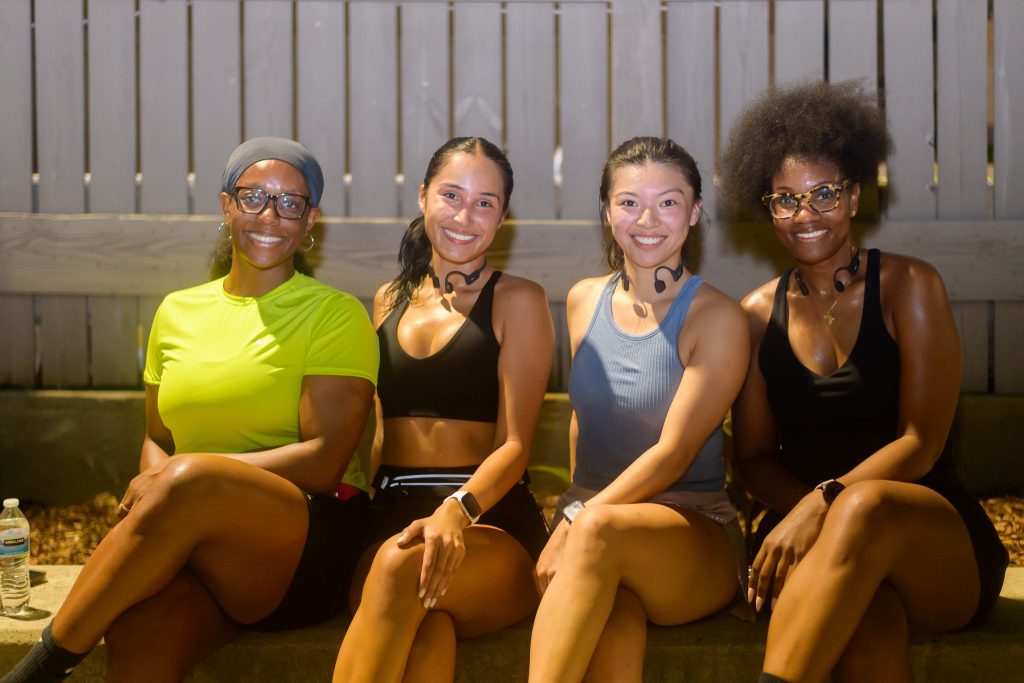
“It helped me build community.”
That same spirit of representation resonates with Tiffany Moore, a wellness creator, health coach and Lululemon Run Ambassador.
For Moore, running began as a deeply personal challenge tied to turning 40.
“I wanted to do something hard,” she said.
Although fitness had long been part of her life through basketball and at-home walking workouts, distance running felt intimidating.
“I saw runners all the time, but I never thought, ‘That’s something I want to do,’” Moore said.
In 2024, she began slowly incorporating walk-runs into her routine while navigating difficult mental health moments and the isolation that sometimes comes with working from home.
Running became therapeutic.
“It challenges you mentally” she said. “There are moments when you want to quit, and you have to tell yourself, ‘No, you can do this.’”
Then she discovered Alchemy.
“When I first went to one of the women’s runs, I was like, ‘What did I get myself into?’” she recalled with a laugh.
But the environment quickly shifted her perspective.
“It helped me build community,” Moore said. “Now if I’m having one of those days where I don’t feel like running, I can text one of the girls and they’ll say, ‘Come on.’”
Historically, distance running spaces have not always felt welcoming to Black women, particularly women whose bodies, pace or appearance may not fit stereotypical images associated with runners.
“I didn’t always see my shape or my size in running spaces,” Moore said. “I had imposter syndrome.”
But instead of shrinking herself, she leaned in.
“I like being in spaces people think we shouldn’t be in,” she said.
Moore2Health
Moore’s impact stretches far beyond race day. Known online for her fitness and lifestyle content, Moore has built a devoted digital audience of more than 40,000 YouTube subscribers on her channel Moore2Health by documenting her wellness journey with honesty, humor and consistency. Her content — ranging from workout routines and running preparation to lifestyle motivation — has helped position her as one of Birmingham’s most recognizable fitness influencers, particularly among young Black women looking to see themselves represented in wellness spaces traditionally lacking diversity.
That visibility led to another milestone: becoming a brand ambassador for lululemon. Moore recently hosted her first community event with the athletic apparel company, blending fitness, fellowship and encouragement into an experience she described as deeply meaningful.
For Moore, the partnership represented more than athletic wear or social media recognition. It symbolized the growing visibility of Black runners and creators in spaces where they have historically been overlooked.
“Growing up, you didn’t really see a lot of Black women in distance running,” Moore said. “So now being able to partner with a brand like lululemon and create community around movement and wellness — especially here in Birmingham — feels really full circle.”
Moore said hosting the event reminded her that running has become about far more than competition or personal records. It has evolved into a platform for connection, confidence and representation.
“What I love most is seeing people realize they belong in these spaces too,” she said. “You don’t have to look a certain way or fit a stereotype to call yourself a runner.”
The event also highlighted how Birmingham’s running culture continues to evolve, fueled in part by creators and athletes using social media to make fitness feel more accessible and inclusive.
Now, through her platform and ambassador work, Moore hopes to encourage more Black women to start imperfectly and without fear.
“You don’t need the perfect clothes or gear,” she said. “If you’re running, you’re a runner.”
Through online platforms, local run groups and community events, influencers like Moore are helping redefine what wellness looks like in the city — one mile at a time.
Building Bridges Beyond the Run
For Graham, stories like Moore’s and Nelms’ are exactly why Alchemy matters.
While he’s become the public face of the crew, he consistently redirects attention back toward the people who shape the culture.
“This isn’t about me,” Graham said. “People should hear Sam’s name, Tiffany’s name. These are the people that are the DNA of what we do.”
That philosophy is reflected in the projects Alchemy creates.
One of the group’s most impactful initiatives was a civil rights-focused endurance run across Alabama. Participants traveled from Birmingham to Selma and Montgomery, visiting landmarks like the 16th Street Baptist Church, Edmund Pettus Bridge and the Equal Justice Initiative.
The project included runners from different races, nationalities and backgrounds — including participants from Germany, Norway and the Philippines — and later became a documentary, “On the Fly,” screened at Birmingham’s historic Carver Theatre last February.
For Graham, the project represented what Alchemy has always tried to accomplish: using movement to create understanding.
“What running means to me is finding opportunities to build bridges,” he said.
Even Alchemy’s charitable efforts reflect that same mission.
Through its nonprofit initiative, Alchemy Cares, the organization has committed to distributing 5,000 pairs of shoes to people in need by 2028. So far, more than 1,200 pairs have already been donated throughout Birmingham.
The idea came from Graham simply noticing unhoused residents walking through Five Points South without proper footwear.
“We would literally go outside, measure their feet and give them shoes from our inventory,” he said.
That grassroots instinct — seeing a need and responding directly — continues to define Alchemy’s identity.
The crew’s influence now stretches well beyond Birmingham city limits.
This year, Alchemy sent an all-women team to participate in The Speed Project, an unsanctioned 340-mile relay race from Los Angeles to Las Vegas widely considered one of the most grueling endurance events in the world.
For Graham, selecting an all-women team was intentional.
“We want to do as much as we can to support women in our community,” he said.
Still, despite Alchemy’s growth, national recognition and expanding visibility, the heart of the community remains surprisingly simple.
People show up.
They move together.
They encourage each other.
And in a world increasingly shaped by isolation, screens and division, that consistency has become transformative for many Birmingham runners.
Especially Black runners who once believed distance running was never meant for them.
For Moore, running has become part of how she cares for herself mentally, physically and emotionally.
For Nelms, it became proof of resilience.
And for Graham, it remains a tool for connection.
“It’s about building bridges,” he said.
At Alchemy Run Crew, those bridges are measured not just in miles — but in belonging.
Follow Alchemy on Instagram @alchemyruncrew and visit Alchemy at 1923 11th Ave S, Birmingham, AL 35205.