Home Blog Page 1183

Has Hip-Hop Regained Its Conscious Edge?
0


By Je’Don Holloway Talley

For The Birmingham Times
0004525535_10

What happens when the culture of an entire music genre has been refashioned into a philosophy of ruin and self-destruction? While it’s true that transformation is an inevitable factor of any evolution and is most often celebrated, sometimes musically that isn’t so.

Consider rap music. Is it accepted as beloved hip-hop or rejected as harmful messaging that permeates the hearts and minds of urban communities? Does conscious hip-hop still exist in today’s music industry?

Maybe some aren’t aware of who the conscious artists are or what constitutes conscious rap. Outspoken artists like David Banner, Wale, Kendrick Lamar, and Cyhi the Prynce are present today, but do they register as conscious rappers? Maybe it’s new packaging or a change in demand.

Is conscious hip-hop a lost art?

“I don’t think it’s ever been lost. I just think people don’t know what to look for or where to find it,” said Birmingham-based rapper G.I. Magus.

Either way, it appears that much of today’s music lacks ethical awareness.

“Music is an industry and a business more than anything, so it is definitely supply and demand,” said G.I. Magus. “When people clamor for something, the industry tilts in that direction. That goes for everything from the sound of the track to the rhyme patterns and the content.”

‘Conscious edge’

Artist TeeJ, a Birmingham-based rapper and videographer, explains what constitutes conscious or socially conscious rap and whether this hip-hop commodity has lost its place in today’s music.

“Conscious rap is a subgenre of hip-hop that was made popular by East Coast intellectual rappers like the Last Poets, KRS-One, Public Enemy, and Dead Prez,” he said. “It can have a religious, political, or lifestyle point of view, so I don’t think the industry has completely lost its conscious edge. It’s just delivered in a different way.”

Birmingham-based female MC Yung Rod 2G offers an alternative perspective.

“It depends on what one qualifies as conscious music,” she said. “To me, conscious music is a true reflection of one’s life path and struggle—a sharing of pain listeners can relate to, music that evokes positive action and thought. With this in mind, I’d say plenty of that is present in the industry. It is now regaining its original conscious edge, but in a new light. We have Kanye West and J. Cole to our parents’ Eric B and Rakim.”

In the 80s and 90s, the West Coast also had its share of conscious rappers—Kam, NWA, Ice T, Ice Cube, and Too Short. NWA, most popular for the anti-police-brutality song “F— the Police,” and the late Tupac Shakur, with his controversial “White Man’s World” and healing psalm “Keep Your Head Up,” grew close to brokenhearted, mistreated inner-city citizens.

Ringtone rap

In the early 2000s, there was a change from conscious rap to tunes with catchphrases. The ringtone rap era, club and crunk music, and southern rap took over. Music from Lil’ Jon and the Eastside Boys, the Ying Yang Twinz, Lil’ Scrappy, Yung Joc, Souljah Boy, and DJ Unc were mainstays not only on the radio airwaves but also as cell phone ringtones and notification alerts.

Once crunk music became the trend, the message in hip-hop took a backseat. Catchphrases took the place of powerful call-to-action plans, and dances like “crank that Souljah Boy,” the “pool palace,” the “whip,” and the “nae nae” came to dominate pop culture in mainstream and urban America.

How did the music change so drastically in character and nature?

“Positive messaging in music took a backseat because club music became the best means of getting heard,” said G.I. Magus. “Music from the 2000s was king of club-gimmick music. Radio started to play only what was moving in the clubs. And once radio business became club business, due to party promotions with radio DJs, music started getting developed in accordance with what would move in the clubs. People don’t want to turn up to music that makes them think.”

Yung Rod 2G said the heirs of the culture were not prepared for the business side of music.

“There is hip-hop, and there is rap,” she said. “Hip-hop has always been conscious. It is the living, breathing, beating culture of a people. Mainstream music, on the other hand, is a business that’s owned and operated by business men. Simply put, conscious hip-hop doesn’t fit the business plan. There’s now more money to be made in gimmick music.”

Positive examples

Still, there are some examples of artists who remain positive.

In 2015, Grammy Award–winning recording artist Kendrick Lamar released “To Pimp a Butterfly,” an impressive body of work that blazed a new trail for the return of conscious rap. The lyrics of his “Complexion (A Zulu Love)” celebrate the black beauty of the variety in skin tones: “The new James Bond gon’ be black as me / Black as brown, hazelnut, cinnamon, black tea / And it’s all beautiful to me / Call your brothers’ magnificent, call all the sisters’ queens.”

In recent months, gangster rapper Lil’ Boosie also released music for the black mind to explore. His hit single “World War 6” chronicles recent tragedies and conspiracy theories inside the black community: “ATL, 80 degrees on Christmas, oh my God, man / How the hell hurricanes hit New Jersey and New York, man? / ISIS just left Paris then went to California / We could be murdered seven ways, never knowing shit / AIDS wasn’t enough, now they invented this Ebola shit / It’s war, man.”

In “No Role Modelz,” Grammy Award–nominated J. Cole addresses the harm reality TV has done to some of today’s young women, while Cyhi the Prynce on “Nelson Mandela” (from the album “Black Hystori Project”) sends a clear message to urban youth: “20 years in the pen, man that’s really execution / So I encourage each and every student / To stay in school, play it cool, obey the rules or / Pay your dues, make a move, take a tool or / Write some raps, make a mixtape with Clue, and / You can be dope as me.”


(Curtsey Photo: Provided)
To Walk a Mile in His Shoes

0

Just as men often wonder how women take care of home and family, have a thriving career, can be the classroom mom, create amazing birthday parties, and more, we too have no idea what it is like to be a man. The expectations from the Word to be a man after God’s own heart while living in a self-serving society. The expectation from the world to look like you have it all together when your next step is one of faith. Then there is the expectation from the church for you to attend every event, mentor young boys, be a deacon, security, and the armor bearer when needed because of the disparaging number of males serving in ministry. Today, we honor you! Not only because of Father’s Day, but because you deserve it.

One Father’s Day, I wrote this poem to my dad. Today, I share it with you as a salute to the men we love so dearly.


To walk a mile in his shoes,

We don’t know how it would be.

The expectations of being the head,

While the world waits to see.


Providing for home and others,

Is a weight that is hard to grasp.

Never letting us down while lifting us up,

Oh my, what a task!


The “thanks” are heard and appreciated,

But that doesn’t alleviate your stress.

To be the man God has called you to be,

Each day, we see you press…


Toward the mark of the prize of the high calling,

In Christ Jesus, you will succeed.

You are great, great beyond measure,

Your praises, we publicly sing.


We don’t know how you do it.

Your shoes are too big to fill.

Yet, today we want to say, “Thank you.”

Still your greatest has yet to be revealed.


Mother Teresa once said, “Kind words can be short and easy to speak, but their echoes are truly endless.” Share these words with every man you know. And may the Father’s Day celebrations last beyond one day.

I hope you had a Happy Father’s Day!

For more about Tijuana J. Williams, visit www.sharingmyheartblog.com.

From exercising to knitting, more than 500 activities this summer at the Birmingham Public Library

0
Courtesy photo
Courtesy photo
Courtesy photo

The Birmingham Public Library’s 2016 Summer Reading season kicked off this month with more than 500 activities and workshops – from books to exercising, from engineering camps to coloring and knitting for adults – at 19 libraries across Birmingham through the end of July. Registration is under way with forms available in any of the 19 BPL locations and online at www.bplonline.org.

There are plenty of incentives available for children, teens and adults to read and explore activities this summer. You can view the entire event calendar of programs taking place through July at the link.

Here is a listing of Summer Reading programs for teens this summer:

Get in the Chemistry Game – Have some fun with chemical reactions and see that chemistry is cool. We’ll be exploring states of matter by making elephant toothpaste, mixing Diet Coke with Mentos, and much more.

Powderly, 3301 Jefferson Ave. SW – June 30, at 1 p.m.
Five Points West, 4812 Ave. W – July 6, at 2 p.m.
East Ensley, 900 14th St. Ensley – July 7, at 2 p.m.
Smithfield, #1 8th Ave. W – July 19, at 10 a.m.

Get in the Game…Paint! – Local artist Cherie Hunt will provide step-by-step instructions for participants to complete their very own canvas masterpiece. Limited space. Registration required.

Ensley, 1201 25th St. Ensley – June 23, at 10 a.m.
Wylam, 4300 7th Ave. Wylam – June 23, at 2 p.m.
Southside, 1814 11th Ave. S – July 7, at 10:30 a.m.
Pratt City, 509 Dugan Ave. – July 7, at 2 p.m.
Woodlawn, 5709 1st Ave. N – July 12, at 4 p.m.
West End, 1348 Tuscaloosa Ave SW – July 13, at 2 p.m.
Inglenook, 4100 40th Terrace N – July 15, at 3 p.m.
Powderly, 3301 Jefferson Ave. SW – July 21, at 1:30 p.m.

Get in the Game with Virtual Reality – Love to play video games? Ever thought about designing them? UAB’s ET (Enabling Technologies Laboratory) will provide an awesome interactive presentation and discussion for teens regarding virtual reality complete with giant screens, Oculus Rift headsets to test out, and more! We’ll talk about virtual reality in technology, why it’s important, and what role it will play in the future.

East Ensley, 900 14th St. Ensley – June 23, at 2 p.m.
Five Points West, 4812 Ave. W – June 29, at 2 p.m.
Southside, 1814 11th Ave. S – – July 11, at 10:30 a.m.

Hit a Home Run with the Negro Southern League Museum – The Negro Southern League Museum (NSLM) and the Birmingham Public Library are excited to share the newest museum to be added to the Birmingham community.

Smithfield, #1 8th Ave. W – July 5, at 10:00 a.m.

Springville Road, 1224 Old Springville Road – July 6, at 10:00 a.m.

It’s So Easy to Exercise! – Join us for a sample of a low impact/chair exercise program designed for cardiovascular activity, strength training, and flexibility techniques. Certified fitness instructor Russell Lee will also include a brief talk on general exercise safety. Please bring your own exercise mat and towel. Wear suitable attire and tennis shoes.

Smithfield, #1 8th Ave. W – June 28, at 10:00 a.m.
Springville Road, 1224 Old Springville Road – June 29, at 10:00 a.m.
Wylam, 4300 7th Ave. Wylam – June 30, at 2:00 p.m.
East Lake, #5 Oporto-Madrid Blvd – July 6, at 10:00 a.m.
West End, , 1348 Tuscaloosa Ave SW – July 6, at 2:00 p.m.
Five Points West, 4812 Ave. W – July 13, at 2:00 p.m.
Powderly, 3301 Jefferson Ave. SW – July 14, at 1:30 p.m.

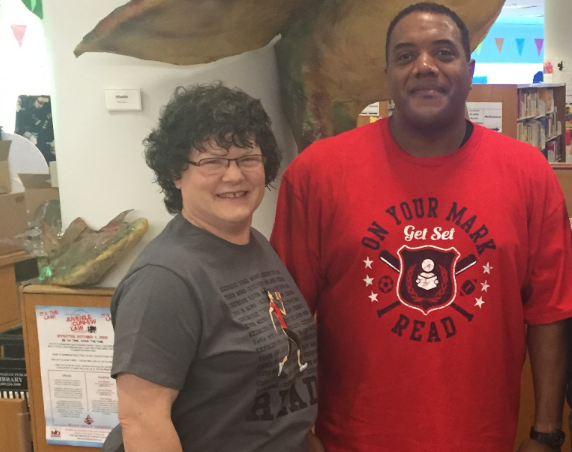
On Your Mark, Get Set…Dance! – Come down to the library to learn the latest dance moves with M.A.D Skillz Dance Company. Dance is a great way to exercise and lots of fun at the same time. Learn to move and groove and have lots of fun.

Titusville – June 23, at 2:30 p.m.
Pratt City, 509 Dugan Ave. – June 29, at 2 p.m.
Ensley, 1201 25th St. Ensley – July 7, at 10 a.m.
Avondale, 509 40th St. S – July 7, at 2 p.m.
Wylam, 4300 7th Ave. Wylam – July 14, at 2 p.m.

Check out these blogs to get more details on programs available for kids, teens and adults at the Library this summer.

LeBron Cements His Legacy In The 2016 NBA Finals

0
(Photo Credit: USA Today)

By Rob Parker

©2016, The Shadow League


Getty Images
Getty Images

James Delivers on His Championship Promise to Cleveland

Finally.

LeBron James is his own man, doesn’t have to be linked to other great NBA players before him.

You don’t have to talk about James and put Michael Jordan in the conversation.

Clearly, James can stand on his own from here on out.

On Sunday night, James sealed his legacy forever. He did something NO ONE has ever done in the Association.

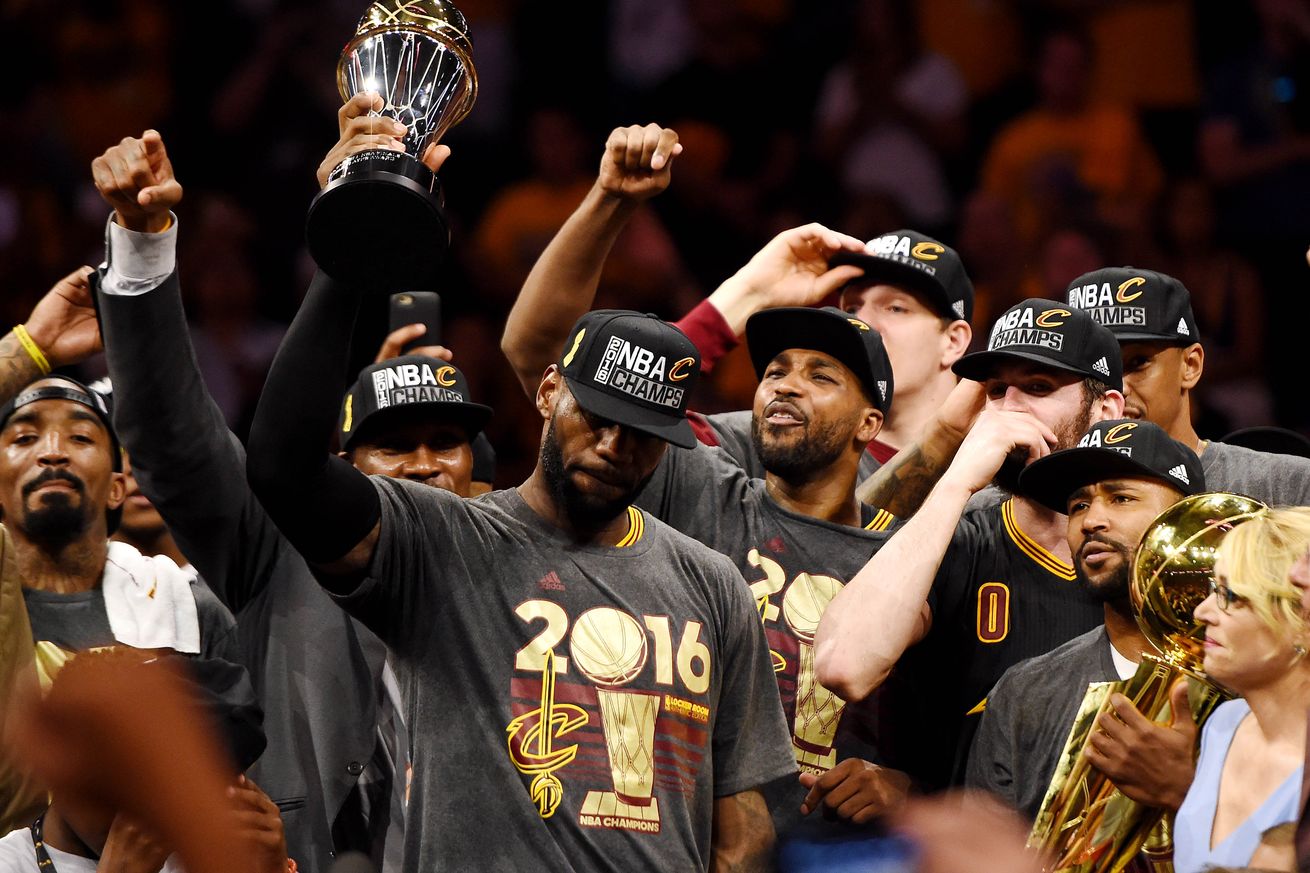
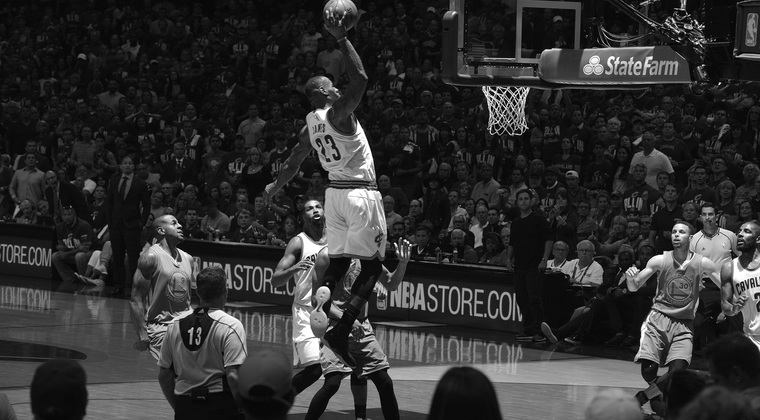
James led the Cleveland Cavaliers from a 3-to-1 deficit over the Golden State Warriors to win the NBA Finals, winning Game 7 on the road in Oakland.

“I’m true to the game and I know what I bring to the table,” James said. “I came back for a reason. I came back to bring a championship to our city. I knew what I was capable of doing.”


(Photo Credit: USA Today)


For full story…  TheShadowLeague.com


This story originally appeared on TheShadowLeague.com, a site dedicated to journalistically sound sports coverage with a cultural perspective that insightfully informs sports fans worldwide.


Lost Ones: The Warriors Historic Run Collapses Along With Their Claim To Greatness

0

By Rory Sharrock

©2016, The Shadow League

curry_loss

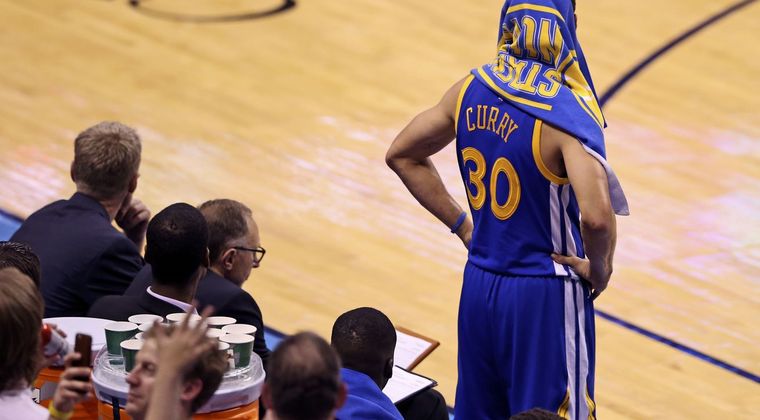
By Losing the NBA Finals to Cleveland, Golden State Lets Immortality Escape Them

To the victor go the spoils of popping bottles, confetti showering down from the ceiling, photo ops with ear-to-ear Kodak smiles and a parade through the downtown streets to celebrate a season of championship success.

This is life for the Cleveland Cavilers following their historic rally from a 3-1 series deficit to clinch the franchise’s first-ever NBA title.

On side B are the would’ve-could’ve-should’ve contemplations, gut-wrenching sleepless nights, tears of heartache and ‘better luck next year’ clichés associated with finishing in second place.

This is life for the Golden State Warriors after coming up short in their quest to clinch back-to-back NBA crowns.


For full story…  TheShadowLeague.com


This story originally appeared on TheShadowLeague.com, a site dedicated to journalistically sound sports coverage with a cultural perspective that insightfully informs sports fans worldwide.

‘Supermen’ recognized for their good works in the community

0
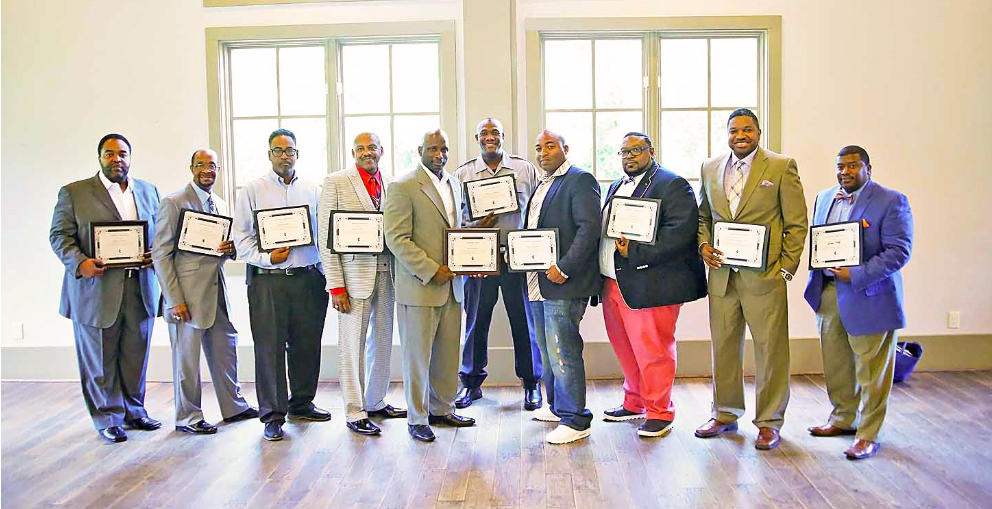
From left: Antonio Boswell, Joe Lockett, Sr., Antoine Arrington, Wayne Nunn, Sr., Joe Lockett, Jr., William Benson, Abdul Alwahiid, Myca Clark, Curtis Richardson, Derrick King.


From left: Antonio Boswell, Joe Lockett, Sr., Antoine Arrington, Wayne Nunn, Sr., Joe Lockett, Jr., William Benson, Abdul Alwahiid, Myca Clark, Curtis Richardson, Derrick King.

The Joe Lockett show hosted its first “Superman in the City” Celebration on Sunday, June 19th at Shades Creek Community Center in Ross Bridge.

Local men were nominated by their peers and family to receive public recognition for their leadership and community service.

The room was filled with supporters who cheered on each recipient as he received his award. Parents, wives, children and friends shared stories of heroic action, personal accomplishments and community service about each nominee.

Stories included fathers being great listeners and providing insightful advice while making significant sacrifices to ensure that family and household needs were met and exceeded. Other stories referenced the leadership, character and integrity modeled by these fathers that continue to transform their children into the high achievers.

Examples included Antoine Arrington, who does not have any children, but works tirelessly with local youth to enhance their athletic skills while mentoring and coaching. Abdul Alwahiid was nominated three times by his peers for his commitment as a community activist in the western area of Birmingham. Joe Lockett Jr., host of the Joe Lockett Show, received a leadership award for his service in the community.  Antonio Boswell (co-host of the Joe Lockett Show and head photographer of A. Boswell Photography) received an appreciation award for going “above and beyond” in acts of service within the community and mentoring youth.

The “Superman in the City” event will be hosted annually on Father’s Day weekend and will continue to recognize dedicated dads and other men who make a difference.

How UAB center works to eliminate health disparities across the state

0


By Ariel Worthy

The Birmingham Times


Dr. Mona Fouad had a tough time building trust with minority communities when she first started her work in Birmingham.

She and a close friend and associate, Joanice Thompson, went into the Smithfield neighborhood to begin outreach about minority health disparities—and were quickly turned away.

“They said, ‘We don’t need your help. You guys are sitting there in the ivory tower. What do you know about us?’” Fouad recalled.

Persistently, Fouad went back to Smithfield and didn’t leave until she was accepted by the residents.

“I think they just wanted us to go away at that point,” said Fouad, laughing as she recalled that moment from more than 20 years ago.

That resolve paid off for Fouad and for Birmingham’s residents.

In 2002, Fouad helped establish the UAB Minority Health and Health Disparities Research Center (MHRC), which has earned her national acclaim for her work in improving health and preventing disease among minorities.

MHRCpix2
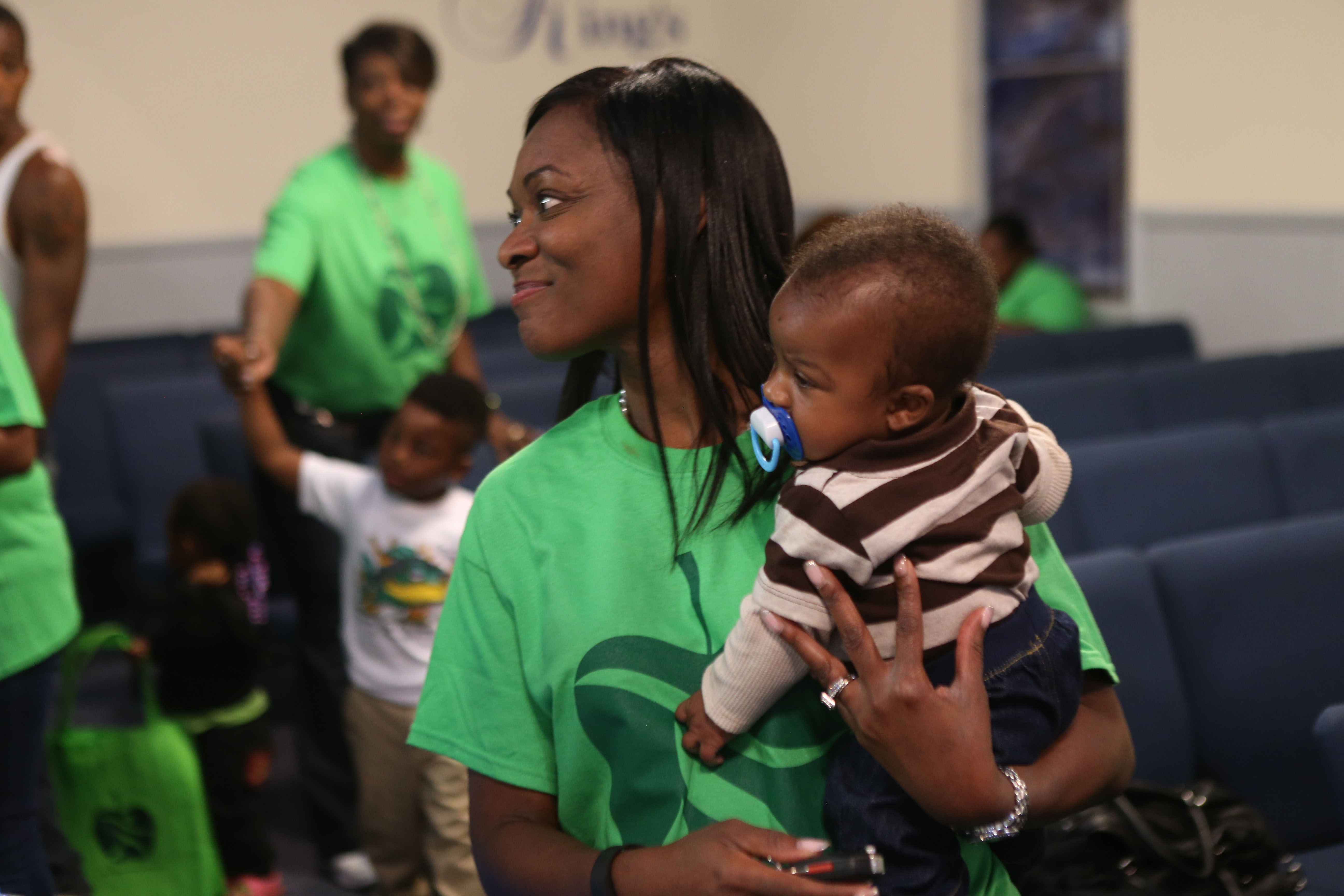
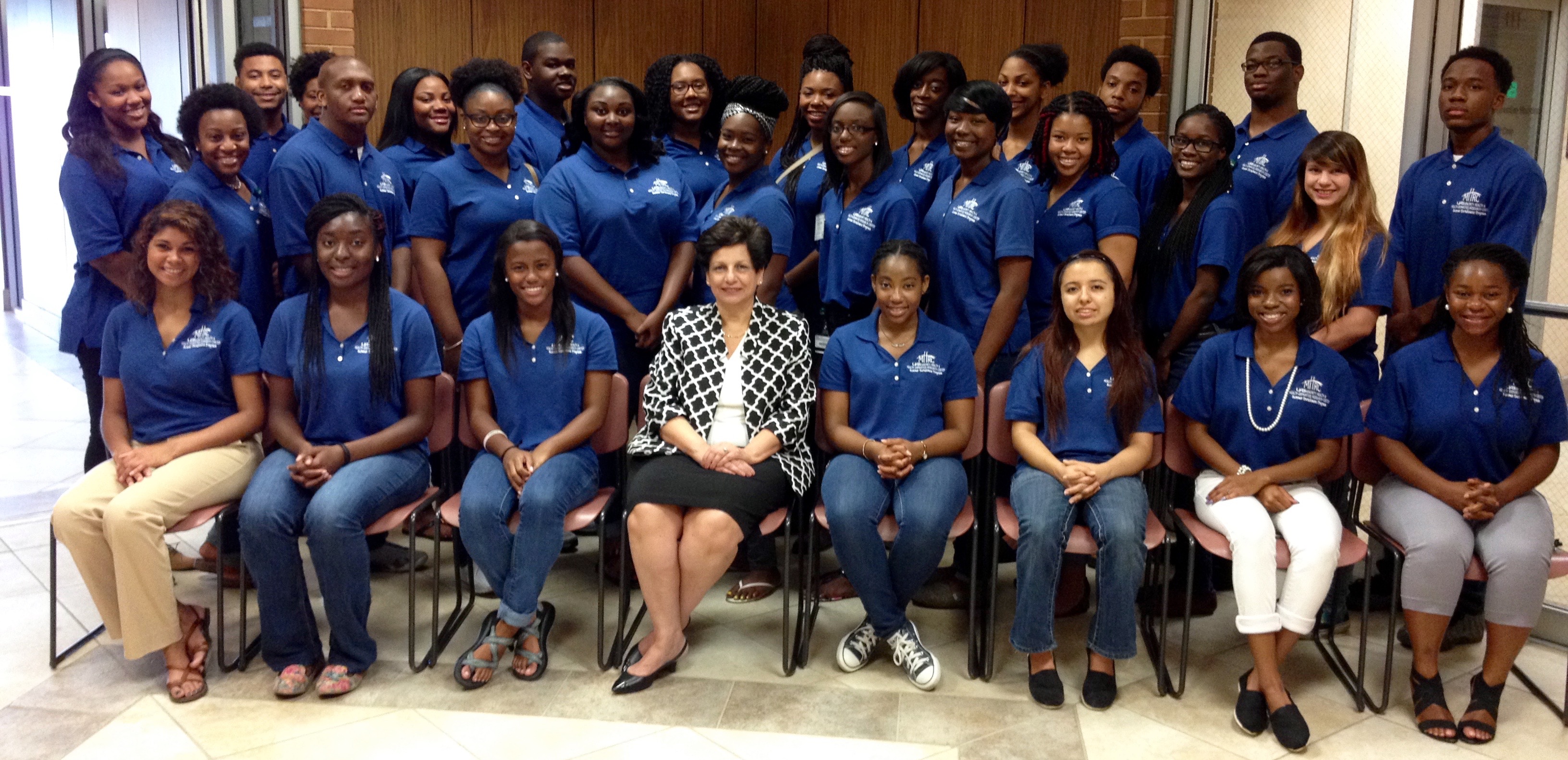
Dr. Theresa Wynn-Wallace, REACH program director, holds a baby at a REACH event. The earlier healthy eating habits are formed the better they stick in the long run, Wallace said.


Using a Unique Approach

The MHRC, founded at University of Alabama at Birmingham with the goal of eliminating health disparities in the state and throughout the Southeast, uses a three-pronged approach to promote health equity: research, training, and community outreach.

Today, the MHRC partners with a number of groups and communities to not only expose health gaps and inequities but also eliminate them from minority and rural areas. Their efforts include reducing food-desert areas, bringing health and exercise classes to underserved areas, and training students on how to research and get rid of these issues.

Fouad began first began her work on minority health in the early 1990s with a project that addressed the issue of heart disease among Birmingham’s city employees.

“What got my attention was that blood pressure rates were skyrocketing among workers in certain groups, particularly street and sanitation, and parks and recreation,” Fouad said. “They’d walk in, and they wouldn’t have a clue that they had such high blood pressure.”

The dangers of not knowing could have led to workers passing out or having strokes while at work, Fouad said. From that, she developed high blood pressure control groups and began doing her research—the type that is one of the MHRC’s focal points.

Supporting Better Health

Dr. Monica Baskin, an associate scientist in the UAB Clinical Nutrition Research Center who also works with the MHRC, and her team recently completed the Journey for Better Health research project in rural areas around Alabama. The subjects—African-American women—received exercise and diet advice and support from professionals.

“We trained local people in the community to deliver the intervention,” Baskin said. “That’s great on a number of levels. Many of the people in these areas are not necessarily going to be able to go to UAB or a larger area to get some of these programs. Also, the programs can be easily translated.”

Another project underway is in Birmingham, where researchers are studying the impact environment has on pregnancy. The belief is that women — who live in areas with higher poverty, more unemployment, and limited access to healthy, affordable foods — are more likely to gain excess weight during pregnancy and more likely to have complications during and after pregnancy.

“We’re trying to see if we can observe those differences and use the information we gather to develop programs that will enable us to make a difference,” Baskin said.

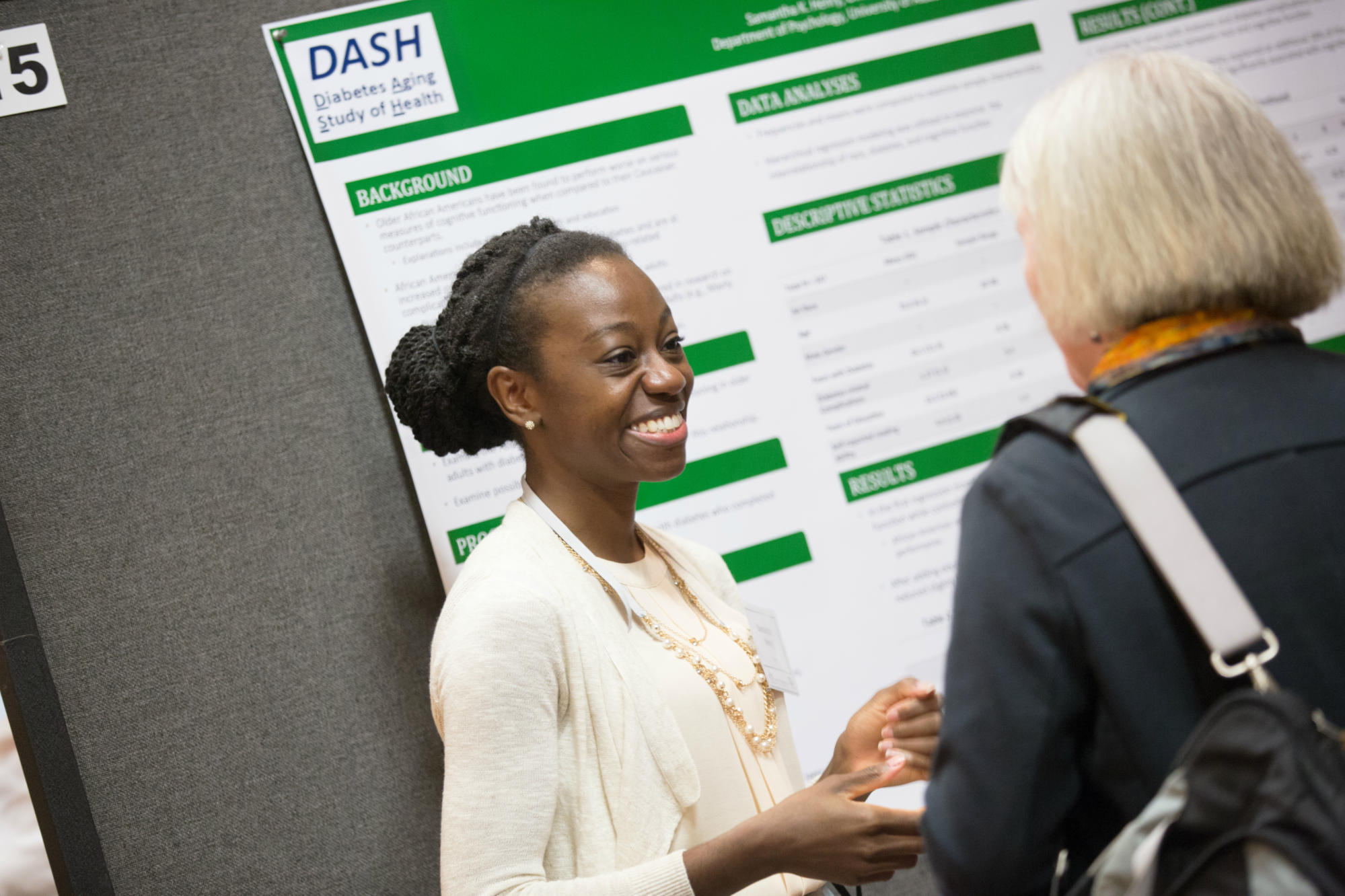
A student presents her diabetes research poster to a woman at an MHRC symposium. (PROVIDED PHOTO)

Eliminating Food Deserts

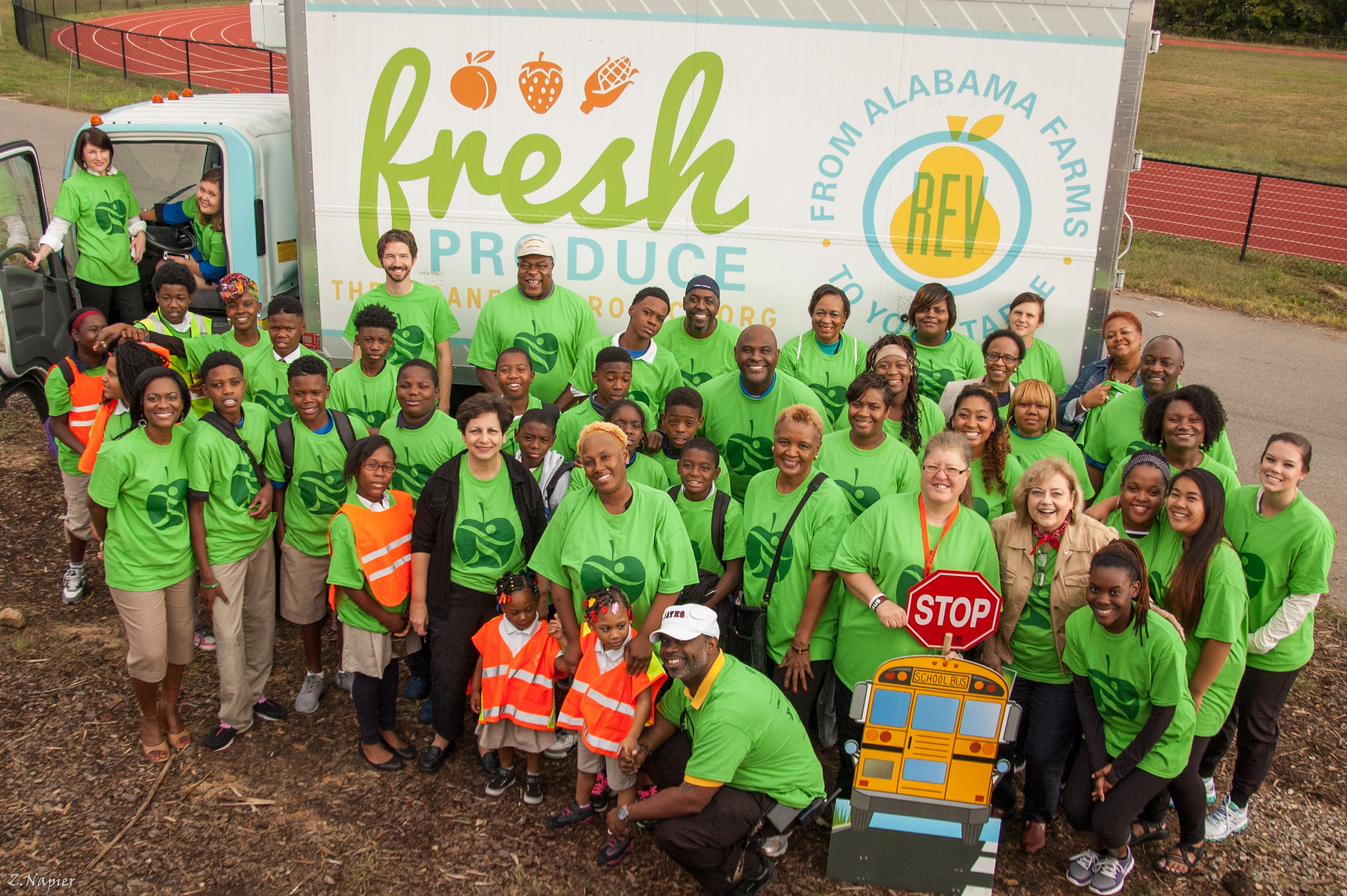
The MHRC has also partnered with the Urban Food Project and REV Birmingham to establish Birmingham REACH for Better Health, which is designed to ensure that fresh fruits and vegetables are available in the city’s neighborhoods. Funded by the Center of Disease Control and Prevention, REACH works to eliminate food desert areas by bringing healthy options to stores like Munchie’s in Avondale and the 10th Ave. Deli in Kingston.

“We want to make sure people don’t have to leave their communities to find fresh produce, especially if they’re already living in economically depressed situations,” said Dr. Theresa Wallace, REACH program director. “There are lots of convenience and mom-and-pop stores in those areas, so why not use those infrastructures as an opportunity to intervene and say, ‘I know you shop here and your kids come in here before school. So instead of having them picking up chips, why not have them pick up an apple?’”

The earlier healthy eating habits are formed, the better they will stick in the long run, Wallace said.

“Eating habits are formed early, and we need to break the cycle of just picking up anything and eating it because it’s convenient,” she said.

In addition to adding food options, REACH also conducts health classes that emphasize working out and walking. Classes are held at Stockham Park in North Birmingham and Avondale Park, which is across the street from Munchies. These types of programs are important because they have the ability to create a lasting effect on the community, Wallace said.

“People sometimes believe researchers come to these areas, do lengthy surveys, collect data, go back to the ivory tower, crunch the numbers, write papers—and that’s it,” Wallace said. “We need to retool ourselves. We need to make sure we publish and share the knowledge we gained with their help, and make sure it’s relevant to them.”


Getting HealthSmart

Another outreach initiative: HealthSmart. Located on Third Avenue North downtown Birmingham, this wellness center provides health screenings (preferably by appointment) for body mass index (BMI) and cholesterol, as well as professional nutrition and fitness counseling.

“Many people asked if we could put something in the community,” Associate Director Joanice Thompson said. “So HealthSmart is a result of people telling us their needs.”

The program, which is in its fifth year and has the potential to expand, also encourages healthy living by offering a variety of classes, including free Zumba and walking sessions.

“[The classes] are right in the front lobby,” Thompson said.

Preparing for the Future

“It’s important to encourage young people to pursue health disparities research,” said Ann Smith, MHRC Director of Training. “It helps bring together a group of like-minded people to close the gaps of these health disparities.”

Every year students from historically black colleges and universities (HBCUs) have the opportunity to enter training programs on three levels: the summer enrichment program for undergraduate students; mentor research projects; and the graduate and postdoctoral summer cancer research training program.

“The program increases in length each summer,” Smith said.

In the past, students have participated in research related to pediatrics, neurology, and physical therapy issues. And they are partnered with schools like Morehouse School of Medicine, Tuskegee University, and UAB.

Closing the Gaps

The MHRC has helped close many health disparity gaps, but with medicine constantly advancing it is important to keep those health gaps small.

The work being done to close health gaps is paying off, “but now we need to move to another phase,” Fouad said. “If we don’t get all groups—African-Americans, Hispanics, other minorities—involved in this type of advancement in treatment then, despite all the work we’ve done, the gap is going to get wider again.”

Disparities in Health and Health Care: Key Questions and Answers

0


From The Henry J. Kaiser Family Foundation

MHRCpix5
Dr. Fouad with Summer Enrichment Program participants from 2015. (PROVIDED PHOTOS)


What are Health and Health Care Disparities?

Health and health care disparities refer to differences in health and health care between population groups. “Health disparity,” generally refers to a higher burden of illness, injury, disability, or mortality experienced by one population group relative to another group. A “health care disparity” typically refers to differences between groups in health coverage, access to care, and quality of care. While disparities are commonly viewed through the lens of race and ethnicity, they occur across many dimensions, including socioeconomic status, age, location, gender, disability status, and sexual orientation.

Why do Health and Health Care Disparities Matter?

Disparities in health and health care limit continued improvement in overall quality of care and population health and result in unnecessary costs. Recent analysis estimates that 30% of direct medical costs for Blacks, Hispanics, and Asian Americans are excess costs due to health inequities and that the economy loses an estimated $309 billion per year due to the direct and indirect costs of disparities. As the population becomes more diverse, with people of color projected to account for over half of the population by 2050, it is increasingly important to address health disparities.


What is the Status of Health and Health Care Disparities Today?

Today, a number of groups are at disproportionate risk of being uninsured, lacking access to care, and experiencing worse health outcomes, including people of color and low-income individuals. Hispanics, Blacks, and American Indians/Alaska Natives as well as low-income individuals all are much more likely to be uninsured relative to Whites and those with higher incomes. Low-income individuals and people of color also face increased barriers to accessing care, receive poorer quality care, and ultimately experience worse health outcomes.

What Key Initiatives are in Place to Address Disparities?

Recognizing the continuing problem of disparities, in 2010, the Department of Health and Human Services (HHS) developed an action plan for reducing racial and ethnic health disparities. The HHS Disparities Action Plan establishes a vision of, “a nation free of disparities in health and health care,” and sets out a series of priorities, strategies, actions, and goals to achieve this vision. The action plan builds on existing HHS initiatives, such as the Healthy People initiative. States, local communities, private organizations, and providers also are engaged in efforts to reduce health disparities.


Birmingham shows love for victims in Orlando massacre

0
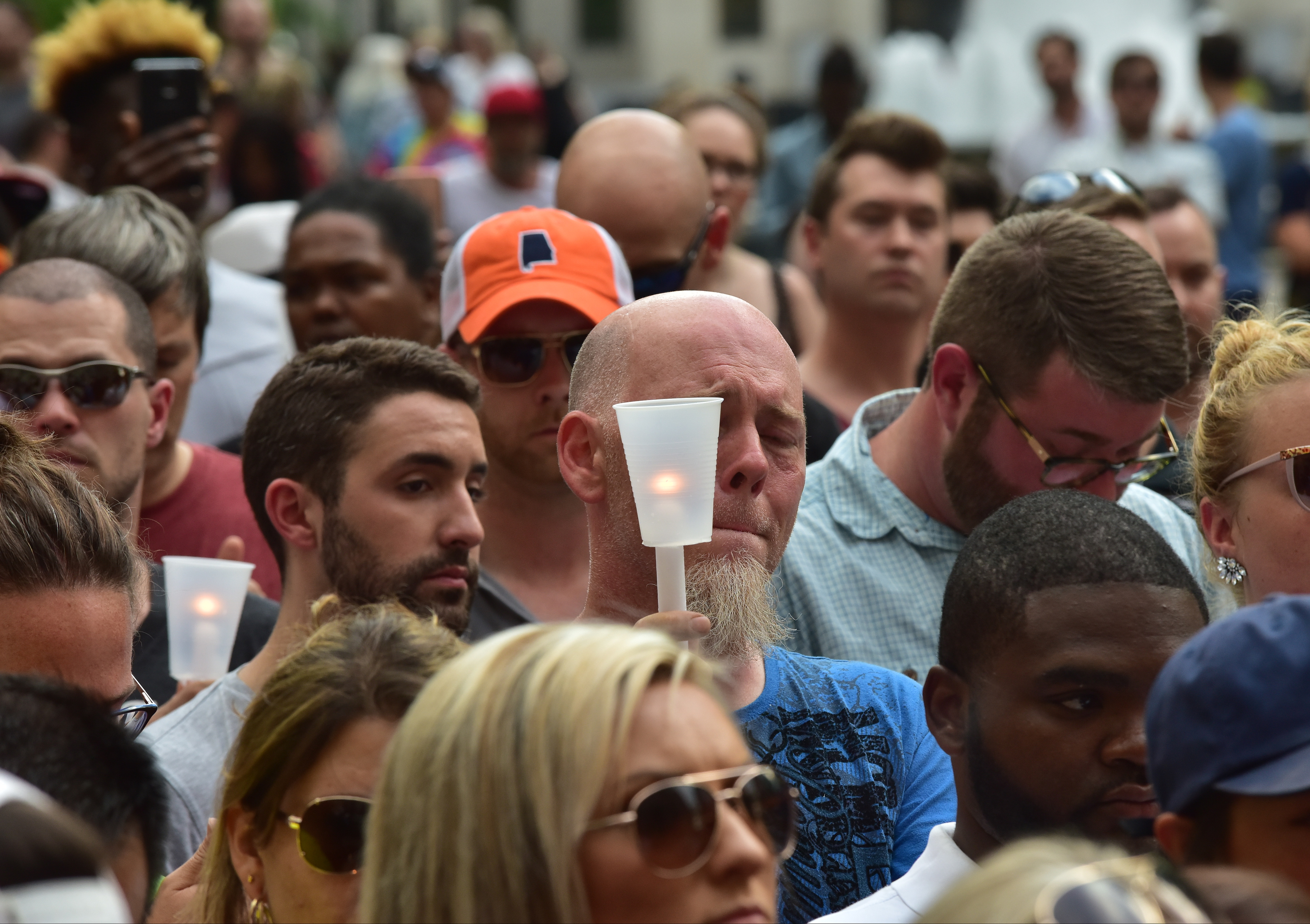
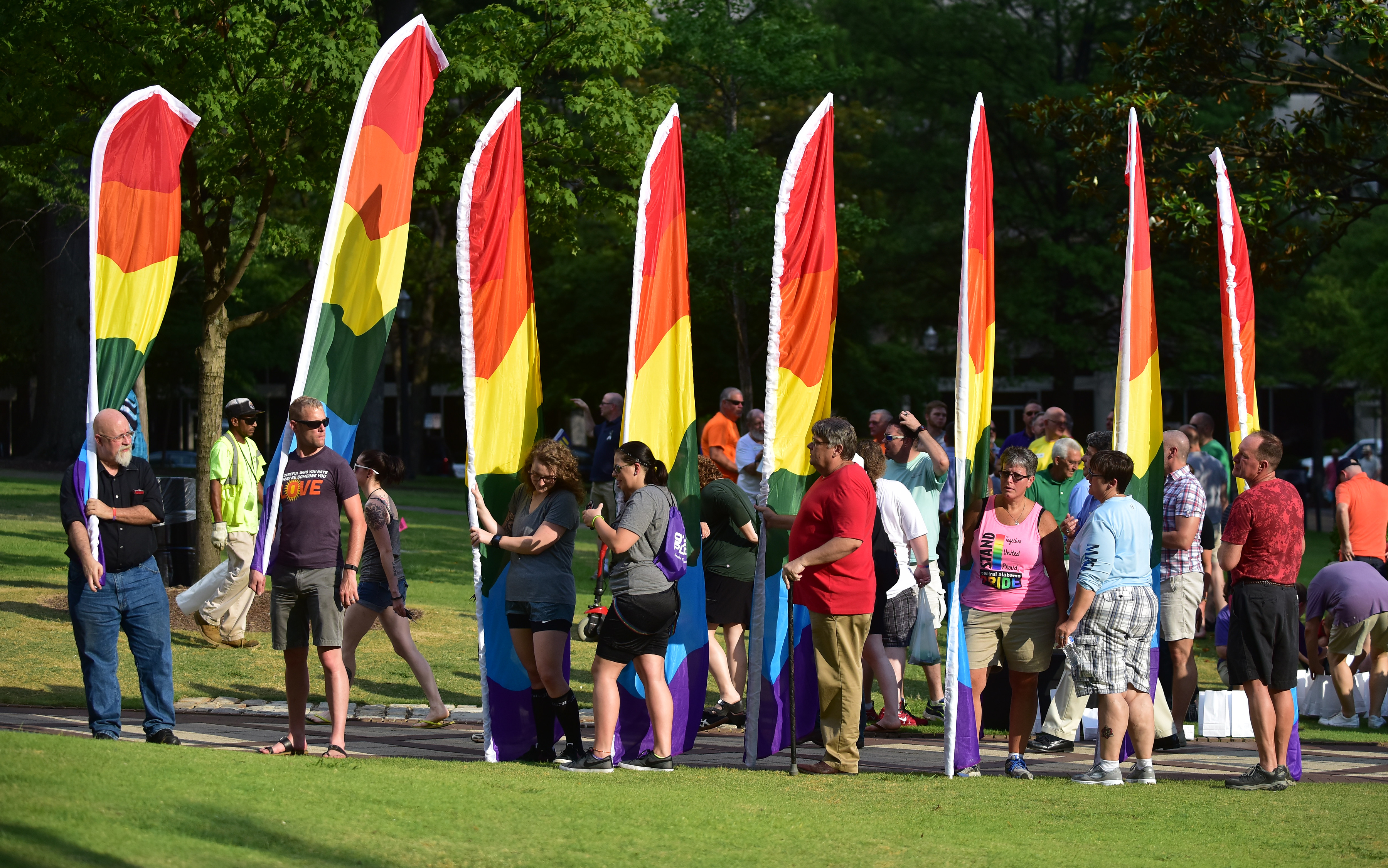
Flag bearers line up in Linn Park as the ceremony begins. Central Alabama Pride held a remembrance and candle light vigil for those killed and injured in an Orlando, Florida nightclub. The names of the victims were read aloud on the steps of the Jefferson County Courthouse and a rainbow banner was draped over the Birmingham City Hall entrance. (Frank Couch / The Birmingham Times)


By Ariel Worthy

The Birmingham Times


Flag bearers line up in Linn Park as the ceremony begins. Central Alabama Pride held a remembrance and candle light vigil for those killed and injured in an Orlando, Florida nightclub. The names of the victims were read aloud on the steps of the Jefferson County Courthouse and a rainbow banner was draped over the Birmingham City Hall entrance.  (Frank Couch / The Birmingham Times)
Flag bearers line up in Linn Park as the ceremony begins. Central Alabama Pride held a remembrance and candle light vigil for those killed and injured in an Orlando, Florida nightclub. The names of the victims were read aloud on the steps of the Jefferson County Courthouse and a rainbow banner was draped over the Birmingham City Hall entrance. (Frank Couch / The Birmingham Times)

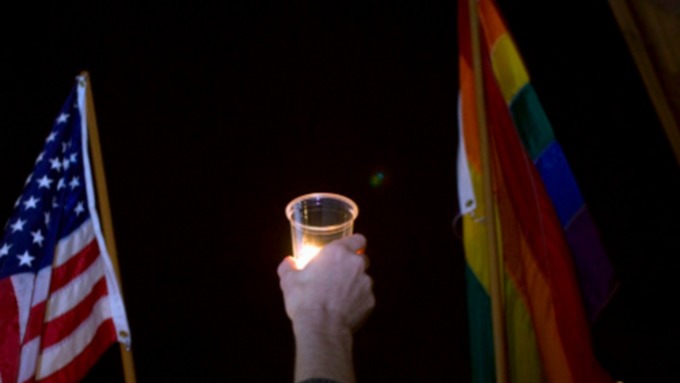
Many people greeted each other with hugs. They held one another for extended periods and didn’t let go until they received words of comfort. Linn Park in downtown Birmingham filled on Monday with hundreds of people and dozens of rainbow colored flags, the symbol of the LGBTQ community. One flag hung in the front of Birmingham City Hall. People walked quietly towards the Jefferson County Courthouse where another 11 rainbow flags flapped above the Steel City Men’s Chorus as they sang in memoriam to the 49 people killed in Orlando.

Birmingham held one of the hundreds of vigils around the world for the victims killed June 11 at Pulse, a gay club in Orlando. Alex Smith of Equality Alabama and AIDS Alabama read the names and ages of the victims in Orlando. A few people cried when he listed the number of unnamed victims.


Flag bearers line up in Linn Park as the ceremony begins. Central Alabama Pride held a remembrance and candle light vigil for those killed and injured in an Orlando, Florida nightclub. The names of the victims were read aloud on the steps of the Jefferson County Courthouse and a rainbow banner was draped over the Birmingham City Hall entrance.  (Frank Couch / The Birmingham Times)
Flag bearers line up in Linn Park as the ceremony begins. Central Alabama Pride held a remembrance and candle light vigil for those killed and injured in an Orlando, Florida nightclub. The names of the victims were read aloud on the steps of the Jefferson County Courthouse and a rainbow banner was draped over the Birmingham City Hall entrance. (Frank Couch / The Birmingham Times)

Smith also spoke briefly on the victim in Birmingham, Dennis Stimpson, who was killed by his boyfriend over the weekend.

“Here in Birmingham we had a man who was beaten to death,” Smith said. “He was a beloved teacher. This man was shaping Birmingham’s youth for over 25 years,” “All of the victims must never be forgotten,” Smith said.

“We must continue to say their names each and every day if that’s what it takes,” he said. Smith said he hopes more comes from the tragedy than just thoughts and prayers. “We appreciate those thoughts and prayers [from the politicians], but it can’t stop there, we need action.” Smith said.

Gina Mallisham, LGBTQ Outreach Coordinator for the Sidewalk/SHOUT Film Festival, said violence against the gay community has started a conversation that should have happened a long time ago. “I feel like the conversation finally made its way to (gay) rights, and now it has made its way to protection for us,” Mallisham said. “It just moved the conversation to something a lot more serious.”

Mallisham said she is now hearing from family that she had never spoken to. The shooting happened shortly before the Pride Fest Celebration at Sloss Furnace. “I was in the middle of setting up for the Pride Fest at Sloss Furnace when I started getting messages from relatives that no longer really talk to me telling me how much they love me and wanted me to take care of myself,” she said.

Area leaders respond to Sunday’s mass shooting in Orlando

0


A gunman opened fire on a gay nightclub in Orlando early Sunday morning, killing 49 people and wounding scores of others in the deadliest mass shooting in recent U.S. history before being shot dead by police. Here’s reaction from some in the Birmingham community:


Birmingham Mayor William Bell: “We stand with Orlando against hate and injustice. Our thoughts and prayers go out to every citizen impacted by this senseless tragedy.”


Andrea L. Taylor, President and CEO, on behalf of the Birmingham Civil Rights Institute Board and staff: “The Birmingham Civil Rights Institute (BCRI) grieves with the nation in the aftermath of the June 12 mass shooting in Orlando during attacks fueled by hatred for LGBTQ individuals. We understand from the lessons of the past, particularly during the Civil Rights Movement in the 1950s and 1960s, that acts of terror and hate against any individual or group – regardless of race, ethnicity, religion or sexual orientation – are violations of civil and human rights that diminishes us all. Our deepest condolences are extended to the families and communities directly impacted by this tragedy and we support the preservation and protection of civil and human rights without fear, intimidation or threats to safety and security.”


Diane McNaron, Birmingham Peace Project Chair: “Donald Trump’s tweets notwithstanding, this heinous act is no different in character from so many other hate crimes, like Dylann Roof’s murder of nine church members in Charleston, South Carolina one year ago, Eric Robert Rudolph’s bombing of a Birmingham women’s clinic and two lesbian night clubs in 1988 and the bombing of a Target rest room in Illinois just three days ago.”


Khaula Hadeed, Executive Director, Council on American Islamic Relations Alabama Chapter (CAIR- AL): “Alabama Muslims join their fellow Americans in unequivocally and unconditionally denouncing Sunday’s mass shooting at a nightclub in Orlando. Individuals like Muhammad Ali represent true ideals of Islam, whereas the mass murderer Omar Mateen represents the enemies of the faith and indeed, of humanity.”


Scott Douglas, Executive Director of Greater Birmingham Ministries: “The tremendous grief and pain brought about by this heinous, homophobic act of intolerance and hate cannot be allowed to become a political profit center whose purpose is to energize even more hate under the banners of homophobia on one hand and Islamaphobia on the other. As law enforcement works to uncover the origins of this crime, we embrace with an abundance of love the families, friends and loved ones of those touched personally by this atrocity.”


Ashfaq Taufique, President of Birmingham Islamic Society: “Like the rest of America, the Muslim community in Birmingham, Alabama woke up today to the devastating news of the horrific attack that happened in Orlando last night. Evil, pure and simple. Our deepest sympathies and prayers are with the innocent victims in Orlando. We stand in complete solidarity with our fellow Alabamians and Americans in the collective fight against hate through its many evil manifestations.”