Home Blog Page 1182

10 of the greatest jazz groups, bands, orchestras
0

In honor of Black Music Month, the Birmingham Times is highlighting some of the great musical groups across several genres. So far, the series has covered soul (June 2), gospel (June 9), hip-hop (June 16). Today, it concludes with jazz.

Any list of the greatest jazz groups, bands, and orchestras will have certain givens: Count Basie’s, Dizzy Gillespie’s, and Duke Ellington’s orchestras and any group with Miles Davis (the subject in the biopic “Miles Ahead,” released in April 2016) as a member. This list is no different. Those giants are mentioned here—and Davis, of course, shows up multiple times.

Miles Davis Quintet (1965–1968)
MILES1

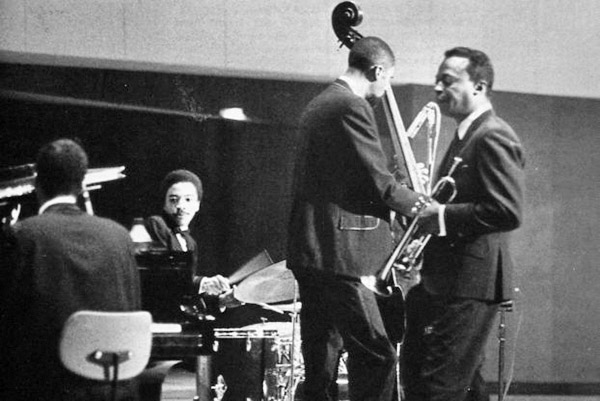
There is little argument that the Miles Davis Quintet—featuring Wayne Shorter, Herbie Hancock, Ron Carter, and Tony Williams—is one of the classic combos in jazz history. But it almost didn’t happen. In 1963, Davis struggled to maintain a steady lineup. By the late spring, he had hired the core of the group with Hancock on piano, Carter on bass, Williams on drums, and either George Coleman or Sam Rivers on tenor sax. The final piece of the puzzle would arrive in late 1964, with saxophonist Wayne Shorter. This was called the Second Quintet because the first, founded in 1955, might have been even greater (more about that below). This band recorded the albums “E.S.P.,” “Miles Smiles,” “Sorcerer,” “Nefertiti,” “Miles in the Sky,” and “Filles de Kilimanjaro”—as well as the “Complete Live at the Plugged Nickel 1965,” a box set considered by the “Penguin Guide to Jazz” to be the group’s crowning achievement.

Miles Davis Quintet (1955–1957)
A Quartet In The Studio

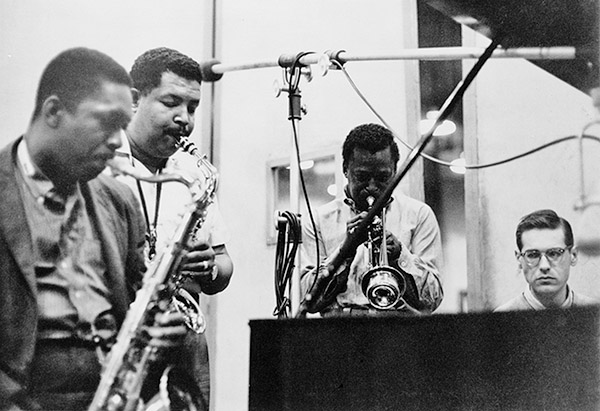
Known as the First Quintet, this group—with John Coltrane, William “Red” Garland, Joseph “Philly Joe” Jones, and Paul Chambers—could achieve nothing less than jazz immortality. In the summer of 1955, Davis was offered a contract with Columbia Records if he could form a regular band. He assembled Walter “Sonny” Rollins on tenor saxophone, Garland on piano, Chambers on bass, and Jones on drums. At the recommendation of Jones, Davis replaced Rollins with Coltrane. The group expanded to a sextet with the addition of Julian “Cannonball” Adderley on alto saxophone. It would be tough to find a greater group of jazz musicians. Not to mix metaphors, but this lineup is rivaled only by the 1927 New York Yankees.

Art Ensemble of Chicago
ARTENSAMBLE

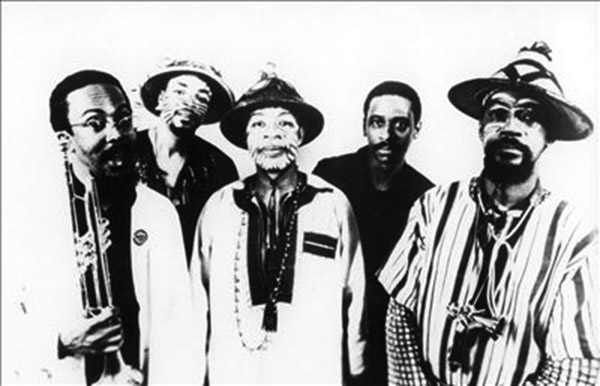
The Art Ensemble of Chicago enjoyed a critical reputation as the finest and most influential avant-garde jazz ensemble of the 1970s and 1980s. It all began in the late 1960s and early 1970s, when the Art Ensemble helped pioneer the fusion of jazz with European art music and indigenous African music. It also combined elements of jazz history and pre-history—music from sanctified church services, minstrel shows, and bawdy houses of late-19th- and early-20th-century America—with a modernist spirit of experimentation. Originally comprised of saxophonists Roscoe Mitchell and Joseph Jarman, trumpeter Lester Bowie, bassist Malachi Favors, and later drummer Famoudou Don Moye, no single individual was greater than the whole. The band was an assortment of composers and improvisers of great individuality. Collectively, they created a compelling and unique entity.

The World Saxophone Quartet

This jazz ensemble, whose sound incorporates elements of free funk and African jazz, has more than two dozen albums to its credit. Founded in 1977, the group mainly recorded and performed as a saxophone quartet, usually with a lineup of two altos, a tenor, and a baritone (reflecting the composition of a classical string quartet), but also was joined occasionally by drummers, bassists, and other musicians. The original members were Julius Hemphill (alto and soprano saxophone, flute), Oliver Lake (alto and soprano saxophone), Hamiet Bluiett (baritone saxophone, alto clarinet), and David Murray (tenor saxophone, bass clarinet). The first three had worked together as members of the Black Artists’ Group in St. Louis, Mo.

Duke Ellington’s Jazz Orchestra
DUKE

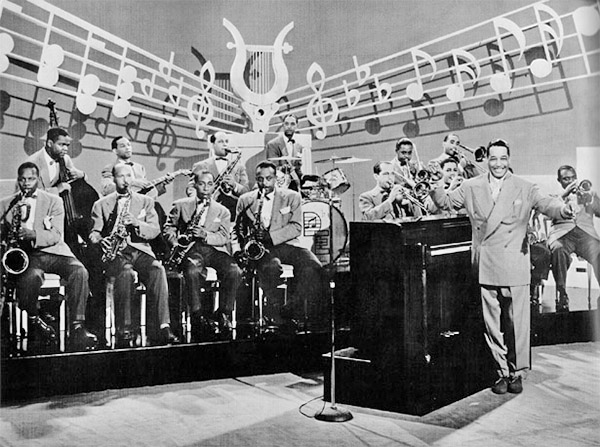
Edward Kennedy “Duke” Ellington took individuals considered to be among the best musicians of their time and melded them into the best-known orchestral unit in the history of jazz. Some members stayed with the orchestra for several decades. A master at writing miniatures, Ellington often composed specifically to feature the style and skills of his individual musicians. Often collaborating with others, Ellington wrote more than 1,000 compositions. His extensive body of work is the largest recorded personal jazz legacy, and many of his pieces have become standards. On Feb. 24, 2009, the United States Mint launched a new coin featuring Duke Ellington, making him the first African-American to appear by himself on a circulating U.S. coin. Among the numerous accolades he has received are a Grammy Lifetime Achievement Award and the highest civilian awards on both sides of the pond—the U.S. Presidential Medal of Freedom and the French Legion of Honor. Ellington is, indeed, one of the best in any genre of music.

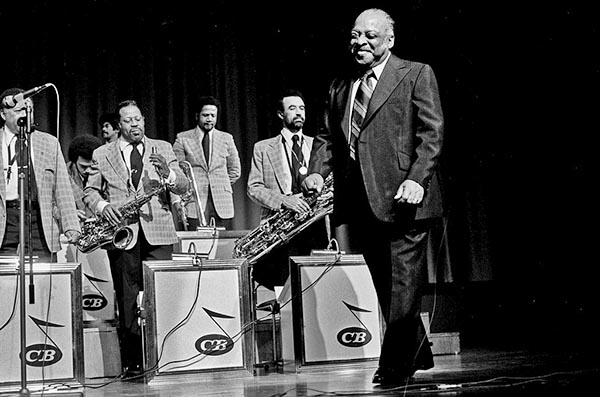
The Count Basie Orchestra
COUNTBASIE


William James “Count” Basie formed his own jazz orchestra—the Count Basie Orchestra—in 1935 and led the group for almost 50 years. He created such innovations as using split tenor saxophones, emphasizing the rhythm section, riffing with a big band, bringing in arrangers to broaden the sound, and many more. Several musicians came to prominence under Basie’s direction, including tenor saxophonists Lester Young and Herschel Evans; guitarist Freddie Green; trumpeters Wilbur “Buck” Clayton and Harry “Sweets” Edison; and singers Jimmy Rushing and Joe Williams. Basie favored the blues, and in New York City he began showcasing some of the most notable blues singers of the era: Billie Holiday, Jimmy Rushing, Joseph “Big Joe” Turner and Helen Humes. Basie’s theme songs were “One O’Clock Jump,” developed in the early days of his band, and “April in Paris.” In 2005, “One O’Clock Jump” was included in the Library of Congress National Recording Registry by the National Recording Preservation Board, which annually selects songs that are “culturally, historically, or aesthetically significant.”

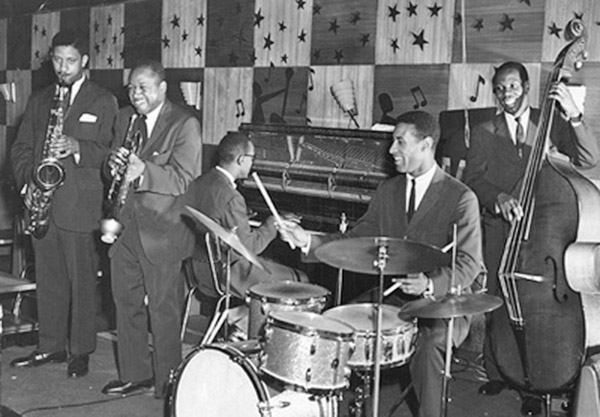
The Jazz Messengers
MESSENGERS

Founding drummer Art Blakey led or co-led this group from its genesis in the early 50s. Over the years, “Art Blakey” and “Jazz Messengers” became synonymous, though Blakey led non-Messenger recording sessions and played as a sideman for other groups throughout his career. The Jazz Messengers combo existed with varying personnel for 35 years, and the group’s discography consists of 47 studio albums, 21 live albums, two soundtracks, six compilations, and one box set. The group also served as a proving ground for young jazz talent and a launching point for stars in their own right, such as Lee Morgan, Benny Golson, Wayne Shorter, Freddie Hubbard, Chuck Mangione, Keith Jarrett, Woody Shaw, Wynton Marsalis, Branford Marsalis, and Terence Blanchard.

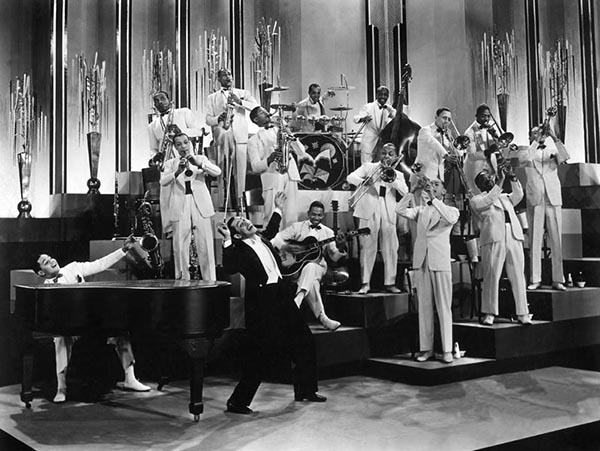
The Cab Calloway Orchestra
CAB

During the late 1920s, Cabell “Cab” Calloway became renowned for leading one of the era’s premier orchestras, featuring superb talent like trumpeters John Birks “Dizzy” Gillespie, Adolphus “Doc” Cheatham, and Lester “Shad” Collins; trombonists Tyree Glenn and Quentin Jackson; and saxophonists Leon “Chu” Berry and Jean-Baptiste Illinois Jacquet. Calloway’s orchestra was based exclusively at the Cotton Club in Harlem, N.Y., and was one of the most important jazz bands in the U.S. for more than a decade. When the venue closed in 1940, Calloway and his band toured the nation. There was one memorable orchestra incident that had nothing to do with music: Calloway fired Gillespie following an onstage altercation, during which Gillespie stabbed Calloway in the leg with a small knife.

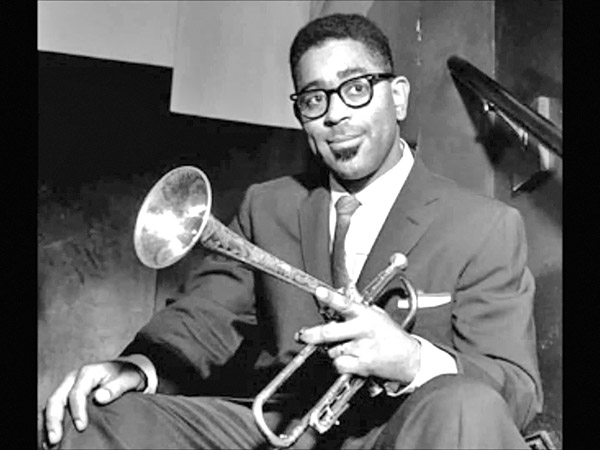
Dizzy Gillespie

DIZZY


John Birks “Dizzy” Gillespie fared quite well after being fired by Cab Calloway. Sporting his beret and horn-rimmed spectacles, playing his trademark bent horn with pouched cheeks, and incorporating scat singing, Gillespie and his lighthearted personality were essential in popularizing the bebop sound. Along with fellow trumpet player Charlie “Bird” Parker, Gillespie became a major figure in the evolution of modern jazz in the 1940s. Regarded one of the greatest jazz trumpeters of all time, Gillespie taught and influenced many other musicians, including trumpeters Miles Davis, Jon Faddis, Theodore “Fats” Navarro, Clifford Brown, Arturo Sandoval, Lee Morgan, and Chuck Mangione, as well as balladeer Johnny Hartman. Gillespie led a number of small jazz combos—featuring vibraphonist Milt Jackson, saxophonist John Coltrane, bassist Ray Brown, and drummer Kenny Clarke—before finally putting together his first successful big band. In 1989, Gillespie was awarded a Grammy Lifetime Achievement Award.

Clifford Brown and Max Roach Quintet

Some believe this quintet had the potential to be among the all-time greats. For two years, the Clifford Brown and Max Roach Quintet was the cutting edge of modern jazz. By spring 1956, the group featured Walter “Sonny” Rollins as the resident tenor alongside Clifford Brown’s dazzlingly innovative trumpet. Then a car crash claimed Brown and pianist Richie Powell, and it was over. The Clifford Brown and Max Roach Quintet has been described by the New York Times as “perhaps the definitive bop group until Mr. Brown’s fatal automobile accident in 1956.” The group’s 1954 album “Clifford Brown and Max Roach” was critically well-received and includes several notable tracks, including two that have since become jazz standards: “Daahoud” and “Joy Spring.” The album was inducted into the Grammy Hall of Fame in 1999 and is included in “Jazz: A Critic’s Guide to the 100 Most Important Recordings” at number 34, where it is described by New York Times jazz critic Ben Ratliff as “one of the strongest studio albums up to that time.”

Sources: www.allaboutjazz.com; jazzwisemagazine.com; en.wikipedia.org; allmusic.com.
Black and Gay in Birmingham

0
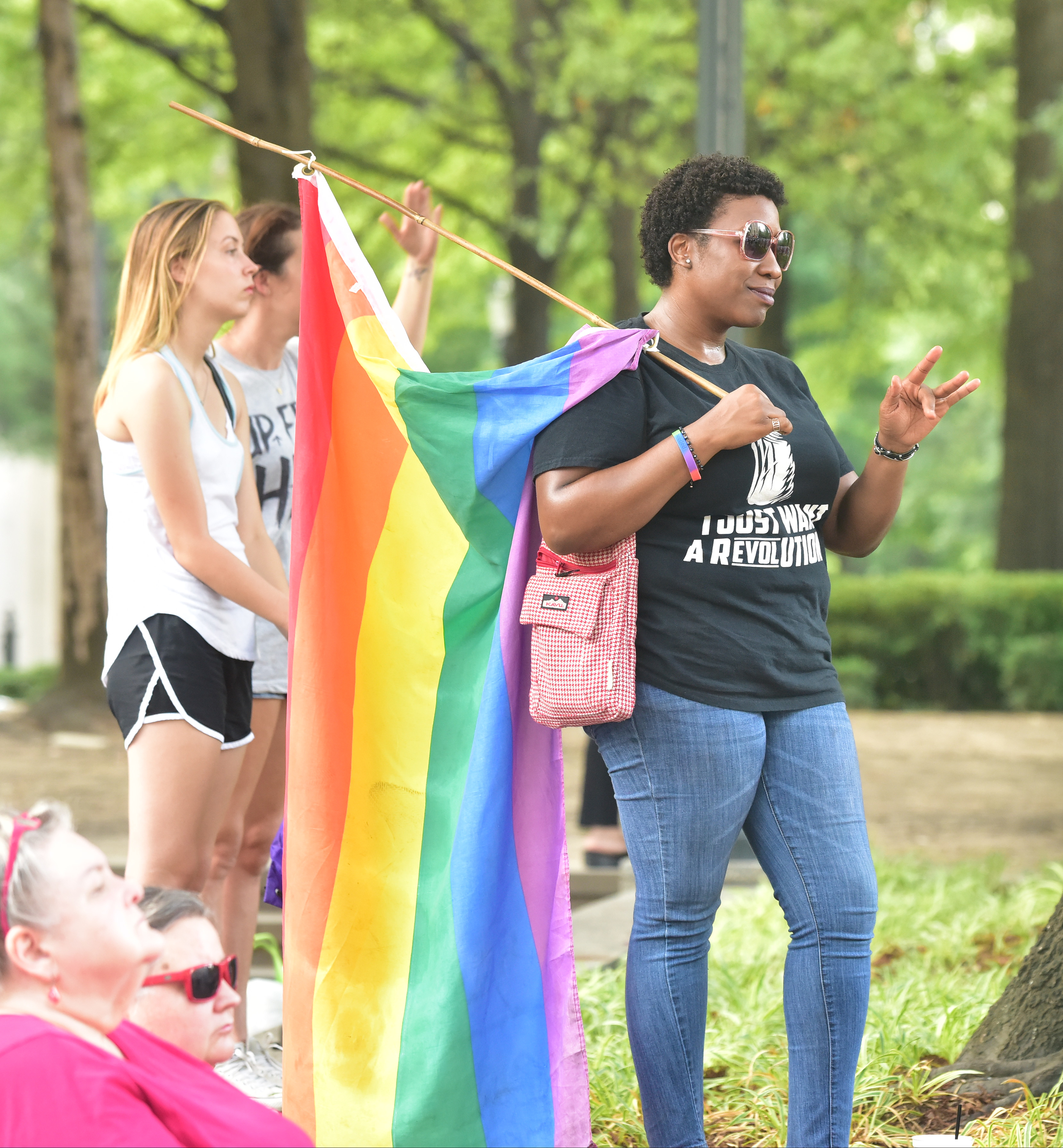
Gina Mallisham draped in a rainbow flag waves to a friend in the crowd. Central Alabama Pride held a remembrance and candle light vigil for those killed and injured in an Orlando, Florida nightclub. The names of the victims were read aloud on the steps of the Jefferson County Courthouse and a rainbow banner was draped over the Birmingham City Hall entrance. (Frank Couch / The Birmingham Times)

By Ariel Worthy
The Birmingham Times

Growing Up Gay and Black: Patronized, Terrorized, Ostracized

0
Carlton Bell, 26, or Alabaster, said that being black and gay is especially difficult because of opposition from both the black and white communities. It is often hurtful the way he is treated, Bell added. (FRANK COUCH PHOTOS, THE BIRMINGHAM TIMES)

By Ariel Worthy
The Birmingham Times

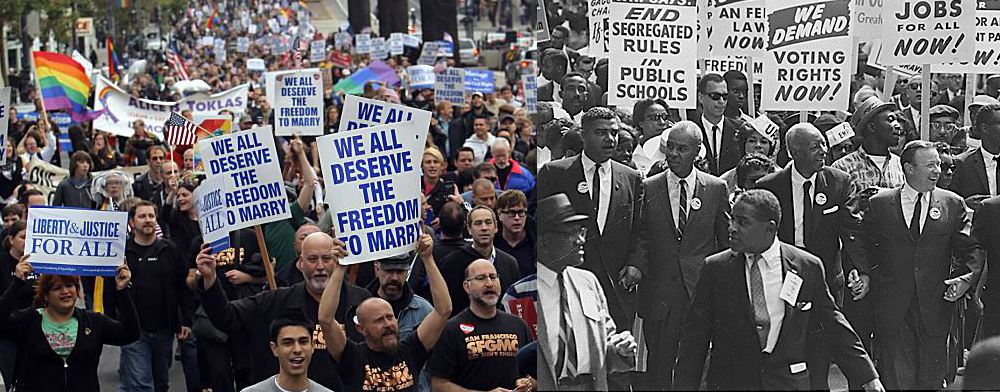
Is the Gay Rights Movement similar to the Civil Rights Movement?

0
Some believe the gay rights and civil rights movements are comparable.

By Eboné Parks

The Birmingham Times

Some believe the gay rights and civil rights movements are comparable.

Can two different struggles during two different time periods have similarities? Some believe the gay rights and civil rights movements are comparable.

Debate.org recently surveyed online users about the two movements. According to the results, nearly half of respondents believe the gay rights movement is similar to the civil rights movement; the rest believe the struggles are very different. Here are some comments from people on both sides:

“Yes, they are similar.”

  • While it can’t be compared to slavery, the fact that people want rights denied to certain people based on their morals or beliefs makes both movements the same. During the civil rights movement, people considered black people inferior to whites. During the gay rights movement, people believe gay people are monsters that will convert their children. With all these religions preaching the doctrine of “love thy neighbor,” people should do just that—let everyone do what makes them happy and live their lives.
  • I believe any oppression of people is all the same. I believe African-Americans experienced a different form of discrimination due to their skin pigmentation. If LGBT individuals were unable to hide their identity, the movements would have been synonymous in all regards.
  • We may not have been enslaved, but does that mean we don’t feel hurt all the same by not being allowed to be with someone we love or facing danger because of it? Just because we didn’t endure years of hardship doesn’t mean we don’t have our fair share of discrimination for extremely illegitimate reasons that truly boil down to people’s blatant fear of change and allowing anything new to blossom.
  • During the civil rights movement, it was stated over and over that the U.S. Constitution clearly states that “all men are created equal.” Although the fight for black rights may be more severe due to the act of slavery, it does not change the fact that “all men are created equal” and all citizens of America deserve equal rights and equal treatment. The gay rights movement and civil rights movement may be for two different causes, but in the end all those participating in either movement are fighting for the same thing—freedom.

“No, they are not similar.”

  • The civil rights movement was based on a system of slavery and suppression that denied blacks and other minorities the rights of voting and holding certain positions in office. It was a much more profound movement that affected millions, as well as generations to come. The gay rights movement has an impact, but it’s nowhere near the extent of the civil rights movement.
  • The civil rights movement was about gaining voting rights, public accommodations, proper school funding for minority schools, etc. … People are more accepting of those in the [gay rights] struggle than they were of blacks and other minorities who were part of the civil rights movement. Look at any footage of the civil rights movement and notice the extreme amount of violence there. You see little if any of this in gay pride parades.
  • There is a big difference between fighting for rights as a gay person and fighting for rights as a person of color. People of color have no choice when it comes to letting everyone know the color of their skin is different. It’s a reality that exists day in and day out. The color of their skin is always out there for everyone to see.
  • Gays have not been refused the right to vote or use the same water fountain. They were not lynched en masse. They were not forced to the back of the bus.

Mural pays homage to quilt making

0
From left: Lawanda Baker, artist: Drew Christen, a student at Phillips Academy, Janice Cook, a retired art teacher; Laila Vaker, student at Thompson Middle School; Angel Perterson, a student at Phillips Academy; Destiny Peterson, a student At Erwin Middle school and Somaya Singh, artist


From left: Lawanda Baker, artist: Drew Christen, a student at Phillips Academy, Janice Cook, a retired art teacher; Laila Vaker, student at Thompson Middle School; Angel Perterson, a student at Phillips Academy; Destiny Peterson, a student At Erwin Middle school and Somaya Singh, artist

Lawanda Baker and Somaya Singh, the winners of the Juneteenth Mural Contest, were at the Birmingham Civil Rights Institute on June 18 to create a mural outside of the facility. “Map to Freedom” is an homage to the African American tradition of quilt-making and specifically honors the creativity of the Gee’s Bend quilters. Materials were available for kids to create their own images of what freedom means to them.

The mural was part of a day long Juneteenth Celebration of Freedom event that included the opening of the exhibition “Hope in Motion: The Story of the Alabama Christian Movement for Human Rights.” This exhibition focuses on one pivotal year -1956 – in the struggle for civil and human rights in Alabama.

Also, there was Galleries Alive! by the Real Life Poets, a non-profit community service and mentoring organization focusing on mentoring young adults, encouraging good communication, and oratorical skills using spoken word poetry and the arts.

This slideshow requires JavaScript.

( photos by Stephonia Taylor Mclinn )

Anthony Sparks: Teaching the keys to a life of progression, not perfection

0

By Ariel Worthy

The Birmingham Times

Anthony Sparks (Ariel Worthy/The Birmingham Times)

For Anthony Sparks, the noise level of dozens of children cheering and getting themselves prepared for a day of activities at the YMCA on 7th Ave. North was normal for 8:30 a.m.

His morning started the same as always: with his 4-year-old son walking into his room and snuggling between Sparks and his wife.

“He likes to get the rest of his sleep out, directly in my back,” Sparks said. “After that I’m up.”

As Executive Director at Birmingham YMCA Youth Development Center, Sparks spends a lot of his time motivating young people, but his words of encouragement aren’t solely for children. He also has Anthony D. Sparks, LLC where he is an author, speaker, and development coach. He started in banking, but soon realized that he had a bigger calling in life.

“My purpose was more slanted towards trying to impact people on a different level,” Sparks said. “It was an opportunity for me to tap into what I feel is more in line with my purpose.”

If you ask Sparks his goal for clients and people he speaks with, it’s simple: to live a life of reason, intentionally.

“I want to help people not achieve accidentally, but be intentional about what they are trying to do,” he said.

Sparks’ book, #BETTER: 7 Keys to Living a Life of Progression, Not Perfection, is something that he said came from an internal point in his life.

“The seven areas that I delve into are areas that I’ve had either some struggle with, and they’re things that I know other people have struggled with,” he said. “Like moving on from past situations or hurts, being able to let go of issues that have had you bound for a while, or appreciating love.”

The book was published in 2014 and Sparks said he still gets comments about it from strangers.

“People will say, ‘Hey that book blessed me then, and it’s still blessing me to this day,’ and it feels like affirmation that I hit the right things to talk about in [the book.]”

Sparks is a 2002 graduate of Ramsay High School and a 2007 graduate of the University of North Alabama, where he received both his bachelor’s and master’s degrees in Business Administration.

Sparks, 32, gives many speeches and talks to students, and later this summer is expected to speak at a youth retreat. But with all of the mentorship he does there are two people that he looks to for guidance: his father Andra Sparks, presiding judge for the City of Birmingham Municipal Court and his uncle Cedric Sparks, Executive Director of the Birmingham Division of Youth Services.

“I’ve been blessed with an awesome family,” he said. “I’ve learned from them how to be a professional, how to be a husband, how to be a father and just how to be Anthony. They don’t put on airs.”

His other teachers are his wife, Ashley and son, Aidan.

“I heard my dad say ‘Your wife is the second greatest gift from God that you have, next to your salvation,’” Sparks said. “I’ve been married for six years, and I didn’t understand what he meant until I got married.”

His other teacher is his son.

“He looks to me for everything and that humbles you,” he said. “But it also gets me in gear to get myself together because this life is depending on me.”

As for the future of Anthony D. Sparks, LLC, he hopes that he will be able to work for it full-time.

“I do meaningful work here at the youth center, but I know I can’t be here forever, I know someone better will come in, and I just pray that when that time comes, I will be able to give my all for my LLC.”

With his work touching thousands of people, he said he hopes that they understand the one point he wants everyone to get: everyone needs to be their best self.

“I want to die empty,” Sparks said. “When I leave any place I have touched I want to say I have nothing left to give that place. I used up every gift, talent and resource I could to really get the most out of where I was.”


Study to explore role of spirituality among African-Americans with chronic illness

0
Deborah Ejem, Ph.D.

By Adam Pope

UAB News

Deborah Ejem, Ph.D. Photo courtesy UAB
Deborah Ejem, Ph.D.

Spirituality plays a central role in many aspects of African-American culture, and University of Alabama at Birmingham School of Nursing postdoctoral scholar Deborah Ejem, Ph.D., will explore how significant a factor it is in the relationships among patients with chronic illnesses and their caregivers and clinicians.

The two-year, $187,293 diversity supplement award from the National Institutes of Health’s National Institute of Nursing Research adds to the five-year, $3.5 million NINR R01 parent grant, “ENABLE: CHF-PC (Comprehensive Heartcare for Patients and Caregivers),” awarded to Ejem’s mentor, School of Nursing Professor and Marie L. O’Koren Endowed Chair Marie Bakitas, DNSc.

Ejem will conduct qualitative interviews with “ENABLE: CHF-PC” African-American study participants and combine that information with questionnaire data that is already being collected as part of the parent study to closely examine two areas.

One focus of Ejem’s study will be on how African-American heart failure patients and their family caregivers use spirituality to ease the burden of care on the caregivers and improve the quality of life for the patient. Another will assess how the participants include spirituality as they interact with their clinicians during the course of the patient’s care.

“I have personal family friends who are caregivers for people who are seriously ill,” Ejem said. “As I talk to them about how they are coping, often they talk about how important religion is to them, how they use prayer and how it all helps them even in the most difficult of situations. I expect I will find a strong connection with religion and spirituality in those dealing with life-threatening illnesses.”

Ejem cites an American Journal of Cardiology report from 2011 that indicated African-Americans living in the rural South have the highest burden of illness from heart failure, as well as various reports that indicated they are the least likely to receive potentially beneficial palliative care services. They are also unlikely to engage their clinicians in conversations about spirituality and the role it plays in their ongoing treatment.

Ejem says that, while conversations about faith can be awkward in medical settings, they can benefit the patient.
“Many members of the African-American community, especially the older adults, rely on spirituality extensively,” Ejem said. “It is especially important to this group that we build this spiritual literacy within the medical community.

“Understanding how patients would like for their clinicians to talk to them about their spirituality and religion as part of their heart failure care is one of the main goals of this study.”

As part of the “ENABLE: CHF-PC” study, half of the heart failure participants will receive the intervention, which includes a series of phone sessions with a nurse coach. Data is collected every eight weeks for 48 weeks, which includes a series of questions about their spiritual coping, their quality of life, symptom management and the type of relationship they have with their caregivers.

Ejem will identify 10 to 15 caregiver-heart failure patient dyads — two individuals maintaining a sociologically significant relationship — to participate in an additional one-time phone interview to gather more in-depth data about her study issues.

Over the course of the nearly hour-long interview, she will ask both the patients and the caregivers specific questions about their relationships, their religious and spiritual practices, and how they would like doctors to speak with them about their spiritual and religious beliefs.

“Improved communication is key, and I think this is one step in helping clinicians better understand their patients’ needs,” Ejem said. “If we are gearing toward more patient-centered outcomes, and we want patients to subscribe to a self-care model, we have to know what’s important to the patient. Spirituality is important, especially where we live here in Alabama, and we have to address that fact in providing the proper health care for these patients.

Director of Governor’s Office of Minority Affairs remains focused

0
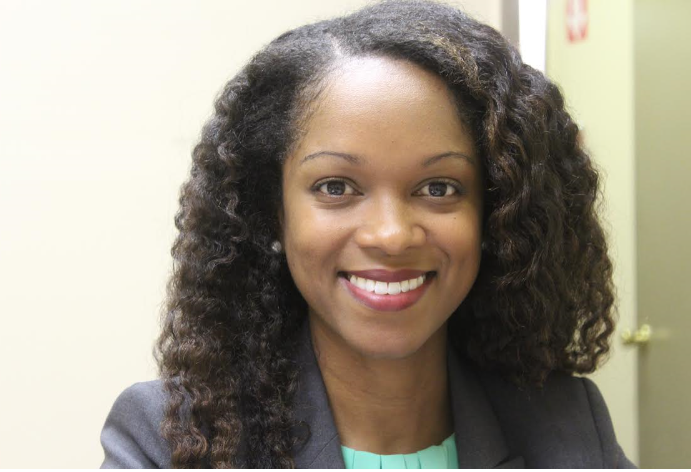
Nichelle


By Ariel Worthy

The Birmingham Times

Nichelle
Nichelle Nix


Nichelle Nix has not stopped networking since college.

Since being appointed the first Director of the Governor’s Office of Minority Affairs (GOMA) in March she is networking now more than ever. As a member of Governor Robert Bentley’s cabinet she gets to meet minorities across the state.

“Alabama is a very diverse state,” Nix said. “Not only racially and culturally, but there is a diversity of needs as well.”

Nix, 36, is the liaison between minority communities and the governor.

After establishing the office, Bentley said, “the newly created Governor’s Office of Minority Affairs will be a great resource and a new perspective on addressing minority and women’s issues.”

The goal, Nix said, is to not only inform the governor, but “give minorities and women a voice . . . it adds an additional voice to the conversations that are taking place at the state level, and it makes those groups feel as if they have a real seat at the table when decisions are being made.”

Nix, who works with one other person — “The office is expected to grow,” she said — has traveled all over the state and discovered many resources and small businesses during her travels. She has been particularly impressed with visits to all 15 of the Historically Black Colleges and Universities in Alabama, including the two year colleges.

“I’m discovering some gems we have,” Nix said. “One in particular, Lawson State. They have a top automotive program.”

Those types of programs are providing so many skills to students that can either go off on their own, or start their own business, she said.

Nix’s goal is to create a pipeline between industry and HBCUs so that students are not only able to gain skills, but have a job in their field upon graduation.

“A lot of these schools are struggling, why can’t they be successful?” she said.

There has been a lot of controversy surrounding the governor’s office including some lawmakers who are calling for the governor to be impeached. Nix said she continues to remain focused on her job.

“This office covers so much,” she said. “I have no choice but to be focused.”

She is currently preparing for a statewide listening tour.

“As I’m meeting individuals they’re quick to praise the governor for the creation of this office for giving them a voice,” Nix said. “We’ve had a lot of starts and stops in the past, and now this is a real effort.”

Nix has previously served as an attorney in the Governmental and Regulatory Affairs Division at Maynard, Cooper & Gale, P.C. in Birmingham. She is from Mobile where she led the Sickle Cell Disease Association of America Mobile Chapter, Inc.

A graduate of Spelman College in Atlanta, Georgia Nix received a Bachelor’s of Arts degree in Political Science in 2002. She also attended Emory University, obtaining her Master’s of Public Health and her Juris Doctorate from The University of Alabama School of Law in 2008.


Loveman Village residents ready for new homes, new beginning

0


By Joseph D. Bryant

Housing Authority of the Birmingham District

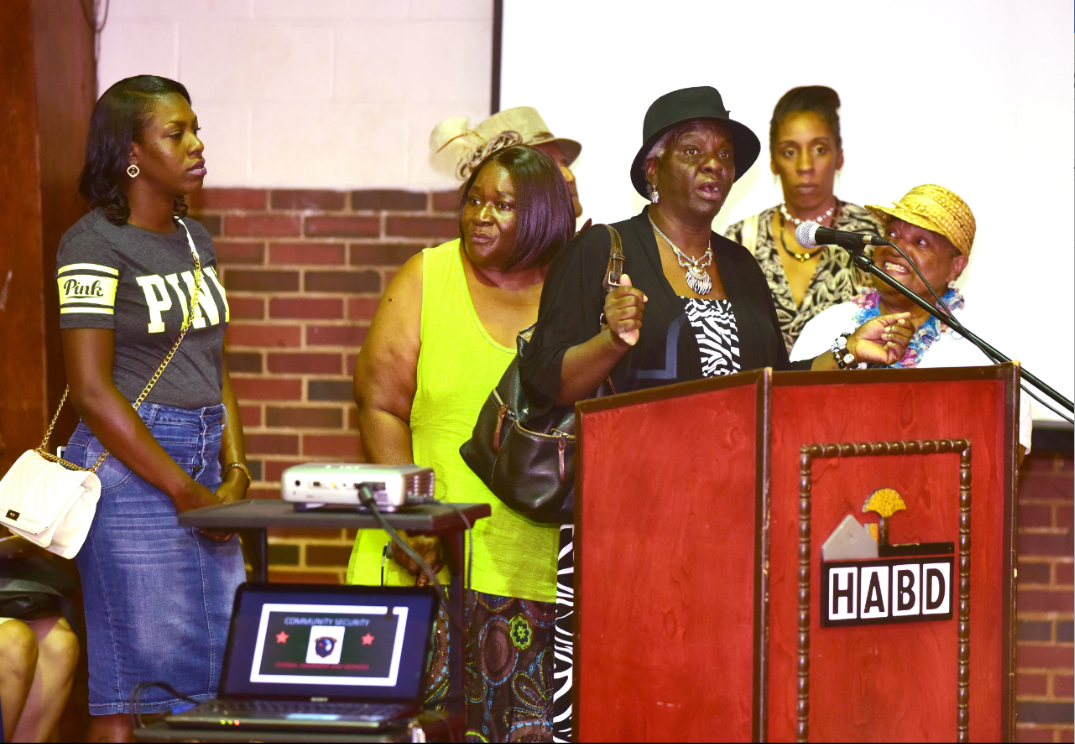
HABDpix1

Residents of Loveman Village want better homes, better lives, and are willing to become active partners in improving their own condition.

Such was the message this week when the Housing Authority of the Birmingham District presented a town hall meeting where residents packed the Loveman Village community center to ask questions and learn more about the $79.6 million overall plan to redevelop the complex in the Titusville neighborhood.

“This was definitely an evening that gave rise to hope for a new community,” HABD President and CEO Michael Lundy said following the meeting Wednesday evening.

On Monday, June 20, the HABD Board of Commissioners followed up, bringing their monthly meeting to Loveman. Officials presented detailed information about the project, including financing and a draft floor plans. The meeting was held at the Loveman Village Community Center, 300 1st. Ave. Southwest.

HABD earlier this month received $17 million in tax credits from the Alabama Housing Finance Tax Authority to jumpstart the project.

Hollyhand Development of Northport is HABD’s developer partner.

The new Loveman development will have less units, ending the antiquated version of high-density public housing. Redevelopment will occur in four phases. The tax credits will fund the demolition at Loveman and the building of 100 new homes there. In all, the 500 existing units will be replaced with 220 units that complement the historic character of the surrounding Titusville neighborhood.

Just as important as the aesthetic improvements, Loveman redevelopment presents an opportunity to lead residents on a path toward self-sufficiency.

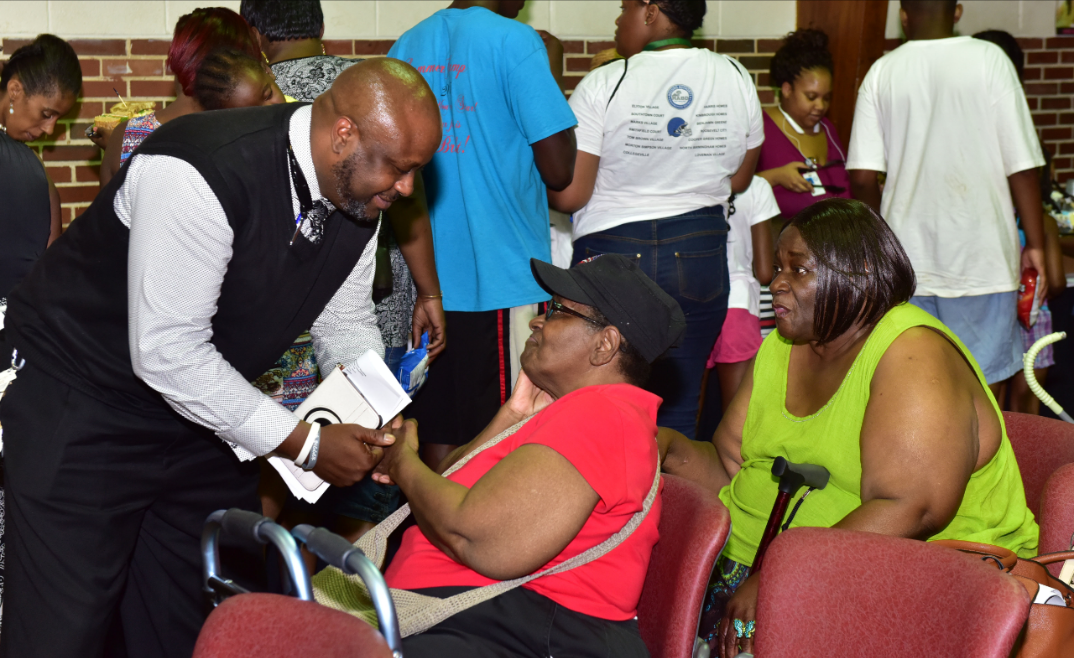
HABDpix2

Lundy stressed that residents who participate in the HABD Self-Sufficiency program will have priority in living in the redeveloped areas. He calls the enhanced effort “Up and Out'” where participants work with housing authority staff to form and execute a five-year plan to find jobs, obtain better jobs or reach educational goals toward financial independence.

The elderly and disabled are not required to participate in Up and Out, but Lundy called the program a model that has proven to help strengthen families and communities at large.

“As was evidenced at our town hall meeting, many of our residents are already working families who desire more,” Lundy said. “Others that evening were also excited to learn about the programs we currently offer that could enhance their lives. Public housing, for the most part, is a temporary solution. We are going to return to that original concept as we help guide families to self-determination and self-reliance.”

Monday’s HABD board meeting is also a celebration where residents, the press and general community are encouraged to attend.

“This redevelopment is going to enhance not only Loveman Village and Titusville, but this entire city,” said HABD Board of Commissioners Chairman Cardell Davis. “For years we have waited for this day to come, and it has finally arrived. Planning is underway, financing is being assembled. This is certainly a time for celebration.”

Jefferson County resident elected chairman of Alabama Commission on Higher Education

0


Charles E. Ball has been elected to serve as chairman of the Alabama Commission on Higher Education. His selection was by unanimous vote earlier this month in Montgomery. He has served on the Commission since 2009, when Governor Bob Riley appointed him as an at-large representative.

The Jefferson County resident is the executive director of the Regional Planning Commission of Greater Birmingham. He has served in this role since 2006, where he coordinates regional and community-level planning and economic development activities for Alabama’s largest metropolitan area. The region contains six counties, over 100 cities and over 1.1 million residents.

Ball has served on the governing boards of Auburn University, the YMCA of Central Alabama, OneRoof and Better Basics. He currently serves on the boards of the United Way of Central Alabama, the Dance Foundation, Focus on Recovery, Create Birmingham and the Birmingham Land Bank Authority.

“I am totally committed to lending my expertise and leadership skills in promoting coordinated efforts among the higher education community to best serve our students,” said the new chairman. “I want to ensure that the Commission serves as a visible advocate of higher education throughout Alabama, while continuing our statutory functions mandated by the state legislature.”

Ball holds a Master of Community Planning from Auburn University and a Bachelor of Arts in Business Administration from Birmingham Southern College.

Elected as vice chairman, was Randy McKinney of Orange Beach. He was appointed by Governor Robert Bentley to represent an at-large district.

McKinney is an attorney with McKinney & Associates P.C. and is an owner of Realty Executives Gulf Coast in Gulf Shores.

He is a former vice president of the Alabama State Board of Education. He has served on the board of directors for the Kiwanis Club and Chamber of Commerce and is a Class VX member of Leadership Alabama.

He earned a Bachelor of Science Degree in Biology from the University of South Alabama and holds a Master’s Degree in Religious Education from New Orleans Baptist Theological Seminary, a Master’s Degree in Real Estate Development from Auburn University and a Juris Doctorate from the Birmingham School of Law.

“Chairman Ball’s board experience with a major university and Vice Chairman McKinney’s leadership on the State of Alabama School Board will be tremendous assets in dealing with higher education policies,” said Commission Executive Director Gregory G. Fitch. “Their educational backgrounds and strong ties with business and industry will greatly strengthen the direction and mission of the Commission.”

The Alabama Commission on Higher Education, founded in 1969, is the state’s coordinating board for all public institutions of higher education. Members serve nine-year terms without compensation.