Home Blog Page 1191

Myla Calhoun shares her vision as new president of Alabama Power Foundation
0
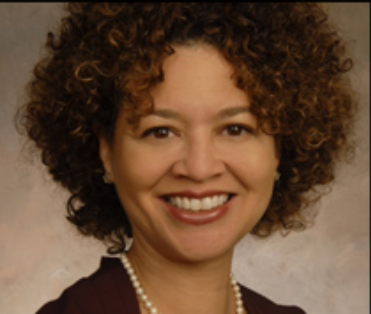
Mylap Calhoun is the new president of the Alabama Power Foundation. (PROVIDED PHOTO)

By Michael Tomberlin

Alabama NewsCenter

Mylap Calhoun is the new president of the Alabama Power Foundation. (PROVIDED PHOTO)

The Alabama Power Foundation has a new leader and is taking applications for its latest round of grants to nonprofit organizations in the state.

The organization held its annual Elevate conference Thursday in Montgomery where Myla Calhoun, the vice president of Charitable Giving at Alabama Power, was named the new president of the Alabama Power Foundation.

“This was fabulous,” Calhoun said at the end of her first Elevate event. “I think that it was really an opportunity for our nonprofit partners to engage with one another. Overall, I could not be more pleased.”

Calhoun, who came to Alabama Power in March after working with the Birmingham Business Alliance as that economic development entity’s general counsel and senior vice president for regional development and public policy, said leading the foundation carries great responsibility.

“Clearly, the Alabama Power Foundation is a pillar in the community,” she said. “I am incredibly honored to now serve as its president. We continue to want to work with nonprofits to help them grow … to elevate Alabama to achieve their best and highest purpose and really make an impact – a meaningful, sustainable impact – in the communities where they serve.”

The foundation does that in a number of ways. The most obvious is by funding dozens of organizations throughout the state with grants and fundraising.

The application period for Alabama Power Foundation’s 2016-2017 Elevate grants began Thursday and nonprofits across the state are encouraged to apply. The Elevate packages include a $10,000 grant in 2016 and a $5,000 challenge grant in 2017 for each winner. Grant winners will participate in workshops through 2017 to help them grow and find ways to expand their positive impact.

Hosting programs like Elevate is another important role the Alabama Power Foundation plays that goes beyond the dollars, Calhoun said.

“One of the Elevate program’s greatest strengths is that it gives grantees more than just a check,” she said. “Past grantees have said time and time again just how beneficial it is for them to network with one another through this program’s workshops. Every year, our Elevate grantees build partnerships as a result of their time spent together. We are honored to be a part of that.”

Since the grants began in 2014, 27 nonprofits across the state have received Elevate grants to strengthen their organizations.

As the economy has improved, nonprofits are looking to ensure they are maximizing their opportunities.

“I think what we heard in the message we received today really speaks to the needs that nonprofits have for information about how to thoughtfully diversify their portfolio funding,” Calhoun said. “Having an opportunity to partner in sharing that message is really important to the foundation, so we’re glad to have been able to have put this on.”

The theme for Elevate this year was social enterprise — using entrepreneurship to create a new stream of dollars that helps sustain nonprofits. Keynote speaker Becca Stevens told the inspiring story of Thistle Farms, a social enterprise she founded that helps heal, and employs, women who are survivors of prostitution, trafficking and addiction. Thistle Farms sells candles, tea, bath and body products, and insect repellent, among other products. Attendees also heard Stevens along with Shannon Ammons, CEO of the Alabama Association of Nonprofits (AAN), and Norm Davis, vice president and managing director of TruFund Financial Services, as a panel giving advice to nonprofits about social enterprise. Hill Carmichael, executive director of Urban Ministry, which does social enterprise through a community garden and café, moderated the panel.

Among the takeaways: Take advantage of the services AAN, foundations and universities can offer nonprofits looking to get a money-making venture off the ground; sell your board of directors on your idea; have a strategic plan; find a way to distinguish your product or service from others; have a great story to tell potential funders; and collaborate with others.

Calhoun said there is great value in simply working together as nonprofits.

“It’s great seeing them figuring out ways to collaborate and to complement their services in the areas where they operate,” she said. “I think the more we can cause that kind of collaboration, the better it is for the nonprofits and certainly the better it is for the state.”

She said her background in economic development informs her approach to growing the nonprofit community in the state.

“If there is one thing I have learned, it’s that life is not a straight line. I think I bring all of that experience and hopefully it will be well-deployed in this new role,”

She said. “Thinking about economic development and seeing how nonprofits and foundations can complement the activity in that space I think can be an asset. At least I hope it will.”

The challenges are less daunting given the foundation’s established body of work, its staff and its support from the company, she said. Since its creation in 1989 with funds donated by shareholders, the Alabama Power Foundation has supported Alabama communities, educational institutions and nonprofits with non-ratepayer dollars through more than 20,000 grant and scholarship awards.

“I’ve got a great team here and the Alabama Power family as a whole is so engaged and supportive,” Calhoun said.

Birmingham Mayor William Bell unveils $420 million budget for fiscal 2017

0


Birmingham Mayor William Bell on Tuesday gave the City Council a $420 million fiscal 2017 budget that has an emphasis on neighborhoods and public safety, he said.

The fiscal year begins July 1.

The General Fund Operating Budget projects total revenues of $420 million with an increase of $16.5 million over last fiscal year’s projection, the mayor said.

A growth in property tax, business taxes and a charges for services make up the increased revenue, he said.

The spending plan includes a 1 percent cost of living increase and a 5 percent merit raise for all eligible employees.

“In this budget, we are focusing on our two greatest assets, our employees and the neighborhoods,” Bell said in his budget message to the council.

“Our neighborhoods and communities are the backbone of this city . . . with that in mind, we are increasing the neighborhood funds to $5,000 per neighborhood rather than the $2,000 they had been receiving,” he said. “This money can be used for small, but impactful projects and events in the neighborhoods.”

He said the city has pushed a massive cleanup and revitalization effort that has seen over 400 structures torn down and thousands of acres and lots cleaned.

Those efforts can continue with $1.4 million in weed abatement money budgeted and over $1.3 million in demolition budgeted, he said.

“It is not enough to just tear down the houses or mow the lots, this year we will fund the Land Bank authority at the level of $350,000 to give them resources to clear the titles of tax delinquent properties,” he said.

Bell also said public safety is being addressed by expanding Shot Spotter with an additional 12 square miles at a cost of $840,000, more money for police body cameras and lease payments of $1.3 million for public safety communications equipment.

“Our police department is dedicated to the health and safety of our citizens and this gives us the chance to continue the positive impact they have on our community as a whole,” he said.


Illuminating the dark world of human trafficking

0


Birmingham is “pretty big cog” in that network along Interstate 20, says UAB professor.


UAB Magazine

traffickpix1
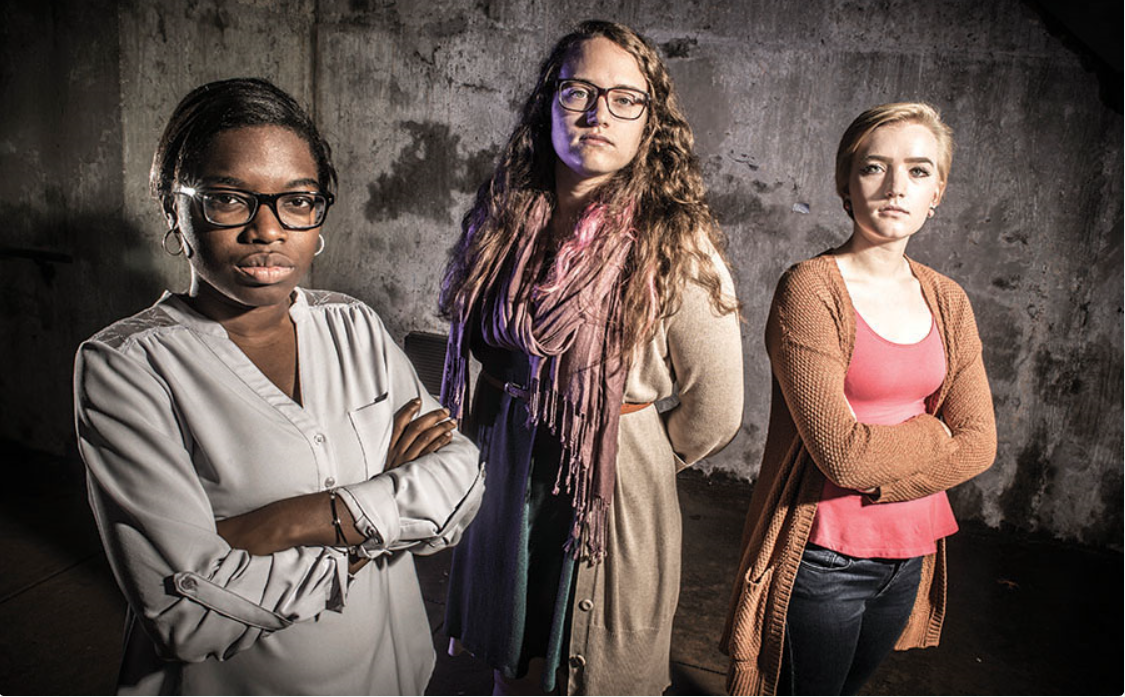
From left: Students Sarah Griffin, Sarah Leffel, and Tessa Case came away from the course resolved to combat human trafficking through awareness, education, and the law. (PHOTO COURTESY OF UAB)


One of the toughest truths about human trafficking is how widespread it is in the United States and how close it is to the Magic City. Birmingham is part of a sexual-trafficking network along the Interstate 20 corridor that also includes Atlanta, Memphis, Nashville, and Chattanooga, said UAB professor Robert Blanton.

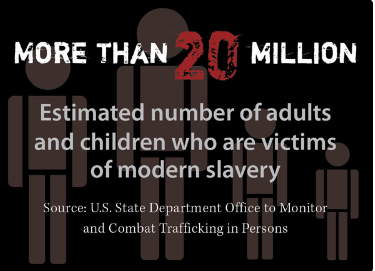
traficgraf1

Blanton analyzes the economic, social, psychological, and political underpinnings of human trafficking through his course and honors seminar at the University of Alabama at Birmingham.

When Blanton, Ph.D., taught the first Honors College course on human trafficking last spring, he began by introducing his students to the dark nature of the topic — from modern slave labor to sex trafficking.

“We started out by watching a fairly indicative video of how the process works,” he remembers. It followed the stories of international sex-trade victims—women lured away from home under false pretenses and sold into prostitution rings, where they were regularly beaten and brutally raped.traficgraf2

Blanton, a professor in the UAB College of Arts and Sciences Department of Government, says many students were in tears before the video ended. And then he shocked them again: Human trafficking isn’t confined to impoverished, far-flung countries, he told them. It happens in Birmingham.

“These are real humans, and these are real things going on,” he said. “Now let’s pull back and figure out how to analyze it.”

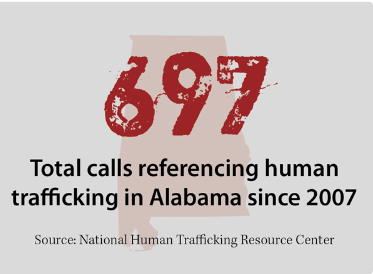
traficgraf3

Terrible truths

Tessa Case, a junior from Birmingham majoring in international studies, says that prior to the course, she had a common misperception about the subject created by popular culture. One example is the 2008 hit movie Taken, starring Liam Neeson, in which beautiful, privileged white women are kidnapped and sold into sex slavery. It makes for a dramatic plot—but Case says it only perpetuates a myth.

“You see a movie like that and think crime syndicates drug and kidnap these women,” she says. “That actually got me interested in this subject. But the reality is completely different.” There are places in the world where parents knowingly sell their daughters out of desperation, she says. “There are certain dynamics like that where you have to put your cultural lenses on so that you can understand the root of the problem.”

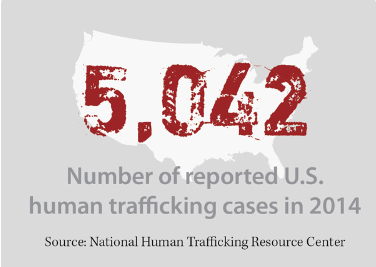
traficgraf4

Meanwhile, Case notes that while the sex trade often gets the lion’s share of attention in the media, it’s far from the only form of modern slavery. “While sex trafficking is pervasive, on a global level, there is a lot of forced labor and labor trafficking that makes up the majority of the human trafficking problem,” she says.

The most common form of slavery today is bonded labor, Blanton adds. “That’s where you bring in ‘employees’ to do a job and then essentially take away their free will,” Blanton explains. “You take their passports or papers, or make it physically impossible for them to leave. Then you tell them they owe you a debt, because you brought them there—they have to work to repay that debt. There are situations in India where the debt is passed down from generation to generation, and the kids are born into slavery.”

Holistic understanding

Though most of the students who enrolled in the new course had heard something about modern slavery, junior Sarah Leffel, an education major from Huntsville, Ala., had actually seen the tragic stories up close. The summer after her freshman year, she went to Thailand to work with an organization dedicated to rescuing women from the sex trade. She recalls many heartbreaking encounters with the women—many of whom become emotionally as well as financially dependent on the very people who exploit and abuse them.

But it took Blanton’s class, she explains, to gain a more holistic understanding of the problem. “At first, when people would speak analytically about it, I would say, ‘You don’t know what you’re talking about. You didn’t experience it,’” Leffel remembers. “But what I learned through the class was even bigger than studying about human trafficking or the sex trade. It was the value in approaching a problem mentally, stepping back from my emotions to be able to process other perspectives.”

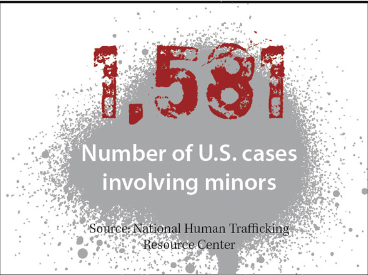
traficgraf5

Close to home

Birmingham is part of a sexual-trafficking network along the Interstate 20 corridor that also includes Atlanta, Memphis, Nashville, and Chattanooga. “That’s basically the loop,” Blanton explains, “and Birmingham is a pretty big cog in that wheel.”

Sarah Griffin, a junior from Birmingham majoring in political science and philosophy, remembers her reaction to that as nothing short of shock. “I never knew about this,” she says. “This is my home. How can these terrible things happen here?”

Blanton echoes Griffin’s reaction. “That was one of the things that always amazed me when I first started looking into it,” he says. “It’s close. It’s on Oxmoor Road in Homewood. A lot of people have no idea.” To drive home the point, Blanton invited Tajuan McCarty—founder and executive director of the WellHouse, a non-profit organization dedicated to rescuing sex-trade victims in Birmingham and throughout the Southeast—to share her experience, which includes being a survivor herself, with students.


Vulnerability and psychology

The class also discussed numerous examples from other states, from slave-labor camps working in agriculture in South Carolina and Florida to nail salons in New York City that have forced women to work without pay. A modern-day slave can be anyone from an illegal immigrant who doesn’t speak the language to an American teenage runaway seduced by a smooth-talking stranger. The common factor, Blanton says, is vulnerability.

But how do traffickers manage to hold their victims captive, sometimes in plain sight? “It’s a really twisted psychology behind this,” Blanton explains. “Often it’s one part loyalty—a very strong form of the Stockholm syndrome [irrational feelings of empathy toward captors]—one part economic need, and then the other part is fear. They’re afraid of the outside, afraid of the unknown, and afraid that if they leave, they may end up being even worse off.”

To understand how complicated and seemingly intractable human trafficking is, the students did in-depth studies of the different forms it can take and the factors that make it possible. One group focused on the relationship between human trafficking and the “deep web”—huge swaths of the Internet that are hidden from standard search engines and thrive on anonymity. Another studied the practice of slavery by terror groups like ISIS and the Taliban in the Middle East. Still another project was dedicated to human trafficking in and around Birmingham.

From left: Students Sarah Griffin, Sarah Leffel, and Tessa Case came away from the course resolved to combat human trafficking through awareness, education, and the law. (PHOTO COURTESY OF UAB)

Ready to act

In spite of the dark, often demoralizing subject matter, many students have come away from Blanton’s class—which he plans to offer again—resolved to raise awareness and help combat the problem. Case is doing an internship at Sojourns, a local fair-trade store. “A lot of fair trade is giving people a chance to make a living wage,” she explains, “and that takes away some of the vulnerability factors that help perpetuate exploitation.” She’s also helping to plan an event at the store to raise awareness of sex trafficking. Leffel wants to return overseas and teach English to women who are coming out of sex slavery. And Griffin, who aspires to go into politics and eventually run for public office, hopes she’ll be in a position to support laws that combat human trafficking and protect victims’ rights.

Blanton finds that deeply encouraging. “It’s been heartening to see how motivated they are,” he says. “It’s great to take students who want to make a difference and play some part in giving them the analytic tools they need to better understand the problem.” That knowledge could help them make a real impact—one that could bring hope to the captive, suffering “real humans” at the heart of the issue.

Birmingham city students dream big; earn prestigious scholarships

0
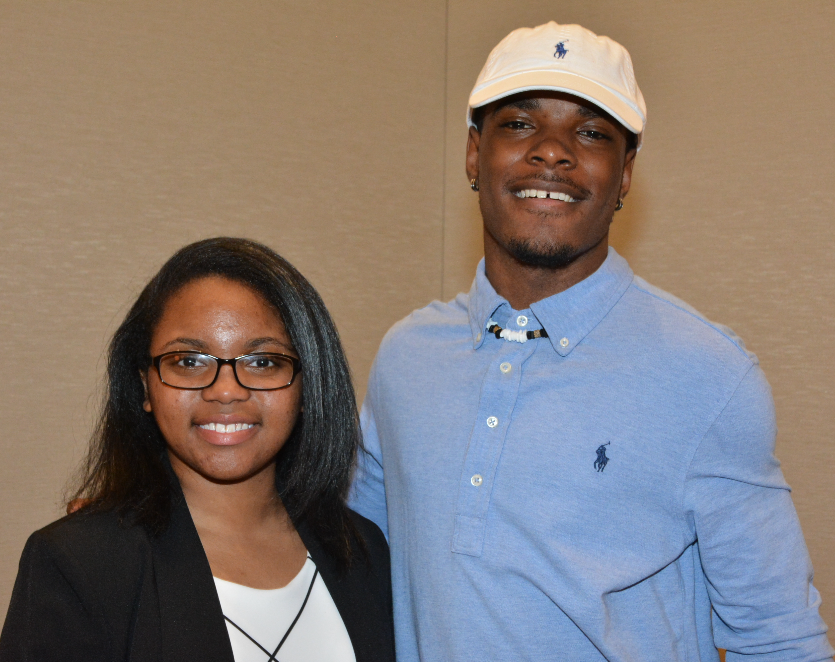
Maya Quinn and Stanley Louis II were both selected for the Gates Millennium Scholars Program (PROVIDED PHOTOS)


By Chanda Temple

Special to the Times


Maya Quinn and Stanley Louis II were both selected for the Gates Millennium Scholars Program (PROVIDED PHOTOS)

Birmingham City Schools’ students Stanley Louis II and Maya Quinn have big dreams for their future.


Just a few weeks ago, they received news that they’d been selected for the Gates Millennium Scholars Program. The full-ride scholarships, funded by the Bill & Melinda Gates Foundation, cover costs for college and graduate school for outstanding minority students. The program started in 1999.


Maya is a senior at Ramsay High School, where she is a member of the National Honor Society, a tutor at Tuggle Elementary, president of the Math Club and Robotics Team and is a member of the Key Club. She’s also the school valedictorian with a 4.45 GPA on a 4.0 scale. She scored a 30 on the ACT.


She plans to attend Samford University and study biology. She will be in Honors College at Samford. Her goal is to go into biological research and attend medical school.


“Knowing I can go where I’ve wanted to go since the ninth grade is phenomenal,’’ Maya said of Samford. “The first time I visited Samford was during a college tour trip. The campus, it just immediately spoke to me.’’


Stanley is a senior at Huffman High School, where he is in the choir, is the head drum major in the marching band, he plays 11 instruments, is a member of the National Honor Society and is on the lacrosse team. He plans to attend Alabama State University to study media communications with a concentration on music technology. He wants to get his doctorate.


“Most people think I’m going to Yale or Harvard because of this scholarship. But no, I’m staying right here in Alabama,’’ Stanley said. “I don’t want Alabama just to be known for sports. I want it to be known for academics.’’


Receiving the scholarships removes a big worry in having to pay for college.


“This is such a big weight off of me and off of my mother, who’s currently on disability,’’ Maya said.  “When I heard about the Gates Scholarship, my mother said, ‘You should apply for it.’ I was worried I wouldn’t get it. I talked it over with my teachers and they said, ‘You are such a good writer. You should go for it.’ And I did. ‘’


During the process, Maya kept telling herself that: “The only person able to stop you is you.’’


“You make the choice to listen to what people tell you. And you also make the choice of how you will live each day,’’ she said. ” So if you don’t think you can do it, it’s not going to happen. But if you just persist and continue to work hard, no matter what failures may come, you will succeed in the end,’’ she said.


Like Maya, Stanley took a chance and applied. He’s known about the scholarship since his middle school years. When it came time to write essays as part of the application, he said he wrote from his heart. He credits his time at Huffman High for molding him into the student he is today.


“I’ve had nothing but role models everywhere at Huffman,’’ Stanley said.  “My principal (John Lyons Jr.) is the main one. My teachers have been always behind me, pushing me and always reminding me I can be great,’’ Stanley said.


Said Lyons: “Stanley is the fourth Gates Scholar since I’ve been at Huffman. I’m so proud of him. He exemplifies what I’d like to see all the young men at Huffman achieve. Since ninth grade, Stanley has been a role model for all of the students. He’s dedicated to his studies and his extracurricular activities.’’


Heather Jackson, the senior counselor at Ramsay, said Maya worked hard to get where she is.  “Whatever she wants for herself, she dreams big,’’ Jackson said. “That’s what matters to me, and I’m standing behind her 100 percent.’’


Two Ramsay High graduates donate dress shoes to six male students headed to college

0


By Chanda Temple

Special to the Times


Two Ramsay High graduates interested in helping advance the futures of young male students, recently returned to their alma mater to give dress shoe scholarships to six deserving seniors.


Twins Justin and Julian Grant, 25, who graduated Ramsay in 2008, encouraged students to swap out their Nike Air Jordan sneakers, known as Js, for Johnston & Murphy business shoes as part of the “J for a J Dress Shoe Scholarship.”

The program stresses the importance of dressing the part to get the role one wants in life.

“The reason this is important to us is because we wanted to remove as many barriers as possible for students progressing in a professional arena,” said Julian. “People can judge you on your dress, the way you speak and your body language. We wanted to give students tangible tools to help them in interviews and other areas. Shoes are a major foundation to professional dress attire.”


Students selected for the May 2 event had to write an essay on what success means to them and how dressing professionally plays a role in that. The entries were judged and six winners were selected. Winners also received professional dress socks, a shoe shine kit, an embossed leather portfolio and professional writing pens. Pastor Adrian Davis of All Nation Christian Center in Huntsville was the guest speaker.


“It’s fine to dress down around your friends, but it’s good to have at least a suit and a nice pair of shoes for when the opportunity presents itself,” Julian said. “This is not just about looking good. It’s also about feeling good about yourself and what you represent.”


The Ramsay High winners are: Randall Fields; Kristion Bouyer; Myron Turner Jr,; Joshua Brooks; Xavier Scaife and Jemarcus Pullins.

When the Grants were in high school, their parents told them to “dress for the job you want, not the one you have.” They held onto that as they pursued civil engineering degrees from Alabama A&M University.


Today, Justin works in technology consulting in Raleigh, N.C., and Julian works as an engineer in Birmingham. They also run the nonprofit group Siamese Dreams Next Level Outreach, which made the shoe scholarships possible. But the brothers didn’t just focus on shoes.

Last month, the twins invited Saks Fifth clothing experts to visit Ramsay High to teach male students everything from how to tie a tie to proper workplace etiquette. They called it the “Hour of Power.”

They hope what they are doing will be a good example for other Birmingham students.

“Now we are in the process of planning our next event. We now want to address young females,” Julian said. “We hope to offer it for the new school year.”


NAACP salutes outstanding women in Birmingham metro area

0
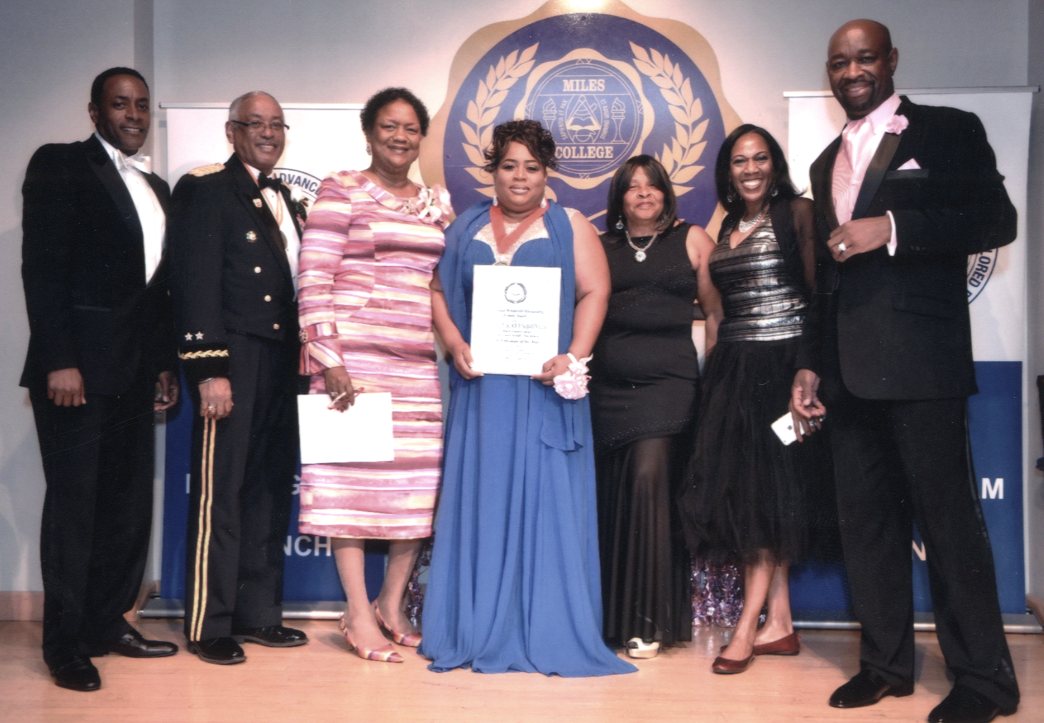
From left: Art Franklin, George Browman, Saundra little Brown, Felecia Rucker-Sumerlin, Mother Rucker, Agnes Chappell, and Hezekiah Jackson IV.

This slideshow requires JavaScript.


The Metro Birmingham Branch of the National Association for the Advancement of Colored People (NAACP) recently hosted its 16th Annual Salute to Wonderful Outstanding Women (WOW) at Miles College in the Pearson Hall Auditorium.

Each year, the WOW awards highlight the leadership, accomplishments, and outstanding service contributions of women in Metropolitan Birmingham.

Juandalynn D. Givan, Alabama State Representative, was the keynote speaker. The event also included remarks by Hezekiah Jackson IV, NAACP President/Program Chair and Art Franklin, of WIAT TV 42, who served as Master of Ceremony.

Dignitaries in attendance included Jefferson County Commission President Pro Tem Sandra L. Brown and The Honorable Judge Agnes Chappell, who co-chaired the event.

Among the honorees were Ella Byrd McCain, Lifetime Achievement/Community Service; Dr. Emma Thornton Shepard, Lifetime Achievement Excellence in Education; Evelyn P. Blackman, Lifetime Achievement Music Ministry and Evangelist Dana Dansby, Outstanding First Lady.

Housing leaders, residents set goals for Collegeville and North Birmingham

0

Housing leaders, residents set goals for Collegeville and North Birmingham

By Joseph D. Bryant

Housing Authority of the Birmingham District


The president/CEO of the Housing Authority of the Birmingham District has begun talks for major long-term overhaul of a 52-year-old complex in the North Birmingham Community.

Housing Authority of the Birmingham District President/CEO Michael Lundy, recently sat with Birmingham city leaders, including Councilman William Parker and residents to discuss the current state of the Collegeville Neighborhood and North Birmingham Community and the role HABD will play in its future.

Lundy then discussed his ideas for Collegeville Center and asked for the community’s insight.

Lundy said there are several long-term options for the complex including total demolition, remodeling or partial demolition and replacing the units away from the current Collegeville site. Partnerships with public and private entities are among other options.  The neighborhood group also discussed the idea of replacing the traditional, institutional public housing complex by integrating residents into the overall neighborhood.

“We have numerous options to redesign and improve this neighborhood, and the meeting with residents and community leaders is essential in crafting the right approach,” Lundy said. “This is the first of many conversations to come.”

The meeting began as a meet-and-greet as Lundy was introduced to round table of residents and community leaders. Then it was time to discuss business as Lundy received an overview of work already underway to improve the area that includes HABD properties, Collegeville Center and North Birmingham Homes.

Lundy, who took over leadership at HABD in February, has spent the last few months touring public housing communities and nearby neighborhood throughout the city. It is part of his “listen, learn and lead” approach.

Lundy was also briefed on the existing community redevelopment plan for North Birmingham. Moves by HABD would complement those existing goals, he said.

Lundy called plans for Collegeville Center and North Birmingham Homes preliminary, but called early community conversations essential as HABD seeks to develop plans for meaningful improvement through its public housing properties.

HABD is already planning for major overhauls at Southtown Court and Loveman Village.

Parker, whose district includes Collegeville and much of North Birmingham, called it refreshing to sit one-on-one with senior HABD officials. He cited ongoing work to improve the neighborhood, including environmental cleanup by the Environmental Protection Agency, construction of a vehicle and pedestrian railroad overpass and park improvements as evidence that improvements are coming the area.

Parker said the partnership with HABD is another essential element, as both the city and HABD serve the same constituents.

“It was a great opportunity to come out and meet community leaders, pastors and residents to say hello and say how we can all collaborate to address the issues in the North Birmingham Community. I look forward to a great partnership as we move forward,” Parker said. “Having a housing director who wants to be a part of the overall North Birmingham family is a positive step forward.”


Woodlawn Foundation and Partners Cut Ribbon on The Park at Wood Station

0
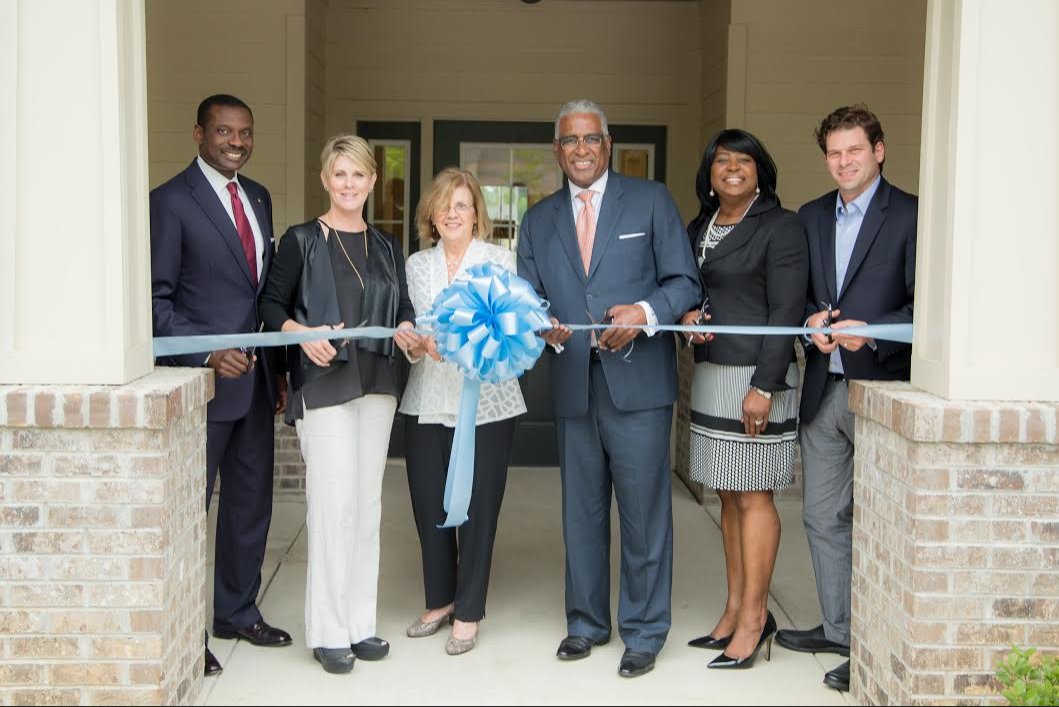
From left, Leroy Abrahams of Regions Bank, Sally Mackin and Gillian Goodrich of Woodlawn Foundation, Birmingham Mayor William A. Bell, Sr., Marcela Roberts of Hollyhand Companies, Ethan Davidson of Purpose Built Communities.


From left, Leroy Abrahams of Regions Bank, Sally Mackin and Gillian Goodrich of Woodlawn Foundation, Birmingham Mayor William A. Bell, Sr., Marcela Roberts of Hollyhand Companies, Ethan Davidson of Purpose Built Communities.


Woodlawn Foundation has officially cut the ribbon on The Park at Wood Station, a new multi-family community in Woodlawn.

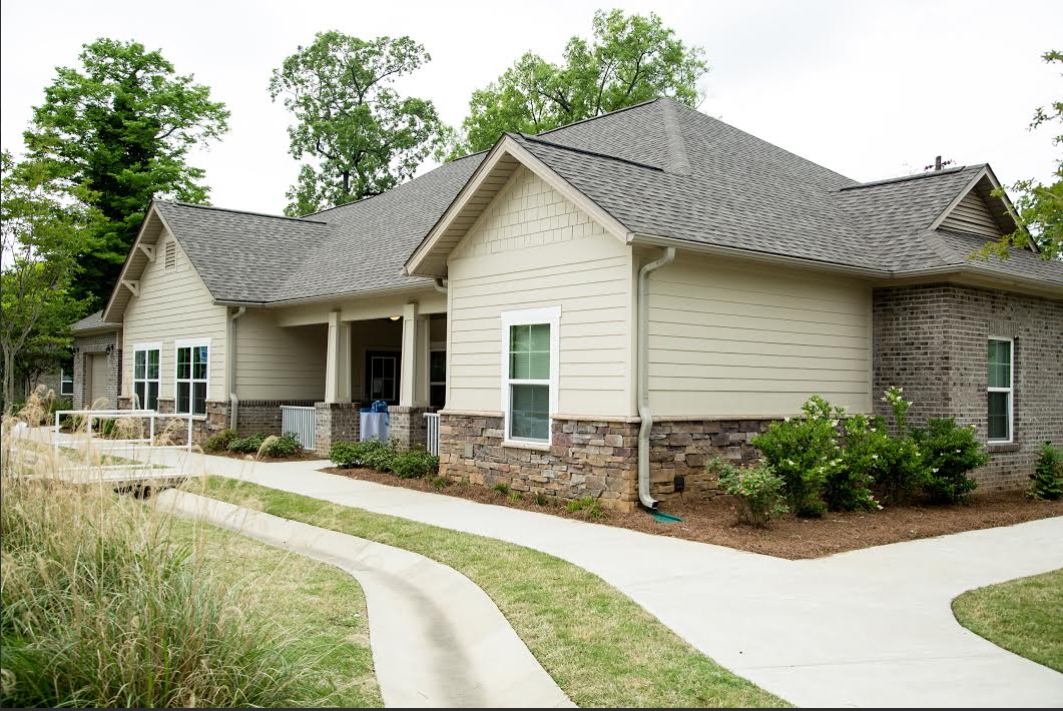
The Park at Wood Station is a 64-unit townhouse style multi-family residential development, fund- ed in part through a tax credit allocation from the Alabama Housing Finance Authority. The foundation hosted an open house on Monday, May 9 at the Wood Station Club House.

The first 64 units are designated for families meeting the program income requirements. Applicants have been screened for good credit, criminal history and job, school or disability status. The rigorous screening is the result of input from existing neighborhood residents about their vision for the community.

“Our neighbors asked us to ensure this development would have a positive impact on their community. We’re grateful for the ownership our neighbors have taken in this project and know they’ll welcome Wood Station residents with open arms,” said Woodlawn Foundation Executive Director Sally Mackin.

The park at Wood Station includes 67 high quality mixed income townhouse style units and a community center. (PROVIDED PHOTOS)

“Alabama Housing Finance Authority is proud to support The Park at Wood Station. It is an excellent example of public and private groups coming together to bring affordable, vibrant and accessible housing to the community,” said AHFA Executive Director Robert Strickland.

Woodlawn Foundation involved community members in the design of the units through meetings in which details ranging from the exterior finishes of the buildings to internal amenities provided for residents were discussed. Plans for green space and additional community facilities will also be incorporated into long range plans.

Woodlawn Foundation (www.WoodlawnUnited.org) is the lead organization for the Woodlawn United comprehensive community change effort. Having a lead organization is one of the unique features of the Purpose Built Communities holistic revitalization model. Woodlawn United effort follows the Purpose Built Communities three-point model of High Quality Mixed Income Housing, Cradle to Career Education and Community Wellness.

BSC Board of Trustees welcomes new members

0


The Board of Trustees at Birmingham-Southern College has announced the appointment of a new chair and vice-chair and seven new members.

The elections were made at the annual spring meeting of the Board of Trustees, which was held April 29. They will be approved in June at the annual meetings of the North Alabama and Alabama-West Florida Conferences of the United Methodist Church.

David M. Smith ’79, a partner with Maynard, Cooper & Gale PC, who previously held the title of vice-chair, was elected chair, while Denson N. Franklin III ’85, a partner at Bradley Arant Boult Cummings LLP, was elected vice-chair. Both will serve two-year terms. Smith succeeds Bruce Rogers ’80, a partner and attorney with Bainbridge, Mims, Rogers & Smith LLP. DeLynn Moring Zell ’86, managing principal at Bridgeworth Financial LLC, was elected secretary; she succeeds Franklin.

Elected to the board are six graduates of the college: Carl Crosby ’83, executive vice president and executive director of employment services at BBVA Compass; Dr. Bruce Irwin ’72, founder and CEO of American Family Care; Jim Pierce ’74, partner at Isagenix International LLC; Tommy Sisson ’84, CPA with Warren Averett; Chad Wachter ’87, who manages Trinity Management & Holding; and Richard Yeilding ’73, founder of RBY Retail. Also, joining the board is Will Goodwyn, vice-chair, chief administrative officer, and corporate secretary of the Coca-Cola Bottling Company United Inc.

“We welcome all of these new members to the Board of Trustees,” said BSC President Dr. Edward F. Leonard III. “They all bring energy, talent, and passion for BSC and its mission, and each has a long history of commitment to and support for the college.”


American Cancer Society to hold Relay for Life on May 19

0


The American Cancer Society’s Joe Lee Griffin Hope Lodge in Birmingham will have its annual Relay For Life event on Thursday, May 19.

The Relay kicks off at 4:30 p.m. with registration followed by dinner at 5 p.m.

Hope Lodge houses and serves the cancer patient population who live 40 or more miles away from the city and who are currently undergoing treatment in Birmingham. The American Cancer Society’s Hope Lodge program is supported in part by dollars raised at fundraising events, including the Society’s Relay For Life events.

“When you support our Relay For Life event, you are helping to ensure that future patients will be able to call Hope Lodge communities home during their cancer treatment,” said Jennifer Cherry, Hope Lodge director.

For many cancer patient, getting to and from treatment is one of their toughest challenges. The ACS Birmingham is current looking for volunteer drivers to provide free rides for patients living at the Hope Lodge.

“Transportation to and from treatment is a key component of assisting Hope Lodge guests on their cancer journey,” Cherry said.

They are looking for anyone who has four hours a week to dedicate to them.

Qualifications include: between 18-85 years old, a valid Alabama drivers license, requirement to complete mandatory training, passing of the ACS driver’s risk management review process -which includes a background check, insurance verification and motor vehicle record check.

Drivers will use the Hope Lodge’s insured and registered vehicles.

“Many of our guests are from small rural areas and do not like to drive or just do not feel comfortable driving in the city,” Cherry said. “Parking within the city is also a challenge. Being able to provide a free shuttle to all local treatment facilities takes a tremendous burden off of our guests.”

For more information or to make a donation: Hope Lodge Director Jennifer Cherry may be reached at 205.918.8873 or Jennifer.cherry@cancer.org. Associate Director is Cindy Perdue, 205.918.8881, email: cindy.perdue@cancer.org.

To sign up to provide free rides for patients living at the Hope Lodge call

1-800-227-2345 or email them at ACS.volunteer.training@cancer.org.