Home Blog Page 1195

Area Clergy Taking More Active Role in Birmingham Politics
0

By Barnett Wright

Times staff writer

Jimlowe

Birmingham area clergy are becoming more involved in local government because, according to one local pastor, some elected officials have lost their way. This comes on the heels of proposed legislative changes that have resulted in contentious public hearings and battles between Mayor William Bell and City Council members.

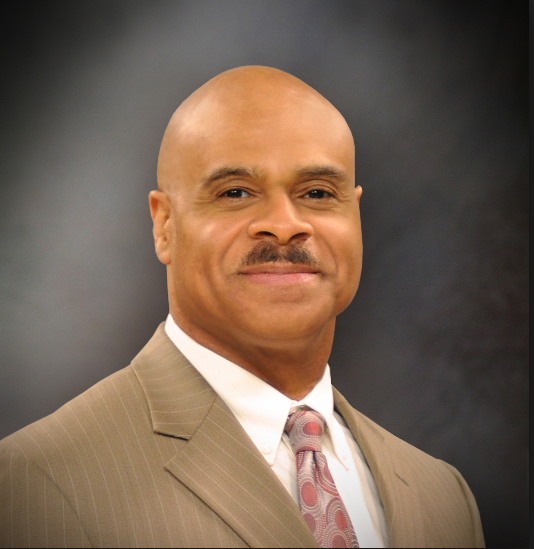
Bishop Jim Lowe, senior pastor of Guiding Light Church, pointed to how state lawmakers have handled modifications to the Mayor-Council Act as a prime example of why pastors need to get involved.

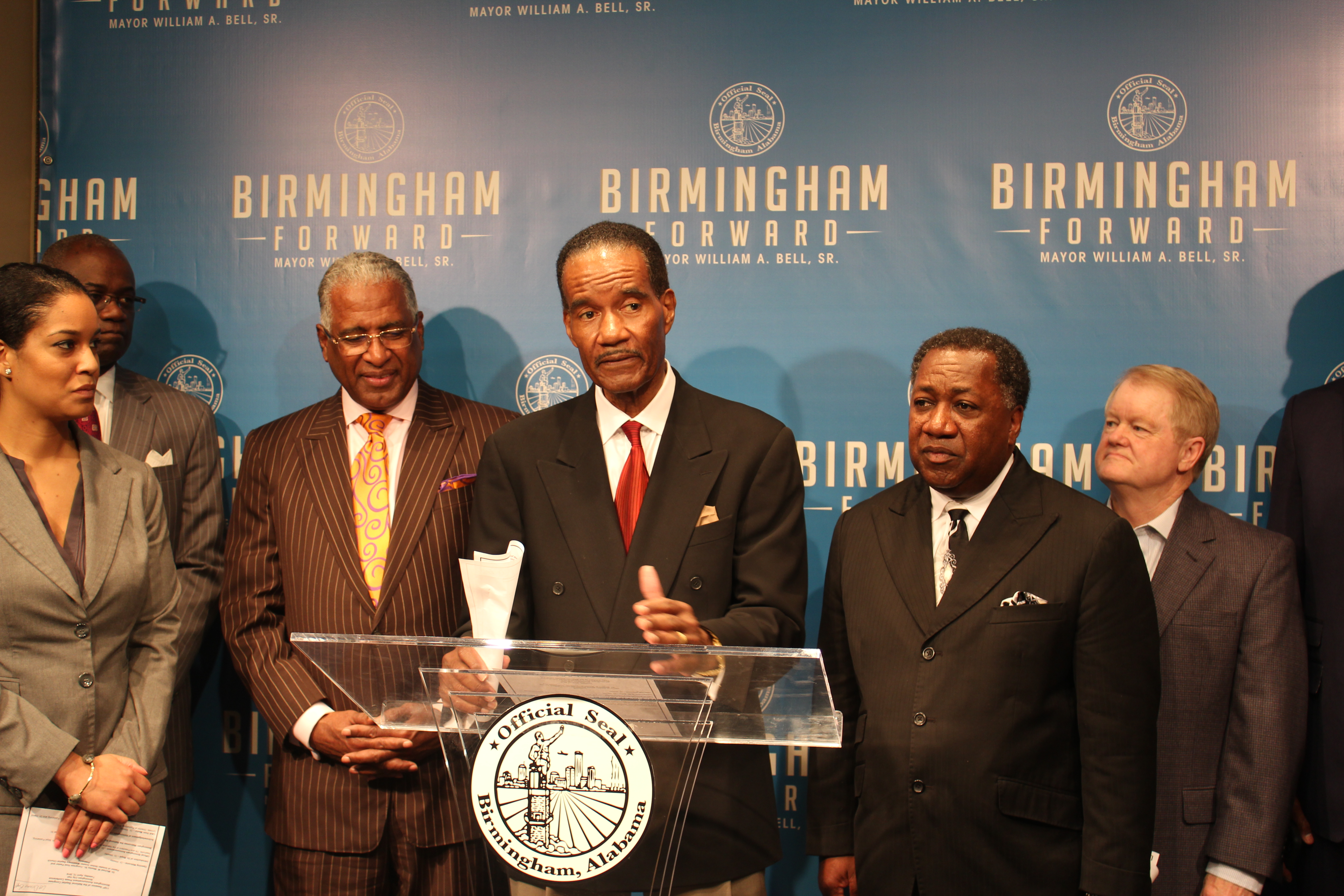
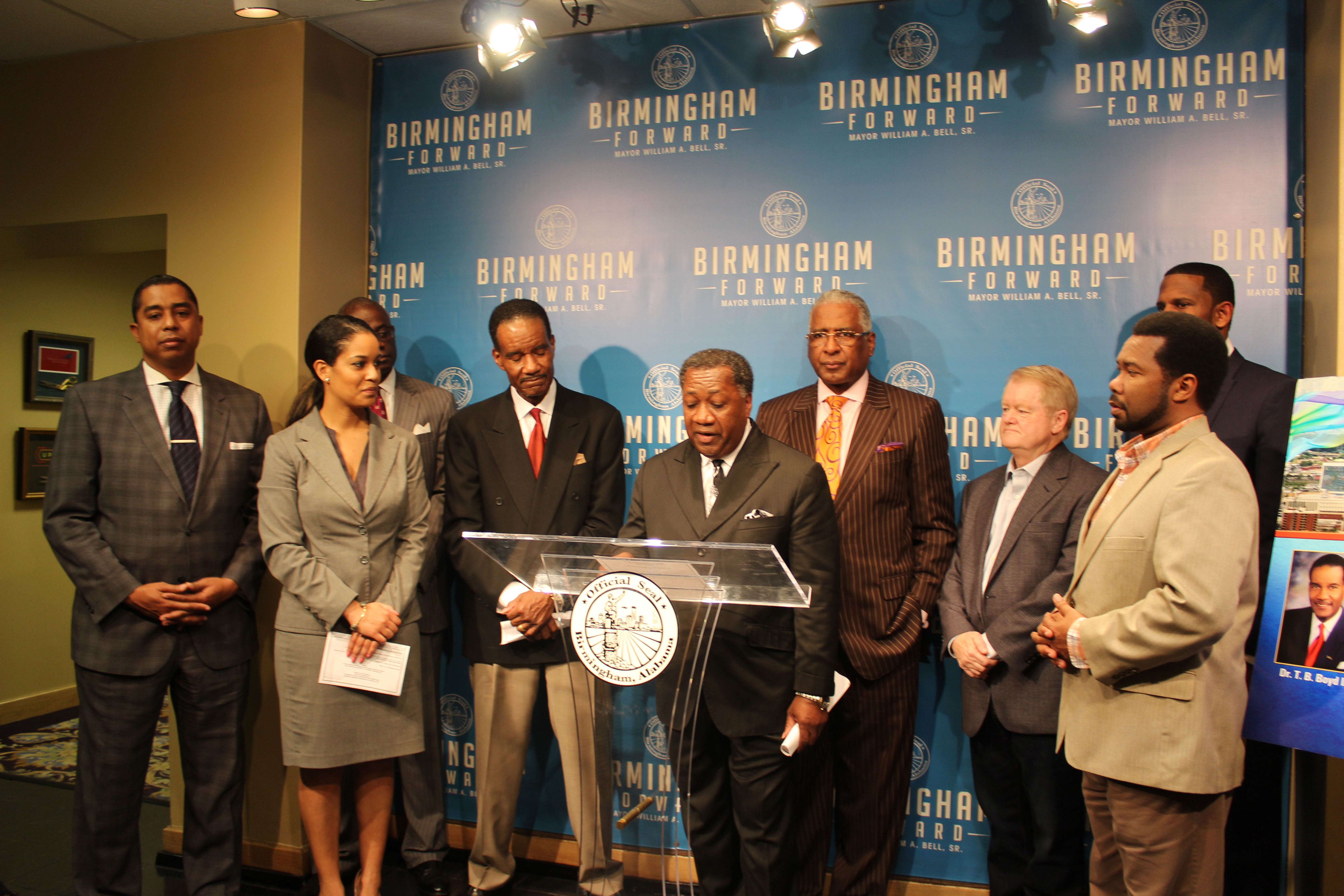
Lowe is a member of the Gatekeepers Association of Alabama (GAA), a group of nearly 40 diverse pastors who oppose changes to the Mayor-Council Act, as well as plans to give the mayor additional appointments to the Birmingham Water Works Board (BWWB).

“The GAA will help people remember who has the will of the people at heart, who is concerned about the betterment of our communities versus the betterment of their self-preservation,” Lowe said.

“It is the responsibility of a pastor of God to protect his flock. Whoever the wolf is —whether it is a mayor, whether it is a city councilman, whether it is a state representative, whether it is a senator or a president—we’re going to call it out. Our job is to protect the people. We are servants, just like they are servants.”

Lowe, who said he is grieving over the current political upheaval, made his comments shortly after members of the Jefferson County House Delegation on Wednesday, April 13, passed out of committee a bill to alter the Mayor-Council Act. The full House could vote on the measure as soon as next week.

Lawmakers also took up a bill that would modify how BWWB members are appointed. Currently, the Birmingham City Council appoints all five members to the board, which is expected to grow to six members next year. Under the new legislation, the council will appoint four members and the mayor will appoint two.

State Rep. Oliver Robinson (D-Birmingham), sponsor of the bills, said the proposals are good for residents.

“It’s going to help Birmingham’s citizens as it relates to how government is run, how the mayor and council communicate, and how services are provided,” Robinson said. “That’s what it was about in the first place—the citizens. It wasn’t about the mayor, and it wasn’t about the council.”

Lowe isn’t the only pastor who has felt compelled to intervene with high-profile government issues.

The Rev. T.L. Lewis, pastor New Bethel Baptist Church Pratt City, was instrumental in settling the dispute between Mayor Bell and Councilman Marcus Lundy that led to a physical altercation—now known as The Brawl at City Hall—and became a national embarrassment for the city.

“I worked hard when we had this situation with the mayor and Lundy,” the pastor said. “I had to say [to them], ‘Listen, you have to hear the voice of God. I don’t care who hit who first. I don’t care who knocked who down. When elephants fight, the whole grass is destroyed—and the grass happens to be our community.’

“Right now, the word of the Lord is a cure all,” Lewis said. “It’s a cure for everybody, and it’s a cure for everything.”
Network Nights Where partnerships put city students on path to college, careers and success

0

By Solomon Crenshaw Jr.

Special to the Times

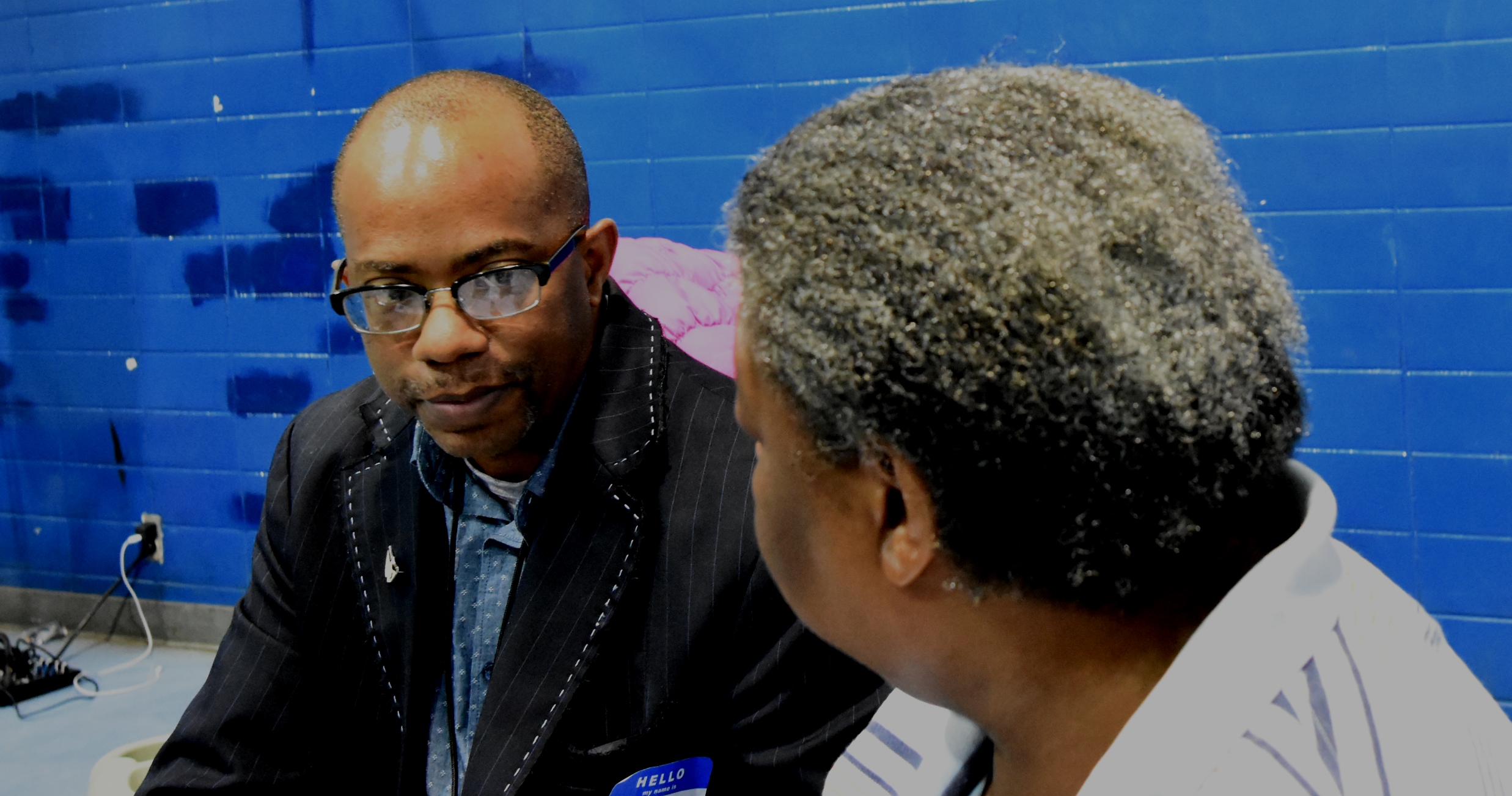
 Phillip Turner talks with a 'match' during NetWork Night in Collegeville


Cheryl Lewis came to Collegeville Community Center in North Birmingham last Thursday to recruit youngsters for a free arts education program while Hudson K-8 eighth-grader Crystal Brown came to look for ways to combat bullying.

They were among several dozen people who took part in Birmingham Education Foundation’s latest Network Night, which provides a setting for people to confer and make things happen for students.

 “It’s all about relationships,” said Marshall Pollard, director of Community Partnerships at the Ed Foundation. “That’s what drives this Network, because people know each other. Now that they know each other, let’s do something.”

The Ed Foundation, which is a nonprofit dedicated to increasing the number of students in Birmingham City Schools on the path to college, career and life readiness has hosted 28 Network Nights the past few years and they have netted some successes.

One gathering brought the Carver High School symphony together with the Alabama Symphony together. They played a concert together.

 A large group of Latino and Hispanic parents came to another event. They wanted to learn to speak English and the Literacy Council was there; it is now running programs at Tuggle Elementary School for Latino and Hispanic parents.

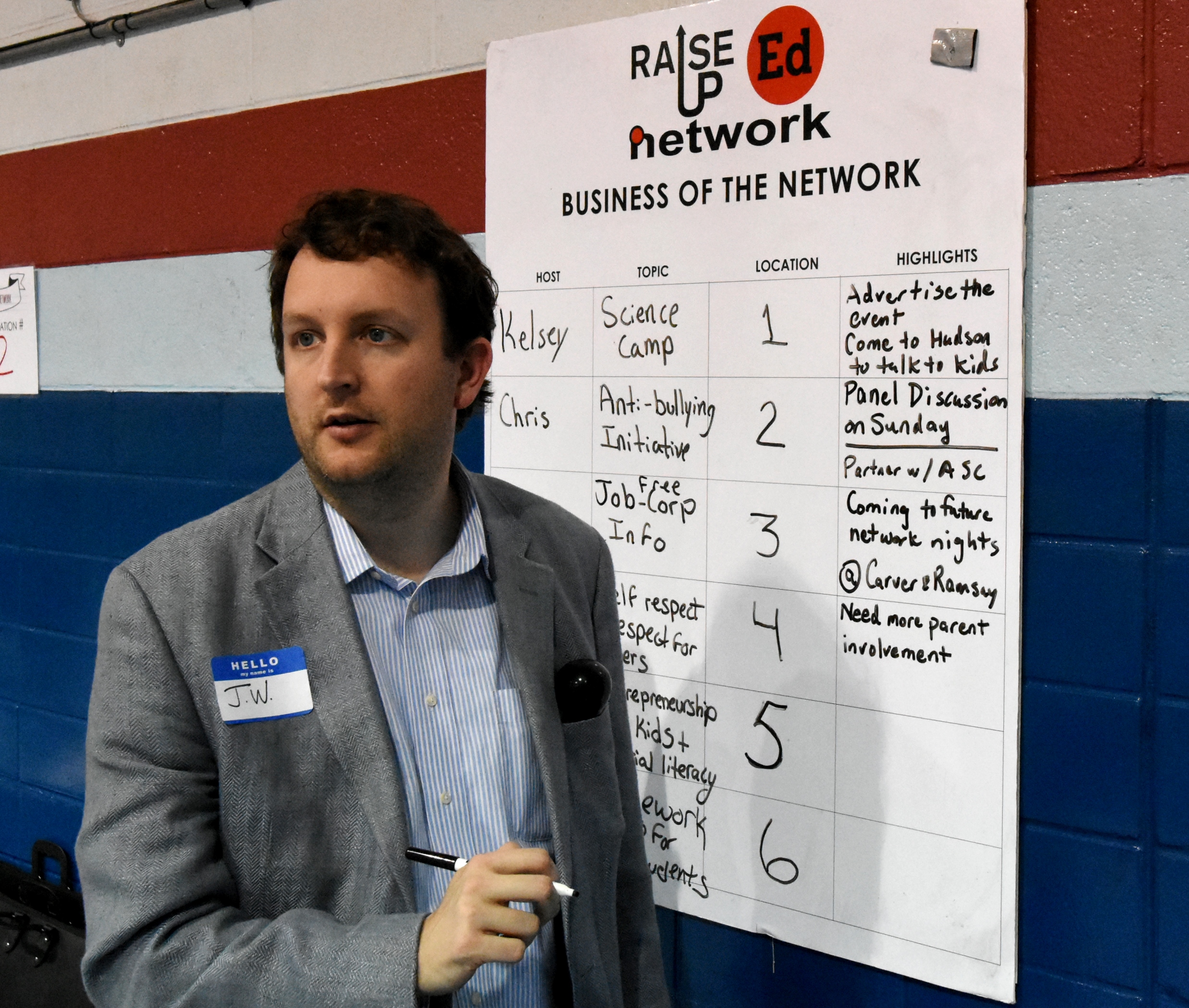
JW Carpenter charting information

J.W. Carpenter, executive director of the Birmingham Education Foundation, said the group wants to insure success for every Birmingham City School students.

That happens, he said, by building a diverse group of people to collaborate and work with students which is the goal of the Network Nights.

“We leverage everyone’s strengths toward that end,” he said.  “Too often, our schools are used to things being done to them and for them. Quite frankly, the leaders that I have met in our schools and surrounding communities right here, they need people to work with them. We want to work with them.”

 “The Ed Foundation isn’t doing any tutoring,” Carpenter said. “We’re not teaching anyone anything. We’re just putting people together to make those things happen.”

Those things include getting a tutor, getting support visiting colleges and support with jobs and life, among other things.

Last week’s event was the first that was not held in a school. Pollard said they brought a space in the network into the Collegeville neighborhood, where residents could walk across the street to attend.

 “Doing it in their neighborhood is their turf and when it’s your turf, you’re more likely to be engaged,” he said.

 Last week, Hudson school student Crystal Brown was part of a discussion about bullying. The 14-year-old said she wanted to help stop people from picking on each other.

The discussion “helped me understand (that) a lot of people get talked about and I really want to help them out and be a part of what they’re going through,” she said, “and try to communicate with them and come together as one.”

Cheryl Lewis, is the director of programs for Space One Eleven, which provides free arts education programs after school or during summer camps. She’s attended a number of Network Nights.

“We met lots of kids who are really interested,” she said.

Last week’s event included discussions on a science camp, Job Corp information, self-respect and respect for others, teen entrepreneurship and middle-schoolers providing homework help for elementary students.

The Ed Foundation doesn’t stop at providing the space for these discussions. It follows up to help things happen, often using partnerships with other organizations.

Carpenter recalled something a community leader told him after experiencing a Network Night.

“‘I’ve been to a lot of community events where the fire burns bright and two days later, you can’t find the ash. This is the first event I’ve ever been to where actions happen.’

“That’s what we’re about,” the executive director said. “All those 28 events, we track attendance, we track membership. But what’s important is what happens as a result and we’ve seen a lot of great things happen.”

The next Network Night is scheduled for Tuesday, April 19, at Ramsay High School, and another on Thursday, April 21, at Carver High.

Thomas Moorehead Rolls into the World of Ultra-Luxury

0

Eric Easter

Urban News Service

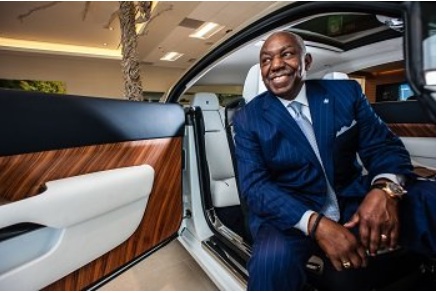
rollspix (1)

The world’s first African-American Rolls Royce car dealer got there through hard work and perseverance, but only after disappointing his family.

Thomas Moorehead’s parents thought the key to respectability was a Ph.D. Both teachers, they lived by an old-school axiom that the one thing you never can take away from a man is an education.

Yet, with just a few credits and a dissertation to go, Moorehead abandoned his doctoral program, and his parents’ wishes, for an uncertain shot at learning the automobile business from the bottom up.

It was a leap of faith, an offer from a fraternity brother and mentor, James Bradley of Bradley Automotive Group, who promised to make Moorehead a millionaire in five years — if he took the risk. But it wasn’t the promise that attracted Moorehead: “Teaching was a guarantee of a long career, but I always had a passion for business,” he says.

Thomas Moorehead Makes Inroads into the Auto Sales Industry

His road to success required two years of apprenticeship with Bradley, the mortgaging of his home and the depletion of his savings to enter a training program, then eventually owning his first dealership, selling Buicks in Omaha, Nebraska.

Moorehead built a strong reputation as someone dedicated to customer service, an essential value of the Rolls Royce brand. That reputation, and his sales record as owner of Sterling BMW in Virginia, sparked an invitation from Rolls Royce Motor Cars to join the exclusive club of only 33 dealers and 130 dealerships around the globe, an opportunity he accepted without hesitation.

The new store, Rolls Royce Motor Cars of Sterling, is the sole Rolls Royce dealership in greater Washington, D.C. and covers much of the mid-Atlantic — from Virginia to southern Pennsylvania. It sits just across from Sterling BMW and Mini, his other successful dealership, a fact that fills him with immense pride.

“These are the best cars in the world, and I’m honored to be able to bring them to my customers,” Moorehead says as he looks across the lot.

His dealerships thrive in one of the region’s wealthiest communities, filled with prosperous government contractors, newly minted millionaires from tech start-ups and the Washington Redskins’ nearby training facility.

But the opulence that Moorehead markets is a long way from his roots in Monroe, Louisiana, a town of 38,000 with a historic poverty rate twice the already poor state’s average.

During his youth, Monroe Colored High was the sole choice for black students in that segregated city. It was a time when, according to Moorehead, families like his could “offer you their good name, but not money.”

That upbringing drives a sense of humility that led Moorehead to keep his own name off the dealership’s logo. “I always say the boss is the customer, not me. I don’t get caught up in having my name on the door,” he explains. “Actually, most customers who come in think I’m just another salesman, and that’s fine with me.”

In a world where demanding buyers have been known to add millions of dollars’ worth of custom details to their cars to reflect their personalities (fur-lined shoe-holders, built-in picnic baskets, crystal cufflink holders), Moorehead’s low-key manner is a studied contrast – a contrast he believes helps him sell more cars. “I can talk about the features of the cars all day but, ultimately, people are buying good service.”

At age 71, Moorehead still relies on the daily advice of mentors, who include Hall of Fame home run great (now car dealer) Hank Aaron and former National Urban League president John Jacob. He calls them “instrumental” in shaping his business’s success. “They marked their careers by quietly getting the job done, but also being the best at what they do.”

While giving a tour of his office, Moorehead seems slightly embarrassed as he points to pictures of himself with presidents Obama and Clinton and an array of famous business leaders. That changes when he points out two items of which he’s most proud.

The Laurel Wreath Award, Kappa Alpha Psi Fraternity’s highest honor for lifetime achievement.

And then something much less distinct: a small cardboard sign that lists more than a dozen vendors who, he says, have contributed to his achievements — architects, decorators, contractors, cleaning-service owners and even the guy who printed the sign.

All are African-Americans, and fraternity brothers, people for whom he has paid forward the gift that Bradley gave him.

“This is really what it’s all about, bringing other people up and giving something back.”


National Baptist Congress’s first visit to Birmingham could boost city’s profile

0

By Ariel Worthy

Times staff writer

IMG_1724 (1)

For over a century the National Baptist Congress has traveled across the country and held their six-day event in different cities. This will be its first year in Birmingham.

On June 12 the organization will host its 110th conference in Birmingham at the Sheraton Hotel and Birmingham Jefferson Convention Complex. Greater Shiloh Missionary Baptist Church will host.

Greater Shiloh pastor Dr. Michael Wesley said last year’s session in Atlanta made him excited about Birmingham hosting this year’s conference.

“I saw a unique opportunity to feature our city … and I’ve asked for support from the ministering community,” Wesley said. “We can’t just be isolated in our own churches; we have to understand the greater impact that promoting our city in a positive way offers us all.”

Hosting the event will push Birmingham as a convention and conference city, Mayor William Bell said.

“Since the Westin Hotel has been built and the expansion of the entertainment district in that area we have seen a number of conferences and conventions that have occurred here in the city of Birmingham,” Mayor Bell said.

The event is expected to attract 5,000 to 7,500 attendees to Birmingham with a potential economic impact of $2 million to $3 million.

“We’re excited to see the amount of rooms that will be occupied, the restaurants that will see all these pastors and the economic impact that will take place in our city due to their efforts,” Council President Pro Tempore Jay Roberson said.

Bell said the session is about more than economic growth.

“It’s the spiritual uplifting that will be brought here to allow us to discuss some things that will help make all of our citizens more cognizant of who they are,” Mayor Bell said.

The National Baptist Congress is a traveling Christian educational institute founded as an educational division of the R.H. Boyd Publishing Corporation (RHBPC). It trains church workers and leaders to use different resources for Christian education.

Participants at the annual session are exposed to current trends in Christian education methodology, as well as strategies for effectively implementing the work of the Church.

The National Baptist Congress is different from the National Baptist Convention U.S.A., which most people in the area are members are part of, according to Wesley.

“It’s still the Kingdom of God and Christian education is needed.” Wesley said.

The National Baptist Congress puts an emphasis on youth, according to Wesley.

“With today’s troubled youth and with churches searching for activities for young people to get positively involved impacted, I think it would be a misrepresentation for any church to miss this opportunity for children to be involved.” Wesley said.

Dr. T. B. Boyd III, president of RHBPC, said the Youth Congress is an added dimension to the event.

This division trains and prepares youth for Christian leadership and provides activities, as well as scholarships and concerts featuring contemporary gospel/inspirational artists.

Boyd is hoping to have more events in Birmingham.

“This is the first time I have had an opportunity to have this kind of meeting here in the city, and hopefully it won’t be the last.”

Army Surgeon General knows dignity, integrity and leadership

0

Special to the Times

WASHINGTON — Army Surgeon General Lt. Gen Nadja Y. West, who this year became the first black female lieutenant general and the highest-ranking woman to graduate from the U.S. Military Academy at West Point, says respect is a key to successful leadership.

And she’s knows leadership. In December, 2015 she became the military’s first black surgeon general. In 2013, she was the first black female major general of the Army’s active component, and was Army Medicine’s first African-American female two-star general.

Good leadership, West said, includes treating others with dignity and fairness, carrying oneself with respect, and demonstrating resilience, adaptability and empathy.

“As a leader, you’re really a servant, so you serve those who you lead,” she said. “I think the attributes of any leader start with integrity.”

Army medicine


West earned an engineering degree from West Point and her medical degree from George Washington University School of Medicine. She was sworn in as surgeon general in December, receiving her third star with that appointment.

She said she is extremely proud of the work done by the men and women of Army medicine and what they do for the nation. Around the globe, their work includes medical research, helping maintain the health of Soldiers and supporting the warfighter.

“We really do have probably one of the greatest teams of professionals on the face of the Earth,” West said.

The general said she encourages girls and young women to pursue science and think about a career in military medicine, telling them they can thrive in that career. “The field of medicine is just awesome, because you can serve, you can be involved in making someone well [and] healing,” she said. “What’s more rewarding than that — making sure someone is healthy?”

Role models


West recalled the trailblazers from her youth: “Starting at home, my mom was an extremely strong role model,” the general said.

Her mother grew up in rural, segregated Arkansas and put herself through school and college. She served as a model of resilience and strength, West said, showing her 12 children — all adopted — what they could do when they set their minds to it.

“It was a great family environment,” the general added.

West, who was the youngest of the dozen, described a strong military tradition in her family. Her father had a career in the Army and her siblings served in the military — including three sisters who were in the Women’s Army Corps and one who was in the Women in the Air Force program.

“I had the opportunity to see those ahead of me — not only my parents — really forging the way,” she said.

The general said her family proved what you can do when you set goals and ignore what others think or say. They showed her, she said, that “if you want to really accomplish something, to go for it.”

Women in the military


West said she welcomes the opening of all military occupations and specialties to women. “A diverse group provides different perspectives and would give you a wider range of solutions,” she explained.

The result is a military more reflective of what the nation looks like, the general added. “Those who choose to serve should be given the opportunity to serve in those roles that they are qualified to serve in,” West said.

West graduated from West Point in 1982 as part of the third class to attend the military academy after it began accepting women.

“It was challenging for all the cadets, not just the women — both physically challenging [and] emotionally challenging — and so it was quite an experience,” she said.

For the most part, West said, the women were embraced by their classmates. She noted that the academy’s leaders made the difference by setting the tone. Female officers served as role models for her while she was at West Point and have continued to do so throughout her career, the general said.

In the Army medical department, she said, there were many women she admired. “There were quite a few who made me proud and gave me something to aspire to,” West said.

West’s previous assignments include service as commanding general of Europe Regional Medical Command; commander of Womack Army Medical Center at Fort Bragg, North Carolina; and division surgeon for the 1st Armored Division, Army Europe and 7th Army in Germany.

Her most recent post was as the Joint Staff surgeon at the Pentagon.

African-Americans in the U.S. Military: Profiles in bravery

0

Lt. Gen. Nadja West this year became the first black female lieutenant general and the highest-ranking woman to graduate from the U.S. Military Academy.

In “The African-American Soldier: From Crispus Attucks to Colin Powell” author and Retired Lt. Col. Michael Lee Lanning, wrote: “For more than 200 years, African-Americans have participated in every conflict in United States history. They have not only fought bravely the common enemies of the United States but have also had to confront the individual and institutional racism of their countrymen.”

In addition to Lt. Gen. West here are some other firsts for blacks in the military:

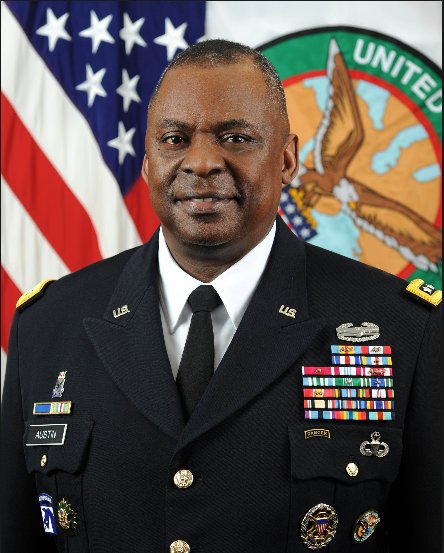
A4_Austinpix
Gen. Lloyd J. Austin III.

2012: Gen. Lloyd J. Austin III. First black vice chief of staff of the U.S. Army and first black commander of U.S. Central Command.

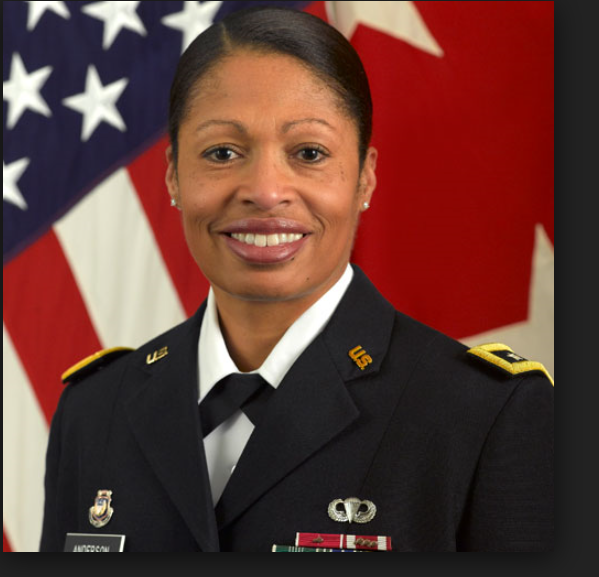
A4_Andersonpix
Maj. Gen. Marcia M. Anderson

2011: Maj. Gen. Marcia M. Anderson. The Army’s first black female reserve officer to obtain the rank of major general.

2004: Command Sgt. Maj. Evelyn Hollis. First black female command sergeant major of a combat arms unit.

2003: Command Sgt. Maj. Michele S. Jones. First black female command sergeant major of the Army Reserve.

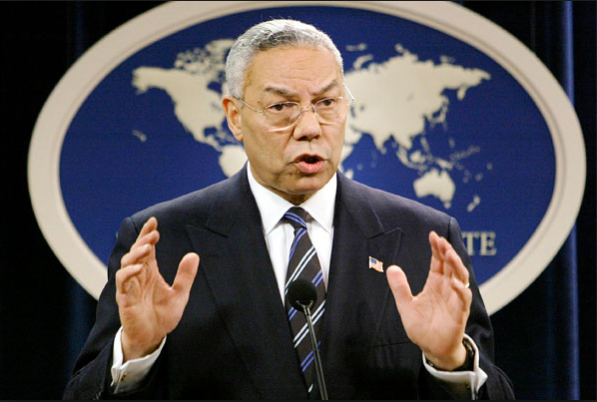
A4_Powellpix
Gen. Colin L. Powell.

1989: Gen. Colin L. Powell. First black chairman of the Joint Chiefs of Staff.

1987:  Maj. Gen. Fred A. Gorden. First black commandant of Cadets at the U.S. Military Academy.

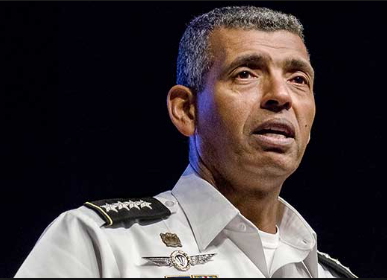
A4_Brooks
Gen. Vincent K. Brooks.

1980: Gen. Vincent K. Brooks. First black U.S. Military Academy cadet brigade commander or “First Captain”.

1979: Brig. Gen. Hazel Johnson-Brown. First black chief of the Army Corps and first black female brigadier general.

1977: Clifford L. Alexander Jr. First black secretary of the Army.

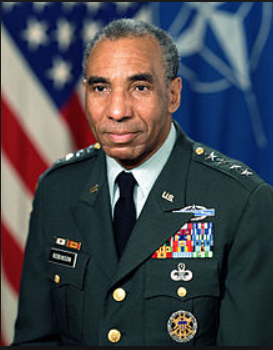
A4_robinsonpix
Gen. Roscoe Robinson Jr.

1975: Gen. Roscoe Robinson Jr. First black four-star general.

1942: Maj. Della H. Raney. First black chief nurse commissioned as a lieutenant in the Army Nurse Corp.

1940: Gen. Benjamin O. Davis Sr. First black general officer in the regular Army and the U.S. Armed Forces.

1877: 2nd Lt. Henry Ossian Flipper: First black cadet to graduate from the U.S. Military Academy.

1866: Cathay Williams. First black female to enlist in the Army.

1863: Sgt. William Carney. First black Medal of Honor recipient.

Chucks & Tux Gala

0

This slideshow requires JavaScript.

Growing Kings on Friday, April 8 held its Chucks & Tux Gala at Workplay, an inaugural fundraising event that attracted a diverse mix of civic and philanthropic leaders, as well as young and seasoned professionals.

Growing Kings is a non-profit organization that provides mentoring programs to at-risk males in Birmingham City Schools. The goal is to offer positive direction that will lead toward progressive thinking in all aspects of the students’ lives.

Guests at the gala wore Chuck Taylor Converses along with their formal attire to match the distinct flare of the event’s overall theme.   

One unique feature of the event was the display and auction of custom designed Chuck Taylor sneakers created by Birmingham City high school students as part of Growing Kings’ Student Shoe Design Contest.

Five students worked closely with professors and college students from UAB’s Art and Art History Department to bring their paper designs to life.   

Since its inception in 2009, Growing Kings has developed partnerships with community businesses, organizations, and civic leaders to provide young men with hands-on, first-person perspective into the professional lives and successes of mentors.

The organization can be contacted at (205) 417-2478 or by email: info@growingkings.org.

Survey: some parents of color see bias in the education system

0

By Ariel Worthy

Times staff writer

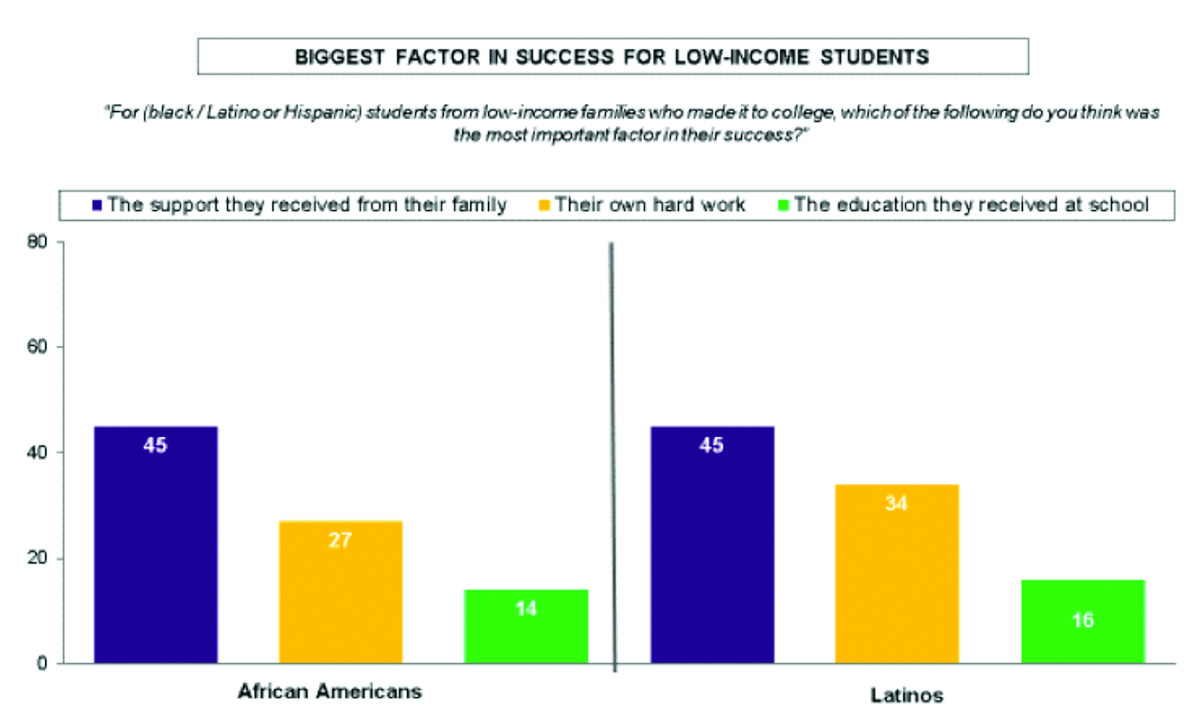
2CHART1

For the first time, the majority of students in public schools are children of color who make up the “new education majority.”

However, decisions on educational policy and practice are too often made without adequate input from these students or their parents and families.

This week, the Washington-based Leadership Conference Education Fund released a study that included input from African-American and Latino parents and families of public school students on educational priorities.

“We cannot continue to sustain two separate and unequal education systems – one that educates white and middle-class children fairly well and one that absolutely fails children of color,” said Wade Henderson, President and CEO of the Leadership Conference Education Fund.

The poll comes at a time when federal and state governments and school districts are rewriting the Every Student Succeeds Act (ESSA) which is designed to create new opportunities and incentives to educate all children.

The study is the first of its kind since President Obama signed the ESSA in December.

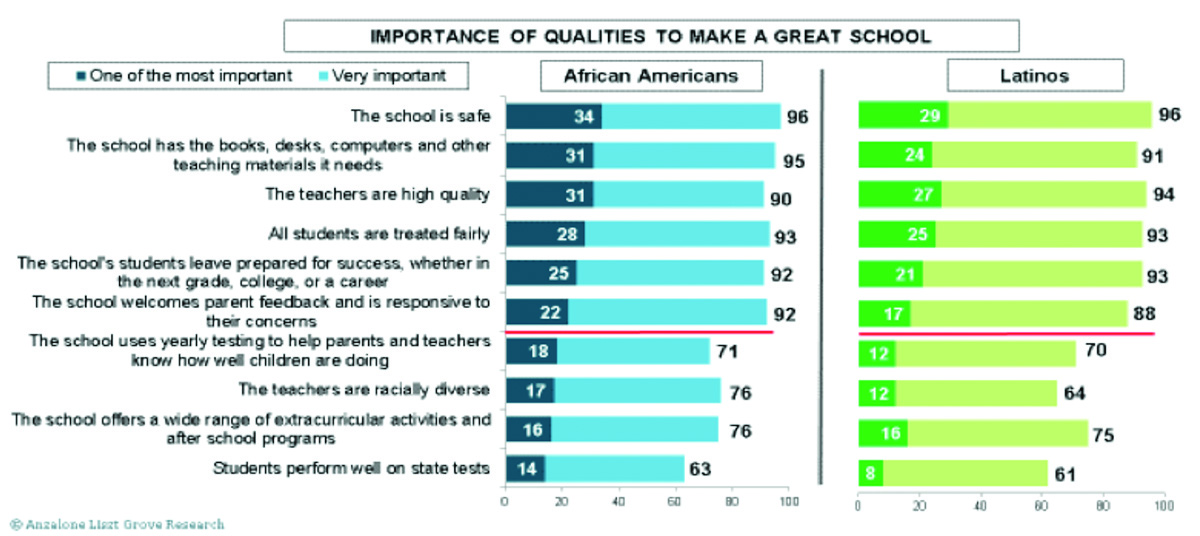
2CHART2

Noticeable differences

According to the poll more than 83 percent of blacks, and 61 percent of Latinos reject the notion that their communities receive as much funding as schools in white communities.

“The school in the Latino communities are run-down, smaller and less funded than those in the white neighborhood,” a Latino parent from Chicago said.

Racial inequality is seen in the quality of education as well, especially among black students. Sixty-six percent of blacks don’t believe students in their communities receive as good an education as white students do.

Latinos don’t share the same sentiment, but 45 percent of families in the black community believe that Latino students don’t receive as good an education as whites do.

Both communities cite a lack of funding as the biggest cause of racial inequalities. Low quality teachers and racism are seen as the next biggest offenders, especially among blacks.

“They don’t have the funding,” a black parent from Philadelphia said. “They cut some program, they don’t have books, and they don’t have highly qualified teachers.”

The poll also found that 53 percent of black parents believe that U.S. schools do not do a good job preparing black students for the future. A third of black parents and families believe that the U.S. schools are not even ‘really trying to educate black students.’

It’s up to all of us

Both communities recognize their power to help change schools, according to the poll. Fifty-five percent of black and 56 percent of Latino families believe parents have a lot of power to bring change to schools.

“When you have parents that get together and say they want to do this – it’s the unity of the parents,” A Latino parent from Chicago said. “It’s just not the teachers. It’s becoming involved and getting other people to be involved. One voice isn’t enough.”

However, they also believe that government of all levels — local, state and federal — need to step up to address funding and other inequalities that hold new majority students back.

One black parent from Philadelphia suggests calling the state legislator and those who are responsible for funding. A Latino parent also said a lot of issue come down to a lack of funding.

“The government is always taking money from the schools,” a Latino parent from Chicago said.

The Leadership Conference Education Fund’s poll surveyed 400 black and 400 Hispanic or Latino parents or family members with children between the ages 5-18.

Christian comic novel has serious message, author says

0

coverpix0414

It was in October 2008 while financial markets were tanking worldwide, and investment banks were contemplating the end of the world, that writer William Thornton happened to see an article in The Wall Street Journal about the business of churches.

Maybe it was the juxtaposition of those two events that resulted in Thornton’s award-winning Christian novel, “Set Your Fields on Fire,” ($14.95 in softcover, 325 pages) which is now available from WestBow Press. But in spite of the serious subject matter Thornton’s book tackles, he wants his audience laughing.

“Like it or not, church is the mechanism God has chosen to present His message to the world,” Thornton said. “And by church, we mean the people in it, and let’s face it – people are funny.”

Thornton, a Gadsden native, is the author of two other novels of Christian fiction and has been a reporter with The Birmingham News for 15 years.  He writes about news in east Alabama for AL.com.

“Set Your Fields on Fire” deals with “mystery worshippers” – people who evaluate churches, similar to mystery shoppers who anonymously rate retail outlets. Mystery worshippers are hired to experience worship services in the way any visitor would and suggest ways to improve the atmosphere. Are the grounds kept well? Are the bathrooms clean?

“Something about the concept struck me as funny from the beginning,” Thornton said. “I wondered what kind of person could do the job. It made me think about what might happen if you got someone who was really into the  job.”

Set in contemporary Florida, “Set Your Fields on Fire” follows Alex Alterman and his group as they evaluate the ministry of the Rev. Thomas Everhart, a nationally-prominent preacher with several bestselling books and a growing celebrity. Alterman’s group feels Everhart is hiding something. But is he, or are they just paranoid because they can’t find all that much wrong in Everhart’s church?

The novel spans the 2008 recession chaos on Wall Street to the Gulf Coast and the Deepwater Horizon oil spill disaster. But the setting is a growing church in a small community. Thornton, who is also a Sunday School teacher, said he wanted the novel to touch on the culture of the worship service and the people involved.

But he took an unorthodox blueprint for telling the story.  

“I modeled it, in part, on the movie ‘Oceans 11’,” Thornton said. “I wanted there to be an older character, a millennial, a middle-aged character, a woman, and I wanted them to approach their mission at the church like someone robbing a casino. Everything has to be planned meticulously, because what churches do is serious business. That’s why the group in the novel goes to such great lengths to do its job – because the people believe it’s that important. That doesn’t mean you can’t make people laugh in the process.”

Last year, “Set Your Fields on Fire” took the grand prize in the Aspiring Authors Contest with the Parable Group and WestBow Press, a division of Thomas Nelson Publishers and Zondervan, the world’s largest Christian publisher. The manuscript was chosen from several hundred entries for publication.

“I never expected this, even though I entered the contest,” Thornton said. “It’s been a real blessing.”

“Set Your Fields on Fire” is available in softcover and e-book format on Amazon.com, Barnes and Noble and Books-A-Million, and in Parable Christian stores. You can read the first chapter at his blog at brilliantdisguises.blogspot.com.

Influential Group of Clergy Oppose Changes to Mayor-Council Act

0
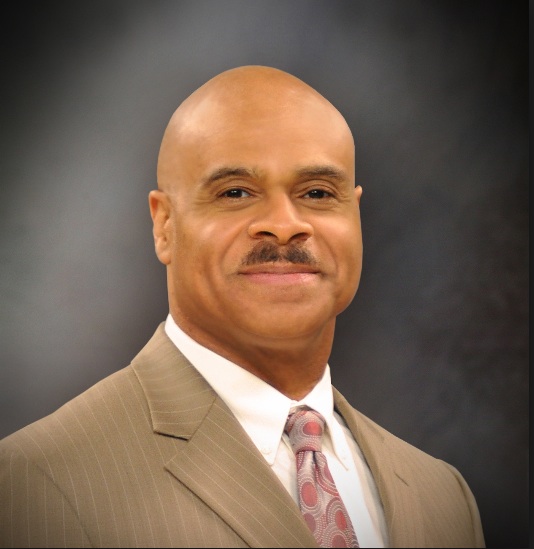
Bishop Jim Lowe, senior pastor Guiding Light Church.


By Barnett Wright

Times staff writer


Bishop Jim Lowe, senior pastor Guiding Light Church.

A group of diverse pastors on Wed., April 6 voiced strong opposition to legislation that would give Mayor William Bell additional appointments to the Birmingham Water Works Board (BWWB).

The Gatekeepers Association of Alabama (GAA), which includes nearly 40 influential pastors from across Jefferson County, said state lawmakers and city officials need to discuss changes before action is taken. The statement came after legislators on Tues., April 5 passed out of committee a bill that would change how BWWB members are appointed.

Currently, the Birmingham City Council appoints all five members to the board, which is expected to grow to six members next year. Under the new legislation, the council will appoint four members and the mayor will appoint two.

Also, mayor would have to approve the council’s selections and the council would have to approve of the mayor’s appointments.

Those and other proposed changes to the Mayor-Council Act, which lays the ground rules for Birmingham’s municipal government, have created a firestorm among residents who have packed hearings to voice concerns about the modifications.

“Today, it is about the city of Birmingham. Tomorrow, it will be about other issues that affect additional residents of the state,” said Bishop Jim Lowe, pastor of Guiding Light Church and member of the GAA executive board. “We must begin to take a stand so that the voices of the people may be heard.”

The GAA met with members of the Birmingham City Council and Jefferson County Democratic House delegation to discuss the proposed measures, Lowe said.

“These two elected entities have not had sufficient civil dialogue together discussing these two critical pieces of legislation that will have an impact on hundreds of thousands of current citizens … as well as the potential control of billions of taxpayer dollars,” the GAA said in a press release.

“Therefore, these two pieces of legislation should not hastily be voted upon without a thoughtful, transparent, intellectual, thorough process involving all parties from both elected entities working together for the good of all citizens affected.”

State lawmakers held a 90-minute public hearing on Monday, April 4, to discuss the legislation. Support and opposition were evenly divided during the meeting.

Lowe said he was disappointed that state Rep. Oliver Robinson (D-Birmingham), who chaired the meeting, told the overflow crowd that it didn’t matter what the people said, the bill would be passed anyway.

“This is the very thing we have been meeting about—when government leaders no longer consider themselves servants of the people but, rather, lords over the people,” Lowe said.

Efforts to reach Robinson, sponsor of the bills, for comment were unsuccessful.

Other members of the GAA executive board include Bishop Demetrics Roscoe, Living Church Ministries; Pastor Michael McClure Sr., Revelation Christian Ministries; Pastor P. Ronald Wilder, Covenant Church International; and Pastor Randy W. Williams, Parkway Christian Fellowship.

Members of the GAA steering committee include Pastor Electra Adams, Gethsemane Ministries; Pastor Larry J. Ragland, Solid Rock Church; and the Rev. Dr. Thomas L. Wilder Jr., Bethel Baptist Church.