Home Blog Page 1197

Birmingham Gets an Alarming Wake-Up Call It Can’t Ignore
0

By Barnett Wright

Times staff writer


It may have been the wake-up call the Magic City needed.

For years, Birmingham and its leaders have promoted the city’s unquestioned racial progress since the turbulent Civil Rights movement of more than 50 years ago.

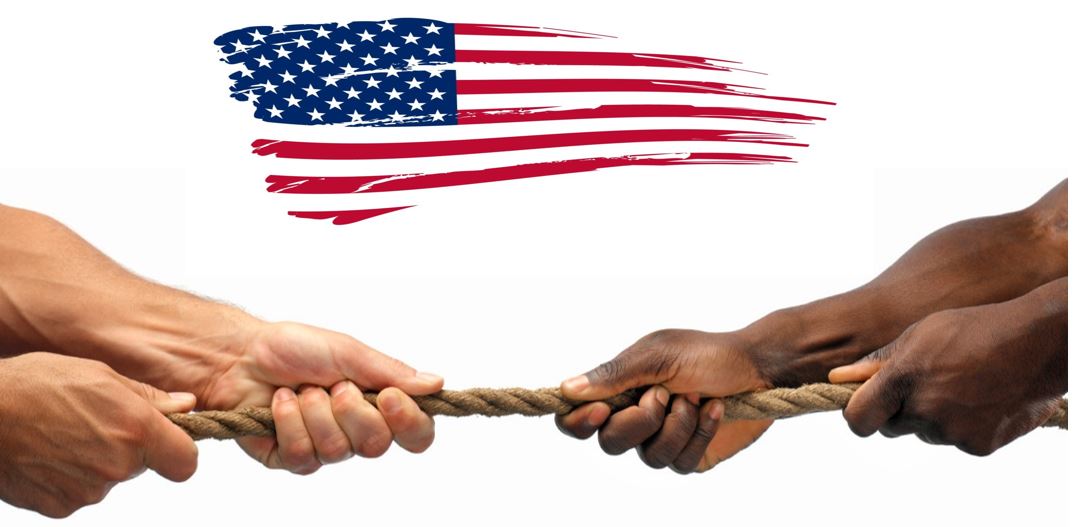
And then earlier this month, during a meeting at Birmingham City Hall to discuss proposed changes to the Mayor-Council Act, the community seemed to regress when some residents voiced the kind of racial vitriol that had not been heard publicly in Birmingham for decades.

“I think that was the most toxic community meeting I’ve witnessed in years,” said Birmingham lawyer Doug Jones. “It really caught me by surprise to see that there was that kind of public anger and sentiment out there.”

The meeting left many others baffled, as well, including Birmingham Mayor William Bell and those who have worked for decades to get the city beyond its appalling racial past.

“Sometimes the entire Birmingham area tends to pat itself on the back and look at the great progress it has made in the last 50 years,” said Jones, who successfully prosecuted two former Ku Klux Klan members for the murder of four young girls in the Sixteenth Street Baptist Church bombing. “But if we don’t learn to treat each other with respect, it will always be a work in progress.”

Birmingham lawyer Jim Rotch, author of The Birmingham Pledge, agreed: “We seem to have lost the ability to compromise and to show respect for those who may have a different opinion from our own. Too many people tend to think that if somebody has a different opinion than their own, they are not to be trusted or respected.”

A Step Backward

The Birmingham Pledge is a statement of principles at the heart of a grassroots movement to eliminate racism and prejudice. Since its launch in 1998, the initiative has had a huge impact, uniting people in Birmingham and across the globe. But now the city that inspired The Pledge appears to be taking a step backward.

“The racial harmony is not where it should be … it’s getting worse,” said Hezekiah Jackson, president of the Metro Birmingham branch of the National Association for the Advancement of Colored People (NAACP). “I hear white people and black people say, ‘If this is where Birmingham is headed, I might have to rethink whether or not I want to be around here.’”

Rotch said, “If we can’t respect each other regardless of our differences, then I believe we begin to backslide toward the kind of chaos that once tore this community apart.”

The State of Race Relations

“You can have diversity without adversity. You can live in a diverse nature,” said the Rev. T.L. Lewis, pastor of Bethel Baptist Church, Pratt City. “I don’t have a problem with diversity, but I sure have a problem when diversity creates adversity. This whole nation has gone through that, and we certainly don’t need it in Birmingham.”

Confidence in race relations in America continues to decline, with hopes for the future at their lowest level yet, according to a 2016 Rasmussen Reports poll. Only 20 percent of adults in the U.S. believe race relations are getting better—a new low, compared with 38 percent five years ago.

“People are seeing [Republican presidential candidates Donald] Trump and [Ted] Cruz and other politicians basically running for office on close-to-being-racist platforms,” said Jones, who also serves as first vice chairman of the Birmingham Civil Rights Institute board of directors.

Despite problems across the country, Birmingham has seemed in recent years to set an example for racial reconciliation.

“We have paid a terrible price as a community to have a wonderful opportunity,” Rotch said. “That opportunity is to show the world that, whereas it’s here that bombings occurred, we as a community all these years later have made tremendous progress. And if we can make tremendous progress here in the Birmingham community, there is not a community in the world that can’t make tremendous progress.

“That is our legacy. We can take something terrible in the history of this city and turn it into something positive, something that can help make the world a better place.”

What’s Next?

“We just have to get some reasonable voices,” Jackson said. “We need people who don’t have skin in the game, people who are not political operatives, people who are not paid consultants. We need some average, everyday people to say, ‘What we want now is calm.’ ”

Historically, the business community has stepped in, Jones said.

“This is not going to be just political leaders,” he said. “Political leaders run for office, so you never know which way they are going to go. I think the business leaders in this city need to take notice, because [a heated racial climate] can hurt efforts to bring businesses into this area. That’s what happened a lot in the 60s.”

Birmingham’s business community was instrumental in creating the Mayor-Council Act, adopted in 1962, which helped rid the city of a three-member commission determined to maintain a system of segregation. Ironically, the same Mayor-Council Act—with some of its provisions now under assault—is fueling the city’s latest racial firestorm.

 

Text of the Birmingham Pledge

0

I believe that every person has worth as an individual.

I believe that every person is entitled to dignity and respect, regardless of race or color.

I believe that every thought and every act of racial prejudice is harmful; if it is my thought or act, then it is harmful to me as well as to others.

Therefore, from this day forward I will strive daily to eliminate racial prejudice from my thoughts and actions.

I will discourage racial prejudice by others at every opportunity.

I will treat all people with dignity and respect; and I will strive daily to honor this pledge, knowing that the world will be a better place because of my effort.


The Birmingham Pledge, authored by Birmingham attorney James E. Rotch, is a statement of principles at the heart of a grassroots movement, started in Birmingham, Alabama, to eliminate racism and prejudice in the Birmingham community and around the world one person at a time. Launched in 1998, the Pledge has spread worldwide. Programs utilizing the Pledge have been reported in all 50 states and more than 20 counties. The work of the Birmingham Pledge movement is carried out by the Birmingham Pledge Foundation, a not-for-profit foundation, which with support from the Birmingham community is currently launching a Global Awareness Campaign to take awareness of the Pledge to every corner of the globe.


Down from the dais, school board member brings music to elementary students

0
Francina Morales works with the male chorus. (Solomon Crenshaw Jr. photo: Special to the Times)

By Solomon Crenshaw Jr.

Alabamanewscenter

musicpix1
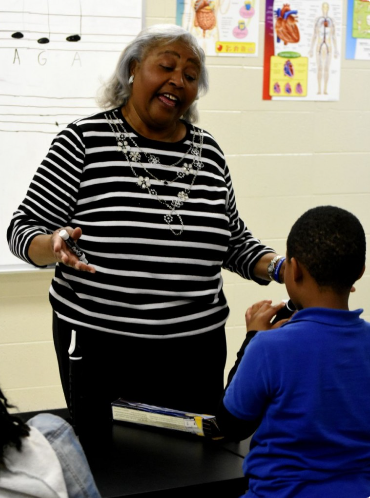
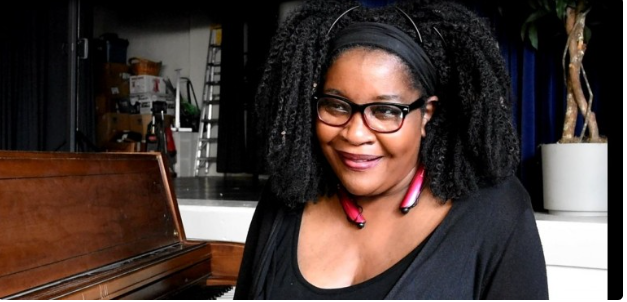
Janice Stallworth works with a student on the flutophone. Stallworth volunteers on Tuesdays and Thursdays at Robinson Elementary School, teaching third-graders to play the flutophone. (Solomon Crenshaw Jr. Photos: Special to the Times)


Janice Stallworth is a Fairfield Board of Education member who does more than sit at the dais. She’s delivering a hands-on approach to helping a school in her district, and perhaps eventually the system as a whole.

Stallworth volunteers on Tuesdays and Thursdays at Robinson Elementary School, teaching third-graders to play the flutophone. She also enlisted a friend to form a boys chorus at Robinson.

“I have a few students who can already play ‘Mary Had A Little Lamb,’” Stallworth said prior to Tuesday’s fifth session in the school’s science lab turned music studio. She works with the 18 to 20 students who returned permission forms from their parents.

The board member bought the instruments herself.

Fairfield High Preparatory School does not have a grade school feeder program to its high school band. There is band instruction for grades six through 12 but not in the elementary schools.

Stallworth hopes to change that, giving her grade school students the same start in music she received as she learned to play the flutophone as a fifth-grader at Robinson. She went on to play the flute, oboe and clarinet.

“It carried me all through life,” said Stallworth, whose day job is teaching microbiology at Lawson State Community College. “Music just makes the child more well-rounded. Hopefully, next year we will have a music program where music will be a part of the curriculum in our elementary schools.”

The Fairfield schools are based on an academy system. Robinson features health, Glen Oaks has engineering and math, and C.J. Donald Elementary provides business and finance.

“But that leaves music out,” said Stallworth, who is aided by her son, James Merkerson. “I am just trying to start something that will put a spark in our children for music.”

Just down the hall, Francina Morales, a recently retired Birmingham City Schools music teacher, and school staffer Martha Reed work with the newly formed boys chorus for grades two through six. It began after Stallworth called Morales to ask about classroom management and the subject of a boys chorus came up.

Morales held auditions to get the 35 vocalists with whom she works.

Francina Morales works with the male chorus. (Solomon Crenshaw Jr. photo: Special to the Times)

“Our boys just need us and it’s up to us to step up and do whatever we can,” she said. “This is my small thing that I can do to help these kids learn more about discipline and self-control.”

The music teacher said the boys chorus was good from the beginning. It has improved, she said, as the boys have become more comfortable with singing together and with instruction.

The choral director said music can give a means to shine to children who may not do well academically.

“They can prosper in music a lot of times,” she said. “Some of them can do rhythms and some of them can sing very well. And even if they can’t sing very well in a general music class, they can still participate.”

Discipline is another benefit.

“The same social skills they have to use here with me, that’s the same thing that their teachers tell them in their classroom,” Morales said. “If you pay attention, then you will sing correctly. If you’re not listening to what is being taught, you won’t hear and you’ll be singing another song.”

The addition of music has definitely struck a chord with Robinson students.

“The kids are super excited about coming to choir and flutophone,” third-grade teacher Tracie Williams said. “Especially my flutophone folks; they want to come before the time comes. They really look forward to it.”

Robinson Elementary School, teaching third-graders to play the flutophone (Solomon Crenshaw Jr. Photos: Special to the Times)

– See more at: http://alabamanewscenter.com/2016/03/30/dias-school-board-member-brings-music-fairfields-robinson-elementary/#sthash.4v3cD9cv.dpuf

Black women who boosted Obama are sticking with Clinton

0

By CATHERINE LUCEY

Associated Press

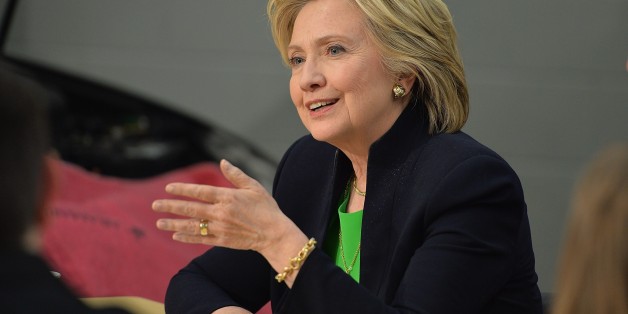
DETROIT (AP) — From the pulpit of an African-American church in Detroit not long ago, Bishop Corletta Vaughn offered a rousing endorsement of Hillary Clinton that went far beyond politics.

With a smiling Clinton sitting a few feet away in the purple-walled Holy Ghost Cathedral, Vaughn said she had seen Clinton “take a licking and keep on ticking.” Alluding to Bill Clinton’s past infidelity, she added: “I’m not talking about politically. I’m talking about as a wife and a mother. That’s when I said: I love that woman. She taught so many of us as women how to stand in the face of adversity.”

During a primary season in which she has faced surprisingly strong competition and been bombarded with criticism of her trustworthiness, Clinton has maintained a strong bond with one significant bloc of Democratic Party voters. Black women, part of President Barack Obama’s winning coalition in 2008 and 2012, have locked arms behind Clinton, hailing her as a Democratic standard-bearer, survivor and friend.

“That determination and strength, particularly has meaning to African-American women,” said Sharon Reed, 60, a community college teacher from North Charleston, South Carolina. “Who has overcome more obstacles and darts and arrows than she has? And she’s still standing and she’s still strong.”

Though the primary contest is not over, Clinton, the former secretary of state, holds a big delegate lead over Vermont Sen. Bernie Sanders and is considered likely to win the Democratic nomination. African-American women have played a big part: About 8 in 10 across all the states where exit polling has been conducted have voted for her, and in some cases support has been above 90 percent.

Clinton has fared less well with other groups, in particular with younger voters and white men, many of whom have preferred Sanders. But, as in past years, black women are demonstrating that they are motivated. So far, they have made up at least a slightly larger share of the electorate than black men in almost all states with significant black populations, and a significantly larger share in seven of those states.

She’ll need those women in November. When Democrat Obama won the past two elections, he counted on black women’s votes, and he got them. In 2008, some 68 percent voted in the general election, and 70 percent came out in 2012. According to exit polling, the vast majority voted for Obama.

Clinton’s campaign has sought to reinforce these bonds. At black churches and businesses, she has stressed her ties to the popular president and touted endorsements from leaders such as Rep. John Lewis of Georgia, a civil rights icon. She has emphasized issues like criminal justice reform and gun control and is campaigning alongside black women who have lost children to gun violence.

“I really got the sense that she could really relate to us, as being mothers and women and daughters,” said Lucy McBath, whose teenage son Jordan Davis was shot and killed at a Jacksonville, Florida, gas station in 2012. Lucy McBath was part of a group of mothers who met with Clinton privately in the fall and has been out campaigning for her.

These efforts have been headed by LaDavia Drane, who joined the campaign last year as director of African-American outreach. She has sought out female pastors like Vaughn for Clinton’s church visits. She organized the meeting between Clinton and the mothers impacted by gun violence. And she has worked to establish grass-roots networks for black women such “Heels for Hillary” in cities around the country.

Drane described Clinton’s connection to mothers, particularly black mothers, as “a secret sauce, it’s a match made in heaven.”

Before black audiences, Clinton appears at ease. At the Detroit church, she opened up about her personal struggles.

“What has always guided me and supported me has been my faith,” she said. She recalled the parable of the prodigal son and seemed to reference her husband, now diligently campaigning for her. “When someone who has disappointed you, who has often disappointed themselves, decides to come home, it is human nature to say you’re not wanted … but that’s not what the father in this parable did.”

Evelyn Simien, a professor at the University of Connecticut who studies black voting patterns, said Clinton’s outreach has been savvy. But she also stressed that black women have long been active Democratic voters and they know Clinton far better than Sanders. She said this year’s support is not just about personal connection, but that “it comes down to politics and the issues.”

Clinton’s close relationships with black women date back to one of her first political mentors, Marian Wright Edelman, the founder of the Children’s Defense Fund. Black women have held top positions with Clinton over the years, including Maggie Williams, who was chief of staff when Clinton was first lady, and Cheryl Mills, chief of staff when she was secretary of state. In the current campaign, black women are in key roles, including senior spokeswoman Karen Finney and senior policy adviser Maya Harris. Strategist Minyon Moore has long served as an outside consultant.

“I feel a kinship to who she is. She knows and understands the battle that we fight every day,” said Ohio Congresswoman Marcia Fudge, a past chairwoman of the Congressional Black Caucus. “She has a special place for us because she really gets it.”

Emily Swanson contributed to this report.

© 2016 The Associated Press. All rights reserved. This material may not be published, broadcast, rewritten or redistributed. Learn more about our Privacy Policy and Terms of Use.

The Way I See It

0

by Hollis Wormsby, Jr.

What Is Our Lack of Faith Killing?

I talked with a Pastor this weekend on what the meaning of Easter was to him. He said that to him Easter was about a renewal of faith. He

went on to say that Christ lives in our lives only through our faith, and that when our faith waivers, we literally kill Christ again and

again. As I thought about what those words meant in terms of a relationship with the Church and Christ, I realized that these are

not the only areas of our lives that a lack of faith can kill.

I want to take one step backwards and remember one other story about faith before I go on to make my point for this week. Many years ago I

was visiting New Pilgrim Baptist Church, where the Pastor at the time was Reverend Smith. On this particular Easter Sunday Reverend Smith

offered a stirring message on what we did and did not have faith in. He noted that we would go to the grocery store and buy a gallon of

milk, and have faith that the expiration day on the milk was real, and that it would be good for as long as the label said. We do this he said, because we have faith in the milkman. He noted that we will get in a car made by General Motors or Toyota or Mercedes or whoever. We don’t know much about the men or the women who made the car, but we have faith that car was made right, and we will get in that car with our loved ones and have faith that the steering wheel will turn the car, the brakes will stop the car, that the car will do what it has been promised to do. To take it a little farther down the road, he even noted that we have faith in the people who make our alcohol and illegal drugs. We have faith that they will give us just enough poison to get that good feeling, but not enough to kill us. He noted that we show our faith in all these things every day, and yet we cannot show faith in the Heavenly Father that created us and gives us

life. Can I get a have mercy please?

Faith is the component inside us that believes in that which we cannot see, or necessarily prove. Faith trumps courage, in that

before I can believe in courage, I also have to have faith that those around me will carry on my cause if I am lost. Who would want to

sacrifice on the battlefield without having faith that their fellow soldiers would carry on towards the cause of sacrifice, and in their

victory give value to the most personal of sacrifices.

Faith is the driver inside each of us that holds on to a dream, and moves selflessly toward its fulfillment, knowing that its fulfillment

may be its only reward. But what about when faith is missing? As Christians we learn that when we lose our faith in Christ, we

contribute to His death. What do we lose when we lose our faith in ourselves, in our families, in our dreams?

I think that just as we can kill Christ with our lack of faith, we can also kill our own dreams, and if you are a parent, in the process

you contribute to the death of your children’s dreams as well. Our faith is amongst our most precious gifts from God. God could easily have

created a form of worship, where the great spirit appeared for us in some meaningful and real way, but He chose not to. He chose a

religion based on faith. He chose a religion that only exists in the hearts of those who have the faith to believe. I think this was done

because the One doing so understood the power of faith so much better than we.

If God in His Glory and His wisdom, chose to build His church on faith, I think it would be wise for us to realize this as the example

He set for us, and to build our lives around faith as well. Or at least that’s the way I see it.

(Hollis Wormsby has served as a featured columnist for the Birmingham Times for more than 20 years. He is the former host of

Talkback on 98.7 KISS FM, and the current host of Real Talk at 3p.m. on Saturday afternoons on 610 AM, where you will find informed

discussion and an opportunity to discuss issues of importance to the African American community here in Birmingham. You can also pick up

Real Talk on the World Wide Web by going to: 610wagg.com and clicking on the Listen Live button.)

Crime Pays

0

By Mahari A. McTier

Governor Robert Bentley has recently proposed the state merge the state’s maximum security prisons, about 14 in all, into six prisons, four of them new. Some lawmakers are opposing the move primarily because Bentley has proposed a one-time exemption to the state’s bid law to allow one company to both design and build the four new prisons. His explanation for this is that having one company design and build the four new prisons would save the state at least a hundred million dollars and would allow the project to move faster.

Something about this smells a little fishy to me. I have never been an advocate for more prisons, but an advocate for more proactive measures that reduce the number of individuals entering our prison system and fair sentencing. Let’s look at the facts.

Approximately 12 percent-13 percent of the American population is African-American, but according to the National Association for the Advancement of Colored People (NAACP), African Americans constitute nearly 1 million of the total 2.3 million incarcerated population. In an August 2013 Sentencing Project report on Racial Disparities in the United States Criminal Justice System submitted to the United Nations, “One of every three black American males born today can expect to go to prison in his lifetime.”

Although a huge disparity still exist as it relates to sentencing for African-Americans compared to other races, enormous legislative strides have been made under President Obama’s administration. I also must give substantial credit to former U.S. Attorney General Eric Holder for his efforts to bring fairness to sentencing.

It’s not often that the federal government relaxes sentences for drug crimes, especially with strong bipartisan support. But that is exactly what happened when President Obama signed the Fair Sentencing Act in 2010, which aims to reduce the disparity in sentencing between crimes involving crack cocaine and powder cocaine. This move, some believe, will address the larger issue of racial disparities in sentencing for drug crimes.

Before the Fair Sentencing Act, the penalty structure established during the so-called “crack epidemic” of the late 1980s, possession of crack carried the same sentence as the possession of a quantity of cocaine that is 100 times larger. The Controlled Substances Act established a minimum mandatory sentence of five years for a first-time trafficking offense involving over five grams of crack, as opposed to 500 grams of powder cocaine. The law imposed the same ratio for larger amounts: a minimum sentence of 10 years for amounts of crack over 50 grams, versus 5 kilograms of cocaine. I’m not saying that this was done with ill intentions to more harshly criminalize those that sold crack compared to those who sold cocaine, but it is ironic that most of the crack was sold and used by African-Americans during this era.

The Fair Sentencing Act amended existing laws by increasing the amounts of crack that trigger these penalties, from five grams to 28 grams for five-year minimum sentences and from 50 grams to 280 grams for 10-year minimum sentences. The act will also eliminate the five-year mandatory minimum prison term for first-time simple possession of crack.

Operating prisons is a billion dollar industry. There have been many forces that have aggressively fought against fairness in sentencing, including big business that is in the business of operating private prisons.

The Bureau of Justice recorded an increase in spending from $9 billion for corrections in 1982 to $65 billion in 2005. Taking police and judicial expenditures into account, the numbers are insane: just over $35 billion in 1982 and just under $200 billion in 2005.

Not only are the numbers of facilities, prisoners and dollars rising exponentially, but the rate of rehabilitation is dismally low and the conditions in prisons remain horrible. A 2006 study by the Commission on Safety and Abuse in America’s Prisons had this to say about the situation:

A privately-run prison system has absolutely no incentive to reduce the rate of incarceration in the U.S., in fact the only reason a private sector even exists is due to the quadrupling of prisoners since 1980.

It’s not just facilities management: weapons contractors, telecom providers and financiers underwriting prison construction are all getting into the booming business of lockdown.

Here’s the problem with reforming prison sentencing. The upper class has the wherewithal to profit from the incarceration of the lower class, while the middle class supports any and all initiatives to increase funding for prisons, police, and correctional facilities because they are afraid of what might happen if convicted criminals are released early.

President Obama has received a lot of criticism from African-Americans about what he has done for black people. His efforts in this space, although long term will bring fairness to many African-Americans, will be good for all Americans. Great job Mr. President. It’s sad, but prison management is big business for the private sector and since the legal system, politicians, and big business are deeply intertwined I am doubtful that we will see drastic changes in current statistics.

I hope Governor Bentley’s motives are genuine in the proposed construction of four new prisons. I think I am leaning toward skeptical….

(Mahari A. McTier is a Financial Advisor with Tier 1 Advisors, LLC and can be contacted at 205-379-1052 or mahari@tier1advisorsllc.com)

Power Up: It’s a Mother-Daughter Thing!

0

 I had the pleasure of serving as a guest speaker for the Power Up: It’s a Mother-Daughter Thing! on the panel for “Finding Success in the Construction Industry.” The program was held on March 22. Women from all facets of the construction industry discussed career opportunities in today’s construction industry and explored central questions about opportunities in the workplace. I was invited to share tips for success within the industry; share my personal journey and offer any other interesting information, which might spark the interests of these young ladies and their mothers during the panel discussion.

 Topics included finding success, sharing greatest lessons learned, mentoring and establishing, building and utilizing professional relationships. As panelists we were asked to answer questions: 1. What was your entry point into the construction industry? or  How did you choose this career path?  2. Please share with us the greatest lessons you’ve learned as a leader. 3. Share empowering opportunities, positive takeaways and recommendations to the audience on finding success in a male dominated industry. Did you go to college to pursue this career pathway? 4. What are the obstacles girls can expect while pursuing this career pathway? 5. What has working in this industry taught you about leadership? 6. How have you evolved as a leader? What insight have you gained about your talents and strengths? 7. As a leader, what talents or strengths do you rely on most in your daily life? 8. As a successful woman in this industry, describe one of your most successful moments?  9. Is having a mentor important and if so why? 10. Who or what are some of your most important resources for guidance, information etc., in your profession? 11. What inspired you to choose your career path and how will you continue to use that inspiration? 12. What is the single most important piece of advice you would share with a young lady interested in this industry?

 This panel discussion had a significant impact on me. It was a transformative experience for me, as well as the students who attended. We must continue to create opportunities for people to share their stories with the next generation. Everyone can contribute. Our young ladies and men need more mentors to answer these questions. If you are a woman or man that can share your story with the next generation, especially in the under served area, I encourage you to do so. Often we go through our careers going through the motions of life. We don’t even realize how valuable our stories are to share with the next generation. If you know a young person or young adult with whom  you can share the answers to the above questions, I encourage you to not underestimate the power of your story. Share it even if a young person doesn’t ask. They may not know to ask.

 In order to achieve sustainability, we must share our stories to leave the world better than the way we found it.

L’Tryce Slade

www.sladellc.com

Lslade@sladellc.com

https://www.facebook.com/pages/Slade-Land-Use-Environmental-and-Transportation-Planning-LLC/246496148701

Balancing Risk and Reward in a Volatile Market

0

“If you take no risks, you will suffer no defeats. But if you take no risks, you win no victories.” These words from former President Richard Nixon are as applicable to investors as to politicians.

Investors, especially beginners, sometimes forget the fundamental relationship between risk and reward. In developing an investment strategy, one must begin with the realization that it is impossible to secure a return on any investment without incurring some degree of risk.

Balancing risk and reward is one of the most important aspects of managing investments. But to decide how much risk you are willing to take, you must be familiar with some of the major types of risk.

When most people think of investment risk, they focus on price fluctuations in the open market. This is known as market risk or volatility—the risk of a downturn in prices.This is prevalent in today’s financial markets.

There are, however, at least three other risks—inflationary, credit, and interest-rate—that investors should keep in mind. Inflationary risk is usually associated with rising prices that cause the purchasing power of the dollar to decline.

Credit risk is the potential for nonpayment or default on fixed-income investments, such as bonds. Interest-rate risk is the impact of interest rate changes on the value of an investment.

One of the first steps you should take before investing is to establish your tolerance for risk. That is, how much risk are you willing to take for an expected return? Many experts use the “good-night’s-sleep” test as a basis for establishing risk tolerance.

Using this approach, the general rule is that you should not wake up in the middle of the night worrying about your investment portfolio. If your investments cause you to lose sleep, you need to divest yourself of the items that are creating anxiety.

Keep in mind you can reduce your investment risk through diversification. This means not putting all your investment eggs in one basket.

While there is no single correct amount of risk, younger investors can afford higher levels of risk than older ones. They have more time to recover from losses or other adversity.

And as people age, their tolerance for risk tends to diminish. If you are close to retirement, as a prudent investor, you should not take large risks with your retirement funds.

Wayne Curtis, former superintendent of Alabama banks, is a retired Troy University business school dean. Email him at wccurtis39@gmail.com.

Keeping an Eye on Safety

0

By Samuetta Hill Drew

A couple of weeks ago, the safety article addressed a three part series on the creation of safety plans to fit the needs unique to your family and situation. The first segment in the series provided details on the “how to” of developing an Emergency Family Communication Plan. This week’s focus will be the formation of a Fire Escape Plan.

Your ability to get out of your home depends on advance warning from smoke alarms and advance planning. So let’s begin with the basics, which are making sure you have operable fire alarms installed in or near all your bedrooms, as well as on each level of any multi-level home. An unfinished basement should be included as one of your levels, if applicable. Interconnected smoke alarm system throughout your home provides additional safety because they will all sound when one alarm sounds.

Next gather all family members together and start making your Fire Escape Plan. Draw a map of your home showing all the different doors and windows. The map should have markings denoting how to exit each room. Each family member should have a copy of the plan in their bedroom. Visit each room to determine two ways to exit. If your doors or windows have security bars on them, make sure they have emergency release devices inside so they can be opened immediately. Emergency release devises will not compromise your security, but it will increase your ability to quickly escape a room safely. Pet owners should make provisions in the plan for your pets.

Choose an outside meeting location in front of your home. It should be a safe distance from the home. Make sure to mark the meeting location on your escape plan.

Check to make sure your house number can be easily seen from the street. If not, paint it on the curb or install house numbers so the emergency response unit can locate your home.

It has been reported that children often can’t hear fire alarms, so someone should be assigned to each child in your home in case of a fire. Someone should also be assigned to any infants, elderly and/or disabled family member with mobility issues. Have a back-up person assigned to each of these individuals just in case the designee is not at home.

Test your plan at least twice a year, both during the day and night. Be prepared to put your plan into action if the smoke detector alarms. Once out, do not reenter for any reason. Contact the fireman if someone is missing. They are trained to rescue individuals.

When you have houseguest, share the plan with them. If your children attend a “sleepover” ask the parents about their fire escape plan and share this information with your child.

At the end of the day, you want to be fully prepared with a plan and practice so you and your family can Keep an Eye on Safety in case of a fire.

ABIDE

0

By Minister Henreitta Tripp

 You are no doubt thinking what do I mean by abide. Well, if you are thinking about the word “abide”, I must inform you that the word has a profound meaning in many ways, but the key to this word is abiding in Jesus, and the work He has called those who trust in Him to do. Many Christians start sincerely reading, studying and meditating on the Word of God, which is the Holy Bible, just as God told Joshua to do in Joshua 1:8 , but they soon drift away. You may be thinking why would one regress from studying the Word of God? Well, one main reason is they do not get instant gratification. God has a plan and it is a continuous daily walk with Him, as He tells His followers in Luke 9:23.

 You may read a most passionate and intimate Scripture in John 15:4, that speaks to all born again believers that if we abide, which means continue faithfully in obeying what Jesus says for His people to do, He will reward you in every area of your life.  You do not get weary and stop as though you know when your heart is right, because you do not. Only the Lord can judge your heart.  If you are obeying because you want a reward, you will receive nothing from the Lord.  I obey because I love the Lord and I trust Him; He knows my circumstances, and He will reward. AMEN!

 Scripture tells you to “Trust in the Lord with all your heart, and lean not to your own understanding, and He will direct your path”, [Proverbs 3:5-6]. AMEN!

 www.thealmightyeyes.com