Home Blog Page 1247

AG ANNOUNCES THAT COURT OF CRIMINAL APPEALS UPHOLDS CHAMBERS COUNTY MURDER CONVICTION

0
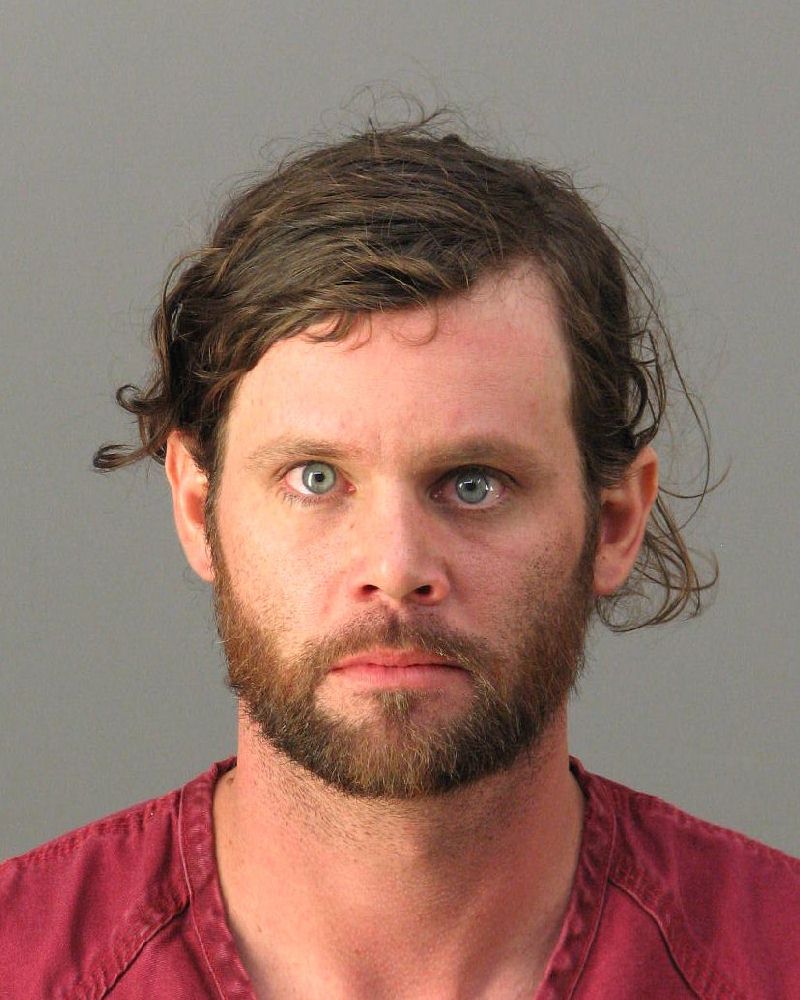
(MONTGOMERY)— Attorney General Luther Strange announced that the Alabama Court of Criminal Appeals on Friday upheld the murder conviction of Aaron Briscoe.  Briscoe, 28, of Valley, was convicted in the Chambers County Circuit Court in November of 2014 for the murder of Gerald Todd.
            Evidence presented at trial showed that on the evening of December 8, 2011, Briscoe discovered that his home had been burglarized.  After obtaining a description of the suspect from his neighbors, Briscoe concluded that Gerald Todd was the person who had burglarized his home, and he reported the matter to the police. Later that evening, Briscoe traveled to various locations attempting to find Todd, and eventually encountered Todd walking down the street.  A man who was giving Briscoe a ride, Kenneth Elder, testified that the two men appeared to be smiling and talking as they walked towards Elder’s vehicle. However, as they got closer, Elder saw Briscoe’s arm go up, heard a gunshot and saw Todd fall. Afterwards, Briscoe got back into the vehicle with Elder and the two men sped away. Elder testified that Briscoe was crying and hysterical and stated, ” I told these people I don’t play; don’t mess with me.” Todd later died as a result of the gunshot wound in his head.
            The case was prosecuted at trial by Chambers County District Attorney E. Paul Jones’ office.  Briscoe was sentenced to 55 years in prison and subsequently sought to have his conviction reversed on appeal.  

The Attorney General’s Criminal Appeals Division handled the case during the appeals process, arguing for the Alabama Court of Criminal Appeals to affirm the conviction. The Court did so in a decision issued on Friday, August 7.

            Attorney General Strange commended Assistant Attorney General William Dill of the Attorney General’s Criminal Appeals Division for his successful work in this case.

AUTHOR GARY HILL TELLS A HARD CHARGING TALE OF LOVE, GREED AND DEATH IN NEW BOOK, “BAKER’S WILL”

0

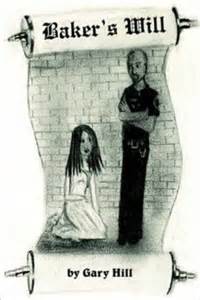
Baker's Will by Gary Hill

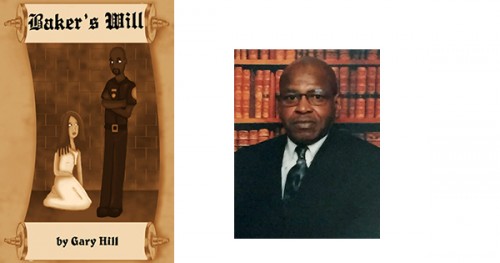
Bookcover and author, Gary Hill

Nationwide (BlackNews.com) — Bakers Will by Gary Hill is a hard charging tale of love, greed and death. It was conceived in the minds of two old men; one black, one white, one a former slave, one a former slaveowner; each stepped in his own past, each unwilling to accept the possibilities of the future; both stubborn as mules. One hundred years later, death would take center stage among the living and hell would be waiting in the wings.

The book’s main character, Michael Evans, is a former heavyweight boxing champion turned New York City police detective who finds himself embedded in a web of violence and deceit. His family is murdered and he nearly loses his own life to the wrath of a 100-year old will.

Laura Sanders is a lawyer fresh out of law school. She had always been unlucky at love until she met Michael Evans. Together, they would experience a world gone mad and death would land on their doorstep. But true love has its own reward and out of their collective despair would come a new beginning with new hopes and new dreams.

Elizabeth Baker, on the other hand, is the Matriarch of the Baker Clan. Her hatred of Michael Evans and the threat of change would prove to be her lifes greatest challenge. The legacies of the past and the realities of the future was too much for her and in the end, she lost it all.


About the Book:
Baker’s Will
By Gary Hill
ISBN: 978-1942901310
Publisher: Green Ivy
Available on Amazon.com and BarnesandNoble.com as a hardcover, softcover and e-book.


-END-

Police Assault Investigation

0

The Birmingham Police Department reports that detectives are conducting an assault investigation. The incident occurred on Friday August 7, 2015 at 9150 Parkway East.

The victim has been identified as: Police Detective,

W/M, 6 Year Veteran, Birmingham, AL

On Friday August 7, 2015 at approximately 11:05 a.m., a Birmingham Police Detective conducted a traffic stop on a suspicious vehicle; the vehicle was occupied by at least two individuals. The traffic stop escalated into a physical altercation which left the Detective with injuries that required medical attention at the scene by BFRS and immediate follow-up treatment at UAB Hospital; the Detective is in stable condition and will admitted for observation. Our preliminary investigation of this assault reveals the following: during the traffic stop there was a verbal exchange between the Detective and one of the occupants; as a result of the verbal exchange the individual felt compelled to exit the vehicle; the situation continued to escalate when it became a physical altercation between the Detective and this individual. At the end of the assault on the Detective, both occupants of the vehicle fled the scene in the vehicle they were occupying. Officers responded to the scene to assist the Detective, saturated the area of the assault location, located the vehicle, located the two suspects, and took both B\M suspects into custody. The suspects were transported to the BPD HQ to be interviewed. The investigating Detective will present the case to the Jefferson County DA’s Office.

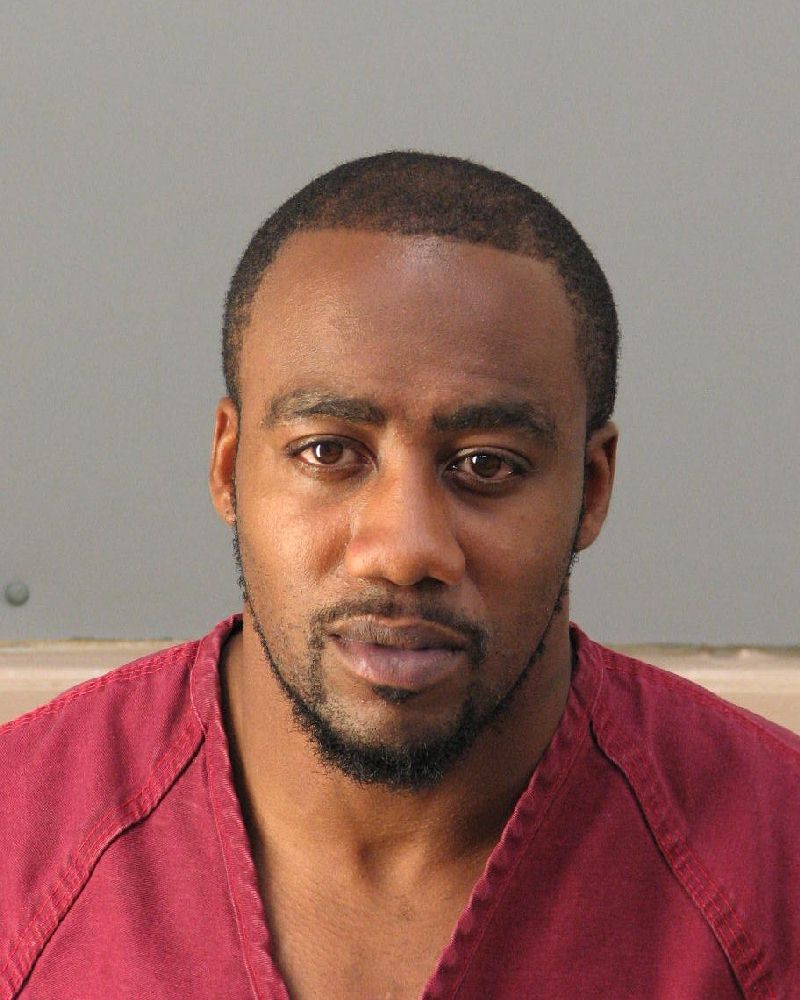
Update: Janard Cunningham B/M 34 years of age of CenterPoint has been charged with Attempted Murder and is being held in the Jefferson County Jail on no bond. The Detective has been released from the hospital and is resting at home.

Janard Cunningham

   If there is anyone who has additional information pertaining to the case, they are encouraged to contact the B.P.D. Homicide Unit @ 254-1764 or Crime Stoppers @ 254-7777.            

Update to Highway 280 Fatal Hit and Run Accident

0

Investigators have obtained warrants against Michael Terry Canty III W/M 31 years old of Tuscaloosa in connection with this accident.  Canty is charged with Felony Leaving the Scene of an Accident which has a $100,000 bond and Misdemeanor Criminal Tampering with a $20,000 bond.  Canty is currently in the Shelby County Jail.  The victim has been identified as Margaret Allison Beard Elliot W/F 49 years of age of Birmingham.

STATEMENT FROM THE FAMILY OF DR. AMELIA BOYNTON ROBINSON

0
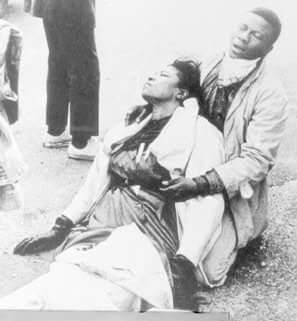
Boynton at Edmund Pettus Bridge on March 7, 1965 - Bloody Sunday
Boynton unconscious on Edmund Pettus Bridge on March 7, 1965, “Bloody Sunday” Young man assisting her is 17-year-old Joe Jones of Selma

The Family of Dr. Amelia Boynton Robinson makes the following statement regarding their Loved One, Dr. Amelia Boynton Robinson:
“Last month, Dr. Amelia Boynton Robinson was hospitalized after suffering a massive stroke.  Presently, she is in stable, but critical condition.  Her physicians, nurses and other health care providers are working around the clock to give her the best of care and the required medical attention she needs. The Family asks that you continue to lift her up in your prayers for recovery, and to lift up the Family in your prayers as we bind together in our Loved One’s best interest.  We also ask that you respect our wishes for privacy regarding visitation while Dr. Boynton Robinson is undergoing all available treatment to overcome her condition.  Thank you.  The Family of Dr. Amelia Boynton Robinson.”
Dr. Boynton Robinson’s medical and other expenses are tremendous.  Those who wish to assist the Family with these mounting costs should contact the following persons:  Dr. Boynton Robinson’s Probate Court-appointed Guardian/Conservator and daughter, Mrs. Germaine A. Bowser at (267) 252-7750, and/or her son and Probate Court-appointed Joint Guardian, Atty. Bruce Boynton at (334) 349-3694.
A native of Savannah, Amelia’s parents were George and Anna Hicks Platts, with roots in South Carolina.  She is the grandniece of one of America’s first African-American Congressmen, the Honorable Robert Smalls of South Carolina, and second cousin to the Reverend Frederick Eikerenkoetter (best known as Rev. Ike), formerly of New York.
Amelia is a 1927 graduate of then-Tuskegee Normal and Industrial Institute, under the leadership of Tuskegee’s second president, Dr. Robert Russa Moton.  She is the second oldest living alum of the historic institution.
She and her former schoolmate at Tuskegee, Mr. S.W. “Bill” Boynton, worked together as county agents for the United States Department of Agriculture in Selma, Dallas County, Alabama and were later married. They became known as “Mr. and Mrs. Civil Rights” for their work to uplift Blacks and poor people in the area.  Amelia was the first woman in the country to serve as a county agent with the USDA.  She and Bill had one son, Bruce Carver Boynton, an attorney, whose godfather was Dr. George Washington Carver.
The Boynton’s were the first blacks in Alabama to own an insurance company, as well as a real-estate and employment agency.
Amelia became a registered voter in Alabama 83 years ago in 1932.  For most of those years, she has worked to make life better for the down-trodden, including her work in helping to initiate the federal food program for low-income children.
In 1964, she was the first black woman from Alabama to seek a seat in the United States Congress, and the first woman, black or white, to run on the Democratic ticket in the state.
A resident of Tuskegee, Alabama since 1976, Amelia’s role in the civil and voting rights movement in Selma, including a reenactment of “Bloody Sunday,” was portrayed in the Academy Award-winning movie, “Selma,” which premiered on January 9, 2015.
A monument now stands at the foot of the Edmund Pettus Bridge, commemorating and memorializing Amelia’s bravery and hard work in Dallas County, Alabama, thanks to Southern Christian Leadership Conference W.O.M.E.N. of Atlanta and the National Voting Rights Museum and Institute of Selma.  An author and historian, Boynton Robinson has given presentations all over the world.  Her book, Bridge Across Jordan, has published in five languages.
In January, Amelia attended the 2015 State of the Union Address in Washington, D.C., where she met with President Barack Obama.  She has been endorsed as a nominee by the National Nominating Committee launched in Tuskegee for the 2015 Presidential Medal of Freedom (selection pending), and in March, she journeyed across the Edmund Pettus Bridge during Selma 50th, hand-in-hand with the President of the United States.  To show how significant and impactful the experience is to him, President Obama chose a photograph taken of the event with Mrs. Boynton Robinson holding his left hand and Congressman John Lewis holding his right hand as his Twitter page profile picture!
On May 2, 2015, Dr. Boynton Robinson received her first Honorary Doctorate Degree in Humane Letters from a Historically Black College or University, Paul Quinn College of Dallas, Texas, honoring her Lifetime of Work Committed to Voting and Civil Rights.
During the Spring Commencement at Tuskegee University on May 9, 2015, this centenarian had the distinct honor of meeting with the First Lady of the United States, Michelle Obama, who gave a very powerful Commencement address to the graduating class.
In Houston, Texas, during its 2015 National Convention on July 24, 2015, Delta Sigma Theta Sorority, Incorporated paid homage to such a Distinguished Legend as Amelia Boynton Robinson with its highest and most esteemed honor, the Mary Church Terrell Award.
The Congressional Black Caucus has selected Dr. Boynton Robinson to receive its Harold Washington Phoenix Award at its Annual CBC Awards Gala on September 19, 2015 in the Nation’s Capitol.

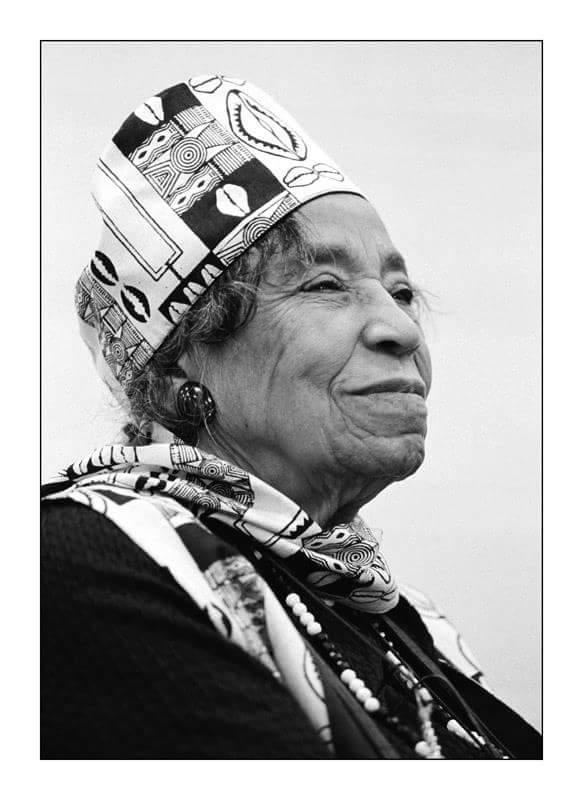
Dr Amelia Boynton Robinson - Queen Mother looking like a Queen
Mrs. Amelia Boynton Robinson at 100 years of age in 2011 Photo Credit: Jim Gavenus


-30 –
Submitted on behalf of the Family by
Atty. Lateefah Muhammad
Tuskegee Institute, Alabama

REMARKS BY THE PRESIDENT ON THE VOTING RIGHTS ACT

0

South Court Auditorium

2:27 P.M. EDT

     THE PRESIDENT:  Thank you, everybody.  (Applause.)  Thank you.  Thank you so much.  Everybody have a seat.  Thank you.

     First of all, I love John Lewis.  (Applause.)  And I don’t know where he gets the energy, where he gets the drive, what stores of passion he’s still able to muster after fighting the good fight for so long.  I do know that many of us would not be here in this auditorium today had it not been for the heroism and dedication of Congressman John Lewis.  So I’m so appreciative of him.  (Applause.)

     I’m proud to be joined by our Attorney General.  Loretta Lynch has already shown herself to be a champion on behalf of not just the powerful but the powerless, and is, every single day, along with her team, fighting to make sure that we are all equal in the eyes of the law, and that everybody is getting a fair shot.  And so we are very grateful for her presence here today.  (Applause.)

     And I want to thank all of our partners, all the organizations, all the leadership from around the country that is represented in this auditorium but also are listening over this live feed as we reaffirm our commitment to one of the most fundamental, sacred rights of any democracy — that is the right to vote.

     As John indicated, 50 years ago today, President Johnson signed the Voting Rights Act into law to protect this precious right.  It broke down legal barriers at the state level and at the local level that were keeping African Americans from exercising their constitutional right to vote.  And all of us have a great debt to not just John Lewis, but the thousands — many of them unnamed — who were courageous enough to walk up and try to register time and time again, that were threatened because of their efforts to register — sharecroppers and maids and ordinary folks.  Had it not been for them awakening the conscience of a nation, the President could not have mustered the political support that was required to ultimately get this seminal law passed.

     We had the opportunity to honor some of the sacrifices that were made earlier this year in Selma, along with 100 members of Congress — Democratic and Republican members.  It was heartening to see the bipartisan attendance.  It signified that in the abstract, at least, everybody today believes in the right to vote.  Conceptually, everybody is in favor of the right to vote. (Laughter and applause.)  You will not hear anybody defend the notion that the law can discriminate against persons because of their color, or their faith, or their ethnicity, when it comes to going to cast a ballot.  That’s huge progress, a normative shift in how we think about our democracy.  Everybody in theory is supposed to be included.

But part of the reason we’re here today, part of the reason it’s so important for us to focus attention on this right is because in practice, we’ve still got problems.

     On the ground, there are still too many ways in which people are discouraged from voting.  Some of the protections that had been enshrined in the Voting Rights Act itself have been weakened as a consequence of court decisions and interpretations of the law.  State legislatures have instituted procedures and practices that, although on the surface may appear neutral, have the effect of discouraging people from voting, may have a disproportional effect on certain kinds of folks voting.

And if, in fact, those practices, those trends, those tendencies are allowed to continue unanswered, then over time the hard-won battles of 50 years ago erode, and our democracy erodes. And that means that the decisions that are made in the corridors of power all across this country begin to reflect the interests of the few, instead of the interests of the many.

     So we’ve got serious business to attend to here.  One order of business is for our Congress to pass an updated version of the Voting Rights Act that would correct some of the problems that have arisen.  (Applause.)

And I said when I was in Selma that we’re glad you’re here, members of Congress, but we’ll be even more glad, we’ll be in an even more celebratory mood, if you go back to Washington and reaffirm America’s commitment to what was fought for here at this bridge.

Now, so far, that hasn’t happened.  John Lewis is ready to do it.  There’s legislation pending.  There are people of goodwill on both sides of the aisle who are prepared to move it. But it keeps on slipping as a priority.  Part of the reason we’re here is to reaffirm to members of Congress, this has to be a priority.  (Applause.)  If this isn’t working then nothing is working.  We’ve got to get it done.  (Applause.)

     At the state levels, we’ve got some outstanding members of state legislatures — California, Florida — who have been championing mechanisms to get more people voting:  Early voting, online registration.  But sadly, too many states are making it harder for folks to vote — instituting photo ID laws that on the surface sound good; if you poll the average American, they’ll say, yes, you have to show your photo ID.  But in practice, it turns out that for seniors and for poorer folks, that’s not always easy to do.  And by the way, it doesn’t actually address a real problem because there are almost no instances of people going to vote in somebody else’s name.  (Applause.)  It’s just not a — it turns out it’s just not a common crime.  (Laughter.)

     Folks, might think about shoplifting.  Attorney General, you know more about the crime statistics than I do, but I am certain, because we’ve actually looked at the data on this, that almost nobody wakes up saying, I’m going to go vote in somebody else’s name.  (Laughter.)  Doesn’t happen.  So the only reason to pass this law, despite the reasonableness of how it sounds, is to make it harder for folks to vote.

     You’ve got state legislatures that are rolling back early voting.  I don’t understand why anybody would be opposed to spreading out voting so that people can arrange to vote depending on their schedule.  Because it’s hard — if you are working the midnight shift, and got to get your kid to school, and had to travel by bus, and you’re a single mom — it may be difficult for you to be able to vote precisely in that window that’s provided. And there’s no evidence that, as a consequence of early voting, that has increased fraud; that people somehow have become less committed to democracy; they don’t feel that same sense of civic pride as they do if there’s just one day of voting.  There’s no evidence of that.  The reason to roll back early voting is because you want to make it harder for folks to vote.

So, in theory everybody is in favor of the right to vote.  In practice, we have state legislatures that are deliberately trying to make it harder for people to vote.

And some of them, frankly, are not that shy about saying so.  (Laughter.)  Think about that.  Think about that.  How can you rationalize making it harder for people to vote?  How can you rationalize penalizing people because they don’t have a lot of money not being able to vote?  That’s contrary to who we are.  That’s not what we believe.  That’s not what John Lewis fought for.  In the United States of America, we should have no patience and no tolerance for laws that aim at disenfranchising our fellow citizens.

So we got to keep pushing.  At the federal level, we need a new Voting Rights Act passed.  At the state and local levels, we’ve got to fight back against efforts to make it harder to vote and we got to embrace those legislators that are prepared to make it easier to vote.

But there’s one last aspect to this, and that is the job of citizens in actually exercising the franchise.  This isn’t always a popular thing to say in front of progressive groups — everybody is fired up, and rightly so.  But the reason that the voting rate in the last midterm election was 30-something percent is not attributable to a photo I.D. law.  The fact of the matter is that far more people disenfranchise themselves than any law does by not participating, by not getting involved.

So, yes, we have to be vigilant in pushing back against laws that seek to disenfranchise people.  Yes, we should be fighting back against laws, for example, that say ex-felons, no matter how long they’ve been living a correct life, no matter how well they’ve paid their dues, that they can never vote again in that state.  There are all kinds of battles we have to fight.  But we miss the forest for the trees if we don’t also recognize that huge chunks of us, citizens, just give away our power.  We’d rather complain than do something about it.  We won’t vote, and then we’ll talk about the terrible political process that isn’t doing anything.

And I like barber shop talk.  (Laughter.)  I like grumbling and complaining.  I can’t always do it in public.  (Laughter.)  But what I know is it doesn’t get anything accomplished.  So the groups that are here today, one of the things that we’re looking forward to is how do we mobilize, how do we galvanize, how do we get people focused not only on laws but also on our habits — our habits of citizenship?  How do we instill in people a sense of why this is so critically important?

And that is why we are proclaiming September 22nd, National Voter Registration Day.  (Applause.)  September 22nd.  And we’re going to have groups fanning out all across the country.  And on September 22nd, we’re going to try to get everybody to register to vote.  We probably won’t get everybody, but we’re going to try.

     I want to thank so many of you who are involved in this, including the NAACP, which started their Journey to Justice — a march from Selma to Washington earlier this week — because you’re shining a light on this issue.  And I want to make sure that we are fully mobilized across the country on September 22nd.

     The bottom line is everybody here has a part to play.  Members of Congress need to do the right thing.  State legislators and governors, they need to do the right thing.  Businesses — make it easier for your employees to vote.  Do the right thing.  Universities, other civic institutions — help register people to vote; provide civic education.  Do the right thing.

Most of all, citizens — seize the power that you have.  Make this democracy work.  Do not succumb to cynicism.  Heroic things happen when people get involved.  Heroic things happen when a young man without any official title joins up with a bunch of other young and not-so-young people of every color and every persuasion and are willing to march across a bridge.  That’s the power that is in all of us.  We got to take advantage of it.

     Thank you very much, everybody.  God bless you.  (Applause.)

                             END           2:46 P.M. EDT

ALL LIVES MATTER

0
A1 LEAD STORY Memphis
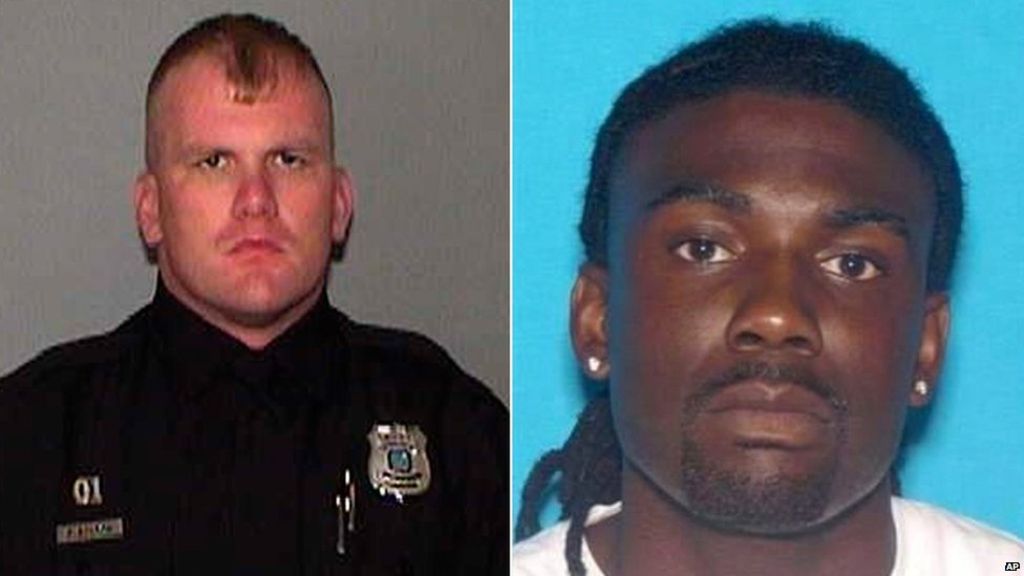
photo left tonight:Sean Bolton and Tremaine Wilbourn (right)

By ADRIAN SAINZ, Associated Press

MEMPHIS, Tenn. — The man accused of killing a Memphis police officer had a few words for the department’s director when he turned himself in, ending a manhunt that dragged on for two days.
“I want you to know that one, I’m not a cold-blooded killer,” Tremaine Wilbourn told the director, who said he spoke briefly with the suspect. “And two, I am not a coward.”
Memphis Police Director Toney Armstrong had used that word to describe Wilbourn, accused of killing officer Sean Bolton when he interrupted a drug deal on Saturday night. He evaded police for two days, despite a warrant for his arrest on a charge of first-degree murder and a growing reward for his capture.
Wilbourn turned himself in to federal marshals just after 4:50 p.m. Monday. His family and his lawyer accompanied him there, officials said.
“I think he felt the walls closing in,” Armstrong said.
Shelby County court records posted online show Wilbourn has been officially charged in the shooting and was being held on $9 million bond. Wilbourn had a court appearance scheduled for Wednesday.
Wilbourn was a passenger in a 2002 Mercedes Benz that was parked illegally in a southeast Memphis neighborhood Saturday night, police said. Bolton approached the car and Wilbourn got out, confronted Bolton, and they got into a physical struggle, police said. Wilbourn took out a gun and fired, striking Bolton multiple times. The officer died at a hospital.
Wilbourn and the driver of the Mercedes ran away, and a neighbor used Bolton’s radio to notify police about the shooting.
The driver later turned himself in to police, and was released without charges.
Armstrong said Bolton had interrupted a drug deal, and officers found about 1.7 grams of marijuana in the car.
Wilbourn was on probation for an armed bank robbery. Wilbourn’s lawyer argued during sentencing that he was persuaded by his uncle to join the robbery to help him with his finances and “he was awaiting news regarding a possible college scholarship based on his athletic ability.”
Wilbourn was sentenced to more than 10 years in federal prison and released on probation in July 2014. He used marijuana in December and was ordered to undergo mental health treatment July 7, according to federal court documents released Monday. It’s not clear whether he was ever evaluated.
“All the signs were there, that clearly demonstrated he was a violent individual,” Armstrong said at Monday’s news conference.
Bolton, who was white, was a 33-year-old Marine who served in Iraq. He was the third Memphis officer to be fatally shot in slightly more than four years. Wilbourn, who goes by the names Tremaine Martin and “T-Streetz,” is a Black man who stands over 6-feet-2 and weighs 222 pounds.
Residents along the street where Bolton was gunned down said their block has been for years a quiet oasis amid the troubled neighborhood around them, where gunshots cut through the night and people are afraid to go outside after dark.
Melvin Norment, whose family has lived on the block for 25 years, said he saw the Mercedes on Saturday night and knew it didn’t belong to his neighbors.
“It’s not a car I’ve seen before,” he said. “Because I sit outside all the time. I knew it wasn’t anybody’s car from around here.”
Just a few blocks away — at a busy intersection with fast-food restaurants, apartment complexes and an empty lot — police have for years battled drugs and crime in this city long listed among America’s most violent.
On Monday morning, yellow crime tape rested in a bundle along the curb on Summerlane Avenue. A vase with yellow, red and white flowers and a white stuffed unicorn had been placed at the scene as a make-shift memorial to the fallen officer.
The street is lined with small, mostly well-kept homes, and neighbors say it has been insulated from the crime erupting around them.
Phillip Price said he lives in Cottonwood Apartments, a complex located a few blocks from the shooting.
“We hear gunshots all the time,” he said. “There’s a lot of people here that carry weapons, that shouldn’t be carrying weapons. Some of them are trigger happy. We have seven, eight different gangs in this area.”
Michael Williams lives about three blocks from where Bolton was shot. Williams — a police officer, candidate for mayor and president of the Memphis Police Association — said he was in bed two weeks ago and heard 42 gunshots.
When they bought their house eight years ago, “you could be in your front yard and not be concerned, you didn’t hear gunshots in the middle of the night, we weren’t concerned about going to the gas station at night,” he said.
But they’ve watched the neighborhood deteriorate, he said. Homeowners died off or moved to the suburbs, and the renters that replaced them didn’t take the same sort of pride in keeping the streets safe and clean, he said.
“I even told my wife, ‘it’s looking like it’s time to move on,’” he said.
Meanwhile, the number of police officers has dwindled from more than 2,500 in the city to around 2,000, Williams said. Budget cuts dug into officers’ pensions and benefits, prompting experienced officers to flee to other departments, in cities with better pay and lower crime rates.
Rank and file officers, he said, are disgruntled and burned out.
Williams believes the most recent shooting can be traced, at least to some degree, to the fury over police treatment of African-Americans in incidents across the country. Williams estimates that the Memphis police force is around 60 percent African-American, roughly reflective of the city’s overall population.
“I think officers are becoming hesitant to react,” Williams said. “They don’t want to end up in court, or plastered all over the national news.”
Twenty-nine-year-old Tremaine Wilbourn appeared via video link from jail Wednesday morning. He is charged with first-degree murder in the death of 33-year-old Officer Sean Bolton.
In the Shelby County General Sessions courtroom, Judge L. Lambert Ryan asked Wilbourn whether he had a lawyer. Wilbourn answered that he did not.
Ryan also asked whether Wilbourn has a weapons permit, and he again said no.
Ryan scheduled his next hearing for Aug. 12.
Court records initially showed that Wilbourn was being held on a $9 million bond, but Ryan said in court that the amount is $10 million.

Sandra Bland’s Life Mattered: Transforming our Criminal Justice System Now

0

Marc H. Morial
President and CEO
National Urban League 

“Many people see this situation escalating, and I think it shows the frustration that many minority communities feel when they feel that, you know, maybe it wouldn’t have escalated in a different community. I hope that that can bring this situation to light as well, so that people understand the frustration that many minority members feel when they’re stopped by the police.” – United States Attorney General Loretta Lynch, July 2015
 

For many of us, it was with a sickening sense of familiarity that we watched the video recording of the violation of the welfare and rights of yet another person of color at the hands of law enforcement. Unfolding right before our very eyes, we witnessed as another routine traffic stop would come to a tragic and fatal end.
 
Two days before authorities would discover Sandra Bland’s lifeless body in her Texas jail cell, the 28-year-old called a friend after her first court appearance and left a 22-second voicemail asking, “How did switching lanes with no signal turn into all of this? I don’t even know.” The details of her arrest and her untimely death have left her family, friends, and those concerned about the treatment of people of color in our nation’s criminal justice system, wondering the same: how could a traffic stop could “turn into all of this?”
 
On Friday, July 10, Bland was pulled over by state trooper Brian Encinia for the minor traffic violation. As seen on the officer’s dashboard camera video, Encinia ordered Bland to step out of her car after she refused his order to put out her cigarette. The confrontation between the two continued to escalate as Encinia attempted to pull Bland out of her car and then threatened to use his taser gun on her. The remainder of the confrontation, and her eventual arrest, is not caught on camera, but we can hear her screaming during the arrest that the trooper is about to break her wrist and that he has slammed her head into the ground. She was taken to the Waller County jail on a charge of assaulting a public servant during a traffic stop.
Three days later, on Monday, July 13, Bland was discovered dead in her jail cell after allegedly hanging herself with a garbage bag. A medical examiner has ruled the death suicide by hanging, but her family and protestors are disputing the autopsy results. Bland’s relatives have ordered a private autopsy and Waller County District Attorney Elton Mathis has opened up a probe into Bland’s death and has said that his office will treat her case like a murder investigation.
 
We don’t yet know how Sandra Bland died in her jail cell, but the video of her arrest is cause enough for grave concern. And for those committed to reforming our nation’s broken criminal justice system, it is an urgent call for action. As the litany of names of unarmed Black and Brown men and women brutalized and killed by law enforcement multiplies, so does the skepticism and distrust so many feel for a system that has proven time and again to be stacked against them and their communities at every level of justice.
 
Encinia’s behavior at the traffic stop was incendiary, unjustified and beyond unprofessional. The Texas Department of Public Safety must not tolerate this disrespectful and provocative method of policing from Encinia—or any officer. Officers are supposed to be trained to de-escalate tense situations, not escalate them.
 
We cannot limit our concern and anger to motionless outrage. While we mourn the loss of countless victims of police violence and injustice, we must be loud and engaged advocates for the sort of change that will save lives and rebuild that much-needed trust between law enforcement and all communities entrusted to their care and protection. Attorney General Loretta Lynch has expressed her hope that the tragic loss of Sandra Bland will galvanize more law enforcement departments to institute de-escalation training. This is the kind of training that could have saved Bland’s life.
 
We reiterate our call ­ as we have in the wake of far too many incidents of police violence ­ for the comprehensive retraining of all police officers, the review and strengthening of police hiring standards and the widespread use of body and dashboard cameras. We will continue to hold law enforcement accountable when it fails to treat all citizens fairly and with dignity. We will work to bridge the widespread and dangerous distrust between law enforcement and too many communities of color. And we will dedicate ourselves to this mission for our nation’s sake, for Bland and for the innumerable others taken by police violence that are no longer here to fight for us or with us.


###


Former Birmingham Civil Rights Institute Leader Inducted into Alabama Tourism Hall of Fame

0

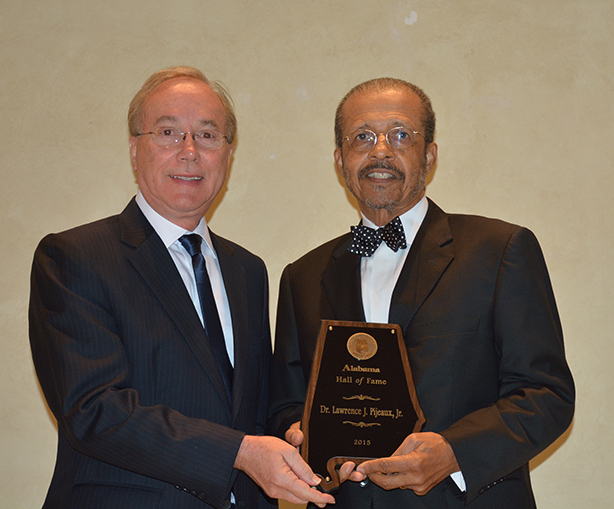
Dr Pijeaux  Birmingham

(photo credit:Cody Eason)

MOBILE – Dr. Lawrence J. Pijeaux, Jr. of Birmingham was inducted into the Alabama Tourism Hall of Fame at the Alabama Governor’s Conference on Tourism awards presentation Monday night in Mobile. 
 Dr. Pijeaux retired in May after serving for 20 years as the President and CEO of the Birmingham Civil Rights Institute.
 Twelve other state tourism industry awards were presented by the Alabama Tourism Department at the conference being held at the Renaissance Battle House Hotel.
The new GulfQuest National Maritime Museum in Mobile was named as the 2016 Attraction of the Year. This will be the first museum dedicated to the Gulf Coast’s rich maritime traditions and only the third interactive maritime museum in the world when it opens in September.
 Gulf Shores-Orange Beach Tourism has had several record setting years in marketing the state’s top tourism destination and was named the Tourism Organization of the Year. 
 Heiko Einfeld received the Tourism Executive of the Year award for his longstanding leadership role in the state’s tourism industry and his continued commitment to excellence as executive director of the Eastern Shore Chamber of Commerce.
 Selma Mayor George P. Evans was presented with the Government Advocate award for his leadership in the 50th anniversary of the Selma to Montgomery March.
 JoJo Terry of the Alabama Tourism Department received the Employee of the Year award for her work as digital marketing director and regional director for the Gulf Coast area.
 Award-winning journalist and humorist Kelly Kazek from Madison received the Media Award for her weekly Odd Travels feature for AL.com.
 The Huntsville/Madison County Convention & Visitors Bureau’s #iHeartHsv campaign was presented with the Alabama Themed Campaign award for its success in using social media to raise destination awareness.
 The Monroeville Chamber of Commerce received the Director’s Award for its work in organizing the Monroeville launch of Harper Lee’s book “Go Set A Watchman.”
 The Coastal Alabama Partnership accepted the Tourism Partnership Award for its continuing work in bringing regional leaders together to advocate for the coastal area’s top priorities.
 The Governor’s Tourism Award was presented to the Marshall County Convention and Visitors Bureau’s “Majestic 3” marketing campaign. “Majestic 3” highlights the best assets of the three state parks located in the county: Lake Guntersville, Cathedral Caverns and Bucks Pocket State Park.
 Boomdays Heritage Celebration in Fort Payne was acknowledged as the Event of the Year. Boomdays started 10 years ago and has grown into a leading music, arts and heritage event.
 Carmen Bishop with the Dothan Area Convention and Visitors Bureau received the Rising Star Award for her work in rebranding and promoting the Dothan area.

Update on: Ebola in Birmingham Alert.

0
ADPH confirms Ebola test results of individual are negative


ALABAMA DEPARTMENT OF PUBLIC HEALTH

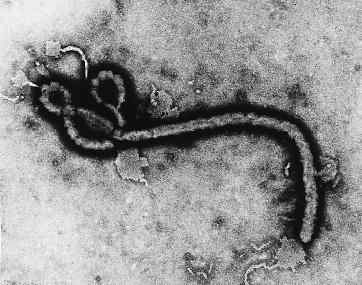
The Alabama Department of Public Health confirms that results of an individual tested for Ebola virus disease are negative. Staff had been monitoring this individual since arrival from a country with widespread Ebola. ADPH has not recommended that anyone be quarantined.

The individual under evaluation has no known exposures to Ebola and has been assessed to be at low, but not zero, risk of Ebola. The patient is improving and has evidence of an illness other than Ebola that can account for symptoms.

Out of an abundance of caution, Ebola testing was done and is negative.

An average of 8 individuals are monitored for Ebola each month; 109 people have completed 21-day monitoring for Ebola, and 4 are currently being tracked in Alabama.

The laboratory results were returned Wednesday. While this person is no longer currently under investigation for Ebola, public health will continue to monitor until the 21-day period is over.

                           -30-