Home Blog Page 1251

Chris Brown Says He’s Tired Of Worshipping The Devil…And God Spoke To Him

0

CHRIS-BROWN-SATAN-IG

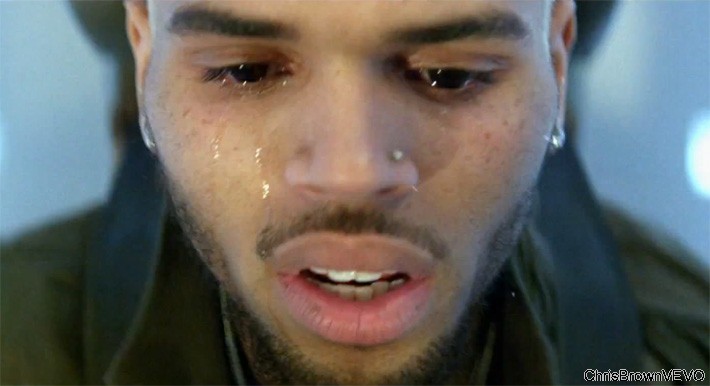
Chris Brown has said that he is tired of the devil ruining his life.

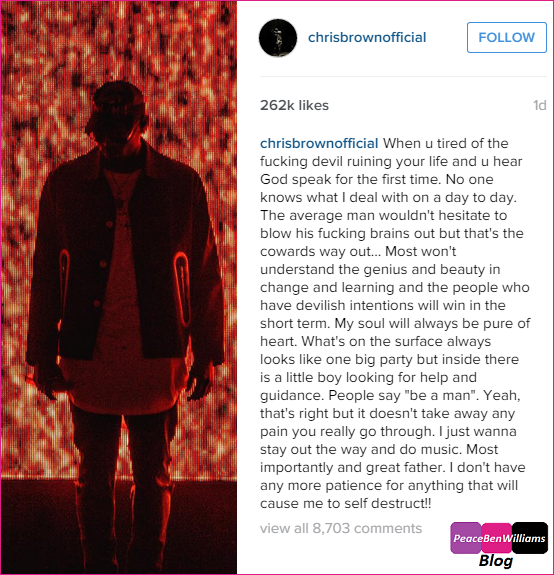
In a recent Instagram post, the award-winning singer blamed the devil for trying to ruin his life. He also talked about thoughts of suicide and claims he’s heard God speak to him for the very first time.

Here’s exactly what he wrote:

Chris

This guy needs all our prayers and support. He was a young boy when all ‘these’ started and the devil deceived him.

Chris, the good news is your soul was already bought by the blood of Christ even before you went into any evil pact. The bible says that “even the lawful captive shall be set free.”

In Isaiah chapter 49, verses 24 & 25, the New Living Translation says:

Screenshot 2015-07-27 09.13.25

This means if your choices have put you in a bad place, when you SINCERELY ask God for help, He will come to your aid. Read Psalm 121…declaring it into your life as you wake up each morning.

David found his way back on the right path once when he felt lost. And there was one night, I had an encounter with a strange and powerful demon. The Lord whispered the same psalm into my ears to use as a weapon. Yes, I won the battle.

I’ll say a prayer for you everyday brother, and I’ll encourage others to do same. Hang in there.

Omari Jazz is as abstract as his art

0

11703115_10206950723069854_6693265162269693612_n
By Ariel Worthy

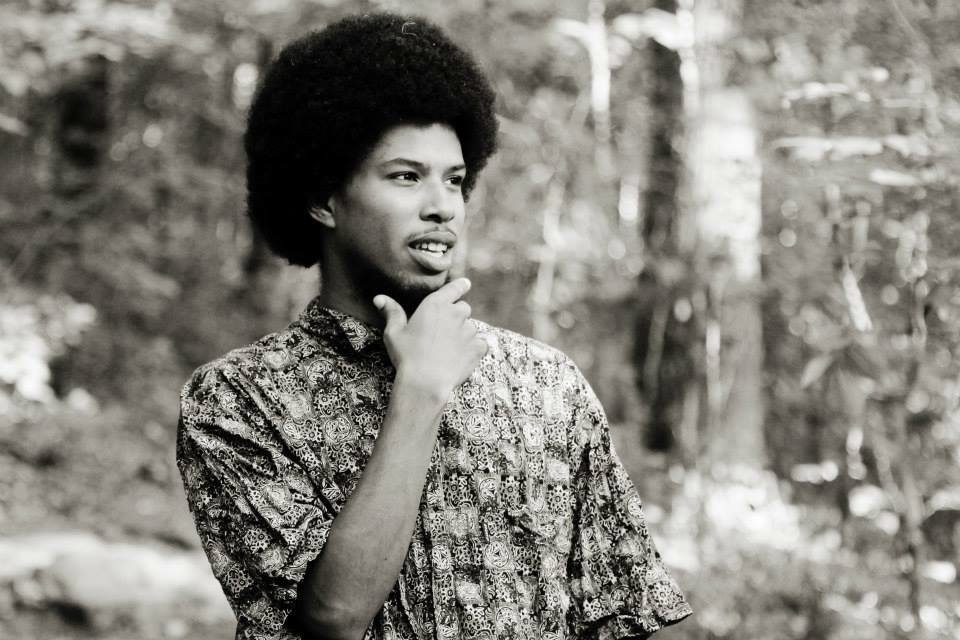
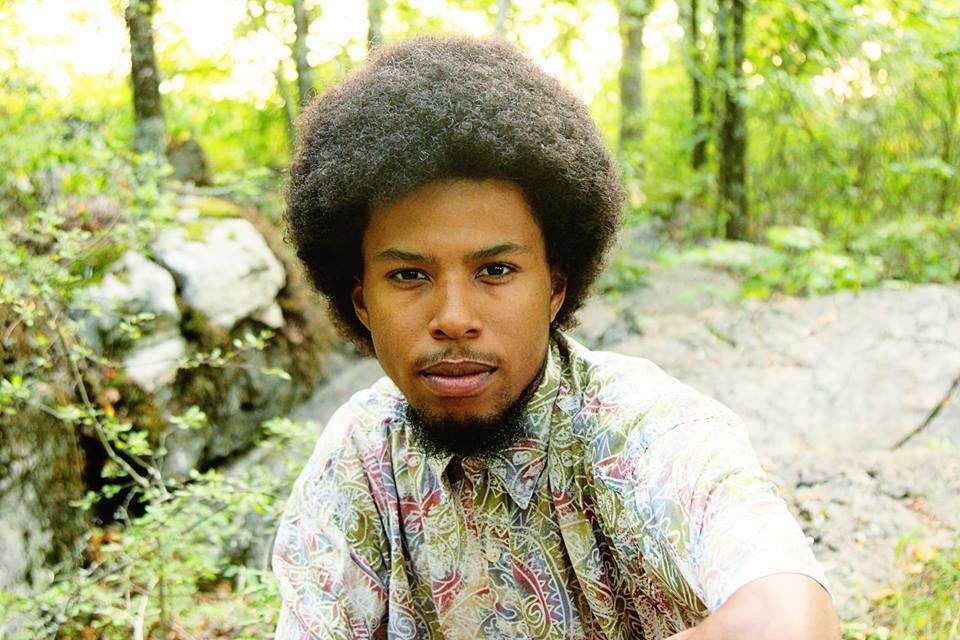
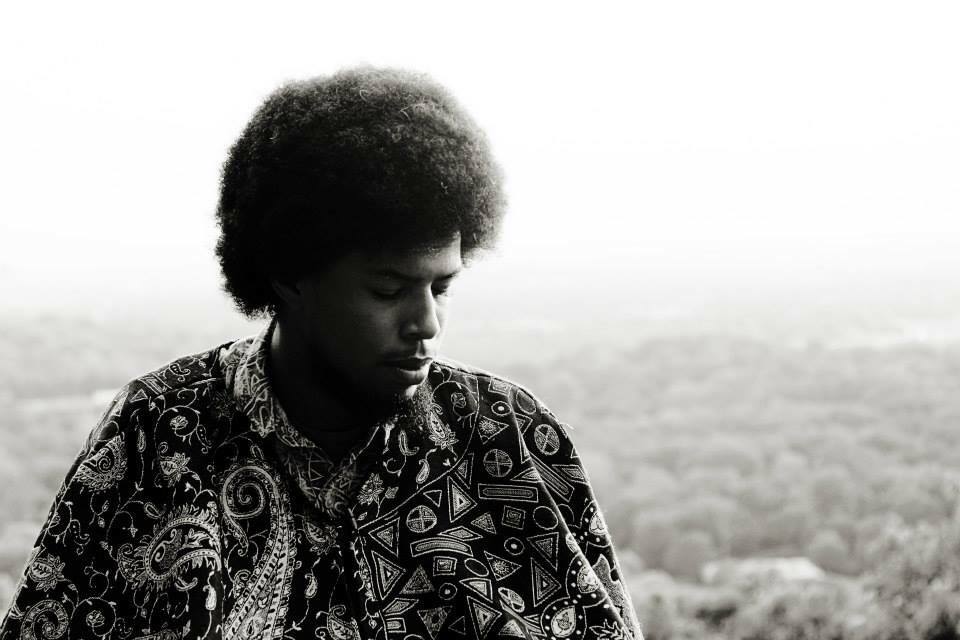
The first thing you notice about Omari Jazz, aside from his perfectly shaped afro that would make any natural girl jealous, is his tendency to smile throughout an entire conversation.
Omari Jazz, whose father is poet Sharrif Simmons, is, in technical terms, a producer and visual artist. He’s more than that, though. After one conversation with Omari, it is not hard to see his creativity exude throughout him.
Omari, who is originally from New York, went to Alabama School of Fine Arts for visual art. Much of his visual art is abstract, which can also describe his music. He can be found on multiple stages in the Birmingham area, including Secret Stages on August 1.
As well as individually working, he is also one half of two duos: LazyDawg and DataRiver.
What got you started with art?: That’s a long story. It’s been there since day one. My dad being who he is, I was always in that scene and around a lot of poets and visual artists. So it kind of would have been a shame if I didn’t somehow end up in that realm; and with my middle name being “Jazz” and not liking jazz… that would kind of suck. I didn’t start taking it seriously until midway through my eighth grade year at ASFA. I started using it as a self-exploratory tool and realized that power behind [art].
Your song titles are very interesting, to say the least, and they don’t have words to them. Why are they titled the way they are?: Your average producer will tell you when it comes to actually naming your tracks, just because we work in an instrumental realm, it’s going to be like, “Oh, let me look around and see…”, I have synesthesia, so for me it can be delineated in a way where when I’m listening to stuff I can see it in a certain way. So sometimes it’s what I see and whatever comes first. I also watch a lot anime so some of it might go over some people’s heads.
What are some ways you’ve seen your art touch people?: Man, I’ve had some pretty powerful responses to stuff. Visually: My senior year I had these podiums set up where you could listen to these sound pieces I made, and they would be analogous to art pieces that were displayed. One girl was listening to it and said “I got transported to my childhood and all of these memories came flooding back.” She came up to me and was crying. That was so new for me. Musically: with the internet the world has become smaller. You immediately have a platform; everyone has an audience. I get good feedback. I feel blessed to have that sort of feedback. I wouldn’t say I’ve had an experience like I have with the visual art, but it’s getting there. Slowly, but surely.

1514619_10206950723749871_2154300692437218929_n
Many musicians say they listen to music differently; would you say you look at art differently?: No, I don’t think so. I might feel closer to a certain aesthetic because I might use those elements in my own work, but I don’t think that just because I make art it gives me an elevated perspective of what it should be or how it is. The subjective nature of our perception when it comes to these things are sort of alleviating. I don’t want to be some sort of authority for those things. I just want them to experience it for themselves. It’s more fruitful in that way instead of tearing someone’s perception down.
If you weren’t an artist, what would you be doing?: I’d probably be working on computers. I’d probably be on the phone with you doing some sort of IT or tech support, which I wouldn’t mind doing. I’d be like, “Did you try turning it on and off?” That would be my life.
With your dad being the artist that he is, would you say your childhood differed from what many people might consider a “normal” childhood?: I’ve had this conversation a lot actually. When I came to the South the way I’d grown up was not commonplace. We moved so many times. Literally my dad was a rolling stone. What seals the deal is the fact that home is more of a concept, not a place. I started to understand that, or see the world that way. Family doesn’t just mean blood. When I was in New York I was raised by a village of people and they weren’t blood. I still call them my aunts and uncles, though. That’s what a village mentality is. It happens here, but it’s not as out in the open.
What would you say Birmingham’s art and music scene has that New York doesn’t have?: Space. Not in a negative way, though. In New York there are so many fish in the water, and the person next to you is doing the exact same thing, if not better. So here you’re given the opportunity to grow and breathe. That influences your art in a much better way because it becomes richer. We may be a little behind in our progressive tendencies, but just because we’re behind it doesn’t mean we’re not on the right track.
When do you know your work is done?: Well visually, it just happens sometimes. It’s this weird balance between deadline and being done. The discipline in becoming an artist is setting deadlines for yourself. It’s really easy to want to work on something forever with music because it doesn’t dry. You can take things out and add them.
You’re in a couple of what I’m going to call duos. How did you guys come about?: Lazy Dog is with my friend Jack and we were in Driver’s Ed together. We started listening to music together and showed him this program where you can make your own beats and we started doing that and just grew from there. The other is Data River with my friend Tyler. It’s funny because this guy hit me up on SoundCloud and he was in Birmingham. It took us going to the internet to realize that we were in the same city. It feels kind of silly.
What is your dream job?: To have the resource to power others around me to do what they want to do. I know so many people who do so many things that are amazing. I would like to have the resource to connect people on a grander scale.
Omari can be seen at Matthews Bar and Grill on Aug. 1 at 10 p.m. For more of his work, check out his SoundCloud: soundcloud.com/omarijazz. 11751432_10206950723389862_4357157727672276998_n

Photo Credit: Christina Daley

Is There a Special Place In Hell For People Like Dylann Storm Roof?

0

By Kimla Lemmons-Greene

As I walk into most sanctuaries I immediately feel a sense of peace and calm.  After all where else should a person feel like this?  The very word Sanctuary means- a place of refuge or safety.
When Dyalnn Storm Roof walked in to Charleston African Methodist Episcopal Church could this have been a place of refuge for him and the reason he actually sat through the Bible Study before he opened fire on the members of the congregation.  Could it be that the message had gotten through to him before Satan changed his mind?  We’ll probably never know, but one thing is for certain if he got enough of the Word to realize and understand that although his crimes were the material nightmares consist of; he can be forgiven and have eternal salvation.
Hate crimes against the church have been going on for years.  The most infamous example of church destruction occurred on Sunday, September 15, 1963. When the Sixteenth Street Baptist Church in Birmingham, Alabama, was fire bombed, the explosion was felt by the entire Black community. Not only were four innocent children killed in the attack and several people injured, but a community’s sense of security within their church was forever shaken.  This set the precedent for the burnings of the Black church all across the South.
Alfred Daniel King (AD as he was called) was the third child born to Martin Luther Sr. and Alberta King. According to his father, “He was a little rough at times and let his toughness build him a reputation around our Atlanta neighborhood”. Like his brother he graduated from Morehouse in 1959 and then went on to assist his father at Ebenezer Baptist until he was called to pastor the Mount Vernon First Baptist Church in Newman, Georgia.  Like his brother he was a hardcore believer in non-violence.  He often marched and protested with his brother, but opted to stay out of the spotlight.    When it came to non-violence according to his father, he often marched side-by-side with his brother. In October 1960 at a lunch counter sit in with his brother Martin Luther King Jr., A.D. was arrested along with his brother.  A.D. worked on many campaigns with his brother and even after his brother was assassinated; he continued to fight the good fight.  After his brother’s death there was speculation that he might take over the Southern Christian Leadership Conference, however A.D. expressed no interest in doing this.  In 1968 he returned to Ebenezer Baptist church and was installed as co-pastor.  Sadly, on July, 21 1968 Alfred Daniel King drowned at the age of 38.
On June 30, 1974 the mother of the late Dr. Martin Luther King Jr. was shot and killed as she sat playing “The Lord’s Prayer” on their new organ during Sunday Morning church service at the Ebenezer Baptist Church.   The same church her son; the late Dr. Martin Luther King Jr. had been baptized in and later co-pastored before his assignation.  Her killer was a 23-year black man, Marcus Wayne Chenault, who also killed Deacon Edward Boykin.  Mr. Chenault unlike Mr. Roof was out to kill Christians.  His lawyers declared him insane.  He was originally sentenced to die in the electric chair, but the King family was opposed to the death penalty, so he was sentenced to life in prison.  Mr. Chenault suffered from a stroke and died at age 44.
Mr. Roof a pure racist.  He couldn’t claim mental illness or any other illness except self hated.  There were photos of him setting The American Flag on fire while spitting on it.  He had photos posted on his web site before it was shutdown of him posing with a handgun, the Confederate flag, along with the well recognized Nazi code numbers 88 ( an abbreviation for the salute Heil Hitler) and 1488 written in the sand.
During the 1990’s came a new wave of burning of the Black Church.  This continued until about 1996 when congressional hearings were held pertaining to this problem.  The most recent church burning occurred in 2008 on the day on day the President Barack Obama was inaugurated into office. A church in Massachusetts was burned and a white man was arrested in what was called a racially motivated arson.
Crimes against the church are still being committed today.  From about 2010 – 2013 copper thefts among local churches in central Arkansas was the newest fad among copper thieves.  The damaged units would cost churches tens of thousands of dollars to replace.  In the mean time it caused many churches to hold services in sweltering buildings.
On September 12, 2011 three armed young men walked into a church in Little Rock, Arkansas and robbed 17 members of the congregation during Sunday school. They not only took the money collected during Sunday school, they took wallets jewelry and anything else of value.  These young men ages 14, 15, and 20 years of age should have been in Sunday school instead of robbing the churchgoers that were in attendance.  For $108 and a few valuables these young men have started walking a path unfamiliar to young black males, straight to the nearest penal facility.
Then there was legislation in Arkansas that was only one vote away from being passed that would allow parishioners to carry guns into church.  That bill didn’t pass, but it makes little to no difference since Arkansas enacted the law allowing persons to carry a concealed weapon.
Since this incident most churches have beefed up their security with armed police officers.  I was shocked one Sunday when I was running later than normal for church and the doors were locked because the offering was being taken up.  So even in smaller churches that don’t have the means to hire armed off-duty police officers they have taken simple measures to ensure the safety and security of the church members.
Like the members of the Emanuel AME Church Sunday morning service is good but sometimes I just can’t wait until the next Sunday to hear a word from the Lord.  Wednesday night Bible study is a vital part of Christian growth.  Not only is it vital to Christian growth it’s vital to surviving in the turbulent times we live in.  When there is chaos all around you.   If you practice any type of faith you need to keep your spiritual cup full at all times as well as I use to hear old folks say stay prayed up.
Don’t be surprised if you arrive in Heaven and see young Dylann.  The Bible only speaks of one unforgivable sin and that’s Blasphemy against the Holy Spirit.  Why won’t he be in hell you ask?  God is a merciful and forgiving God!  Because this is the kind of God we serve he gives the opportunity to repent and ask for forgiveness for our sins. If this young man does that he’ll be in heaven among the rest of the saints. However, in Acts 3:19 it specifically tells us to first, REPENT!
For none believers I know that it’s hard to believe that it’s just that simple to be forgiven of our sins no matter how horrific they are.  I’ve given you the scripture:  Read and meditate on it for yourself.  However, you’re feeling dismayed and downtrodden by this news maybe this will help you feel better.  We serve a just God!

Good and confused?  Although God does forgive us for our sins there are still consequences we must pay.
My heart goes out to the victim’s families also to the family of the accused, and finally to the accused.  I don’t in any way condone any part of what he did.  My only prayers are that he sincerely repents before it’s too late and that this does not become a copycat act.  Church should be a place of refuge for those who are in need, and a place of safety where people can worship freely without the fear of being murdered in the House of God!
I feel like Martin Luther King Sr. after the deaths of two of his sons and the murder of his wife, he was quoted as saying, “I cannot hate any man”.
Mathew 7:1 Judge not less ye be judged. No human is perfect as we are reminded in this verse, so be mindful of this is as you ponder is there a special place in hell for people who commit crimes against the church?

Oh, No! Anthony Hamilton And Wife Tarshá To Divorce

0


If you’re hearing rumors about Anthony Hamilton and his wife Tarshá Hamilton being divorced, here’s the deal. Based on a press release sent to EUR, by Tarshá’s rep, we can confirm they have filed for divorce.

According to the release:

The couple, who lived in North Carolina, split amicably after 10 years of marriage. Tarshá and Anthony’s greatest priorities are loving and raising their three children and are committed to co-parenting together. Both will continue to work in tandem on various music projects including Tarshá’s upcoming debut Sounds Like Tarshá which will released on Pennie Bank Productions.

Screenshot 2015-07-23 10.50.47

Tarshá is an indie singer, songwriter whose range of styles include rock, pop, gospel and R&B. She is a staunch advocate for HIV/AIDS healthcare and plans to continue her work in music, healthcare and community service as a strong single mother.

Anthony Hamilton is touring and has not made any comment on social media or otherwise.


Depression Dogged Chattanooga Gunman

0


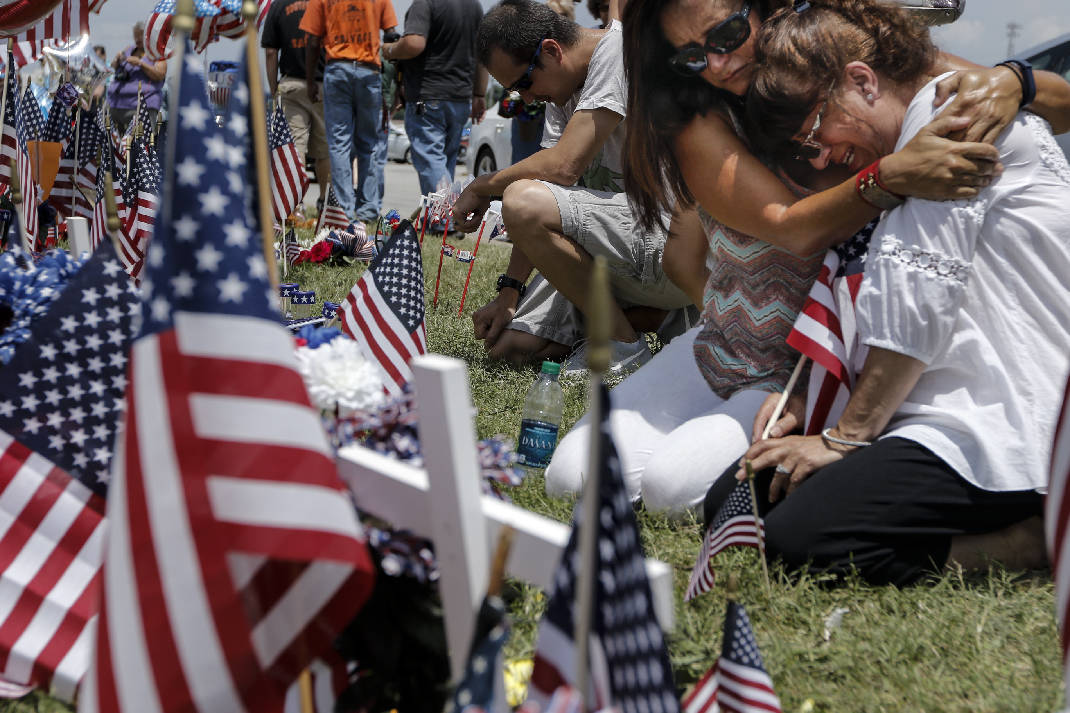
chattanoogaDeborah Wyatt Boen, right, mother of U.S. Marine Corps Staff Sgt. David Wyatt, and Deanna Wyatt Trent, his sister, mourn at a Lee Highway memorial for Staff Sgt. Wyatt and other victims of the July, 16 shootings on Saturday, July 18, 2015, in Chattanooga, Tenn. U.S. Navy Petty Officer Randall Smith died Saturday from wounds sustained when gunman Mohammad Youssef Abdulazeez shot and killed four U.S. Marines and wounded two others and a Chattanooga police officer at the Naval Operational Support Center on Amnicola Highway shortly after firing into the Armed Forces Career Center on Lee Highway.
Photo by Doug Strickland /Times Free Press.
Depression Dogged Chattanooga Gunman
CHATTANOOGA, Tenn. (AP) – The Kuwait-born man who killed five service members was first treated by a child psychiatrist for depression when he was 12 or 13 years old, fought drug and alcohol abuse in later years and went to Jordan last year to clean up, a person close to the family said.
Relatives of Muhammad Youssef Abdulazeez, 24, believe those personal struggles are at the heart of last week’s killings at a pair of military sites in Chattanooga, the person said Sunday on the condition of anonymity to avoid unwanted publicity.
“They do not know of anything else to explain it,” said the person, who has been in contact with the family several times since the shootings Thursday.
The family’s explanation fits a pattern of behavior by Abdulazeez that includes a drunken driving arrest earlier this year and the loss of a job over a failed drug test.
Counterterrorism investigators have not released a motive and said they are looking into his overseas travel and whether he was inspired or directed by any terrorist organization. So far, they have not released in any evidence showing he was.
Abdulazeez was killed in a shootout with police at a Marine-Navy facility. On Monday, yellow police tape still blocked access to it and law enforcement vehicles were parked nearby with lights flashing.
About seven miles away, in a small strip shopping center, hundreds of people – many carrying American flags and some with Confederate battle flags – gathered outside the military recruiting office where the rampage began. The windows, several of which were pocked with bullet holes after the shooting, have since been covered with plywood.
Several years ago, relatives tried to have Abdulazeez admitted to an in-patient program for drug and alcohol abuse but a health insurer refused to approve the expense, the person close to the family said.
“He was medicated like many children are. Through high school and college he did a better job sometimes than others staying with it,” the person said.
Abdulazeez had spent several months in Jordan last year under a mutual agreement with his parents to help him get away from drugs, alcohol and a group of friends who relatives considered a bad influence, the person said.
FBI spokesman Jason Pack declined comment on whether investigators were pursuing mental health records. FBI agent Ed Reinhold has told reporters investigators were looking into all aspects of his life.
While Abdulazeez sometimes expressed misgivings about U.S. policy in the Mideast, his feelings didn’t seem extreme and there was no indication he was involved with terrorist groups while in Jordan, the person close the family said. He owned guns for years, going back to when he was a child shooting at squirrels and targets, and called himself an “Arab redneck” or “Muslim redneck.”
A year after graduating from college with an engineering degree, Abdulazeez lost a job at a nuclear power plant in Ohio in May 2013 because of what a federal official described as a failed drug test.
Recently, Abdulazeez had begun working the night shift at a manufacturing plant and was taking medication to help with problems sleeping in the daytime, the person said, and he also had a prescription for muscle relaxants because of a back problem.
It’s unknown what substances were in the man’s system at the time of the killings, but toxicology tests should provide an answer.
After returning from his time overseas, Abdulazeez was arrested on a charge of driving under the influence April 20. A police report said he told a Chattanooga officer he also was with friends who had been smoking marijuana. The report said Abdulazeez, who had white powder on his nose when he was stopped, told the officer he also had sniffed powdered caffeine.
The arrest was “important” because Abdulazeez was deeply embarrassed and seemed to sink further into depression following the episode, the person said. Some close relatives learned of the charge only days before the shooting.
Bassam Issa, president of the Islamic Society of Greater Chattanooga, said he knew nothing of Abdulazeez’s problems, despite knowing his father well through the mosque. Drinking alcohol and using drugs is strictly forbidden in the Islamic faith.
“In our culture, if a son or daughter is having those sorts of problems, they keep it a secret because of the shame,” Issa said. “As a parent, you always want to be able to say your child is making you proud, not that they are struggling.”
A former college professor who saw Abdulazeez at their mosque six days before the killings said the young man didn’t seem different after returning from Jordan last year or during their final encounter.
“I just saw the same friendly guy as before,” said Abdul Ofoli, who teaches electrical engineering at the University of Tennessee at Chattanooga, where Abdulazeez graduated in 2012.

KKK Rally Shows Racial Hate Still Strong in South Carolina

0

th

By Michael H. Cottman, BlackAmericaWeb.com

“They took our flag, so be it. They’re taking our heritage from us. They’re taking the freedom out of America.”—William Bader, an imperial wizard of the KKK.
Hatred hit the streets of Columbia, South Carolina over the weekend as members of the Ku Klux Klan yelled racial slurs to protest the removal of the Confederate flag on the statehouse grounds.
It was an ugly scene that underscored the deep racial divide in South Carolina, where white and Black residents live within miles of each other but are worlds apart when it comes to issues of race, immigration, and multi-cultural understanding.
The incendiary rhetoric by the KKK reminds us that racism still permeates our society and while many intelligent, well-meaning Americans — both Black and white –live together harmoniously, there are still white supremacists who are raising a new generation of young racists.
William Bader, a member of the KKK who attended the rally in Columbia, told reporters that he’s tired of having his freedoms infringed on by African-Americans and liberal lawmakers. He also told the media that some KKK members wanted to demonstrate last weekend by burning a church while dressed in the KKK’s signature white hoods.
During the rally, members of the KKK shouted racist epithets at Black Educators for Justice, a group of Black counter-protestors and white supremacist Steven Johnson, who waved a Nazi flag during the protest, told journalists that he’s worried about the state of America simply because of African-Americans.
“The Blacks have been out here attacking people, stealing people’s property, taking their flags,” Johnson told reporters. “I’m scared of what my family’s about to grow up with.”
The KKK demonstrators talked about how their freedoms are being violated and they desperately want to “take back” their country. But from whom? Who exactly is highjacking their country and how?
Last week, South Carolina lawmakers made history by voting to remove the Confederate flag in the statehouse grounds. It was the right decision and long overdue.
Many Southern whites believe the Confederate flag stands for the fight for “state’s rights,” and pays tribute to Southern history. But in reality, the flag is a longstanding symbol for racism since the Confederate states seceded from the Union to fight a Civil War based on whether or not slavery would remain in place. And what an archaic symbol: flying a battle flag on state property to remind Americans that rebel soldiers loyal to Robert E. Lee lost the war? It’s past time to move on.
The heated debate over the Confederate flag intensified after Dylann Roof, a self-proclaimed white supremacist, shot and killed nine Black parishioners inside Emanuel AME Church in Charleston, South Carolina while they were holding an evening prayer service.
The removal of the Confederate flag in Columbia was a noble act by lawmakers and a largely symbolic gesture that, unfortunately, will not change some racist attitudes.
The KKK rally was a stark reminder that racist mindsets can be everlasting and white supremacists like Bader and Johnson, will never accept the fact that multiculturalism is the new normal and America is becoming Blacker and browner. By census projections, whites will no longer be the majority just a few decades from now.
The KKK doesn’t want to hear that. I believe the removal of the flag will actually exacerbate existing racial tensions in South Carolina and across the country, particularly when ignorant people like Donald Trump, a 2016 presidential candidate, calls Mexican immigrants “rapists,” giving hate groups like the KKK a heightened sense of purpose and legitimizing their racist rhetoric.
South Carolina Gov. Nikki Haley asked South Carolina residents to stay away from the rally so the KKK wouldn’t draw any more attention.
“Our family hopes the people of South Carolina will join us in staying away from the disruptive, hateful spectacle members of the Ku Klux Klan hope to create over the weekend and instead focus on what brings us together,” she said. “We want to make the Statehouse a lonely place for them.”
I disagree with Haley. Black residents correctly showed up in Columbia to protest the racist protestors. I don’t think we can afford to ignore racism, Silence has never spurred social change.
What do you think?

Teens’ Overall Substance Use Declining, but Marijuana Use Rising

0

UNIVERSITY PARK, Pa. – Marijuana use in teenagers is on the rise, while cigarette and alcohol use are stable or declining, according to health statistics researchers. In particular, Black teens are using more marijuana than in recent decades.
“Our analysis shows that public health campaigns are working – fewer teens are smoking cigarettes,” said Stephanie Lanza, professor of biobehavioral health, and scientific director of The Methodology Center, Penn State. “However, we were surprised to find the very clear message that kids are choosing marijuana over cigarettes.”
Lanza and colleagues analyzed data collected from U.S. high school seniors between 1976 and 2013. Nearly 600,000 students were surveyed over this time period as part of the project Monitoring the Future, a long-term ongoing epidemiological study conducted by the University of Michigan. Lanza and her team focused on information reported about the rates of use of three different substances – alcohol, cigarettes and marijuana – over the course of 37 years. They report their results (July 20) in the Journal of Adolescent Health.
Students were asked about their use of these three substances in the 30 days prior to taking the survey. Overall the researchers found a marked decline in cigarette use, particularly among white teens, and an increase in marijuana use, particularly among Black teens.
In 1993, Black adolescents were equally likely to use marijuana and cigarettes, and have continued an upward trend in marijuana use since. White adolescents were more likely to smoke cigarettes than use marijuana until 2011, when marijuana usage slightly surpassed that of cigarettes. In 2013, nearly 19 percent of white teens smoked cigarettes, while almost 22 percent used marijuana. At the same time only about 10 percent of Black teens smoked cigarettes, but nearly 25 percent used marijuana.
The rate of teen alcohol consumption has decreased since the mid-1970s, however white adolescents still drink alcohol more than they use any other substance. White teens’ alcohol use remained higher than Black teens’ throughout the study period.
In the published paper the researchers included line graphs tracking substance use over the past four decades.
“What will this look like in a few years?” Lanza asked, indicating the two lines representing alcohol and marijuana, respectively, on the graph showing Black teens’ use. “All signs point to these two lines crossing within the next few years. This is a decisive shift.”
Students were more likely to use marijuana if they also smoked cigarettes than if they did not, and vice versa. Teens were also more likely to use marijuana if they drank excessively than if they did not, and vice versa.
The researchers intend to continue analyzing teen substance use data. They are particularly interested in looking into a potential correlation between the recent rise of adolescent marijuana use and its legalization in several states.
Sara A. Vasilenko and John J. Dziak, both research associates, The Methodology Center, Penn State, and Nicole M. Butera, graduate student, biostatistics, University of North Carolina at Chapel Hill, also collaborated on this research.
The National Institute on Drug Abuse and the National Cancer Institute supported this work.

Birmingham City Council Asking the Public to Stand with Them in Support of National Transportation Legislation

0

BIRMINGHAM, Ala. – As Birmingham City Councilors continuously look at ways they can expand transportation options in Birmingham, they are asking for your support on a long term transportation bill that could authorize funding levels for the next six years. The bill, introduced by senators Roger Wicker (R-MS) and Cory Booker (D-NJ) would direct billions of dollars in additional transportation resources to local decision-makers like the Birmingham City Council. The amendment increases the total funding available for the Surface Transportation Program (STP) and would increase the funds distributed directly to local areas.
“This bill is just the kind of traction that we need on the national level in order to continue our work locally for more transportation options for the citizens of Birmingham,” Councilor Kim Rafferty said. “My colleagues and I are urging you to join us in supporting this bill, calling your senators and asking them to support the Wicker-Booker amendment for local control over Surface Transportation Program funds. Together we can make transportation in Birmingham better for both citizens and those who will visit our great City.”
In addition to increasing funding for local governments under STP, the Wicker-Booker amendment will take important steps to increase the credibility and transparency of STP. State DOTs that do not currently sub allocate STP dollars to areas under 200,000 in population would, under this carefully crafted amendment, be required to conduct a process that will provide these areas an opportunity to submit projects to their state for funding consideration.

Have a refreshing Pinnacle® Raspberry Lemonade

0

Pinnacle® Raspberry Lemonade

Pinnacle® Raspberry Lemonade

1 part Pinnacle® Raspberry Vodka
2 parts Lemonade
Mix ingredients and serve over ice. Garnish with a lemon wheel or raspberries

AG STRANGE CALLS ON PHONE CARRIERS TO OFFER CALL-BLOCKING TECHNOLOGY TO CUSTOMERS

0
     (MONTGOMERY)– Attorney General Luther Strange today joined 44 other state Attorneys General calling on five major phone companies to offer call-blocking technology to their wireless and landline customers.  In a joint letter to the chief executives of the carriers, the attorneys general said a new Federal Communications Commission (FCC) rule clarification allows telecommunication service providers to offer customers the ability to block unwanted calls, and verifies that federal law does not prohibit offering the services.  
            In the letter to AT&T, Sprint, Verizon, T-Mobile and CenturyLink, the Attorneys General stated, “Every year, our offices are flooded with consumer complaints pleading for a solution to stop intrusive robocalls.  Your companies are now poised to offer your customers the help they need.  We urge you to act without delay.”
            Attorney General Strange said phone carriers had previously claimed they could not offer such services.  At a July 2013 hearing before a Senate subcommittee, representatives from the US Telecom Association and CTIA testified that “legal barriers prevent carriers from implementing advanced call-blocking technology to reduce the number of unwanted telemarketing calls.” CTIA is The Wireless Association, formerly known as the Cellular Telephone Industries Association.  On June 18, 2015, the FCC voted to pass a rule clarifying that phone companies are allowed to use call-blocking technologies to block unwanted calls and texts.
            “Now that the FCC has made clear that phone companies may use call-blocking, we are calling on these companies to assist in our fight against unwanted, annoying and sometimes expensive phone calls and texts,” said Attorney General Strange.  “Customers have long been asking for a way to stop these calls, and it is time for the phone carriers to comply and offer this valuable service.”
            Attorney General Strange said call-blocking options already exist for Voice over Internet Protocol (VoIP) phone service (NoMoRobo.com) and Android cell phones (Call Control), and the phone carriers should move quickly to implement and inform their consumers of these options.
            The Attorneys General whose offices signed today’s letter are: Alabama, Alaska, Arkansas, California, Colorado, Connecticut, Delaware, District of Columbia, Florida, Georgia, Hawaii, Idaho, Illinois, Indiana, Iowa, Kansas, Kentucky, Maine, Maryland, Michigan, Minnesota, Mississippi, Missouri, Montana, Nebraska, Nevada, New Hampshire, New Mexico, New York, North Carolina, North Dakota, Ohio, Oregon, Pennsylvania, Rhode Island, South Carolina, South Dakota, Tennessee, Utah, Vermont, Virginia, Washington, West Virginia, Wisconsin, and Wyoming.