Home Blog Page 1517

From the Horn of the Unicorn

0

Rachel RoyalKJV, Psalm 92:10 reads, “But my horn shalt thou exalt like the horn of an unicorn; I shall be anointed with fresh oil.”

Interpretation: Israelites must return to Ethiopia: Israel shall be restored to its normal state and be free from corruption.

COMMANDMENT SIX

Ex. 20:13 reads, “You shall not kill.”

Interpretation

African men, European, American, and Asian militaries are tearing our nation apart through their wars to gain possession over our land and resources. These military tactics used by these nations are causing a major division within our nation and separating our countries into opposing sides. They have formed borders setting us apart into different countries to cause us to lack the support of our entire nation, in efforts to bring us under the control of their governments. Europe, Asia, and America are using these systems of hostile conflict to devastate our social and economic structure causing mass destruction to our land, countless deaths, a great dimension of impoverishment, and a large scale intense famine.
African men, it is your duty to reject the laws of Europe, America, and Asia for the achievement of Africa’s independence. It is your duty to prohibit the operation of foreign governments in our land. Your government must take full possession over our legislation to free us from the political and economical control of other nations. Comply with the terms of Emperor Haile Selassie I’s Constitution and overturn foreign policies. Become a self-governing nation and overcome the influences of foreign legislations. Their customs cause us to be subjected to their laws which hinder us from developing politically, economically, socially, and spiritually on our own. Allowing these foreign nations to run our government has given them the power to determine the fate and outcome of our nation and people. Where we see clearly by their action how they divided and conquered our land.
Change the state of our condition and begin taking action to conduct relations with all of our countries to build up trade and make treaties. Close down all foreign factories through our land and set up our own industries. Our nation has enough resources and manpower for us to be a financially self-sufficient nation. Our land is our main source for our development and it is essential that we utilize it for the advancement of our nation. The invasion of foreign industries has suppressed our growth and deprived our people of their land and resources. Provide our nation with protection and set up military bases around our borders to indicate a fixed boundary. We cannot ignore the attacks from these nations. You must use your military forces to drive attackers away from our land. Functioning in this manner will serve the interest of our common welfare. It will protect and maintain our development, production, and distribution which is necessary for supplying the needs of our entire nation. Cultivating our land and producing and protecting our resources are essential for our existence.
African men, form one unified government and obtain full possession over your military. Make declarations between all of our countries for peace to end the civil wars between us, and form an alliance to defend each country during foreign invasion. Joining your militaries together will make a stronger line of defense, making you greater in size to perform at an extreme measure of force to stop our countries from being colonized. Eliminating the possibilities of being besieged by restricting access to all foreign armies also lessens the chance of infiltration. We can only be liberated by defending ourselves. We have the ability, with the support of our entire nation, to bring back our Sovereignty and recover from the destruction of colonial powers.

Thank you

2015 Chrysler 200

0

2015 Chrysler 200AboutThatCar.com

By Frank S. Washington

LOUISVILLE, Ky., – In a darkened hall with scores of people in front and up on a stage at the Detroit auto show, the 2015 Chrysler 200 looked almost the same as the car it will replace when it goes on sale this spring. Eh, no, not by a long shot.
Here, on the banks of the Ohio River, it was obvious that the new Chrysler 200 looked nothing like the old Chrysler 200.
The car sported what Chrysler called the new face of the brand. A floating grille with integrated headlamps looked like one piece. LED daytime running lights underlined the headlamps and the car had standard LED taillights that gave it a distinctive look coming or going.
Between the lights was a coupe-like sedan with a roof line that ran seamlessly into the trunk lid. The car had sculpted side body panels, a wraparound body line and a high shoulder line. The sideview mirror casings were almost concept car thin but widened at the mirror surface for traditional viewing.
This is an important car for Chrysler; it gives the brand a viable product in the largest segment of the market. Thus, the new Chrysler 200 comes with two engine choices: a 2.4 liter four cylinder that makes 184 horsepower and 173 pound-feet of torque and a 3.6-liter V6 that makes 296 horsepower and 262 pound feet of torque.
Both engines are mated to 9-speed automatic transmissions. The six-cylinder comes in either all-wheel-drive or front-wheel-drive while the four-cylinder is available in only four-wheel-drive.
The four-cylinder gets 23 mpg in the city and 36 mpg on the highway, while the six-cylinder achieves 19 mpg in the city and 32 mpg on the highway.
There are four trim lines. The LX starts at $21,700, the Limited starts at $23,255, while the S starts at $24,495 and the C begins at $25,995. A fully equipped top of the line C will sell for about $38,000.
We tested a 200C with the four cylinder engine. This car was smooth, spacious and quiet. It had the feel of premium vehicle; in other words it had substance which only comes with top flight engineering. That probably had much to do with the use of a platform from Alfa Romeo which is owned by Fiat, Chrysler’s parent.
The engine had more than enough oomph, the transmission was smooth, handling was crisp and there was some feedback from the road even though the Chrysler 200 had electric power steering.
We drove a 2015 Chrysler 200S FWD back from lunch. With 111 horsepower more than the four-cylinder, the V6 was a lot quicker. And the Sport’s handling was far more responsive, it turned in quicker and the suspension was tighter.
Either car can be equipped with 17, 18 or 19 inch tires. The larger the tire the better the look and the road feel. We suspect that Mopar, Fiat Chrysler’s customizing arm, has something in that not too distant future planned for the 2015 Chrysler 200.
The interior design was different. It was clean, spacious, uncluttered and it had the ambience of quality and the use of a dial gear selector freed up room to give the car a sliding cupholder in the center console. The center stack angled out between the dash and the console. That was the different look.
Our test vehicle was impressive. It had SafetyTec Package, the Premium Group w/Vent Seats package and the Navigation and Sound Group 1 package and Premium Lighting Group package.
SAFETYTEC had adaptive cruise control capable of bring the car to a complete halt and then starting again, advanced brake assist, blind-spot with cross traffic detection alert, forward collision warning, lane departure warning plus (the car would gently bring itself back into the lane, parallel and perpendicular park assist with stop, rain sensitive windshield wipers and smart beam headlamps.
The Premium Group had a 115-volt auxiliary power outlet, exterior mirrors with memory, a heated two-tone leather steering wheel, luxury door trim panel, premium leather-trimmed ventilated seats (read cooled), radio/driver seat with memory and real wood/bronze chrome interior accents.
The Navigation and Sound Group included a 506-watt amplifier, an 8.4-in. touchscreen display, nine speakers with subwoofer, GPS navigation, HD radio, rear view auto dimming mirror with microphone, SiriusXM Traffic, SiriusXM Travel Link, Uconnect 8.4 inch screen, AM/FM with SiriusXM, HD Radio, Bluetooth, navigation and Uconnect Access, and on the 200S Model there is a premium 7-inch TFT instrument cluster.
Premium Lighting Group included HID headlamps with LED daytime running lamps and LED fog lamps.
The point of listing the test car’s equipment almost verbatim was to say that the 2015 Chrysler FWD we road tested had a base price of $25,995. Add the optional packages and the total came to $32,465. That wasn’t bad.
Frank S. Washington is editor of AboutThatCar.com.

The Birmingham Emancipation Association

0

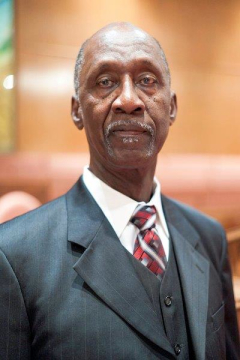
W. C Patton copy The Birmingham Emancipation Association has been a helping tool for people for years. It  started as a fundraising tool to help the late, Mr. W. C. Patton,  its president on his travel expenses to get people registered to vote and even with the expenses of getting people to and from the polls.
His travels took him all over Alabama and Tennessee.  Then his focus turned to the homeless.  Mr. Patton got with local merchants to help clothe and feed the homeless. He would often get them what they needed, even shelter.
After the death of Mr. Patton, the Association saw another need – education – and filled it, by giving high school seniors scholarships to help with college fees and miscellaneous expenses. Although the Associations has existed for many years its first scholarships were awarded in 1999 – over 70 to date.
January 1st of each year a program is held at a local church to generate funds from
local churches, businesses, and individual contributors to support local youth in their pursuit of a college degree.  These scholarships are awarded at a banquet the second week in May of each year.
To honor the memory of Mr. Patton, the scholarship was named the W.C. Patton Humanitarian Scholarship.
This year we will celebrate our 15th year and we look forward to seeing the young people who have been helped over the years.
The program will be Tuesday, May 13th, 6 p.m. at Bethel Baptist Church,
1637 Pearson Avenue S.W., Birmingham, Alabama 35211. Our speaker, a recipient of the year 2000, will be Ms. Javan  J. Patton, attorney at law here in Birmingham, Alabama. She is the granddaughter of the late Mr. W.C. Patton .
We would like for all past recipients to contact us at BEApatton2155@aol.com.

Congratulations to our Pastor, Dr. Thomas E. Gilmore, Sr.

0

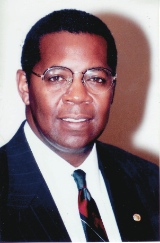
Dr. Gilmore, Rev. Gilmorewe honor you for creating awareness, advocacy and advancement during the Civil Rights Movement  in Alabama.  Your Leadership has enriched the lives of many people in Greene County and the Birmingham area.
The naming of the Old Courthouse and the entire Courthouse Square in your honor is a tribute to such an humble Christian servant.
May you continue to grow in spirit, love and peace.

Your First Baptist Church of Ensley Family

April is National Car Care Month: Spring into Action

0

Be Car AwareTurn to spring car care after rough winter

Many vehicles were neglected during the recent brutal winter months and could use a little extra care by now. The Car Care Council recommends that motorists follow three simple steps during National Car Care Month in April to get vehicles ready for the spring and summer driving season.

•    Keep your vehicle clean. Regular car washes and waxes protect the paint and body of your car from corrosive debris. In parts of the country where salt is used on the roads, regularly washing is especially important.

•    Keep your car on schedule. Every vehicle has a manufacturer recommended maintenance schedule. Whether you choose to do your own maintenance or patronize a local repair shop, following a routine service schedule is essential to keeping your car in safe and dependable working order.

•    Keep an eye on the little things. Your windshield wipers aren’t cleaning as well as they should? Your gas tank is missing its cap? There’s a warning light on your dashboard?  When you see your car needs attention, don’t delay. Repairing small things now can help avoid more costly problems down the road and add years of useful vehicle life.

The Car Care Council offers many free tools on its website, www.carcare.gov, to help consumers drive smart, save money and be car care aware, including the popular 60-page Car Care Guide and a custom service schedule and email reminder service.

Urban Contemporary Gospel Group Charles Butler & Trinity to Release Second Single Digitally

0

CharlesButler  The urban contemporary gospel group Charles Butler & Trinity is known throughout the Middle Atlantic states for its compelling live performances and on the national level, many recall their celestial backing of Earnest Pugh on his riveting 2010 #1 radio smash “Rain On Us.” After the Top 15 iTunes chart positioning with their first national radio release “Better” last year the group is ready for their second close-up with their inspiring new single, “Amazing Worth.”
“I’m excited that ‘Amazing Worth’ is our second single,” Butler says. “It simply talks about all the things that make God Amazing. God’s love is unfailing and his hand is Unchanging. I want people to hear this song and reflect on God’s love and His Amazing love towards us.”
The soaring ballad is led by the warm tenor of Jeremiah Hicks (who’s also sung with the likes of Kirk Franklin and Byron Cage) and has already been serviced to gospel radio. The digital single goes on sale on iTunes, Amazon mp3 and other digital platforms on April 15th. James Ziegler, who shepherds the dynamic gospel group Another Level, wrote the song.  The recording was produced by Morgan Turner (an extraordinary bassist who’s collaborated with the likes of John P. Kee, Dorinda Clark Cole and Jonathan Nelson).
“Due to the overwhelming demand and numerous requests for hard copies of Charles Butler & Trinity’s ‘Better’ CD we’re finally making it available in physical format, “ says EPM Music Group A&R Director Gerald Jones. The physical CD is scheduled for release on June 24.  “The lyric content is right on point and the lead vocalist, Jeremiah Hicks, is one of my favorite singers on planet earth,” says EPM Group founder Earnest Pugh. “To be honest the entire CD is blazing so we are pleased to release the CD on a larger scale for our colleague Charles Butler.”
Butler formed Trinity in 1997 and they’ve been on a roll ever since. They’ve appeared on scores of concerts and appearances backing other artists. However, they got their first taste of national acclaim when they backed gospel star Earnest Pugh on his classic 2009 recording of “Rain on Us.” The song shot to #1 on Billboard’s Hot Gospel Songs chart and has been a radio staple ever since. Pugh has since had the group tour with him and signed them to EPM in 2012 and the rest is history.

Life after Drugs: Birmingham Group Transitions Homeless, Recovering Addicts

0

Judah MinistriesBy Judah Martin

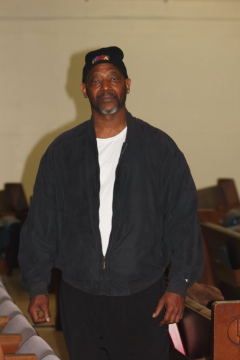
BIRMINGHAM, Ala. — Every weekday morning at 10 a.m., with the exception of Fridays, Aubrey Townsend stands behind a small wooden desk facing the pews of Birmingham’s Church of the Reconciler.
“Alright, it’s Reconciler intervention time,” he declares in a booming, vaguely raspy voice.
Townsend, 54, is dressed casually in a thick red sweater and jogging pants. He looks at the addicts before him. It is not always clear which of them are recovering, and which of them still listen to him through the haze of inebriation. He doesn’t ask.
He recognizes as a rule that only a scant few of the troubled people who wander into the church will be saved from their addictions. But, then, sometimes rules can be broken, so far as he’s concerned.
As he speaks, he pulls fliers and other documents from a black leather bag that’s too small to be a suitcase and too big to be a briefcase. He glances only briefly at a flyer for a safe house, a flyer for Disability Rights and Resources and a flyer for ministry recruitment, before handing them off to each member with eager endorsement.
“We know we’re children of God, and we don’t need no recognition,” he insisted to the audience. “”We know we’re worthwhile individuals. In recovery we talk about that. We talk about self-acceptance. People with self-acceptance, they’re alright within their own skin.”
Each meeting begins with around five members scattered across the pews, with a few more showing up sporadically over the course of the hour.
The members are few, but they are a faithful bunch.
Kenneth Tyrone King, a native of Jacksonville Fla., is among the members who return each day, thanks to transportation services provided by the church. King, 50, attends each meeting with a book in hand, usually one he’s carefully chosen from the wall length shelf in the church’s lobby. He takes an especially active role in each day’s discussion.
“This place is a healing place,” he said. “Being in this group, it lets me know that I’m a part of the community.”
Each month, the group members choose a topic to build off of during their discussions. Topics range from romantic relationships to, most recently, Black History Month.
“We keep it simple, but it’s really positive and it’s really spiritual,” said Ronald Silas, 53, a Birmingham native who recently joined the group.
Townsend has been a member of the Church of the Reconciler since 2007 and founded the Reconciler Intervention Group just two years ago.
In addition to overseeing each meeting, Townsend also operates the church’s transportation ministry and assists with a variety of other programs, including the Safe House program that provides housing and other services to aid recovering addicts.
His is a full time a job, and that’s the way he likes it. On Saturday mornings, the church offers breakfast to local homeless people and members of groups like Safe House, so Townsend picks up the church van on those mornings to transport members to the church.
As he stood next to a pew one Saturday waiting to drive members back, he reflected on his own past. He explained that, like the members of his group, it was through his own drug addiction that he discovered the church.
“May the 5th; that’ll be 6 years being clean,” he admitted a few days earlier, standing just a few steps away from the small desk he occupies during the week.
“I understand that that’s my testimony,” he said. “When I was homeless, that was because of my active drug use. That was top priority: drugs.”
Townsend’s story is a difficult one, and he only reveals it in fragments to his group.
He explained that, like many in his group, he grew up poor, raised by a single mother in a modest home in Pratt Heights.
“She did the best she could,” he said.
Townsend, deep in thought, didn’t seem to notice as a male vocalist practicing on a guitar in the pulpit lapsed briefly into song, moaning the lyrics “I know, I know, I know I’ve had sorrow,” before letting out a long “oh” so raspy it sounded almost like a grunt. He stopped singing in preference of a short electric guitar solo and, as Townsend began to speak again, he abruptly stopped.
“My neighborhood consisted of people pretty much like I was,” he said. “We was doing the best we could to make it. You know, we did have a lot of fun, we’d get together, play sports, play baseball, things like that.”
Still, his existence felt almost defined by his poverty. While Townsend and the neighborhood kids could find ways to entertain themselves, it troubled him to watch his mother work various domestic jobs for wealthy families in local communities like Mountain Brook, while her own family had so little.
“Some of the things I seen other children had, I didn’t have it, and I think that kind of affected me in a way,” he recalled. “I kind of had resentments with other kids because they seemed like they was blessed to have these opportunities and all these things I didn’t.”
As the years passed, his disillusionment with the restrictions of his life boiled into a hardened resentment. Education occupied an increasingly less relevant place among his priorities.
In high school, Townsend drifted away from neighborhood baseball and soon found a new means of escape.
“I was trying to fit in with the big boys,” he said, chuckling. “I didn’t wanna be no nerd. I didn’t wanna be no chump. I wanted to do what the big boys was doing-smoking reefer, smoking cigarettes, drinking wine and cutting classes. Didn’t go to school. I wanted to be a real thug.”
He laughed again, this time almost scoffing.
“I was poor, we was poor, I had a poor family and I felt like people didn’t like me,” he continued. “I didn’t like who I was as a poor Black boy. I think I was seeking more approval and I would do a lot of things to fit in.”
After graduating, Townsend soon took a job at a steel fabricating factory and moved into a home with his girlfriend. Sure, he was drinking and smoking a generous share of weed on a regular basis, but so were most of his friends. He hadn’t lost control yet.
“At that time it was more socially acceptable to smoke weed,” he said,” Now a lot of people smoke weed and drink, too, it’s not like being a crack head and a junkie. But I didn’t know that by me doing that, I was letting my guards down.”
Again, the familiar desire to fit in began to color his life. Only then, as the 1980s wore on, it was no longer wine and marijuana that the cool guys from high school were into.
“I was hanging with the wrong people,” he said. “And one day somebody said ‘try some of this,’ you know, ‘you snorted cocaine. You want to smoke some? Try it. You ain’t gonna become hooked.’ So I tried it, and I kept trying it.”
For a while, Townsend was able to hide his addiction from his employers and the people closest to him. Inevitably, the façade slowly slipped away as his dependency became more desperate.
“I was doing a lot of weird stuff to support my usage,” he recalled. “I would kind of make up for it, doing what they call robbing Peter to pay Paul. That caught up with me. Paul wasn’t getting paid after a while. My home became lacking, I wasn’t taking care of my kids.”
After losing his job, Townsend began a predictable cycle of robbing and hustling to support his addiction. From the beginning of his addiction in 1987 until his eventual recovery in 2008, Townsend was arrested more times than he can recall and nearly severed his marriage.
“Sometimes the only way you stop is you fall out or pass out or you get arrested, to stop that run, like a binge you’ll go on until you get sick, then you’ll want to stop then, you know, ‘cause you’re sick,” he reasoned. “When I’m sick I stay out there until I’m wore out or tore up and I’ll wanna go to a treatment center then because I’m tired, physically tired. Then you become mentally tired, spiritually tired.”
On several occasions he would spend months in jail, allowing his body time to detox. In 1996, Townsend was arrested for theft of property and, after spending several months in jail, he returned to find his wife had moved their four kids into a housing project.
“She was really struggling with me and I was really taking her down,” he said. “I was using and spending her money and pawning her car. Man, she stuck in there with me as much as she could, and I had to make it up to her because I had really destroyed her. She lost her nursing license because she couldn’t go to work because I had the car most of the time.”
Newly sober, Townsend felt ashamed at the plight he’d inflicted on his family and decided it was time to make a commitment to sobriety, soon joining a local support group.
His primary goal was to redeem himself to his family, and the best way he could think of was to get a job and help out. Before his incarceration, Townsend had worked on and off as a taxi driver and, after a lot of convincing, his supervisor rehired him.
“My sponsors and the people I was working with in my spiritual groups was telling me ‘you might be moving too fast; you might not need to drive cabs right now because that’s too much exposure to the streets,’” he recalled.
Against their advice, he continued working, confident in his resolve to sustain his sobriety. The months slipped by without any event, much to the surprise of his counselors. Townsend could drive all through the city, passing the seedy places he knew so well, without giving in.
Soon, a year had passed since his release. One night while driving, he picked up a young woman from a hotel across the street from the church he now works at.
“She was a nice looking lady and she told me to take her somewhere and I know that was a drug infested area,” he said. “But I’m feeling okay, you know, I said ‘I can take her and I’ll be alright.’”
As he waited for the woman to return to the cab, he reassured himself of his strength. When the attractive woman returned, his resolve quickly melted away.
“The disease jumped all over me because she was a nice looking young lady and she asked me what I do for fun,” he remembered. “I said ‘I’d sho’ll like to get with you. Me and you can have some fun together.’ And so I told her when she get hers, ‘won’t you give me one too?’”
Townsend was quiet for a moment, swallowing hard, and then he continued recounting the story.
“So, just that quick,” he said. “Just so I could be with the girl. From that point I threw away about a year’s clean time. It all went downhill from there.”
Around 2001, Townsend took a job in Nashville, Tenn., and entered a rehabilitation program but, by then, he had grown to recognize relapse as an inevitable self-fulfilling prophecy. This time it came quickly, upon receipt of his first paycheck.
Townsend, along with some friends he’d made in the city, quickly found a dealer. He didn’t know the area well, but he managed to find a secluded lot without any sign of people. They holed up in a shed on the lot and spent the next few hours smoking away their paychecks.
At midnight all of the crack was gone, and so were Townsend’s friends. Disappointed in himself, he realized he couldn’t go back to the rehabilitation center he’d been staying at since he’d missed curfew. Still, it was cold out, and he was afraid he would get sick if he stayed too much longer in the drafty shed.
It was then he eyed the house a little further away on the lot. He noted with relief that some of its windows were boarded.
“I might be able to sleep there tonight,” he remembered thinking. “Get out of this cold.”
He gathered his things and quickly made his way over to the house.
“By the time I raised the window, it must have been five police cars showed up at the same time,” he recalled. “One of the officers, when I told him what happened, he kind of believed what I was saying. He said ‘you’re stoned out of your mind, man, somebody lives in that house.’”
Townsend’s wife soon filed for separation so he decided to stay in Nashville after his release. He stayed clean for a while, but the cycle of relapse nevertheless continued on. Though the burglary incident would be his last drug related arrest, he continued to experience sporadic legal trouble.
Soon, he had new worries. In July 2006, he got a call from a family member telling him that his mother had died. Townsend decided then that it was finally time to come home. His mother’s death forced him to reckon with the rift his drug addiction had driven between him and his six siblings. He once again contemplated sobriety. After so many years of addiction, though, he was no longer idealistic about recovery.
“I didn’t know what I was gonna do,” he said. “I figured if I got off drugs, so what. I ain’t got nothing. Ain’t nobody going to hire me, you know. What? So, with my back against the wall, when all else fails, that’s when we call on the Lord. So I called on the Lord.”
Later that year, he was arrested for unpaid fines and served time in Birmingham County Jail. There, he was given a pamphlet advertising the Church of the Reconciler. The pamphlet described the church as multi-cultural and non-denominational. Townsend can’t recall much else about the pamphlet now, but he remembers having the impression that the church’s philosophy was one of non-judgment.
Until then, Townsend subscribed to the notion that church-goers were hypocrites, but he had a good feeling about the pamphlet for Church of the Reconciler and he decided to pay a visit upon his release.
“When I got [to the church] I seen a lot of people I could Identify with – drug addicts, alcoholics, the homeless community,” he said. “I knew then, struggling with my addiction, it was a calling for me, and I knew this was where my purpose was, so that when I get better I could come back and share my experience, strength and hopes.”
Things started to look up from there. Around that time, he and his wife decided to work things out, and he at last saw the semblances of a community that was within his reach.
Recovery wasn’t simple, though, and his urges agonized him until, soon, he gave in.
Something was fundamentally different about this relapse. Townsend found that he had a community of support who encouraged his recovery, and his resolve grew stronger. He found himself taking an increasingly active role in the church. Finally, he seemed to have a purpose beyond the mundane requirements of addiction.
Those first few difficult years seem a world away to Townsend now. Still standing beside the pew near the pulpit, he marveled at his new life, counting off on his fingers the positive differences he now experiences.
“I have car insurance, I have medical insurance, a car, driver’s license, a job,” he said with a smile. “And I have a beautiful wife and grandkids and God blessed me with a home. Even when I was like the black sheep of the family and they didn’t want to have anything to do with me for real, for real. For real, you know, and now my mother passed, by the grace of God, and I got the house. Now I’ve got to work hard so I’ll be able to have a pension and to pay into Social Security so I can retire someday.”
He said he doesn’t plan to retire anytime soon, though.
“I used to hear people back in the day talk about that you’re doing research when you’re out there in the active addiction, when you’re having problems and you’re suffering from drugs and you keep going back and you can’t seem to get it right, they call that research,” he said. “And today I understand, through all of those treatment centers and being locked up, through that I’ve got a story, and I can share that with people who feel hopeless.”
A few moments later Rose Prince, a member of the Safe House group, walked up to let Townsend know the group had finished up.
“Ya’ll about ready to go?” he asked as she approached. As the two walked away, Townsend said that he was anxious to get home to his family. Now that his four kids are mostly grown, ranging in age from 17 to 27, he has 10 grandchildren. That, he joked, is really his most demanding job these days.


A Foundation for Living

0
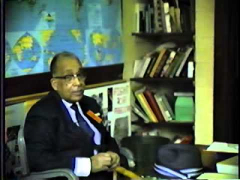
Rev. Reid
Rev. Reid
Rev. Reid

Steps toward a Profitable Life

A man came to the river early in the morning and stumbled upon a bag. He opened the bag; it was full of stones. Sitting on the bank, he started throwing those stones into the river. By and by, it became light and the sun started coming up. The last stone was left. He looked and started crying and weeping. And some people gathered asked ‘What is the matter?’ He said ‘This is a diamond, and I have thrown hundreds. I was thinking these are just pebbles. But only the last is left.‘ He was fortunate – at least he became aware with one left. Millions of us die without seeing a returning on our investment of thousands of hours of effort, even in old age; we go on working, spending and throwing away life in meaningless activities, and then we die without knowing the true principles of living.
There are two steps toward a profitable life. One, the elimination of whatever may cause us to perish and miss the Kingdom of heaven and two, the daily practice of loving ourself and others in relationship with Christ.
Jesus in the Sermon on the Mount gave a number of blessings, especially the first one. But He also gave several ways toward a profitable life.
What is meant by “profitable” in the spiritual realm?  It means living according to God’s will and plan. This is the currency of Heaven, the real money or value that yields eternal life. Jesus revealed several ways to live successfully in Matthew chapter 5 in addition to the beatitudes but there is a problem. Many of us fall short when it comes to the currency of reconciliation.
Simple matters of finances and paying what we owe, adultery, revenge and loving our enemies in the way that Jesus advocated. When it comes to these matters we are not ready to let God’s will be done. We don’t know the way to a gainful life in Christ.
Let me tell you a little more on these two steps toward living a bountiful spiritual life.
First we must eliminate what may cause us to perish and miss the Kingdom of God. We must become yes-sayers, not no-sayers. Jesus was a yes-sayer! But our mind always says no. Rene Descartes, the French philosopher said “Cogito ergo sum:” “I think therefore I am.” Our mind says: “I say NO therefore I am.” It is a no-saying mind; it goes on saying “no” to life and yes to what stands in the way of our entry into the Kingdom. Jesus says, “If our right eye cause indulgence we must pluck it out and throw it away. This is a way of saying the part has to be sacrificed for the whole. The whole cannot be sacrificed for the part. It is a way of saying if we find any part of our being is creating disturbance between us and God, it has to be surrendered. It is better for us to lose one part of our body than for our whole body to be lost. He is saying it is better to gain profit in the spiritual world than to build up treasure here and lose our soul.  Saying yes to eternal life is the real return on our investment of time, energy and resources in this world and beyond.
A second step in living a beneficial life is the daily practice of loving ourself and others. In John 21: 15 – 17, Christ three times asks Simon Peter ‘Do you love me?’ and Peter affirms with increasing earnestness each time. When Jesus asks the first time ’Do you love me, Peter?’ he uses the word AGAPAO; it means, ‘Are you in a STATE of love with me? Jesus meant ‘has your love for me become your love for the whole (God) not the part? Do you love me not only as a person but as a representative of God? Do you see my Father in me? Can you see in me God himself?’ That is the meaning of AGAPAO: it implies prayer, compassion. This state of love goes further than Eros, Philo or Agape love. To say “yes,” to Christ means to be mentally, physically and spiritually in relationship with God, which is more than the sum of the parts of ourselves or others.
Today take the steps toward a profitable life in Christ by saying “yes” to God which is the whole never the part. Nothing stands in the way of our salvation. We are reborn to be in a relationship of love with God that endures now and forever.

Yanez Named College Sports Madness SWAC Softball Player of the Week

0

YANEZMONTGOMERY – College Sports Madness has named Alabama State catcher Aleesa Yanez the SWAC Softball Player of the Week.
College Sports Madness identifies players who have made the greatest impact on their team from each conference and on a national basis each week.
Through her last four outings, Yanez (5-8, So., C, Ventura, Calif./ Buena HS) hit
.357 (5-for-14) with one double, one homerun, two runs scored and six RBIs.
For the season, is hitting .417 with six doubles, three home runs, three stolen bases, four walks, 13 runs scored and 26 RBIs.
The Lady Hornets look to add to their win total as they travel to Huntsville, Ala., to face Alabama A&M in conference weekend series.

Leah J. Wiggins Earns Life Underwriter Training Council Fellow 
(LUTCF) Designation

0

Leah WigginsBIRMINGHAM, Ala. – Leah J. Wiggins, 334 6th Avenue South, Insurance and Financial Services Agent for Farmers Insurance® in Birmingham has earned the Life Underwriter Training Council Fellow (LUTCF) professional designation. The LUTCF is conferred only upon those individuals who meet or exceed the exacting qualification standards determined by the two organizations that jointly sponsor the designation, The American College and the National Association of Insurance and Financial Advisors (NAIFA).
The designation marks an agent’s long –term commitment to professionalism on behalf of clients, establishes the agent’s competence and business experience, marks commitment to The American College’s and NAIFA’s Code of Ethics and fosters additional professional development. In addition to the successful completion of five courses within a 10-course curriculum, LUTCF candidates must also complete an ethics course and be a member in good standing of NAIFA.
Conferees are honored during The American College’s national Knowledge Summit and Commencement exercises. This event will be taking place in 2015. Each fall, local NAIFA associations worldwide also hold local conferment ceremonies.
Wiggins is a member of the Alabama Association of Insurance and Financial Advisors and has been active in the profession for five years. She owns the Leah Wiggins Agency and is a Volunteer with Junior Achievement of Birmingham, a member of the UAB School of Business Alumni Board, the Cultural and Educational Advancement Foundation, Inc. and Omicron Omega chapter of Alpha Kappa Alpha Sorority, Inc.  For more information, visit Wiggins’ website at farmersagent.com/LWiggins1.
Leah J. Wiggins is registered with and securities offered through Farmers Financial Solutions, LLC
Member FINRA & SIPC