Home Blog Page 1519

A Cultural Look Into Birmingham’s Past, Inspiring Present-Day Audiences

0

Ballard HouseBIRMINGHAM, Ala. – Join us for a Cultural Dialogue, entitled “Landscapes/Gardens & The African-American Experience,” with Landscape Architect John Jackson, ASLA, principal of JPA, Inc., based in Memphis, Tenn.  The event will be presented by The Ballard House Project, Inc., Wednesday, April 23, 5:15 p.m. – 7 p.m. at the Birmingham Botanical Gardens.  The event is: Free and Open To The Public.
The Ballard House Project, Inc. is a 501c3 nonprofit organization, dedicated to preserving historical places and the contributions made by African-Americans that shaped and transformed Birmingham for decades since its early years.
The Ballard House Project includes the restoration of this historic building in the Birmingham Civil Rights District, installation of a sustainable herb, flower and vegetable garden for the community, as well as programming cultural workshops and community events.  The Ballard House Project celebrates the history of Birmingham’s people of color – how they lived, worked, socialized, and served their community. With events meaningful to the community, we strive to become a modern-day, cultural gathering place.
Guest Speaker John Jackson, ASLA, one of the few African-American landscape architects in the country, will visually highlight unique, historical design influences from the African-American experience in his projects, including:
Dr. Martin Luther King Nat. Historic Site, Atlanta, Ga.
National Civil Rights Museum, Memphis, Tenn.
Tuskegee University Historic District
Tuskegee Airmen National Historic Site
Henry ‘Hank’ Aaron Park, Mobile, Ala.
Medgar Evers Home, Jackson, Miss.
23 Historically Black Colleges & Universities
Bennie Thompson Academic & Civil Rights Research Center, Tougaloo College, Jackson, Miss.
Dr. Martin Luther King, Jr. Corridor, Valdosta, Ga.
Harlem District Streetscape, Albany, Ga.
The Ballard House Project, Inc., Birmingham, Ala.

The Ballard House Project, Inc. will recognize the local work of WE Community Gardens.
Partners: Alabama Power Foundation and Generous Contributors

For more information, visit www.ballardhouseproject.org or contact (205) 731-2000.

The Ballard House Project, Inc.
Cultural Space & Gardens
1420 7th Avenue, North, Birmingham, Alabama  35203

Former NBA Star Launches Weekend Getaway Vacations to Colorado for Legal, Safe Recreational and Medical Marijuana Consumption

0

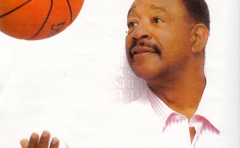
Former NBADENVER, Colo. (BlackNews.com) — Mile High Classic Tours LLC, a new Colorado tour organizer, is offering unique weekend getaways to help out-of-state visitors connect to the state’s marijuana dispensaries for safe recreational and medical marijuana consumption.
Founded by former NBA Star Roland “Fatty” Taylor who played for the Denver Nuggets in the 1970′s, the company promotes a two-night vacation to Denver, which includes guidance on how to make recreational or medical marijuana to a vacation in the metro area. After arrival at the airport, guests are taken directly to a tour of Medicine Man dispensary and later to a welcome buffet dinner party at Classics Events Center.
“When they see and tour Medicine Man, they get to see firsthand what’s needed to grow and sell a safe, controlled product in a safe, state-inspected environment. Our focus is educational first, then entertainment and enjoyment. We educate people about the industry and the laws,” explained Al Bowen, a retired real estate and mortgage broker, who is one of two entrepreneurs behind Mile High Classic Tours.
Bowen is the chief operating officer and his business partner Roland “Fatty” Taylor, a retired Nuggets basketball player, is the chief executive officer.
Their vision is to showcase Colorado’s outdoor and entertainment destinations by promoting to the new market segment created by the state’s burgeoning cannabis industry.
The Mile High Classic Getaway includes air fare between Denver and cities like Washington, D.C., Atlanta, Houston and Dallas. The plan is to fill each tour with 100 guests from different cities. Overnight accommodations are provided in the heart of downtown, convenient to several shopping and arts districts and within walking distance of a few dispensaries as well as trails and parks. The monthly tour offers plentiful free time where guests can enjoy the city, plus an optional day trip to the casinos in the historic mountain towns of Black Hawk and Central City.
“When I sat down with a staff member at Crowne Plaza Denver to discuss ways our guests could enjoy a 420-friendly tour, she said the hotel has already hosted some cannabis tourists,” Bowen said. “She said they were easy-going, well-behaved and returned to the hotel hungry, so food sales at the restaurant and on-site shop went way up.”
A report by the state’s Department of Revenue shows taxes collected from just 59 recreational and medicinal marijuana businesses statewide were $2.9 million in January 2014. The figure indicates the total sales by all current businesses may have been more than $10 million for the first month that both recreational and medicinal cannabis were legally operating. And that figure is bound to multiply dramatically as another 101 recreational marijuana businesses are licensed but not yet operating.
Bowen concluded, “Enjoying cannabis has never been easier or safer. Colorado’s new laws protect consumers of recreational and medicinal cannabis by creating a secure way to buy with the peace of mind that you are getting quality products.”

Looking at the Best Teachers and Who They Teach

0

TeachingStrategies-MainPoor students and students of color are less likely to get highly effective teaching
By Jenny DeMonte and Robert Hanna
We want to get the best teachers to the students who need them most, but a review of data from the newest teacher evaluation systems show that that is not always what happens. In an analysis of the newest data, we find that in some areas, poor students and students of color are far less likely than others to have expert teachers.
However, this pressing issue of equal access to great teaching is on the radar of policymakers and advocates. It has taken center stage as a key education policy for the coming year. President Barack Obama spotlighted it in his fiscal year 2015 budget request. Federal officials at the U.S. Department of Education are on the verge of issuing a new strategy to require all states to update their plans to ensure that every student has equal access to high-quality teaching. All told, this is a good time to take a look at new educator evaluation data to see if the information generated by this new reform can illuminate this issue. The concern among policymakers and student advocates is that students in disadvantaged schools are less likely to have access to high-quality instruction than students in affluent schools.
Now that some states have evaluations of teacher effectiveness based on new accountability measures, it is possible to glean information about the distribution of teachers across school demographics. We made the following findings:
•    The new evaluation data confirms previous findings—in many places, poor children and children of color are less likely to be taught by a highly effective teacher.
•    Despite the overall pattern of inequitable distribution, there are some places where excellent teachers are more evenly deployed.
•    The places with a more balanced distribution of effective teachers are where we should look to learn about the policies and practices that help give all students access to great teaching.

New definitions of effectiveness in teaching
In the past five years, the definition of teacher effectiveness has undergone a shift from being based on credentials and years of experience to being measured by observations of instruction and student learning. In the No Child Left Behind Act of 2001, or NCLB, the most recent reauthorization of the Elementary and Secondary Education Act, Congress defined a highly qualified teacher as one with a bachelor’s degree who is state certified or licensed and demonstrates content knowledge in the subject area taught. Under that definition, the research is conclusive: Poor children and children of color are less likely to be taught by highly qualified teachers.
Yet in recent years—as the result of research done such as that by the Measures of Effective Teaching project—the definition of effectiveness has changed. Now, an indicator of effective teaching is more likely to be based on measures of student learning, observations of instruction, and other possible data. Although there is some debate over the exact mix of student achievement, observations, and results from other measures that combine to create an evaluative rating for a teacher’s effectiveness, there is consensus among researchers that it should include multiple measures.
Most states have already begun to use new systems to evaluate teachers or will begin to do so in the upcoming school year. The data from these systems, which are ratings of teachers based on multiple measures, can be used to probe whether all students—regardless of background—have access to highly effective teachers.
Using new evaluation systems to observe teacher distribution
We took a close look at Louisiana and Massachusetts, two early adopters of new teacher evaluation systems that have released effectiveness data using new measures. These states released the percentages of teachers in each rating category by state, district, and school. But neither state released the data in a way that individual teachers’ ratings were made public; they instead put out percentages of teachers’ evaluation ratings by school.
We compiled poverty data for each school in the two states based on the percentage of students in each school who were eligible for free or reduced-price lunches, as well as enrollment data based on the percentage of students of color enrolled.
Using these data for each school available on the states’ websites, we were able to estimate the level of poverty and minority enrollment for each school.
The distribution of effective teachers in Louisiana
Our analysis of equitable teacher distribution in Louisiana includes 1,265 schools for which there were reported data on the results of teacher evaluation. The state requires every teacher to be evaluated, with 50 percent of the evaluation rating based on student growth and the rest based on other measures of teacher performance, such as observations of instruction. The state developed and piloted a state evaluation system called Compass that districts can use but that also allows districts to develop and use their own local evaluation systems as long as they comply with state law.
Louisiana has four effectiveness ratings for teachers: “Ineffective,” “Effective-Emerging,” “Effective-Proficient,” and “Highly Effective.”
To determine the level of poverty in schools, we looked at the percentage of students enrolled in a school who were eligible for free or reduced-price lunches. We then looked at the 25 percent of schools with the greatest proportion of students in poverty and compared them to the 25 percent of schools with the smallest proportion of students in poverty. Louisiana has 316 schools with the highest levels of poverty, with 90 percent or more students qualifying for free or reduced-price lunches, and the same number with the lowest levels of poverty, with 57 percent of students or less qualifying for the lunches.
We did the same for minority enrollment, selecting the 25 percent of schools with the greatest concentration of students of color compared to the 25 percent of schools with the lowest percentage of students of color. Schools in the top quartile of minority enrollment had 84 percent students of color or more, and schools in the lowest quartile had 25 percent students of color or less.
The graph below shows the distribution of teachers between the districts with the most affluent and most impoverished students. Based on the new evaluation data, a student in a school in the highest-poverty quartile is almost three times as likely to be taught by a teacher rated ineffective as a student in a school in the lowest-poverty quartile. Looking at the other side of the effectiveness spectrum, the proportion of highly effective teachers in impoverished schools is about 40 percent less than the percentage in low-poverty schools.
Looking at the distribution of teachers by minority enrollment in schools, students in schools with high minority enrollment are more than twice as likely to have an ineffective teacher as students in schools with low minority enrollment. Conversely, a student in a low-minority-enrollment school is 38 percent more likely to have a highly effective teacher than a student in a high-minority-enrollment school, though the concentration of Effective-Proficient teachers is slightly higher in the highest-minority-enrollment schools.
The distribution of effective teachers in Massachusetts
There were 1,849 schools in Massachusetts last year, and this analysis includes data from 823 schools in the state’s Race to the Top districts that implemented new evaluation systems in the 2012-13 school year. The current school year is the first in which the remaining districts will be required to implement evaluation systems. Districts had to either adopt the state’s model evaluation system or develop their own and earn state approval. All Massachusetts districts must have four effectiveness ratings for teachers—“Unsatisfactory,” “Needs Improvement,” “Proficient,” and “Exemplary”—and these ratings must include multiple measures, including student achievement based on the state-mandated standardized test and classroom observations of instruction.
We grouped the schools in Massachusetts as we did for Louisiana, selecting the 25 percent of schools with the highest poverty concentration and the 25 percent of schools with the lowest poverty concentration. That grouping leaves us with 206 schools in the lowest quartile of poverty, with 20 percent or less students qualifying for free and reduced-price lunches and 205 high-poverty schools in which at least 77 percent of students qualify for subsidized lunches.
In Massachusetts, the percentage of teachers rated Unsatisfactory is small overall, but students in high-poverty schools are three times more likely to be taught by one of them. The distribution of Exemplary teachers favors students in high-poverty schools, who are about 30 percent more likely to be taught by an exemplary teacher than are students in low-poverty schools. However, students in high-poverty schools are less likely to be taught by a Proficient teacher and more likely to be taught by a teacher who has received a Needs Improvement rating.
The top quartile of schools in terms of minority enrollment included 206 schools with more than 77 percent students of color, while the lowest quartile included 204 schools with fewer than 14 percent students of color. As in Louisiana, few teachers in these schools were rated Unsatisfactory.

What the data tell us about the equitable distribution of teachers
Clearly, there are some places where poor students and students of color have fairly equitable access to highly effective teachers and some places where they do not. But if we want to make sure that every student has access to excellent teaching, then we need to take steps to ensure that there are high-quality teachers in every school. There are a number of policies that are being enacted to attract excellent candidates into teaching and retain great teachers in the profession.
One district that has tackled this with some success is Ascension Parish Schools in Louisiana. The district of about 21,000 students is diverse, with almost half of students eligible for free or reduced-price lunches and 40 percent students of color.
One way the district achieved this was through the institution of systems that led to improvement in teaching quality, with a focus on the district’s most disadvantaged schools, according to Ascension Parish Superintendent Patrice Pujol. Ascension Parish Schools use TAP: The System for Teacher and Student Advancement, which includes as part of its design an emphasis on teacher evaluation, feedback, and collaboration around improvement.
The distribution of effective teachers in Ascension Parish highlights another policy lever—helping teachers in all schools become more effective. This analysis points out how important it is to locate places where there is an equitable distribution of teachers and find out what educators do there to make sure all students have access to great teaching. The new evaluation data, which are already indicating that there is inequitable distribution of excellent teachers, are a reminder that this problem has not been solved by education reforms over the past decade.
The solutions for districts have been discussed and reported on before, but they are worth repeating here:
•    Identify high-quality teachers by improving data about teaching effectiveness.
•    Use data on the effectiveness of teachers to determine the distribution of these teachers across schools and classrooms.
•    Retain effective teachers by reforming career and compensation systems.
•    Increase the reach of highly effective teachers by creating roles for master and mentor teachers to support and coach their colleagues.
•    Encourage effective teachers to move to disadvantaged schools through incentives such as differentiated compensation.
•    Improve the effectiveness of all teachers through proven professional development.
•    Improve recruitment of new teachers, with the goal of hiring an effective teacher workforce.

This list may seem daunting, but even working toward one or two of the policies listed above could improve the quality of teaching in schools and greatly increase the chance that disadvantaged students get a level of superb instruction that could change the course of their lives.
Jenny DeMonte is the Associate Director for Education Research at the Center for American Progress. Robert Hanna is a Senior Policy Analyst at the Center.


Miss Teen Birmingham 2014

0

Rachel StovesRachel Stoves of Birmingham was recently crowned Miss Teen Birmingham 2014. The pageant competition was held Oak Mountain High School on February 9.
Rachel is the daughter of Roy and Angela Stoves of Birmingham and her siblings are Ashley and Ryan Stoves. Rachel is the granddaughter of Carrie Wright Morgan of McCalla, Alabama. She is an active member of The Guiding Light Church under the leadership of Bishop Jim Lowe.
Rachel is a graduating senior at Leeds High School. She is a member of The National Honor Society with a 3.8 GPA; International Thespian Society and Media Editor of The Quill and Scroll National Honor Society. She is currently President of the FBLA 2014 and active in the FCCLA; also a member of the Green O’Dears Dance Line.
Rachel was awarded a one week all-expense paid trip to Orlando, Florida; representing Birmingham, Alabama to compete in the 2015 National Pageant Competition awarding over $30,000 in cash, scholarships and prizes.

To Work Better, Take a Vacation

0

Vacation (NAPSI)—Perhaps one of the best-kept secrets for staying happy and efficient at your job may be what you do outside office walls.
Why To Vacation
According to new research by the Society for Human Resource Management, employees who take regular vacations enjoy greater productivity, increased job satisfaction and higher organizational morale than those who don’t.
Despite such studies, not all working Americans have a positive attitude about taking a vacation. In fact, 61 percent of organizations report that their employees leave behind three or more unused vacation days a year. Taking full advantage of earned time off – as well as completely “unplugging” while away—may seem an odd way to get ahead but it can be a great gift to your employer and yourself.
What You Should Know
One thing that may help you get yourself that gift is a vacation ownership. Here are three reasons:
1. Your vacation is paid for in advance. Because of the prepaid nature of a timeshare, you never have to think about finding or funding accommodations throughout the length of your trip. You can cost effectively enjoy vacation lodging every year for the rest of your life without the burden of paying increasingly more for your stay, as you would for hotel rates, which continue to rise.
2. You’re guaranteed consistent time away. Owning a timeshare can instill in you the discipline of taking time away, at least once a year, from hectic work schedules to relax and recharge in high-quality accommodations. Plus, if you partner with a timeshare exchange company, you can swap out your stay at your “home” resort for one in a new destination.
3. Time away and together is healthy for the entire family. Beyond the individual benefits of coming back to the office more motivated, creative and innovative, family and friends can share in the excitement, closeness and health benefits of regular rest and reprieve. Many timeshare companies let you pass timeshare investments through generations, so your children can inherit and enjoy your timeshare for many more years.
Travelers who value variety often choose vacation exchange companies such as RCI, which has been delivering dream vacations for 40 years, because of its expansive portfolio of more than 4,000 affiliated resorts.
Where To Sample A Stay
Those considering vacation ownership can try the timeshare experience firsthand before they purchase by booking a stay through Endless Vacation Rentals at www.evrentals.com.

Happy Birthday Jeremy

0

Happy BirthdayJeremy D. Welton Jr. is turning 1!!!!!
Jeremy you are amazing, loving, and charming! You have truly been a blessing to our family!
Love Mommie, Daddy, and Big Sister Jaelynn

Holder urges approval of $15M for shooter training

0
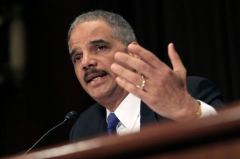
Attorney General Eric Holder testifies before the House Judiciary Committee on the oversight of the U.S. Department of Justice on Capitol Hill in Washington, Tuesday, April 8, 2014. (AP Photo/Manuel Balce Ceneta)

WASHINGTON (AP) — Attorney General Eric Holder is urging Congress to approve $15 million for training law enforcement officers in handling shooting rampages.
Holder’s comments follow the recent shootings at a Jewish Community Center in Kansas and at Fort Hood, Texas.
In a video message posted on the Justice Department website Tuesday, the attorney general says training is critical since patrol officers who arrive first on the scene are increasingly being relied on to respond directly to shooters rather than waiting for SWAT teams.
The Justice Department and the FBI have provided this special training to 50,000 front-line officers in the past decade.

Man cleared of NYC murder after 25 years in prison

0
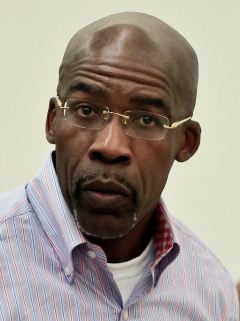
Jonathan Fleming listens during his hearing at Brooklyn's Supreme court, Tuesday April 8, 2014 in New York. (AP Photo/ Bebeto Matthews)
 Jonathan Fleming listens during his hearing at Brooklyn's Supreme court, Tuesday April 8, 2014 in New York. (AP Photo/ Bebeto Matthews)
Jonathan Fleming listens during his hearing at Brooklyn’s Supreme court, Tuesday April 8, 2014 in New York. (AP Photo/ Bebeto Matthews)

By JENNIFER PELTZ

NEW YORK (AP) — From the day of his 1989 arrest in a deadly New York City shooting, Jonathan Fleming said he had been more than 1,000 miles away, on a vacation at Disney World. Despite having documents to back him up, he was convicted of murder.
Prosecutors now agree with him, and Fleming left a Brooklyn court as a free man Tuesday after spending nearly a quarter-century behind bars.
Fleming, now 51, tearfully hugged his lawyers as relatives cheered, “Thank you, God!” after a judge dismissed the case. A key eyewitness had recanted, newly found witnesses implicated someone else and prosecutors’ review of authorities’ files turned up documents supporting Fleming’s alibi.
“After 25 years, come hug your mother,” Patricia Fleming said, and her only child did.
“I feel wonderful,” he said afterward. “I’ve always had faith. I knew that this day would come someday.”
The exoneration, first reported by the Daily News, comes amid scrutiny of Brooklyn prosecutors’ process for reviewing questionable convictions, scrutiny that comes partly from the new district attorney, Kenneth Thompson. He said in a statement that after a months-long review, he decided to drop the case against Fleming because of “key alibi facts that place Fleming in Florida at the time of the murder.”
From the start, Fleming told authorities he had been in Orlando when a friend, Darryl “Black” Rush, was shot to death in Brooklyn early on Aug. 15, 1989. Authorities suggested the shooting was motivated by a dispute over money.
Fleming had plane tickets, videos and postcards from his trip, said his lawyers, Anthony Mayol and Taylor Koss. But prosecutors at the time suggested he could have made a quick round-trip plane jaunt to be in New York, and a woman testified that she had seen him shoot Rush. He was sentenced to 25 years to life in prison and was due to have his first parole hearing soon.
The eyewitness recanted her testimony soon after Fleming’s 1990 conviction, saying she had lied so police would cut her loose for an unrelated arrest, but Fleming lost his appeals.
The defense asked the district attorney’s office to review the case last year.
Defense investigators found previously untapped witnesses who pointed to someone else as the gunman, the attorneys said, declining to give the witnesses’ or potential suspect’s names before prosecutors look into them. The district attorney’s office declined to comment on its investigative plans.
Prosecutors’ review produced a hotel receipt that Fleming paid in Florida about five hours before the shooting — a document that police evidently had found in Fleming’s pocket when they arrested him. Prosecutors also found an October 1989 Orlando police letter to New York detectives, saying some employees at an Orlando hotel had told investigators they remembered Fleming.
Neither the receipt nor the police letter had been provided to Fleming’s initial defense lawyer, despite rules that generally require investigators to turn over possibly exculpatory material.
Patricia Fleming, 71, was with her son in Orlando at the time of the crime and testified at his trial.
“I knew he didn’t do it, because I was there,” she said. “When they gave my son 25 to life, I thought I would die in that courtroom.”
Still, she said, “I never did give up, because I knew he was innocent.”
Thompson took office in January, after unseating longtime District Attorney Charles “Joe” Hynes with a campaign that focused partly on questionable convictions on Hynes’ watch. Hynes had created a special conviction integrity unit to review false-conviction claims, but some saw the effort as slow-moving and defensive.
Thompson has agreed to dismiss the murder convictions of two men who spent more than 20 years in prison for a triple homicide. He also dropped his predecessor’s appeal challenging the 2013 release of another man who had served 22 years in prison on a questioned murder conviction.
On Tuesday, Jonathan Fleming left court with an arm around his mother’s shoulders and the process of rebuilding his life ahead of him.
Asked about his plans, he said: “I’m going to go eat dinner with my mother and my family, and I’m going to live the rest of my life.”

Congress Urges Air Force to Support Religious Freedom

0

CongressBipartisan letter asks Secretary of the Air Force to revise religious freedom regulations
 
WASHINGTON, D.C. – Today, bipartisan members of the House of Representatives submitted a letter to U.S. Air Force Secretary Deborah Lee James, urging a revision to Air Force regulations to allow greater religious freedom in the Air Force.
The joint letter states: “We are concerned that the Air Force has not updated its regulations on religious freedom and appears to have the most restrictive policy of any military service.” In addition, it expresses concern that “Air Force religious freedom regulations and practices are inconsistent with the Constitution and with current law.” The letter also demands that the Air Force “correct this immediately” by revising Air Force regulations to ensure that the Air Force protects the religious freedom of all Airmen.
Mike Berry, Liberty Institute Senior Counsel and Director of Military Affairs, praised the policymakers’ initiative. “We are grateful that our elected officials responded so quickly and decisively to this issue,” he said. “They are rightfully concerned that the Air Force is not acting in accordance with Department of Defense policy. History demonstrates that religious freedom is vital to a strong military. With this letter, Congress is asking the Air Force to protect religious freedom in accordance with the Constitution and Department of Defense policy, which will ensure that we continue to have a strong military.”
Recently, the Air Force has been at the center of numerous controversies related to religious hostility within the military. Liberty Institute compiled many of those instances of religious hostility and, in January, provided them to the House Armed Services Committee as part of its written testimony.

Liberty Institute is a national law firm dedicated to defending and restoring religious liberty across America — in our schools, for our churches, in our military and throughout the public arena. Liberty’s vision is to reestablish religious liberty in accordance with the principles of our Founding Fathers. For information, visit www.LibertyInstitute.org.

Coroner: Grambling student death was accidental drowning

0

Grambling LAFAYETTE, La. (AP) – An autopsy revealed that a 21-year-old woman who was found dead in a Lafayette park died due to an accidental drowning.
The investigation began after Lafayette Police officers located the body of Alexandria Shelton in Girard Park shortly after midnight on Sunday, April 13.
Cpl. Paul Mouton said friends of the victim told investigators they last spoke to Shelton around 8:30 p.m. Saturday and she was supposed to meet them but never arrived.
He says her friends called her cell phone after not hearing from her and a man answered, saying he found the phone in the park. The friends drove to the park, took the phone from two men and called police.
According to a statement released Monday morning by Grambling State University, Shelton was a senior criminal justice major with a 3.5 cumulative GPA and was a member of the Earl Lester Cole Honors College “who enjoyed life, shared close family and friendship ties and was scheduled to graduate at a May 9 commencement.”
The statement notes that Shelton was on campus and in class on Friday, 2 days before her body was found. She was reported missing late Saturday.
“We’ve just been in shock since we first heard early Sunday that the body of a young woman found in a Lafayette city park was likely one of our own,” said GSU President Frank G. Pogue. “We immediately reached out to the family and we’ve been cooperating with Lafayette police. We know how important the first 24 to 48 hours of a police investigation can be.”
Pogue said GSU Provost Connie Walton is completing the necessary paperwork to seek approval of awarding Shelton’s degree posthumously.
In addition, Stacey Duhon, vice president for student affairs and interim vice president for institutional advancement, is working with the Foster-Johnson Counseling Center to make sure grief counselors are available. Interested students can call the Foster-Johnson Counseling Center at 318-274-3277 to talk with someone.