FAIRFIELD, AL (WBRC) – The City of Fairfield’s police chief is speaking out after one council member proposed doing away with the Fairfield Police Department.
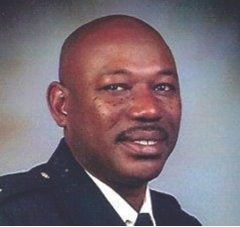
Fairfield Police Chief Leon Davis has spent the past 23 years serving and protecting Fairfield, and sums up very quickly how he felt when Council Member Willie Hardley suggested firing the department.
“Even the suggestion of terminating this department was a slap in the face to a lot of these guys and ladies who put their lives on the line daily for this city,” said Chief Davis.
The suggestion came after Hardely felt he wasn’t getting answers from the Mayor or the police about a recent case involving city property, and other recent burglaries.
“In terms of what they’ve solved were not hearing anything, reports nothing,” said Hardley.
However, the Chief isn’t supposed to report to the council; he reports to the mayor.
“Me and the mayor have an open line of communication. We speak maybe once or twice a daily. Even during the weekend we speak on things that are happening,” said Davis. “I think that one of the biggest problems is that some council members want to have authority, directive, the approval from the mayor to give us directives which the mayor is not going to do. and he’s instructed us we’re not to take directives from the council. He is our immediate supervisor who we answer to.”
Hardley says those conversations between the mayor and the chief should be relayed to council.
Davis says burglaries and thefts are down 30-40 percent in Fairfield, and his department is under staffed by 30 officers.
“Since this council has taken office and Mr. Hardley was named Chairman of Public Safety, I have not met with him, he has not asked me what does the police department need, he has not questioned me as to what we can do to make this police department strong, there has been no communication between us as far as what we can do to improve public safety,” Davis said.
Hardley tells me he never actually spoke to the Sheriff’s office about the possibility of them taking over Fairfield’s jurisdiction.
“I hate that it had to get to this point but I just wanted to get their attention. I wanted the mayors attention so I’m hoping we got his attention to do something,” said Hardley.
Tuesday night the council had a planned special meeting to discuss an ongoing investigation about the theft of some city property. That meeting was cancelled because not enough council members were in attendance. FOX 6 has learned that one absent council member, Primuse Mack, was unable to attend because he was behind bars in the Jefferson County Jail in Bessemer. Mack is charged with enticing a minor.
By Gwen DeRu
Here’s wishing you a safe, healthy 2014…plus ‘all’ that you wish for you and yours!!! Enjoy….and Share the remainder of the Season! HAVE A HAPPY NEW YEAR!!!!
HAPPY BIRTHDAY LeBOISE DeRU, SENATOR LINDA COLEMAN, BETTINA BYRD-GILES, RENEE KEMP-ROTAN, DRU HARRIS EALONS, CHUCK GEISEE, JAMES WILLIAMS, KYLE WHITMIRE, WILLIAM BARNES and HAROLD COX.
SHOWTIME BIRMINGHAM STYLE 2014 – PERFORMERS ARE INVITED – The Sickle Cell Foundation of Central Alabama is inviting all performers that might be interested in performing at the Showtime Birmingham Style 2014 to audition Saturday, January 18 at the downtown Birmingham Sheraton Hotel, 9 a.m. DETAILS – Must be 21, bring your music on CD (or instrument), sing, dance, a comedian, an instrumentalist or a member of a choir (individual or group. There is no Entry fee. It is a black tie, red carpet event on Saturday, February 1st. There will be a First Place Prize – $1,000, Second Place – $500 and Third Place – $250. Call (205) 780-2355 or 1-800-735-0405 or email caprenia.anthony@yahoo.com.
FREEDOM TREE PLANTING – The public is invited to attend the Freedom and Tree Planting reception and kick-off featuring Mayor William Bell, Sr., former NFL player Gary Burley and music legend Bootsy Collins who will debut the commemorative song and video, Saturday, 2 p.m. at the Birmingham Civil Rights Institute. Call (205) 943-2006 for more. Or email prostartacademy@bellsouth.net. FOR ART LOVERS….
A New Art Form by Artist John Solomon Sandridge – A portion of the proceeds will go to BCRI Reception with Artist, Saturday, January 11 at 3 p.m.
The Birmingham Civil Rights Institute (BCRI) will present “Numinousneoism™, an exhibition by internationally acclaimed artist John Solomon Sandridge on January 13 through March 23, 2014 in BCRI’s Odessa Woolfolk Gallery. A special reception with the artist will be held Saturday, January 11 at 3 pm in BCRI’s Rotunda. The reception is free and open to the public. For more information call 205-328-9696 x 234. BIRMINGHAM ATTORNEY GOES TO EGYPT – Local attorney Kathleen Johnson, of the firm Gespass and Johnson, has been selected to observe the referendum on Egypt’s proposed new constitution, scheduled to take place on January 14 and 15, as part of a United States delegation organized by Democracy International. She has vast experience in human rights and election work in some of the world’s most dangerous places, beginning as a United Nations Volunteer in Bosnia during, and immediately after, the wars in the former Yugoslavia. Since, she has investigated allegations of war crimes in Albania and Kosovo and has observed elections in Pakistan and Afghanistan. She has also served in various capacities for elections in less troubled countries, including post-war Bosnia and Croatia, Macedonia, Moldova, Estonia, Ukraine and Venezuela. Her international human rights advocacy has taken her to the Philippines, Bosnia, Croatia and Tajikistan. MOUNTAIN BROOK CHAMBER OF COMMERCE FOURTH ANNUAL LUNCHEON – The Mountain Brook Chamber presents its Fourth Annual Luncheon, Thursday, January 16, 11:30 a.m. at the Club Grand Ballroom. Mr. Richard C. Kessler Chairman and CEO of the Kessler Enterprise, Inc. is the keynote speaker. Reservations are required. Call (205) 871-3779 or welcometomountainbrook.com REGISTER FOR THE V2V 10K – Register for the (Village to Village Run) January 25, 8 a.m. at welcometomountainbrook.com. MARTIN LUTHER KING, JR. DAY OF SERVICE – Ruffner Mountain Nature Preserve will honor Martin Luther King Jr. Day (January 20) with a day of service project coordinated with Hands On Birmingham to work on Long Leaf Cottage, one of the Preserve’s original buildings, that is being renovated into an educational facility for the Preserve. The annual day of service commemorates the civic contributions of Dr. Martin Luther King Jr. This is the 14th year that Hands On Birmingham has coordinated one of the largest days of service in the Hands On Network nationally.
Volunteers can register at http://www.handsonbirmingham.org/MLK. FOR OUTDOORS LOVERS…
THIS SATURDAY, 9 a.m. Dayhike at the Limestone Rail Trail in Elkmont, Alabama. Details: This trail is located in extreme North Alabama just to the west of I-65 and a few miles south of the Tennessee-Alabama border. The hike is rated easy. We will hike a total of 5.3 miles. There is lots of lovely scenery along the path that was once a part of the Tennessee and Alabama Central Railroad. We anticipate that fall color will abound in the trees surrounding the trail. The trail is flat, no hills, and it winds through wetlands with wildlife and a great variety of birds. On the trail you will pass the site of the Civil War Battle of Sulphur Creek Trestle. There is a brief presentation, at the beginning of the trail by Richard Martin (who is responsible for the trails created) on how the trail was created. Well-behaved, supervised children age eight and over able to walk 6 miles without complaining are welcome. There is an optional dinner afterwards. Depart 9 a.m. from the Hayden/Corner Park and Ride. Info: Terry Clement, (205)221-5901.
THIS SUNDAY, 1 p.m. Dayhike in Oak Mountain State Park. Details: Enjoy a moderate four-mile walk in the woodlands near Birmingham on a Sunday afternoon. This is an excellent outing for introducing your friends to Southeastern Outings and for making new friends who enjoy the outdoors. Parts of this hike may be off the color-coded trails. There will be some ups and downs. Well-behaved, properly supervised children age eight and up able to walk the distance of about 4 miles and complete the hike are welcome. Share an adventure! Bring a friend. Depart 1 p.m. from the Oak Mountain Park office parking lot. Please bring $3/person ($1 seniors) park admission fee plus your drink. Info: Bonnie Black, (205)764-2989 CLASSES FOR MANAGING ‘YOUR’ MONEY – MAKE SMART MONEY MOVES – The Birmingham Public Library is offering free classes on money in the LAST The last CLASS is Jan. 23 – FOR CHILDREN….Bring the little ones to see Phillip “Mr. Mac’’ McEntee as he leads “A Penny Saved’’ in this 3:30 p.m. children’s program at Avondale Library, 509 – 40th St. South. Using Benjamin Franklin’s quote, “A penny saved is a penny earned,’’ Mr. Mac will teach children about the importance of saving money. The classes are part of a national grant program known as “Making Cents: Resources to Help Your Money Grow” and “Smart investing@your library®,” a partnership between the American Library Association and the FINRA Investor Education Foundation. The Birmingham Public Library and 14 other libraries in Jefferson and Shelby counties offer the series. The programs will end in May 2014. Other BPL locations include Avondale, Five Points West, North Birmingham and Springville Road. All classes are free and open to the public. For more information, call Jim Murray at (205) 226-3690, visit www.making-cents.org.
HERE ARE A FEW MORE THINGS GOING ON…
THIS WEEKEND….
**CARLOS MENCIA at the STARDOME COMEDY CLUB. The Mind of Mencia (Comedy Central) and HBO Specials Comedy Central presents Carlos Mencia WB Recording Artist at the Stardome, again. WE love him here in Birmingham.
THEN, AT THE STARDOME… DON’T MISS… next weekend, COREY HOLCOMB on January 17-19 and HENRY CHO on January 30-February 2. Tell Bruce that Gwen sent you. Enjoy some good laughter and fun times while you eat some great food with your great friends. See you there! For more, call (205) 444-0008.
TODAY… STEVE ROBERTS QUARTET with ASHLEY ROBERTS, 8 p.m. at Ona’s Music Room.
FRIDAY…
**FRIDAY AFTER WORK, 4:30 – 9:30 p.m. at 25 West Oxmoor Road, Suite 26 in Homewood. Call (205) 572-1295 for more.
**STEVE MCCULLOUGH BAND 10 p.m. at Ona’s Music Room.
SATURDAY…
**ON PURPOSE with DWIGHT HOUSTON, 10 p.m. at Ona’s Music Room.
SUNDAY….
**PHASE II BAND AND SHOW, 9 p.m. at Tide & Tiger Lounge, 409 Graymont Avenue (across from Legion Field.) For more, call (205) 229-4829 or 502-3880.
MONDAY….
**NAPPY NIGHT – Music at Boujee Lounge, every Monday at 204 Avenue U in Pratt City, 8 p.m. with good jerk food, vendors and music. See you there on Mondays!
TUESDAY…
**MUSIC with DJ BATMAN…at the New Tide and Tiger!!
WEDNESDAY…
**MUSIC with DJ BATMAN…at the New Tide and Tiger!!
AT THE NEW TIDE AND TIGER – In the neighborhood… Around the corner… Down the street…and across from the Legion Field Stadium on Graymont is the ‘new’ TIDE AND TIGER…. With music, good food and fun times. You can even play cards on some nights and get Dance Classes by PASQUALES every Saturday at 4 p.m. Check out the ‘new’ Tide and Tiger Lounge. For more call (205) 503-3880. Don’t say that I did not tell you when you hear about this ’best kept secret’ around. Tell them Gwen sent you.
**BAMA presents UAB Brass Quintet in free concert – The Birmingham Art Music Alliance will present the University of Alabama at Birmingham Department of Music’s Brass Quintet in a free concert of newly composed music by BAMA members at 7:30 p.m., in the Samford University Brock Recital Hall, 800 Lakeshore Drive.
COMING SOON…,
IN 2014 –
JANUARY 23 – NAREK ARUTYUNIAN, clarinetist performs Thursday, at the Alys Stephens Center.
JANUARY 24 and 26 – RIGOLETTO, Friday, 7:30 p.m. and Sunday, 2:30 p.m. at the Wright Center, Samford University with Todd Thomas (Baritone, Rigoletto), Jan Cornelius (Soprano, Gilda), Michael Wade Lee (Tenor, Duke) and Steven White, Conductor. Call (205) 322-6737.
JANUARY 25 – C. S. LEWIS’ WILLIAM AND THE SENATOR’S DAUGHTER, 7 p.m. at the Brock Recital Hall, Samford University.
FEBRUARY 1 – SICKLE CELL GALA at the Sheraton Hotel.
MARCH 8 – UNCF MASKED BALL GALA, 6 p.m. at the Sheraton Birmingham Ballroom. NOW…. a BIRTHDAY SHOUT OUT! HAPPY BIRTHDAY TO YOU DR. JESSE J. LEWIS, SR., LeBOISE DeRU, SENATOR LINDA COLEMAN, BETTINA BYRD-GILES, RENEE KEMP-ROTAN, DRU HARRIS EALONS, CHUCK GEISEE, JAMES WILLIAMS, KYLE WHITMIRE, WILLIAM BARNES and HAROLD COX.…AND TO ALL CELEBRATING!! HAPPY BIRTHDAY TO ALL YOU BIRTHDAY BALLERS…MANY, MANY MORE HAPPY BIRTHDAYS!! ENJOY!!
Well, that’s it. Tell you more ‘next’ time.
(People, Places and Things by Gwen DeRu is a weekly column. Send comments to my emails: thelewisgroup@birminghamtimes.com or gwenderu@yahoo.com)
Hailed with an abundance of accolades is superstar, original Dreamgirl, Jennifer Holliday. After a much needed hiatus, she returns taking her rightful place in mainstream music with the release of The Song Is You, her new album. Offering 15 beautiful tunes, The Song Is You sets the perfect mood for love.
Jennifer Holliday took Broadway by storm when she played Effie in the musical production of Dreamgirls. It was her performance that garnered a Tony Award. Likewise, her phenomenal recording of And I Am Telling You I’m Not Going (from Dreamgirls) earned her a Grammy. She went on to continue to make her mark on charts with singles I Am Love and I’m On Your Side. Now, Jennifer returns with her biggest project to date that encompasses a number of jazz and R&B standards. Need I say fans cannot be more excited?
All the melodies on The Song Is You are warm, rich and inviting. It is marvelous as Holliday is backed by an amazing orchestra. The stimulus behind Holliday’s latest (which was five years in the making) is the late, great composer Marvin Hamlisch – a dear friend of hers whom she had the privilege of working with. In fact, the title track (featuring Joe Gransden and The JG Big Band) is dedicated in his memory. Holliday puts an extraordinary spin a few classics such as “At Last”, “The Look Of Love”, “Nobody Does It Better”, and others lending her impressive vocals to each one. She gives a stellar show-stopping performance on “The One You Used To Be”, a title she penned. She closes the set with “Love Is On The Way”, a fantastic tune that is pushed to the limits with her signature moans – it definitely has the WOW factor!
The Song Is You is nothing short of priceless. It is set to hit retail on January 21st.
The two most important issues that the state of Alabama will be facing in 2014 are education and job creation. These two issues are usually tied together because education is so critical to getting a good job, as well as recruiting and growing business.
But education and job creation are also connected to two other important issues: gaming and a statewide lottery.
Gaming and the lottery have been issues in Alabama politics for decades now, and they still have not been resolved.
I have frequently and publicly been in support of establishing a statewide lottery. Estimates from the Legislative Fiscal Office show that we could bring in $250 million for our schools from a lottery.
Alabamians are already spending millions of dollars on a statewide lottery. We are just doing it in other states. Tennessee, Georgia and Florida all have their own lottery and are more than happy to take our money and spend it on their children’s education.
Mississippi does not have a state lottery, but their casinos in Philadelphia are certainly making money off of customers from Alabama. And the Indian gaming facilities in Alabama are reporting record growth in gaming revenues.
The time has come to let the people of Alabama decide the fate of gaming and a statewide lottery. This is a commitment Gov. Bentley made in 2010 when he said, “I believe the people of Alabama need to decide at the ballot box on a YES or NO vote whether to allow gambling or abolish all forms of gambling.” And I am asking the leadership in Montgomery to honor that commitment.
State leaders in Montgomery have tried to go around the voters and use the courts to determine the fate of gaming. I think that is wrong. This is a democracy, and we need to let the people decide.
That is why I will reintroduce legislation this year that will allow the voters to decide if we will create a state lottery. Under my bill, the revenue brought in from the lottery will only be used for education, with $50 million being used to put a school resource officer (i.e., security guard) in every public school while the rest of the revenue will be used to provide scholarships to students who make the A/B Honor Roll. These scholarships can help our children afford an education at any university, two-year college or technical school of their choice.
It is also time to decide – once and for all – if we will allow facilities like VictoryLand to continue to operate, and if we will enter into a compact with the Indians on their gaming facilities.
Currently, the state of Alabama has not entered into a compact with the Poarch Creeck Indians. The Indian’s gaming facilities are permitted under federal law, but because the state does not have a compact with them, we are missing out on millions of dollars that could go toward our schools, economic development and other state needs.
We need to negotiate a fair compact that allows the Indians to continue their operations but also guarantees that the state benefits as well.
And by going after VictoryLand and other legal gaming facilities, the only thing the state has done is eliminate jobs and prevent these facilities from paying taxes and creating more jobs.
It is time to resolve these issues once and for all. It is time to move forward and for state leaders to keep their promise to the people of Alabama. It is time to let the people vote!
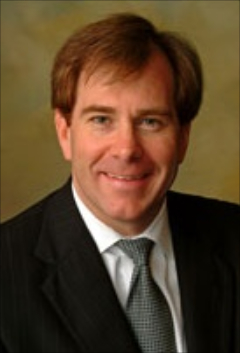
Rep. Craig Ford is a Democrat from Gadsden and the Minority Leader in the Alabama House of Representatives.
Proper planning can set you up for fundraising success. Visualize your success, feel it in your heart, and then make sure the prerequisites for fundraising success are in place before you start soliciting. Here are three tips to launch your 2014 fundraising in the right direction.
First, create a clear, concise, and compelling case for financial support that ties back to the organization’s strategic plan. Your case should be a short, and easy-to-read, forward-looking document that communicates what you are raising money for and how the funds will be used. It should communicate the projected impact of your organization and how a donor’s or funder’s support will make a difference in the lives of those you serve or advocate for. The “case” is used as the basis for verbal and written introductions and solicitations of time, services, goods, and money. It should drive the content of your marketing campaigns. Fundraising is a competitive endeavor — if you are not raising funds for your organization, someone else is raising money for theirs. It is important that your nonprofit can make the case for its impact, value and what makes it unique.
Second, complete a fundraising feasibility study or survey. You know the value of your nonprofit, but do your current and potential donors feel the same way? Are you sure that the fundraising priorities you set match the priorities of the giving community you seek to engage? Can you count on your donors for continuing – and increasing – support, or are they in the process of revising their giving priorities? A fundraising feasibility study or survey will provide you with information from those who have the finances and influence to impact your fundraising in a positive or negative way. This should be conducted by an outside firm for confidentiality. There are many reasons why people can’t or won’t personally share with you their true assessment of your nonprofit and their willingness or capacity to give. An outside firm can talk with current and potential donors and provide a confidential report. Such a report typically includes an assessment of how much your nonprofit could expect to raise, how your nonprofit is perceived by the giving community (including strengths and challenges), what would influence increased giving, and who could provide volunteer leadership and funding.
Third, develop a time-phased fundraising plan. This should be more than a spreadsheet. While spreadsheets can track activities your plan should be more robust. It should include roles and responsibilities for staff, board members and volunteers; the fundraising methods you will use and expected revenue (and costs!) for each; a gift chart; and milestones that hold all parties accountable for consistent progress.
Next: How to recruit fundraising volunteers. In the meantime, we invite you to assess your fundraising readiness for free at www.saadandshaw.com.
Copyright 2014 – Mel and Pearl Shaw
Mel and Pearl Shaw are the authors of “Prerequisites for Fundraising Success.” They position nonprofits for fundraising success. Visit them at www.saadandshaw.com.
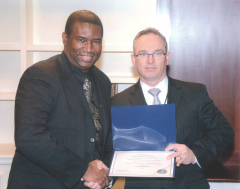
FBI Agent Ricky Maxwell presents Orrin C. Hudson with the FBI Director’s Award for Community Leadership
FBI Agent Ricky Maxwell presents Orrin C. Hudson with the FBI Director’s Award for Community Leadership
BLACKNEWS.COM — Acting Special Agent in Charge (SAC) Ricky Maxwell, FBI Atlanta, recently presented the FBI Director’s Award for Community Leadership for 2013 to Orrin Hudson for his exceptional insight and success in reaching disadvantaged youth in the metropolitan Atlanta area through the game of Chess. On April 4, 2014, FBI Director James B. Comey will host all of the FBI’s 56 selectees from around the country at a national ceremony to be held at FBI Headquarters with Mr. Hudson present as Atlanta FBI’s honoree.
Hudson, a motivational speaker and community activist, realized the need to become involved in finding a solution to curb teenage violence within his community. Mr. Hudson recounted that, much like today’s youth, he was destined for trouble until a teacher changed his life by introducing him to a chess board.
Hudson, who is also a former law enforcement officer with the State of Alabama, believes that prevention is better than detention and, since becoming involved, he has helped over 20,000 children develop the practical skills and techniques to overcome obstacles in life as illustrated through the best and most intellectual visual aid, the chessboard.
After moving to the Atlanta area in 2001, Hudson launched “Be Someone”, a 501 (c) 3 nonprofit foundation that uses numerous tools, including the game of chess, to promote self-esteem, responsibility, and analytical thinking to underprivileged youths. He has touched numerous young lives and has been relentless in his pursuit of reaching more young people and introducing them to the game that changed his life. His teaching methods are designed to share something positive to inner city kids where the focus is discipline and patience required by the game of chess.
For more details about Orrin Hudson and his Be Someone organization, visit www.BeSomeone.org.
When I was a girl, too many years ago to count (and don’t try), my mom gave me a lesson on how to do laundry. Back then it was the appropriate thing for mothers to do for their daughters. Funny, I’m not so sure that with this generation of girls who don’t cook, clean, do laundry or anything At Home that it’s not still an appropriate lesson; but that my friends is another article for another time. Meanwhile, back at the ranch or back to my story; Mom taught me the basics of how to do laundry with the traditional three pile system; you know – whites, dark colors and light colors in three separate piles. Because I don’t have daughters I taught my son the laundry basics (and cooking basics) so he would be equipped with a minimal understanding of how to survive before and during marriage. What I learned from my mother At Home was transferrable to my son, and I’m happy to say his whites are white, and his lights and darks remain the correct shades and colors. Thanks Mom!
Recently my simple task of laundry was anything but simple…. It was epic, colossal, unimaginable; it was horrible, horrendous, a complete catastrophe; it was a laundry nightmare! Now that you are on the edge of your seat holding your breath in anticipation, experiencing heart palpitations while enduring the suspense (or maybe not), waiting to find out what happened, here it is…. It was almost like the cowboy movies of yesteryear when the hero prances into town wearing all white and the villain trots boldly on to the dusty streets passing by the vacant hotels and the busy saloons adorned in menacing black clothes and a tall black hat. Well, in my story the villain was one red sock cowardly hiding inconspicuously between my garments ready to completely ruin my organized pile of white. And much to my chagrin it did just that. The red sock culprit produced a lovely girly pink hue in every blouse, dress shirt, tee shirt, and towel and now my collection of underwear is all pink except for those that were sitting happily, giggling in my dresser drawer waiting for their turn to be worn.
Okay, so my clothes were clean…BUT, THEY WERE PINK!
This episode in the At Home adventures of Shellie Layne (I like that!) made me think about how when we maintain a poor or ungrateful attitude, are stressed, depressed, discontent and in despair our emotions are like that infamous red sock; they bleed over into everything we do at home, at work and into our relationships. Everything we come in contact with is changed forever like my unsuspecting load of white clothes. Whatever the “red sock” is in your load, an albatross of un-forgiveness, pain, anger, bitterness, envy; shall I go on? Find its hiding place, separate it and give it the care and attention it needs before it bleeds over into more delicate and precious areas of your life.
Finally, as you might have imagined my laundry escapade was quite daunting and there was absolutely nothing I could do to change my whites back to their original color; however, I have decided to check out the advertised color block laundry sheets. I thought because of my decades of doing laundry and my proclaimed “At Home” savvy I would never need such a silly product – after all, who would dare get a red sock mixed with an all white load of laundry? Silly me!
“I don’t have all the answers but, I know the One who does.”
Email me at www.athomewithshellie1@Yahoo.com or find me on Facebook and http://www.athomewithshellie.com/ . Follow me on Twitter.
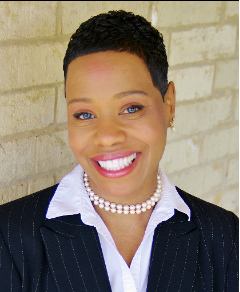
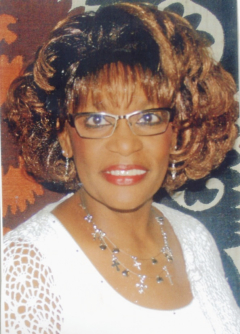
Happy “Sweet 60th” Birthday to Maria R. Davis (Ree Ree)
from her Family.
A celebration was held December 28, 2013 at Gracie Grove’s Venue in Homewood, AL.
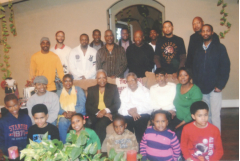
Mrs. Helen Fagan seated 3rd from the left with 7 of her children was present at the meeting December 28th
Mrs. Helen Alexander Fagan celebrated her 90th Birthday on November 12, 2013. Mrs. Fagan
is the proud mother of 16 children who grew up in Bessemer, Ala. All graduated from
college. Mr. and Mrs. Fagan worked diligently hoping for a better life for their children. Mr. Dan Fagan, Jr. worked for Hinkle Roofing. Mrs. Helen Fagan worked at Canaan Baptist Church Kindergarten, Bessemer for 35 years and she still volunteers at the church’s school, and still drives.
Thirteen of their 16 children finished Tuskegee, one UAT, one Clark and one Lawson State.
Those that finished Tuskegee are: Rosalind, Dan III, Wilma, Phoebe, Barry, Ovetta, Jeffrey, Wilamenia, Myrna, Tawanda, Stephen, Cary (Twin) and
Gary (Twin). Mary Lyn finished Clark Atlanta, Beverly, Lawson State and Harold, University of Alabama, Tuscaloosa.
Seven of the Sixteen children were present at their monthly family meeting on Saturday December 28, 2013.