
“Baby Woodfin is here.”
BIRMINGHAM MAYOR RANDALL WOODFIN ON ANNOUNCING THE BIRTH OF HE AND WIFE KENDRA’S FIRST CHILD, VIA X (FORMERLY TWITTER); AL.COM, AUGUST 1.

BIRMINGHAM MAYOR RANDALL WOODFIN ON ANNOUNCING THE BIRTH OF HE AND WIFE KENDRA’S FIRST CHILD, VIA X (FORMERLY TWITTER); AL.COM, AUGUST 1.
By Barnett Wright | The Birmingham Times
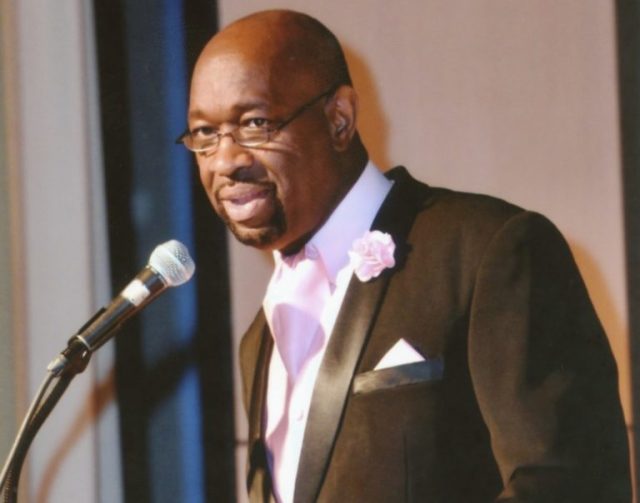
Hezekiah Jackson IV, who served as president of the Metro Birmingham NAACP, Birmingham Citizens Advisory Board, and the Inglenook Neighborhood Association, died on Tuesday. He was 65.
Mr. Jackson, born in Birmingham and a life member of the National Association for the Advancement of Colored People, once said he was a part of the city’s Civil Rights movement for as far back as he can remember.
“I came from a time where [volunteering] wasn’t negotiable,” he told The Birmingham Times in a 2016 interview. “People wanted to keep us busy, so they wanted us to work with the church, they wanted us to work with the Civic League, the NAACP; anything that was going to keep us busy,” he recalled.
His death comes less than three months after the passing of his close friend Myrna Carter Jackson, no relation, who served as a first vice president of the local NAACP chapter. Mrs. Jackson died on May 31.
Paulette Roby, Chairwoman of Birmingham’s Civil Rights Activist Committee/Foot Soldiers and longtime friend said Mr. Jackson served as her mentor for many years.
“I’ve known him because he worked with my mother [Mary Porter] with the Birmingham Housing Authority over 37 years [and] I have always had respect for him because of that,” Roby told The Times on Tuesday. “He showed me the way, when it came to the Civil Rights Movement, when it came to politics, when it came to voting and how he cared about equal justice
“… I’m the person I am today in that Foot Soldiers office and chair of that organization because of the love that he had for that organization. I feel so thankful and grateful that I had the fabulous time to be with him on that journey and he really, really meant a lot. He will be missed.”
Born March 6, 1959, Mr. Jackson attended C.W. Hayes High School in Birmingham and studied at Miles College in Fairfield.
In the interview with The Times, he recalled walking door-to-door on behalf of the NAACP, asking residents to sign up and talk about the future of the Black community.
“Older people would tell the stories and we wrote the stories down so that we could tell the stories again like they told it,” he said. “Being in those tight communities, stories would get cross referenced. If we tried to retell the story someone would say ‘that’s not how it happened’ so we would write it down,” he said.
Mr. Jackson would become active in city and neighborhood politics. In 2001, he served as the first president of the newly formed Citizens Advisory Board, which represents Birmingham’s 99 neighborhood associations. In the 2005 Birmingham City Council election, he lost to Maxine Herring Parker in a runoff in District 4. Incumbent Gwen Sykes finished fourth. He once served as Sykes’s administrative assistant.
In 2015 Jackson was involved with efforts to have the 1930s Jefferson County Courthouse murals removed or covered due to their depictions of African American workers, both in slavery and under racist industrial labor conditions.
Beginning late that same year, he was paid by the Oliver Robinson Foundation for “community outreach” efforts relating to the U.S. Environmental Protection Agency’s work to test soils in and around the 35th Avenue Superfund Site. State Representative Oliver Robinson later pleaded guilty to accepting bribes to oppose the EPA on behalf of the Drummond Corporation and its attorneys, Balch & Bingham.
During an August 2018 interview on WJLD’s Gary Richardson Show, Mr. Jackson, who was not charged and denied wrongdoing, said he was “duped”. “Of course, I was [duped]—and that very seldom happens,” he told Richardson.
The NAACP suspended Mr. Jackson and he was replaced by Dorothea Crosby as president in late 2018.
But Jackson told Richardson he was used to challenges throughout his life. “I’m always being approached by people in the human rights community about doing documentaries about me because they ask, ‘Wow, how have you survived all 60 years being openly gay? No one has killed you, and … you’ve been in all these treacherous waters like politics.”
Services will be held Saturday, August 10, 2024, at Sardis Baptist Church, 1615 4th Ct. West Birmingham AL 35208 at 12:30 p.m. and viewing will be held Friday, August 9, 2024, at 45th Street Baptist Church, 7600 Division Ave. 35206.
By Shauna Stuart | sstuart@al.com
Ron Carter, the world’s most recorded jazz bassist, is now part of the Alabama Jazz Hall of Fame.
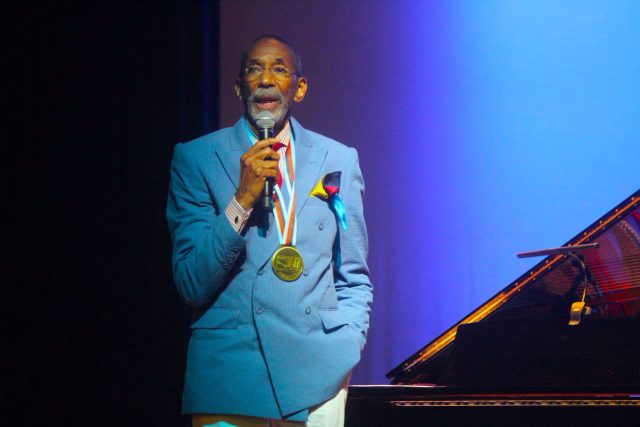
Carter was inducted into the hall of fame during an Aug. 3 ceremony at the historic Carver Theatre in Birmingham. The program, dubbed “A Cool Jazz Afternoon” was also a grand reopening party for the Alabama Jazz Hall of Fame headquarters.
The Carver Theatre, which houses the Alabama Jazz Hall of Fame, closed for renovations in 2017. While the Carver Theatre’s lobby and performance hall reopened in 2022, the Alabama Jazz Hall of Fame’s museum and the Jazz Hall Radio studio remained closed for upgrades and new installations.
The Alabama Jazz Hall of Fame museum will officially reopen for visitors on Aug. 6.
Carter, popularly known as Mr. Carter or Maestro Carter, is one of jazz’s most acclaimed and influential bassists. From 1963 to 1968, he was a member of Miles Davis’s Second Great Quintet with Wayne Shorter, Herbie Hancock, and Tony Williams.
After leaving the quintet, Carter embarked on an extensive freelance career, playing with jazz luminaries from Lena Horn and Dexter Gordon to Cannonball Adderly and Gil Scott-Heron.
Recorded With Greats
Over the years, he expanded his work into different musical genres, recording with greats such as Roberta Flack, Billy Joel, Paul Simon, Bette Midler, and Aretha Franklin. In the 90s, Carter added hip hop to his roster when the rapper Q-Tip of a Tribe Called Quest requested he play on the group’s second studio album “The Low End Theory.” In addition to winning three Grammy awards, Carter has played on over 2,500 individual albums, garnering a Guinness World Record as the most recorded bassist in history.
Carter is a Michigan native, but he has roots in Alabama. Earlier this summer, he announced the Jazz Hall of Fame honor on social media, explaining his connection to the state. His mother, Willie Carter, was born in Lee County and grew up near Birmingham.
On Saturday, more than 100 people, including jazz enthusiasts, educators, musicians, and community leaders from around the state gathered inside of the Carver Theatre’s performance hall for Carter’s induction.
Bishop Jim Lowe — the son of Alabama Jazz Hall of Fame founder J.L. Lowe and the president of the board of directors — led the award presentation. Before his address, he asked three politicians to join him on stage: State Rep. Mary Moore; Jefferson County Commissioner Lashunda Scales; and Birmingham City Council member Carole Clarke, who comes from a celebrated Birmingham jazz family. Together, the group presented Carter with an engraved medal and a resolution from the Alabama State Senate.
”It is my honor to give this to you. For Ron Carter, from Alabama Jazz Hall of Fame. This is something we could not do if it had not been for the state, the city, and the county. We recognize this great musician, this great man who contributed so much to jazz,” said Lowe, as the performance hall erupted into applause.

Carter, who beamed with pride from behind the podium, thanked the audience but kept his remarks brief.
“I may come back later and say a little more. But just a little!” Carter said as the audience laughed.
Following the presentation, a band comprised of Gary Motley on piano, Sherman Irby on saxophone, Rodney Whitaker on bass, Ben Johnson on drums, Collins “Bo” Berry on trumpet, and vocalist Veronica Swift performed a tribute concert. The set included arrangements and compositions by Carter, including the ballad “Candlelight.” The concert concluded with the song “Stars Fell on Alabama.”
Medalist
After the concert, Carter returned to the stage to give a brief speech.
“They’re having the Olympics in Paris. There must be 465 contestants. And the people who win the medals always get pictures. And so, this picture is dedicated to all the gold medal winners!” said Carter. Channeling the victorious spirit of Olympic athletes, he bit his medal as photographers in the room snapped pictures.
“This is mine!” said Carter, raising the medal in the air. Then, he lowered his hands and smiled. “I’ll take a turn on that now,” he said, pointing to the bass.
He played for about 20 minutes. After the performance, Carter waited to meet people in the audience. Friendly and social, he shook hands, took pictures with attendees, and autographed programs with a gold metallic Sharpie. As the event wound down, he headed upstairs to the museum for a final round of photos with the Jazz Hall of Fame staff.
“Pulled It Off”
Carter’s induction into the Alabama Jazz Hall of Fame is the culmination of a year-long process, said Orville Ifill, vice president of the Alabama Jazz Hall of Fame board of directors.
The idea sprung from a talk with retired Jefferson County Circuit Judge Houston Brown, Hasan Shahid, the son of Birmingham-born jazz legend Amos Gordon, and Dr. Eugene Cain, a Birmingham native and retired deputy superintendent of the Michigan Education Department.
While gathered at Brown’s house, Ifill told the group he was looking for a new inductee to the Jazz Hall of Fame. He was hoping to find a name people would recognize, someone who could help bring a spotlight to the nonprofit.
That was when Cain mentioned Ron Carter.
“I said what? The Ron Carter? And Eugene said ‘Yeah, his mother is from Alabama. And he comes to my place and plays every year,’” said Ifill.
The men told Ifill they could help him get in contact with Carter. One afternoon, Carter called when Ifill was having a video meeting with the Hall of Fame board on Zoom. Ifill immediately left to answer the phone. When he returned to the meeting, he had good news.
“I said ‘Guys, I just talked to Mr. Ron Carter. And he’s willing to be inducted into the Jazz Hall of Fame.’ And they went quiet,” said Ifill. “That’s how we got him. And he and I communicated from that point on.”
He later met Carter when the musician made a trip to Huntsville to perform for an event with the Tennesse Valley Jazz Society. The pair continued the conversation about the induction. And even though renovations kept delaying the opening of the Jazz Hall of Fame, Carter remained interested.
“I finally said ‘Ron. We’re going to open in another year or two. Give me a date and we’ll work around your date,’” said Ifill. “And we finally pulled it off.”

“Being in Birmingham”
The Jazz Hall of Fame booked a full schedule for Carter. The day before the induction, Carter spent time on Friday meeting Birmingham jazz musicians and educators. The trip marked the longest he’d spent in Alabama in years.
“I’ve had some great grits. I’ve had a lot of hot sun. And I’ve met a lot of wonderful people,” Carter told AL.com. “Being in Birmingham for this long is just amazing to me.”
Carter said he is looking forward to coming back to Alabama. Not only to network, but also to explore his ancestry. He’s working with historians to trace his family lineage. And it turns out, it wasn’t just his mother who has ties to Alabama. His father’s side of the family does too.
“ It’s hard to follow my tree. But someone is doing that. One thing they found was my roots in this area. My father was from Terre Haute, Indiana. And his grandfather was from Birmingham, who [later] moved to Terre Haute, Indiana.”
Carter said he enjoyed seeing the Jazz Hall of Fame museum (“It’s stunning!”), but he’s still learning about Birmingham’s extensive jazz history.
Upstairs in the Jazz Hall of Fame museum, Carter and Lowe chatted about jazz icons the city has birthed.
“There’s Erskine Hawkins, Fess Whatley. Sammy Lowe. My dad was one. He founded the organization,” said Lowe.
“I’d heard the names,” replied Carter. “But I’d never heard them play live because they were all before my time.”
Lowe grew up surrounded by noted musicians. He sat at the piano with Duke Ellington when he was a young boy. His family had a close relationship with saxophonist Reuben Phillips and trumpeter Cootie Williams– two bandleaders Carter knew well.
Fitting Induction
All in all, Carter’s induction into the Alabama Jazz Hall of Fame is fitting. Founded in 1978, one of the organization’s missions is to preserve jazz through education. In 1999, the Jazz Hall of Fame started giving free Saturday morning lessons to students in grades K-12.
For Dr. Leah Tucker, the Jazz Hall of Fame’s executive director, memories of the education programs have been a guiding force during the years of renovations. One day, she found herself looking at folders filled with hundreds of registration forms from students who had taken classes over the years.
“When I started looking through all the different books, there were hundreds and hundreds of names of students we have educated,” said Tucker. “So I know that jazz will not just fade into the past.”
Efforts like that please Carter, who is also a renowned educator. And in Birmingham, he was glad to meet a group of musicians who are just as happy to instruct as they are to perform.
“I think without people like that to spread the word, jazz is going to have a hard time,” said Carter. “My job is to keep playing and keep teaching.”

BY JE’DON HOLLOWAY-TALLEY | Special to the Birmingham Times
JAMAR AND ALISHIA JONES
Live: Hoover
Married: May 12, 2000
Met: Sept. 29, 1995, outside of Hahnemann Hospital in downtown Philadelphia. Both were freshmen at Temple University and participated in a community choir called Camden Community Singers. Alishia sang in the choir and Jamar played piano for them. One day, Jamar needed a ride from the subway to choir rehearsal and Alishia rode along with the bass player to help him navigate to Jamar’s pickup spot.
Alishia was sitting in the passenger seat when Jamar got in the car and she said– “he definitely had me at hello. I said ‘Hi, my name is Alishia…you go to Temple? Oh, I go to Temple…’ It was small talk until we got to rehearsal, but he couldn’t keep his eyes off me while he was playing the keyboard,” Alishia said.
“After rehearsal that night we went to a little fish fry… and we got a chance to talk. It was small talk, but it was a good conversation and I remember thinking she was going to make a good wife to somebody one day,” Jamar said. “We were only 18, but I did say in that first conversation that I wanted to name my first girl Jamara, and not we have Jamara Jones.”
“It was refreshing because, at 18, he had a good head on his shoulders and I could see myself with him. We exchanged numbers that night and we talked all day every day,” said Alishia.
First date: Spring 1996, at TGI Fridays off the Parkway in Philadelphia.
“We were young and didn’t have a car so we had to take the bus for our first date, but I remember I went to the restroom and when I came back he had put a teddy bear in my seat, and I was thinking where did this come from because I never saw it before that,” Alishia laughed.
Jamar does not recall the teddy bear, “but I do remember going to TGI Fridays on a Saturday afternoon. We started as friends and it unfolded as we moved forward,” he said.
The two became friends over the next two years as both were involved with other people. In the spring of 1997 their relationship took a romantic turn.
The turn: Both were juniors at Temple University and Jamar was a producer for R&B group Boys II Men, and I was dropping out of college “because I thought I was going to be rich,” Jamar laughed. “And Alishia and I were close, and what I liked about Alishia was that she didn’t respond to my [being a local celebrity] like everyone else did… She was not enamored with that and was centrally focused on me,” he said.
“I don’t even think he asked me to be his girl, it was just a natural ebb and flow,” said Alishia.
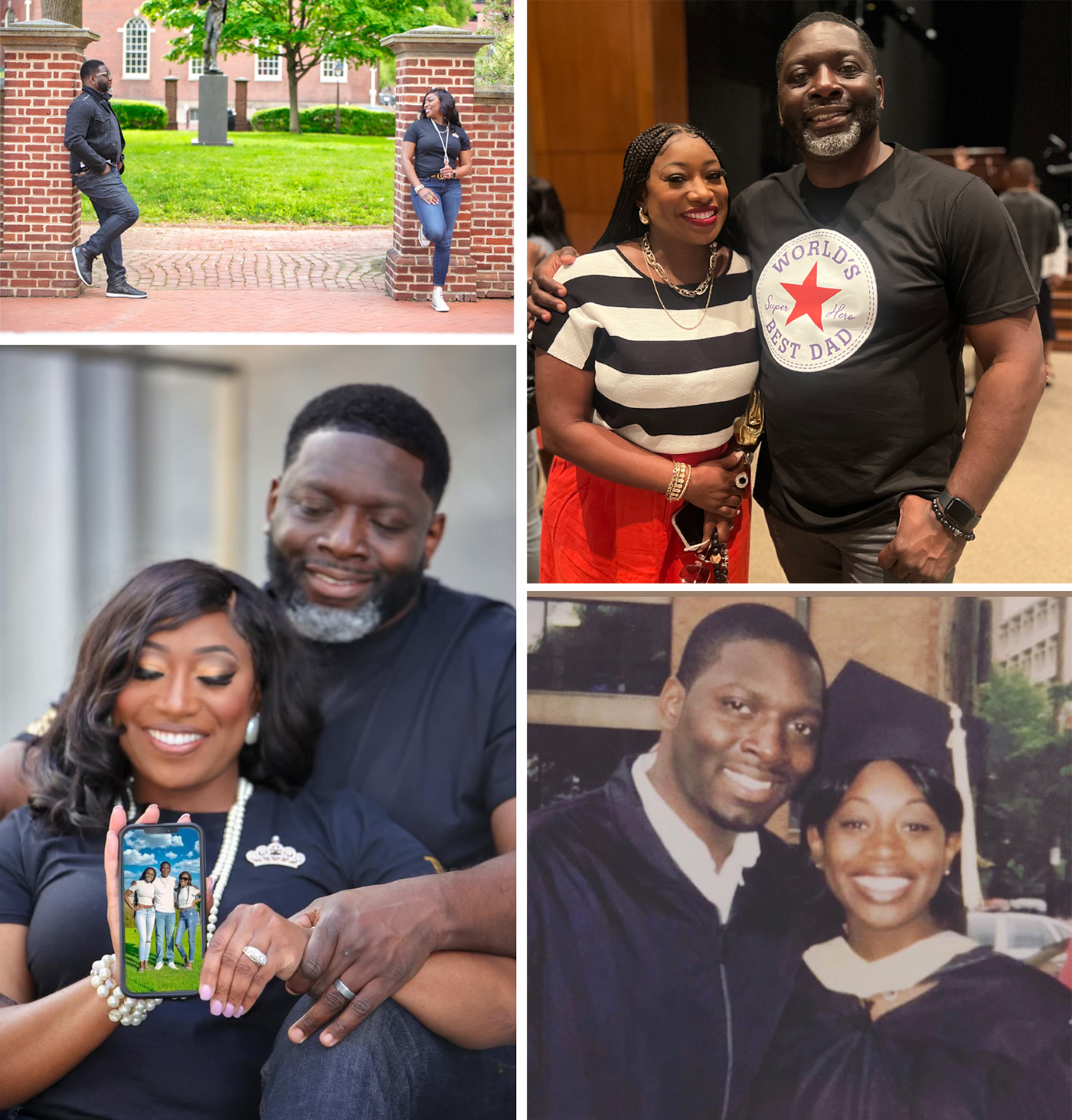
The proposal: Christmas Day 1998, in front of Alishia’s Aunt Julia’s house in the West Oak Lane section of Philadelphia. The pair had just visited Jamar’s mother and he shared his plans to propose. They were 21 at the time, and his mother thought they were too young for such a big step. Although Jamar was not swayed to alter his plans to propose, he needed the drive to her aunt’s house to release his tension before popping the question.
“…now I was trying to figure out when I was going to propose. We parked at the end of the street and were walking towards her aunt Julia’s house and I stopped and just told Alishia ‘Me and my mom were arguing over this’, and I pulled the ring out and revealed it to her and said ‘Will you marry me?’, and Alishia was so excited she didn’t say yes, she just ran up the steps to the house,” Jamar said.
“I didn’t even let him finish his little speech,” Alishia laughed. “I just started screaming and everybody came running. I said ‘Y’all, I’m engaged!’, and Jamar came in behind me and said ‘You didn’t say ‘yes’, and ran back and hugged and kissed him and said ‘yes’,” Alishia said.
The wedding: At Valley United Methodist Church, in Huntington Valley, Pennsylvania, officiated by Jamar’s oldest brother, Elder George Jones Jr. Their colors were navy and silver.
Most memorable for the bride was the surprise serenade Jamar played for her during the ceremony.
“Everything was planned, so I knew how the ceremony was supposed to go, but Jamar surprised me and played to me during the ceremony,” Alishia said. “He walked me over to the piano and sat me down, and he sat beside me and played ‘She’s Got A Way About Her’ by Billie Joel while his friend, Charity Fisher, sang the song. I felt like the most beautiful, most important person in the room, and [I was in awe] of the man I was marrying. It was amazing, and 24 years later that moment and memory still gets me emotional,” Alishia said.
Most memorable for the groom was becoming emotional during the ceremony. “My brother, Jerry, who was my best man, kept trying to give me a handkerchief saying ‘here you go, man, you gonna be crying, and I said I aint gonna be crying, and when Alishia finally appeared I looked over to him and said ‘man I need the handkerchief,” Jamar laughed.
The newlyweds honeymooned in Orlando Florida at Disney World. “We were eating lunch on the resort and ‘She’s Got A Way About Her’, by Billie Joel came on and we just looked at each other and smiled,” Jamar recalled.
Words of wisdom: “Don’t sweat the small stuff and always find reasons to laugh,” Alishia said. “And my grandmother told me ‘you can’t be angry and mad while you’re eating so always find a reason to share [joy and happiness] while enjoying a meal together.’”
Jamar said Balance is important, Jamar said. “One of the most important parts of being married is knowing how to be together but apart at the same time. …you have to maintain your individuality simultaneously…,” Jamar said. “Old wisdom says to ‘drink from each other’s cup, but don’t drink from the same cup.’ She quenches my thirst, and I quench hers,” he said.
Happily ever after: The Jones relocated to Hoover, Alabama, in June 2022 for Jamar’s position as executive pastor at The Worship Center Christian Church with locations in Bessemer and Birmingham. They have three children: Jamara, 22, Jada, 20, Jamar Jr., 18.
Alishia, 47, is a North Philadelphia native and attended Temple University [Philly], where she earned a bachelor’s degree in social work, and Capella University [online], where she obtained a master’s degree in early childhood education. She is a member of Delta Sigma Theta Sorority Inc. and served 12 years in the U.S. Army, and currently a Sargeant First Class [SFC] where she works in human resources for the US Department of the Army.
Jamar, 46, is a Mt. Airy, Philadelphia native who attended Temple University [Philly], where he earned an associate’s degree in jazz arrangement and composition, Ashford University [Mount St. Clair, Iowa] where he obtained a bachelor of arts in management with a concentration in music, and an MBA [master in business administration], The University of Texas at Arlington where he received and a Master’s of Music in jazz piano and is currently pursuing a doctorate in creative arts from the University of Tasmania in Hobart, Australia. He serves as executive pastor at The Worship Center Christian Church.
“You Had Me at Hello’’ highlights married couples and the love that binds them. If you would like to be considered for a future “Hello’’ column, or know someone, please send nominations to Barnett Wright bwright@birminghamtimes.com. Include the couple’s name, contact number(s) and what makes their love story unique.


MINNEAPOLIS — Vice President Kamala Harris has decided on Minnesota Gov. Tim Walz as her running mate in her bid for the White House, according to people familiar with the choice. The 60-year-old Democrat and military veteran rose to the forefront with a series of plain-spoken television appearances in the days after President Joe Biden decided not to seek a second term. He has made his state a bastion of liberal policy and, this year, one of the few states to protect fans buying tickets online for Taylor Swift concerts and other live events.
Her choice of Walz was confirmed by three people familiar with the decision who spoke to The Associated Press on condition of anonymity because it had not been made public.
Some things to know about Walz:
Walz Comes from Rural America
It would be hard to find a more vivid representative of the American heartland than Walz. Born in West Point, Nebraska, a community of about 3,500 people northwest of Omaha, Walz joined the Army National Guard and became a teacher in Nebraska.
He and his wife moved to Mankato in southern Minnesota in the 1990s. That’s where he taught social studies and coached football at Mankato West High School, including for the 1999 team that won the first of the school’s four state championships. He still points to his union membership there.
Walz served 24 years in the Army National Guard before retiring from a field artillery battalion in 2005 as a command sergeant major, one of the military’s highest enlisted ranks.
He Has a Proven Ability to Connect with Conservative Voters
In his first race for Congress, Walz upset a Republican incumbent. That was in 2006, when he won in a largely rural, southern Minnesota congressional district against six-term Rep. Gil Gutknecht. Walz capitalized on voter anger with then-President George W. Bush and the Iraq war.
During six terms in the U.S. House, Walz championed veterans’ issues.
He’s also shown a down-to-earth side, partly through social media video posts with his daughter, Hope. One last fall showed them trying a Minnesota State Fair ride, “The Slingshot,” after they bantered about fair food and her being a vegetarian.
He Could Help the Ticket in the Midwest
While Walz isn’t from one of the crucial “blue wall” states of Wisconsin, Michigan and Pennsylvania, where both sides believe they need to win, he’s right next door. He also could ensure that Minnesota stays in the hands of Democrats.
That’s important because former President Donald Trump has portrayed Minnesota as being in play this year, even though the state hasn’t elected a Republican to statewide office since 2006. A GOP presidential candidate hasn’t carried the state since President Richard Nixon’s landslide in 1972, but Trump has already campaigned there.
What to Know About the 2024 Election
When Democratic Gov. Mark Dayton decided not to seek a third term in 2018, Walz campaigned and won the office on a “One Minnesota” theme.
Walz also speaks comfortably about issues that matter to voters in the Rust Belt. He’s been a champion of Democratic causes, including union organizing, workers’ rights and a $15-an-hour minimum wage.
He Has Experience With Divided Government
In his first term as governor, Walz faced a Legislature split between a Democratic-led House and a Republican-controlled Senate that resisted his proposals to use higher taxes to boost money for schools, health care and roads. But he and lawmakers brokered compromises that made the state’s divided government still seem productive.
Bipartisan cooperation became tougher during his second year as he used the governor’s emergency power during the COVID-19 pandemic to shutter businesses and close schools. Republicans pushed back and forced out some agency heads. Republicans also remain critical of Walz over what they see as his slow response to sometimes violent unrest that followed the murder of George Floyd by a Minneapolis police officer in 2020.
Things got easier for Walz in his second term, after he defeated Republican Scott Jensen, a physician known nationally as a vaccine skeptic. Democrats gained control of both legislative chambers, clearing the way for a more liberal course in state government, aided by a huge budget surplus.
Walz and lawmakers eliminated nearly all of the state abortion restrictions enacted in the past by Republicans, protected gender-affirming care for transgender youth and legalized the recreational use of marijuana.
Rejecting Republican pleas that the state budget surplus be used to cut taxes, Democrats funded free school meals for children, free tuition at public colleges for students in families earning under $80,000 a year, a paid family and medical leave program and health insurance coverage regardless of a person’s immigration status.
He Has an Ear for Sound-Bit Politics
Walz called Republican nominee Donald Trump and running mate JD Vance “just weird” in an MSNBC interview last month and the Democratic Governors Association — which Walz chairs — amplified the point n a post on X. Walz later reiterated the characterization on CNN, citing Trump’s repeated mentions of the fictional serial killer Hannibal Lecter from the film “Silence of the Lambs” in stump speeches.
The word quickly morphed into a theme for Harris and other Democrats, and has a chance to be a watchword of the undoubtably weird 2024 election.
Hanna reported from Topeka, Kansas.
By Barnett Wright | The Birmingham Times
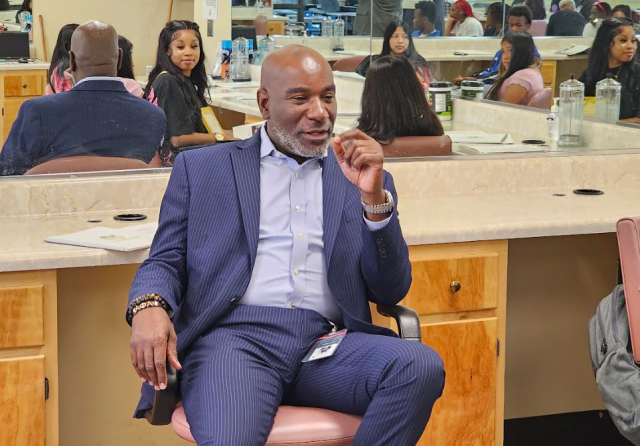
As students returned to Birmingham City Schools for the start of the 2024-25 School Year on Monday, Birmingham Superintendent Mark Sullivan, Ed.D., traveled the city welcoming students, teachers, counselors, principals and numerous support staff back from the summer break.
Sullivan began at Brown Elementary and from there made visits to Green Acres Middle School, Central Park Elementary and Woodlawn High School, where he is a graduate.
At Woodlawn, the superintendent, with Principal Rameka Davis leading, popped into the lunchroom; an early college prep class; a cosmetology class that offers skills needed to become licensed hair stylists; and a visual arts class decorated with creative work by students.
He did more than visit. He brought words of encouragement.
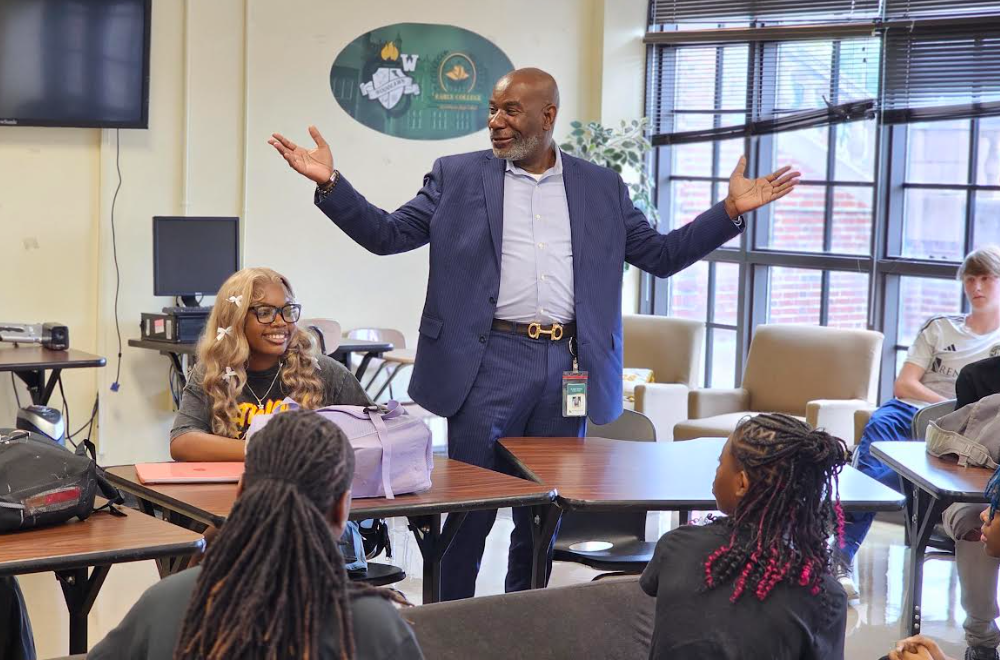
“Do not be afraid to fail,” he told students in the early college prep class. “Failure is a pathway to success. I have not gotten everything that I’ve always wanted. Failure is what you learn from. Any person who has been successful failed many times … [Dr. Seuss whose first book was rejected 27 times] submitted his books until he got one ‘yes.’ If he had stopped after one, after two, after three, after four then he would not be the person you know as Dr. Seuss” the children’s author and cartoonist who penned many of the most popular children’s books of all time.
“Even Thomas Edison, who invented the lightbulb, it took time after time after time, and each time he failed he said, ‘rather than I’ve failed I’m closer and closer to success.’ … don’t ever give up,” Sullivan told students. “Be resilient. ‘The race is not won by the swift, it’s won by the person who persists to the end.’ You just have to keep moving forward.”
One focus this school year will be post-graduation success, Sullivan has said. A new Department for Post Secondary Success has been created in partnership with the Birmingham Promise. The goal will be to help students better connect to internships and dual enrollment opportunities.
Birmingham Promise provides up to four years of tuition assistance for graduates of Birmingham City Schools who attend public colleges and universities in Alabama. It also manages a paid internship program that allows high school seniors to build work experience
Several other programs are in place to help with academic achievement. “iReady” is a reading and math program that monitors and tracks progress to help better gauge academic advancement in each school. Magic Learning is another existing program that supports virtual learning opportunities for students with unique schedules. And Intercession, which provides students with up to four weeks of additional in-school time, remains, said the superintendent.
“Intercession provides support for our students. We give them enrichments, credit advancement, we do remediation for our students. That’s one of the programs we want to continue,” he told Birmingham’s WBMA ABC 3340.
By Sym Posey | The Birmingham Times
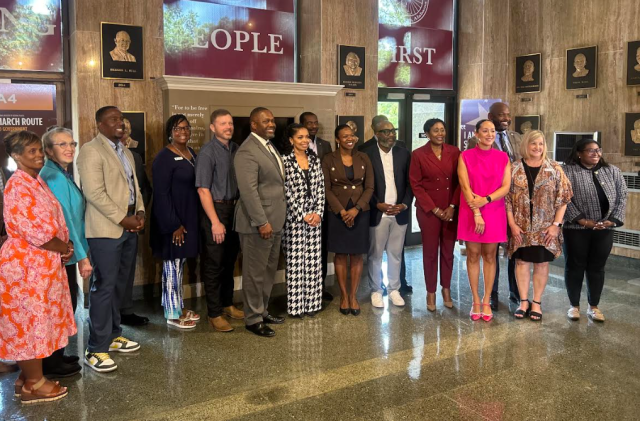
The City of Birmingham has been awarded a $20 million federal grant for workforce investment in the North Birmingham, Northside, Smithfield, and Pratt City communities.
More than a dozen city officials attended the Monday announcement on the second floor of City Hall. Birmingham is one of six recipients from a field of 22 finalists who applied to the U.S. Department of Commerce’s Economic Development Administration (EDA).
The funding will provide in-demand workforce training to residents in the four “distressed communities” through a partnership with Lawson State Community College, a Historically Black College and University (HCBU).
The funding also includes support for entrepreneurs facing disparities in training and capital access and expanding and improving transportation and accessible childcare in the target neighborhoods.
“Reinvest Birmingham is an intentional intersection of people and economic mobility,” said Coreata’ R. Houser, the Interim Recompete Plan Coordinator and Deputy Director for the City’s Department of Innovation and Economic Opportunity. “North Birmingham has faced economic injustice for years and this investment will chart generational change. Our plan centers residents and will have responsive solutions that give them an opportunity to not only survive, but thrive in Birmingham.”
The EDA measures distressed communities by the number of residents ages 25 to 54 who are not participating in the labor force. While a large portion of Birmingham qualifies as distressed, the city has employed an intentional place-based strategy that will focus on increasing labor force participation and access to necessary social support systems.
“I was born in the Northside community, at the once thriving Carraway Hospital,” said Mayor Randall L Woodfin in a statement. “It has long since been a dream to see intentional reinvestment into this community that is home to men, women, and children who deserve an opportunity to fully participate in Birmingham’s prosperous and promising economy.”
Reinvest Birmingham will create and connect people to jobs through five strategic component projects.
The City led the application through a coalition of partners including Lawson State Community College, AIDT, Central Six AlabamaWorks!, the Birmingham Jefferson County Transit Authority, the YMCA of Greater Birmingham, Childcare Resources, Prosper, and Regions Bank, and the Black Business Initiative.
Other cities and projects awarded EDA grants were Allentown, Pennsylvania, $20 million; North Olympic Peninsula, Washington, $35 million; Oasis Expansion, Puerto Rico, $30 million; The Eastern Kentucky Runway, Kentucky, $40 million; Wind River Indigenous-based Economic Plan, Wyoming; $36 million.

Sponsored by JPMorganChase | Provided
Getting in the habit of saving money is important, as it helps lead to creating a financial cushion to cover future expenses. Saving is not easy, especially when everyday products are at an all-time high given recent years’ rising inflation and simply suggesting cutting back on small indulgences can be irritating.
Thankfully, there are options to help saving money become more of a habit to better equip you for life’s unexpected needs. Before determining how much to start saving, first understand money coming in and money coming out – like cost of rent, food, car or public transportation, utilities, and other direct payment expenses, such as subscriptions to various streaming services. Apps can help track these recurring expenses, making it a good time to reconsider or renegotiate them.
Once you’ve understood your monthly budget, check what’s remaining to determine a doable amount to start setting aside each month. When it comes to saving, there are various strategies, from keeping a certain amount in your bank account each week, to automating transferring money from your checking to your savings account each month. You can also save for something specific, like a vacation, home project, or a splurge you’ve had your eye on for a while. Here are a few saving account options to consider:
Standard Saving Accounts are the most common, easy to access and typically open. Savings accounts can often be accessed and managed online or through the bank’s mobile app, which can make things easier. Before choosing an account that best suits your needs, ask if there is a monthly service fee and potential ways to waive the fee.
Money Market Accounts are similar to savings accounts, but the customer receives more interest on their money, something that varies with banks. They usually require a minimum balance.
High Yield Savings Accounts are increasingly popular, often coming with higher interest rates, making them suitable for short-term savings goals. They work a lot like the typical savings account, allowing for deposits and withdrawals, but there may be transaction limits and minimum balance requirements. They are also protected up to $250,000 at FDIC insured banks.
Certificates of Deposit (CDs) are highly sought after when interest rates are favorable, but you must commit to leaving the money deposited in the CD untouched for the agreed upon term, which is usually months or years. There may be minimum deposit requirements, but they offer returns so are useful for short-term goals, such as the down payment on a house or car.
Long-Term Accounts provide an opportunity to accumulate returns over years, depending on how the markets fluctuate. These accounts are designed for a specific financial goal and have tax advantages. Consult your financial institution for long-term savings account options, some of which may include:
Be sure to ask your bank or financial advisor whether the account you plan to open has a monthly deposit or balance minimum, or any additional requirements or fees. For more budgeting and savings tips, visit chase.com/financialgoals.
For informational/educational purposes only: Views and strategies described may not be appropriate for everyone and are not intended as specific advice/recommendation for any individual. Information has been obtained from sources believed to be reliable, but JPMorgan Chase & Co. or its affiliates and/or subsidiaries do not warrant its completeness or accuracy. Deposit products provided JPMorgan Chase Bank, N.A. Member FDIC © 2024 JPMorgan Chase & Co.

By
BIRMINGHAM, Ala. (WBRC) – The cost of after school care can get expensive, but the city of Birmingham is doing something about it.
The Birmingham Park and Recreation Board will offer free after-school care this year.
Birmingham Schools opened for the fall semester today, August 5.
“We’re always trying to look at ways we can help our underserved children,” said Park and Recreation Superintendent David Primus. “Offering that free program, them taking advantage of it.”
The Birmingham Park and Recreation Board says its education specialists are preparing for the Safe Haven After School Care Program.
This initiative offers local students in kindergarten through the 5th grade a place to continue learning after the school day is over.
“The main thing is the after-school tutoring for our kids,” Primus added. “A lot of times we see that the kids are kind of missing a few things.”
The program offers homework help, creative writing, a reading initiative, and a chess club. It is not all academics; officials say students will also learn how to become a better citizen.
“Talking about bullying, and talking about conflict resolution, and anything really dealing with life issues that they may have,” Primus said.
This will be happening at multiple recreation facilities across the Birmingham area, except for Don Hawkins which is temporarily closed.
Children can visit Central Park, Ensley, Fountain Heights, Memorial, and Martin Luther King Jr.
The program launches Sept. 9 and will run Monday-Wednesday until 7 p.m.
For more specific information, the public can give the recreation center a call at 205-254-2391.

By Sarah Whites-Koditschek | swhites-koditschek@al.com
The U.S. Supreme Court this fall will take up a case about Alabama’s troubled handling of unemployment claims during the pandemic.
The high court scheduled oral arguments in the case for Monday, Oct. 7.
“Petitioners have experienced lengthy delays in receiving unemployment compensation benefits they believe they are owed,” the plaintiffs said in their petition for certiorari to the court.
A group of Alabamians sued in state court in 2022, arguing they were wrongly denied unemployment benefits and appeal opportunities during the COVID-19 pandemic. As a backlog of cases stacked up, Gov. Kay Ivey in 2022 called it “outrageous”.
In their lawsuit, the group argued the system was excessively delayed. Some people who did receive benefits later got notices from the department demanding repayment, sometimes thousands of dollars, without access to appeal.
The Alabama Department of Labor declined to comment for this story because of ongoing litigation.
In June of 2023, the Alabama Supreme Court ruled in favor of the Labor Department and Secretary Fitzgerald Washington, finding that the plaintiffs had to go through the full administrative appeals process before filing a lawsuit.
The department argued that Alabamians who had problems with their unemployment should seek appeals, “not by bringing this collateral suit to skip the line.”
Alabama’s appeals were backlogged by several years. According to an analysis of federal data by The Century Foundation. In 2021, Alabama had the greatest delays of any state. The average wait time for an appeal was 566 days. At that time, some states were hearing appeals within 20 days.
“It just seems so nonsensical,” said Larry Gardella, attorney for Legal Services Alabama which filed the lawsuit.
“They take forever to make a decision, (and) you have to wait for them to make a decision before you can challenge the decision?”
The U.S. Supreme Court will now weigh in. Gardella said he expects the court will rule on the issue by next summer.
In October, the high court will hear arguments from both sides about whether states are required to follow a reconstruction-era law that provides protections for citizens who feel their rights have been violated or whether such claims must exclusively be made through federal courts.
In its filing before the U.S. Supreme Court, the Alabama Department of Labor noted that between April of 2020 and March of 2022, the state received almost one and a half million unemployment claims, one million of which were COVID related. The department was short-staffed, it said, which amounted to inevitable delays.