NASA has unveiled a new initiative to go to Mars — a digital one.
The space agency is teaming with Epic Games to offer a challenge for developers to create a Martian metaverse experience.
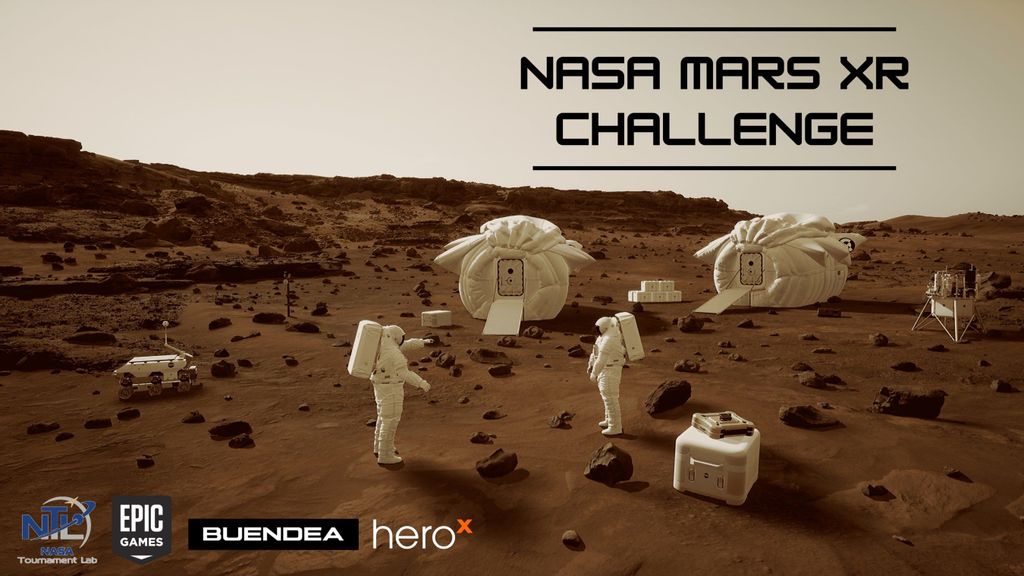
The project will develop essential habitats for Martian astronauts, which will be recreated using Epic Games’ Unreal Engine 5.
The challenge, posted on HeroX, a crowdsourcing problem-solving platform, asks developers to help NASA create “Virtual Reality (XR) assets and scenarios for use by NASA in research focused on extravehicular activities on the surface of Mars.”
The project aims to populate a metaverse world called MarsXR, which has now mapped 400 km2 (154 miles) of Mars terrain with realistic day/night cycles, all modeled with Epic Games’ Unreal Engine 5.
“Creators can use Unreal Engine to build realistic simulation scenarios to help prepare NASA for future missions, whether that’s to the moon or to Mars,” said Seb Loze, Unreal Engine business director for simulation at Epic Games.
“Whether you are a game designer, architect, hobbyist or rocket scientist, anyone can build with UE5. We can’t wait to see the immersive simulations the community comes up with,” he said.
NASA has outlined five virtual categories for this task: set up camp, scientific research, maintenance, exploration, and blow our minds. Each has a different purpose to fulfill.
The winners will receive a total prize purse of $70,000, divided into 20 individual prizes. This means the average prize for each category will be $6,000.
More than 24 teams and 237 innovators are working on the Martian simulation, which will help the agency save money by training upcoming astronauts in various experiences using a virtual reality module known as Apache.
While institutions have been slow to adopt virtual reality and metaverse-based apps, this appears to be changing as Microsoft and Meta both launch virtual reality suites in the field.
Last year, Microsoft announced the integration of Mesh, an app that will replace video with digital avatars for meetings and presentations, into the popular Microsoft Teams app. In addition, Meta just announced the addition of Venues to its flagship metaverse app, Horizon Worlds.
Teams may submit multiple submissions in each category, as well as submit to multiple categories.
The metaverse is defined as a “digital reality that combines aspects of social media, online gaming, augmented reality (AR), virtual reality (VR) and cryptocurrencies to allow users to interact virtually,” according to Investopedia.com.
“Augmented reality overlays visual elements, sound and other sensory input onto real-world settings to enhance the user experience. In contrast, virtual reality is entirely virtual and enhances fictional realities,” it said.
The social sports gaming company has increased its LaLiga licensing agreement to include non-fungible in-game tokens (NFTs) and digital match-day kits. They can be utilized across numerous fan sites in the metaverse, a virtual counterpart to the real world.
LaLiga is the top professional football division of the Spanish football league system. Teams include Real Madrid, FC Barelona, Sevilla FC, RCD Mallorca and Granada CF.
GreenPark’s app features a variety of digital surroundings, based on popular sports and esports events. Last August, LaLiga’s world debuted, allowing players to choose their favorite Spanish soccer team, compete in numerous challenges and mini-games and collect items for their digital avatar.
Matchday kits based on teams, players, and iconic moments aim to deepen this relationship. Fans can buy “lockers,” which contain a selection of player uniforms from that particular matchday.
“As one of the world’s premier sports brands, we’re always looking for new ways to interact and engage with our fans,” said Oscar Mayo, LaLiga’s executive director. “Through a special NFT collection of matchday jerseys, we will give our supporters the opportunity to live LaLiga and be a part of GreenPark’s metaverse as part of this new licensing collaboration.”
GreenPark is one of several companies betting on the growing desire from sports fans for immersive, digitally native experiences that make up the metaverse.
The Los Angeles-based corporation, which includes the League of Legends Championship Series (LCS) and the National Basketball Association (NBA) among its partners, raised $31 million in a series B fundraising round last year.
“We are pleased to deliver first-of-its-kind digital memorabilia and in-game functionality to LaLiga fans worldwide,” said GreenPark co-founder-CEO Ken Martin. “Fans have proudly worn the jerseys depicting their favorite teams and players [in real life] to commemorate their fandom for more than a century.
“The next phase of fandom is giving the next generation of social sports fans a redesigned way to digitally gather these and wear them into a virtual world built for sport.”
In February, GreenPark’s virtual fan world announced a new multiyear partnership with Major League Soccer (MLS) and the MLS Players Association (MLSPA). “GreenPark continues to build and evolve the go-to virtual world for fans, one that … will drive newfound engagement and value for leagues,” Tony Grillo, chief strategy officer of GreenPark Sports, said at the time.
LaLiga has also renewed its three-year sponsorship agreement with Indian tire producer BKT. The contract has been extended to the end of the 2024/2025 season.
Four key climate indicators set new records in 2021, underscoring the importance to curb emissions from human activity.
The United Nations criticized “humanity’s failure to tackle climate disruption” despite sustainable technology being readily available for governments and cheaper to use than fossil fuels.”
Greenhouse gas concentrations, sea-level rise, ocean heat and ocean acidification — all significantly impacted by human activity — set new records in 2021, according to the State of the Global Climate 2021 report released by the World Meteorological Organization (WMO) this week.
At the surface, extreme weather — from hurricanes and cyclones to droughts and flooding — has served as the day-to-day “face” of climate change, wreaking a heavy toll on human lives and well-being, leading to billions of dollars in economic losses and triggering food and water security and displacement, according to the WMO press release.
The report also shows how anthropogenic climate change has impacted some key factors that play into these severe weather events.
It found the global mean sea level had increased by more than double the previous rate, and ocean warming has not only increased, but started to dive deeper into the depths, albeit warming at a lower rate.
But those aren’t the only changes that the Earth’s oceans endure.
The oceans absorb around 23 percent of the annual emissions of anthropogenic carbon dioxide released into the atmosphere, acting as a carbon sink. However, a reaction with seawater leads to acidification, which can threaten organisms and ecosystem services and, in turn, impact food security, tourism and coastal protection. As the pH level of the ocean decreases, becoming more acidic, its capacity to absorb more carbon dioxide also declines.
The Intergovernal Panel on Climate Change Sixth Assessment Report previously concluded “there is very high confidence that open ocean surface pH is now the lowest it has been for at least 26,000 years and current rates of pH change are unprecedented since at least that time.”
Current ocean acidification rates in the report were found to exceed those inferred from the Paleocene-Eocene thermal maximum (PETM) — an interval of 1,000 years roughly 55 million years ago — that included the widespread extinctions in both marine and terrestrial environments. The PETM is hypothesized to have been caused by the sudden release of methane hydrates from ocean sediments, triggered by a massive volcanic eruption and associated with large perturbations of the global carbon cycle.
Data from specific sites also indicated that levels of carbon dioxide, atmospheric methane and nitrous oxide continued to increase in 2021. The report warned the increase of atmospheric methane was a precursor of tropospheric ozone, or ozone at the ground level, which can impact human health, agriculture and ecosystems.
The report also found that 2015 to 2021 were the seven warmest years on record globally, though 2021 was “less warm” than recent years, due to the influence of moderate La Niña events at the start and end of the year. While this did have a temporary cooling effect, the average global temperature for the year was still above the pre-industrial level by about 1.11 degrees Celsius.
“It’s just a matter of time before we see another warmest year on record,” WMO Secretary-General Professor Petteri Taalas said. “Our climate is changing before our eyes. The heat trapped by human-induced greenhouse gases will warm the planet for many generations to come. Sea level rise, ocean heat and acidification will continue for hundreds of years unless means to remove carbon from the atmosphere are invented. Some glaciers have reached the point of no return — and this will have long-term repercussions in a world in which more than 2 billion people already experience water stress.”
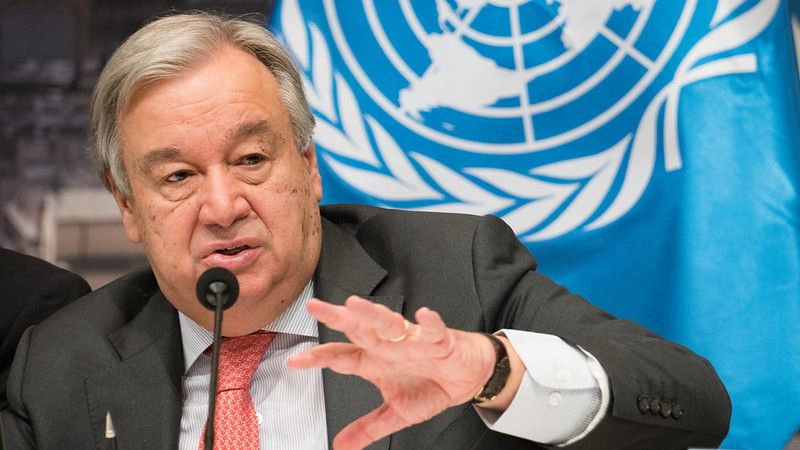
Upon the release of the WMO State of the Climate report, United Nations Secretary-General António Guterres remarked there is a way forward, but continuing to rely on fossil fuels will only be a “dead end.”
António Guterres, Secretary-General of the United Nations, warned of the consequences if the world doesn’t transition from fossil fuels. (UNclimatechange/Flickr)
“We must end fossil-fuel pollution and accelerate the renewable energy transition before we incinerate our only home,” Guterres said. “Time is running out.”
To keep the hope for limiting global warming to 1.5 degrees alive, he stressed the world must act within the decade — starting with transforming energy systems.
The starting point is “low-hanging fruit,” according to Guterres, with renewable energy technologies like wind and solar readily available and often cheaper than coal and other fossil fuels. The cost of wind energy has also declined over the past decade, along with the cost of solar energy and batteries.
He added the investment in renewables creates three times more jobs than fossil fuels. “We don’t have a moment to lose,” Guterres said. He laid out a plan of five critical actions to pave the way for a transition to renewable energy.
The first step calls for renewable energy technologies, such as battery storage, to be treated as essential and freely available. Storing renewable electricity has often been cited as the greatest barrier to the clean energy transition.
“Removing obstacles to knowledge sharing and technological transfer — including intellectual property constraints — is crucial for a rapid and fair renewable energy transition,” Guterres said. He called on governments to lead a global coalition on battery storage to fast-track innovation and deployment.
The second part of the plan includes securing, scaling up and diversifying the supply of components and raw materials for renewable energy technologies, which are concentrated in only a handful of countries.
The third point focuses on building frameworks and reforming bureaucracies that slow renewable projects through bottlenecks created by red tape, permits and grid connections.
His fourth point calls on governments to shift subsidies away from fossil fuels “to protect the poor and most vulnerable people and communities.”
“While people suffer from high prices at the pump, the oil and gas industry is raking in billions from a distorted market,” Guterres said. “This scandal must stop.”
The last point calls for private and public investments in renewable energy to be tripled, increasing investments to at least $4 trillion a year. He reasoned that while it was a big investment now, the world would reap “big rewards” in the years to come.
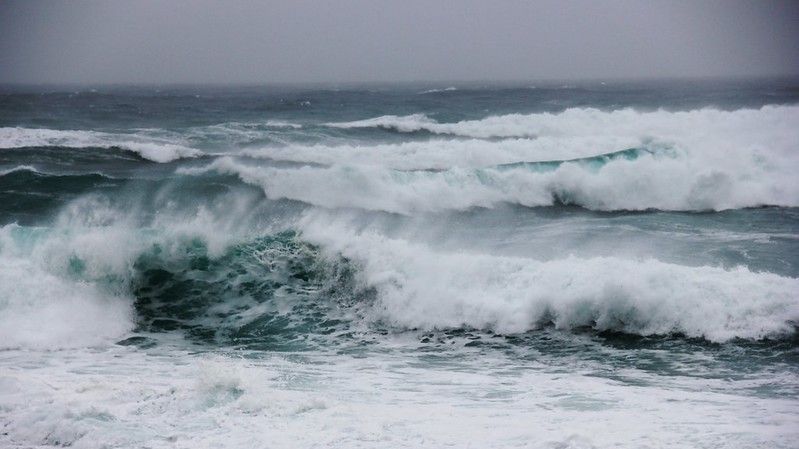
A view of the Atlantic Ocean off the coast of Portugal. Ocean warming has not only increased, but started to dive deeper into the depths. (la-cri/Flickr)
“But some developing countries pay seven times more in financing costs than developed countries,” Guterres added. “We need blended finance that provides the necessary structures to close existing funding gaps and unlock the trillions held by private actors. This means adjusted risk frameworks and more flexibility to scale up renewable finance.”
He called on multilateral development banks and development finance institutions to take responsibility and fully align their lending portfolios with the Paris Agreement by 2024 at the latest.
“Every country, city and citizen, every financial institution, company and civil society organization has a role to play,” Guterres said. “But most of all, it’s time for leaders — public and private alike — to stop talking about renewables as a distant project for the future. Because without renewables, there can be no future.”
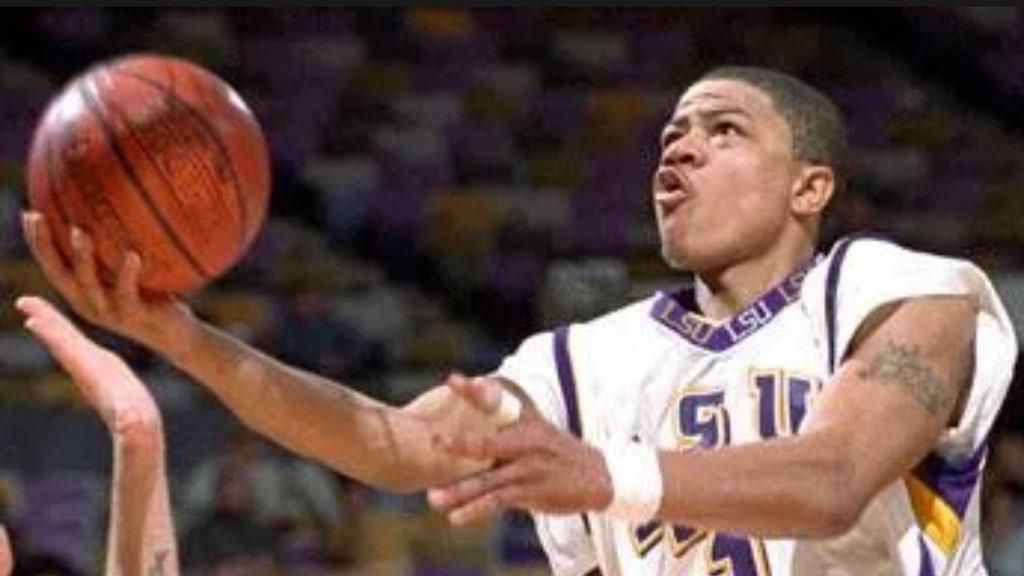
Torris Bright once scored 70 points in a high school basketball game and distributed 21 assists in another. He took his talents to Louisiana State University (LSU) in the early 2000s where he was a four-year starter and attached his name to several records.
Bright’s life after college has featured some extreme highs and lows, including a brief stint playing professionally overseas. Through it all, he stayed committed to the sport that gave him so much, and now he’s returning the favor. Through his Gametime Coaching & Consulting company, Bright is determined to teach young athletes how to avoid some of the red flags that he encountered during his playing days.
Synonymous with Louisiana basketball, Bright wanted to start his company where it all began for him. Walking the same streets he grew up on, entering the same gyms that he played in as a kid, Bright tells his story in hopes to inspire the next generation to fulfill their hoop dreams while being cautious of the interferences that come with success.
Torris Bright during his playing days at LSU. (LSU Athletics)
Zenger News goes one-on-one with Bright to discuss his plans for Gametime.
Zenger: How is everything going?
Bright: It’s going good, man. Getting older now so just working and taking care of the family. Living my dream through them, trying to teach them.
Zenger: At some point, all athletes either retire from their playing aspirations or put them in the past. Was it easy for you to put your playing aspirations behind you and pass on your knowledge to the youth?
Bright: It was easy because a lot of people were asking me to train their kids. They won’t let me let it go. A lot of people know me from basketball, and I just felt that it’s just my duty to keep sharing that knowledge. I’ve been through a lot dealing with basketball, the highs and the lows. Through friends, family, coaches, agents, traveling. Basketball has brought me around the world a few times.
I experienced a lot, and I think it’s my purpose to be the eyes, the ears and that protection for a lot of these athletes who are going where I’ve been. I think it’s needed. Not only for the athlete going to college and trying to get to the next level, but for the athlete that maybe doesn’t have the grades or the athlete that’s getting in trouble or has been in trouble. Also, for the former athlete trying to find his or her place after their careers are over. I’ve created a company where I could help all sorts of athletes succeed in life.
Zenger: You used an operative word, you said protect these young athletes. With NIL deals, the transfer portal being wide open, and even with so much interference for the service of high school athletes. It seems to be more important than ever to have great people around you and watch whom you take advice from.
Bright: The one word I would say to all these young athletes all the way up to the pros is “mentor.” You not only need a coach, but you need a mentor. A coach will cheer you on and tell you “good job.”They are more like a motivator. But a mentor has actually been through it. They can provide that guidance. I can tell you, be very careful when you’re trying to pursue a scholarship, the leadership and the coaches that will be coaching you.
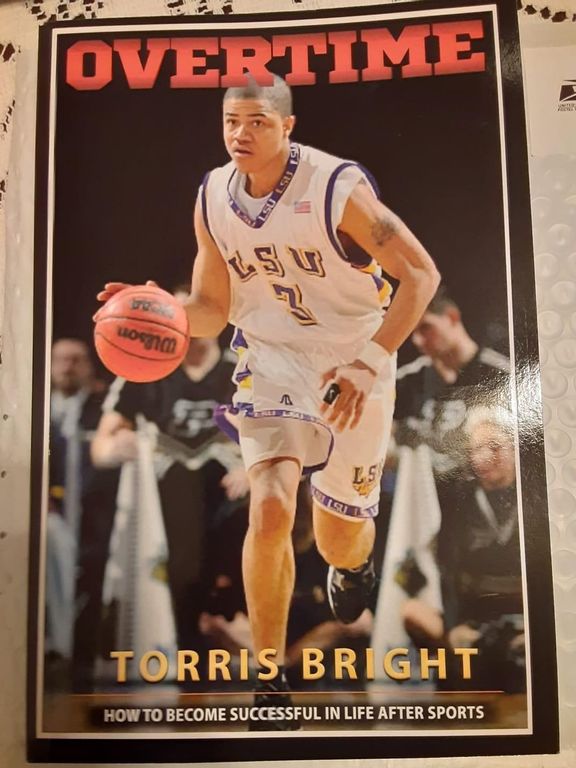
Cover of Bright’s book “Overtime — How To Become Successful In Life After Sports.” (Courtesy of Torris Bright).
That’s the benefit of a mentor. I can tell you some of the experiences I’ve had dealing with agents. It just lets you know that everybody doesn’t have your best interest. I also have the experience to let these young athletes know that college sports are a billion-dollar business annually. I know that now, but I didn’t know that when I was in college. If these young athletes can put it in their mind and treat it as a business, that would help them out tremendously.
Zenger: You have accomplished so much within the sport of basketball, does any accomplishment stand out more than the others?
Bright: I’ve had so many accomplishments. Now that I look back at it, I couldn’t name just one. I got to travel the world, I played in college on national television, ESPN. I’ve played in front of thousands of fans. I’ve met some very interesting people. I lived a very extravagant lifestyle, but I’ve also been at the bottom, a few times.
I just think collectively basketball has taught me a lot. I don’t have a number one. I’m just grateful that I have been through it all, and I think my testimony and my life story are a lesson for a lot of athletes that are going through what I went through.
Zenger: You could have brought your Gametime Coaching & Consulting Company anywhere in the world. What made you bring it back home to Slidell, Louisiana?
Bright: There’s no place like home. I’ve been told you have to make a lot of noise at home before you can make a lot of noise nationally. Of course, the goal is to spread the word nationally, and that’s what I’m doing now, but I have to catch these kids in these neighborhoods that I grew up in. There’s a connection. They are growing up in the same place I grew up in. There is a bond there. It’s personal because I came from this area.
Zenger: You recently started open play for ages 6-18. That’s where a gym is opened up and kids can come play. Is that to showcase their talents, get them off the streets or a combination of both?
Bright: It’s a combination of both. Definitely getting the kids off the street, but it’s also a way for a lot of kids to come in and get them to sign up for our basketball league, which is this summer. It serves many purposes, but it’s a recruiting tactic to get them into the summer league.
We’re just trying to build basketball up in this area and be a mentor in the Slidell area. Word around is a lot of people are losing interest in basketball in this area; they are going to other places, so this is our way of trying to help out the community and us just giving back.
Zenger: You wrote a book titled “Overtime.” The tagline for the book is, “How To Become Successful In Life After Sports.” Is this a one-off or do you plan to continue putting books out?
Bright: That’s actually the third part of that book. I don’t know why it worked out like that, but it just did. I wrote the first two books… the first one is called, “Practice — How To Get A College Athletic Scholarship.” It will be out soon. It’s for high school kids. The second one is called, “Gametime — How To Become Successful As A College Athlete.”
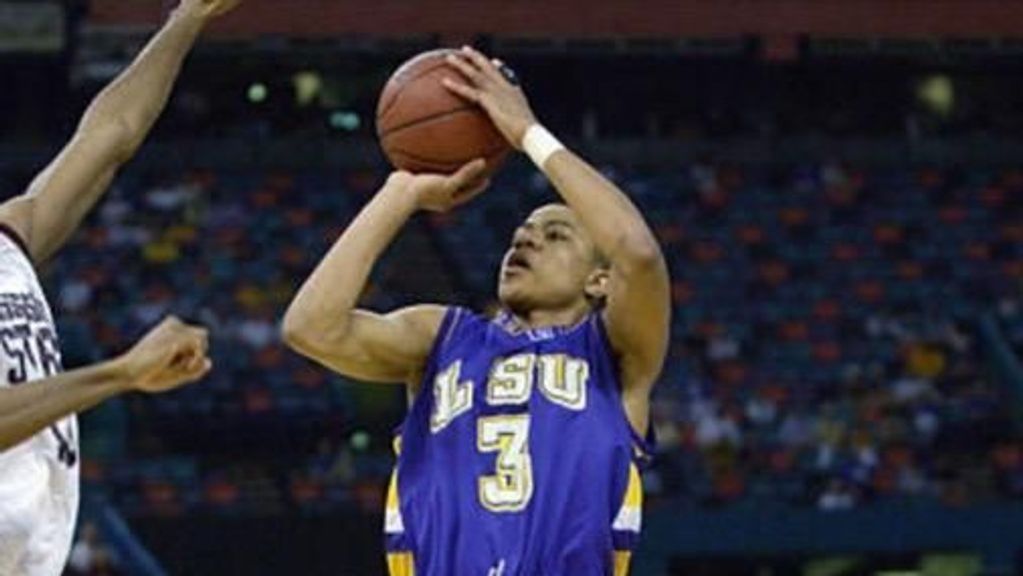
Torris Bright rising up over a defender to get his jump shot off during his playing days at LSU. (LSU Athletics).
Zenger: So, you’re dropping them in reverse.
Bright: Yeah, I’m doing the reverse thing. I don’t know why it worked out like that, but God does things in mysterious ways.
Zenger: You spoke with some high school basketball teams as well. Is public speaking also part of the Gametime outfit?
Bright: Oh yeah, without a doubt. I will be speaking with high school athletes, different leagues, and I have a couple of colleges lined up. Public speaking is a part of my company. My goal is to go around telling my story. I want to give them advice and inspiration and let them know that they can always contact me for any kind of guidance or mentorship. I’ve been through it.
I can’t tell you how to navigate something that I haven’t been through. Since I’ve been there, I can teach, tell and show these kids which route to take and which route to avoid. Public and motivational speaking is one of the ways I have to get my message out.
Upscale shoe retailer Clarks is striding into the metaverse in partnership with online gaming platform Roblox.
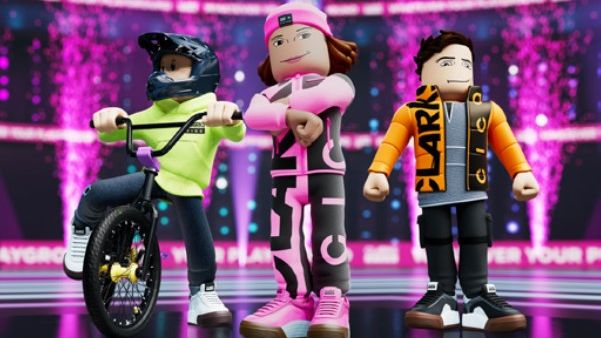
The agreement will result in the creation of a one-of-a-kind Clarks Stadium that will allow users to connect with one another, share their experiences, access special content and compete in various minigames.
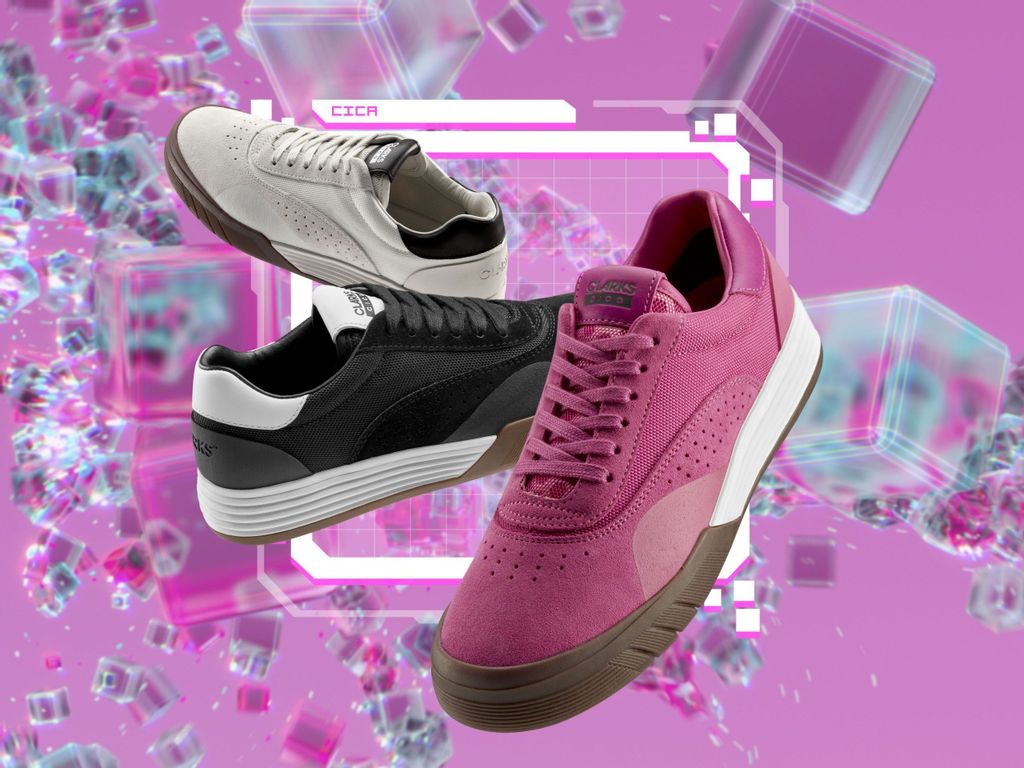
Done in partnership with metaverse development studio Melon, the Cicaverse touts the retailer’s unisex sneaker style, the Cica.
“The Clarks Cicaverse will celebrate one of the brand’s most iconic, unisex childrenswear styles and inspire a whole new generation of fans via an immersive gaming experience on Roblox,” the footwear company said in a press release.
BMX rider Connor Stitt and UK breakdancer B-Girl Terra are part of the Cicaverse. (Clarks/Roblox)
Users will be put through their paces as they compete against their friends.
This will involve them showing off their slickest BMX tricks and breakdance skills to racing to the parkour finish line alongside the real-life young athletes.
Athletes such as the U.K. parkour champion and trainee stuntman Robbie Griffith, the 11-year-old BMX rider Connor Stitt, and the viral breakdance sensation B-Girl Terra from the United Kingdom are featured in the video game.
B-Girl Terra will soon compete in the 2024 Olympics in Paris, which will be her ultimate challenge.
Users will not only be able to participate in sports, but will also have the opportunity to let enhance their gaming in the virtual Clarks store.
Winners of the games will receive a limited-edition gold Cica X Roblox medallion necklace that celebrates the brand’s heritage. The same necklace, in a limited number, will also be made in real life.
Users can visit the Clarks Stadium and receive a virtual pair of the popular sneaker for an online sports tournament. (Clarks/Roblox)
In the Cicaverse, the range of options is virtually limitless.
Players can buy all the accessories required to make their avatars stand out from the crowd in order to be named champion of the Cicaverse. These accessories range from sneakers that are supercharged with fire to giant jetpacks.
Tara McRae, global chief marketing and digital officer of Clarks, said: “We are delighted to bring our famous brand offering to the metaverse as Clarks is passionate about empowering kids to be the best that they can be.”
“The Cicaverse is the perfect way that allows our early learners to explore, create, to learn and to play in a dedicated community space that they can call their own,” she said.
“Roblox is all about understanding and enhancing the human experience,” said a company rep, “which is why we felt like this cooperation was so natural for us.”
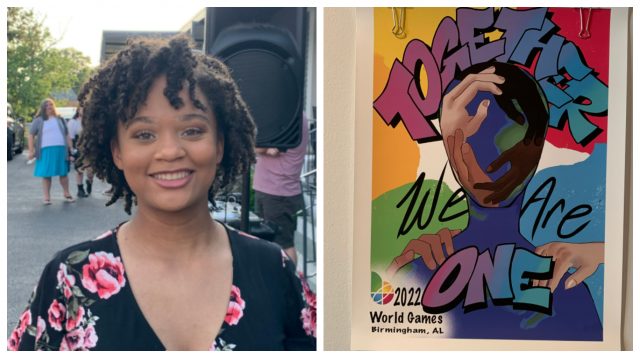
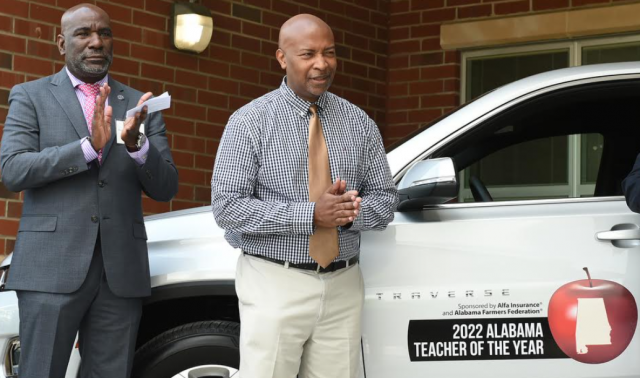
Reggie White, Alabama Teacher of The Year. right, with Birmingham City Schools Superintendent Dr. Mark Sullivan outside of Washington K-8 School where White was presented a 2022 Chevrolet Traverse to enable him to travel the state as an education ambassador. (Joe Songer, For The Birmingham Times)
David Benavidez believes Canelo Alvarez is ducking him and that Jermall Charlo fears him.
The fighter known as “El Bhandera Roja” (The Red Flag) considers an all-Mexican clash with four-division champion Alvarez or a battle of unbeatens with WBC 160-pound champion Charlo among his most coveted matchups should he defeat former IBF middleweight titleholder David Lemieux on Saturday.
The 6-foot-2 Benavidez (25-0, 22 KOs) will pursue his sixth straight knockout and the WBC’s vacant interim 168-pound title against the 5-foot-10 Lemieux (43-4, 36 KOs) at the Gila River Arena in Glendale, Ariz., near his hometown of Phoenix. The Premier Boxing Champions’ event will be on Showtime (10 p.m. EDT).
“My main focus is always to get the knockout or the stoppage, and that will be no different against David Lemieux. I don’t want there to be any doubts in anybody’s mind, so knockout is how I want the fight to end,” Benavdez said. “I’m going to use my range. My game plan for David Lemieux is that I’m not going to be staying in there on the inside.”
Benavdez’s reach is 74.5 inches to Lemieux’s 70.
“The smart thing for me with him being the smaller fighter and me having the longer arms is that I’m gonna touch him, but when I want to be inside, then I’ll be inside. When I wanna be on the outside, I’ll be on the outside,” Benavdez added.
“I’m not just gonna sit there for David Lemieux to throw his left hook at me. I’m not just going to go in there and fight shot for shot. I’m going to get my shots in and then move out of the way. I’m going to use my jab and just keep him at distance. I’ll be in my hometown, so I’m just ready to make another statement.”
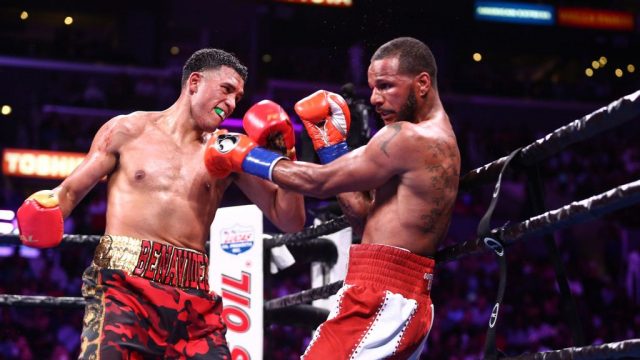
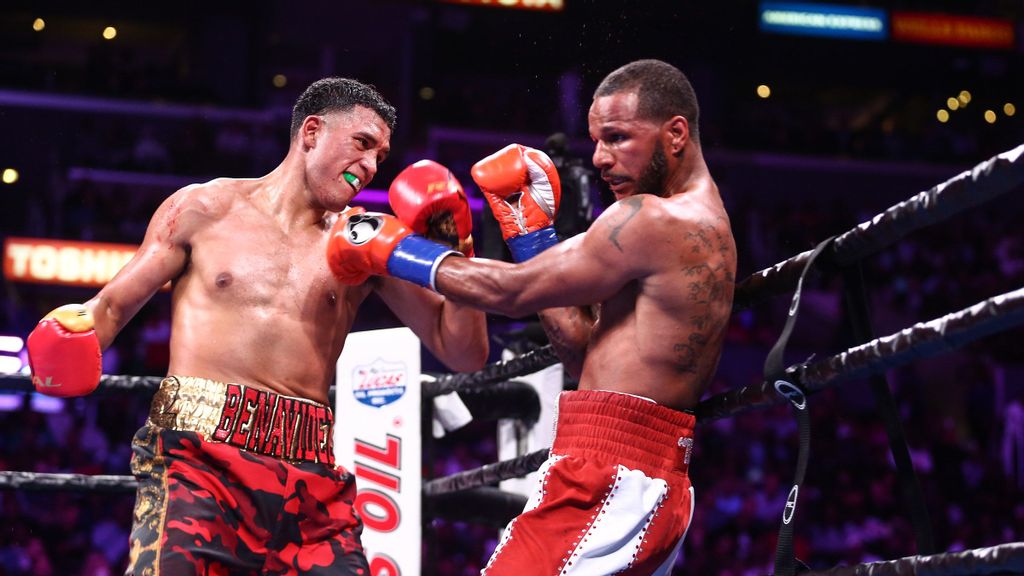
Two-time 168-pound champion David Benavidez (left) remained undefeated with November’s seventh-round TKO of Kyrone Davis (right), his fifth straight knockout. (Ryan Hafey/Premier Boxing Champions)
Benavidez faces Lemieux two weeks after a unanimous decision loss by Alvarez (57-2, 39 KOs), who fell to Russian WBA 175-pound champion Dmitry Bivol (20-0, 11 KOs).
“I always knew Canelo wasn’t unbeatable. Bivol exposed him a little, and, I thought, beat Canelo more convincingly than 115-113 on all three of the judges’ cards,” said Benavidez, who looks to become a WBC 168-pound titleholder for the third time in his career.
“If it was me, I’m an attacker, have great power, great speed, great jab, great body shots, would have shown more power, definitely gone more to the body and for the knockout. I’m also younger, much taller and have longer arms than Canelo.”
Benavidez last fought in November with a seventh-round TKO of Kyrone Davis at The Footprint Center in Phoenix, a week after Alvarez’s 11th-round stoppage of previously unbeaten Caleb Plant.
In victory, Alvarez added Plant’s 168-pound IBF crown to his WBA/WBC/WBO versions to become the first fully unified super middleweight champion.
“I believe a fight between myself and Canelo is a bigger fight now than ever, and that if he comes back down to 168, that’s the fight that should happen. I’m motivated to leave it out there and to make sure that I come out of the ring with no less than a victory over Canelo Alvarez,” Benavidez said.
“That’s why I’m going to be fighting smart and definitely going for the knockout against David Lemieux. Once I win the WBC’s interim title, I’ll become the mandatory, and then Canelo’s got to fight me or else give up the belt.”
On June 18, Charlo (32-0, 22 KOs) will make his sixth defense of the WBC 160-pound title against Maciej Sulęcki (30-2, 11 KOs).
“Charlo doesn’t want to get in the ring with me,” Benavidez said. “Because he’s a p***y.”
Benavidez said he “saw fear” in Charlo’s eyes during a face-to-face confrontation last month while the fighters were ringside at AT&T Stadium in Arlington, Texas, for IBF/WBA/WBC 147-pound champion Errol Spence’s 10th-round knockout of Yordenis Ugas.
Benavidez said the incident began as a result of an exchange between Charlo and Jose Benavidez Sr., his father and trainer.
“I saw him yelling at my Dad from the other side, so I went up to him, and I pushed him on his shoulder, and he went back, and he went behind his security guards, and that’s when he started yelling, and that’s when he started getting tough. But in reality, when I pushed him, if he really wanted to do something, then I was there and close to him. He didn’t have to go behind his bodyguards. We could have done whatever. I’m a fighter, he’s a fighter, so nobody wants to back down. I’m not going to let him disrespect me, and he’s not going to let me disrespect him,” Benavidez said.
“But when I put my hands on him and pushed him, I saw fear in his eyes. That’s when I knew he was scared of me. Why do you think he went behind his bodyguards? If somebody would have pushed me you know we would have gotten into it right there. I didn’t go behind any bodyguards. I’m not going to let somebody talk to me that way. So, I know he’s scared of me. He’s a little guy and I could see fear in him. If Jermall Charlo’s big, bad and tough like he says he is, then we’ll see if he moves up to 168. But I know he’s scared of me and what I’m gonna do to him once we get to that day.”
But for now, Benavidez’s focus is Lemieux, who is 9-2 (five KOs) in his past 11 bouts.
Lemieux became an IBF 160-pound champion in June 2015 with a unanimous decision over Hassan N’Dam but was dethroned that October by Gennady Golovkin, winner by eighth-round TKO.
“Styles make fights. David Benavidez comes to fight. That’s my style, too,” said Lemieux, 33. “Two bulls going in there. I do believe that my power will translate at 168 pounds. I have the style to hurt Benavidez, and I’m leaving with the WBC title on fight night.”
“I feel like I’ve been underestimated during my career. The only way to come back is with a strong victory against an opponent on an elite level. That’s what I’m planning on doing. I’m training hard to beat this guy.”
Once the youngest 168-pound world champion in history, Benavidez was stripped of his WBC crown in October 2018, declared “Champion in recess” and suspended for six months following a positive drug test for Benzoylecgonine (the main metabolite of cocaine).
Benavidez ended his ring absence with a second-round knockout of J’Leon Love in March 2019 before regaining the WBC crown that September with a ninth-round knockout of Anthony Dirrell.
An overweight Benavidez lost that title on the scales in advance of a 10th-round knockout of Roamer Alexis Angulo (August 2020) before scoring an 11th-round TKO over Ronald Ellis in March 2021.
Two-time 168-pound champion David Benavidez (left) dethroned Anthony Dirrell (right) as WBC titleholder by ninth-round knockout in September 2019. Benavidez desires an all-Mexican clash with undisputed super middleweight titleholder Canelo Alvarez or WBC 160-pound titlist Jermall Charlo. (Ryan Hafey/Premier Boxing Champions)
“I’m kind of forgetting about Canelo because he’s over there doing his thing. Besides Caleb Plant or Jermall Charlo, Demetrius Andrade is the only other fight that makes sense. If not, it might be time to go up to 175 pounds. When I win the WBC interim title, I’ll have a little bit of leverage,” Benavidez said.
“I’m the complete package. I hurt everybody I touch, and there is nothing they can do about it. I have a good chin, I throw good body shots and combinations, I have a great jab, and I maintain a good distance. I have a great heart and desire to show and become the best fighter in the world. Once a fighter has that desire to do anything to earn his respect, he becomes a dangerous fighter.”