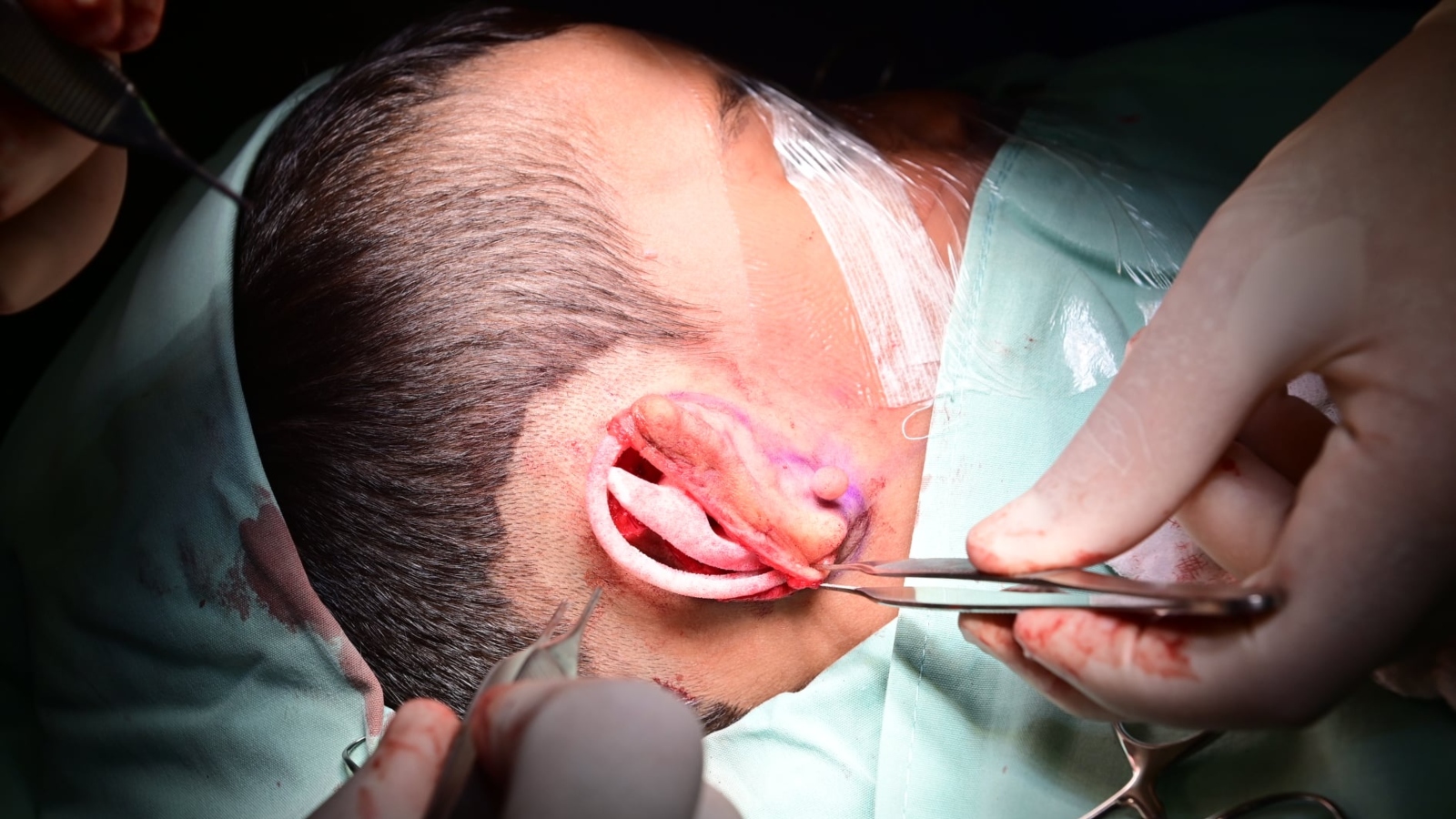
Israeli doctors 3D-printed an ear and attached it to a 6-year-old boy born with microtia, a deformity that stops the development of a baby’s ear in the womb, usually during the first trimester of pregnancy.
Using a 3D printer, staff from the plastic surgery department at Galilee Medical Center in Nahariya created a synthetic prosthesis resembling cartilage and then covered it with skin.
Reconstructing an ear using cartilage and prosthetics is not unusual, but 3D printing that cartilage was a breakthrough. The entire procedure took three hours, and the boy was released from the hospital several days later.
Microtia rates vary depending on ethnic background. In 90 percent of cases, it affects only one ear, usually the right ear, and is more common in males, according to Stanford’s Children’s Health.
Another medical use for 3D printers is this prosthetic arm and its associated parts. Known as the Finch, the Japanese product debuted in 2015 and features an adjustable socket. (Trevor Williams/Getty Images)
Unfortunately, the ear is not functional because microtia, a congenital deformity, causes blockage of the ear canal, a complication that’s not fixable through surgery. Still, the synthetic prosthesis “reduces pain and complications that could be caused in the area from which the cartilage is extracted,” Dr. Amin Abu-Jabal, who led the surgical team, told Ynet. It offers “maximal accuracy and aesthetic in the highest level.”
While microtia affects babies before they are born, corrective surgery cannot be performed until a child is 6 years old, at which point the ear reaches about 85 percent of its full size.
3D printers can produce a wide variety of goods, including the violin. (Jesse Grant/Getty Images)
Microtia is not hereditary and, in most cases, affects only one ear. Approximately one in 6,000 to 8,000 babies are born with the condition and the cause is unknown. They may have only a small ear or no ear at all.
Researchers at the Technion-Israel Institute of Technology and Sheba Medical Center previously developed a way to 3D print the “scaffolding” required for ear reconstruction. This development was not connected to the reconstruction in Nahariya.
The use of 3D printing is growing in the medical, aerospace and automotive fields. This includes industrial applications such as exotic machine components for rocketry, cars and semiconductor capital equipment, as well as in healthcare for patient-specific medical devices and tools that elevate the patient experience, according to Dr. Jeffrey Graves, President-CEO, 3D Systems.
“As we enter 2022, I believe we’ll continue to see additive manufacturing (AM) play a critical role in transforming manufacturing workflows and supply chains.” Graves told 3D Printing Industry.
Graves said these “new materials have the opportunity to play a key role in the field of regenerative medicine, enabling the use of AM to address key laboratory research applications for drug discovery, as well as to create arteries, veins and eventually human organs.”
Israel is more than half desert, frequently deals with drought and suffers from chronic water shortages. Yet, it now produces 20 percent more water than it needs.
How is that accomplished?
To find the answer, a bit of history is needed. The water situation in the country was so severe that by 2015, the gap between demand and available natural water supplies reached 1 billion cubic meters (BCM).
Israel managed to solve the problem and prevent the country from drying up with a bit of technological innovation and infrastructure developments.
Israel’s leadership in sustainable water management began with finding solutions to the country’s major problem — the uneven distribution of freshwater throughout the country –– an issue that Zionist thinker Theodor Herzl recognized in his 1902 book “Altneuland”with a “fantasy plan” to transport water great distances.
That fantasy began morphing into reality soon after Israel declared its independence in 1948 as waves of new immigrants lacked sufficient water for drinking and farming.
To supply the growing demand, Israel’s national water company, Mekorot, began constructing the National Water Carrier.
This water transportation network was designed to pump water from the northern Lake Kinneret (Sea of Galilee) and transfer water from existing regional water projects to central and southern Israel.
But upon the network’s completion in 1964, 80 percent of the water transported by this system was allocated for agriculture. Clearly, the National Water Carrier alone could not satisfy both agriculture and household needs.
A solution was already in development thanks to the innovative genius of Simcha Blass and his son Yeshayahu, who began developing a drip irrigation technology in 1959. Their revolutionary method slowly applies water directly to the roots of crops through a network of tubes, valves and drippers.
Because this delivery method avoids the full brunt of evaporation, plants absorb 95 percent of the water applied to them, a much larger percentage than they would from sprinkler irrigation, surface irrigation or flood irrigation. With drip irrigation, less water could be allocated to farms without compromising agricultural output.
By 1965, the year following the completion of the National Water Carrier, Blass and his son began distributing their novel drip irrigation system throughout Israel and established Netafim, still a world leader in the field.
Today, drip irrigation waters 75 percent of Israel’s crops, but only 5 percent of farms worldwide utilize the technology due to costs.
Using the unusable
Despite the transportive advantages of the National Water Carrier and the conservation benefits of drip irrigation, both innovations drew water solely from Israel’s very limited freshwater sources, which were being pumped faster than they could be naturally replenished.
The share of freshwater devoted to agriculture still vastly outweighed the amount allocated for drinking. By the mid-1980s, agriculture was using 72 percent of Israel’s safe water supply.
Israeli engineers realized it’s not just about conserving available freshwater but also about taking advantage of water sources previously considered unusable, such as treated municipal wastewater and stormwater.
In 1985, Israel began sending treated, recycled wastewater through its National Water Carrier to farms, greatly reducing the gap between consumer demand and available water.
This is because wastewater from our sinks, showers and toilets is not dependent upon climate fluctuations or seasonal weather patterns, but rather on population growth and living standards.
By 2015, Israel had managed to treat and recycle 86% of its wastewater for agricultural operations, leading the world in wastewater reclamation. Through Israel’s tertiary treatment processes, recycled wastewater is cleaned to near drinking-quality levels before reaching crops to avoid contamination.
The goal is to recycle 95 percent of wastewater for agriculture by 2025, leaving that much more fresh drinking water for the communities that need it.
Reclaimed and desalinated water
With a daily influx of roughly 470,000 cubic meters of raw sewage, the Shafdan treatment facility, Israel’s largest wastewater treatment facility, provides about 140 million cubic meters (MCM) of clean, reclaimed water to Negev desert farms for irrigation annually. Now more than 60% of agriculture in the Negev is supplied by Shafdan alone.
The biological reactor at Shafdan, Israel’s largest wastewater treatment plant. (Abigail Klein Leichman)
On top of that, the Israeli green development organization KKL-JNF constructed 230 reservoirs that store treated wastewater for agricultural use. It also established severalbiofilter projects in which plants remove nearly 100% of pollutants from urban stormwater runoff to enable an additional source for non-drinking municipal water and agricultural irrigation.
By 1997, Israel had managed to reduce agriculture’s share of water to 63 percent, yet persistent droughts in the mid-1990s compelled Israel to turn its attention to the surplus of seawater along its Mediterranean coast.
In 1999, the Israeli government initiated a long-term, large-scale seawater reverse osmosis desalination program that culminated in the establishment of five operational desalination facilities: the Ashkelon Plant (2005) capable of producing 118–120 MCM of potable water per year; Palmachim (2007), which now produces 90-100 MCM of water per year; Hadera (2009) capable of producing 127 MCM of water per year; Sorek (2013), which produces 150 MCM of water per year; and Ashdod (2015), which produces 100 MCM of water per year.
Israel has two more desalination plants in development, one of which is aimed to be operational by 2023. The plants will have a combined capacity of 300 MCM per year.
Upon completion of the seventh facility, desalinated water will cover up to 90% of Israel’s annual municipal and industrial water consumption.
To remain resilient in the drought-projected years to come, the Israeli government in 2018 updated its desalination goals with a target to produce 1.1 BCM of desalinated water by 2030.
Israel’s per capita consumption of renewable fresh natural water shrank dramatically from 504 MCM in 1967 to 98 MCM in 2015 — the year that desalinated and recycled water accounted for nearly half of Israel’s water consumption.
Stars of David mark the Sorek desalination plant in Israel. (Abigail Klein Leichman)
A cultural innovation
Israel continues to improve the efficiencies, filtration and production capacities of its water conservation portfolio with many upgraded technological systems and regional agreements.
But technology must be accompanied by controlled consumption habits or else a country could risk exhausting its resources or incurring a shortage no matter how sustainably it supplies its water.
In the midst of consecutive droughts throughout the 2000s, the Israel Water Authority launched awareness campaigns via TV, radio and Internet urging the public to save water.
One such campaign was aimed at children through a series of cartoon television programs that taught the importance of saving water through simple means, nurturing generations of conscientious citizens.
The most significant awareness campaign came in 2009 and featured Israeli celebrities Ninet Tayeb, Bar Rafaeli and Moshe Igvy speaking honestly about the declining water levels of the Kinneret and the dire need to consume water in moderation.
As they spoke, their facial features began to crack and peel. This made water scarcity personal and certainly played a role in leading to an 18 percent reduction in water consumption in urban areas.
The combination of high-tech solutions and national cultural awareness truly distinguishes Israel’s water conservation program from so many others.
Although it will likely be more expensive and difficult to scale similar infrastructure solutions in California, which needs more than 11 trillion gallons of water just to catch up with its current deficit, Israel shares its expertise internationally.
This collection houses various items, including Omega Bioceramic Moonswatch Mission watches, as well as a Travis Scott Cactus Jack Fortnite 12″ Action Figure Duo Set and a 1999 Pokemon TCG Base Set.
The Vault brings them together and fuses a digital token, which its users can trade with one another, to secure actual, physical shoes.
StockX’s The Vault fuses a digital token, which its users can trade with one another, to secure actual, physical shoes. (StockX)
Now, users of the platform can buy NFTs supported by Nike, a sportswear company many consider the gold-standard of physical sneakers in the real world.
Nike is releasing this new project backed by a real pair of shoes.
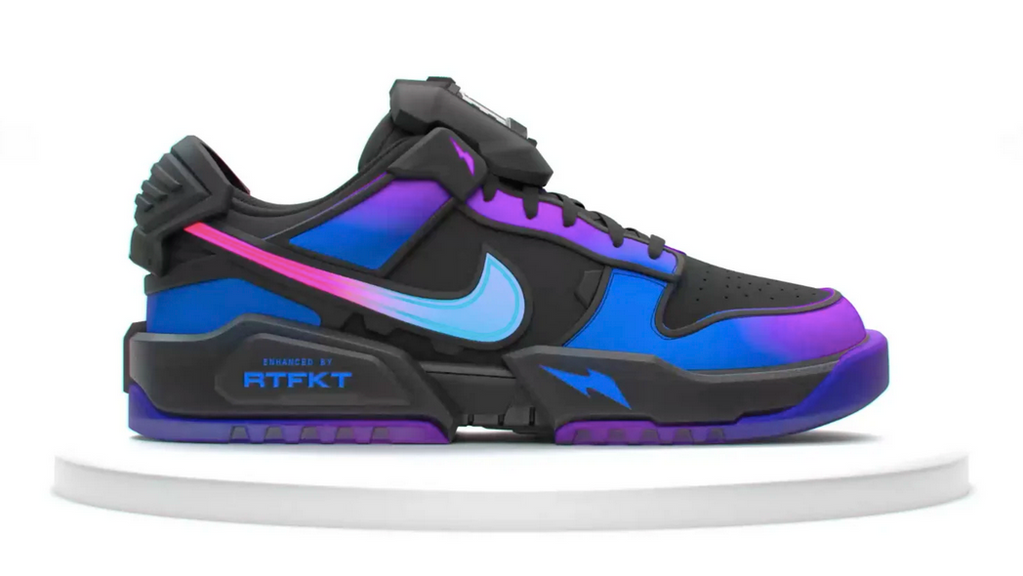
Nike created its shoe — dubbed the Dunk Genesis Cryptokicks — in conjunction with RTFKT, a company it acquired in December 2021. RTFKT, pronounced “artifact,” is a non-fungible token (NFT) studio. It describes itself as “a leading brand that leverages cutting edge innovation to deliver next generation collectibles that merge culture and gaming.”
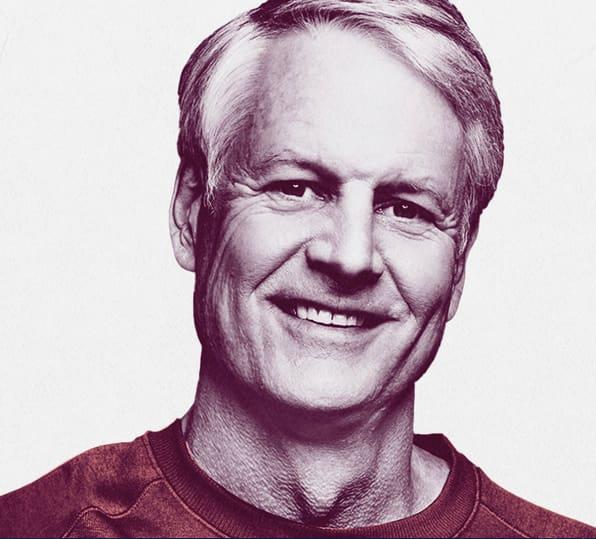
“This acquisition is another step that accelerates Nike’s digital transformation and allows us to serve athletes and creators at the intersection of sport, creativity, gaming and culture,” said John Donahoe, president and CEO of NIKE, Inc. in a press release announcing the buy.
“Our plan is to invest in the RTFKT brand, serve and grow their innovative and creative community and extend Nike’s digital footprint and capabilities,” said John Donahoe, Nike CEO. (Nike.com)
“We’re acquiring a very talented team of creators with an authentic and connected brand. Our plan is to invest in the RTFKT brand, serve and grow their innovative and creative community and extend Nike’s digital footprint and capabilities,” he said
RTFKT’s creators are also enthusiastic about prospects for the merged companies.
“This is a unique opportunity to build the RTFKT brand, and we are excited to benefit from Nike’s foundational strength and expertise to build the communities we love,” says Benoit Pagotto, one of RTFKT’s co-founders.
“Nike is the only brand in the world that shares the deep passion we all have for innovation, creativity and community, and we’re excited to grow our brand which was fully formed in the metaverse,” he said.
Along with Nike, several other companies took the initiative and developed their own wearables and NFTs. This sparked an international competition for which could devise the coolest drip for avatars.
This competition has expanded beyond shoes and fashion. It is now more about innovation and becoming the next company to find new and interesting ways to gain more brand recognition.
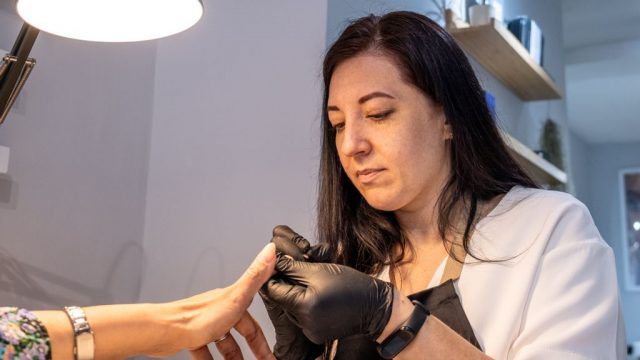
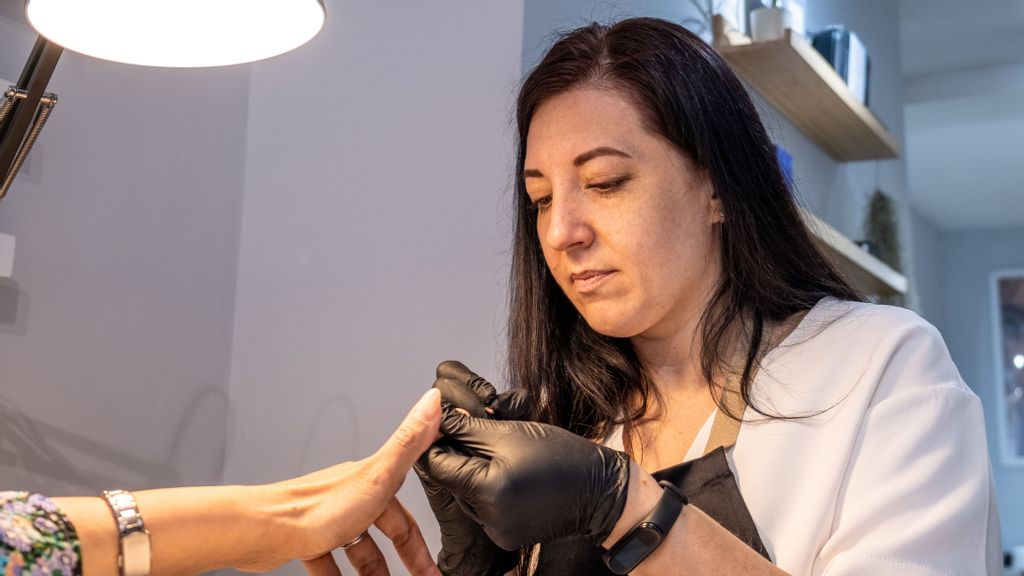
A Ukrainian mum has become one of the first refugees to find work in the UK as she started her job as a beautician – and her boss is already singing her praises.
Valeriia Starkova, 37, fled the war-torn city of Kharkiv with her family to move into a house in Cambridgeshire last month.
Now she has become one of the first Ukrainian refugees to find a job since arriving in the UK.
Valeriia, who has two kids called Alikhan, 10, and Kamila, 12, started her new position as a nail technician at a beauty salon in Cambridge yesterday (Tues).
Having previously worked the same role in Ukraine, she said: “It feels fantastic.
“I haven’t been working for two months so I’ve been waiting for this day for quite a long time.
“I was hoping that I would get the job I love.
“I was nervous that I wouldn’t understand clients and what they want but after I finished the course here I saw that it’s quite similar and the clients are actually really nice and they help me a lot.
“The hardest part was doing my CV. It took me two or three days but without a CV you can’t find a job obviously.”
Valeriia is living with nine Ukrainian relatives at a house in Cambridgeshire that was offered to them rent-free by local businessman Mick Swinhoe, who sponsored the family’s visa application.
The four generational family – ranging in age from ten to 90 – drove for three weeks through 13 countries to arrive in the UK at the end of March.
Speaking through tears, Valeriia said today: “Of course I miss my home. I miss everything I had there. I had all my life out there.
“I miss my husband as well. He’s in another country right now and he’s waiting for his visa to come. The kids haven’t seen him for quite a long time.
“It’s hard. All my life out there [in Ukraine] and I just left everything.”
A Ukrainian mum has become one of the first refugees to find work in the UK as she started her job as a beautician – and her boss is already singing her praises. (James Linsell Clark//Zenger)
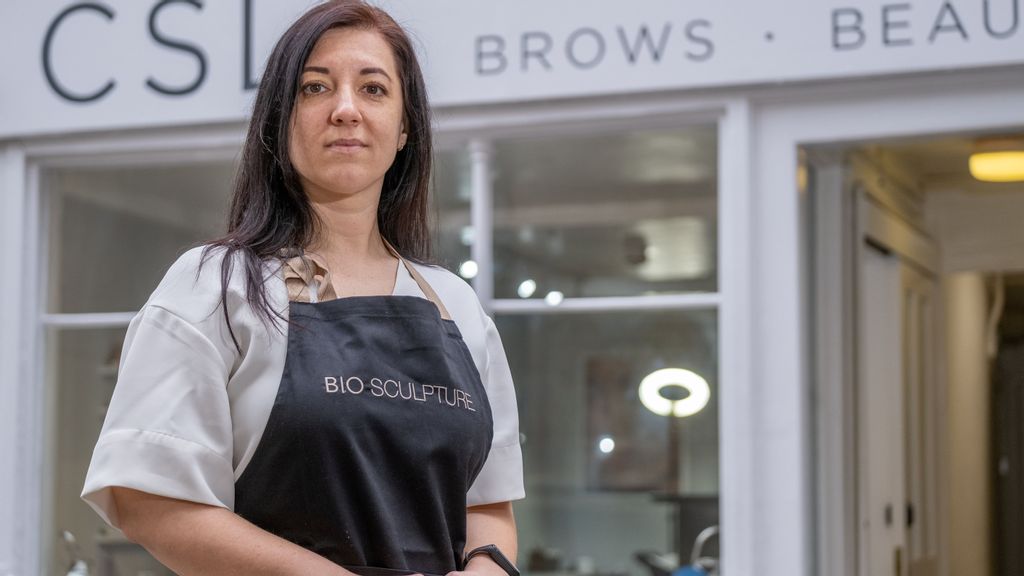
Valeriia’s new boss Charlotte Liddiard, who opened CSL salon in Cambridge last April, said that her new recruit’s application “stood out”.
She added that Valeriia, who is the salon’s only nail specialist, has a busy list of clients this week.
Charlotte said: “Her application stood out. She sent a covering letter with her CV explaining her passion for the job.
“It just felt like the right thing. I saw her work on her Instagram page and it was fantastic.
Charlotte, who has five employees, including Valeriia, added: “She’s fully booked today on her first day. She’s pretty fully booked for the week.
A Ukrainian mum has become one of the first refugees to find work in the UK as she started her job as a beautician – and her boss is already singing her praises. (James Linsell Clark//Zenger)
“Her colleagues and our customers are really excited for her to work here.”
Charlotte said that Valeriia’s background – having fled bombarded Ukraine with her family – cemented the decision to hire her.
She said: “Obviously it’s nice to help. You have empathy with what’s going on. It’s just nice to be able to help and do something otherwise you feel pretty helpless.
“It might be a little thing for me but it’s a big thing for her. She’s got kids and a family – you imagine yourself in that position.”
Millions of men say they are not okay and in fact are feeling down an average of three times a week.
A poll of 2,000 males revealed they rate their mental health as an average 6 out of 10.
But those as young as 18 feel just a five out of 10.
Dealing with a physical health condition (26 percent), poor eating habits (20 percent) and pressures at work (20 percent) are among the reasons men have struggled with their mental well-being in the last 12 months.
Others claim not being in a relationship, life changes – such as the breakdown of a marriage – and scrolling through social media can affect their general wellbeing.
But 44 percent have never opened up to someone about how they are feeling, with 32 percent often feeling lonely.
While 35 percent actively avoid conversations with others about their mental wellbeing.
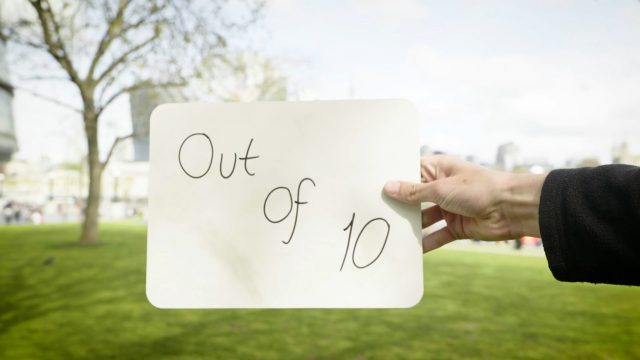
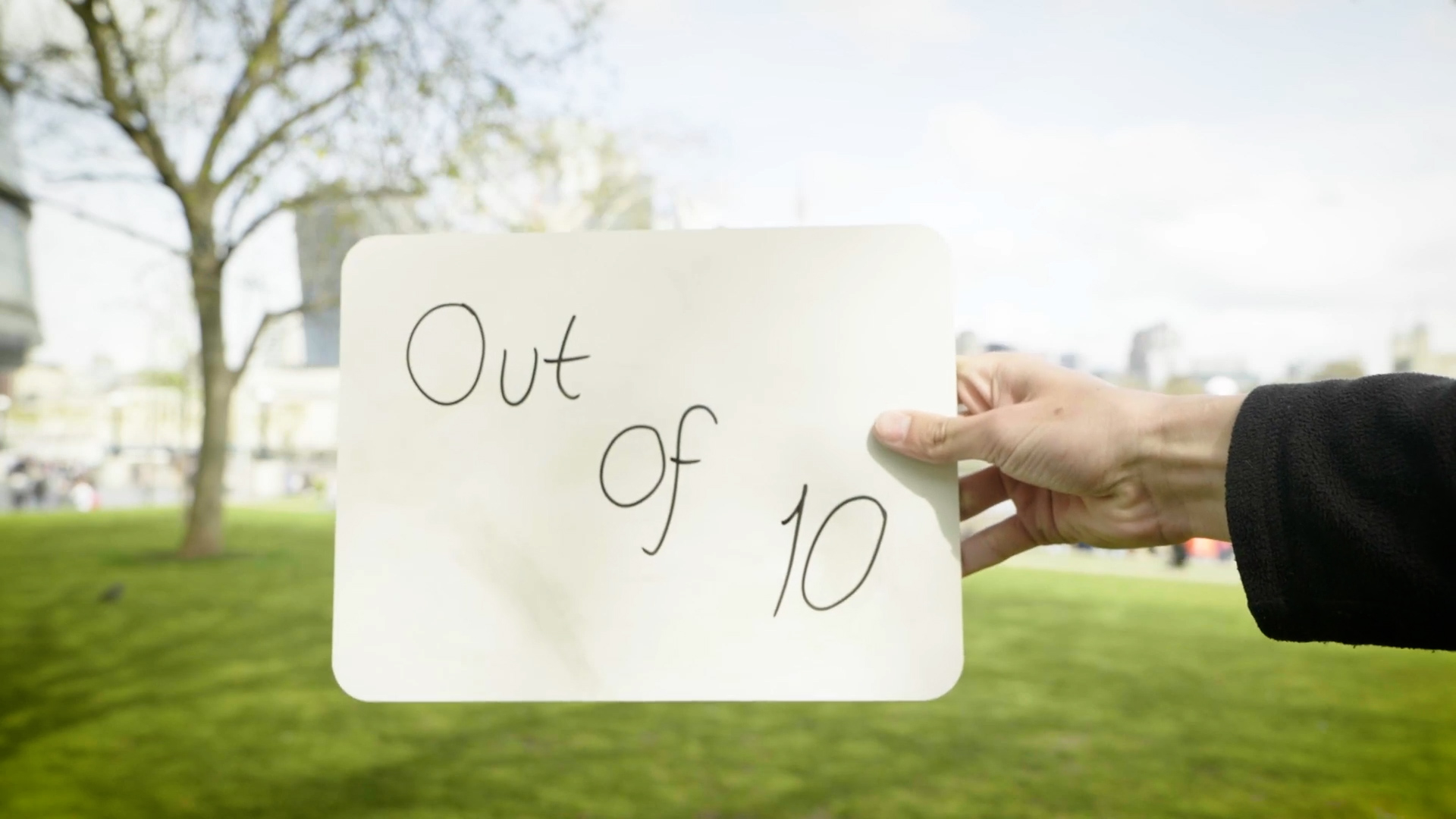
The research was commissioned by NIVEA MEN as part of its ’Strength In Numbers’ [www.NIVEA.co.uk/StrenghtInNumbers] campaign, which, together with Talk Club, aims to give men the tools to start the conversation and check in with their feelings by asking themselves, and others “How are you? Out of 10?”.
Ben Akers, co-CEO and co-founder of Talk Club, said: “Most men find it difficult to open up about their feelings. But simply answering “How are you? Out of 10?” gives them a way to start.
“We seem to look after our cars better than our minds.
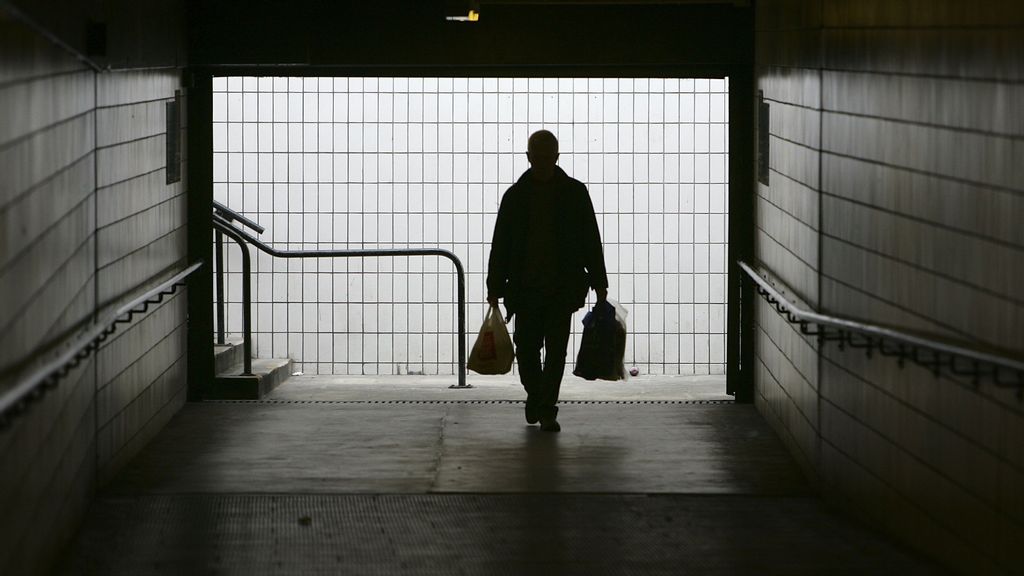
A man makes his way home at Preston bus station on January 23, 2005, Preston, England. Scientists from Cardiff University have worked out a formula to calculate that January 23 is the most depressing day of the year. (Photo by Christopher Furlong/Getty Images)
“But talking about our worries regularly releases the pressure, allowing us to become mentally fitter and in turn mentally stronger.
“Giving something regular service, makes it less likely to breakdown.
“Remember that it’s ok for our numbers to change – that’s to be expected – but understanding why and being able to talk about it is what can improve them.”
The study also found social events leave two-thirds of men feeling anxious, with two in 10 feeling stressed in the workplace.
However, more than seven in 10 feel more relaxed when at home on the weekend and 63 percent feel calm when hanging out with friends.
Mindfulness and regular exercise, as well as breathwork and meditation were among the more common ways the men maintain their good mental health.
While four in 10 of those aged 35 to 40 have visited the GP to discuss their mental wellbeing.
Although nearly four in 10 have felt able to open up to a close friend or family member about their feelings.
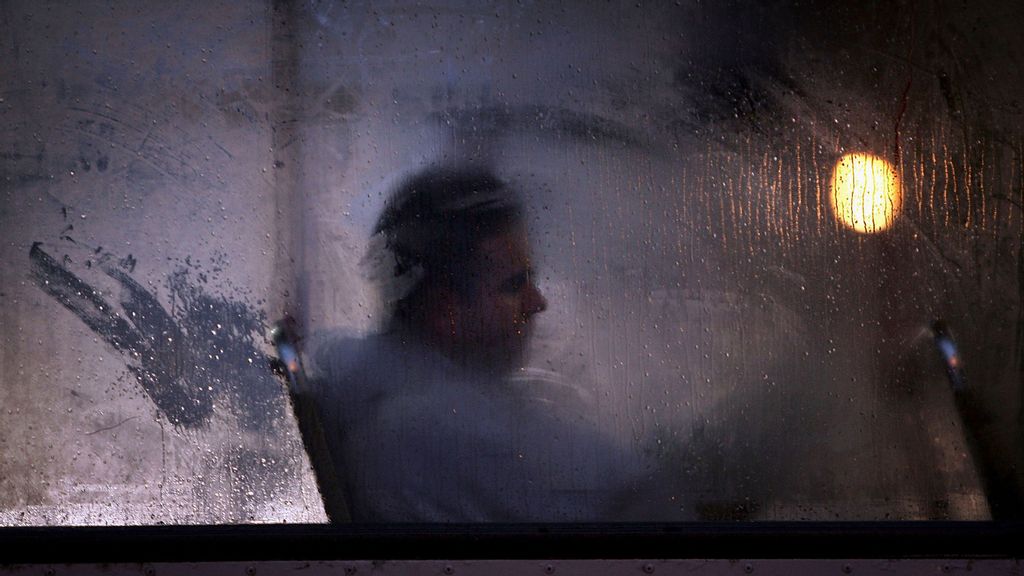
A man makes his way home from work on a bus as darkness falls on October 10, 2005 in Glasgow, Scotland. Seasonal affective disorder (SAD), or winter depression, is a mood disorder related to the change in the seasons and the resulting reduction of exposure to daylight. (Photo by Christopher Furlong/Getty Images)
But while many are keen to talk with others, nearly half (47 percent) feel less comfortable asking other men about their struggles – with fertility issues being the number one topic that’s off-limits.
Other subjects men are nervous about discussing include addictions, eating habits, and hair loss.
When asked why they avoid such conversations, one in five said they don’t want people close to them to see their vulnerable side or to be judged by their actions, while 18 percent believe they can handle their struggles on their own.
The research, carried out via OnePoll, revealed 57 percent of men would like to see more support available for those struggling with their mental health.
Many consider regular conversations with friends and family (30 percent), talking about your feelings with others (27 percent) and cutting back on alcohol (22 percent) as ways they can maintain their mental fitness.
Emily Marcham, from NIVEA MEN, said: “It saddens us to hear so many men are struggling with their mental health and are uncomfortable with the thought of opening up.
“Hoping to reduce the rates of loneliness by helping more men and boys to start a conversation, NIVEA MEN has come together with Talk Club to provide useful tools to help open up the conversation.
“It all starts with answering one question; ‘How are you? Out of 10?’. So, why not try it now?
“Check in with yourself, and check-in with others around you, because the truth is that regularly checking in and opening up makes us stronger.”
THINGS THAT HAVE AFFECTED MENTAL HEALTH FOR MEN IN THE LAST 12 MONTHS
1. Health condition
2. Poor eating habits
3. Work deadlines/ pressures
4. Relationship status
5. Life goals e.g. career, marriage, mortgage
6. Life changes e.g. having kids, job promotion
7. Social media
8. Addictions
9. Fitness plans
10. Hair loss