Home Blog Page 455

VIDEO: Sails Of The Century: Iconic Moulin Rouge Windmill Opens Up To Airbnb Guests


0

Moulin Rouge was converted into a love nest. (Philippe Wojazer/Zenger)


By Lee Bullen

The windmill on Paris’ iconic Moulin Rouge has been converted into a love nest for romantic couples who can stay there for the first time ever.


The Moulin Rouge, located in the heart of Paris’ Montmartre District, is considered the home of the French cancan, a dance full of rhythmic and popular charm that immerses spectators in the Belle Epoque.

The cabaret venue in the French capital is opening its iconic windmill to guests for the first time since its construction in 1889.

The Moulin Rouge said in a statement: “The bedroom – which has been a closely-guarded secret up to now – recreates all the romanticism of the Belle Epoque, inviting guests to travel back through history and time.”

In an interview with Zenger News, Moulin Rouge spokeswoman Fanny Rabasse said it had taken a month to convert the space into a romantic love nest.

It will open to guests for the first time since its construction in 1889.

Inside of the bedroom in the windmill of the Moulin Rouge. (Daniel Alexander Harris/Zenger)

Asked why it was only happening now she said: “It always was in our thoughts to use this extraordinary room, but we needed a project that truly met our expectations.”

To realize the project, they teamed up with Airbnb, and the romantic love nest has an exit through the iconic Moulin Rouge and also a private entrance that bypasses it.

Rabasse declined to say how much the renovation had cost and said the makeover had been done by the Moulin Rouge team and Airbnb without the need for an architect, but they did have a historian.

She said: “The Belle Epoque design is known for its lavish decoration and its imaginative use of both new and traditional materials.

Outside of the bedroom in the windmill of the Moulin Rouge. (Daniel Alexander Harris/Zenger)

“True to this spirit, Moulin Rouge and Airbnb recreated a Belle-Epoque atmosphere in the iconic windmill, with a few objects evocative of that time, while providing modern comfort for the guests.

“When recreating the decorative and stylistic details of this celebrated time in history, Airbnb worked with the renowned 19th-century French historian Jean-Claude Yon to authentically renovate the windmill.”

Yon was tasked with recreating the decorative and stylistic details of this celebrated period in history.

To mark the occasion, a handful of special guests will be allowed to stay for three nights in June for the symbolic price of EUR 1 (GBP 0.84, USD 1.05).

Terrace of the bedroom in the windmill of the Moulin Rouge. (Daniel Alexander Harris/Zenger)

In a statement announcing the offer, Moulin Rouge said: “A total of three one-night stays at just one euro a night will be available on Airbnb, giving three lucky couples the chance to enjoy a unique experience in this celebrated cabaret venue where they’ll discover a world of glamour, luxury, charm, and mystery.

“Few people even know about the existence of the mill’s interior, which has never been open to the public. The people working at the Moulin Rouge and Airbnb have transformed the inside from top to bottom, creating a luxurious bedroom that evokes and pays tribute to the origins of the Moulin Rouge.

“The interior of the windmill has been fitted out in keeping with the spirit of the Belle Epoque, giving guests the opportunity to journey back in time to the early days of cabaret. For just one euro, they will have the chance to discover the Moulin Rouge in all its glory.

“Guests will begin their stay with an exceptional behind-the-scenes tour followed by a meeting with the lead dancer before enjoying a lavish dinner in the best traditions of French gastronomy.

“After taking their VIP seats, guests will marvel at the magical extravaganza Feerie as a prelude to spending a memorable night in the legendary windmill.”

The dancers Claudine discovers in the bedroom in the windmill of the Moulin Rouge. (Daniel Alexander Harris/Zenger)

To mark the special occasion, Claudine Van Den Bergh, principal dancer at the Moulin Rouge, will be the guests’ Airbnb host.

Van Den Bergh said: “The show at the Moulin Rouge immerses spectators in the glamour and grandeur of the French music hall tradition, making them forget all about everyday life.”

Three couples will enjoy the privilege of staying in this bedroom that will reveal its glories for three overnight stays on June 13th, 20th, and 27th of 2022.

They added: “The windmill was erected in 1889 as a tribute to Montmartre’s rural origins before being rebuilt three decades later after a fire. The windmill has never been open to the public throughout its colorful history until now.”

Recommended from our partners


The post VIDEO: Sails Of The Century: Iconic Moulin Rouge Windmill Opens Up To Airbnb Guests appeared first on Zenger News.


Chasing Victory: Female Runner Sets New Record Of 102 Marathons In 102 Days

0

On her way to 102 marathons in as many days, ultra runner Jacky Hunt-Broersma ran her 90th in Boston.(Twitter/@NCrunnerjacky)


By John Murphy

After losing her leg to a rare form of cancer, long-distance runner Jacky Hunt-Broersma spent her life overcoming physical obstacles, climatological hurdles and thousands of miles to do exactly what people said was impossible for her.


This year, for 102 straight days, Hunt-Broersma ran a full marathon — 26.2 miles — every single day. In the process, she braved fierce weather and rewrote the record books, setting a new all-time best for a woman running a marathon for the most consecutive days.

About 20 years ago, Hunt-Broersma contracted a rare type of cancer called Ewing sarcoma, which affects the bones or soft tissues surrounding them, often beginning in the legs. Within three weeks of her diagnosis, she was told her leg would need to be amputated to prevent the disease from spreading further.

Following the surgery, however, she found herself living a completely different life, as everyone around her weighed in with well-meaning advice.

“I was told amputees don’t run, you don’t need to do that, you’ll find you’re an amputee, you don’t need to be fit and healthy — and it frustrated me,” Hunt-Broersma told AccuWeather broadcast meteorologist Adam Del Rosso on AccuWeather Prime.

But the determined mother of two decided to “show the world what we can do.”

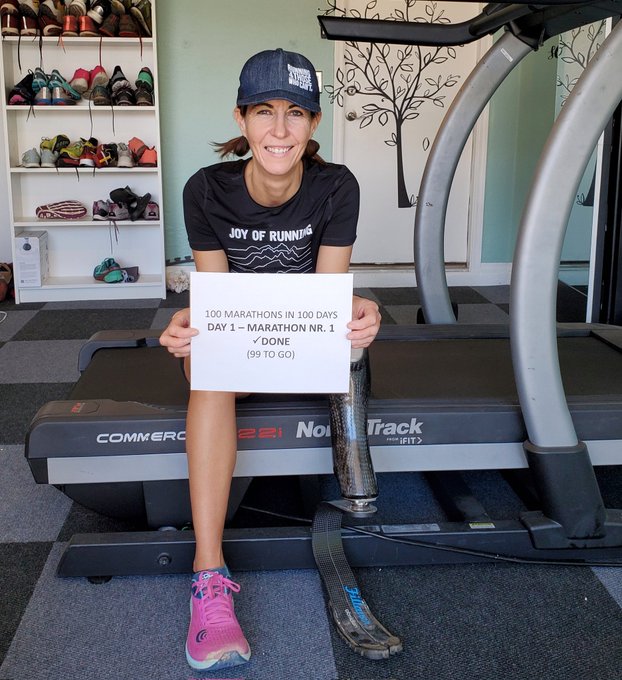
Ultra runner Jacky Hunt-Broersma poses on Jan. 17, 2022, after finishing her first of many consecutive marathons. (Instagram/ncrunnerjacky)

Hunt-Broersma got a running blade — a J-shaped prosthetic that is specifically designed for use while running — and hasn’t slowed down since.

“The first time I actually put a running blade on, there was a sense of freedom because I felt, for once, I was doing something that everyone thought I couldn’t do,” she said.

Hunt-Broersma would spend the next six years training as a long-distance runner, and her hard work paid off. She became the first amputee to participate in the TransRockies Run, a 120-mile race in Colorado featuring over 20,000 feet of climbing and running.

In 2020, she set a world record as the first amputee to run 100 miles on a treadmill, and she accomplished it in just 23 hours and 38 minutes.

This year, Hunt-Broersma decided to reach for another world record — one that would take over 100 days to complete.

“I’m a big believer…that we are capable of so much more than…we think. I was like, you know what, I’m gonna see if I can do it and just show the world that you can do hard things if you just put your mind to it,” said Hunt-Broersma.

On Jan. 15, she announced her plans to run a marathon every day for 100 consecutive days, which would top the woman’s record of 95 marathons set by Alyssa Amos Clark in 2020.

“I’m hoping this will inspire others to get out of their comfort [zones] and try something new and truly see what you are capable of. [You’ve] always got more to give,” Hunt-Broersma said in her announcement post on social media.

Before beginning her journey, Hunt-Broersma set up a fundraiser for nonprofit organization Amputee Blade Runners based on her attempt to beat the existing record.

“They are a wonderful charity who provide running blades for amputees. I would love to give running opportunities to [other] amputees like me,” she said of the fundraiser. The prosthetics can easily cost thousands of dollars each.

It wasn’t an easy start for Hunt-Broersma. During the first two weeks, she developed shin splints, where the muscles, tendons and bone tissue around the tibia bone in the leg become inflamed due to changes in or the intensification of a training routine. But despite this setback, she remained confident in her goal.

“I was just going a lot slower and just making sure my body had time to recover, and as you go along, your body adapts and it kind of recovers,” she said.

In addition to shin splints, the long-distance runner also dealt with the swelling of her stump. She expressed to Del Rosso that being smart about these injuries helped prevent major damage over time.

Apart from the physical challenges, Hunt-Broersma also faced weather obstacles. While living in Arizona, she was forced to train and run in extreme temperatures, especially as summer drew closer.

“I did one of my runs, and the [temperature] hit 101, and that is tough,” she said. “You kind of have to be on top of your salt intake, your water.”

Hunt-Broersma said the high temperatures have made her a better athlete and taught her to listen to her body more. When the weather got too extreme, she had to take extra precautions.

“I’ve obviously been smart about it, and when it’s really extreme, I do some of the miles on the treadmill just to help make sure I can get to the end goal because that’s the priority,” she said.

“Day 83 and Marathon 83 done. Today was hot, hard and slow but got it done,” Jacky Hunt-Broersma said at the time. (Twitter/@NCrunnerjacky)

On April 22, Hunt-Broersma ran her 96th consecutive marathon, beating Clark’s record set in 2020. However, earlier in April, British runner Kate Jayden had set a new record at 101 consecutive days. Hunt-Broersma remained focused on her goal to set the record herself.

“I’ve adjusted my goal. I’m still going after the record but will run until at least…102 marathons or maybe more. I feel like I need to totally smash this record,” she said in a Twitter post shortly after Jayden set the new record.

Just a couple of weeks later, on April 28, Hunt-Broersma ran her 102nd consecutive marathon in just as many days, setting a new record for the most consecutive days of running a marathon by a woman.

“I’m kind of feeling really emotional at this point because when I started this journey, I didn’t know how far I would get in the journey because there are so many elements when you’re running with a prosthetic, and I wasn’t sure how my body would hold up. It’s just so incredible just to be here. I just never imagined I’d be here,” she said.

By the end of her journey, Hunt-Broersma had run a total of 2,672 miles over the course of 102 days — about 100 miles less than the distance between New York City and Los Angeles via Interstate 80.

Now that Hunt-Broersma officially holds the record she’s chased most of the year, she can’t wait to spend more time with her family.

“I’m going to spend some really good quality time with my family. They really have missed me. My kids … have been so supportive, but they’ve missed their mom.”

Additional reporting by AccuWeather’s Adam Del Rosso.

Produced in association with AccuWeather.comWatch the AccuWeather Network on DIRECTVFrontierSpectrumfuboTVPhilo, and Verizon Fios. AccuWeather Now is now available on your preferred streaming platform. 

Recommended from our partners


The post Chasing Victory: Female Runner Sets New Record Of 102 Marathons In 102 Days appeared first on Zenger News.

NASA Helicopter Discovers ‘Alien’ Wreckage On Mars

0

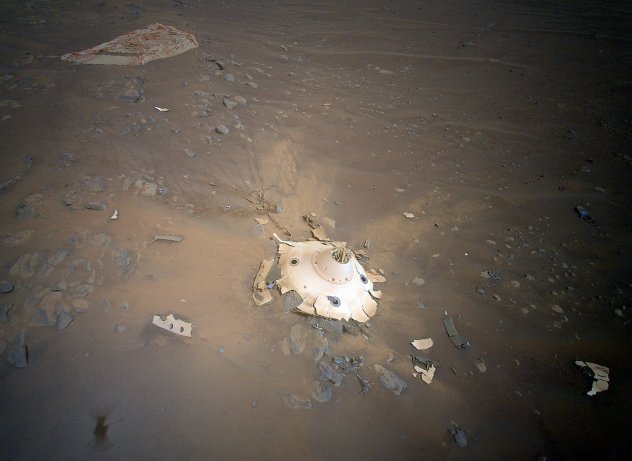
A close-up of the wreckage photographed by an unmanned helicopter on Mars. (NASA Jet Propulsion Laboratory)


By Zachary Rosenthal

An alien spaceship was seen on Mars.


On a routine mission to take aerial photographs of the Red Planet, the Mars helicopter Ingenuity captured the image.

Scientists could see what looked like a landing capsule, a supersonic parachute and other debris scattered across the Martian landscape. All the evidence pointed to the wreckage being from some sort of spacecraft.

And the evidence was right.

“Technically, this is the wreckage of a flying saucer that crashed on Mars that belongs to aliens,” Jonathan McDowell, an astronomer at the Center for Astrophysics in Cambridge, Massachusetts, tweeted.

The catch? Humans are the aliens.

The wreckage was from another Martian spacecraft — a part that detached during the landing of the Perseverance rover in February 2021.

A wider view of the mysterious wreckage photographed on Mars. The part detached during the landing of the Perseverance rover in February 2021. (NASA Jet Propulsion Laboratory)

The photos of the wreckage, while fascinating, will help scientists plan more landings on the surface of Mars.

Martian landings are “fast-paced and stressful.” according to NASA.  A vehicle entering Mars’ atmosphere spirals into the planet at nearly 12,500 mph and wrestles with high temperature and intense gravitational forces. Being able to study the remaining wreckage will allow scientists to make changes that allow for smoother landings in the future.

“Every time we are airborne, Ingenuity covers new ground and offers a perspective no previous planetary mission could achieve,” said Teddy Tzanetos, Ingenuity’s team lead at NASA’s Jet Propulsion Laboratory in Southern California.

Concept art of NASA’s Ingenuity Mars Helicopter flying on the Red Planet, while the Perseverance rover works nearby. (NASA Jet Propulsion Laboratory)

Perseverance was launched on July 30, 2020, traveling more than 290 million miles, with tiny 4-pound Ingenuity riding along as an unexpected companion. Ingenuity and Perseverance both landed on Mars on Feb. 18, 2021, exactly 203 days later.

Ingenuity, which went from an improbable idea to Perseverance’s spaceflight buddy, has proved that a helicopter-style rover can work. When Ingenuity made its first flight on April 19, 2021, it became the first manmade craft to fly on another planet.

However, there were concerns that Ingenuity wouldn’t be able to make it off the ground.

Mars’ atmospheric volume is much thinner than Earth’s, coming in at an atmospheric volume of less than 1 percent of our planet’s, according to the European Space Agency. The findings made it unclear if a helicopter could take off.

But take off Ingenuity did, and multiple times, too. The photos were taken on Ingenuity’s 26th flight on the Red Planet. During that flight, the helicopter traveled for 159 seconds and covered 1,181 feet of distance, according to NASA. All told, the marvel of modern engineering has traveled over 3.9 miles in nearly 40 minutes aloft, with plenty of flights still to go.

Produced in association with AccuWeather.comWatch the AccuWeather Network on DIRECTVFrontierSpectrumfuboTVPhilo and Verizon Fios. AccuWeather Now is available on your preferred streaming platform.

Recommended from our partners


The post NASA Helicopter Discovers ‘Alien’ Wreckage On Mars appeared first on Zenger News.

The World of Nick Sellers, CEO of Alabama’s Largest Sporting Event in History

0
Nick Sellers is CEO of TWG 2022, which will draw elite athletes from more than 100 countries around the globe at various venues across the Birmingham metro area. (Solomon Crenshaw Jr. For The Birmingham Times)

By Solomon Crenshaw Jr.

For The Birmingham Times

JeffCo Residents Can Soon File Property Tax Exemptions Online

0

By Ryan Michaels

The Birmingham Times

Forgotten Farm: Urban Explorer At Farm That Time Forgot

0

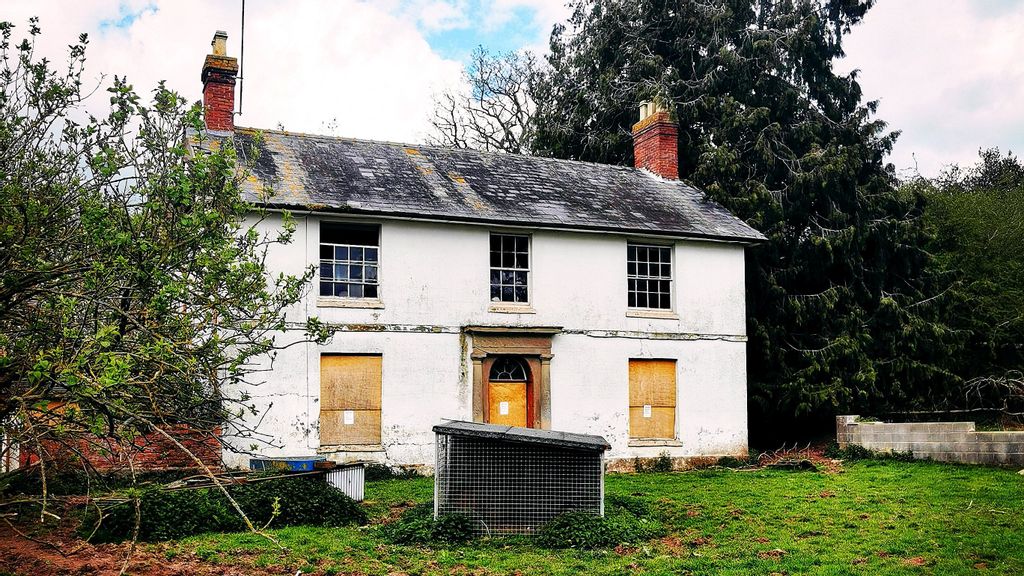
An urban explorer photographed a once-loved farmhouse that became 'frozen in time' after being abandoned by owners. (SWNS)


By Ipek allahyari

An urban explorer photographed a once-loved farmhouse that became ‘frozen in time’ after being abandoned by its owners.


Urban explorer Kyle ‘Urbex’, 25, has explored more than 400 abandoned buildings since taking up the hobby in 2020.

One of his most recent visits was to this farmhouse in Little Hereford, Herefordshire, to document what it looks like after several decades of abandonment.

The 25-year-old, from Leeds, visited on April 18 after spotting it on a Facebook page about abandoned places.

The pictures he took show the former home in a state of decay but otherwise ‘frozen in time’ with all the former owners’ possessions inside.

An Urban Explorer Photographed A Once-Loved Farmhouse That Became ‘Frozen İn Time’ After Being Abandoned By Owners.(SWNS)

An old sewing machine, a collection of candlesticks on the fireplace and an old piano stacked with sheet music can be seen in the haunting pictures.

One picture of the kitchen shows a curled and browning calendar on the wall from January 1998, along with stacks of newspapers and magazines scattered across the table.

An old Beko cooker sits in the corner with a kettle and saucepans still stacked on the hob.

Kyle said: “When I got there I could tell immediately it was subject to natural decay.

“I had to stay mainly downstairs because parts had fallen in upstairs.

An Urban Explorer Photographed A Once-Loved Farmhouse That Became ‘Frozen İn Time’ After Being Abandoned By Owners.(SWNS)

“The first living room I came to, I could sense it was from the 1960s or 1970s because of the retro wallpaper and old-style burner for a fireplace.

“In the kitchen, there was an old cooker and milk cartons all over the floor containing a black substance, which I thought might be tractor oil.”

Kyle said he attempted to find the names of the former occupants but letters only seemed to be addressed to ‘the homeowner’ – so he has no idea who lived there.

An Urban Explorer Photographed A Once-Loved Farmhouse That Became ‘Frozen İn Time’ After Being Abandoned By Owners.(SWNS)

He said he believed since being abandoned, young people had partied there, with some empty beer bottles left scattered around.

He said: “In these houses, you feel quite sad in a way, it is abandoned and frozen in time.

“We don’t know when it was vacated or who lived there but someone’s memories are still there.

“The living room had a piano that once would have been played daily – it’s now left rotting away.

“For some reason, whatever that is, someone upped and left, and never came back.”

Recommended from our partners


The post Forgotten Farm: Urban Explorer At Farm That Time Forgot appeared first on Zenger News.

COVID 19: How Your Genes Affect Your Survival

0

Clinical support technician Douglas Condie extracts viruses from swab samples so that the genetic structure of a virus can be analyzed and identified in the coronavirus testing laboratory at Glasgow Royal Infirmary, on February 19, 2020, in Glasgow, Scotland.  (Photo by Jane Barlow - WPA Pool/Getty Images)


By Martin M Barillas

A study of 600,000 veterans’ hospital records has revealed that their genetics plays a significant role in their survival from COVID-19


The dataset of human DNA variants of patients with severe COVID and known risk factors were also found to be associated with other serious medical conditions, including faulty inflammatory response and blood clotting.

A summary of this analysis, which came from stored genetic data from 650,000 U.S. veteran military, appeared in the online journal PLOS Genetics.

Co-author Professor Anurag Verma of the University of Pennsylvania said: “This work provided invaluable insights into the genetic architecture of COVID-19 risk factors and disease complications, a pressing need as the pandemic continues.

“The balance between the associations that we uncovered will be important as more therapies for COVID-19 are considered.”

The researchers used data from the Million Veteran Program (MVP) of the U.S. Department of Veterans Affairs, which is among the most diverse and largest biobanks holding genetic information used for research.

Knowing the genetic variants associated with patients suffering severe COVID-19, the study’s authors sought to find other medical conditions associated with them.

Going to veterans’ electronic health records, they analysed approximately 1,500 phenotypes – the identifying traits of disease.

Co-author Dr. Katherine Liao of Veterans Administration and Harvard Medical School said: “One thing that stood out to us was the high number of immune-mediated conditions that shared genetic architecture with severe manifestations of COVID-19.”

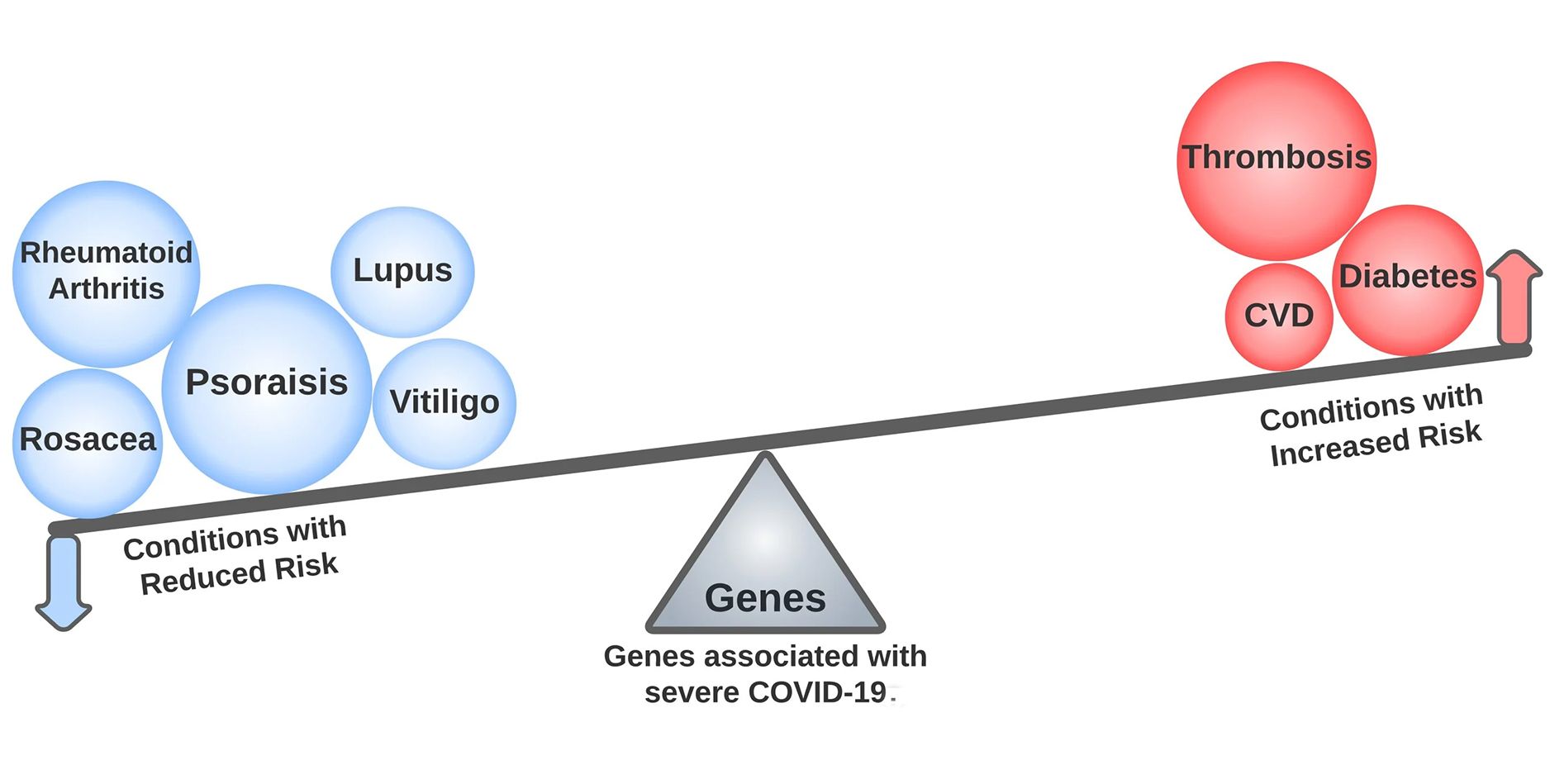
While genes linked to severe COVID-19 were associated with established risk factors and adverse outcomes, including deep vein thrombosis, a significant subset of these genes had opposite associations with reduced risk of immune-mediated disorders such as psoriasis, lupus, and rheumatoid arthritis. (Anurag Verma, Katherine Liao, and Scott Damrauer (CC-BY 4.0, https://creativecommons.org/licenses/by/4.0/)/Zenger)

Of the variants associated with severe COVID-19 symptoms, they were also associated with other conditions.

The study found patients with these genetic variants were 33 per cent more likely to exhibit other conditions, including dangerous blood clots.

Among the 67 respiratory conditions examined in the study, 11 of them had significant associations with variants of a particular string of genes known as the MUC5B locus.

A locus is a place within a genome or other DNA segment of interest, analogous to a street address.

Those with genetic variants at the MUC5B locus were nearly three times as likely to have a build-up of scarred lung tissue known as idiopathic fibrosing alveolitis.

But some of the variants associated with severe COVID-19 were associated with a lack of other conditions, such as some autoimmune and respiratory conditions.

Some patients showed a lessening in the odds of pulmonary fibrosis, which also scars the lungs, by 16 per cent, while others showed a reduced incidence of psoriasis and lupus, both of which are associated with autoimmune disorders.

Liao explained: “The nature of the associations brought to light how the SARS-CoV-2 virus pushes on a pressure point in the human immune system. The immune system is performing a constant balancing act of fighting infection while maintaining enough control so that it does not also become an autoimmune process, attacking itself.”

In some cases, there were differences seen according to ancestry.

For example, patients of African and Hispanic ancestry were 29 per cent more likely than those of European ancestry to have neutropenia – a low white blood cell count, which is part of the human body’s immune response.

A model of COVID-19, known as coronavirus. (Photo by Saul Loeb-Pool/Getty Images)

Verma said: “What we found challenges some assumptions that were made about COVID-19 and some of those who we believed to be at risk.

“Our research also highlights the risks some people might have because of their DNA. This demonstrates the value and impact that linking genetic variations with electronic health record data in biobanks has when it comes to public health responses, both in the current pandemic and future crises.”

The use of similar biobanks has raised concerns over privacy. In a 2011 study in the Croatian Medical Journal, concerns were raised over whether children and incompetent adults, for example, are fully aware of the consequences of stored biodata.

The study examined a wide range of scientific literature that discussed the ethical implications of biobanks, saying: “Although biobanks have a primary focus on research and improving medical knowledge, this will not necessarily prevent private companies from trying to use biobank data for their own interest.

“In general, commercialization raises several ethical issues, such as preventing exploitation, ensuring fairness to study participants, and balancing costs and benefits. Some articles showed that commercialization, in general, tended to decrease public trust in biobanks, although it did not completely diminish it.”

Recommended from our partners


The post COVID 19: How Your Genes Affect Your Survival appeared first on Zenger News.

Artificial Intelligence Can Forecast Damaging Solar Storms

0

The Atmospheric Imaging Assembly on NASA's Solar Dynamics Observatory captured these views of the flare in the sun’s southern hemisphere on July 12, 2012. (Photo courtesy of NASA)


By Abigail Klein Leichman

Artificial intelligence (AI) can be used to predict powerful radiation outbreaks, such as solar storms, up to 96 hours before they occur, according to Israeli researchers.


Yuval Reuveni of Ariel University’s department of physics and the Samaria and Jordan Rift R&D Center and computer science doctoral candidate Vlad Landa at the university say they have developed a new solar storm forecasting method, dubbed the Convolutional Neural Network.

As described in their paper published in The Astrophysical Journal, the Ariel University researchers combined knowledge of past radiation bursts with X-ray measurements from the Geostationary Operational Environmental Satellite (GOES) satellites belonging to the U.S. National Oceanic and Atmospheric Administration.

The researchers explain that “extracting an accurate and reliable solar flare forecast while considering multiple ranges of time windows is essential for decision-makers when protective measures are taken in critical mission situations.”

Harmful radiation solar storms can have a significant impact on Earth as they cause disturbances in atmospheric layers through which communication and global positioning system (GPS) signals pass.

Along with causing disruptions in satellite activity, navigation systems, communications and electric grids, intense radiation bursts also can result in dangerous and costly spacecraft failures.

“Solar flares have the ability to interfere in radio communication systems, affect global navigation, satellite systems, neutralize satellite equipment, cause electric power blackouts on Earth, harm the health of astronauts and can easily mean a loss exceeding several billion dollars in repairs and months of reconstruction when they reach a very high magnitude,” Reuveni and Landa write in The Astrophysical Journal.

In this color-enhanced image provided by the Solar & Heliospheric Observatory, a major solar eruption is shown in progress in October 2003. (Solar & Heliospheric Observatory/NASA via Getty Images)

Scientists have been trying since the 1930s to predict solar storms in enough time to offset damage. Now, the new meteorological field of space weather research is finding ways to forecast solar and geophysical disturbances from the interactions and influences of the sun and other cosmic sources that surround the Earth.

This screenshot shows a solar spot in the center of the sun on Feb. 14, 2011.  (NASA/Solar Dynamics Observatory via Getty Images)

“With our increasing reliance on technology, predicting the weather in space is crucial. However, accurately predicting space weather has long been a challenging problem for experts,” the journal The Conversation pointed out in a March 2021 article.

The Ariel University research proposed model might be the answer as it reportedly achieved impressive results across different metrics compared to previous recent studies.

Produced in association with ISRAEL21c.

Recommended from our partners


The post Artificial Intelligence Can Forecast Damaging Solar Storms appeared first on Zenger News.

Anger At Spain’s “Six Drinks A Day” Rule For All-Inclusive Holidays

0

Spanish officials have sparked outrage by enforcing a “six drinks a day” rule for all-inclusive holidays and in resorts on islands including Ibiza and Majorca. (Jon Mills/Zenger)


By Anamarija Brnjarchevska

Spanish officials have sparked outrage by enforcing a “six drinks a day” rule for all-inclusive holidays and in resorts on islands including Ibiza and Majorca.


The new law, which affects some hotels in the Balearic Islands, means that holidaymakers are forced to pay extra if they want more than three free alcoholic drinks per meal.

Jason Walker, 42, who took an all-inclusive trip to Majorca to celebrate his cousin’s birthday earlier this week, was left “angry” and “upset” by the rules.

He paid £240 for his three-night trip with travel operator Love Holiday, which he assumed had entitled him to as much food and drink as he wanted.

But when the Security officer arrived on the beautiful Mediterranean island, he was stunned to find out that there were limits on his free booze consumption.

Spanish officials first announced the new law in January but its has caught out hundreds of British holiday-makers who are now arriving in the islands.

Jason is urging holidaymakers jetting off to similar Spanish resorts over the summer to check their small print or face incurring hefty drinks costs without warning.

He said: “We only found out when we checked in and only budgeted so much because thought all our food and drink would be covered.

Spanish officials have sparked outrage by enforcing a “six drinks a day” rule for all-inclusive holidays and in resorts on islands including Ibiza and Majorca. (Jon Mills/Zenger)

“We were very upset and angry.

“We’ve come as a family of eight to celebrate my cousin’s 40th and while we have still had a good time, we have incurred extra costs as a result.”

Local authorities in Spain introduced the booze ban in January this year, which affects certain resort areas of the Balearic Islands, including Palma, Ibiza and Magaluf.

The new law – which states “alcoholic drinks will be limited to six per day” – is part of a package of measures designed to crack down on anti-social behaviour.

These also believed to include bans on pub crawls, happy hours and two-for-one drinks offers, which are all being enforced by hefty fines.

Jason, from Blackburn, Lancs., said he understood the government is trying to stop yobbish drinking behaviour, but he believes the new rules need to be better advertised.

He said: “I understand they are trying to stem alcohol abuse and rowdy behaviour, but I think this has been done very sneakily – I was not made aware of it and didn’t know about the law.

“We are also here as a family and all-inclusive is great for families as you don’t have to worry about budgeting for food and drink.”

Jason called on travel operators to give holidaymakers more information about how their trips might be affected by the draconian laws.

Spanish officials have sparked outrage by enforcing a “six drinks a day” rule for all-inclusive holidays and in resorts on islands including Ibiza and Majorca. (Jon Mills/Zenger)

He also believes that holidays where a three drink per meal rule is in place are being mislabelled and shouldn’t be branded as “all-inclusive”.

He said: “I have looked at the small print and the alcoholic drink rule is there, so I don’t think it should be sold as an all-inclusive inclusive holiday, it should be sold as half-board or something along those lines.

“If you are booking an all-inclusive holiday, I recommend that you look at the small print and see what is actually included and what’s not because the rules have changed.”

Holidaymakers writing on social media have reacted furiously to the new laws, which many feel have not been widely publicised.

One Twitter user believed that inclusive holidays with booze limits should be marketed as “half-board” – and called for hotel contracts where this wasn’t clearly stated to be ripped up.

He said: “Brits will now be restricted to just six drinks a day, which can only be accessed alongside their lunch and dinner – offering them a mere three drinks per meal.”

“[That’s] usually referred to as “Half Board Plus”. It’s time to cancel the hotel contracts for All Inclusive basis.”

A spokesperson for the ABTA – The Travel Association said the rules have the potential to cause “confusion” among holidaymakers.

They said: “ABTA strongly supports initiatives that improve the health and safety of holidaymakers, as well as the welfare of local communities.

“Some of the measures introduced by the Balearic Islands authorities to limit anti-social behaviour have potential to cause confusion for UK holidaymakers.

“We welcome the recent clarification from the authorities, including that the restrictions will only apply to certain limited areas in Mallorca and Ibiza rather than the whole of the Balearics as originally proposed.

“ABTA will continue to engage with the Balearic Islands Government, ABTA Members and other parties, to encourage clear communication and exchange of information, in order to ensure holidaymakers travelling to hotels in the designated areas enjoy a positive customer experience.”

Travel operator Thomas Cook recently alerted their customers to the crack down on free booze through an email.

They said: “Please be advised that a decree has been issued by the Balearic Government on a new restriction for All Inclusive meal option.

“There is a maximum of six alcoholic drinks per person per day that can be served and these drinks will be provided only during lunch and dinner ( 3 each).

“Please be aware that Magalluf, El Arenal, Playa de Palma in Mallorca and Sant Antoni in Ibiza, there is new restriction on All Inclusive.”

Love Holidays, which sold the all inclusive holiday to Jason, has been approached for comment.

Recommended from our partners


The post Anger At Spain’s “Six Drinks A Day” Rule For All-Inclusive Holidays appeared first on Zenger News.