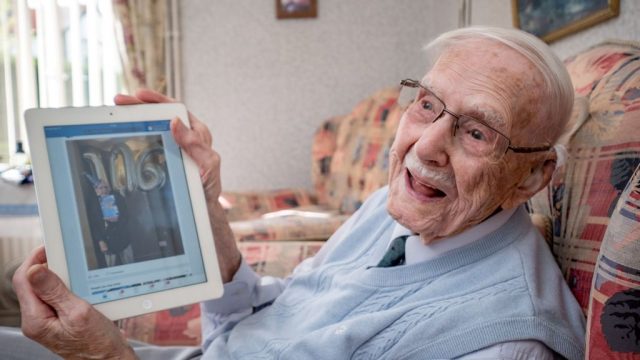
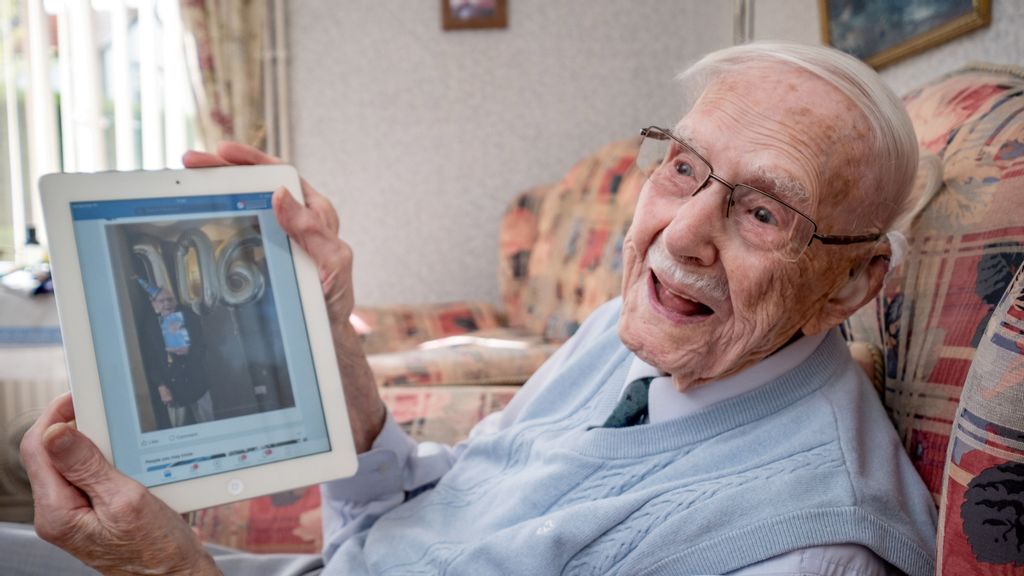
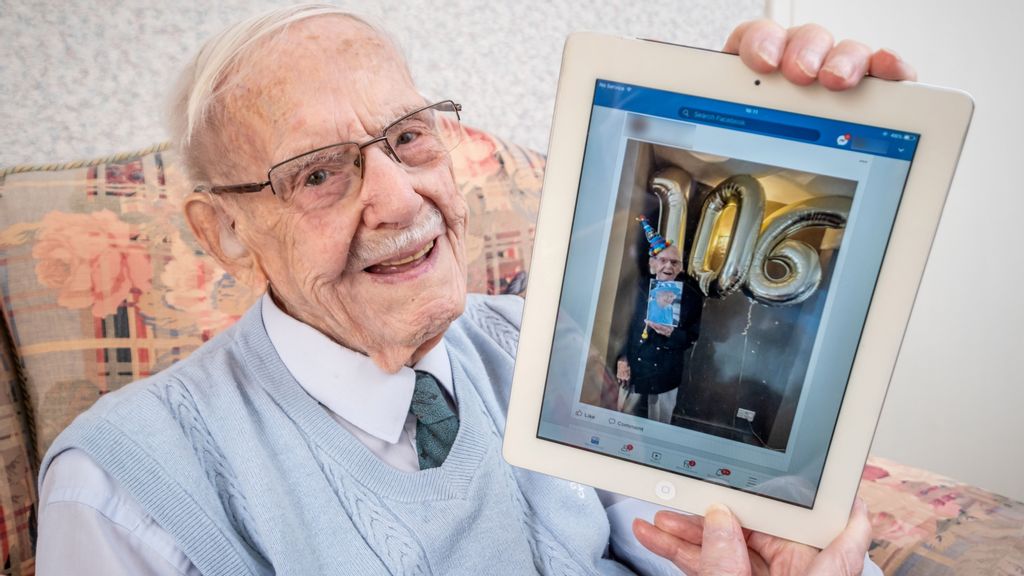
A British Royal Air Force veteran has laid claim to being ‘Britain’s oldest Facebook user’ – aged 106 and he loves checking his iPad daily.
Sprightly David Smith logs on every morning to watch viral videos and message friends.
He created his profile in 2017 and still enjoys checking Facebook daily on his iPhone and iPad.
The British Royal Air Force (RAF) serviceman said he most enjoys watching trending videos of wartime planes and seeing what his pals are up to.
David, who is from the village of Fenstanton, in Cambridgeshire, in England, in the United Kingdom, said: “I get up first thing in the morning and see if anyone’s sent any messages on Facebook.
“The best thing is getting in contact with different people. It keeps you young and alert.
“I don’t post much on Facebook but I do like to see if anyone’s got anything for sale on there.
“I ask my sister-in-law to get in touch with people selling things for me as I don’t know how to do it.”
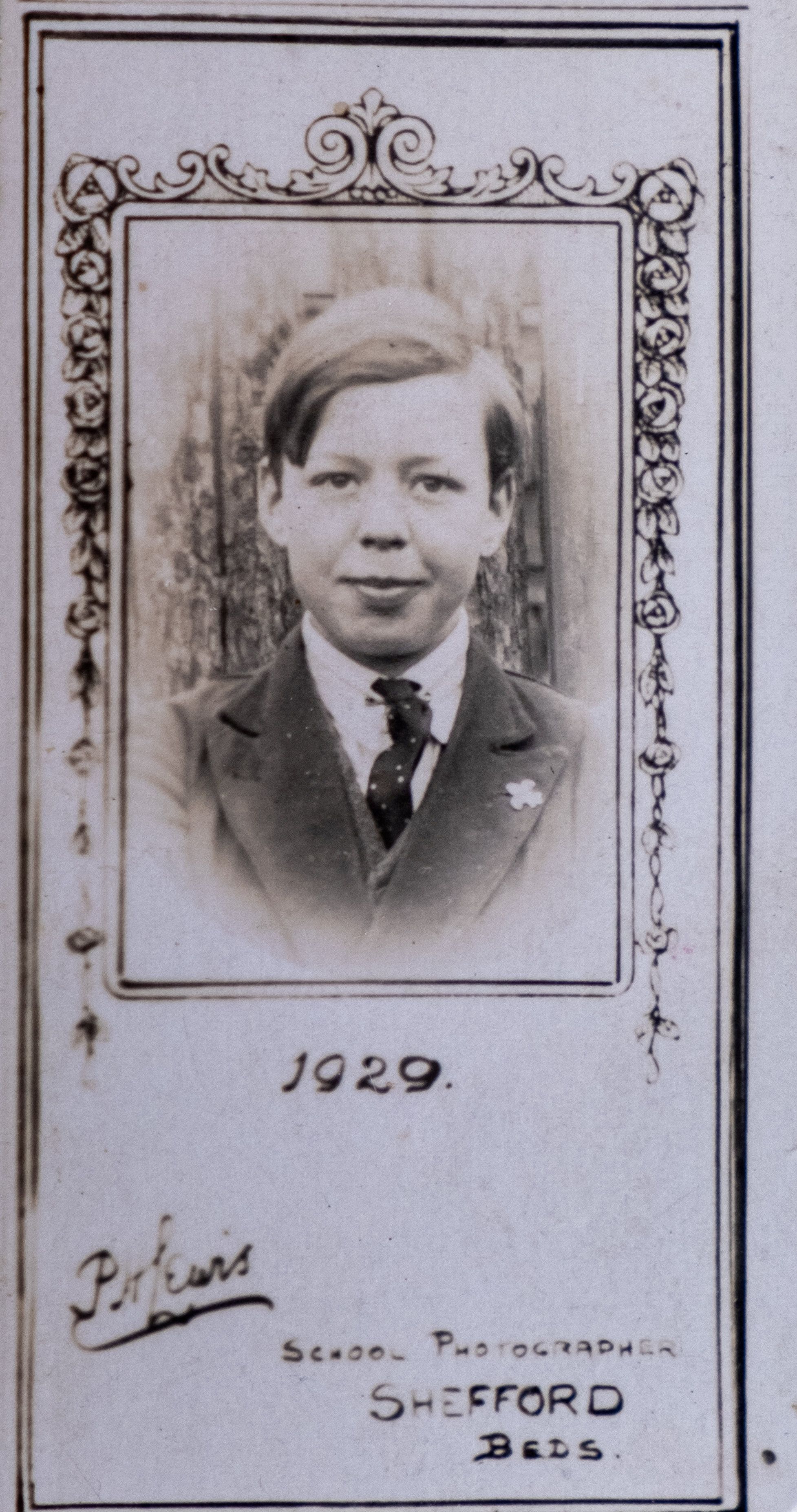
David, who lives independently after his wife Mona passed following after 60 years of marriage, served with the British Army in Egypt before working at RAF Wyton, where he stayed for 23 years.
An RAF veteran has laid claim as ‘Britain’s oldest Facebook user’ – aged 106. (James Linsell Clark/Zenger)
While David grew up using letters and the telephone to keep in touch with friends, he said that he prefers Facebook.
David said: “There wasn’t anything like this in my early days. The only contact you had was by telephone or letter.
“You had nothing like Facebook. It’s so easy to get in contact with my friends.
“I still use the telephone and letters sometimes – I have some people in America who I hear from on special occasions.”
David celebrated his 106th birthday last Saturday (April 9) and has since claimed that he is Britain’s oldest Facebook user.
An RAF veteran has laid claim as ‘Britain’s oldest Facebook user’ – aged 106. (James Linsell Clark/Zenger)
His profile boasts 11 friends – mostly his close family – as well as a profile picture of him holding a card sent by the Queen on his birthday.
David’s nephew Simon Clark has launched a social media appeal to see if anyone can beat his uncle to the record.
Simon said: “He set up his own Facebook account. He likes looking at aviation videos.
“I don’t know how many people are older than him in the country, let alone on Facebook itself.
“He’s very independent. He cooks for himself and is as healthy as he could be.”
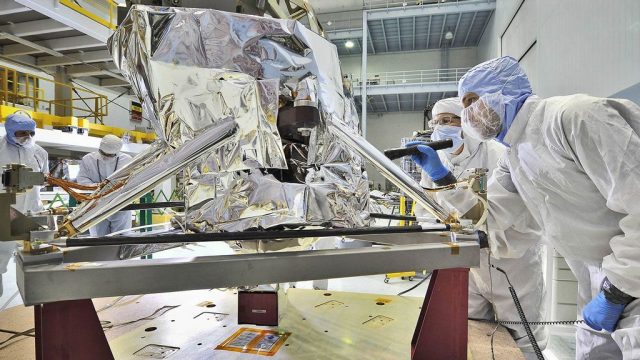
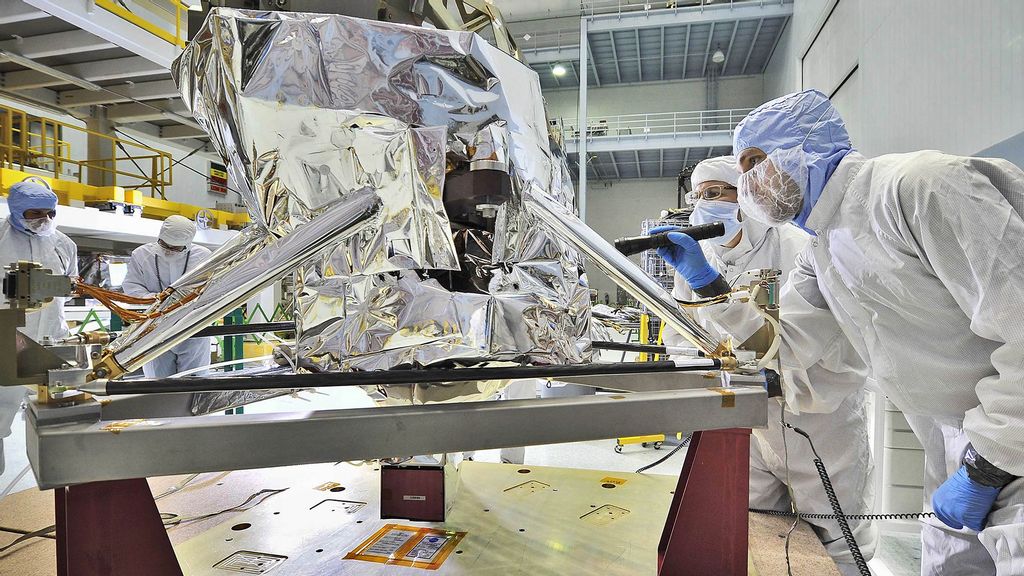
NASA’s James Webb Space Telescope is being deep-frozen to assist it with its latest mission to see the first galaxies formed after the big bang.
Webb’s Mid-Infrared Instrument (MIRI) – a joint development by NASA and the ESA (European Space Agency) – reached its final operating temperature below 7 kelvins (minus 447 degrees Fahrenheit, or minus 266 degrees Celsius) on April 7.
Along with Webb’s three other instruments, MIRI initially cooled off in the shade of Webb’s tennis-court-size sunshield, dropping to about 90 kelvins (minus 298 degrees Fahrenheit, or minus 183 degrees Celsius). But dropping to less than 7 kelvins required an electrically powered cryocooler.
Last week, the team passed a particularly challenging milestone called the “pinch point,” when the instrument goes from 15 kelvins (minus 433 degrees Fahrenheit, or minus 258 degrees Celsius) to 6.4 kelvins (minus 448 degrees Fahrenheit, or minus 267 degrees Celsius).
Analyn Schneider, project manager for MIRI at NASA’s Jet Propulsion Laboratory in Southern California, said: “The MIRI cooler team has poured a lot of hard work into developing the procedure for the pinch point.
By necessity, MIRI’s detectors are built using a special formulation of Arsenic-doped Silicon (Si:As), which need to be at a temperature of less than 7 kelvins to operate properly. This temperature is not possible by passive means alone, so Webb carries a “cryocooler” that is dedicated to cooling MIRI’s detectors. (NASA,JPL-Caltech/Zenger)
“The team was both excited and nervous going into the critical activity. In the end it was a textbook execution of the procedure, and the cooler performance is even better than expected.”
The low temperature is necessary because all four of Webb’s instruments detect infrared light – wavelengths slightly longer than those that human eyes can see.
Distant galaxies, stars hidden in cocoons of dust, and planets outside our solar system all emit infrared light.
But so do other warm objects, including Webb’s own electronics and optics hardware.
Cooling down the four instruments’ detectors and the surrounding hardware suppresses those infrared emissions. MIRI detects longer infrared wavelengths than the other three instruments, which means it needs to be even colder.
Another reason Webb’s detectors need to be cold is to suppress something called dark current, or electric current created by the vibration of atoms in the detectors themselves.
Dark current mimics a true signal in the detectors, giving the false impression that they have been hit by light from an external source. Those false signals can drown out the real signals astronomers want to find. Since temperature is a measurement of how fast the atoms in the detector are vibrating, reducing the temperature means less vibration, which in turn means less dark current.
MIRI’s ability to detect longer infrared wavelengths also makes it more sensitive to dark current, so it needs to be colder than the other instruments to fully remove that effect. For every degree the instrument temperature goes up, the dark current goes up by a factor of about 10.
Once MIRI reached a frigid 6.4 kelvins, scientists began a series of checks to make sure the detectors were operating as expected. Like a doctor searching for any sign of illness, the MIRI team looks at data describing the instrument’s health, then gives the instrument a series of commands to see if it can execute tasks correctly.
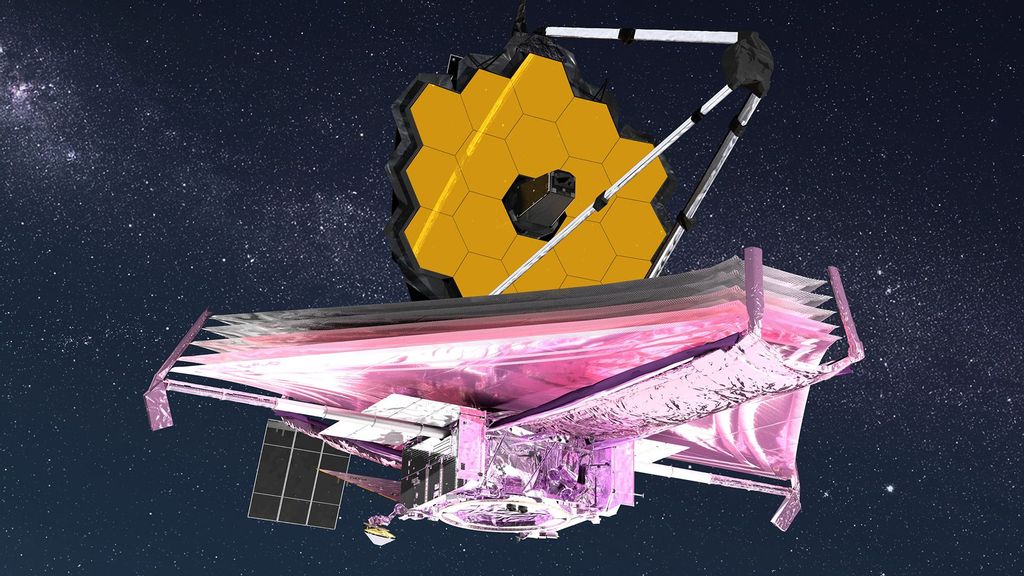
In this illustration, the multilayered sunshield on NASA’s James Webb Space Telescope stretches out beneath the observatory’s honeycomb mirror. The sunshield is the first step in cooling down Webb’s infrared instruments, but the Mid-Infrared Instrument (MIRI) requires additional help to reach its operating temperature. (NASA GSFC, CIL, Adriana Manrique Gutierrez/Zenger)
This milestone is the culmination of work by scientists and engineers at multiple institutions in addition to JPL, including Northrop Grumman, which built the cryocooler, and NASA’s Goddard Space Flight Center, which oversaw the integration of MIRI and the cooler to the rest of the observatory.
Mike Ressler, project scientist for MIRI at JPL, said: “We spent years practicing for that moment, running through the commands and the checks that we did on MIRI.
“It was kind of like a movie script: Everything we were supposed to do was written down and rehearsed. When the test data rolled in, I was ecstatic to see it looked exactly as expected and that we have a healthy instrument.”
There are still more challenges that the team will have to face before MIRI can start its scientific mission. Now that the instrument is at operating temperature, team members will take test images of stars and other known objects that can be used for calibration and to check the instrument’s operations and functionality. The team will conduct these preparations alongside calibration of the other three instruments, delivering Webb’s first science images this summer.
Alistair Glasse, MIRI instrument scientist at the UK Astronomy Technology Centre (ATC) in Edinburgh, Scotland, in the United Kingdom, said: “I am immensely proud to be part of this group of highly motivated, enthusiastic scientists and engineers drawn from across Europe and the US.
“This period is our ‘trial by fire’ but it is already clear to me that the personal bonds and mutual respect that we have built up over the past years is what will get us through the next few months to deliver a fantastic instrument to the worldwide astronomy community.”
MIRI was developed through a 50-50 partnership between NASA and the ESA. JPL leads the US efforts for MIRI, and a multinational consortium of European astronomical institutes contributes to the ESA. George Rieke with the University of Arizona is the MIRI science team lead. Gillian Wright is the MIRI European principal investigator.
Laszlo Tamas with UK ATC manages the European Consortium. The MIRI cryocooler development was led and managed by JPL, in collaboration with Northrop Grumman in Redondo Beach, California, and NASA’s Goddard Space Flight Center in Greenbelt, Maryland.
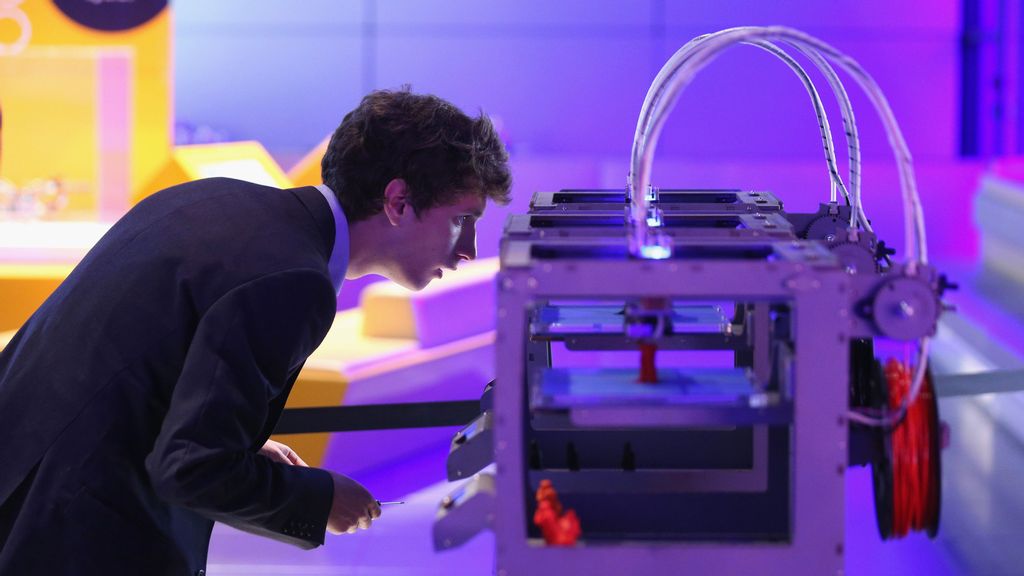
With too few organs to go around to satisfy the demand for transplants, scientists are now pinning their hopes on the possibility of 3D-printing technology.
In the United States alone there are an estimated 112,000 people currently waiting for urgent transplants and there is, therefore, plenty of demand for the possibility of 3D-printed organs.
The idea, however, has been beset with technical problems that have, to date, limited the type of organs that can be printed.
But researchers at the Stevens Institute of Technology, a private research university in New Jersey, are now pushing through these barriers by revamping a decades-old technique to reproduce any tissue type.
The work, led by Robert Chang, an associate professor in the mechanical engineering department at Stevens’ Schaefer School of Engineering & Science, could open up pathways for 3D printing any kind of organ at any time, even skin directly on an open wound.
Robert Chang, whose work appears in the April issue of Scientific Reports, said: “Creating new organs to order and saving lives without the need for a human donor will be an immense benefit to healthcare. However, reaching that goal is tricky because printing organs using ‘bio-inks’ — hydrogels laden with cultured cells — requires a degree of fine control over the geometry and size of printed microfiber that current 3D printers simply can’t achieve.”
Chang and his team, including Ahmadreza Zaei, first author and doctoral candidate in Chang’s lab, hope to change that by fast-tracking a new 3D printing process that uses microfluidics — the precise manipulation of liquids through tiny channels — to operate at a far smaller scale than has been possible.
Zaeri said: “The recent publication aims to improve the controllability and predictability over the structure of the fabricated microtissues and microfibers enabled by microfluidic bioprinting technology.”
Stevens Institute of Technology where the research was done. (Google Maps/Zenger)
Most current 3D bio-printers are extrusion-based, squirting bio-ink out of a nozzle to create structures about 200 microns — around a tenth as wide as a strand of spaghetti. A microfluidics-based printer could print biological objects measuring on the order of tens of micrometers on par with the single cellular scale.
Chang said: “The scale is very important because it affects the biology of the organ.
“We’re operating at the scale of human cells, and that lets us print structures that mimic the biological features we’re trying to replicate.”
Besides operating on a smaller scale, microfluidics also enables multiple bio-inks, each containing different cells and tissue precursors, to be used interchangeably within a single printed structure, in much the same way that a conventional printer combines colored inks into a single vivid image.
That’s important because while researchers have already created simple organs such as bladders by encouraging the tissue to grow on 3D-printed scaffolding, more complex organs such as livers and kidneys require many different cell types to be precisely combined.
Chang said: “Being able to operate at this scale, while precisely mixing bio-inks, makes it possible for us to reproduce any tissue type.”
Scaling down 3D bio-printing requires painstaking research to figure out exactly how different process parameters such as channel structures, flow speed, and fluid dynamics affect the geometries and material properties of printed biological structures.
To streamline that process, Chang’s team created a computational model of a microfluidic printing head, enabling them to tweak settings and forecast outcomes without the need for laborious real-world experimentation.
Zaeri added: “Our computational model advances a formulaic extraction that can be used to predict the various geometrical parameters of the fabricated structures extruded from the microfluidic channels a.”
The team’s computational models accurately predicted the results of real-world microfluidic experiments, and Chang is using his model to guide experiments on the ways that biological structures with various geometries can be printed.
The Schaefer School of Engineering and Science at the Stevens Institute of Technology. (Google Maps/Zenger)
The results of this research work can be used in the printing of combined multiple cell-types bio-ink that can replicate the tissue with gradients geometrical and compositional properties found at the intersection of bone and muscle.
Chang is also exploring using microfluidic-enabled 3D printing for the in-situ creation of skin and other tissues, enabling patients to have replacement tissues printed directly into a wound.
He said: “This technology is still so new that we don’t know precisely what it will enable. But we know it will open the door to creating new structures and important new types of biology.”
Wilbur Jackson, left and John Mitchell pull the drapes at the John Mitchell and Wilbur Jackson Commemorative Plaque Unveiling before Alabama’s A-Day NCAA college football scrimmage, Saturday, April 16, in Tuscaloosa, Ala. (AP Photo/Vasha Hunt)
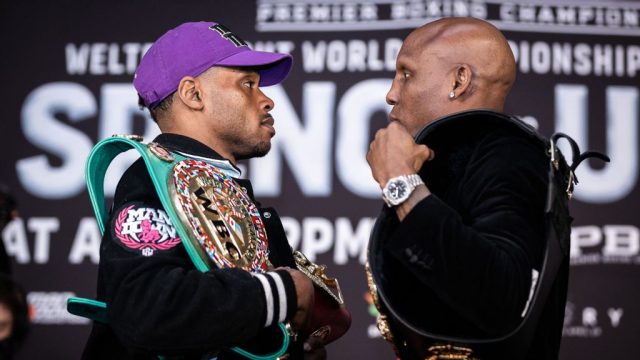
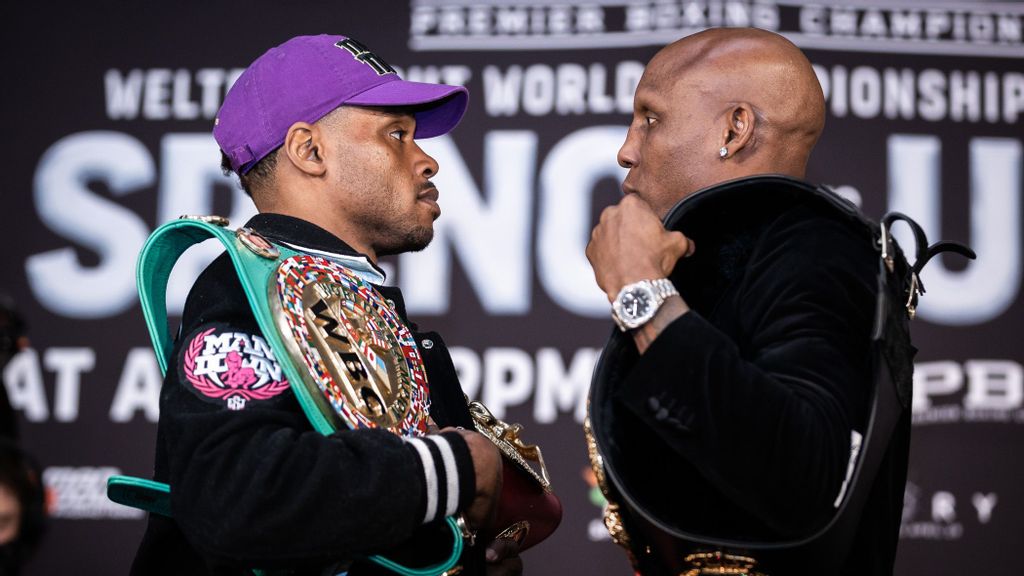
Yordenis Ugas wants to add Errol Spence to his impressive list of vanquished southpaw champions.
The Cuban WBA 147-pound champion has been calling out IBF/WBC champion Spence for quite a while, and he’ll face “The Truth” in a unification bout on Saturday at AT&T Stadium in Arlington, Texas.
Although Ugas (27-4, 12 KOs) is in the fight of his life against Spence (27-0, 21 KOs), the 2008 bronze medalist has a history of career dominance over southpaws.
“When you’re a southpaw, I know how to handle it,” said Ugas, 35, who will battle Spence in a Premier Boxing Champions event to be televised live on Showtime Pay Per View (9 p.m. ET/6 p.m. PT).
“I fight better against southpaws than I do against right-handers. I have power and confidence against southpaws. I have a special technique against southpaws that works for me.”
Ugas claims “a special technique against southpaws,” having triumphed in amateur victories over left-handed current and past champions Terence Crawford, Khabib Allakverdiev and Julius Indongo.
In August, Ugas retired left-handed eight-division champion Manny Pacquiao by unanimous decision in Las Vegas, improving his professional record against southpaws to 6-1 (3 KOs).
Professional victories over left-handed opponents include a fourth-round stoppage of Bryant Perrella (September 2016), and, in 2018, a seventh-round TKO of Ray Robinson (February) as well as a unanimous decision over Cesar Miguel Barrionuevo (September).
Now Ugas is ready for Spence, who returns for the first time since vanquishing two-division champion Danny Garcia (December 2020) by unanimous decision. That bout came on the heels of Ugas being hospitalized in critical condition in October 2019 from a car crash which involved him being ejectioned from his flipping Ferrari.
“I promise you blood, sweat, and everything that I have to give for my country and for my fans,” Ugas said. “For everyone watching the pay-per-view, you’re going to see the same Ugas that put his heart and soul into this sport that means so much to me.”
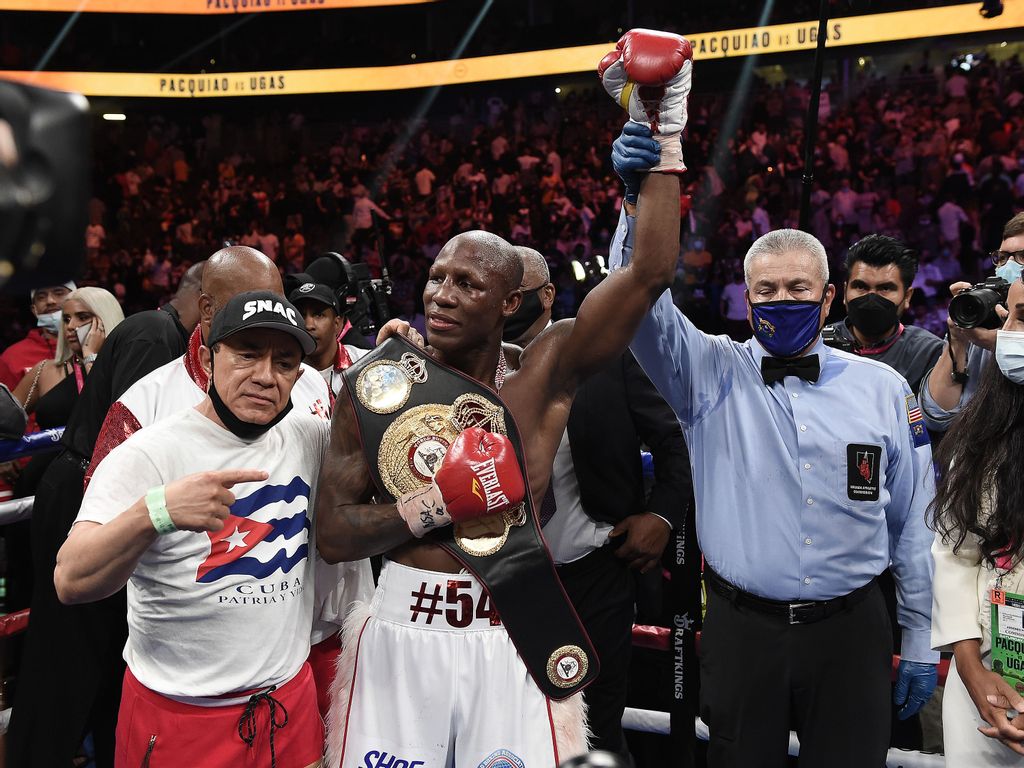
Yordenis Ugas (center) celebrates his victory that dethroned Manny Pacquiao as WBA welterweight champion last August with trainer Ismael Salas (left). (Scott Kirkland/Fox Sports).
Ugas accepted the Pacquiao fight on 11 days’ notice, replacing Spence after the latter suffered a torn retina in his right eye which required surgery to repair.
“I did my job against Manny Pacquiao. I took the fight on 11 days’ notice. Whatever Spence said about what he would have done against Pacquao, I’m not concerned. I’m only focused on the challenge that I have against Spence,” said Ugas, whose four, short-notice victories include those over former interim champion Jamal James (August 2016) and title challenger Thomas Dulorme (August 2017).
“I am a warrior. I was ready for Pacquiao and I’m going to be ready for Spence. I not only accepted this fight, I pushed for this fight. You know how long I’ve been calling for this fight, and how long I’ve wanted this fight? Four years. I have wanted this for so long. Spence is one of the best in the world and I’m so glad that I get to face him. I’m ready to prove that everything I’ve done so far wasn’t a fluke.”
Ugas is 12-1 (5 KOs) under trainer Ismael Salas at 147 pounds since 2016, his lone setback being a disputed split-decision to then-WBC champion Shawn Porter in March 2019.
A legal 10th-round punch from Ugas caused a cut around the right eye of Porter, who lost his very next bout and his WBC title by split-decision to Spence in September 2019.
“Spence punches a little harder and definitely landed the cleaner shots against me and touched me much more than Ugas did, using his ability to make adjustments,” said Porter of Spence, who has edges in height (5-foot-9½ inches to 5-foot-9 inches) and reach (72 inches to 69 inches) over Ugas.
“Ugas’ right hand might be the best aspect for the fight for him against Spence,” Porter said, “Ugas has an awkward way of throwing it from an angular, overhand place. It’s been a key against southpaws as it was in the case of Ugas’ fight with Pacquiao, and it could be a key for him against Errol Spence.”
Following Porter, Ugas has scored a one-knockdown, near shutout unanimous decision over previously undefeated former champion Omar Figueroa (July 2019), and, in 2020, a seventh-round stoppage of Mike Dallas (February) and a title-winning split-decision over rugged Abel Ramos (September).
“It has been a long time— over six years, of hard work with Yordenis Ugas. Finally, Yordenis will get what we’ve been working for,” said Salas of Ugas, whose victory over Ramos made him Cuba’s first 147-pound champion since Jose Naples defeated Curtis Cokes in April 1969.
A 6-year-old Ugas began boxing as a means of overcoming poverty.
“I’m a warrior. I’m a competitor. I’ve been facing adversity ever since I was 6 or 7 years old. I’ve been fighting ever since I was a little kid. This is nothing new to me,” Ugas said.
“I come from a humble family that had no roof over their head. These are things that toughen you up when you’re young and make you who you are in life. It’s going to be a great night for me but no different than any other fight that I’ve had throughout my boxing career.”
As an amateur, Ugas handled future professional champions Crawford, Allakhverdiev, Indongo, Darlys Perez, Francisco Vargas, Jose Pedraza and Sadam Ali.
“I beat ‘Bud’ Crawford, 27-10, in the 2007 Pan American Games,” said Ugas. “It was an awesome fight, but I always knew Crawford had greatness in him and a bright future in the sport.”
Ugas’s defection through Mexico to Miami left behind his parents and several cousins as he went 5-0 with three knockouts within his first five months as a professional. Ugas was 11-0 (5 KOs) before suffering his first loss by eight-round unanimous decision to then-undefeated Johnny Garcia in March 2012.
“I had to leave Cuba on a speedboat. It’s been a long, hard road. I had to go through a lot to get to where I am today.I had to overcome everything alone. Not only professionally, but personally,” Ugas said.
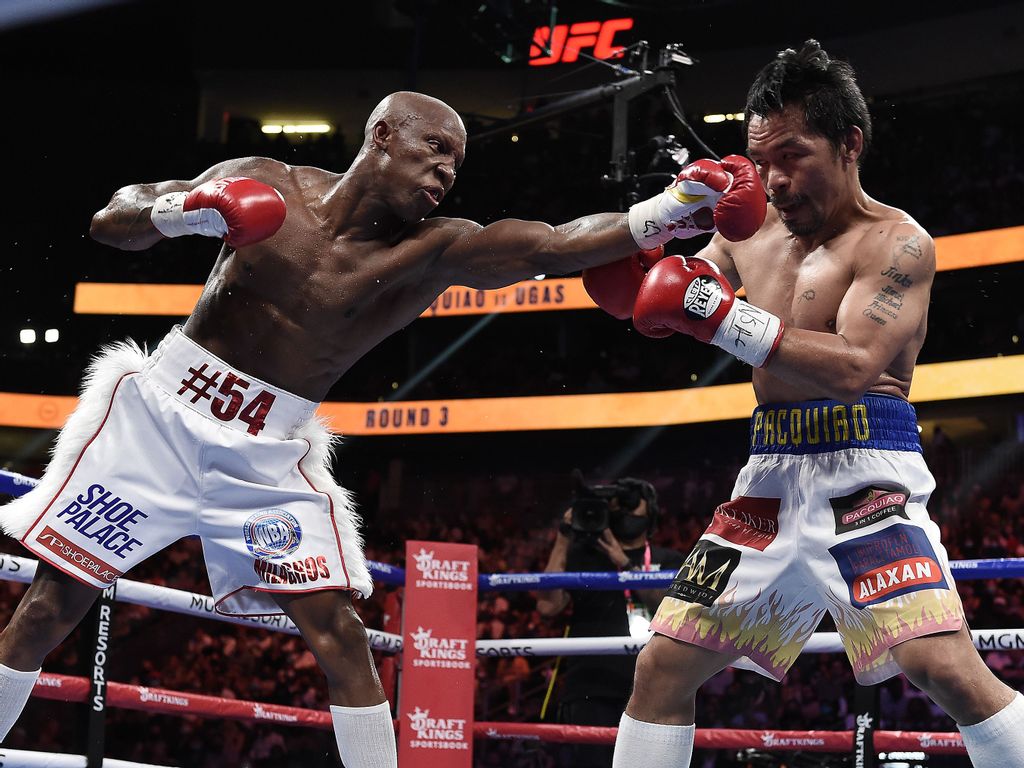
Yordenis Ugas (left) in action against Manny Pacquiao last August. Ugas won the bout, which he had accepted on just 11 days’ notice. (Scott Kirkland/Fox Sports).
“I’ve wanted to be free my whole life. I want to be able to provide for my family (back in Cuba). The only way that it is possible is to succeed here with something I love to do.”
But at 15-1 (7 KOs) in 2014, Ugas nearly retired from boxing following consecutive split- and unanimous decision losses to then-unbeatens Emanuel Robles (February) and Amir Imam (May).
Then, he met Salas.
“Ismael Salas is one of the best trainers in the world. When I was out of the sport for over two years, I went to the gym with him and he built me back up. People know my story by now. I came back from being 15-3 back in 2016,” said Ugas, who has competed from 146½ -to-158½ pounds.
“Ever since then, I have established myself as part of the elite in this division. If [Errol Spence] is the big fish, I belong in that same tank because I’m willing to swim with the big fishes whenever, wherever. I have been willing to do whatever it takes to get to where I am right now.”
A collection of rare Star Wars toys that sold for just over a dollar apiece in the 1980s is now set to sell for over 26,000 dollars at auction.
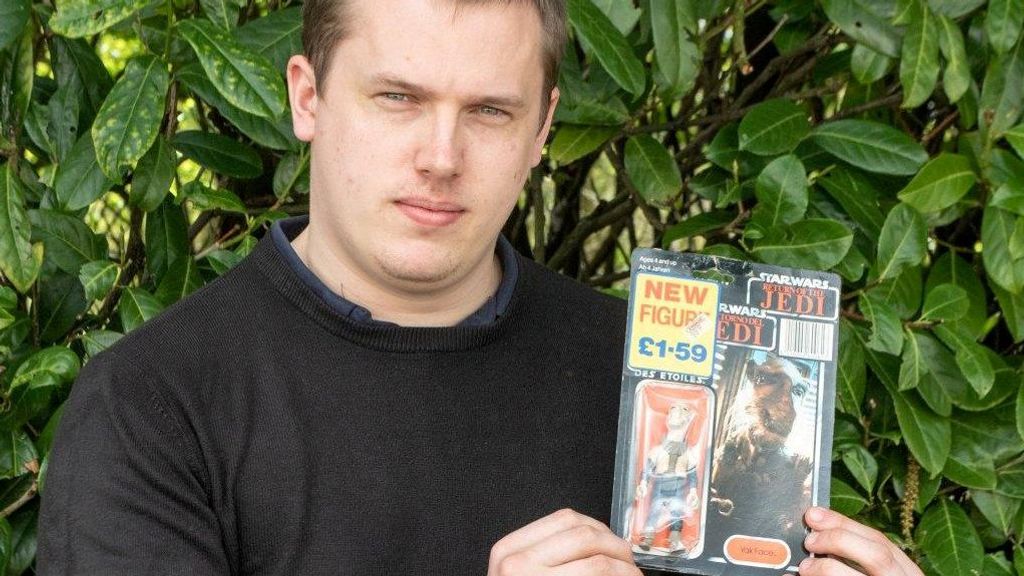
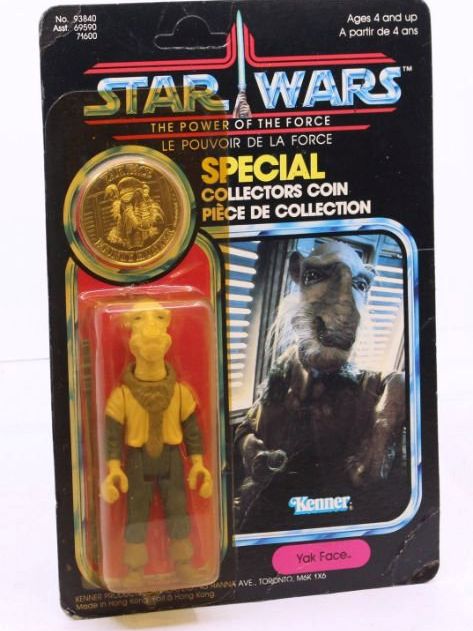
A canny collector snapped up a Yak-Face figure from Return of the Jedi at a Tesco supermarket in the 1980s in the United Kingdom. Originally priced at 1.59 pounds (2.08 dollars), it was marked down for a quick sale.
It was kept sealed in the original packaging and it is now tipped to sell at auction for between 800 and 1,000 pounds (between 1,045 and 1,300 dollars).
The figure was bought by another collector who then spent 20 years hunting down more toys from the famous film franchise.
A rare Star Wars toy which was hunted out of a bargain bin for 99p is set to sell for £1,000. (Steve ChatterleyZenger)
His collection of 37 figures is set to go under the hammer and is expected to fetch a total of 20,000 pounds (over 26,000 dollars).
The 48-year-old, who has not been named but who works in financial services in the city of Birmingham, in the West Midlands, in the UK, said: “I remember seeing lots of figures for sale for 10p each in a shop called Crash Bang Wallop in the Swan Shopping Centre in South Yardley, Birmingham, in about 1986, when interest in the films had waned.
“I was still at school and they had a full box of about 50 toys, all rare examples of the last 17 figures.
“How I wished I had the money at the time. I just bought one and it’s still in my played-with collection.
“I’ve been a big Star Wars fan since the films first came out.
“I purchased the figures about 20 years ago as an investment to go with my played-with collection from when I was a child.
“My favorite lot is a figure of Anakin Skywalker.
A rare Star Wars toy which was hunted out of a bargain bin for 99p is set to sell for £1,000. (Steve ChatterleyZenger)
“It’s rare as the original actor’s appearance in the films has been cut with a different actor.
“I’m surprised by the rarity value of some of the toys as they were much more common when I purchased them.
“I’m selling now as I have a family and struggle to find anywhere to display them safely. It feels like the right time to sell.”
The most valuable figure, Anakin Skywalker, is expected to sell for between 3,000 and 5,000 pounds (3,900 and 6,500 dollars).
Meanwhile, another 1984 Kenner Yak-Face figure is set to fetch between 2,000 and 3,000 pounds (2,600 and 3,900 dollars).
A collection of rare Star Wars toys that sold for just over a dollar apiece in the 1980s is now set to sell for over 26,000 dollars at auction. (SWNS)
A figure of Luke Skywalker dressed as an Imperial Stormtrooper from Star Wars that still has its “Tesco 99p” offer price label is estimated to go for 800 pounds (1,045 dollars).
A Power of the Force Nikto with Warok Ewok coin is also expected to sell for between 500 and 800 pounds (650 and 1,045 dollars).
The Star Wars collection will go under the hammer at Hansons Auctioneers, in the village of Etwall, in the county of Derbyshire, in the East Midlands, in the United Kingdom, on April 20.
Auctioneer David Wilson Turner said: “The Jedi Yak-Face with its original 99p price sticker is fairly rare, hence the guide price.
“It’s amazing to think a Star Wars toy on sale for less than 1 pound in 1983 is now potentially worth 1000 times its original price tag.
A collection of rare Star Wars toys that sold for just over a dollar apiece in the 1980s is now set to sell for over 26,000 dollars at auction. (SWNS)
“Our vendor didn’t purchase it for 99p originally but sourced it 20 years ago for 200 pounds (260 dollars).
“Hansons has seen some impressive Star Wars toy collections including one which made nearly 10,000 pounds (nearly 13,000 dollars) at auction, but this is set to be the best yet.
“Our seller has amassed a phenomenal set of figures.
“There are Star Wars collectors all over the world and the clamor to own rare items is as strong as ever.”
You don’t need an office job to start saving for retirement, but a whopping nine in 10 industrial workers still think they do.
A recent survey of 2,000 Americans, half between the ages of 18–29 and half between 30–64, looked at how these groups plan for retirement across various fields of employment.
Workers at micro-sized companies (between 2–9 employees) were most intent on retiring in their 50s (32%)—but 24% of this group said their current employer doesn’t offer a retirement plan.
Overall, nearly half of all respondents (47%) think you can be “too old” to start saving for retirement.
Conducted by OnePoll on behalf of retirement benefits provider Human Interest, the survey also looked at some of the frequent reasons people think they won’t be able to retire.
Among all the reasons employees noted as keeping them from working at their desired level, pandemic-related stress was at the top of the list (44%), with finance workers being the most likely group to cite it as a barrier to reaching retirement (57%).
Meanwhile, 40% of workers​​ think they won’t have enough money to last the rest of their life, particularly healthcare workers (61%).
Similarly, 47% of education professionals think they’ll burn out before reaching retirement, while HR workers are most worried about potential job loss standing in their way (47%).
Two elderly women push shopping carts down a street on September 10, 2010 in Berlin, Germany. Germany’s elderly population is growing and its overall population is shrinking. (Photo by Sean Gallup/Getty Images)
While half of all respondents turn to their savings or checking accounts to save for retirement, preferences differed across industries and company sizes.
People working at enterprise companies (1000+ employees) were most likely to use a 401(k) (52%), 29% greater than those at small businesses (10–50 employees). Those at mid-sized businesses (51–249 workers) favored real estate (53%), and crypto was a popular choice among those at small organizations with a staff of 10–50 (44%).
To ensure they hit their retirement age, 37% would exchange a job they liked for a better-paying one they liked less, and 32% would change jobs to one with a better 401(k).
Respondents ages 30–64 were more likely than 18–29-year-olds to say they’d change jobs for a better 401(k) (36% vs. 28%).
“The pandemic took a different toll across industries, adding to existing sector-specific challenges when it comes to retirement savings,” said Eric Phillips, Senior Director, Partnerships & Strategic Insights at Human Interest. “Whether you work at an office desk or at a factory, you shouldn’t have to be well-versed in all aspects of finance to plan for your future.”
Forty-four percent of all respondents said they’re using their company’s retirement savings plan, with 30–64-year-olds more likely than 18–29-year-olds to do so (48% vs. 39%).
Those working in finance and insurance rely on their company’s retirement plan more than other industries (54%), while construction workers were least likely to use their company’s (38%).
Elderly women play a cards game of rummy at the Mireille Mathieu senior citizens’ center on September 20, 2017 in Berlin, Germany. (Photo by Sean Gallup/Getty Images)
And 73% of employed respondents wish their employer provided better 401(k) guidance and education.
“Our results showed that 70% think they’d have a better 401(k) with an office job, suggesting some employers may be unaware of how to improve the retirement plans they offer,” Phillips added. “There are affordable options for companies of any size to automate their 401(k) processes and take some of the guesswork out of saving for retirement for both themselves and their employees. In fact, when given access to a 401(k), our 2020 in-house study found that employees working in manufacturing and other underserved industries are nearly as likely to use their 401(k).”
A Mississippi angler has netted the biggest blue catfish in the state’s history, smashing previous records.
Eugene Cronley, from the city of Brandon in the state of Mississippi, caught the 131-lb whopper in the Mississippi River on April 7th.
In a statement obtained by Zenger News, the Mississippi Department of Wildlife, Fisheries, and Parks said this week that they have confirmed a new state record for a blue catfish.
The government office said: “The Mississippi Department of Wildlife, Fisheries, and Parks Fisheries Bureau has certified a new state record blue catfish.
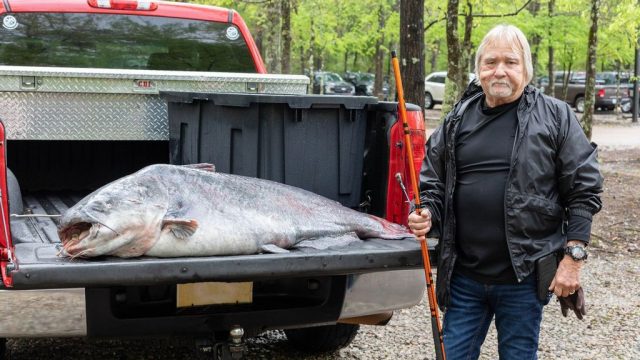
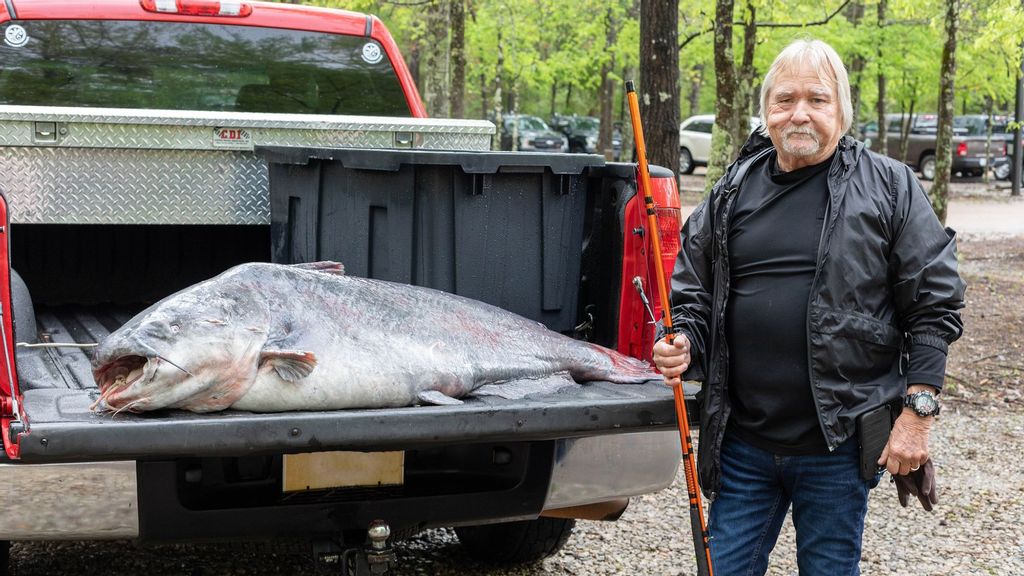
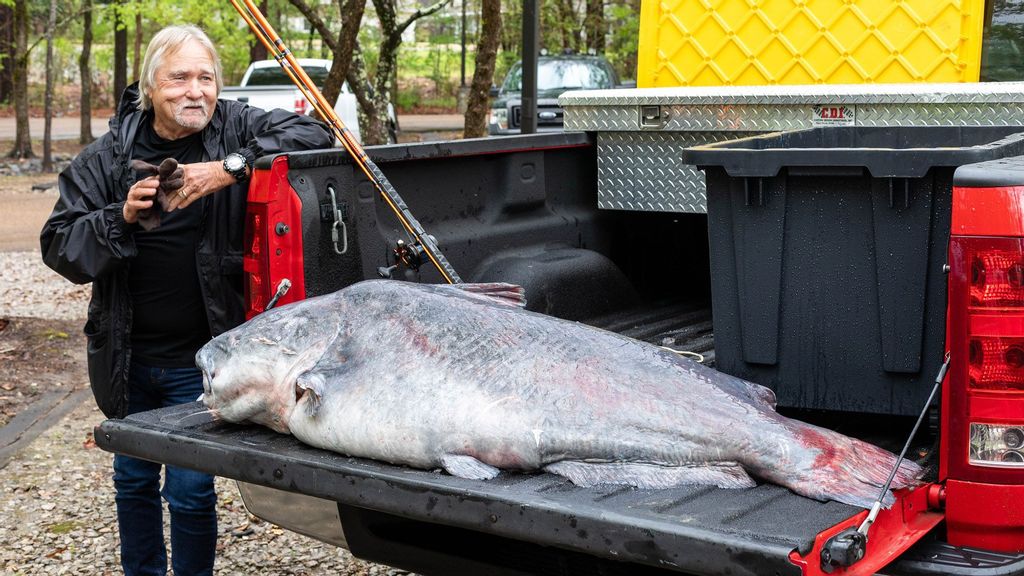
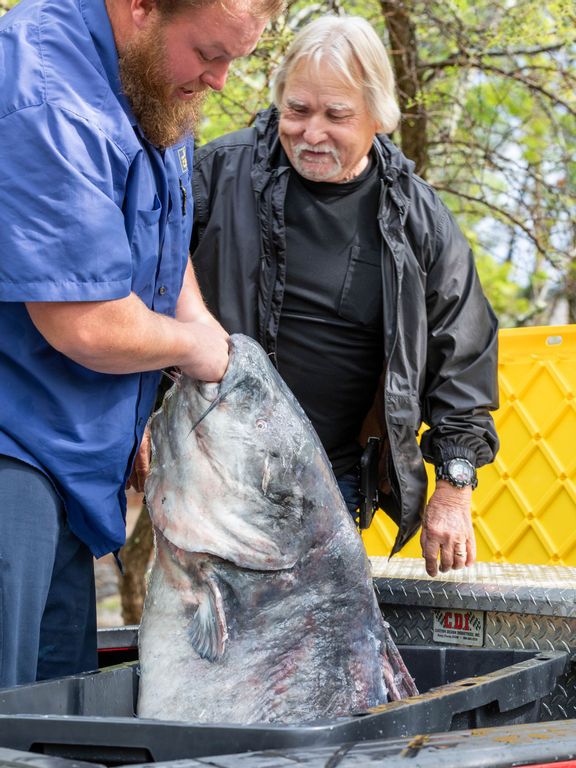
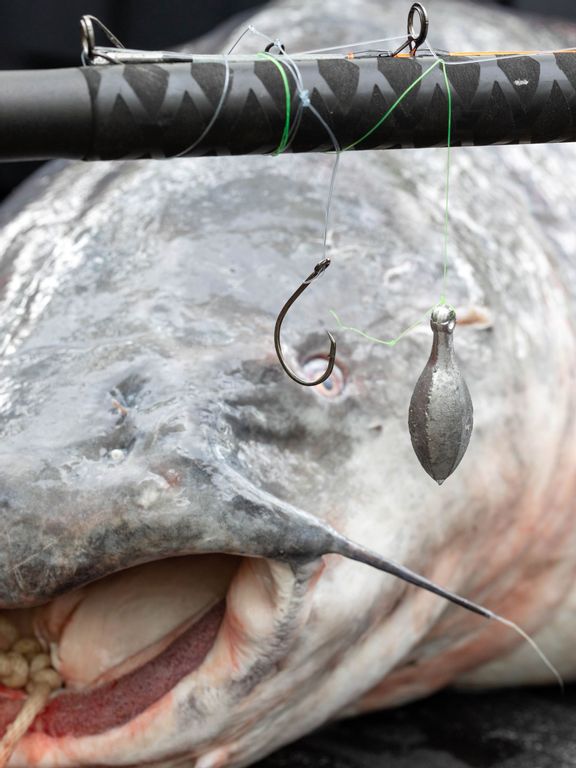
Angler Eugene Cronley caught the 59 kilogramme fish, both pictured, on 7th April,2022, in the Mississippi River near Natchez, Mississippi. (@mdwfp/Zenger)
“Eugene Cronley, the lucky angler from Brandon, caught the 131-pound fish on April 7, 2022 from the Mississippi River near Natchez. Mr. Cronley said that it took him forty minutes to land the huge fish.”
Cronley said: “It is truly a fish of a lifetime.”
The Mississippi bureau said the blue catfish broke the previous rod and reel record from 2009 as well as the trophy record from back in 1997.
The statement said: “The fish shattered the previous rod and reel record of 95 lbs. caught by Dakota Hinson in 2009 and is larger than the trophy record blue catfish of 101 lbs. caught by the team of Freddie Parker and Brad Smith in 1997.
“Interestingly, both of those fish were also caught from the Mississippi River near Natchez.”
The Mississippi Department of Wildlife, Fisheries, and Parks Fisheries Bureau added: “Mr. Cronley caught the fish with a rod and reel using skipjack herring as bait.”
The blue catfish (Ictalurus furcatus) can live up to 20 years is the largest species of North American catfish, reaching a length of 165 cm (65 in) and a weight of 68 kg (150 lb).
The typical length is about 25–46 in (64–117 cm) and the blue catfish is mainly found in the Mississippi River drainage, including the Missouri, Ohio, Tennessee, and Arkansas Rivers.
Angler Eugene Cronley, (right) caught a59 kilogramme fish, both pictured with an unidentified man, on 7th April,2022, in the Mississippi River near Natchez, Mississippi. (@mdwfp/Zenger)
They have also been introduced in a number of reservoirs and rivers, notably the Santee Cooper lakes of Lake Marion and Lake Moultrie in South Carolina, the James River in Virginia, Powerton Lake in Pekin, Illinois, and Lake Springfield in Springfield, Illinois.
It is also found in some lakes in Florida and is often considered an invasive pest in some areas, particularly the Chesapeake Bay.
Blue catfish can tolerate brackish water, and thus colonize along inland waterways of coastal regions.
The 59 kilogramme fish, cought by Angler Eugene Cronley on 7th April,2022, in the Mississippi River near Natchez, Mississippi. (@mdwfp/Zenger)
On June 18, 2011, Nick Anderson of Greenville, North Carolina, reeled in a 143-lb blue catfish from John Kerr Reservoir, more commonly known as Buggs Island Lake, on the Virginia-North Carolina border.
And on February 7, 2012, a 136-lb blue catfish was caught on a commercial-fishing trot line in Lake Moultrie, one of the two Santee Cooper lakes, near Cross, South Carolina.