Home Blog Page 474

VIDEO: Heating Up: Scientists Race To Find Cause Of Alarming Polar Heatwave


0

HALO, one of the three research aircraft being used in the HALO-(AC)3 campaign in March 2022, in front of Arena Arctica in Kiruna, Sweden. (Marlen Bruckner-University Leipzig/Zenger News)


By Georgina Jadikovskaall

An international research campaign involving over 100 scientists from 12 countries has begun investigating the dramatic warming in the Arctic — at an estimated rise of two to three degrees Celsius, or about 3.5 to 5.5 degrees Fahrenheit — over the last 50 years.


The campaign, named HALO-(AC)3, is a joint research project by leading research institutes in Germany and abroad. The name “HALO” references the High-Altitude Long-Range research aircraft utilized by the campaign.

As reported by the Max Planck Institutes of Meteorology and Chemistry, the scientists will analyze warm air intrusions and cold air outbreaks reaching into the central Arctic and focus on investigating the processes causing the above-average increase in temperatures in Earth’s northernmost region in mid-March.

Data obtained over the past five decades shows a two-to-three-degree-Celsius increase in temperature, well above the warming observed in other regions.

Referring to this near-surface air temperature change over the Arctic relative to lower latitudes as the Arctic amplification (AA), the Max Planck Institute said that HALO-(AC)3’s research aims to collect knowledge for a better understanding of the dramatic warming over the past decades.

The effects of the temperature rise are not limited to the Arctic’s climate system but are also suspected to modify the regional weather in the mid-latitudes, according to sources at the institutes.

Manfred Wendisch from the Institute for Meteorology at Leipzig University and the scientific coordinator behind the five-week HALO-(AC)3 measuring campaign revealed that three special research aircraft will be used to observe changes in air masses.

These three aircraft — HALO, Polar 5 and Polar 6 — are operated by the German Aerospace Center (DLR), headquartered in the city of Cologne in Germany.
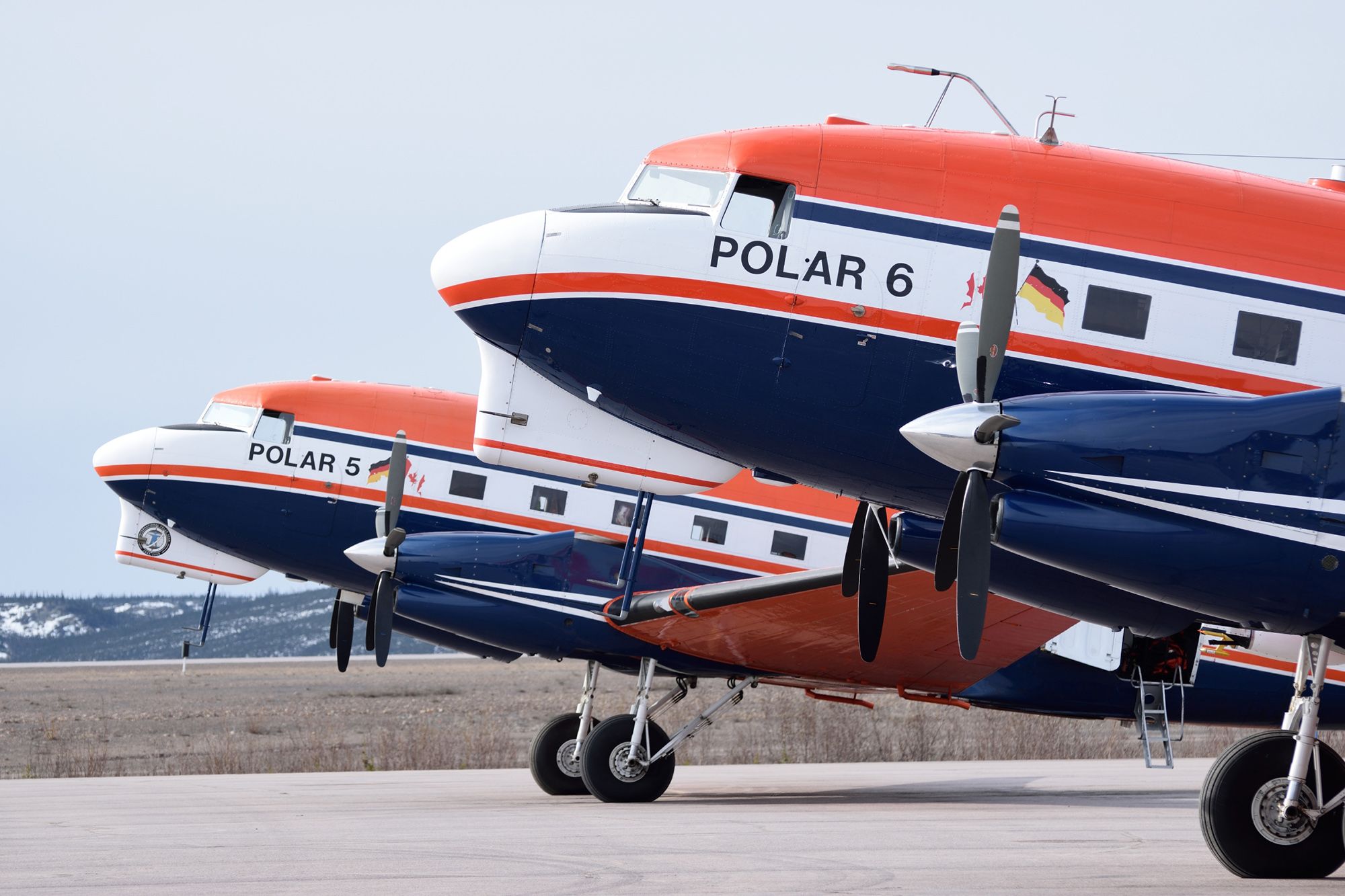
Research aircraft Polar 5 and Polar 6 on expedition on a runway in Inuvik, Canada. While the HALO aircraft will cover high altitudes, these aircraft will obtain measurements at lower altitude ranges of under 19.6 feet. (Alfred Wegener Institute-Raimund Waltenberg/Zenger)

“HALO will operate at higher altitudes as a remote sensing platform, as it is capable of covering distances of up to 10,000 kilometers [6,213 miles] at altitudes of up to 15 kilometers [49,212 feet],” said Andreas Minikin of the DLR Flight Experiments facility.

Polar 5 and 6, which have been used for more than 10 years by the Alfred Wegener Institute Helmholtz Center for Polar and Marine Research (AWI) in the Arctic, will complement HALO by obtaining measurements at altitudes under 19,600 feet (six kilometers).

The Max Planck Institute said that HALO will be based in the Swedish town of Kiruna from March 11 to April 15, while Polar 5 and 6 will operate out of the world’s northernmost settlement in Longyearbyen, located in the Svalbard archipelago in Norway, between March 19 and April 13.

They will cover part of the Fram Strait and areas around Svalbard in the northern Arctic Ocean.
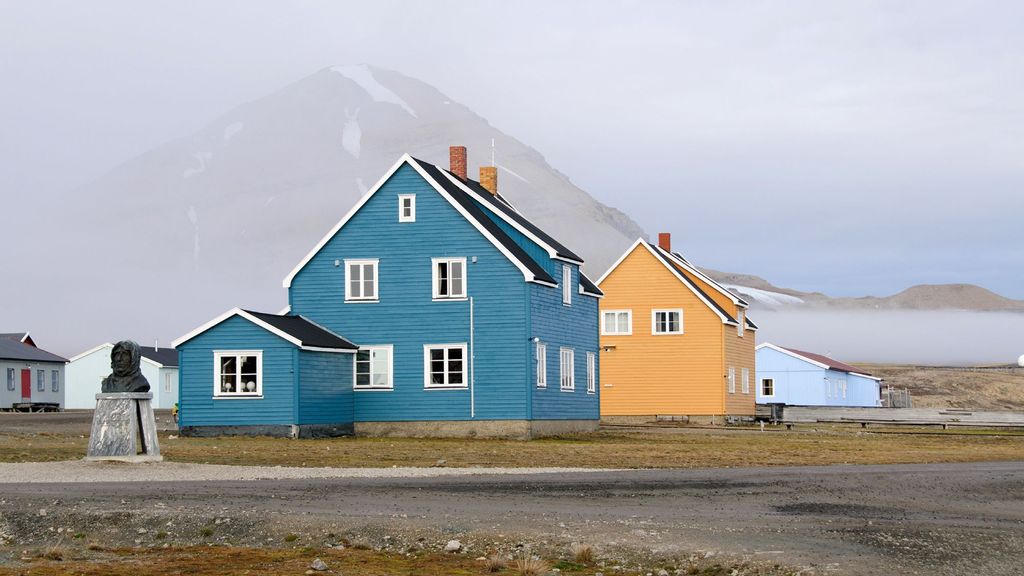
The Blue House has belonged to the Franco-German Arctic research station AWIPEV Ny-Alesund in Spitsbergen, Svalbard, Norway, since 2003. (Alfred Wegener Institute-Rene Burgi/Zenger)

“Although the polar aircraft have a shorter range, they have the major advantage of being able to fly ‘low and slow,’ so they can capture snapshots of very specific processes taking place in, below and above clouds and in the planetary boundary layer,” said Andreas Herber, AWI researcher and coordinator for Polar 5 and 6.

Using the quasi-Lagrangian observation method, the scientists will adapt each flight pattern to the direction of movement of the relevant air mass, enabling shifts in cloud cover, humidity, temperature and many other parameters to be measured directly.

Finally, through the use of numerical weather-forecasting models, the researchers will assess the obtained data and make predictions for the Arctic climate.
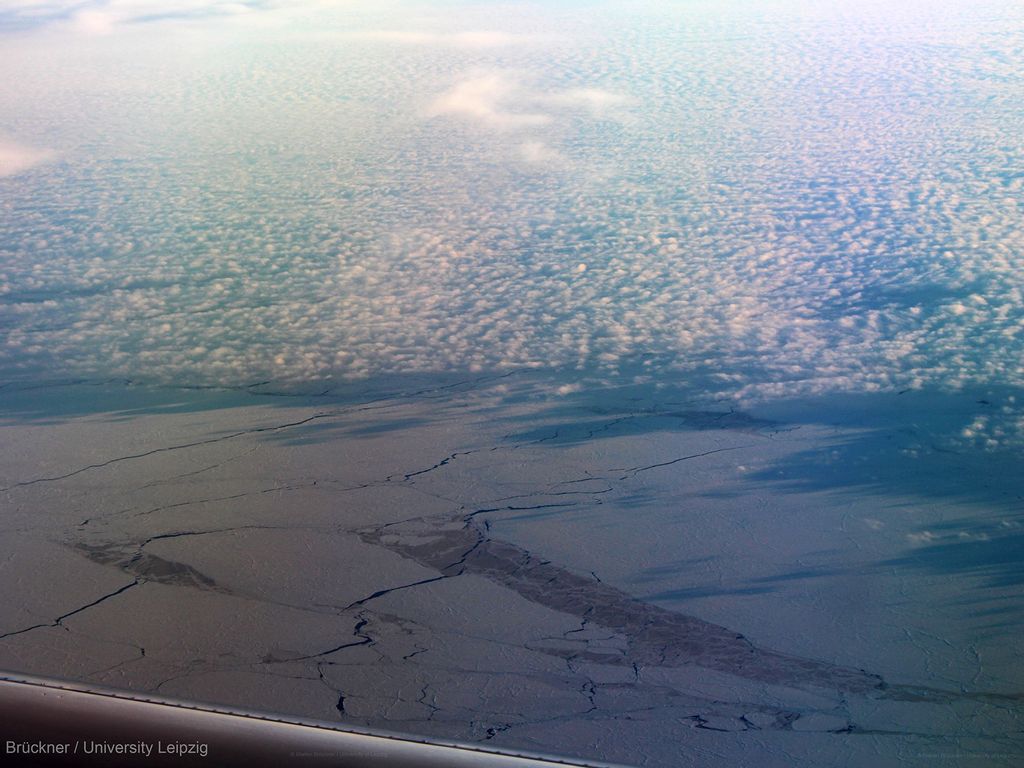
The influence of the warm air masses is causing more and more cracks in the Arctic sea ice as recorded during a measurement flight with HALO during the HALO-(AC)3 campaign. (Marlen Bruckner/University Leipzig)

“Predicting the future of the Arctic climate remains a challenge. We want to carry out an extensive flight campaign — HALO-(AC)3 — that uses innovative observation methods to help reduce major uncertainties in the projection of future climate development in the Arctic,” said Wendisch.

“By coordinating the flight patterns of the three aircraft, we can track the air masses as they evolve in space and time.

“These measurements make it possible to take a closer look at the smallest cloud structures, all the way down to individual cloud particles, and to investigate the effect of Arctic sea ice on cloud properties. By combining various measurements, we will be able to obtain an almost complete picture of the air masses under investigation,” said Susanne Crewell, an atmospheric researcher at the University of Cologne.
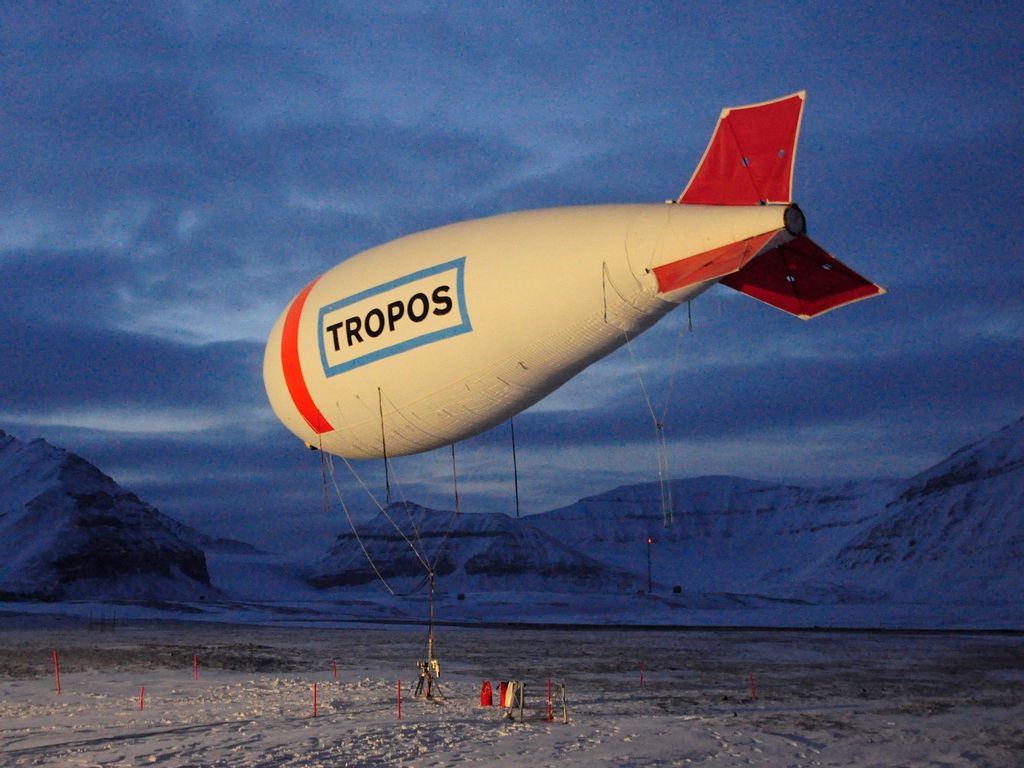
The tethered balloon BELUGA stands ready for launch in Ny Alesund to measure turbulence, radiation and aerosol properties in the transition phase to the polar night. (TROPOS-Holger Siebert/Zenger)

In addition, the Leibniz Institute for Tropospheric Research and Leipzig University will conduct simultaneous profile assessments using a tethered balloon at the AWI research station AWIPEV near the town of Ny-Alesund, located in Svalbard.

Aside from meteorological measurements, the balloon will examine small-scale exchange processes, radiation and aerosol parameters from the ground up to a height of 3,280 feet (one kilometer).

The balloon measurements at the AWIPEV station are planned over an additional period of approximately eight weeks between mid-March and mid-May.

Edited by Siân Speakman and Kristen Butler

Recommended from our partners


The post VIDEO: Heating Up: Scientists Race To Find Cause Of Alarming Polar Heatwave appeared first on Zenger News.
Astronomers Discover ‘Geological Wonderland’ On Pluto

0

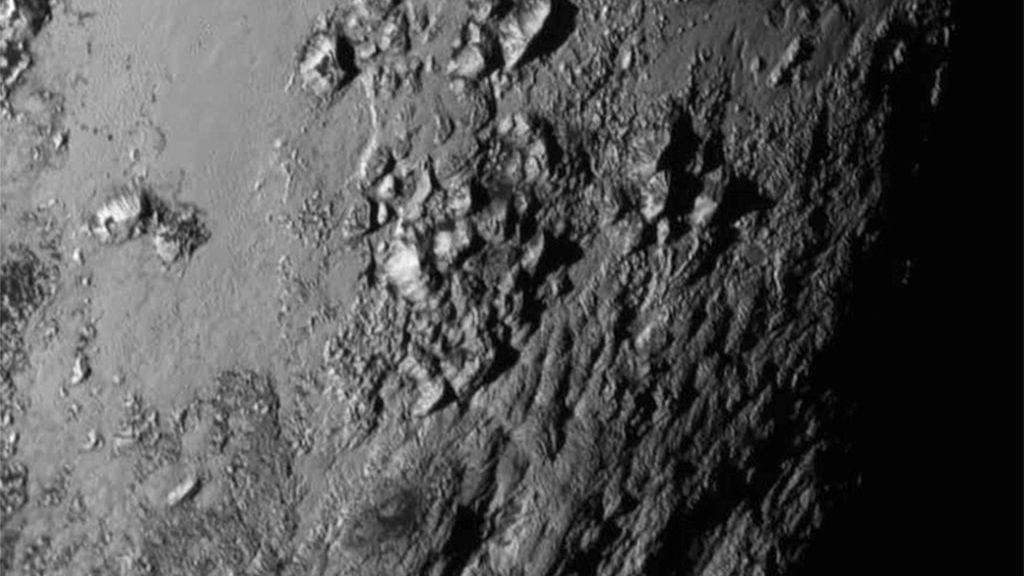
In this handout provided by NASA, a close-up image of a region near Pluto's equator shows a range of mountains rising as high as 11,000 feet (3,500 meters) taken by NASA's New Horizons spacecraft as it passed within 7,800 feet of the dwarf planet on July 14, 2015. The probe was launched Jan. 19, 2006, aboard an Atlas V rocket from Cape Canaveral, Florida. (NASA/APL/SwRI via Getty Images)


By Zachary Rosenthal

It’s not just the air on Pluto that is cold — the volcanoes on the dwarf plant are frigid, too. According to a group of scientists on NASA’s New Horizons mission team, which recently turned up new discoveries about the “geological wonderland,” Pluto’s volcanoes don’t shoot out lava when they erupt. Instead, they launch large amounts of frozen water that may have the consistency of toothpaste.


The dwarf planet Pluto, which is smaller than Earth’s moon, orbits about 3.6 billion miles away from the sun, roughly 40 times farther away than the path of Earth’s orbit. The New Horizons probe, launched in 2006 before making it to Pluto in 2015, was sent to take photos of the far reaches of the known solar system as it flies deeper into outer space.

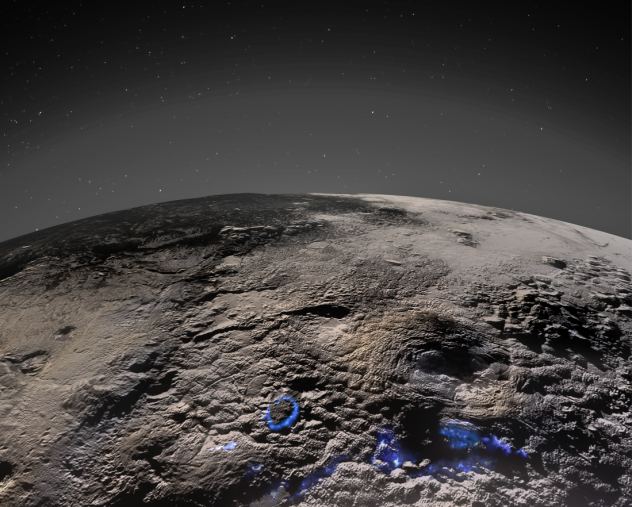
After analyzing photos from New Horizons, a group of planetary scientists led by study author Kelsi Singer found structures on Pluto that couldn’t be found anywhere else in the solar system. Singer’s team said on Tuesday that these features are likely spawned by cryovolcanoes – or ice volcanoes – which can tower up to 4.5 miles tall.

Scientists with the New Horizons mission have determined that cryovolcanic activity is likely responsible for creating the planet’s unique structures. The surface of Pluto is shown in grey, with greyscale, with an artistic interpretation of how past volcanic processes may have operated superimposed in blue. (NASA/Johns Hopkins University Applied Physics Laboratory/Southwest Research Institute/Isaac Herrera/Kelsi Singer)

“The particular structures we studied are unique to Pluto, at least so far,” said Singer, the New Horizons deputy project scientist from the Southwest Research Institute, Boulder, Colorado, and lead author of the paper published in Nature Communications. “Rather than erosion or other geologic processes, cryovolcanic activity appears to have extruded large amounts of material onto Pluto’s exterior and resurfaced an entire region of the hemisphere New Horizons saw up close.”

When the first pictures of Pluto from the New Horizons spacecraft made it to Earth in 2015, scientists were surprised to see mountains, valleys, plains and glaciers, evidence of a geologically active world. These land formations, like on Earth, have been created by the planet’s active geological processes, including the eruptions of ice volcanoes.

“What’s most fascinating about Pluto is that it’s so complex – as complex as the Earth or Mars despite its smaller size and high distance from the sun,” said Southwest Research Institute planetary scientist Alan Stern, the New Horizons principal investigator and study co-author, according to Reuters. “This was a real surprise from the New Horizons flyby, and the new result about cryovolcanism re-emphasizes this in a dramatic way.”

The surface of Pluto seen from NASA’s New Horizons spacecraft. (NASA)

The terrain that the team of scientists studied is geologically young, meaning that it is possible that Pluto’s interior structure retained heat not too long ago, allowing for water-ice-rich materials to be deposited onto the surface, according to NASA.

In order for the structures to be formed by the flows of the ice volcanoes, the consistency of the material shot out would’ve had to be like toothpaste, oozing out and creating marvelous geographic wonders.

“Pluto is a geological wonderland,” Singer said, according to Reuters. “Many areas of Pluto are completely different from each other. If you just had a few pieces of a puzzle of Pluto, you would have no idea what the other areas looked like.”

For the latest weather news check back on AccuWeather.comWatch the AccuWeather Network on DIRECTVFrontierSpectrumfuboTVPhilo, and Verizon Fios. AccuWeather Now is now available on your preferred streaming platform. 

Produced in association with AccuWeather.com.

Recommended from our partners


The post Astronomers Discover ‘Geological Wonderland’ On Pluto appeared first on Zenger News.
‘The HBCU Experience’ Comes to The World Games 2022

0
Miles College President Bobbie Knight (center) on Thursday hosted leaders from The World Games 2022, Microsoft and Alabama's Historically Black Colleges and Universities (HBCUs) and Historically Black Community Colleges (HBCC). (Haley Wilson, The Birmingham Times)

By Haley Wilson

The Birmingham Times

Talladega College Announces Dr. Gregory J. Vincent as its New President

0
Dr. Gregory J. Vincent (left), incoming president of Talladega College, chats with a member of Alpha Phi Alpha fraternity on the campus. Vincent will take office July 1. (Solomon Crenshaw Jr. / Alabama NewsCenter)

Shell Of A Find: Scientists Find Massive Haul Of 80-Million-Year-Old Titanosaur Eggs

0

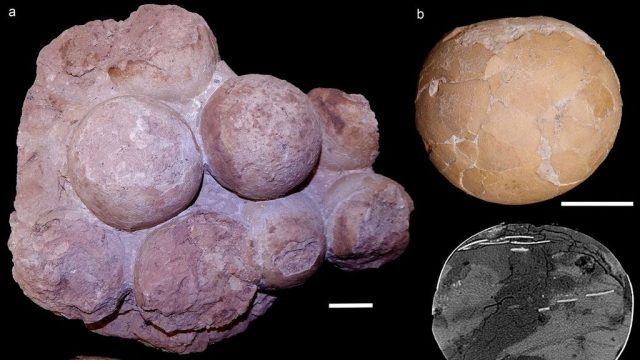
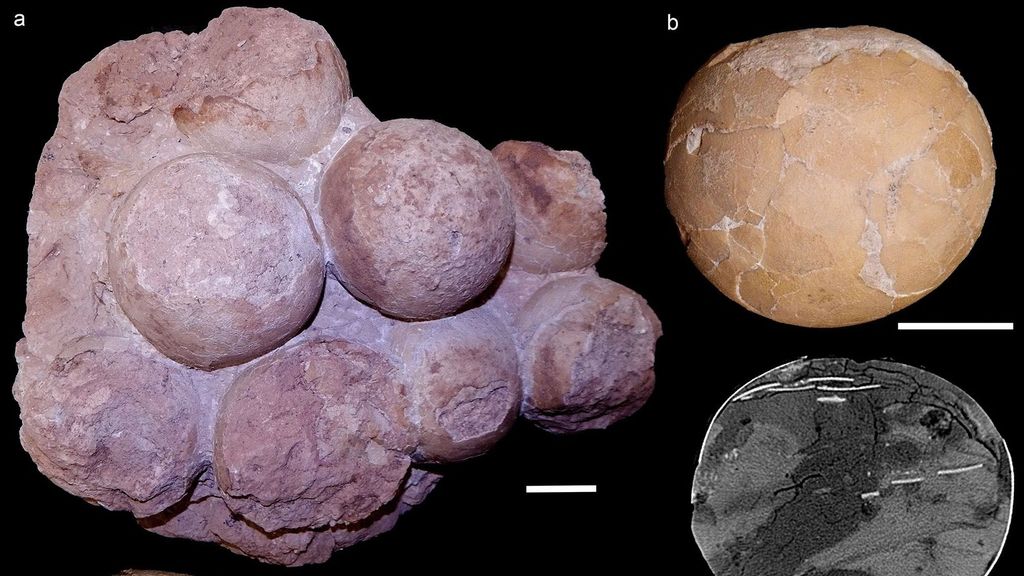
Selected titanosaurian eggs and egg-clutches collected from the Late Cretaceous Serra da Galga Formation (Bauru Group) at Ponto Alta nesting site, Uberaba Municipality, Minas Gerais State, Brazil.  (Dr. Agustin G. Martinelli/Zenger)


By Joseph Golder

Scientists found about 20 large 80-million-year-old dinosaur eggs when they unearthed a titanosaur nesting site in Brazil.


The dinosaur egg nest, which dates back to the Cretaceous period, approximately 145 to 66 million years ago, was discovered in an abandoned limestone mine in the rural area of Ponte Alta, in the southeastern Brazilian state of Minas Gerais.

Joao Ismael da Silva, a paleontology technician at the Federal University of Triangular Mineiro Ivor Price Paleontological Research Center, made the discovery in the 1990s, but the results of the analysis of the fossilized eggs have just been published.

Researcher Joao Ismael da Silva, from the Cultural Foundation of Uberaba in Brazil, made the discovery of the dinosaur eggs in the 1990s. But the results of the analysis of the fossilized eggs have only recently been published. (Dr. Agustin G. Martinelli/Zenger)

“In the 1990s, I became aware of the occurrence of dinosaur eggs in Ponte Alta. In conversation with friends of mine who worked in limestone mining, I was able to recover some isolated eggs and, finally, an association of ten spherical eggs.,” Da Silva said in a statement.

A study on the discovery, published in the journal Scientific Reports, was authored by da Silva, his UFTM colleagues Luiz Carlos Borges Ribeiro and Thiago Marinho, and Argentine researchers Lucas Fiorelli and Agustin Martinelli, from the Regional Center for Scientific Research in La Rioja and the Argentine Museum of Natural Sciences.

“From the associations of shells and eggs, and the macro and microscopic characteristics, it was possible to compare them with nests and fossil eggs from other parts of the world, mainly from the important sites already known in Argentina,” the UFTM statement said.

CT scans of the best-preserved egg-clutch (CPPLIP 1798). (a) 3D rendering of the bottom of the clutch in CPPLIP 1798. (b) General view of the clutch at the same orientation, showing the external part of the lower hemisphere of the eggs. (c) Top view of the lower egg row, showing the inner part of the lower hemisphere of the eggs. (d) Lateral view of CPPLIP 1798, showing lower egg row with higher shells at both ends and part of the upper egg row. In dark orange, eggshell fragments within the eggs. Note that the incompleteness (“holes”) of some eggs in B and C are due to the lack of the eggshells and/or poor resolution of the CT scan. In A the shape of each egg is maintained due to the sedimentary internal mold. Scale bar 10 cm. (Dr Agustin G. Martinelli/Zenger)

“Titanosaurs were the largest land animals of all time” Marinho said. “The titanosaurs from Uberaba reached up to 25 m [82 feet] in length, which is very striking and contrasts with the size of their eggs (about 12 cm [4.75 inches] in diameter).”

“The titanosaurs,” he said “would have been colonial and generalist in their reproductive aspects, nesting in a herd in a huge area, building massive nests with dozens of eggs, and possibly they would have had philopatric behaviors, something similar to sea turtles that periodically return to nest at the same sites.”

Model of events of titanosaur egg laying in two levels (L1 and L2), preservation and subsequent sedimentation in the Ponte Alta nesting site. (a) First level of eggs. (b) Repeated selection of the laying area (by philopatry or breeding-site fidelity), excavation, and laying the eggs. (c) Covered eggs and a new deposition. (Dr. Agustin G. Martinelli/Zenger)

The dinosaurs would bury approximately 10 eggs at a time, in what is known as a brood, in order for the temperature to remain controlled until the babies hatched, not unlike many reptiles today.

“This publication reinforces the importance of the municipality of Uberaba in the field of paleontology, especially dinosaurs, and strengthens the relevance of the Uberaba Geopark Project with UNESCO, [the United Nations cultural agency] since this plurality of discoveries most relevant international geological heritage present in the municipality,” Borges Ribeiro said.

Remains belonging to titanosaurs have been found all over the world. They were a diverse group of dinosaurs and the last of the long-necked sauropods, believed to have been wiped out in the extinction-level at the end of the Cretaceous period.

Edited by Richard Pretorius and Kristen Butler

Recommended from our partners


The post Shell Of A Find: Scientists Find Massive Haul Of 80-Million-Year-Old Titanosaur Eggs appeared first on Zenger News.

Mammals ‘Put Brawn Before Brains To Survive The Post-Dinosaur World’

0

For the first 10 million years after dinosaurs died out, mammals prioritized boosting their body size to adapt to radical shifts in the makeup of Earth’s animal kingdom, according to new research. (Steve Chatterley/Zenger)


By Anamarija Brnjarchevska

Mammals put brawn before brains to survive the post-dinosaur world, according to new research.


Prehistoric mammals bulked up, rather than develop bigger brains, to boost their survival chances once dinosaurs had become extinct and were “fairly dim-witted” compared to mammals today, say Scottish scientists who led the study.

For the first 10 million years after dinosaurs died out, mammals prioritized boosting their body size to adapt to radical shifts in the makeup of Earth’s animal kingdom, according to the findings.

The study, published in the journal Science, show that the size of mammals’ brains, compared with their body weight, decreased following a catastrophic asteroid impact 66 million years ago that ended the reign of dinosaurs.

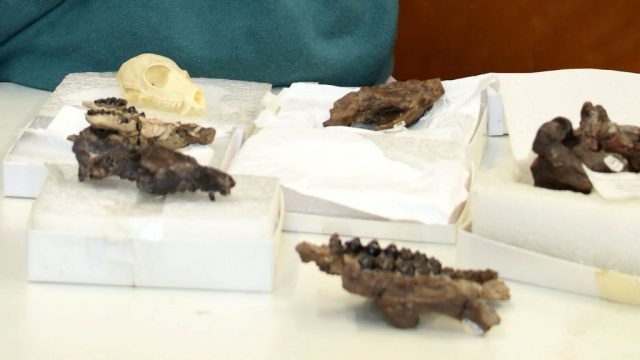
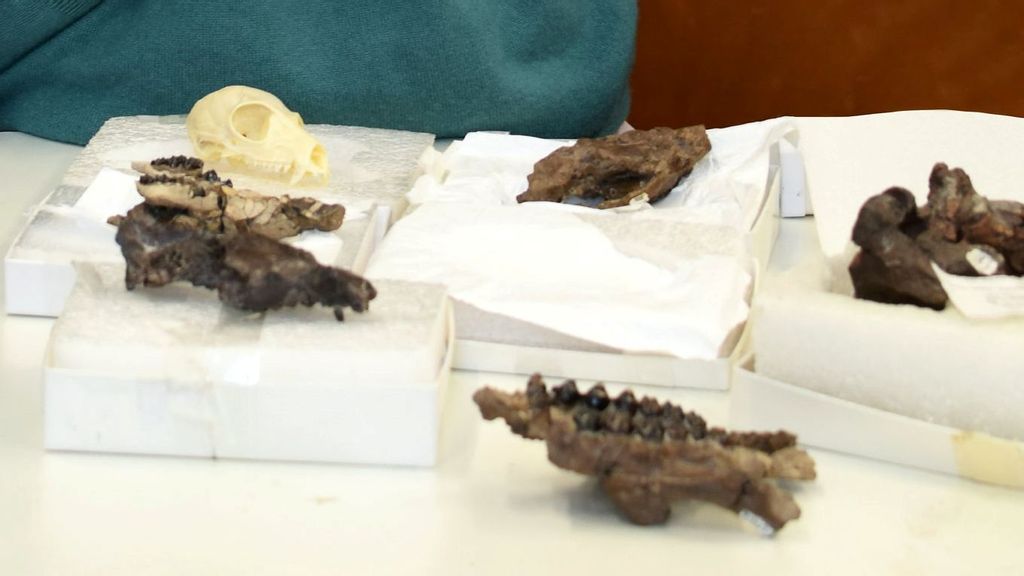
Crania and virtual endocasts inside the translucent cranium of the Paleocene mammal Arctocyon (L) and the later Eocene mammal Hyrachyus (R). In the post-dinosaur world, prehistoric mammals bulked up rather than develop bigger brains, to boost their survival chances. (Steve Chatterley/Zenger)

It had been widely thought that mammals’ relative brain sizes generally increased over time in the wake of the wipeout.

While much is known about the evolution of the brains of modern mammals, it had been unclear how they developed in the first few million years following the mass extinction.

Now, Edinburgh University scientists have shed fresh light on the mystery by performing CT scans on newly discovered fossils from the 10-million-year period after the extinction, known as the Paleocene.

The findings reveal that the relative brain sizes of mammals shrunk at first because their body size increased at a much faster rate.

Results of scans also suggest the animals relied heavily on their sense of smell, and that their vision and other senses were less well-developed.

The researchers say that suggests it was initially more important to be big than highly intelligent in order to survive in the post-dinosaur era.

Around 10 million years later, early members of modern mammal groups — such as primates — began to develop larger brains and a more complex range of senses and motor skills.

The Edinburgh team said that would have improved their survival chances at a time when competition for resources was far greater.

Lead researcher Ornella Bertrand said the idea that big brains are always better to invade new environments or survive extinctions is misleading.

Lead researcher Ornella Bertrand said the idea that big brains are always better for surviving new conditions is misleading. (Steve Chatterley/Zenger)

Bertrand, of the University of Edinburgh’s School of GeoSciences, said: “Large brains are expensive to maintain and, if not necessary to acquire resources, would have probably been detrimental for the survival of early placental mammals in the chaos and upheaval after the asteroid impact.”

She said because today’s mammals are so intelligent, it is easy to assume that big brains helped our ancestors outlast the dinosaurs and survive extinction — but that was not so.

Senior author Professor Steve Brusatte, also of Edinburgh University, said: “The mammals that usurped the dinosaurs were fairly dim-witted, and only millions of years later did many types of mammals develop bigger brains as they were competing with each other to form new ecosystems.”

The badlands of northwestern New Mexico are among the few places where scientists can find complete skulls and skeletons of the mammals that lived immediately after the mass extinction of dinosaurs.

Thomas Williamson, Curator of Paleontology at the New Mexico Museum of Natural History and Science, added: “Collecting and CT scanning many of the beautiful fossil skulls has led to this new understanding of what these bizarre animals were like and the evolution of the mammalian brain.”

Recommended from our partners


The post Mammals ‘Put Brawn Before Brains To Survive The Post-Dinosaur World’ appeared first on Zenger News.

Venomous Sea Snail Could Be Key To More Effective Painkillers With Lower Risk Of Addiction

0

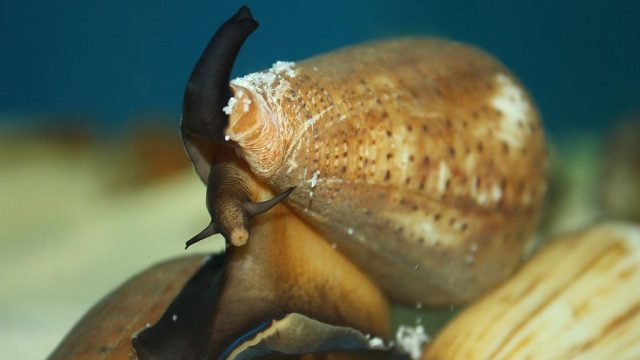
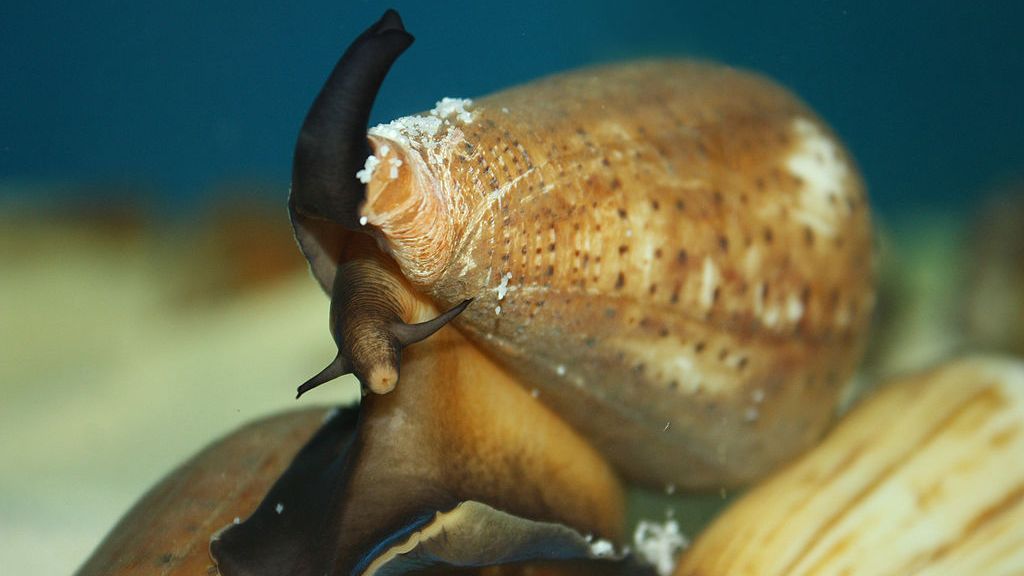
A cone snail searches for prey. Researchers from varied disciplines are collaborating to understand the way conotoxins — chemicals found in cone snail venom — work and how they can be utilized to reduce pain in humans. (Pengchao-BGI/CC BY-SA 4.0)


By Anamarija Brnjarchevska

A venomous sea snail could hold the key to developing more effective painkillers with a reduced risk of addiction, researchers say.


Deadly venom produced by cone snails has occasionally killed humans, and there is no antitoxin available.

However, a team led by researchers from the University of Glasgow is trying to learn more about the poison produced by these snails, which are predatory marine animals found in warm seas and oceans throughout the world.

The cone snail’s venom contains chemicals called conotoxins — highly potent neurotoxic peptides — which it uses to paralyze its prey by blocking parts of their nervous systems. This is often fatal to animals but rarely fatal to humans.

Cone snails are known to be predatory and venomous. Although there is no treatment for poisoning with cone snail venom, it rarely proves fatal for humans. (Richard Ling/CC BY-SA 3.0)

Modified peptides based on the venom could form the basis of future drugs capable of safely blocking pain receptors in the human body.

The researchers hope their project will lead to the development of the first-ever treatments for conotoxin poisoning.

Experts in conotoxin chemistry and protein biochemistry from the University of Glasgow are teaming up with machine learning and artificial intelligence researchers from the University of Southampton to better understand how the cone snail’s venom works to affect human muscles.

Together with colleagues at the Defence Science and Technology Laboratory, they will investigate how conotoxin peptides are structured at the molecular level.

They will then build on that knowledge to synthesize new peptides that show promise for interacting with a particular type of receptor in the human nervous system, known as nicotinic acetylcholine receptors, or nAChRs.

Using advanced computer modeling techniques, they will then run simulations to determine the peptides’ effectiveness in binding with muscle receptors.

A Jasper cone snail (Conasprella jaspidea pealii) eats a fireworm in Halmahera, Indonesia. The venom of cone snails renders their victims paralyzed as it blocks parts of the nervous system. The same venom could play an important role in creating more effective, nonaddictive painkillers. (Rickard Zerpe/CC BY-SA 2.0)

Andrew Jamieson, of the University of Glasgow’s School of Chemistry, is the project’s principal investigator and will be leading the research at the University’s new Mazumdar-Shaw Advanced Research Centre.

“The cone snail might seem like an unlikely prospect for breakthroughs in drug discovery, but the conotoxins it produces have a lot of intriguing properties, which have already shown promise in medicine.

“This project brings together some of the U.K.’s leading researchers across a wide range of disciplines to learn about how conotoxins work.

“Then we’ll look at ways we can engineer new analogues to investigate how effective they might be as novel drugs for a range of medical applications.

“Those new molecules’ ability to interact with nicotinic acetylcholine receptors could lead to new forms [of] muscle relaxants for anesthesia or painkillers which are just as effective as opioids but don’t have the same associated potential for addiction. It’s an exciting project, and we’re looking forward to getting started,” said Jamieson.

The $2.5m (£1.9m) project is supported by funding from the Defense Threat Reduction Agency, part of the U.S. Department of Defense.

Edited by Siân Speakman and Kristen Butler

Recommended from our partners


The post Venomous Sea Snail Could Be Key To More Effective Painkillers With Lower Risk Of Addiction appeared first on Zenger News.

After 40 Years, Dolester Miles, Birmingham’s Celebrated Pastry Chef, Retires. What’s Next?

0
Dolester Miles won the James Beard Award in her third year of being nominated. (Cary Norton/Stitt Restaurant Group)
By Bob Carlton | bcarlton@al.com