

Crucial Wildlife Secrets Revealed By Motion-Tracking Tech
Remember the folktale about the race between the tortoise and the hare? The hare moved faster, but the slow-moving tortoise reached the finish line first due to his persistence.
The science of movement ecology — born at the Israel Institute for Advanced Studies in 2006 — studies how animals, plants and microorganisms move at various stages of life and in various situations, providing insights for purposes including species conservation.
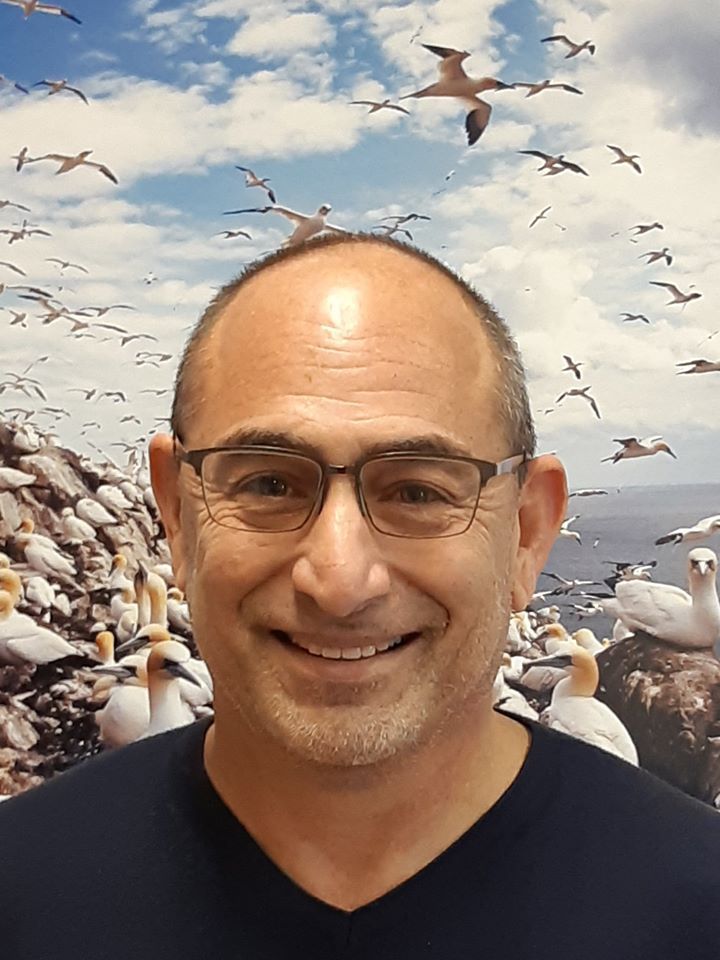
The father of this scientific discipline, Prof. Ran Nathan, director of the Hebrew University of Jerusalem’s Minerva Center for Movement Ecology, joined students and colleagues from 12 countries in a review of the main wildlife tracking technologies that gather big data on the movements of mammals, birds, fish and other animals in the wild.
The review, published in Science, describes how these technologies work separately and collaboratively to reveal previously unknown information about animal movement, behavior and survival in the wild.
GPS tracking of critically endangered California condors, for instance, provides early alerts to avoid bird collisions with wind turbines.
GPS tracking of albatrosses, meanwhile, can help locate illegal fishing vessels across vast oceans.
Using GPS tracking, Nathan and his students discovered that young vultures from the declining population in Israel climb rising-air columns (thermals) much less efficiently than do experienced adult vultures when those thermals are drifted by winds.
“We found that circling around the core of wind-drifted thermals requires training and patience, likely gained by young vultures only with accumulated experience,” Nathan said.
Novel insights
A new uniquely cost-effective reverse-GPS system called ATLAS, developed by Nathan and Prof. Sivan Toledo of Tel Aviv University and their teams, simultaneously tracks dozens of wild animals with great accuracy at high resolution using small, inexpensive radio tags.
ATLAS has been installed in countries including Israel, the UK, The Netherlands and Germany to answer basic questions in movement ecology. Every day, scientists from Australia to Africa to America are seeking to use ATLAS systems at their study sites, Nathan tells ISRAEL21c.
“This sophisticated tracking system has ushered in a range of exciting discoveries and novel insights, including the first evidence for the existence of a cognitive map in a wild animal — a fruit bat,” said Nathan.
ATLAS facilitated an understanding of how bats instinctively practice “spatial partitioning” among adjacent colonies, and the underlying mechanisms. The bats seem to be driven by spatial memory and information transfer rather than competition.
ATLAS also sparked a pioneering study in the UK linking variation among individual pheasants in their cognitive ability and space-use patterns.
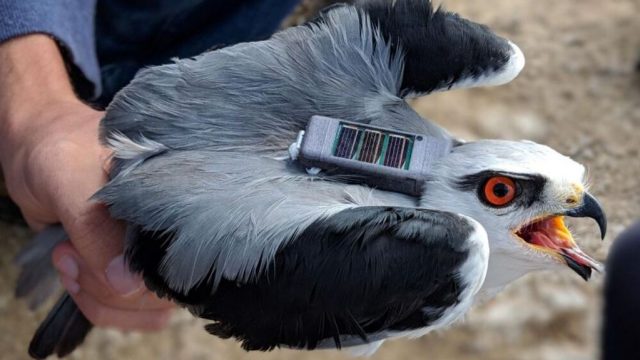
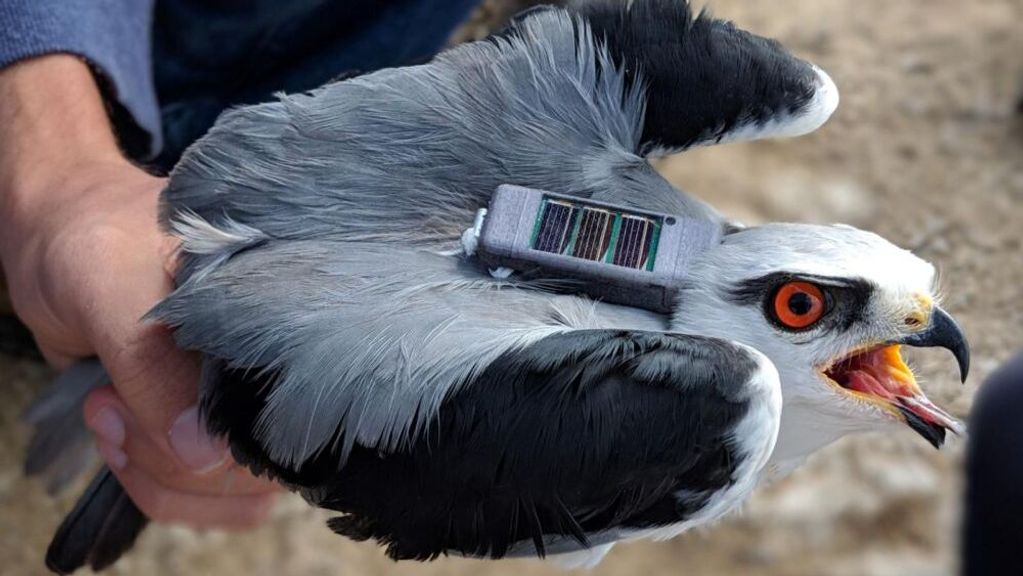
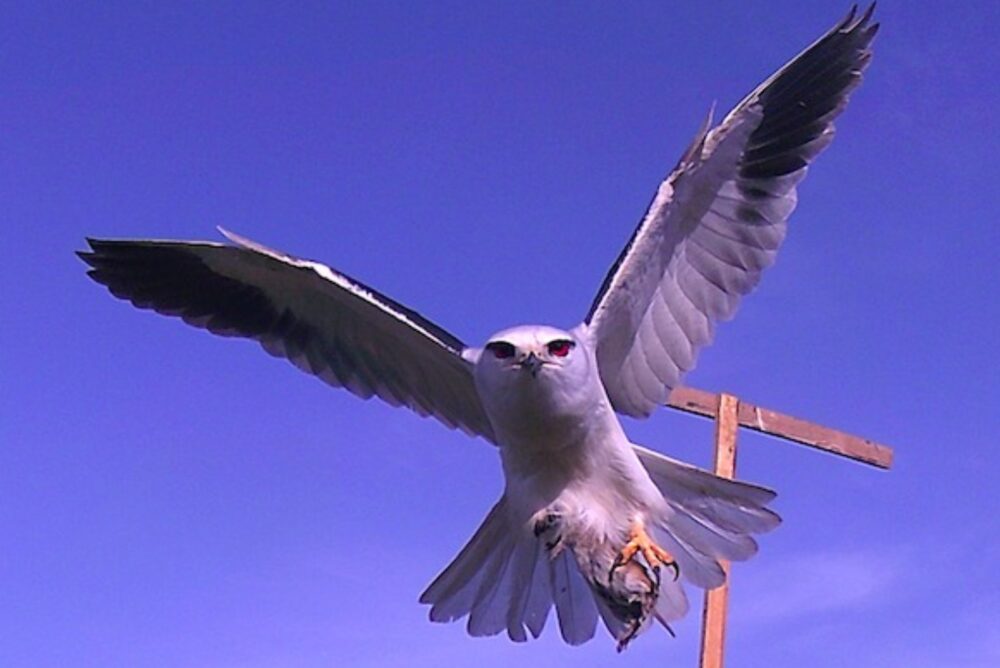
High-resolution data from ATLAS-tracked black-winged kites, which prey on small animals such as voles, revealed “a very large variation in the duration that kites remain static within a food patch, including very short and very long stops, making stop duration rather unpredictable,” Nathan said.
“This might be explained by a predator-prey co-evolution race, in which kites wait until voles get out of their burrows to forage in the fields, while voles minimize exposure in risky times and habitats.”
Fish and bird survival
Another reverse-GPS system, acoustic telemetry, uses acoustic tags to track fish and other aquatic animals in rivers, lakes and seas, yielding new scientific insights and guidelines for dealing with human-inflicted risks.
An acoustic tracking system in European rivers revealed that when endangered downstream-migrating eels and Atlantic salmon encounter dams, their movement becomes more energy intensive and therefore may lower their chances of survival.
Nathan said GPS tracking provided Israeli scientists with an early-warning capacity about the recent avian flu outbreak that led to the death of thousands of migrating cranes in Israel earlier this winter.
“At the first sign of death among a few dozen cranes, a much greater proportion of our GPS-tagged cranes died or were suspected to be infected given the sudden reduction in their movement and activity,” said Nathan.
“We informed the authorities that a drastic mortality event is coming, as unfortunately did happen, and that urgent measures should be taken.”
Later, the team traced the infected birds and found that some eventually recovered.
“We now closely watch the data from cranes that winter in Africa to monitor the possible second wave of the outbreak when millions of migrating birds will soon arrive,” Nathan said.
His lab is working with the Israel Nature and Parks Authority on an early-alert system to find poisoned carcasses that vultures and other raptors are eating.
Nathan says there are four types of research questions that cannot be answered without the highly detailed data the new technologies enable: cognitive and personality variations among individual animals; very brief interactions between members of social groups, competing species or predators and their prey; wildlife interactions with the environment and with humans; and variations in natural phenomena across different scales in time and space.
“We expect our findings to have major implications in both basic and applied research, and to foster a wave of new collaboration across disciplines and political borders. We also foresee a substantial impact beyond our field of research through public environmental awareness and education,” Nathan says.
Produced in association with ISRAEL21c.
Recommended from our partners
The post Crucial Wildlife Secrets Revealed By Motion-Tracking Tech appeared first on Zenger News.
Natural Selection Isn’t Always Slow, Flower Study Finds
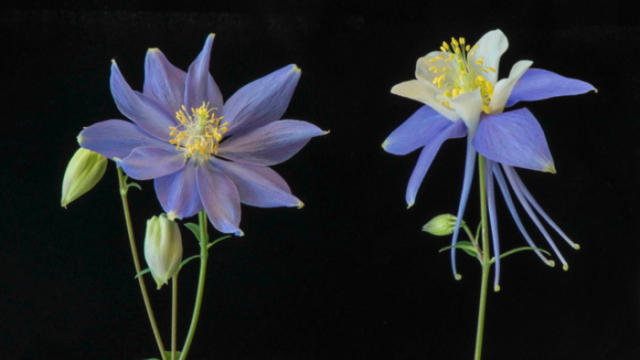
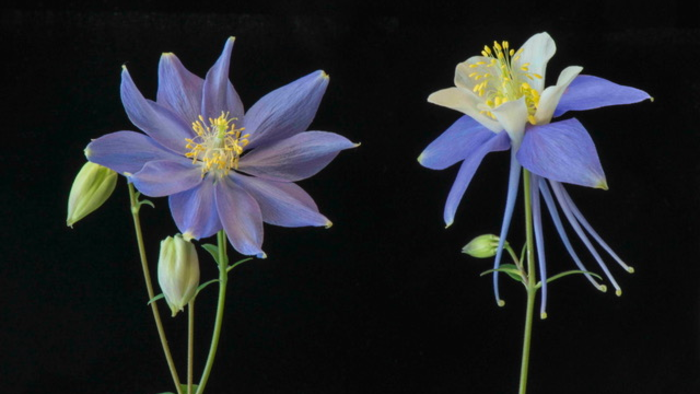
Evolution can occur in great leaps, despite Charles Darwin’s theory of evolution by natural selection and small changes over time. Scientists have identified a flower in Colorado dubbed a “hopeful monster,” mutating to adapt to its environment.
“Evolution doesn’t necessarily take all these small changes like Darwin proposed,” Scott Hodges of the University of California-Santa Barbara said of the theory.
Hodges and Zachary Cabin, affiliated with the same university, identified rapid evolutionary change in Colorado blue columbines (Aquilegia coerulea) and a naturally occurring variant, A. coerulea daileyae. The latter lacks the nectar spurs of the former, replacing them with petal-like sepals due to a mutation in a single gene. The two scientists are part of a team that published a study on these findings in the journal Current Biology.
Scientists have long argued over whether evolution plods along for millennia or if it sees sudden, abrupt changes. Large changes in the shape or morphology of species appear in the fossil record within short geological timescales, while intermediate changes may not show up. Researchers have tried to observe the change as it happens to show that sudden developments may drive evolution.
In the study, researchers found a population of Colorado blue columbines was losing petals that feature characteristic nectar spurs. This genetic mutation is not unusual for the species, but spurlessness appears to have become a feature of the area under study: about 25 percent of the plants lack spurs.

The team found that just one gene, APETALA3-3, controls the flower’s spurs and nectaries. “The gene is either on or off, so it’s about as simple of a change [as] you can get,” said Cabin. “But that simple difference causes a radical change in morphology,” he said of the broken gene that causes the loss of petals or nectar spurs.
If these had been fossil specimens, they might have been classified as distinct genera. No intermediate form of the plants would have shown up in the fossil record to show a transition from one to the other. “This finding shows that evolution can occur in a big jump if the right kind of gene is involved,” Hodges said.
APETALA3-3 is a homeotic gene that programs how an organ develops, which can be drastically affected by a mutation. “Most of the mutations of this nature are going to be like that — just awful,” Hodges said, adding that such organisms cannot survive. “Biologist Richard Goldschmidt called them ‘hopeless monsters,’” he said.
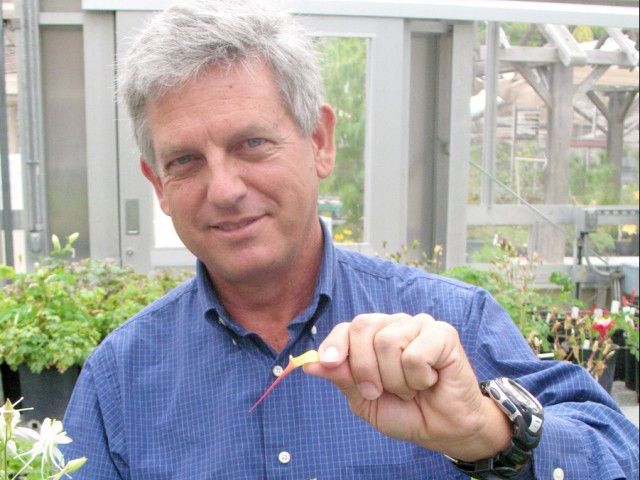
Because APETALA3-3 programs an organ to become a petal, “when it’s broken, those instructions aren’t there anymore, and that causes it to develop into a completely different organ — a sepal,” Hodges said.
One of these giant leaps may sometimes yield a trait that is adaptive to a particular environment. This may mean that evolution moves forward in single, large jumps, supportings the punctuated equilibrium hypothesis.
“We did not have a good example of a hopeful monster due to a single genetic change until now,” said Hodges. Other relatives of columbines have also lost petals and nectaries, but scientists had not determined whether the change was gradual or in a giant leap. Because Hodges and Cabin observed this actively happening in a patch of Colorado blue columbines, they can confirm that the bloom is a hopeful monster.
The researchers concluded that the mutation was not mere chance. “To get that many of this mutant type really suggests that there’s selection favoring it somehow,” Hodges said.
He finds it odd because spurs produce nectar and attracts pollinators. But attracting pollinators is only one factor in reproduction. The mutant columbine actually produced more seeds than its counterparts. After checking their data, the authors saw a pattern emerge.
The researchers observed that aphids, caterpillars and deer eat the various versions or morphs of the columbine. While aphids and caterpillars can limit seed production, deer eat and tear up the entire plant. Further data showed that aphids and deer prefer to munch on flowers with nectar spurs.

Change in the morphology of these flowers is usually driven by pollinators, such as hawk moths and bumblebees, but spurlessness appears to be an adaptation to animals consuming the plants. Producing the spurs and nectaries takes a significant amount of energy, according to the study, that can be used instead for producing seeds.
Having identified their hopeful monster, the authors hope to develop a timeline of when the mutations may have occurred and determine how spurlessness is spreading among the flowers.
The Colorado blue columbine may be diverging into separate species, especially since the two types seem to rely on different pollinators. “That splitting process would be slow,” Cabin said, “but there is evidence that it could be on its way.”
“Natural selection can come from very surprising sources. It’s not always what you’d expect it to be,” Hodges said.
Edited by Siân Speakman and Kristen Butler
Recommended from our partners
The post Natural Selection Isn’t Always Slow, Flower Study Finds appeared first on Zenger News.
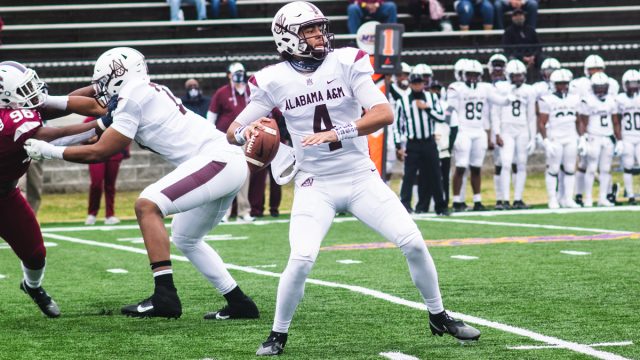
Legacy Bowl to Feature A&M’s Aqeel Glass, Other HBCU stars

R&B ‘New Jack’ Gemaine Proves Compton Produces More Than Hip-Hop Acts


As the world watched what is widely believed to be one of the greatest halftime performances ever during Super Bowl LVI, one thing that stood out was the heavy influence the West Coast has on hip hop. Compton, California, was represented well by legendary producer and rapper Dr. Dre and one of music’s brightest stars, Kendrick Lamar.
However, here to set the tone for the R&B genre hailing out of Compton is the highly touted Gemaine. Already receiving cosigns from hit-makers Charlie Heat and Murph, Gemaine is poised to be the next breakout star from the city, having produced several musical acts over the years.
Currently in the studio wrapping up his first full album, “New Jack City,” Gemaine has attracted significant attention with some of his recent singles. On Friday, Feb. 18, he will thrill his fans with another release from the album, “Lay It Down.”
Zenger spoke with both Gemaine and producer Murph to discuss the family-like chemistry behind the creation of “New Jack City,” with Gemaine opening up about being hesitant to pursue his music career and much more.
Percy Crawford interviewed Gemaine and producer Murph for Zenger.
Zenger: How is it going?
Gemaine: I can’t complain. It’s been nice. Been getting a lot of work done — single going well. I just hope it keeps going.
Zenger: You bring a different flavor from Compton. We typically associate rap with the city, but you can sing, man.

Gemaine: (Laughing) I appreciate it, bro. I shied away from it, and it was something that I wasn’t really that proud of because of how overpowering [it was] and how much people did rap. It wasn’t that cool to be [a] choir-singing boy, church singer or singing in a school choir. Maybe it was just me, but it came across feminine compared to what everybody else was doing. It was not easy for me to embrace it in my younger years. I started embracing it later. It was hard. Outside of church, I was not singing.
Zenger: What made you comfortable pursuing your singing career?
Gemaine: I got fed up with the fact that all of my family was really weird about holding their gifts in. They had this certain approach to where they wouldn’t let people know that they were artists, producers, singers. It’s like if you catch me at the right time… but other than that, I’m not outwardly expressive about who I am. My whole family’s attitude with music… I followed suit, and then I got tired of it.
At 18, I just went all in. I started singing because I like singing — that’s what I do. I distinctly remember — I wish I kept that video up the day I did it. I put on IG [Instagram]: “Yo, I sing. This is what I do. I’m tired of hiding it.” I just been uploading singing videos ever since.
Zenger: Did you think a Vine video going viral would change your life the way that it did?
Gemaine: That’s the funny thing. I didn’t get a phone until, like, 10th grade. I was super late on having a phone. I didn’t even really understand social media in general when I was uploading stuff. I was expressing myself and just having fun. I didn’t think too hard about it. I didn’t even understand when stuff was going viral. I think me being ignorant to it all was why I was doing so well because people [could] tell I didn’t care. It wasn’t [putting] effort into “please like me.”
Zenger: You refer to yourself as a perfectionist. I’m sure you took your time composing this new project, “New Jack City.”
Gemaine: Definitely. We definitely took our time on this one. More time than any of us would have liked. That’s just what comes with making great music. I got Murph on the line. He’s a huge part of this project: executive producer, A&R and writer.
Murph: I’m a Virgo, so I’m definitely a perfectionist, but one thing I have been trying to do in recent times is get out of my own way. In the creative process, [we have to understand] that by the time we set our intentions — we’re linking up at this time, we’re going to be in the studio, we know what we’re trying to accomplish — at that point, the song’s already done. We’ve already manifested the complete product before we’ve even entered the room.
So I try to get out of the way, and I’ve been preaching that to G especially throughout this process. It’s dope to see how he’s been going about his music. He has a tendency sometimes to overthink things in the studio because he’s such a perfectionist and that can be counterproductive.
Creating something that’s not tangible — these melodies, these words — we’re pulling things out of the air. It’s a spiritual process. The fact that we are coming together in this way, it continues to reinforce to me, G and Charlie [Heat, producer] that God is in the room with us. All three of us are perfectionists, so we can get frustrated. It’s dope that we can rely on each other to snap out of it.

Zenger: Being that this is your first full project, can April 15 not get here quick enough, or are you taking the more patient approach?
Gemaine: I’m just letting it play out. I’m soaking it in and taking it a day at a time. I get ahead of myself all the time — it never does me well. Not even just in music, but in life, just focus on a day at a time and be present with everything.
Zenger: To work with guys like Murph and Charlie Heat at such a young age, what has that been like for you?
Gemaine: Honestly, I am beyond grateful. I’m getting mentored by people who have been doing music longer than me. They know a lot about the game on the business [side] too, but also as a man and [in my] personal life. … It’s been super dope. I’m growing way faster than I would if they weren’t there being my big brothers throughout the process. We out here trying to win together.
Murph: “Trying” is admitting that there is a possibility of failure. We have no possibility of failure. We are doing it, brother.
Zenger: Murph, on the flip side of the question I asked G, to discover a talent like Gemaine early, before they become as huge as their potential says they can be, how does that feel?
Murph: I’ll be honest with you, it’s a real blessing. Charlie has said some things recently, kind of bigging me up as far as my foresight. I’ve had this A&R mindset throughout my whole career, and I have been able to be aligned with some crazy talent before they [became] exposed to the world. Having a hand in helping them develop or connecting certain dots has been dope.
Gemaine is at the top of the list of people that God put into my life. I was able to see very early, this kid is special. Even the way we met — when we parted ways, I don’t know why I felt so moved to be like, “Yo bro, I want to help you.” I wanted to help him figure it out. God put us into each other’s lives a day later.
G is one of those one-in-a-generation type of talents. Outside of that, he is a good dude. Our chemistry outside of music is enhanced by our relationship outside of being creative. That goes for Charlie as well. We’re family in real life, so the music feels a certain way.

Zenger: I’m a fan of anyone saying they are providing us with real R&B because that is a missing component. What can we expect to hear on April 15, and why did you title the album “New Jack City?”
Gemaine: You can expect some fearless risk-taking, needle-moving type of music. We will have all kinds of styles and flavors of R&B that really resonated with us. I pride myself on having an album that’s like a playlist. It’s going to be a colorful album that is consistent. It’s going to always have that real R&B signature to it.
We named it “New Jack City” because we were inspired by the movie. The approach they had and the brotherhood and code they had in the movie, we resonated with [it] and saw ourselves in that. We thought it would be cool to put the stamp on what our sound is and how we are as brothers.
Murph: I keep saying the same thing about spirituality, but I can’t say it enough. It’s been a divine process throughout everything. Gemaine has a very classic style. He’s got an old soul. I would always tease him because [in] his natural style, he would look like Wesley Snipes in “New Jack City.” He looks like he’s from that era. He looks like an ’80s drug dealer.
It developed into something where we felt it could be the stylistic direction in our approach. Then he took it a step further. We talked it out in the lab, and it just came to that. It’s not verbatim, like each one of us is a character from the movie. It’s just that unapologetic black excellence.
Gemaine: We got attitude and mad confidence. I’ve never had this much confidence, and that allows me to not have any filter. That’s the tone of this whole project.
Murph: That’s something that we were very conscious of from the beginning. I had a conversation with G’s management before I even spoke to him about it. I was doing some research and listening to certain music and going back from what we did with the “Lefty,” [a] project which I love. It is slept on.
The approach with “New Jack City” — it’s important that we just become shameless. We’re very faith based, we’re spiritual, humble, we’re giving glory to God, but at the same time, I’m raw, bro. And I look good doing it.
It’s okay to have that — I don’t want to say arrogance, because I’m not arrogant — but just that fearlessness. I feel like especially as black men, we’re kind of taught to conform and humble ourselves to fit into society. Or it’s the opposite, where you overcompensate for how we’re viewed or treated. You become [an] overly tough guy or overly flashy. We’re just being authentic and really true to ourselves. That was the vibe of the characters in the movie. That cosign from Charlie did a lot for G.
Edited by Siân Speakman and Kristen Butler
Recommended from our partners
The post R&B ‘New Jack’ Gemaine Proves Compton Produces More Than Hip-Hop Acts appeared first on Zenger News.
Flyball, Early Spaying Increase Knee Injury Risk For Dogs

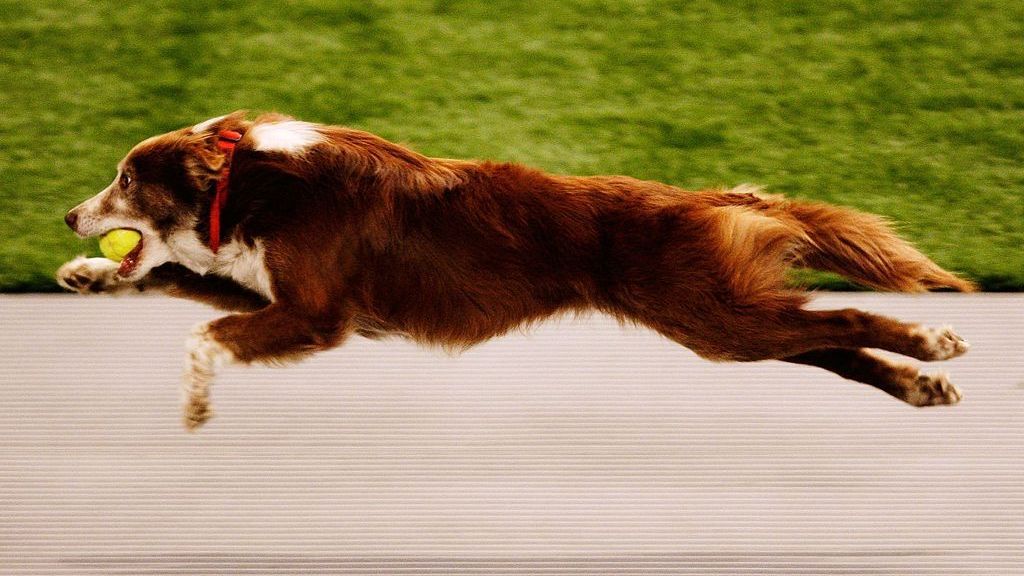
Developing core strength in dogs involved in agility sports and activities such as flyball can help avoid the most common debilitating canine knee injuries, new research suggests.
In a study that examined more than 1,200 agility dogs, researchers found that most physical exercise lowers the risk of rupturing the canine knee ligament. The injury resembles a human anterior cruciate ligament (ACL) tear, which usually happens during a sharp, twisting motion.
Agility sports involve putting dogs through a pre-set obstacle course within a fixed period of time. The courses have between 14 and 20 obstacles that range from seesaws, tunnels and weave poles to tire jumps and pause tables, according to the American Kennel Club. The dogs rely solely on owners’ cues and body language to complete the course. The American Kennel Club website says that all breeds are welcomed to the sport.

Certain breeds appear to be more susceptible to the injury, based on their shape and size, according to a paper published in BMC Veterinary Research.
“Balance exercises, wobble boards, anything that improves the core strength of the dog seemed to lower the odds of a ligament tear,” said lead author and veterinarian Deb Sellon of Washington State University. “We found fitness matters for dogs just like it does for people, and we haven’t shown that before.” Sellon is also the founder of the university’s Agility Dog Health Network.
By using odds ratios — a statistical risk assessment — Sellon and co-author Denis Marcellin-Little of the University of California-Davis found that of the 1,262 agility dogs reviewed, 260 tore the ligament, while 1,002 dogs did not.
Scent work, dock diving and barn hunt events, they found, can lessen the risk, as do balance and core-strengthening exercises. In barn hunt competitions, dogs sniff out rats among bales of hay, simulating working dogs’ elimination of rodents.

While swimming, Frisbee toss, playing fetch and other regular activities did not increase risk, they did not lower it either. Dogs competing frequently at a higher level on rigorous obstacle courses had fewer incidents of ruptured ligaments.
However, weekly short walks and runs over hilly or flat terrain, the study found, seemed to increase the risk of injury. Injuries appeared to happen as dogs began their involvement in agility sports without having bolstered their core strength through routine physical exercise and rest days.
Meanwhile, flyball, a new dog sport, poses the greatest risk. Agility dogs in the sport were roughly twice as likely to rupture the ligament than other dogs, with almost 12 percent of dogs playing the sport being injured this way.
Flyball races pit two teams of dogs against each other to race side-by-side over hurdles on a 51-foot-long course. After triggering the launch of a ball, the dogs fetch it and race back over the course for a win.

Female dogs spayed before the age of one were nearly twice as likely to rupture the ligament than those spayed after one year of life. This underscores the importance of hormones in developing strong ligaments, Sellon said.
Some breeds are more likely to sustain the injury. Australian shepherds and Labrador retrievers were doubly likely to rupture the knee ligament, while Australian cattle dogs and Rottweilers were more than four times as likely to tear it.
A dog’s shape and tail are involved in determining the risk factor as well, according to Marcellin-Little. “Larger dogs doing agility [sports] tend to be less balanced, so it is not surprising a Rottweiler or Australian Shepherd may be at a higher risk of a rupture compared to smaller breeds,” he said. “The tail could also be a factor; the tail has been proven very important for cheetahs, and you can imagine it has a role to play in the overall balance of the dog.”
Edited by Siân Speakman and Kristen Butler
Recommended from our partners
The post Flyball, Early Spaying Increase Knee Injury Risk For Dogs appeared first on Zenger News.
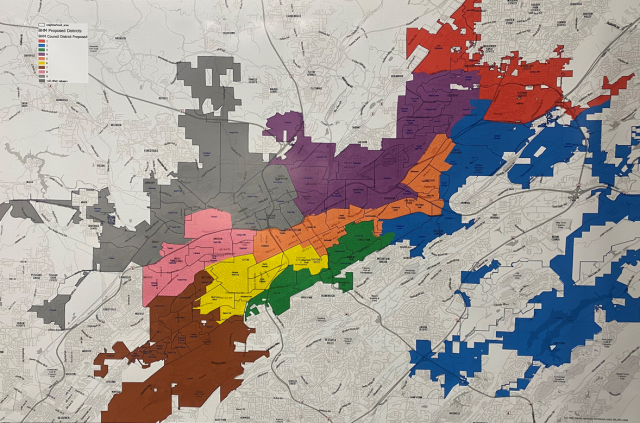
How the embattled town of Brookside unites Democrats and Republicans in Alabama

The Birmingham Times
Loretta Harrison, New Orleans Chef and Praline Shop Founder, Dies at 66