

Bite Me: Sand Tiger Shark Mating Captured On Live Webcam At Tennessee Aquarium


By Peter Barker
Rare footage shows the rough mating rituals of two sand tiger sharks at a U.S. aquarium. The male uses its sharp fangs to move the female into a better position.
The sand tiger sharks were filmed in their tank at Tennessee Aquarium in Chattanooga, Tennessee, on Feb. 13.
The video was shared online by the aquarium with the message: “Recently, the always-live webcam in the Secret Reef exhibit captured rarely seen footage of mating behavior between sand tiger sharks.”
The Secret Reef is home to three male sand tigers and a pair of females introduced in the fall of 2020 and 2021.
“Although seemingly dangerous, female sand tigers are equipped to endure males’ ‘love bites’ with no lasting damage. If mating is successful, it could be more than a year before she births a pair of pups,” the aquarium said.
The males grip the females’ pectoral fin with their teeth to maneuver them into position. If successful, fertilized eggs will develop for nine to 13 months. The litter contains two pups, which grow in each of the female’s two uteruses.

“Male sand tigers must fertilize the female’s eggs internally. In order to orient themselves and their partner for successful fertilization during mating, males turn to the one tool they have available to them: their teeth,” said Thom Demas, the aquarium’s director of aquatic collection and life support systems.
“If they’re facing the same direction, he will typically grab the female by the large fin that sticks out of her side and contort his body around her,” he said.
“It appears pretty vicious, but that’s how these sharks reproduce. They are designed for this. Their skin is made of tough scales called dermal denticles and can be much thicker than males. While they do get some injuries during mating, they are usually superficial, and they heal.”

The species was listed as endangered in 2020, according to the International Union for the Conservation of Nature’s Red List of threatened species. Management measures at U.S. and Australian fisheries have been instituted to protect them. Sand tiger sharks are targeted for their fins, for their meat in Japanese markets and for their oil in Australian markets, as well as by the aquarium trade worldwide.
In addition, sand tiger sharks have a low birth rate. “During internal development, the largest sand tiger embryo in each uterus will gain nourishment by consuming its smaller siblings, leading to a litter size of just two pups,” the aquarium said.
“This practice, also known as intrauterine cannibalism, means this species has one of the lowest reproductive rates of any shark.”
These sharks can grow to a maximum length of 10.5 feet and weigh 350 pounds.
Edited by Fern Siegel and Kristen Butler
Recommended from our partners
The post Bite Me: Sand Tiger Shark Mating Captured On Live Webcam At Tennessee Aquarium appeared first on Zenger News.
‘Math Neurons’ Fire Up When We Add Or Subtract


As humans make calculations, specific neurons in the brain fire during certain mathematical operations, depending on whether addition or subtraction is being done.
Researchers at the Universities of Bonn and Tübingen in Germany found that certain neurons are activated exclusively during addition problems, while others are active during subtraction, regardless of whether the calculation instructions are given as words or symbols.
Until now, the processes occurring in the brain during these operations were largely unknown.
The researchers’ findings were published in Current Biology, with the study making use of a technique employed by their colleagues at the Department of Epileptology at the University Hospital Bonn. These scientists were implanting electrodes in epilepsy patients to locate precisely the areas of the brain affected by seizures. They found that seizures nearly always originate in the same section of the brain.
The probes they used can also measure individual neurons — the spindly, electrically excitable cells found in nerve and cerebral tissue that communicate with each other across microscopic gaps called synapses.

In the current study, the researchers examined four men and five women and implanted electrodes into the temporal lobes of their brains. The electrodes monitored the activity of the participants’ nerve cells as they performed simple arithmetic.
“We found that different neurons fired during additions than during subtractions,” said study co-author Florian Mormann of University Hospital Bonn.
“Even when we replaced the mathematical symbols with words, the effect remained the same,” said lead author Esther Kutter. “For example, when subjects were asked to calculate ‘5 and 3,’ their addition neurons sprang back into action, whereas for ‘7 less 4,’ their subtraction neurons did.”
This suggests that the neurons are encoding mathematical instruction, the researchers said. The probes accurately revealed the kinds of tasks the participants were calculating.

“We know from experiments with monkeys that neurons specific to certain computational rules also exist in their brains,” said co-author Andreas Nieder of the University of Tübingen, adding that there is little data on humans in this area.
Nieder and his collaborators found that in the parahippocampal cortex (PHC), the cells also fired specifically according to addition or subtraction tasks. But in making sums, different addition neurons became alternately active during one and the same arithmetic task. The team found that this was as if the “+” key was constantly changing its location. Called dynamic coding, this also happened with subtraction problems.
The PHC is a large part of the media temporal lobe, which is found beneath the temple at the junction of the regions of the brain that manage memory in the hippocampus and visual processing in the fusiform cortex.
“This study marks an important step towards a better understanding of one of our most important symbolic abilities, namely calculating with numbers,” said Mormann.
Edited by Siân Speakman and Kristen Butler
Recommended from our partners
The post ‘Math Neurons’ Fire Up When We Add Or Subtract appeared first on Zenger News.
Lawson State Part of $10M Job Training Initiative Offered by state’s Community College System

Erin Jackson of US 1st Black Woman to Win Speedskating Gold

US Marshal Turned Real-Estate Mogul Shares Knowledge In His First Book


Although successful as a college basketball player, Antonio Buchanan wanted to dispel the narrative that you had to be a rapper or athlete to escape your circumstances as an African American male.
Joining the U.S. Navy paved the way for his successful journey. Buchanan has worked as a U.S. Marshal and an intelligence officer for the CIA. Today, he is CEO-managing partner at Capstone Investment Group — and works as an engineer for Microsoft. A trial-and-error approach has bred success throughout his life. The savvy 38-year-old has maximized every opportunity and is sharing his experiences in his new book, “Building Success Through Real Estate With AB,” to help others achieve their goals.
Antonio details his journey with Zenger, from traveling the world to amassing an impressive resume.
Percy Crawford interviewed Antonio Buchanan for Zenger.
Zenger: When Ross [Williams] told me your story, I thought you were at least 70, given the life you have lived. What were your experiences?
Buchanan: We joke about that, but it’s kind of amazing some of the things I have accomplished in such a short period of time. I’m blessed. Everything started at a young age. I’ve always been motivated, always wanted more out of my life. Some people have to be motivated in a certain way to do certain things. For me, I didn’t personally have to experience anything to want more. I looked at other people that were either in a position to succeed in life and didn’t, for whatever reason. I didn’t want to be like that. That propelled me into my career.

Starting out in high school, I played basketball and went to college on a basketball scholarship. I realized I wanted more than just being a basketball player. In our community, we have a stigma. In order to be successful, you have to be an athlete or rapper, things like that. They don’t see us being successful outside that. At that period of time in my life, I made a decision: The chances of me going to the league [NBA] are very slim. I want to focus more on school, but I don’t want to pay for school.
So I went to a junior college on scholarship, then tried to get into a really good school for academics. Unfortunately, the school that I wanted to go to didn’t give me a scholarship. That’s when I joined the Navy.
I was stationed overseas. I did humanitarian-type things, visited 20 to 30 countries and just experienced life. Joining the military was hands down the best decision I ever made in my life, because it set me up for everything else that happened. I did three years in Japan, traveled all over the world, and I did my last year in Oklahoma City at an Air Force base. Once I completed that, I left Oklahoma City, I moved to Miami. In Miami, I was a U.S. Marshall.
Now, the jobs I’ve had in my life.
Every job I’ve had has been extremely difficult to get. Some statistics: You can apply to be a U.S. Marshal, but out of 40,000 applicants, we’re only accepting 50 across the board. You have to be very competitive and be on point. Everything has to line up. Fortunately, I made it and got through. I was a U.S. Marshal in Miami for a few years. I was on high-profile cases. I’ve come face to face with a terrorist, drug cartels, Colombian cartels, everything that you can think about. Kicking in doors, arresting people… all of that. Miami is the drug capital of the world. We were on high alert all the time.
Once I did that, I was like: “I want more! What other job can I do?” Sitting at my desk one day, I said, “I’m going to apply to be a CIA intelligence officer.” I applied, same exact thing, we get 20,000 to 30,000 applicants per month, good luck. Now, when I was a U.S. Marshall… I made it to the CIA, I’m like one of 10 black people out of 100. As a matter of fact, on my team for both, I was the only black person for a long time. It’s difficult, but for whatever reason, I’ve always excelled and made it beyond that. I did a plethora of things for the CIA as a computer engineer.
In the intelligence community, everything is very low-key and confidential. When I go to work, I don’t have access to my phone. I can’t talk to the outside world. There are certain things I can talk about, there are certain things I can’t talk about. After four years, I needed a change. I wanted to start a real-estate company, but I can’t do real estate and work there as well. Then, I said, what other job could I do that’s going to get me where I want to be outside the government? Boom… Microsoft came knocking at my door.

“We got this position; you qualify for it.” I applied and got hired the same week. When I left the CIA and started working at Microsoft, I started my business at the same time. I’m working full-time and running my business full-time. I’m currently working at Microsoft, and I still do real estate.
In my real-estate business, I have about 30-something units across five states: Mississippi, Indiana, Virginia, Maryland and Wisconsin. Another thing in my life: I’ve always worked full-time and always went to school full-time. I have three degrees: an associate degree in computer networking, a computer engineering degree, and a systems-engineering degree from Johns Hopkins. All the academics and all the hard work have paid off — and that’s why I am where I am today.
Zenger: Have you found a balance between the Microsoft job and your real-estate work?
Buchanan: Because Microsoft is my W-2 employer, it gets the bulk of my time right now. I have to perform. At Microsoft, I am No. 1 on my team. The other time I have is all real estate. Whether it’s on the weekends, on my way to bed before I sleep. People like to say, “I woke up early,” but what’s the benefits of waking up early if you don’t capitalize on that time? My days start at 4:30 in the morning because I’m able to do real estate in the morning before I start my job at 8 or 9:00. I’ve been doing that for years. When I’m done with my job, most people say how tired they are, and they don’t feel like doing anything. I’m more motivated because I know where my end goal is. I know where I want to be at.
Zenger: How did the military prepare you for all this?
Buchanan: The military was my first time away from my family. That was my first time being introduced to the hardships of life, difficult situations, being able to think on the fly, counter certain situations, being able to make split-second decisions. No matter how dangerous a situation may be or seem, you signed an oath, to protect and defend the U.S. and the Constitution. Nothing seemed hard to me.
When I think back on it, we went through some dangerous situations. As a U.S. Marshal, think about the threats you go against every day that are unknown. I did the same thing in the Navy. Working with foreign nationals, protecting the seas, protecting the lands, transporting Marines to shore. That was my first eye-opener to everything. [It] set me up for every other job I’ve had.

Zenger: What made you decide to share your real-estate expertise in a book?
Buchanan: I’m a humble guy, I’m very low-key, I don’t like being the center of attention. My mentor told me: “You have such a great story, you provide a lot of knowledge to a lot of people, you need to get your story out there. You would be doing a disservice to people that look like you, that won’t be in the same position. They’re going to see you and be motivated by the things that you have already done.”
It was important to me to say, it’s not about me, it’s about the people that I am catering to. When I’m giving a presentation, it’s not about me, it’s about my audience. I wanted to create this credibility, so people can say, he came from the same state I did, he did a similar thing I did. He’s an African American male, he’s young. I give them the motivation to be something bigger and better than a rapper or an athlete.
Zenger: For anyone that picks this book up, what will the takeaway be?
Buchanan: Everything! Life knowledge, discipline, consistency, the ability to change their mindset. They’re going to learn from mistakes that I made, and how I was able to navigate. One of the biggest things that I like about my book, it’s easy to give somebody knowledge. If I tell you, go out the door, turn right, and pick up something, as long as everything is in the exact place that I’m describing it, you’re good. What happens if there’s no right turn? Can you think on the fly? Do you know how to be analytical and made the right decisions?
One of the things I like about the degrees that I have, I was taught to be able to think on my own. It wasn’t like when we were in school, they give you a study guide, and the test was exactly like the study guide. For instance, if I tell you to give me numbers that equal 10. You can do, 5+5, you can do 8+2, you can do 9+1. There’s more than one way of deriving the answer. That’s what I like, and that’s what people will get out of this book.
Even though it is real estate, and we’re talking about certain things, everybody can approach it differently. It is different ways to invest in real estate.
Edited by Fern Siegel and Kristen Butler
Recommended from our partners
The post US Marshal Turned Real-Estate Mogul Shares Knowledge In His First Book appeared first on Zenger News.
Meet The Teenage Mentalist Out To Conquer The World
By Naama Barak
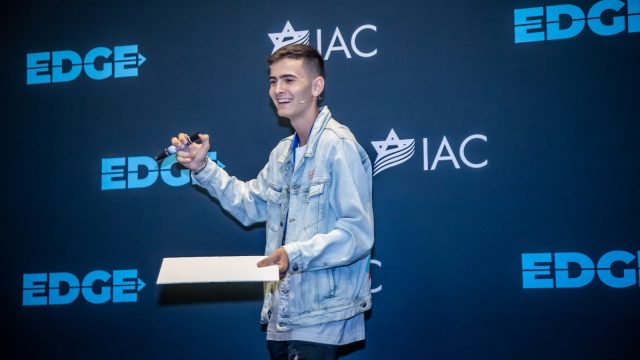
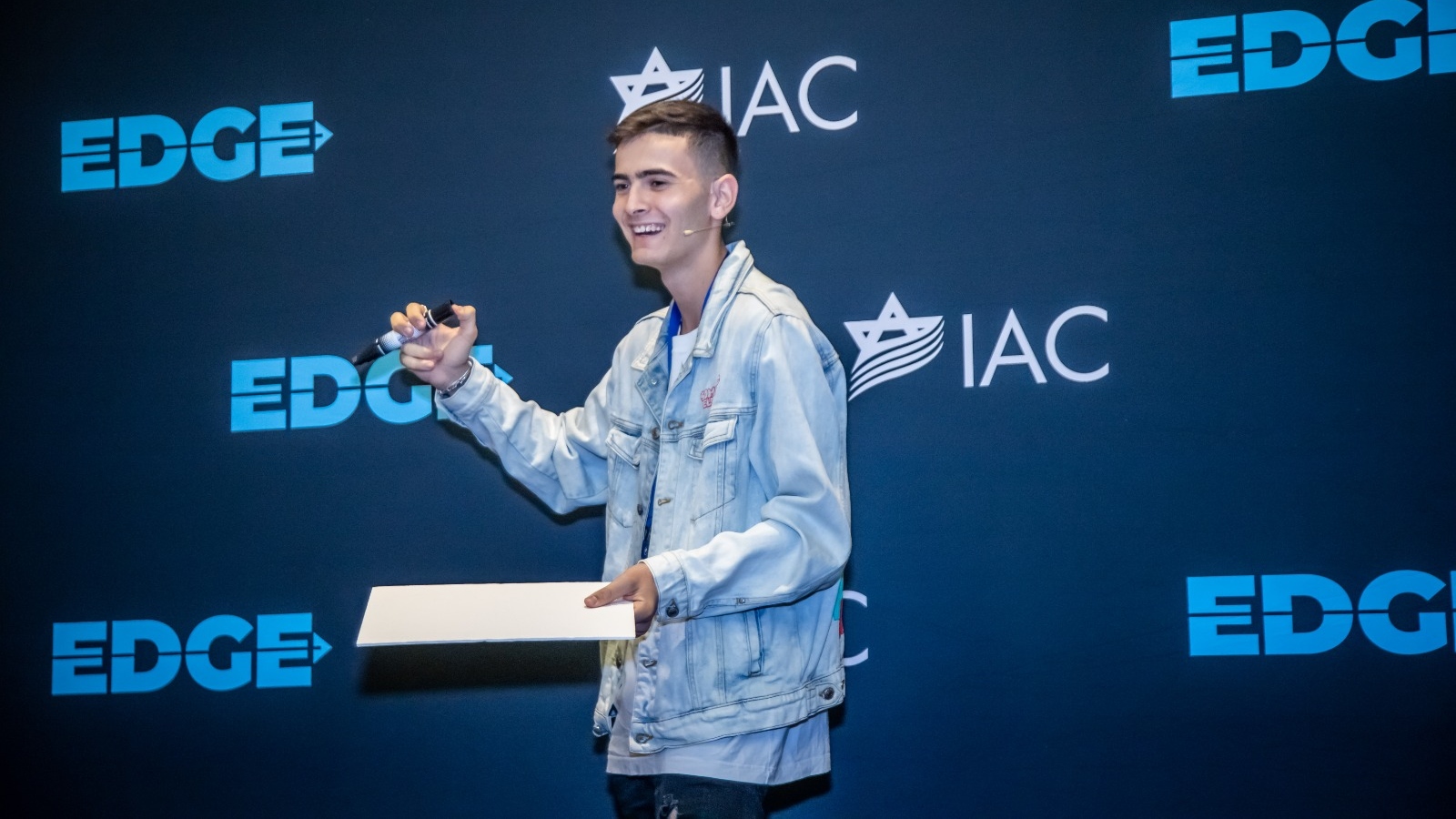
When 17-year-old Nevo Abutbul joins the Israeli army next year, he’s going to have the coolest job ever: he’ll be the military’s very first mentalist, spending his service wowing soldiers with his quick wit, mindreading capabilities and all-around awesomeness.
“I’m the youngest mentalist in Israel and the world,” Nevo tells ISRAEL21c. “I began trying my hand at magic at the age of six, and mentalism by the age of nine.”
It’s less about formal training and more about your own strengths, he says.
“Ever since I can remember, I’ve been playing games like guessing which hand is holding a coin or how many coins I’m holding. I kept on practicing how people think,” he explains.
“What drew me to it and made me curious is people’s reactions and the ways the brain works. I learned about body language, NLP [neuro-linguistic programming]. I slowly but surely began building myself a mentalist toolbox.”

In the few years since, Nevo has performed on TV shows in Israel and abroad, appeared on top stages and entertained VIP crowds. His plans for the next couple of years — aside from donning a uniform — include taking the world by storm.
And his first stop is America.
Unlike Israel, which adores its veteran, homegrown mentalists (hello there, Uri Geller and Lior Suchard), the US isn’t that familiar with the field. Which is perfectly fine with Nevo.
“It’s not popular, and people abroad don’t really know much about it, at least not in America. My goal is to associate mentalism with Nevo. I want to familiarize people with the field and also influence them to follow their own dreams. No matter how old you are, you can always fulfil your dream. That’s a goal that’s really important for me to promote,” he says.
Not like other high school seniors
“I’m a 12th grader, and it’s not easy with all the shows and the TV. I miss a lot of school and it’s not simple. But I’m a good student, I put in an effort in my studies and it’s important to me, so I make sure to catch up,” Nevo says. “I’m living the dream and fulfilling myself every day anew.”
Although he has less time to hang out with friends, “My friends are loving and encouraging, and I’m learning to balance it all with school and a relationship. Those are the kind of things that keep you grounded and help maintain balance.”
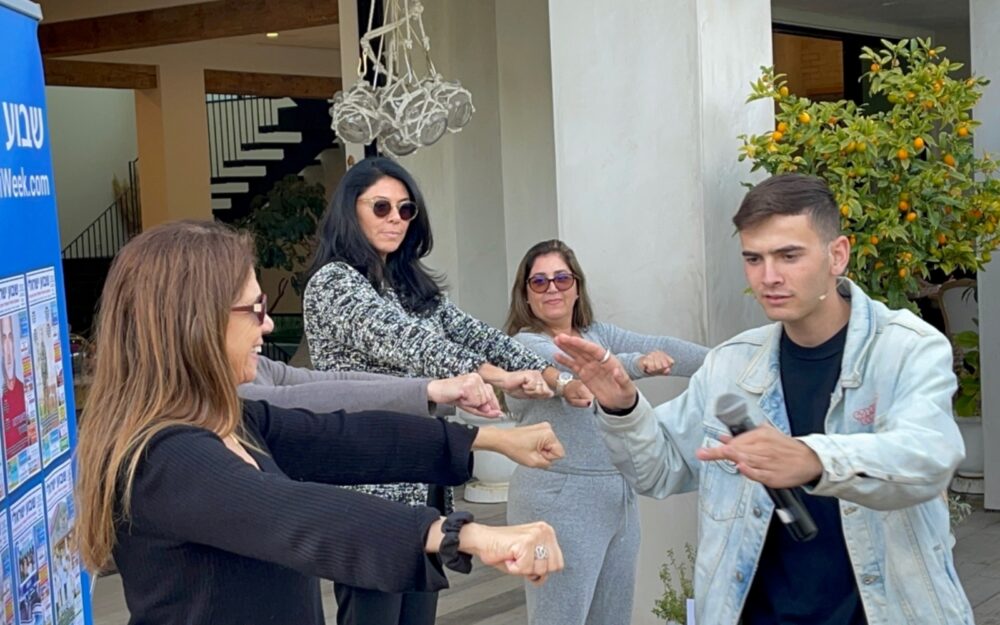
To become a successful mentalist, even at a young age, some basic traits are required, he says.
“As a mentalist, you have to be very, very sharp, very focused, to pay attention to the little details and to think a few steps ahead,” he explains.
“You have to understand why things are happening and influence the way they happen. And, of course, you need charisma and performance. Without it you can’t hold an hour-long show with a concentrated audience.”
Mentalism vs. magic
Many people don’t really know what differentiates mentalism from magic.
“Magic is about utilizing movement – hand movements, deceptive tricks,” Nevo explains.
“Mentalism has more to do with the brain, more with psychology and body language. I deal with the brain, not with quickness and things that fool the eye.”
Still, a lot of people have a misconception that mentalism is all about methods.
“I’m actually in favor of supporting that view, because it makes it entertaining and gives people great pleasure,” says Nevo.
“In Israel, of course, more people try to find out how you do it all, while elsewhere in the world they believe you more.
“But I don’t try to fool people, only to make them happy and surprise them,” he concludes. “I really enjoy doing it; it’s my passion.”
Learn more about Nevo Abutbul here.
Produced in association with ISRAEL21c.
Recommended from our partners
The post Meet The Teenage Mentalist Out To Conquer The World appeared first on Zenger News.
Birmingham Civil Rights National Monument receives grant for field trips for local fourth graders

Chocolate and Valentine’s Day — A match made in heaven?

Giant Sponge Gardens Spotted On Extinct Volcanoes In The Arctic Ocean


Scientists were mystified by how gardens of massive sponges at the bottom of the Arctic Ocean thrive in the cold, dark environment that is otherwise hostile to life.
In the permanently icebound Arctic Ocean, there is little light and thus low productivity of algae plants, which form the basis of the oceanic food chain. German scientists during the voyage of the Polarstern research vessel were astounded to find sponges living atop volcanic seamounts in the Central Arctic Ocean.
As reported in the journal Nature Communications, the Polarstern expedition determined that the sponges appear to subsist on what is left of extinct animals. In the lively Arctic hotspots, despite the little food that reaches the darkness, sponges grow to impressive size in dense populations on the Langseth Ridge: a submerged mountain range. No other such sponge gardens have been found in the high Arctic.

Study co-author Antje Boetius of the Max Planck Institute in Germany said that when her team saw the flourishing sponges, they “did not know what they were feeding on.” Team member and co-author Teresa Morganti, however, identified how the sponges survive in the impoverished environment.
“Our analysis revealed that the sponges have microbial symbionts that are able to use old organic matter. This allows them to feed on the remnants of former, now extinct, inhabitants of the seamounts, such as the tubes of worms composed of protein and chitin and other trapped detritus,” said Morganti.
Geodia sponges dominate the seamounts. The biomass that researchers found is comparable to places with a much higher nutrient input.
“This is a unique ecosystem. We have never seen anything like it before in the high Central Arctic. In the study area, primary productivity in the overlying water provides less than one percent of the sponges’ carbon demand. Thus, this sponge garden may be a transient ecosystem, but it is rich in species, including soft corals,” said Boetius.

While sponges are among the most rudimentary forms of life, they abound in oceans around the world, including the Arctic. Many sponges feature communities of symbiotic microorganisms, including bacteria and algae, which not only provide food but also transfer nutrients and eject waste. The microorganisms also contribute to sponges’ health by producing antibiotics. This symbiotic unity is called a sponge holobiont.
The researchers hypothesized that thousands of years ago, substances seeped from Earth’s crust and supported a vibrant ecosystem and a variety of animals. After the animals died out, their remnants provided a base for the sponges to live on. An analysis of the microbial life on the seamounts supported this hypothesis.

“The microbes have the genes to digest refractory particulate and dissolved organic matter and use it as a carbon and nitrogen source, as well as a number of chemical energy sources available there,” said Ute Hentschel of Germany’s GEOMAR Helmholtz Centre for Ocean Research.
Another spectacular finding is that the sponges actually engineer their own ecosystem with their interlocking spicules — tiny structural elements made of silica or calcium carbonate, which form their skeletons. The spicules in turn form a mat on which the sponges can crawl while aiding organic particles to settle out. The symbiosis of sponges and microorganisms then consumes this detritus in their own food trap.
“With sea-ice cover rapidly declining and the ocean environment changing, a better knowledge of hotspot ecosystems is essential for protecting and managing the unique diversity of these Arctic seas under pressure,” said Boetius.
Edited by Siân Speakman and Kristen Butler
Recommended from our partners
The post Giant Sponge Gardens Spotted On Extinct Volcanoes In The Arctic Ocean appeared first on Zenger News.
