Home Blog Page 499

Futuristic Tech Brings Healing Relaxation To Radiotherapy
0

Before cancer radiation therapy even begins, the first day of scanning and imaging often brings a rush of stress and anxiety, especially for children. The Shaare Zedek Cancer Center, set to open in the summer, hopes to change the experience of cancer treatment for patients, families and caregivers. (Courtesy of the Ruth and Meir Rosental Brain Imaging Center/Reichman University Innovation Center)


By Abigail Klein Leichman

The first day of cancer radiation therapy begins inside a simulator machine. The patient lies immobilized for up to 45 minutes while lasers and imaging scans pinpoint areas for treatment.


From his office next to the simulator, Israeli radiation oncologist Dr. Ben Corn senses the anxiety attacks brewing in the waiting area. And he understands.

He understands that patients are fearful of entering the simulator. He understands that people associate radiation with causing cancer (think Hiroshima and Chernobyl) rather than treating it.

Corn knows the radiation oncology unit can cause stress and anxiety for patients, their families and even the medical workers. And he’s determined to tackle this problem.

“I’m extremely interested in the emotional and psychological dimensions of cancer, both in terms of the consequences for patients and their caregivers and in terms of enhancing the potential of therapies I have available as an oncologist,” he tells ISRAEL21c.

That’s why Corn is partnering with trailblazing neuroscientist Amir Amedi, head of the Baruch Ivcher Institute for Brain, Cognition & Technology at Reichman University.

The place nobody wants to be

Amedi and his lab are inventing multisensory devices to infuse a feeling of emotional wellbeing into the waiting, treatment and staff areas of the Radiotherapy Center that Corn will head at Jerusalem’s Shaare Zedek Medical Center.

Prof. Amir Amedi, founder of the Baruch Ivcher Institute for Brain, Cognition & Technology at Reichman University’s Innovation Center. (Gilad Kavalerchik)

The lab’s new discoveries on the link between body and mind, and how that’s mapped in the brain, form the scientific basis for relaxation-inducing inventions such as:

  • MRI-safe, whimsical-looking 3D glasses that immerse the patient in an entertaining movie or relaxing virtual environment.
  • Chair and treatment tables embedded with tactile and auditory sensations that may relieve pain and focus attention away from the stressful environment.
  • Breathing sensors with relaxing and soothing visual, sound and tactile feedback elements to encourage deeper, slower breaths that foster feelings of control and calm — and even enhance the clinical efficacy of imaging and radiotherapy.
  • Relaxing auditory experiences created through in-ear recordings that aggregate how different people hear the same sounds coming from different parts of the room.

“There are patients who cannot go through the simulation because they are so afraid, and I think this is a way to take the edge off that,” says Corn, noting that the procedure may never be pleasant but at least could be tolerable.
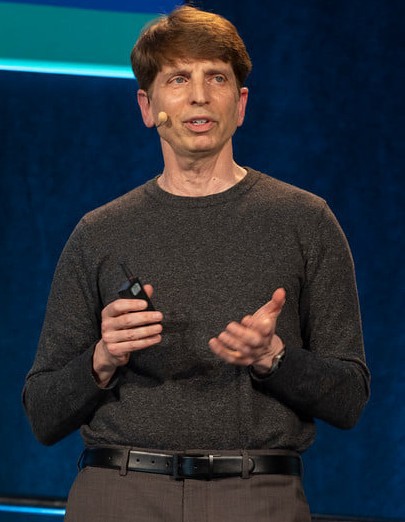
Dr. Ben Corn. (Courtesy of Life’s Door)

Although music or videos inside the simulator can lower stress and anxiety, especially for children, Corn was seeking much more than that.

When he read an article about Amedi’s groundbreaking multisensory technologies, he knew he’d found it.

“I loved the disregard for boundaries that I saw in his work,” says Corn.

“Imagine instead of just relying on sight alone or music alone — or tactile sensations, which nobody was even considering — we can begin to combine the three,” says Corn.

“I contacted Amir and said, ‘This has to be imported into the place nobody wants to be, which is cancer medicine.’ And that appealed to him. So we’ve been designing all sorts of cool ways to do that.”

The Shaare Zedek Cancer Center, set to open in the summer, will be the testing ground.

“Medicine without data is voodoo,” says Corn. “I want to do things that not only sound nice but are proven, and part of the fun is the journey of proving these things in the context of clinical trials.”

 Training wheels

“I feel everything we’ve done is preparing us for this project,” Amedi tells ISRAEL21c.

“During the pandemic we started to work on reprogramming senses and combining them with sensory signals from the body to reduce stress and anxiety. I built a sophisticated multisensory room for this.”
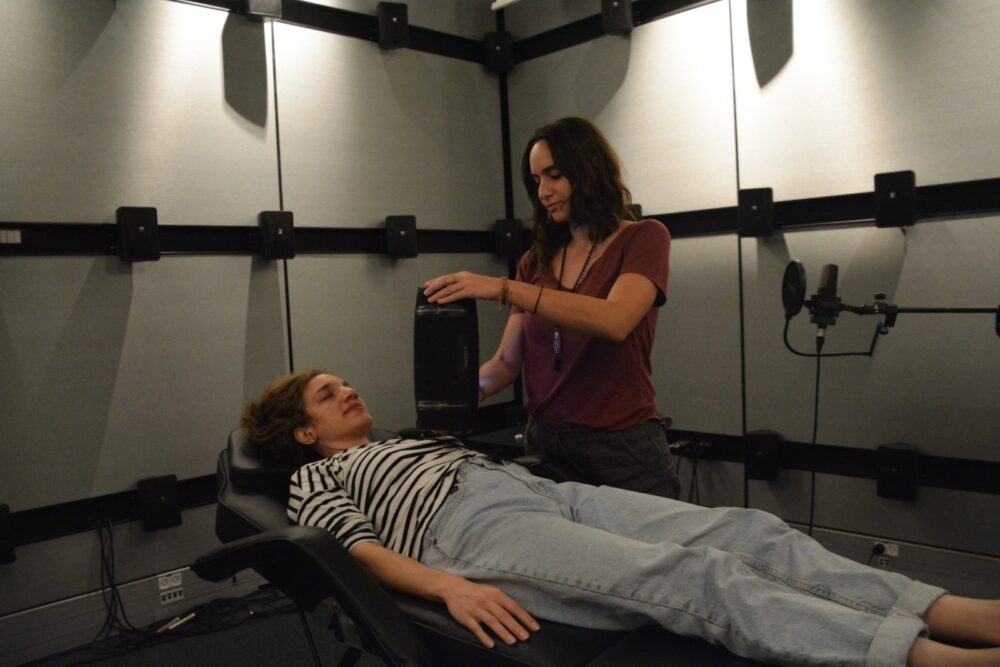
Members of Amir Amedi’s lab in the multisensory room of the Baruch Ivcher Institute for Brain, Cognition & Technology. (Courtesy of Reichman University Innovation Center)

His lab created technologically upgraded versions of mindfulness meditation, body scan meditation and attention training technique (ATT).

“If you do one of these techniques for a few minutes every day it works well, but if people are already highly stressed it just makes their symptoms worse,” Amedi explains. “They need ‘training wheels’ and that is what we try to provide.”

Amber Maimon, Amedi’s academic lab manager, has been working on these technologies for her postdoc studies on the bidirectional link between mental and physical health.

“We want to create a multisensory environment where the minute you walk in you are encompassed in relaxation,” Maimon tells ISRAEL21c.

Pediatric patients are the primary focus of the project. “These technologies can capture their attention and take them out of the ‘dark bubble’ of treatment,” she says.

“Everything we are doing has definitely never been done before. Some of the experiences, like body scan meditation and ATT, have been tested and validated but our implementation and technology are totally novel. Prof. Amedi’s neuroscience research itself is novel.”

Hope heals

Amedi, in turn, was intrigued by Corn’s research into “hope theory” — developed by University of Kansas Prof. Rick Snyder in 1989 — as a way to improve cancer patients’ recovery rates and longevity.

Hope is not the same as optimism or wishful thinking, Corn explains. Rather, it’s a perception of what is possible.

“Hope is a very active concept, and nobody needs it more than the cancer patient and the people surrounding that patient,” says Corn.

“We have systematically pushed the concept of hopefulness into the clinical arena,” he says.

Life’s Door, an Israeli organization he founded with his wife, family therapist Dvora Corn, teaches health professionals and patients strategies for finding hope, meaning and wellbeing throughout illness.

“Three conditions allow hope to thrive: selecting a goal that is both meaningful and plausible; a pathway to get to that goal, recognizing there will be obstacles to circumnavigate on the way; and the agency — motivation — to set out on that pathway,” Corn explains.

“In the world of cancer medicine, somebody might have a goal of curing their cancer. The pathway might be radiation treatment. But the obstacle is the anxiety of being exposed to radiation. We might find a workaround through Amir’s technology, and if we can temper the anxiety that will, in turn, unleash the third component, agency,” he says.

Amedi saw the potential for promoting hope by stimulating the senses, especially from the perspective of kids facing that scary simulator.

“We are doing imaging studies to understand why the body is so susceptible to feeling anxiety,” says Amedi. “My philosophy is to look at brain organization and plasticity to inspire new technologies, but it goes in the other direction as well.”

He and Corn got a research grant from Israeli VC firm Joy Ventures, as well as support from Siemens, one of the manufacturers of radiotherapy simulators.

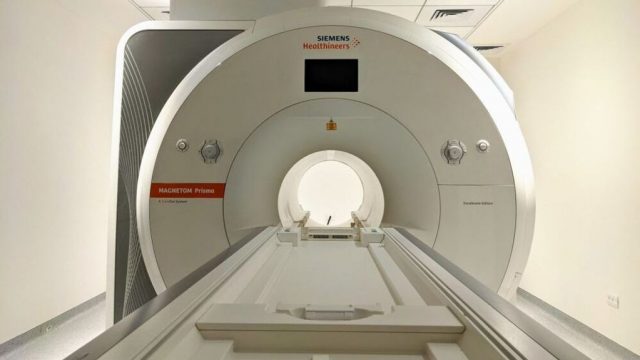
The Helmsley Foundation is funding the purchase of the latest simulator model for the Radiotherapy Cancer Center. While older models used CT technology, the next-gen model uses MRI technology.

“You can do all sorts of clever things with it, but you have the problem of MR-related claustrophobia,” says Corn.

“When you add the issue of claustrophobia to the stigma of radiation, that’s quite a challenge. I think with Amir we can lick both problems.”

The new Radiotherapy Center at Jerusalem’s Shaare Zedek Medical Center shown in this architectural rendering is designed as an abstract butterfly suggesting metamorphosis. (Courtesy of Shaare Zedek Medical Center)

Environment of hope

The multisensory technologies would be used not only in the simulator, “which is the most stressful place for the cancer patient,” but also in treatment rooms.

“Somebody who is very nervous about getting radiotherapy may get jittery. We have immobilization devices to make sure you don’t move but even small movements can be a problem because we always want to target the tumor and not the surrounding tissue. If you move even a few millimeters that can throw it off,” says Corn.

“By finding out who you are and having you tell me what makes you feel good — like walking on a beach, or smelling the forest after it rains, or baking bread — we can virtually create that desired environment for you as part of your prescription,” he explains.

“I hypothesize that it will make patients feel less stressed, less jittery and more cooperative. They will feel empowered because they are helping us help them and they will reclaim a sense of control.”

Light infuses the future Radiotherapy Center at Shaare Zedek Medical Center in Jerusalem in this architectural rendering. (Courtesy of Shaare Zedek Medical Center)

Corn and Amedi want this “environment of hope” to extend to staff members.

“There is a lot of burnout and even suicidal ideation for oncology healthcare professionals. Amir’s idea is to help them to contend with the stresses and actively reflect on hope and how to get there with the help of these technologies,” says Corn.

“No one is doing that, not even close. We want to document our results in the medical literature for the critique of colleagues because we think it can be such a game-changer.”

Two research centers in the United Arab Emirates have expressed interest in developing a similar project, and Corn and Amedi have applied for a U.S. government grant to facilitate that.

“If we can use Amir’s technology to optimize cancer medicine,” Corn says, “it will expand our toolbox with things they don’t teach you in medical school.”

Produced in association with ISRAEL21c.

Recommended from our partners


The post Futuristic Tech Brings Healing Relaxation To Radiotherapy appeared first on Zenger News.
Pass The Tissues: First Evidence Of Dinosaur Respiratory Infection 

0

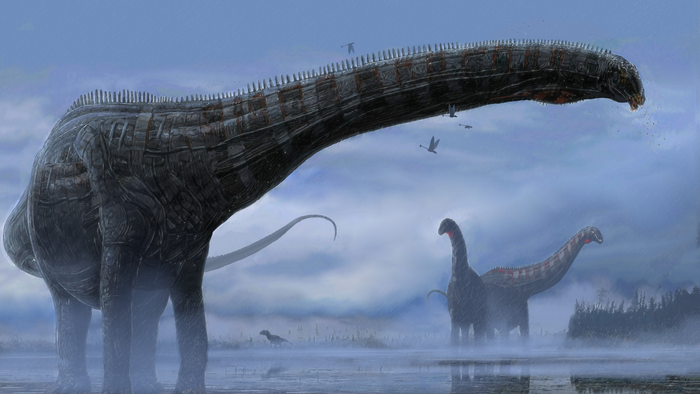
Artist's impression of Dolly, a diplodocid herbivorous dinosaur that lived 150 million years ago during the late Jurassic period. Scientists suggest she may have been infected with aspergillosis, which also affects modern birds. The pulmonary disease infecting this animal would not have been externally evident, but the probable pneumonia-like outward symptoms would have included coughing, labored breathing, nasal discharge, fever and weight loss. (Woodruff et al., 2022/Corbin Rainbolt)


By Martin M Barillas

Fossils have provided the first evidence of a respiratory infection in dinosaurs that lived 150 million years ago.


In a study published in Scientific Reports, scientists examined the fossilized neck bones of a large, plant-eating diplodocid dinosaur resembling a brontosaurus that lived during the Late Jurassic period, about 163 to 145 million years ago.

The bones showed abnormal bony protrusions of an extraordinary shape and texture. Known as specimen MOR 709 and dubbed “Dolly,” the diplodocus dinosaur lived in what is now the U.S. state of Montana.

The scientists found that the protrusions were located in places where they would have been attached to air-filled sacs. These sacs were connected to Dolly’s lungs and formed part of her complex respiratory system. When researchers performed a computerized tomography (CT) scan of the fossils, they found that the protrusions had formed in response to an infection.

Abnormal bony growth in Dolly, a diplodocid dinosaur that lived 150 million years ago. (A) is a schematic map of the neck of the diplodocus, with the abnormal bone growth denoted in red. (B) shows the neck vertebrae of the animal with a red box highlighting the abnormal structure. (C) shows a close-up of the infected bone, while the interpretative drawing in (D) shows the abnormal structure in red. (Woodruff et al., 2022, Scientific Reports)

“Given the likely symptoms this animal suffered from, holding these infected bones in your hands, you can’t help but feel sorry for Dolly,” said lead author Cary Woodruff of the Great Plains Dinosaur Museum.

“We’ve all experienced these same symptoms — coughing, trouble breathing, a fever, etc. — and here’s a 150-million-year-old dinosaur that likely felt as miserable as we all do when we’re sick.”

The research team suspects that a respiratory infection caused by a fungus had spread into the dinosaur’s neck vertebrae through the air sacs, causing the abnormal bone growth. The infection, they believe, may have been similar to aspergillosis, a common fungal infection that causes respiratory illness in birds and reptiles today. Aspergillosis leads to bone infections.

The elaborate and circuitous pulmonary system of a sauropod, showing the hypothetical route of the infection in Dolly, or specimen MOR 7029. The profile of a man standing 5 feet 6 inches tall is also presented for scale. (Woodruff et al., 2022, Scientific Reports/Francisco Bruñén Alfaro)

“The apparent first scientific account (though undiagnosed) of aspergillosis was by Richard Owen in 1832 when dissecting a flamingo. Often causing yellowish-white to greyish-yellow non-osseous lesions throughout the respiratory system, similar to chlamydiosis, infections in the eyes, brain, skin, joints, and organs are also reported. … Aspergillus is an incredibly common fungus, and particularly thrives in warm, humid, ‘swampy’ environments,” the study reported.

With an aspergillosis infection, Dolly may have suffered symptoms such as difficulty breathing, a cough, a fever and weight loss. Left untreated, aspergillosis can kill birds. Resembling flu or pneumonia, the infection may have killed Dolly, according to the study authors.

“This fossil infection in Dolly not only helps us trace the evolutionary history of respiratory-related diseases back in time but gives us a better understanding of what kinds of diseases dinosaurs were susceptible to,” Woodruff said.

Edited by Siân Speakman and Kristen Butler

Recommended from our partners


The post Pass The Tissues: First Evidence Of Dinosaur Respiratory Infection  appeared first on Zenger News.

Southern Research, Brasfield & Gorrie seek minority vendors for $84M biotech center

0
Potential opportunities for minority vendors on the $84 million project range from construction work to professional services, technology, furnishings and design. (Brasfield & Gorrie)

dcwins.com

How About Self-Love on Valentine’s Day?

0

Keisa Sharpe-Jefferson

Special to The Birmingham Times

University of Alabama to remove KKK leader’s name from hall

0
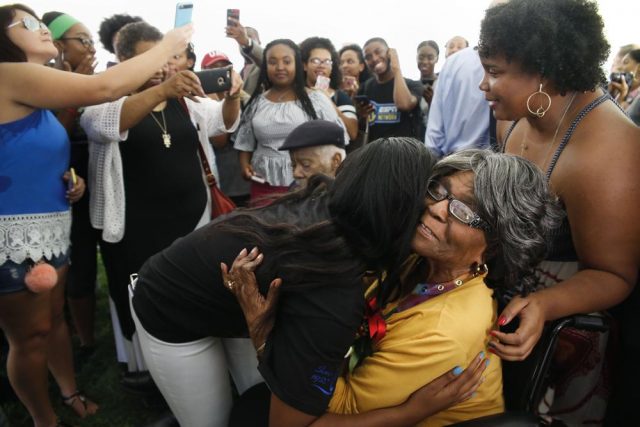
Autherine Lucy Foster, the first black student admitted to an all-white college in Alabama, gets a hug from University of Alabama senior Alecea Watkins, as The University of Alabama unveiled a historic marker honoring Friday, Sept. 15, 2017, in Tuscaloosa, Ala. (Gary Cosby Jr./The Tuscaloosa News via AP)

By Jay Reeves

Associated Press

Would Your Building Survive An Extreme Weather Event?

0

GeoX AI-assisted mapping provides granular details about properties for insurance, management and planning purposes. Photo courtesy of GeoX


By Abigail Klein Leichman

GeoX applies patented artificial intelligence analysis to create 3D maps from aerial photographs of commercial and residential properties taken by satellite, aircraft and drone.


The GeoX worldwide database covers 340 million properties, and its US database covers 160 million properties.

Clients on five continents are using GeoX’s service for purposes ranging from insurance assessment to real-estate management to city planning.

The US Federal Management Emergency Agency (FEMA) uses GeoX maps to evaluate damage after disasters.

The World Bank is using it to protect residents of Ghana in West Africa by identifying flood-prone housing. They can then take measures such as building dams and/or sending real-time alerts.

New York-based global analytics giant EXL is integrating GeoX data into underwriting services provided to the largest insurance companies in the United States, Europe and Australia to help them assess damage and detect attempts at fraud

GeoX AI-assisted mapping provides granular details about properties for insurance, management and planning purposes.

Australian government company Geoscape hired GeoX to map and analyze 18 million single-family homes for a variety of planning purposes, such as infrastructure supporting energy distribution and cellular networks.

Insurance companies use GeoX’s maps to structure differential premiums reflecting each property’s exact degree of risk – or suggest improvements to mitigate the risk and lower the premium.“We provide data and risk analysis on each property to help prevent disasters, and evidence to understand the reason for damage afterward,” said Izik Lavy, cofounder and chief executive officer of GeoX.

Automatic technology saves companies the expense of sending assessors to each home, a cost that is passed on to customers.

Because prevention is always preferable to dealing with damage, the information from GeoX points to specific actions to safeguard properties.

“If you live in an area of California vulnerable to wildfires, for example, you can cut away the brush and buy inexpensive sprays to protect your trees from catching fire,” said Lavy.

“If your roof is in bad condition, the insurance company may ask you to fix it before insuring you. It may be challenging for you to do that, but it’s to your advantage to make your property safer. Of course, by protecting your property you also protect your life.”

The GeoX system also allows insurers and real-estate managers to monitor buildings for signs of deterioration. It can even be used by real-estate developers to make wiser portfolio choices.

Risks are increasing

Lavy, a veteran of an IDF intelligence unit, founded GeoX in 2018 with Eli Lavie (CTO) and Guy Attar (VP business development).

They had noted the increased demand for risk assessments due to increasing extreme weather events including devastating hurricanes in America, unusual floods in Europe and China, and wildfires across the globe.

These disasters cost insurance companies tens of billions of dollars in claims.

“I saw that insurance carriers, in particular, suffered from lack of information, and I wanted to solve this pain point,” said Lavy.

“This also helps all of us, the end customers, because we will receive better service and be able to protect our property and understand our risks wherever we are.”

“Everyone has the same lack of information no matter where you are based.”

Using aerial imagery obtained by purchase or partnership, GeoX can identify every feature of a property including the number of stories, pitch of the roof, square footage and even the Jacuzzi in the backyard.

“We extract all the information from aerial imagery by leveraging AI and machine learning,” said Lavy. “This answers the need for stable information that will be similar in every place.”

GeoX employs 25 people, 15 of them at a development center in Ramat Gan, and the others on the two US coasts. Investors include the Shor-Tech Stock Exchange Partnership and the ICM Fund.

Produced in association with ISRAEL21c.

Recommended from our partners


The post Would Your Building Survive An Extreme Weather Event? appeared first on Zenger News.
Israel Using Sewage As Early-Warning System For Disease Outbreaks

0

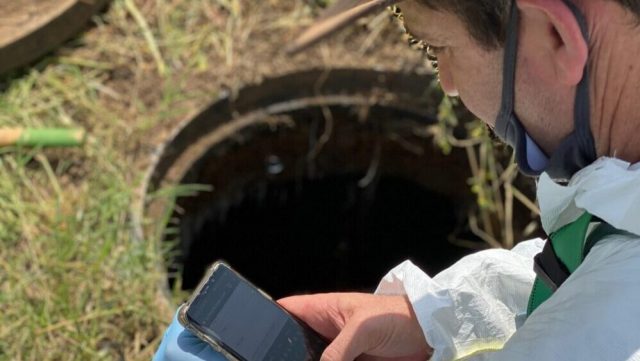
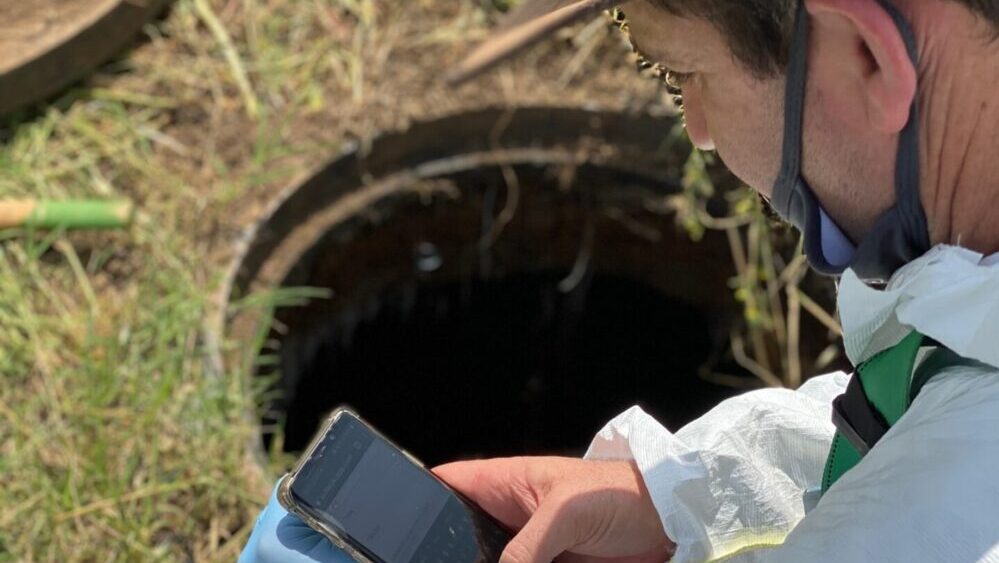
Kando technology checks wastewater for environmental and public-health purposes. Photo courtesy of Kando


By Abigail Klein Leichman

The Israeli city of Ashkelon was able to alert residents of a specific neighborhood to a Covid-19 outbreak, without testing a single person, a week before any symptoms of illness appeared.


This wizardry was made possible by a revolutionary technology that detects viruses in sewage.

“Monitoring our sewers is like taking the blood test of a city,” said Ari Goldfarb, CEO of Kando.

“The only way to get a clear picture of how many people are sick, and where, in a pandemic like this is using data from wastewater. When a person is infected, even if they don’t know it yet, their body sheds virus particles. Our system allows us to see an outbreak seven to 10 days before it happens.”

Even Goldfarb is surprised at how far in advance this method can see what’s coming.

“For example, at the beginning of this wave, we saw that the Omicron was spreading in the community before clinical cases showed it. This gave decision-makers more time to take measures and prepare for the upcoming wave,” he said.

In one municipality that was rated “green” by the Ministry of Health because of the low incidence of Covid cases, Kando’s wastewater analysis “showed that the signal is changing from negative to positive and increasing from one analysis to the next,” said Goldfarb.

Armed with this intel, the ministry quickly launched a testing campaign there in order to isolate infected individuals.

The future of pandemic logistics

The Health Ministry now has begun installing Kando’s technology in all Israeli municipalities of more than 20,000 people. It’s the first such project worldwide.

“A lot of countries are sampling sewage manually. Israel is the first in the world doing this with algorithms, machine learning and AI technology, tracing the pandemic nationwide and presenting decision-makers with relevant insights and warnings on a dashboard,” said Goldfarb.

He says that several countries are starting to pilot Kando’s technology on a small scale.

“I think intelligence-gathering is the future of handling pandemics, and wastewater is a critical source of intelligence concerning virus load,” said Goldfarb.

What does the data tell us about the next few weeks?

“Right now we see an upward trend almost everywhere,” he said.

“We hope to see soon a change to a downward trend; this will tell us the morbidity rate in the population is decreasing.”

Regarding whether infections today are caused only by the Omicron variant as opposed to the earlier Delta variant, Goldfarb is not at liberty to say because this information is proprietary to the Health Ministry. The ministry does state, however, that Omicron is “rapidly pushing out the Delta variant.”

Not just coronavirus

Kando’s underground IoT unit includes an autosampler, water quality sensors, flow sensors and a controller. Twice a week, the unit captures a sample using AI and sends it for analysis at Ben-Gurion University, which helped develop the technology.

If virus particles are detected in a sample, additional analysis is done at the national virology lab at Sheba Medical Center to identify the variant and other critical data.

Within about 24 hours, local authorities know of an impending outbreak pinpointed by neighborhood, allowing them to implement early testing guidelines and alerting them to new variants.

SARS-CoV-2 is not the only pathogen that Kando has its eye on.

“Israel is monitoring the poliovirus in its wastewater for several years,” said Goldfarb.

“Now we are building the infrastructure for wastewater monitoring in the entire country. This will give us the ability to monitor in the future more pathogens and illnesses such as antibiotic-resistant bacteria and even consumption of drugs and other substances.”

Detecting viruses and pollution

Goldfarb cofounded Kando in 2012 with Zohar Sheinin and Gili Elkin.

The first use case of the underground sensor-based system is to monitor municipal wastewater for chemical and metal pollutants and alert stakeholders about these potential environmental hazards.

“We are the eyes and ears of wastewater quality underground. The data we collect has been helping to improve the quality of water in Israel for 10 years, and all over Italy as well for the last six years,” he said.

Kando also work in the UK, Germany, France, Belgium, and US states including Texas and Ohio.

“Our dashboard allows [clients] to see the whole country and pinpoint problems on a map. Every time there’s a change in wastewater quality, you can see it and who’s responsible for it.”

When Covid reached Israel, Kando worked with the Health Ministry and scientists from BGU and the Technion-Israel Institute of Technology to create a public health solution to manage the pandemic proactively through wastewater data.

When that data begins to show a decline in SARS-CoV-2 virus in the water, Kando will have a happier role to play.

“We can say when it’s safe to go out to the office and school. We can help people feel safe to move forward,” said Goldfarb.

Produced in association with ISRAEL21c.

Recommended from our partners


The post Israel Using Sewage As Early-Warning System For Disease Outbreaks appeared first on Zenger News.
Getting Ready To Land On The Moon, Again

0

Beresheet's launch on February 21, 2019 in Florida aboard a SpaceX rocket. Photo courtesy of SpaceIL


By Diana Bletter

— I expected the office of SpaceIL— the company that created Beresheet, the world’s first private spacecraft to attempt a Moon landing in 2019 — to be in an industrial zone filled with highly classified, space-age robotics.


Instead, it’s in an ordinary office building with companies geared to earthly pursuits like home decorating and teeth whitening. The only sign that this is a far-reaching project is in the office’s modest conference room, where there is the replica of the four-legged Beresheet, a bit smaller than the original.

Only three other countries have landed spacecraft on the Moon: Russia, the United States and China. It boggled my mind that Kfir Damari, a soft-spoken 39-year-old with reddish hair, a thick beard, and glasses befitting Clark Kent, along with a small team of engineers and scientists, tried to make Israel the fourth nation to land successfully on the moon.

“We are the fourth to land on the moon,” said Damari. “We might have had a crash landing, but we got to the Moon. A lot of people don’t realize this. We got there.”

To the Moon with the UAE

In October, the United Arab Emirates signed a cooperation agreement with Israel to work on space exploration and Beresheet 2. The goal is to launch sometime in 2024 or 2025.

The new spacecraft, to be built on a budget of $100 million, will drop one lander on one side of the Moon and the other lander on the dark side of the Moon, where only China has ventured. Then, after dropping off the landers, the original ship will orbit the Moon for two years.

During its orbit, Damari said, it will serve as the first educational platform to engage children around the world. Beresheet 1 had engaged two million children, half of them within Israel, in the space project. He hopes that the new craft will inspire adults and children in the United Arab Emirates, Europe and Africa to create bonds with Israeli peers.

“For Israel to lead the mission and for children to do their first steps of engineering and space exploration through Israel will be amazing for Israel’s image,” he said. “I believe that when children from other countries will work with Israeli children on projects it will also shape their perspective.”

Damari added that the Beresheet2 project is not only aimed at children interested in STEM (science, technology, engineering and math).

“Can you imagine the kinds of art projects that can be done with a platform orbiting the Moon?” said Damari . He added that the Israeli Ministry of Education is already planning curriculum ideas for students from kindergarten through high school.

“For me, this is making something impactful for Israel,” he said. “It also shows how all of us can reach for something impossible and make it possible.”

Passengers in the space capsule

With a budget of $100 million, Beresheet 1 was the thriftiest spacecraft to enter lunar orbit. It was not much taller than a kitchen counter, 5 feet (1 meter) by 7.5 feet (2.3 meters), so it didn’t have a lot of room for fuel.

A week later, it began its descent toward a volcanic field called the Sea of Serenity, close to where the American Apollo 17 astronauts landed in 1972. Only 13 kilometers from the Moon, it began slowing down, preparing to land. Although hardware malfunctions prevented Beresheet from making a soft landing, the crashed spacecraft remains on the Moon.

Along with the lander, which is still on the Moon’s surface, there are souvenirs from Earth that traveled with it, including thousands of human faces in photographs taken next to the replica of the Beresheet that stood in the Duty-Free Shop at Ben Gurion International Airport for about five years.

“Me and my family and all my Facebook friends are on the Moon,” said Damari. “The goal was for them to be passengers in the space capsule, and digitally they were.”

The photos are preserved in a few magnetic discs along with optic disks that “don’t need a reader, only a microscope.” That’s assuming that whoever finds them will have the equipment and know-how to look at them.

“I can’t say if there are other civilizations out there in the universe,” said Damari. “If there are, it will be great if they come and see everything we left on Beresheet, including 15,000 books in 37 languages, all of Wikipedia, drawing and blessings of kids.”

“I can’t promise that aliens will read all of it but I’m certain that our kids and grandkids will have the opportunity,” he said.

Onboard was also a miniaturized copy of the Hebrew Bible. In fact, the first word of the Bible is beresheet, meaning “genesis” or “in the beginning.

The name for the spacecraft was chosen through a vote on Facebook. “I don’t know who suggested it but the name connects us to the past and to the future. It was Israel’s first spacecraft but not the last,” said Damari

SpaceIL wanted people to feel connected with the mission, so Beresheet was the first spacecraft to take a selfie. It showed the Moon against the logo of Beresheet, “Small nation, big dreams.”

Since the start of SpaceIL, volunteers have served as its ambassadors, traveling around the country to speak with students and adults about the space mission. There are still about 130 volunteers giving lectures in Israel and abroad.

“The volunteers go to Arab, Ethiopian, religious communities,” he said. “They want to talk to everyone about space.”

He related that one volunteer spoke at a school in Herzliya seven years ago. Recently, SpaceIL received a thank-you letter from a boy who said he had known nothing about space. The volunteer’s talk inspired him to build a nanosatellite.

“This is a new space age with new technology,” said Damari.“People can now build small, cheap satellites such as Nanosats and Cubesats.” Some of SpaceIL’s volunteers have even changed careers to go into space research.

“We are connecting as many people as possible to space,” said Damari “I look forward to having girls from the United Arab Emirates doing space projects with girls from Israel.”

When SpaceIL began in 2010, studies showed that the number of STEM majors in Israel was decreasing in proportion to the population. Since Beresheet, it has increased. “We hope to keep increasing the numbers of STEM majors from all sectors,” said Damari..

However, he doesn’t push his interests on his two children — Omer, eight, and Maayan, five. They traveled with him and his wife, Dotan, to the 2019 launch at Cape Canaveral, “but I want them to find their own dreams.”

Dotan, an occupational therapist, works with children on the autism spectrum. “She’s changing the world one person at a time,” said Damari.After high school graduation in 2000, Damari was accepted into the Israel Defense Forces’ elite intelligence unit 8200.

“I became an officer, then studied physics and space engineering at Ben-Gurion University,” he said. “In 2010, when I was teaching, Yariv Bash, an acquaintance, posed a question on Facebook. Yariv asked, ‘Who wants to go to the moon?’” said Damari..

Bash, an engineer, was inspired by the Google Lunar XPrize, an international competition offering $20 million to anyone who could land a probe on the moon.

“I asked Yariv, ‘Are you serious?’ and he said he was.” Yonatan Winetraub, also an engineer, Bash and Damari met at a bar in Holon, a small city south of Tel Aviv.

What happens when three guys dreaming of going to the moon, walk into a bar?

Their first idea was to launch a small bottle into space. When they realized they needed more equipment, and more money, they raised funds and joined forces with Israel Aerospace Industries, which eventually built the craft.

Although the $20 million Lunar XPrize was never awarded, SpaceIL received its $1 million Moonshot Award.

An underfunded startup

Damari said that compared to other countries’ space programs, SpaceIL is relatively small, underfunded, and operates more like a startup than a national space initiative.

About 40 people worked on the first mission. There are currently 20 employees. SpaceIL has raised $70 million, mostly from three main donors: the Patrick and Lina Drahi Foundation, the Moshal Space Foundation and philanthropist Morris Kahn, who announced after Beresheet 1’s crash landing, “We will complete the mission.”

SpaceIL is now raising additional funding for its next mission, along with the money needed for the craft that will orbit the moon for at least two years. Damari hopes that international partners will pitch in.

“We are not yet sure where we’ll launch from, but we will be given a window of six months, so we need to be ready,” said Damari.

Produced in association with ISRAEL21c.

Recommended from our partners


The post Getting Ready To Land On The Moon, Again appeared first on Zenger News.

Seagrass Nursery To Serve Starving Manatees In Florida

0

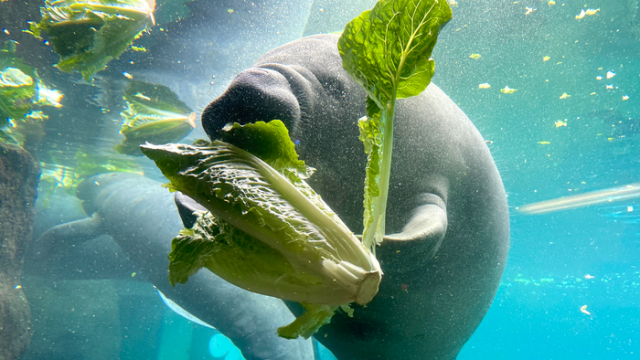
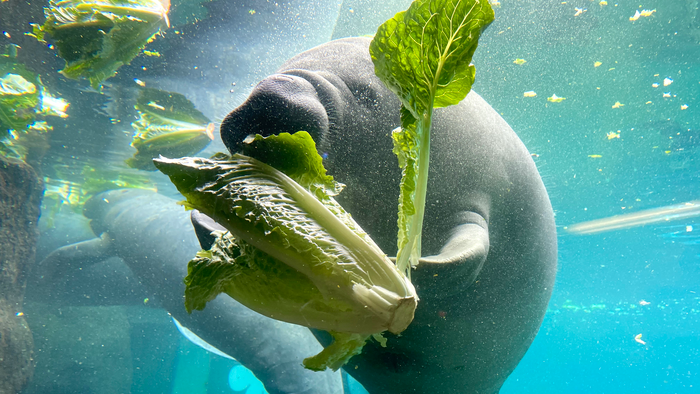
Manatees are given romaine lettuce to eat when algae is scarce in the winter. (Florida Atlantic University/Getty images)


By Martin M Barillas

Scientists are trying to understand why thousands of acres of seagrass have been lost after more than 1,000 manatees starved to death in 2021. In a study appearing in the journal Frontiers in Marine Science, they identified the culprit as phytoplankton blooms.


In 2021, a die-off of manatees (Trichechus manatus) was blamed on the scarcity of seagrass in Florida’s Indian River Lagoon, which is an estuary extending some 156 miles along the Gulf of Mexico shore. Seagrass is essential for the lumbering marine mammals’ diet. They eat at least 100 pounds of it every day.

Turtle grass (Thalassia testudinum), shoal grass (Halodule wrightii) and manatee grass (Syringodium filiforme) are among the seven species found on Florida’s shores. Seagrass is the only underwater flowering plant. It clarifies seawater, stabilizes sea bottoms and provides food and a habitat for numerous species.

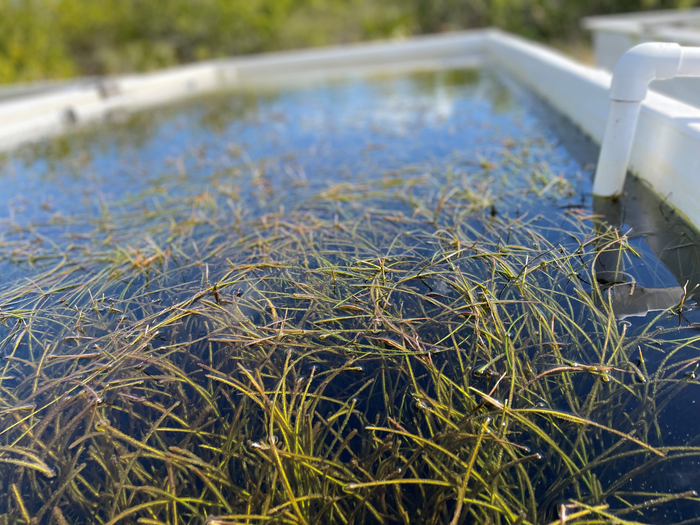
A close-up of seagrass being grown as part of the nursery technology project for manatees at Florida Atlantic University, supported by Florida Power & Light Company. (Florida Atlantic University)

Study co-author Dennis Hanisak of Florida Atlantic University’s Harbor Branch Oceanographic Institute and researchers from the St. Johns River Water Management District examined seagrasses in the Indian River Lagoon to estimate their range.

They used large-scale maps that have documented the location of seagrass canopies since the 1940s in addition to surveys of fixed transects or paths that estimated changes in depths and the percentage of seagrass cover since 1994.

The researchers examined how the range of seagrass canopies or meadows in the Indian River Lagoon has responded to the availability of light, temperature and salinity. They found that between 1943 and 1994, about 7,400 acres of seagrass were lost. Between 2011 and 2019, approximately 58 percent of seagrasses were lost; their offshore margins moved toward the shore and became shallower.

The scientists found that this was because light was reduced during blooms of phytoplankton. These microscopic plants are individually too small to see with the naked eye. However, millions can bond together in huge swaths on the sea’s surface, darkening the water below and causing the loss of seagrasses.

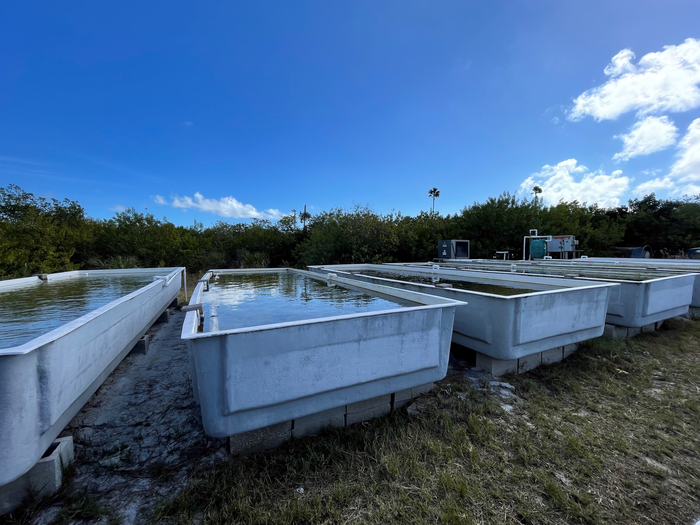
Researchers are experimenting with growing seagrass in large tanks and then transplanting it into Florida’s Indian River Lagoon where the seagrass canopy has steadily diminished since the 1940s. Seagrass is a staple in the diet of manatees, of which 1,000 starved to death in 2021. (Florida Atlantic University/Harbor Branch)

Although temperature and salinity did reach stressful levels during the time observed, their effects would have been mitigated if there had been enough light.

“Light is mandatory for growth and [the] survival of seagrasses,” Hanisak said of his findings, adding that a reduction in light causes changes in seagrasses’ size and shape, as well as “decreased leaf length, leaf width, leaves per shoot and shoot growth.”

He noted that even though the plants can manage with reduced light for a little while, “once poor clarity becomes chronic or recurrent, detrimental effects on survival, resilience and recovery arise.”

To address the reduction in seagrass range, Hanisak and a team are growing it in onshore tanks and then transplanting it to restore the seagrass beds in the Indian River Lagoon.

The seagrass nursery provides additional capacity for maintaining a sustainable stock of shoal grass, manatee grass and potentially Ruppia maritime (tassel weed) for later transplantation efforts.

“We are maintaining the seagrass nursery in a ‘ready mode’ so that we can readily partner with agencies and other interested parties in experimentation or pilot studies for seagrass restoration efforts,” said Hanisak.

In addition, the team is exploring the genetic diversity of seagrasses in the lagoon and how it can be harnessed in support of the restoration project. Part of this is the selection of strains of seagrass that grow rapidly and tolerate a broader range of environments.

Edited by Siân Speakman and Kristen Butler

Recommended from our partners


The post Seagrass Nursery To Serve Starving Manatees In Florida appeared first on Zenger News.