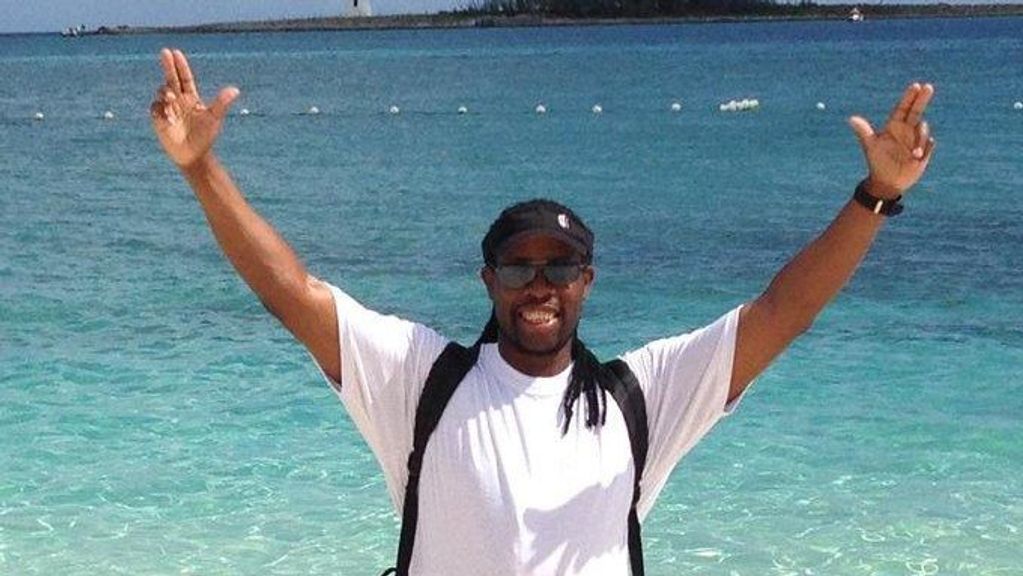
On the day Joseph R. Biden Jr. was sworn in as president in 2021, an eclectic mix of demonstrators convened at the Colorado state capitol building in Denver. Among them that January day was DonQuenick Beasley, who had a message different from others in the crowd.
The Bible-quoting black cannabis-rights activist held a sign saying “Give Us Our harvest” and at one point shouted down other demonstrators so she could talk about the injustice she sees in an industry dominated by white men while black men languish in prison for non-violent marijuana convictions.
“Give us our harvest” was her call for those prisoners to be released, trained and allowed to enter the legal cannabis industry, growing marijuana in fields where slaves once picked cotton.
“Give them their ownership,” Beasley told Zenger in a later interview.
Cannabis rights advocate DonQuenick Beasley holds a sign at a 2021 protest in Denver aiming to call attention to the inequalities in a now-legal industry dominated by white men. (Matt Whittaker/Zenger)
A complex mix of history, social, political and economic issues has made owning a cannabis business in the United States particularly difficult for black Americans.
While about 14 percent of the U.S. population is black, only 2 percent of about 30,000 cannabis businesses in the nation are owned by black people, according to a study from Leafly, a cannabis education website and online marketplace.
Access to startup cash a barrier
Financing is an issue for the entire legal cannabis industry in the United States. The banking system is regulated at the federal level, where marijuana remains illegal, leaving banks open to charges of money laundering or aiding and abetting a crime unless they file an enormous amount of paperwork, experts say. Many banks don’t want the hassle.
If white people are having a difficult time with financing, then black people and other minorities are faring worse, said Kassia Graham, director of community and strategy with Cannaclusive, a marketing firm that promotes fair representation of minority cannabis consumers.
“Get people out of jail, give them a license, but how are they supposed to do anything if they don’t have any money?” said Matt Karnes, founder of cannabis research and consulting firm GreenWave Advisors.
Women of color in particular have trouble getting funding because of a perception that they can’t deliver profitable companies for investors, said Carmen Brace, founder of cannabis research firm Aclara Research.
Getting access to capital is the main barrier to women of color having leadership roles in the cannabis industry, Michele Harrington, head of strategic partnerships with Foria Wellness, said.
“Licenses are expensive to get,” she said. Her company produces hemp-derived health and sexual-wellness products.
In the early days of legalization efforts, state governments often set high license application fees and prohibited those with prior marijuana convictions from entering the business, according to the Leafly report. License fees now range from $25,000 to $500,000 depending on the state.
“These unnecessary barriers effectively shut out people of color,” the Leafly study said. “Some states have tried to make amends by offering equity licenses but without providing any way for equity applicants to find and obtain the necessary startup funding.”
In the early days of legalization efforts, state governments often set high license application fees and prohibited those with prior marijuana convictions from entering the business. (Drew Angerer/Getty Images)
Social equity programs not always effective
Equity cannabis ownership programs are ineffective or non-existent in many states, Graham of Cannaclusive said.
Even in those that have social equity licensing programs, some large companies set up predatory partnerships in which a person of color is used as “window dressing,” said Morgan Fox, media relations director with the National Cannabis Industry Association.
Just because a state has an equity license program doesn’t necessarily mean black people will be proportionally represented. In Colorado, which along with Washington in 2012 was the first state to legalize recreational marijuana use, black people hold just 2.9 percent of cannabis owner licenses even though they make up 4.6 percent of the population, according to data from the state’s revenue department and the U.S. Census Bureau.
By 2025, legal cannabis sales in the United States could reach $43.5 billion, more than double the $20.3 million spent in 2020, according to cannabis business intelligence company New Frontier Data.
Tiffany Bowden, a diversity and communications consultant long involved in the cannabis industry, said people in the business in Los Angeles have told her they’ve been approached by consultants offering to pay them $250,000 for their social equity eligibility. Under such a scheme, they would be a 51 percent owner in a cannabis business on paper but wouldn’t gain anything further from the company’s expansion.
Despite the hardships, Bowden said inclusivity in the cannabis industry is improving. “We are making progress, but we still have a far way to go,” she said.
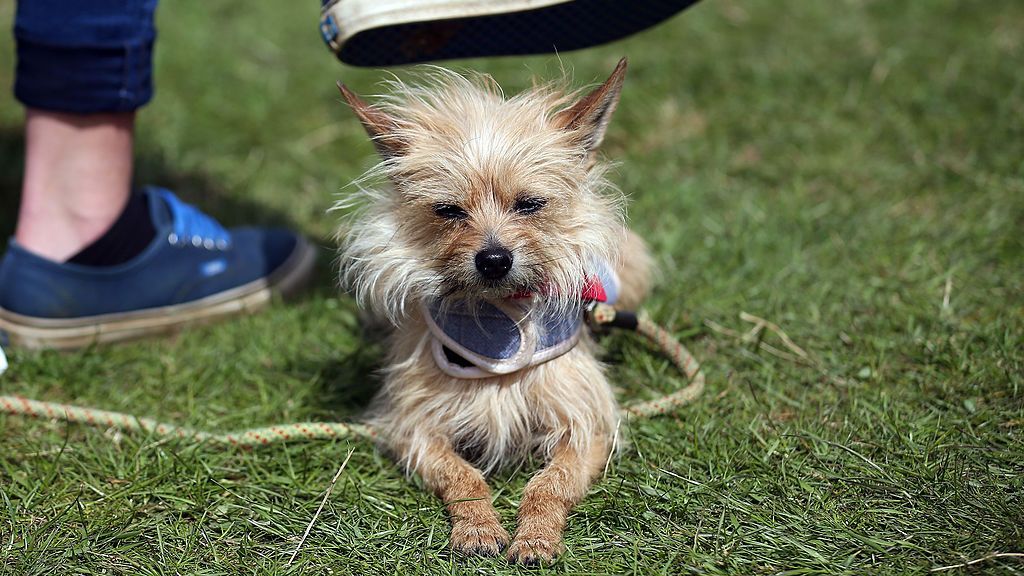
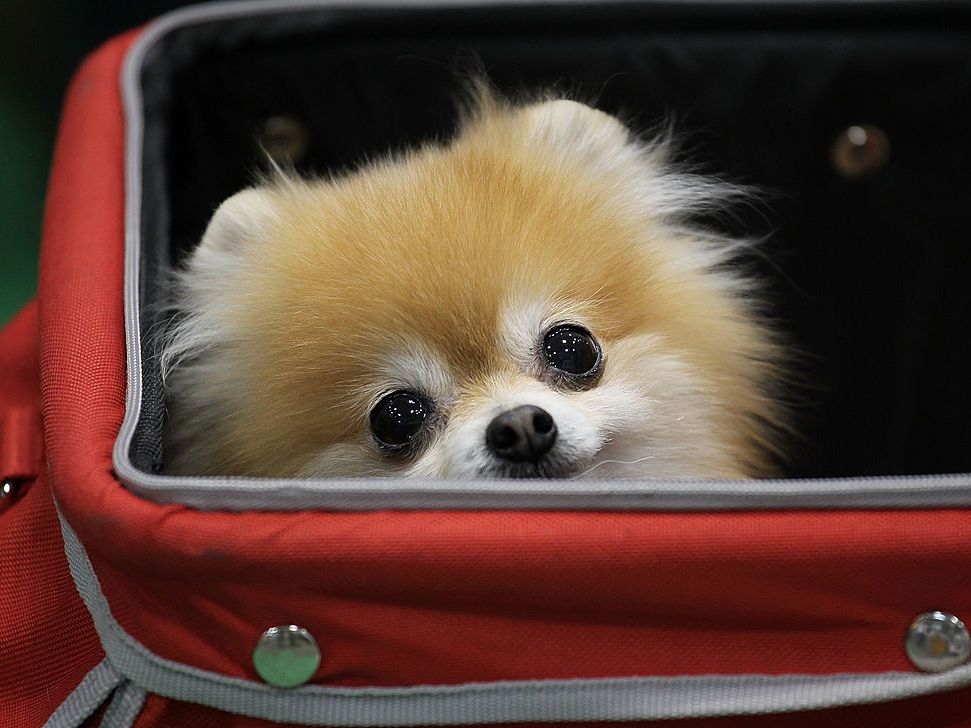
The smallest dogs, such as Chihuahuas and Pomeranians, long thought to be the product of domestication, share a body-size gene with ancient wolves.
A new study published in the journal Current Biology suggests that wolves living more than 50,000 years had a mutation in a gene regulating growth hormones that ultimately resulted in small dogs. This was long before humans began keeping dogs as pets.
In the past, the theory was that dogs started out large and became smaller about 20,000 years ago, when they were domesticated. The research team’s discovery may require rewriting the evolutionary history of man’s best friend.
It was previously believed that dogs became smaller about 20,000 years ago when they were domesticated, but ancient wolf DNA has upended that theory. (Koichi Kamoshida/Getty Images)
A search for the mutation has been conducted by the National Institutes of Health (NIH) for more than 10 years. It was not until NIH researcher Jocelyn Plassais began searching for backwards DNA sequences in other canids and ancient DNA that the research team found a reverse form of the insulin-like growth factor 1 (IGF1) gene that correlated to dog body size.
“We looked at 200 breeds, and it held up beautifully,” said geneticist Elaine Ostrander of the National Human Genome Research Center, in whose lab the study was performed.
Evolutionary biologists Greger Larson of Oxford University and Laurent Franz of Ludwig Maximilian University and Queen Mary University of London analyzed ancient wolf DNA to determine how long ago the IGF1 mutation first emerged.
When the researchers examined DNA from a 54,000-year-old Siberian wolf (Canis lupus campestris), they found it had the mutation in the growth-regulating hormone.
“It’s as though Nature had kept it tucked in her back pocket for tens of thousands of years until it was needed,” said Ostrander.
Ancient wolves already had a gene mutation for smaller size thousands of years before the domestication of dogs. (Matt Cardy/Getty Images)
Wolves and dogs are related to other canids, such as African hunting dogs, coyotes and jackals. Thus, the finding has relevance for those species too.
“This is tying together so much about canine domestication and body size, and the things that we think are very modern are actually very ancient,” said Ostrander.
While human beings have several hundred genes regulating size, canids have only 25 known genes that regulate body size.
Noting that she wants to understand the continuum of dogs from Great Danes to Chihuahuas, Ostrander said her research team will continue probing genes regulating dogs’ body size.
“One of the things that is pretty cool about dogs is that because they have evolved so recently, there aren’t actually a lot of body size genes,” she said.
At its peak, COVID-19 brought the world to a screeching halt. Travel plans and vacationing were not only altered but completely canceled. For comedian Spike Davis, whose livelihood depends on tourism, it proved to be scary and uncertain times.
Without warning, his Carnival Cruise performances were halted while the world tried to figure out how to maneuver through the pandemic as safely as possible. Optimistic that vacationers would be allowed back on cruise ships, Davis put his pen to pad, created new material and is finally back doing what he loves, making people laugh while cruising around the world on Carnival Cruise Lines.
He recently embarked on a “Floating and Joking” tour for Carnival Mardi Gras, Carnival Conquest, and Carnival Sunshine.
Spike Davis tells Zenger why returning to the cruise ships has been bittersweet since the pandemic, opens up about his emotional return to the stage and much more.
Percy Crawford interviewed Spike Davis for Zenger.
Zenger: Aside from my wife thinking you have the greatest job on earth, how is everything going?
Davis: (Laughing). Everything is going good. Back to being super busy. Back out on the ships. Just been running from ship to ship, but it’s been great. Glad to be back.
Zenger: Due to COVID and the different strains that we are starting to see, are you constantly alert of potential cancellations, or do you feel Carnival has things under control?
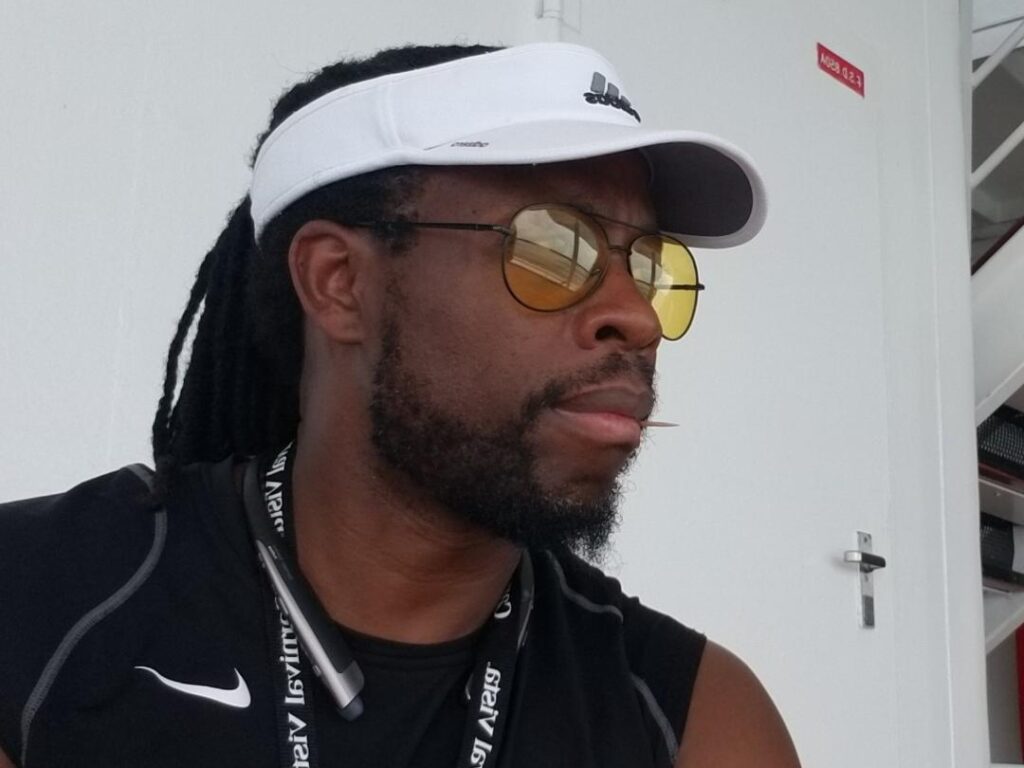
Percy Crawford interviewed Spike Davis for Zenger. (Heidi Malone/Zenger)
Davis: They have been working on this since probably May of last year with the CDC [U.S. Centers for Disease Control and Prevention]. Putting these protocols into place. It’s pretty much cookie-cutter across the board from ship to ship to ship. You know what you’re walking into when you get to that ship as far as testing is concerned, if you have to quarantine or whatever, it’s pretty good.
That helps calm us down because we’re going into these situations as private contractors or independent contractors not knowing what was really going on out there and how things were going to play out. It settled everybody’s nerves to know that these things are set in place, and this is how it’s going to go.
Zenger: From what I understand, it appears as if, if you’re on that ship, you are one of the healthiest people around. They really make sure everyone on that ship is virus-free.
Davis: I would say so. Especially, the crew — 100 percent vaccinated on every crew on every ship, every staff member on every ship. Every office on every ship. So, if they come from the office to visit the ship, everybody is up-to-date on their shot and their booster as well.
All of the ships that I have been on, all of them are 95 to 98 percent vaccinated. You will have some younger kids on there who can’t get the vaccine yet. But other than that, all of the adults are vaccinated and following the rules of wearing their mask to the shows and those kinds of things.
Zenger: As a comedian, has COVID produced a ton of material for you?
Davis: Oh, without a doubt. I couldn’t wait to get back out there. I’m rolling all of that material out now on my shows. The one that I finished a few weeks ago, I really went heavy with the COVID stuff.
Zenger: You do an adult and kid show on the cruise ship. With censorship prevalent, especially in comedy, do you have to be careful of what you say during your adult sets?
Davis: Carnival has been really good about allowing us to use our creative freedom. So, they don’t really hold us to the fire if we say something that somebody doesn’t agree with. Those announcements are made constantly throughout the day. “If you’re coming to the adult shows, don’t come if you are easily offended about any subject.” And then when they get to the venue, the comedy club announcer will announce it before the show starts, and then when he goes on stage to introduce us, he reminds people again, “If you’re super sensitive, these adult shows are not for you. Come back for the PG shows.”
That gives us a little peace of mind, knowing we can go up there and talk about anything. You get up there and do some stuff about [Donald] Trump, you’re probably going to get some pushback, depending on what ship and what port you’re coming out of, but you do what you do, and let the chips fall where they may.
Zenger: We spoke in the past about your diversity as a comedian to be able to entertain both adults and kids on these cruises. Was that natural for you or something you had to adjust your style to?
Davis: I had to get better at being a dirtier comic (laughing), which sounds weird because a lot of times people think comedy is just cussing, being buck wild and drinking on stage. It wasn’t that at all for me.
I started out in Louisville, Kentucky, at the comedy clubs there. And the comedy club owner made sure that everybody that did open mic night… you learned to be a comedian. So, you couldn’t do any cussing. No dirty jokes. You had to be really heavy on writing clean, smart comedy. I mean, you could always dirty it up later. And that’s what I’ve had to do. Just a little. I don’t get raunchy, but I do some adult stuff. If they come to the show, they know we are grown, so we’re going to talk about some grown things. That’s how it was easier for me because I started out clean, doing church shows and hosting shows for senior-citizen homes or wherever I had to go. So, it kind of grows on you.
Zenger: The country was shut down when we last spoke and there was a lot of uncertainty in terms of people being able to vacation on cruise ships again. I’m sure when you got the call that things were cranking back up, you were ready to go.
Following the pandemic-related shutdowns, comedian Spike Davis finally gets back to what he does best: making people laugh. (Courtesy of Spike Davis)
Davis: I was ready to rock and roll and get back out there. But it was bittersweet. I enjoy the family time being home with my wife and my son. But they understand. They know this is what I do for a living. They were able to go before COVID, they could bounce from ship to ship if they wanted to. After COVID, things kind of changed under the restrictions. They understand what it is.
I have to be gone longer now because of COVID. Before we would bounce from ship to ship, and I was able to come home in between. Now, when I go out, I’m gone for two, three and sometimes four weeks. That’s something that’s out of the norm for me and other comedians that are on the ships.
Zenger: You work on big, beautiful ships, you are always in beautiful places. What’s the balance between working in paradise and being a father and husband?
Davis: Yeah, you come home, and you live a normal life like everybody else. I just got finished cooking as a matter of fact. When you’re on the ship, everybody is cooking for you. Somebody is cleaning up your room. You get home and you become that person again. Which, I enjoy it. I love cooking. That’s my thing. I don’t mind it at all.
But it is different when you come home, everything is on you to be a normal person again. To put that dad hat back on and that husband hat back on. On the ship, you’re solo. You go to bed when you want. Whatever you want to do, it’s on you, just as long as you make it to your show on time, it don’t matter what you do.
Zenger: Do they give you quarterly rollouts, monthly, or yearly?
Davis: They have been doing 3 to 4 months as far as booking us out. I guess with COVID, they didn’t want to book too many comics and have somebody have to pull out, and they have to rebook it. As you move up through the ranks, they kind of know your act and what you bring, so you become one of the priorities that they book first, then go down the line to some of the newer guys on the back end of it. They fill all those slots as much as they can.
Zenger: What has it been like to make people laugh again?
Davis: Ah man, I tell you… it was very for real. During the pandemic, 18 months of being at home and sitting and waiting. You watch the news but try not to overload with the news but wanting to know what’s going on and how things are trending. Just to get back on that stage for the first time after 18 months, I got a little choked up halfway through my set. The crowd didn’t know it, but it was like, “Wow, this is beautiful!” It’s a blessing. I thank God that I’m back out here.
Performing at comedy clubs are always cool and fun, but it’s just something special about that whole cruise life. I tell people, if you’ve never been, don’t cancel it out. Come and try it, and nine times out of 10, you’re going to get hooked on it. Going to all these beautiful places and meeting all these beautiful people who are from these beautiful places… I have made friends from the cornfields of Iowa. I have met couples from Ohio. These are people that you normally wouldn’t come in contact with. You had no way of contacting them or them contacting you. You meet each other and talk on the ships, and you stay in touch, then you find out years later that you’re probably going to be on the same ship, or they will book a ship knowing that you’re going to be on it. I love it.
I just met one of my buddies, he’s a singer. I had no idea that he was going to be on that same ship. Actually, I found out before I was going to be there that his band was going to be there. He didn’t know I was coming. I just showed up because I was off that night. I showed up at his show. I just stood there in the doorway. He looked up and seen me, he kind of lost track of what he was doing. He is all the way from Jamaica. We finally got to link up and just talk.
Zenger: You just mentioned your nights off, what do you typically do when you have a night off?
Davis: I’ll bounce around and see some of the other performers. I love music, so I’ll go see some of the musicians. I normally don’t go to other comics’ shows. I try to stay in my lane as far my brand is concerned. I don’t want to see what they’re doing and start reformulating what I think I need to do based on what I just saw them do with the crowd. So, I stay away from the other guys’ performances. I tell the other comedians when we first get on the ship together, it’s not personal, but I’m probably not coming to your show. You won’t see me at your show. Not because I don’t wanna see the show, but I have to stay in my own zone.
Other than that, I’m in my room. I’m a sports nut, so I watch a lot of sports. I had a lady give me a book the other day, so I started on that. Trevor Noah, a very funny, talented comic, I’ve been reading his book. It’s very interesting how he grew up in Soweto. It’s unreal. I do a lot of praying and meditating. I have to stay connected to the creator. You gotta do that in order to stay levelheaded. I keep everything in perspective. I start the day out with him, and I close the day out with him.
Microscopic pieces of plastic from London, Paris and other European cities have been detected in the Austrian Alps at about 10,190 feet above sea level.
This is the first time that Swiss Federal Laboratories for Materials Science and Technology researcher Dominik Brunner and his colleagues from Utrecht University in the Netherlands and the Austrian Central Institute for Meteorology and Geophysics have found nanoplastics in the area.
The scientists, who were originally looking for organic particles, were amazed to notice nanoplastics such as polypropylene (PP) and polyethylene terephthalate (PET) by chance, thereby discovering a new method to detect them.
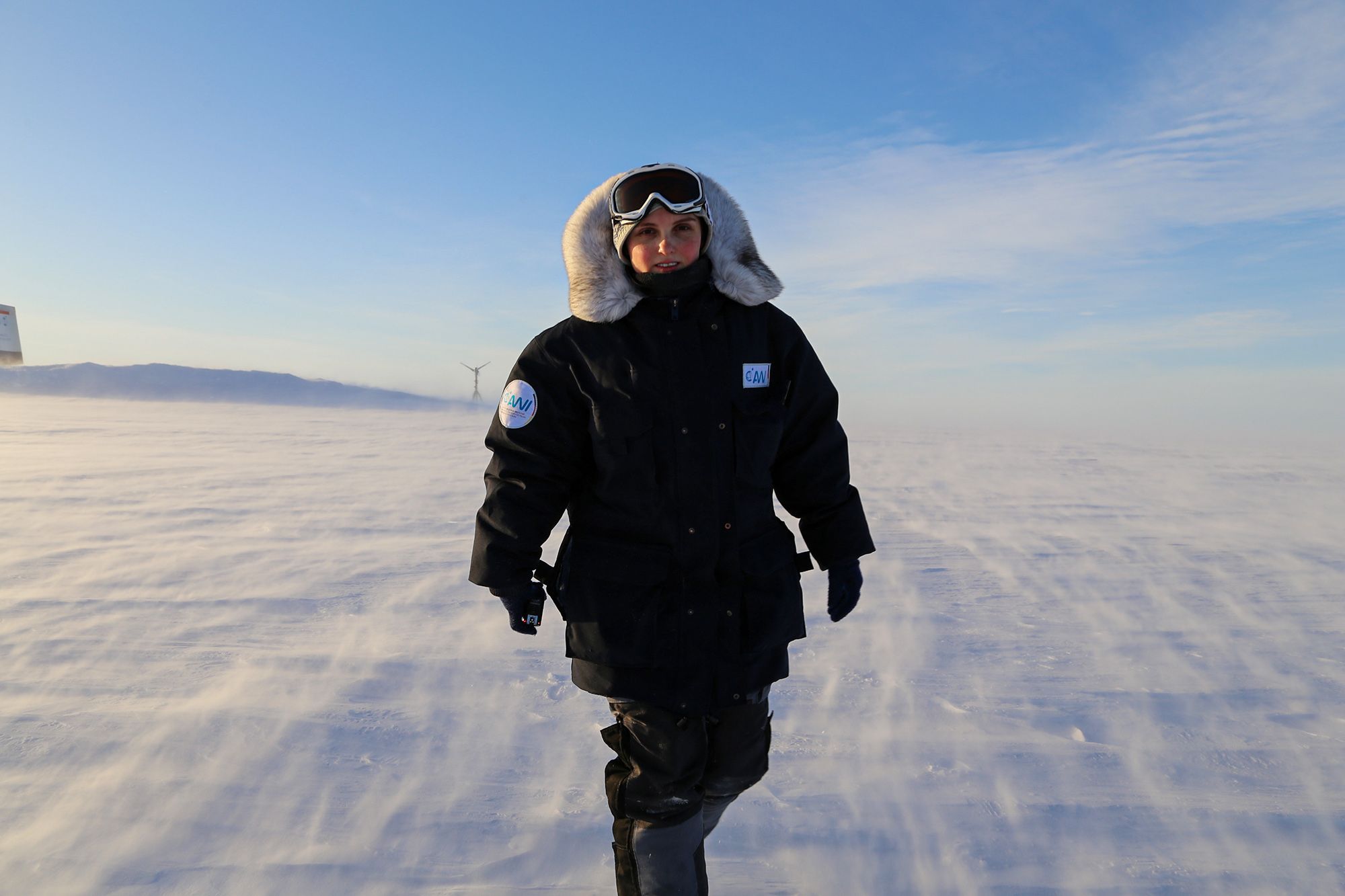
Arctic researcher and head of the Sonnblick Observatory Elke Ludewig collected the nanoplastic samples with her team. (Alfred-Wegener-Institut, Ludewig/Zenger)
“Our detection method is a bit like a mechanical nose. And unexpectedly, it smelled burning plastics in our snow samples,” lead researcher Dusan Materic from Utrecht University said.
According to the study published in the international, peer-reviewed journal Environmental Pollution, the greatest emissions of nanoplastics into the atmosphere occurred in densely populated and urban areas, with 30 percent of the particles measured on the mountaintop originating from within a radius of about 124 miles (200 kilometers), mainly from cities.
About 10 percent of the particles measured in the study had traveled more than 1,242. miles (2,000 kilometers) through the air from major European cities, most notably Frankfurt, Paris and London.
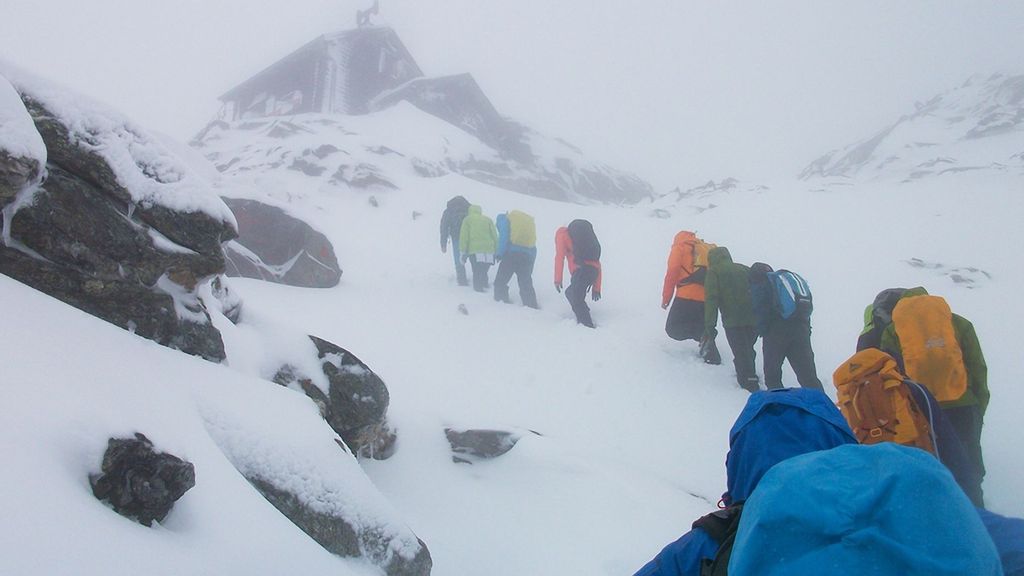
Exterior work seen being done at the Sonnblick Observatory in the Hohe Tauern mountains in Salzburg, Austria. (Austrian Central Institute for Meteorology and Geophysics, Scheer/Zenger)
The study estimated that up to 3,300 tons of nanoplastics cover Switzerland every year, from the remote Alps to the urban lowlands. However, the scientists suggested additional research was needed to verify these numbers.
The detected plastic particles were estimated at 200 nanometers in size, about one-hundredth the width of a human hair. The researchers consider the study the most accurate record of air pollution caused by nanoplastics.
“With this detection method, we are the first group to quantify nanoplastics in the environment. Since the High Alps are a very remote and pristine area, we were quite shocked and surprised to find such a high concentration of nanoplastics there,” Materic said.
Hoarfrost is depicted being knocked off the material cable car at the Sonnblick Observatory in the Austrian Alps. (Austrian Central Institute for Meteorology and Geophysics, Krombholz/Zenger)
“We were quite gripped by these findings. It’s highly unlikely that these nanoplastics originated from local, pristine Alpine areas. So where did they come from? We completely turned around our research project to study this further.”
The Utrecht University scientist said the evidence supported the idea that nanoplastics are transported by air from urban areas.
“That’s potentially alarming because that could mean that there are hotspots of nanoplastics in our cities and indeed in the very air we’re breathing,” Materic said.
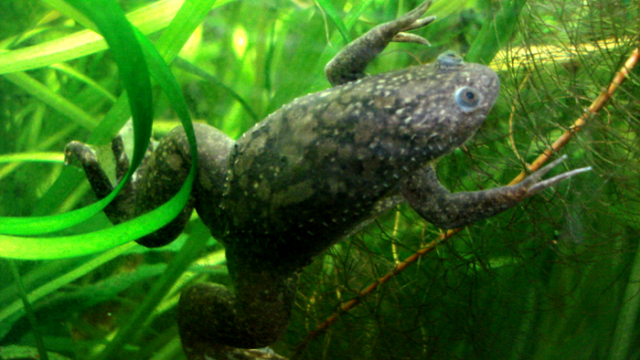
Scientists have taken another step forward in advancing hope for patients who have lost limbs, by regenerating the limb of an adult frog with a combination of drugs and a unique delivery device.
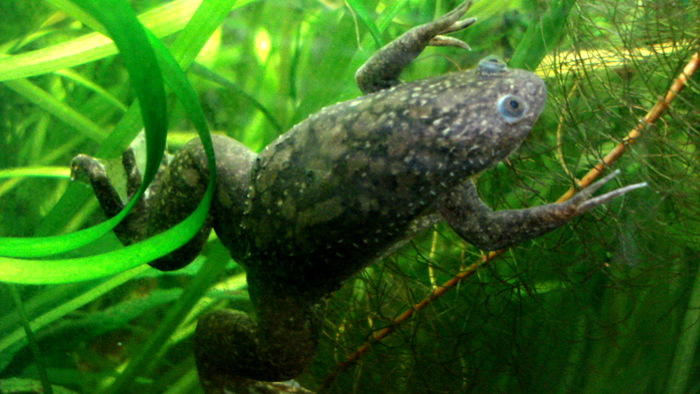
A study published in the journal Science Advances describes how experts at Tufts University and Harvard University’s Wyss Institute kickstarted the regenerative process of an adult African clawed frog (Xenopus laevis).
The researchers applied a cocktail of five drugs to the stump of the limb, before covering it with a wearable silicone bioreactor dome. The medicine was sealed in place for 24 hours, which then started an 18-month process of restoring a functional leg.
Many animals, such as crabs, lizards, salamanders and sea stars, are able to regenerate limbs, but adult frogs do not have that ability. Microscopic flatworms that are diced up can regenerate into a complete organism from each piece. In their own healing process, human beings can close up wounds with new tissue growth. Human livers are able to regenerate even after a 50 percent loss of healthy tissue.
A black alpine salamander (Salamandra atra) walks across moss on a hillside leading to the Falzthurntal valley on August 10, 2015 near Pertisau, Austria. Salamanders are one of the few animals that have the innate ability to regrow lost limbs. (Sean Gallup/Getty Images)
So far, no natural process has been found in humans or animals to restore any large and structurally complex limbs. The loss of a limb among humans requires surgery to prevent infection or further loss of blood, leaving significant scarring, which prevents new growth.
The stakes are high, according to the study. Human limb loss in the United States will increase substantially over the next 30 years, reaching 3.6 million individuals per year by 2050. These individuals will have limited options after an amputation. The authors suggest that their approach could aid in regenerating complex human organs.
The silicone cap or bioreactor, dubbed “BioDome” by the researchers, is made of a silk protein gel that contains a combination of five drugs. The bioreactor and drugs produce an environment and signals that favor regeneration instead of the natural tendency of scarring and sealing off the stump.
“It [was] exciting to see that the drugs we selected were helping to create an almost complete limb,” said lead author Nirosha Murugan of Tufts. “The fact that it required only a brief exposure to the drugs to set in motion a months-long regeneration process suggests that frogs and perhaps other animals may have dormant regenerative capabilities that can be triggered into action.”
Humans don’t have the chance to naturally regrow their limbs as surgery is typically required, leaving severe scarring, which impedes the growth of new tissue. So far, the best solution has been ever-more technologically advanced prosthetics, like this Powerknee AI-powered prosthetic worn by retired U.S. Army Ranger Bill Dunham. A new study examining the use of a BioDome to apply a cocktail of five drugs to an amputation wound has shown positive results in frogs, spurring the regrowth of an almost fully functional limb. Scientists hope to be able to apply this technology to humans in the future once a complete limb can be successfully restored. (Mario Tama/Getty Images)
Animals such as salamanders, which are capable of natural regeneration, are mostly aquatic. Following the loss of a limb, the first step of regrowth is the formation of a blastema — a mass of stem cells at the end of the stump, which gradually restores the lost limb. Within 24 hours of injury, the wounds are covered by skin cells that protect the tissue being reconstructed.
“Mammals and other regenerating animals will usually have their injuries exposed to air or making contact with the ground, and they can take days to weeks to close up with scar tissue,” said co-author David Kaplan, also of Tufts. “Using the BioDome cap in the first 24 hours helps mimic an amniotic-like environment which, along with the right drugs, allows the rebuilding process to proceed without the interference of scar tissue.”
During the study, the researchers watched as the treated frog experienced the dramatic growth of tissue to produce a nearly fully functional leg. The regenerated limbs had bone structure resembling that of a natural limb as well as toe-like appendages that grew from the end of the limb, though without the support of bone underneath. Internal tissues, such as neurons, also saw regrowth. The new leg responded to touches with a stiff fiber and other stimuli, and the treated frogs were able to swim much like any normal frog would.
Further research of the drugs and BioDome will be conducted to regrow functionally complete limbs.
“We’ll be testing how this treatment could apply to mammals next,” said co-author Michael Levin. “Covering the open wound with a liquid environment under the BioDome, with the right drug cocktail…is a strategy focused on triggering dormant, inherent anatomical patterning programs, not micromanaging complex growth, since adult animals still have the information needed to make their body structures.”