
Mayor Woodfin Sets Aside $2M To Recruit Grocery Stores to Underserved Areas



As refineries catch up with demand for gasoline and commodities take a downturn, the price drivers pay at the pump is slowly heading lower, analysts told Zenger.
Travel club AAA on Tuesday reported a national average retail price of $3.32 for a gallon of regular unleaded. That’s down about a full percentage point from this time last week and 2.6 percent lower than month-ago levels near $3.40 per gallon.
Retail gasoline prices usually start moving lower after the long Labor Day holiday in the United States, which marks the unofficial end to the summer driving season. Refineries would already be preparing to produce a winter blend of gasoline that’s cheaper to produce.
“But some of the blending components that go into making gasoline are priced at higher levels,” said Denton Cinquegrana, the chief oil analyst at the Oil Price Information Service.
Not only that, but some other components are finding a place not in the production of road fuels, but in the petrochemical industry where profits to produce plastics are better, he said.

That does little to address energy-related inflation. The federal government reported that inflation for consumer goods was close to 6 percent for the 12-month period ending in November.
For gasoline, that level of inflation is closer to 50 percent. And even with some relief making its way to the consumer level, retail gasoline prices remain at highs not seen since late 2014.
Matthew Kohlman, an associate director for refined products pricing at S&P Global Platts, said that so far, consumers seem to be relatively unfazed by higher prices at the pump. He said that gasoline demand is above the five-year average and AAA said holiday travel this year is expected to be about 92 percent of what it was before the pandemic.
Refineries, meanwhile, are pumping out gasoline at higher levels and starting to catch up from pandemic-related issues last year and the deep February freeze in Texas that idled large parts of the energy sector.
“The net effect is retail prices have stabilized or even fallen slightly for drivers out shopping for holiday gifts other than a lower price at the pump,” Kohlman said.

Clues from the broader energy sector may also be signaling prices will move lower as the calendar switches to 2022.
The International Energy Agency, a Western-backed agency set up in response to the Arab oil embargo in the 1970s, said it expected the global oil market to end the year in a surplus, which should continue into next year.
That surplus is in part expected to drag the prices for commodities lower. The U.S. Energy Information Administration in its latest monthly market report said it expects the price for Brent crude oil, the global benchmark, to average $70 per barrel next year, down from Tuesday’s levels of close to $74 per barrel. The retail price for gasoline, meanwhile, is expected to fall to $2.88 per gallon.
“We’re finally starting to see retail to show some signs of passing along the deep drop in the price of oil and wholesale gasoline [on to consumers],” said Patrick DeHaan, senior petroleum analyst at GasBuddy, from Chicago.
Edited by Bryan Wilkes and Kristen Butler
The post Relief, While Slow, Is Coming For Consumer Gasoline Prices appeared first on Zenger News.


Researchers challenged Albert Einstein’s famed theory of general relativity by observing stars known as pulsars for 16 years to seek a unified theory of the fundamental forces of the cosmos.
“As spectacularly successful as Einstein’s theory of general relativity has proven to be, we know that is not the final word in gravitational theory,” Robert Ferdman, co-author of a paper published in the journal Physical Review, said of the team’s research.
For more than 100 years, scientists have sought to find flaws in Einstein’s theory.
“General relativity is not compatible with the other fundamental forces, described by quantum mechanics,” Ferdman, a physics professor at the University of East Anglia, in England, said. “It is therefore important to continue to place the most stringent tests upon general relativity as possible, to discover how and when the theory breaks down.”
A deviation in the general relativity theory, he said, would expand the current theoretical understanding of the universe.
“And it may help us toward eventually discovering a unified theory of the fundamental forces of nature,” Ferdman said.

Researchers in the United Arab Emirates and at the University of Manchester took recourse to seven radio telescopes stationed around the world. They used them to rigorously test Einstein’s famed E=mc2 equation. They revealed expected relativistic effects that were observed for the very first time.
According to Ferdman, “a pulsar is a highly magnetized rotating compact star that emits beams of electromagnetic radiation out of its magnetic poles. They weigh more than our sun and are only about 15 miles across; incredibly dense, that produce radio beams that sweep across the universe like a lighthouse.”
Ferdman said the team studied a double pulsar, which offers the best laboratory for testing Einstein’s theory, which he developed before the techniques to discover and study pulsars even existed.
The double pulsar consists of two pulsars orbiting each other in just 147 minutes with velocities of about 1 million kilometers per hour (621,371 mph). While one is rotating fast at about 44 revolutions per second, the other is younger and rotates once every 2.8 seconds. It is the pulsars’ orbit around each other that offers a nearly perfect gravity laboratory, Ferdman said.
The team tested a cornerstone of Einstein’s theory, which concerns energy carried by gravitational waves, said Michael Kramer of the Max Planck Institute for Radio Astronomy in Germany, who led the study. The theory tested at a precision 25 times better than with the Hulse-Taylor pulsar and 100 times better than with gravitational wave detectors.
The team’s observations agreed with the theory, but they were able to see effects never studied before.
The discovery of the double pulsar system is the “only known instance of two cosmic clocks which allow precise measurement of the structure and evolution of an intense gravitational field,” Benjamin Stappers, a professor of astrophysics at the University of Manchester, said.
Astronomer Ingrid Stairs of the University of British Columbia said the team tracked the radio photons emitted by one pulsar in the gravitation field of the companion pulsar.

“We see for the first time how the light is not only delayed due to a strong curvature of space-time around the companion,” Stairs said, “but also that the light is deflected by a small angle of 0.04 degrees that we can detect. Never before has such an experiment been conducted at such a high space-time curvature.”
This discovery allows scientists to test at least seven different predictions of the general relativity theory, Dick Manchester of Australia’s national science agency said.
“Apart from gravitational waves and light propagation, our precision allows us also to measure the effect of ‘time dilation’ that makes clocks run slower in gravitational fields,” he said, noting that researchers need to take Einstein’s E=mc2 into account when considering the effect of the electromagnetic radiation emitted by the fast-spinning pulsar.
“We have reached a level of precision that is unprecedented. Future experiments with even bigger telescopes can and will go still further,” Kramer said. Knowing how future experiments must be conducted, he said, may allow scientists to “find a deviation from general relativity one day.”
Edited by Richard Pretorius and Kristen Butler
The post VIDEO: Einstein’s Theory Of General Relativity Stands Up To Challenge appeared first on Zenger News.
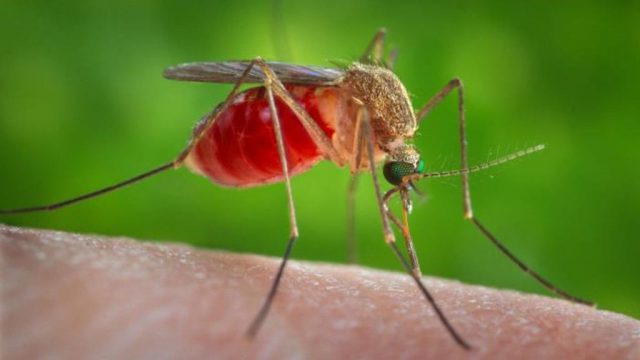
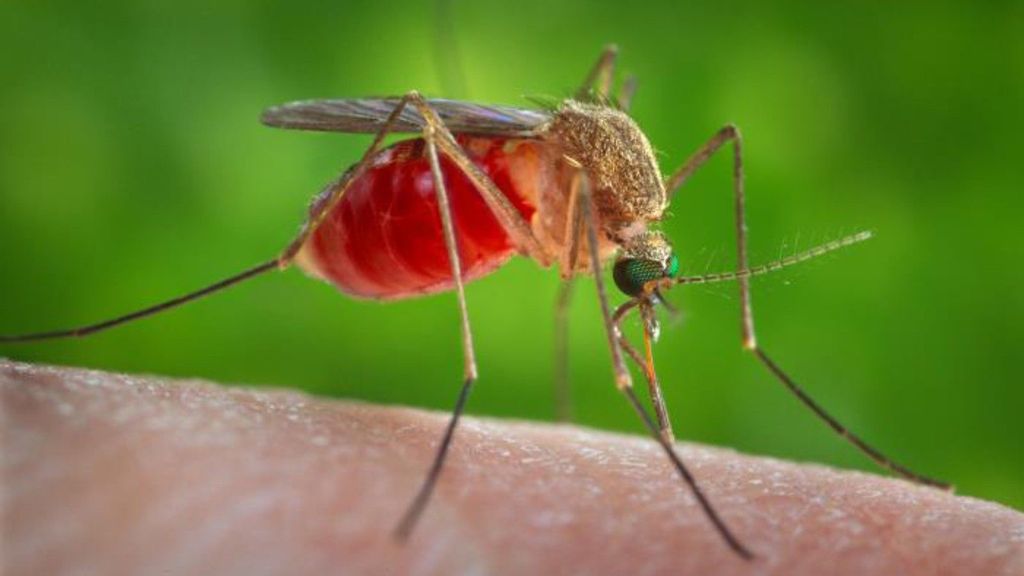
The world’s deadliest animal isn’t a shark, tiger or even a poisonous snake. It’s the female mosquito.
When this pesky insect sucks your blood to help her lay her eggs, she can infect you with potentially fatal diseases including malaria, dengue, Zika and West Nile viruses, lymphatic filariasis (LF) and more.
More than one million people are thought to be killed by mosquitoes every year, according to the American Mosquito Control Association.
The U.S. Centers for Disease Control and Prevention says that currently half the global population is at risk of malaria and 40 percent are at risk of dengue. LF affects people in 72 countries and is a leading cause of permanent disability worldwide.
West Nile virus is the main mosquito-borne disease in the continental United States, peaking in the summer and early fall months.
Earlier this year, medical journal The Lancet published a study that shows that as the world warms with climate change, the length of mosquito season and the geographic spread of mosquito-borne diseases is expanding and diseases are emerging in new locations, or re-emerging in areas where they had been eradicated.
The study found that by 2070, the population at risk of malaria and dengue fever was likely to increase by up to 4.7 billion people.
Israeli scientists and entrepreneurs have been developing a series of ingenious remedies to this growing problem.
Genetic mosquito control

Professor Philippos Aris Papathanos, head of Hebrew University’s Insect Genetics Lab, was awarded a Bill & Melinda Gates Foundation grant to develop new genetic approaches for controlling malaria mosquito populations.
“We’re building a modern variant of an old idea that has been around since the 1950s: to control mosquitoes by modifying and manipulating their genetics,” Papathanos said.
He said that sterilizing and releasing individual male mosquitoes theoretically leads to the collapse of the population. But this tactic has proven difficult to upscale to the necessary level of a whole city, country or continent.
Instead of sterilization, Papathanos’ lab is using cutting-edge CRISPR technology to modify male malaria mosquitoes’ Y chromosome so that they produce only male babies, and those sons inherit the altered chromosome.
Over time, there will be no more females and hence no more disease-transmitting bites.
“This method can suppress the population in a stronger way because the genes are designed to spread through the population. We don’t need to upscale if we make the system more efficient with the least number of insects released,” says Papathanos.
He has been working on this problem since 2005, after earning his PhD at Imperial College London.
“The field is about five years away from having a proof of principle ready in the lab. When it will be applied in the field is a different matter,” he says.
“The releases will require people with diverse backgrounds, like social scientists, local stakeholders, evolutionary biologists and ecologists. A whole community is growing around this idea.”
While Papathanos works on his genetic modification method, several Israeli companies are pursuing mosquito control methods including “sterile insect technique” (SIT). Female mosquitoes mate only once, and when they mate with a sterilized male their eggs don’t hatch. Males can be sterilized by irradiation or genetic modification.
Senecio Robotics: Affordable SIT
Senecio Robotics’ industrial production of sterile mosquitoes uses computer vision along pressurized conveyor belts to remove the females and package the sterilized males for large-scale pest-control operations.

“Imagine food or medicine production lines, only what is running on the conveyor belts are non-biting male mosquitoes ready to be bottled towards their release. The proprietary technology enables the processing of millions of mosquitoes, combining quality assurance, counting and removal of residual females,” says CEO Hanan Lepek.
“The beauty is how flexible and modular the design is. Basically you can ship your mosquito larva to end points where they will emerge, counted, identified and packaged or have a centralized location where mosquitoes are bottled and then released.”
Senecio holds patents on its innovations for insect rearing, neural networks that classify mosquito species, automatic bottling, mission planning and release from ground or air. “We are the only company with the ability to release mosquitoes from flying aircraft,” says Lepek.
Founded in 2014 and backed by American and European VCs, the Israel Innovation Authority, the European Union’s Horizon 2020 program and the BIRD Foundation, Senecio recently developed a modular unit for producing, sorting and packaging millions of sterile mosquitoes per week, reducing the cost dramatically.
Customers can operate the factory units or purchase bottled sterile mosquitoes via a subscription model. Each canister is filled with hundreds of mosquitoes, at a cost comparable to the release of insecticides.
“We will bring the cost of the sterile mosquito to something cities can finally afford so that finally the whole operation will be accessible to all citizens,” says Lepek. Senecio has pilots planned in Europe and the United States.
The company also offers first-of-its-kind automated mapping technology to show where the mosquitoes are located, synchronizing with the release plan to monitor the reduction in the mosquito population.
“Health authorities have surveillance programs around the world that count the bugs manually using tweezers. We put that process on the cloud and let the robot do the dull and boring tasks of mosquito separation and identification of the common mosquitoes,” says Lepek.
Diptera.ai: Solving the sex-sorting bottleneck
If SIT is eco-friendly and effective, “why is it still stuck in trial phase? Because you need to make sure you release males only, and sex-sorting is a bottleneck,” says Vic Levitin, CEO of Diptera.ai of Jerusalem.
“Mosquitoes have a short lifespan, so normally you need a mosquito production facility near the release site. Our innovation is sex-sorting efficiently and accurately at the larval stage, which lasts two weeks. We can mass produce the larvae in a central facility and ship them across countries.”

Subscribers receive containers stamped with a date showing when the mosquitoes are ready to be released. “Inside they have food and water,” says Levitin. “When they’re ready to hatch, you drain the water and mosquitoes fly out.”
This scheme, says Levitin, “drives cost down to the point where we can go into new markets, even private homeowners. Diptera.ai’s market research has shown our solution is 20 times less expensive than existing SIT methods.”
Diptera.ai, which graduated from the IndieBio accelerator in October 2020 and recently closed a $3 million seed round, could implement its larval-stage sex sorting for biological control of many types of insects, including household and agricultural pests.
Levitin predicts that methods to control mosquitoes without pesticides will be needed in more and more places as climate change makes the problem worse.
“By 2050, half of the world’s population — including the US and Europe — will be living in areas warm enough for disease-spreading mosquitoes,” he said.
Forrest Innovations: Sterilizing local mosquitoes
Rehovot-based Forrest Innovations applies its safe, environmentally friendly Natural Vector Control (NVC) sterilization method to male mosquitoes collected and grown from the locality being treated.
“Local mosquitoes are better adapted to the weather conditions and to the pheromones of the local females,” says CEO Nitzan Paldi.
“Regulators are happy that we are not introducing mosquitoes from somewhere else, nor are we introducing genetically modified mosquitoes. There are no detectable residues of the components we use to sterilize them, so they are really natural mosquitoes.”
Thus far, Forrest Innovations’ projects are in Brazil, where it is the sole provider of NVC. The company is going public and will begin expanding its modular, scalable solution to stop mosquito-transmitted diseases (pending regulatory approval) in the United States, India and other Southeast Asian nations, where 75 percent of dengue cases occur.
“People will come to a central training facility to learn everything about Natural Vector Control and then go to their regions and set up these mobile production units,” Paldi says, comparing the process to McDonald’s providing training and standardized supplies to its worldwide branches. “In this way we can expand very quickly in the next three or four years.”
As described recently in the Journal of Infectious Diseases, Forrest’s release of NVC-treated male mosquitoes in a controlled trial in Brazil reduced live mosquito progeny by more than 91 percent and significantly reduced incidences of dengue fever in the treated regions.
Zzapp: Pinpointing breeding grounds

Tel Aviv-based ZzappMalaria uses artificial intelligence to predict the location of stagnant bodies of water where malaria mosquitoes breed.
The mobile software then helps fieldworkers manage effective larvicide treatment in the detected areas — even with limited budgets and difficult environmental conditions.
A new agreement with fellow Israeli company Airobotics will supply Zzapp with drones for its first commercial project in São Tomé and Príncipe in Central Africa next year.
Zzapp is a subsidiary of Sight Diagnostics, developer of Parasight, an AI-based system that is accurately and cost-effectively diagnosing malaria in 24 countries.
In 2016, Arnon Houri-Yafin spent three months in Indian hospitals as head of Sight’s R&D team. There he saw the human toll of malaria, especially on children.
After researching the problem, he founded Zzapp to identify and overcome challenges that have kept larvicide treatments from succeeding in Sub-Sahara African nations.
“When looking at the countries where malaria has been eliminated, controlling the mosquito breeding sites was almost always a major component of the solution,” Houri-Yafin said.
Michael Ben Aharon, Zzapp’s VP of Partnerships and Growth, said, “You need to find 90 percent of water sources and treat them for malaria to be eradicated. If it is lower than 90 percent, you can’t eliminate malaria. In a tropical environment, such as Sub-Saharan Africa, it’s tough to find and treat 90 percent of water sources.”
Zzapp has won prestigious awards, including the $3 million grand prize in the IBM Watson AI for Good XPRIZE Competition and the 2021 Cisco Global Problem Solver Challenge.
Produced in association with Israel21c.
The post Scientists Focus On Helping The World Fight Mosquito-borne Diseases appeared first on Zenger News.
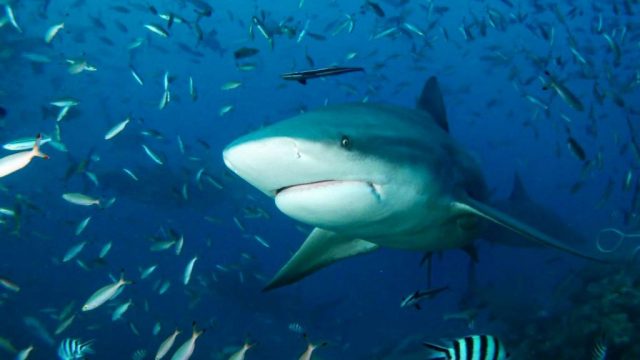
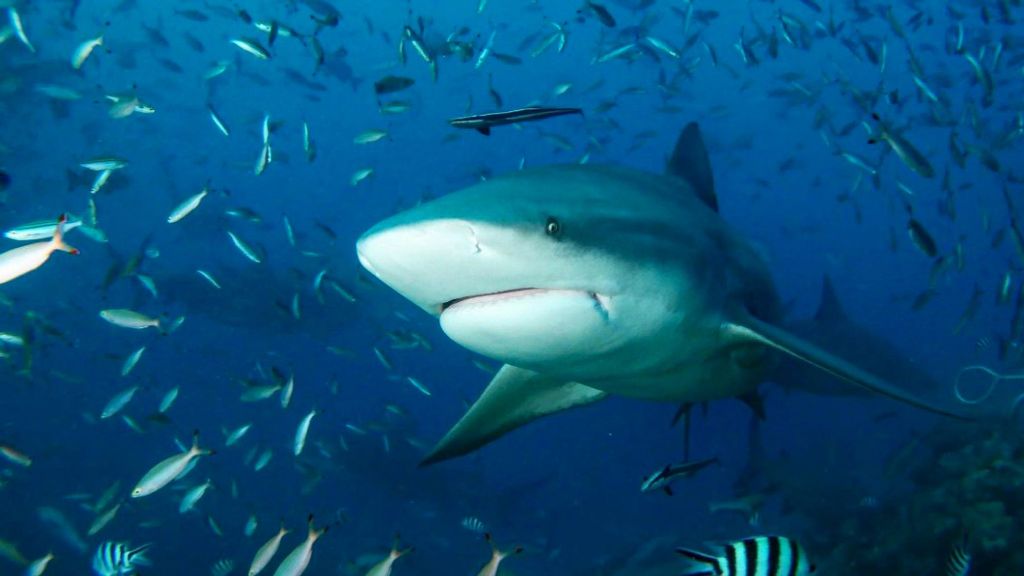
A massive shark die-off 19 million years ago that was reported in the prestigious journal Science and made headlines the world over did not actually happen, according to new research.
In June, two U.S. scientists reported a decline in shark diversity with a decrease of more than 90 percent in the abundance of deep-ocean sharks all those years ago.
However, researchers at the Natural History Museum Vienna and others have now cast doubt on the event, saying it probably did not happen.
The Austrian researchers say that due to the relative stability of the deep sea, such an enormous decline in deep-ocean sharks would be surprising.
“In several projects financed by the Austrian Science Fund (FWF), we examined marine deposits of the same age in Italy, Greece, Turkey, Tanzania, India, Sri Lanka and Oman. Nowhere was there any evidence of an extinction event 19 million years ago,” Mathias Harzhauser, who heads the museum’s Geology and Paleontology Department, said in a statement.

According to the new research, the data used by Yale University’s Elizabeth Sibert and Leah Rubin were based on microfossil shark scales found in a few grams of deep-ocean sediment.
However, the American researchers overlooked the fact that the amount of sand and mud in the South Pacific increased dramatically at the time of the supposed near-extinction event. As a result, there were suddenly far fewer fossils to be found in the same amounts of samples, which was wrongly interpreted as a dramatic extinction event, the Austrian research shows.
Sibert and Rubin had deduced from their research that due to the alleged near-extinction event, current shark diversity is a fraction of what it used to be.
“The extinction led to a reduction in shark diversity by more than 70 percent and an almost complete loss in total abundance,” they wrote.
Despite claiming there had been a near-extinction event, they were unable to explain why, writing: “There is no known climatic and/or environmental driver of this extinction, and its cause remains a mystery.”

“We simply corrected the original data using the sedimentation rates, and it turned out that the supposed extinction event is an artifact,” Iris Feichtinger of the Natural History Museum Vienna, who led the latest study, said.
“The sharks in the deep sea were not particularly affected by the global climate changes of the Miocene,” she said.
“Sharks have a track record of over 400 million years and defy all major mass extinction events,” the museum said in the statement.
Edited by Richard Pretorius and Kristen Butler
The post Some-Fin Fishy About Those Figures: Claimed Extinction Of Ancient Sharks Never Happened, Says Study appeared first on Zenger News.



Israeli President Isaac Herzog and Meta (formerly Facebook) have launched the “Think Good” campaign to change online discourse for the better.
This one-of-a-kind campaign in Israel, launched on Dec. 7, will reveal the most vulgar and hurtful messages received by public figures, illustrating how words can hurt even celebrities and leaders with hundreds of thousands of followers.
Some participants will specifically address young audiences, as part of the campaign’s collaboration with youth website Frogi, in which young stars will share with other youth tips to stay safe online.
The campaign was born out of a concern about the level of cyberbullying and hurtful, threatening posts on social media.

“I am disturbed by discourse on social media,” Herzog said. “People have become too ‘keyboard-happy,’ and red lines are constantly being crossed on social networks.
“I have set myself the central mission of moderating the hurtful discourse and bullying online, which harm us as individuals and as a society on a daily basis,” he added.
“I am glad to lead this very important project, ‘Think Good,’ which is raising public awareness about the power of words online and encourages a more inclusive discourse on social media, and in particular encourages us to stop and think before hitting ‘enter.’ We must start thinking good and writing good.”
In Hebrew, the phrase “think good” also means “think well” or “think carefully.”
Adi Soffer-Teeni, country director for Meta in Israel, said the Think Good campaign “will put a spotlight on the most difficult moments on social networks in order to spark a discussion and make a clear statement against a phenomenon that has no place on our platforms.”
Soffer-Teeni thanked everyone “who agreed to bravely reveal the ugliest words that people have written to them, in order to lead such an important initiative against bullying, harmful content, and violent language online.”
Among those joining the campaign are pop star Anna Zak (with 1.4 million followers), Prime Minister Naftali Bennett (513,000 followers on Facebook, 126,000 on Instagram), Foreign Minister Yair Lapid (505,000 on Facebook, 121,000 on Instagram), Interior Minister Ayelet Shaked (227,000 on Facebook, 62,000 on Instagram), judoka Peter Paltchik (56,000) and journalist Mohammad Magadli (24,000).

Facebook rebranded as Meta in late October.
“The metaverse is the next evolution of social connection. Our company’s vision is to help bring the metaverse to life, so we are changing our name to reflect our commitment to this future,” the website states.
CEO Mark Zuckerberg’s vision for Meta includes virtual reality, augmented reality and smart glasses.
“The metaverse will be a collective project that goes beyond a single company. It will be created by people all over the world, and open to everyone,” the website states.
Produced in association with Israel21c.
The post ‘Think Good’ Campaign Aims To Stamp Out Hateful Online Discourse appeared first on Zenger News.


New research has proved that Alexander von Humboldt was right in a claim he made nearly 200 years ago about the volcanic origin of the so-called Cali glass.
The Cali glass is a potato-shaped black lump of glass slightly smaller than the size of an average open hand found near the city of Cali in western Colombia.
Alexander von Humboldt, who was an eminent German geographer, first described the object in 1823, believing it to be of volcanic origin.
His hypothesis stood until the early 20th century, when doubt was raised by the theory that the material was actually tektite, glass formed from terrestrial debris ejected during meteorite impacts.
The two theories stood side by side with the true origin of the Cali glass remaining unsolved until now.
New research by a team of Austrian, Brazilian and Colombian scientists led by Ludovic Ferriere, curator of the meteorite collection at the Natural History Museum Vienna, has proved that Humboldt was right all along.
“Von Humboldt was right from the start about the origin of this glass,” Ferriere said in a statement from the museum.

“Our results also suggest that other unusual glass occurrences, for which a meteorite impact origin has been suspected but not fully proven, should be reexamined using the same methodology we have used.”
The international team used a multi-method approach that purports to distinguish between different glass formation modes to establish that the Cali glass is indeed of volcanic origin.
The most common form of naturally occurring glass on Earth is volcanic glass, or obsidian, formed when lava flowing out from a volcano cools rapidly with minimal crystal growth.
Fulgurites, formed when lightning discharges into the ground, and impact glass, formed during meteorite impact events, are said to be much rarer.
It is only now that Humboldt’s claim has been proven because distinguishing between different forms of naturally occurring glass on Earth is considered challenging. The study was published in the scientific journal Geology.
Humboldt, who was born in Berlin when it was part of the Kingdom of Prussia, conducted quantitative work on botanical geography that laid the foundation for the field of biogeography.
He was one of the first to propose that the continents bordering the Atlantic Ocean, notably South America and Africa, were once joined.
More pertinently to the present, he is believed to have been the first person to describe manmade climate change, in 1800 and also in 1831.
Edited by Richard Pretorius and Kristen Butler
The post Magma Starter: New Proof That The Mysterious Cali Glass Really Did Come From Volcanoes appeared first on Zenger News.