Home Blog Page 531

Jay Highsmith Productions Focuses Creativity Through A Spiritual Lens


0

“I think my life experiences and spiritual foundation more than anything have influenced my decision to become an entrepreneur,” says Jay Highsmith. (Herbert Geddis)


By Lem Satterfield

Jay Highsmith is a man who has transformed calamity into serenity.


Once a bullied child, Highsmith became a youth pastor who is as gentle as he is creative through his company, Jay Highsmith Productions.

“Video editing is very therapeutic for me. I can get lost in a zone and work for hours. I find peace and enjoyment in editing videos,” said Highsmith, a 35-year-old married to Shanelle and father to 19-month-old daughter, Jordin.

“I’m a husband, father, photographer, videographer, video editor, content creator, interviewer, and so much more. My main clientele is families. My goal for my business has always been to create and capture memories, laughs, smiles and true joy for generations to come.”

“Shanelle (center) and I officially met through a Bible study,” said Jay Highsmith of his wife of five years. “Our daughter, Jordin, is 19 months going on 19 years!” (Herbert Geddis)

Highsmith shared his spiritual journey with Zenger.

Zenger: Are there any particular projects you’re most proud of? 

Jay Highsmith: The work that I’m most proud of is my series “The Christian Creative.” It’s an interview series that promotes, highlights and encourages Christian creativity. It was started with the vision to put a spotlight on the creativity of those who are creative in whatever field or space they’re in.

I’ve done events like Sharon’s birthday, and weddings like Eric and Stephanie’s, and Kyle and Jasmine’s. I’ve interviewed comedians like Morgana, and poets like Kezia, as well as photographers, videographers, chefs, podcasters and kids.

To date, I’ve conducted 34 interviews that have been posted on YouTube. I have almost 100 videos on YouTube, but those 34 interviews are the foundation of my channel and are special to me.

Zenger: How was your courtship with Shanelle and your relationship with her parents?

Highsmith: Shanelle and I officially met through a Bible study in April 2014, though there were people who tried hooking us up a couple of months prior. We were friends for a year and a half, then dated for six-and-a-half months before getting married. Shanelle and I have been married for five-and-a-half years. Our daughter, Jordin, is 19 months going on 19 years! I have a great relationship with my in-laws, Herbert and Tonie Geddis.

I couldn’t have inherited a better set of parents. They have been such a blessing to us throughout our marriage.  We lived with them for two-and-a-half years before moving out and getting our own place. Living with them was very beneficial because it allowed us to save money. We purchased our first home in October 2020.  It was truly an amazing feeling once we reached the finish line.

Zenger: I understand that Shanelle has a business as well?

Highsmith: My wife, Shanelle, is a foodie!  Period, point blank, she loves food.  She loves to explore different restaurants and cities, and loves trying new food.

She recently created a food blog on Instagram where she goes to local restaurants she’s never been to, explores the menus and highlights the food she loves on her page. Her page is quickly growing too.

Zenger: How did your relationship with your parents shape you into the man you are?

Highsmith: My parents are John Highsmith and Brenda Redman. My relationship with them helped shape me into who I am today because through them, I learned the value of hard work and determination.

They both worked long hard hours, while also doing their best to tend to us and keep us active as kids. They wanted the best for us, and I want the best for my family as well.

I have five siblings — three brothers and two sisters. My dad had two from a previous marriage. I’m the oldest of four, and the third of six. Having younger siblings made me very protective, and I still am today, but not nearly as bad.

My younger sister, Michelle, says I’m overprotective because I always made sure the boys stayed away from her, or was always ready to fight a boy because of them messing with her. I just didn’t want anything happening to them. My childhood was fun, but it was also rough.

It was fun because I was always active, involved in different sports, karate, swimming, summer camps and things like that. I played basketball, T-ball … as well as participated in band, playing the clarinet.

Zenger: What part of your childhood was rough?

Highsmith: I was bullied until I was about 13 or 14. When I was a kid, I was short and small. I don’t know if I stood 5 feet tall before I was in seventh grade. I didn’t have my growth spurt until the end of eighth grade, when I grew by about a half-foot, to 5-foot-7 or 5-foot-8.

I had older kids that pushed me around in school, teased me and called me names, and when I spoke up, they threatened to beat me up and tried to jump me. For a while I was scared to go to the playground in my neighborhood because I didn’t want to be seen and jumped by them. In eighth grade going into ninth grade, I grew. I got taller and got some size on me.

I told myself I wouldn’t let anyone pick on me again. I had three younger siblings to look after, and I didn’t want anything happening to them, which is why I became so protective. Early into ninth grade, we moved to a new neighborhood, and from that moment on, I slowly became the man I am today.

A family gathering (from left): Jay’s father, John Highsmith; Jay Highsmith; siblings Jana Highsmith, Andre Highsmith and Michelle Highsmith; grandmother Juanita Redman; Jay’s brother Brandon Highsmith and mother Brenda Redman. (Courtesy of Jay Highsmith)

Zenger: Did you attend and/or graduate from college?

Highsmith: I went to a technical school right out of high school that was a 10-month program. I graduated with a degree in graphic design. Since then, I’ve taken classes at the local community college for things such as creative writing, photography and videography. One day, I think It’d be nice to get my degree.

Zenger: What was your path into entrepreneurship? 

Highsmith: I think my life experiences and spiritual foundation more than anything have influenced my decision to become an entrepreneur. I honestly hated school growing up. I always felt like I learned more through my own experiences or through the experiences of others.

My spiritual foundation has been the basis of me becoming an entrepreneur. I started my photography business in May 2015 because of my love and passion for it. I titled it Jay Highsmith Photography. In 2019, I started doing more video work and transitioned it into Jay Highsmith Productions to encompass a larger umbrella of work to fall under it.

Zenger: Does your business in any way serve as a therapeutic method of channeling or gaining peace and serenity, and is any aspect of it geared toward inspiring change?

Highsmith: I love shooting video, and I guess in a way it is therapeutic. I love capturing people in their happiest of moments. It always brings a smile to my face when I watch the videos at home while editing them.

My goal for YouTube has always been to inspire others through the stories of others … even through my own stories. I want to inspire others and hopefully through my life and videos, lead them to Christ.

Edited by Matthew B. Hall and Judith Isacoff

Recommended from our partners


The post Jay Highsmith Productions Focuses Creativity Through A Spiritual Lens appeared first on Zenger News.
How To Reduce Cancer Drug Dosage A Millionfold

0

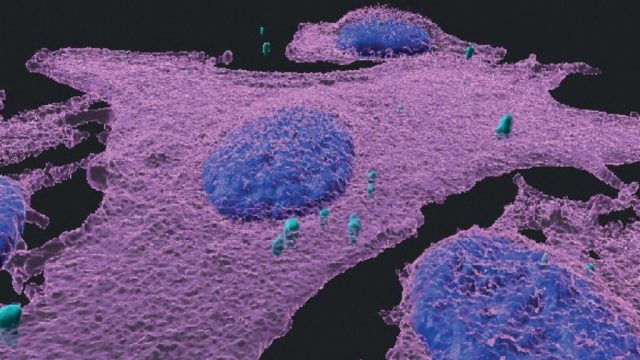
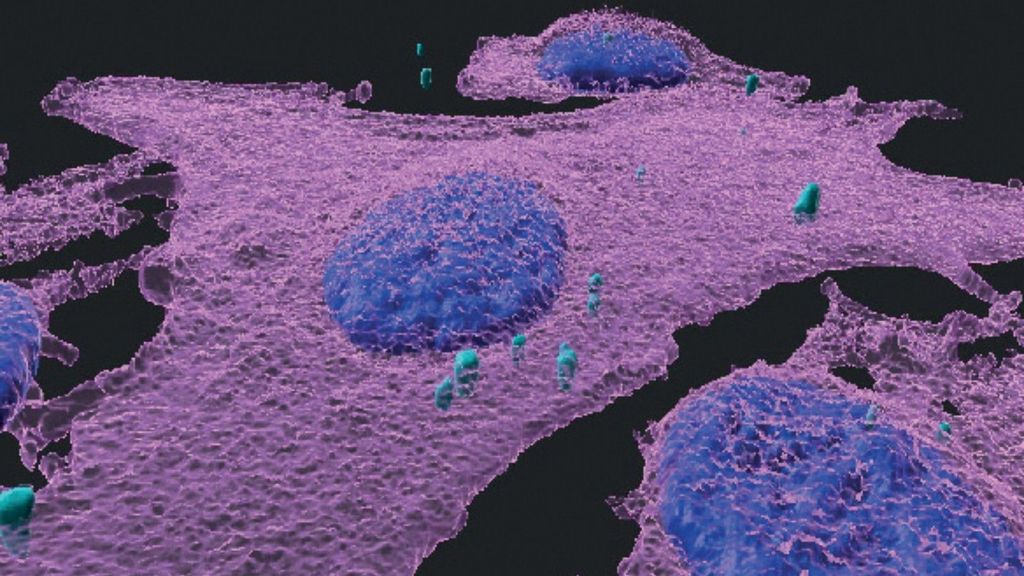
Israeli researchers have developed an immunotherapy platform that inhibits melanoma. (Courtesy of Weizmann Institute of Science)


By Jon Schiller

Immunotherapy is an extremely promising prospect in cancer treatment. This innovative approach boosts the body’s own immune system to destroy cancer cells.


However, malignant tumors sometimes fool the immune system into thinking they are part of the body and do not need to be combated.

Researchers in Israel’s Technion-Israel Institute of Technology recently developed an immunotherapy platform that inhibits melanoma using TRAIL proteins from the immune system to induce programmed cell death (apoptosis) of cancer cells specifically.

The platform also utilizes NanoGhost technology invented by Prof. Marcelle Machluf as a drug-delivery vehicle to transport medicine directly to tumor cells. NanoGhost uses reconstructed mesenchymal stem cells, which the immune system treats as natural cells.

Machluf and PhD student Lior Levy successfully integrated the immunotherapy concept, the TRAIL protein, and NanoGhost technology to create a highly efficient drug-delivery system with the active protein on its outer layer.

Prof. Marcelle Machluf and PhD student Lior Levy. (Courtesy of Technion Spokesperson’s Office)

As described in Advanced Functional Materials, this approach allows reduction of the drug dosage by a factor of a million while maintaining the same treatment effect. In other words, the system can achieve similar results with just 0.0001 percent of the usual dose.

“This integration turns the NanoGhost platform from a ‘taxi’ that delivers the drug to the target into a ‘tank’ that participates in the war,” said Machluf, whose NanoGhost startup has been successfully treating pancreatic, lung, breast, prostate and brain cancer in mice.

“The integrated platform delivers the drug to the tumor and enables a significant reduction in drug dosage yet still does the job. We also showed that our method does not harm healthy cells.”

Produced in association with Israel21C.

Recommended from our partners


The post How To Reduce Cancer Drug Dosage A Millionfold appeared first on Zenger News.
Ancient Hiss-tory: Man’s Monkey Ancestors Passed On Resistance To Snake Venom, Better Eyesight

0

Professor Bryan Fry of the University of Queensland led a study on how descendants of the last common ancestor of great apes and humans, millions of years ago, developed resistance to snake neurotoxins, as well as better eyesight as a defense mechanism. (University of Queensland)


By Martin M Barillas

A common ancestor of the great apes and humans evolved resistance to deadly cobra venoms and better eyesight in response to the reptile threat.


Following the appearance of the last common ancestor of chimpanzees, gorillas and humans, about 7 million years ago, African and Asian primates evolved a resistance to neurotoxic snake venom that related primates of the Americas and Madagascar did not.

“As primates from Africa gained the ability to walk upright and dispersed throughout Asia, they developed weapons to defend themselves against venomous snakes. This likely sparked an evolutionary arms race, evolving this venom resistance,” said researcher Richard Harris, whose study on the subject was published in BMC Biology.

A descendant of African and Asian primates evolved resistance to snake venom in the face of the growing threat from snakes on the ground as these primates moved away from living exclusively in the trees. Rhesus macaques, like those pictured, are Old World primates. (Naima Perveen/CC BY-SA 4.0)

“We are increasingly recognizing the [important role] snakes have played in the evolution of primates, including the way our brain is structured, aspects of language [usage] and even tool use,” said co-author Bryan Fry of the University of Queensland. “This work reveals yet another piece in the puzzle of this complex arms race between snakes and primates.”

The researchers studied the interaction⁠s between synthetic nerve receptors and various snake toxins, so no primates were harmed. Harris and his colleagues compared African and Asian primates with related lemurs from Madagascar, where there are no venomous snakes, and monkeys from the Americas.

In the Americas, while burrowing coral snakes are related to cobras, they are nocturnal and do not pose the same threat to American primates as the cobra.

The King Cobra (Ophiophagus hannah) is among the most dangerous snakes in the world, but mainly hunts other snakes, including its own species, rather than vertebrate mammals. However, its venom is often toxic to humans. (Matt Cardy/Getty Images)

Cobras are active in the daytime, and Old-World primates’ improved eyesight allowed them to spot the deadly snakes and defend themselves.

“But Madagascan lemurs and Central and South American monkeys, which live in regions that haven’t been colonized by or come in close contact with neurotoxic venomous snakes, didn’t evolve this kind of resistance to snake venoms and have poorer eyesight,” said Harris.

Unlike primates in other parts of the world, Madagascan lemurs did not evolve a resistance to snake venom as there are no snakes in Madagascar. (Charles J. Sharp/CC BY-SA 4.0)

While scientists have long assumed that primate evolution was influenced by snakes, Harris said the new study provides further supporting evidence for this theory.

“Our movement down from the trees and more commonly on land meant more interactions with venomous snakes, thus driving the evolutionary selection of this increased resistance,” said Fry.

However, resistance to cobra venom is not absolute. It simply makes humans better able to survive snake bites. “In this case, partial resistance was enough to gain the evolutionary advantage but without the fitness disadvantage being too taxing,” said Fry. He explained that a disadvantage to venom resistance is that nerve receptors can become less efficient and make the species maladaptive.

Edited by Siân Speakman and Kristen Butler

Recommended from our partners


The post Ancient Hiss-tory: Man’s Monkey Ancestors Passed On Resistance To Snake Venom, Better Eyesight appeared first on Zenger News.

Mammoth Discovery: Giant Tuskers And Wild Horses Roaming North America Died Out Only 5,000 Years Ago

0

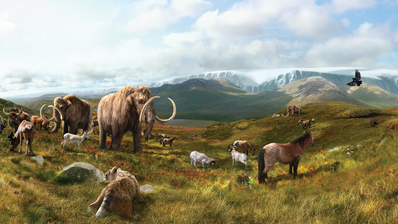
Researchers used DNA capture-enrichment technology developed at McMaster University to isolate and rebuild the fluctuating animal and plant communities during the Pleistocene-Holocene transition of 11,000 years ago in North America. (Julius Cstonyi)


By Martin M Barillas

Horses roamed the North American continent for thousands of years before their disappearance and reintroduction by Spanish conquistadors and adventurers in the 1500s. Tiny samples of soil from Canadian permafrost reveal that they lived there alongside megafauna such as mammoths far longer than previously thought.


Researchers specifically looked at the transition from the frozen Pleistocene Age to the present Holocene era, a period of climatic instability 14,000 to 11,000 years ago. It was then that large mammals, such as saber-toothed cats, mammoths, mastodons and horses, disappeared from the record.

But although mammoths and horses were in decline before that climate instability began, they did not immediately disappear due to human overhunting as previously thought.

In a study published in the journal Nature Communications, American and Canadian scientists examined soil samples taken in the Klondike region of Canada’s Yukon territory, which borders Alaska and was once the gold prospecting mecca. The samples of frozen tundra offer a DNA record of past environments dating back 30,000 years.

A sampling technique developed at McMaster University allowed scientists to obtain soil specimens that featured genomic data for animals and plants of the late Pleistocene and early Holocene eras of Canada’s Yukon. (Tyler Murchie)

“The rich data provides a unique window into the population dynamics of megafauna and nuances the discussion around their extinction through more subtle reconstructions of past ecosystems,” said study author Hendrik Poinar, who directs the Ancient DNA Centre at McMaster University.

The researchers used DNA capture-enrichment technology developed at McMaster University in Hamilton, Canada, to build a detailed picture of the changing flora and fauna inhabiting the area.

They reconstructed ancient environments by examining the billions of microscopic genomic sequences left behind by animals and plants in the core samples.

DNA evidence shows that wooly mammoths and horses continued to live in North America until as recently as 5,000 years ago, during the mid-Holocene period, which began about 11,000 years ago and persists to this day. Previously, researchers had assumed these animals died out some 9,700 years ago.

Researcher Tyler Murchie examines a soil sample from the permafrost of Canada’s Yukon Territory. The sample held genomic data that showed megafauna such as mammoths lived in the region much longer than previously thought. (Andrea Lawson)

During the early Holocene period, when humans began ranging southward, the Yukon experienced significant ecological change. The grassy “Mammoth Steppe” was overtaken by mosses and shrubs on which large herds of horses and bison no longer grazed. Today, grasslands don’t thrive in the northern tier of the continent because megafauna no longer manage them.

“Now that we have these technologies, we realize how much life-history information is stored in permafrost,” said co-author Tyler Murchie of McMaster University. “The amount of genetic data in permafrost is quite enormous and really allows for a scale of ecosystem and evolutionary reconstruction that is unparalleled with other methods to date,” he said.

The researchers say there is an urgent need to gather and archive permafrost samples before climate change ensures they are lost forever.

Even though mammoths are extinct, horses persist in North America. “The horse that lived in the Yukon 5,000 years ago is directly related to the horse species we have today, Equus caballus,” said co-author Ross MacPhee of the American Museum of Natural History. “Biologically, this makes the horse a native North American mammal, and it should be treated as such.”

Edited by Siân Speakman and Kristen Butler

Recommended from our partners


The post Mammoth Discovery: Giant Tuskers And Wild Horses Roaming North America Died Out Only 5,000 Years Ago appeared first on Zenger News.

LaToya Jolly Lost a Job and Founded a Successful Mobile Truck Business

0
Jolly Cakes Owner LaToya Jolly, left, with sister, Tiwana Jolly. (FILE)

By Haley Wilson

The Birmingham Times

Influential US Data On Oil And Gas Relegated To ‘Other News’

0

For the week ending Dec. 3, the federal governmentt reported that commercial crude oil inventories declined by a modest 200,000 barrels per day from the previous week. (Justin Sullivan/Getty Images)


By Daniel James Graeber

A federal report on storage levels of U.S. commercial crude oil and refined products passed without notice as traders focused on the pandemic and corresponding developments in Europe, analysts said.


The U.S. Energy Information Administration publishes weekly data on commercial inventories of crude oil and refined petroleum products such as diesel and gasoline. Gains are usually indicative of a decrease in demand, while the opposite holds for declines.

For the week ending Dec. 3, the agency reported that commercial crude oil inventories declined by a modest 200,000 barrels per day from the previous week, but remain about 7 percent below the five-year average for this time of year.

Commercial storage levels of crude oil are still below the five-year range for this time of year, supporting an elevated price for oil. (U.S. Energy Information Administration)

Total motor gasoline inventories, meanwhile, increased 3.9 million barrels last week, but are also below the five-year range by about 5 percent.

The gasoline inventory level would imply that gasoline demand is moving lower. But looking at the total amount of refined petroleum products supplied to the market, a data point used as a loose proxy for demand, shows levels at or near pre-pandemic levels.

“I think the report looks fairly solid as we saw a bounce back in gasoline demand,” said Phil Flynn, a senior energy analyst at The PRICE Futures Group in Chicago. “That was a concern because a lot of people thought we would see some gasoline demand destruction.”

Broader markets posted heavy declines last week on the emergence of the new, highly contagious Omicron variant of the novel coronavirus that causes COVID-19. But on Wednesday, drugmakers Pfizer and BioNTech said three doses of their COVID-19 vaccine could effectively neutralize the variant.

Crude oil prices, however, did not enjoy the bump higher from the news. West Texas Intermediate, the U.S. benchmark for the price of oil, finished trading Wednesday at $72.36 per barrel, a gain of just 0.4 percent. The contract was on pace to close trading Thursday, however, down about 2.5 percent.

More than any other consumer goods, the price for items such as road fuels are surging sharply higher. (U.S. Bureau of Labor Statistics)

Edward Moya, a senior market analyst at trader OANDA, said the latest report on commercial inventories was mixed, with domestic production accelerating, but storage levels of items like jet fuel — a barometer for air travel demand — looked lower.

“The EIA report was uninspiring,” he said, about the Energy Information Administration.

Moya said there may be lingering pressures from the COVID-19 pandemic, even though Omicron symptoms are reportedly mild. Austria last month imposed tighter social restrictions to contain outbreaks and British Prime Minister Boris Johnson just recently called on more people to work from home and wear masks in public spaces.

“Market players are currently more focused on news on efficacy of vaccines against the omicron variant,” said Giovanni Staunovo, a commodities strategist with Swiss investment bank UBS.

Edited by Bryan Wilkes and Kristen Butler

Recommended from our partners


The post Influential US Data On Oil And Gas Relegated To ‘Other News’ appeared first on Zenger News.

Dino-Soar: How The World’s Largest Flying Predator Got Into The Air

0

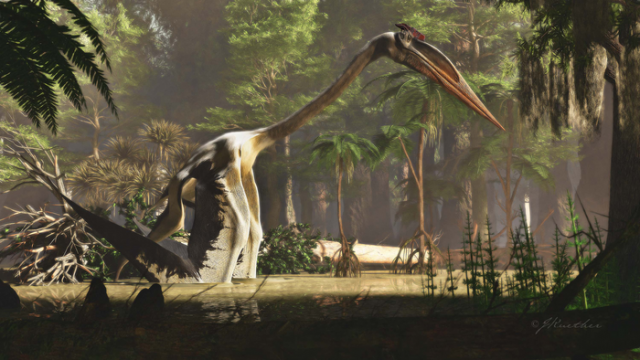
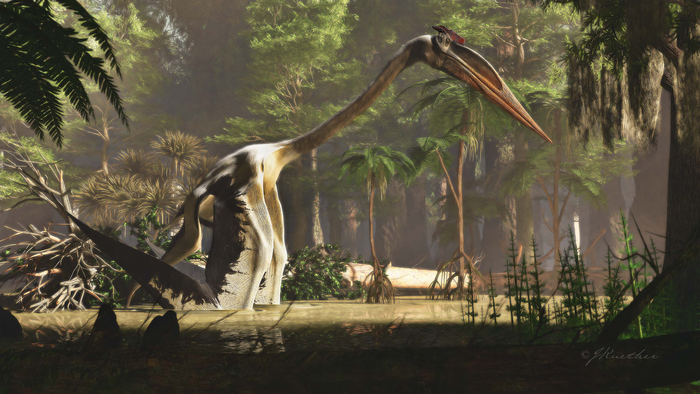
An artist's concept shows that 70 million years ago, Quetzalcoatlus northropi and related species of pterosaurs ranged in the ancient forests of Texas. Scientists have discovered how it moved on land and could leap into the air and take flight.  (James Kuether)


By Martin M Barillas

The secret of how giant pterosaurs were able to get aloft has resisted scientific explanation until now. Based on fossils found in West Texas in 1971, researchers determined the largest flying animal ever could leap into the air and take flight, though it was once thought to gather speed by running and going airborne like a modern albatross.


A monograph and five studies published by the Society of Vertebrate Paleontology  about Quetzalcoatlus northropi, which lived during the late Cretaceous Period, 100 million to 66 million years ago, were some of the first to directly examine its fossil bones.

“This is the first time that we have had any kind of comprehensive study,” Matthew Brown, co-editor of the report, said. “Even though Quetzalcoatlus has been known for 50 years, it has been poorly known.”

The new studies determined that the giant pterosaur probably jumped into the air at least eight feet and then flapped its wings to soar aloft. The studies offer the most complete picture of Quetzalcoatlus, which has long been depicted in movies and art. Scientists had wondered not only how it could fly, but what its diet was.

A sketch of the bones of Quetzalcoatlus northropi. When walking, the animal had a unique gait unlike any other and distinctly different from that of the vampire bat. It had a wingspan of 40 feet and was the largest of any flying animal.  (John Conway)

Quetzalcoatlus northropi had a wingspan of nearly 40 feet and resembled the modern stork or pelican. The studies not only shed light on how it was able to fly, but they also revealed two new pterosaur species — a smaller version of Quetzalcoatlus that had an 18- to 20-foot wingspan. The new species was dubbed Quetzalcoatlus lawsoni in honor of geologist Douglas Lawson, who discovered its larger cousin decades ago.

All the dozens of known Quetzalcoatlus northropi fossils are at the University of Texas, but there also are hundreds of fossils of the smaller species. Researchers were able to assemble a nearly complete skeleton of Quetzalcoatlus lawsoni and determine its flight and mobility. They then applied what they learned to the bigger cousin.

Quetzalcoatlus is named after the plumed serpent deity of the Aztecs, despite evidence that it was covered with fine hair rather than feathers. With a wingspan rivaling airplanes, Quetzalcoatlus had wings 50 percent bigger than the ancestor of modern condors, which in turn are descendants of dinosaurs.

Its legs were six feet long at the hip. Its neck was six feet long, and it had a skull crest four feet long. Like birds, Quetzalcoatlu was warm-blooded, soaring in the manner of modern condors.

Kevin Padian, a co-editor of the report, explained how the giants could fly and move on the ground. “Pterosaurs have huge breastbones, which is where the flight muscles attach, so there is no doubt that they were terrific flyers,” he said.

“Despite two centuries of reconstructing pterosaurs like bats, there is no evidence for this view: Bats are unique and very different from birds and pterosaurs,” Padian said. “The results are revolutionary for the study of pterosaurs — the first animals, after insects, ever to evolve powered flight.”

Paleontologists in the past theorized that the bipedal Quetzalcoatlus moved on the ground on elbows like a modern vampire bat.

“To avoid tripping, the animal first raised its left arm, then advanced its left leg in a full step, then it placed the hand on the ground,” Padian said. “This was repeated with the right leg and then the right paw.” This theory matches the tracks of walking pterosaurs that were found in Southern France in the 1990s, he said.

Its powerful rear legs gave Quetzalcoatlus a jump-start into the air. “If they could jump twice their hip height, to 8 feet, the wings would be able to clear the ground, and they could execute a deeper flight stroke,” Padian said. “This may be the best option for taking off, though it depends on sufficient power from the legs.”

A step-by-step reconstruction of a proposed Quetzalcoatlus launch sequence. The pterosaur crouches, leaps and then starts to flap its wings. (Kevin Padian et al./John Conway)

70 million years ago, the two Quetzalcoatlus species lived in what is now Big Bend National Park in Texas. The land was covered in dense evergreen forests. Each of them revealed distinct lifestyles. While the larger lived like modern herons and conducted lonely hunts along rivers and streams, the smaller species assembled in flocks around lakes, either during mating season or seasonally. Evidence for the latter is that 30 Quetzalcoatlus lawsoni were found in one spot.

Rather than scavenging, Quetzalcoatlus probed lake and stream bottoms with its long, toothless jaws to seize clams, crabs and worms, just as modern egrets and herons do.

“This animal could raise its head and neck vertically, so as to swallow the small prey it seized with its jaws. It could lower the great head far below the horizontal, so if it were cruising above dry land, it might have been able to swoop down and pluck an unsuspecting animal,” Padian said. “Walking about on land, it could move its head and neck to an arc of 180 degrees, capable of full vision all around it.”

Edited by Richard Pretorius and Kristen Butler

Recommended from our partners


The post Dino-Soar: How The World’s Largest Flying Predator Got Into The Air appeared first on Zenger News.

Plut-No! Is Pluto Making A Comeback As A Planet?

0

The IAU in 2006 withdrew recognition of Pluto as a planet based on the current definition that a planet must clear its own orbit, but now researchers are pushing back, saying that definition is based on astrology, not science. This enhanced color image of Pluto was produced by combining four images from New Horizons Long Range Reconnaissance Imager with color data from the spacecraft Ralph instrument. (JPL/NASA/Johns Hopkins University Applied Physics Laboratory/Southwest Research Institute)


By Martin M Barillas

What makes a planet, its orbit or its geology? The way that scientists define planets has changed over the centuries. Now, some planetary scientists say non-scientific concepts were used to exclude Pluto from the pantheon of planets, and are calling for its return.


In 2006, the International Astronomical Union (IAU) determined that Pluto was no longer a planet. But researchers who published a new study in Icarus contend that the IAU’s definition is based on astrology and other folklore rather than science.

New technology, such as the soon-to-be-launched James Webb Space Telescope, may make discoveries that challenge the current definition. “There’s an explosion in the number of exoplanets that we’ve discovered over the last 10 years, and that’s only going to increase as we put better telescopes in space,” said Philip Metzger of the University of Central Florida, lead author of the new study.

The James Webb Space Telescope (sometimes called JWST or Webb) is a large infrared telescope that is scheduled to launch on an Ariane 5 rocket from French Guiana on Dec. 22, 2021. (NASA)

The researchers say that moons are planets too, noting that the current requirement for a planet to clear its own orbit is unnecessary, and the definition should instead focus on whether the body is now or has ever been geologically active.

Under the current definition, a planet clearing its own orbit means it is the most powerful gravitational force in its orbit and does not share or cross its orbit with other celestial bodies. Because the planet Neptune’s gravity influences Pluto, and because Pluto shares its orbit with frozen gases and objects in the Kuiper belt, the IAU determined that Pluto was not a planet.

Metzger said this change had motivated him to improve the standards of taxonomy as “we need to fix this now before we get too far in this revolution with exoplanets.”

The team of researchers reviewed four centuries’ worth of literature on planets and found that Italian astronomer Galileo Galilei’s (1564–1642) geophysical definition of a planet as a geologically active body in space had fallen out of favor over time. Galileo’s definition was based on his observations of the surface features of the moon in 1609 and was accepted well into the early 20th century.

Italian astronomer Galileo Galilei (1564–1642) locked horns with Vatican authorities who held to Aristotelian concepts of geocentrism, contending that Galileo’s discovery that the Earth is a planet was heretical. (Portrait by Justus Sustermans, Royal Museums Greenwich, Public Domain) 

From about 1910 to 1950, the researchers noted a decline in the number of scientific papers written on planets. “It was during that period of neglect that the transmission of… pragmatic taxonomy [handed] down from Galileo [was] interrupted.”

The team also looked at the role that almanacs played. Popular almanacs provide weather predictions based on astrology and planetary positions, relying on an orderly limited number of planets. Even as the popularity of almanacs declined, their influence continued.

“This was a key period in history when the public accepted that the Earth orbits the Sun instead of the other way around, and they combined this great scientific insight with a definition of planets that came from astrology,” said Metzger. Around this time, astrology and its contention that moons are not planets entered into scientific literature.

“This might seem like a small change, but it undermined the central idea [of] planets that had been passed down from Galileo,” said Metzger, adding that planets were defined in astrology as simple and following idealized solar orbits. This continued into the 1960s when the space program sparked interest in planetary research.

Venn diagram of planets, listing a few of their geological characteristics. None of the planets are contained in every circle, while some planets like Mercury and Jupiter share only a few circles with each other. The overlaps tie all circles together, which “argues in favor of the overarching planet concept including all these diverse bodies.” The authors of the new study contend that planetary diversity does not diminish the concept that geological complexity is their unifying hallmark. (Figure reproduced from Metzger et al. (2021)/Icarus/Elsevier)

Scientists then returned to Galileo’s geophysical definition of planets but dismissed moons and other planetary objects as being less than planets. Therefore, they continued in the belief that there was a fixed number of planets orbiting the Sun. This was the definition used by the IAU when it voted on Pluto in 2006.

Clearing the orbit as a planetary characteristic describes a planet’s current trajectory, according to Metzger, but offers no understanding of its nature. This concept had never been used before to define planets.

“It’s a current description of the status of things,” said Metzger. “But if, for instance, a star passes by and disrupts our solar system, then planets are not going [to] have their orbits cleared anymore.” The location of planets, he said, should matter less than their geophysical characteristics.

Metzger wants the IAU to retract the current definition and for scientists to revert to the geophysical definition of planets. He pointed out that Galileo was jailed for his theory that Earth is a planet. “What we’re trying to do in a sense is get Galileo out of jail again, so that his deep insight will be crystal clear.”

Edited by Siân Speakman and Kristen Butler

Recommended from our partners


The post Plut-No! Is Pluto Making A Comeback As A Planet? appeared first on Zenger News.

TV Anchor Art Franklin’s ‘Bold and Powerful’ Entry Into Fashion World

0
Art Franklin displays one of his signature ties inside Treś Fine Clothing where his clothing line is exclusively available. (Amarr Croskey, For The Birmingham Times)
By Ryan Michaels
The Birmingham Times