Over both of Earth’s polar regions at noon local time there opens a region called the polar cusp where very strange things happen. To help scientists understand why, NASA’s Cusp Region Experiment-2, or CREX-2, payload was launched on Dec. 1 from the Andøya Space Center in Norway.
The polar cusp is a gap shaped like a funnel that appears in Earth’s magnetosphere — the magnetic field — that protects humanity from the stream of atomic particles coming from the sun known as solar wind. When the gap is open, the particles can directly access the atmosphere.
GPS and radio signals behave abnormally in the polar cusp and spacecraft inexplicably slow down when they pass through it. “At around 250 miles above Earth, spacecraft feel more drag, sort of like they’ve hit a speed bump,” said Mark Conde, a physicist at the University of Alaska Fairbanks and the principal investigator for the CREX-2 sounding rocket mission.
At artist’s concept shows the cone-shaped polar cusps that admit solar radiation through the magnetosphere and to the Earth’s atmosphere. (Trond Abrahamsen, Andoya Space Center)
Earth’s atmosphere is consistent horizontally around the world and roughly the same density. But air is 1.5 times denser in the cusp than elsewhere in the atmosphere, and no one knows why.
“You can’t just increase the mass in a region by a factor of 1.5 and do nothing else, or the sky will fall,” Conde said.
The mission he leads seeks to find out what are the invisible supports for that extra mass of air. Conde said it will “try and sort out which one is doing the work.”
After nearly two years of delay, CREX-2 set off to study how electrical and magnetic phenomena affect the interaction of solar wind and the tenuous upper atmosphere. CREX-2 will also measure high-altitude winds.
The rocket-propelled canisters, or ampules, in CREX-2 will release tracers in the ionosphere allowing observers to document the effects of solar wind on the upper atmosphere (Andøya Space Center, NASA)
CREX-2 will release 20 rocket-propelled soda-can-sized canisters that go in different directions while releasing vapor tracers at various altitudes. Like Roman candles on the Fourth of July, the particles glow when exposed to oxygen. By catching light from the sun, the particles will create glowing clouds of color caught by the winds, revealing where the winds go.
To observe the high-altitude light show, the dark winter months in the Arctic are ideal. Students across the Nordic countries, including Iceland and the Svalbard Islands of the Arctic Ocean, will document the tracers through most of their journey from various vantage points.
At 250 miles up in Earth’s ionosphere, the CREX-2 rocket releases ampules of particles that react with the scant oxygen to produce glowing tracers observed by researchers. (Lee Wingfield, NASA)
Among the reasons proposed for the density of the polar cusp is that electrodynamics in the ionosphere — the upper atmosphere ionized by solar wind — support denser air indirectly, or generate heat that causes vertical winds keeping the air aloft. Also, the air in the vertical column of the cusp may be denser than the surrounding air. Stacked on heavier air, the dense air at high altitude would float, but it should also create horizontal or vortex-like winds. These are the phenomena CREX-2 is designed to investigate.
“We get about an hour or two each day when conditions are suitable to do the experiment,” Conde said.
Two of the observation stations, at least, need a clear view of the tracers to gather enough data. In 2019, the launch window was open for 17 days, not one of which was suitable for CREX-2 to launch.
Gervonta “Tank” Davis should fight George “Ferocious” Kambosos for the undisputed 135-pound title if he gets beyond Sunday’s WBA “regular” 135-pound title defense against Isaac “Pitbull” Cruz, according to boxing historian Cliff Rold.
Davis (25–0, 24 KOs) will pursue his 17th straight knockout in his third straight pay-per-view event against Cruz (22–1–1, 15 KOs) of Mexico City at Staples Center in Los Angeles in a Premier Boxing Champions event on Showtime Pay-Per-View (8 p.m. ET/ 5 p.m. PT).
Davis–Cruz happens amid a two-week spate of high-profile 135-pound bouts, including last Saturday’s historic upset split-decision victory by Kambosos (20–0, 10 KOs) over Lopez (16–1, 12 KOs), whom “Ferocious” dethroned as IBF/WBA/WBO and WBC franchise champion in just his fourth appearance on American soil.
“Maybe the best thing for boxing is for Tank Davis to fight George Kambosos because Tank’s a young rising star,” said Rold of Davis, a 27-year-old southpaw from Baltimore. “Boxing is healthiest when its young stars are also the champions of their division, and when the guy who sells the most tickets is also the best guy in the division.”
Davis also performs in proximity to appearances by WBC counterpart Devin Haney (26–0, 15 KOs) and southpaw three-division champion Vasyl Lomachenko (15–2, 11 KOs). Haney battles former champion Joseph Diaz (32–1–1, 15 KOs) on Saturday, and Lomachenko fights former champ Richard Commey (30–3, 27 KOs) on Dec. 11.
“Within a two-week span, eight of the top lightweights will have been fighting. Gervonta Davis fights Isaac Cruz, and they’re both in the top 10 at lightweight,” Rold said. “Devin Haney fights Jo Jo Diaz, and they’re both top 10 guys. Vasyl Lomachenko fights Richard Commey, and they’re both rated in everybody’s top 10.”
Australia’s George “Ferocious” Kambosos (left) battered the face of Teofimo Lopez (right) into a bloody mess during last Saturday’s split-decision victory to earn the 135-pound IBF/WBA/WBO and WBC franchise titles. (Ed Mulholland)
Davis expressed his desire to face Kambosos on Wednesday in Hollywood, California, to Elie Seckbach of ESNews, the popular reporter told Zenger during a phone call on Thursday.
“Gervonta was heading to the gym for his workout. Gervonta was in his car, talking just to me out of the window. He was talking about George Kambosos when he said, ‘I’m whooping that ass. Tell him to come see me. Tell him to hold onto those belts because I will whoop that ass for free,’” Seckbach said.
“I think the Teofimo Lopez fight was the perfect storm for Kambosos. Teofimo had an off night. It was the worst Teofimo and the best Kambosos, and that’s not enough to beat Gervonta Davis. I absolutely think Tank should fight Kambosos, and I think it’s an easy win for him.”
In attendance for Thursday’s Haney-Diaz press conference, Kambosos is “looking forward to” being ringside for “The Tank fight,” adding, “it all depends who shows me the most, now.”
Perhaps the premier knockout specialist in the sport, Davis is a three-division and five-time champion as well as a pay-per-view star.
“Dec. 5 is going to be fireworks for sure. It’s going to be something you can’t miss,” Davis said. “Don’t go get your popcorn or anything like that during this fight. This is another tough task, but this is what I’m made for.”
“Tank” has as many straight knockouts as Lopez has victories, more consecutive stoppages than total wins by Lomachenko, and a comparative advantage against common opponents over Lomachenko and Haney.
Davis scored a seventh-round TKO of former champion Jose Pedraza 23 months prior to the Puerto Rican’s route-going loss to Lomachenko. He also stopped Yuriorkis Gamboa in the 12th round 11 months before the Cuban three-division champion’s decision loss to Haney.
Previously unbeaten IBF 130-pound champion Jose Pedraza (foreground) was dethroned by Gervonta Davis (rear) via seventh-round TKO in January 2017. Davis earned his initial crown at age 22, becoming boxing’s youngest reigning champion at the time. (Idris Erba/Mayweather Promotions)
“Gervonta Davis has been under-valued by some media,” said Sean Zittel of FightHype.com. “Gervonta is an elite, pound-for-pound guy with the whole package in terms of power, speed and skills.”
Last Saturday, Kambosos battered and shredded Lopez’s face into a mask of crimson. Blood streamed from Lopez’s nose and lacerations around both eyes. The 24-year-old Lopez had vowed to stop the 28-year-old Kambosos in the first-round only to be knocked on his own butt after an explosive first.
A 13-to-1 underdog, Kambosos rose from a 10th-round knockdown to dominate the 11th and 12th against Lopez, who, in October 2020, won a unanimous decision over Lomachenko to add the Ukrainian’s WBA, WBO and WBC (franchise) 135-pound belts to his IBF version.
“George Kambosos, under the idea that he beat The Man who beat The Man in beating Teofimo Lopez, is the lineal champ with three belts to go with it,” Rold said. “Kambosos is in the best position in boxing right now. There’s a potential bidding war and whatever fight pays the most of those three guys — Davis, Haney and Lomachenko — can get a shot.”
Kambosos may be ringside in Las Vegas for Diaz against Haney, who tweeted on Saturday, “Congrats (Kambosos) well deserved victory. You worked hard for it! Let’s make it happen for all the belts! #RealUndisputed.”
“Mutual respect to Devin Haney,” Kambosos said. “I will probably be there [at Haney’s fight.]”
Rold wants to see Davis-Kambosos.
“If I had to pick one guy to fight Kambosos, I’d want ‘Tank’ Davis, and here’s why: If Tank beats Kambosos, Tank assumes the position as the No. 1 lightweight in the world,” Rold said.
“‘Tank’ would beat The Man who beat The Man who beat Lomachenko — everybody’s top guy when Lopez beat him. The division would then go through Tank, because if anybody wants the big fight, they would have to go through Tank.”
“Tank” earned his initial crown via seventh-round TKO in January 2017 by dethroning previously unbeaten IBF 130-pound champion Pedraza, a crafty switch-hitting Puerto Rican who entered at 22–0 (12 KOs).
Davis obliterated Pedraza with a blistering right hook to the jaw as a follow-up to a trio of head-swiveling lefts. Davis improved to 17–0 (12 KOs), his eighth consecutive stoppage claiming a world title in his first try and, at age 22, making him boxing’s youngest reigning champion.
Pedraza had won three straight 135-pound bouts after falling to Davis before being floored twice during a 40-plus punch 11th round by Lomachenko, a two-time Ukrainian Olympic gold medalist whose run of eight straight knockouts ended against Pedraza.
“Tank is fast, strong and sharp enough to beat Lomachenko,” said Porter, who also serves as a ringside boxing analyst and commentator. “A fight between Tank Davis and Vasyl Lomachenko is the best fight that can be made at 135. I have Tank No. 1 and Lomachenko No. 2 at 135, even though Teofimo has all of the belts.”
Davis floored Gamboa once each in the second, eighth and final rounds in December 2019 to earn the WBA’s vacant lightweight crown. In November 2020, Haney won a unanimous decision over Gamboa.
In December 2019, Gervonta Davis (left) floored three-division title winner Yuriorkis Gamboa (right) once each in the second, eighth and final rounds of a 12th-round knockout to earn the WBA’s vacant lightweight crown. (Amanda Westcott/Showtime)
“I think my chips are with Haney long term because of his size. I think he is the guy who will grow into being a welterweight because of his height and length. But right now, I’ve gotta give it to Gervonta because of Lopez losing recently, and I think that his wins over Santa Cruz and Barrios have been under-valued,” Zittel said.
“I think Haney going 12 rounds with Gamboa after Gervonta stopped Gamboa in the 12th lent more credibility to Gervonta’s win over Gamboa than a lot of us originally thought. Gervonta is coming into his prime, and he has the power that Haney doesn’t quite have. Gervonta has under-rated skills, some of the best coordination in boxing, and is definitely one of the top 10, pound-for-pound fighters in boxing right now.”
Davis’ past two victories were a sixth-round KO of four-division champion Leo Santa Cruz (Oct. 2020) and an 11th-round TKO that dethroned previously unbeaten WBA 140-pound champion Mario Barrios (June 2021).
Santa Cruz was knocked out cold and stopped for the first time in his career by Davis’ ripping left uppercut, and Barrios was floored twice in the eighth and once in the 11th, falling to 26–1 (17 KOs).
“Pedraza was a world-class fighter. But the [narrative] was, ‘well, Pedraza fought the wrong fight,’” said boxing analyst Ray Flores of Premier Boxing Champions, TGB Promotions and Triller.
“When Gervonta knocked out Leo Santa Cruz at 130 pounds, it was, ‘well, Santa Cruz was a blown-up 126-pounder.’ When he went up two weight classes to 140 to beat Barrios — who was undefeated at the time — it was, ‘Barrios had a secondary title.’”
Fighting for the third time this year, Cruz is 17–0–1 (12 KOs) since falling by eight-round unanimous decision to Luis Miguel Montano in February 2016.
In consecutive bouts in February and October 2020, Cruz earned a 10-round majority decision over Thomas Mattice, who entered at 15–1–1 (11 KOs), and scored a two-knockdown, 53-second stoppage of two-time world title challenger Diego Magdaleno.
Cruz followed those triumphs with consecutive 12- and 10-round unanimous decisions over Jose Romero and Francisco Vargas in March and June, respectively. Romero entered at 24–0 (8 KOs) and Vargas at 27–2–2 (19 KOs).
“[Cruz] has an action-packed style himself and he’s looking to knock ‘Tank’ off his throne. There’s a big opportunity for Cruz to stand up for his country and take ‘Tank’ out,” said Leonard Ellerbe, CEO of Mayweather Promotions. “‘Tank’ is always ready. He stays ready, so he doesn’t have to get ready. This fight is going to be nothing but fireworks on December 5 and it’s definitely ending in a knockout.”
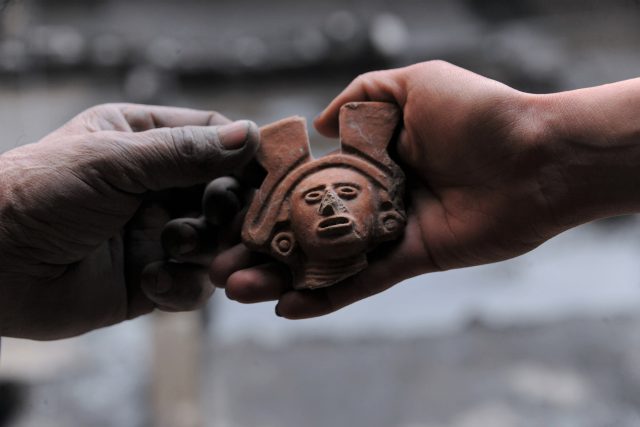
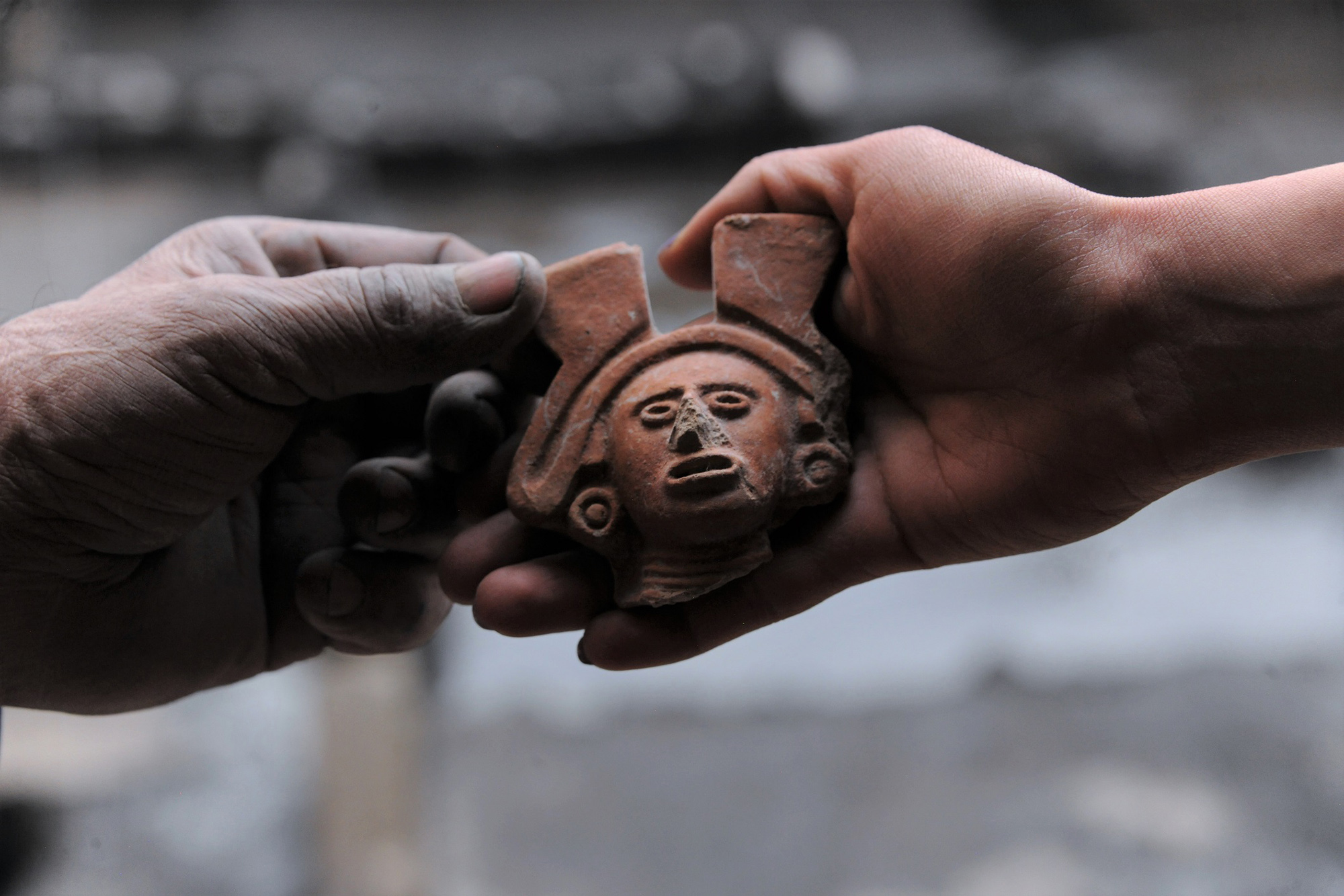
Archeologists in Mexico have unearthed an altar complete with a pot containing human remains that they say was part of a ritual to mark the fading world of the indigenous Mexica after Spanish conquest.
The discovery took place near what is now Garibaldi Plaza in Mexico City. Between 1521 and 1610, which is when the altar and pot are believed to have been made, the city was called Tenochtitlan.
A team of experts from the National Institute of Anthropology and History confirmed that the location of the discovery was once the home of a Mexica family.
In the property of Eje Central Lazaro Cardenas no. 53, the remains of a house that belonged to a Mexica family the minor neighborhood of Tezcatzonco, in Cuepopan, sometime between 1521 and 1610. (Mauricio Marat, National Institute of Anthropology and History/Zenger)In the property of Eje Central Lazaro Cardenas no. 53, the remains of a house that belonged to a Mexica family in the minor neighborhood of Tezcatzonco, in Cuepopan, sometime between 1521 and 1610. (Mauricio Marat, National Institute of Anthropology and History/Zenger)
“In honor of this fading world, the inhabitants of an ancient home performed a ritual in the 16th century, possibly between A.D. 1521 and 1610, to testify that this was the end of a cycle of their lives and of their civilization,” the Mexican Ministry of Culture said in a statement.
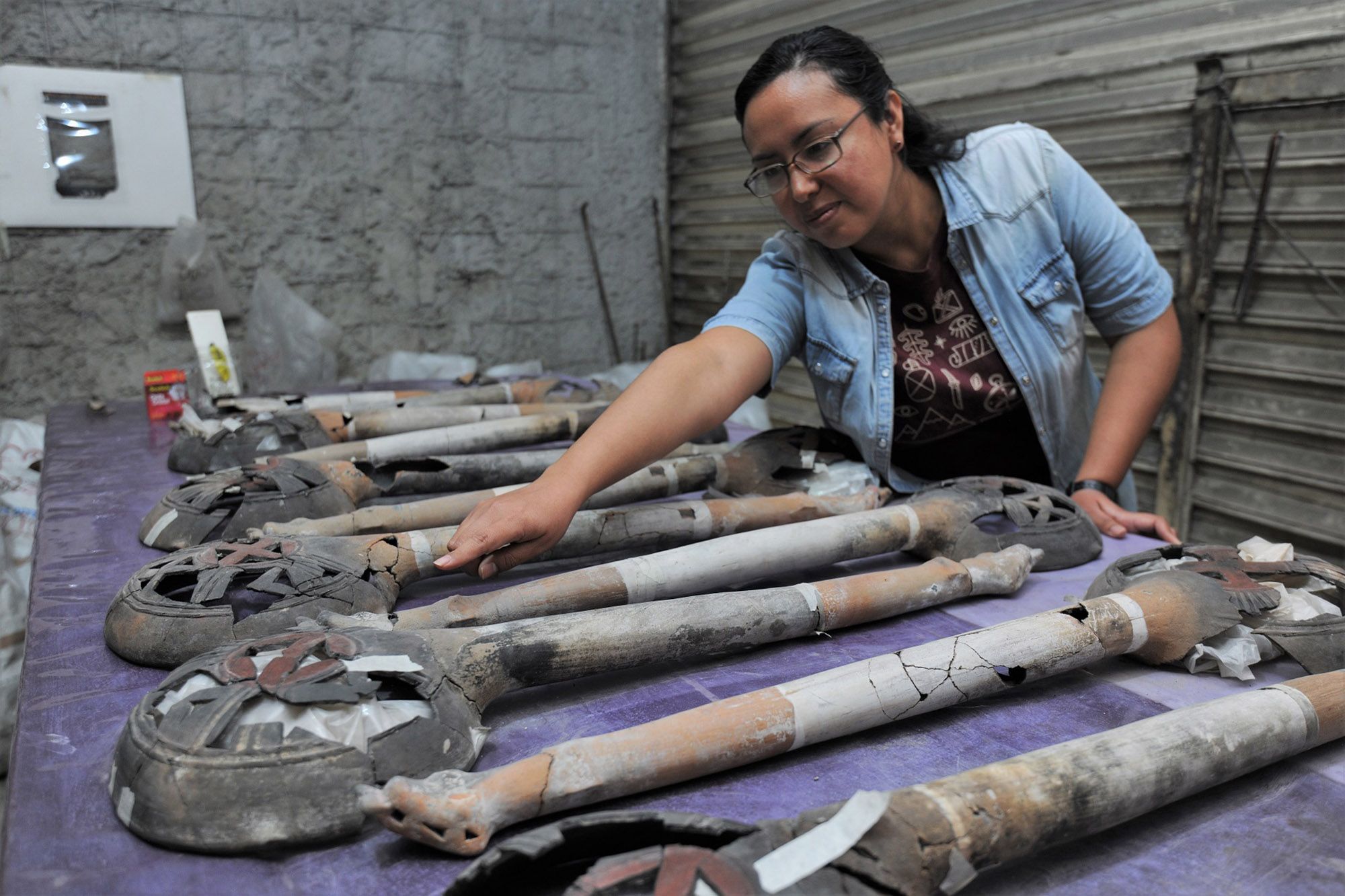
“Between songs and the smell of copal, the residents arranged on the patio an offering with multiple elements, among which were a pot with bone remains (human ashes) and 13 polychrome incense burners of almost one meter [about 3 feet] in length, used to burn the resin.”
Archeologist Mara Abigail Becerra pointed out the significance of the discovery within the context of the “500 years of indigenous resistance” that was proclaimed this year on the 500th anniversary of the Spanish conquest. (Mauricio Marat, National Institute of Anthropology and History/Zenger)Straight divergent bowl of the Texcoco type, white on red, found at the excavation site. (Mauricio Marat, National Institute of Anthropology and History/Zenger)
Copal is a tree resin that was used by pre-Columbian Mesoamerican people as an incense in rituals and ceremonies.
For Mara Abigail Becerra Amezcua, coordinator of the archeological finds, the discovery is significant within the context of the “500 years of indigenous resistance” proclaimed in the country this year, on the occasion of the 500th anniversary of the Spanish conquest.
The year 1521 marked the fall of Tenochtitlan, the capital of the Aztec empire, a decisive victory for the Spanish that marked the downfall of the Aztecs.
Archeologists discovered near Plaza Garibaldi a rich Mexican offering deposited after the conquest of Tenochtitlan, now Mexico City. (Mauricio Marat, National Institute of Anthropology and History/Zenger)Globular pot used as a funeral urn with vessels placed as a cover. (Mauricio Marat, National Institute of Anthropology and History/Zenger)
Mara Becerra said that this discovery is significant because this offering, located at a depth of about 13 feet, was covered with several layers of well-consolidated adobe to keep it from prying eyes. She said this shows the mettle of those Mexica who remained in Tenochtitlan after the city was taken by Spanish conquistador Hernán Cortés.
The foundations of the Mexica housing complex were found in the middle part of a modern property. For Mara Becerra, the “most striking discovery within this complex is the offering under the floor of the interior patio,” confirming the “sacred character” of the location. After being a significant spiritual space for the native Mexica people and home to a temple, it went on to become the Santa Maria La Redonda neighborhood and home to a Christian church.
“The set of 13 incense burners expresses a particular symbolism, since they were arranged on two levels and in two different orientations: some in an east-west direction, and others in a north-south direction, as an evocation of the 20 thirteen that made up the tonalpohualli, the 260-day Mexican ritual calendar,” Mara Becerra said. “Likewise, it is worth mentioning that the number 13 alluded to the levels of the sky.”
Marie Miller began performing at age 12, playing local music gigs in Virginia’s Shenandoah Valley. It was highly stressful, she told Zenger — sometimes hundreds of people watching she and her sister on stage.
Fast-forward 20 years and Miller has played in front of not hundreds of people, but hundreds of thousands, live on CNN and Fox. She’s shared the stage with legacy acts like Aretha Franklin and Five for Fighting. And her songs have been streamed 8 million times, and featured on CMT, VH1 and “Dancing With The Stars.”
It’s a far cry from Miller’s humble start, and from the vast majority of musicians who the federal government reports have “long periods of unemployment” and who have “permanent…jobs in other occupations.” Even during the pandemic, Miller was able to continue growing her business, expanding her target markets from ticket buyers and festivals to corporate event planners.
Miller attributes much of her success to media coverage that puts her above the competition. “Anyone can send a YouTube video with a few hundred views,” she told Zenger. “I send my videos with a HuffPost article where I was called ‘the next Taylor Swift’ and several Billboard 100 articles about my singles. This creates tremendous brand value which secures more shows, earns more money per show, and creates long-term passive revenue from streaming.”
Marie Miller attributes much of her success to media coverage that puts her above the competition. (Photo by Stan Murzyn/Courtesy Marie Miller)
Creating more sales and bigger profits
For Miller, there is a linear relationship between media coverage and improved sales. More festivals and venues want to hire her, which creates core revenue on which she can rely week to week and month to month. And when corporate opportunities arrive, she can charge big bucks which are highly profitable.
The sales cycle for your business may be more complex, so media coverage will likely act less as a direct lead generator and more as a lead accelerant as part of a larger strategy.
An article or opinion piece can be used to create more trust with existing prospects through your newsletter and social media, and as a blog post on the company website. Cold calls will become warmer because new prospects want to know more about the solutions you provided in an interview or essay. And when all prospects look you up before meetings, your insights will be given more credibility because their trusted media sources trusted you.
“In a global market where most products are commodities, individuals make deals happen — and buyers will speak to the most credible and visible salesperson first,” said sales trainer and Salesman Podcast host Will Barron. “Our podcast drives 17,000 monthly leads and half of our revenue, and was the key to our recent HubSpot partnership, which led to a prominent speaking opportunity, more press and more visibility.”
In a global market where most products are commodities, buyers will speak to the most credible and visible salesperson first, said sales trainer and Salesman Podcast host Will Barron. (Courtesy Will Barron)
Long-term growth opportunities
Media coverage that creates more revenue and more profits today can also create long-term revenue opportunities by positioning one’s brand in front of new — and sometimes bigger — clients. Miller’s core audience is the casual music listener. But her strategy is “to reach anyone who likes my genre of pop-country.”
“I have purposely created a brand which engages my core audience while opening new doors to” customers of all kinds, she told Zenger, “from concert ticket-buyers to corporate event organizers to people who stream from their homes.” Miller reaches these diverse markets by earning great press in local outlets which directly lead to more ticket sales per show.
“Without shows, I have no business,” said Miller. “Without concert venues and corporate events, I have little profit. And without streaming, I have no long-term passive revenue. Each of these income sources reaches a different target market, and each one is critical to my success.”
“We hired Marie to play in 2019 because she’s so well-known to our core audience through her performances and media coverage,” said Appaloosa Festival Artist Liaison Brian Lohmann. “We rely on media for many of the artists we hire, because we can’t see every applicant play in person before the festival. Coverage in outlets like Relix, Bluegress Today, and Rolling Stone give us confidence that up-and-coming talent will resonate with attendees in the same way as Marie and our Grammy award-winning performers.”
The Shenandoah Valley’s popular Appaloosa Festival. (Andrew McCauley/Courtesy Shenandoah Valley Appaloosa Festival)
What about negative media?
It may not all be positive media coverage. What do you do if you get negative press?
Bill Greene, a veteran strategic communicator in the Washington, D.C. political scene, observed that “speed is essential in responding to bad press. Use your press contacts, social media, or outside validators to respond respectfully and forcefully – and preferably in the same news cycle. And when you do hit PR turbulence, keep track of how you respond, so you’re always prepared to give your side of the story”
He added, “In whatever field you are in, always remember the wisdom of pitcher Catfish Hunter, who said, ‘The sun doesn’t shine on the same dog’s a** every day.’ What that means for anyone in the public eye, even in less controversial business settings, is you can fully expect a little bad press now and then. If you are honest and hard-working and people like you, or you’ve carved out a niche, people will like you even more when they see you defending your honor or overcoming a challenge.”
Steve Susens, a veteran communications director who specializes in crises communications, agrees that rebuttal speed is critical. “Addressing the situation immediately is best, even if it means providing a more general statement that the company or individual is aware of the situation and looking into it and will provide a more detailed response once all the information is available,” he said.
“In the meantime, working with a trusted media connection to give your side of the story is always advantageous. This will provide a better forum to get the right messages out in a fair and non-combative manner to help address the situation,” said Susens, who has served in numerous conflict areas, including Iraq, Afghanistan and Yemen.
Supercharge sales today and tomorrow
Miller has been on a steady climb for two decades because of her hard work and unique brand positioning. Along the way, great media coverage has convinced her target markets to hire her more often and pay her more money than the competition. Business owners can take her success and make it their own by having a media strategy which:
Makes you stand out from the competition – like Miller’s endorsements from HuffPost and Billboard.
Uses press to create greater following and engagement for newsletters and social media content, and quality content on the company website.
Reaches your target markets directly – like Miller’s songs which aired live on CNN and Fox – to turn cold calls into warm conversations.
All companies want better leads, faster sales, and bigger profits. The right media strategy can help you do all three today, tomorrow, and – as Marie Miller has proven— for years in the future.
A study of dinosaur fossils found in northern Italy may overthrow assumptions about the Mediterranean region of millions of years ago, when islands and land bridges in a sea called Tethys were connected to mainland Europe. This is the first time multiple dinosaurs of the same species have been found together in Italy.
An international team coordinated by Federico Fanti of the University of Bologna found seven, or possibly eleven, individual dinosaurs, of which one is nearly complete, in Villaggio del Pescatore in northeastern Italy. They were discovered in a former limestone quarry, where the first isolated dinosaur remains were found in the 1990s.
The nearly complete skeleton of Bruno, a specimen of Tethyshadros found at Villaggio del Pescatore in northeastern Italy. (P. Ferrieri, courtesy of Superintendence of Archeology, Fine Arts and Landscape of Friuli-Venezia Giulia)
Dinosaur fossils in Italy are rare. Between 230 and 66 million years ago, during the Cretaceous period when dinosaurs reigned over much of the Earth, the continents and oceans were not in their current positions. Much of the globe was covered by a proto-Mediterranean sea called Tethys, which was strewn with small islands, far from what eventually became Africa and Eurasia.
The mega-continents of Laurasia and Gondwana ultimately broke apart into the continents known today through the process of continental drift, over millions of years.
When scientists found the remains of a Tethyshadros insularis nearly 30 years ago, they were excited because of the relatively small size of the individual dubbed “Anthony.” Because the Villaggio del Pescatore site was believed to have been part of an island in the Tethys Ocean, some experts considered the skeleton to be a dwarf version of the species. The so-called “island rule” holds that dwarfism arises among animals living on small islands where there are fewer resources.
In a study published in Nature Scientific Reports, the team described a newly discovered individual Tethyshadros they named “Bruno” as well as at least six other skeletons of the same species. In addition, the team found fossilized fish, flying reptiles, crocodiles and crustaceans, offering a unique view of the region during the Cretaceous.
Skeletal reconstructions of the two individuals of Tethyshadros insularis, with the immature specimen nicknamed “Antonio” (above) and the mature, newly described skeleton of “Bruno” below. The smaller specimen had once been thought to be a dwarf of the species. (University of Bologna)The skull of Bruno, the newly described skeleton of the dinosaur Tethyshadros insularis found at Villaggio del Pescatore in northeastern Italy. (A. Giamborino, courtesy of Superintendence of Archeology, Fine Arts and Landscape of Friuli-Venezia Giulia)
The new study determined that Antonio was not a dwarf but a youngster. The bigger Bruno was older but perhaps still growing when it died.
The team also gathered geological evidence that dated the site and its fossils to approximately 80 million years ago, during the Cretaceous period, making them approximately 10 million years older than previously believed. At that time, what is now northeastern Italy faced the immense Tethys Ocean but was connected to Asia and Europe. The study concluded that the region was not only characterized by islands but also offered land routes for large animals such as dinosaurs to migrate across land bridges that became modern Italy.
The Villaggio del Pescatore site is protected under Italian law. The fossils found there are on display at the Museum of Natural History in the city of Trieste.
Once a rebellious teenager, Aurelia Geddis, now 33, is a spiritually-based, single mother to a young boy and owner of Sweet Soul Catering.
Geddis’ creations range from fried chicken and collard greens to sweet potato cheesecake and apple pie, from a soul-food feast with creamy macaroni and cheese to an intimate tea party with cucumber sandwiches and Charcuterie boards.
“Cooking is very therapeutic to me,” said Geddis, of Woodbridge, Virginia. “I thought to myself that I wanted to make sweet treats and soul food, so I came up with the name Sweet Soul. I even had a scripture to line up with what I wanted to do. Psalm 34:8: ‘Oh taste and see that the Lord is Good, Blessed is the man that trusts in Him.”
“Cooking is very therapeutic to me,” says entrepreneur Aurelia Geddis. (Courtesy of Aurelia Geddis)
The eldest of three daughters born to Herbert Geddis, a nondenominational deacon, and Toni Geddis, a minister, Aurelia was the apple of her parents’ eyes. Once she past her growing-up years, she started her business in 2015.
Geddis talks with Zenger about her journey from an 18-year-old who was twice kicked out of her home to successful culinary businesswoman.
Zenger: What is the origin of your business, and how did you arrive at that name?
Growing up, Aurelia Geddis (left) had a pretend restaurant with her sisters Te’onya (right) and Shanelle. “To this day, I’m still taking their orders,” she says. (Courtesy of Aurelia Geddis)
Aurelia Geddis: I started it in 2015 with just baking and making a few dishes for people at church. I remember writing a Facebook post with suggestions on a name. With my sisters Shanelle and Te’onya, I had a pretend restaurant called Ree’s Palace.
I had a notebook and took my sisters’ orders. The menu consisted of peanut butter and jelly, ramen and anything microwavable. My sisters always sent me ideas and the craziest and hardest recipes. To this day, I’m still taking their orders.
Sweet potato cheesecake topped with pecans and caramel sauce: a sweet specialty of Aurelia Geddis. (Courtesy of Aurelia Geddis)
Zenger: Can you describe what you do?
Geddis: I am a caterer. I provide services for people who need cuisine at their events, parties, weddings, funerals, dinner parties, etc. I have had the honor to cater at some awesome events. I have catered several weddings and proms. I’ve done the Taste of Black D.C. with the University of the District of Columbia, an event at the Embassy of Haiti.
At an event with the Greater Washington Urban League, I actually won the chefs’ competition. All of these chefs owned their restaurants, so I felt like I understood the assignment of what I do. I’m a black single mother.
Zenger: Has COVID been a factor?
Geddis: Pre-COVID, the business got so busy that I had to start rejecting business. It was stressful. I could tell I was starting to experience burnout. So when COVID happened, the break was needed. I tried to think about how to revamp the business to still accrue business without having to travel to my clients.
I started making seasonings and extracts. I plan to start advertising it in 2022. I have really advertised recently, but now that things are opening back up, I have taken on more events. I literally started out doing small things and making mistakes.
But I expanded to catering weddings and large events with over 200 people. I’m tired, but I truly love it. Now, I plan to do smaller events and dinner parties and meal prepping. I’ve also entertained the idea of being a personal or in-home chef.
Veggie shots and snickerdoodle cupcakes are among Aurelia Geddis’ creations for her catering business. (Courtesy of Aurelia Geddis)
Zenger: Can you characterize your bond with your parents and their spiritual role in your life?
Geddis: My relationship with my parents wasn’t always great. As a teen, I understood that we lived in a nice home in a nice neighborhood, but I also understood that we didn’t really have money and funds were tight. There was a time when I was being rebellious.I got kicked out of the house.
Zenger: How was life for you at that time?
Geddis: Even while kicked out, I would come visit, and they loved me. There were arguments, but I knew they loved me. I came back after a few years and got kicked out again. I lived with my pastors for a couple of months while they mentored me, loved me and convinced me I should go back home and reconcile with my parents.
My mom raised us in church. I stayed in the church I was raised in and would see them sometimes. I constantly felt God pulling on my heart, bringing me back to a life of faith instead of partying and entertaining bad influential people. I knew that God was the only way to go when I felt I didn’t have anywhere else to go.
Zenger: Were there challenges raising Caleb as a single mother?
Geddis: Being pregnant was the most difficult thing. I was having a baby with a man that I didn’t want to be with. I was depressed all day. The day I had Caleb, I wept so hard when I heard his cry. It was the most beautiful and joyous thing I’ve ever heard. I remember not sleeping at night to make sure he was alive and breathing.
I silently went through postpartum. My hair fell out and support was not coming through like I wanted it to. My son made me grow up. He makes me make better decisions. He’s the reason why I went back to school and got my degree. He’s the reason why I decided that I wouldn’t continue a relationship with his father.
My son understands that I work with cooking. There have been several late nights with being in the grocery store, doing homework and prepping meals. He rarely complains about it. We now have a deal that his job is to go to school and do well, and mine is to make the money, so we can go on vacations.
My ultimate goal with him is to raise him as a gentleman who treats women well, tells the truth, prays and seeks God for all things. Everything else will fall into place. We pray every day for his teachers and classmates and of course for my future husband.
Aurelia Geddis with her 7-year-old son, Caleb. (Courtey of Aurelia Geddis)
I recently had a meeting with his teacher. She had only good things to say about his behavior and kindness to other students. He sits next to a student that is on the spectrum, and she states that he is so kind and patient with him when other students aren’t. That only shows me that I’m parenting him well.
Zenger: How did you develop your business acumen?
Geddis: My independence as a child allowed my parents to trust me more with finances. After all the years of craziness, they helped me purchase my first car and my second. My mom always volunteers my services to any person she comes in contact with. She is the ultimate networker. My dad loves to eat. He’ll tell me if the dish was good or not.
Before I had my son, I always said I wanted to purchase a home. I’m in awe of how I actually bought a home, revamping it during the pandemic. I found out I had identity theft when my credit report was run. It took me a few months to get it cleared up.
I went to an open house on a Sunday afternoon with my dad. When I walked in, the home needed work. The previous owner didn’t take great care of it, so the cost was under market value. I was able to take advantage of a loan and get renovations included in my mortgage. Every area of my house is new. All things work together for good to those who love God, to those who are called according to His purpose.
Zenger: What is your educational background?
Geddis: In high school, I contacted a culinary artist from Johnson and Wales [University]. The day, I called my mom to let her know what I wanted to do, she was calling me. She said God told her what I should be going to school for, and we both said the culinary arts. I actually got accepted to Johnson and Wales.
Creations by Aurelia Geddis’ Sweet Soul Catering. (Courtesy of Aurelia Geddis)
But because of the family dynamic and the finances at the time, my dream school was not in the picture. I would cook for different church functions and my church family would always hype me up and encourage me to do more. One day, I just got the courage to stop making excuses and just start.
After high school, I went to community college. I didn’t really go to classes or do well and was in and out of school for a while. It wasn’t until after I had my son that I wanted to be a good example to him. I enrolled in Mid-America Christian University and graduated in 2017 with my bachelor’s in business administration with a focus in accounting and ethics.
Zenger: Are there any causes you aspire to?
Geddis: When I attended the Greater Washington Urban League, I promoted healthy eating for low-income families.
There are several diseases the black community is more susceptible to because of the food they have access to or what is more or /less expensive.
I was able to create a meal to show that we can eat healthy — even in the means that we live in. I also created a video showing how to cook healthy meals they promoted on their site.
Zenger: Was racism ever an issue?
Geddis: I never really thought I could accomplish as much as my Caucasian counterparts. When advertising myself, I wouldn’t get as many hits or business. But through faith and prayer, resources and businesses were drawn to me like a magnet. My family, friends and extended family allowed me to believe I could accomplish anything.
When Sandor Martin defeated Mikey Garcia in October, many observers dubbed it the “Upset of the Year.” Not to be outdone, last weekend, George Kambosos made his submission for that crown when he defeated Teofimo Lopez to become the unified lightweight champion.
Now, Isaac Cruz has the opportunity to seek the “UOTY” on Sunday, when he faces fierce puncher Gervonta “Tank” Davis, who is 25–0, with 24 of those wins coming by way of knockout. Davis is easily becoming one of boxing’s biggest attractions due to his high knockout ratio, charisma and willingness to move up in weight to face guys much bigger than he is.
However, Cruz is 22–1–1 and hasn’t tasted defeat in five years. Cruz is currently on an 11-fight win streak and looks to bring the Tank to a screeching halt on Sunday night. Sundays aren’t typically made for violence, but Davis-Cruz has all the makings of a classic lightweight war. In fact, Cruz promises one.
“Pitbull” sat down with Zenger to discuss the significance of a win this weekend, his preparation for Davis and how he plans to shock the boxing world.
Percy Crawford interviewed Isaac Cruz for Zenger.
Zenger: How has training camp been in preparation for your fight against Gervonta Davis on Sunday?
Percy Crawford interviewed Isaac Cruz for Zenger. (Heidi Malone/Zenger)
Cruz: My preparation was very varied and versatile because we had a lot of names that were being brought to us as potential opponents. We just made sure to stay ready for any and all opponents. Training camp has been very productive. I have been doing a variety of things that you will be able to see on Sunday night.
Zenger: Fighters are creatures of habit, and most fights of this magnitude take place on a Saturday night. Does it change your approach at all that this fight is being held on Sunday night?
Cruz: It doesn’t affect me at all. That’s what preparation is for. We knew this fight was going to be on a Sunday, so we prepared both mentally and physically for it. We will be ready for whatever it takes to come out with the win.
Zenger: Have you been inspired by upsets like Sandor Martin’s win over Mikey Garcia, George Kambosos’ win over Teofimo Lopez? Do you feel you can keep this “Year of the Upsets” going?
Cruz: Absolutely! That’s been our mindset, to be able to pull off the upset against Gervonta since the fight was announced. Regardless of what anyone else does, I’m going to be the one pulling off the biggest upset of the year when the time comes.
Zenger: Did you have to get with your team and really go through a thought process before accepting this fight when Rolly Romero was pulled from the main event, or was this an easy decision?
Cruz: No, I didn’t even have to think about it. I knew this was my opportunity. I’m ready to face him and show him that I am a quality opponent.
Zenger: Davis has grown accustomed to fighting guys so much taller than him. Do you see your being shorter than him as an advantage?
Cruz: When it comes to height, it won’t affect me at all, and I’m sure it won’t affect him. Each opponent is different. It doesn’t matter to me how tall or short somebody may be, because in the end, my ability will show in terms of what I can do inside of the ring.
Zenger: You are an aggressive fighter from the opening bell, and Gervonta maintains his power throughout the fight. That being said, can we expect a more cautious version of Isaac Cruz early on until you figure things out?
Cruz: My training is to come out and be aggressive from the first round. I’m not going to betray what got me here. I’m going to be the same Isaac Cruz that I have always been, and I will give it my all from the get-go.
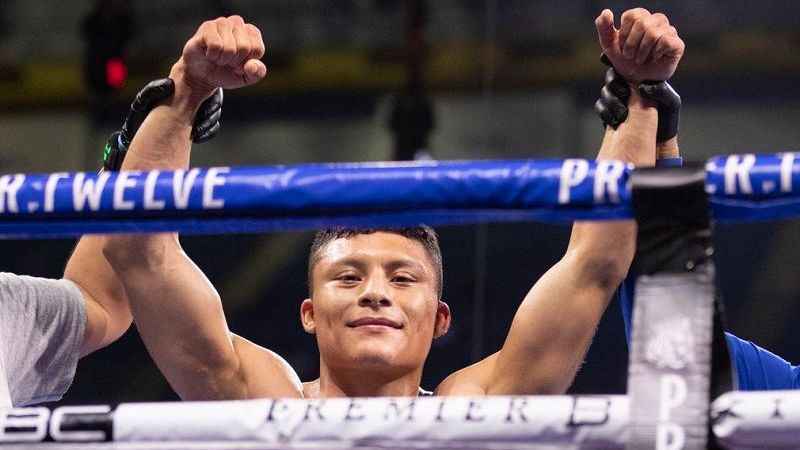
Mexican-born Isaac Cruz is confident he can beat Gervonta Davis, a formidable foe who is undefeated. (Sean Michael Ham/Mayweather Promotions)
Zenger: Does him being a southpaw pose any issues for you?
Cruz: That doesn’t worry me at all. The key point for me is to always be focused and take advantage of the opportunities that are given. Being destructive can be costly, so I will be on my game and ready to counter anything that he throws.
Zenger: Have you studied film on Gervonta, or do you prefer to figure your opponents out in real time, during the fight?
Cruz: Yes! You always have to study your opponent. There is no taking anything for granted, especially against a quality opponent like Gervonta Davis. Having said that, I’m confident in my preparation. When I come out to that ring, I will have studied Gervonta and be confident in my ability as well.
Zenger: What would it mean for you to take Gervonta’s title, while handing him his first defeat?
Cruz: It would be huge. It would be something that I have dreamed about my whole life. That’s why I will be more than ready to accomplish this on Sunday night.
Zenger: For anyone who hasn’t watched an Isaac Cruz fight and will be tuning in for the first time on Sunday, what can they expect from you?
Cruz: This is going to be a war. You can expect me to give it my all. This will be two fighters that are going to be going at each other. It’s going to be an extremely fun fight. I cannot wait to see you at Staples Center, or tune in on pay-per-view — you’re not going to regret it.