Home Blog Page 539

Actor Jaime Callica Loves Being Tagged The New ‘King Of Christmas’


0

Jaime Callica appears in several films this holiday season. (Russell Baer)


By Jacob Smith

Christmastime is nearly upon us.


As December lights, eggnog, and sugar cookies have become synonymous with this time of the year, one man is rapidly establishing himself with the holiday season on the small screen, actor Jaime Callica.

In the last few years, Christmas movies have been a refuge for family-friendly entertainment and have grown quite the following in that time. Hallmark Channel and Lifetime Network have been at the forefront of December entertainment with enough content to create their own streaming service.

Canadian-born Callica appears in several films this holiday season, including Lifetime’s “Merry Liddle Christmas Baby,” with singer/actress Kelly Rowland.

The new “king of Christmas” says, “I love it. I’m the person that if you watch anything that I’m in, and I can get a moniker or title or such, who doesn’t love Christmas?” (Russell Baer.)

Callica’s resume in the last few years has some in the industry labeling him “the new king of Christmas” — a label Callica is happy to accept.

“I love it,” he told Zenger. “I’m the person that if you watch anything that I’m in, and I can get a moniker or title or such, who doesn’t love Christmas?

“Christmas is a phenomenal time for most people, so if they are calling me the king of Christmas, I’m taking it.”

Callica’s workload could also earn him another moniker: the hardest working man in showbiz. Despite the lockdowns and working between the United States and Canada, Callica has enjoyed a frantic work pace that keeps him motivated even if those close to him think he is overworked.

“In 2021, Since my second Disney Plus movie, entitled ‘Under Wraps,’ the longest gap I’ve had off was two weeks. I’ve gone from job to job, which is such a blessing, and I feel so fortunate because the reality is, especially during COVID, I know a lot of actors who haven’t worked at all.”

Callica has no plans on letting up anytime soon.

“I like to keep my foot on the pedal because I’d like to get to the realm where I am doing big blockbuster theatrical movies. But I never want to abandon TV movies and TV shows.

“I like to work. I feel more alive when I’m on set”

Callica’s busy schedule was years in the making. Getting the recognition he receives today was anything but easy. It wasn’t that long ago that the actor was struggling to find a job despite putting in the time to earn one.

Jaime Callica now feels like he is exactly where he needs to be at this point in his career. (Russell Baer)

“Between 2013 and 2016, I had booked about four jobs, and at one time I went more than a year between bookings despite auditioning four to six times a week. The prayer was, please Lord get me another job.” Callica said.

Coming from the Christian faith, being a recognizable figure during the holiday season means a lot to Callica for a number of reasons. Giving nontraditional families a window into life for the ideal family unit is an important aspect of the roles he portrays.

Callica, an only child, was raised by a single mother. While he is extremely close to his mother and maintains a strong bond with his friends, the importance of providing nontraditional families with the escape of the perfect holiday is not lost on him.

“One of the things that I really enjoy is replying to fans on my Instagram, and I get a lot of questions about these issues from people who tell me that their mom passed away when they were young, and they never had a female role model growing up.

“I get a lot of messages from people who say that it’s [movies] their windows into something that either they never experienced or lost due to some measure of tragedy, and it gives them a lot of joy to be able to watch these movies, and Christmas movies are pretty wholesome,” Callica said.

Traditionally, Christmas movies have appealed to more conservative households, industry insiders say, but networks such as Hallmark want to expand their outreach.

George Zaralidis, vice president of communications for Crown Media Family Networks (the parent company of Hallmark), said: “Diversity and inclusion is a top priority for us, and we look forward to making some exciting programming announcements in the coming months. We are committed to creating a Hallmark experience where everyone feels welcome.”

Lifetime, BET and OWN networks have made an effort to produce more Christmas content for black families starring majority black casts. Callica has performed in a few of these shows, and says he has noticed a greater appreciation from black audiences who are becoming bigger fans of the genre.

“I am definitely seeing a huge uptick in support from the black community because studios are finally giving content that is more representative, but there is still a long way to go.

“Black family content might make up about 2 percent of the slate, not including a network like BET, but if you look at a network like Hallmark or Lifetime, we aren’t where we should be in 2021. But they are making an effort, and their viewership is starting to reflect that.

“So, a lot of people who didn’t watch before because they didn’t see content that was reflective of them are watching now, and I can feel [it] because I get the messages. I see the Tweets and I read the DMs, so it is nice that we are making movies now with people that look like us and have similar experiences.”

Callica now feels like he is exactly where he needs to be at this point in his career. While many actors are tempted by the idea of working behind the scenes as producer or director, Callica loves being in front of a camera and has no plans to give that up, considering how long it has taken to reach this point.

“I’m really happy with where I am right now. I love acting. There is no part of me that wants to split the focus of that right now. There is still room for me to get better as an actor, there are a lot of networks that I have yet to work for and people I have yet to work with.”

In addition to “Merry Liddle Christmas Baby,” which was released on Nov. 27, Callica can be seen in “A Chestnut Family Christmas,” which airs on OWN on Nov. 30, and “A Christmas Proposal,” which releases on CBS on Dec. 12.

Edited by Judith Isacoff and Kristen Butler


The post Actor Jaime Callica Loves Being Tagged The New ‘King Of Christmas’ appeared first on Zenger News.


How Israel Became The World’s Cyber Powerhouse

0

Israel has become a cybersecurity powerhouse. (Tomohiro Ohsumi/Getty Images)


By Abigail Klein Leichman

It is not by chance that 40 percent of all private cyber investments in the world are invested in Israeli companies, and that a third of the world’s unicorn cyber companies — private startups worth at least $1 billion — are Israeli.


“Cybermania: How Israel Became a Global Powerhouse in an Arena That Shapes the Future of Mankind” gives an expert view of how Israel became a leading country in the field and among the first to recognize the size and importance of the cyber revolution.

“Today, cyber accounts for 15 percent of Israeli high-tech exports, which is about half of the total exports of the State of Israel, and it will only grow,” lead author Prof. Eviatar Matania said.

“These are amazing numbers, but they do not show the whole picture. After all, there are metrics that cannot be measured, such as defense capabilities. Within a decade, Israel has become a very significant player in the new cybersecurity and cybereconomy arena.”

Matania is founding head and former director general of the Israel National Cyber Directorate, a member of Tel Aviv University’s Blavatnik Interdisciplinary Cyber Research Center and head of TAU’s International MA programs in cyber-politics and government and in security studies. He is also an adjunct professor at Oxford University’s Blavatnik School of Government.

Matania’s coauthor, Amir Rapaport, founded Israel Defense magazine and its global Cybertech conferences that began in 2014.

  “Today, cyber accounts for 15 percent of Israeli high-tech exports, which is about half of the total exports of the State of Israel, and it will only grow.”

Matania said although Israel leads in various indices of technology and security, it’s always in relative terms — per capita or by relative size — except when it comes to cyber.

“For example, Israel is strong in academic publications per capita, or in the percentage of national expenditure on research and development. But when looking at absolute numbers, it is clear that other countries like the U.S. and China overshadow us by a considerable margin in absolute investment in research and development,” he said.

“In cyber, on the other hand, Israel is a global powerhouse in absolute numbers: 40 percent of all private investments in the world in cyber reach Israel, and every third unicorn company is Israeli. It’s a unique phenomenon.”

The beginning of Israel’s journey to a cyber-power was a visit to an elite military intelligence unite by then Prime Minister Benjamin Netanyahu, who initiated a comprehensive national cybersecurity plan with its foundations in academia and industry. (Amir Levy/Getty Images)

The book from Kinneret-Zmora-Dvir Publishers, soon to be published in English, is based on Matania’s experience as head of the National Cyber Directorate and later as director of the National Cyber Security Authority in the Prime Minister’s Office from 2012 until 2018.

“The tipping point of Israel’s journey to become a cyber-power was a visit by then Prime Minister Benjamin Netanyahu to Unit 8200 in 2010,” said Matania, referring to an elite military intelligence squadron.

“Netanyahu was astonished by what he heard from the soldiers. He understood that the new world of cyber posed an extraordinary risk to Israel, as the country would be vulnerable to attacks from anywhere in the world. At the same time, he was able to see the cyber opportunity for a small country like Israel, which specializes in both technology and security, to take the initiative.”

National cybersecurity structure

Matania said the visit to 8200 led Netanyahu to initiate a comprehensive national cybersecurity plan with its foundations in academia and industry.

The architect of this plan was Maj. Gen. (Res.) Prof. Yitzhak Ben-Israel, then head of the National Council for Research and Development and now head of Tel Aviv University’s Blavatnik Interdisciplinary Cyber Research Center.

Six cyber research centers have been established at Israeli universities. (Sean Gallup/Getty Images)

According to Matania, Netanyahu wanted Israel to be one of the five leading cyber powers in the world. But the result was even better than that.

“The national cyber system that I headed was the first of its kind in the world, reporting directly to the prime minister,” said Matania.

“There was an in-depth government understanding that it was not enough to wait for the free market to do its thing. Large budgets were invested in academia and industry and in building dedicated cyber defense capabilities.”

Six cyber research centers were established at Israeli universities, and the government invested heavily in cyber startups, many of them founded by IDF veterans parlaying their cyber expertise into private ventures.

“That’s how Israel got the jump on the whole world,” said Matania.

“The British were the second in the world, by the way, and that was only because the then British Ambassador to Israel, Matthew Gould, studied the structure and the Israeli strategy – and then returned to London and was appointed chief of cyber in the UK Cabinet.”

Matania added that Israel’s cyber capabilities help leverage its political achievements.

“When Israel signs a cyber-defense alliance with Cyprus and Greece, it does not necessarily need Cyprus or Greece to upgrade its cyber defense – but in return we get payback in other areas,” he explained.

“Israel has become synonymous with cyber — so much so, that today we are relying on cyber in the international arena.”

Produced in association with Israel21C.


The post How Israel Became The World’s Cyber Powerhouse appeared first on Zenger News.

IRS Works With Taxpayers In 350 Languages, Offers New Benefits

0

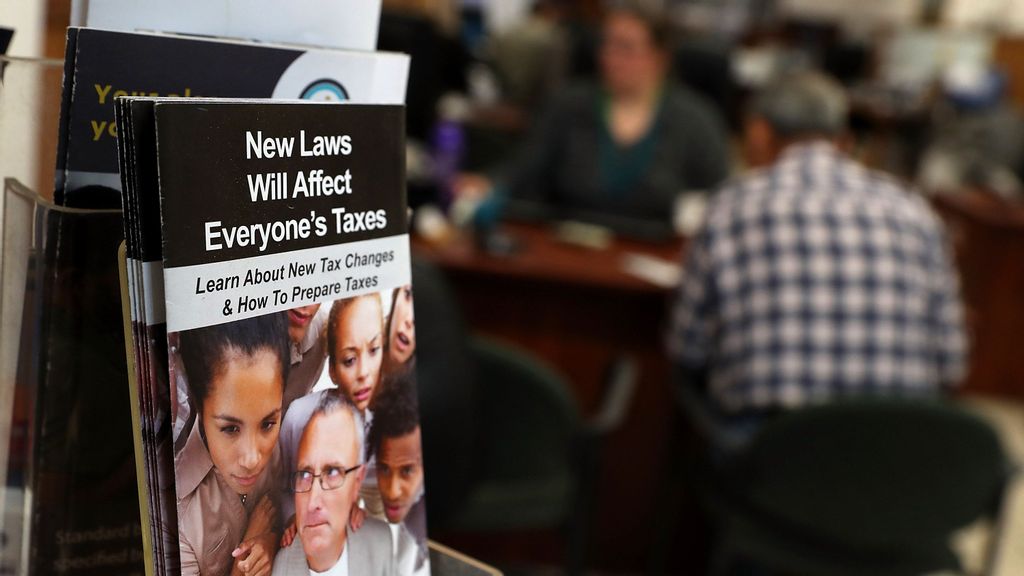
The IRS is providing tax-preparation assistance in some 350 languages. New benefits are available for families. (Photo by Justin Sullivan/Getty Images)


By Jenny Manrique

With tax season looming in early 2022, the Internal Revenue Service, better known as the IRS, released the get ready webpage, available in eight languages, that allows taxpayers to find the information they need to file their return (such as collecting tax records and bank statements), select a tax return preparer online and submit electronically. Telephone help is also available in 350 languages.


Starting this year, the IRS is providing translation services through telephone interpreters in 350 different languages. The 1040 form can now be completed in English and Spanish, and in the next five years, all documents will be translated into languages such as Russian, traditional Chinese, formal Chinese, Vietnamese and Korean, said Susan Simon, Director of Customer Assistance, Relationships and Education at the IRS.

“If they have direct deposit [in a bank], that will make the whole process faster, easier and more secure,” Simon said.

“Something new that we are very proud of this year is the Form 9000 that can be attached to the tax return and that allows taxpayers to select preferred alternative media in Braille, large print or in audio format.”

Simon said that for people who cannot use virtual tools, either due to lack of Internet access or lack of knowledge, there is a telephone line in English and Spanish (800-829-1040) and another for other languages (833-553-9895), where assistants can provide information about tax accounts.

People can also schedule an appointment in person at one of the IRS taxpayer assistance centers, go to a local paid preparer in the community, or review the free option with some 90,000 VITA volunteers nationwide.

“Because of COVID, many of our sites had to continue preparing tax returns online this year but are trying to open face-to-face sites by 2022,” Simon said.

New benefits

One of the major benefits under the American Rescue Plan is the expansion of the Advance Child Tax Credit.

This benefit increased for 2021; formerly capped at $2,000, qualifying families can now receive up to $3,000 for each child between the ages of 6 and 17, and $3,600 for those under the age of six. To be eligible, children must be these ages as of December 31, 2021.

Half of these advance payments began to be issued as of July 15, 2021, in monthly installments, and the other half can be claimed with the 2021 tax return. This benefit is expected to help more than 39 million households.

“The new law enhances the credit by making it fully refundable for certain taxpayers,” said Ken Corbin, Commissioner of the Wage and Investment Division and Chief Taxpayer Experience Officer at the IRS. “This means that taxpayers can benefit from the credit, even if they don’t have earned income or don’t owe any income taxes.”

The IRS has provided three virtual tools for families to verify whether they can access this benefit. The first is the Eligibility Assistant, which allows a parent, another family member, guardian or caregiver to determine if they qualify for the tax credit by answering a series of questions about themselves and their family members.

“This includes those taxpayers who could be experiencing homelessness, low-income households and other underserved groups,” Corbin said. The IRS has partnerships with over 5,000 homeless shelters, which can provide their mailing address for homeless people to receive their payment.

The second tool is the Non-filer Sign-up Tool to report qualifying children of those taxpayers who are not required to file a 2020 tax return, or have a gross income less than the applicable standard deduction amount, and have a main residence in the United States for more than half a year.

The third tool is the Update Portal that allows families to enroll or be excluded from advance payments if they have already received them, add or remove beneficiaries, report a change in their marital status or income, change the form of receipt from a paper check to direct deposit, change account numbers to which the payments are directed and update their address.

“Taxpayers may prefer to claim the full credit when filing their 2021 tax returns next year,” said Corbin. All these tools are available in English and Spanish.

Advanced payments are not subject to federal income taxes, nor are they counted as income when determining eligibility for amounts of benefits or assistance under federal programs such as unemployment benefits, food stamps, or Medicaid.

Singles and couples who have social security numbers can claim the earned income tax credit even if their children don’t have one. This is important for undocumented families in which parents can request an Individual Taxpayer Identification Number (TIN).

“In January 2022, the IRS will be sending recipients of the advanced child tax credit payments and the economic impact payments, a letter that tells them how much they received in 2021. This information is important to make sure that when they file their 2021 returns, it will match IRS records,” Corbin said.

For those without children, the rescue plan has also provided benefits such as the earned income tax credit (EITC). Eligible workers who are at least 19 years old can receive up to $1,502, triple the amount authorized by the government in 2020.

“These credits are a great deal of money in many households, so it’s very important to ensure sure no one else gets them,” said Simon.

“We have worked very hard with representatives from banks and other state and federal organizations to ensure that the taxpayer gets the money they have applied for,” said Simon. She offered a security tool for people to protect themselves from identity theft.

Those who have had trouble with scammers can also attend low-income tax clinics found in all 50 states.

IRS Helps Taxpayers In 350 Languages—Touting Expanded Child Tax Credits And Other Benefits is published in association with Ethnic Media Services

Edited by Melanie Slone and Kristen Butler


The post IRS Works With Taxpayers In 350 Languages, Offers New Benefits appeared first on Zenger News.

Space Aged: Astronauts Age Faster Because Of Microgravity, Says Study

0

U.S. Army astronaut Drew Morgan exercises in space. According to a new study, microgravity causes more errors in DNA replication, which will lead to premature aging and other negative health effects for astronauts. (U.S. Army/Zenger)


By Martin M Barillas

It’s long been known that exposure to radiation damages DNA, but a new study has found an additional risk for astronauts: DNA replication is more prone to errors in microgravity.


Scientists tested whether enzymes accurately copy DNA in cells during microgravity — the weightlessness produced during the freefall of a jet on a parabolic flight pattern. When the so-called “vomit comet” descends more than 2 miles in 20 seconds, the near-weightlessness replicates conditions in space. Accurate DNA replication in space is crucial for astronauts and the future of space travel.

“So-called DNA polymerases are essential enzymes that copy and repair DNA. Inevitably, they aren’t perfect: even under optimal conditions, they sometimes make mistakes. Here, we show that DNA polymerases derived from the bacterium E. coli are considerably more prone to errors under microgravity, such as occurs in space,” said Aaron Rosenstein of the University of Toronto, corresponding author of the study published in Frontiers in Cell and Developmental Biology.

Artist’s concept of a rotating “space hotel” under development by the Orbital Assembly Corporation. Scientists say rotating space stations and ships will be necessary to produce artificial gravity, as a recent study found weightlessness causes errors in DNA replication that could lead to premature aging and other adverse health effects. (Timothy Alatorre/Orbital Assembly Corporation)

Scientists are already aware that DNA undergoes a higher rate of mutation when exposed to cosmic rays and solar particles. Space radiation causes substitutions of single nucleotides, crosslinks, inversions and deletions, which increases the risk of cancer, genetic defects in a developing fetus and future offspring and the degeneration of tissues and cataracts.

Until now, it was not known whether human DNA replication is affected by weightlessness. If DNA polymerase copies are less accurate, the high mutation rate will increase each time the DNA is copied, resulting in a higher incidence of cancer. In 2020, scientists at the University of Rome Tor Vergata found that exposure to cosmic radiation damages cells and causes the onset of diseases normally associated with aging.

The authors of the new study showed for the first time that the error rate in DNA polymerases in E. coli bacteria is higher during weightlessness. Using a semiautomatic mini-laboratory, they observed a single round of replication of a 1000-nucleotide-long DNA fragment during the parabolic flight of a jet, which simulated space flight conditions.

The International Space Station is pictured from the SpaceX Crew Dragon Endeavour during a flyaround of the orbiting lab on Nov. 8, 2021. (NASA)

The scientists faced challenges in using their mini-laboratory during flight conditions that ranged from weightlessness to hypergravity, or two times the gravity on the Earth’s surface.

Poor DNA replication is a health risk

The dual phenomena of cosmic radiation and inaccurate DNA replication during weightlessness, the authors concluded, pose dangers to astronauts’ health during future missions to the moon and Mars. The study emphasized the need for future spaceships to generate artificial gravity to prevent possible negative health effects for astronauts in deep space.

“We have shown that DNA polymerases similar to those found in mitochondria — the cell’s powerhouses — make more errors in microgravity,” said co-author Virginia Walker of Queens University in Ontario, Canada. “The combined effect of greater damage and decreased replication accuracy could lead to premature aging in astronauts.”

Edited by Siân Speakman and Kristen Butler


The post Space Aged: Astronauts Age Faster Because Of Microgravity, Says Study appeared first on Zenger News.
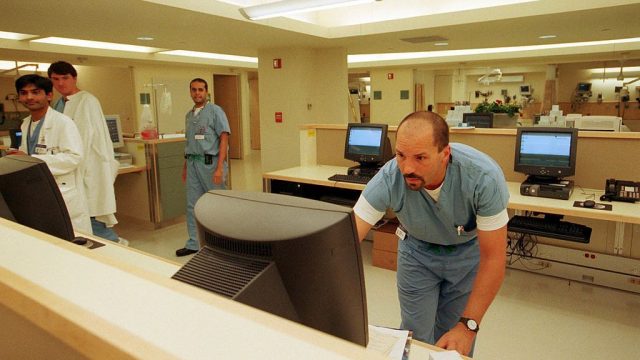
Hospital Cyberattack Is The New Pandemic; Here’s The Cure

0

When a ransomware attack hits a hospital, it can cost lives. (Darren McCollester/Getty Images)


By Abigail Klein Leichman

In a ransomware attack, a piece of malicious software paralyzes your computer until you pay the demanded sum. It’s a scary situation that will cost you money and time.


When a ransomware attack hits a hospital, it can even cost lives: A recent lawsuit in Alabama alleges that a newborn’s death resulted from the crippling effects of a ransomware attack that took the hospital offline for eight days.

Ransomware attacks are a relatively easy way to milk money from victims. The larger the target, the more potential for big payouts. And these hackers don’t care who gets hurt.

Leon Lerman, CEO and cofounder of Cynerio. (Courtesy of Cynerio)

“We were quite surprised because people thought that during Covid hackers would leave the healthcare vertical alone, but the reality is a 200 percent increase in such attacks during Covid. Criminals just want to make money,” says Leon Lerman, CEO and cofounder of four-year-old Israeli healthcare cybersecurity company Cynerio.

“If you can’t trust a hospital, when you’re in your most vulnerable state, that’s really concerning,” adds Lerman. “It’s a different game than with credit card or identity theft.”

Healthcare under attack

“Healthcare is one of the industries most targeted by cyberattacks,” admits Amir Magner, president and founder of CyberMDX, another Israeli healthcare cybersecurity specialist.

“According to a recent report, a total of 82 ransomware incidents against the health sector have occurred in 2021 worldwide, with 60 percent of them impacting the United States,” Magner tells ISRAEL21c.

The Tel Aviv-based company finds that one in six US data breaches occurs in hospitals. The average cost of each healthcare breach is $9 million.

“Recent attacks from notorious gangs such as REvil or Conti on hospitals have accounted for 30 percent of all significant data breaches at an estimated cost of $21 billion in 2020 alone,” says Magner, citing an Ipsos survey, “Perspectives in Healthcare Security Report” sponsored by CyberMDX and medical device maker Philips.

While the Alabama incident illustrates the worst-case scenario, the worst in terms of magnitude was a ransomware attack that shut down California’s Scripps Health hospital group last May.

Patient care was compromised for about a month until the damage was repaired, and several lawsuits seek compensation for non-protection of health records during that time.

“As of June 30th, we estimate total lost revenues to be $91.6 million and incremental costs incurred to address the cyber security incident and recovery were estimated at $21.1 million,” a Scripps earnings report said. Only a fraction of the total amount was covered by cyber insurance.

A cyberattack can turn into a life or death situation in a hospital, particularly in the emergency room. (David Dee Delgado/Getty Images)

How hospital cyberattacks harm you

“In sectors such as banking or insurance, the worst outcome for the customer is largely the theft of personal data. In healthcare, the stakes are much higher,” says Magner.

“One of the reasons that healthcare is among the most targeted industries is that personal health records are the most highly valued on the black market. The data stolen and sold may be enough for hackers to steal identities or any number of other nefarious activities,” he explains.

“Many hospitals have experienced a significant shutdown or breakdown of critical departments, systems and healthcare services due to cyberattacks, and these could potentially not only endanger people’s personal health information, but also their lives or those of their loved ones.”

How does a healthcare organization get breached?

“The threats against healthcare agencies are rapidly evolving, with new vectors being discovered daily,” says Jonathan Langer, cofounder and CEO of Medigate, established in 2017, with offices in Tel Aviv, California and New York. “Some of the well-known methods we have seen, in addition to ransomware, are malware and spyware, phishing and spear phishing, and the distributed denial of service. There are many routes into a healthcare technology environment, so vigilance and careful planning are needed to ensure attacks are stopped before they become harmful,” Langer tells ISRAEL21c.

Many breaches originate from a medical device connected to the Internet or the hospital’s internal network – MRI machines, infusion pumps, ventilators and more.

“Connected devices and systems are a huge boon for hospitals, enabling improved patient care. However, every connected device is a potential entry point for bad actors if we fail to protect them adequately,” says Magner, whose company estimates that 61 percent of medical devices are at persistent cybersecurity risk.

It’s not just medical devices. Laptop computers, HVAC systems, smart elevators and refrigerators also can be entry points, adds Lerman.

“An attack likely starts on the IT side. It may be a nursing-station computer where someone clicks on an attachment in an email,” Lerman explains.

“It infects the laptop and moves across the hospital network to connected devices that often have older operating systems. From that moment of encryption, the machine is not operable,” Lerman explains.

Wireless networks, telehealth systems and remote work situations, in wide use since the start of the Covid-19 pandemic for many good reasons, unfortunately give hackers more opportunities as well.

Jonathan Langer, cofounder and CEO of Medigate. (Courtesy of Medigate)

Some hackers use a third-party “watering hole” attack to infect websites of companies that directly interface online with hospitals, such as suppliers. From there, the infection spreads to the hospital.

So-called “ethical hackers” have demonstrated the possibility of sophisticated cyberattacks targeting a specific hospital device or even a specific patient, for example maliciously changing the dosage of an IV pump.

While there are no documented cases so far, “it’s more possible as devices get more and more connected,” says Lerman.

What are hospitals’ options after a breach?

After a ransomware attack, a hospital can choose to pay the ransom or pay the price of rebuilding the system and losing revenue and operating capacity during the fix – knowing that the hacker may target the same hospital repeatedly.

“Once computers or medical devices are affected, [most] hospitals will pay,” Lerman says. “If you lose files, you may have a backup. But if an MRI machine doesn’t work, every minute it’s offline you’re losing thousands of dollars. So you’ll pay the ransom to keep going.”

Investing in prevention theoretically makes the most sense. But the Ipsos survey revealed that even with roughly half of respondents experiencing an externally motivated shutdown in the six months prior to the survey, more than 60 percent of hospital IT teams have other spending priorities. Industry experts say three out of four hospitals do not have the budget and/or personnel to properly monitor their network.

Bad actors are aware of this.

“In comparison with other industries,” says Lerman, “hospitals have less security control and inhouse cybersecurity professionals. Hackers want to go where it’s easy.”

Threats against hospitals are increasing and rapidly evolving, observers say.  (Nathan Howard/Getty Images)

How do Israeli cybersecurity companies help?

Some healthcare cybersecurity companies work with medical device manufacturers to build premarket protection into their systems.

“You cannot install anything on those devices [postmarket] because it would void the warranty,” explains Lerman.

Others focus on solutions that are not device specific. Most of the latter companies help hospitals identify all its connected devices – not just the medical ones — and any threats they encounter.

“One of the largest problems today is that security teams within healthcare organizations lack visibility into their medical devices. You can’t protect what you can’t see and without this basic knowledge you cannot extend the proper protections across your devices,” CyberMDX’s Magner says.

Additional services may include risk management, alerts and actionable insights.

Cynerio’s Ramat Gan-based R&D team recently developed the first dedicated IoT attack detection and response module for devices in healthcare environments. This lets clients identify, contain and mitigate threats, and perform recovery forensics during downtime.

“We do risk reduction for every problem we find, on the device level or on the network level,” Lerman says.

While general cybersecurity companies can help keep healthcare institutions safe, a growing number are geared exclusively to hospital environments.

“If you have a ventilator with malware on it and you disconnect it from the network as a response measure, you need to know what you are doing so as not to cause harm,” says Lerman. “You need to understand medical workflows and the hospital ecosystem.”

Produced in association with Israel21C.


The post Hospital Cyberattack Is The New Pandemic; Here’s The Cure appeared first on Zenger News.
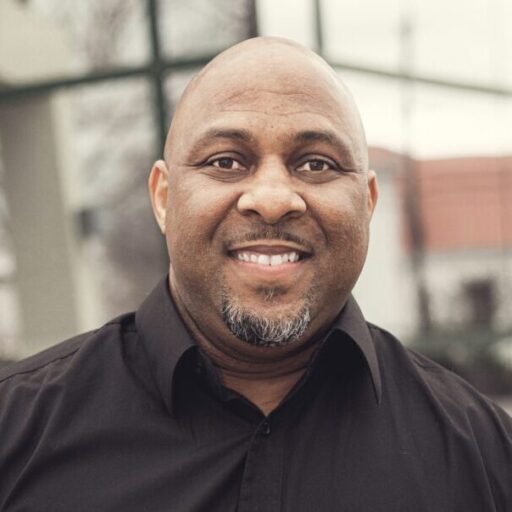
Birmingham, Mastercard Partner to Launch #BuyBlackBham Campaign

0
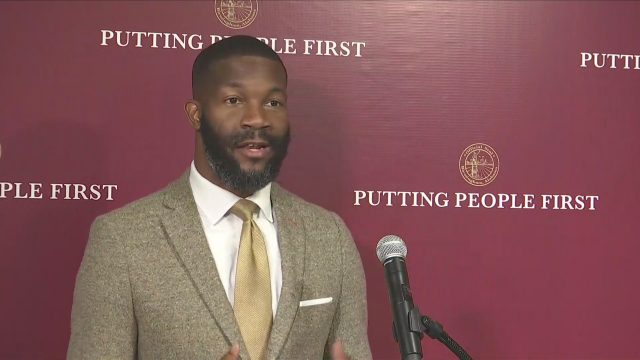
Birmingham Mayor Randall Woodfin wants the #BuyBlackBham campaign to be a step toward something bigger for Black business owners in the city.

By Ryan Michaels

The Birmingham Times

Alabama Begins Program to Educate Citizens About Electric Vehicles

0
From left: Adrienne Holmes- Electric Vehicle Owner; Michael Stanley- president of The Alabama Clean Fuels Coalition; Alabama State House Rep.- Danny Garrett; Alabama Governor Kay Ivey, at podium; Alabama House of Representatives Anthony Daniels. (Haley Wilson, The Birmingham Times)

By Haley Wilson

The Birmingham Times

Lee Elder, 1st Black golfer to play Masters, dies at age 87

0

By Paul Newberry

Associated Press

Stephen Fulton Wins 122-pound Unification ‘War’ Of Unbeatens Over Brandon Figueroa

0

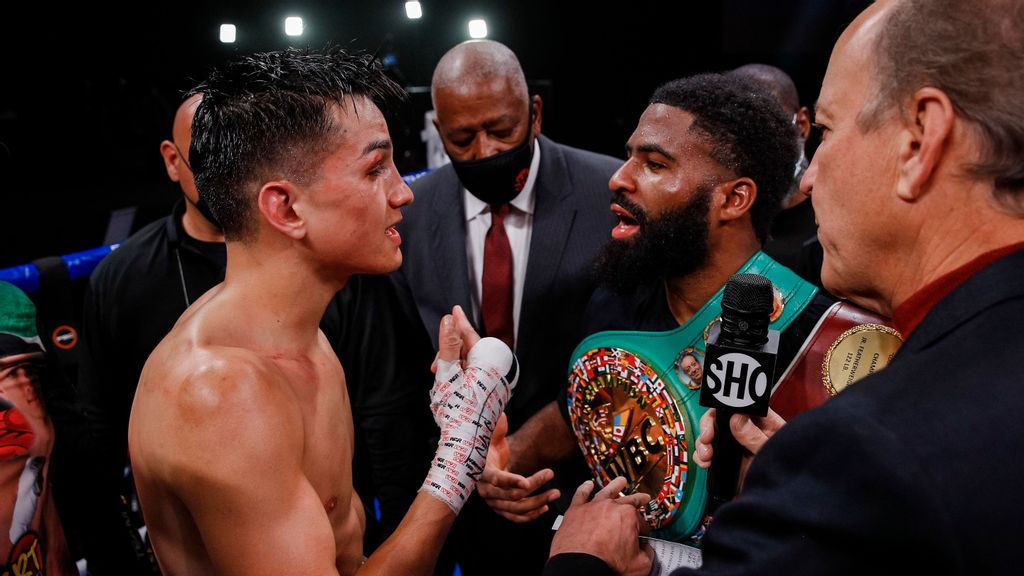
“I hurt you like five or six times. You really think you won the fight? “I hurt you like five or six times, Brandon Figueroa (left) told Stephen Fulton (right) following Saturday's disputed majority-decision loss which added Figueroa's WBC 122-pound title to Fulton's WBO version in a clash of unbeaten fighters. (Esther Lin/Showtime) 


By Lem Satterfield

Both WBO champion Stephen Fulton and WBC counterpart Brandon Figueroa predicted knockout victories entering Saturday’s 122-pound unification clash of unbeatens at Dolby Live at Park MGM in Las Vegas.


Although neither cashed in on his vow, they nevertheless engaged in a toe-to-toe, Fight-Of-The-Year-caliber classic that kept members of the crowd thrilled and either on their feet or likely on the edge of their seats.

In the end it was Fulton (20–0, 8 KOs) largely abandoning his stick-and-move routine during his disputed majority decision triumph over the ninth unbeaten fighter he has vanquished. The switch-hitting Figueroa (22–1–1, 17 KOs) failed to earn his third straight knockout and his 10th in 11 bouts despite wobbling “Cool Boy Steph” once each in the ninth and 10th rounds. (After the fight, Figueroa repeatedly disputed the result— more on that later.)

“This was a war. It was a tough fight against a tough person,” said Fulton, who became the first unified 122-pounder from his native Philadelphia. “It was a great, hard fight, and the fans won tonight more than anything. Brandon and I put on a helluva performance. It was a hard-earned victory, and I pulled it out.”

Fulton overcame disadvantages in height (5-foot 6½-inches to 5-foot 8 inches) and reach (70½ inches to 72) against Figueroa.

“I had to deal with Brandon’s pressure by staying where I was. If I would have kept boxing, I feel like I would have gotten more tired than usual,” Fulton said. “I felt like I dealt with it by fighting fire with fire, which is why I was able to land more of the open shots to catch him in between his shots.”

Fulton can choose the rematch he offered Figueroa or a unification clash with southpaw counterpart Murodjon Akhmadaliev (10–0, 7 KOs), who became boxing’s first unified world champion from Uzbekistan when his split-decision victory dethroned IBF/WBA champion Daniel Roman in January 2020.

A 27-year-old nicknamed “MJ,” Akhmadaliev made two defenses this year by winning a fifth-round TKO over Ryosuke Iwasa (April) and a unanimous decision over Jose Velasquez (November).

“I’m willing to [fight Figueroa] again,” said Fulton, 27. “If not, we can unify again with MJ.”

Stephen Fulton (left) used blows such as this left uppercut to overcome disadvantages against Brandon Figueroa in height and reach. (Esther Lin/Showtime) 

Judges Tim Cheatham and Dave Moretti scored the fight for Fulton 116–112 apiece, with Dave Sutherland scoring it 114–114, as did Showtime’s ringside scorer, Steve Farhood.

Although Figueroa out-landed Fulton in total punches (314–269), power shots (298–247) and body shots (106–85), trailing only in jabs (22–16), Farhood said, “I don’t think anybody can call this fight a robbery.”

But Figueroa vehemently disagreed to the point where he interrupted Showtime’s Jim Gray’s post-fight interview with Fulton in the ring.

“You really think you won the fight?” Figueroa asked of Fulton.

“It was a close fight,” Fulton retorted.

“Nah, man,” Figueroa said. “Do you really think you won the fight?”

Stepping closer to Figueroa, Fulton emphasized: “It was a close fight. Yeah, I won.”

“I hurt you like five or six times,” Figueroa said.

“I won,” Fulton said. “We can fight again.”

“Everybody here knows who won,” Figueroa said. “Let’s do it then. I ain’t scared of you. I hurt you five times.”

Brandon Figueroa (left) lost Saturday’s disputed majority decision to Stephen Fulton despite out-landing Fulton in total punches (314 to 269), power shots (298 to 247) and body shots (106 to 85), trailing only in jabs (22 to 16). (Esther Lin/Showtime) 

“Cool Boy Steph” got off more quickly in the early going to win exchanges on the inside with crisp, head-jolting uppercuts and an occasional body blow.

“It was about making adjustments,” said Fulton, who alternately disrupted “The Heartbreaker’s” rhythm by tying him up with clinches and forcing him to reset. “My focus was deflecting a lot of his body shots as well as throwing some back. Not wide, but sort of in the center of his chest and the center of his stomach.”

Fulton later won rounds by stealing parts of them, using his jab, straight right hands, uppercuts, left hooks, generally counter-punching or muscling Figueroa to the ropes for smother blows.

“I was catching him in between the shots he was throwing. Yeah, he was making it a little sloppy and rough, and the ref kept saying I was hitting him low and things like that, but I was placing my shots. I don’t feel like he was outworking me because I was landing good shots on the inside as well,” said Fulton, whose father, Stephen Sr., worked his corner for the first time alongside head trainer Wahid Rahim.

“He was more active, but who was landing cleaner shots? I caught you in the middle of everything you were throwing,” the younger Fulton said. “He would throw a lot of wild shots, and the fans were getting loud over that. They were arm punches and back-of-the-head punches. It was an amazing experience and a tough fight like I said. But the judges made their decision, and we can run it back if there are any problems.”

Figueroa, 24, was unfazed and undeterred throughout the fight, inciting fans to chant, “Mexico!” as early as the second round. Sustaining his relentless body attack through the middle rounds, Figueroa distributed blows evenly and effectively to the body and ultimately to the head down the stretch.

“I applied the pressure the whole 12 rounds,” said Figueroa, of Weslaco, Texas, who pounded his right fist against his chest after the eighth round as he returned to his corner manned by his father and trainer, Omar Figueroa Sr.

“I landed the cleaner shots, I hurt him like five times, and I probably only lost four rounds of this fight,” Brandon Figueroa said. “The fans who watched this live know who won, and even [Fulton] knows who won. They just don’t want to admit it.”

“The Heartbreaker” gained traction between the sixth and 10th rounds by deliberately shifting his attack to the head and closing distance, appearing to stagger a doubled-over Fulton at the end of the ninth and 10th.

Stephen Fulton (left) lands an overhand right against Brandon Figueroa during Saturday’s disputed majority-decision victory to become a unified 122-pound champion by adding Figueroa’s WBC title to his WBO version in a clash of undefeated boxers. (Esther Lin/Showtime) 

“It’s boxing. We get hit with shots that can buzz us, but the more you’re in shape, the more you can recover quickly,” Fulton said. “I wasn’t that badly hurt, because if I was, I wouldn’t have been able to continue. There were a couple of stinger shots that were eye-openers for me. But I wasn’t really hurt in the sense that I couldn’t defend myself. No matter how many times I get hurt, all I know is how to win.

“I bounced back in that 11th round by getting on the move like I should have earlier,” Fulton added. I felt like the 11th and 12th rounds I pulled out of those cleanly. I’m going to always find a way to pull out that victory, and that’s what I did tonight. This was special because the fight itself was a classic with action from round one to round 12. When you have fights of this caliber, and you’re the winner, it’s a helluva feeling. This is an amazing feeling.”

Fulton reminded Figueroa of his being two fights removed from a ferocious, split-draw in his second WBA title defense against former champion Julio Ceja (November 2019).

“This was a close fight,” Fulton said. “But if you’re going to say all of that, I can say that you lost to Julio Ceja.”

Ceja was 4.5 pounds over the 122-pound limit against Figueroa.

“Ceja came in two weight classes above me,” Figueroa said. “And I still fought him.”

Figueroa’s last victory was a sensational seventh-round knockout in May of previously unbeaten Luis Nery of Mexico, a 26-year-old southpaw who entered at 31–0 (24 KOs) and whose WBC crown was added to Figueroa’s WBA version. Figueroa was stripped of the WBA crown in August after four defenses of the crown he earned from Yanfrez Parejo in April 2019.

“I came to fight, not to hold on or anything. I brought the pressure the whole 12 rounds,” Figueroa said. “But they just want to make the fight [between Fulton and] MJ. I’m moving up [in weight.] I do want the rematch, but at the end of the day, it’s a robbery.”

Edited by Stan Chrapowicki and Matthew B. Hall


The post Stephen Fulton Wins 122-pound Unification ‘War’ Of Unbeatens Over Brandon Figueroa appeared first on Zenger News.

After Fight For Freedom, Chicago Santana Back Making Music 

0

Chicago Santana has his own label now: Always Talkin Money/Always Talkin Millions. (Courtesy of Chicago Santana) 


By Percy Lovell Crawford

Chicago Santana found himself on the wrong side of the law in the last few years and facing a 30-year sentence. Fortunately, he learned and understood the law and even after being offered an 8-year plea deal, Santana fought for his freedom and came out victorious.


Wrongful entry and searches led to him being vindicated and back making music, something he perhaps took for granted prior to his arrest. He’s back in the studio and recently released a new single, “Fell In LuV,” featuring White Collar Suge. Santana also has his own label, “Always Talkin Money,” where he plans to work with younger artists while pumping out his own music as well.

Realizing time is not always on your side, Santana vows to up the ante and push out more music to satisfy his supporters. Rebuilding his brand and his name is high on the priority list, as well.

The DMV [D.C., Maryland, Virginia] rapper talks to Zenger about how he got his Chicago name, opens up about his trials and tribulations and lessons learned along the way.

Percy Crawford interviewed Chicago Santana for Zenger.


Zenger: You stepped away from music to take care of a very serious legal situation. How did it turn out for you?

Santana: Everything turned out good for the most part. But what I always tell people, you got real life and then you got entertainment. And from the outside looking in, it will always look like it’s just entertainment, but dealing with regular life, family, legal situations and all of that, you gotta make sure home is alright first.

Zenger: What did you learn from the legal situation that you went through?

Percy Crawford interviewed Chicago Santana for Zenger. (Heidi Malone/Zenger)

Santana: Man… that’s a good question. I’m going to honestly tell you, me dealing with legal situations from a juvenile up to now, what I’ve learned is, you gotta be smart. If you’re an intelligent person, you learn a little bit. And I know some people have more challenges than others. It’s a bunch of law shows and court TV shows out there, but I learned as a person how this all works.

If you don’t have the knowledge, you’re going to suffer. I feel like that’s anything in life. That’s why they say knowledge is power. Especially in the law system, if you don’t have any type of knowledge, you can get played with. What I’ve learned is, you have to really pay attention, know what’s going on, and not assume you know everything.

Zenger: I’m definitely not here to interrogate you, and I don’t know how much you can speak on your situation, but can you discuss some of the legal issues and what you were facing, because it was some real time?

Santana: I had a couple of different situations, but the main situation that I had, I allegedly got caught with some firearms and drugs. It was a big distribution and unregistered weapons case. I’m in the D.C. and Maryland area; you have states like Tennessee and Florida where you can open carry. Their gun laws are lenient. Out here, it’s like if you get caught in New York with a gun. They are going to give you a mandatory five years for it. There are no fines or tickets; if you don’t have that special paperwork to carry it, you going to jail.

The only way you can carry a gun out here is if you’re a police officer or security. If you have a business, you have to write a motion. You have to do a lot to legally carry a gun here. But at the same time, you want to protect yourself. Because we are by the nation’s capital, they make it difficult for everybody.

So, some people take their chances, and I was one of them people. But I didn’t directly get caught hands-on with it on me, but long story short, they were trying to give me the maximum for my trafficking case with the firearms, which was like 30 years. That’s what the paper said, which is crazy because it says, if you get charged with a homicide, it starts at 25 years to life. But drugs start at 30 years. So, what I learned was, for a year to a year-and-a-half, my case kept on getting delayed and drug out. They were trying to get me to take a plea to where I would do eight-and-a-half years, and I would be on probation for the rest of whatever my sentence was.

But my thing was, I know they legally didn’t have the right to find what they found. A lot of people would think in their head… this is why I hate internet street thugs. It be all these internet street clowns that ain’t never been through nothing and don’t know nothing, and their first intellect on something on the internet if somebody beat a serious case is, “He must’ve told. He must have cooperated.” But that’s why I say you gotta know the law.

Certain human beings would think, “Damn, they caught me with three guns. They caught me with a half a brick of cocaine and two pounds of weed.” They will have in their mind that, just because the police recovered that from them, they have to get in trouble. People don’t realize, if they didn’t do A, B, and C, so they could catch you with that, then what you got caught with doesn’t even matter. When I went to court, the judge said, “If they would’ve found a dead body, they wouldn’t have even been able to charge you with it because they went about finding it the wrong way.”

They did an illegal arrest on me, an illegal search, they ran up in my house on some he say-she say things. The police looking at me on the internet and running into me, a bunch of new school millennial things that police not supposed to do. At the end of the day if I wasn’t smart enough to fight it, and I just would have signed the piece of paper to take the plea, because I’ll rather do eight years than 20 years…

Some people would sign off and they ship them off to jail even though they had no evidence on them. If you let them know you’re cool with them doing that, they’re not going to say, “We don’t have any evidence on you.” They going to let you sign that paper and you’re going to be in there.

 The “Always Talkin Money” CEO back to work after a long hiatus. (Courtesy of Chicago Santana) 

Zenger: To be home and getting back to your passion, the music, what does that mean to you?

Santana: It’s full throttle now. As soon as I was done with all my legal situations, I came home, they deleted my Instagram. The Instagram that I hit you on, that’s my new one. Hopefully, I get my verified account back. I was just sitting on music. I had a name and a following, but I wasn’t taking advantage of it.

When life changes and you see a bunch of people trying to do stuff that you actually got plugs and been in the mix, you start looking at it differently. In my mind, I need to take advantage of the clout and the opportunities that I do have and grow from it and take it to the next level. If I don’t, I’m going to be in more dumb situations.

Zenger: How did the new single, “Fell In LuV,” featuring White Collar Suge, come to fruition?

Santana: White Collar Suge is my man. We came together for “Fell In LuV.” He just came home. He did about six or seven years. Not to put his business out there, but he did that time for a bank robbery. It’s one of them things where, I really know him from the streets. He been my lil man. We done bumped heads, but he cool. He official in my book. I relate to him.

He was around me before I was Chicago. There are a lot of people I might have in my songs or do music with, who don’t necessarily do music. I’m trying to turn my people on and bring my people up. Of course, I’m going to work with the upcoming artists who got talent, but other than that, I’m going to try and build up everybody around me.

Zenger: How does a DMV rapper get the name Chicago Santana?

Santana: It’s crazy that you say that, because if I could start over, Chicago probably wouldn’t be my name. I thought about changing it in the midst, but I built too much on it, and I pop up on Google too much. But the name came from… if you remember the movie “Poetic Justice,” Joe Torry played the character, Chicago, and he always brushed his hair. I used to be the young kid with a fade, and I always had a brush on me, and everybody would call me, Chicago from that movie.

So, when I started rapping, my name is Santana and the Chicago just stuck. I just put it together. Of course, people will look at it like I’m saying I’m from the city of Chicago, but it has no relation. It was just a nickname. I called myself that not knowing how far I would go.

Zenger: You have songs with guys like Young Dolph (rest in peace), Gucci Mane. How were you able to link with some of the biggest names in the game?

Santana: When I deal with music, I know it is entertainment, but it’s a business too. One thing I’ve learned, and I learned from experience and people doing it to me, at the end of the day, if you always be yourself, anybody who is real will acknowledge you for that. I mess with OJ da Juiceman super hard. He one of the realest people in the music industry. Dolph was real too. I spoke to him two weeks prior to them murdering him. Rest in peace to Dolph. Gucci is real too. Rest in peace to Bankroll Fresh too. That was definitely my man.

All these people appreciated me for being me. I was never trying to be extra. Just like the cases I done caught, I speak on life experiences and what I’ve been through. I express myself by what I’ve been through. I’ll talk about it in my music, but I don’t get around people and talk about it. I don’t tell people too much of my business. But if I put it in the music, I can go into detail about my life experiences.

Zenger: I appreciate the time. It’s good to hear that you’re back in the studio and staying out of trouble. Anything else you want to add?

Santana: I’m going to be dropping a lot of new singles. I’m running my own label now, Always Talkin Money [also known as Always Talkin Millions]. I have a few artists that I’m working with. I’m going to come out and push the youth, while upping myself at the same time. So, I have a bunch of singles and videos dropping. I’m just pushing forward and going hard with it. I appreciate you for getting down with me. I don’t know if people tell you that, but it counts to me. It means a lot.

Edited by Judith Isacoff and Matthew B. Hall


The post After Fight For Freedom, Chicago Santana Back Making Music  appeared first on Zenger News.