Home Blog Page 540

After Fight For Freedom, Chicago Santana Back Making Music 

0

Chicago Santana has his own label now: Always Talkin Money/Always Talkin Millions. (Courtesy of Chicago Santana) 


By Percy Lovell Crawford

Chicago Santana found himself on the wrong side of the law in the last few years and facing a 30-year sentence. Fortunately, he learned and understood the law and even after being offered an 8-year plea deal, Santana fought for his freedom and came out victorious.


Wrongful entry and searches led to him being vindicated and back making music, something he perhaps took for granted prior to his arrest. He’s back in the studio and recently released a new single, “Fell In LuV,” featuring White Collar Suge. Santana also has his own label, “Always Talkin Money,” where he plans to work with younger artists while pumping out his own music as well.

Realizing time is not always on your side, Santana vows to up the ante and push out more music to satisfy his supporters. Rebuilding his brand and his name is high on the priority list, as well.

The DMV [D.C., Maryland, Virginia] rapper talks to Zenger about how he got his Chicago name, opens up about his trials and tribulations and lessons learned along the way.

Percy Crawford interviewed Chicago Santana for Zenger.


Zenger: You stepped away from music to take care of a very serious legal situation. How did it turn out for you?

Santana: Everything turned out good for the most part. But what I always tell people, you got real life and then you got entertainment. And from the outside looking in, it will always look like it’s just entertainment, but dealing with regular life, family, legal situations and all of that, you gotta make sure home is alright first.

Zenger: What did you learn from the legal situation that you went through?

Percy Crawford interviewed Chicago Santana for Zenger. (Heidi Malone/Zenger)

Santana: Man… that’s a good question. I’m going to honestly tell you, me dealing with legal situations from a juvenile up to now, what I’ve learned is, you gotta be smart. If you’re an intelligent person, you learn a little bit. And I know some people have more challenges than others. It’s a bunch of law shows and court TV shows out there, but I learned as a person how this all works.

If you don’t have the knowledge, you’re going to suffer. I feel like that’s anything in life. That’s why they say knowledge is power. Especially in the law system, if you don’t have any type of knowledge, you can get played with. What I’ve learned is, you have to really pay attention, know what’s going on, and not assume you know everything.

Zenger: I’m definitely not here to interrogate you, and I don’t know how much you can speak on your situation, but can you discuss some of the legal issues and what you were facing, because it was some real time?

Santana: I had a couple of different situations, but the main situation that I had, I allegedly got caught with some firearms and drugs. It was a big distribution and unregistered weapons case. I’m in the D.C. and Maryland area; you have states like Tennessee and Florida where you can open carry. Their gun laws are lenient. Out here, it’s like if you get caught in New York with a gun. They are going to give you a mandatory five years for it. There are no fines or tickets; if you don’t have that special paperwork to carry it, you going to jail.

The only way you can carry a gun out here is if you’re a police officer or security. If you have a business, you have to write a motion. You have to do a lot to legally carry a gun here. But at the same time, you want to protect yourself. Because we are by the nation’s capital, they make it difficult for everybody.

So, some people take their chances, and I was one of them people. But I didn’t directly get caught hands-on with it on me, but long story short, they were trying to give me the maximum for my trafficking case with the firearms, which was like 30 years. That’s what the paper said, which is crazy because it says, if you get charged with a homicide, it starts at 25 years to life. But drugs start at 30 years. So, what I learned was, for a year to a year-and-a-half, my case kept on getting delayed and drug out. They were trying to get me to take a plea to where I would do eight-and-a-half years, and I would be on probation for the rest of whatever my sentence was.

But my thing was, I know they legally didn’t have the right to find what they found. A lot of people would think in their head… this is why I hate internet street thugs. It be all these internet street clowns that ain’t never been through nothing and don’t know nothing, and their first intellect on something on the internet if somebody beat a serious case is, “He must’ve told. He must have cooperated.” But that’s why I say you gotta know the law.

Certain human beings would think, “Damn, they caught me with three guns. They caught me with a half a brick of cocaine and two pounds of weed.” They will have in their mind that, just because the police recovered that from them, they have to get in trouble. People don’t realize, if they didn’t do A, B, and C, so they could catch you with that, then what you got caught with doesn’t even matter. When I went to court, the judge said, “If they would’ve found a dead body, they wouldn’t have even been able to charge you with it because they went about finding it the wrong way.”

They did an illegal arrest on me, an illegal search, they ran up in my house on some he say-she say things. The police looking at me on the internet and running into me, a bunch of new school millennial things that police not supposed to do. At the end of the day if I wasn’t smart enough to fight it, and I just would have signed the piece of paper to take the plea, because I’ll rather do eight years than 20 years…

Some people would sign off and they ship them off to jail even though they had no evidence on them. If you let them know you’re cool with them doing that, they’re not going to say, “We don’t have any evidence on you.” They going to let you sign that paper and you’re going to be in there.

 The “Always Talkin Money” CEO back to work after a long hiatus. (Courtesy of Chicago Santana) 

Zenger: To be home and getting back to your passion, the music, what does that mean to you?

Santana: It’s full throttle now. As soon as I was done with all my legal situations, I came home, they deleted my Instagram. The Instagram that I hit you on, that’s my new one. Hopefully, I get my verified account back. I was just sitting on music. I had a name and a following, but I wasn’t taking advantage of it.

When life changes and you see a bunch of people trying to do stuff that you actually got plugs and been in the mix, you start looking at it differently. In my mind, I need to take advantage of the clout and the opportunities that I do have and grow from it and take it to the next level. If I don’t, I’m going to be in more dumb situations.

Zenger: How did the new single, “Fell In LuV,” featuring White Collar Suge, come to fruition?

Santana: White Collar Suge is my man. We came together for “Fell In LuV.” He just came home. He did about six or seven years. Not to put his business out there, but he did that time for a bank robbery. It’s one of them things where, I really know him from the streets. He been my lil man. We done bumped heads, but he cool. He official in my book. I relate to him.

He was around me before I was Chicago. There are a lot of people I might have in my songs or do music with, who don’t necessarily do music. I’m trying to turn my people on and bring my people up. Of course, I’m going to work with the upcoming artists who got talent, but other than that, I’m going to try and build up everybody around me.

Zenger: How does a DMV rapper get the name Chicago Santana?

Santana: It’s crazy that you say that, because if I could start over, Chicago probably wouldn’t be my name. I thought about changing it in the midst, but I built too much on it, and I pop up on Google too much. But the name came from… if you remember the movie “Poetic Justice,” Joe Torry played the character, Chicago, and he always brushed his hair. I used to be the young kid with a fade, and I always had a brush on me, and everybody would call me, Chicago from that movie.

So, when I started rapping, my name is Santana and the Chicago just stuck. I just put it together. Of course, people will look at it like I’m saying I’m from the city of Chicago, but it has no relation. It was just a nickname. I called myself that not knowing how far I would go.

Zenger: You have songs with guys like Young Dolph (rest in peace), Gucci Mane. How were you able to link with some of the biggest names in the game?

Santana: When I deal with music, I know it is entertainment, but it’s a business too. One thing I’ve learned, and I learned from experience and people doing it to me, at the end of the day, if you always be yourself, anybody who is real will acknowledge you for that. I mess with OJ da Juiceman super hard. He one of the realest people in the music industry. Dolph was real too. I spoke to him two weeks prior to them murdering him. Rest in peace to Dolph. Gucci is real too. Rest in peace to Bankroll Fresh too. That was definitely my man.

All these people appreciated me for being me. I was never trying to be extra. Just like the cases I done caught, I speak on life experiences and what I’ve been through. I express myself by what I’ve been through. I’ll talk about it in my music, but I don’t get around people and talk about it. I don’t tell people too much of my business. But if I put it in the music, I can go into detail about my life experiences.

Zenger: I appreciate the time. It’s good to hear that you’re back in the studio and staying out of trouble. Anything else you want to add?

Santana: I’m going to be dropping a lot of new singles. I’m running my own label now, Always Talkin Money [also known as Always Talkin Millions]. I have a few artists that I’m working with. I’m going to come out and push the youth, while upping myself at the same time. So, I have a bunch of singles and videos dropping. I’m just pushing forward and going hard with it. I appreciate you for getting down with me. I don’t know if people tell you that, but it counts to me. It means a lot.

Edited by Judith Isacoff and Matthew B. Hall


The post After Fight For Freedom, Chicago Santana Back Making Music  appeared first on Zenger News.


FARC’s Kidnap Victims’ Wounds Are Still Open 5 Years After Peace Agreement

0

A member of the FARC protects a road close to Bogotá, Sumapaz, Colombia, on March 7, 2002. The Peace Agreement with these guerilla fighters was signed on November 24, 2016, but Colombians have not forgotten the pain of years of kidnapping and rapes by the armed outfit formed in 1964. (Photo by Carlos Villalon/Getty Images)


By Edelmiro Franco V

Kidnapping, forced conscription and sexual violence in the ranks of the now immobilized Revolutionary Armed Forces of Colombia-People’s Army (FARC-EP) are open wounds for thousands of victims who are demanding truth, justice and reparations five years after the signing of the Peace Agreement between the Colombian government and the rebel group.


Even though the kidnap rate for every 100,000 inhabitants fell from 5.2 in 2003, to 0.2 in 2020, the psychological and emotional wounds are still fresh.

The Peace Agreement was signed on Nov. 24, 2016, “putting an end to the violence with [the] FARC-EP guerrilla, the largest in Colombia, active since 1964, made up at one point of more than 20,000 armed men who faced off with the Colombian State.”

The former governor of the southern region of Meta, Alan Jara, was kidnapped by the FARC-EP and held in the Colombian jungle for eight years. Even though so much time has gone by since the agreement was signed, Jara told Zenger that there are still many wounds to be healed among the victims of the armed conflict and within society itself.

The conflict left “millions of victims, murders, massacres, the drafting of minors and all those very unfortunate and terrible circumstances we saw in this incredibly harmful Colombian conflict. It’s what we saw before the signing of the peace agreements, and it’s what we’re seeing now, with the transitional truth and justice mechanisms,” he said.

“A lot of Colombians think finding out about what happened causes a clash, the idea of being able to turn the page and forgive, never forget, because there are situations that shouldn’t be forgotten. It causes pain, which makes sense, the result of the horrible situations people went through during the conflict.”

Drafted and raped 

Lorena Murcia is one of dozens of women who were drafted by force and then raped in the ranks of the FARC-EP. She was drafted in 2002, in the southern region of Caquetá. Murcia still hasn’t managed to heal and is still waiting for truth, justice and reparations, she says.

“I joined the FARC when I was 10. I was sexually assaulted, had forced abortions, four of my siblings disappeared in the FARC, who took them when they turned 11. Today, they’re still missing. We don’t know why they died, how they died; we don’t know anything about them,” Murcia told Zenger.

Lorena Murcia is one of dozens of women who was drafted by force and then raped in the ranks of the FARC-EP. (Photo: Courtesy of Lorena Murcia)

She says she has another brother “who was also drafted when he was 11, [but] he managed to get away from the FARC when he was still a minor, and unfortunately, the FARC murdered him six years ago because he was working with the army. We’ve suffered every type of violence you can imagine,” she said.

“As if that weren’t enough, when I left [the FARC] and turned myself into the [government] military forces, the FARC took everything my mom owned. They took away her home and gave her a few hours to leave town. I left [the FARC] on October 8, 2008.”

Murcia says the toughest part was “seeing my childhood completely lost at the hands of that group and seeing how women were walked all over and couldn’t do anything, and nobody did anything for us … not a thing. We saw how they abused women, how they mistreated us physically and psychologically.”

Murcia says the most traumatic part was seeing “how a lot of women tried to fight but couldn’t because the FARC terrorists just murdered them, and today they [the FARC members] are facing no legal consequences.”

A killing machine 

Víctor Hugo Silva is a former FARC-EP fighter who today is a representative of the Cooagropaz organization, which “arises at the initiative of a group of 70 former FARC-EP base combatants, with the purpose of contributing to the positive effects of the post-conflict; considering that one of the essential causes of the Colombian armed conflict lies in the inequitable, unjust and violent possession of the land, and that therefore a comprehensive and structural agrarian reform in Colombia is essential,” according to its website.

He said the immobilized forces are completely committed to the Special Peace Jurisdiction (JEP) and to the Truth Commission that wants to get to the bottom of what happened during the armed conflict.

Colombia should find out “what happened during the conflict, and how it was dragged out, degrading people, turning them into killing machines. It wasn’t just one sector; it’s not about who was better and who was worse. It’s about finding out what happened. That’s what the victims expect, responsibility, but with truth,” Silva told Zenger.

The commitment to the victims is for everyone who was involved in the armed conflict, and “creating strategies to evade the truth is not good for us in this challenge the JEP faces. … Truth, reparations and keeping it from happening again, that’s essential to reach a reconciliation,” said Silva.

Regarding five years since the Peace Agreement, Silva said the government and the leaders of the Comunes Party (which has brought together the immobilized FARC-EP members) are not giving importance to the work in territories affected by the armed conflict.

“If the peace mechanisms don’t reach these territories, it’s going to be difficult to consolidate the process. The centralization of the process is what’s keeping it from being dynamic in the former fighters’ development and wellbeing,” he said.

Colombian soldiers patrol a neighborhood close to Parliament on August 7, 2002, in Bogotá. Colombians experienced more than five decades of violence between the FARC and paramilitary groups. (Photo by Getty Images)

The truth hurts 

Cases of kidnapping, forced conscription, gender violence, displacement and disappearances, among other atrocities, are being investigated by the Truth Commission, created by the Truth, Justice, Reparations, and No Repetition System.

In its latest report, “Understanding the past so as not to repeat it,” the Truth Commission said it was working on “a rigorous investigation based on some 25,000 testimonies and interviews, more than 800 reports received by different types of organizations and entities (including State entities, social organizations and foundations).”

“Peace in Colombia is charged with truths that hurt now and that are going to continue to hurt, but what we have to bet on is that these known truths can become history lessons, memory and social lessons, so that these atrocities never happen again. That is one of the main tasks of the Agreements,” Gonzalo Sánchez, the former director of the National Center for Historical Memory and a Nobel Peace Prize laureate, told Zenger.

“Those involved in the armed conflict have the obligation to recognize the atrocities committed, and it’s not so that we can once again polarize society and close the doors on those who accepted their responsibility and commitment; it’s showing convincingly that they took a serious step and that both the State and the society have to follow through with what they committed to,” he said.

“It’s a painful negotiation, like the war was painful, and it will be painful to keep facing the consequences every day. But we have to have faith, because in the long run, [the process] has a healing effect for everyone, for the victims, even for the perpetrators, and is healing for society in general,” Sánchez said.

Institutions like the JEP “bring the agreements to life, displaying them in places that recognize the gravity of what happened in the war, but with a constructive outlook to heal, repair, recognize and transform,” he said.

Alan Jara says he believes in “the merits of peace” and in the need to implement the agreements. (Photo: Courtesy of Alan Jara)

The signing of the Peace Agreement is to overcome the wounds, Jara says. “We Colombians cannot simply look in the rearview mirror and not move forward, toward the possibility for reconciliation and to implement the agreement fully.”

The most important point in the Agreement was “the end of the conflict and that it led to a decrease in homicides, kidnapping, and it’s essential to clear up the truth.”

Five years after the Agreement was signed, “there are issues that are very clear, like a comprehensive rural reform and a solution to the drug problem. The topic of the victims has been noticeably put aside, which means that not all victims have seen the action that the State should take, through the implementation not only of the agreements but also the victims’ Law,” said Jara.

“I’m convinced of the merits of peace; that’s why I believe firmly in the need to implement that process and to come to an agreement that, like any agreement, is never perfect,” he said, adding that the merits and costs of peace win out when compared “to the pain and tragedy of the war.”

Translated by Melanie Slone; Edited by Melanie Slone and Kristen Butler


The post FARC’s Kidnap Victims’ Wounds Are Still Open 5 Years After Peace Agreement appeared first on Zenger News.

Why Aren’t More CEOs Women?

0


By Alyssa Rinelli

When Carly Fiorina became the first female chief executive officer of a Fortune-20 company in 1999, many viewed the Hewlett-Packard CEO’s rise through the ranks as a positive sign that female executives would continue breaking glass ceilings and occupy top seats in corporations.


While progress has been made, it hasn’t come fast enough for some.  As a crowd gathered at the National Press Club to celebrate the findings of a new study on women CEOs and where they stand in the C-suite, the numbers showed incremental growth but were surprisingly low. 

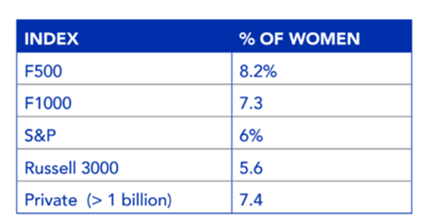
The comprehensive report “Women CEOs in America 2021,” presented by the Women Business Collaborative, showed that 8.2 percent of Fortune 500 CEOs are women compared to 6.6 percent two years ago. In a world where new studies show men are being left behind in educational systems, men are still currently leagues ahead in the boardroom. Women make up more than 50 percent of the college-educated workforce, yet they only make up a fraction of CEOs. Why aren’t there more women CEOs? Observers say it’s not a simple answer and it depends on who you ask.

Credit: WBC Women CEOs in America 2021 Report

The founder of the organization behind the report, Edie Fraser, believes companies need to build up women’s experiences, especially in the boardroom, to increase the number of women in the pipeline for the role of CEO.

Fraser specifically calls on male CEOs. “We all focus on male CEOs standing up to take action and be advocates,” she said, referring to women in the workforce. Fraser said they want to highlight male CEOs and measure if they are really “taking action to move the needle aggressively” toward more women CEOs.

Lorraine Hariton, CEO of Catalyst, said companies need to build up the pipeline of women they already have. There is a “robust pipeline of women who are capable of doing the jobs,” she said, “but they need to be sponsored into the line jobs so that then the opportunities come up, and they’re the ones that are chosen.” Hariton said “there needs to be a lot more intentionality” when building the pipeline of women who can fulfill the CEO role.

Co-sponsors/panelists present the 2nd Annual Report Women CEO’s in America Report, at the National Press Club, Washington, DC on Oct. 14, 2021.  Pictured (l-r) Edie Fraser, CEO and founder, Women Business Collaborative, Anna Mok, President/CEO, Ascend Leadership, Kimber Maderazzo, CEO, C-200 and Lorraine Hariton, CEO, Catalyst. (Photo: Patricia McDougall)

Companies are already beginning to achieve this by having women lead more nominating committees and placing them in positions where they can advocate for women to be CEO. There has been an increase in the number of women who sit as board chairs and as chairs of audit committees as a result.

The organization believes each of these points are the catalysts of change that will propel more women into CEO positions.

Despite the progress, Hariton said the pace of change is still too slow. “We need to make progress happen at a much quicker pace. [WBC] have set a goal for the Fortune 500 to be at 15 percent [women] by 2025 and right now we are only on track for 10 percent — that’s not good enough,” says Hariton.

Credit: WBC Women CEOs in America 2021 Report

Along with talk of how to build the pipeline of women CEOs, the summit was filled with the celebration of women leaders and excitement for the future.

They recognized the six more women who joined the ranks of Fortune 500 CEOs: Karen Lynch of CVS Health, Jane Fraser of Citigroup, Patricia Poppe of PG&E, Lauren Hobard of Dicks Sporting Goods, Rosalind (Roz) Brewer of Walgreens Boots Alliance, and Thasunda Brown Duckett of TIAA. They expressed excitement for the future of women in executive roles.

Many pointed to COVID as a catalyst for change. Jenny Johnson, CEO of Franklin Resources, believes the flexibility of working from home gives women the opportunity to do work on a more “fragmented” schedule. This allows them to balance the additional responsibilities that she says many women face at home.

Johnson said working from home is “not going away,” hinting that this is a shift in the opportunity for women to have the flexibility to take on more responsibility at work, including in roles that lead to the CEO.

Because of the pandemic, working remotely has “evened” the playing field, she said. “If there has been an advantage to men congregating together on the executive floor and talking about those topics, we sort of all got spread out and had to build those connections in a different way.”

(l-r) CEO Jenny Johnson of Franklin Resources and Margery Kraus, founder, executive chair & former CEO, APCO Worldwide participate in a panel discussion at the National Press Club Studios, Washington, DC,  announcing the release of the second annual report highlighting Women CEOs in America: Changing the Face of Business Leadership.  The report draws on data and includes the most comprehensive breakdown of women in corporate leadership in the U.S. (Photo: Patricia McDougall)

All of these arguments point to an increase in the pipeline of women for the CEO position. But will a better pipeline of women in leadership actually increase the number of women in CEO positions?

There seems to be no lack of effort by American companies to promote diversity in the workforce. In fact, all Fortune 500 companies have diversity programs centered around women to give them additional visibility opportunities that their male counterparts don’t receive. Microsoft hosts women-only networking events for senior-level professional women and Biogen uses its “Women’s Innovation Network” to create networking, mentoring, and learning opportunities for women to “further drive increased representation of women in senior leadership positions.”

Some ask if there are other reasons beyond the lack of pipeline that are leading to fewer women in CEO positions.

Others say that may be the wrong question. Psychologist Jordan Peterson turns the argument around saying, “Why aren’t there more women in positions of power? Wrong question. The right question is, why are there any men at all who want those positions of power?”

In a study done by the Harvard Business School, men and women believe they are equally able to advance professionally and attain high-level leadership positions, but men want power more than women do. Women were also more likely to believe that power has more negative outcomes, like conflict and trade-offs, than men.

The study, conducted by three women, shows men and women view the consequences of professional advancement and positions of power differently and therefore shape their career progression around those assumptions.

Unsurprisingly, women were more likely to have more life goals compared to men but had significantly fewer goals that were related to power.

Despite this, the Women Business Collaborative argues that companies should strive to have more women CEOs because diversity in leadership is critical to the success of companies.

Margery Kraus, CEO of Apco Worldwide, agrees. “Now there is a lot of proof in a lot of studies that having diversity and having women in leadership is important. I think what the pandemic has proven is that empathetic leadership — which is normally associated with women [and] being empathetic seen as a weakness — [is] such a strength and that is helping people understand the value of women in leadership positions.”

This proposition that women lead with more empathy is reinforced by a 2021 study conducted by McKinsey in partnership with LeanIn.Org. The study noted that compared to male managers, women in leadership positions were 29 percent more likely to help their employees navigate work and life challenges, 42 percent more likely to ensure a manageable workload, and 21 percent more likely to help prevent or manage burnout.

It is evident that executive teams with 30 percent women are more likely to outperform those with fewer or no women. What is not clear is that it is due to more feminine traits, like empathy.

It could even be due to the fact that empathy isn’t a trait that companies value. A study titled, “Does Empathy Pay? Evidence on Empathy and Salaries of Recent College Graduates,” suggests that people who are more empathetic don’t get the job because “they are considered to be too accommodating,” which is not necessarily a trait companies are looking for in their next CEO. They tend to be more focused on traits including vision, organization and risk-taking abilities.

It is noteworthy that empathy can lead to more retention, engagement and innovation, which can lead to a more productive workforce, according to a survey of 889 employees across industries. The survey was conducted by Catalyst, one of the partner organizations for the Women Business Collaborative that compiled the Women CEOs in America Report.

While Carly Fiorina and other women have led the way in modern corporate leadership, the Women Business Collaborative and other similar groups will keep pushing on those glass ceilings.

(Additional reporting provided by Claire Swift)


The post Why Aren’t More CEOs Women? appeared first on Zenger News.

Jumpin’ Jiminy: How Light Pollution Could Ruin Crickets’ Sex Lives

0

Crickets are endangered by artificial light. (Keren Levy)


By Brian Blum

How is a cricket like a young person on holiday? According to researchers at Tel Aviv University and the Open University of Israel, “When their light-dark cycle is disrupted, crickets behave like teenagers on vacation: active or asleep, according to their inner clock, or without any rhythm.”


While that quip is meant to grab readers’ attention, the implications are anything but sunny.

“This disruption can impair the crickets’ reproductive process and even threaten the population’s survival,” the researchers say.

“Light pollution” (also known as “artificial light at night” — ALAN for short) impacts many animals — including humans.

The joint study exposed male crickets to ALAN. Male crickets normally chirp at night to attract females to mate. Any kind of disruption — including those that result in suppressed chirping or chirping during the daytime — can interfere with mating and ultimately the survival of the entire species.

The researchers call for reducing ALAN as much as possible, for the health of all creatures on the planet.

Professor Anat Barnea of the Open University. (Oded Carney)

The study was led by professor Amir Ayali and Keren Levy of the School of Zoology and the Steinhardt Museum of Natural History at Tel Aviv University, and professor Anat Barnea of the department of natural and life sciences at the Open University. Yoav Wegrzyn from Ayali’s laboratory and Ronny Efronny also took part in the study. The paper was published in the Proceedings of the Royal Science B  and mentioned in the scientific journal Nature.

“The distinction between day and night, light and darkness, is a major foundation of life on earth,” said Levy. “But humans, as creatures of the day who fear the dark, disrupt this natural order: They produce artificial light that drives away the darkness and allows them to continue their activities at night. Today more than 80 percent of the world population lives under light pollution, and the overall extent of ALAN rises by 5 percent every year.”

ALAN affects the length and quality of sleep of many animals, leads to high mortality, and changes the activity cycles of many creatures. “For example, sea turtle hatchlings seek the brightest surface in sight — supposedly the sea — and wind up reaching the nearby promenade instead,” says Levy.

Professor Amir Ayali of Tel Aviv University, with a cricket. (Jonathan Blum)

The researchers found that crickets exposed to 12 hours of light followed by 12 hours of darkness began to chirp when the lights went out and stopped when the lights were turned on again.

Crickets that experienced partial lighting in the dark periods, however, lost their natural rhythms and synchronization with the environment. Crickets exposed to constant light developed their own cycles (71 percent) or lost all rhythm (29 percent).

Levy noted that these results are in accord with many other studies demonstrating the severe impacts of low levels of ALAN on nature.

Produced in association with Israel21C.


The post Jumpin’ Jiminy: How Light Pollution Could Ruin Crickets’ Sex Lives appeared first on Zenger News.

No Fueling: Sugar-Eating Microbes Could One Day Fuel Cars

0

A strain of E. coli that doesn’t endanger human health grows in a flask full of nutrients (the yellow broth). In a study, scientists genetically engineered such E. coli to convert glucose into a class of fatty acids the team then transformed into a hydrocarbon called an olefin. (Douglas Levere / University at Buffalo)


By Martin M Barillas

Two scientists have harnessed strains of bacteria that feast on glucose (a type of sugar) and turn it into olefins, a type of hydrocarbon that is a component of gasoline, posing the possibility of a new way to fuel vehicles.


“Making biofuels from renewable resources like glucose has great potential to advance green energy technology,” Researcher Zhen Q. Wang at the University at Buffalo said. “So, the carbon in the glucose — and later the olefins — is actually from carbon dioxide that has been pulled out of the atmosphere.”

Wang teamed with Michelle C. Y. Chang with the University of California, Berkeley to show that strains of Escherichia coliform (E. coli) that don’t affect humans can be tweaked to produce other types of hydrocarbons used in gasoline, while olefins can be used in industrial lubricants and precursors for making plastics.

The study was published in Nature Chemistry.

Zhen Wang, an expert in synthetic biology, helped lead a study on tweaking a form of E. coli bacteria to produce a type of hydrocarbon used in gasoline. (Douglas Levere/University at Buffalo)

The research team fed glucose to the E. coli microbes, which were genetically engineered to produce four enzymes that convert glucose into compounds called 3-hydroxy fatty acids. As a catalyst for the transformation of the glucose, the team used niobium pentoxide (Nb2O5). This removed unwanted parts of the fatty acids, while producing olefins. The catalyst and enzymes were identified by trial and error after the team tested various molecules for the two steps in the process.

“We combined what biology can do the best with what chemistry can do the best, and we put them together to create this two-step process,” said Wang. “Using this method, we were able to make olefins directly from glucose.”

Glucose and oxygen are products of photosynthesis in plants, which draw carbon dioxide and water from ambient air. Feedstock for producing ethanol, which is used in biofuels, are barley, corn, sorghum, sugar cane and sugar beets. All of them contain substantial amounts of glucose. Glucose is also found in grasses and trees as well as waste products such as corn cobs and stalks.

More research is needed to determine what benefits the new method has and if it can be scaled up to produce biofuels. One unanswered question is whether the amount and cost of the energy required for the process are too high. The technology may need optimization to be practical in industrial applications.

Wang said the process takes 100 glucose molecules to produce about 8 olefin molecules. This ratio would have to be improved, she said, by inducing the microbes to produce more of 3-hydroxy fatty acids per gram of glucose consumed.

Edited by Richard Pretorius and Kristen Butler


The post No Fueling: Sugar-Eating Microbes Could One Day Fuel Cars appeared first on Zenger News.

Noted Fashion Designer Virgil Abloh Dies of Cancer at 41

0

By Jake Coyle

Associated Press

VIDEO: Well I Nebuchadnezzar: AI Scientists Create New Hanging Gardens Of Babylon

0

The model of the finished sculpture, named “Semiramis” after Queen Amytis, for whom the original Hanging Gardens of Babylon was built. The design was produced with the help of an AI specifically developed for the task. (Gramazio Kohler Research-ETH Zurich/Zenger)


By Peter Barker

A massive sculpture designed with the help of artificial intelligence and being built by robots has its roots in the past, drawing inspiration from the Hanging Gardens of Babylon.


The research team that designed the 73-foot (22.5-meter) tall sculpture, named “Semiramis” after Queen Amytis, for whom King Nebuchadnezzar II built the Hanging Gardens of Babylon, is led by professors from ETH Zurich University in Switzerland.

The ancient city of Babylon was located near present-day Hillah in Iraq, about 50 miles south of Baghdad, on a branch of the Euphrates River.

The tribute structure will be made of five wooden pods that are slightly offset from each other and suspended by eight steel pillars, ETH Zurich said. Each pod comprises 70 wooden panels.

What makes this design stand out, apart from its size, is that it was heavily influenced by the input of artificial intelligence and computer software.

The design of a structure like this would typically be adjusted by architects, potentially dozens of times, as they try to meet all building code standards. This costly and time-consuming process was bypassed using AI.

The Swiss Data Science Center collaborated on the development of the AI that helped produce the sophisticated design.

The algorithm suggested creating wooden pods of varying size and shape, noting how each design affected variables such as the irrigation of the pods.

With the help of artificial intelligence and four collaborative robots, researchers at ETH Zurich are designing and fabricating a green architectural sculpture named “Semiramis” after Queen Amytis, for whom the Hanging Gardens of Babylon were created. (Gramazio Kohler Research-ETH Zurich/Zenger)

“The computer model lets us reverse the conventional design process and explore the full design scope for a project. This leads to new, often surprising geometries,” said Matthias Kohler, a professor of architecture and digital fabrication at ETH Zurich.

At ETH’s Immersive Design Lab, the team used augmented reality to create a 3D design that allowed the researchers to make small adjustments and see the effects of these changes in real time.

Software developed in collaboration with ETH’s Computational Robotics Lab helped the researchers measure overall changes to the wooden pods each time a small adjustment was made.

The software also constantly monitored the overall design’s weight, adjusting the distribution to keep the structure stable.

The design is now being built at the Robotic Fabrication Laboratory at ETH Zurich.

Four robotic arms work in harmony to build the wooden pods, panel by panel.

Researchers at ETH Zurich are fabricating a green architectural sculpture with the help of artificial intelligence and four collaborative robots. (Pascal Bach-Gramazio Kohler Research-ETH Zurich/Zenger)

The arms are managed by an algorithm that makes sure they never reach for the same panel or bump into each other.

Once the panels are assembled, craftsmen glue them together with a special casting resin.

The robotic arms have several advantages over humans: they can lift heavy weights, are extremely precise and can work nonstop barring a loss of power.

“Semiramis has been a beacon project for architectural research, bringing together people inside and outside ETH and advancing the key research topics of the present, such as interactive architectural design and digital fabrication,” said Kohler.

Edited by Siân Speakman and Kristen Butler


The post VIDEO: Well I Nebuchadnezzar: AI Scientists Create New Hanging Gardens Of Babylon appeared first on Zenger News.
School Board Approves $8.7M bid; New Stadium Nears at Woodlawn HS

0
The Birmingham City Schools system this summer released this rendering of the new Woodlawn High School stadium after a groundbreaking ceremony. (Charles Williams & Associates Architects)

Birmingham Times